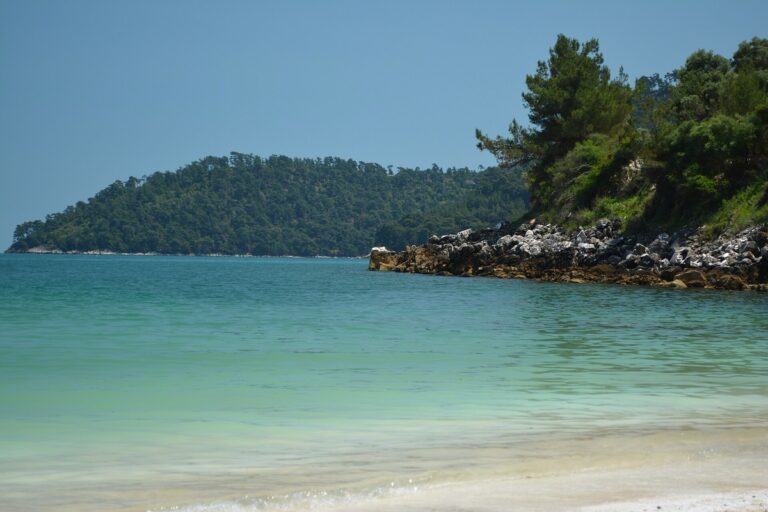
When I close my eyes and think back to our first days on the island, what immediately comes flooding back is this incredibly intoxicating scent hanging in the air. It was a blend of salty sea water, pine resin, and baked feta with oregano drifting from a little family-run taverna beneath our window. Lukáš and I decided we wouldn’t just stay for the typical week-long holiday — instead, we rented a small apartment and tried working remotely for a while so we could truly get to know the island inside out. That gave us plenty of time to wander the narrow cobblestone lanes, discover hidden coves, and most importantly, observe how the mood of the island shifts once the biggest crowds of tourists head home.
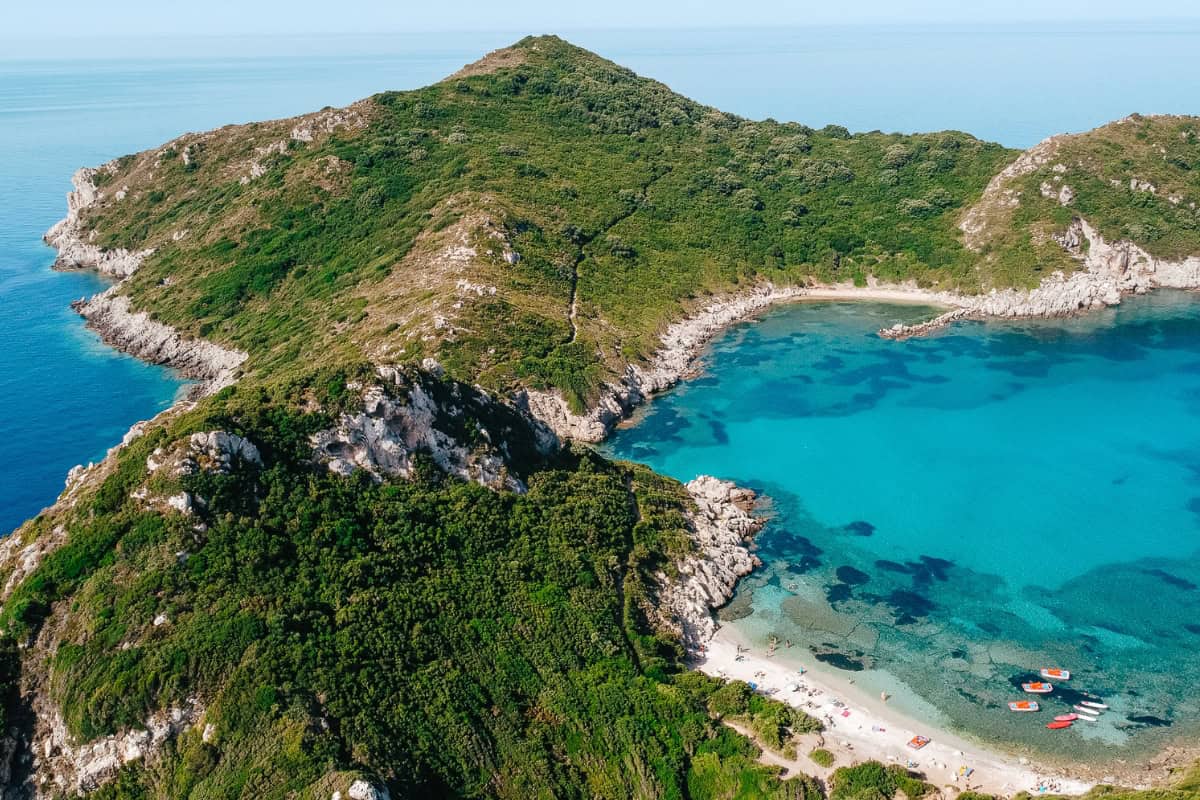
During our explorations, we quickly noticed one thing that makes this corner of Greece absolutely unique. Corfu is by far the greenest Greek island, which might surprise you at first if you’re used to the rather parched landscapes of the Cyclades or Crete. That gorgeous emerald colour of the ever-present cypresses and millions of olive trees comes with a fairly simple price tag — winter rain — because without water, this botanical paradise simply wouldn’t exist. That’s why understanding Corfu Greece weather is so important, so you can enjoy exactly the type of holiday you’ve been dreaming of rather than ending up stuck indoors with a book.
Whether you’re planning to spend entire days lounging on the beach with an ice-cold frappé in hand, or you’d rather strap on a backpack and explore mountain villages, the weather in Corfu can be absolutely perfect — but occasionally a little unpredictable too. That’s exactly why I’ve put together this practical guide, packed with our personal experiences and precise data. We’ll walk through average temperatures for each month, look at when the sea is warmest, and I’ll tell you which periods you’re probably better off avoiding altogether, so you bring home nothing but the most wonderful memories.
TL;DR
- Best months to visit: If you’re looking for the perfect balance of great weather and manageable crowds, head to Corfu in June or September.
- Best time for swimming: The main beach season runs from June to September, with the warmest sea temperatures (up to 26 °C) in August.
- Best value for money: May and September offer gorgeous days for excursions, and accommodation tends to be 40–60% cheaper than during peak summer.
- When resorts are open: The main tourist season runs from May to October; over winter, most coastal resort towns go into hibernation.
- Green island and rainfall: Corfu is beautifully green thanks to heavy rains that fall mostly outside the summer season, from November to March.
- What to avoid: July and August are extremely hot and overcrowded, while the winter months from November to February are very rainy and cool.
The full destination guide: Ionian Islands — guide and what to see
Corfu Greece Weather Month by Month: Temperatures, Sea and Rainfall
When we first started planning our extended stay, I sat one evening with a cup of mint tea trying to make sense of endless tables and charts so we’d know what to expect. I discovered that the climate in Corfu is typically Mediterranean, but thanks to its more northerly position in the Ionian Sea, it has its own little quirks that are well worth knowing about. I’ve prepared a clear overview table with long-term averages so you can get a solid picture of how temperatures and rainfall change throughout the year.
| Month | Day °C | Night °C | Sea °C | Rainfall / rainy days | Sun h/day |
| January | 14 | 5 | 15 | 160 mm / 14 days | 4 |
| February | 14 | 6 | 15 | 110 mm / 13 days | 5 |
| March | 16 | 8 | 15 | 90 mm / 13 days | 5 |
| April | 20 | 10 | 16 | 70 mm / 12 days | 7 |
| May | 24 | 14 | 19 | 40 mm / 9 days | 9 |
| June | 29 | 18 | 22 | 18 mm / 6 days | 11 |
| July | 32 | 20 | 24 | 12 mm / 4 days | 12 |
| August | 32 | 21 | 26 | 25 mm / 4 days | 11 |
| September | 28 | 18 | 24 | 80 mm / 6 days | 9 |
| October | 23 | 14 | 22 | 130 mm / 10 days | 10 |
| November | 19 | 10 | 19 | 190 mm / 14 days | 5 |
| December | 15 | 7 | 17 | 200 mm / 15 days | 4 |
As you can see from the numbers, the summer months can get seriously hot, with the mercury climbing to 32 °C and the sea turning into one enormous warm bath. Winter, on the other hand, is mild — you’ll barely see frost at sea level — but the island more than makes up for it with hefty rainfall. I always say that nature is an uncompromising accountant: the island’s lush greenery is simply paid for by the fact that from November to March, the skies tend to open up quite regularly.
It’s worth bearing in mind that the “feels like” temperature can vary depending on where you are and whether the wind is blowing. While heat builds up in the stone alleyways of the old town during August and can really wear you down, the west coast often benefits from a pleasant afternoon breeze. September weather in Corfu is, in my opinion, probably the most beautiful time of all — the intense heat eases off slightly, yet the sea is still gloriously warm from the summer just past.
Best Time to Visit Corfu by Holiday Type
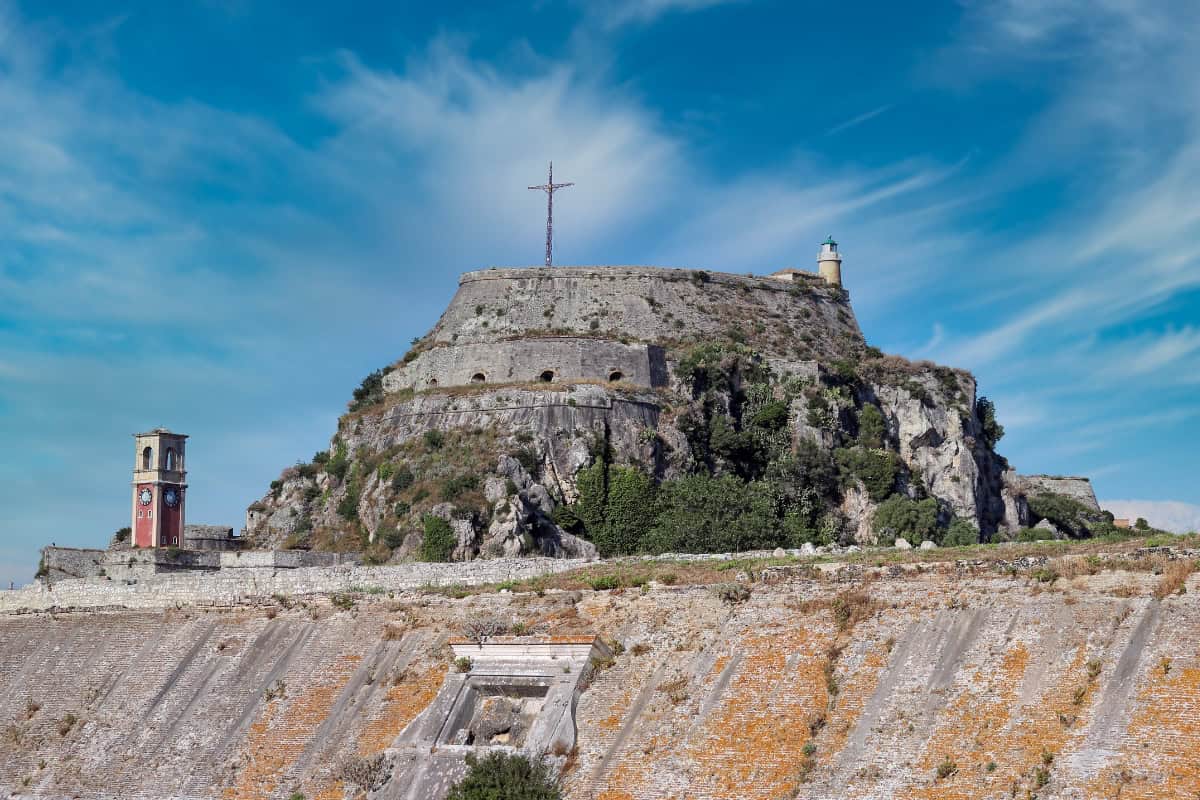
We all picture our ideal break a little differently, so there’s simply no one-size-fits-all answer. During our stay, Lukáš and I alternated between lazy days sprawled on the beach and weeks of enthusiastically criss-crossing the island on foot. It all comes down to whether your goal is to work on your tan or explore ancient Venetian fortresses with a camera in hand.
Best Time for Swimming and Beaches
If your idea of a holiday is salty sea water and hot sand beneath your feet, your prime season starts in June and wraps up in September. The sea warms up rapidly through June, and by July it’s already a lovely 24 °C — warm enough to plunge straight in from your sunlounger without a second thought. The warmest sea in Corfu comes in August, when the water averages around 26 °C and feels like absolute bliss.
Lukáš and I fell most in love with swimming in June and then around the turn of August and September. During these months the water is beautifully warm, but the sun doesn’t burn quite as fiercely, so you won’t need to hide away in air-conditioned rooms over midday. Plus, the beaches are noticeably less crowded, making it much easier to bag that perfect spot under a parasol.
Best Time for Sightseeing and Hikes
If you’re more of an active traveller who loves long walks and history, I’d recommend focusing on late April through mid-June, or September into early October. Spring temperatures hover between 20 and 24 °C, which is absolutely ideal for hikes and excursions such as the climb up Mount Pantokrator, the island’s highest peak. On a clear day, you can see all the way to the nearby Albanian coast from the summit — it’s a truly stunning experience.
Spring also brings one huge and utterly unique draw to Corfu: the Greek Orthodox Easter celebrations. On Holy Saturday, an amazing tradition called botides unfolds in the historic centre of Corfu Town, where locals hurl massive clay pots filled with water from their balconies. They shatter on the cobblestones with an almighty crash, symbolising spring renewal and the banishing of evil spirits. It’s a mesmerising spectacle that draws enormous crowds, all set against the backdrop of the island’s most beautiful spring greenery.
Shoulder Season: Quiet Times and Best Deals
For those of you with a flexible schedule who like to stretch the travel budget, the absolute winners are May and September. During these months, the island breathes with a wonderfully relaxed atmosphere and you get the best balance of weather and price. Tavernas are open, staff are either full of post-winter energy or enjoying a mellow autumn vibe, and accommodation costs 40–60% less than during peak summer.
The deep off-season from November to March offers the lowest prices of all, but you’ll need to accept cooler weather and frequent rain. Most small seaside resorts close up during these months, so the island takes on a rather sleepy, deserted feel. It can be an interesting time for digital nomads looking for peace and quiet to work, but for a classic holiday it’s probably not the best bet.
What to Avoid: Peak Summer and Rainy Winter
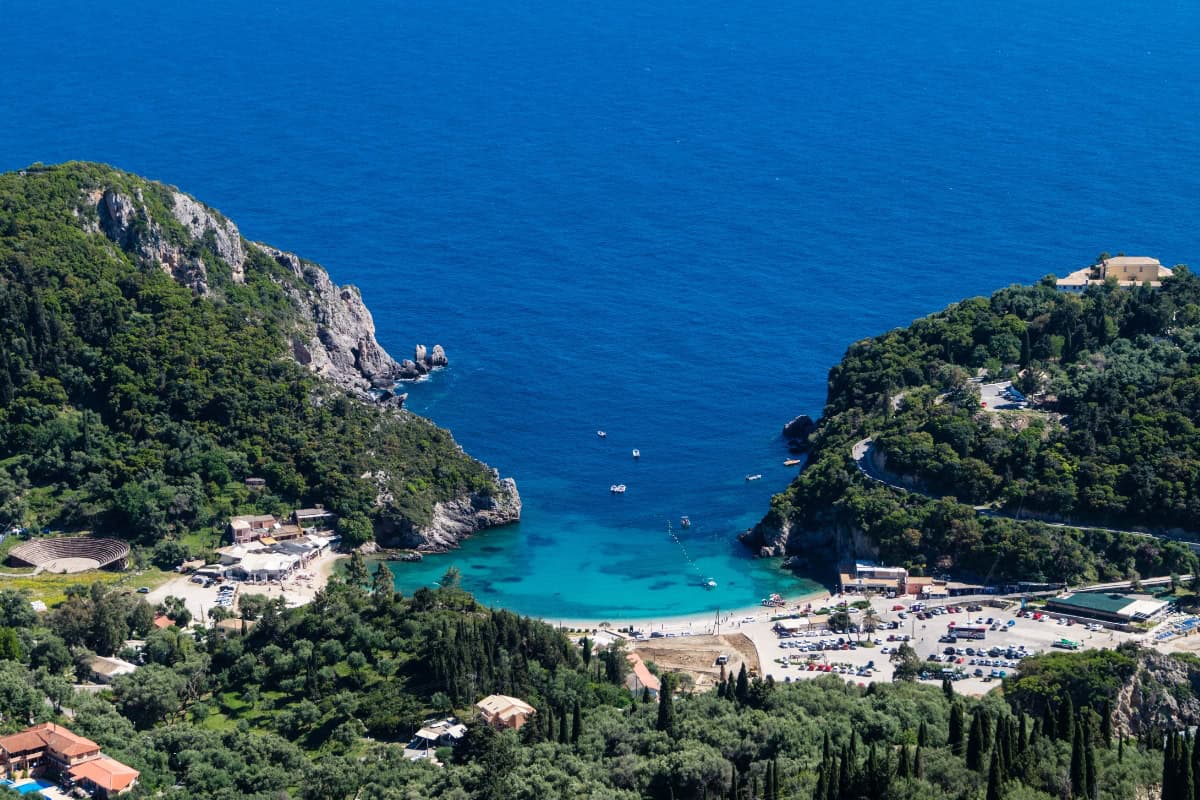
I’ll be honest — I personally try to avoid July and August. Temperatures regularly exceed 31 °C, the air sometimes barely moves, and the narrow lanes of the old town feel like a sauna. On top of that, thousands of tourists push prices to their annual peak, and on popular beaches like Paleokastritsa you can barely find room to lay your towel.
The other extreme I’d suggest avoiding when planning your trip is the period from November to February. Rainy winter in Corfu can be quite a test of patience, with over 180 mm of rainfall per month. Many direct flights from the UK don’t operate during this time, and the tourist infrastructure along the coast goes on a well-deserved winter break.

Corfu Resort Season: When Are Hotels Open
Life on the island follows a very clear tourist rhythm that’s worth understanding before you book your flights. The main season kicks off in May, when the first hotels reopen after winter, and gradually builds to a crescendo through to October’s Indian summer. If you visit during this window, you can be sure that from the bustling resort of Kavos in the south to the charming village of Benitses on the east coast, everything will be up and running and buzzing with life.
Once November arrives, however, it’s as though someone flicks a switch and a large part of the coastal areas sinks into a long winter sleep. Most hotels in the holiday resorts shut their doors for winter and don’t reopen until March or April. This means that off-season in Corfu, finding an open taverna or bakery near the beach is next to impossible, as even the local owners retreat to larger towns or the island’s interior.
The exception, of course, is Corfu Town itself — also known as Kerkyra — which has a life of its own all year round. You’ll find open shops, museums, and wonderful little cafés beneath the famous arcades of the Liston. Larger towns such as Acharavi, Lefkimmi, and Kassiopi also maintain year-round facilities. During the winter months, Corfu transforms from a beach destination into a quieter cultural and sightseeing retreat.
Sea Temperature and Swimming in Corfu
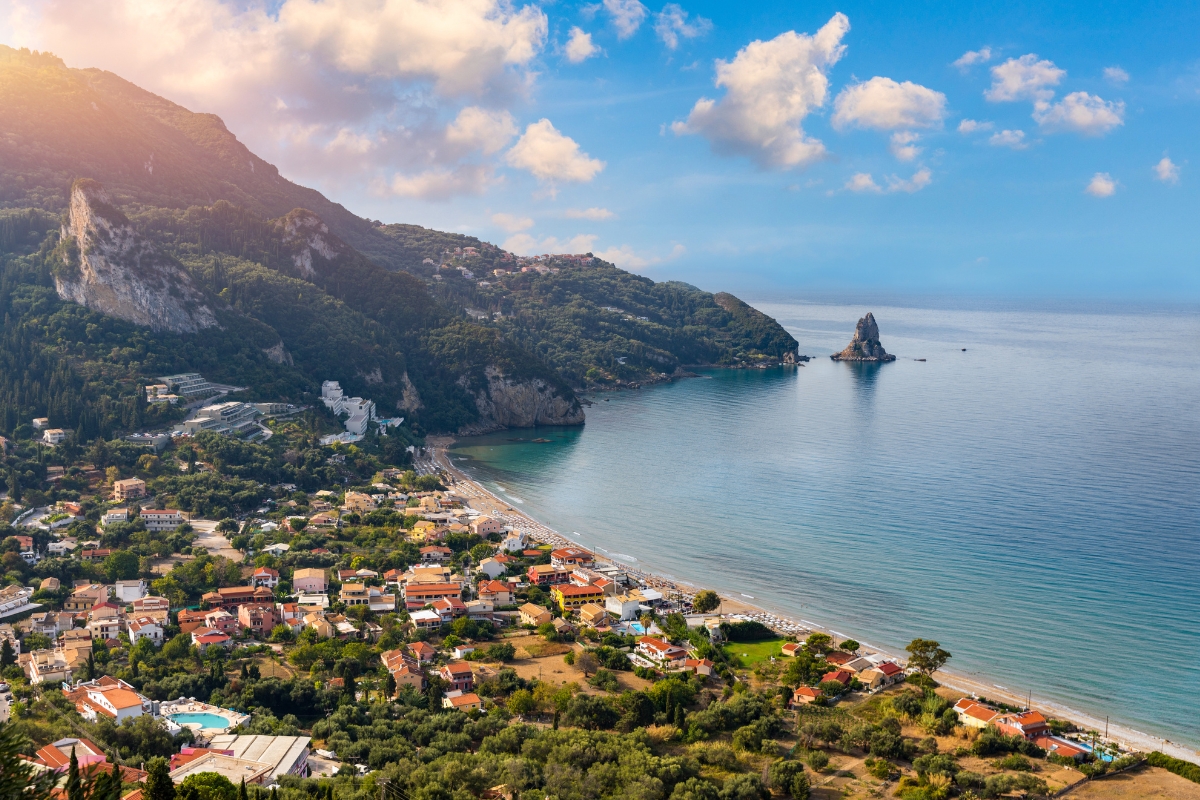
The Ionian Sea has a somewhat different character compared to the Aegean, with an average annual temperature of around a pleasant 20 °C. You’ll enjoy the warmest water from July to September, when values settle between 24 and 26 °C and a swim feels like lounging in a heated outdoor pool. In August, we’d head straight from bed into the sea and happily splash around for hours on end.
If you’re tempted to visit earlier, the swimming season typically begins in June when the sea warms up to a comfortable 22 °C. May is more of a transitional month with water around 19 °C — great for those of you who enjoy a bracing dip, but probably not quite warm enough for extended swims. April, at 16 °C, is really only for the bravest souls.
Indian summer is also hugely popular here, because swimming in Corfu in October is usually still perfectly doable. The sea holds onto its accumulated summer warmth and sits around 22 °C. You do need to factor in the increasing number of rainy days in autumn, though, so sunshine for drying your swimwear isn’t always guaranteed. September is a far more reliable choice in that respect.
Why Corfu Is the Greenest Greek Island
Every time we fly to Greece, I’m fascinated by the contrasts in colour, but Corfu is in a league of its own. It’s hands-down the greenest island you can visit in the country, and the reason is simple: it holds the record for the most rainfall among the Greek islands. Annual totals reach roughly 1,290 mm, which is far more than parched Crete for comparison — but don’t worry, because the vast majority of this rain falls during the quieter period from October to June.
The combination of mild Ionian winters, abundant rainfall, and mountainous terrain creates absolutely perfect conditions for lush vegetation. Millions of ancient olive trees and slender cypresses blanket the island, so the landscape sometimes looks more like a piece of Tuscany than the Greece you see on postcards. The beautiful Venetian architecture, left behind after centuries of Italian influence, only adds to this impression.
In summer, you can also look forward to another pleasant natural phenomenon: the refreshing wind known as the maestral (or maistros). This gentle north-westerly sea breeze typically picks up around midday, reaches its peak in the afternoon, and dies down beautifully by evening. It does a brilliant job of taking the edge off the heat during the hottest spells and is hugely popular with sailors. Thankfully, the fierce Aegean meltemi winds that batter other Greek islands are virtually unknown here.
What to Pack for Corfu
Packing can be a bit of a logistical puzzle sometimes, so I’m happy to share a few tried-and-tested tips. If you’re heading to Corfu in the height of summer, you really only need light, breathable clothing, swimwear, sunglasses, and a good quality sunscreen. Evenings are warm, so you can safely leave the jumpers at the back of the wardrobe.
For spring and autumn visits, on the other hand, you’ll want to embrace the layering approach. During the day, the sun is warm enough for a short-sleeved top, but once it dips the temperature drops quickly and you’ll be glad of a light jacket or fleece. If you’re visiting in the winter months, make sure to pack a reliable waterproof jacket or rain coat, because rainy weather is almost certainly going to make an appearance. A portable travel kettle like an Outin can also be a welcome companion for warming up with a coffee on cooler days.
Where to Stay in Corfu
Choosing the right accommodation depends largely on what time of year you plan to visit. From May to October, all the coastal resorts are open for business and you can pick from anything between small apartments and luxury hotel complexes overlooking the beach. Outside of the season, it’s much safer and more practical to base yourself in Corfu Town, where you can take day trips around the island and won’t struggle to find a restaurant serving a delicious Greek salad or saganaki cheese in the evening. You can browse a wide range of options on Booking.com.
If you want to be right by the sea during the season, take a look at the popular Angsana Corfu Resort & Spa, and if you’re planning a stay in Corfu Town — even outside the main season — you’ll be pleasantly surprised by the Siorra Vittoria Boutique Hotel, tucked away in the lanes of the old town.
Further Reading
Now that you know what weather to expect, it’s the perfect time to start planning what you’ll actually get up to on the island. I’ve put together more detailed guides packed with our personal tips and favourite spots.
Frequently Asked Questions
I get loads of brilliant messages and questions from readers, so I’ve decided to gather the most common ones in one place to help make your decision easier.
What’s the weather like in Corfu in May?
May is an absolutely wonderful month for anyone who’s not keen on extreme heat. Daytime temperatures hover around a very pleasant 24°C, rainfall is minimal, and the island is freshly in bloom. The sea is still slowly warming up to around 19°C, so it’s really more for hardy swimmers, but in return you’ll get absolute peace and quiet for exploring and very reasonable accommodation prices.
What’s the weather like in Corfu in September?
September is, in our opinion, probably the island’s best-kept secret. You’ll still enjoy beautiful summer temperatures of 28°C during the day, but the evenings are slightly cooler and better for sleeping. You might occasionally get a quick shower or thunderstorm, but the sea is warmed up from August to a fantastic 24°C, so swimming is pretty much guaranteed.
Can you swim in Corfu in October?
Swimming in October is definitely possible, as the sea maintains a temperature around 22°C, but you do need a bit of luck with the weather. While early October is usually still beautifully sunny and stable, by the end of the month cloudiness increases rapidly and you’ll typically see around 130mm of rainfall. It’s a bit of an autumn lottery, really.
When is it hottest on the island?
The biggest heat wave hits Corfu in August, when average daytime temperatures easily exceed 31°C and the sun blazes from morning till evening. This is also when you’ll find the warmest sea of the year, at around 26°C. If you don’t handle heat well, I’d recommend spending afternoons in the shade of olive trees with a generous serving of homemade tzatziki and cold water.
Does it rain a lot in Corfu?
Yes and no. Corfu is indeed the rainiest Greek island, with around 1,290mm of rainfall annually, which is why you’ll find all that gorgeous greenery everywhere. The important thing to know, though, is that the vast majority of this rain falls between November and March, while the summer months from June to August are actually very dry and sunny.
When is it cheapest and least crowded?
If you’re looking for the absolute lowest prices, you’ll find them in the deep off-season from November to March, but you’ll have to accept closed resorts and frequent rain. Of the more ‘usable’ months when things are open and the sun’s shining, May is the best value and quietest, followed closely by late September and early October.
What’s the best month to visit overall?
If I had to pick just one or two months to recommend to my best friends, I’d definitely choose June and September. The weather in both is beautifully warm (or still warm), the sea welcomes you with open arms, you’ll avoid the biggest summer crowds, and prices at tavernas and hotels are much more reasonable than during peak holiday season.
Tips and Tricks for Your Vacation
Don’t Overpay for Flights
Search for flights on Kayak. It’s our favorite search engine because it scans the websites of all airlines and always finds the cheapest connection.
Book Your Accommodation Smartly
The best experiences we’ve had when looking for accommodation (from Alaska to Morocco) are with Booking.com, where hotels, apartments, and entire houses are usually the cheapest and most widely available.
 🚗 Car rental on the roadVerified rental cars in the Ionian Islands
Search with the DiscoverCars comparison engine — it compares prices from dozens of local and international rental companies, and most bookings come with free cancellation.
Compare car prices in the Ionian Islands →Don’t Forget Travel Insurance
Good travel insurance will protect you against illness, accidents, theft, or flight cancellations. We’ve had a few hospital visits abroad, so we know how important it is to have proper insurance arranged.
Where we insure ourselves: SafetyWing (simple monthly subscription) and TrueTraveller (for extra-long trips).
Find the Best Experiences
Get Your Guide is a huge online marketplace where you can book guided walks, trips, skip-the-line tickets, tours, and much more. We always find some extra fun there!