The full destination guide: Asia — guide and what to see
Literacy Could Lift 170 Million People Out of Extreme Poverty
Support children’s education. Education is the key to pulling any country out of poverty. Why? According to statistics from the UNESCO Global Education Monitoring Report and the Education Commission’s Learning Generation Report, 170 million people could be lifted out of extreme poverty simply by leaving school with basic reading and writing skills. Research has shown that education leads to lower birth rates, reduces the risk of teenage pregnancy, and consequently lowers mortality rates among children and young mothers during childbirth.Every Dollar Invested in Education Returns Fivefold
 What’s more, when children attend school, they’re far more likely to secure better jobs in the future. Each year of schooling reportedly increases future earnings by 10%, and every dollar invested in education yields 5 dollars in return in countries affected by extreme poverty.
This is one of the reasons we decided to support the nonprofit organisation ADRA, which helps children from disadvantaged families in Bangladesh access better education.
Bangladesh currently has a population of 166.4 million, and 25% of people over 15 are illiterate. Around 1.3 million children aged 5–14 work instead of attending school, just to help feed their families. Like us, the people at ADRA are well aware that education is one of the most effective tools for combating poverty — opening up new opportunities for young people. With an education, they can find better-paying jobs, develop their skills, and support their entire families. ADRA currently runs two long-term projects in Bangladesh: BanglaKids and Čalantika.
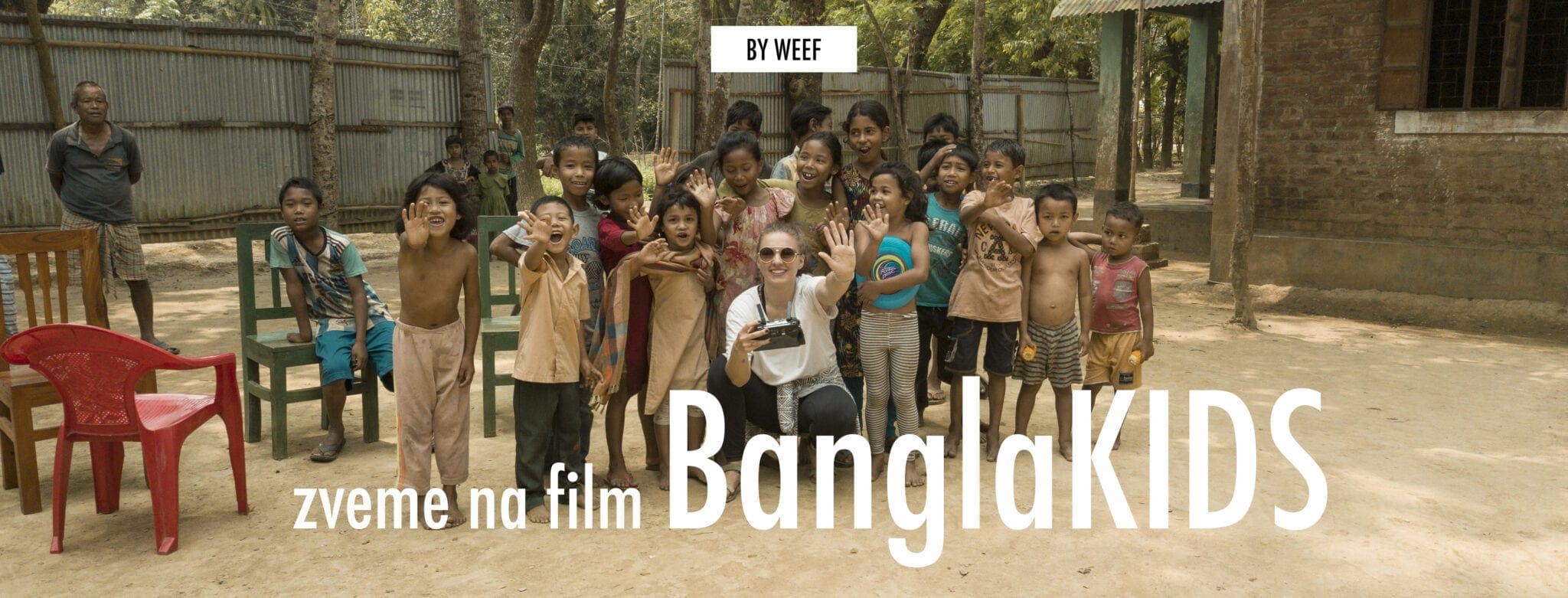
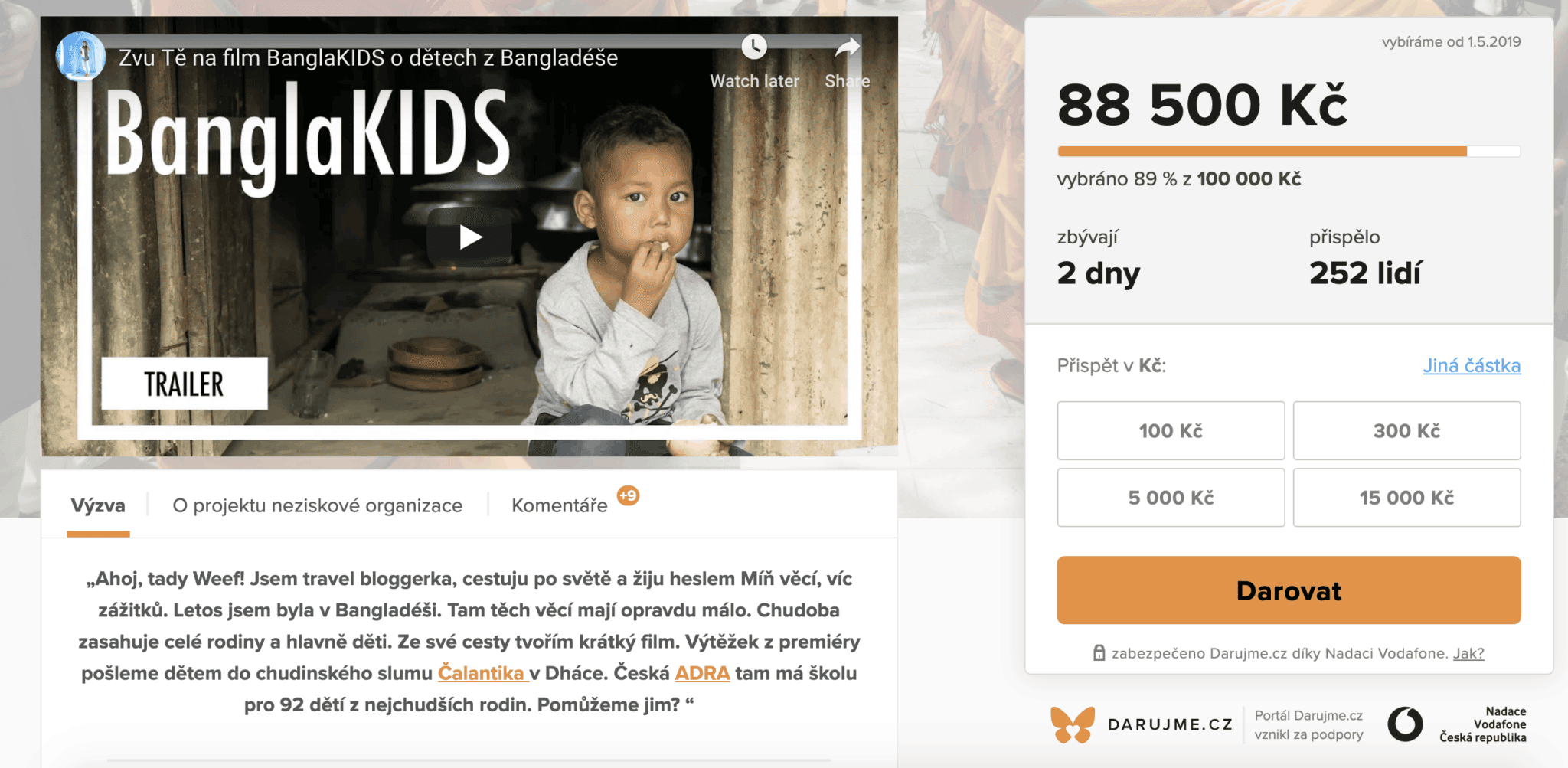
To support these projects, the charity film BanglaKIDS was created in collaboration with travel blogger Weef, showcasing children from across Bangladesh in various life situations. If you’d like to support ADRA’s efforts and learn more about children in Bangladesh, you can purchase a ticket to the film premiere or a link to stream it online through the darujme platform.
What’s more, when children attend school, they’re far more likely to secure better jobs in the future. Each year of schooling reportedly increases future earnings by 10%, and every dollar invested in education yields 5 dollars in return in countries affected by extreme poverty.
This is one of the reasons we decided to support the nonprofit organisation ADRA, which helps children from disadvantaged families in Bangladesh access better education.
Bangladesh currently has a population of 166.4 million, and 25% of people over 15 are illiterate. Around 1.3 million children aged 5–14 work instead of attending school, just to help feed their families. Like us, the people at ADRA are well aware that education is one of the most effective tools for combating poverty — opening up new opportunities for young people. With an education, they can find better-paying jobs, develop their skills, and support their entire families. ADRA currently runs two long-term projects in Bangladesh: BanglaKids and Čalantika.
To support these projects, the charity film BanglaKIDS was created in collaboration with travel blogger Weef, showcasing children from across Bangladesh in various life situations. If you’d like to support ADRA’s efforts and learn more about children in Bangladesh, you can purchase a ticket to the film premiere or a link to stream it online through the darujme platform.
More About the BanglaKIDS and Čalantika Projects
BanglaKids is a long-term development programme focused on providing targeted support for the education of children and young people in Bangladesh. Donors sponsor a specific child and receive updates on their life situation and school progress — they can even exchange letters. The programme has been running for 20 years, and donors — primarily from the Czech Republic and Slovakia — have helped more than 6,500 Bangladeshi children during that time. BanglaKids supports children across 28 schools throughout Bangladesh: 20 village schools, 7 boarding schools, and one urban school. Thanks to the programme, children can access primary, secondary, and even bachelor-level education. Čalantika is an educational centre for children and their parents in Bangladesh’s capital, Dhaka. It’s located next to a slum where around 10,000 families live in tin shelters above a lake filled with rubbish. These families often can’t afford the materials and fees required for their children’s education, which means kids end up working instead of going to school — or girls are married off at a young age. Čalantika currently supports 92 families. It provides children with quality education, school uniforms, nutritious daily meals, and medical care. Parents can attend courses on topics like parenting, hygiene, pregnancy, human rights, and more. Many of the mothers themselves never completed primary school, so literacy classes are available for them too.
How Does Education Reduce Poverty?
The education poverty statistics speak for themselves: every additional year of schooling can increase an individual’s earnings by up to 10%, and educated women tend to have fewer children, invest more in their families’ health, and break the cycle of intergenerational poverty. When communities gain access to quality education, the ripple effects are enormous — from improved public health to stronger local economies. Organisations like ADRA demonstrate that even small, targeted investments in education can transform entire communities. If you’d like to be part of that change, consider supporting one of their projects in Bangladesh.Tips and Tricks for Your Vacation
Don’t Overpay for Flights
Search for flights on Kayak. It’s our favorite search engine because it scans the websites of all airlines and always finds the cheapest connection.
Book Your Accommodation Smartly
The best experiences we’ve had when looking for accommodation (from Alaska to Morocco) are with Booking.com, where hotels, apartments, and entire houses are usually the cheapest and most widely available.
Don’t Forget Travel Insurance
Good travel insurance will protect you against illness, accidents, theft, or flight cancellations. We’ve had a few hospital visits abroad, so we know how important it is to have proper insurance arranged.
Where we insure ourselves: SafetyWing (simple monthly subscription) and TrueTraveller (for extra-long trips).
Find the Best Experiences
Get Your Guide is a huge online marketplace where you can book guided walks, trips, skip-the-line tickets, tours, and much more. We always find some extra fun there!