If you’re planning a trip to the Dolomites Italy, sooner or later you’ll stumble across photos of Sass Pordoi — a majestic flat-topped mountain that looks like it was plucked straight from a sci-fi film about colonising the Moon. The Italian Dolomites are packed with jaw-dropping natural wonders, but Sass Pordoi holds an absolutely special place among them. It’s one of those spots you simply have to know about and add to your itinerary if you want to experience genuine high-alpine atmosphere without needing to be a professional mountaineer.
Sass Pordoi is one of those places you simply can’t skip in the Dolomites. It’s a destination that perfectly defines what “cable car Dolomites” is all about, and we ourselves rode the cable car all the way up to the terrace — back in the days when it was just us and our dog Kája (before we had our second dog Baby or our son Jonáš). We’ve gathered all the latest information so you can make the most of your visit.
Right, now for the main event: I’ve put together 10 tips on what to see and do here. From summiting the 3,000-metre peak of Piz Boè to legendary viewpoints, and even why you should leave your drone at home. 😉 I’ll also help you sort out accommodation and the cable car.
TL;DR
- Where is it: Sass Pordoi (2,950 m) is a rocky plateau in the Sella group, straddling the Italian provinces of Trentino and Belluno.
- How to get there: Most easily from the mountain pass Passo Pordoi (2,239 m), where an aerial cable car runs directly to the summit. The ride takes roughly 3 minutes.
- Who is it for: Absolutely everyone. The cabin whisks you to the top and on the viewing platform itself you can happily sip a coffee and soak up the views without breaking a single sweat.
- Main goal: The hike to nearby Piz Boè (3,152 m), one of the most accessible 3,000-metre peaks in the entire Alps.
- Watch out for drones: There’s an absolute no-fly zone for drones in the area, with fines reaching up to €3,000.
The full destination guide: Dolomites — guide and what to see
What is Sass Pordoi and the Terrace of the Dolomites
Let’s start by getting a proper picture of what we’re talking about, because Sass Pordoi isn’t just any old mountain peak you’d spend all day scrambling up through thick forest. Imagine a colossal block of stone rising from the surrounding green valleys like some giant medieval fortress.
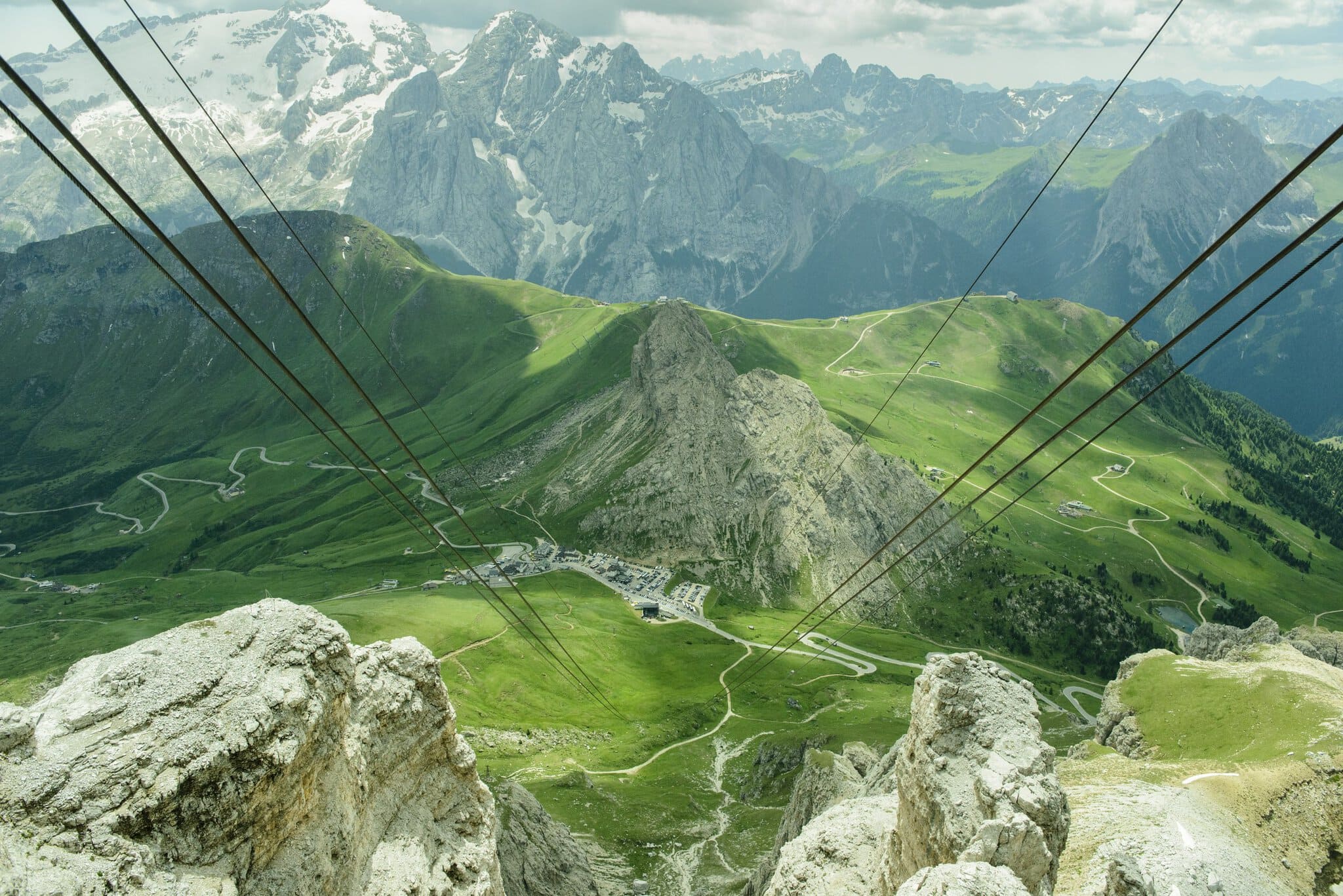
Sass Pordoi forms the southernmost spur of the Sella massif, a fascinating geological formation. Unlike the sharp, pointy towers you might know from the Tre Cime area, the Sella massif has the shape of an enormous table mountain. Up top, it’s one vast, seemingly endless lunar landscape of pale rock and scree, where no trees grow and you feel utterly cut off from civilisation down in the valley.
The summit of Sass Pordoi itself is nicknamed the Terrace of the Dolomites, and when you ride up there, you’ll instantly understand why. At 2,950 metres above sea level, you genuinely feel like you’re standing on top of the world. The terrain up here is relatively flat, so you can safely wander along the edge of this gigantic terrace and gaze at the surrounding peaks stretching all the way to the horizon. It’s hugely popular with hardcore alpinists and families with children alike, because the large aerial cable car erases all that elevation gain in a matter of minutes.
When to Visit and How to Get to Sass Pordoi
If you’re planning a trip to Italy and wondering when the best time is to visit this mountain icon, bear in mind that at nearly three thousand metres, the climate is fairly harsh year-round. Here’s a complete breakdown of seasons and transport options so you don’t end up standing helplessly in front of a closed cable car station.
Best Time to Visit
For classic hiking and soaking up the views, the ideal window is late June through to mid-September. During this time there’s the least snow on the plateau and all the mountain huts are open. I do have to warn you strongly about August, though — specifically the week around Ferragosto (in 2026 that falls around 11–18 August). This is when the whole of Italy goes on holiday and the Dolomites are absolutely heaving, so you’d face endless queues for the cable car and be packed like sardines at the viewpoints.
Autumn, particularly late September and October, is fantastic for photographers as the air tends to be clearer and the skies more stable — though you’ll need to factor in chilly winds and the possibility of first snowfall. Winter, naturally, belongs to skiers, as the entire area forms part of the massive Dolomiti Superski complex and the famous Sellaronda circuit.
Cable Car to the Sky
The easiest and by far most popular way to get up is the Sass Pordoi cable car. Its lower station sits right at the Passo Pordoi mountain pass (at 2,239 m). If you punch “funivia sass pordoi stazione a valle” into your sat nav, it’ll take you to a large car park right next to the boarding area.
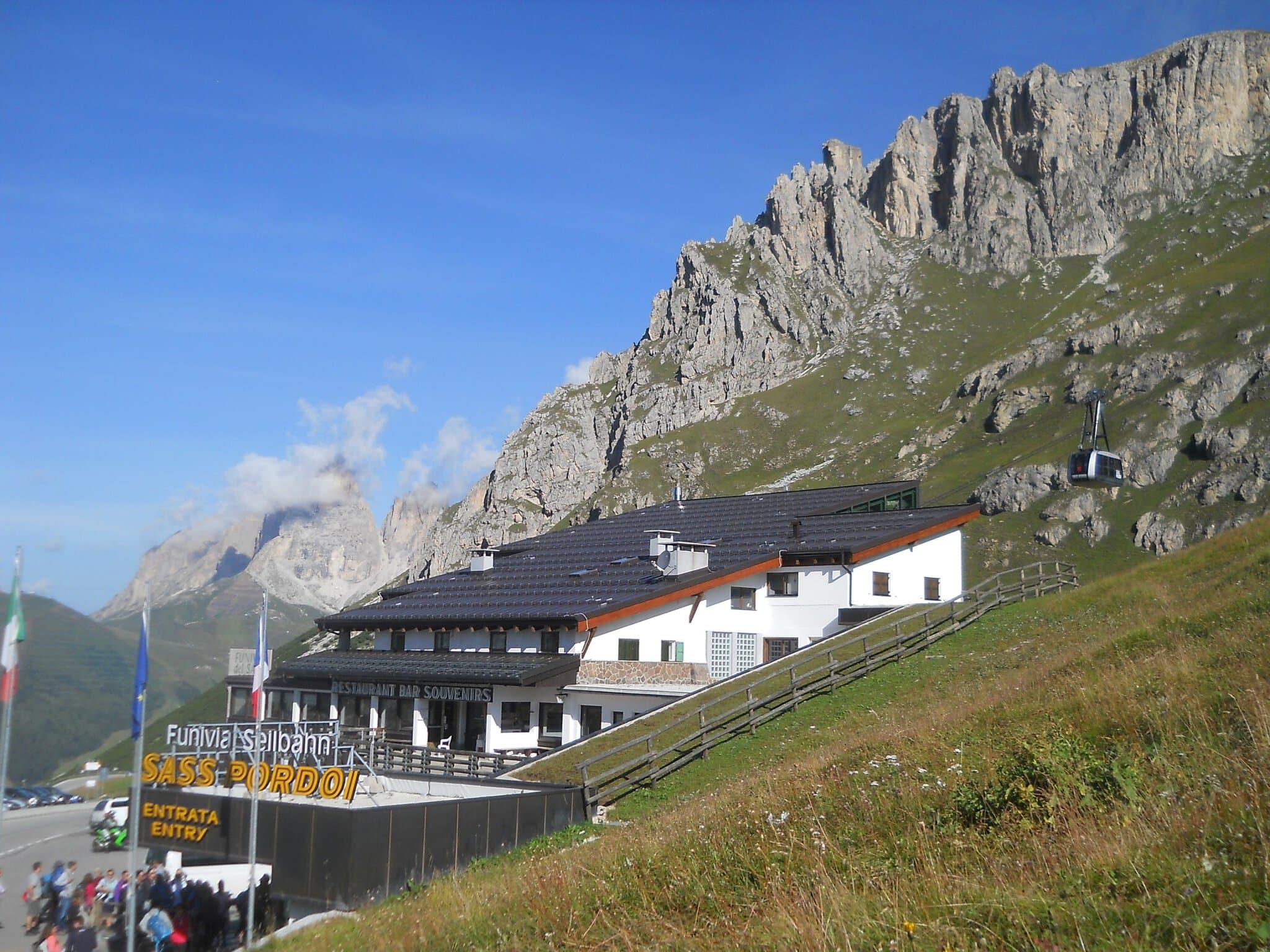
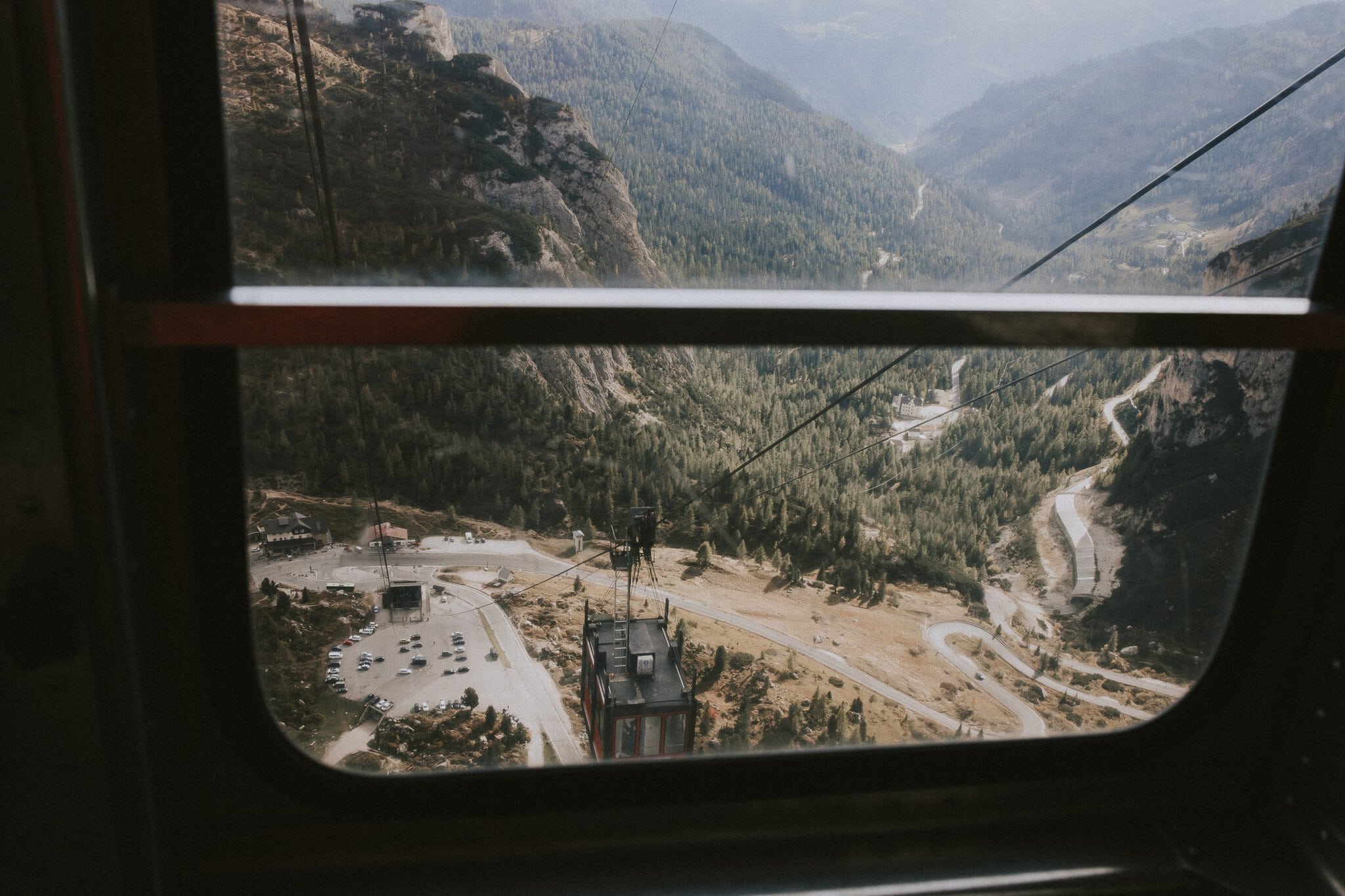
The ride in the aerial cabin is a thrill in itself — you ascend steeply alongside a sheer rock wall without any intermediate pylons. It takes just under three minutes to the top, during which you gain over 700 metres of elevation. As for tickets, prices change slightly each year, but currently expect around €28 for a one-way trip and roughly €39 for a return. You can buy tickets on the spot, but during summer I’d definitely recommend booking online to dodge the queues at the ticket office.
Driving to Passo Pordoi
First, you need to get to the cable car’s lower station, either by car or local buses. Passo Pordoi links the town of Canazei in the Val di Fassa valley with the village of Arabba. From Canazei it’s roughly a 20-minute drive along an incredibly twisty road full of hairpin bends — your head might spin a little, but the views along the way are absolutely worth it.
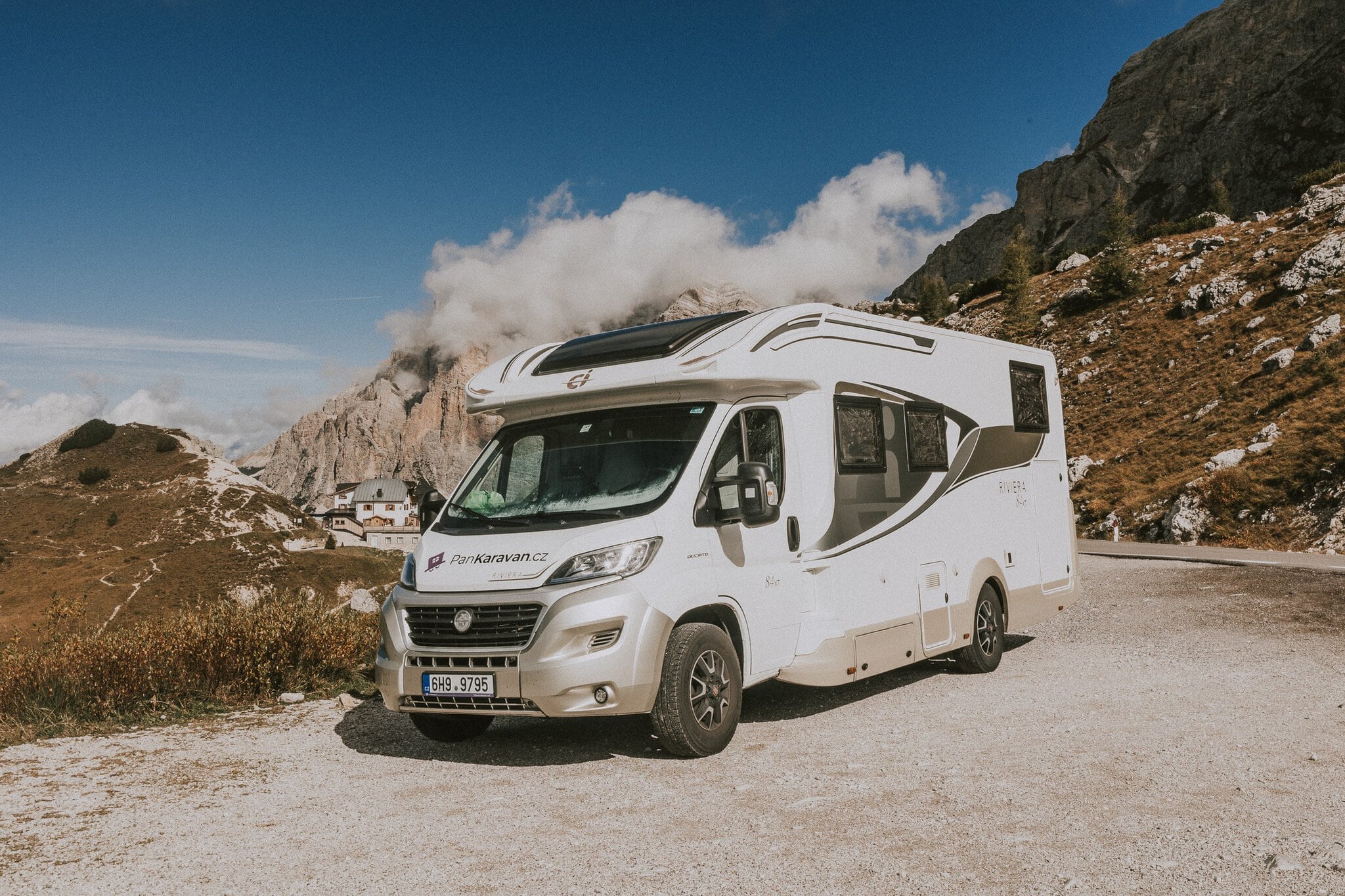
Right at the pass there are several car parks. Bear in mind that parking is paid (an all-day stay costs about €8) and especially in July and August you really need to arrive early in the morning — ideally before nine — otherwise you risk not finding a spot and having to park miles away along the roadside.
If you’d like to explore more of the Dolomites: a complete guide to what to do in the Dolomites, Passo Pordoi makes an absolutely brilliant starting point. And if you’re not driving your own car to Italy, we’ve had consistently great experiences with DiscoverCars, which we use all over the world.
Where to Stay When Visiting Sass Pordoi
Choosing the right accommodation in the Dolomites is absolutely crucial — because even though things look close on the map, driving over mountain passes eats up a surprising amount of time. To keep Sass Pordoi as close as possible so you can be the first on the cable car after breakfast, I recommend staying in one of three strategic areas around the Sella massif.
Canazei and Val di Fassa
This valley is probably the most practical and liveliest choice. Canazei is a gorgeous, quintessentially Alpine town where you’ll find plenty of excellent restaurants, outdoor gear shops, and charming cafés. From Canazei, it’s about a 20-minute drive up to Passo Pordoi. The valley is also brilliantly connected to other hiking destinations and offers a wide range of accommodation, from luxury wellness hotels to budget-friendly apartments.
Our tip for a truly comfortable stay with outstanding food and beautiful design is Hotel Locanda degli Artisti. If you’re after a solid mid-range option at a reasonable price, check out Albergo Alla Rosa right in the centre of town. A week for two in Canazei during peak summer season runs roughly €1,000 to €1,600, depending on whether you splash out on half-board and wellness.
Arabba
While Canazei buzzes with life, Arabba on the other side of the pass is noticeably quieter and a touch smaller. In winter it’s an absolute paradise for skiers, as it offers the shortest access to the Marmolada glacier, but in summer you’ll find incredible peace and tranquillity. The drive from Arabba to Passo Pordoi takes roughly 15 minutes through gorgeous hairpin bends.
Accommodation here is slightly cheaper than in Val di Fassa. A wonderful Alpine experience awaits at the family-run Hotel Evaldo, where you can soak in the hot tub after a hike and simply watch the sun set over the surrounding peaks.
Selva di Val Gardena
The third excellent option is to stay on the northern edge of the Sella massif, in the renowned Val Gardena valley. Selva (or Wolkenstein, since you’ll hear more German than Italian here) is a more exclusive resort, which unfortunately is immediately reflected in the prices. Lukáš would say they’re “a third more expensive on principle,” and he probably wouldn’t be far wrong. 😅 From here, Passo Pordoi is about a 30 to 40-minute drive via Passo Sella, which is itself an incredibly scenic journey.
For those who love absolute comfort, we can wholeheartedly recommend the stunning Boutique Hotel Nives, which will wow you with its top-notch gastronomy.
10 Tips on What to See and Do at Sass Pordoi
Sass Pordoi and its surroundings are definitely not a quick half-hour stop. This part of the Dolomites mountains in Italy offers activities for several days, whether you prefer easy strolls or serious mountaineering. Here’s my top 10 — everything from things you can manage in flip-flops to adrenaline that’ll leave your arms aching for three days. 😁
1. Panoramic Terrace: 360 Degrees of Perfection

The moment you step out of the upper cable car station, you’re standing on the Terrace of the Dolomites itself. You don’t need to walk a single extra metre to be greeted by a view you’ll probably remember for the rest of your life. Safe stone paths and viewpoints run along the entire cliff edge.
From this spot on a clear day, you can see virtually every major group in the Dolomites. Directly opposite rises the snow-capped queen of the Dolomites, Marmolada. In good weather you can see all the way to the iconic Tre Cime di Lavaredo, and you’ll clearly make out the monumental walls of Pelmo, Civetta, and the Catinaccio (Rosengarten) group.
Spending an hour here simply gazing and snapping photos is an absolute must on every visit. Just don’t forget to bring a windproof jacket — on this exposed plateau, an icy wind blows even when it’s a tropical summer down in the valley.
2. Rifugio Maria and Rifugio Sass Pordoi: Lunch in the Clouds
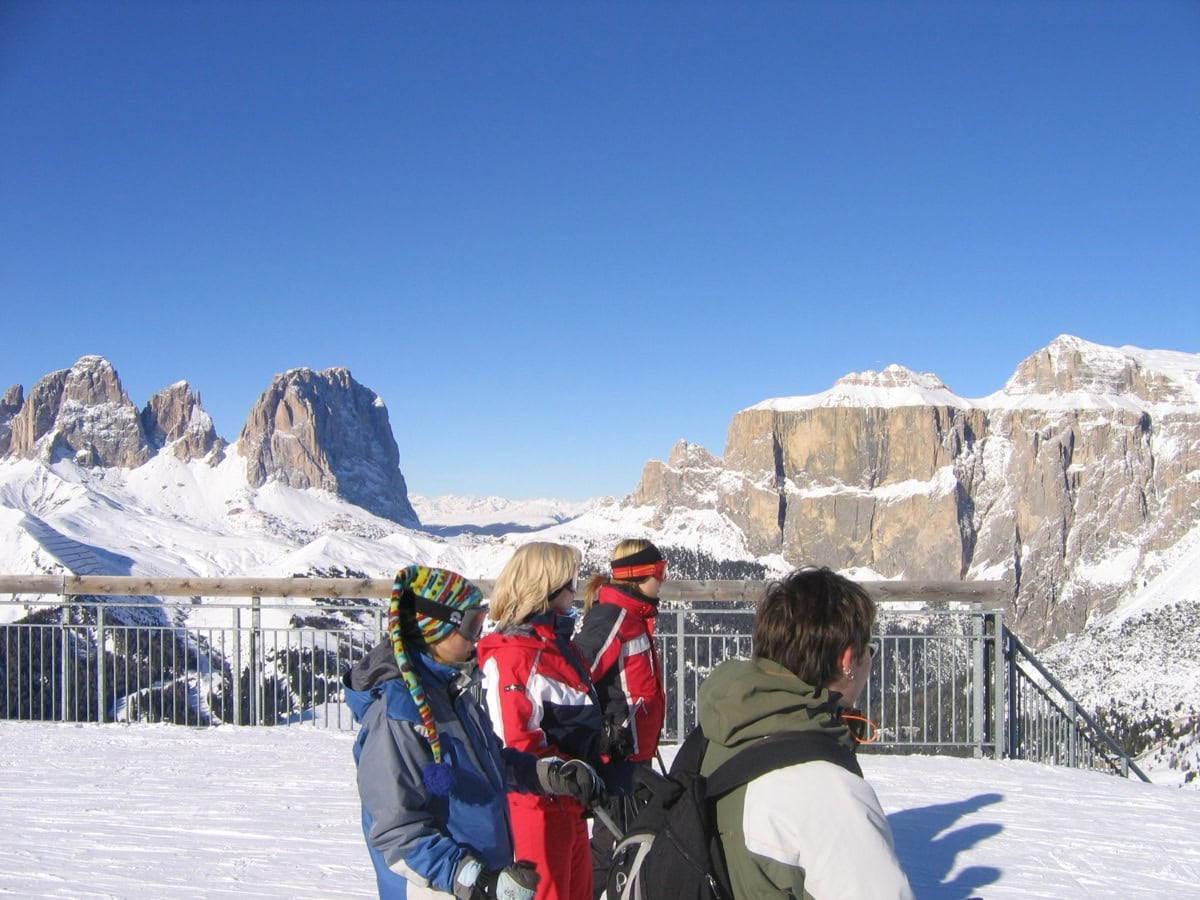
High-altitude hiking reliably works up an appetite. Right next to the cable car station you’ll find Rifugio Maria, a superb modern building with glass walls. You can sit in the warmth with a bowl of hot soup and feel like you’re floating above the Val di Fassa valley. The restaurant tends to get packed around lunchtime, so it’s better to pop in either earlier or in the late afternoon before heading back down.
If you’re craving a more traditional mountain atmosphere, just walk a few dozen metres across the rocky plateau to the historic Rifugio Sass Pordoi. It’s a smaller stone hut that looks exactly how you’d picture a mountaineer’s refuge from a hundred years ago.
Personally, I’d recommend trying the local polenta with porcini mushrooms and melted mountain cheese, followed by a proper Alpine Apfelstrudel. Although prices at these altitudes are understandably a bit higher than down in the towns, the experience of sipping a bombardino or excellent wine with a view across the entire Dolomites is unquestionably worth every penny.
3. Hiking Piz Boè: Through Lunar Landscape to the Summit
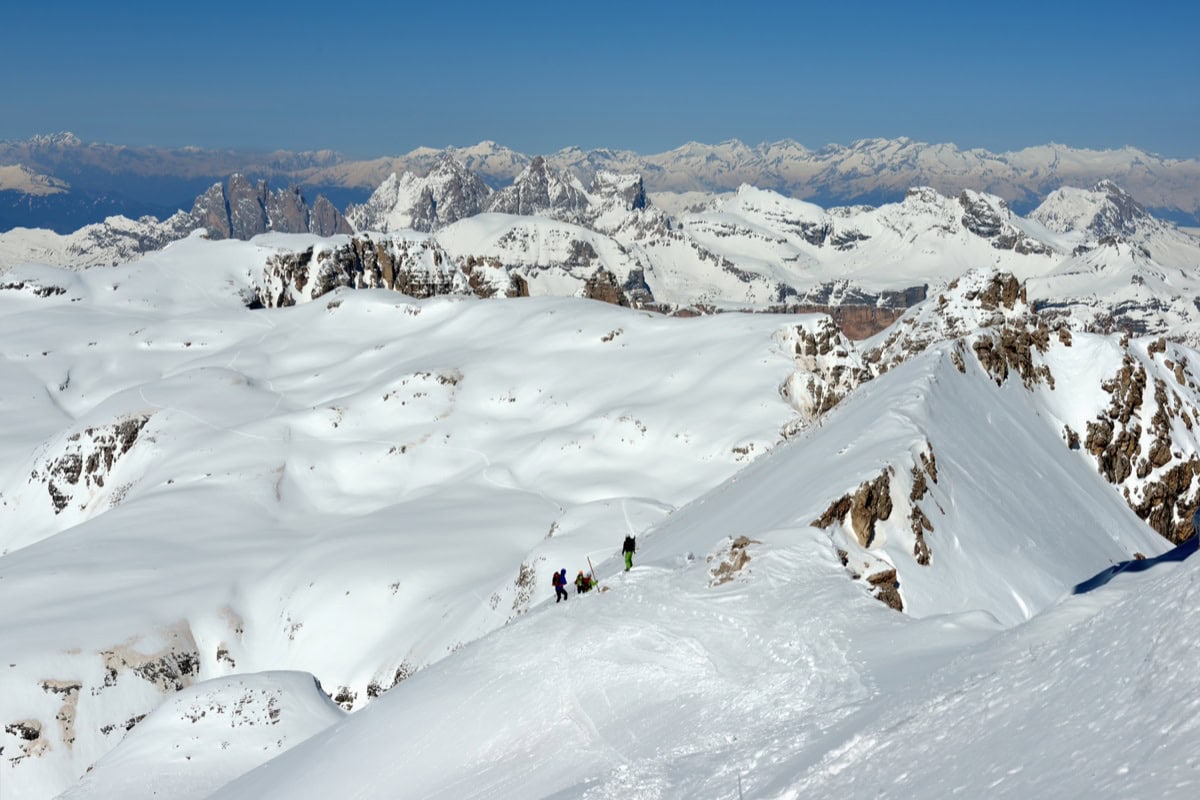
This is the main reason most hikers take the Sass Pordoi cable car in the first place. Just a short distance from the top station lies the summit of Piz Boè, standing at 3,152 metres. It’s one of the most accessible 3,000-metre peaks in the entire Alps, because the cable car does the lion’s share of the elevation gain for you.
The route from the upper station to the summit takes roughly an hour and a half of walking time going up. You’ll cross gently undulating terrain covered in pale scree that genuinely resembles the surface of another planet. The final push to the pyramid-shaped peak of Piz Boè is fairly steep, and in places you might need to use your hands on the fixed steel cables, but with a reasonable level of fitness and sturdy hiking boots, any average hiker can manage it.
At the top, a small but utterly charming hut — Capanna Piz Fassa — awaits you, along with a breathtaking panorama over the whole of northern Italy. Just make sure you pick a day with stable weather for this hike, because a thunderstorm on this exposed rocky plateau is an extremely dangerous affair.
4. Sellaronda in Summer: A Classic Road Trip
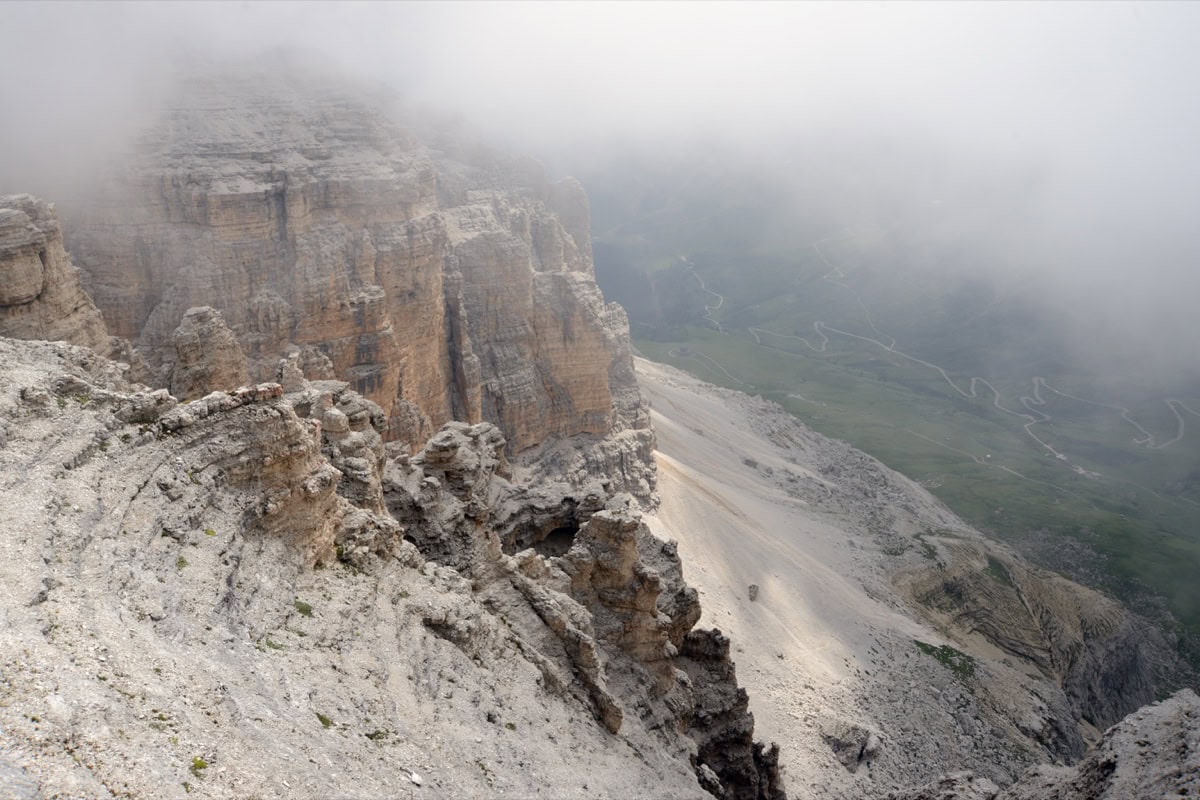
Once you’re back down on solid ground beside your car, you can experience another legendary attraction. Circling the entire Sella massif — the one you were just admiring from the terrace above — runs a road circuit called the Sellaronda. It connects four stunning mountain passes: Passo Pordoi, Passo Campolongo, Passo Gardena, and Passo Sella.
This roughly 50-kilometre route is a dream for anyone who loves driving — whether you’re behind the wheel of a sports car or on a motorbike. The road snakes through endless hairpins, you pass through picturesque villages, and around every bend a different, mesmerising rock formation appears. You can stop at every pass, grab a quick Italian espresso at a café, and carry on.
It’ll easily fill an entire afternoon, especially if you keep stopping for photos. Traffic in the summer months can be very heavy though, and you may get stuck behind a slow-moving campervan, so set aside plenty of time and arm yourself with patience.
5. Sellaronda Hero: Mountain Biking Paradise
If you’re a cycling fan, you’ve probably heard of Sellaronda Hero. It’s one of the toughest and most prestigious mountain bike races in the world, held right around the Sella massif and crossing our very own Passo Pordoi.
You don’t have to be a professional racer to give the route a go, though. The whole area offers a massive choice of fantastic singletrack trails and signed cycling routes of varying difficulty. In many of the valleys you’ll find well-equipped e-bike hire shops with full-suspension electric mountain bikes, so you can enjoy these steep Alpine climbs even if you don’t have the fitness of a pro athlete.
A huge bonus is that during summer you can use special cycling lift passes that take you and your bike up to the ridges, letting you enjoy long, technical descents back into the valleys. It’s an absolute cycling paradise, even if it does sometimes require nerves of steel on the narrow trails.
6. Winter Sellaronda Tour: The Never-Ending Ski Dream
Although most of this article focuses on summer, I have to mention the winter season too, because the winter Sellaronda is a world-class experience that draws thousands of skiers to Italy. If you love skiing, you probably know that thanks to the ingenious lift system within Dolomiti Superski, you can ski the entire way around the Sella massif in a single day.
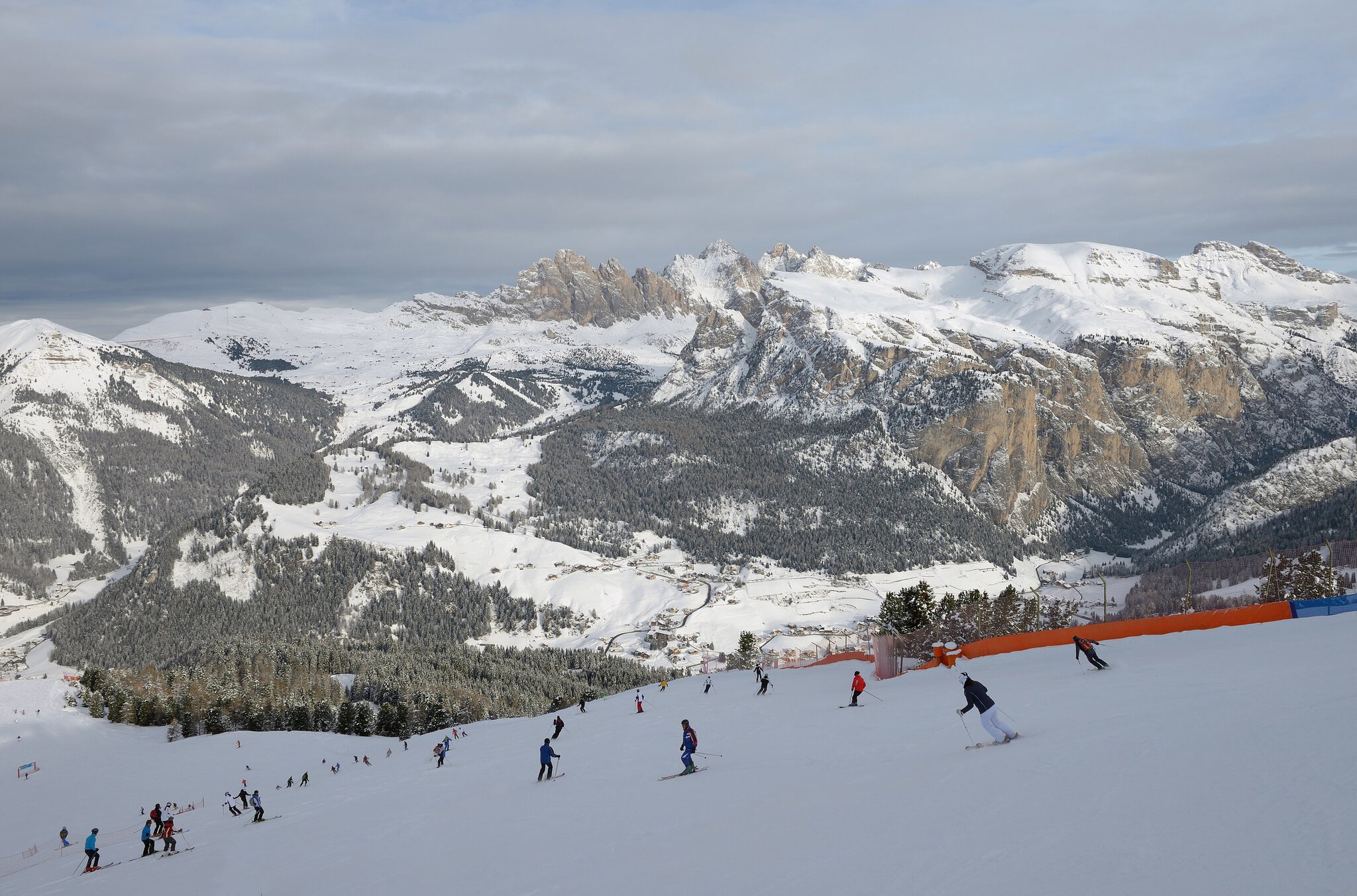
The circuit runs in two directions, following orange or green arrows, and requires no uphill walking whatsoever. You clip into your skis in one valley in the morning, spend the whole day skiing over the Pordoi, Sella, Gardena, and Campolongo passes along beautifully groomed pistes, and arrive back at your starting point by afternoon.
The experience is unforgettable, but it does require a fairly steady pace to avoid getting stranded in the wrong valley after the lifts shut down for the day. Taxis over snow-covered passes in the evening can be eye-wateringly expensive.
7. Via Ferrata Cesare Piazzetta: Adrenaline for the Experienced
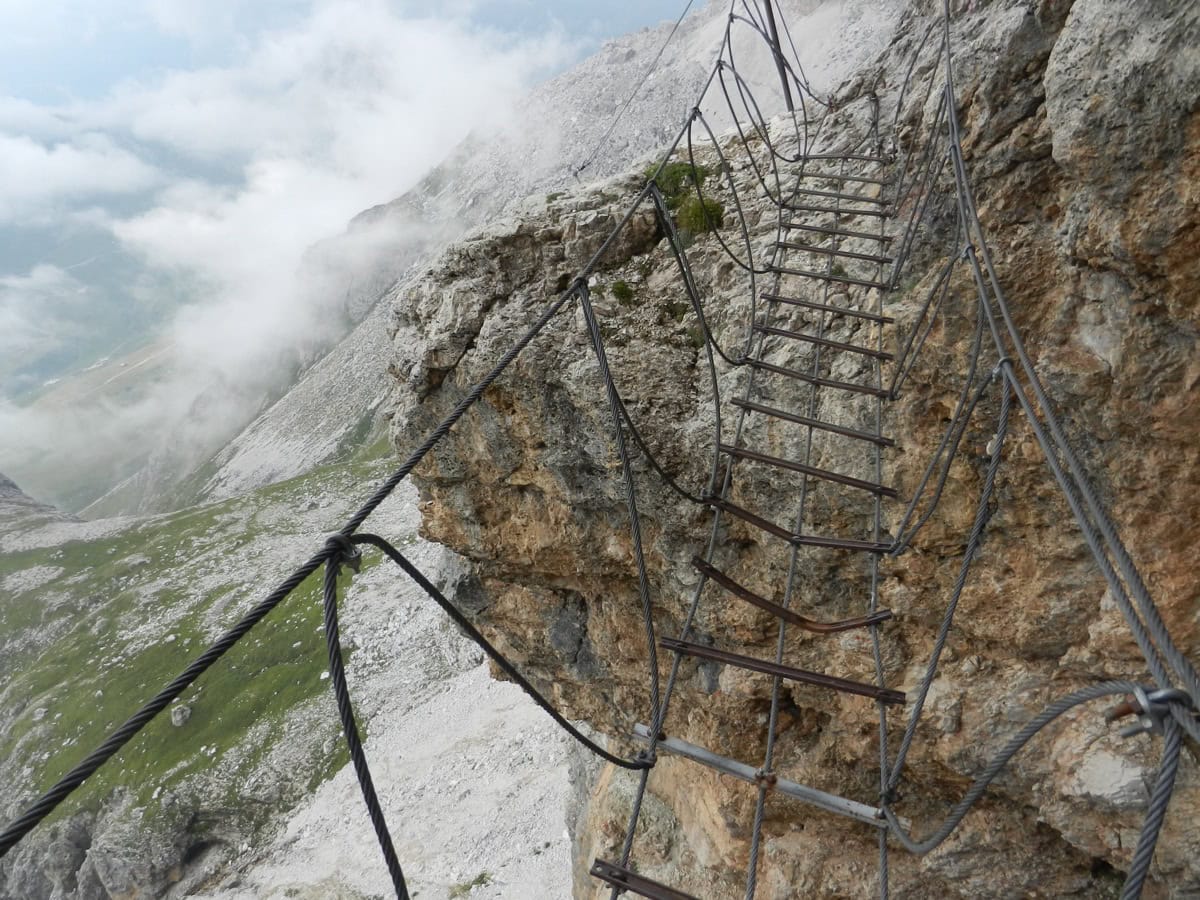
The Dolomites are the birthplace of via ferratas — protected climbing routes — and one of the toughest in the entire area runs right up the walls beneath our viewing terrace. Via ferrata Cesare Piazzetta leads directly to the summit of Piz Boè via a breathtaking, near-vertical rock face.
I must strongly warn you, though: this is absolutely not a ferrata for beginners or anyone with even a mild fear of heights. On the Italian grading system it rates D (extremely difficult), the first sections are nearly overhanging, and it demands serious arm strength and excellent footwork technique.
If you’re an experienced climber, however, the Piazzetta offers an incredible sporting challenge and views into the void that will literally take your breath away. Don’t forget full, certified gear (harness, shock absorber, helmet) and ideally start early in the morning to avoid afternoon traffic jams of slower climbers in the critical sections. If you’re just getting started with via ferratas, I’d suggest looking at the safer protected routes near our beloved Cortina d’Ampezzo.
8. Trek to Bivacco di Forcella Pordoi: For Those Who Love to Hike
If riding an aerial cabin to the top feels too easy and you’d rather earn your summit, you can hike all the way from the car park at Passo Pordoi on foot. The classic hiking trail leads up a large scree gully to the Forcella Pordoi saddle, where a small mountain hut stands.
Be prepared for a physically very demanding ascent. You’ll be walking in constant tight zigzags through loose, sliding rock where you often take one step forward and half a step back as the ground slips away beneath your boots. Expect this route to take roughly an hour and a half of genuinely intense effort going up.
Your reward, however, is the brilliant satisfaction of having conquered the mountain under your own steam. Many hikers ride up comfortably on the cable car and then descend via this scree gully (more sliding than walking, really). It’s much kinder on your wallet and lungs, but it’s very tough on the knees, so if you have joint problems, take the cable car back down as well. For more amazing hikes, check out our article Italian Dolomites for Hikers: 5 Trails for Everyone.

9. Photographing Marmolada from Passo Pordoi
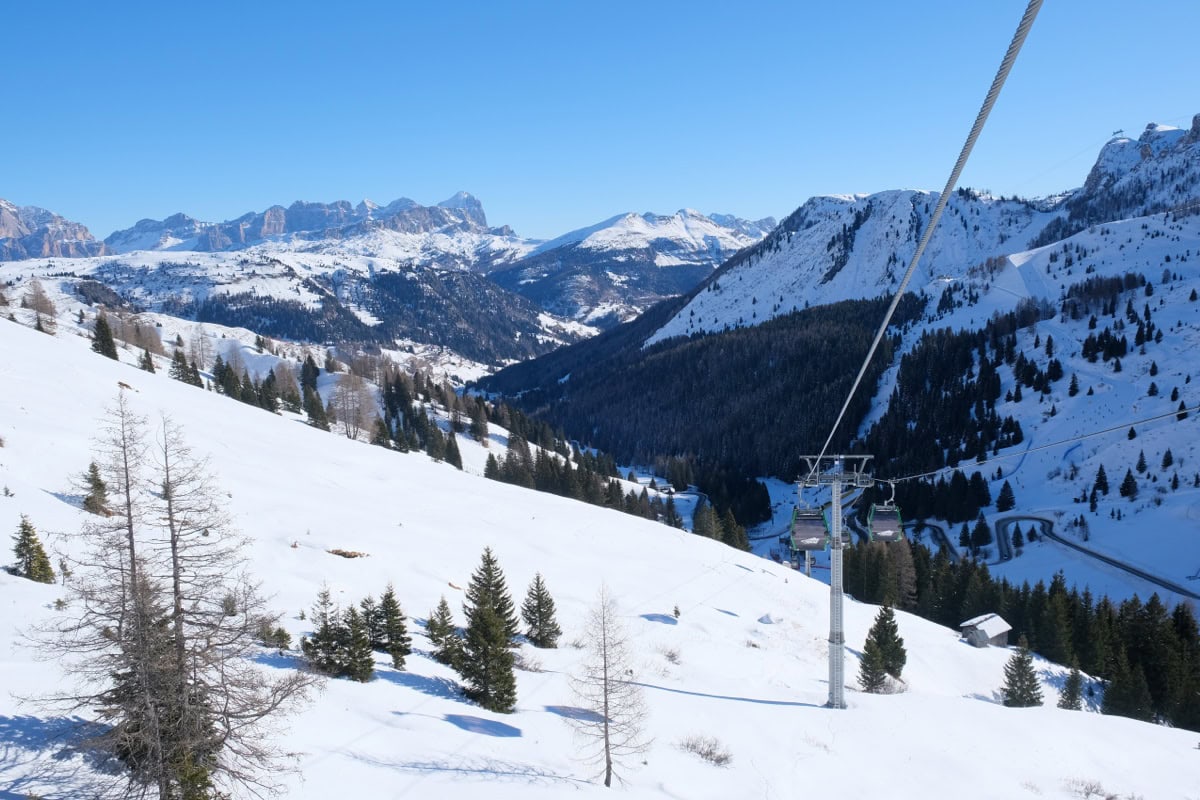
You don’t even need to ride all the way up to Rifugio Maria to capture the most stunning shots of your holiday. The pass itself, Passo Pordoi, is a fantastic spot for landscape photography.
From several bends below the car park on the Arabba side, the most iconic view of the Dolomites’ highest peak — the glacier-clad Marmolada — unfolds before you. There’s one particular spot with a small wooden cross and a memorial to cycling legend Fausto Coppi where the composition looks absolutely magical, especially just before sunset when the light turns warm and the surrounding rocks blush pink (the locals call this phenomenon Enrosadira).
This is where you’ll understand why the Dolomites are a UNESCO World Heritage Site and a paradise for photographers from around the globe. If you visit in autumn, with a bit of luck you’ll catch a morning temperature inversion and find yourself standing above a sea of clouds with only the highest snow-capped peaks poking through.
10. Passo Sella as an Alternative Route
This last tip is about logistics if you’re touring the Dolomites by car and want to see as much as possible. If you’re heading back from Sass Pordoi and staying in the Cortina area, instead of taking the shortest route, consider making a small detour over Passo Sella.
This pass connects the Val di Fassa valley with Val Gardena and offers, in my opinion, the most dramatic scenery of the entire Sellaronda road circuit. The road winds directly beneath the sheer 300-metre walls of the Sassolungo towers. It’s a place where you feel absolutely tiny, and it’s well worth stopping in the car park for a moment to simply soak it all in.
Passo Sella can get congested with coaches and motorbikes, but trust me — the sight of those colossal vertical cliffs gleaming in the midday sun while you sit on a bench with a takeaway coffee, watching swarms of climbers high up on the walls, is an experience that’s simply priceless.
Map of points of interest for your phone
Sass Pordoi with Kids: Easy and Stress-Free
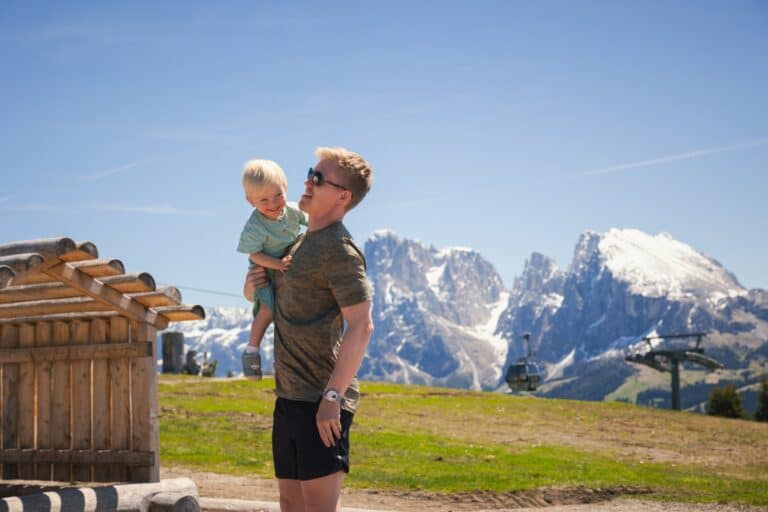
Many parents worry about taking young children to altitudes around 3,000 metres, but Sass Pordoi is a genuine exception and one of the most suitable spots in the entire Alps. The reason, of course, is the comfortable and fast high-capacity cable car.
Because you don’t need to hike at all, you ride up completely effortlessly. The Terrace of the Dolomites at the top is relatively safe and flat — provided you don’t let kids run unsupervised right up to the steep cliff edges. There are two things you really shouldn’t forget, though: with very young children, the altitude can cause tiredness and headaches, so don’t extend your stay up top unnecessarily. And then there’s the surface — it’s all loose rock, so a standard pushchair won’t work at all up there. A baby carrier or hiking child-carrier backpack is a must. Otherwise, there’s a large glass-walled restaurant, toilets, and plenty of space to comfortably spend time with the family.
Can You Bring Dogs to Sass Pordoi?
Travelling around Italy with your four-legged friend? Then I’ve got great news for you. Nobody in the Sella massif area turns dog owners away, and you can head out on your adventure together.
Dogs are allowed on the cable car, but they must be on a lead and operators often require a muzzle as well, especially when the cabin is packed with people — which in summer is pretty much always. You’ll pay a small fee for your dog to ride up, usually a few euros. On the plateau you can walk freely with them, but again remember that the sharp limestone rock and scree can be very uncomfortable for dogs’ paws if they’re not used to it from other mountain hikes. In the summer heat there’s also absolutely no shade up here and no natural water sources, so you need to carry enough water not just for yourself but for your pooch as well.
Where to Eat
Honestly, I initially expected a plate of pasta at the mountain hut — and then polenta arrived, and it turned out to be one of the biggest culinary surprises of the whole trip. The local cuisine is heavily influenced by nearby Austrian Tyrol and is built to warm you up as fast as possible and deliver massive amounts of energy after a day of freezing skiing or summer hiking.
The staple at mountain huts like Rifugio Maria on Sass Pordoi is traditional hearty cornmeal polenta. Forget bland, tasteless porridge though — here the polenta is mixed with enormous amounts of cheese and butter, and served with wild porcini mushrooms foraged from the forests below and melted mountain cheeses (locals also offer it with goulash or game ragù).
Another classic you absolutely have to try is Canederli (Knödel in German) — giant dumplings made from stale bread, served in spinach or cheese versions, drenched in brown butter and showered with Parmesan, or swimming in a rich broth. And of course, you have to round the whole meal off with a crispy apple strudel packed with raisins and nuts. To drink, definitely try the local wines from the Val di Fassa area, or a refreshing Hugo Spritz with elderflower syrup — far more popular in the Dolomites than the classic Aperol Spritz.
Practical Information and What to Watch Out For
Before you hit the road, here are a few things you should know. Otherwise, you’ll either find the cable car closed or face a rather nasty fine. 😅
- Drone ban and hefty fines: This is an extremely important point. The entire Dolomites area — and especially spots near national parks and popular massifs like Sella — falls within a no-fly zone requiring special permits. The Italian Carabinieri (mountain police) keep a very close eye on this during summer and don’t hesitate to hand out draconian fines. If you’re caught with a drone on Sass Pordoi, expect your equipment to be confiscated and a fine that can reach a staggering €3,000. It’s definitely not worth it for one nice Instagram shot.
- Combined lift passes (Dolomiti Superski and summer passes): If you’re spending multiple days in the Dolomites and plan to use several cable cars, it definitely doesn’t pay to buy individual tickets every time at €28 one-way or €39 return. In winter, the big Dolomiti Superski pass covers it automatically, and in summer there are multi-day hiking passes (e.g. Panorama Pass or SuperSummer) that let you ride cable cars on the Sella massif and elsewhere for free.
- Appropriate clothing: Always remember you’re heading to nearly 3,000 metres above sea level. Down in Canazei it might be t-shirt and shorts weather, but the moment you step out of the cable car cabin onto the windy terrace, the temperature plummets by fifteen degrees and you’ll be cold. A lightweight down jacket or at least a decent Gore-Tex windbreaker in your rucksack is an absolute must, even in mid-August.
- Payment info: Italy uses the euro and most places — including the cable car and the main mountain huts — accept card payments without any trouble. For smaller huts like Rifugio Boè at the top, bring some cash just in case.
Where to Go Next from the Dolomites
Once you’ve been admiring the Terrace of the Dolomites, you have a brilliant opportunity to visit other gems nearby. If you’re craving more high-alpine scenery, it’s just a short drive to the enormous glacier we wrote about in our complete guide to Marmolada. From Passo Pordoi you’ll get there in under an hour.
If you prefer charming Alpine towns with a hint of history and luxury, definitely don’t miss Cortina d’Ampezzo, our main base in the Dolomites, where you’ll find fantastic Olympic ski runs and incredible scenery all around. It’s a bit further away (roughly an hour and a half’s drive), but the trip and the town’s atmosphere will win you over completely.
Final Tips for a Stress-Free Holiday
To help you plan your trip without stress or worry, here’s a round-up of the services that have consistently served us well when travelling around Italy or anywhere in Europe — the ones Lukáš and I use regularly.
What to Pack
If you’re unsure what to bring and which bag to pack it in, take a look at our packing guide. We always take a pretty minimalist approach, so it’ll definitely make your decisions easier.
Lukáš and I have learned that in the mountains, what you really need is a good pair of boots and functional layers. So those three evening dresses can safely stay at home.
How to Find Flights to Italy
Northern Italy is well connected by air from the UK. The most convenient airports are Venice, Milan Bergamo, or Verona — all within a few hours’ drive of Passo Pordoi. Budget airlines like easyJet, Ryanair, and Jet2 all serve these routes regularly from London, Manchester, and other UK cities. To compare prices and find the best deals, search on Kiwi — it’s our go-to flight comparison tool.
Always pay attention to arrival times, because navigating unfamiliar mountain passes in the dark on the way to your hotel isn’t exactly relaxing. Ideally, aim to land around lunchtime.
Hiring a Car on Arrival
A car is an absolute necessity in the Dolomites — the local bus network will get you to the passes, but it takes an incredible amount of time and many beautiful spots aren’t served by buses at all. Lukáš and I have had consistently good experiences with the comparison site DiscoverCars.com, which we use all over the world.
Just make sure you pay for full coverage. On those narrow roads where you’re squeezing past coaches and campervans, scratches happen in a heartbeat — no matter how good a driver you are.
Booking Accommodation
As I mentioned earlier, look for accommodation strategically in the valleys right below the pass. Booking.com is our favourite hotel search engine because you’ll always find the freshest reviews and easy cancellation options.
Especially during summer and around Christmas, don’t leave your booking until the last minute. The best family-run hotels get booked out a good six months in advance.
Don’t Forget Travel Insurance
The Dolomites may be civilised mountains, but especially if you’re planning the scree trek or even a via ferrata below Sass Pordoi, you mustn’t underestimate healthcare and insurance. A rescue helicopter flight in Italy can cost tens of thousands of euros. For shorter trips we usually go with AXA with a 50% discount, and for longer or particularly active holidays we swear by True Traveller.
In Italy especially, it really doesn’t pay to skimp on insurance. When you see rescue helicopters flying overhead one after another, it’s reassuring to know you won’t be financially ruined if something goes wrong.
FAQ: Frequently Asked Questions About Sass Pordoi
Given the enormous popularity of this mountain and the entire Sella massif, the same practical questions keep coming up. We’ve compiled the key ones so you have all the important answers in one place.
Where is Piz Boe?
The summit of Piz Boè (also spelled Piz Boé) is located in the Italian Dolomites in the Sella massif. It sits at an elevation of 3,152 meters. The easiest access is from the Terrace of the Dolomites, from the upper station of the Sass Pordoi cable car, from where the hike takes about an hour and a half on foot through rocky terrain. This is why crowds of tourists flock there during the season, so I recommend setting off early in the morning. Your reward will be the amazing feeling of conquering a 3,000-meter peak and some perfect photos.
How long does the cable car ride to Sass Pordoi take?
The journey in the giant suspended cabin from the lower station at Passo Pordoi pass (2,239 m) to the upper Sass Pordoi station (2,950 m) is incredibly quick and takes just 3 minutes, even though it covers a massive elevation gain of over 700 meters. During this brief moment, you’ll be treated to breathtaking views of the steep limestone walls. So definitely have your camera ready as soon as you board the cabin.
How much does a cable car ticket cost?
Prices are adjusted slightly each season, but currently (for the summer season) expect to pay around €28 for a one-way ride and €39 for a return ticket. The cable car is also part of the large combined tourist and ski passes Dolomiti Superski. Children and seniors are of course entitled to discounts. I recommend buying tickets online in advance to save yourself quite a bit of time and hassle waiting in line at the ticket office.
Can I get to Passo Pordoi in winter too?
Yes, during the winter months Passo Pordoi is one of the key arteries for the massive Sellaronda ski circuit. You can get there either on groomed ski slopes or by car from Canazei or Arabba. The roads at the pass are permanently maintained, but proper winter equipment (winter tires and often chains in the trunk) is absolutely essential. If you’re not too confident about driving in snow, you can also use the local ski buses. These run completely reliably during the season and will get you to the cable cars safely.
Are there restaurants at the top of Sass Pordoi and Piz Boè?
Yes, right at the exit from the cable car on the Terrace of the Dolomites you’ll find the large glass-fronted restaurant Rifugio Maria and just a short distance away the traditional stone hut Rifugio Sass Pordoi. At the actual summit of Piz Boè (after conquering the 3,000-meter peak) there’s another smaller cozy cabin called Capanna Piz Fassa, where you can buy simple refreshments. If you have a sweet tooth, definitely try the hot chocolate or homemade strudel at the hut. Prices are a bit higher, but it’s worth it for that warm feeling and the fantastic view.
Can I bring a drone up there to shoot video?
Definitely don’t do it! This entire area is a strict no-fly zone for drones due to nature protection and the movement of rescue helicopters. Italian police actively enforce this and if they catch you, they issue devastating fines that often exceed €3,000, and your equipment will be confiscated too. Better to rely on a regular camera or a decent smartphone. You’ll still bring home fantastic shots without the threat of a ruined vacation and an empty wallet.
Is Sass Pordoi safe for young children?
Yes, you can take even small children to the viewing terrace at the cable car station (2,950 m) without any problems, since you’ll cover the elevation gain effortlessly by cable car and the terrain at the top is wide. Altitude sickness doesn’t usually appear during such short visits, but be cautious with very young children. However, watch out for the edges—the cliffs are steep and unprotected, so really don’t take your eyes off small children. And don’t try bringing a stroller; the loose rocks will swallow it up. A baby carrier is essential.
Tips and Tricks for Your Vacation
Don’t Overpay for Flights
Search for flights on Kayak. It’s our favorite search engine because it scans the websites of all airlines and always finds the cheapest connection.
Book Your Accommodation Smartly
The best experiences we’ve had when looking for accommodation (from Alaska to Morocco) are with Booking.com, where hotels, apartments, and entire houses are usually the cheapest and most widely available.
 🚗 Car rental on the roadVerified rental cars in the Dolomites
Search with the DiscoverCars comparison engine — it compares prices from dozens of local and international rental companies, and most bookings come with free cancellation.
Compare car prices in the Dolomites →Don’t Forget Travel Insurance
Good travel insurance will protect you against illness, accidents, theft, or flight cancellations. We’ve had a few hospital visits abroad, so we know how important it is to have proper insurance arranged.
Where we insure ourselves: SafetyWing (simple monthly subscription) and TrueTraveller (for extra-long trips).
Find the Best Experiences
Get Your Guide is a huge online marketplace where you can book guided walks, trips, skip-the-line tickets, tours, and much more. We always find some extra fun there!