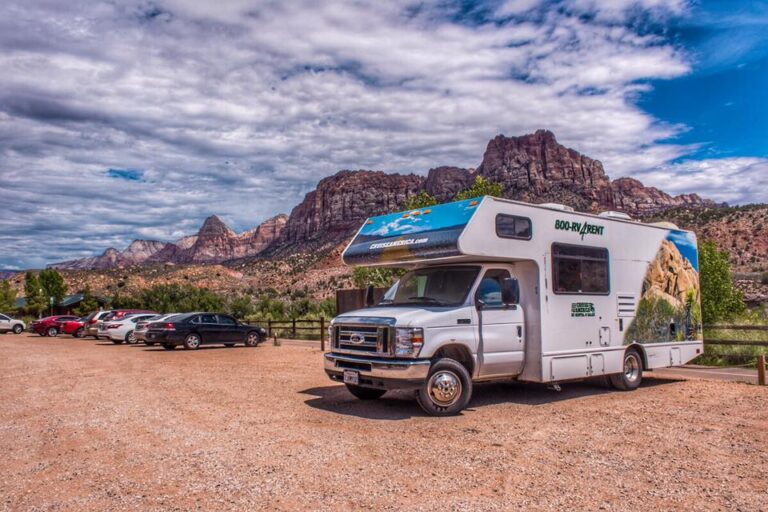
3 Tips for Camping in the USA and Canada

TL;DRClassic campsites in the US and Canada usually run $25–$50 a night (up to $60–$100 in national parks during peak season), so it’s worth knowing the free alternatives: dispersed camping via freecampsites.net, rest areas where you can stay up to 8 hours, or car parks outside Walmart-style supermarkets and at multi-day trailheads like the Panorama Ridge Trail. For showers, look to campgrounds ($1–$10), laundrettes ($3–$6), truck stops ($12) or public pools ($3–$6). Popular spots in national parks are worth booking up to 6 months ahead. Camping in both the US and Canada is safe, the article notes.

When we set off on our three-month road trip through Canada and the USA, we had pretty naive ideas about what camping in the USA and Canada would actually look like. We imagined pulling into a campground every evening, lighting a fire, unfolding our camping chairs, and cooking a delicious dinner on our portable stove. How far that was from reality, we soon found out.

How Much Do Campgrounds Cost in the USA and Canada

Paying $25–$50 per night for a campground was financially unsustainable for us, so our evenings turned into a hunt for free places to sleep, cook, and find showers.

Over those three months, we learned a lot about car camping, and today we want to share it with you. If you have anything to add, feel free to leave us a comment below.
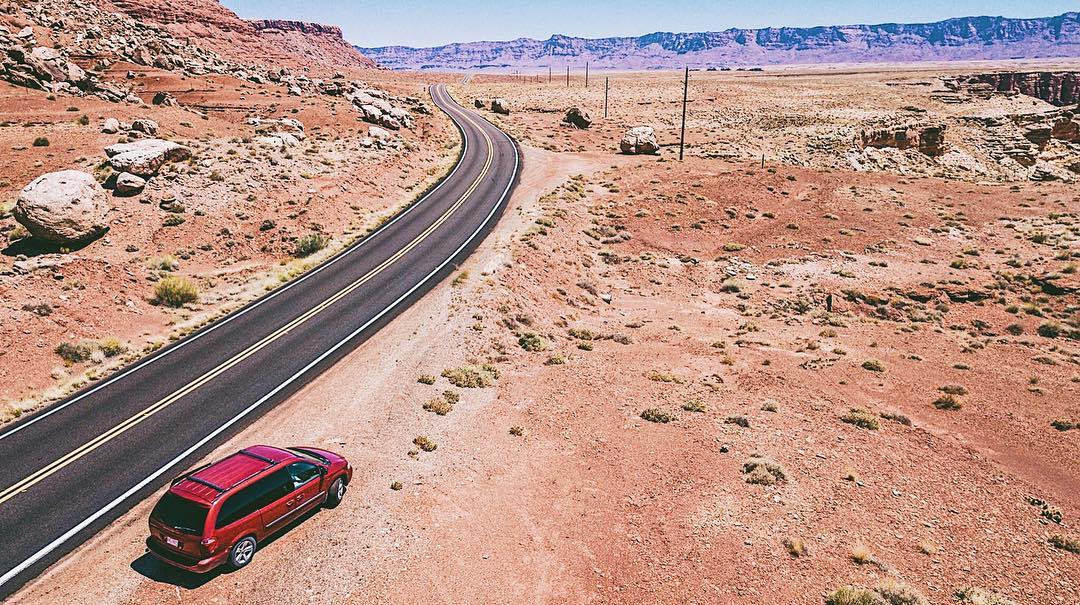
Camping in the USA and Canada

Where to Camp for Free in the USA and Canada

Sometimes it was easy, other times it required a great deal of improvisation, and occasionally we had to bend the rules. Here’s a simple list of places where we often camped for free:

Free Camping in the USA: Dispersed Camping

Our first choice was always to look for free campgrounds. On freecampsites.net you can find campsites that usually don’t have toilets and rarely have picnic tables, but camping at these spots is completely FREE. It works on a first-come, first-served basis. Some are basically just a flattened patch of dirt, while others are fairly well-maintained camping spots. This is what’s known as wild camping in the USA, and it’s a fantastic budget option.
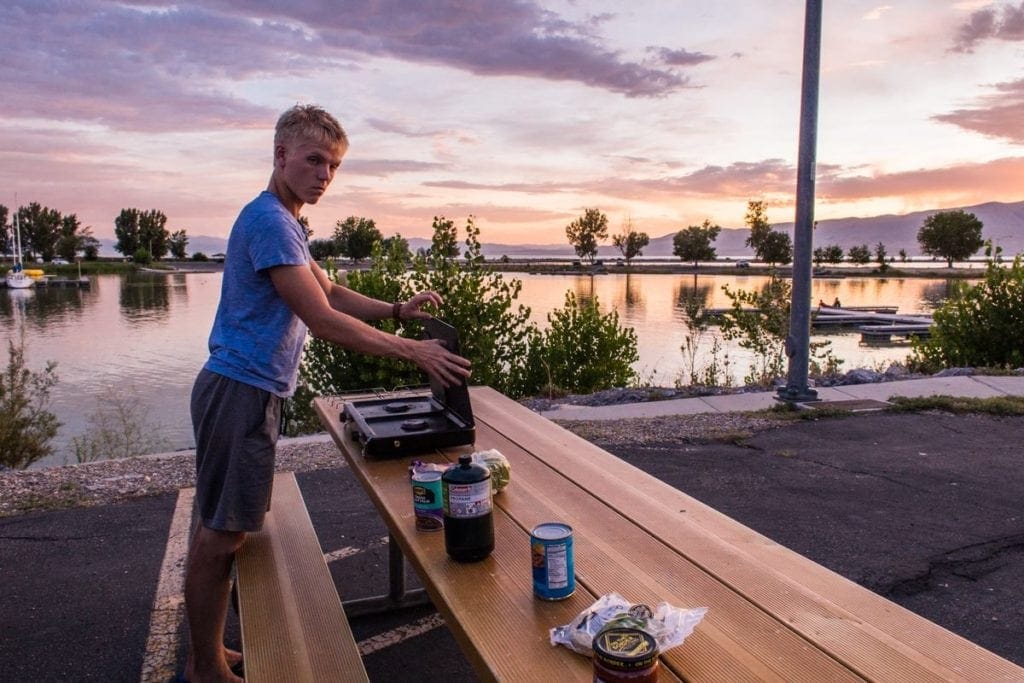
Cooking while camping in the USA
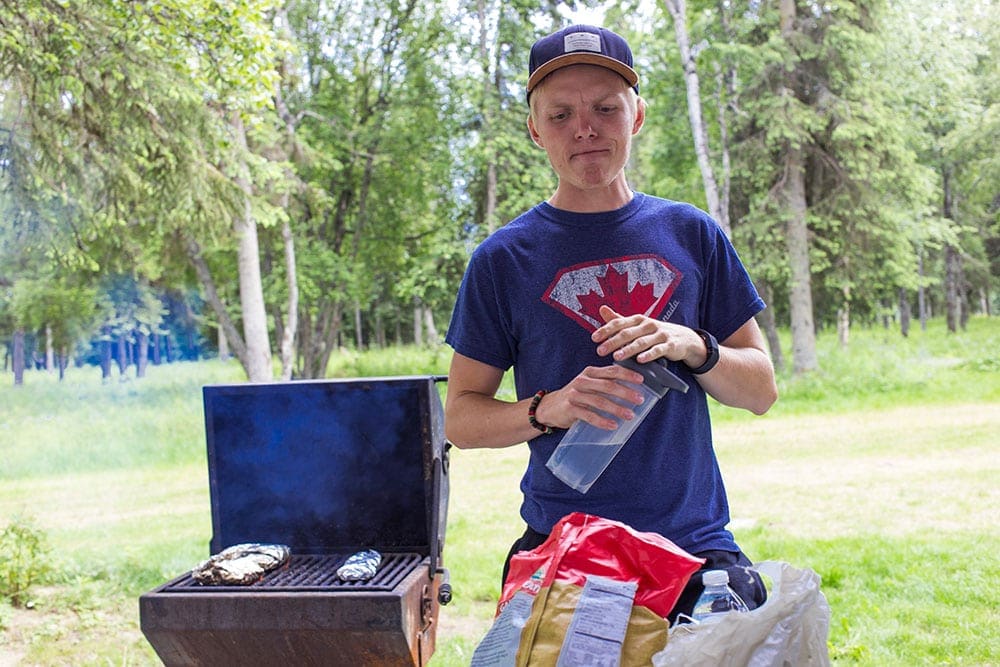
This is how we cooked — basically wherever we could 🙂

These campsites are on “land that belongs to all Americans” — public land managed by the Bureau of Land Management or the Forest Service — and they exist so you can enjoy nature without sharing a few square metres with dozens of other campers. The camping spots are often far apart, and sometimes you have to drive down very rough roads to reach them.

Rest Areas
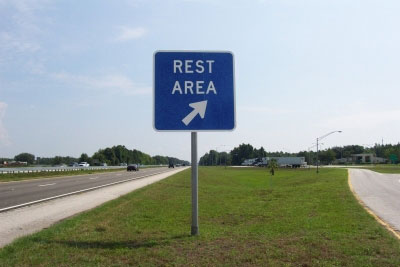
Rest Areas

Along major highways, you’ll often find rest areas for truck drivers where you can stay for up to 8 hours. In Washington and Oregon, we slept at these very frequently because they have drinking water, toilets, picnic tables, and — most importantly — dark spots where streetlights won’t disturb your sleep.

Supermarkets – Camping in the USA
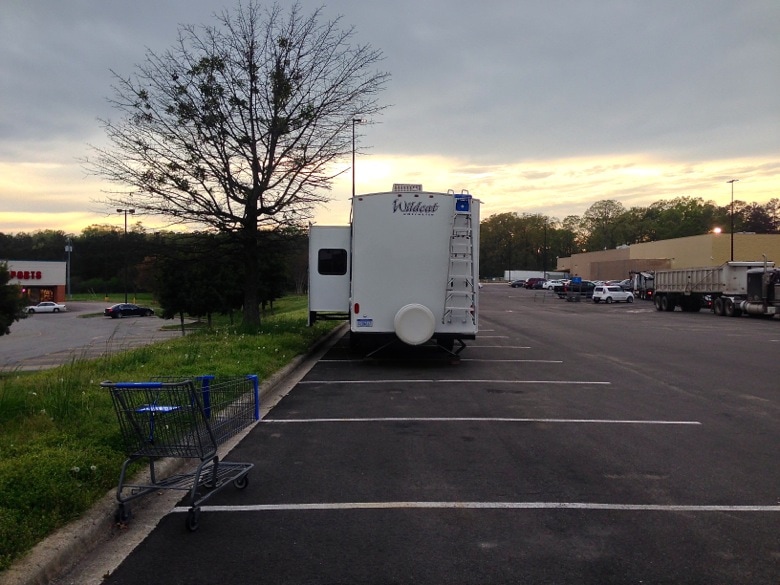
HowToBoondockAtWalmart 2

You can park overnight in most Walmart car parks. I’d recommend checking beforehand, or once you’re there, look around for motorhomes — RV campers use Walmarts extensively. You can also park overnight at other supermarket car parks, and most are listed on the aforementioned freecampsites.net. The downside of this type of parking is the amount of lighting — if your car windows aren’t well blacked out, it won’t make for a pleasant night’s sleep.

Truck Stops

A huge number of trucks travel across the USA, so many petrol stations are set up to cater to them. These truck stops have facilities for drivers, including showers. We occasionally slept in the car parks of these stations, but the noise from trucks and the bright lights don’t exactly make for a restful night.

Car Parks at Multi-Day Trailheads

Officially, you’re not allowed to do this, but when you’re desperate, it works. When we headed to Panorama Ridge Trail, we slept in the car right at the trailhead, where cars are parked overnight because people do this hike over several days. In cases like this, just park up, crawl into the back, and pretend you’re not there.
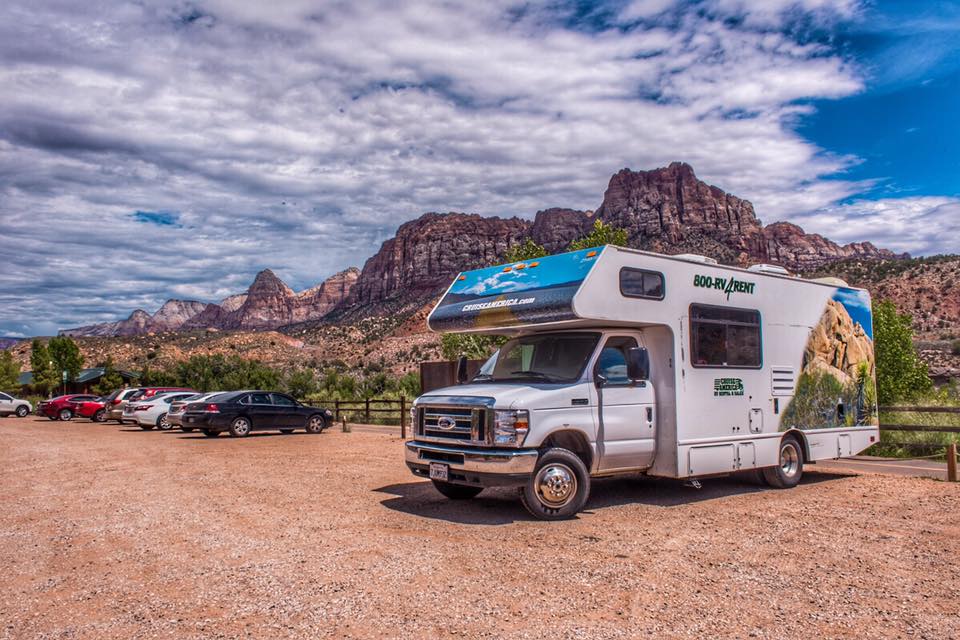
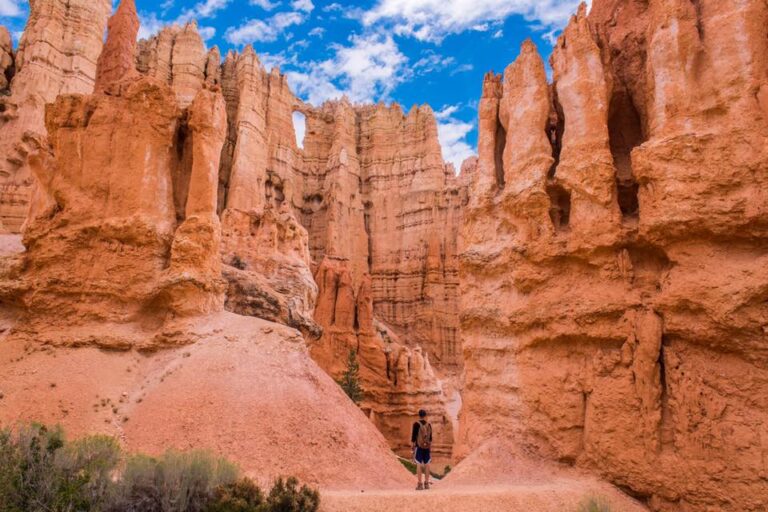
Bryce Canyon
A place where you could easily stay overnight 🙂

Gravel Roads

We used this option mainly in Alaska and the less populated areas of British Columbia. The risk is that you might end up on private property, so it really depends on your common sense and the specific location.
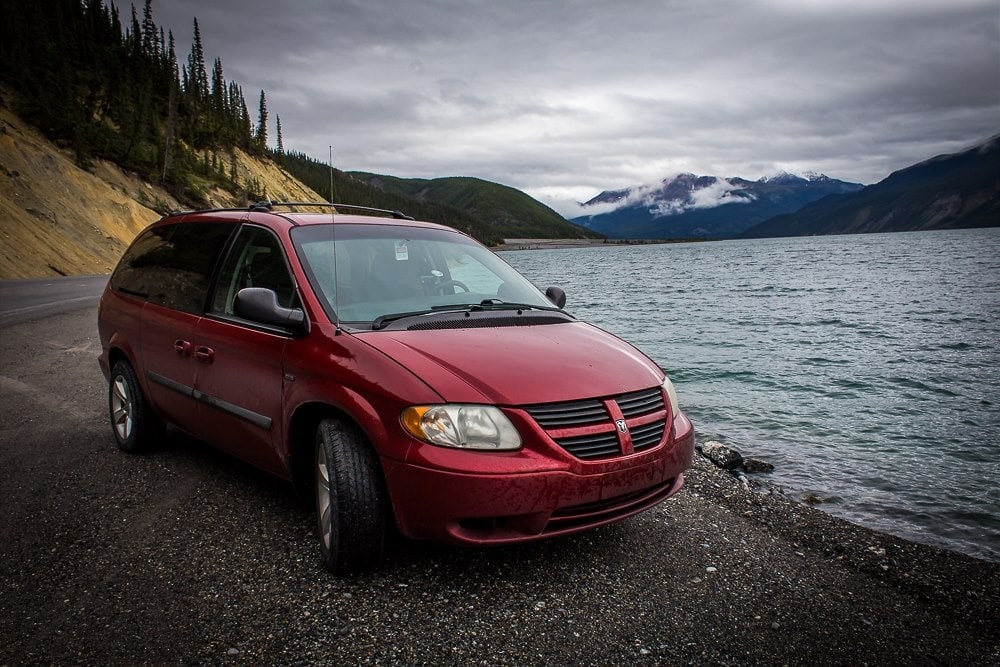
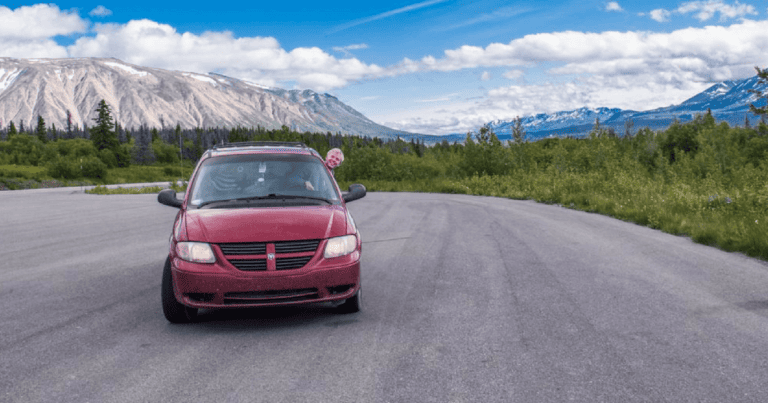
Red Chiquita Dodge Grand Caravan
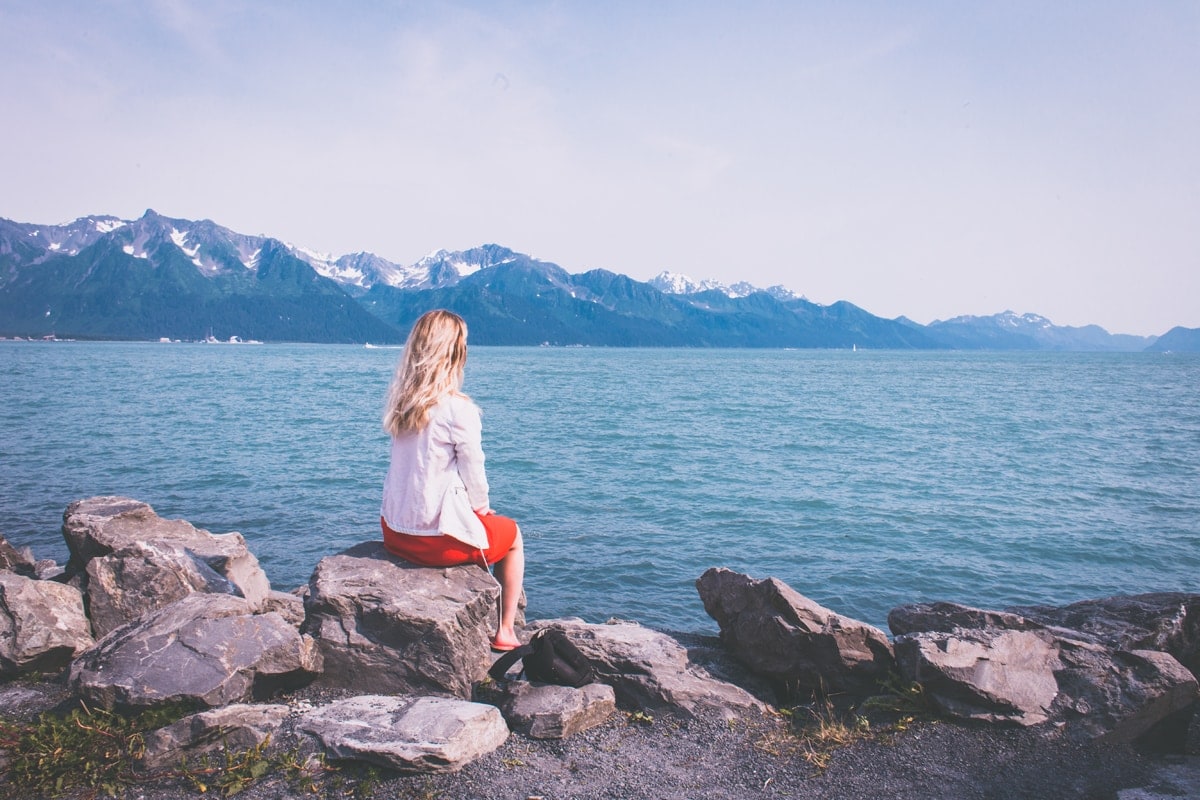
Parked right by the road on a rocky beach

How to Find Free Camping Spots

Finding a place to sleep in your car is often somewhere between an art and pure luck. Americans have special terms for this style of free camping: boondocking and freecamping are the most commonly used words we’d type into search engines.

What Never to Do

Don’t park in public park car parks in towns. It’s suspicious to be the only car somewhere. If a place clearly states “no overnight parking,” it’s more than likely they monitor it, and there’s nothing worse than being woken at 3 a.m. and told to move along. If you have no other option, choose a hotel car park rather than a residential area. Arrive late, leave early in the morning.

Where to Shower for Free in the USA

The more days we went without a shower, the worse our mood got. It deteriorated with every mile driven, and many of our evenings and mornings were consumed by a desperate search for showers. In the last two weeks, we would have paid anything for a daily shower, and it was the first thing we’d check about any place we were heading to.
shower

Paid Showers at Campgrounds

Many campgrounds will sell you just a shower. Prices vary widely — it could be $1 or $10. Sometimes they’re timed, sometimes unlimited. The bad news is that in very touristy areas of both Canada and the USA, campgrounds are either discontinuing shower-only access or significantly raising the prices.

Laundromats

We came across laundromats with showers mainly in Alaska, British Columbia, and Washington State. Whether coin-operated or pay-up-front, the price was usually around $3–$6 and they were timed. We often managed to shower together, which you can’t do at campgrounds.

Truck Stops

The truck driver facilities mentioned earlier also have showers. However, if you’re not a truck driver, a shower will cost you $12. The good thing is that two people can shower together, and there’s no time limit.

National Parks and State Parks in the USA

We discovered this rather late, but at most national parks you receive a newspaper that lists where you can shower. Even smaller state parks — and there are thousands of them — usually have showers, either free or coin-operated. Entry to state parks is typically around $10 per vehicle.

Swimming Pools

Admission to a swimming pool can be cheaper than a shower at a campground. We took advantage of this in Oregon and California. For $3–$6 we’d pay for pool entry and simply use the showers.
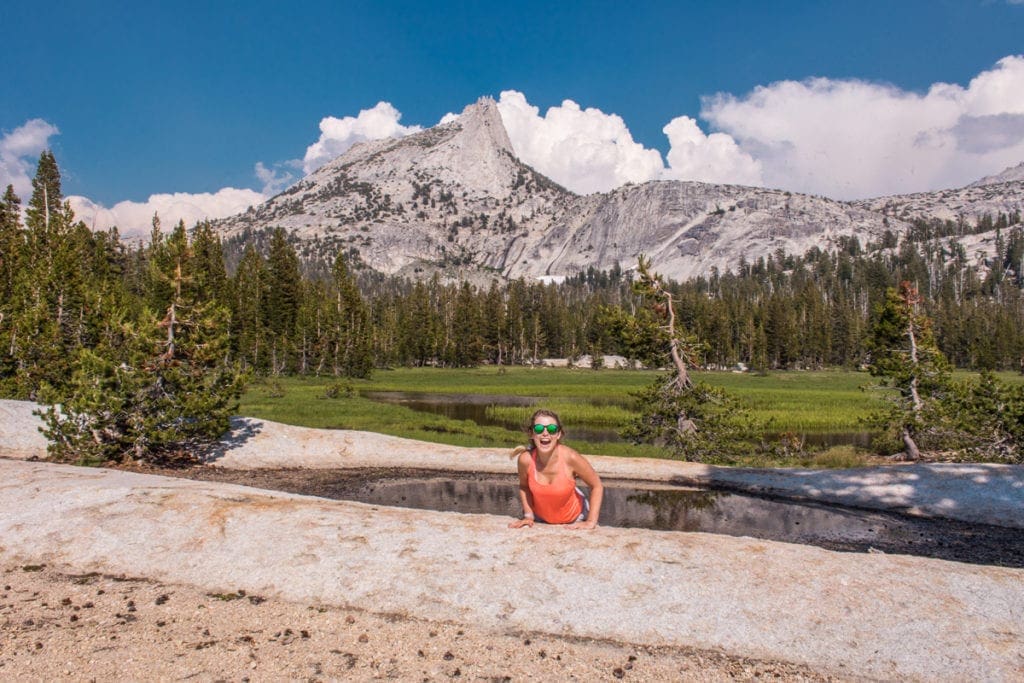
Hiking to Cathedral Lake — we practically ran it

Lakes and Rivers

I’d recommend asking at visitor centres which lakes or rivers are best for swimming. We’re probably not the biggest lake people — we only swam in Lake Tahoe and then in Yosemite. The latter wasn’t exactly pleasant, as the water was about 13°C (55°F).
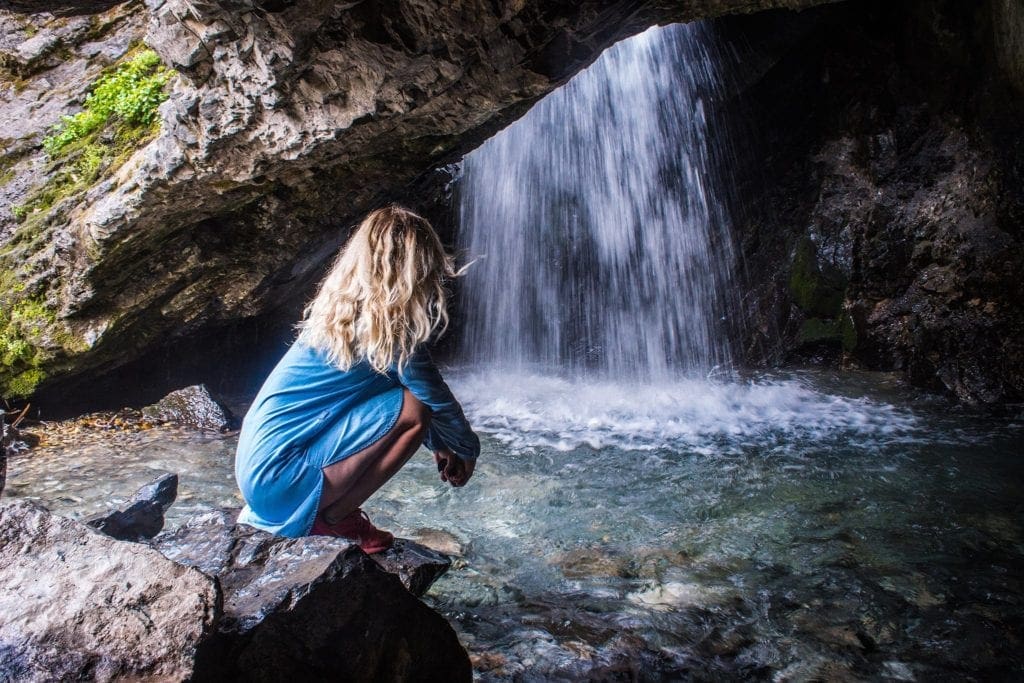
Swimming in a lake
Spots like these just beg you to take a dip

How to Stay Sane During Long Drives

When we drove to Alaska, the journey took 38 hours, and we did it over 3 days without a proper stop. Over those 3 months, we spent 4–12 hours a day driving. The radio kept playing the same songs on repeat, and our playlists got old very quickly. To keep from going mad, we listened to all sorts of educational podcasts and audiobooks. Here’s a selection of the best things we listened to — just for inspiration.

Audiobooks

Steve Jobs – Walter Isaacson

Jo Nesbø

Magazines

Reporter Magazine

Podcasts

Tim Ferriss

Noah Kagan Presents

Tips and Tricks to Save Money While Travelling

What to Pack

Check out our packing guide for travellers to help you prepare. Choose the right travel backpack, browse our travel gear recommendations, and make sure you don’t leave anything important at home.

Where to Find Flights

Search for cheap flights on Kiwi — it’s our favourite flight search engine. Make sure to read our guide on finding cheap flights.

Car Rental

We regularly use the comparison site DiscoverCars.com to help us choose the best car rental provider.

Booking Accommodation

Booking.com is our favourite hotel search engine. We always compare hotels with local apartments and rooms on Airbnb (get a discount here). Read about how we find cheap accommodation.

Don’t Forget Travel Insurance

Travel insurance is an absolute must. For shorter trips we go with AXA, and for longer trips we use True Traveller. Check out our comparison of travel insurance providers and pick the one that suits you best.

Frequently Asked Questions

How far in advance should I book a campsite?

We didn’t make any reservations, but campgrounds near national parks were full. For popular locations, it’s advisable to book up to 6 months in advance — you can use sites like Reserve America to secure your spot.

How much do campgrounds cost in the USA?

Prices typically range from $40 to $50, and $60–$100 during peak season in national parks.

Is camping in the USA safe?

Yes, camping in the USA is safe.

Is camping in Canada safe?

Camping in Canada is safe — Canada is one of the safest countries in the world.

Tips and Tricks for Your Vacation

Don’t Overpay for Flights

Search for flights on Kayak. It’s our favorite search engine because it scans the websites of all airlines and always finds the cheapest connection.

Book Your Accommodation Smartly

The best experiences we’ve had when looking for accommodation (from Alaska to Morocco) are with Booking.com, where hotels, apartments, and entire houses are usually the cheapest and most widely available.

Don’t Forget Travel Insurance

Good travel insurance will protect you against illness, accidents, theft, or flight cancellations. We’ve had a few hospital visits abroad, so we know how important it is to have proper insurance arranged.

Where we insure ourselves: SafetyWing (best for everyone) and TrueTraveller (for extra-long trips).

Why don’t we recommend any Czech insurance company? Because they have too many restrictions. They set limits on the number of days abroad, travel insurance via a credit card often requires you to pay medical expenses only with that card, and they frequently limit the number of returns to the Czech Republic.

Find the Best Experiences

Get Your Guide is a huge online marketplace where you can book guided walks, trips, skip-the-line tickets, tours, and much more. We always find some extra fun there!
10 Best Travel Gadgets You Need on Every Trip

TL;DRTen handy travel gadgets worth packing start with the collapsible Hydrapak water bottle, a laundry bag for dirty clothes, packing cubes, an inflatable travel pillow, and a foldable backpack from Osprey or Ferrino weighing just 90g. Coffee lovers will love the potato-sized Wacaco espresso maker, a Pinguin fire steel comes in handy for lighting fires, and photographers will appreciate Joby’s Gorillapod tripod, which holds 1–5kg depending on your camera, or the Peak Design Capture clip. There’s also the Powercube adapter with four attachments, four UK-style sockets and two USB ports, plus smart payment cards like Revolut and Curve for better exchange rates and fee-free withdrawals abroad.

Travelling can be exhausting. Especially when you’re on the road for a longer period, camping, or completely off the grid. You can never have too many clever travel gadgets. Here are the 10 best travel gadgets that will make your trips easier and even save space in your backpack.

10 best travel gadgets for every trip

1) Collapsible water bottle

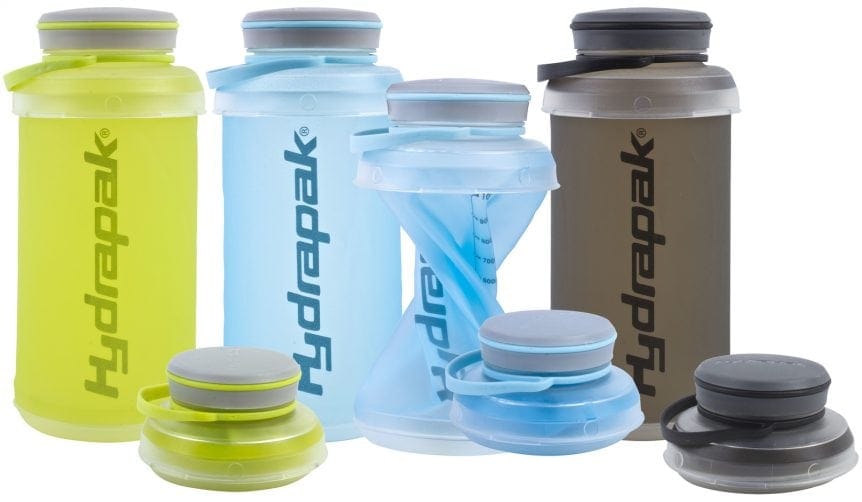
For a long time, we struggled with how to handle water on the road. Buying bottled water isn’t eco-friendly and gets expensive on longer trips, while a regular plastic bottle takes up a lot of space even when it’s empty. Then we discovered Hydrapak, and this collapsible bottle quickly became our favourite travel gadget.

The bottle gradually shrinks as you drink from it, until it becomes almost completely flat.

2) What to do with dirty laundry? Every traveller’s dilemma

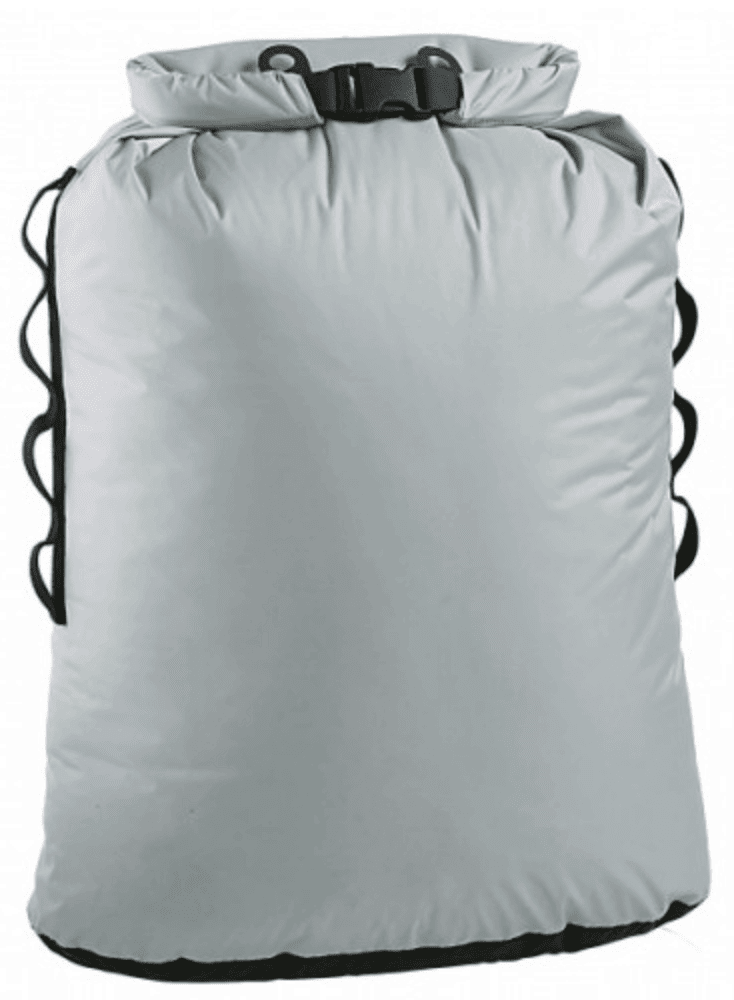
You wouldn’t think dirty laundry could be a problem. But after a few days, mixing it with your clean clothes is far from pleasant. We used to rely on plastic bags, but these travel laundry bags are a much better solution. They don’t let any odours through, they’re tough to tear, and they have handy loops for hanging.

Travel bag for dirty clothes or rubbish

3) Packing cubes

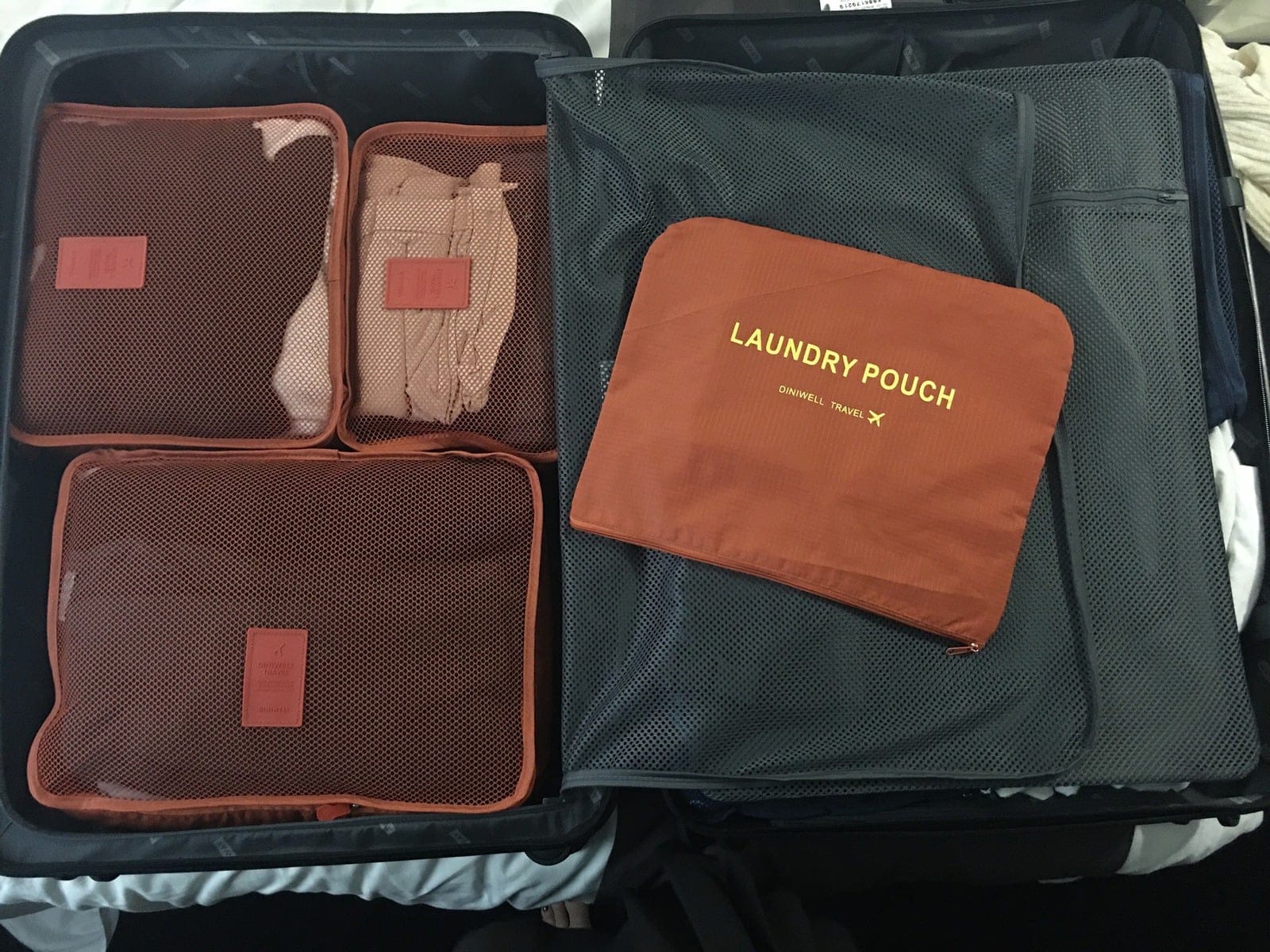
For years, our suitcases and backpacks were only tidy on the first day of a trip. After that, you start rummaging through your luggage and all those carefully organised sections you set up before departure are gone. Since we got our first packing cubes, they’ve become an indispensable part of our gear. Thanks to them, our bags finally stay organised even after weeks of travelling.

  • Where to buy them? You can find quality packing cubes on Amazon. If you’d rather buy individual sizes instead of full sets, check out this link.
Packing cubes in a suitcase
Packing cubes are a brilliant travel companion

4) Inflatable travel pillow

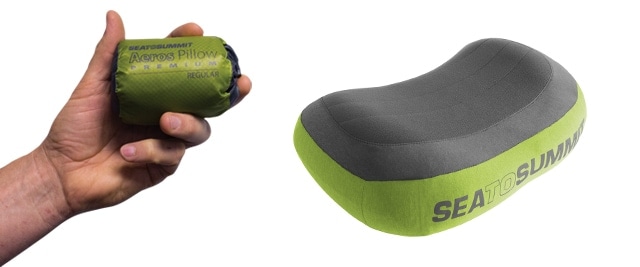
Do you fly often or love sleeping in a tent? Then you know that feeling of giving anything for a pillow. This compact inflatable travel pillow goes everywhere with Lucka. It even fits in a pocket – a perfect gadget for flying.

Inflatable Sea to Summit travel pillow
An inflatable pillow is perfect for flights

5) Packable daypack

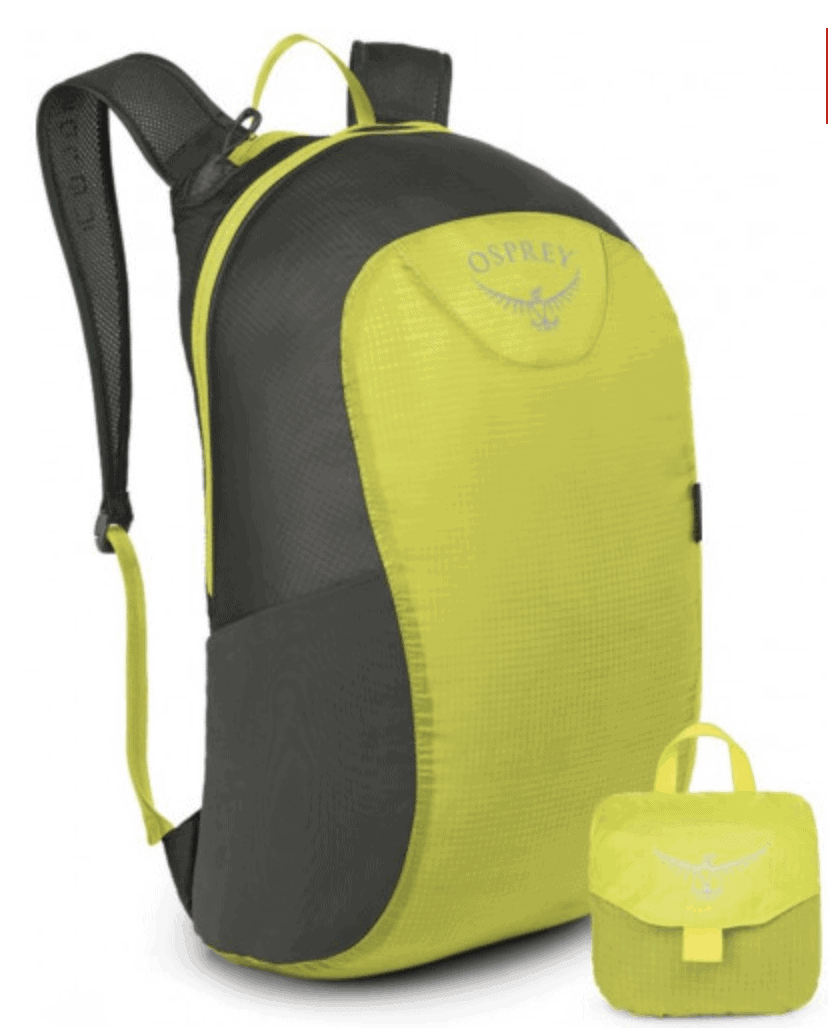
While we’re on the topic of collapsible things, we can’t forget a packable daypack. We originally bought ours for our e-bike expedition across Europe, but we quickly realised it’s useful almost everywhere. Just like the pillow, the backpack fits in a pocket when folded and weighs only 90g. We recommend either the Ferrino packable backpack (often sold out) or the Osprey Ultralight.

Packable backpack by Osprey

6) Portable espresso maker – Wacaco

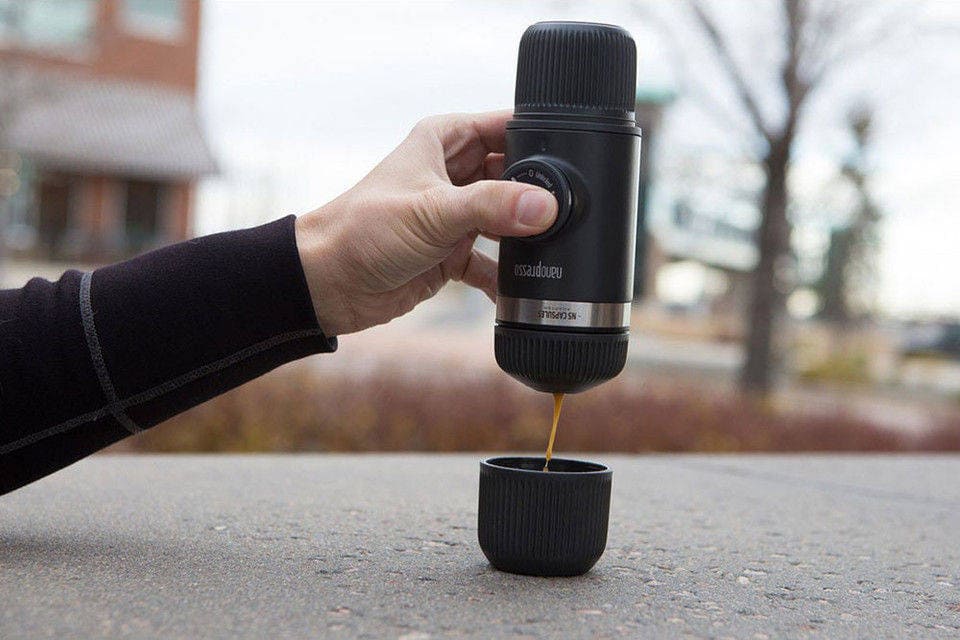
This one is mainly for coffee lovers. But from our experience, every other traveller is a coffee enthusiast, so a portable espresso maker definitely belongs on this list. There are several travel-friendly coffee makers out there, but the one that’s served us best is the Wacaco espresso maker. It’s the only one that can generate pressure comparable to professional machines, and it’s about the size of a large potato.

Wacaco Nanopresso
Wacaco Nanopresso portable espresso maker

7) Firesteel / fire starter

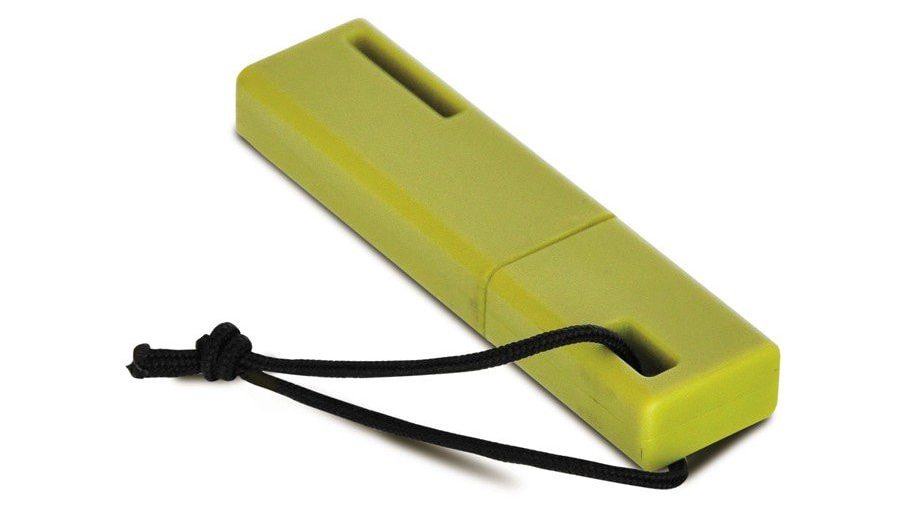
How many times in your life have you needed matches? For us, it’s been countless times. And when we finally found some, they were usually damp. That’s why we carry a firesteel, which lets us start a fire or light a stove absolutely anywhere. A great gadget that punches well above its price!

Firesteel by Pinguin – small enough to fit on your keychain
Pinguin firesteel – small enough to fit on your keychain

8) GorillaPod tripod and camera clip

If you’re into photography, you know how tricky it is to take photos of yourself while travelling. If you want to be in the picture, you either have to ask a passerby (90% of the time those photos turn out rubbish) or place the camera somewhere and use the self-timer. But often there’s nowhere to set the camera down or lean it against, and the shot doesn’t work. In the worst case, the camera falls and breaks.

The GorillaPod by Joby is the solution for exactly these situations. It’s extremely lightweight and lets you mount your camera on a branch, a pole, or a railing.

How to choose a GorillaPod

Pay attention to the weight capacity when choosing one. If you shoot with a DSLR, go for the 3 kg or 5 kg version. For mirrorless cameras, 3 kg is enough, and for compact cameras, 1 kg will do. It’s also great for smartphones – you just need to buy a phone mount attachment separately.

Joby GorillaPod – ideal for travel photography

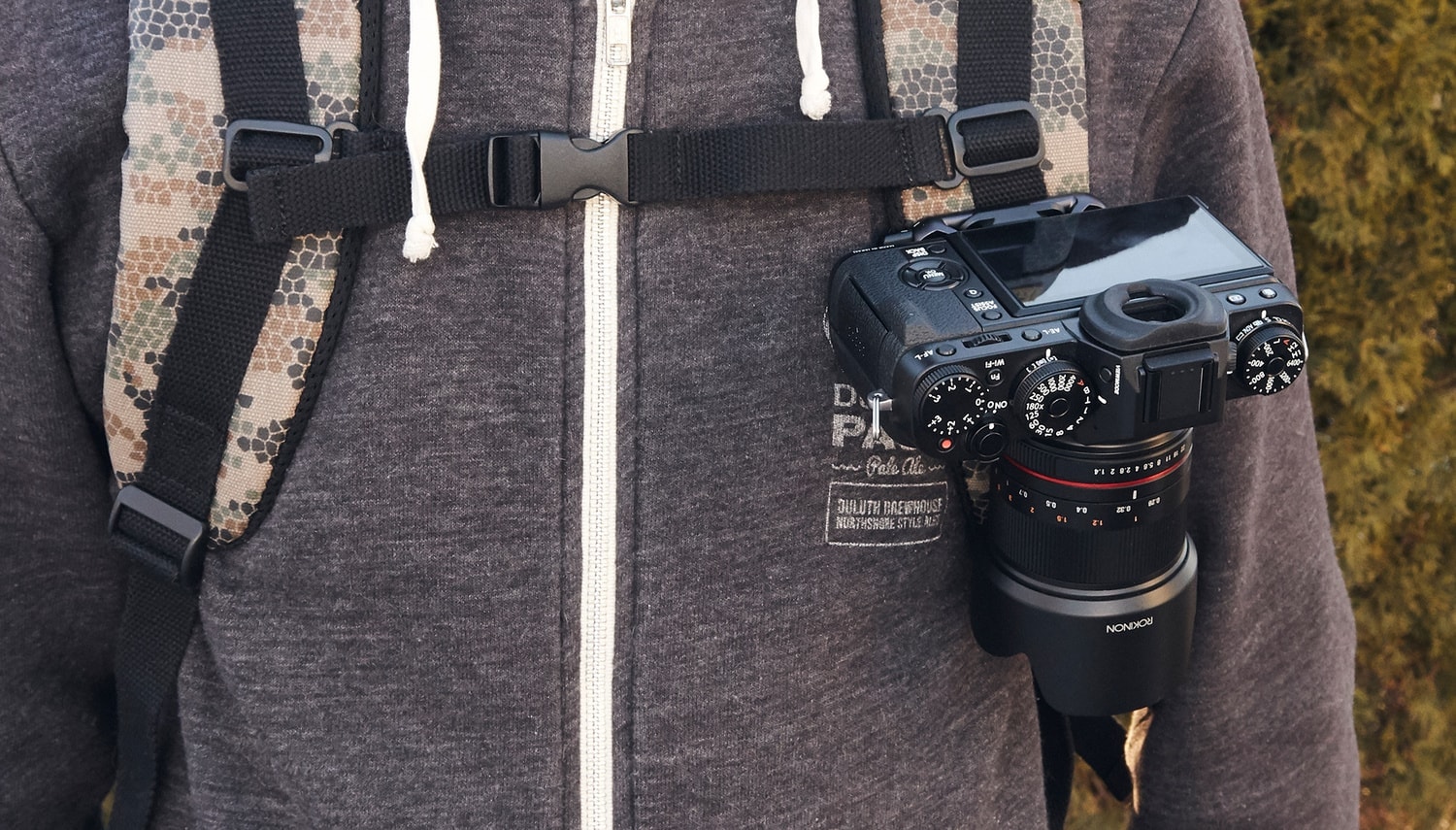
The second photography gadget is the Capture clip by Peak Design, which you can attach anywhere on your clothing or backpack. You then simply slide your camera into it.

Peak Design Capture clip for mounting a camera on your backpack or bag

9) Universal travel adapter – Powercube

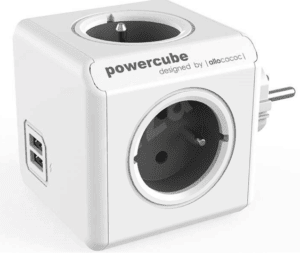
We’ve been recommending this little cube to everyone for years. When we arrive somewhere, the first thing we do is hunt for a power socket because everything needs charging. But sockets aren’t the same everywhere, and we’ve bought our devices in different countries around the world. This is where the genius Powercube comes in.

You can use four different plug adapters depending on which part of the world you’re in, plus it has 4 standard sockets on the other sides and two USB ports. After four years of use, it’s only broken on us once. That’s impressive, considering we constantly overload it.

Powercube universal travel adapter
Powercube is the best travel adapter we’ve ever tried

10) Travel payment cards

90% of our expenses are abroad, so we’re constantly dealing with ATM withdrawals, exchange rate calculations, and figuring out how to save a bit more. Smart payment cards like Revolut and Curve have been a huge help. They give us access to better exchange rates, and when combined correctly, we can even withdraw cash abroad without any fees.

Since this is a topic that deserves its own deep dive, we’ve written a dedicated article on our second blog where we cover finances and technology. Read our article about travel payment cards here.

Tips and Tricks for Your Vacation

Don’t Overpay for Flights

Search for flights on Kayak. It’s our favorite search engine because it scans the websites of all airlines and always finds the cheapest connection.

Book Your Accommodation Smartly

The best experiences we’ve had when looking for accommodation (from Alaska to Morocco) are with Booking.com, where hotels, apartments, and entire houses are usually the cheapest and most widely available.

Don’t Forget Travel Insurance

Good travel insurance will protect you against illness, accidents, theft, or flight cancellations. We’ve had a few hospital visits abroad, so we know how important it is to have proper insurance arranged.

Where we insure ourselves: SafetyWing (best for everyone) and TrueTraveller (for extra-long trips).

Why don’t we recommend any Czech insurance company? Because they have too many restrictions. They set limits on the number of days abroad, travel insurance via a credit card often requires you to pay medical expenses only with that card, and they frequently limit the number of returns to the Czech Republic.

Find the Best Experiences

Get Your Guide is a huge online marketplace where you can book guided walks, trips, skip-the-line tickets, tours, and much more. We always find some extra fun there!
5 Steps to a DIY Camper Conversion from a Minivan

TL;DRYou can turn a car into a campervan in five steps. The authors picked up a Dodge Grand Caravan 3.3L V6 from 2005 for $3,000, then sketched out a design with a 160×110cm bed on 60cm legs. Materials came next — milk-crate shelving, a $150 mattress, and $150–200 in total for the build. They built the bed and kitchen area out of plywood, then finished it off with a cooler box, a 12V-to-120V inverter, a power bank with jump-start cables, and satellite radio. Kitted out like this, they used the van for a three-month road trip across the US and Canada, covering over 20,000 kilometres.
This guide is for all adventurers who’ve decided to hit the road on their own terms and crave total freedom — the kind where you go wherever you want, whenever you want, sleep in your vehicle, and have all the gear you need. We set off on a three-month road trip and, to make the journey as comfortable as possible, we did a complete camper conversion on our minivan. In the following 5 steps, we’ll walk you through exactly how we did it.
How to convert a car into a camper

5 Steps to a DIY Camper Conversion

If you’re on a tight budget, read on to see how we turned a minivan into a camper van (more like a rolling living room, really) for just a few hundred dollars.

1) Choosing the Right Vehicle for Your Camper Conversion

Your choice will depend on your budget, fuel consumption, and what you plan to use the vehicle for. You probably won’t be buying a brand-new car if you only need it for a few months, so it’s better to look at older models. We set a ceiling of around $3,000 (roughly €2,750) and knew we’d be covering at least 20,000 kilometres across the USA and Canada. We’d be spending time in the car (or next to it) doing all of the following:
  • Driving 8+ hours a day
  • Hanging out and relaxing during the day
  • Sleeping
  • Cooking
  • Working
  • Storing personal belongings
  • Keeping fresh food chilled
  • Charging electronics

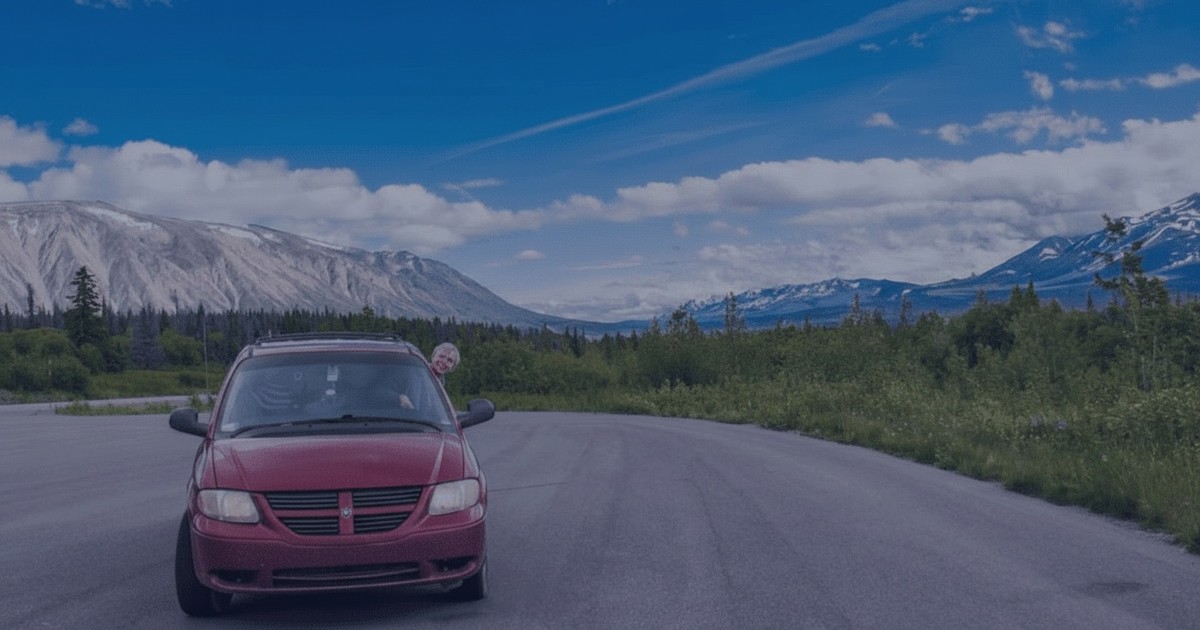
Red Chiquita Dodge Grand Caravan

For all of these purposes, a minivan is ideal. Since we were shopping in Canada, we narrowed it down to three reliable options:
  • Dodge Grand Caravan
  • Toyota Sienna
  • Honda Odyssey
In the end, we bought a 2005 Dodge Grand Caravan 3.3L V6 with around 248,000 km on the clock, right within our budget.

2) Sketching the Design and Measuring Everything

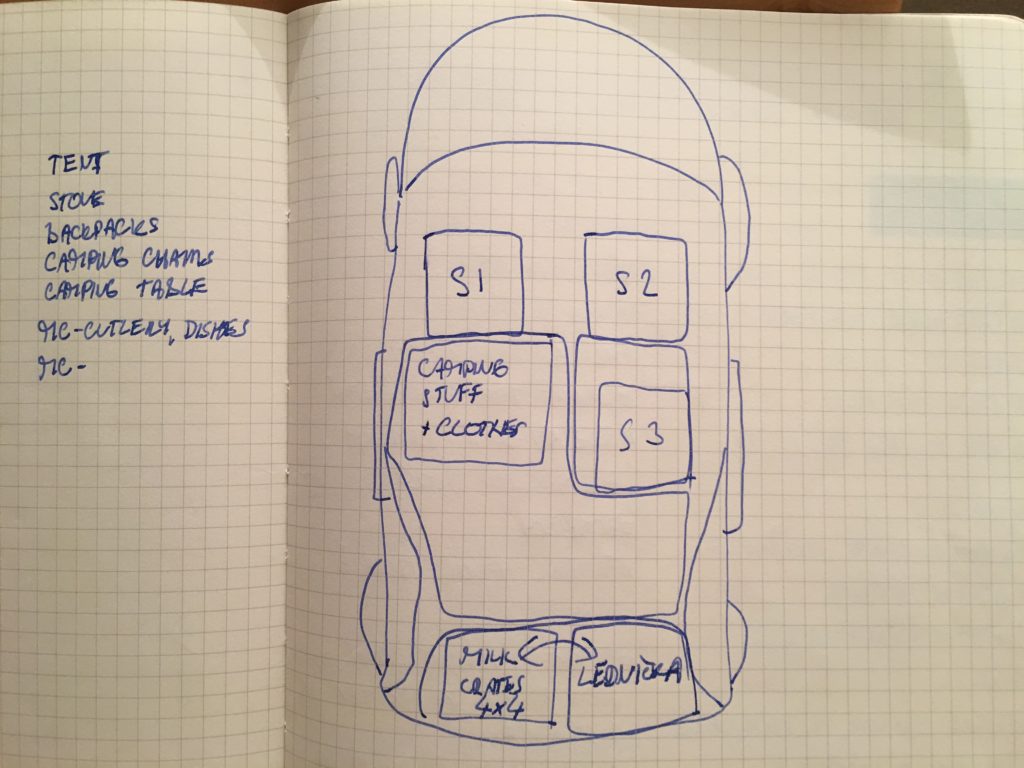
As the old saying goes: measure twice, cut once. Creating a functional design is the single most important part of the build, and it needs proper thought. How high should the bed sit? What size storage boxes need to fit underneath, and where will you buy them? What type of cooler will you use — electric or ice-based? And if ice — which side is the power outlet on? 😃
Car conversion design sketch

Removing the Seats

The first step for us was removing the rear row of seats entirely and folding the middle row flat into the floor. We placed the cooler and kitchen gear (including food supplies) in the back of the car, with all the storage compartments tucked under the bed.
Between the kitchen area and the front seats, we built the bed — 160 cm long and 110 cm wide. That was more than enough for us. 🙂 We set the plywood bed platform on 60 cm legs so we could easily stash all our stuff underneath.
Originally we hooked up an electric cooler, but it turned out to be completely useless. After two weeks we swapped it for a cooling box from Walmart for $15 (about €14), and from then on we just bought fresh ice every three days.

Electrical Setup

One thing you absolutely must not overlook is checking where all the power outlets (cigarette lighter sockets) are in your car and how many watts they can handle. Whatever you do, forget about installing a second car battery and charging it through those outlets — the alternator isn’t built for that, and unless you upgrade to a beefier one, you’ll either a) blow it out, like we did, or b) find it won’t charge anything properly.
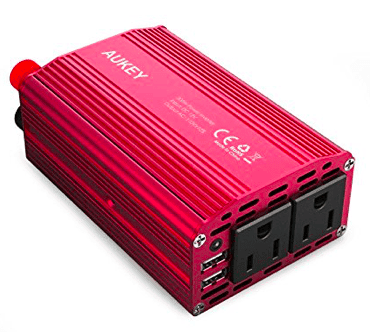
Instead, buy a power inverter — a converter that goes from 12V to 120V (or 230V if you’re building in the UK) — and use that for charging. Only charge one large device at a time; never plug in several at once. Phones and tablets are fine, though. 🙂
Power inverter
Power inverter, 12V to 120V converter
If you’re planning to run an extension cable to the rear of the vehicle, lay it down before you start building the bed frame. Trust us on this one. 😉

3) Buying Materials and Tools

If you’re doing your camper conversion in North America, we highly recommend Walmart, Canadian Tire, and Lowe’s as your main suppliers. They have absolutely everything, and the materials for the bed plus tools shouldn’t cost you more than $150–200 (around €140–185). In the UK, the same stuff is readily available at B&Q, Screwfix, or Wickes.
For storage, the best option by far is milk crates — plastic crates that you can often find for free or for about a dollar each. We used them to build kitchen shelves and as under-bed storage boxes.
The bed itself is built from plywood, with legs made from planed timber (about $5 / €4.50 per metre). On top of the plywood, we laid two layers of egg-crate foam and one layer of memory foam mattress topper. That was the most expensive item — the mattress topper came to about $150 (roughly €140).
Tools you’ll need:
  • A saw (ideally a circular saw) — best borrowed from a friend or hired from a tool rental shop
  • An electric drill/driver (because a manual screwdriver will destroy your wrists)
  • Screwdriver bit sets — if you’re building in North America, note that screw heads differ from those used in the UK/EU
  • A spirit level
  • A hammer
  • A ratchet set for removing the seats
  • Wood screws
  • L-brackets (angled metal pieces with screw holes) to stabilise the bed legs

4) Building the Bed and Kitchen Area

We filmed a video showing exactly how we put our van camper conversion together:

5) Finishing Touches and Essential Gear

There are certain things you simply must have with you, if only for the peace of mind that comes from knowing you’re prepared for anything. On top of a spare tyre and a jack — the basics for every driver — here’s what we carried:
  • A jump-start power bank (for when you drain the battery overnight)
  • A rechargeable battery-powered lantern
  • Power inverter (12V to 120V)
  • 2x LED torches
  • Two camping chairs
  • Spare engine oil
  • A vehicle repair manual (because you can almost always find a scrapyard nearby with the parts you need)
  • A road atlas — for when the sat-nav gives up and for rough route planning
And of course, everything you need for camping and cooking, if that’s part of your plan:
  • A double-burner camping stove
  • A mini single-burner stove
  • Enough gas canisters for cooking
  • Pots, pans, cutlery, etc.

Window Curtains

With some ordinary string, any fabric you like, and a few strips of Velcro sewn onto it, you can work wonders. Run the string around the inside of the car so you can cover the rear and side windows when it’s time to sleep. Once you pull into a supermarket car park for the night, you’ll understand why this matters. 🙂

Rubbish Bin

Place a small bin right between the front seats — the smaller, the better. Trust us, banana peel starts to stink right under your nose within two hours.

Satellite Radio

A lifesaver during long, boring stretches — especially when there’s no FM signal in range. And believe us, that was the case for nearly half of our three-month trip through the US and Canada!

Snack Basket Within Reach of Driver and Passenger

There’s nothing worse than having to stop every two hours just because you want to grab something to eat from the boot. The longer the drive, the more annoying it gets. Keep nuts, biscuits, and all your snacks up front. We used a small basket and the door-side pockets.

TIP: If you’re planning an extended road trip, it’s also worth thinking about proper insurance — especially windscreen cover, which people often forget about.

What the Finished Camper Conversion Looked Like After 2 Weeks on the Road

Tips and Tricks for Your Vacation

Don’t Overpay for Flights

Search for flights on Kayak. It’s our favorite search engine because it scans the websites of all airlines and always finds the cheapest connection.

Book Your Accommodation Smartly

The best experiences we’ve had when looking for accommodation (from Alaska to Morocco) are with Booking.com, where hotels, apartments, and entire houses are usually the cheapest and most widely available.

Don’t Forget Travel Insurance

Good travel insurance will protect you against illness, accidents, theft, or flight cancellations. We’ve had a few hospital visits abroad, so we know how important it is to have proper insurance arranged.

Where we insure ourselves: SafetyWing (best for everyone) and TrueTraveller (for extra-long trips).

Why don’t we recommend any Czech insurance company? Because they have too many restrictions. They set limits on the number of days abroad, travel insurance via a credit card often requires you to pay medical expenses only with that card, and they frequently limit the number of returns to the Czech Republic.

Find the Best Experiences

Get Your Guide is a huge online marketplace where you can book guided walks, trips, skip-the-line tickets, tours, and much more. We always find some extra fun there!
Canada USA Road Trip 2017: 3 Months on the Road

TL;DROur 2017 Canada–USA road trip meant three months living out of a converted campervan (Dodge Grand Caravan), running from Calgary through Alaska down to San Francisco and back, with a final three-day stop on Long Island — over 13 US states and 3 Canadian provinces, and more than 100 stops along the way. It followed two weeks of camping in Hawaii, which came to 2,839.95 CAD. Sorting the van and gear cost around 70,000 CZK, and the trip itself, once we’d sold the car, worked out at roughly 236,190 CZK. Summer’s the best time for a route like this — we set off on 29 June 2017.

On 29 June 2017, we set off on our first big Canada USA road trip across North America. We spent two weeks in Hawaii, then three months driving through 13 US states, 3 Canadian provinces — from San Francisco all the way to Alaska and back. We wrapped it all up with three days on Long Island. We documented the entire journey meticulously, including daily expenses and detailed write-ups.

  Road trip 3 months in the wilderness

Our Road Trip Series

 
  1. What’s Camping in Hawaii Like and How Much Does It Cost
  2. We Built a Bed in Our Car and Headed to Alaska
  3. Heatwaves, White Nights, and Guns Everywhere. Welcome to Alaska
  4. Why You Need to Visit Alaska at Least Once in Your Lifetime
  5. 10 Magical Experiences You Must Have in Alaska
  6. 15 Breathtaking Places in Western Canada
  7. Two Months Living in a Car: The Highs and Lows of Our Western America Journey
  8. The Bizarre Side of Tourism: Why People Queue to See a Tree in the Middle of a Forest
 

From Calgary All the Way to Alaska

Calgary, Canada was our starting point. We’d been living there for a year, saving up and preparing for the trip. We bought a Dodge Grand Caravan and converted it into a campervan — you’ll find the full gear list further down. Essentially, apart from a toilet and a shower, we had a complete home on four wheels. We slept wherever we could: sometimes in Walmart car parks, occasionally at campsites, and most often on some remote desert or forest track.

Our Route

We kicked things off by flying to Hawaii on 14 June for a fortnight. Budget camping there was absolutely incredible. After getting back, we hit the road from Calgary towards Alaska.
 
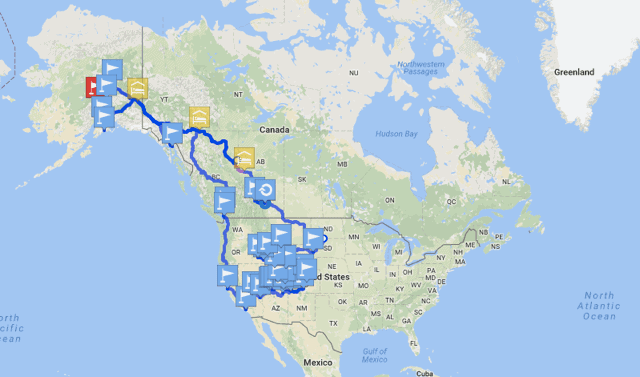
In a nutshell: Calgary (Canada) – Fairbanks (Alaska) – San Francisco (USA) and back again. But that’s a massive simplification — we stopped at more than 100 places along the way.
Road trip map Alaska Canada USA
 

What We Did Along the Way

We visited dozens of national parks. We’re mad about hiking, so most of our time was spent either driving or scrambling up mountains. We cooked on roadside picnic tables, did our laundry at launderettes, and worked from McDonald’s. Throughout the trip, we produced videos, photos, articles, and sent you postcards. 🙂
 

Our Gear

[visual-link-preview encoded=”eyJ0eXBlIjoiaW50ZXJuYWwiLCJwb3N0IjoxMDA5LCJwb3N0X2xhYmVsIjoiUMWZw61zcMSbdmVrIDEwMDkgLSBWeWJhdmVuw60sIGt0ZXLDqSBuYSBjZXN0w6FjaCBwb3XFvsOtdsOhbWUga2HFvmTDvSBkZW4iLCJ1cmwiOiIiLCJpbWFnZV9pZCI6MTA0NCwiaW1hZ2VfdXJsIjoiaHR0cHM6Ly9sb3VkYXZ5bWtyb2tlbS5jei93cC1jb250ZW50L3VwbG9hZHMvMjAxNy8wNy9oYWxlYWthbGEtMi00MDl4MjU1LmpwZyIsInRpdGxlIjoiVnliYXZlbsOtLCBrdGVyw6kgbmEgY2VzdMOhY2ggcG91xb7DrXbDoW1lIGthxb5kw70gZGVuIiwic3VtbWFyeSI6IkNlc3R1amVtZSBuYSBwbG7DvSDDunZhemVrIGEgdGFrIHNlYm91IHRhaMOhbWUgdsWhZWNoZW4gc3bFr2ogbWFqZXRlay4gQ28gdsWhZWNobm8gcG90xZllYnVqZW1lIGsgdG9tdSwgYWJ5Y2hvbSBtb2hsaSB0dm/FmWl0IHZpZGVhLCBwb8WZaXpvdmF0IGZvdG9ncmFmaWUgYSBzcMOhdCBtaW1vIGhvdGVseT8iLCJ0ZW1wbGF0ZSI6ImRlZmF1bHQtc3F1YXJlZCJ9″]  

Useful Books for Planning Your Trip


How Much Did It All Cost?

 
The biggest expense was obviously the car — but we sold it at the end of the trip. 🙂
 
Total preparation costs came to around CAD 3,900, which is roughly €2,700. The gear without the car cost us about €770.
 
That might sound like a lot, but in Canada you can save that amount in just two months of work (when there’s two of you). Our wage was around CAD 15.50 an hour, bringing in roughly CAD 4,000 a month between us, and we always managed to put half of it away.
 
Here’s the breakdown of what we spent (prices are in CAD):
 
  • Flights to Canada in February
approx. $1,200 for both of us
  • 2 weeks in Hawaii (including flights) cost us a total of: $2,839.95
Flights $1,082.00 Airbnb $186.00 Haleakala Park entrance $32.50 Car hire $521.00 Car insurance $130.00 Food $657.80 Petrol $204.00 Laundry (2x) $26.65 Campsites Polipoli $25.70 Waianapanapa $51.48 Olowalu $208.00
  • Buying + kitting out the car
$3,900, which is roughly €2,700. The gear without the car cost us about €770.
  • 2.5 months travelling through the USA and Alaska
Food $1,749.10 Restaurants $265.06 Cafés $178.94 Camping $200.77 Toiletries $0.00 Car gear $693.21 Petrol $2,195.54 Postcards $51.57 Showers $44.42 Phones $136.92 Parking and transport $51.12 Insurance $152.26 Hotel $132.50 Park Pass $105.00
  • Flights to New York
approx. $200 per person
  • 3 days at a yacht club on Long Island with a Mustang Convertible
approx. $1,000 spent
  • Flights home
approx. $400 per person
 
The grand total came to (after deducting what we got for the car) roughly €9,100. That’s exactly how much we’d deliberately saved over the previous 4.5 months working in Canada (we worked in a café and at the airport). We usually say it cost a bit more in practice, because while in Canada we also bought multi-day trekking gear, which set us back a fair few hundred euros on top of that.
 
Day-by-day expenses during the trip — from campsite fees to petrol station coffees — can be found in this spreadsheet:
 

Tips and Tricks for Your Vacation

Don’t Overpay for Flights

Search for flights on Kayak. It’s our favorite search engine because it scans the websites of all airlines and always finds the cheapest connection.

Book Your Accommodation Smartly

The best experiences we’ve had when looking for accommodation (from Alaska to Morocco) are with Booking.com, where hotels, apartments, and entire houses are usually the cheapest and most widely available.

Don’t Forget Travel Insurance

Good travel insurance will protect you against illness, accidents, theft, or flight cancellations. We’ve had a few hospital visits abroad, so we know how important it is to have proper insurance arranged.

Where we insure ourselves: SafetyWing (best for everyone) and TrueTraveller (for extra-long trips).

Why don’t we recommend any Czech insurance company? Because they have too many restrictions. They set limits on the number of days abroad, travel insurance via a credit card often requires you to pay medical expenses only with that card, and they frequently limit the number of returns to the Czech Republic.

Find the Best Experiences

Get Your Guide is a huge online marketplace where you can book guided walks, trips, skip-the-line tickets, tours, and much more. We always find some extra fun there!
Alaska USA: 10 Best Places to See on Your Trip

TL;DRIn Alaska, don’t miss Exit Glacier and the hike up the Harding Ice Trail, kayaking among glaciers in Kenai Fjords National Park ($430 per person), and trails by Portage Glacier. Also worth it are the harbour towns of Whittier, Haines and turquoise-tinted Valdez, the views over Denali National Park from Triple Lakes Trail, and the hidden Hatcher Pass between Denali and Anchorage. The authors spent just over two weeks in Alaska after a three-day journey from Canada, and they’d also point you towards Homer, with its galleries, and the City of Kenai, where locals net salmon straight from the sea.

We’d been talking about visiting Alaska since we started dating. But getting to Alaska from Europe is no joke. Flights alone cost a small fortune, and let’s be honest — Alaska is one of the most expensive parts of the USA. In the end, we made it to Alaska. Below you’ll find how we got there and the best places to see in Alaska.

How We Got to Alaska from Canada

When we got our working visas for Canada, we managed to save enough in three and a half months to travel for a full month — and still had money left over. So we decided to return to Canada for another five months and try to earn enough for a much longer road trip. It worked.

In five months, we saved enough and set off for Hawaii, Alaska, through Canada’s Yukon and British Columbia, and then down into the States. We drove to Alaska non-stop for three days (and three days back to Canada) and spent just over two weeks there. Here are the most beautiful places we visited.

10 Best Places to See in Alaska

Let’s take a look at the best places to see in Alaska and the most beautiful hikes we experienced.

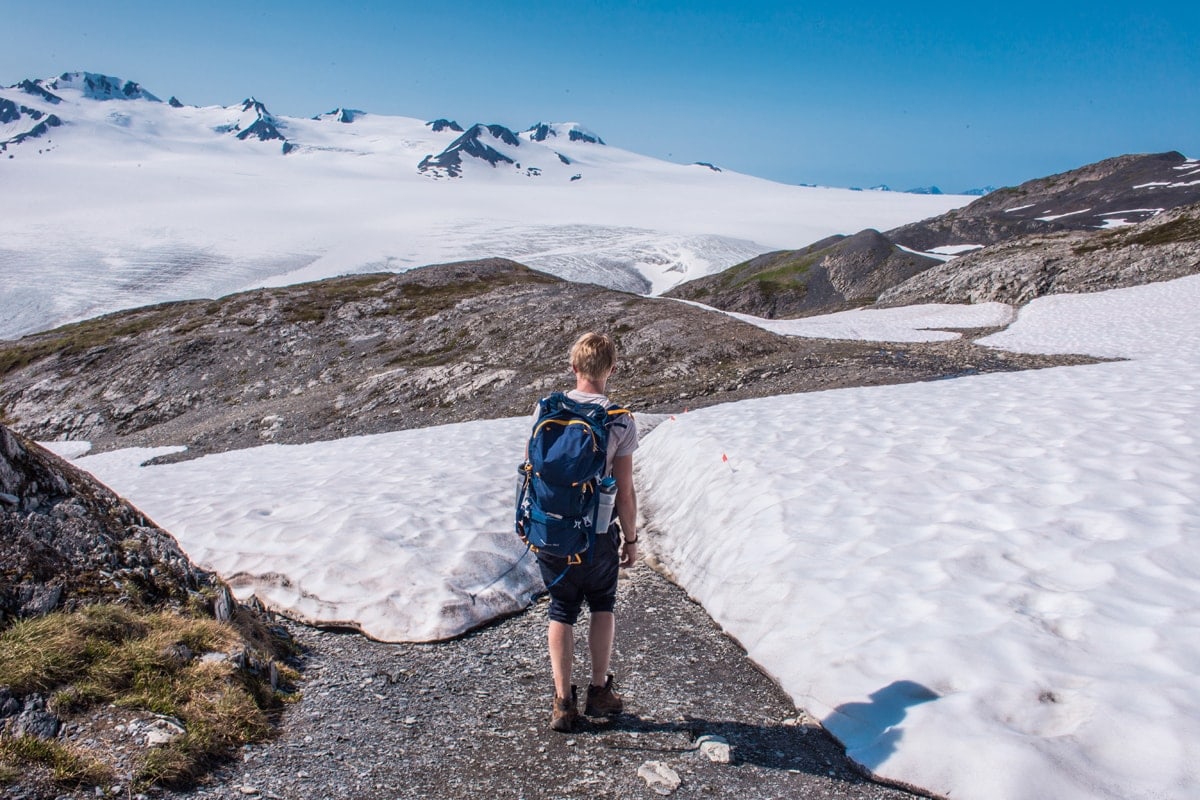
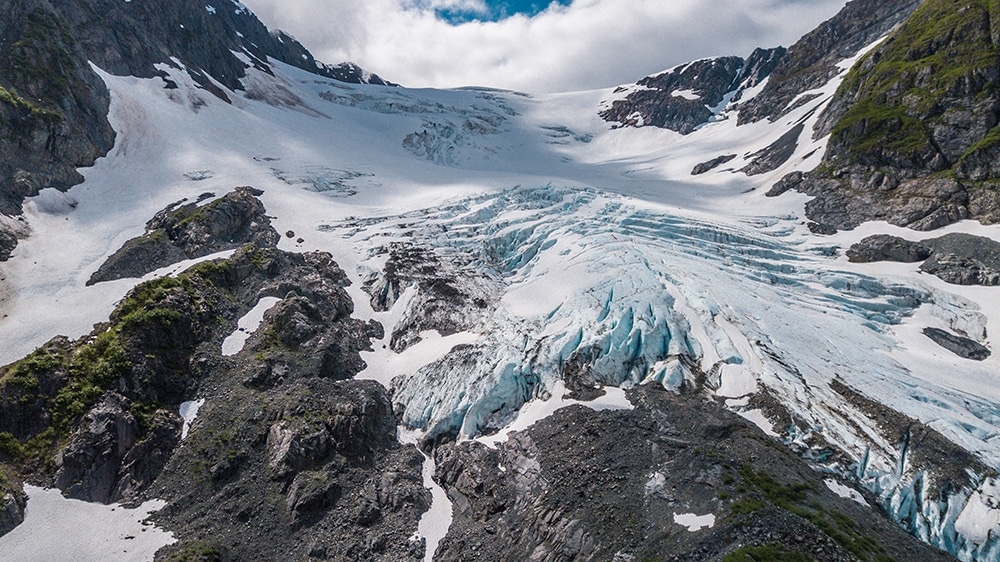
1) Harding Ice Field Trail to Exit Glacier

The hike to Exit Glacier turned out even better than we expected

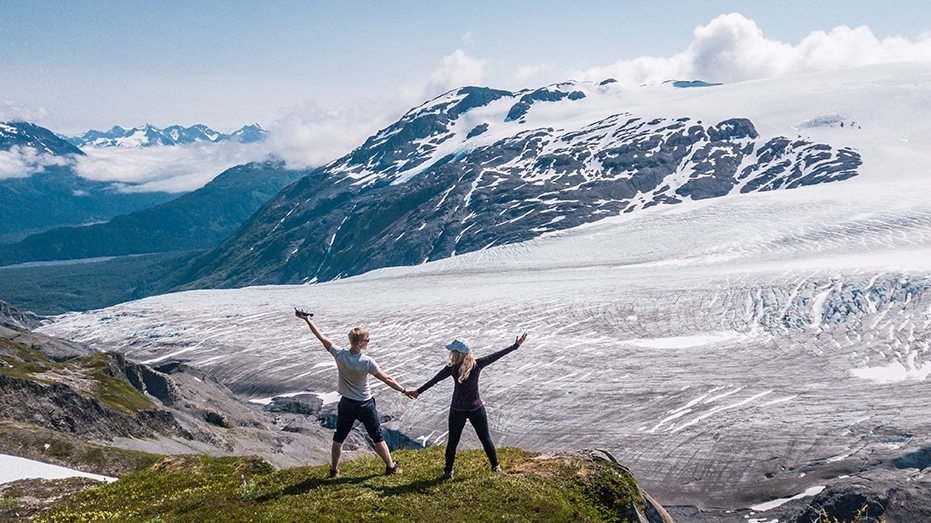
The best things in life are free. We waited 4 days, praying that the clouds would clear from Seward so we could hit this trail to Exit Glacier. On the fourth day, Mother Nature finally smiled at us. That morning it looked like we’d have to give up on Exit Glacier — it was overcast. But it wasn’t raining, so we decided to drive from Seward to the trailhead, where we spotted a tiny sliver of turquoise sky above the glacier. We decided to risk it. And it paid off.

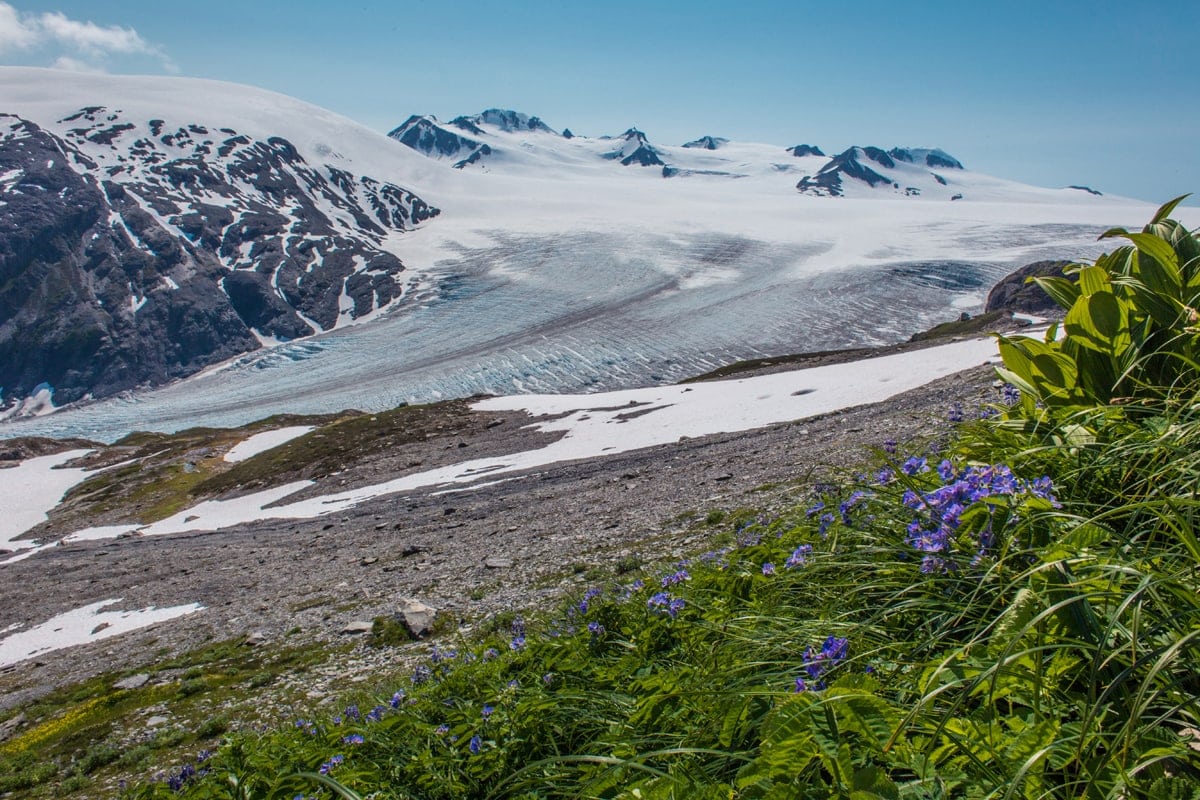
Thrilled by the sunshine, I practically ran up the trail. The fact that it had about 1,000 metres of elevation gain didn’t dampen our enthusiasm one bit. Someone once told me they call this “nature’s kitsch.” The massive white glacier contrasted with the blue sky and purple wildflowers that covered every green section of the hike. I’d never seen anything like it.

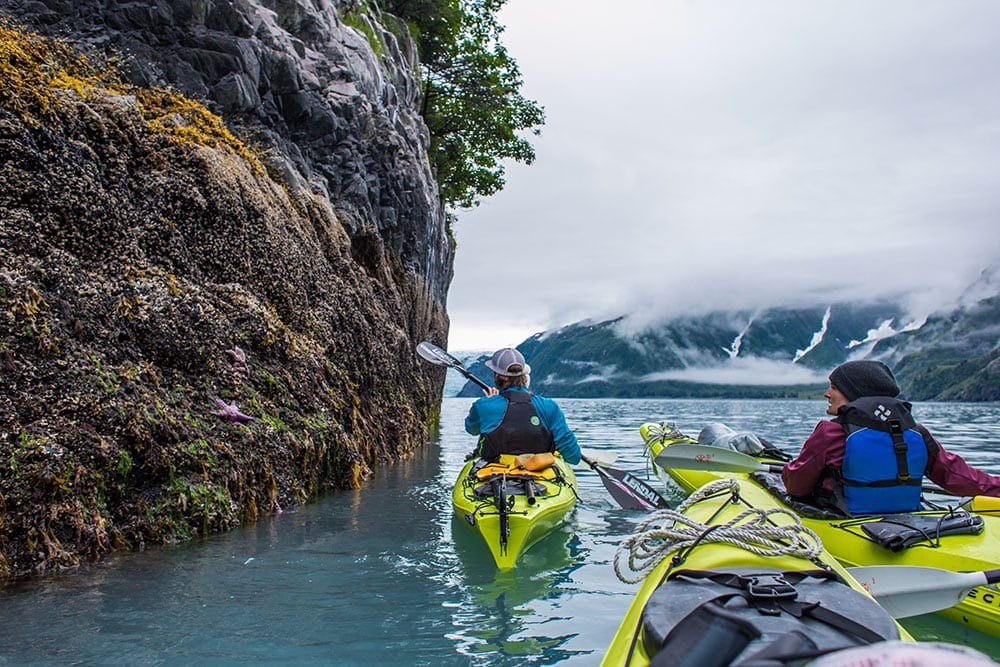
2) Kayaking in Kenai Fjords National Park

Sea starfish kayaking - best places to see in Alaska
Kayaking was the most expensive experience of our entire trip

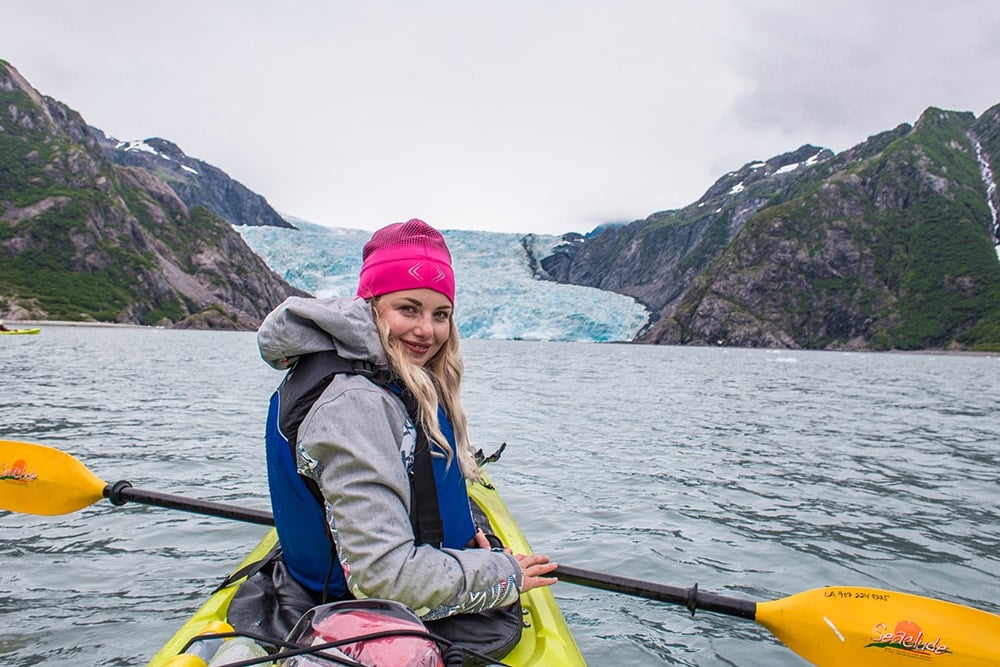
The most expensive five hours of my life. When you’re watching every penny, a price tag of $430 per person makes your stomach churn. The deliberation was long, but we knew how it would end. We had to go — because who knows when we’d come back, and whether we’d ever get the chance to kayak near a glacier among fjords again.

Just on the way there, we spotted whales and loads of puffins. While kayaking, we admired sea starfish and sea lions, paddling among chunks of ice. A stunning — and overpriced — experience that you should budget for in advance. If you’re looking for tours and excursions in Alaska, check out GetYourGuide for great options.

3) Hike to Portage Glacier

Portage Glacier Whittier Alaska
If you can bring your own kayaks, there’s a freely accessible lake by Portage Glacier where you can paddle right up to it. We had to settle for a drone shot

This easy three-hour hike to Portage Glacier is definitely worth it, even though a horde of mosquitoes will try to eat you alive along the way. You can get relatively close to the glacier and admire the crystal-clear lake with chunks of ice bobbing on the surface.

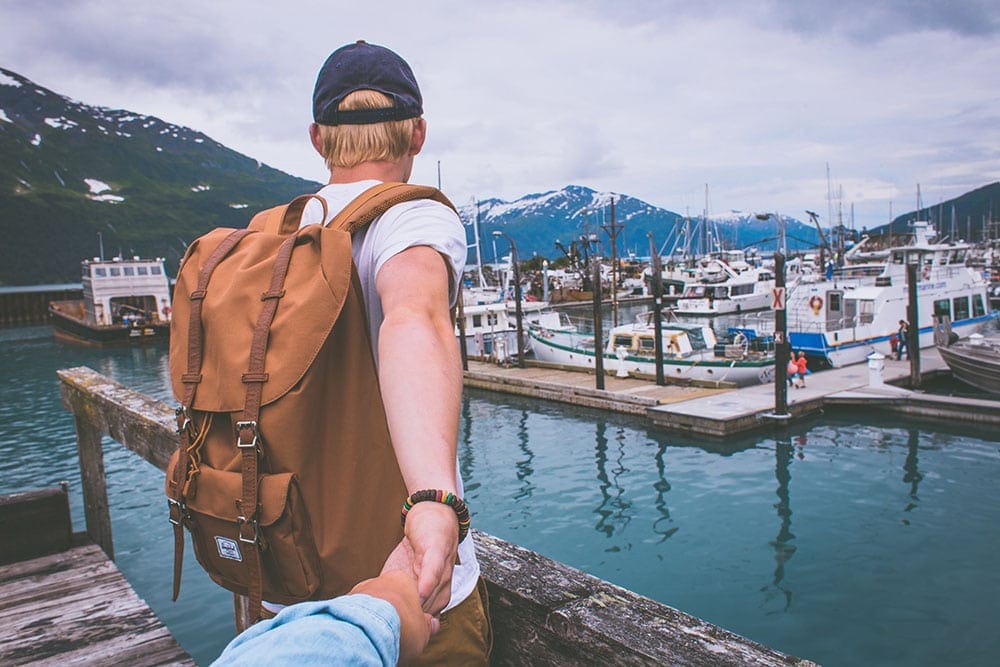
4) Port Town of Whittier

Whittier port town Alaska
They say the weather in Whittier is always worse than elsewhere, but we didn’t notice

Our Lonely Planet guidebook described this place as very weird. We didn’t find anything weird about it. It also claimed the weather here is always worse. We didn’t notice that either. What we did enjoy was strolling through the harbour completely on our own.

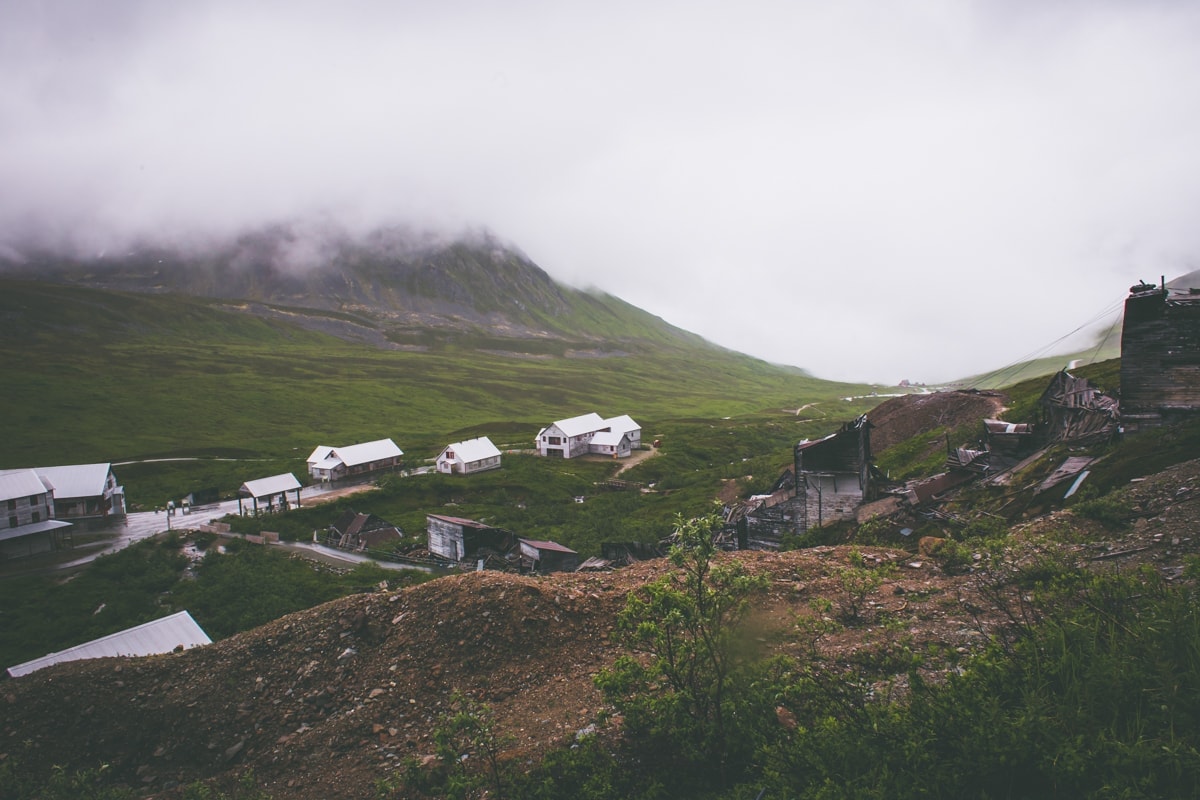
5) Hidden Gem Between Denali National Park and Anchorage – Hatcher Pass

Hatcher Pass Alaska
Hatcher Pass was a small detour on the road from Denali National Park to Anchorage. It had been raining all day, so we were thrilled when we drove up the hill and got the only view we’d had in hours

Hatcher Pass is a hidden gem on the route from Denali National Park to Anchorage. You need to turn off the main road, but you definitely won’t regret it. Suddenly you find yourself in a valley where wisps of cloud drift above green, rolling hills. There’s an old gold mine that’s been turned into a museum, and you can join a guided tour. Our guide was a bit of a character, though.

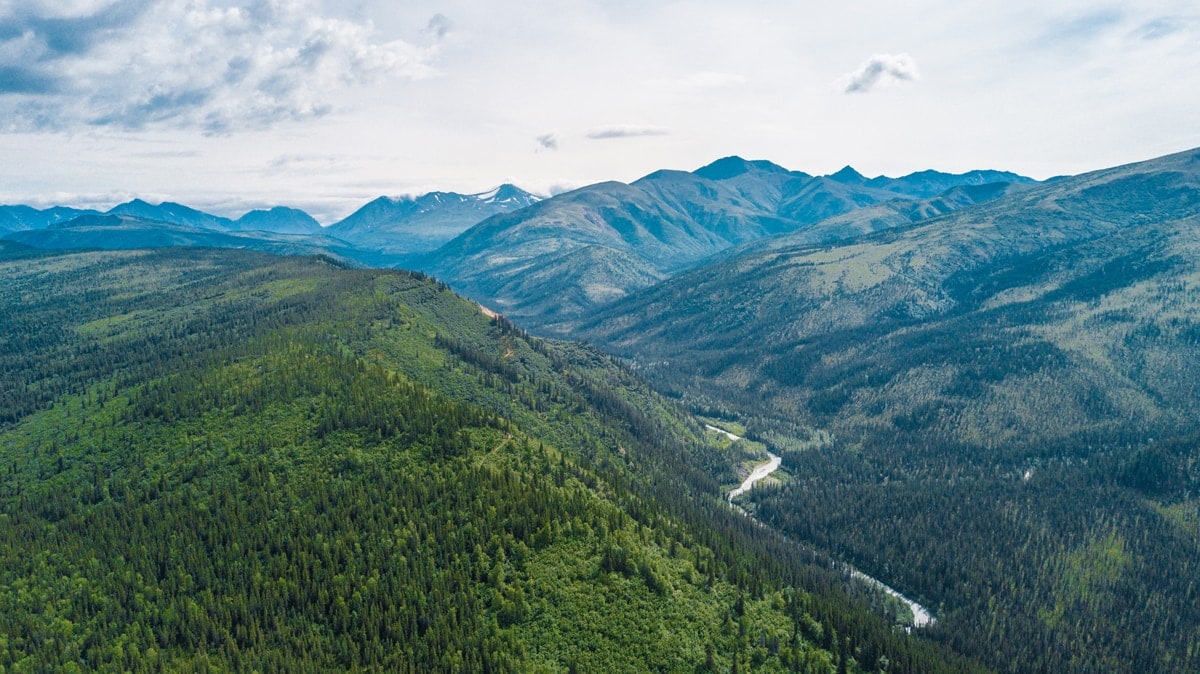
6) Spend a Few Days in Denali National Park

Denali National Park Alaska
View of Denali National Park from the Triple Lakes Trail

Denali is home to the highest peak in North America — Denali (formerly Mt. McKinley). Unfortunately, in this impossibly vast national park, you can’t move around freely and must pay $30–50 for a bus. So we decided to hike only in the more accessible areas. We tackled the Triple Lakes Trail, which offers amazing views of endless mountain peaks — sadly, Denali itself isn’t visible from there.

7) Port Town of Haines

Mt. Ripinski hike in Haines, Alaska
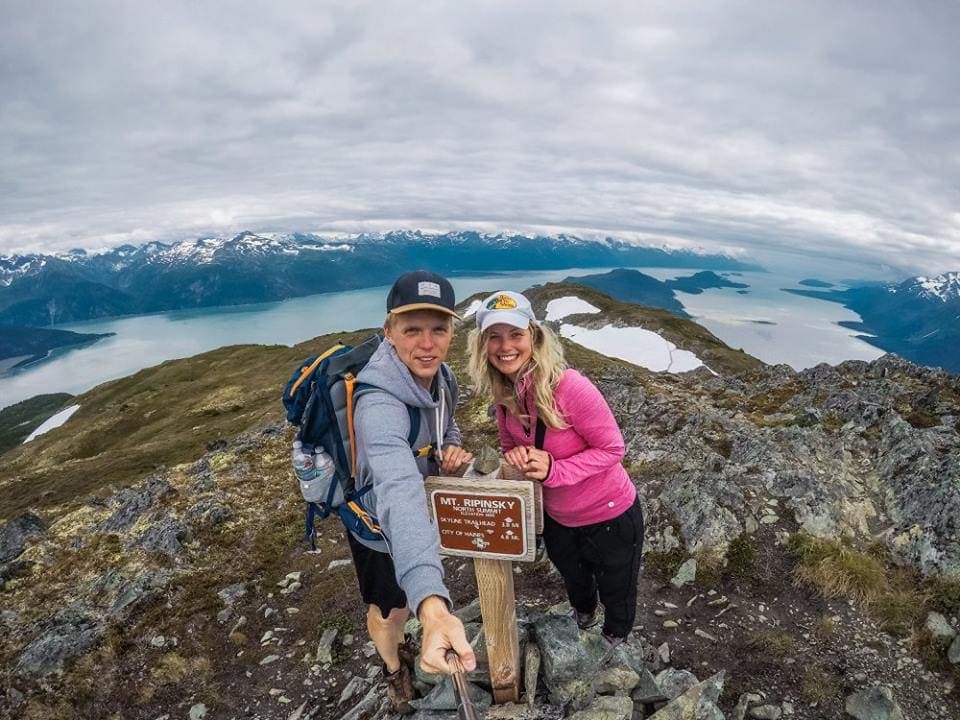
Mt. Ripinski was the last hike on our Alaska adventure. We nearly froze up there. Those smiles took a lot of effort 🙂

Haines is known for its pastel turquoise waters and amazing hikes for mountain lovers. We headed up Mt. Ripinski — a beautiful trail through the forest that leads to a neighbouring peak. From the top, you can see the entire town and its surroundings. The problem was that strong winds picked up at the summit and we were worried it might be dangerous. Luckily, we made it back safely.

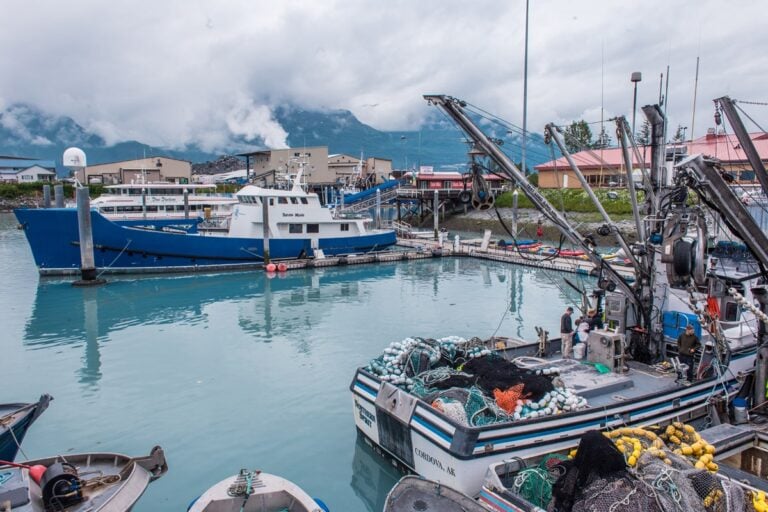
8) The Perfectly Turquoise Town of Valdez

Turquoise harbour in Valdez Alaska
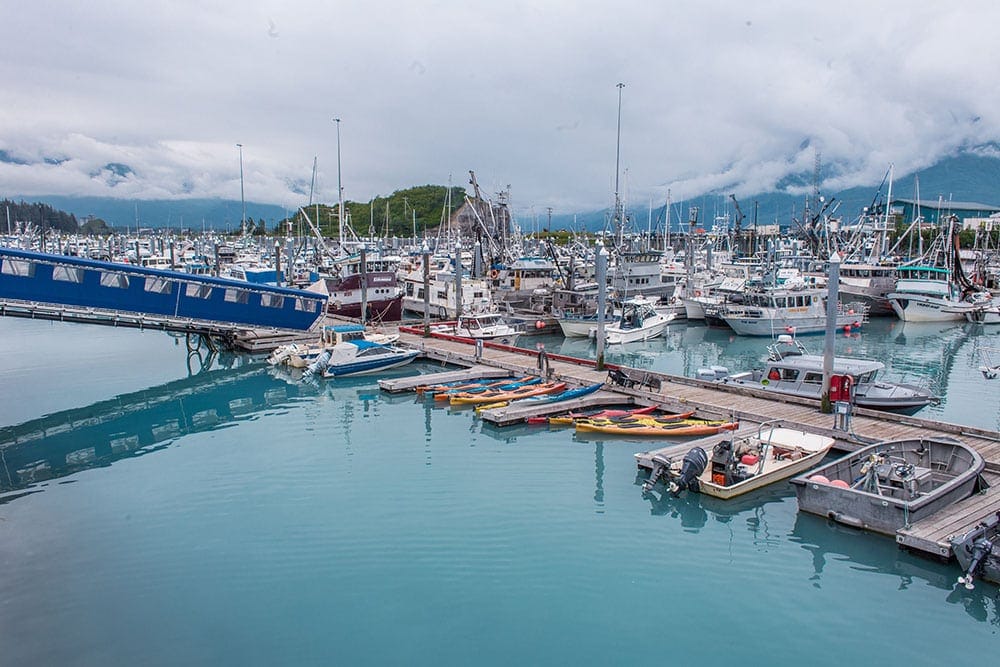
The turquoise harbour in Valdez

Small, turquoise, and magical. That’s my memory of the port town of Valdez, where we made a very brief stop.

9) The Sleepy Town of Homer

Homer Alaska port town
Homer has its own charm. It’s also much colder there than everywhere else.

The artsy little town of Homer is famous for its galleries of local artists. You might be surprised that, unlike the rest of the Kenai Peninsula, it’s flat.

But that doesn’t take away from its beauty. Head to Homer Spit like we did — a narrow strip of land stretching into the water, where besides the freezing air, you’ll find lovely painted shops, restaurants, and cafés.

10) Fishing Town: City of Kenai

Fishing in Alaska City of Kenai
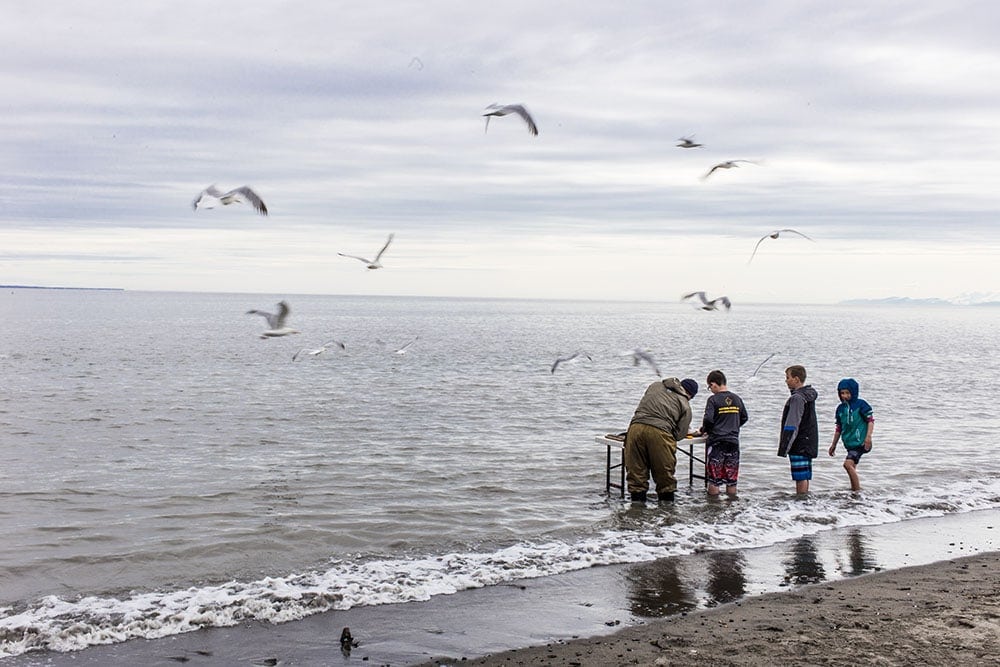
Daily bread for Alaskan families — catching your own dinner

Our guidebook didn’t have much praise for this town. But we were tired and in a bad mood, so we didn’t feel like continuing to Homer. And we were glad we stopped here. It was my greatest cultural experience in Alaska. We headed to the beach, where people don’t swim — instead, they stand in the water catching salmon by waiting for the fish to jump into their enormous nets.


Recommended Guide for Planning Your Alaska Trip 🙂

If you’re planning a trip to Alaska, we highly recommend picking up a good guidebook. It helped us navigate this vast and remote state, find hidden gems, and plan our route efficiently. For accommodation along the way, we booked many of our stays through Booking.com, which often had the best deals even in remote Alaskan towns.

Tips and Tricks for Your Vacation

Don’t Overpay for Flights

Search for flights on Kayak. It’s our favorite search engine because it scans the websites of all airlines and always finds the cheapest connection.

Book Your Accommodation Smartly

The best experiences we’ve had when looking for accommodation (from Alaska to Morocco) are with Booking.com, where hotels, apartments, and entire houses are usually the cheapest and most widely available.

Don’t Forget Travel Insurance

Good travel insurance will protect you against illness, accidents, theft, or flight cancellations. We’ve had a few hospital visits abroad, so we know how important it is to have proper insurance arranged.

Where we insure ourselves: SafetyWing (best for everyone) and TrueTraveller (for extra-long trips).

Why don’t we recommend any Czech insurance company? Because they have too many restrictions. They set limits on the number of days abroad, travel insurance via a credit card often requires you to pay medical expenses only with that card, and they frequently limit the number of returns to the Czech Republic.

Find the Best Experiences

Get Your Guide is a huge online marketplace where you can book guided walks, trips, skip-the-line tickets, tours, and much more. We always find some extra fun there!
5 Reasons to Start Meditating and How to Do It (+Free Guided Recording)

TL;DRMeditation offers five main benefits: deep relaxation, better sleep, emotional control, stress management and a productivity boost. The author’s been practising for 8 months and swears by guided sessions through headphones. Beginners should aim for at least 10–15 minutes a day, while more experienced meditators can go for 20–30 minutes, ideally somewhere quiet with your eyes closed, focusing on your breathing. Since decent guided recordings are hard to come by, the author put together their own 7-day meditation programme, with a free sample available to download on their website. The article also flags meditation as a useful tool alongside treatment for anxiety and depression, with effects showing up after just a few minutes of regular practice.

I’ve been actively meditating for over 8 months, and I can confidently say that the meditation benefits have genuinely improved my life. I haven’t reached any “zen balance,” nor have I experienced enlightenment, but I’ve learned how to be more present in the moment, experience everyday life more deeply, and maintain a clear and rational mind.  

Tips and Tricks for Your Vacation

Don’t Overpay for Flights

Search for flights on Kayak. It’s our favorite search engine because it scans the websites of all airlines and always finds the cheapest connection.

Book Your Accommodation Smartly

The best experiences we’ve had when looking for accommodation (from Alaska to Morocco) are with Booking.com, where hotels, apartments, and entire houses are usually the cheapest and most widely available.

Don’t Forget Travel Insurance

Good travel insurance will protect you against illness, accidents, theft, or flight cancellations. We’ve had a few hospital visits abroad, so we know how important it is to have proper insurance arranged.

Where we insure ourselves: SafetyWing (best for everyone) and TrueTraveller (for extra-long trips).

Why don’t we recommend any Czech insurance company? Because they have too many restrictions. They set limits on the number of days abroad, travel insurance via a credit card often requires you to pay medical expenses only with that card, and they frequently limit the number of returns to the Czech Republic.

Find the Best Experiences

Get Your Guide is a huge online marketplace where you can book guided walks, trips, skip-the-line tickets, tours, and much more. We always find some extra fun there!
The Bizarre Side of Tourism: A Road Trip Through America’s Most Overcrowded Parks

TL;DRThis piece captures the sheer absurdity of tourist crowds at America’s and Canada’s biggest hotspots on a road trip, with visitors queuing up to fifteen minutes just for a photo with the General Sherman Tree in Sequoia National Park, or the view at Horseshoe Bend, which the authors reckon is the most overrated stop on the whole trip. The article contrasts the brutal heat of Death Valley (47°C) with the calmer pace of Yellowstone, where they spent five days and found the crowds vanish the moment a geyser blows. All told, the trip covered 20,000 kilometres by car and 800 kilometres on foot over 2.5 months, and the standout spot in North America turned out to be Banff National Park with Moraine Lake.

If you placed two identical Coca-Colas in front of them and said Elvis Presley had touched one, they’d probably start taking selfies with it. Tourists. Our last two weeks of road-tripping were defined by the bizarre side of tourism — social media has created a world where people who actually hate travelling feel compelled to do it anyway.

Social media made people travel who actually hate travelling

Yellowstone is overcrowded with tourists but utterly magical

“THIS IS NOT IN OUR PLAN. Stop taking pictures of stupid things and get up there! When we reach the top, you’ve got fifteen seconds to take your photo and then we’re running back. Got it?” screamed an American man at his wife, theatrically slamming his hat on the ground. The petite woman — clearly used to this — carried on photographing the wildflowers along the Grand Prismatic trail with admirable composure. He puffed up, fuming, and marched off.

Being at the most touristy spots on Earth became a guilty pleasure of ours during the final stretch of our trip. Sometimes you genuinely wonder why people travel when they look like it’s the greatest form of torture known to mankind. Probably for the Instagram photos, we reckon.

Why do tourists queue for a photo with a tree in a forest full of trees?

Queueing for a tree in a forest. Amusing?

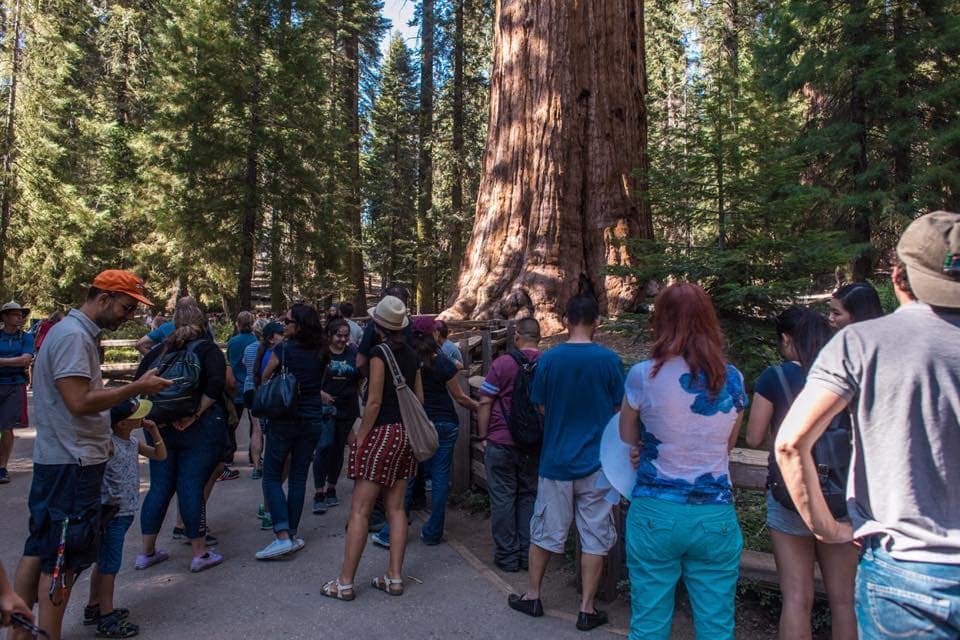
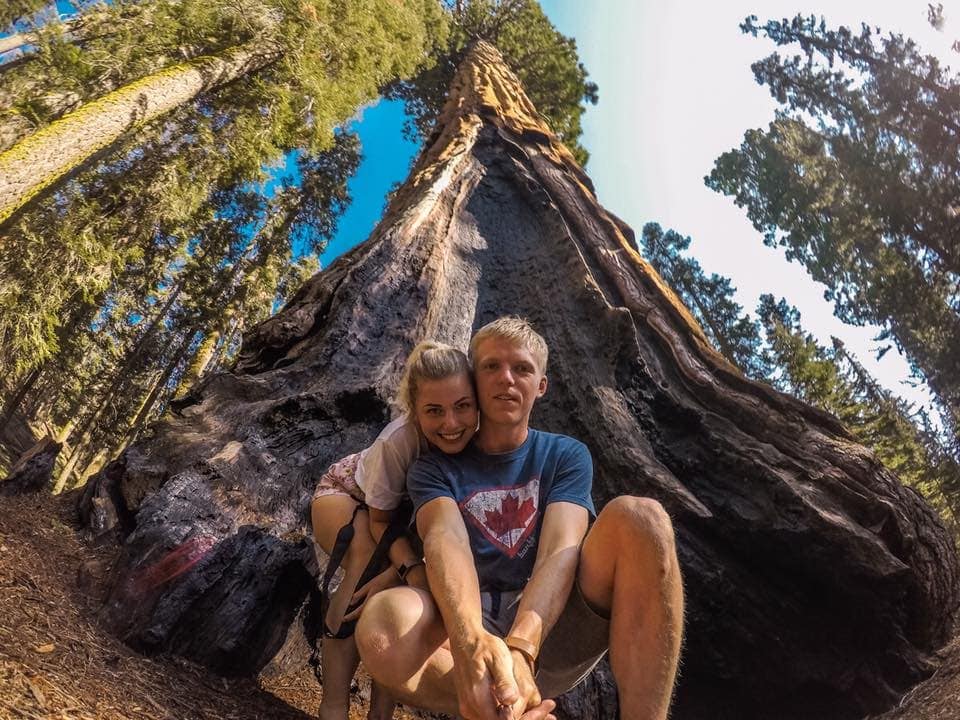
From Yosemite, we headed to Sequoia National Park. For a while, we couldn’t find any tourists. We thought it couldn’t be possible — they had to be somewhere. Then we spotted them, all gathered around one particular sequoia. Allegedly the largest sequoia in the world. Every single visitor was queuing up for their ten seconds of clowning around at the General Sherman Tree.

Could you tell this isn't the biggest tree in Sequoia National Park?
Could you tell this isn’t the biggest tree in Sequoia National Park?

If you’re thinking it must have been a truly spectacular tree, let me assure you — you genuinely can’t tell it’s the oldest or the largest just by looking at it. So we stood there for a good while, watching with great amusement as people waited in a fifteen-minute queue for a photo with a sequoia… in a forest absolutely full of sequoias.

35°C is actually quite refreshing

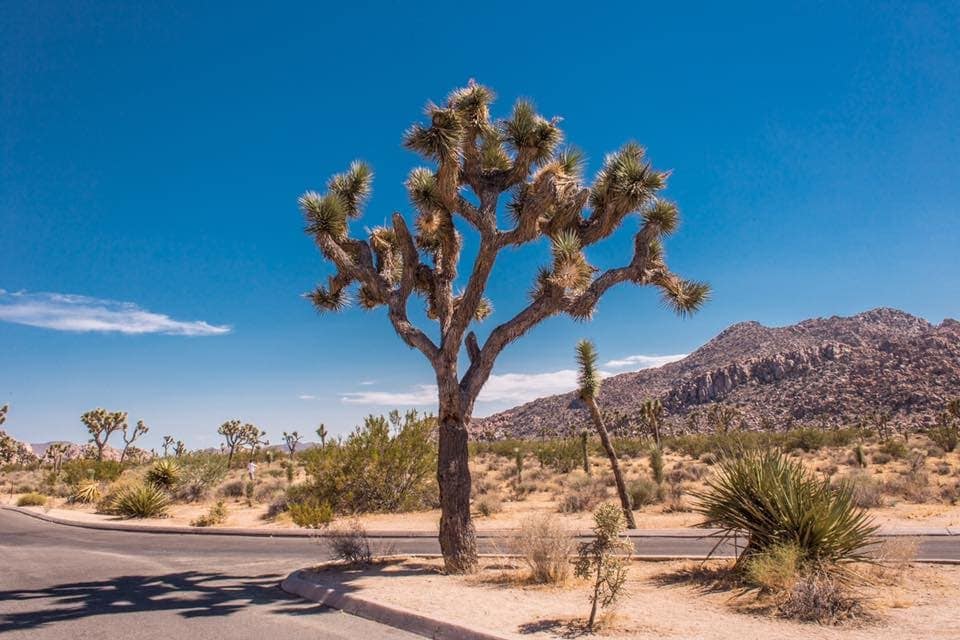
The iconic Joshua Tree

Joshua Tree Park is a gorgeous and, luckily for us, underrated gem. It’s not exactly ideal for long walks in summer — temperatures soar through the roof and tourists try to spend as little time outside their cars as possible.

We could hardly believe we’d actually made it there. It meant our trusty Chiquita had survived to reach the southernmost point of our road trip — and also that our adventure was slowly coming to an end.

This is not Chiquita

The heat wasn’t about to let up, and the tourists weren’t coming back any time soon. From the scorching, we drove straight into the even more scorching. And our car was about to face its ultimate test. We were heading to the lowest point in North America — Death Valley.

 
The hottest spot in the western USA

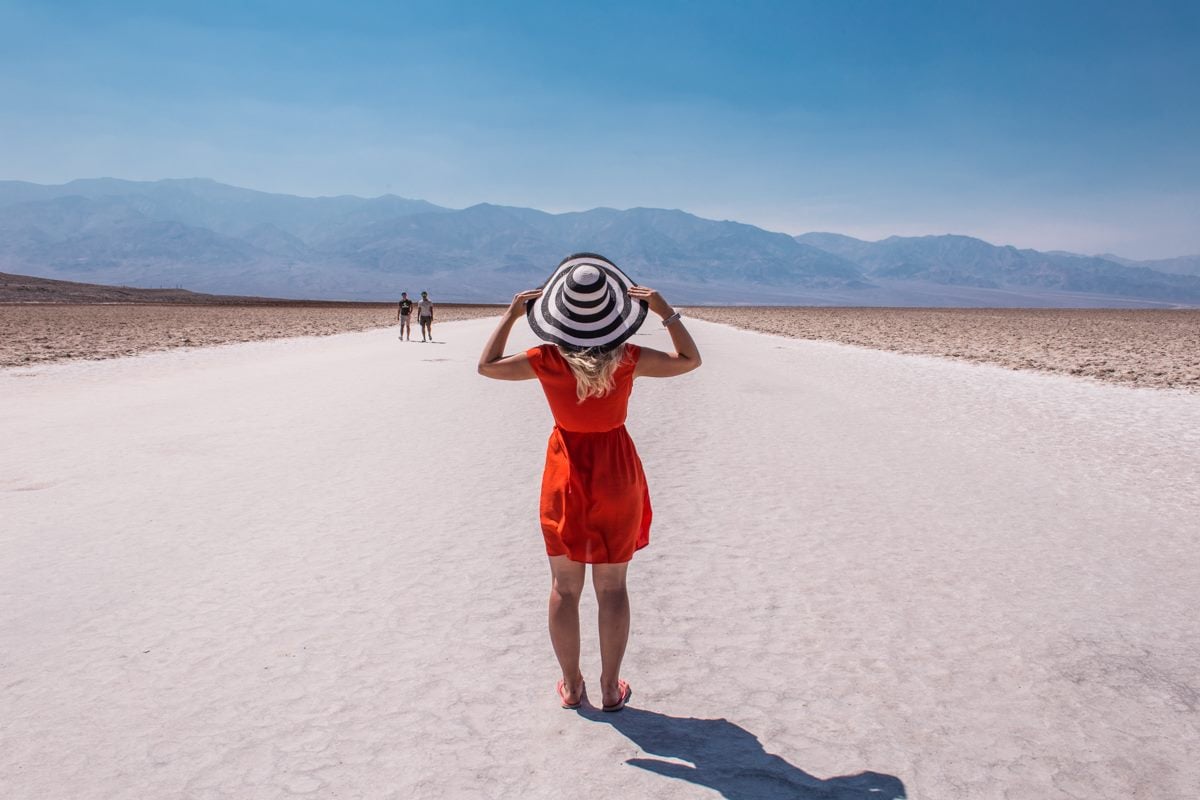
According to some sources, it’s the hottest place on Earth (though others point to Dasht-e Lut in Iran with its record 70.6°C). We had a lovely 47°C. True to our rather unfortunate habit, we arrived at precisely the worst possible time — when they advise you not to walk around at all. But it wouldn’t be the real Death Valley experience if you didn’t brave it in the middle of summer at peak heat. At least that’s what we kept telling ourselves. I’d been warning Lukáš it would feel like standing in front of a giant hair dryer, and sure enough, that’s exactly what it was. During our short walks through this hostile landscape, we could only hope we wouldn’t melt.


When you accidentally skip a national park, you know you’ve visited too many

North Rim is better than South Rim because there are hardly any tourists
It was the perfect preparation for Nevada, Arizona, and Utah, because from then on nothing ever felt quite as brutally hot. 35°C seemed like a pleasant breeze by comparison. We spent two days in Las Vegas pretending to be normal tourists, only to find ourselves on the third day — nursing a hangover — parking up and sleeping right next to the visitor centre at the North Rim of the Grand Canyon. We simply didn’t have the energy for anything else. If you’re curious about all the places we slept that weren’t exactly legal, well, this was one of them.
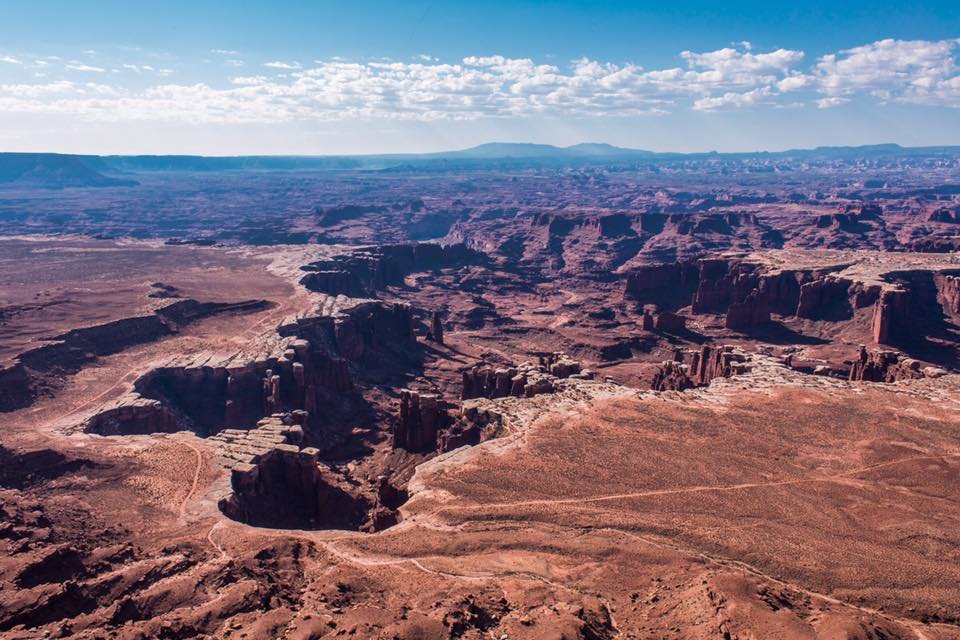
At first Canyonlands seemed underwhelming, but looking back, it actually doesn't look half bad
At first Canyonlands seemed underwhelming, but looking back, it actually doesn’t look half bad

We didn’t linger for long — took a few shorter walks and hopped straight back into our Chiquita to keep moving. We still didn’t have the energy or the mood to trek anywhere properly, so we weren’t even cross with each other when we realised we’d accidentally skipped one of Utah’s national parks. We decided to make a small detour and go back for it.

Maybe we should have had a coffee before the Canyonlands trip — it actually looks rather brilliant

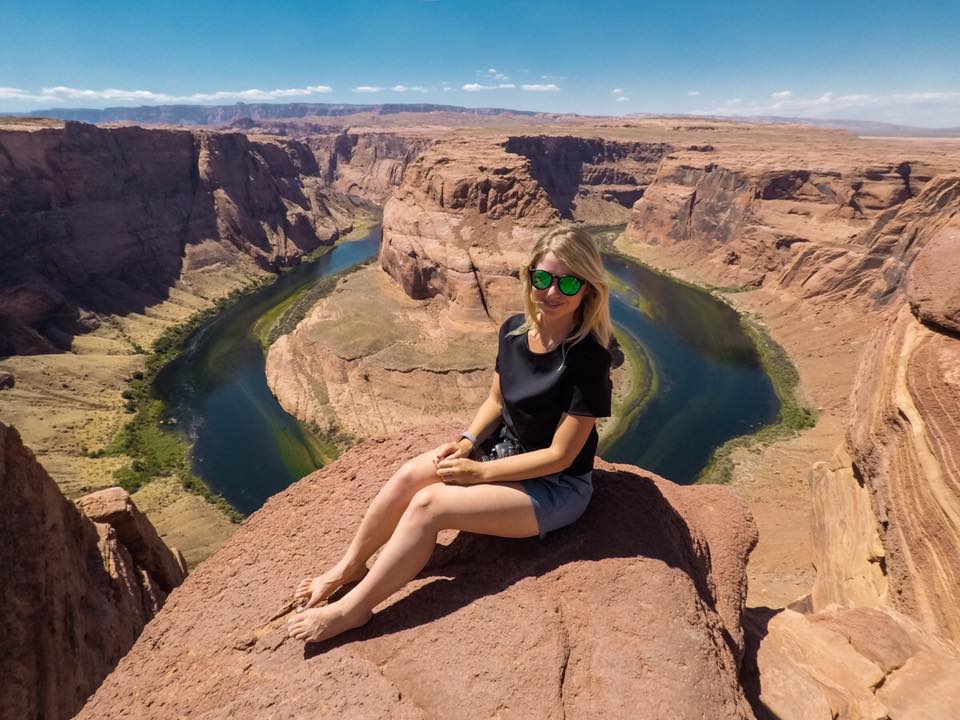
Meet Horseshoe Bend, the most overrated spot in the USA

We didn’t expect quite such a pilgrimage when we decided to make a stop at the wildly popular Horseshoe Bend. The single most overrated place on our entire trip. Thousands of grumpy tourists streaming towards the exact same photo their mates had posted on Instagram. So naturally, we took one too. Research shows that people don’t actually like unfamiliar things — they’re most drawn to what they already know. The more they see a place in photos, the more beautiful it seems. The more famous, the more stunning. Our brains love the familiar. And so we headed to the next popular destination: Monument Valley.

Thanks to Instagram, Horseshoe Bend has become a pilgrimage site

Mesa Verde isn’t exactly a tourist hotspot, but that doesn’t mean it isn’t worth a stop. From 550 AD to 1300, this was home to the Ancestral Puebloans, who could scale cliffs like nobody else. They’d carve tiny toeholds into the rock and scramble up sheer cliff faces.

Our last first time. We got kicked out of town

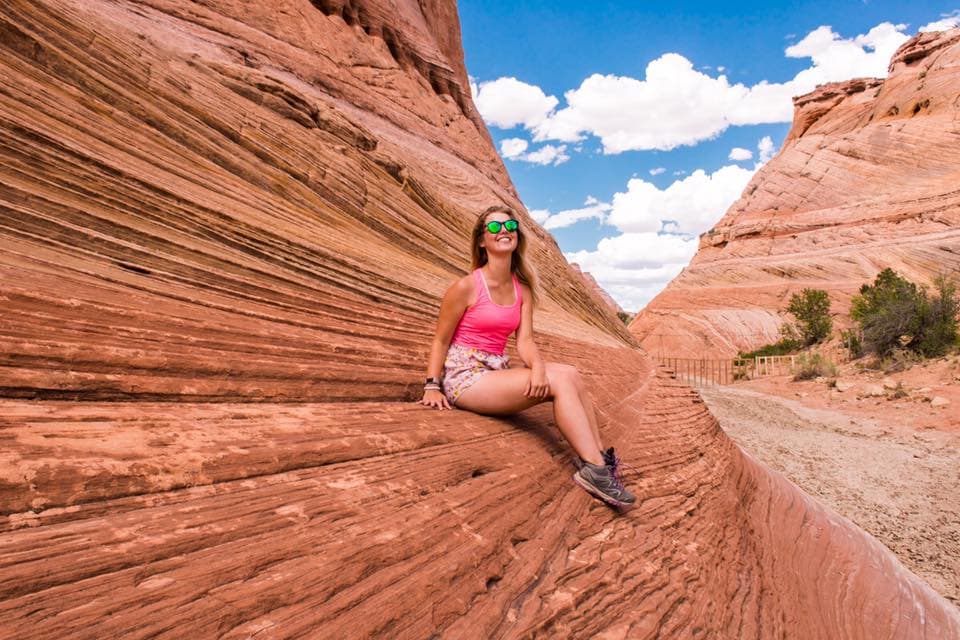
The infamous trip to Zebra Slot Canyon

From Colorado, we headed into Utah, which we’d been dreading most because of the high temperatures. Turns out that after Death Valley, we’d built up quite an immunity. In Canyonlands and Arches, we strolled about as if the air wasn’t well above 35°C. Our base was the town of Moab, which gave us our very last “first” — the one we’d been waiting for over two months.

At 2 a.m., a police officer knocked on our car window and kicked us out of town. Me with heart palpitations and Lukáš with his eyelids glued shut, we spent half past two in the morning searching for somewhere to sleep, 20 minutes outside town.

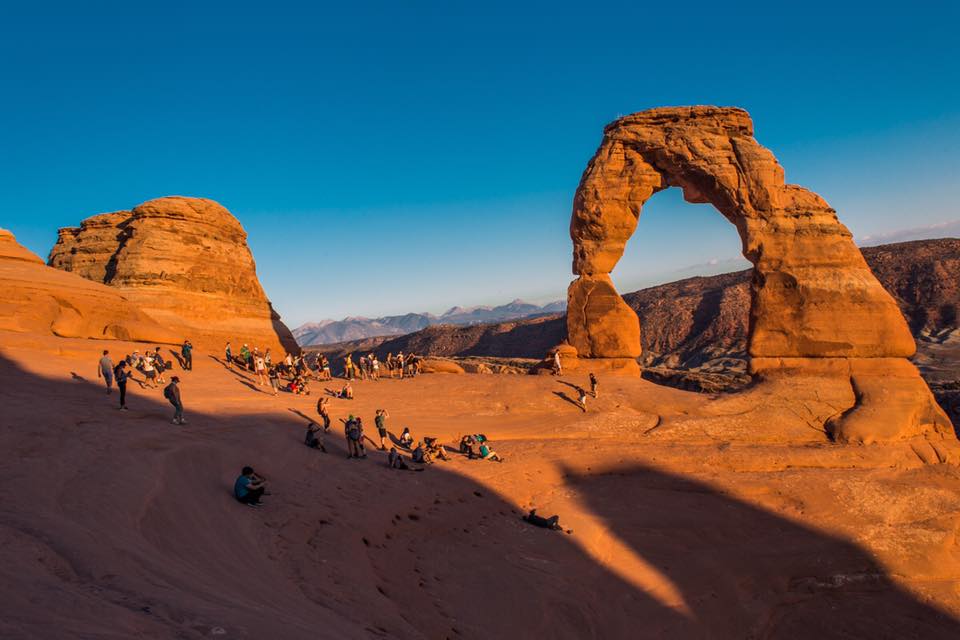
The famous symbol of Utah — imagine a thousand tourists sitting behind me and you've got the picture. The funny thing was everyone was waiting for sunset, which looks rather rubbish from here
The famous symbol of Utah — imagine a thousand tourists sitting behind me and you’ve got the picture. The funny thing was everyone was waiting for sunset, which looks rather rubbish from here

And we nearly drowned…

On the way to Bryce National Park, we drove through Grand Staircase-Escalante National Monument. Because we always think we can outsmart everyone and find more beautiful places without paying, we picked Zebra Slot Canyon as our next destination. And we nearly drowned, because it was flooded. Video here

https://www.facebook.com/LoudavymKrokem/videos/1409339759182076/
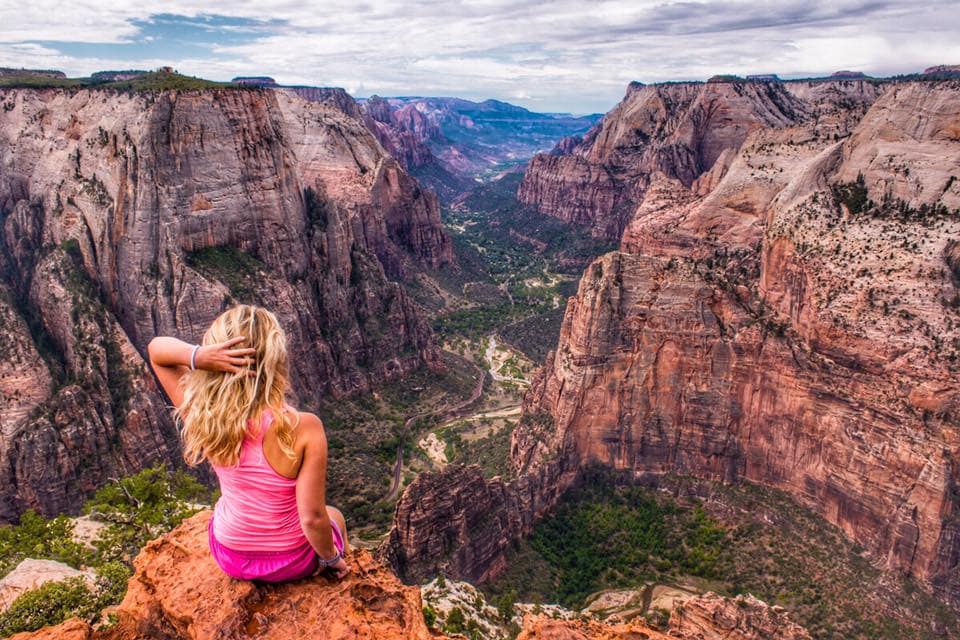
The view from Observation Point in Zion

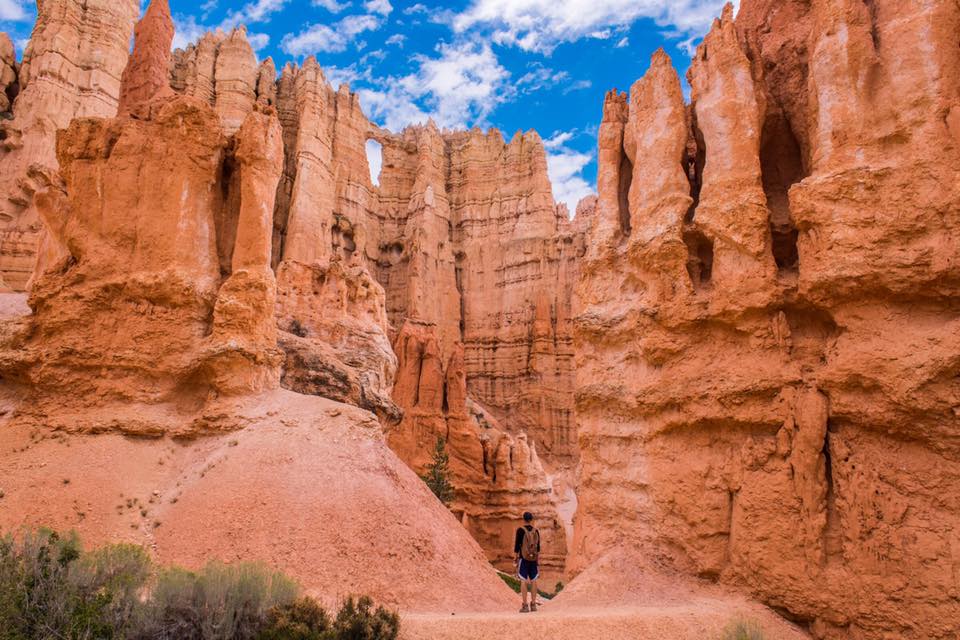
In Zion and Bryce, we played it safe. At Bryce, we walked all the main trails. In Zion, we chose Observation Point over Angel’s Landing — better views, fewer people.

People think Bryce is more of a driving park, so the trails are blissfully empty

The adorable Mormon sect

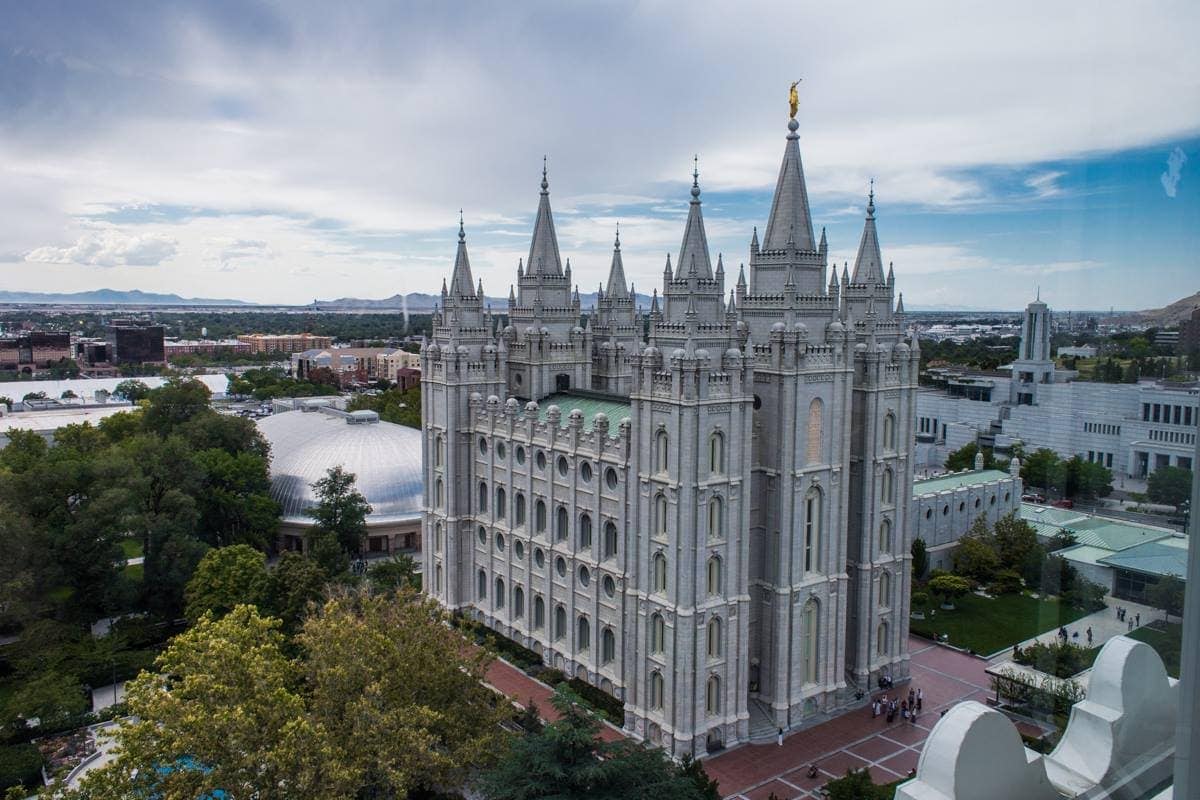
Mormon headquarters
Mormon headquarters

Our stop at Mormon HQ was a welcome change of pace. Suddenly, it was as if you’d left America and stepped into a different, far friendlier world belonging to this adorable sect. They’d already tried to convert us back in Alaska, so armed with a Book of Mormon, we set off to explore the mothership. We wandered around to the sound of piano music, admiring the lavish headquarters of the faith that’s taken over the entire state of Utah. Had we not discovered a café plastered with comic book characters and blessed with lightning-fast Wi-Fi, we’d tell you Temple Square is the best thing in all of Salt Lake City. Unfortunately (or fortunately), we found it.

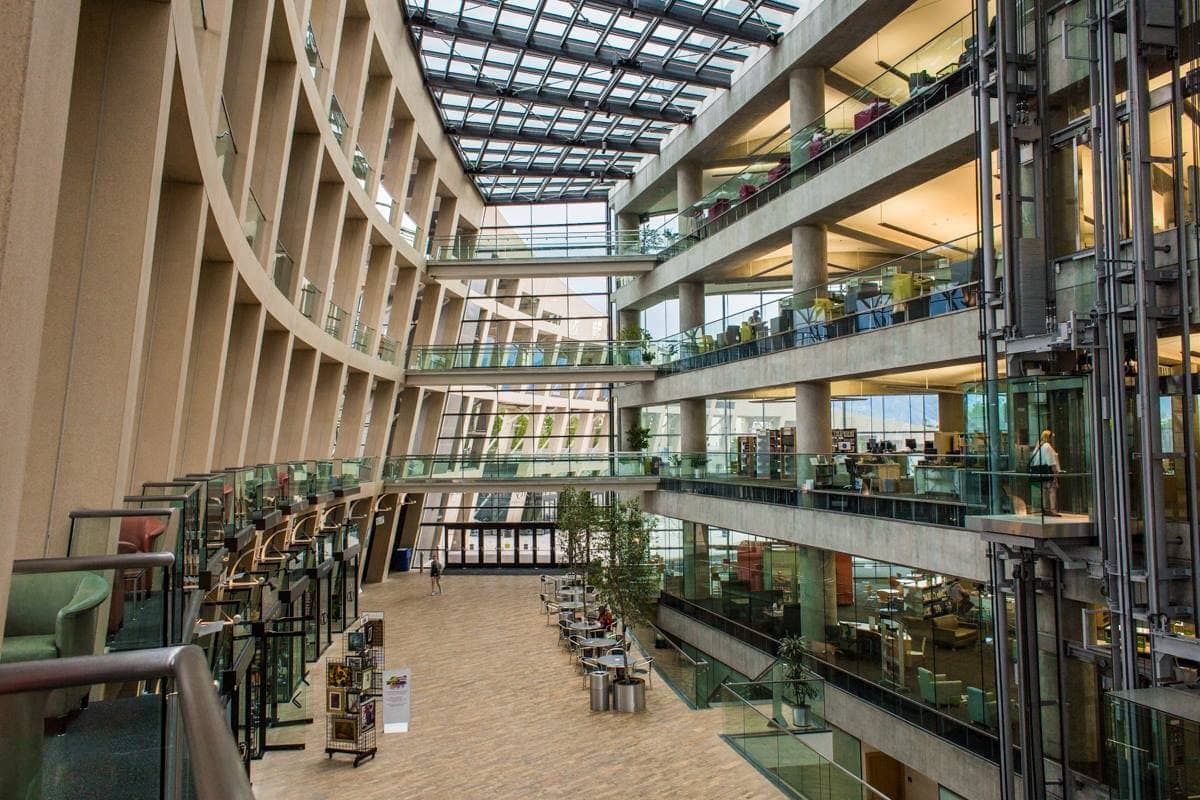
The stunning library in Salt Lake City

Holes into the Earth’s core. The most magical place in the USA

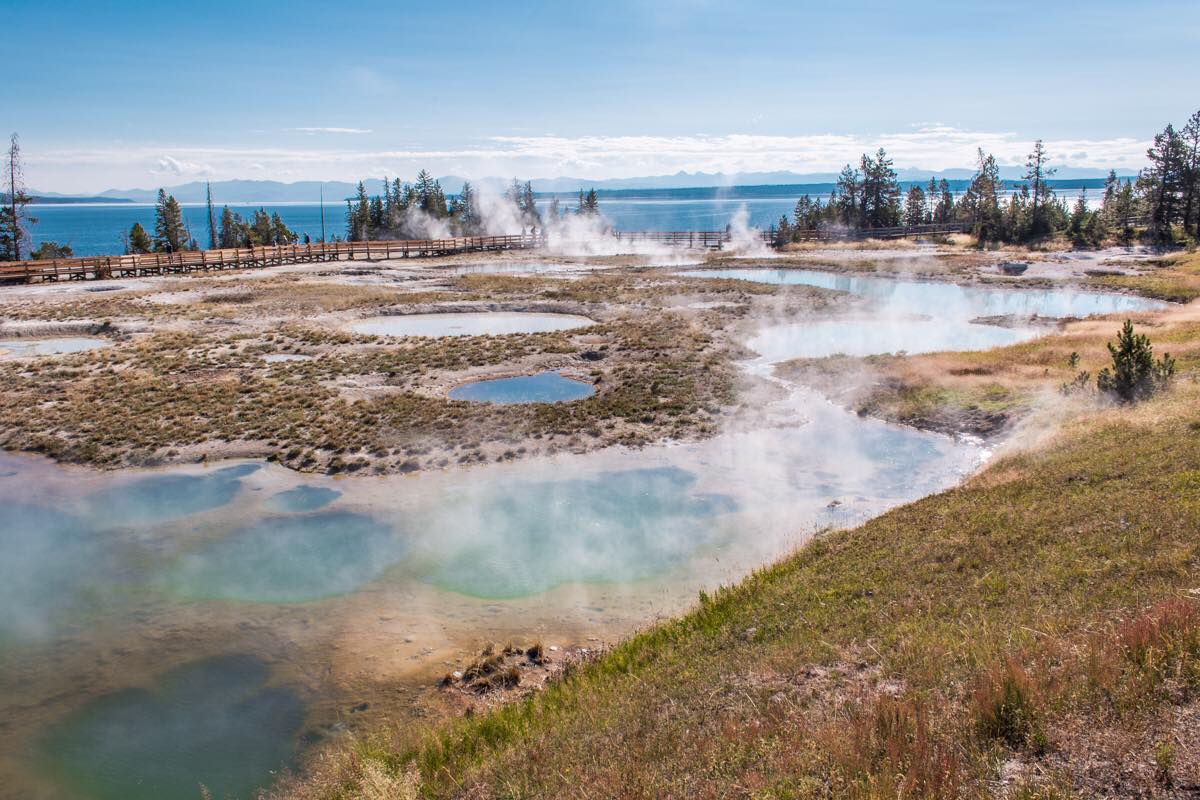
Our first glimpse of Yellowstone was at West Thumb

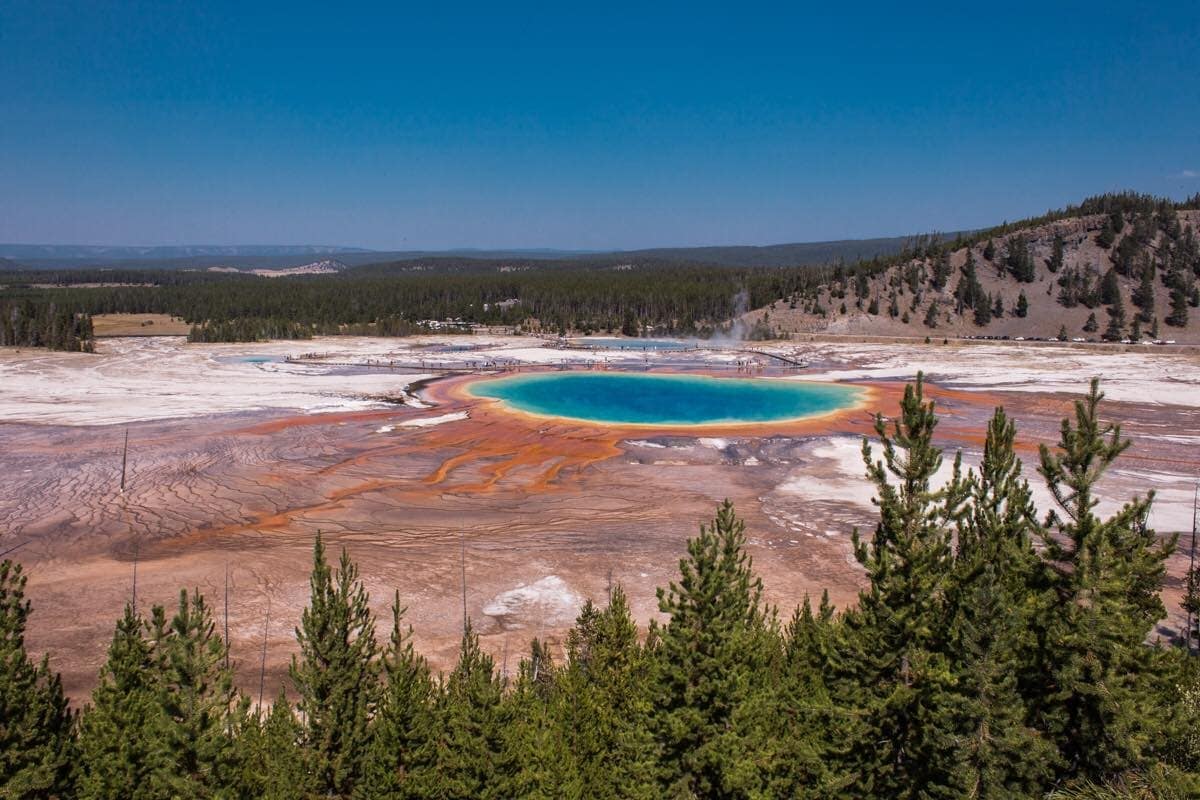
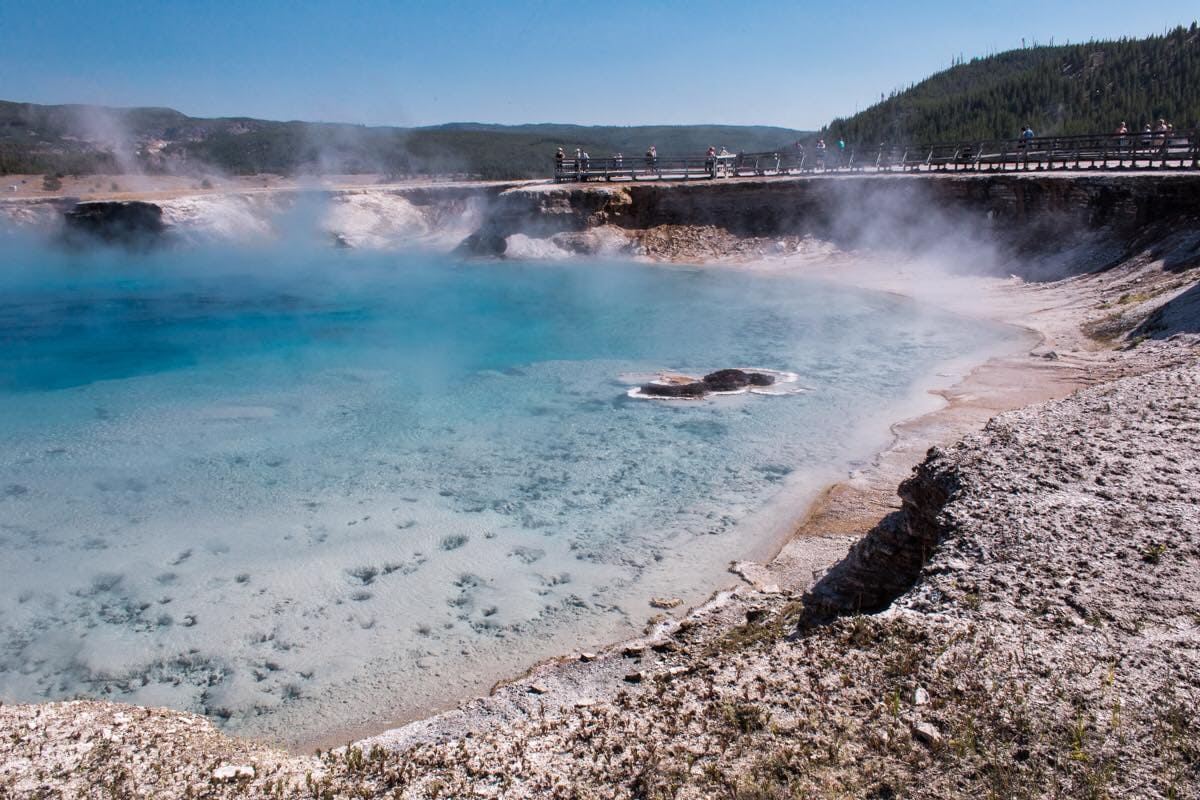
We thought nothing could impress us any more, and Lukáš was doing everything he could to cut our trip short. When I told him we needed at least four days in Yellowstone, he gave me a deeply suspicious look. That lasted about ten minutes — until he found himself staring into stinking lakes of every conceivable colour. Holes straight into the Earth’s core.

We spent five brilliant days here and it was the perfect ending to our trip

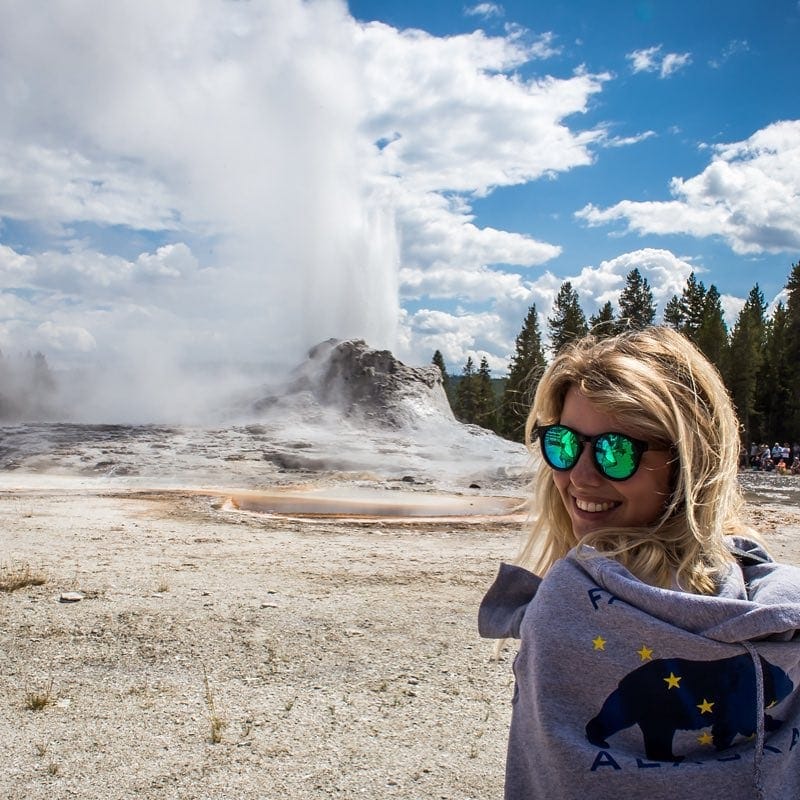
Yellowstone isn’t really a place for long hikes. You mostly squeeze along wooden boardwalks past turquoise pools at 90°C, waiting for the next geyser to surprise you. But here, the crowds of tourists fade into the background — once the geysers start their show, you couldn’t care less if there are a thousand other spectators around you.

Castle Geyser. Geysers never get old

We knew Yellowstone was the golden pinnacle of our travels. The grand finale, as it should be. Yet there was still one obligatory stop waiting for us — our beloved parks along the US-Canada border. But Glacier National Park and Waterton were engulfed in wildfire smoke that had been following us for the last thousand kilometres from Yellowstone.

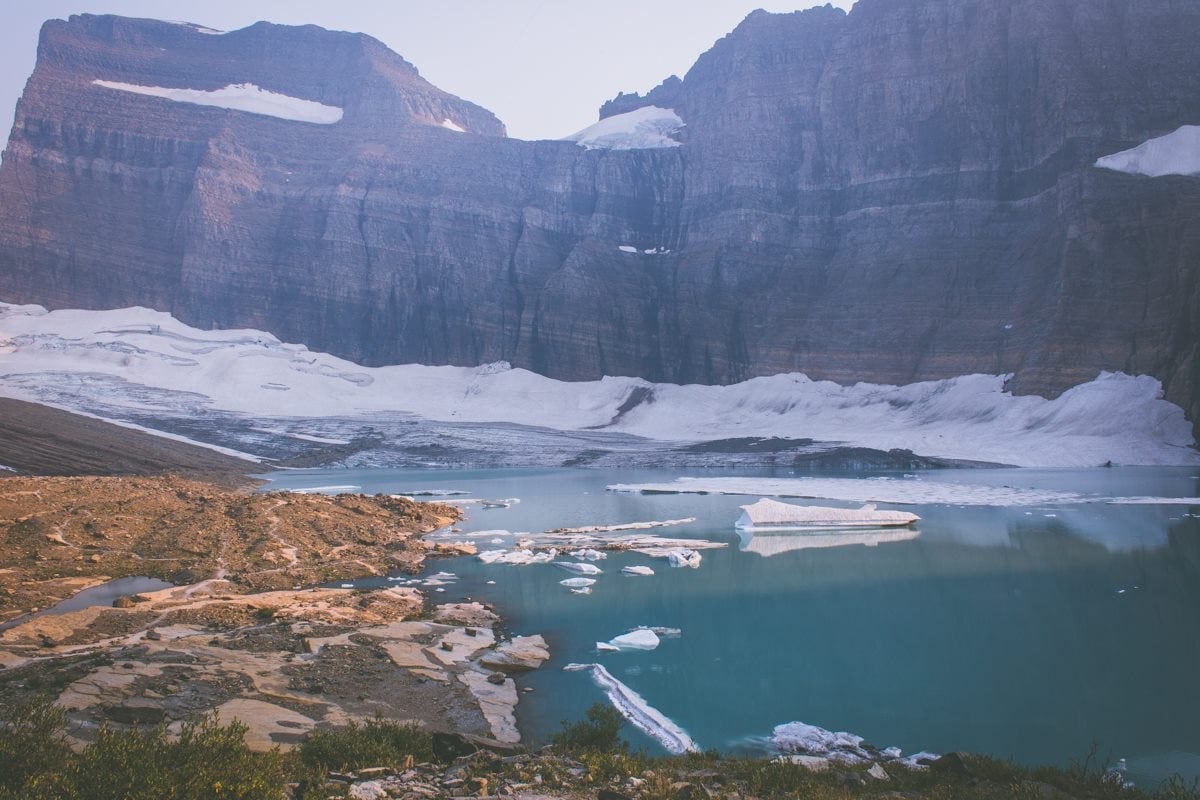
Grinnell Glacier won't be here in 20 years
Grinnell Glacier won’t be here in 20 years

Life is better in Banff

We didn’t give up on Glacier National Park entirely — we at least hiked up to Grinnell Glacier, a glacier that won’t exist in 20 years’ time. After that, with tears in our eyes, we drove back to our friends in Calgary. Our journey was over.

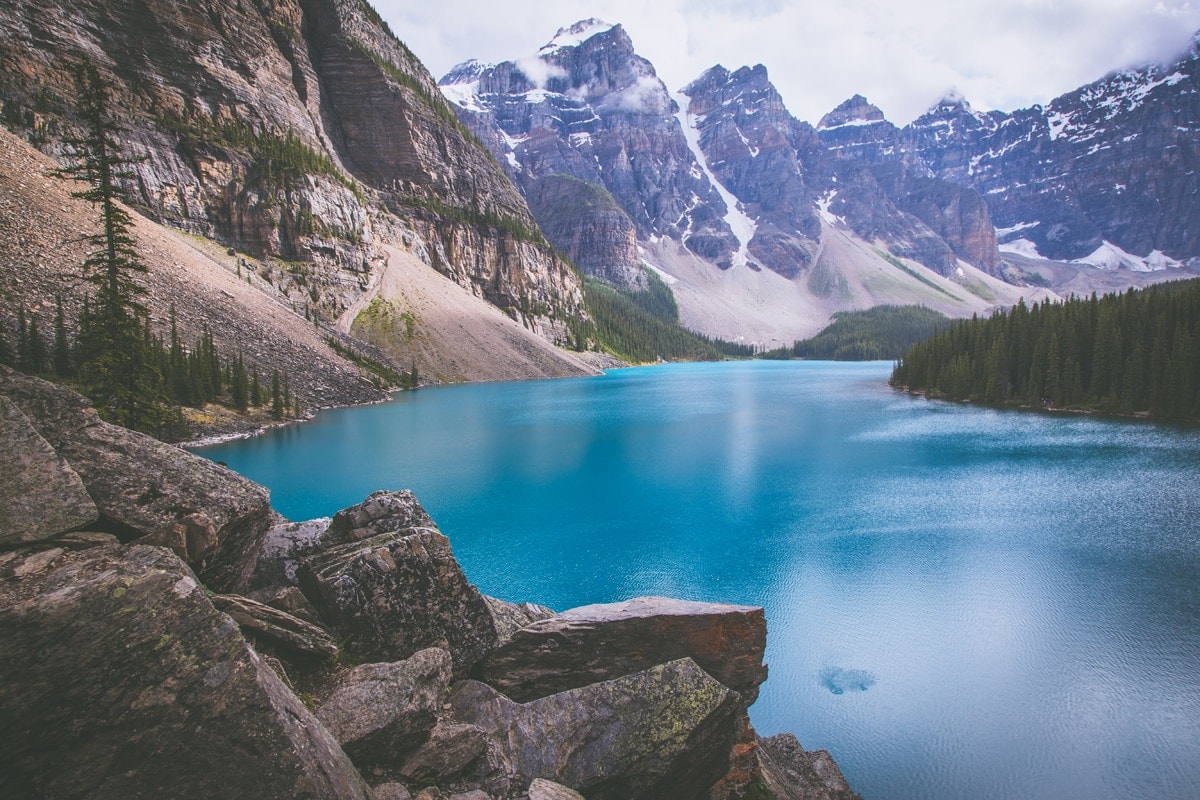
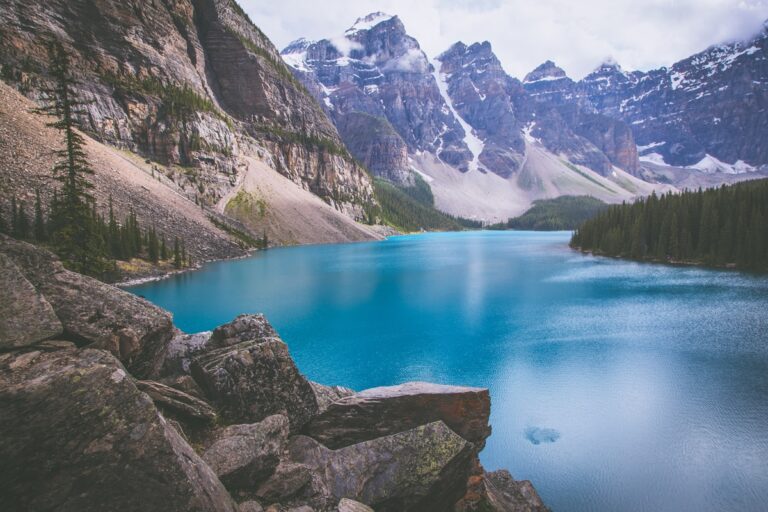
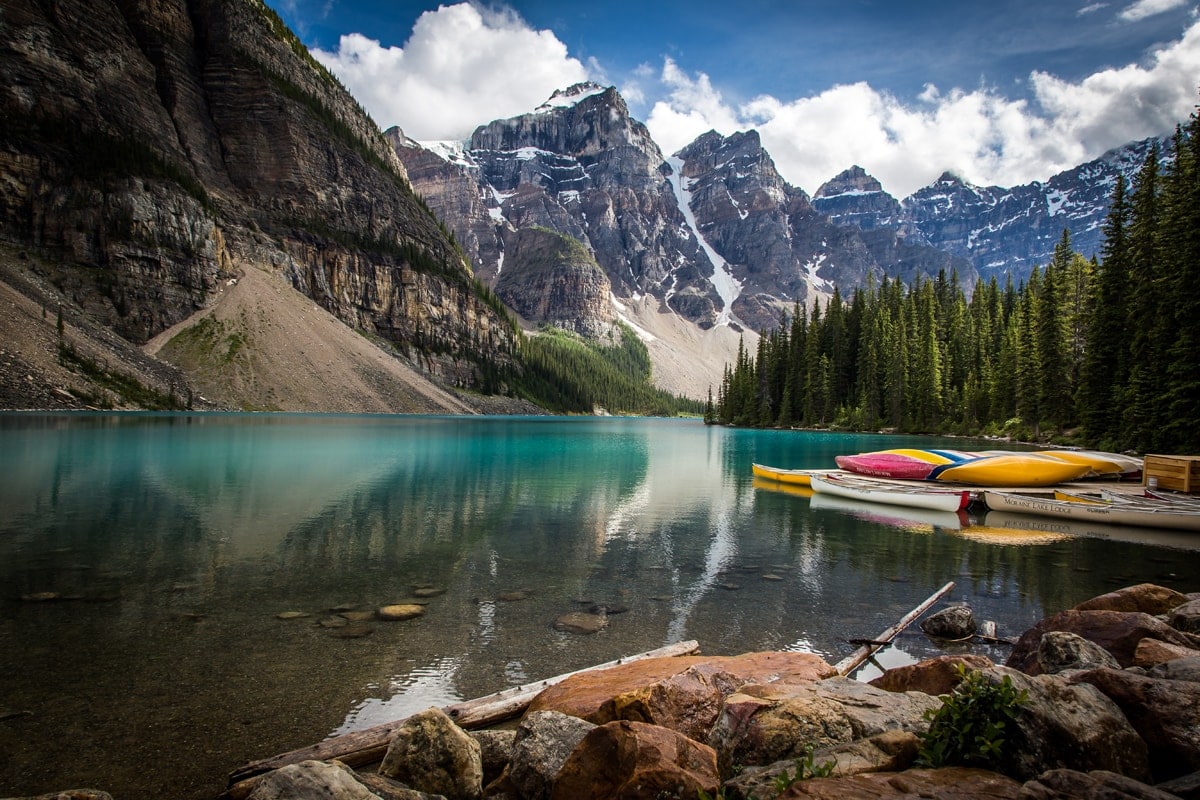
There's a reason Moraine Lake is one of the top attractions in Banff National Park
There’s a reason Moraine Lake is one of the top attractions in Banff National Park
 

“But I still liked Banff the best,” Lukáš declared as we returned to Calgary after 2.5 months of living and travelling in our car. We’d driven 20,000 kilometres, walked 800 kilometres, only to confirm that there’s no better place in North America than Banff.

Our journey with Chiquita may have ended, but we keep on travelling
Our journey with Chiquita may have ended, but we keep on travelling.
   

Tips and Tricks for Your Vacation

Don’t Overpay for Flights

Search for flights on Kayak. It’s our favorite search engine because it scans the websites of all airlines and always finds the cheapest connection.

Book Your Accommodation Smartly

The best experiences we’ve had when looking for accommodation (from Alaska to Morocco) are with Booking.com, where hotels, apartments, and entire houses are usually the cheapest and most widely available.

Don’t Forget Travel Insurance

Good travel insurance will protect you against illness, accidents, theft, or flight cancellations. We’ve had a few hospital visits abroad, so we know how important it is to have proper insurance arranged.

Where we insure ourselves: SafetyWing (best for everyone) and TrueTraveller (for extra-long trips).

Why don’t we recommend any Czech insurance company? Because they have too many restrictions. They set limits on the number of days abroad, travel insurance via a credit card often requires you to pay medical expenses only with that card, and they frequently limit the number of returns to the Czech Republic.

Find the Best Experiences

Get Your Guide is a huge online marketplace where you can book guided walks, trips, skip-the-line tickets, tours, and much more. We always find some extra fun there!
Two Months Living in a Car: The Beauty and Losses of Our Western America Road Trip

TL;DRThe bloggers behind this post spent two months living out of a converted car across Alaska, Canada and the western US, covering over 16,000 kilometres. The route took in Panorama Ridge near Whistler (30 km and 1,800 m of climbing), the volcano Mt. St. Helens, San Francisco and its Baker Beach, Lake Tahoe, and Yosemite National Park, where visitor numbers jumped from 3.8 to 5.2 million between just 2013 and 2016. Along the way they dealt with a $240 flat tyre, mosquitoes in Yosemite, wildfire smoke and temperatures over 40°C. The upshot: long-term car travel mixes incredible nature with the daily grind of just getting by on the road.

There’s a difference between a holiday and real travel. There’s a difference between a two-week trip and moving into a car for three months across Western America. We felt it every single day — searching for a place to sleep, somewhere to cook, or a spot to wash up. With that came tears of frustration, bad moods, and the occasional urge to abandon the car at a scrapyard and catch the first flight home from the nearest airport.

 
No matter which way you turn at Panorama Ridge, your jaw will be on the floor
 

It’s been exactly two months since we set off camping in Hawaii. After that, we drove 3,000 km from the Canadian city of Calgary to Alaska, and two weeks later made the same long journey back to Canada, before heading into the States. The whole time we’ve been sleeping in our car, where we turned the boot into a bed. In total, we’ve clocked up around 16,000 km so far.


>>> Part 1 – We built a bed in the car and headed to Alaska

>>> Part 2 – Heatwaves, white nights, and guns everywhere. Welcome to Alaska

>>> Part 3 – Why you need to visit Alaska at least once in your lifetime

Straight out of a chocolate box advert

The only thing we looked forward to was going to sleep


The drive back from Alaska was just as endless as the way there. Although the weather was brilliant this time around, the mountains and forests only managed to break the monotony for the first few hundred kilometres. We’d wake up in the morning and the only thing we looked forward to was bedtime and another chapter of Harry Potter on audiobook.

A reward after the long drive, or a punishment?

 
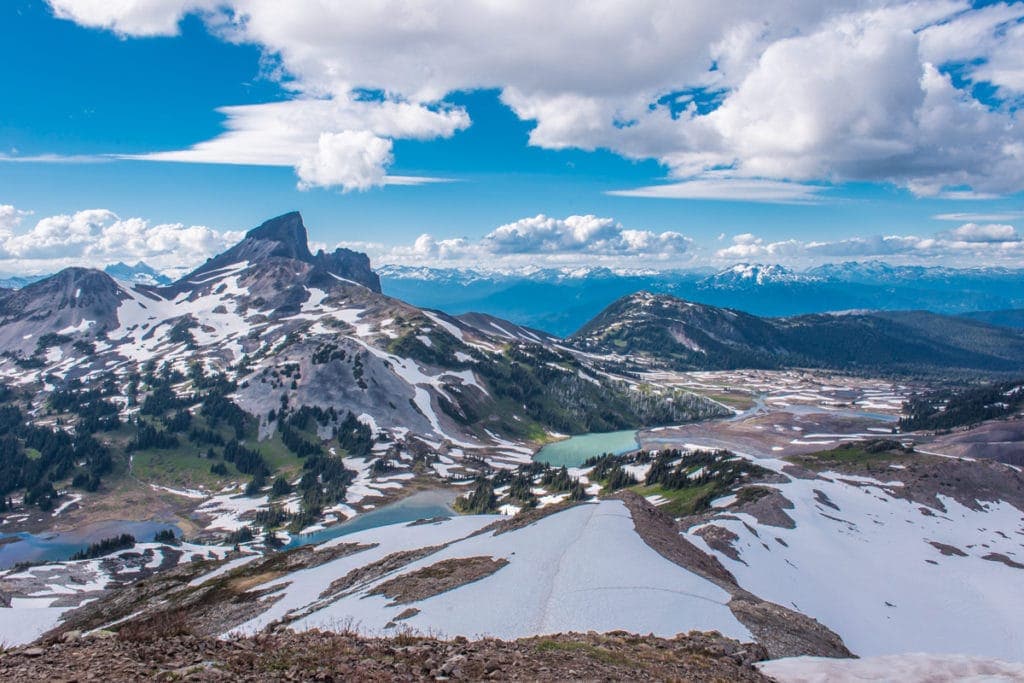
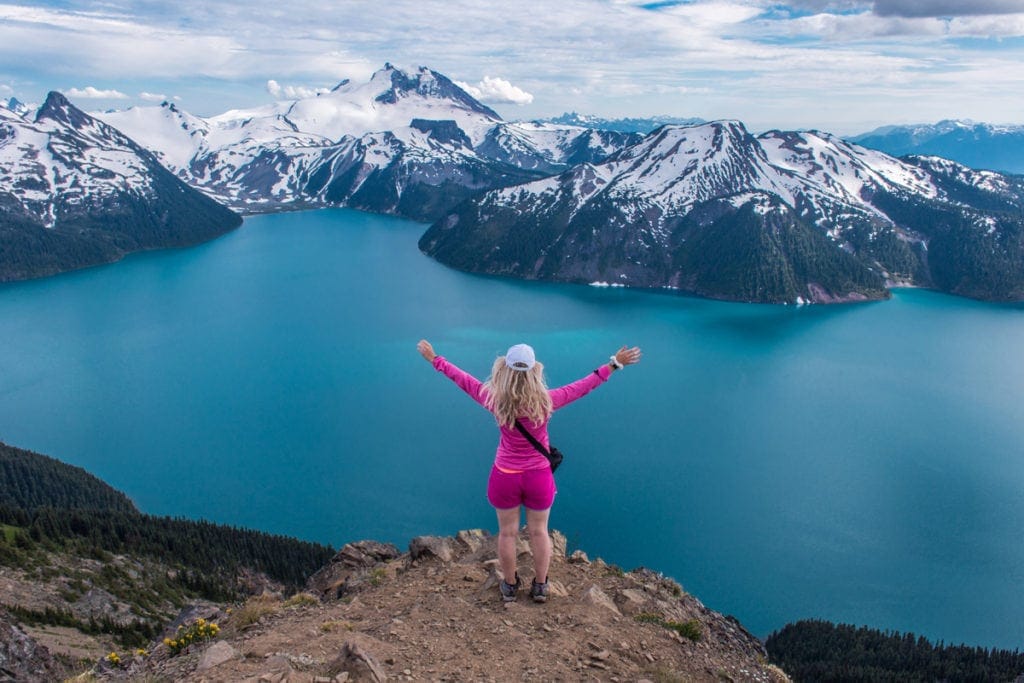
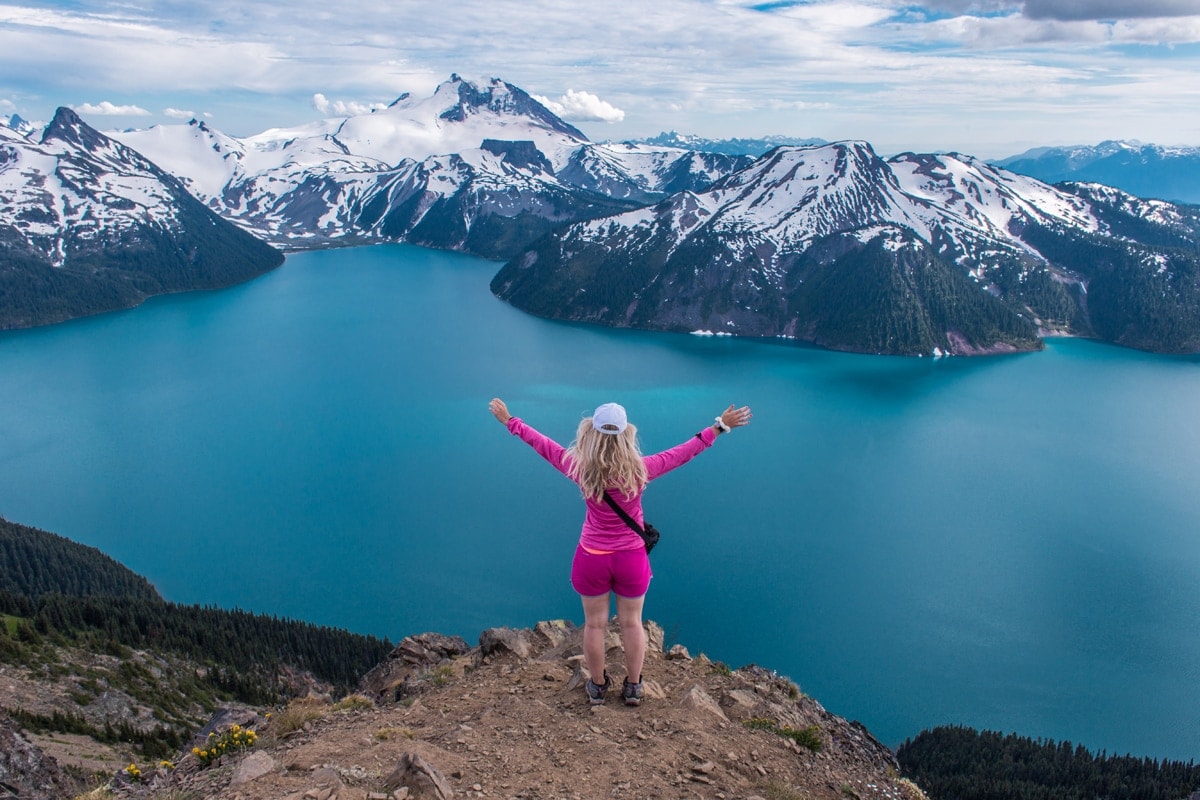
Garibaldi Lake from above – can anything be more breathtaking?
 

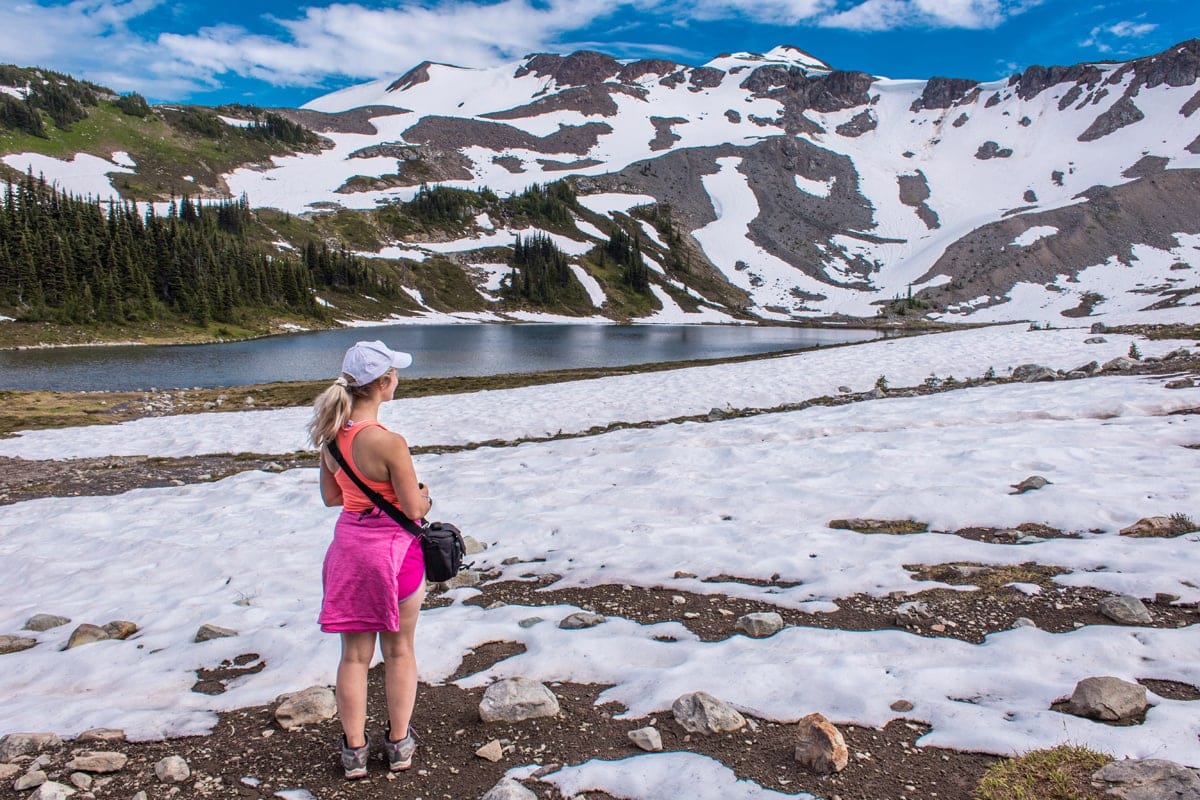
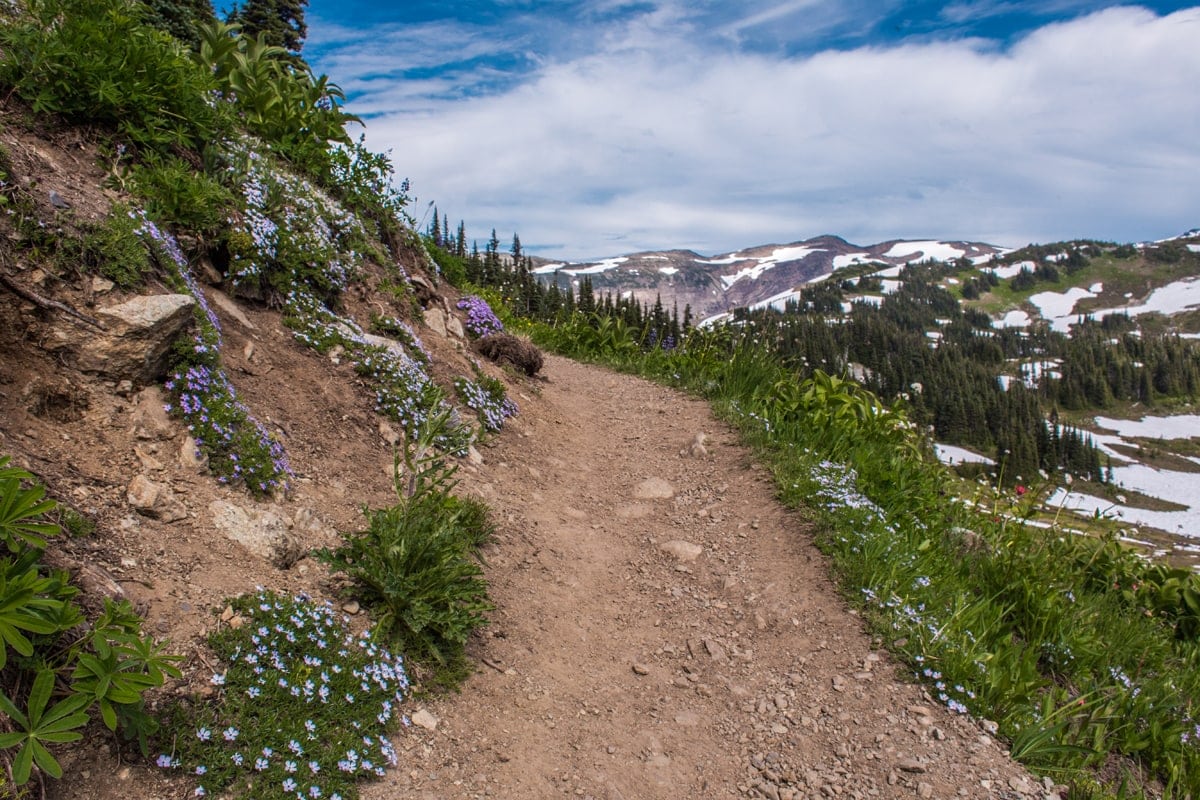
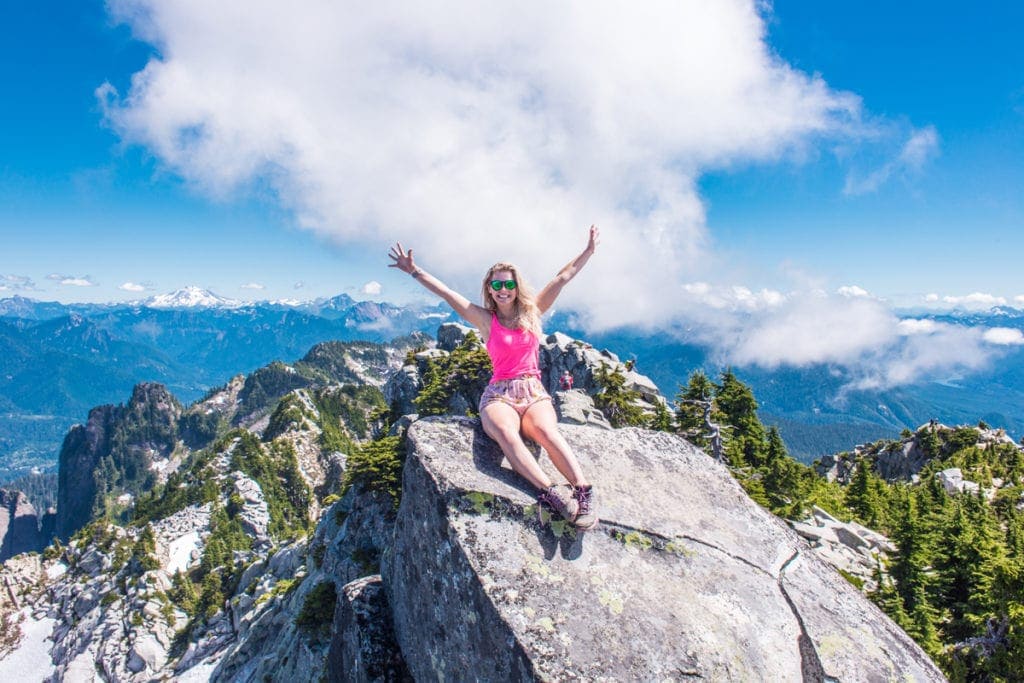
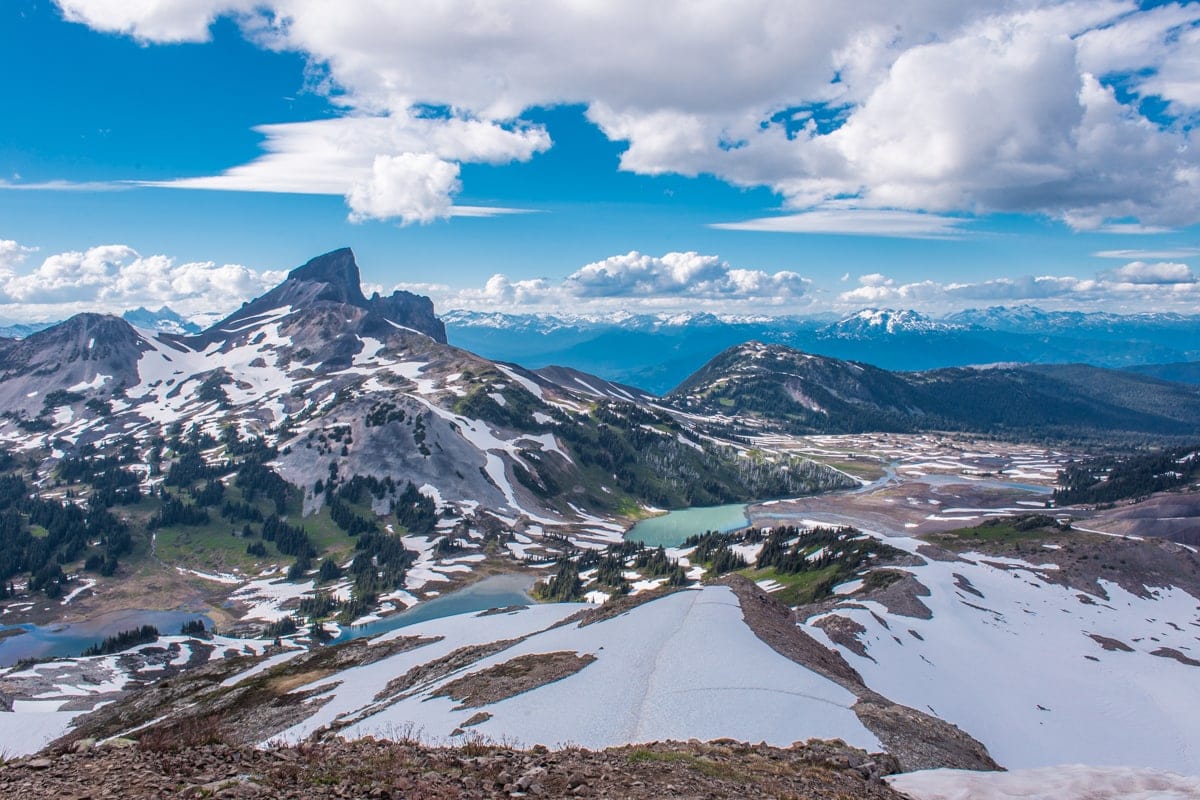
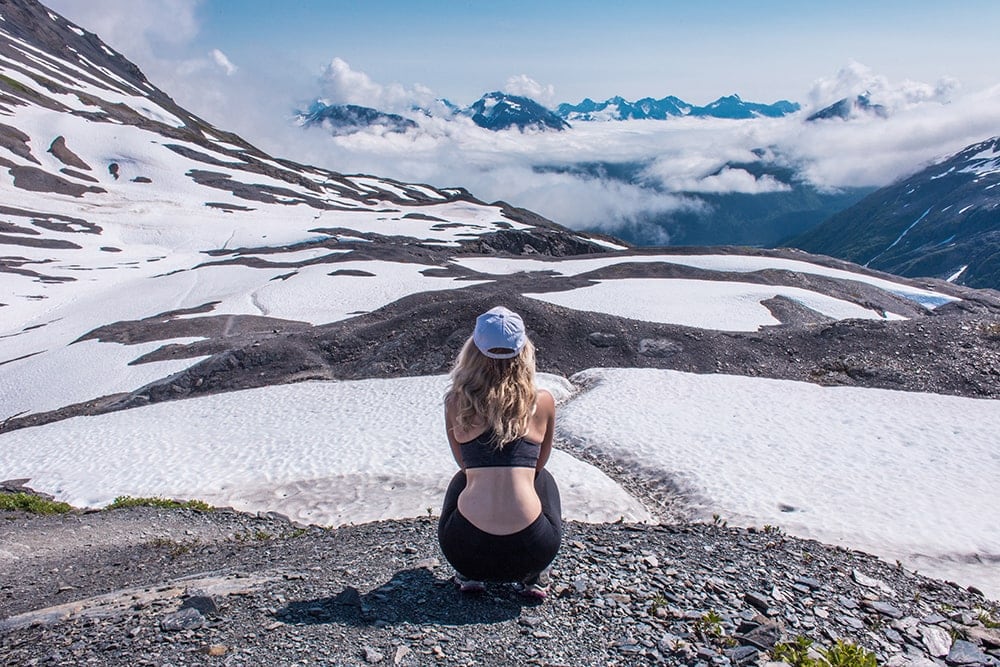
After three days, we reached our second-to-last stop in Canada: Panorama Ridge near Whistler in British Columbia. We sneaked an overnight stay right in the trailhead car park and set off early the next morning with our backpacks stuffed full. We were facing 30 km and 1,800 metres of elevation gain. The first nine kilometres and 900 metres of climbing took us to the lakeside camp, where we only had to drop our packs, pitch the tent, and then push on to Panorama Ridge. We were already dying on the way up to camp and had demolished 3 out of 10 biscuits we’d brought along (as Lukáš would carefully note).


We simply weren’t built for this. Even though we’d been hiking every other day, those heavy backpacks crushed our hiking egos at an alarming rate. When we finally stumbled into camp, we couldn’t fathom going any further. We barely managed to set up the tent before passing out. After an hour of recovering from the initial exhaustion, we grabbed a snack and carried on.


Our opinion of our fitness dropped with every step

The views were absolutely incredible

The climb was relentless again, but soon the gradient eased off, the views turned into something straight out of a Swiss postcard, and we started telling ourselves the worst was surely behind us. We strolled happily along a flat stretch, gazing at snow-capped peaks, small glacial lakes, and wildflowers framing it all beautifully. But we were fooling ourselves. The last two kilometres delivered a brutal ascent through steep snow. It didn’t exactly cheer us up to see people sliding back down on their backsides.


Next time, we’re taking a helicopter

View from Panorama Ridge trail

We made it. Lukáš started feeling dizzy from exhaustion, so we didn’t linger long. On the way back, we accidentally veered off the trail and got lost. Luky could barely walk at that point. So I practically wrestled his backpack off him and barked, “Let’s go.” Eight hours of suffering came to an end, and we crawled into our sleeping bags unable to eat a thing, falling into a long, deep sleep. The next morning, all that awaited was a short and painful descent to the car park.

“You want to do WHAT for a month in the USA? Climb mountains?”

 
A classic view of Vancouver

After a two-day recovery break with our wonderful friends in Vancouver, we headed for Washington State. For a moment, we thought we might have to turn around, scrap the entire plan, and go explore eastern Canada instead. We were held up at the border and grilled for an hour.

“You’re telling me you’re going to camp and hike in the USA for a whole month?” The third officer stared at us in disbelief, running through the exact same questions as the two before him.

US–Canada border crossing

We already saw ourselves being sent back to Canada


In the end, just like his predecessor, he went to search our car — and found two avocados.

“And what’s this? You didn’t declare these.” We’d genuinely forgotten about the avocados. Luckily, he believed it was an honest mistake; otherwise, we’d have been looking at a $300 fine. Even worse, they couldn’t find our car keys. And nobody could figure out which officer had searched our car first. After an agonising hour, we were finally waved through. It was clear we wouldn’t be getting anything else done that day.


The most expensive hike of our lives cost us $240


The mountains in Washington are completely different from those in Canada or Alaska. Rockier, lighter in colour, cleaner, less menacing — and the further south you go, the rounder they seem, with forests that aren’t quite as dense. We found a trail near the town of Everett that, according to our app, was supposed to be the most beautiful in the area. Mt. Pilchuck Trail is a short, three-hour walk to a lookout tower at the summit. Even children can manage it. For us, it was a piece of cake — but also the most expensive trail of our lives.

 
Mt. Pilchuck is a hugely popular trail packed with Americans
 

Chiquita needed two brand-new tyres


The only way to the trailhead car park is a rough dirt road full of rocks and potholes the size of craters. And on the way back down, we got a flat. Our dreams of a shower and the drive to Seattle evaporated. Instead, we spent the night — filthy — outside a repair shop we’d barely managed to limp to.


We thought of everything except the most basic thing


You might expect us to have been in tears, but we actually found it hilarious. So did everyone we told in the States. “You didn’t get a flat in 12,000 km across the Yukon and Alaska, and then you get one HERE in Washington?” As funny and ironic as everyone found it, we thought it was equally amusing that we’d prepared for every possible car disaster on the road, yet a simple puncture never crossed our minds.

 
Mount St. Helens — the biggest air polluter around
  Landscape near Mount St. Helens  

Volcanoes in Washington are still active — and they occasionally explode


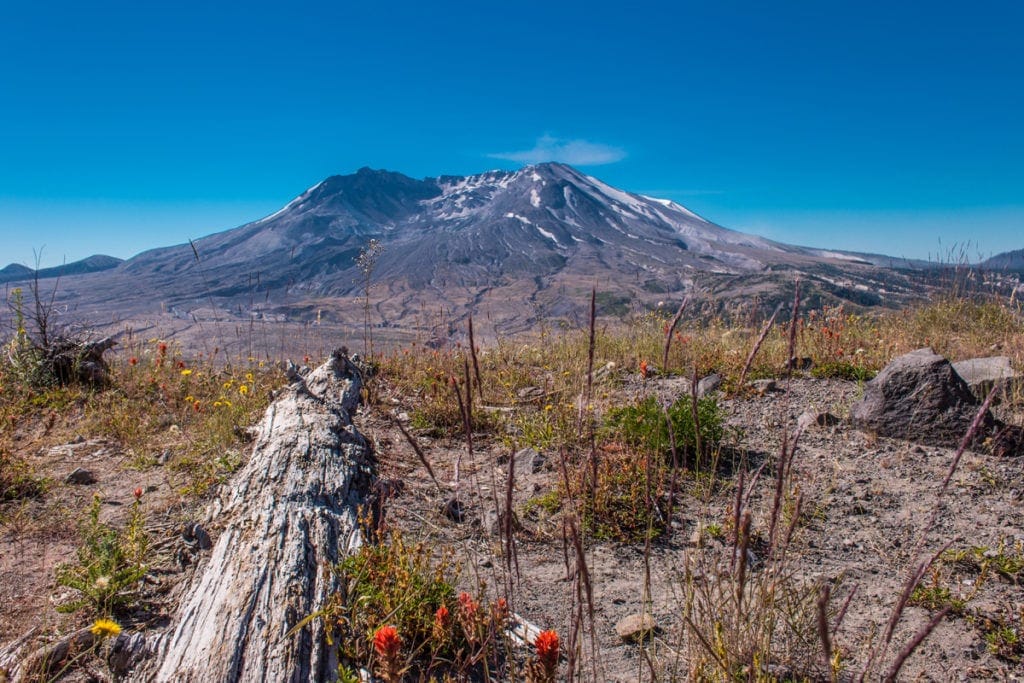
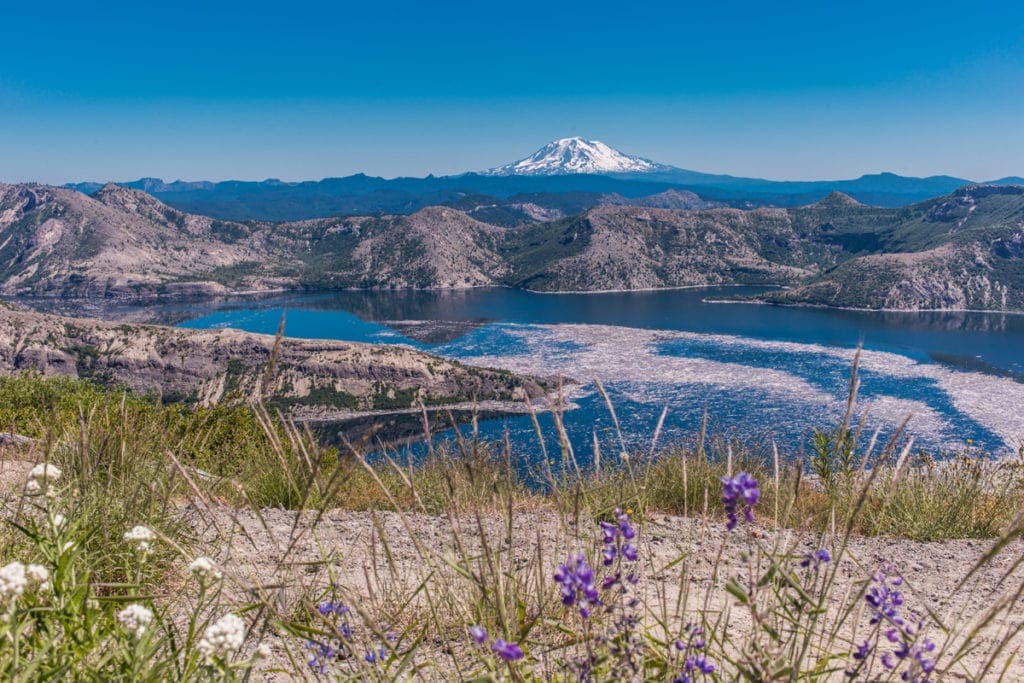
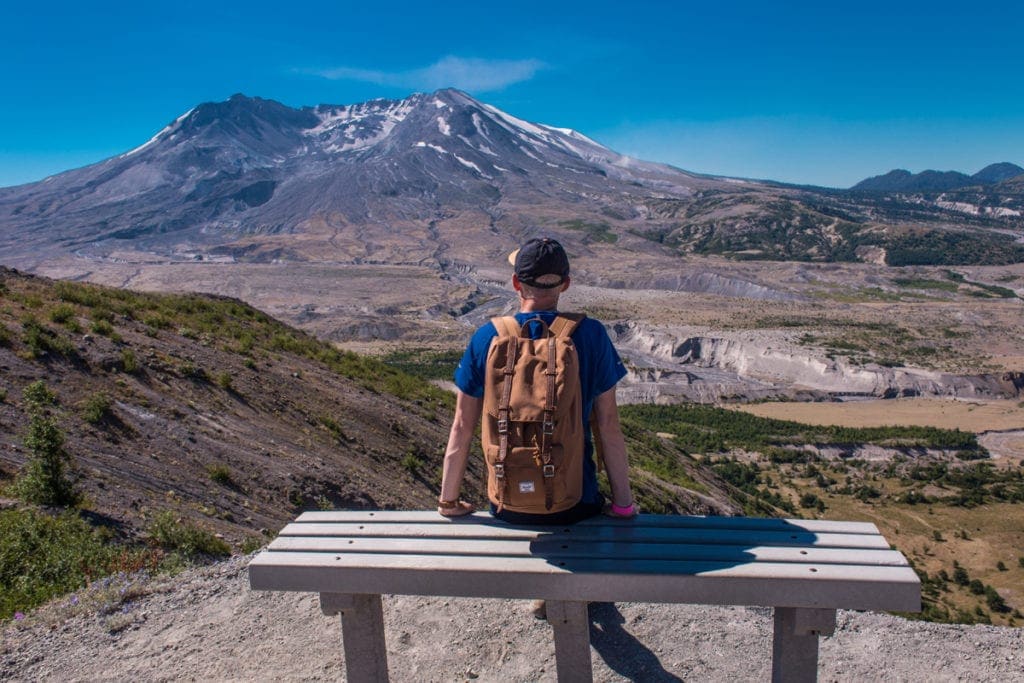
In 1980, Mt. St. Helens blew its top — quite literally. We decided that even in the insane 30°C heat, we’d tackle Harry’s Ridge, a trail that skirts around the volcano. It was a completely different experience from hiking in the mountains — and nothing like walking in the crater in Hawaii either. We trudged through a parched, barren landscape dotted with strange, resilient wildflowers until we reached a stunning viewpoint overlooking Mt. St. Helens, Spirit Lake, and the snow-covered peak of Mt. Adams.

 
Mount St. Helens up close
 

Where Wild ends, wildfire begins


Greg and Vicki welcomed us warmly at the border between Washington and Oregon, even though we’d only given them six hours’ notice. We always look back fondly on their hospitality and the stunning landscape around Bridge of the Gods. If you’ve seen the film Wild, this is where Cheryl Strayed’s three-month journey comes to an end. The very next day, smoke from forest fires engulfed the entire area and buried every view.


We discovered hidden gems only the locals know


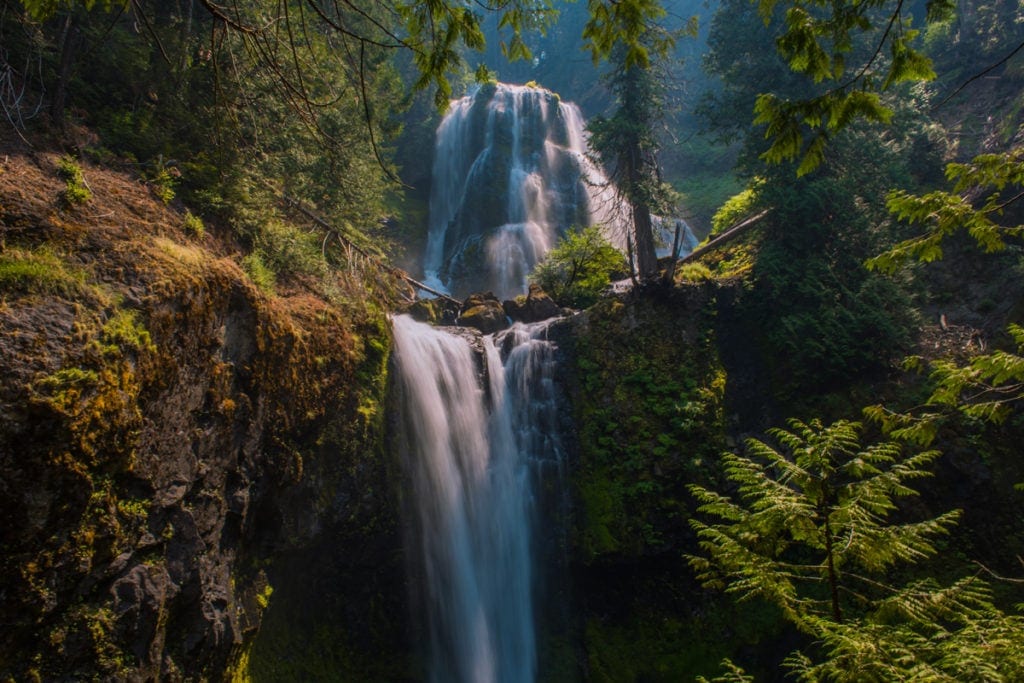
So they sent us to the local waterfall at False Creek Falls instead. We felt like we’d stepped into Avatar. It was a brilliant suggestion — the smoke hadn’t reached here yet, and the cool spray from the falls was a godsend in the heat.

 
Avatar-like waterfalls at False Creek Falls
 

We were running from the smoke. But it was rolling in from every direction. We never actually saw flames, but in the town where we stopped for the night, the sky glowed an infernal red.

 
Smoky skies over Oregon
The sky glowed red from wildfires

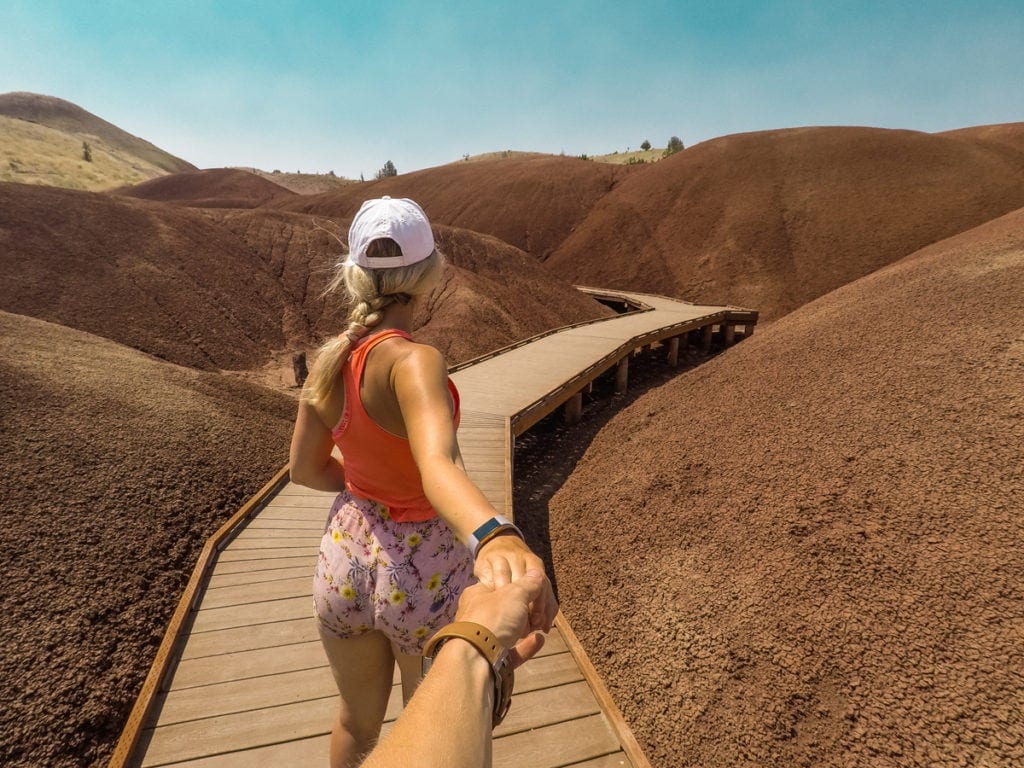
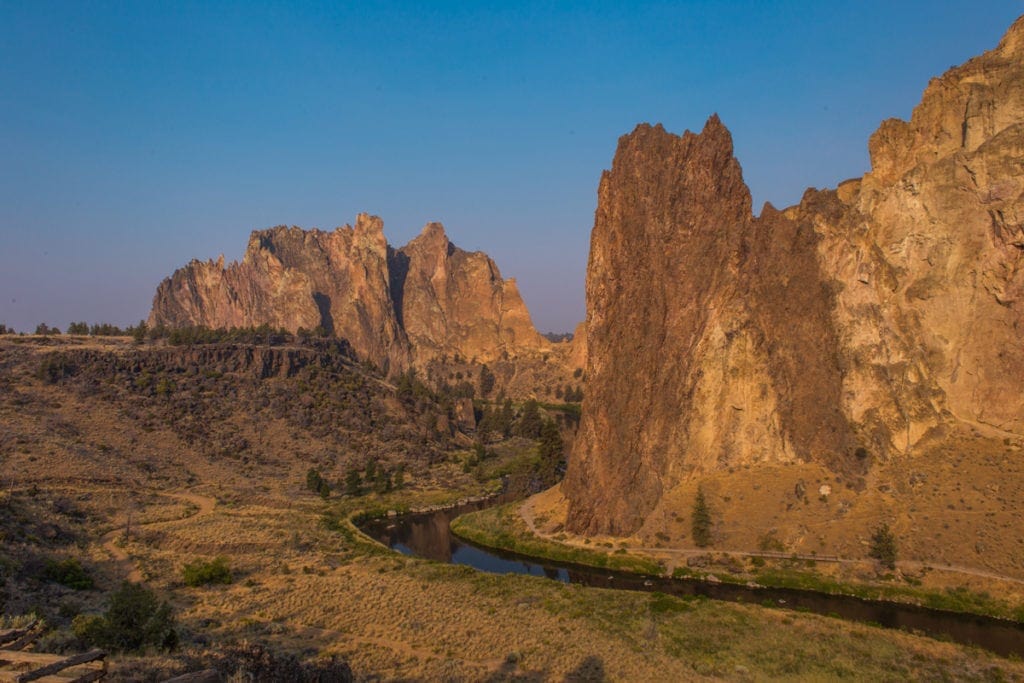
Misery Ridge Trail was shrouded in a smoky haze, as were the Painted Hills. But what made it even worse were the soaring temperatures. We’d expected the 30s to catch up with us further south, yet here the thermometer was already reading 40°C. Given our simple car-living setup and our “go wherever we fancy” planning style, we found the nearest swimming pool and headed straight for it. The only other people splashing around were children. And us.

Smith Rocks and Misery Ridge Trail

We saw a lot — that much we can’t deny


Crater Lake was supposed to be our next stop, but we didn’t stick around long because the whole thing was blanketed in smoke. Within ten seconds of stepping out of the car, we reeked like smoked kippers. So, in an effort to outrun the wildfires, we made a beeline for the Pacific coast and into California.


California is freezing!


But then the cold hit. You don’t expect chilly weather in California, even if you’ve experienced it there before — you just don’t expect 17°C. “I should have known that being north of San Francisco meant it’d be cooler,” I muttered.

 
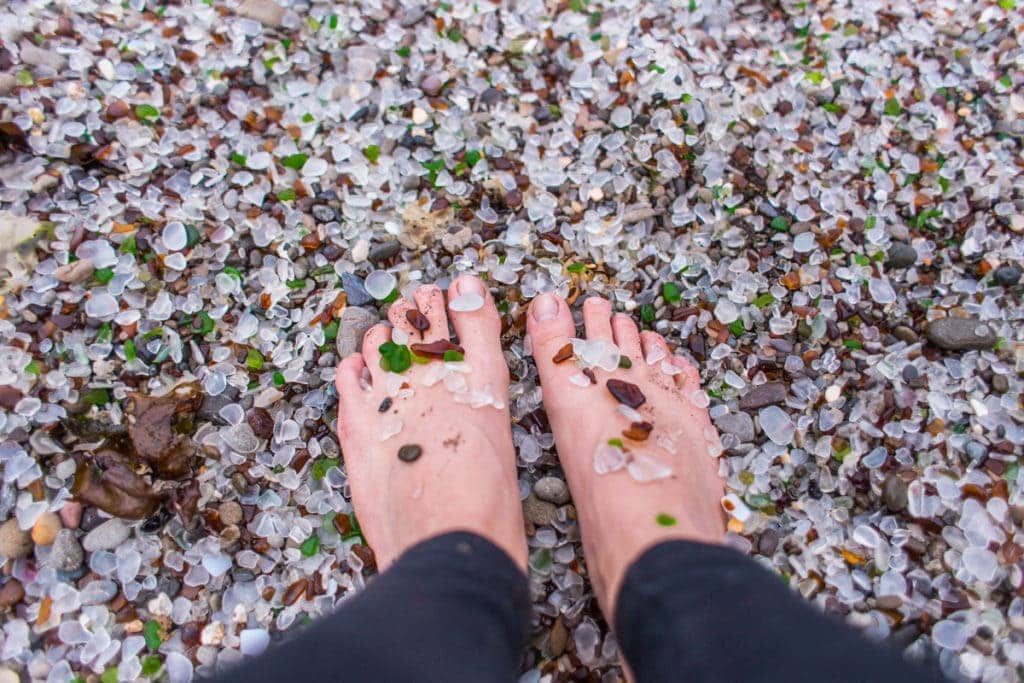
Glass Beach, California
Glass Beach
 

We spent two days driving along the coast, with one stop at Redwood National Park and another at Glass Beach — a place where nature has transformed rubbish into a glittering field of sea glass, gradually being picked apart by tourists who’ve discovered it. We were supposed to push on to San Francisco that day, but we just couldn’t be bothered. For the first time, we treated ourselves to a hotel with a hot tub and a pool, and postponed San Francisco by a day.


Tourists battling for a slice of Instagram fame

San Francisco
San Francisco

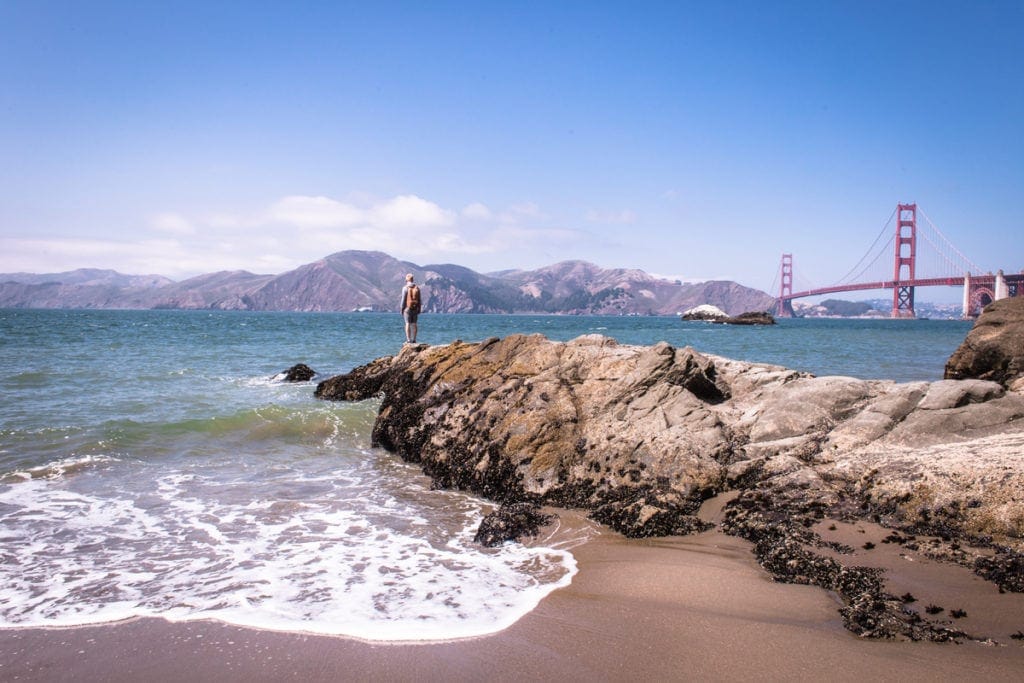
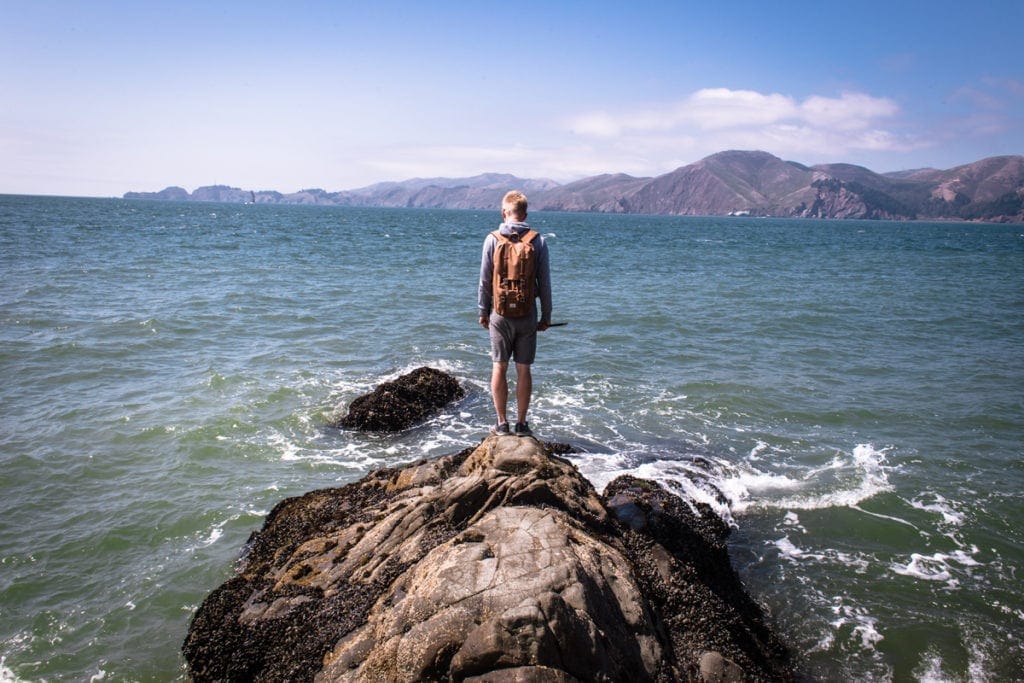
Enough has probably been written about the beauty of San Francisco. Spots that used to be easy to reach are now crammed with honking cars and frustrated tourists fighting for the best photo spot. Luckily, we discovered Baker Beach, which offers a view of the Golden Gate Bridge with only a handful of visitors and a few nudists sunbathing on the sand or leaning against the rocks. They didn’t seem the least bit bothered by the families with children around them. We briefly wondered what they were on, but eventually let the thought drift away and settled ourselves on the Californian cliffs.

   
San Francisco
San Francisco
 

I remember how easy it used to be to get onto Alcatraz. We’d buy tickets on the same day and hop on the boat. Those days are long gone. Now you need to book at least three weeks in advance. But since we never knew where we’d be the next day, anything that required careful planning and competing with other visitors simply wasn’t for us. If it were about scrambling up some hill or mountain, that’d be more our thing. After a stroll along the waterfront, we’d had enough of tourists stuffing doughnuts into their faces (in desperation, we did the same), so we jumped in the car and drove several hours east.

Hawaii between California and Nevada — that’s Lake Tahoe

 
Lake Tahoe
Lake Tahoe
 

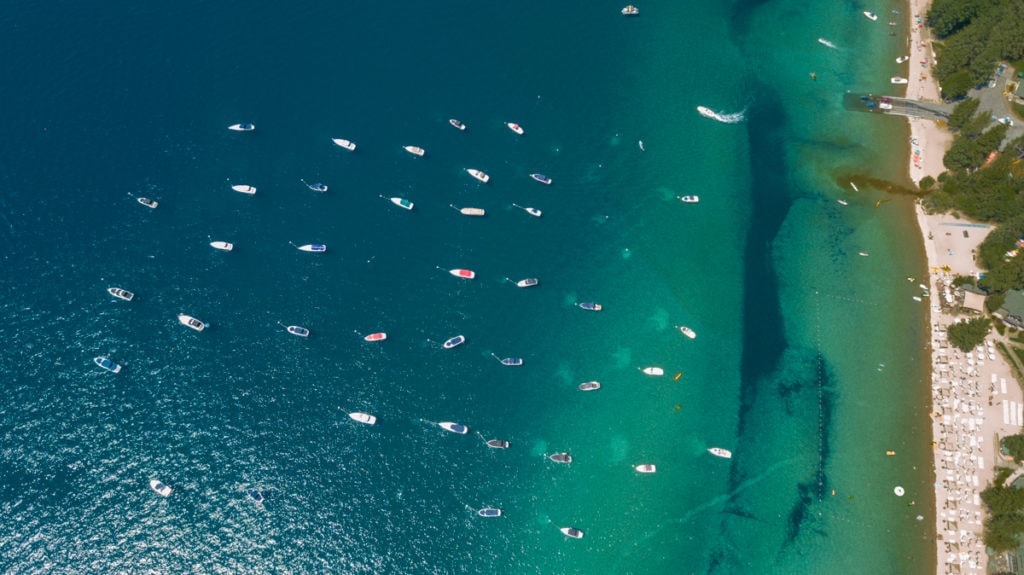
Turquoise water warm enough to swim in, little boats, sandy beaches. Lake Tahoe turned out to be paradise on the border between California and Nevada, and we really didn’t want to leave. Sometimes we think we should have stayed. But after a gorgeous day of sunbathing, by sunset we were already lying in our car an hour and a half further south, at Mono Lake.


Why mosquitoes terrify us

20 Lakes Basin in the Sierra Nevada
20 Lakes Basin

There’s no point trying to scare us with bears. But mosquitoes? Now that’s a story. Our first hike in Yosemite, the 20 Lakes Basin Loop Trail, was a swarming mosquito hellscape. They were actively trying to devour us. Within an hour, every exposed body part was so bitten that our skin looked like the surface of the Moon. Not even the strongest mosquito repellent from Alaska worked, so we gave up and ran for it. This would have been torture, not fun.


We continued deeper into Yosemite. It was only two in the afternoon, so we decided to tackle Cathedral Lakes — a hike to the iconic peak that Mac OS X users will recognise from their desktop wallpaper. As evening approached, the question of where to bathe arose. The only option was a disgustingly cold lake on the road out of the park — we had no choice, since sleeping in your car inside Yosemite isn’t allowed. We survived the dip, that was the main thing, and spent the night in our car down a dark side street in the first little town outside the park.

We practically ran up to Cathedral Lake

Disneyland in the middle of a national park


If you’ve ever felt like banging your head against the steering wheel in London traffic, then I wouldn’t wish a visit to Yosemite Valley on you. The most popular part of this national park is more like a theme park or Disneyland. Thousands of cars honking over one another and people queuing to photograph everything they’ve seen on their friends’ social media. Sometimes you get the feeling they’re doing it out of obligation, because when you look at their faces, most of them look rather angry.

 
Yosemite National Park
 

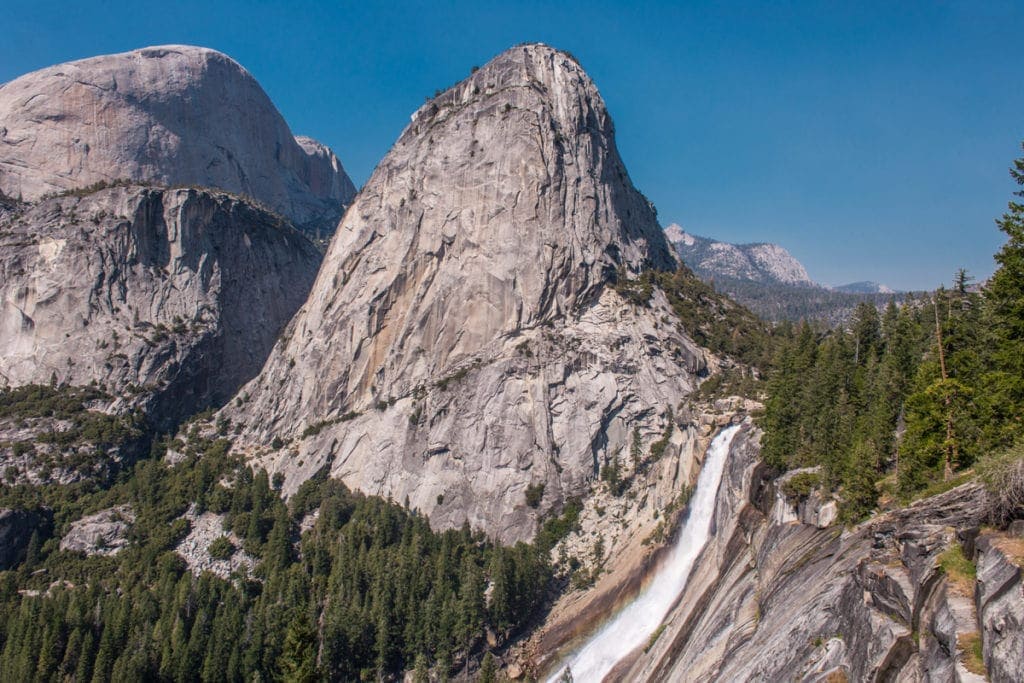
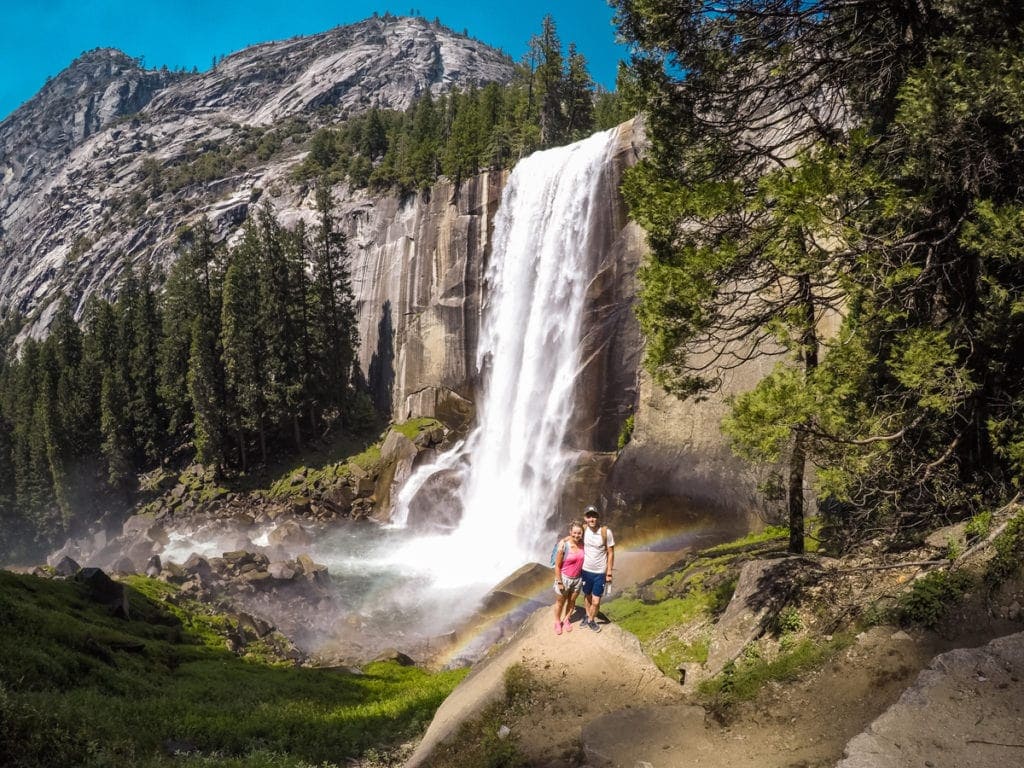
We hiked the most popular trail to Vernal Falls, overtaking at least a hundred people on the steep path up. The overtaking was like playing a racing video game — dodging oncoming traffic at ever-increasing speeds and racking up points. Thankfully, the closer we got to the top, the more we left the long line of people below us, with the weakest dropping off. From Vernal Falls, we continued to Nevada Falls, where 99% of tourists never make it.

 
Nevada Falls are absolutely massive!

And is it worth it? Seeing Vernal Falls and Nevada Falls is like stepping into a magical valley — as long as you don’t look left, right, or behind you, and a crowd of tour groups doesn’t plant themselves in front of you. Yosemite is absolutely worth visiting, but it’s not a place I’d want to spend extended time, unlike the Canadian Rockies, for example. And yet, when I first came here nine years ago, it wasn’t like this. The statistics back up my memory: between 2013 and 2016 alone, visitor numbers jumped from 3.8 million to 5.2 million. But don’t worry — resourceful people always find a quiet spot to enjoy the natural wonder, at least for a moment of peace.

Tips and Tricks for Your Vacation

Don’t Overpay for Flights

Search for flights on Kayak. It’s our favorite search engine because it scans the websites of all airlines and always finds the cheapest connection.

Book Your Accommodation Smartly

The best experiences we’ve had when looking for accommodation (from Alaska to Morocco) are with Booking.com, where hotels, apartments, and entire houses are usually the cheapest and most widely available.

Don’t Forget Travel Insurance

Good travel insurance will protect you against illness, accidents, theft, or flight cancellations. We’ve had a few hospital visits abroad, so we know how important it is to have proper insurance arranged.

Where we insure ourselves: SafetyWing (best for everyone) and TrueTraveller (for extra-long trips).

Why don’t we recommend any Czech insurance company? Because they have too many restrictions. They set limits on the number of days abroad, travel insurance via a credit card often requires you to pay medical expenses only with that card, and they frequently limit the number of returns to the Czech Republic.

Find the Best Experiences

Get Your Guide is a huge online marketplace where you can book guided walks, trips, skip-the-line tickets, tours, and much more. We always find some extra fun there!
15 Most Beautiful Places in Western Canada

TL;DRWestern Canada’s 15 most beautiful spots take in turquoise lakes like Moraine Lake, Lake Louise, Peyto Lake, Bow Lake and Emerald Lake, plus demanding hikes such as Garibaldi Lake with views from Panorama Ridge (30 km, 1800 m elevation gain, 10–12 hours), the Alpine Circuit Trail at Lake O’Hara, the Iceline Trail (17 km) and Wilcox Pass looking out over the Columbia Icefield (12 km, 3 hours). June to September is the best window, with September bringing the most stable weather, golden larches around Chester Lake, and thinner crowds. For shorter but no less memorable outings, try Bear’s Hump in Waterton Lakes (1.5 hours) or Johnson Canyon in winter, which takes just an hour.

Western Canada is a treasure of North America. Pastel turquoise lakes surrounded by the towering peaks of the Canadian Rocky Mountains. There’s nowhere else in the world quite like it. We were lucky enough to spend almost a year here. Most of you, if you head to Canada, won’t have the luxury of exploring by trial and error, so I’ve put together a list of the most beautiful places in western Canada that you can visit in this breathtaking landscape. So let’s get to it: These are the 15 most beautiful places in western Canada.

When to visit Canada?

We recommend visiting between June and September. When we lived in Canada, the best weather was typically in September – it was the most stable. In June, there’s a chance there’ll still be snow on the trails.

In summer, the number of tourists is extreme and the weather often changes from hour to hour. It’s no surprise that locals constantly check the forecast (which turns out to be wrong about 90% of the time). October can also be beautiful in the Rocky Mountains, but it can also be bitterly cold. For me, September is the sweet spot.

What about winter? Winter is gorgeous, but for hiking you’ll need snowshoes. However, if you love skiing, western Canada will not disappoint.

15 Most Beautiful Places in Western Canada

1) View of Garibaldi Lake from Panorama Ridge near Vancouver

Garibaldi Lake from above – can it get any more stunning? Beautiful places in western Canada
Garibaldi Lake from above – can it get any more stunning?

One of the greatest experiences we saved for last. We’d already planned to come here once before, but it was autumn and it was raining. In the end, we did this hike on our way from Alaska to the States. It’s a hike that most people split over two days with an overnight camp by Garibaldi Lake.

It’s over 30 km with 1,800 m of elevation gain and takes 10–12 hours if you want to do it in a single day. We hiked for 8 hours on the first day including the summit, spent the night by the lake, and walked back to the car park the next day, which took about 2 hours.

Whichever way you turn on Panorama Ridge, don't forget to close your mouth – the views are jaw-dropping
Whichever way you turn on Panorama Ridge, don’t forget to close your mouth – the views are jaw-dropping


2) Stunning views of Lake O’Hara from Alpine Circuit Trail in Yoho National Park

Alpine Circuit takes a lot of energy, but it's absolutely worth it
Alpine Circuit takes a lot of energy, but it’s absolutely worth it

The best way to reach Lake O’Hara is by bus, which you need to reserve 3 months in advance. You can of course hike in, but it would take 3–4 hours (one way) and the lake alone isn’t worth that effort.

If you decide to go, book a campsite for one or two nights as well. The most challenging but most breathtaking hike is the Alpine Circuit Trail, which connects several trails. You’ll pass through Wiwaxy Gap, where you gain nearly 500 metres of elevation in just 1.5 km – you’ll curse yourself for being there, until you reach the first viewpoint that takes your breath away.

The route then continues via Hubert Ledges, and you can either return around Lake Oesa like we did, or carry on to Yukness Ledges. Whichever route you choose, the reward of spectacular views is guaranteed.

Another trail we can recommend from Lake O’Hara is the three-hour trail to Lake McArthur.

Less demanding, but no less spectacular

3) Moraine Lake

There's a reason Moraine Lake is one of the top attractions
There’s a reason Moraine Lake is one of the top attractions

This glacial lake near Lake Louise is one of the most-visited spots in Banff. Just a few steps from the car park and your eyes are filled with an incredible blue, colourful kayaks, and mighty mountains stretching out all around. Visit early in the morning or in the evening to avoid the crowds.

A slightly different view of Moraine Lake

4) Plain of Six Glaciers and Lake Agnes Tea House at Lake Louise

View from the Plain of Six Glaciers trail

Lake Louise is one of the most famous spots in Banff. Turquoise waters in summer and perfect powder for skiing six months of the year. You can drive right up to the lake, but if you’re up for something even better, head out on one of the trails.

One of our favourites is Plain of Six Glaciers, which is 15 km long with 457 m of elevation gain. Near the top, just before the most demanding section, there’s a tea house where you can grab lunch. Everything there is prepared entirely without electricity.

Another hike we can recommend is Lake Agnes. You’ll reach a lake with another tea house, where most people turn around – but don’t give up here, because the best part requires climbing just a little bit higher. Below you, a breathtaking view of Lake Louise unfolds. The whole thing can be done in 2–3 hours.

View of Lake Louise
View of Lake Louise

5) Bow Lake

Bow Lake in western Canada
My love, Bow Lake

If you ask us about our favourite lake, we won’t name any of the most famous ones – we’ll tell you about Bow Lake. This enormous lake sits along the road from Lake Louise to Jasper, and if you arrive before 4 pm, you can grab a bite at the nearby café. From here, you can also set off on a 9 km hike to Bow Lake Falls. Be warned though – if you’re hiking with children, the 400 m of elevation gain comes in the final 1.5 km.

6) Peyto Lake

Turquoise Peyto Lake

Famous for its almost unnaturally vivid pastel turquoise colour. Peyto Lake is only a five-minute walk from the car park, so you’d need to arrive very early in the morning to enjoy it without the crowds.

7) View from Cascade Mountain

View from Cascade Mountain

If you want to stay a bit longer in Banff, head for one of the mountain summits. You’ll hike through forest for a few hours and then scramble over rocks, but once you see all the surrounding peaks stretching out around you, you won’t regret it. Cascade Mountain takes around 6–8 hours.

8) Parker Ridge near Columbia Icefield

Sunny weather in the mountains isn't as common as catalogue photos might suggest, yet it's no less beautiful
Sunny weather in the mountains isn’t as common as catalogue photos might suggest, yet it’s no less beautiful

Many people consider Parker Ridge one of the best hikes in this area. It’s only about 1 mile long, but be prepared to work up a serious sweat due to its steepness. Don’t look for the end of the trail – there isn’t one. You can keep going for as long as you like. The views are incredible. Set aside at least 2 hours for this trail. You’ll want to linger at the top for a while.

9) Bear’s Hump, Waterton Lakes National Park

View from Bear's Hump over Waterton Lakes
View from Bear’s Hump over Waterton Lakes

If you’re looking for a weekend trip from Calgary, definitely head to Waterton. You don’t have to go far for stunning views. Our favourite is from Bear’s Hump, reached via a short but very steep path. You only need about 1.5 hours for this one.

10) Johnston Canyon in winter

Johnston Canyon in winter

Johnston Canyon in summer is like Oxford Street on a Saturday. And it’s the one place where you wonder why – the waterfall views aren’t quite as spectacular as the number of visitors would suggest. But if you come here in winter, it’s a completely different story.

You’ll meet at most a few ice climbers tackling the frozen rock faces, and the sight will leave you speechless. Winter is a powerful enchantress. Plus, in winter you’ll appreciate that the whole thing takes no more than an hour.

11) Emerald Lake, Yoho National Park

Just park up and look out of the car.

The greenest lake I’ve ever seen. This spot isn’t as crowded as Moraine Lake, but that certainly doesn’t mean it’s any less beautiful.

12) Iceline Trail, Yoho National Park

Iceline Trail
A trail I’d head back to in a heartbeat

If I had to choose one place in the Rockies to revisit, it would be this hike. You can do the full 17 km loop, but if you don’t have that much time, no worries. Once you climb above the treeline (after about an hour), the views are already incredible.

13)  Chester Lake, Kananaskis, Canmore

The trail to Chester Lake

People often ask: When should I visit Banff? And I answer without hesitation: September. It might snow, but the larches turn golden, and that’s one of the most beautiful sights you’ll see here. On top of that, Banff starts to empty out. Chester Lake is perfect for larches, and if you liked the film The Revenant, this is the landscape where it was filmed. The hike takes around 4 hours and is only 10 km long.

14) Barrier Lake Lookout in Kananaskis

In April the weather wasn't ideal yet, but it was still a gorgeous view
In April the weather wasn’t ideal yet, but it was still a gorgeous view

If you’re looking for something in Kananaskis, this hike – mostly frequented by locals – is 14 km long and takes about 5 hours. It’s manageable for families with children too.

15) View of Columbia Icefield from Wilcox Pass

View of Columbia Icefield from Wilcox Pass

Columbia Icefield is a very touristy spot, where you’ll pay over a hundred dollars if you want to see the glacier via a giant snow coach. If you’d prefer a slightly different experience, I recommend Wilcox Pass. This easy trail on the opposite side is 12 km long and you can finish it in about 3 hours.

Planning a trip to western Canada?

If you’re planning to explore these beautiful places in western Canada, don’t forget to sort out your accommodation in advance – especially during peak season. You can find great deals on Booking.com. And to stay connected on the go, we recommend getting an eSIM from Holafly – it works perfectly across Canada.

Tips and Tricks for Your Vacation

Don’t Overpay for Flights

Search for flights on Kayak. It’s our favorite search engine because it scans the websites of all airlines and always finds the cheapest connection.

Book Your Accommodation Smartly

The best experiences we’ve had when looking for accommodation (from Alaska to Morocco) are with Booking.com, where hotels, apartments, and entire houses are usually the cheapest and most widely available.

Don’t Forget Travel Insurance

Good travel insurance will protect you against illness, accidents, theft, or flight cancellations. We’ve had a few hospital visits abroad, so we know how important it is to have proper insurance arranged.

Where we insure ourselves: SafetyWing (best for everyone) and TrueTraveller (for extra-long trips).

Why don’t we recommend any Czech insurance company? Because they have too many restrictions. They set limits on the number of days abroad, travel insurance via a credit card often requires you to pay medical expenses only with that card, and they frequently limit the number of returns to the Czech Republic.

Find the Best Experiences

Get Your Guide is a huge online marketplace where you can book guided walks, trips, skip-the-line tickets, tours, and much more. We always find some extra fun there!
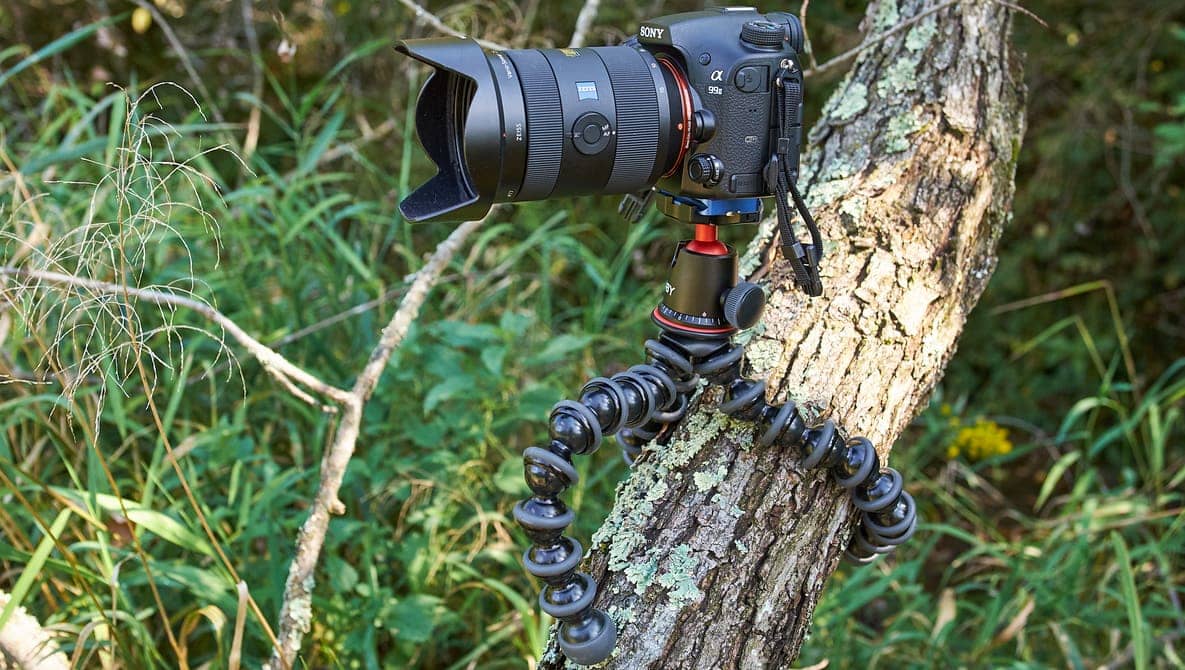
Alaska Travel Blog: The Best of America’s North

TL;DRThis travelogue from Alaska’s Kenai Peninsula rounds up the best experiences the American north has to offer: hiking up to Exit Glacier, the only glacier you can reach by road, kayaking among icebergs and whales near Seward, and wandering round the artsy town of Homer with its narrow spit jutting into the ocean. You won’t get a kayak hire for the fjords without prior experience, and a guided trip runs to around $500 per person, while driving through the tunnel into the harbour town of Whittier costs roughly $15. The authors recommend setting aside several days for the Kenai Peninsula and building in slack for unpredictable weather, which can push planned trips back by days at a time.
Lucy sitting in Alaska

Welcome to our Alaska travel blog! Postcard-perfect mountains, turquoise lakes, and bluish glaciers opened up before us as we arrived on the Kenai Peninsula — the part of Alaska that we all know from those famous, almost kitsch photographs. The part of the land that, in our imaginations, represents Alaska as a whole.
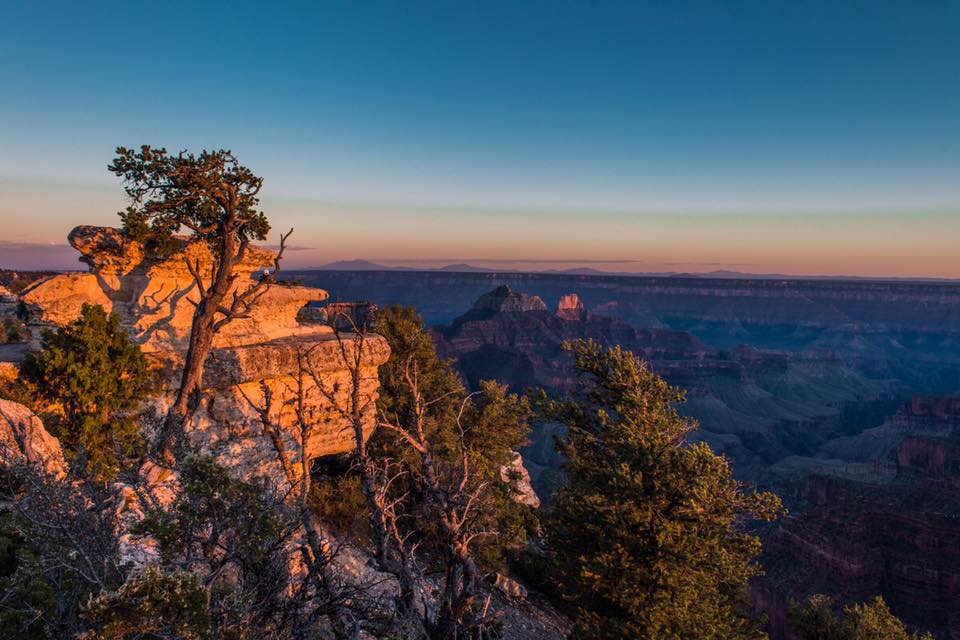
Before we officially entered the Kenai Peninsula, we stopped at the first port town of Whittier on Prince William Sound. The first words we read about this place with 200 residents were: “Whittier is weird — it’s a place like no other on Earth.” To get there, you have to pay about $12 to drive through a railway tunnel, and if you’re unlucky, you might wait up to half an hour because it’s single-lane only.

Whittier marina Alaska
They say „It is shittier in Whittier“ – the guidebook was lying again

The Quirky Port Town of Whittier

It didn’t seem all that “weird” to us, though. We set off on a short three-hour hike to a glacier, wandered through the miniature community with its charming harbour and unusually blue water, where there really isn’t much to see, and then hurried back.

glacier Whittier Alaska
The first REAL glacier we’d seen after three weeks

This Is the Main Street?

We set up camp just outside Hope, which we planned to explore the next morning for its “typical rural Alaska steeped in history.” That’s what our paper companion — our guidebook navigating us through this northern land — had promised. We didn’t discover much historical about Hope and started seriously doubting the quality of information our Lonely Planet was giving us. And so began one of our less successful days in Alaska.

They Won’t Rent You a Kayak on the Ocean in Alaska

We headed to Seward, where we wanted to go kayaking among the fjords and glaciers. It’s one of the most promoted experiences here in Alaska, and there’s no way to get there other than with a guided tour. If you’re not an expert kayaker, nobody will rent you a kayak for the fjords. And we’d only sat in one once or twice before. But it costs around $400 per person. We were already prepared to eat roots for the rest of the trip, because we didn’t plan on coming back here anytime soon and missing this would have been a real regret.

Valdez harbour Alaska
The turquoise harbour in Valdez

Kayaking completely changed our plans. Unfortunately, the nearest available spots weren’t until several days later — Saturday. So we had to change our plans once again and go explore the rest of the Kenai Peninsula, coming back in a few days.

How the Mormons Tried to Convert Us

“Have you heard of the Mormons?” We were sitting in a public park in the City of Kenai after an exhausting journey, grilling freshly caught salmon. Two friendly Mormons joined us for about twenty minutes and told us how they’re sent around the world as missionaries. They’d just spent six months in Whitehorse, Canada, before being transferred here to Alaska.

Salmon City of Kenai Alaska
All we had was salmon, so we went into the woods for firewood

“Do you know the Bible? Well, it’s a bit outdated. We have our own Bible too, and since you’re so nice, we’ll give you one.” The Mormon pulled out a Bible and wrote his number inside. “If you ever need anything on your journey, just call — we have missionaries all across America.” They said goodbye. We kept the card and the Bible. It might come in handy in Utah.

fishing Alaska City of Kenai
Daily bread for Alaskan families – catching dinner

Every Evening We Cruise Through Towns with Other RVs Looking for a Place to Sleep

After booking our kayaks, we decided we wouldn’t sleep in campsites anymore and found a spot in a supermarket car park where we slept in the car. We certainly weren’t alone — we’d already noticed that as soon as eight o’clock hits, RVs and motorhomes start cruising around town looking for a free spot to park up for the night.

Chiquita our camper van Alaska
Our Chiquita is more of a functional home than a luxury hotel, but we love her!
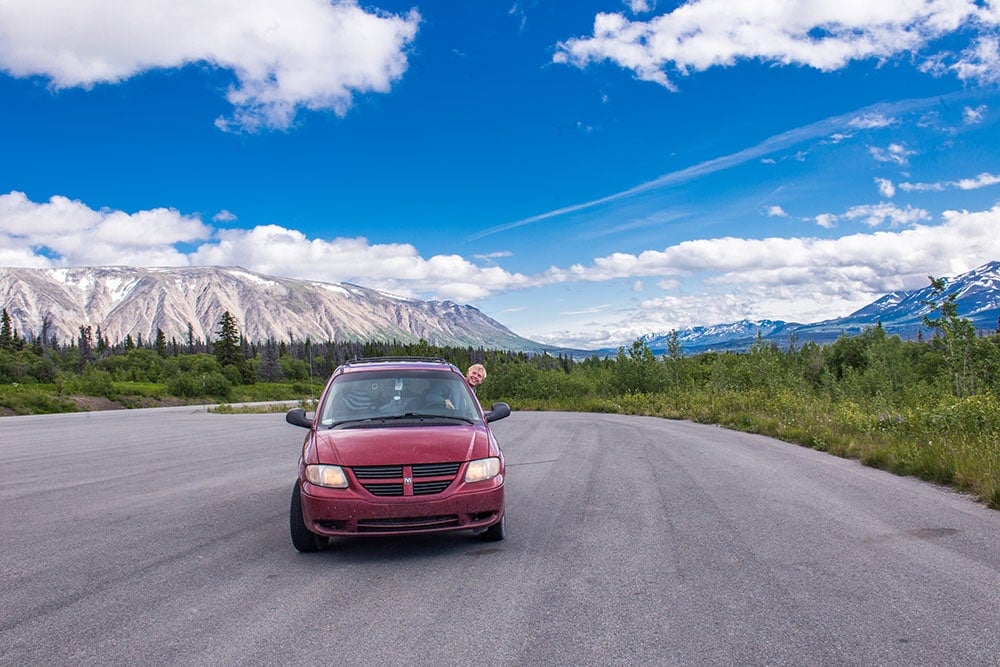
These motorhomes are no joke, by the way. They cost around $300,000 and only get about one mile per gallon. And inside, they look like a hotel. “Compared to that, our bed in Red Chiquita is hardly luxury,” Lukáš commented when we first saw the hotel-grade bathrooms in these huge beasts roaming American roads.

Homer Alaska had something special, apart from the cold
Homer had something special about it, apart from the cold

Homer Is a Town of Art and the Spit

Homer is a little town of art. If you wanted, you could spend an entire day wandering through small galleries by local artists. That was our entertainment too. There’s not much else to do here — the surroundings are fairly flat and the weather isn’t the friendliest. Still, it’s worth visiting. There’s a thin strip of land jutting out into the ocean that they call “the Spit,” and at first glance you understand why. You feel like a stronger gust of wind or a bigger wave could sweep it away, and it’s hard to believe this scattered, thin, winding strip has managed to hold on in the water for so long.

Homer Alaska miniature galleries
Homer is famous for its miniature galleries

When it’s not windy (which happens rarely), it’s pleasant to stroll along. This curious strip is lined with colourful fishing shacks, the air is a mix of fish and salt, and occasionally a sweet breeze drifts over from the local pancake house. People walk around with ice cream as if it weren’t about twelve degrees out. We arrived to perfect weather — sunshine, blue skies, and supposedly the highest temperatures of the summer. But even so, when we forgot our jumper in the car, we had to dash right back.

Seward Alaska perfect weather
Seward greeted us with perfect weather — unfortunately it didn’t last

We returned to Seward a day early so we could hike the Harding Icefield Trail, which is supposedly one of the most beautiful hikes in Alaska. But the blue skies had turned into persistent rain, the mountains hid behind clouds, and we spent our day crammed into one of the three cafés in town with other tourists.

Harding Icefield Trail Alaska
We postponed the Harding Icefield Trail for two days because of the weather. It was worth the wait

We were afraid the next day would be the same and ruin our whole kayaking trip. I couldn’t sleep — every raindrop hitting our car woke me up, and every splash stirred up frustration and sadness inside me.

No Gold Mining Here, but Plenty of Gold Diggers

At seven in the morning, it wasn’t raining. We sat ready for our biggest adventure in the office of the company taking us on the trip. There were only five of us, so we quickly boarded the boat and headed out to the ocean. The boat bounced on the waves, and soon we spotted the first whales. We watched these enormous creatures elegantly surfacing and spouting water. Almost as if they knew they were being watched, they swam around the boat while we stood frozen, mesmerised by this whale performance.

sea stars kayaking Alaska
Sea stars!

Paddling among small chunks of ice, watching sea lions and sea stars was an incredible experience, even though the sky was overcast and clouds hovered over the mountains. Nobody else around. We often think America has no history because we forget about the indigenous people. And that’s because they left no trace on the land. It remained untouched. But thousands of years ago, they saw it from their canoes just as we saw it on that cold day. This realisation filled me with a feeling of something almost sacred, rocking with five other people in a kayak, quietly observing the mighty power of nature.

kayaking glacier Seward Alaska
Kayaking isn’t for the faint-hearted

The Most Beautiful Hike of Our Lives

We still didn’t leave Seward after that. We hoped the next day would clear up and we’d be able to finish off the Kenai Peninsula with one more experience — the magnificent view of Exit Glacier, the only glacier accessible from the mainland.

“I’m done with this. Let’s go.” I opened my eyes in the morning to dark clouds covering nearly all the mountains around us, the water in the harbour had changed from turquoise to grey as it reflected the sky, and on top of it all, it was starting to rain again.

We were about to leave, annoyed at having lost part of a travel day, but then we decided it was on the way anyway and maybe the weather would be better 20 minutes down the road near the glacier.

The car park didn’t look promising. “But look — it’s breaking up over there.” I pointed above the glacier. Dark clouds were everywhere, except right over our destination, where a patch of blue sky had appeared and sunbeams were dancing on the ice of Exit Glacier.

So we set off. We took it at a killer pace. The hike was supposed to take 6–8 hours in total. We did it in 4. By the time we were a quarter of the way up, the sky was already clearing. Before long there wasn’t a single cloud, and we were enjoying blue skies that contrasted with the white glacier and purple wildflowers scattered all around. In the year we’d spent in North America, we’d seen a lot — but nothing as beautiful as this hike. When you reach the top, you’re supposedly treated to a view of what the Ice Age looked like. Harsh and breathtaking. Once again, we confirmed that the best things in life are free.

DJI Mavic Pro Exit Glacier Alaska
Exit Glacier / Shot with a DJI Mavic Pro drone
Exit Glacier hiking Alaska
The grandiose view of Exit Glacier

A bonus hike that didn’t make it into the main story — one we did on the way from Homer to Seward:

Planning a Trip to Alaska? Try Our Favourite Guidebook


Tips and Tricks for Your Vacation

Don’t Overpay for Flights

Search for flights on Kayak. It’s our favorite search engine because it scans the websites of all airlines and always finds the cheapest connection.

Book Your Accommodation Smartly

The best experiences we’ve had when looking for accommodation (from Alaska to Morocco) are with Booking.com, where hotels, apartments, and entire houses are usually the cheapest and most widely available.

Don’t Forget Travel Insurance

Good travel insurance will protect you against illness, accidents, theft, or flight cancellations. We’ve had a few hospital visits abroad, so we know how important it is to have proper insurance arranged.

Where we insure ourselves: SafetyWing (best for everyone) and TrueTraveller (for extra-long trips).

Why don’t we recommend any Czech insurance company? Because they have too many restrictions. They set limits on the number of days abroad, travel insurance via a credit card often requires you to pay medical expenses only with that card, and they frequently limit the number of returns to the Czech Republic.

Find the Best Experiences

Get Your Guide is a huge online marketplace where you can book guided walks, trips, skip-the-line tickets, tours, and much more. We always find some extra fun there!