TL;DRGetting your footwear right is the first step to staying safe on any mountain trail. Low-cut hiking shoes that are light and breathable suit easier to moderate walks, while steeper climbs over rock and loose scree call for boots with a sturdy ankle collar. Go half a size to a full size up from your normal shoes — feet swell under load and need room for your toes on the descent. The key technical features are grippy soles, a solid heel counter, good arch support and, ideally, a Gore-Tex membrane to keep water out. A decent pair of hiking socks that wick away moisture and guard against blisters makes a real difference too.
Heading into the mountains is always an experience that offers freedom, tranquillity, and a touch of adventure. But to make your trip not just enjoyable but truly safe, choosing the right hiking footwear is absolutely essential. Your boots are what determine how stable, protected, and comfortable your feet will be — even after many kilometres of demanding terrain. Below, we take a closer look at the world of hiking footwear. Get inspired!
What Type of Trekking Boot Is Best for Mountain Trails?
Mountain trails can be rocky, wet, steep, or slippery — and each type of surface demands different things from your footwear. If you’re planning lighter to moderate hikes, low-cut women’s hiking footwear is a great choice, offering freedom of movement, lower weight, and good breathability.
If you’re tackling steeper climbs, rocky sections, exposed roots, or loose scree, ankle-height boots are often the better option. They provide firm ankle support, significantly reduce the risk of sprains, and keep your foot stable under load.
Getting the right size and shape is the key to both comfort and safety on the trail. Ill-fitting footwear can lead to blisters, sore soles, a sliding foot inside the boot, or painful pressure on your toes. Ideally, your hiking boots should be a half to a full size larger than your everyday shoes. This is because your feet swell slightly with exertion, and on descents, you need a bit of extra room at the toe box to avoid bruised nails.
A firm heel counter, a stable sole, and a well-shaped arch support are equally important. Modern hiking footwear often incorporates technologies that absorb impact, stabilise your stride, or improve grip on unpredictable terrain. If you’re not sure how to properly try on and assess a boot, this beginner’s guide is well worth reading: https://blog.eobuv.cz/jak-vybrat-trekove-boty-pruvodce-pro-zacatecniky/. It’s packed with practical advice — and when shopping online, always select footwear based on your actual insole length.
Don’t overlook the role of quality hiking socks either. Designed to wick moisture, prevent hot spots, and work in harmony with your boots, the right socks can make a surprising difference to your overall comfort on the trail.
Outsole, Materials and Durability – What to Look For
In the mountains, the technical specs of your footwear matter most — though of course, style always plays a role too. Outsole grip is one of the most critical factors to consider. Boots with deeper lug patterns offer better traction on loose or muddy ground, while harder rubber compounds are better suited to rocky sections. If you frequently walk on wet trails, look for outsoles specifically engineered not to slip on wet roots or damp stone.
Waterproof membranes deserve a section of their own. Technologies like Gore-Tex and similar innovations keep your feet dry in the rain while still allowing sweat to escape. That said, if maximum breathability is your priority, non-membrane boots are lighter and far more pleasant in warm weather.
Other details worth paying attention to include the quality of the stitching, toe cap protection, lace durability, and overall structural integrity of the boot. On the way down, you want a boot that holds your foot firmly in place; on the way up, a stiffer sole helps maintain a confident, stable stride.
The right hiking footwear is, quite simply, the foundation of safety in the mountains — whether you’re heading out on your very first hike or venturing into more challenging alpine terrain. It’s an investment that always pays off: in confidence underfoot, comfort on long days out, and pure joy of movement. With the right gear on your feet, you can set off on your next adventure at whatever pace suits you best.
Tips and Tricks for Your Vacation
Don’t Overpay for Flights
Search for flights on Kayak. It’s our favorite search engine because it scans the websites of all airlines and always finds the cheapest connection.
Book Your Accommodation Smartly
The best experiences we’ve had when looking for accommodation (from Alaska to Morocco) are with Booking.com, where hotels, apartments, and entire houses are usually the cheapest and most widely available.
Don’t Forget Travel Insurance
Good travel insurance will protect you against illness, accidents, theft, or flight cancellations. We’ve had a few hospital visits abroad, so we know how important it is to have proper insurance arranged.
Where we insure ourselves: SafetyWing (best for everyone) and TrueTraveller (for extra-long trips).
Why don’t we recommend any Czech insurance company? Because they have too many restrictions. They set limits on the number of days abroad, travel insurance via a credit card often requires you to pay medical expenses only with that card, and they frequently limit the number of returns to the Czech Republic.
Find the Best Experiences
Get Your Guide is a huge online marketplace where you can book guided walks, trips, skip-the-line tickets, tours, and much more. We always find some extra fun there!
TL;DRThe best hotels and resorts in Bali round up to 10 specific picks by area: Relax Bali Dive & SPA in Tulamben for divers, Aster Apartment Bali in Canggu, 700 metres from Echo Beach, the luxury villas of The Bali Manor Collection in Cemagi, 150 metres from Karang Cemagi beach, and the wellness retreat The Lokha Ubud, surrounded by rainforest and rice terraces. Also worth a look are Temuku Ubud Villas, Arya Arkananta Resort, Umah Capung Sebatu Villas and GK Bali Resort in Tegalalang, Kashantee Village in Seminyak, and Menzel Ubud, just 2.3 km from the Ubud Monkey Forest. May to September is the best time to visit, with June and September the better-value months, while Tulamben stays dry almost all year round.
Looking for the perfect accommodation in Bali? The Island of the Gods offers thousands of options, but not all are created equal. We’ve put together a selection of 10 exceptional hotels and resorts that represent the best Bali has to offer – from luxury ocean-view villas to modern apartments in a surfer’s paradise and tranquil retreats amidst rice terraces. So let’s take a look at the best hotels and resorts in Bali.
Summary for those Short on Time
Relax Bali Dive & SPA in Tulamben is ideal for diving and snorkeling enthusiasts and has Czech management.
Aster Apartment Bali in Canggu offers modern apartments in the heart of the surfing scene with its own kitchen.
🔗 These are affiliate links — they don't change your price and help us create content. · All experiences →
Where to go in Bali
Bali is a surprisingly diverse island, and choosing the right location can significantly affect your entire vacation. Each area has its own specific charm and is suitable for a slightly different type of traveler. You can either combine places if you want to experience a bit of everything, or simply choose one specific base:
The northern coast around Tulamben and Amed is a paradise for diving and snorkeling. It is home to the famous USS Liberty wreck and some of the best coral reefs in Bali. This area is quieter, less touristy and ideal for those looking for contact with the underwater world. The beaches have black volcanic sand and the atmosphere is authentically Balinese.
The Canggu and Seminyak area on the southwest coast represents the modern face of Bali. Canggu is a mecca for surfers, digital nomads and lovers of trendy cafes. Seminyak offers a more luxurious experience with first-class restaurants and boutiques. Both areas are lively, full of energy and perfect for those who want both beach and nightlife.
Cemagi and the surrounding quiet villages represent the golden mean. You are close to lively Canggu, but at the same time you can enjoy the tranquility of traditional Balinese villages. The area is ideal for families and those of you who are looking for an authentic experience without the crowds of tourists.
Ubud in the interior is the spiritual and cultural heart of Bali. Surrounded by rice terraces, rainforests and a river, it offers a completely different kind of vacation. There is no beach or sea, but you will find yoga, meditation, art and the best wellness centers on the island.
1) Relax Bali Dive & SPA ocean front resort – Tulamben
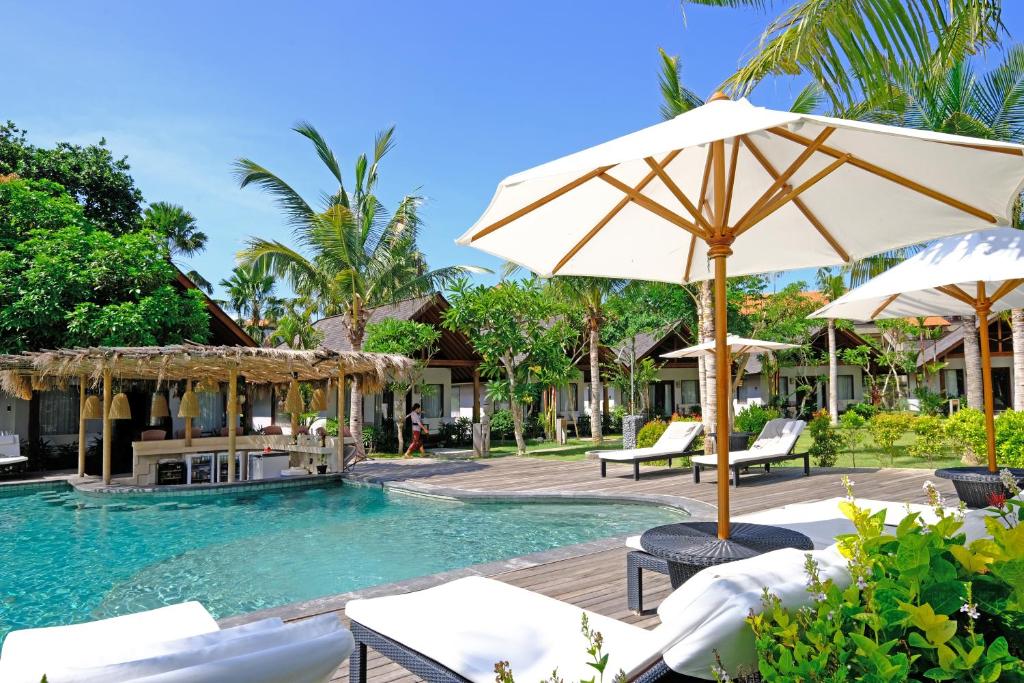
If you dream of a vacation with diving or snorkeling, Relax BaliDive is your first choice. This resort is located in the Tulamben area on the northeast coast of Bali, known as one of the best diving spots in all of Indonesia.
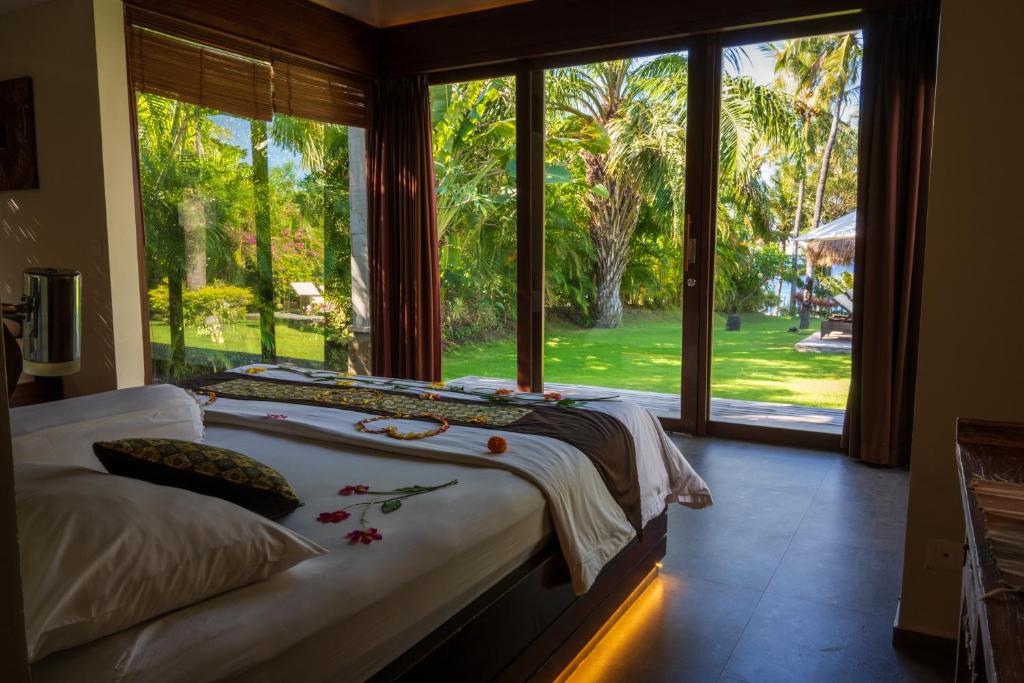
The resort is run by Czechs, which you will appreciate not only because of the language barrier, but above all thanks to the high standard of services that we are used to. Accommodation is spread over a beautiful tropical garden with direct sea views. You have Superior rooms with ocean views, luxurious Deluxe bungalows or even private villas with their own pool.
Relax Bali is an ideal choice for families with children. The resort offers a children’s playground, a swimming pool and staff who really care about families. Baturinggit Beach is only 200 meters away and you can start snorkeling practically right in front of the resort.
The local diving school will guide you through the world-famous USS Liberty wreck, which lies just a few kilometers from the resort. You can take freediving courses or simply enjoy snorkeling in crystal clear water full of colorful corals and tropical fish.
A great advantage is also that the area around Tulamben is one of the driest in Bali. So you can vacation here even outside the main season without fear of continuous rains. The resort offers spa services, a restaurant with excellent cuisine and regularly organizes trips around the area.
2) Aster Apartment Bali – Canggu
For those of you who like modern design, the freedom of your own apartment and want to be in the center of the action, Aster Apartment Bali in Canggu is the right choice. This brand new apartment complex has only recently opened its doors and has already received a number of enthusiastic reviews.
Canggu is now one of the most sought-after destinations in Bali. The area attracts surfers, digital nomads and everyone who is looking for a modern environment with perfect infrastructure. You will find hundreds of great cafes, restaurants, bars and shops, yet you are only seven hundred meters from the famous Echo Beach.
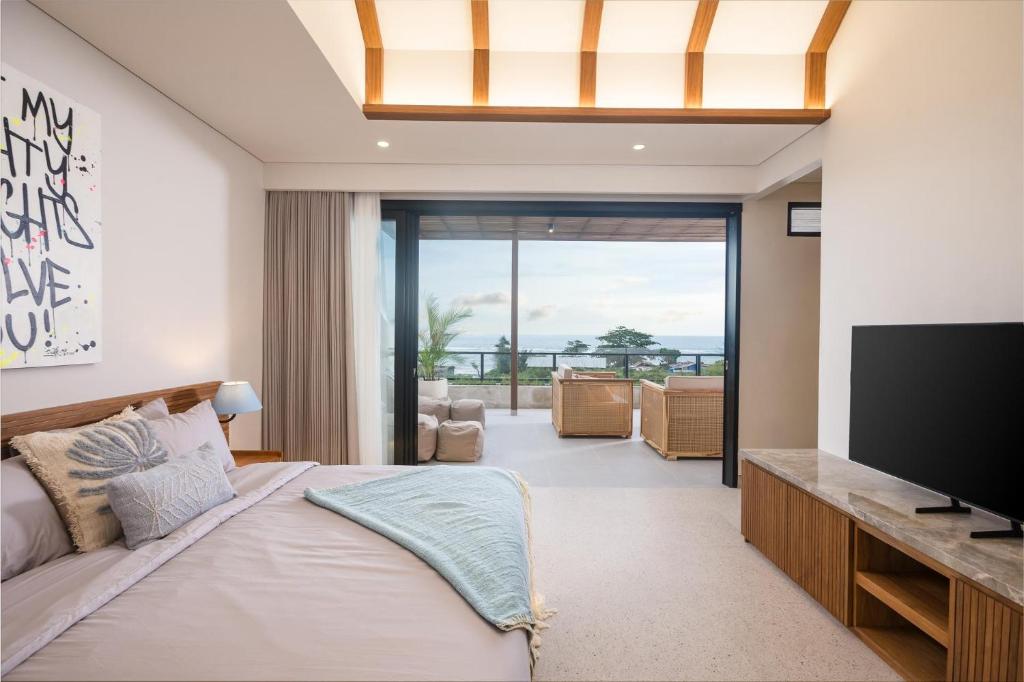
Aster Apartment offers studio apartments or more spacious apartments with three bedrooms. Each unit has a fully equipped kitchen, so you can save on food and cook according to your preferences. You will appreciate this especially during a longer stay or with children. The apartments have air conditioning, fast wifi, a flat-screen TV and a balcony with a view.
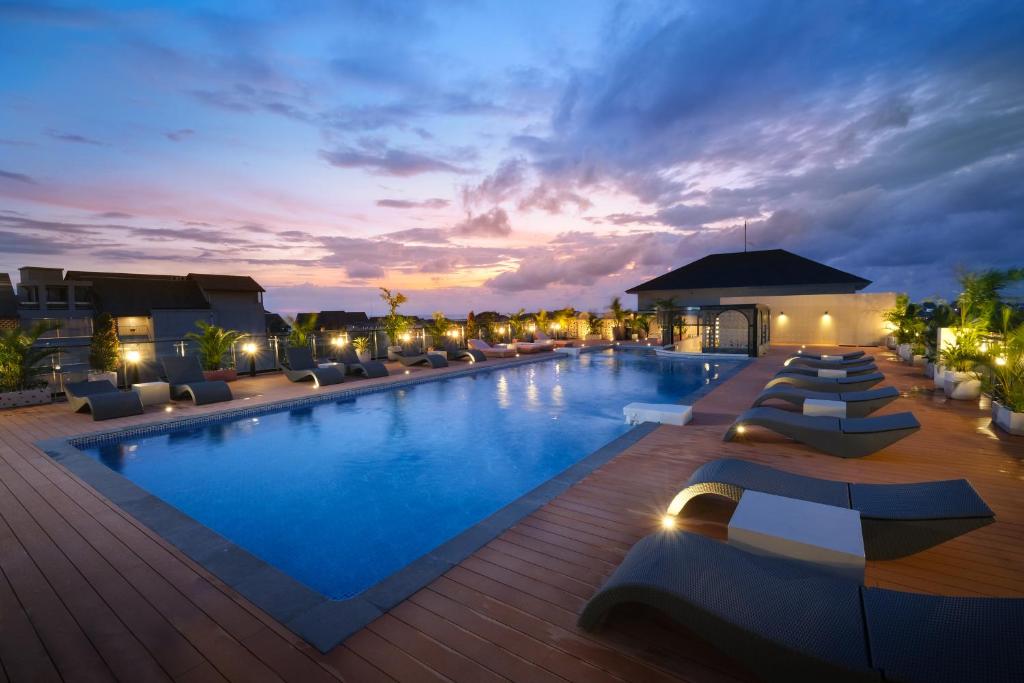
On the roof of the complex you will find a beautiful swimming pool with a bar, from where you have a view of the surrounding landscape. On the ground floor there is a restaurant that serves excellent buffet breakfasts. You can choose between continental, American or vegetarian options.
The location is a great advantage – you are literally in the heart of everything. You can walk to the beach, cafes, the market and fitness centers. At the same time, the apartment is set back from the main road, so you have relative peace inside the complex.
The apartments are ideal for younger couples, groups of friends or families. Parking is free, so you can rent a scooter and go exploring the area.
3) The Bali Manor Collection – Cemagi
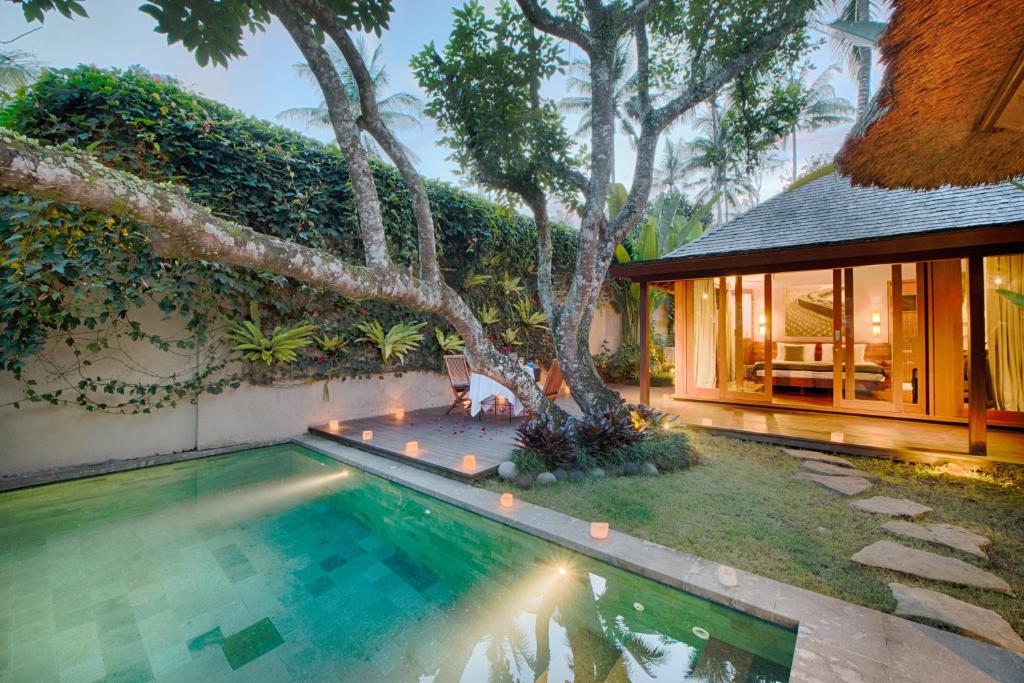
If you are looking for true luxury, privacy and tranquility, The Bali Manor Collection in the quiet village of Cemagi is exactly what you need. This project offers several beautiful villas that combine traditional Balinese craftsmanship with modern elegance.
Cemagi lies on the southwest coast of Bali, about twenty minutes’ drive from bustling Canggu. This area remains relatively untouched by mass tourism. You will find traditional temples, rice terraces and a local community that maintains an authentic way of life.
The villas in The Bali Manor Collection offer three or four bedrooms, making them perfect for larger families or groups of friends. Each villa has a private infinity pool with ocean views, spacious terraces, a fully equipped kitchen and luxuriously furnished interiors with hand-carved teak details.
What makes these villas truly exceptional is the attention to detail. You will find local ceramics, hand-woven textiles and design elements that create the atmosphere of a real Balinese home. The spa-style bathrooms have outdoor showers and bathtubs overlooking the tropical greenery.
The villa management offers personal concierge services. They can arrange a private chef, in-villa massages, surf lessons or organize trips to nearby temples for you. Karang Cemagi Beach is only one hundred and fifty meters away.
Villa Manor is ideal for those who want to experience Bali in peace and luxury, without the crowds of tourists. You can enjoy sunsets from your private pool, dine under the stars and feel like a true islander. Guests often mention that this is where they found true peace and connection with nature.
4) Kashantee Village – Seminyak
Kashantee Village in Seminyak is for those who want to be close to the beaches and nightlife, but still enjoy the tranquility of a tropical garden. This three-star boutique hotel offers great value for money.
Seminyak is one of the most popular areas in Bali. There are a number of luxury resorts, first-class restaurants, beach clubs and boutiques. Yet it is not as crowded as Kuta. Kashantee Village is located in a quiet side street, five hundred meters from Batu Belig Beach.
The hotel boasts a beautiful tropical garden full of exotic plants, which creates a feeling of refuge in the middle of a bustling city. In the center of the garden you will find a swimming pool with plenty of sunbeds and seating.
You have Deluxe rooms with a balcony and garden views or bungalows with pool views. All rooms have air conditioning, TV, private bathroom and minibar. Breakfast is served every morning in the hotel restaurant, which offers a mix of American, Chinese and Indonesian cuisine.
The hotel staff is what guests praise the most. They are incredibly friendly, helpful and try to fulfill every wish. They speak good English and can help you organize trips, rent scooters or make reservations at restaurants.
5) The Lokha Ubud Resort, Villas & SPA – Ubud
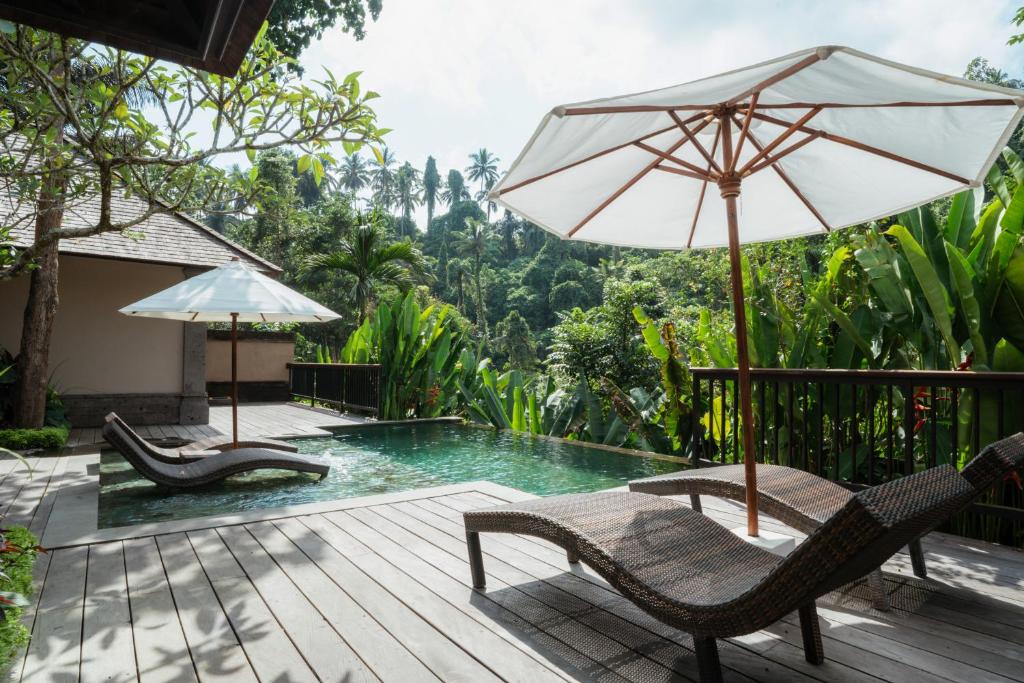
For those looking for the spiritual dimension of Bali, wellness and contact with nature, The Lokha Ubud Resort is an ideal choice. This five-star resort is located in a valley not far from the center of Ubud, surrounded by tropical rainforest and terraced rice fields.
Ubud is the cultural and spiritual heart of Bali. You will find hundreds of temples, galleries, traditional craft workshops and the best yoga and meditation centers on the island. The area is famous for its natural beauty, greenery and tranquility, which contrasts with the bustling southern coast.
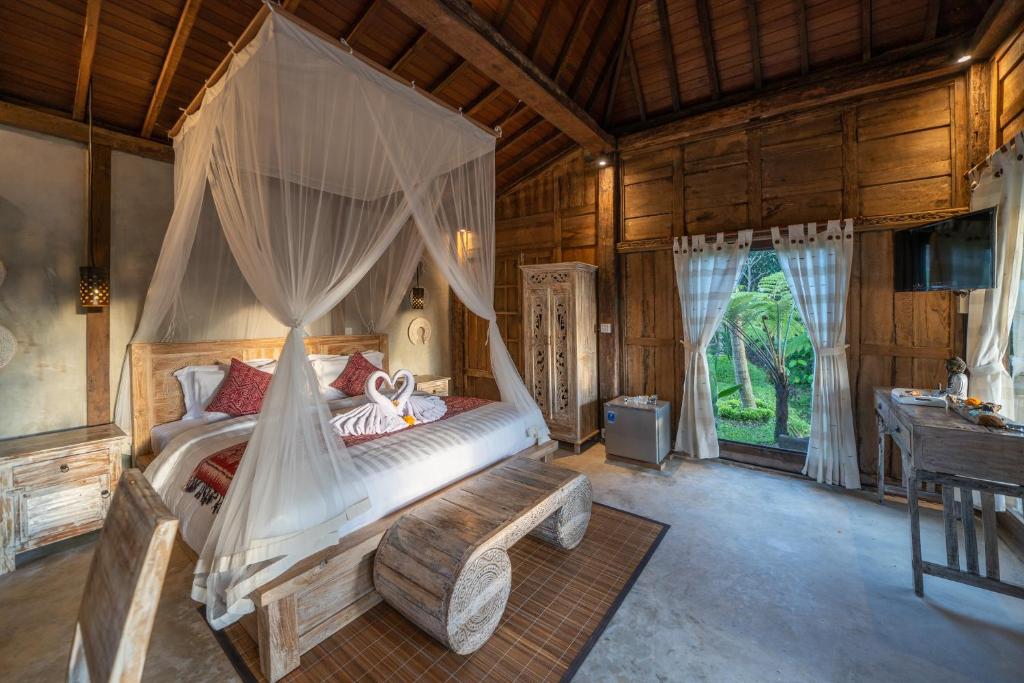
The Lokha Ubud offers luxurious Suite rooms with valley views or private villas with a pool. All units have spacious interiors with teak furniture, design elements inspired by Balinese art and large windows with views of the greenery. The bathrooms have luxurious bathtubs, rain showers and complete equipment.
The resort operates an excellent spa center where you can enjoy traditional Balinese massages, body scrubs with local ingredients or relaxing treatments overlooking the rainforest. There is also a fitness center, a beautiful swimming pool in the heart of the jungle and the Bukit Cinta restaurant, which serves excellent international cuisine.
6) Temuku Ubud Villas – Ubud
If you are looking for a quiet retreat in the middle of nature with luxurious privacy, Temuku Ubud Villas is a great choice. This boutique villa complex is located in Ubud, just 4 km from the famous Ubud market, and offers the right balance between tranquility and accessibility to the cultural center of Bali.
The accommodation is set directly between the jungle and rice fields, and each villa has its own private pool, air conditioning, outdoor bathroom with bathrobe and a view of either the jungle or the rice fields. There is also free Wi-Fi, a minibar and a terrace where you can enjoy your morning coffee overlooking nature.
Temuku Ubud is an ideal choice for couples and families with children (children under 6 stay free). Guests especially appreciate the helpful staff who take care of every detail, the mega breakfast served directly to the villa and the overall atmosphere of tranquility. The resort offers a free shuttle service to the center of Ubud, so you can easily explore local markets, temples and restaurants.
A great advantage is also the free welcome 15-minute shoulder massage and afternoon tea served between 3:00 PM and 5:00 PM. You can rent bicycles on site and go on a trip around the surrounding villages. The resort’s restaurant serves quality Indonesian and international cuisine.
7) Arya Arkananta Resort & Spa – Ubud
If you are attracted by the combination of Balinese authenticity, beautiful nature and comfortable accommodation, Arya Arkananta Resort & Spa is a great choice. This four-star resort is located in Ubud, right in the middle of rice fields.
The accommodation offers wooden bungalows and spacious villas with open bathrooms, which guests love. There are Deluxe rooms with views of the pool or rice fields, suites with balconies and even luxurious villas with three bedrooms and a private pool, ideal for larger families or groups of friends. All rooms have air conditioning, a flat-screen TV and a terrace with a wonderful view.
Arya Arkananta is a popular place for families with children (children stay free up to 18 years of age when sharing a room). The resort regularly organizes free activities – from traditional Balinese dances to yoga and trips around the area. Guests especially appreciate the friendly staff, great breakfasts and the beautiful swimming pool overlooking the rice fields.
On site you will find the Takir restaurant with Indonesian and international cuisine, a spa center with professional massages and a free shuttle service to the center of Ubud (approx. 30 minutes). The resort also offers a fitness center, a jacuzzi and bicycle rental.
8) Umah Capung Sebatu Villas – Tegalalang
If you dream of staying in the heart of the Balinese jungle with an authentic experience and a personal touch, Umah Capung Sebatu Villas is your ideal choice. This family villa complex is located in the Tegalalang area, known for its famous rice terraces, just 5 km from Tegallalang Rice Terrace.
The accommodation consists of only a few villas, which guarantees an intimate atmosphere and individual care. Each villa has its own private pool, views of the jungle or garden, air conditioning, outdoor bathroom with bathtub and a terrace for relaxation.
Umah Capung is a great choice for couples, as well as for families with children (children under 6 stay free). The resort offers breakfast (English or Asian) for an extra charge, which you can enjoy overlooking the jungle. The staff will be happy to advise you on planning trips and arrange transportation.
In the area you will find several restaurants within a 10-minute walk, the holy spring Tirta Empul (3.4 km) and the Gunung Kawi temple. It is about a 30-minute drive to the center of Ubud. A great advantage is the quiet location in the middle of nature, where you fall asleep to the sounds of the jungle and wake up to birdsong.
9) GK Bali Resort – Tegalalang
If you are looking for a combination of luxury, beautiful nature and perfect services, GK Bali Resort is a great choice. This four-star boutique resort is located in Tegalalang, nestled in a breathtaking valley with jungle and rice fields, approximately 30–40 minutes’ drive from the center of Ubud.
The accommodation offers spacious Deluxe suites with a balcony and views of the pool or landmarks, luxurious one-bedroom villas with a private pool, or even spacious Executive Suites. All rooms have air conditioning, a flat-screen TV, bathrobes, a minibar and a terrace.
GK Bali Resort is a popular place for couples and families with children (cots are free). Guests constantly praise the incredibly helpful staff, who do their best to ensure guest satisfaction. The resort offers a beautiful infinity pool overlooking the valley, the Tibuan Parung restaurant with Indonesian and international cuisine and a spa with professional massages.
A rich continental or American breakfast is served every morning. The resort regularly organizes activities – morning walks around the area with a guide, traditional dance or cooking. You also have free bicycles, a shuttle service to Ubud and airport transfers for a fee.
10) Menzel Ubud – Ubud
If you’re looking for quality, reasonably priced accommodation in Ubud with beautiful natural surroundings, Menzel Ubud is an excellent choice. This four-star resort is located in the Kalah area, just 2.3 km from the popular Ubud Monkey Forest and 3.7 km from Ubud Palace.
The accommodation is set in a tropical garden surrounded by rice paddies and palm trees. You can choose from Standard rooms with garden or landmark views, more spacious Deluxe rooms with a balcony and pool view, suites with river views, or luxurious villas with their own private pool. All rooms have air conditioning, TV, a minibar, and a private bathroom with free toiletries.
Menzel Ubud is a popular place for families with children (children stay free when sharing a room with their parents). The resort offers two swimming pools, a restaurant serving American, Indonesian, and Asian cuisine, a spa center, and free Wi-Fi.
A great advantage is the easy access to Ubud’s main attractions – Goa Gajah (2.8 km), ARMA Museum (1.1 km), or Rudana Museum (1.6 km). Yet you are staying in a quiet area away from the bustling center.
Lukáš and Lucie recommend
Where to Stay in Bali
6 accommodations — resorts, wellness hotels and other accommodation options
The best time to visit Bali is from May to September, which is the dry season and has the most pleasant weather. July and August are the hottest but also the most expensive months with the highest visitor numbers. If you want to save money and avoid the crowds, go in June or September. The Tulamben area in the north is dry even during the rainy season, so you can vacation here almost any time of the year.
Do I need a visa for Bali?
Yes, a visa is required for Bali. You can buy a Visa on Arrival at the airport for $35 USD, which allows a stay of up to 30 days with the possibility of extending it for another 30 days.
Is it safe to drink tap water in Bali?
No, do not drink tap water in Bali. Use only bottled water, which you can buy in stores. Hotels and resorts often provide free bottled water. Also, be careful with ice in drinks in cheaper establishments and with washed fruits and vegetables.
How to get around Bali?
The most practical way is to rent a scooter, which costs around 170 CZK per day. Alternatively, you can use taxi services like Grab or Gojek, which work similarly to Uber. For longer distances, you can hire a private driver with a car for approximately 1000-1500 CZK per day. Public transport in Bali is practically non-existent.
Tips and Tricks for Your Vacation
Don’t Overpay for Flights
Search for flights on Kayak. It’s our favorite search engine because it scans the websites of all airlines and always finds the cheapest connection.
Book Your Accommodation Smartly
The best experiences we’ve had when looking for accommodation (from Alaska to Morocco) are with Booking.com, where hotels, apartments, and entire houses are usually the cheapest and most widely available.
Don’t Forget Travel Insurance
Good travel insurance will protect you against illness, accidents, theft, or flight cancellations. We’ve had a few hospital visits abroad, so we know how important it is to have proper insurance arranged.
Where we insure ourselves: SafetyWing (best for everyone) and TrueTraveller (for extra-long trips).
Why don’t we recommend any Czech insurance company? Because they have too many restrictions. They set limits on the number of days abroad, travel insurance via a credit card often requires you to pay medical expenses only with that card, and they frequently limit the number of returns to the Czech Republic.
Find the Best Experiences
Get Your Guide is a huge online marketplace where you can book guided walks, trips, skip-the-line tickets, tours, and much more. We always find some extra fun there!
TL;DRHolafly is a Spanish eSIM service for travellers, offering unlimited data in over 160 countries with QR code activation that takes just minutes. It scores 8 out of 10 in our review. Plans are split by length — 7, 15 or 30 days — with a week of unlimited data for Europe costing €26.90 and a 30-day global plan coming in at €149.90. The big draws are dead-simple activation and reliable unlimited connectivity, though you’ll pay more than with rivals like Airalo, which covers over 210 destinations with cheaper, if capped, data plans. Holafly makes the most sense for digital nomads and business travellers who need to stay online constantly — it’s not worth it if you’re only away briefly or barely use the internet.
As someone who travels quite frequently and has found myself scrambling for a local SIM card at the airport or paying outrageous roaming fees more than once, I started looking for a better eSIM travel solution. That’s how I discovered Holafly – a Spanish service that promises simple eSIM activation and unlimited data in more than 160 destinations worldwide. Let’s take a closer look at what I think about Holafly.
TL;DR
Holafly is a great solution for travellers who want the peace of mind of unlimited internet without worrying about roaming.
Activation is genuinely simple, coverage is wide, but you’ll pay a premium for the convenience – prices are higher than the competition.
You’ll appreciate Holafly the most when you need to be online all the time, for example on business trips.
Get data from HolaFly at a better price with our coupon code Loudavymkrokem.
Travel with eSIM from Holafly 🌍
Connectivity in over 200 countries, 9 regional plans, and even a worldwide tariff.
Holafly offers eSIM cards with data plans for travellers who want to be online the moment they land in a foreign country. The biggest advantage? Simplicity, quick activation, and the option to get unlimited data in dozens of countries.
How eSIM technology works
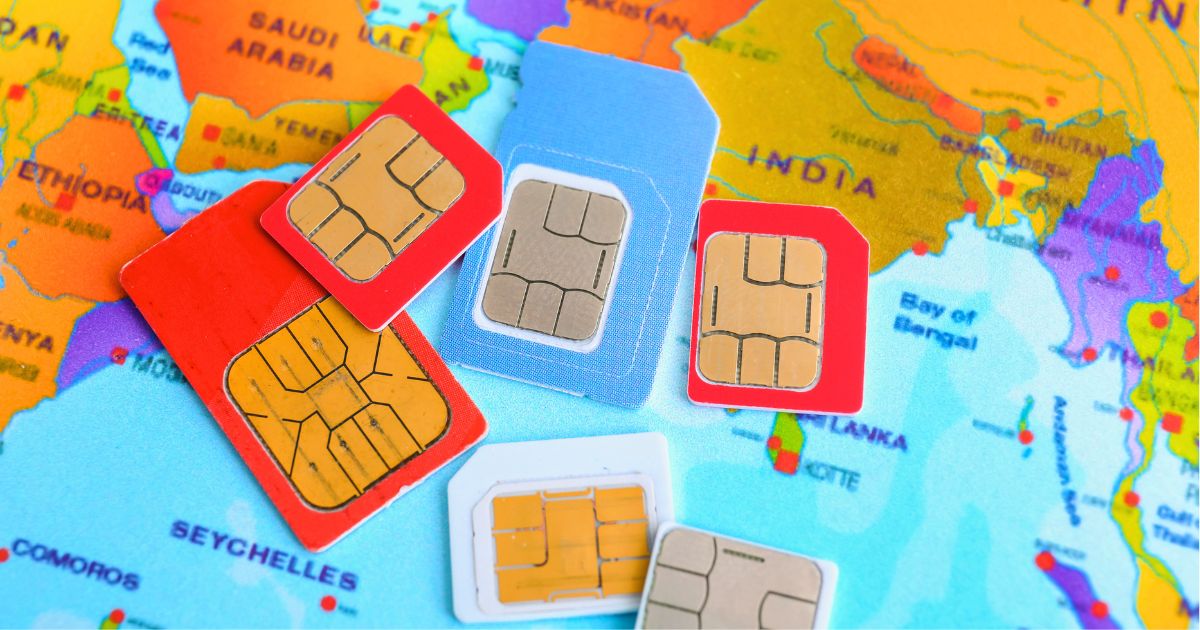
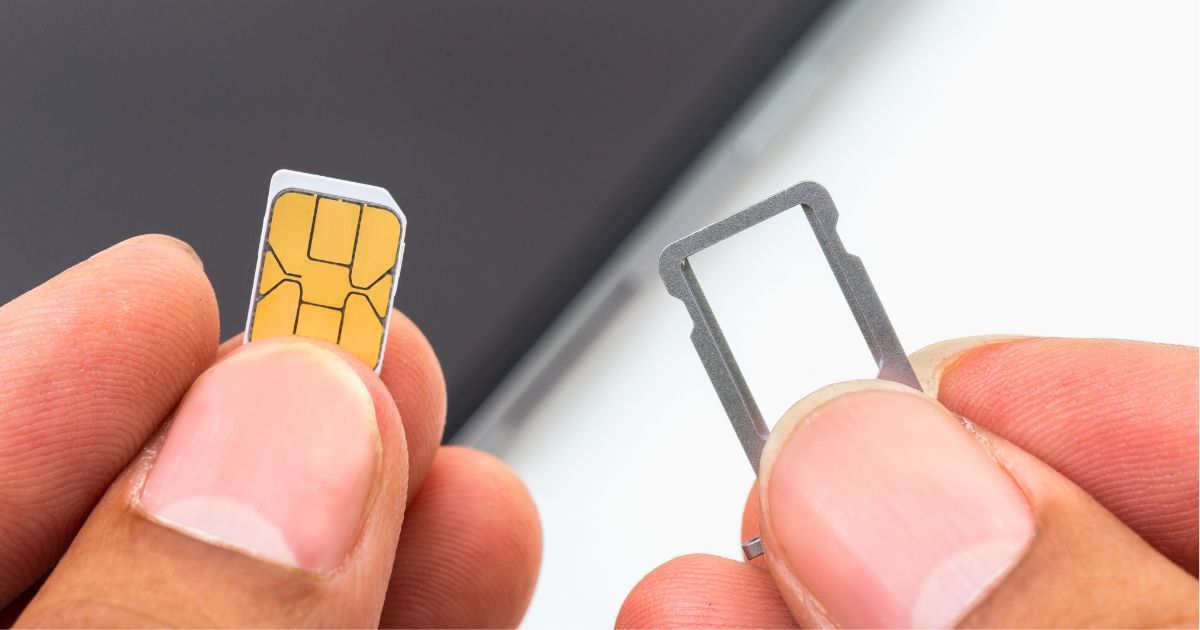
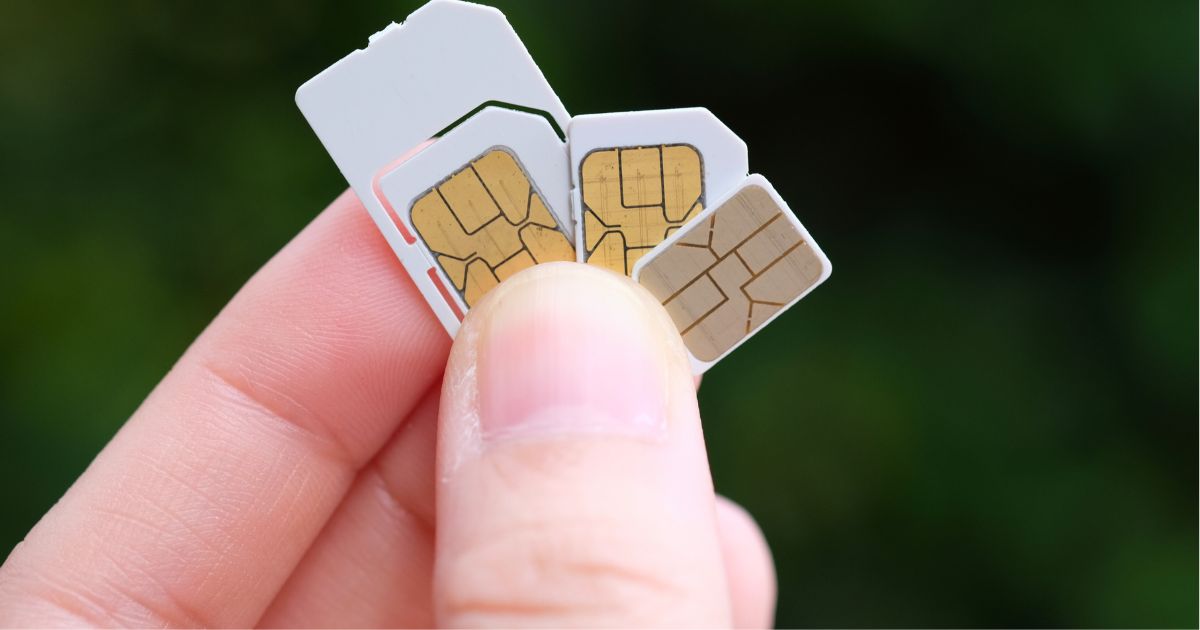
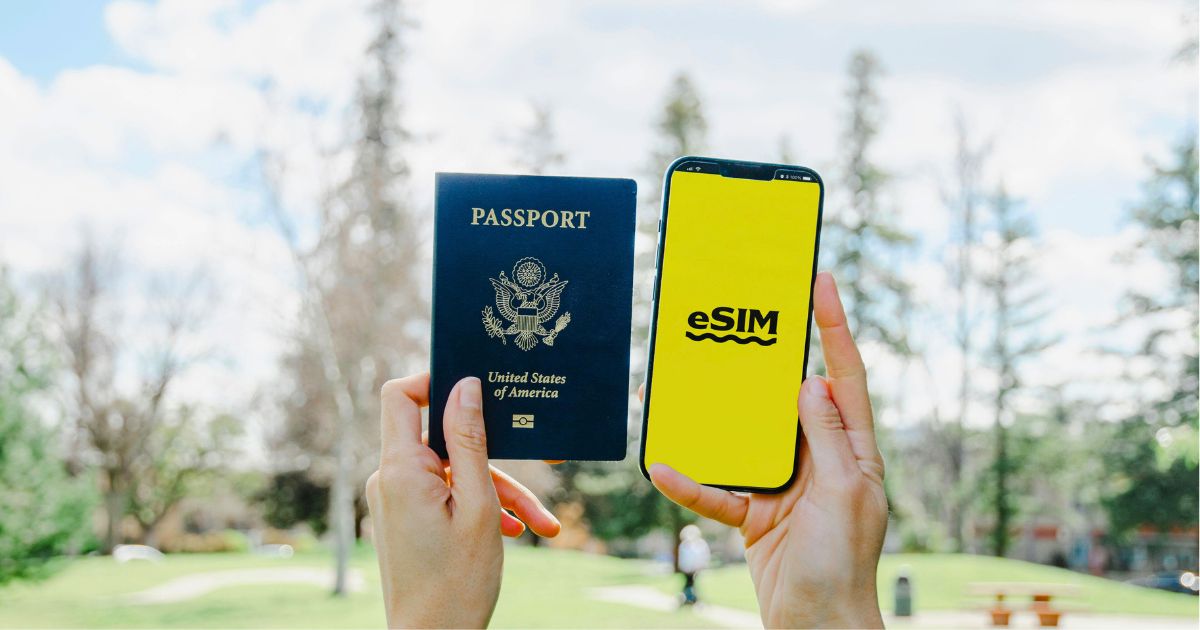
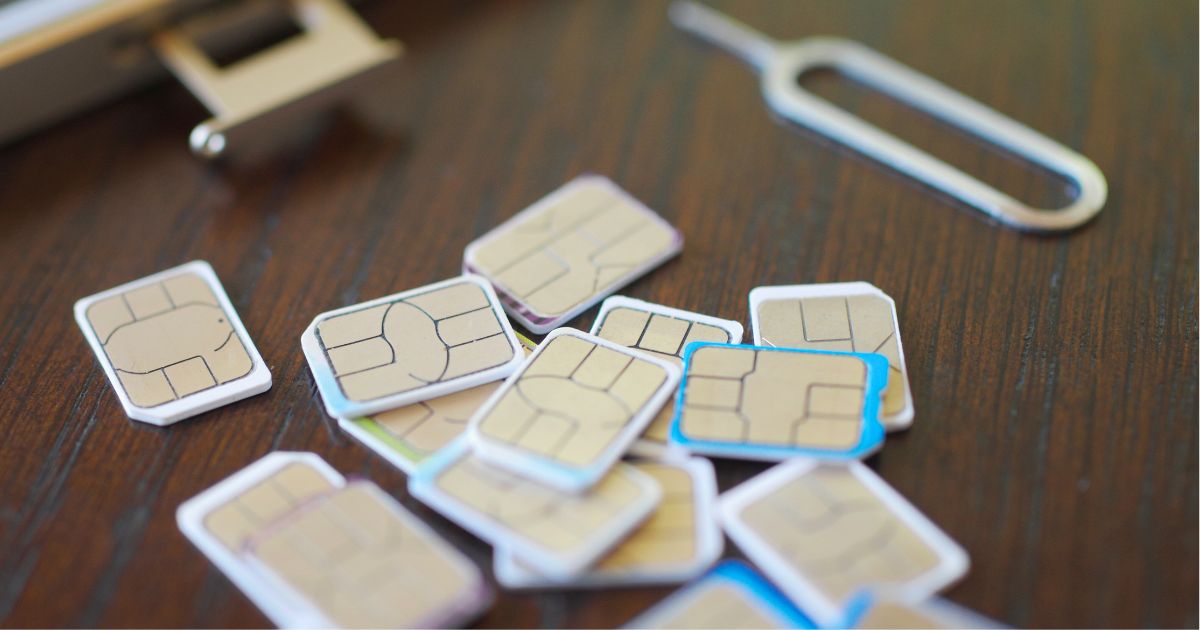
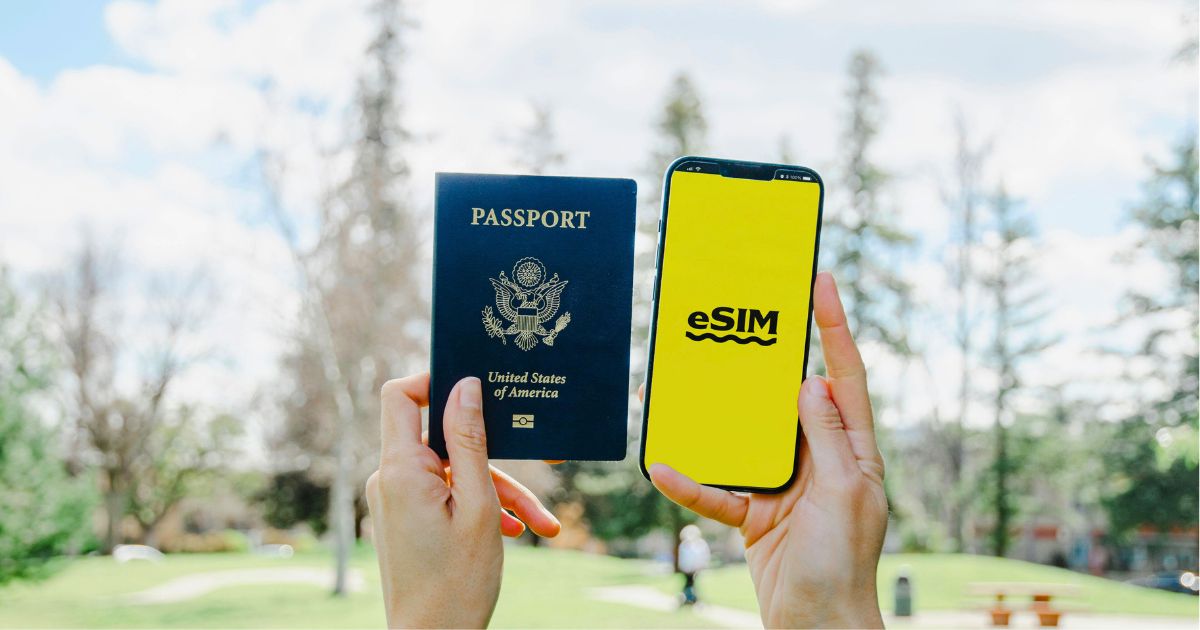
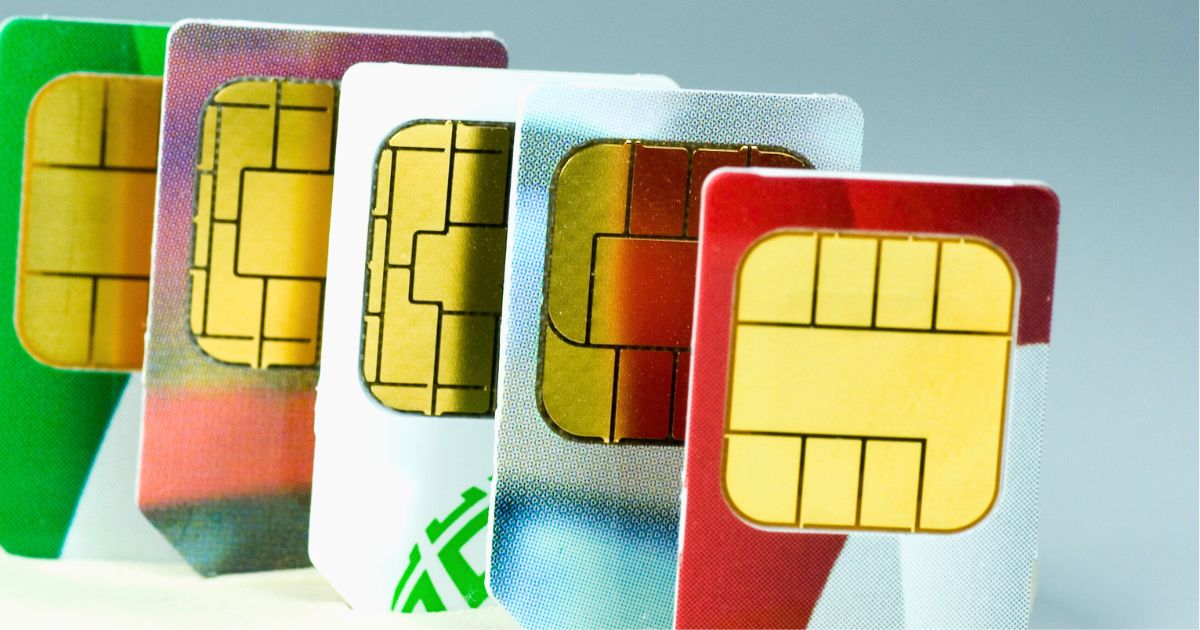
eSIM stands for “embedded SIM” – a digital alternative to the plastic SIM card you’re used to. Instead of inserting a physical card, you download an eSIM profile directly to your phone, provided it supports the technology. There’s no need to visit a shop or wait for delivery – everything is handled electronically in just a few minutes.
When you travel, you simply activate a new plan from Holafly and you have internet. You save time and the hassle of lost cards or hunting down local operators at the airport. Plus, you can have multiple plans on your phone at once – for example, your home SIM for calls and Holafly for data.
Holafly eSIM vs. traditional SIM cards
Compared to traditional travel SIM cards, Holafly is far more convenient. You don’t need to order anything in advance, wait for delivery, or worry about a card not arriving on time. The entire process happens online and within minutes you have internet access.
On top of that, Holafly covers over 160 countries, so you don’t need to buy a new card in every country. If you’re travelling across Europe or Asia, a single plan will do. This makes it one of the best eSIM for international travel options currently available.
eSIM vs. physical SIM card
Holafly eSIM review: Detailed breakdown of features
Let’s dive into the actual Holafly review.
Global vs. regional eSIM
Holafly offers both global eSIM plans and regional packages. The global eSIM gives you internet access in more than 185 countries without having to change anything – perfect for those who travel across continents.
Regional eSIMs, on the other hand, are better value if you’re staying in a specific area. You can choose a package for just Europe, Asia, or the Americas. Regional packages tend to be cheaper than the global option if you’re only visiting a few countries.
Holafly eSIM
Data plans and tariffs
This is where Holafly truly shines. They offer packages with unlimited data in many countries, which you’ll appreciate if you don’t want to worry about how much data you’ve used. Plans are divided by validity period – 7, 15, or 30 days.
Some packages have a fixed validity period, which can be a downside if you’re only travelling for a short time. For example, a week of unlimited data for Turkey costs about $27 (around €25). It’s not the cheapest, but many people are happy to pay extra for unlimited internet access.
Approximate Holafly prices:
Europe (7 days, unlimited data): €26.90
Asia (15 days, unlimited data): €46.90
Global (30 days, unlimited data): €149.90
Unlimited vs. limited data
Unlimited data plans are ideal for those who stream a lot, work online, or frequently make calls via apps while travelling. Holafly is well-known precisely for its unlimited plans – you don’t need to monitor your usage and the internet is always available.
Naturally, unlimited plans are more expensive and you often can’t choose the exact number of days. But for heavy users, the feeling of unlimited connectivity is a major plus.
Device compatibility
Holafly eSIM works on most newer smartphones. This includes Apple models (iPhone XS and later), Samsung Galaxy S20 and above, and some Google Pixel devices. It’s worth checking whether your specific phone supports eSIM – older or budget models often don’t.
Besides phones, you can also use a Holafly eSIM in some smartwatches, tablets, and other devices with eSIM capability. For example, Apple Watch Series 3 and newer LTE versions, or iPad Pro tablets.
Tethering and data sharing
Holafly supports tethering, so you can share your connection with a laptop or another phone. This is especially useful when travelling without Wi-Fi. Just be aware that in some destinations, tethering is limited or speeds may decrease with prolonged use.
Holafly eSIM review
My personal experience with Holafly eSIM
Let’s move on to my hands-on experience with the Holafly travel eSIM.
Ordering and activation process
Ordering an eSIM from Holafly is genuinely simple. You select your destination and plan on the website, pay by card, and within minutes you receive an email with a QR code and detailed instructions.
On your phone, you open settings, choose to add a new eSIM, scan the QR code, and within a few minutes everything is set up. Even a complete beginner can manage it without any issues. Holafly sends instructions with images, and if anything goes wrong, they have round-the-clock customer support.
The only thing that slightly bothers me is that you have to activate the eSIM on the day you want to start using data. You can’t set it up a week in advance and activate it only after landing.
Connection quality in real conditions
In major cities and tourist destinations, the connection works brilliantly. Holafly partners with local operators, so you get the same network quality as the locals. In more remote areas, the signal can be weaker or fluctuate – but that’s a problem with all roaming solutions.
Speeds generally match the local 4G network. For regular browsing, videos, or calls, it’s more than enough. With some plans, speeds may throttle after exceeding a certain data volume, but I didn’t notice this with unlimited packages.
App and data management
The Holafly app is available on both Android and iOS. After logging in, you can see your eSIM status and validity, manage your data, and find guides or support. The design is clean and straightforward – nobody will get lost in it.
Support is available via chat, which is faster than email.
Comparison with competitors
Holafly vs. Airalo
Airalo is often mentioned as Holafly’s main competitor. It offers over 210 destinations and a wide range of local and global plans.
If you’re looking for the cheapest eSIM for travel with flexible data amounts, Airalo might be a better fit. However, if unlimited data matters to you, Holafly is the clear winner.
Here’s a comparison for you:
Provider
Destination coverage
Plans
Unlimited data
Price (Europe 7 days)
Holafly
160+
Mainly large packages
Yes (selected countries)
€27
Airalo
210+
Flexible, various sizes
No, capped packages
€4.50 (1 GB)
Airalo scores with wider coverage and often better prices. Holafly’s strength lies in its unlimited internet – a real advantage for business trips or for those who want to be online all the time.
What could be improved?
As with any service, I came across a few things with Holafly that could be done better:
Activation flexibility: The biggest issue is that you must activate the eSIM on the day you want to start using data. You can’t set up a plan a week in advance and launch it only after arriving at your destination.
Price: Holafly is definitely not the cheapest option. You pay a premium for the convenience of unlimited data. If you only use maps and the occasional email, you can find more affordable alternatives.
Tethering limits: In some countries, data sharing is restricted or has a daily cap, which isn’t always clearly communicated.
Plan flexibility: I miss smaller data packages for short trips.
Holafly eSIM review
Customer support
Holafly has customer service available online via web chat and email. Support typically responds within a few minutes, especially during business hours. This speed is great because they resolve common issues like eSIM setup or minor connectivity problems almost instantly.
Customers in reviews often praise the availability and speed of responses. The chat team is available on weekends too, which is handy when you’re travelling outside normal working hours.
The only downside is that support operates primarily in English and Spanish. For most UK-based travellers, though, this shouldn’t be an issue at all.
Conclusion and recommendation
Holafly is a solid service that delivers on its promises. If you’re looking for a straightforward eSIM for travel and don’t want to deal with roaming charges or hunt for local SIM cards from vendors at the airport, it’s a great choice.
Holafly is worth it if:
You travel frequently and need reliable internet,
you don’t want to worry about data limits and prefer unlimited data,
you value simple activation and management,
you don’t mind paying a bit more for convenience,
you’re mainly travelling to major cities and tourist destinations.
Holafly isn’t worth it if:
You’re looking for the cheapest option on the market,
you only use the internet occasionally (maps, emails),
you’re only travelling for a few days.
My personal rating: Holafly is an excellent solution for anyone who wants guaranteed connectivity without worries. Yes, you’ll pay more than with the competition, but in return you get peace of mind and don’t have to monitor data limits. For frequent travellers, digital nomads, or people on business trips, Holafly is a clear choice.
On a scale of 1 to 10, I give Holafly 8 points. It scores for simplicity, reliability, and wide coverage. It loses points for higher pricing and less flexible plans.
Travel with eSIM from Holafly 🌍
Connectivity in over 200 countries, 9 regional plans, and even a worldwide tariff.
💡 One last tip: Before you spend money on an eSIM from a foreign brand, take a look at our own eSIM, lk-sim.com — it's run by us, the authors of this blog. Data in 200+ countries, QR activation in minutes and friendly support, from just €3.
Frequently asked questions
Does Holafly eSIM work in the UK?
Yes, Holafly eSIM works in the UK without any issues. You just need an unlocked phone that supports eSIM technology. Activation is straightforward – simply scan the QR code and follow the configuration steps in your phone settings.
How quickly does Holafly eSIM activate?
After paying for your order, you’ll receive the QR code via email within a few minutes. The actual activation on your phone takes 2-3 minutes. The eSIM is ready to use immediately after completing the setup.
Can I use Holafly eSIM alongside my regular SIM card?
Yes, modern phones allow you to have multiple SIM cards active at the same time. You can use your home SIM for calls and texts while using the Holafly eSIM for data. In settings, you simply choose which card to use for what.
Does Holafly offer any discount codes?
Holafly occasionally offers discount codes during special promotions or shares them through partner websites and travel blogs. It’s worth checking their official website or newsletter. Influencers also frequently share exclusive codes with their followers.
What is Holafly customer support like?
Holafly’s customer support is available 24/7 via web chat. They typically respond within a few minutes and can resolve most issues during the first contact. The main languages of communication are English and Spanish.
Can I use tethering with Holafly eSIM?
Yes, Holafly supports sharing your internet connection (tethering) with other devices. However, in some countries there may be a daily hotspot limit or speeds may decrease after a certain period. Conditions vary depending on the specific destination.
How much does Holafly eSIM cost for different countries?
Prices vary depending on the destination and length of stay. For example: Europe (7 days, unlimited data): €19 Turkey (7 days, unlimited data): $27 Asia (15 days, unlimited data): €47 Global package (30 days): €99
How does Holafly differ from competitors like Airalo or Nomad?
The main difference is in the approach to data. Holafly offers unlimited data in many countries, while competitors typically have capped packages. Holafly is more expensive, but you don’t have to monitor your usage. Airalo, on the other hand, has wider destination coverage and often better prices.
Can I set up Holafly eSIM in advance before my trip?
No, this is one of the drawbacks. You must activate the eSIM on the day you want to start using data. You can’t set up a plan a week in advance and launch it only after arriving at your destination country.
What happens when my data plan expires during a trip?
When your plan expires, you can simply purchase a new package via the app or website. The process is the same as the initial order – you pay and receive a new QR code. Some packages can also be extended.
Tips and Tricks for Your Vacation
Don’t Overpay for Flights
Search for flights on Kayak. It’s our favorite search engine because it scans the websites of all airlines and always finds the cheapest connection.
Book Your Accommodation Smartly
The best experiences we’ve had when looking for accommodation (from Alaska to Morocco) are with Booking.com, where hotels, apartments, and entire houses are usually the cheapest and most widely available.
Don’t Forget Travel Insurance
Good travel insurance will protect you against illness, accidents, theft, or flight cancellations. We’ve had a few hospital visits abroad, so we know how important it is to have proper insurance arranged.
Where we insure ourselves: SafetyWing (best for everyone) and TrueTraveller (for extra-long trips).
Why don’t we recommend any Czech insurance company? Because they have too many restrictions. They set limits on the number of days abroad, travel insurance via a credit card often requires you to pay medical expenses only with that card, and they frequently limit the number of returns to the Czech Republic.
Find the Best Experiences
Get Your Guide is a huge online marketplace where you can book guided walks, trips, skip-the-line tickets, tours, and much more. We always find some extra fun there!
TL;DRMaya Mobile is an American eSIM from Maya Virtual, Inc. (founded 2015) covering more than 200 countries, and it scored 7.5 out of 10 in our review. The regional bundles stood out most, like Europe+ (36 countries, 10 GB for 30 days at $18) or LATAM+ (16 Latin American countries), helped along by unlimited hotspot use and quick QR code activation within 2–5 minutes. The main drawback is the misleading “unlimited” data, which actually caps fast downloads at 4 GB per 24 hours, plus there’s no mobile app. Support runs 24/7, and you get a 30-day money-back guarantee.
I’ve been testing various eSIM solutions for my travels for a while now, and I have to say that Maya Mobile is among those that pleasantly surprised me. This Maya Mobile eSIM has proven itself mainly thanks to regional packages and hotspot capability, which I particularly appreciate when working on the road.
I’ve recently noticed that Maya Mobile is gaining more and more attention among travellers, so it’s time for a proper review based on real-world experience. Let’s dive in.
TL;DR
Maya Mobile is a US-based eSIM provider with coverage in over 200 countries.
I was most impressed by the regional packages (Europe, Asia, Latin America), which are great value when travelling across multiple countries.
Hotspot works excellently and activation is quick via QR code.
Cons: Limitations on “unlimited” data (max 4 GB per 24 hours), occasionally slower speeds.
Maya Mobile is ideal for travellers who need reliable connectivity across multiple countries and want the option to share their internet with other devices.
eSIM review
What is Maya Mobile eSIM and why I decided to try it
Maya Mobile is a US-based company (Maya Virtual, Inc.) founded in 2015 that specialises in eSIMs for travellers. It caught my attention mainly because, unlike competitors, it offers regional packages that cover larger areas at once.
I first heard about Maya Mobile from a friend who used it during a month-long stay in South America. He told me he bought the LATAM+ package for $104 per month and had unlimited data across 16 countries. That sounded interesting, because usually you have to buy a separate eSIM for each country.
What Maya Mobile eSIM offers and how it works
Maya Mobile works like most eSIM providers – you pay online, receive a QR code by email, and scan it into your phone. The whole process takes a few minutes and no app is needed.
Regional packages – the main competitive advantage
The biggest strength of the Maya Mobile eSIM is their regional packages:
Europe+: 36 countries including the UK, Germany, France, Italy, and more.
USA+: United States, Canada, and Mexico.
Asia+: Major Asian destinations.
LATAM+: Latin America and the Caribbean.
Global: Nearly all supported countries.
This is practical when you’re travelling across multiple countries within a single region. You don’t have to worry about buying a new eSIM every time you cross a border.
Hotspot capability without restrictions
Unlike some competitors, Maya Mobile allows you to share your internet with other devices without any restrictions. I particularly appreciate this when working on the road and need to connect my laptop to the internet.
Unlimited data (supposedly)
Maya Mobile offers packages with “unlimited data”, but beware – in reality, you only get high-speed data up to 4 GB per 24 hours. Once you exceed this, your speed drops significantly. I’m not a fan of this limitation and consider it misleading marketing.
My experience with Maya Mobile eSIM in practice
I tested Maya Mobile across Europe and can compare its performance under different conditions.
While travelling in Europe, I used the Europe+ package for $18 (10 GB for 30 days).
Positives:
The connection worked in all countries without needing to reconfigure anything,
in cities, I had a stable 4G connection,
hotspot worked without any issues.
Negatives:
In mountainous areas, the signal occasionally dropped out.
Maya Mobile eSIM
Comparison with competitors
How does the Maya Mobile eSIM stack up against the competition?
Every coin has two sides. Let’s take a look at the downsides of the Maya Mobile eSIM.
Misleading “unlimited” data
The biggest issue I see is the marketing of unlimited data. A 4 GB per 24-hour limit can be very insufficient for some, especially if you’re working with videos or large files.
No mobile app
Maya Mobile doesn’t have a dedicated mobile app. Everything has to be managed through a web browser, which isn’t as convenient as competitors that offer apps.
Occasional speed issues
In some countries, I experienced below-average speeds even when the signal was strong. This may be related to the partner carrier in that particular country.
Limited 5G availability
Despite advertising claims, I only experienced 5G connectivity on rare occasions. Most of the time, it was running on 4G/LTE only.
Prices and available packages
Maya Mobile has competitive prices, especially for regional packages:
Europe+
5 GB / 30 days: $12 (approx. €11)
10 GB / 30 days: $18 (approx. €16)
20 GB / 30 days: $32 (approx. €29)
USA+
5 GB / 30 days: $15 (approx. €14)
10 GB / 30 days: $22 (approx. €20)
Unlimited* / 30 days: $39 (approx. €35)
Global
5 GB / 30 days: $25 (approx. €23)
10 GB / 30 days: $42 (approx. €38)
The asterisk next to unlimited data means a daily limit of 4 GB of high-speed data.
Customer support and technical issues
Maya Mobile’s support is available 24/7 via chat, email, and WhatsApp. I once had an activation issue and they replied within 15 minutes with a specific solution.
I positively rate their 30-day money-back guarantee, which you won’t find with some competitors.
Activation via QR code worked flawlessly every time. Once, the eSIM didn’t work immediately after landing, but after restarting my phone, everything was sorted.
eSIM cards – a solution for travellers
Who is Maya Mobile eSIM ideal for
I recommend Maya Mobile mainly for:
Multi-country travellers – regional packages offer great value.
People who need hotspot – it works without restrictions.
Digital nomads and remote workers – fast activation and customer support.
Less tech-savvy users – simple installation.
I wouldn’t recommend it for:
Heavy data users – the 4 GB/day limit on unlimited packages.
Mobile app enthusiasts – it only works via the web.
Travellers to exotic destinations – less coverage than Airalo.
Final verdict and recommendation
I consider Maya Mobile a solid eSIM provider with several standout strengths. The regional packages are practical and the prices are competitive. I particularly appreciate the hotspot capability when working on the road.
The biggest downside is the misleading marketing of “unlimited” data and occasional speed issues in some countries.
My rating: 7.5/10
Maya Mobile is ideal for travellers who visit multiple countries within a single region and need reliable data connectivity with hotspot capability. If you’re looking for a straightforward eSIM without unnecessary complications, Maya Mobile is well worth considering.
💡 One last tip: Before you spend money on an eSIM from a foreign brand, take a look at our own eSIM, lk-sim.com — it's run by us, the authors of this blog. Data in 200+ countries, QR activation in minutes and friendly support, from just €3.
Frequently asked questions
Does Maya Mobile work in the UK?
Yes, Maya Mobile works in the UK as part of the Europe+ package.
Can I set up automatic renewal?
Yes, Maya Mobile offers automatic package renewal, which is handy for longer stays.
How quickly does the eSIM activate?
Usually within 2–5 minutes after scanning the QR code. Sometimes a phone restart is needed.
Can I use calls and SMS?
No, Maya Mobile provides data services only. For calls, use WhatsApp, Messenger, or similar apps.
Does Maya Mobile work on all phones?
Only on devices that support eSIM. You can find a list of compatible devices on their website.
How do I check my remaining data?
Either in your phone’s settings or by logging into your account on the Maya Mobile website.
Tips and Tricks for Your Vacation
Don’t Overpay for Flights
Search for flights on Kayak. It’s our favorite search engine because it scans the websites of all airlines and always finds the cheapest connection.
Book Your Accommodation Smartly
The best experiences we’ve had when looking for accommodation (from Alaska to Morocco) are with Booking.com, where hotels, apartments, and entire houses are usually the cheapest and most widely available.
Don’t Forget Travel Insurance
Good travel insurance will protect you against illness, accidents, theft, or flight cancellations. We’ve had a few hospital visits abroad, so we know how important it is to have proper insurance arranged.
Where we insure ourselves: SafetyWing (best for everyone) and TrueTraveller (for extra-long trips).
Why don’t we recommend any Czech insurance company? Because they have too many restrictions. They set limits on the number of days abroad, travel insurance via a credit card often requires you to pay medical expenses only with that card, and they frequently limit the number of returns to the Czech Republic.
Find the Best Experiences
Get Your Guide is a huge online marketplace where you can book guided walks, trips, skip-the-line tickets, tours, and much more. We always find some extra fun there!
TL;DRYesim is a Swiss provider offering eSIMs with free VPN bundled into every plan, plus a virtual phone number, covering 182 countries. Having a data eSIM and VPN in one app is genuinely handy for travellers, and activation only takes a few minutes. We tested it across several countries and it held up reliably, though the app and a few features have some rough edges. It’s a solid pick if you want connectivity and privacy sorted in one go. This review covers features, performance, coverage and pricing, plus how it stacks up against the competition, so you can decide if it’s worth it.
Over the past few years, I’ve travelled to numerous countries and tried about a dozen different eSIM providers. It always annoyed me that I had to sort out internet connectivity and VPN separately, until I came across Yesim eSIM. This Swiss provider offers something the competition doesn’t: you get a free VPN with every eSIM. And that’s not all – you also get a virtual phone number. Sounds almost too good to be true, right? That’s exactly why I decided to write this Yesim eSIM review.
After several months of testing in different countries, I can say that Yesim definitely has a lot to offer, even though it has its quirks. The eSIM + VPN combo is brilliant, but some things could work better. Read on for my full Yesim eSIM review.
TL;DR
Yesim is a Swiss eSIM provider with free VPN included in every plan. It covers 182 countries, has reasonable prices, and as a bonus offers virtual phone numbers. The biggest advantage is the VPN automatically included – ideal for secure connections on public Wi-Fi.
Downsides: VPN only works on iPhone, “unlimited” data has a 50 GB cap, and customer support is slower than the competition.
Best for: iPhone travellers who want eSIM and VPN sorted in one go.
Not ideal for: Android users or those who need truly unlimited data.
Yesim eSIM Review
What is Yesim eSIM and What Does it Offer
Yesim eSIM comes from Switzerland and operates under Genesis Group AG. It’s been on the market for a few years and has built a solid position among eSIM providers. Their main motto is simple: offer the widest range of telecom services with a focus on security.
While most competitors focus solely on eSIM mobile data, Yesim goes further. You get:
eSIM for 182 countries worldwide (local, regional, and global plans),
Free VPN with every eSIM,
Virtual phone number for receiving SMS,
Loyalty programme with cashback.
Their Yesim international eSIM is particularly interesting – it works in 134 countries, has no time limit, and you top it up as needed. That’s brilliant for frequent and spontaneous travellers.
eSIM Data Plans
Let’s take a closer look at the eSIM data plans on offer.
Country Coverage
With 182 countries, Yesim’s coverage isn’t the widest – Airalo, for example, covers 210 destinations. But honestly, for the average traveller, it’s more than enough. They cover all popular destinations plus plenty of off-the-beaten-path corners of the world.
You have access to:
Local plans for individual countries,
Regional plans for 10 different regions,
Global plan for 134 countries.
Yesim eSIM data plans
Data Volumes and Validity
The plans range from 1 GB to 20 GB, plus “unlimited” tariffs. I have to be upfront here – those unlimited tariffs aren’t truly unlimited. You can use a maximum of 50 GB within 30 days, then an additional 5 GB at reduced speed.
Validity depends on the plan size:
1 GB and 3 GB → 7 days,
5 GB → 15 days,
10 GB and 20 GB → 30 days.
When you run out of data, you can buy a new plan or, with the global plan, simply top up with more data.
Yesim eSIM Pricing Compared to Competitors
Price-wise, Yesim sits somewhere in the middle. It’s not the cheapest, but not the most expensive either. For example, for Turkey, 1 GB for 7 days works out at roughly €1.03 per day, which is quite decent. For some countries, it even beats Airalo on price.
The unlimited tariffs are competitively priced with Holafly, but that 50 GB cap is a real pain. If you genuinely need unlimited data, you might want to look elsewhere.
Free VPN – The Main Competitive Advantage
This is the feature that makes Yesim eSIM worth considering. With every eSIM, you automatically get a VPN that provides:
Security on public Wi-Fi – you no longer need to worry about logging into online banking at the airport or in a café.
Bypassing geo-blocking – if you want to watch your home country’s Netflix abroad or access websites blocked in a particular country, the VPN sorts it out.
Data encryption – all your data is encrypted, so you can be sure nobody is eavesdropping.
The VPN is activated directly in the Yesim app with a single tap. It works even when you’re connected to Wi-Fi or someone else’s hotspot.
But beware – VPN currently only works on iPhone! Android users will have to wait.
Virtual Phone Numbers
Another handy feature that very few providers offer. For €3, you can buy a virtual number for 30 days that can:
Receive SMS (such as verification codes),
work in apps like WhatsApp, Telegram, Snapchat, and more,
be used for registrations where you don’t want to share your personal number.
Numbers are available from 4 countries: USA, Canada, Netherlands, and Israel. You can’t make calls or send SMS though – the number is for receiving only.
This is useful when you need to register an account on a local app or when roaming charges for receiving SMS are too steep.
eSIM for travel
Ycoins – Loyalty Programme
Yesim eSIM has a pretty decent loyalty programme. For every purchase, you get 5% back in so-called Ycoins, which you can then use towards future purchases.
There’s also a referral programme – when you recommend Yesim to a friend and they spend at least €10, you both get €5 in Ycoins. You can use the Yesim eSIM promo code from the referral link to get started.
Just watch out for expiry dates – Ycoins expire after one year, so don’t forget to use them.
How Purchase and Installation Works
How does buying and setting up Yesim work? Let’s walk through it.
Registration and Purchase
You can sign up via Apple ID, Google account, or a classic email address. The process is quick and painless.
When purchasing, you can choose whether to activate the eSIM immediately or later – you have up to 12 months. That’s a great feature for those who like to plan their trips well in advance.
Payment options include card, Apple Pay, Google Pay, PayPal, or even BINANCE Pay. Yes, you read that right – you can pay with cryptocurrency. I haven’t seen that with any other eSIM provider.
How to Activate Yesim eSIM
After purchase, you’ll receive instructions with a QR code via email. Scan it with your phone’s camera and the eSIM will install. If you buy the eSIM through the app, you can launch the installation directly from there.
Important note: Never delete the eSIM from your phone settings! You’d have to buy a new one. When you no longer need it, simply deactivate it.
Personal Testing Experience
Let’s move on to my personal experience testing the Yesim eSIM.
Connection Quality
I tested Yesim in Turkey, Egypt, and several European countries. In all cases, the connection was stable and fast. I appreciated the automatic switching to the best available network – when 5G was available, Yesim connected to it automatically.
In Turkey, I was getting speeds around 50 Mbps. In Egypt, it was more modest – around 20 Mbps – but still more than enough for everything I needed.
Hotspot Works Without Issues
You can share all your data via hotspot, which comes in handy when travelling as a couple or in a group. Even with “unlimited” tariffs, the hotspot works – just keep an eye on that 50 GB cap.
The App is User-Friendly
The app is available in English and is very intuitive. You can see your data usage in real time, buy additional plans, or top up your global plan. When you’re running low on data, the app sends you a notification.
Get an eSIM for your travels
Comparison with Competitors
Let’s see how Yesim stacks up against the competition.
Yesim vs Airalo
Airalo has wider coverage (210 vs 182 countries) and faster customer support (7 minutes vs 5 hours). But it doesn’t offer a VPN or virtual numbers.
Yesim is more appealing for those who want everything in one place – eSIM, VPN, and a virtual number.
Yesim vs Holafly
Holafly offers truly unlimited data without caps, but it’s more expensive and doesn’t include a VPN.
Yesim is cheaper, but that 50 GB limit on unlimited tariffs is a real drawback.
eSIM cards review
What Could Be Improved?
So, what could be better?
VPN Only for iPhone
The biggest issue I see is that the VPN service is iPhone-only. Why doesn’t VPN work on Android? You’d think a Swiss company would know there are other phones besides iPhones. Hopefully, this will change soon.
Unlimited Data Isn’t Unlimited
The 50 GB cap on unlimited tariffs is a bit misleading. Either it’s unlimited, or it isn’t.
Slow Customer Support
A 5-hour response time is quite a lot in this day and age. Airalo responds within 7 minutes. Sure, it’s rarely a crisis, but when you have a problem while travelling, you want it sorted quickly.
No Data Top-Ups
With standard plans, you can’t top up your data – you have to buy an entirely new plan. That’s impractical and also more expensive.
Customer Support
Support is available via in-app chat or email. You’ll first be greeted by a bot that handles basic queries. If it can’t help, it passes you on to a human or sends your question via email.
Availability is from 8:00 to 01:00 (GMT+2), so for those in the UK, that’s roughly 7am to midnight.
The average response time is around 5 hours, which isn’t great. However, the answers are thorough and do resolve your issue.
Conclusion and Recommendation
Yesim is an interesting provider that brings something extra to the table – free VPN and virtual numbers. If you have an iPhone and are looking for a simple eSIM + VPN solution, Yesim is an excellent choice. Prices are reasonable, coverage is sufficient, and connection quality is good.
I recommend Yesim for:
Travellers with iPhones,
those who want VPN and eSIM in one package,
people who occasionally need a virtual phone number,
travellers who don’t use more than 40–50 GB of data per month.
Not ideal for:
Those who need fast customer support,
Android users (due to the missing VPN),
travellers with high data consumption.
💡 One last tip: Before you spend money on an eSIM from a foreign brand, take a look at our own eSIM, lk-sim.com — it's run by us, the authors of this blog. Data in 200+ countries, QR activation in minutes and friendly support, from just €3.
Frequently Asked Questions
How do you activate a Yesim eSIM?
After purchase, you’ll receive a QR code via email. Scan it with your phone’s camera and follow the on-screen instructions. You can also launch the installation directly from the Yesim app.
Does Yesim support hotspot?
Yes, you can share all your data via hotspot, including on unlimited tariffs. Just be aware that data consumption will be faster when sharing.
How do you use a Yesim promo code?
Enter your promo code at checkout in the app or on the website. The discount is automatically deducted from the total amount.
Can I make calls and send SMS with Yesim eSIM?
No, all eSIM plans are data-only. For calls and SMS, you’ll need to purchase a virtual number for €3.
Is unlimited data really unlimited?
No, there’s a 50 GB cap within 30 days, plus an additional 5 GB at reduced speed. It’s somewhat misleading marketing.
Can I top up data on standard plans?
No, with standard plans (1–20 GB), you can’t add more data. You’ll need to buy a new plan. Top-ups only work with the international eSIM plan.
Tips and Tricks for Your Vacation
Don’t Overpay for Flights
Search for flights on Kayak. It’s our favorite search engine because it scans the websites of all airlines and always finds the cheapest connection.
Book Your Accommodation Smartly
The best experiences we’ve had when looking for accommodation (from Alaska to Morocco) are with Booking.com, where hotels, apartments, and entire houses are usually the cheapest and most widely available.
Don’t Forget Travel Insurance
Good travel insurance will protect you against illness, accidents, theft, or flight cancellations. We’ve had a few hospital visits abroad, so we know how important it is to have proper insurance arranged.
Where we insure ourselves: SafetyWing (best for everyone) and TrueTraveller (for extra-long trips).
Why don’t we recommend any Czech insurance company? Because they have too many restrictions. They set limits on the number of days abroad, travel insurance via a credit card often requires you to pay medical expenses only with that card, and they frequently limit the number of returns to the Czech Republic.
Find the Best Experiences
Get Your Guide is a huge online marketplace where you can book guided walks, trips, skip-the-line tickets, tours, and much more. We always find some extra fun there!
TL;DRE-simcard is an American eSIM service (Maya Virtual, Inc., founded 2015) covering more than 200 countries, with activation in under 5 minutes and a free Wi-Fi hotspot included in every package. Data bundles start at $2.89 (USA) and run up to $7.93 (Barbados, for instance). The author gives it 7.5 out of 10 — she rates the simple QR code setup and the stable connection, but marks it down for slower support (replies take 3–6 hours) and higher prices for smaller destinations compared with rivals like Airalo or Holafly. It only offers data, so no calls or texts. It suits occasional travellers best — people who want reliable connectivity without any hassle and don’t mind paying a bit more for the convenience.
As someone who travels fairly often and has been through every roaming disaster imaginable — from eye-watering bills running into hundreds of pounds to endlessly searching for local SIM cards at airports — I started looking for a reliable e sim card solution. When I came across E-simcard.com with coverage in 200+ countries and a promise of activation within 5 minutes, I had to give it a try. Read on for my full verdict.
TL;DR
E-simcard is a US-based service with wide coverage and reasonable prices. I appreciate the straightforward activation and the fact that Wi-Fi hotspot is included with every plan.
The downsides? Limited customer support response times and higher prices for some destinations.
Who is it ideal for: Travellers who want reliable connectivity without the hassle and don’t mind paying a bit more for convenience.
Quick recommendation: If you only travel occasionally and want the peace of mind that you’ll be connected anywhere in the world, E-simcard is a solid choice. For frequent travellers with heavy data usage, it may be worth checking out the competition.
What Is E-simcard and How Does It Work
E-simcard.com is an American company (Maya Virtual, Inc.) founded in 2015 that specialises in travel eSIM services. Unlike traditional plastic SIM cards, their solution works through a digital chip built directly into your phone.
Their main strength lies in simplicity — they promise you’ll be connected to the internet within 5 minutes, no matter where you are in the world. They cover more than 200 destinations, from popular European cities to exotic Caribbean islands.
Unlike some competitors, they only offer data-only plans, meaning no calls or SMS. This could be a drawback if you need to make phone calls, but for most travellers who communicate via WhatsApp, FaceTime, Instagram, Messenger, or email, it’s not an issue.
What’s particularly interesting is their unlimited data offering, which isn’t all that common among e-sim providers. Most competitors only sell plans with a set data allowance.
eSim from E-simcard
E-simcard: Detailed Breakdown of Features and Plans
Let’s take a closer look at what E-simcard has to offer.
Available Plans and Pricing
E-simcard offers two main types of plans:
Prepaid plans with a set amount of data — typically ranging from 1 GB to 20 GB with a validity of 7–30 days. Prices start from around $2.89 (roughly £2.30) for the US and go up to $7.93 (about £6.30) for smaller countries or islands.
Unlimited plans with auto-renewal options — ideal for longer stays or those of you who stream a lot or work remotely while travelling.
One handy feature is their regional plans — for example, a single plan covering all of Europe or Asia. This is incredibly practical if you’re hopping between multiple countries on a single trip.
Coverage and Network Quality
With coverage in 200+ countries, E-simcard ranks among the broadest offerings on the market. They partner with local carriers worldwide, which should ensure quality connections wherever you go.
In their marketing materials, they promise connections to “top-tier networks” — the best local networks available. In practice, this means you should connect to the same networks that locals use.
They support both 4G and 5G networks where available. This matters most in larger cities, where you can expect speeds comparable to your home connection in the UK.
App and Web Interface
E-simcard has mobile apps for both Android and iOS. Within the app, you can manage your plans, track data usage, and purchase new plans on the go.
The web interface is clean and intuitive — even someone who’s never used an eSIM before should be able to find their way around within a few minutes.
One feature I particularly like is the ability to “schedule” a data plan for a specific date. You can buy your eSIM a month before your trip, and it activates automatically once you arrive in your destination country.
E-simcard
E-simcard Review: My Personal Experience
Now let’s get into the actual review.
Purchase and Activation
The entire purchase process is genuinely quick. You pick your destination and plan on the website, enter your payment details (they accept standard cards and PayPal), and within a few minutes, a QR code lands in your inbox.
Installation is straightforward — on an iPhone, go to Settings → Mobile Data → Add Data Plan and scan the QR code. On Android, it’s similar, though the exact steps vary depending on your handset.
What I really liked is the option to install via their app — no need to dig through your emails for the QR code. You simply scan it directly within the app.
Connection Quality in Practice
I tested E-simcard across several countries. In every case, the connection was established automatically within a few minutes of landing. Speeds were excellent and the connection remained stable throughout.
Customer Support
E-simcard promises 24/7 support, which is great for travellers moving across different time zones. In practice, I contacted support twice — once about an activation issue and once about topping up data.
The first reply came within 3 hours, the second within 6 hours. It’s not the fastest I’ve experienced, but it’s not terrible either. The responses were helpful and actually resolved my issues.
Support is available via email and web chat. Communication is in English, which shouldn’t be an issue for UK-based travellers.
How Does E-simcard Compare to the Competition
How does E-simcard.com stack up against the competition?
E-simcard vs. Airalo
Airalo is the best-known competitor with similar coverage (210 countries vs. 200 for E-simcard).
Pricing: Airalo tends to be cheaper, especially for smaller plans. For example, 1 GB for the US costs around $4.50 on Airalo, while E-simcard starts at $2.89 — so E-simcard actually wins on this one.
Coverage: Both cover practically the entire globe, with only marginal differences.
Features: E-simcard includes Wi-Fi hotspot with all plans at no extra cost, which isn’t always the case with Airalo.
E-simcard vs. Holafly
Holafly specialises in unlimited plans, while E-simcard offers both limited and unlimited options.
Unlimited data: Holafly has a wider range of unlimited plans and often better prices. If unlimited data is what you need, Holafly is frequently the better choice.
Activation: Both promise quick activation, and in my experience, they’re equally fast.
Support: Holafly has better customer support with faster response times.
What Could Be Improved?
Despite an overall positive experience, there are a few areas where E-simcard could do better:
Slower customer support — 6 hours for a response isn’t bad, but competitors like Airalo often reply within minutes or a couple of hours at most.
Higher prices for some destinations — particularly for smaller countries or islands, prices are steeper than the competition. An eSIM for Barbados will set you back $7.93, whereas elsewhere it can be 20–30% cheaper.
Data-only plans — if you occasionally need to make calls or receive SMS (for two-factor authentication, for instance), you’ll need to find an alternative solution.
Lack of speed information — the website doesn’t provide detailed info on what speeds you can expect in specific countries.
The app could be more intuitive — some features are a bit buried, and it takes a while to get used to the interface.
Need internet while travelling? Choose an eSIM
Final Verdict and Recommendations
E-simcard is a solid service that will meet the needs of most travellers. It’s not the cheapest option out there, but it’s not overpriced either. Its main strengths are reliability and broad coverage — it simply works wherever you go.
On a scale of 1 to 10, I’d give E-simcard a 7.5. It’s an e sim card that gets the job done without any nasty surprises, but it doesn’t particularly stand out in any single area.
I recommend E-simcard for:
Travellers who want guaranteed connectivity anywhere in the world.
Those who travel occasionally and don’t mind paying a little extra for convenience.
Anyone who needs a Wi-Fi hotspot for multiple devices.
Travellers heading to less common destinations where E-simcard has solid coverage.
I wouldn’t recommend E-simcard for:
Frequent travellers who need lightning-fast customer support.
Those looking for the absolute cheapest option.
Anyone who needs to make calls or receive SMS abroad.
Travellers with very heavy data usage (in that case, it’s worth looking at unlimited plans from competitors like Holafly).
All in all, E-simcard is a sensible choice for those of you who want reliable connectivity without the hassle. It’s definitely worth keeping in your back pocket as a “Plan B,” even if you normally prefer another provider.
Frequently Asked Questions
How do I activate an eSIM from E-simcard?
After purchase, you’ll receive a QR code via email within 5 minutes. Simply scan it in your phone settings (iPhone: Settings → Cellular → Add Cellular Plan) or directly in their app. Activation is automatic and usually takes 2-5 minutes once you connect to the local network.
Which phones support eSIM?
All newer iPhones (XS and later), Samsung Galaxy (S20-S25 series), Google Pixel (4 and later), Huawei P40 and newer, and most modern Android devices. You can verify compatibility on their website or in the app before purchasing.
Can I share data through a Wi-Fi hotspot?
Yes, all E-simcard packages support Wi-Fi hotspot with no restrictions or additional fees. It’s actually one of their main advantages – you can share your connection with a laptop, tablet, or other devices simultaneously.
How long does it take to receive the QR code?
E-simcard promises delivery within 5 minutes, and in my experience, it really does work that fast. The QR code arrives via email and you’ll also find it in their app. You can even purchase a package months in advance and activate it only when you reach your destination.
Tips and Tricks for Your Vacation
Don’t Overpay for Flights
Search for flights on Kayak. It’s our favorite search engine because it scans the websites of all airlines and always finds the cheapest connection.
Book Your Accommodation Smartly
The best experiences we’ve had when looking for accommodation (from Alaska to Morocco) are with Booking.com, where hotels, apartments, and entire houses are usually the cheapest and most widely available.
Don’t Forget Travel Insurance
Good travel insurance will protect you against illness, accidents, theft, or flight cancellations. We’ve had a few hospital visits abroad, so we know how important it is to have proper insurance arranged.
Where we insure ourselves: SafetyWing (best for everyone) and TrueTraveller (for extra-long trips).
Why don’t we recommend any Czech insurance company? Because they have too many restrictions. They set limits on the number of days abroad, travel insurance via a credit card often requires you to pay medical expenses only with that card, and they frequently limit the number of returns to the Czech Republic.
Find the Best Experiences
Get Your Guide is a huge online marketplace where you can book guided walks, trips, skip-the-line tickets, tours, and much more. We always find some extra fun there!
TL;DRDrimsim is a universal eSIM for travellers that works in 190 countries, activates instantly once you scan the QR code, and costs 10 EUR up front. After that you only pay for the data you actually use, from €0.01/MB depending on the country, with no monthly fees. The author tested it for a month in Bali, where the internet worked as soon as she landed, running at 20–30 Mbps, though a week of normal use cost her around 15 EUR. The main downside is how fast the credit disappears (2–3 EUR a day), plus a steep minimum top-up of 25 EUR, and the service only covers data — no calls or texts. Drimsim makes most sense for short trips of 1–7 days or multi-country travel; for a long stay in one place, a local SIM works out cheaper.
When I was planning a month-long trip to Bali earlier this year, I wanted to avoid the usual hassle: landing in a new country and spending the first hour at the airport hunting for a shop selling local SIM cards. So I looked into an esim travel solution and came across Drimsim – a universal eSIM that supposedly works in 190 countries. After several months of testing, here’s my verdict: it’s a brilliant concept with a few catches.
TL;DR
Drimsim is a handy travel eSIM for frequent travellers who want internet access the moment they land.
Easy setup, reasonable prices for short stays, but watch out for how quickly you burn through credit and the high minimum top-up amount.
You install it on your phone by scanning a QR code.
Works in 190 countries, you only pay for data you actually use (from €0.01/MB depending on the country), no monthly fees. The eSIM costs €10 and activates instantly.
What Is Drimsim eSIM and How Does It Work?
Drimsim is a universal eSIM card designed for international travel. Instead of buying a new local SIM in every country you visit, you have one that works across 190 countries. No monthly fees – you only pay for the data you actually use.
You can choose between two options: a traditional physical SIM card (shipped by post) or an eSIM – a virtual SIM card you install on your phone by scanning a QR code. I went with the eSIM because it’s faster and you don’t have to wait for delivery.
Drimsim connects to local networks in each country, so in theory you get the same coverage as local operators. In practice, I had a solid experience with internet speeds in most countries where I tested it.
Drimsim eSIM for travel
Drimsim Review: How I Tested It and My Experience
I decided to put Drimsim through its paces during my travels around Bali.
Ordering and activation went smoothly. After paying €10, I received an email with a QR code within minutes. I scanned it on my phone, the eSIM installed, and it was ready to go. The whole process took about 5 minutes.
The first real test came right at the airport. My phone automatically connected to a local network and the internet worked straight away. No hunting for SIM card shops, no filling in forms – I simply had internet and could order a Grab ride immediately.
Internet speed was solid, around 20–30 Mbps, which was more than enough for maps, WhatsApp, Instagram, and the occasional video call.
The biggest surprise, though, was how quickly my credit ran out. After a week of normal use (maps, social media, the odd video), I’d spent around €15. That’s not exactly cheap, but the convenience and instant availability arguably made it worthwhile.
Detailed Feature Breakdown and App Overview
Let’s take a closer look at what Drimsim offers.
Mobile App – Usage Tracking and Top-Ups
The Drimsim app is one of the best parts of the entire service. It has a clean design and includes everything you need:
Current balance and data usage – you can see exactly how much you’ve spent and how much data you’ve consumed.
Account top-ups – top up directly in the app using a card or PayPal.
Customer support access – 24/7 live chat right inside the app.
Connection settings – if you run into issues, the app walks you through troubleshooting.
I particularly appreciated the detailed usage breakdown. You can see exactly when and how much data you used, which helps you plan your top-ups more effectively.
Pricing Model – Pay Only for What You Use
Drimsim has a straightforward pricing model: you only pay for the data you actually use. Rates vary by country, for example:
Europe: mostly €0.01/MB
Asia: €0.01–0.02/MB
Americas: €0.02–0.03/MB
Africa: €0.03–0.05/MB
No monthly fees, no hidden charges. Their website lists the exact pricing for every country, which I appreciate – you always know where you stand. This makes it a solid contender among the best eSIM options for international travel.
Customer Support and Troubleshooting
Support is available 24/7 via the in-app chat. During my testing, I only needed to contact them once about a top-up query.
They replied within 15 minutes and helped resolve the issue. The support team communicates in English, and they’re friendly and genuinely helpful. They also have detailed guides built into the app for the most common problems.
Referral Programme and Bonuses
Drimsim runs a refer-a-friend programme – for every new user you bring in, you earn €7 credit. That’s pretty generous, and if you travel frequently, it adds up fast.
Get a travel eSIM for your next trip
Travel eSIM Comparison: Drimsim vs the Competition
I’ve also tested other travel eSIM services like Airalo and HolaFly. Here’s how Drimsim stands out:
Advantages over competitors:
Simpler pricing model (pay-as-you-go based on actual usage),
better app with more detailed usage tracking,
high-quality customer support,
automatic connection when you arrive in a new country.
Disadvantages compared to competitors:
Higher minimum top-up (€25 vs €5–10 with competitors),
often pricier than a local SIM for longer stays,
smaller selection of data packages.
When to choose Drimsim vs a local SIM:
Drimsim: Short trips (1–7 days), multi-country travel, or when you need internet the moment you land.
Local SIM: Extended stays (weeks or months) in a single country, or when you want the cheapest possible data rates.
What I Didn’t Like About Drimsim eSIM
No product is perfect, and Drimsim has a few drawbacks I discovered during use:
Credit disappears quickly – this was the biggest surprise. Even with everyday use (maps, WhatsApp, Instagram), I was spending €2–3 per day. If you forget to disable automatic app updates or start streaming videos, the credit vanishes even faster.
High minimum top-up (€25) is annoying. If you’ve got €5 left and only need a quick top-up for a short trip, you still have to commit another €25. Competitors let you top up for as little as €5–10.
Data only – no calls or SMS. If you need a phone number or the ability to send text messages, Drimsim won’t help. You’ll need to rely on WhatsApp, Messenger, FaceTime, or similar apps instead.
Who Is Drimsim Best For – and Who Should Skip It?
Ideal for:
Digital nomads who travel frequently and need reliable internet,
short-term travellers (a week to a month) visiting multiple countries,
anyone who wants instant connectivity right after landing, without the hassle of finding local SIM cards,
business travellers who can’t afford to be offline.
Not recommended for:
Long stays in a single country – a local SIM will be significantly cheaper.
Budget travellers looking for the absolute cheapest esim for travel,
anyone who needs a phone number for calls and SMS,
occasional travellers who won’t benefit from the universal coverage.
Drimsim eSIM review
Frequently Asked Questions
How long does activation take?
The eSIM activates instantly after scanning the QR code. For a physical SIM card, you’ll need to wait for delivery depending on your location (1-14 days).
Can I keep my Czech number?
Yes, Drimsim works as a second SIM card. Your primary number stays active (but watch out for roaming charges).
What if my internet isn’t working?
There’s a troubleshooting section in the app with step-by-step guides. If that doesn’t help, contact support through the chat.
Can I share internet via hotspot?
Yes, you can create a WiFi hotspot and share your internet connection with other devices.
Does credit last forever?
No, credit is valid for 12 months from your last top-up. If you don’t use the account, your credit will expire.
Tips and Tricks for Your Vacation
Don’t Overpay for Flights
Search for flights on Kayak. It’s our favorite search engine because it scans the websites of all airlines and always finds the cheapest connection.
Book Your Accommodation Smartly
The best experiences we’ve had when looking for accommodation (from Alaska to Morocco) are with Booking.com, where hotels, apartments, and entire houses are usually the cheapest and most widely available.
Don’t Forget Travel Insurance
Good travel insurance will protect you against illness, accidents, theft, or flight cancellations. We’ve had a few hospital visits abroad, so we know how important it is to have proper insurance arranged.
Where we insure ourselves: SafetyWing (best for everyone) and TrueTraveller (for extra-long trips).
Why don’t we recommend any Czech insurance company? Because they have too many restrictions. They set limits on the number of days abroad, travel insurance via a credit card often requires you to pay medical expenses only with that card, and they frequently limit the number of returns to the Czech Republic.
Find the Best Experiences
Get Your Guide is a huge online marketplace where you can book guided walks, trips, skip-the-line tickets, tours, and much more. We always find some extra fun there!
TL;DRFlorence, the cradle of the Renaissance and capital of Tuscany, is a city where every stone has a story to tell. Michelangelo, Leonardo da Vinci and Botticelli all worked here, under the rule of the powerful Medici family. Don’t miss the Santa Maria del Fiore cathedral with its huge dome, the Uffizi Gallery, the Ponte Vecchio and Michelangelo’s David. Add in great coffee, good wine and dolce vita round every corner, and you’ve got the picture. Spring and autumn are the best times to go, once the heat and crowds have eased off. The guide has 30 tips on what to see and do in the city of the Renaissance.
Have you ever been to Florence? If not, you need to fix that right away. You’re in for a city where every stone tells a story of art, where every glance turns into a view of a masterpiece, and where the air smells of Italian dolce vita. And the best part? On almost every corner you’ll find a little window serving a glass of Aperol or Italian wine.
The greatest artists in history once lived and worked in Florence, including Michelangelo, Leonardo da Vinci, Botticelli, and Donatello. The city was also home to the powerful Medici family, who turned Florence into a cultural capital known throughout Europe.
To this day you can admire their palaces, cathedrals with some of the world’s most beautiful domes, and galleries filled with priceless works of art. Florence will captivate anyone who loves beautiful places, rich history, stunning art, and unforgettable experiences. Let’s take a look together at 30 tips for what to see and do in Florence.
🔗 These are affiliate links — they don't change your price and help us create content. · All experiences →
When to Visit Florence and for how many Days
Florence is beautiful year-round, but each season has its own character. The most pleasant times to visit are the spring months from April to June and early fall from September to October. At this time the weather is ideal for walking the city, temperatures hover around a comfortable 18–24°C, and, most importantly, there are fewer tourists than in summer.
The summer months, July and August, bring high temperatures often over 30°C, which can be exhausting when visiting museums and galleries. On top of that, the city literally overflows with tourists from all over the world. Winter is the quietest season, but expect colder weather and shorter days.
As for the length of your stay, a weekend is enough to see Florence’s main highlights, but for a comfortable, in-depth look at the city I recommend planning at least four to five days. That gives you time to see all the key sights without rushing, savor the local cuisine, stroll through peaceful gardens, and even take a day trip to nearby Tuscan towns.
Florence Accommodation: where to Stay Strategically
The best area is undoubtedly the historic center (Centro Storico), where you’ll have all the main sights at your fingertips. It’s just a few minutes’ walk from the Hotel Cantoria or Hotel Albani Firenze to the Duomo, Palazzo Vecchio, or Ponte Vecchio.
If you’re after a more authentic vibe and a quieter setting, the Oltrarno district on the other side of the Arno is an excellent choice.
The area around Santa Maria Novella train station is practical especially for those arriving by train or planning trips to other Italian cities. Accommodation here tends to be more affordable than right in the historic center. The San Lorenzo district offers budget options, such as Hotel Gioia, plus proximity to traditional markets with local specialties.
The majestic cathedral with Brunelleschi’s iconic red dome dominates the city skyline and is the symbol of Florence. The fourth-largest cathedral in Europe will enchant you with its marble facade in shades of white, pink, and green. To climb the dome, you’ll need to tackle 463 steps. Your reward is an unforgettable panoramic view over all of Florence and a close-up look at the stunning Last Judgment frescoes.
Cathedral
Giotto’S Campanile
Right next to the cathedral stands the bell tower designed by Giotto di Bondone. The climb to the top is 414 steps, but unlike the cathedral dome, there are several landings where you can rest. The view from the top is even better than from the dome because you can see the cathedral itself with its famous cupola. The bell tower is also less crowded than the dome.
Giotto’s Campanile
Baptistery of St. John
This octagonal structure is one of the oldest landmarks in Florence and is considered the city’s most sacred site by locals. Its most famous feature is the bronze doors by Lorenzo Ghiberti, which Michelangelo called the “Gates of Paradise.” Inside, magnificent golden mosaics depict scenes of the Last Judgment, whose completion took more than a century. The famed Dante Alighieri was baptized here.
Baptistery
Uffizi Gallery
One of the world’s most famous art galleries houses priceless works by Renaissance masters. Here you’ll see Botticelli’s “Birth of Venus,” Leonardo da Vinci’s “Annunciation,” and Michelangelo’s only painting on canvas. The gallery has 45 rooms over two floors, so allow at least three hours for your visit. Be sure to book tickets in advance (via GetYourGuide), otherwise you could be waiting in line for hours.
Ponte Vecchio
Florence’s most famous 14th-century bridge is lined with small shops selling jewelry and art. During World War II it was the only bridge in Florence that wasn’t destroyed. The best view of the entire bridge is from Santa Trinita Bridge, so definitely head there with your camera. It’s at its most romantic at sunset, when the lights of the surrounding houses reflect in the Arno.
Ponte Vecchio
Palazzo Vecchio
This imposing town hall with its distinctive tower has served its purpose for more than 700 years. Inside you can admire richly decorated halls with frescoes by Giorgio Vasari, including the impressive Hall of the Five Hundred. A replica of Michelangelo’s David stands outside the entrance. You can climb the Torre d’Arnolfo for another beautiful view over the city.
Palazzo Vecchio
Piazza Della Signoria
This square is the true heart of Florence. Besides the aforementioned Palazzo Vecchio, you’ll find Neptune’s Fountain and the open-air sculpture gallery under the Loggia dei Lanzi. The atmosphere is lively all day, and especially romantic in the evening when the historic buildings are illuminated. The entrance to the famed Uffizi Gallery is also on this square.
Piazza della Signoria
Galleria dell’Accademia
This gallery is home to the original Michelangelo’s David, one of the most famous sculptures of all time. The 5.5-meter statue carved from Carrara marble is an absolute masterpiece of Renaissance sculpture. Besides David, you’ll find other unfinished works by Michelangelo and a collection of Renaissance paintings. Reserve your ticket in advance; lines are long, especially in peak season.
Galleria dell’Accademia
Mercato Centrale
This covered market has been operating since 1874 and is a paradise for lovers of Italian cuisine. On the ground floor you’ll find stalls with fresh produce—cheeses, cured meats, olive oil, fruit, and vegetables. Upstairs are restaurants and food stalls where you can try traditional Tuscan specialties. The market is popular not only with tourists but especially with locals.
Mercato Centrale
Piazzale Michelangelo
For the most beautiful panoramic view of Florence, head to this lookout square on the hill above the city. The view is absolutely magical at sunset—you’ll see the whole of Florence with the Duomo, Ponte Vecchio, and the surrounding Tuscan hills. There’s also another replica of David here, and it’s a favorite spot for leisurely evenings.
Piazzale Michelangelo
San Miniato Al Monte Church
If you climb even higher above Piazzale Michelangelo, you’ll reach this beautiful 11th-century Romanesque church. One of the oldest buildings in Florence, its marble facade contrasts with the surrounding brown brick. The view from here is even better than from Piazzale Michelangelo, and there are far fewer tourists. Inside you’ll find lovely mosaics and marble columns.
San Miniato al Monte Church
Palazzo Pitti and the Boboli Gardens
This vast Renaissance palace was the residence of the powerful Medici family and later the Grand Dukes of Tuscany. Today it houses several museums with art collections by Raphael, Titian, and Rubens. Behind the palace stretch the expansive Boboli Gardens with fountains, sculptures, and beautiful views of the city.
Palazzo Pitti
Basilica Di Santa Croce
Known as the “Italian Pantheon,” this Gothic basilica is the resting place of Michelangelo, Galileo, Machiavelli, and other giants of Italian history. The interior features beautiful frescoes by Giotto and other masters. Next to the basilica is a quiet square that hosts various cultural events. Be sure to visit the Pazzi Chapel designed by Brunelleschi.
Basilica di Santa Croce
Chiesa Di Santa Maria Novella
This 15th-century Dominican church captivates with its black-and-white marble facade in the Pisan style. The interior is richer than most Florentine churches and features valuable Renaissance frescoes by Ghirlandaio. The church sits right next to the main train station, so it’s easy to reach. Don’t miss the adjoining museum with original frescoes.
Chiesa di Santa Maria Novella
Basilica Di San Lorenzo
One of Florence’s oldest churches was the parish church of the Medici family. The interior was designed by Brunelleschi himself, and you’ll find his Old Sacristy here. The complex also includes the famous Medici Chapels with tombs designed by Michelangelo and the Laurentian Library with his staircase. A traditional leather market is held around the church.
Basilica di San Lorenzo
Oltrarno District
This part of the city across the Arno has preserved the authentic atmosphere of times past. You’ll find artisan workshops where traditional craftspeople still work, cozy trattorias serving homestyle cooking, and wine bars where locals gather in the evening. It’s perfect for evening strolls and getting a feel for real Florentine life. Also visit Piazza Santo Spirito.
Officina Profumo-Farmaceutica Di Santa Maria Novella
Europe’s oldest pharmacy has been operating since 1221 and today also serves as a luxury perfumery. Dominican monks originally produced medicinal tinctures and scented waters here according to traditional recipes. The building itself is an architectural gem with frescoes and historic fittings. You can purchase original products based on medieval formulas.
Museo Dell’Opera Del Duomo
This museum preserves original artworks from the construction of the cathedral and neighboring monuments. You’ll see the original statues from the bell tower, Ghiberti’s original panels from the baptistery doors, and Brunelleschi’s designs for the dome. The most precious exhibit is Michelangelo’s Pietà, which he created for his own tomb. A visit helps you better understand the history of Florence’s Duomo.
Bardini Gardens
These hillside gardens offer some of the most beautiful views of Florence. They’re less visited than the Boboli Gardens, so you can enjoy peace and city vistas in relative privacy. The best time to visit is April, when the purple wisteria on the pergola is in bloom. Your ticket also includes entry to Villa Bardini with its art collections.
Bardini Gardens
Palazzo Medici Riccardi
Florence’s first Renaissance palace was home to the powerful Medici family. Today you can admire Benozzo Gozzoli’s magnificent frescoes in the Magi Chapel, depicting the procession of the Three Kings with portraits of Medici family members. The palace represents the height of Renaissance Florentine architecture and offers insight into the life of the 15th century’s wealthiest family.
Palazzo Medici Riccardi
Casa Di Dante
The alleged birthplace of Italy’s greatest poet, Dante Alighieri, is now a museum dedicated to his life and work. You’ll learn about his political career in Florence, his exile, and the creation of the Divine Comedy. The museum walks you through medieval city life and shows what Florence looked like in Dante’s time. There’s also a library with various translations of his works.
Vasari Corridor
This enclosed passage connects Palazzo Vecchio with Palazzo Pitti via the Uffizi Gallery and Ponte Vecchio. It was built in 1565 to allow the ruling family to move safely. The corridor houses a collection of self-portraits by famous artists and offers unique views of the city through the small windows above the shops on Ponte Vecchio. Access is only possible with advance reservations on special tours.
Fontana Del Porcellino
This bronze wild boar fountain at the Nuovo market is a popular spot for making wishes. Legend says that if you rub the boar’s snout and place a coin in its mouth that then falls through the grate, your wish will come true and you’ll return to Florence one day. The snout gleams from all the touching. It’s one of the city’s most photographed smaller landmarks.
Piazza Della Repubblica
This spacious square with a carousel and triumphal arch was built in the 19th century after Italy’s unification. In ancient times it was the Roman forum; in the Middle Ages, a Jewish ghetto. Today it’s surrounded by historic cafes like Caffè Gilli and Giubbe Rosse, once frequented by renowned writers and artists. Sit down for a cappuccino and watch the city go by.
Biblioteca Delle Oblate
This historic library housed in a former convent is not only a cultural center, it also hides a secret gem—a rooftop terrace with a stunning view of the cathedral dome. Entry is free and few people know about this lookout. There’s also a small cafe on the terrace with reasonable prices.
Leonardo Interactive Museum
An interactive museum dedicated to Leonardo da Vinci’s inventions that’s fun for the whole family. You can try working models of his machines, from flying devices to military contraptions. Each exhibit has a detailed description and can be taken apart and reassembled. It’s a great spot especially with kids or if you’re after something offbeat.
🔗 These are affiliate links — they don't change your price and help us create content. · All experiences →
Forte Di Belvedere
This 16th-century Renaissance fortress offers some of the most beautiful views of Florence, yet only a fraction of tourists make it here. The fortress served to protect the city and as a private route for the ruling family. Today it hosts art exhibitions and cultural events. The walk up from the city center takes about twenty minutes, but the views are worth the effort.
Forte di Belvedere
Giardino Delle Rose
This garden lies on the slope below Piazzale Michelangelo and offers a peaceful hideaway with lovely city views. In May and June, hundreds of roses of various kinds fill the air with fragrance. The garden also includes a collection of sculptures by the Japanese artist Folon. Entry is free and it’s open year-round.
Giardino delle Rose
San Lorenzo Market
The open-air market around the Basilica of San Lorenzo is a paradise for leather lovers. You’ll find bags, belts, jackets, and other items made of genuine Italian leather at good prices. The market runs every day except Sunday and Monday. It pays to haggle, especially if you’re buying multiple items. But watch the quality—not everything that looks like real leather truly is.
Bargello National Museum
The Bargello National Museum is home to the world’s largest collection of Renaissance sculpture. It is located in a Gothic palace that formerly served as a prison and court. Here you will see works by Donatello, Michelangelo, and other masters. The most famous exhibit is Donatello’s bronze David – the first nude statue since antiquity. The museum is less crowded than the Uffizi, so you’ll enjoy your visit more.
Lukáš and Lucie recommend
Where to Stay in Florence
4 accommodations — hotels and other lodging options
Florence is an ideal starting point for exploring all of Tuscany and its surrounding treasures. If you have more days in Italy, be sure to plan at least one trip outside the city. You can find organized tours on GetYourGuide.
Pisa and Lucca are among the most popular day trips from Florence. You can reach Pisa by train in less than an hour, and besides the famous Leaning Tower, you’ll find the entire Piazza dei Miracoli complex with the cathedral and baptistery. Lucca, an hour and a half by train, will charm you with its perfectly preserved Renaissance walls, which you can walk or cycle along.
San Gimignano, nicknamed the “medieval Manhattan,” is a town with characteristic stone towers that symbolized the wealth of local families. You can get there by car or organized tour in an hour. Don’t forget to taste the local ice cream at Gelateria Dondoli, which won the title of best gelato in Italy.
Siena with its Gothic architecture and famous Piazza del Campo, where the annual Palio horse race is held, is another must-stop. It’s an hour and a half journey by train or bus. The atmosphere of this city will instantly transport you to the Middle Ages.
For wine lovers, a trip to the Chianti region is essential, where charming villages like Greve in Chianti or Radda are scattered among picturesque vineyards and olive groves. It’s best to rent a car (e.g., through RentalCars) and drive along the Chianti wine route, tasting the famous Chianti Classico directly from the producers. A full-day trip with lunch at one of the traditional restaurants in the middle of the vineyards is ideal.
Pisa
Frequently Asked Questions
Is it necessary to book tickets in advance?
Yes, especially for the Uffizi Gallery and Galleria dell’Accademia, book tickets at least a week in advance, especially during peak season. Without a reservation, you may wait in line for several hours or not get in at all. I also recommend booking entry to the cathedral dome, where capacity is limited.
What’s the best way to get around Florence?
The historic center is compact and best explored on foot. All main attractions are within a 10-15 minute walk from each other. Public transportation exists but is only necessary for tourists going to Piazzale Michelangelo (bus no. 12 or 13) or to more distant monuments.
Where to eat in Florence?
Avoid restaurants right next to main attractions, where prices are higher. Head to side streets or the Oltrarno district, where you’ll find authentic trattorias with home-style cooking at reasonable prices. Don’t forget to try traditional bistecca alla fiorentina, ribollita, or lampredotto. For quick bites, try All’Antico Vinaio with its famous sandwiches.
What gelato to taste in Florence?
Florence is home to excellent gelato. Visit Gelateria La Carraia, Gelateria dei Neri, or the traditional Vivoli. Avoid shops with overly colorful ice creams and high scoops – quality gelato has more natural colors and is stored in metal containers.
Tips and Tricks for Your Vacation
Don’t Overpay for Flights
Search for flights on Kayak. It’s our favorite search engine because it scans the websites of all airlines and always finds the cheapest connection.
Book Your Accommodation Smartly
The best experiences we’ve had when looking for accommodation (from Alaska to Morocco) are with Booking.com, where hotels, apartments, and entire houses are usually the cheapest and most widely available.
Don’t Forget Travel Insurance
Good travel insurance will protect you against illness, accidents, theft, or flight cancellations. We’ve had a few hospital visits abroad, so we know how important it is to have proper insurance arranged.
Where we insure ourselves: SafetyWing (best for everyone) and TrueTraveller (for extra-long trips).
Why don’t we recommend any Czech insurance company? Because they have too many restrictions. They set limits on the number of days abroad, travel insurance via a credit card often requires you to pay medical expenses only with that card, and they frequently limit the number of returns to the Czech Republic.
Find the Best Experiences
Get Your Guide is a huge online marketplace where you can book guided walks, trips, skip-the-line tickets, tours, and much more. We always find some extra fun there!
TL;DRThe Egadi Islands off Sicily’s western tip are made up of three islands — Favignana, Levanzo and Marettimo — and the quickest way over is by hydrofoil from Trapani: 30 minutes to Favignana, 40 to Levanzo and an hour to Marettimo. Give yourself at least 3–4 days, since one day only scratches the surface, as the authors found out. Favignana’s big draws are the beaches at Cala Rossa and Cala Azzurra, plus cycling around the island (from 5 euros a day). Levanzo has the prehistoric Grotta del Genovese, with drawings dating back 12,000 years, while Marettimo offers wild scenery and the 686-metre peak of Pizzo Falcone. May, June and September are the best months to visit, with fewer crowds and sea temperatures around 24–25°C.
Turquoise sea, wild cliffs, fishing villages, and an authentic atmosphere untouched by mass tourism. This is exactly how I would describe the Aegadian Islands (Isole Egadi), located at the western tip of Sicily. This small archipelago, formed by three main islands – Favignana, Levanzo, and Marettimo – offers an escape from crowded beaches and bustling cities into a world where time flows at a different pace.
During our trip to Sicily, we took a day trip to the Aegadian Islands, which was our biggest mistake. One day is simply not enough to explore even the smallest of them, let alone the entire archipelago. That’s why I want to share my experiences and recommendations with you, so you don’t repeat the same mistake we did during your visit.
As we learned during our short stay, the Aegadian Islands are starting to attract Hollywood’s attention. Locals enthusiastically spoke about the recent filming of the movie “Odyssey” under the direction of Oscar-winning director Christopher Nolan, who chose Favignana island as a backdrop for part of this epic story.
Stars like Matt Damon, Anne Hathaway, Robert Pattinson, Zendaya, and Tom Holland were moving around the island. Filming took place both at sea with historical ships and on the island’s highest mountain – Monte Santa Caterina, which was transformed into the mythical Ithaca.
Summary for those who Don’t Have Time to Read the Whole Article
The Aegadian Islands consist of three main islands (Favignana, Levanzo, and Marettimo), it’s ideal to spend at least 3-4 days exploring the entire archipelago.
I recommend staying for at least 1 day, try to see if the cozy Corte della Cava in Favignana is available.
Rent a bike on Favignana and cycle to the most beautiful beaches like Cala Rossa and Cala Azzurra.
The fastest connection from Sicily is provided by hydrofoils (aliscafi) from Trapani, which will take you to Favignana in just 30 minutes.
Where Exactly are the Aegadian Islands and how to get There
The Aegadian Islands are located at the very western tip of Sicily, just 93 kilometers from the Tunisian coast. This proximity to Africa is felt both in the landscape and in the cultural influences that blend with Italian and Sicilian identity, creating something truly unique.
From a practical point of view, the easiest way to get to the islands is by ferry or hydrofoil from the city of Trapani in Sicily. From the port in Trapani, boats then depart for all three islands several times a day. Advance ferry booking is necessary, and I recommend it even during the off-season (we were there in May).
If you’re looking for a bit more romance, check out GetYourGuide, where you can also take a yacht trip to the islands for a quite reasonable price.
🔗 These are affiliate links — they don't change your price and help us create content. · All experiences →
Why Spend more than one Day on the Islands
When we arrived at the Aegadian Islands, we planned to visit Favignana and Levanzo in a single day. However, we quickly realized that this was a very ambitious plan. We barely saw anything and will have to come back.
At the end of the day, we stood in the port waiting for the return ferry, feeling that we had barely scratched the surface of what the islands had to offer. We didn’t manage to visit the last island at all.
Therefore, our main advice is: if you truly want to get to know the Aegadian Islands, dedicate at least three to four days to them. Ideally, spend two days on Favignana, one day on Levanzo, and one on Marettimo. Only then will you experience the true rhythm of island life, discover hidden beaches, and enjoy the local gastronomy without rushing.
The Aegadian Islands are beautiful
When to Go to the Aegadian Islands
Climatically, the islands are most pleasant from May to October. In July and August, the islands are the warmest, but also the most visited, especially by Italian tourists who come here for their summer holidays. If you want to enjoy a calmer atmosphere while still having pleasant temperatures, I recommend visiting in May, June, or September.
In May and June, the air temperature is around 25°C, and we already swam in the sea in May, even though it was colder. In September, the sea is even warmer thanks to the summer sun, while tourist crowds are slowly disappearing. Moreover, accommodation prices tend to be somewhat more favorable in these months than during the high season.
Personally, I consider September the ideal month – the sea is around 24-25°C, the air a pleasant 27-28°C, and most importantly, the beaches are no longer as crowded.
Favignana – the Largest and most Accessible of the Islands
Favignana, with an area of just under 20 km², is the largest and most visited of the Aegadian Islands. Its shape resembles a butterfly or, as the locals say, a reclining camel. The dominant feature of the island is the Santa Caterina fortress, towering on the hill of the same name above the main town.
Favignana Town and its Tuna Industry History
The island’s main town, also called Favignana, is a picturesque harbor town with narrow streets, small squares, and a pervasive atmosphere of typical Mediterranean settlement. The town center consists of the port and Piazza Madrice with the Chiesa Madre church.
The most interesting attraction in town is the former tuna processing factory – Tonnara. Until World War II, Favignana was one of the main centers for tuna fishing in the Mediterranean. K Every summer, the traditional mattanza took place here – a ritual bluefin tuna hunt dating back to the Phoenician era. It was a brutal yet poetic event, during which fishermen in black caps and woolen suits solemnly set out to sea as if for a funeral.
Today, the main building of the Tonnara has been converted into a museum that tells the story of this traditional fishing. Many former fishermen who participated in the mattanza are now considered living legends on the island – local heroes who once battled giant tuna weighing several hundred kilograms.
Favignana’s Beaches that Will Take your Breath Away
The island is known for its beautiful beaches and coves, which are among the most stunning in the entire Mediterranean. The most famous is Cala Rossa (Red Cove), a dramatic scenery of red tuff rocks contrasting with turquoise water. You can reach this cove via a rocky path, so I recommend sturdy footwear, but the reward will be one of the most beautiful views on the entire island.
Another popular beach is Cala Azzurra (Blue Cove), a smaller sandy beach with crystal-clear water that resembles the Caribbean in color. For families with children, Lido Burrone beach is ideal, one of the few sandy beaches on the island with a gradual entry into the sea and basic amenities including the option to rent sun loungers and umbrellas.
Equally impressive are other coves like Bue Marino, Cala del Pozzo, or Praia – each has its unique character and offers a different experience. Some are accessible only from the sea, which is a good reason to rent a boat or kayak.
We didn’t manage to see much on Favignana, definitely stay there.
Exploring the Island by Bike – the Best Way to get Around
Favignana is almost flat, making it an ideal place for cycling. The entire island is crisscrossed with a network of roads and paths that will lead you to all interesting places. You can find bike rentals right at the port as soon as you disembark from the ferry. Prices for a full-day rental start at 5 euros for a classic bike and around 15-20 euros for an e-bike.
When we were here, we decided to rent bikes, and it was one of the best experiences of our trip. During the day, we cycled almost around the entire island, stopping at various beaches and exploring deserted coves. On our next visit, we would definitely rent bikes for two days to have enough time for each stop.
If you decide to go on a cycling trip, don’t forget plenty of water, sunscreen, and a head covering. There are few shaded spots on the island, and the summer sun can be very intense.
Lukáš and Lucie recommend
Where to stay on the Egadi Islands
2 accommodations — hotels and other accommodation options
Levanzo, with an area of just 5.8 km², is the smallest of the main Aegadian Islands, but its picturesqueness is unsurpassed. The only village on the island, also called Levanzo, is a cluster of white houses arranged around a small harbor. This very place resembles a Greek island more than Italy, and it’s no wonder it’s a favorite subject for photographers.
Levanzo is perfect
Grotta Del Genovese – a Journey into Prehistory
Levanzo’s greatest treasure is the Grotta del Genovese, a cave with prehistoric drawings and engravings up to 12,000 years old. You can reach the cave either by boat or on foot via a more challenging trail (approx. 1 hour walk from the village). A visit is only possible with a guide and must be booked in advance, which is one of the reasons why a day trip to the islands is often not enough.
Unfortunately, our plan to visit this cave during a day trip did not succeed, because we didn’t book our trip through GetYourGuide, but went on our own.
🔗 These are affiliate links — they don't change your price and help us create content. · All experiences →
Beautiful Beaches and Crystal-Clear Sea
Although Levanzo doesn’t have as many beaches as Favignana, those you find here are among the most beautiful in the entire archipelago. Cala Minnola on the eastern side of the island offers breathtaking turquoise waters and is accessible on foot via a trail or by boat.
Cala Faraglione is another gem of the island with views of a dramatic rock cliff emerging from the sea. The water around Levanzo is considered the cleanest in the entire archipelago, making it an ideal place for snorkeling and diving.
Marettimo – the most Remote and Wildest Island
Marettimo, located about 15 kilometers from Favignana, is the westernmost and most secluded of the Aegadian Islands. It is also the most mountainous and wildest, making it a paradise for nature lovers and hikers. Only about 300 permanent residents live on the island.
Wild Nature and Untouched Landscape
The island is largely covered with rare Mediterranean vegetation and crisscrossed by a network of hiking trails that lead over mountain ridges and offer breathtaking sea views. The highest point of the island, Pizzo Falcone, reaches an altitude of 686 meters above sea level.
Marettimo’s coast is dotted with caves that are accessible only from the sea. Local fishermen offer boat trips around the island with the option to visit the most interesting caves such as Grotta del Cammello (Camel Cave) or Grotta della Pipa (Pipe Cave).
Life in the Rhythm of Nature
The only village on the island, also called Marettimo, is a peaceful place where life is guided by nature and traditions. Here you won’t find large hotels or bustling bars – just a few family-run guesthouses and restaurants serving fresh fish caught that very day.
Gastronomy of the Aegadian Islands – a Paradise for Seafood Lovers
The cuisine of the Aegadian Islands is primarily based on the bounty of the sea, especially tuna, which holds a privileged position in the local culture. As vegetarians, we didn’t appreciate it much, but on Favignana, you’ll find many great restaurants that cater to those who don’t crave tuna.
Tuna Takes Center Stage
On Favignana, tuna is prepared in dozens of ways – from classic pasta with tuna (pasta con tonno) and tuna meatballs (polpette di tonno) to raw tuna in the form of tartar or carpaccio.
Other Specialties and where to Taste Them
Besides tuna, you can also taste other local specialties such as pasta con le sarde (pasta with sardines), caponata (Sicilian eggplant with tomatoes and capers), or various types of fresh seafood.
Things to Do on the Aegadian Islands
You definitely won’t get bored on the Aegadian Islands.
Diving and Snorkeling
The clear waters around the islands are ideal for snorkeling and diving. On both Favignana and Marettimo, you’ll find diving centers offering courses and excursions for beginners and advanced divers.
Renting a small boat (without a license) costs around 70-100 euros per day and is a great way to discover hidden coves and caves that are accessible only from the sea. On Marettimo, you can take an organized boat trip around the island, visiting the most beautiful caves.
If you want to keep it simple, just book a diving or snorkeling trip through GetYourGuide, because sometimes it’s more challenging with Italians when you try to arrange something directly…
Hiking and Cycling
As already mentioned, Favignana is ideal for cycling, while Marettimo offers several hiking trails of varying difficulty. Particularly impressive is the path to the Norman fortress Castello di Punta Troia on the northern tip of Marettimo.
Cultural and Historical Sights
In addition to the already mentioned tuna museum on Favignana and the prehistoric cave on Levanzo, the remains of Roman settlements on all three islands are also worth visiting. On Favignana, you’ll find Roman villas and baths, and on Marettimo, the remains of a Byzantine church.
Our Biggest Mistake and What We Would Do Differently
Looking back at our trip to the Aegadian Islands, our biggest mistake was undoubtedly dedicating only one day to them. We thought we would quickly cross from Trapani to Favignana, explore it, and then move on to Levanzo in the afternoon before returning to Sicily in the evening.
We did manage that, but we didn’t see much.
On our next visit, I would definitely set aside at least three days – two for Favignana with the opportunity to explore the island more thoroughly, visit more beaches, and enjoy evenings in local restaurants, and one day split between Levanzo (morning with a cave visit) and Marettimo (afternoon with a boat trip around the island). Alternatively, I’m very tempted by a yacht trip or some other organized boat excursion, because discovering islands by sea is always more interesting.
Explore Favignana island by bike
Frequently Asked Questions
How do I get to the Aegadian Islands?
The best way is by ferry or hydrofoil from the port of Trapani on the western coast of Sicily. Companies Liberty Lines and Siremar offer several connections daily. The hydrofoil journey takes about 30 minutes to Favignana, 40 minutes to Levanzo, and an hour to Marettimo.
Can I visit all three islands in one day?
Theoretically yes, but you won’t see much; at most, do 2 in one day.
Tips and Tricks for Your Vacation
Don’t Overpay for Flights
Search for flights on Kayak. It’s our favorite search engine because it scans the websites of all airlines and always finds the cheapest connection.
Book Your Accommodation Smartly
The best experiences we’ve had when looking for accommodation (from Alaska to Morocco) are with Booking.com, where hotels, apartments, and entire houses are usually the cheapest and most widely available.
Don’t Forget Travel Insurance
Good travel insurance will protect you against illness, accidents, theft, or flight cancellations. We’ve had a few hospital visits abroad, so we know how important it is to have proper insurance arranged.
Where we insure ourselves: SafetyWing (best for everyone) and TrueTraveller (for extra-long trips).
Why don’t we recommend any Czech insurance company? Because they have too many restrictions. They set limits on the number of days abroad, travel insurance via a credit card often requires you to pay medical expenses only with that card, and they frequently limit the number of returns to the Czech Republic.
Find the Best Experiences
Get Your Guide is a huge online marketplace where you can book guided walks, trips, skip-the-line tickets, tours, and much more. We always find some extra fun there!
TL;DREtna, Europe’s highest active volcano at around 3,350m, sits on Sicily and has two main approach routes. The southern one runs through Rifugio Sapienza (1,910m), where the Funivia dell’Etna cable car (€52 return) takes you up to 2,500m. The northern route from Piano Provenzana is quieter. You can walk unguided up to 2,750m on the south side or 2,850m on the north, but a guide is compulsory beyond that for the summit craters at 3,300m — expect to pay around €100 for the climb. Families with young children are better off sticking to the easy loop around the dormant Silvestri craters (1,900m), an undemanding 30-minute walk even the smallest kids can manage. Mornings tend to be clearest, so head up early, and pack a layer even in summer — it hovers around 5°C at the top. Check current volcanic activity before you go, since eruptions like the one on 2 June 2025 can shut off access without much warning.
For a month, we traveled to Sicily, and one of the main attractions of our trip was, of course, visiting Etna. However, with our one-year-old son Jonáš, we ultimately reconsidered climbing Europe’s highest active volcano and decided to postpone it for a more suitable time. Paradoxically, we had a stroke of luck – on the day we originally planned our trip to Etna, a massive eruption occurred, and the volcano spewed smoke and ash several kilometers high. Instead of conquering the summit, we observed the smoldering Etna from a safe distance from Taormina.
Although we didn’t end up climbing Etna, we conducted thorough research before and during our stay in Sicily. We mapped out the ascent options, available routes, and safety measures. Additionally, I gathered many valuable tips from locals and other travelers, especially regarding visiting with children . That’s why I decided to share all our findings in this detailed guide.
Summary for those who Don’t Have Time to Read the Whole Article
There are multiple access routes to Etna – the southern (most popular with tourists) and the northern (quieter).
For families with children, the lower parts of the volcano are ideal, especially the easy walk around the extinct Silvestri craters (1900 m), which even the youngest children can manage.
Without an authorized guide, tourists are only allowed up to an altitude of approximately 2750 m (southern route) or 2850 m (northern). For the ascent to the summit craters (3300 m), a guide is mandatory.
On Etna, you must expect significantly colder weather than by the sea – even in summer, it can be only 5°C with strong winds at the summit. So, bring multiple layers and sturdy shoes.
Always monitor the volcano’s current activity before visiting – authorities may restrict access or completely close the volcano for safety reasons during increased eruptive activity.
History of Etna Volcano and its Eruptions
With its approximately 3350 meters, Etna is not only the highest mountain in Sicily but also the highest active volcano in Europe. Locals sometimes call it “Mongibello” (from the Arabic Jebel – mountain). Throughout its long history, Etna has shaped the surrounding landscape and the lives of local inhabitants. Ancient Greeks believed that the giant Typhon was imprisoned beneath the volcano, and his breath and movements caused the eruptions. According to local legend, the patron saint of Catania, St. Agatha, has the power to stop lava – locals often carry her relics during eruptions to protect the city.
Significant Eruptions in History
Etna is one of the most active volcanoes in the world, with eruptions recorded since ancient times. Among the most significant are:
122 BC : A powerful Plinian-type eruption covered Catania with ash and caused such damage that the Romans temporarily exempted its inhabitants from taxes.
1614–1624: The longest known eruption, lasting an incredible 10 years, spewed about a billion cubic meters of lava and covered an area of 21 km² on the northern slope.
1669: One of the most destructive eruptions in history. Lava began flowing from fissures near today’s Monti Rossi craters (only 1000 m a.s.l.) and flowed all the way to the city of Catania, where it reached the sea and created a new coastline of volcanic rock.
1928: A violent eruption led to the complete destruction of the village of Mascali, which was buried under lava. The lava flows also interrupted the railway encircling the base of Etna.
1983: The eruption lasted 131 days and destroyed the cable car, restaurants, and other infrastructure on the northeastern slope. Authorities then attempted, for the first time in the world, to divert the lava flow using dynamite explosions and barriers.
1991–1993: One of the longest eruptions of the 20th century (over 400 days) threatened the town of Zafferana. The flowing lava was then partially diverted by an artificially created channel.
2021: During 2021, over 50 eruptive episodes (paroxysms) occurred, mainly from the southeastern crater. For example, on February 16, 2021, several-centimeter-long scoria fragments fell on Catania.
It is interesting that despite Etna’s high activity, only a few dozen direct casualties are documented in historical records. Most eruptions proceed relatively slowly, allowing for timely evacuation of inhabitants.
Last Eruption: June 2025
As I mentioned in the introduction, a significant eruption occurred during our stay in Sicily, happening exactly on the day we had originally planned our ascent. According to reports from the Italian National Institute of Geophysics and Volcanology, the eruption began on the night of June 2, 2025, around 3:50 AM local time. . This was followed by Strombolian explosions of increasing intensity, which were strong and almost continuous.
Volcanic ash rose to an altitude of 6.5 kilometers and caused restrictions on air traffic in the area. Although the eruption attracted hundreds of tourists, many had to quickly flee to safety after some of them dangerously crossed safety zones. It was thanks to this experience that we realized how important it is to respect safety measures and monitor the volcano’s current status before a planned visit.
Climbing Etna: how to get There
Etna offers multiple ways to visit it – from easy walks around old craters to organized ascents by off-road vehicles almost to the summit. The first decision is which side of the volcano to visit.
Southern Side (Etna Sud)
The southern side is the most sought-after by tourists and the most accessible. Here you’ll find the main center, Rifugio Sapienza (1910 m a.s.l.), reachable by car, from where the Funivia dell’Etna cable car departs. The cable car takes you from 1900 m to 2500 m in about 15 minutes, thus saving you a strenuous climb.
At the upper cable car station (approx. 2500 m), you can view vast black lava fields and, in the distance, the active southeastern crater. From there, the ascent to the summit continues by special off-road buses (4×4) along an authorized path to an altitude of 2750–2900 m. The remaining section to the summit craters (approx. 3300 m) is covered on foot with a mountain guide.
Right next to the Rifugio Sapienza parking lot, there’s a short loop around the extinct Silvestri craters (from 1892), which even small children can manage. The southern station also offers complete facilities – parking, an information center, souvenir shops, bars, and restrooms.
Northern Side (Etna Nord)
The northern side is less visited, greener, and quieter. The starting point is the Piano Provenzana area (approx. 1800 m) near the village of Linguaglossa, reached via the panoramic Mareneve road through dense forests and past volcanic bombs.
The northern slopes are covered with vast pine forests and birch groves, crisscrossed by hiking and cycling trails. This area was affected by an eruption in October 2002, when lava completely destroyed the original Piano Provenzana center – solidified lava fields and buried ruins are still visible here today.
Ascending to the summit from the north is also possible: during the season, off-road vehicles (4×4 buses) operate from Piano Provenzana up to approximately 2850 m, followed by a hike to the summit craters with a guide. This option is physically demanding and not permitted for children under 10 years of age.
Important Rule – Movement Restrictions without a Guide
Without an authorized guide, tourists are only allowed up to an altitude of approximately 2750 m (southern route) or 2850 m (northern). Above this, there is a so-called yellow zone with dangerous gases and a risk of explosions, where entry is permitted only with volcanological or mountain guides. This regulation is strictly enforced by local authorities and overseen by the Etna Park rangers.
Public Transport to Etna
For travel to Etna by public transport, a daily bus line is available from Catania: departure at 8:15 AM from Piazza Giovanni XXIII, arrival around 10:15 AM at Rifugio Sapienza, return from Etna at 4:30 PM. A round-trip ticket costs approximately €6.60. Without a car, the southern side can thus be managed as a day trip from Catania.
Visiting Etna with Children – our Findings and Recommendations
We originally planned a trip to Etna with our one-year-old son Jonáš, and therefore we carefully researched what options the volcano offers for families with children. Although we ultimately postponed the ascent, I’d be happy to share all the insights we gathered. If you have a small child, most people recommended the panoramic bus, which can be booked via GetYourGuide. I’ll put the booking window below.
🔗 These are affiliate links — they don't change your price and help us create content. · All experiences →
Is Climbing Etna Suitable for Children?
It always depends on your child; we postponed it because Jonáš simply can’t sit still for long, and even a panoramic bus probably wouldn’t have saved us. But friends went with their one-year-old and he happily looked out of the bus the whole time.
Tips for Routes with Older Children
Silvestri Craters (Southern Etna, 1900 m) – An ideal first stop for families with small children. Two small extinct craters right next to the Rifugio Sapienza parking lot can be easily walked around on a well-maintained path. The route is short (approx. 30 min), almost flat, and safe – children can enter directly inside the inactive crater and explore the reddish-brown volcanic soil. Recommended for ages 3 and up (with parental supervision). The starting point has complete facilities: parking, restaurants, restrooms, and shops, making it a comfortable family outing.
Easy Guided Walk (Northern Etna) – From Piano Provenzana, easy educational trails lead through the forest and across lava fields, suitable even for younger schoolchildren. For example, the hike to the smaller Monti Sartorius craters (formed in 1865) is approximately 4 km long with an elevation gain of only 160 m. Local guides can engage children with explanations about the “life of the volcano,” showing them volcanic rocks, pine cones from trees affected by lava, and small insects living in pumice. Recommended for children aged 5–6 and up who can manage a 2–3-hour walk.
By Cable Car and Off-Road Bus with Family – If you want to give your children the experience of high-altitude Etna without strenuous walking, consider combining the cable car and an off-road vehicle on the southern side. The Funivia + 4×4 ascent will take you up to approximately 2750 m, from where there are magnificent views of the landscape. This organized tour (the so-called “Tour 3000”) is promoted as suitable for families with children – it is not physically demanding, and guides ensure route safety. Note: children under 5 years old usually ride the cable car for free, but high altitude can cause discomfort in the youngest ones. However, for older children (approx. 7–10 years old), ascending the volcano this way is a fascinating adventure.
🔗 These are affiliate links — they don't change your price and help us create content. · All experiences →
Etna + Swimming Combination – The program can be diversified for children with relaxation by the water. A popular combined trip is Etna in the morning Alcantara Gorge in the afternoon, where after a volcanic hike, children can frolic in the icy river among basalt rocks. Some family trips offer an easy walk around the crater in the morning, followed by a transfer to Gole dell’Alcantara, where children can wade in the shallow water in summer. The Alcantara area also has grassy areas, shade, and refreshments – ideal for family relaxation.
What to Know before a Trip to Etna with Children
Terrain: The surface on Etna is dusty, gravelly, and uneven in places – hold smaller children’s hands to prevent them from slipping on volcanic gravel (sharp lava fragments can cause injury if they fall).
Stroller vs. Carrier: You’ll only use a stroller in the parking lot and at the Silvestri craters; for other areas, it’s better to bring a carrier.
Timing: Avoid midday heat – in summer, set out early in the morning or later in the afternoon.
Equipment for Children: Always pack plenty of water, headwear, sunscreen, and layered clothing – even in summer, cold winds can blow at the top of Etna.
Current Volcano Status: Before your trip, check Etna’s current activity – during increased eruption, it’s better to postpone the ascent with children or stay only at the lower craters.
Generally, children under approximately 10 years old cannot go to the summit craters (guides do not take them there for safety reasons), but the lower parts of the volcano are safe.
Practical Information You should Know
Let’s look at some practical information, note that prices are indicative only and were valid at the time of our visit to Sicily.
Opening Hours
Etna is accessible year-round. The main tourist infrastructure (cable car, info centers) operates daily, including weekends and holidays, but the Funivia cable car’s operating hours vary by season and current weather:
Summer Season (June–September): First ride around 8:30 AM, operates until approx. 5:30 PM.
Off-Season (October–May): First ride around 8:45 AM, ends around 4:00 PM.
In case of unfavorable weather (strong winds, snowstorm) or volcanic activity, cable car operation and ascents may be temporarily suspended. The best time to visit Etna is often in the morning – mornings tend to be clear, while around noon, clouds often form, covering the summit.
Admission and other Fees
Entry to Etna itself (into the natural park) is not charged – movement along marked trails into permitted zones is free. However, costs include transport and any tourist services:
Cable Car (Funivia dell’Etna): €52 for a round-trip ticket for adults, children aged 5–10 pay €30 (round-trip), children under 4 years old free.
Cable Car + Off-Road Bus + Guide (ascent to ~2750 m): A combined package for the so-called “Etna high altitude” trip costs approximately €78 for adults / €50 for children.
Ascent to the Summit (3300 m): Exclusively with mountain rescue/guide service. The price is around €100 per person (often part of a specialized excursion).
Parking: At Rifugio Sapienza (Etna Sud), there is a large paid parking lot (approx. €3 per hour, €6 per day). At Etna Nord (Piano Provenzana), parking is usually free along the road.
Recommended Equipment for Climbing Etna
Although it’s hot at the base of Etna, the weather changes dramatically with increasing altitude. Prepare for strong winds, cold, and dust:
Footwear: Sturdy ankle-high footwear (ideally trekking boots; at a minimum, good quality sports shoes with a profiled sole).
Clothing: Warm layered clothing – e.g., a functional T-shirt, fleece sweatshirt, and waterproof windbreaker (at the summit, even in summer, the temperature can be around 5°C with strong winds).
Protection: Long trousers (fine volcanic sand blows around), a hat or headscarf, sunglasses, and UV-filter cream.
Water and Food: Plenty of water (at least 1.5 L per person) and a small snack – there are no stalls at the summit.
Other: Backpack (to keep your hands free), and possibly a headlamp or flashlight if you go into a lava cave.
If needed, equipment can be rented directly on Etna: jackets or hiking boots can be rented for approximately €5 per item at the shops near the cable car.
Current Restrictions Due to Volcanic Activity
Etna is an active volcano, so always check the current status before your hike (the INGV website or local news). In case of an eruption or increased seismic activity, civil protection temporarily closes access to endangered zones. During heavy ashfall, transport may also be interrupted (in the past, Catania airport had to be closed several times).
Organized Trips to Etna
Personally, I would choose an organized trip, because you won’t get everywhere without a guide anyway, and it can be conveniently done through the GetYourGuide portal. Most popular options:
Half-Day Tour from Catania (Morning)
Price: approx. €68 Duration: ~7 hours (8:30 AM–~2:00 PM) Program: Minibus transfer from Catania to the slopes of Etna (south) up to 2000 m. A hike of approx. 1.5 hours around the lateral craters (lava of 1792 and eruptions of 2001/2003) with a guide. A short break for refreshments, return to Catania after noon. Suitable for: Easy, for beginners. Children aged ~6 and up (younger not recommended). Also suitable for active seniors.
Etna Morning + Sicilian Delicacies Tasting
Price: approx. €72 Duration: ~6 hours Itinerary: Departure from Catania in the morning, transfer by minibus to Etna Sud (2000 m). Walk ~2.5 h: ascent to the edge of the Silvestri craters (1892), exploration of a lava cave with helmets and flashlights. Afterwards, a picnic – tasting of typical Sicilian snacks with local wine and water included. Return early afternoon. Suitable for: Easy, suitable for families, couples, and seniors. No special fitness or equipment required (guide will provide a helmet for the cave). Children can join with parents (child seats available in the car).
Ascent to 3000 M (by Cable Car + Jeep)
Price: approx. 59 € + cable car and jeep ticket (45 €) Duration: ~5 hours (3–4 h walking) Itinerary: Meeting point at Rifugio Sapienza (southern Etna). Ascent by cable car to 2500 m, then by 4×4 off-road bus to ~2800 m. This is followed by a walk to the edge of the summit zone (~3000 m) with a volcanological guide – a view of the main craters, a look into a fresh lava field and a lava tunnel. Guide and rental of necessary equipment (helmet, trekking shoes, jacket, etc.) included. Suitable for: More demanding high-altitude ascent – suitable for fit hikers. Not suitable for children < under 6 years old, pregnant women, or individuals with heart or respiratory problems. Recommended minimum age ~10 years (due to altitude and 3h walk).
Etna Alcantara Full-Day Tour (with Lunch)
Price: approx. 95 € Duration: ~8 hours Itinerary: Full-day trip with pickup (Catania/Taormina/Giardini Naxos…). Morning minibus ascent to the northern slope of Etna (~1700 m). Off-road drive along the lava field from the 2002 eruption, short walk through a beautiful birch forest to a viewpoint. Visit to an old crater in the north. Lunch included (Sicilian menu, 1 course + drink). Afternoon transfer to the Alcantara gorge with the possibility of refreshing in the water. Suitable for: Moderately easy, suitable for all age groups (no great physical fitness required). Not suitable for people with reduced mobility (requires descending stairs into the gorge). Otherwise, families are welcome – the trip combines exploration and relaxation.
Sunset on Etna (Jeep Tour)
Price: approx. 70 € Duration: ~5 hours (afternoon approx. 3:30 PM–8:30 PM) Itinerary: Departure by jeep or 4×4 minibus from Catania. En route, a stop in the village of Zafferana Etnea – visit to a farm shop with tasting of local products. Ascent to the Valle del Bove area (~2000 m) with a short walk to a panoramic point. Stop at an old lava cave (with helmets). Sunset observation over Etna from a viewpoint. Return at dusk with views of Catania’s lights. Suitable for: Very easy, a combination of driving and gentle stops. Suitable for everyone – including families with children or seniors (guides will adjust the pace). No age restrictions (children must have a car seat). Ideal for romantics and photographers.
🔗 These are affiliate links — they don't change your price and help us create content. · All experiences →
Frequently Asked Questions
Is it safe to go to Etna?
Yes, if you follow safety precautions.
Is it better to visit Etna via the southern or northern route?
Both routes have their advantages. The southern side (Etna Sud) is better equipped with tourist infrastructure, has a cable car, and more services. It is more suitable for a first visit. The northern side (Etna Nord) is quieter, greener, and less crowded with tourists.
Can I go to Etna with a stroller?
With a stroller, you can only access asphalt roads and viewing terraces at the lower cable car station (Rifugio Sapienza). For walks around the Silvestri craters, a stroller is partially usable, but the terrain is uneven in places. For trips to higher altitudes, a baby carrier is more suitable.
Do I need a guide for the ascent to Etna?
For ascents to lower altitudes (up to approx. 2750 m), a guide is not required. For visiting the summit craters (above 2900 m), a guide is mandatory by law. The local mountain guard checks whether tourists in the summit zone are accompanied by an authorized guide.
Tips and Tricks for Your Vacation
Don’t Overpay for Flights
Search for flights on Kayak. It’s our favorite search engine because it scans the websites of all airlines and always finds the cheapest connection.
Book Your Accommodation Smartly
The best experiences we’ve had when looking for accommodation (from Alaska to Morocco) are with Booking.com, where hotels, apartments, and entire houses are usually the cheapest and most widely available.
Don’t Forget Travel Insurance
Good travel insurance will protect you against illness, accidents, theft, or flight cancellations. We’ve had a few hospital visits abroad, so we know how important it is to have proper insurance arranged.
Where we insure ourselves: SafetyWing (best for everyone) and TrueTraveller (for extra-long trips).
Why don’t we recommend any Czech insurance company? Because they have too many restrictions. They set limits on the number of days abroad, travel insurance via a credit card often requires you to pay medical expenses only with that card, and they frequently limit the number of returns to the Czech Republic.
Find the Best Experiences
Get Your Guide is a huge online marketplace where you can book guided walks, trips, skip-the-line tickets, tours, and much more. We always find some extra fun there!