

Picture turquoise lakes, majestic mountains stretching to the sky and endless forests where bears roam free. The Canadian Rockies are a dream for many travellers, but if you’re thinking about a trip in 2026, I have to warn you right at the start. Planning a trip to Alberta, Canada and neighbouring British Columbia demands brutal honesty about your budget, because your wallet is going to take a beating here 😅. The national parks are bursting at the seams, accommodation prices have shot up to absurd heights, and people on the ground routinely spend tens of percent more than they originally planned.
So I’ve put together three realistic budget scenarios (for couples and families) plus an honest breakdown of everything from flights to tipping, along with tips on how to avoid paying full price for the whole thing. I’ll tell you where to base yourself strategically, how the local taxes work, and why it pays to watch the calendar carefully because of the football World Cup.
TL;DR
If you’re in a hurry and just want the essentials, I’ve listed the key points that will save your wallet from disaster.
- Build a financial cushion: Prices in Canada keep climbing and tourists spend on average 50 to 80% more than they expected.
- Three price tiers: A quick long weekend works out to roughly £2,900 for a couple, a week-long road trip around £4,700, and a two-week family holiday can easily top £9,600.
- The sneaky exchange rate: Although the official mid-market rate hovers around £0.55 per Canadian dollar, for budgeting it’s safer to count on £0.58 to £0.62 because of bank fees and conversions.
- Tax and tips on top: Prices in shops and restaurants are always listed without tax, and a surcharge jumps on at the till, while restaurants additionally expect a mandatory tip of 15 to 20%.
- The geographic tax trick: Alberta charges only a 5% tax, while neighbouring British Columbia adds a full 12%, so it pays to buy pricier items before you cross the provincial border.
- The saviour called Canmore: Staying right in Banff feels like Disneyland prices, but the nearby town of Canmore offers hotels a third cheaper and great infrastructure.
- Summer 2026 for free: Thanks to the government’s Canada Strong Pass initiative, entry to all national parks is completely free from mid-June to early September.
- Football fever: Vancouver hosts FIFA World Cup matches in June and July 2026, which sends flight and hotel prices soaring across the entire west coast.
The full destination guide: North America — guide and what to see
When to visit western Canada
Picking the right dates is absolutely crucial for your budget, because the difference between seasons can easily run into thousands of pounds. The main summer season runs from late June to early September, when the national parks have the best weather and all the mountain lakes have already thawed. July and August are by far the most expensive months, though, when hotel and flight prices hit their absolute peak and the best accommodation vanishes from booking sites at lightning speed.
If you want to save serious money and don’t mind slightly cooler weather, go during the so-called shoulder season in May, June or October. Car rental and hotel room prices drop by tens of percent, and you won’t be jostling through crowds at the viewpoints. You’ll just have to accept that some high-altitude lakes may still be frozen and the famous access road to Moraine Lake doesn’t open until early June.
On top of that, 2026 brings one huge complication in the shape of the football World Cup. Vancouver is hosting seven FIFA World Cup matches between 11 June and 19 July, which will trigger an enormous price explosion across the entire west coast. Hotels in the city centre are reporting a staggering 180% price increase, reaching absurd figures of over CAD 800 a night. Flights will sell out in a flash, so if football isn’t your thing, definitely avoid this period in Vancouver — or book your flights at least eight months ahead.
Instead, you could fly straight into Calgary, which sits just an hour and a half from the gates of Banff National Park. Watch out for early July here too, though, because the city hosts the famous Calgary Stampede, during which accommodation prices triple or quadruple. The ideal compromise for 2026 looks like the turn of August and September, when the football frenzy has died down and the weather in the mountains is still gorgeous.
Where to stay in western Canada
💡 Tip for accommodation and experiences: We like to look for places to stay on Booking.com, which usually has the best cancellation terms. For tickets, tours and activities, it’s worth comparing and booking through GetYourGuide.
Staying right in the heart of the national park sounds incredibly romantic, but in reality it’ll absolutely ruin your wallet. The town of Banff itself has lost the charm of a quiet mountain village for many travellers, and according to plenty of online discussions it feels more like an overcrowded theme park. For the 2026 season, prices for an ordinary three-star hotel in Banff routinely run over CAD 600 a night, and the cheapest rooms disappear from booking sites half a year in advance. On top of that you often have to add so-called resort fees for the pool and another CAD 30 to 55 for overnight parking.
For families and couples who don’t want to spend a fortune just on a bed, there’s a great alternative in the town of Canmore. It sits just twenty minutes’ drive from the national park and offers accommodation 25 to 35% cheaper than the more famous Banff. You’ll find huge supermarkets for cheap grocery shopping, great cafés and, above all, a calmer atmosphere without the claustrophobic crowds. If you’re planning your trip through Booking.com, I’d recommend looking for apartments with a kitchenette, which will massively help cut your food costs. Here are a few specific tips on strategic locations:
- Canmore (best value for money): Stay at hotels like the Coast Canmore Hotel or The Malcolm Hotel, which offer great comfort for more reasonable money than the resorts in the national park.
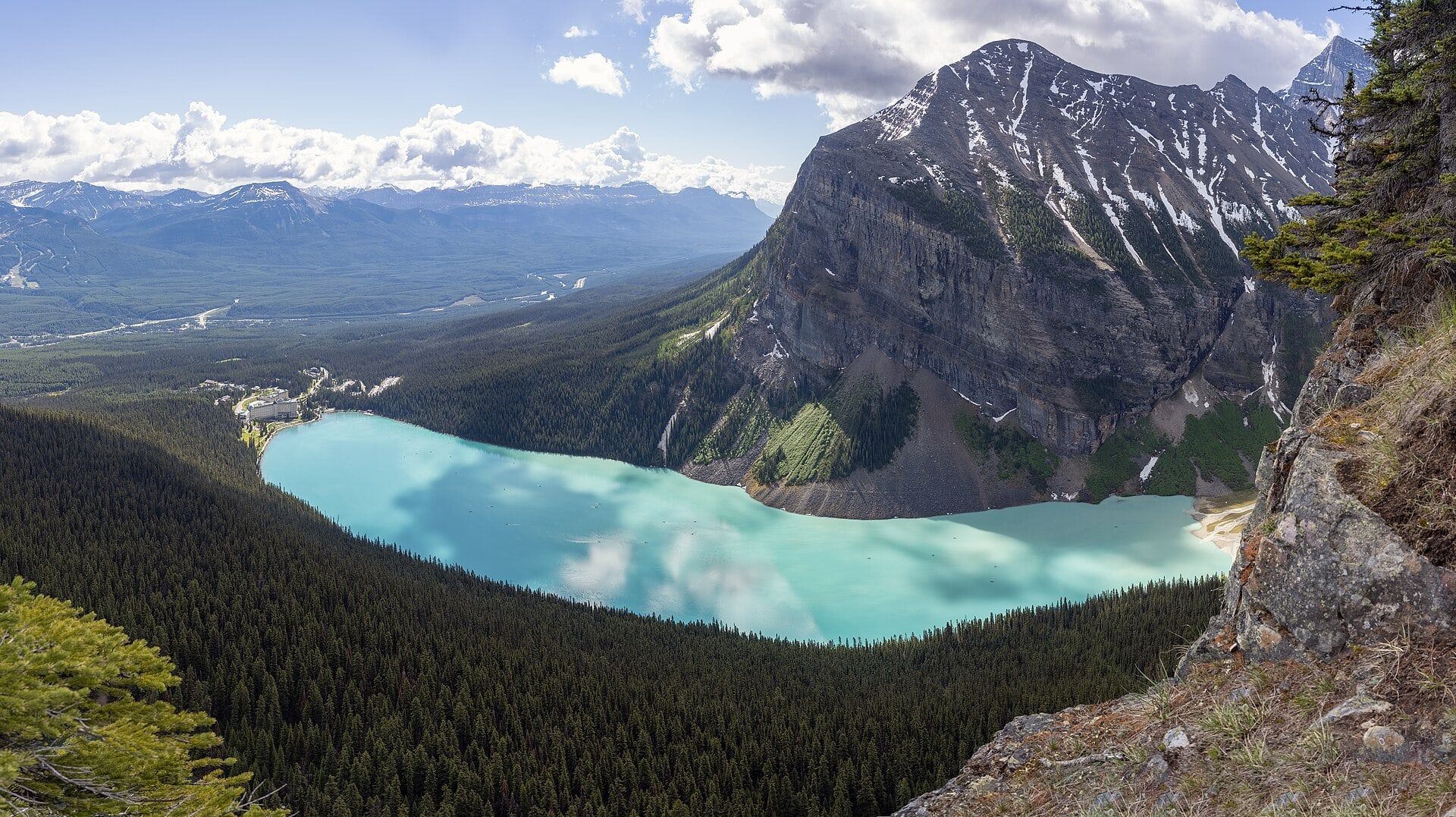
- Banff and Lake Louise (for luxury and comfort): If you want to treat yourself and aren’t watching your budget, the iconic Fairmont Chateau Lake Louise or the Moose Hotel and Suites in Banff will give you an unforgettable experience — but expect prices from CAD 700 upwards.
- Calgary (before and after your flight): For the night before flying out or after landing, treat yourself to Le Germain Hotel in the centre (it’s a bit of an extravagance, but after a long flight you really deserve that bed).
Solo travellers and backpackers have it much harder, because cheap options in the mountains are genuinely scarce. A bed in a shared room at the Hostelling International (HI) network costs CAD 50 to 100 in season, and even those have to be booked many months ahead. Another option is the state campsites around Lake Louise or Tunnel Mountain, which we’ll cover more in the money-saving section, since they’re the cheapest sleeping option of all.
Where to eat
Eating out in the mountain resorts is a chapter all of its own. A plain sandwich for lunch will set you back CAD 15 to 22, and dinner at a mid-range restaurant typically runs CAD 30 to 45 per person before tax. Tourist traps lurk everywhere, and food near the main attractions carries a hefty high-altitude markup — you’re basically paying for that gorgeous view, not for the quality of the ingredients.
If you don’t want to spend your whole trip cooking but you’re after more reasonable prices, try fast food like the famous sweet BeaverTails or the popular Asian poke bowls, which will fill you up quickly after a long hike. For lovers of plant-based food, I’d recommend trying modern bistros like Coyotes Deli or Crazy Weed in Canmore. You’ll find a fantastic selection of interesting vegetarian and plant-based dishes at fair prices of around CAD 25, so you’ll eat well without wrecking your budget.
7 tips on what to see and do in Alberta and BC (and what it’ll cost)
The budget for the Canadian Rockies isn’t just about one big number — it’s about understanding how the whole system works. I’ve put together a detailed overview of everything that’ll affect your wallet, so you can plan your trip exactly to fit your means.
1. Why it’s actually so expensive and what to prepare for
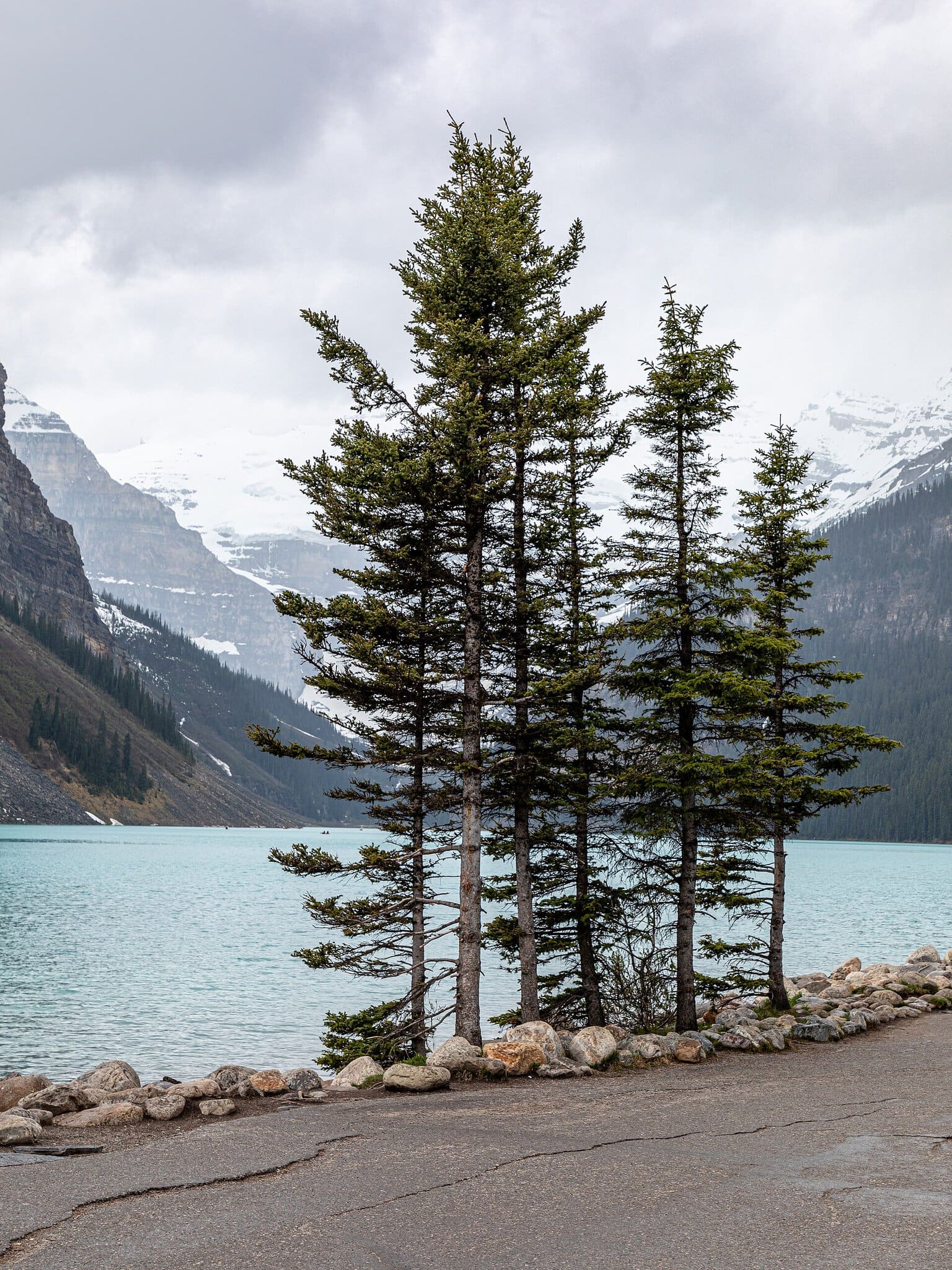
Simply put, everyone wants to see Banff all at once, and the local infrastructure just isn’t built for it. Banff National Park alone recently welcomed a record 4.5 million visitors in a single year, which logically sent the price of everything into the stratosphere. People on discussion forums commonly admit they spent 50 to 80% more money than they originally budgeted for at the start.
And it’s not just the hotels themselves — it’s the constant stream of small expenses we often don’t know in Europe. You pay for parking at the hotel, fork out eye-watering sums for the cable car, leave a huge tip at the restaurant, and suddenly find your daily budget has vanished before dinner. Many visitors compare today’s Banff price-wise to Disneyland, where you pay a premium markup for absolutely everything, including ordinary parking at the lakes, which can run CAD 36 a day.
If you’re heading here, you simply have to accept that the words “budget-friendly” and “the Rockies” don’t go together all that well 😅. Another huge item tourists often forget about is the various reservation fees — for example the ferries in British Columbia, which add another CAD 22 to your ticket just to guarantee you a spot. All the figures in this article are based on the hard reality for the 2026 season, so the numbers might catch you off guard a little, but it’s always better to be well prepared than to stand there counting every last dollar on the spot.
2. Three realistic budget scenarios based on trip length
To get a clear picture, I’ve put together three model scenarios that include flights from London, mid-range hotels, a car, food and attractions. The first option is a quick long weekend of three to four days for a couple, which will set you back roughly CAD 5,500 — that’s about £2,900 with a bit of breathing room. It covers accommodation in Banff, a smaller car and basic entry fees.
The golden middle road is a classic week-long road trip for two, taking in Banff, Lake Louise and the Icefields Parkway. Here you should budget around CAD 9,000, or roughly £4,700. That covers a week’s SUV rental, petrol, restaurant meals and the annual Discovery Pass, which is worth buying from your seventh day in the parks.
If you’re planning a two-week family holiday for four people, the budget will exceed £9,600 (roughly CAD 18,700). That sum covers four flights, fourteen days with a large car, the Kananaskis pass and a ride on the Athabasca Glacier (the real big adventure, basically).
💡 Tip: For all your calculations I’d recommend using a conservative rate of around £0.62 per Canadian dollar. Although the official mid-market rate sits lower, this cushion will reliably protect you from bank fees.

3. Flights and a car as the biggest upfront investment
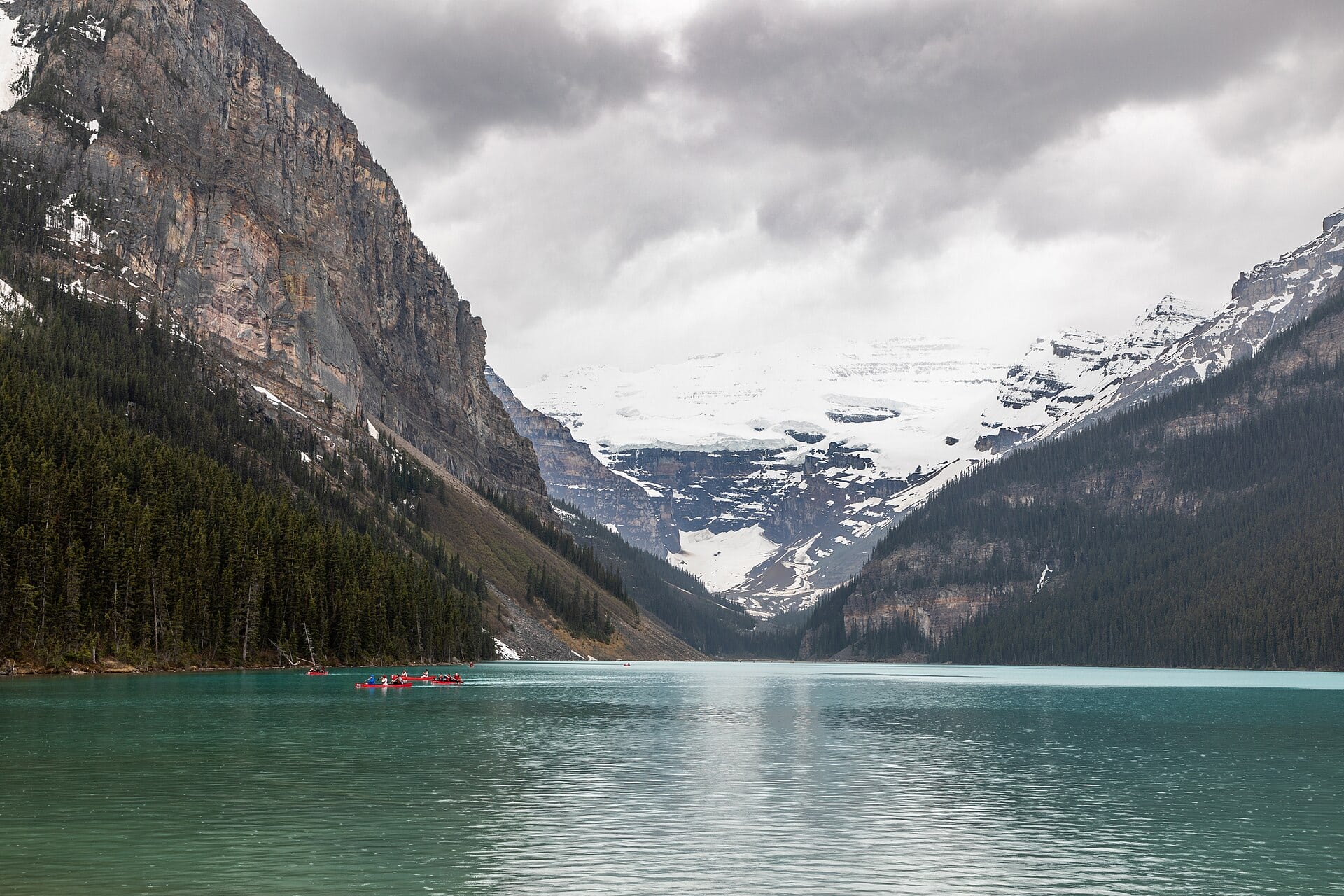
Choosing your arrival airport fundamentally shapes not only your itinerary but also the overall cost of the trip. From the UK there are some direct options, but most travellers will face at least one connection via Frankfurt, Amsterdam or a North American hub. Outside peak season you can grab a return flight to Calgary or Vancouver for £400 to £600, but in the summer peak be ready for £700 to £1,100 per person. The golden rule for a road trip is the so-called open-jaw flight, where you arrive in Vancouver and fly home from Calgary, saving yourself nine hours of pointless driving back.
Renting a car is the second huge item, because without one you’ll barely move in the Canadian wilderness. In the summer peak you’ll pay CAD 100 to 180 a day for an SUV rental, and you have to add insurance on top. The biggest financial trap is the fee for returning the car in a different city (the one-way drop fee). If you pick the car up in Vancouver and return it in Calgary, the rental company will charge you another CAD 300 to 500 without batting an eyelid.
At least the petrol price is good news — it’s traditionally the lowest in all of Canada in Alberta, hovering around CAD 1.40 to 1.60 per litre. But as soon as you cross into British Columbia, prices at the pump immediately jump towards the two-dollar mark. So the rule always applies: fill up the tank in Banff or Lake Louise before you cross the provincial border heading west.
4. Taxes and tips, or why the numbers on the bill don’t add up
The tax system is exactly the thing that trips up just about every newcomer at the start. Prices on menus, on shop shelves and on booking sites are always listed without tax. Only at the till does a chunky surcharge jump onto the number, depending on which province you’re in and exactly what you’re buying.
Here comes the key geographic and budget lesson. Alberta is the only province with no provincial tax of its own, so you pay only the five-percent federal GST. British Columbia, however, adds another seven percent PST on top of the five, so the total tax comes to a dizzying 12%. The Yoho and Kootenay national parks already fall under British Columbia, so any pricey camping gear, souvenirs or outdoor clothing is definitely worth buying while you’re still in Banff or Calgary, since you’ll save those seven percent on every item.
You then have to head into restaurants knowing that tipping works here as a hard social obligation. Servers may earn minimum wage, but the card terminal will automatically offer you 15, 18 or 20% when you pay anyway. Leaving less than 15% is taken as a sign of serious dissatisfaction, and staff may take it as a personal insult. Order a CAD 30 lunch and nearly CAD 40 leaves your card — and you stand at the till staring into space for a moment 😅.
5. The exchange rate and hidden bank fees
You basically don’t need cash in Canada these days, because you can pay by card absolutely everywhere without a problem — even at a lonely food truck somewhere at a motorway rest stop deep in the forest. The Canadian dollar officially sits just above £0.55, but for safe holiday planning you need to count on £0.58 to £0.62.
Why such a big difference? Your bank takes a currency conversion fee on every payment, and if you pay at the weekend when the foreign exchange markets are closed, the rates tend to be even worse. A few small coins in your pocket will only come in handy for tipping the hotel porter or buying fresh fruit at local farmers’ markets — otherwise you’ll get by just fine with plastic or your phone.
💡 Tip: For travel overseas I’d recommend getting a Revolut or Wise card. You can transfer pounds onto it and convert them to Canadian dollars at the moment the rate is most favourable. The amount is then locked in your account in the foreign currency, neatly sidestepping all those annoying weekend surcharges and the poor conversions of traditional high-street banks. On a month-long trip you can easily save a few hundred pounds this way, and that counts.
6. Attractions without bleeding your wallet dry
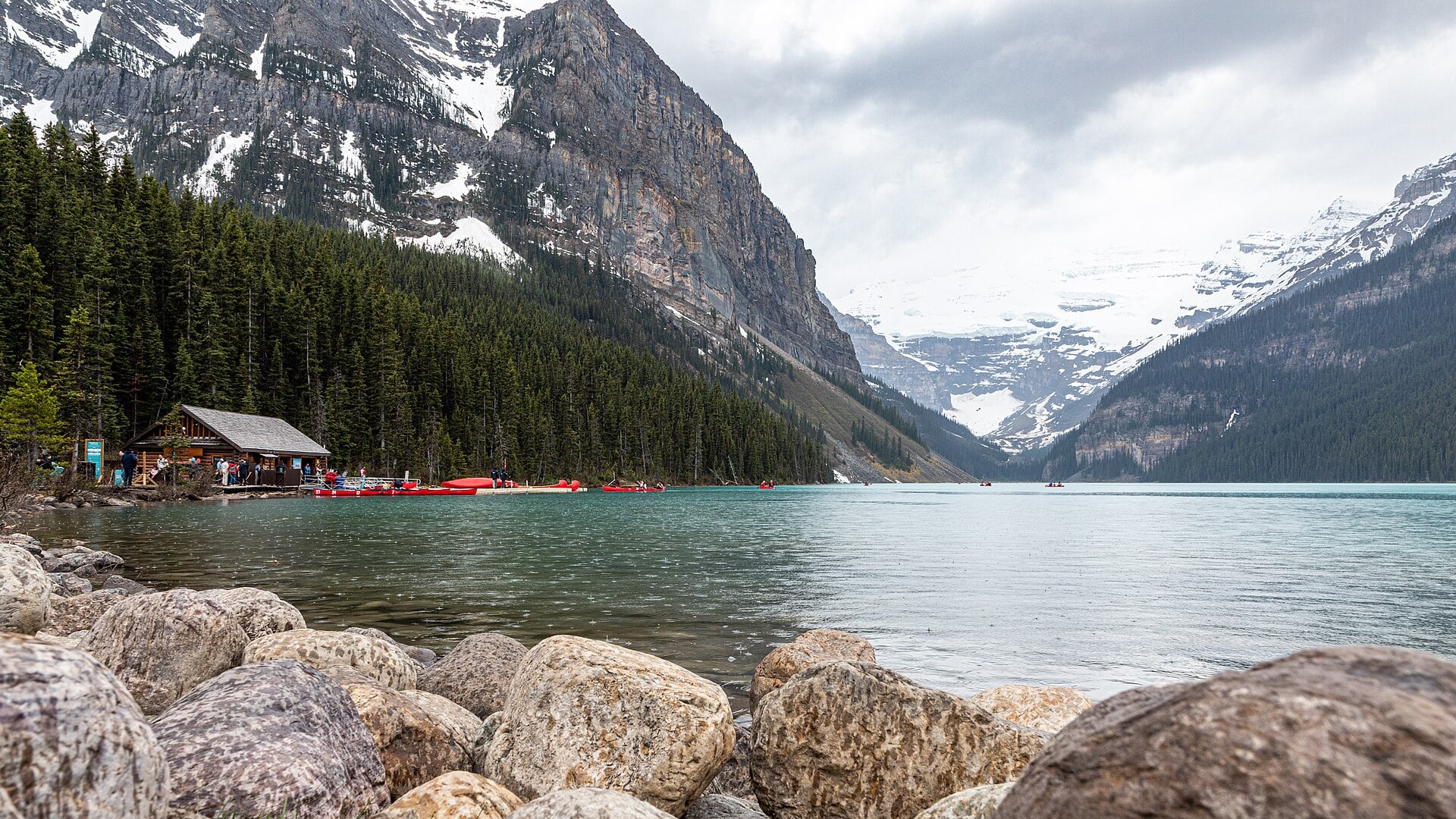
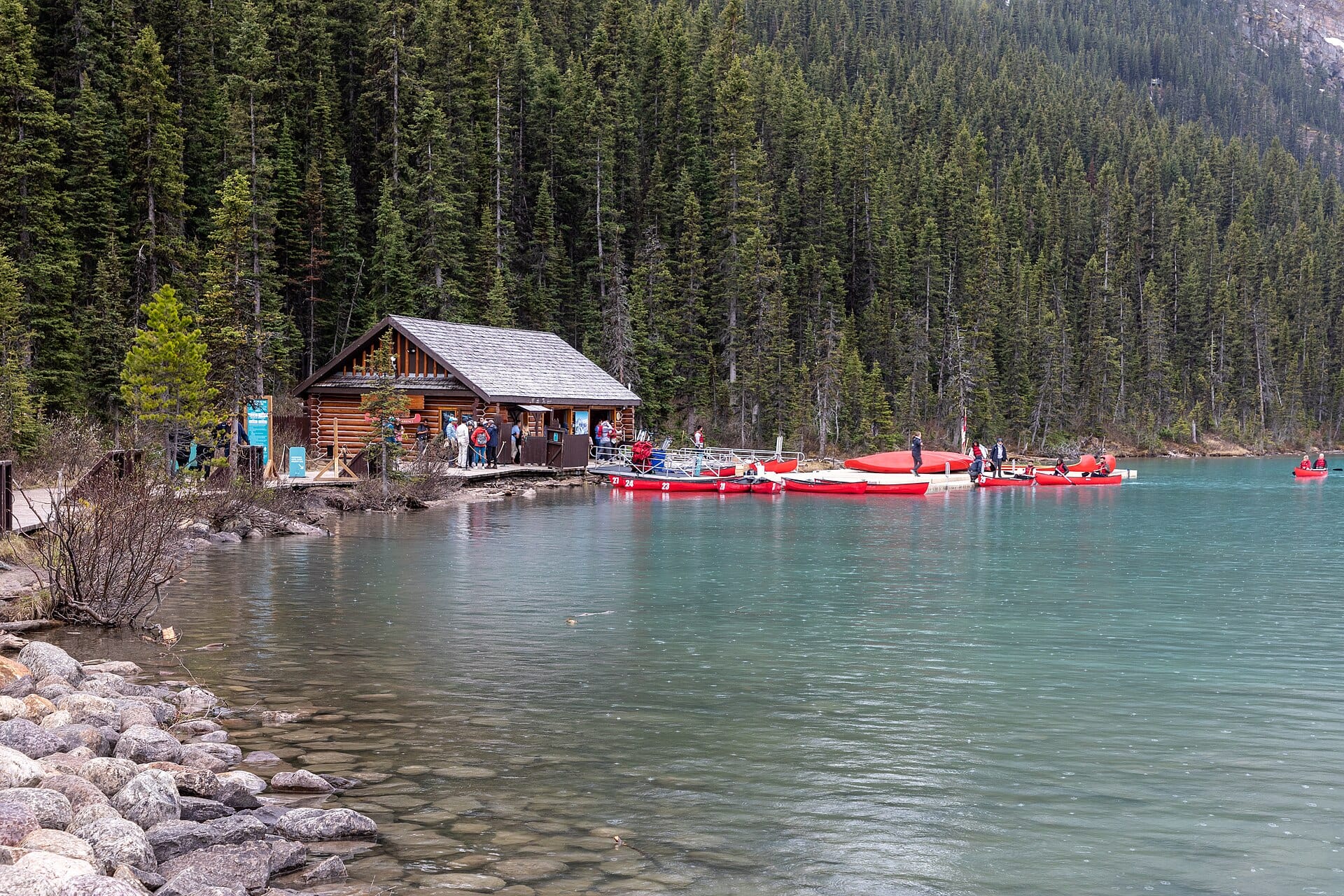
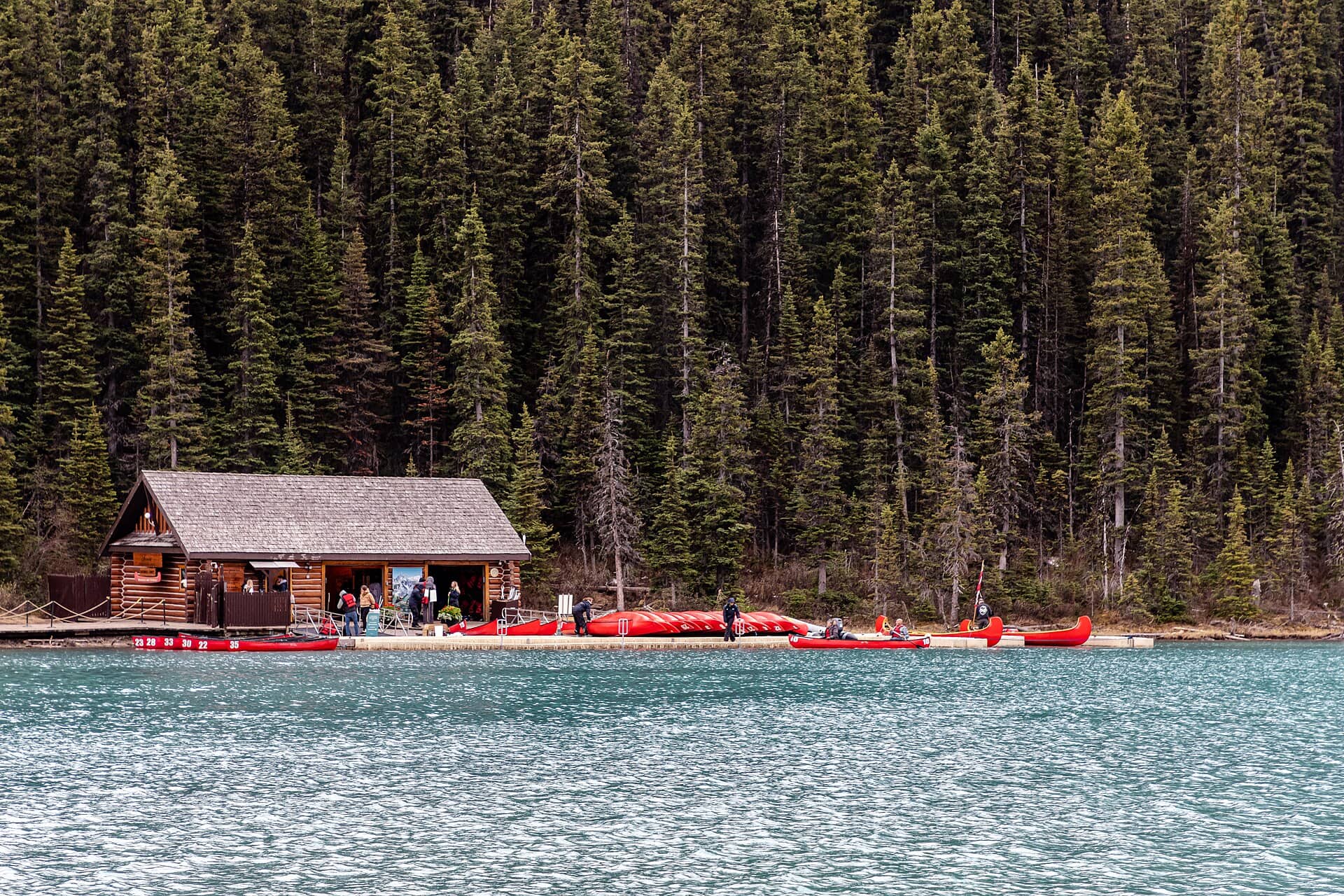
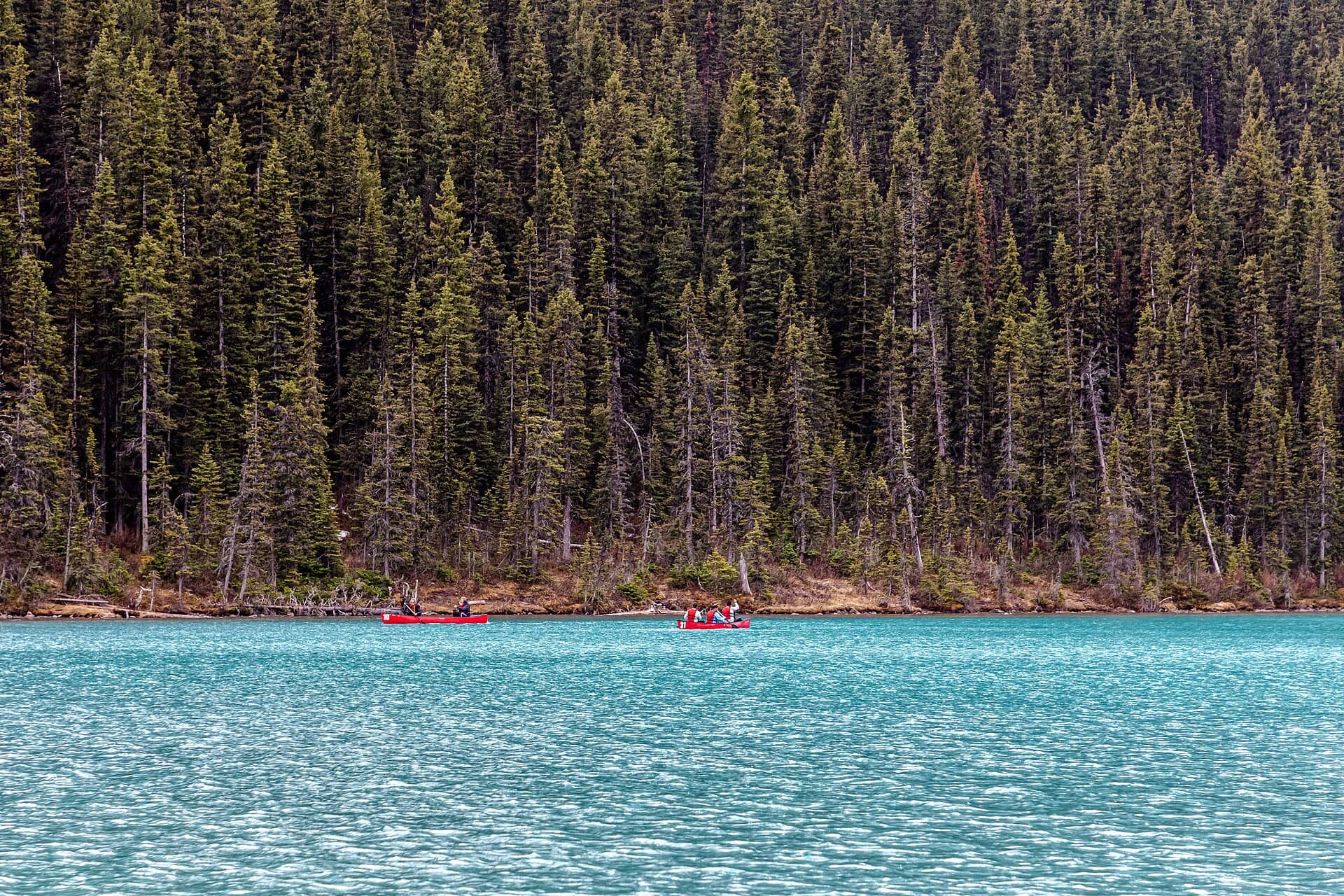
The prices of popular attractions are also at their absolute peak in 2026, because the operators often have a monopoly. Renting a canoe on the famous Lake Louise costs an incredible CAD 170 for just one hour (which is more than a night at an average European hotel).
A ride on the Sulphur Mountain Gondola in Banff costs CAD 74, and the popular trip on the giant glacier bus across the Athabasca Glacier will set an adult back CAD 130. So choose very carefully what you spend your money on — the surrounding nature itself, thankfully, is still free.
7. How to save hundreds of pounds (budget hacks)
The clear saviour for any family budget is cooking your own food. Shopping at the huge supermarkets like Save-On-Foods or Safeway in Canmore will cost you roughly 30% more than back home, but it’s still an absolute fraction of local restaurant prices. Making your own sandwiches and snacks for full-day hikes can easily save a couple CAD 50 a day, and on top of that you get to enjoy your meal in peace by the lake with the best possible view in the world.
The absolute cheapest accommodation option is camping at the state campsites run by Parks Canada, which cost a negligible CAD 26 to 47 a night. There’s one huge catch, though, that forums discuss at length. Bookings open as early as January and the best spots vanish within the first ten minutes. Anyone who hesitates at the computer simply has nowhere to stay in summer and has to settle for hotels that cost many times more.
2026 also brings one absolutely fantastic piece of news for all travellers. Thanks to the government’s Canada Strong Pass programme, entry to all national parks is completely free from 19 June to 7 September. That removes the need to buy pricey day passes or the annual Discovery Pass, saving an ordinary family over CAD 150, which you can invest in better dinners. Outside this exclusive summer window, though, buying the annual pass pays off from the seventh day in the parks.
Where to go next from the Canadian Rockies
If you’re planning a wider itinerary and want to explore Canada in depth, we’ve prepared more detailed guides for you. Find out exactly how the summer Canada Strong Pass 2026 works and what its rules are. To avoid disappointment at the most beautiful lakes, be sure to read our guide to the Moraine Lake and Lake Louise shuttle, because you can no longer get there by private car.
For those who want to combine mountains with the ocean, our Vancouver → Banff road trip itinerary is ideal. If you’re still torn over accommodation, our Canmore vs. Banff comparison will help. And don’t forget to read up on when to visit Banff by the weather and what to pack for the Rockies, so you’re ready for everything nature throws at you. Practical tips to finish: check out SafetyWing travel insurance and get unlimited data with a Holafly eSIM.
Frequently asked questions
Before a first trip to Canada, a whole host of practical questions always crops up. Here’s an overview of the most common ones, which will help you plan your holiday better and avoid unnecessary complications on the ground.
Do I need a visa to travel to Canada?
You don’t need a classic visa, but you must arrange electronic registration eTA in advance. It costs exactly 7 CAD, is valid for five years, and you can sort it out online in just a few minutes. But be very careful of fraudulent websites that look official but will happily charge you up to 80 dollars. Always use only the official government website canada.ca, otherwise you’ll needlessly rip yourself off right before departure.
How is it in the mountains with bears and safety?
The basic rule is to hike in a group, make loud noises, and always carry bear spray (a special pepper spray that you can buy or rent in every mountain town), just don’t forget that you can’t take it on a plane, not even in checked luggage. Grizzly bears and black bears are absolutely common in the national parks and you’ll encounter them even close to roads, so it really doesn’t pay to underestimate prevention.
Is there cell service in the national parks?
Outside the main tourist towns like Banff, Canmore, or Jasper, expect that mobile signal in the mountains is virtually non-existent. Once you hit the Icefields Parkway, you can easily go a hundred kilometers without signal, so download offline maps to your phone while you’re still on hotel Wi-Fi, otherwise you’ll simply get lost and no one will be able to call you.
Is a Czech driver’s license enough to rent a car?
While British Columbia and Alberta theoretically recognize Czech driver’s licenses for a limited period, car rental agencies at the counter strictly require an International Driving Permit. You can get one in the Czech Republic at any extended authority office for €2 on the spot. Definitely don’t underestimate this step, so you don’t end up stuck at the airport without your dream car.
What to do when I can’t make it to the campground in time?
If you miss the January opening of campground reservations, you still have a small chance to snag so-called first-come, first-served sites, which can’t be booked in advance. However, this means arriving at your chosen campground ideally before 8 AM and patiently waiting to see if anyone leaves. It’s a big gamble, but sometimes luck might smile upon you.
Where can I get a Canada Strong Pass?
The pass for summer 2026 isn’t a physical card that you’d have to complicatedly order or pick up somewhere. The gates of the national parks will simply be freely passable in the period from June 19 to September 7, and Parks Canada staff will let you in for free. However, you still have to pay for camping, parking at popular lakes, and all commercial activities, so keep an eye on your budget going forward.
Is the water in Canadian lakes good for swimming?
Most of the most beautiful turquoise lakes, such as Lake Louise, Peyto Lake or Moraine Lake, are fed directly from melting high-mountain glaciers. The water is only a few degrees above zero even in the hottest summer, so swimming is only for the really hardened cold-water enthusiasts and in most cases ends with an extremely quick retreat back to shore 😅.
Tips and Tricks for Your Vacation
Don’t Overpay for Flights
Search for flights on Kayak. It’s our favorite search engine because it scans the websites of all airlines and always finds the cheapest connection.
Book Your Accommodation Smartly
The best experiences we’ve had when looking for accommodation (from Alaska to Morocco) are with Booking.com, where hotels, apartments, and entire houses are usually the cheapest and most widely available.
 🚗 Car rental on the roadVerified rental cars in Canada
Search with the DiscoverCars comparison engine — it compares prices from dozens of local and international rental companies, and most bookings come with free cancellation.
Compare car prices in Canada →Don’t Forget Travel Insurance
Good travel insurance will protect you against illness, accidents, theft, or flight cancellations. We’ve had a few hospital visits abroad, so we know how important it is to have proper insurance arranged.
Where we insure ourselves: SafetyWing (best for everyone) and TrueTraveller (for extra-long trips).
Why don’t we recommend any Czech insurance company? Because they have too many restrictions. They set limits on the number of days abroad, travel insurance via a credit card often requires you to pay medical expenses only with that card, and they frequently limit the number of returns to the Czech Republic.
Find the Best Experiences
Get Your Guide is a huge online marketplace where you can book guided walks, trips, skip-the-line tickets, tours, and much more. We always find some extra fun there!


