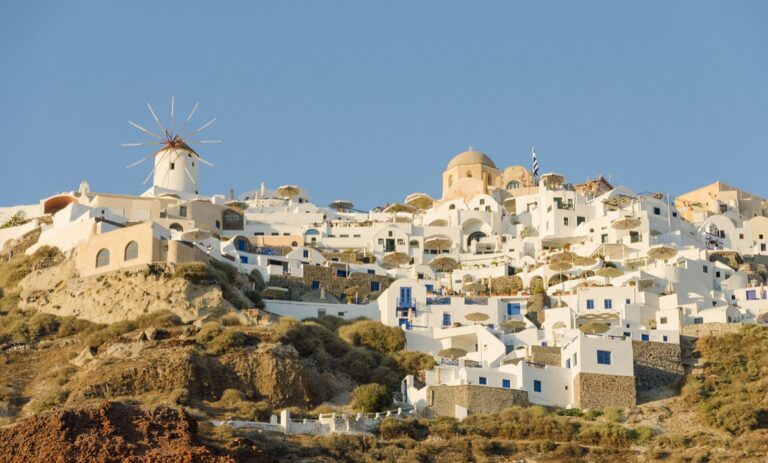
If you’re dreaming of picture-perfect Cyclades — whitewashed houses, blue-domed churches, and sparkling sea — but the thought of shoulder-to-shoulder crowds fills you with dread, Milos, Greece might just be your ideal destination. This volcanic island offers extraordinary value and the world is only just starting to catch on. While its more famous neighbours battle sky-high prices and tourist overload, Milos still has an authenticity and tranquillity that’s becoming increasingly rare in the Greek islands.
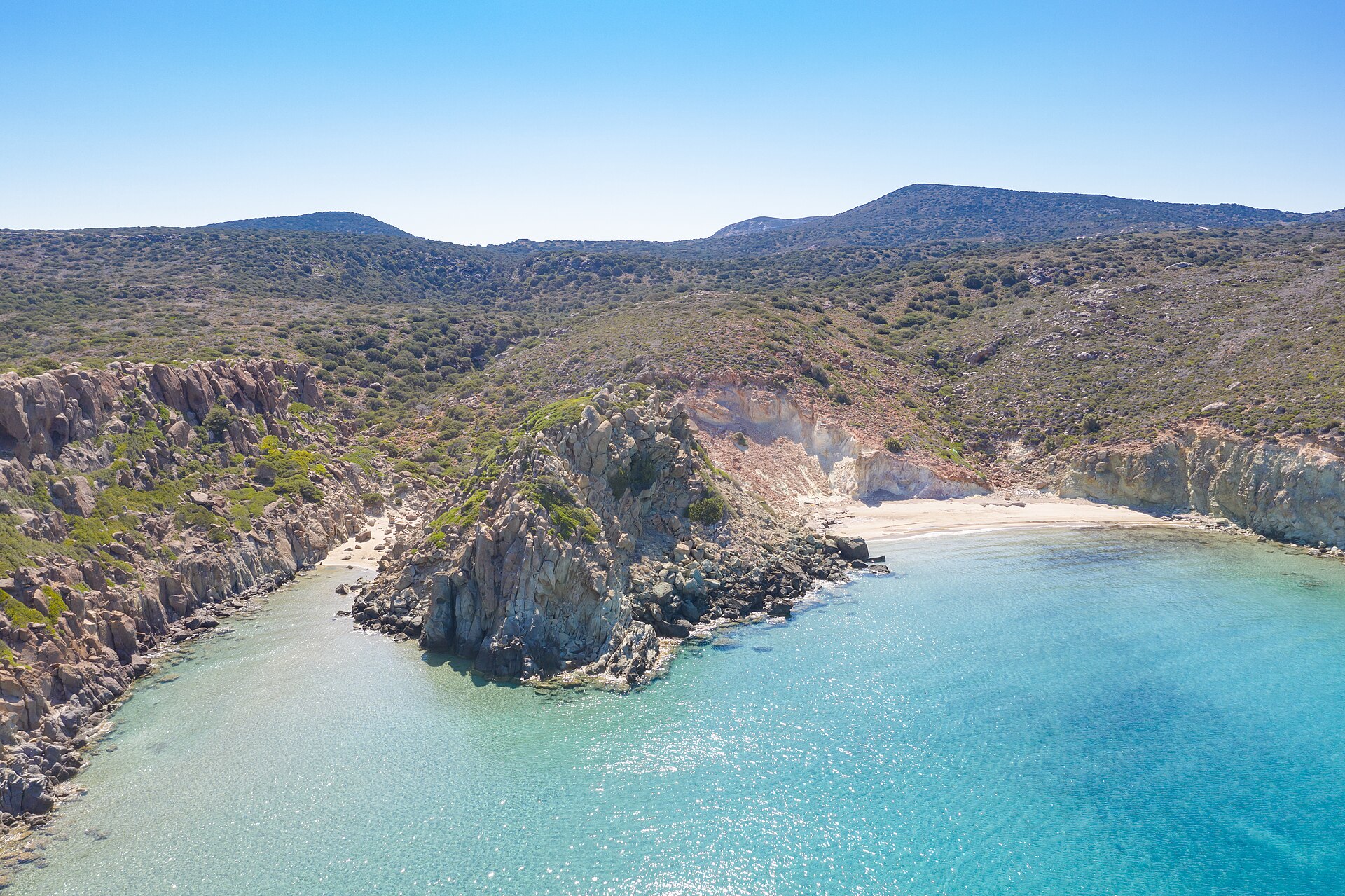
Milos is geologically one of the most remarkable islands in the Cyclades — and you’ll understand why the moment you arrive. Its volcanic origins have produced colours you simply won’t find anywhere else in Greece: snow-white cliffs, blood-red rock faces, and water in shades of turquoise that don’t look entirely real. The island has over seventy beaches, and many of them look more like scenes from another planet than a typical European seaside resort.
We’ve put together fifteen tips to help you explore Milos properly — from the lunar landscape of Sarakiniko and the pirate caves of Kleftiko, to where to find the best pitarakia on the island. We’ve also thrown in a few honest warnings that could save you from some holiday regrets. 😉 You’ll also find practical information on where to stay, how to get around, and what to watch out for when planning your trip.
TL;DR — Quick Summary
- Most iconic spots: The lunar beach of Sarakiniko and the pirate cove of Kleftiko, which is only accessible by boat.
- Historical highlight: This is the very island where the famous Venus de Milo statue was discovered in 1820 — now one of the Louvre’s greatest treasures.
- Getting there: The fastest SeaJets catamarans from Athens take under three hours, but tickets sell out incredibly fast.
- Getting around: To explore the wild western coastline, you’ll need a four-wheel-drive vehicle — non-4WD cars are not covered by rental insurance on those tracks.
- Where to stay: The port town of Adamas is the most practical base; for romance, head to Plaka or the peaceful village of Pollonia.
- Local food: Don’t leave without trying pitarakia — delicious fried pastry pockets filled with local cheese and mint.
- Weather and wind: Strong meltemi winds lash the island in summer, so June or September are the ideal times to visit.
The full destination guide: Cyclades — guide and what to see
When to Visit Milos and How to Get There
The best time to visit Milos is mid-May to the end of June, or throughout September. Temperatures hover around a very pleasant 25°C, the sea is warm enough to swim in, and you’ll comfortably avoid the worst of the tourist crowds. Spring brings lush green scenery and wildflowers, though early morning dips can still be on the fresh side — best suited to the hardier swimmer.
July and August are brutally hot, regularly exceeding 35°C, and accommodation prices surge accordingly. One thing many visitors underestimate is the meltemi — a powerful summer wind that sweeps across the Aegean from mid-June through September. In the afternoons it can gust up to 40 km/h, frequently causing boat trips to be cancelled and making swimming on the northern beaches quite challenging. It can be a welcome cooling breeze in the peak heat, but it also whips up significant waves. If strong meltemi is forecast, head to the southern beaches like Firiplaka or Paleochori, which are well sheltered by high cliffs.
The vast majority of visitors arrive by ferry from Piraeus, Athens’ main port. The fastest catamarans from SeaJets cover the crossing in around two and a half hours, with one-way tickets costing roughly €41–€79. Conventional ferries from companies like Blue Star Ferries take five to seven hours but start from around €33 and offer a far more stable ride in choppy conditions.
We strongly recommend booking ferry tickets at least three to four months in advance, as sailings sell out hopelessly quickly in peak season. You can also fly directly from Athens with Olympic Air or Sky Express — the flight takes under 45 minutes, though the small propeller aircraft have very limited capacity. From the UK, the most convenient option is to fly into Athens with British Airways, easyJet, or Ryanair, then connect to Milos by ferry or domestic flight. Once on the island, hire a car or quad bike for around €35–€50 per day. For the wild western coast you’ll absolutely need a 4WD — rental companies will void your insurance if you take a standard car on those tracks. Book your rental well ahead; hire shops get very busy in season and the better vehicles go first.
Where to Stay in Milos
💡 Accommodation tip: We book our stays through Booking.com for the best cancellation policies. For tours, day trips, and activities, it’s worth comparing and booking through GetYourGuide.
Milos has no large hotel complexes — and that’s exactly what makes it so appealing. Where you choose to stay depends largely on whether you have a car and how much peace and quiet you’re after. The island is dominated by small family-run guesthouses, boutique studios, and traditional apartments. Rooms get snapped up very quickly, with average prices in season ranging from €60 to €100 per night — so don’t delay booking on Booking.com if you’ve got your heart set on a particular spot.
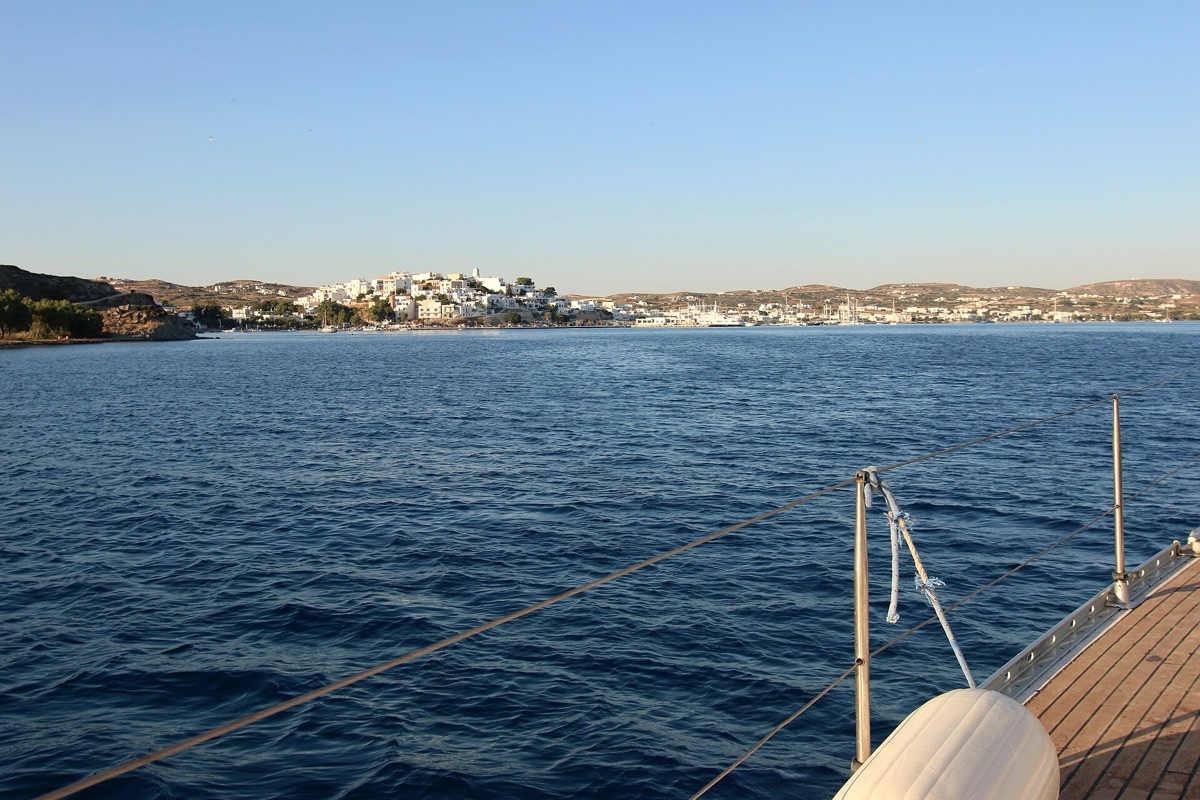
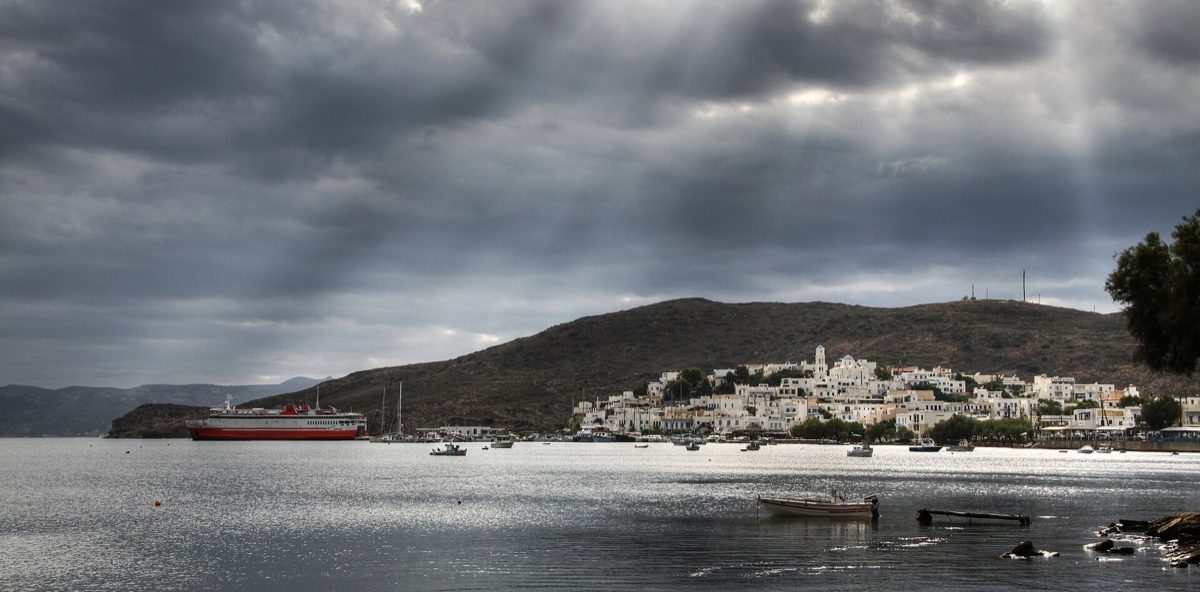
The most practical base is the main port town of Adamas, where all ferries dock and where you’ll find the greatest concentration of restaurants, cafés, and car hire companies. It’s the best choice if you’d rather not drive, as the vast majority of boat trips depart from here, along with the island’s local bus routes. A highly rated option in Adamas is the Olea Bay Hotel (from €190/night), which offers beautiful sea views and a calmer setting slightly away from the busiest part of the centre.
If you’re after the classic Cycladic romance of narrow alleyways and sunset views, stay in the hilltop village of Plaka. Bear in mind that the entire centre is closed to cars, so you’ll need to park at the bottom of the hill and carry your luggage a short way up. It’s an utterly charming place full of small boutiques and stylish bars that come alive in the early evening.
For families with children and couples seeking complete tranquillity, the fishing village of Pollonia in the north-east is an excellent choice. It has a lovely sandy beach shaded by tamarisk trees and top-quality restaurants right along the seafront promenade, plus a ferry connection to the neighbouring island of Kimolos. You can stay at the popular Villa Mary Elen or the Litsa Malli Rooms, where prices start from a very reasonable €92/night. True romantics can rent a converted fisherman’s boathouse — known as syrmata — right on the waterfront in the village of Klima, which is an incredibly authentic experience, though prices reflect it at around €160–€500 per night.

15 Best Things to See and Do in Milos, Greece
Here are fifteen things that keep people coming back to Milos again and again — starting with the absolute must-sees you can’t afford to miss. You can easily spread the programme across four to five days, which is the perfect amount of time to soak up the atmosphere without feeling rushed.
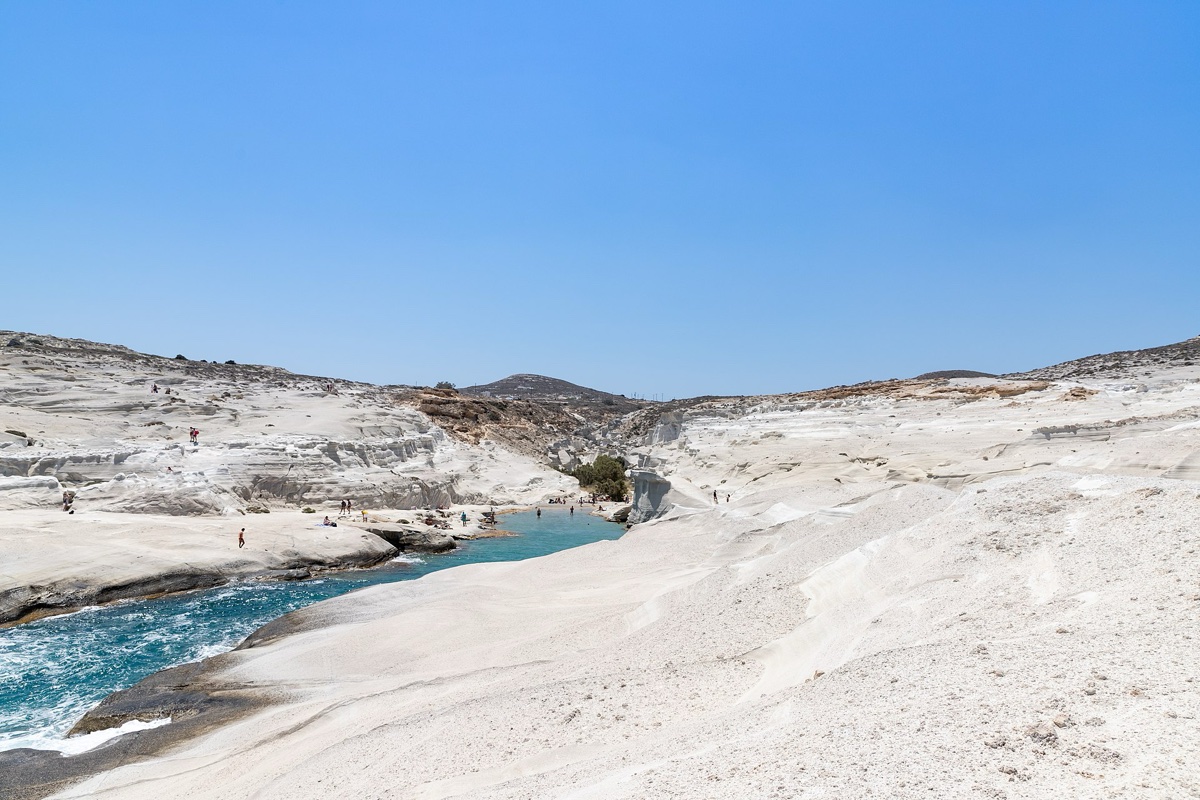
1. Sarakiniko and Its Lunar Landscape
This is the undisputed symbol of Milos and almost certainly the most photographed beach in the entire Cyclades — made famous internationally by Kungs’ music video for “This Girl”. Don’t expect golden sand and sunbeds, though. Sarakiniko is made up of brilliant white volcanic tuff rock, sculpted by wind and waves into surreal formations that genuinely resemble the surface of the moon. The contrast between those bleached white rocks and the deep turquoise water below is the kind of thing that turns even the most reluctant photographer into a trigger-happy shutterbug.
There is absolutely no natural shade anywhere on the rocky formation, so a wide-brimmed hat, a high-factor sunscreen, and plenty of water are non-negotiable. In the middle of summer, the white rocks heat up and reflect the sun like a giant mirror, which can become exhausting without any shelter. Thrill-seekers come here for cliff jumping into the deep water below, but exercise serious caution when the meltemi is blowing — the waves can push you hard against the jagged rocks.
💡 Local tip: To enjoy Sarakiniko in peace, arrive no later than 9am or come back for the evening sunset. During the peak season, tour buses from cruise ships descend between 10am and 2pm, and you can suddenly find yourself sharing the “deserted moon” with two thousand other people — which rather kills the magic.
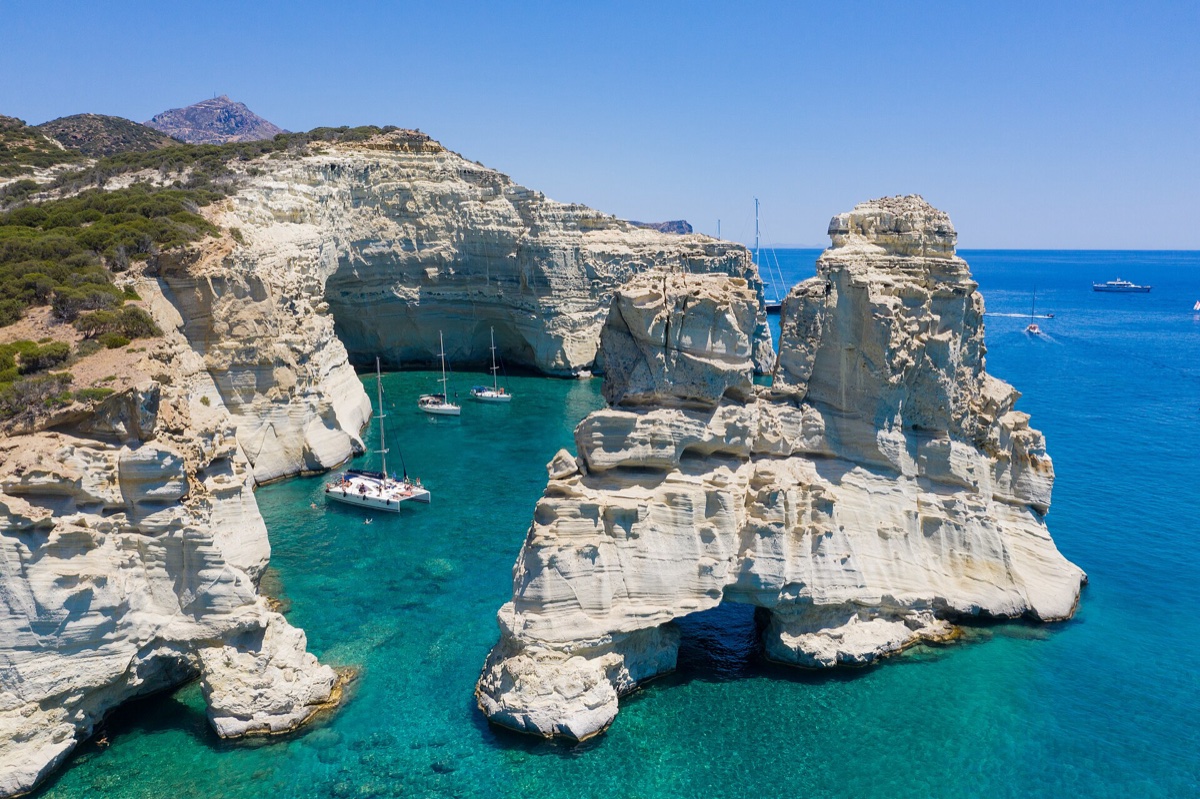
2. Kleftiko — The Pirate Cove
Tucked away at the south-western tip of the island lies an absolute treasure — once a secret hideout for pirate ships, today one of the most breathtaking spots in all of Greece. Kleftiko is a dramatic cluster of towering white rock formations, natural arches, and sea caves rising from crystal-clear, almost neon-turquoise water. There are no roads leading here whatsoever, so booking an organised boat trip is the only realistic way to experience it.
Boats depart most frequently from Adamas harbour or from the southern beaches, and there’s a wide range of options to suit different budgets. A half-day speedboat excursion costs around €28–€44 per person and includes roughly four hours on the water, with swimming stops and the spectacular experience of passing through the rock tunnels. For something more luxurious, a full-day sailing trip is well worth the splurge.
Companies like Polco Sailing offer eight-hour catamaran cruises for around €150 per person, including a generous home-cooked meal using local ingredients, unlimited drinks (including wine and beer), and full snorkelling and paddleboard equipment. The water is so clear you can see dozens of metres down, and swimming inside the caves — where sunlight fractures off the white seabed — is probably the single best experience the island has to offer.
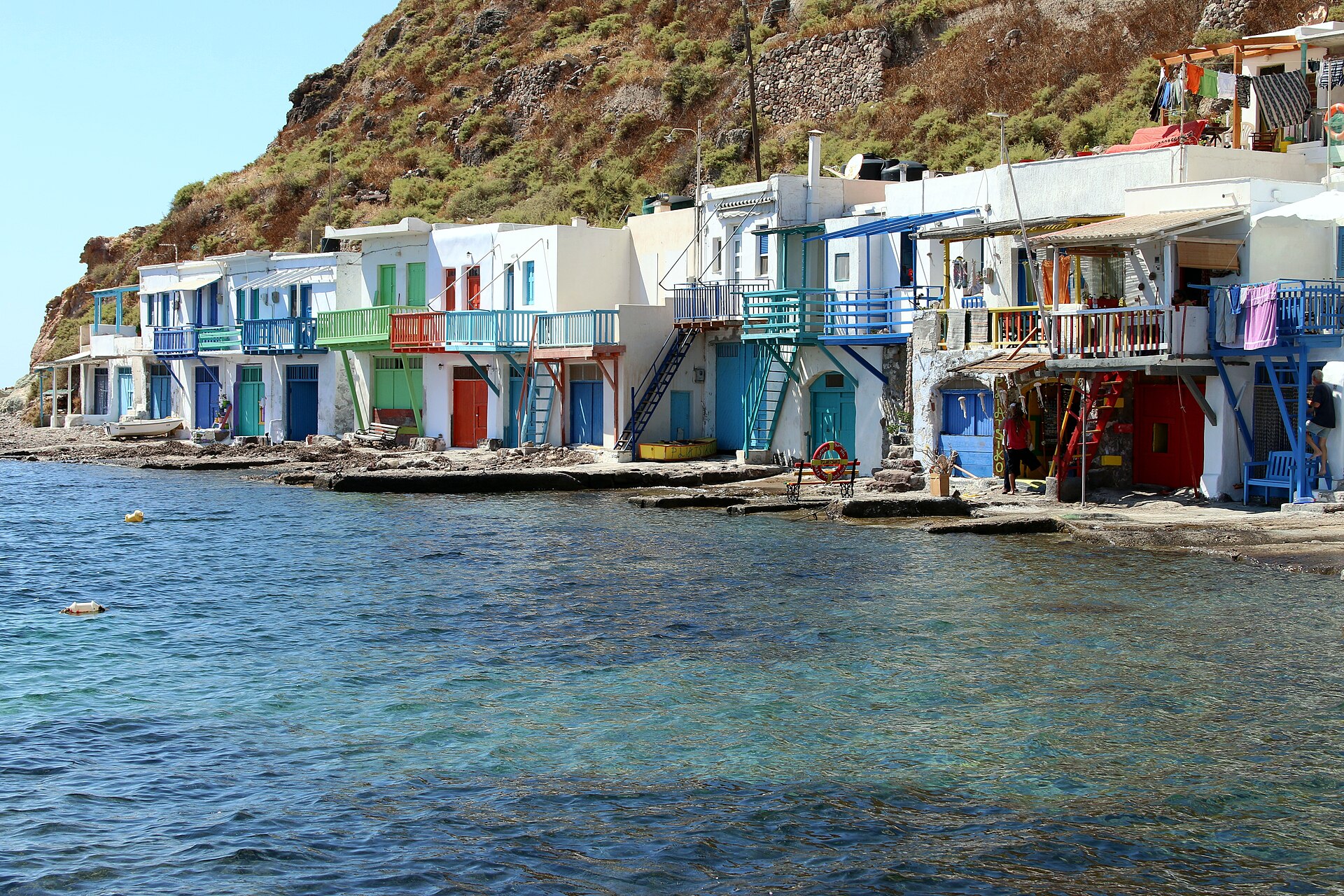
3. The Colourful Boathouses of Klima Village
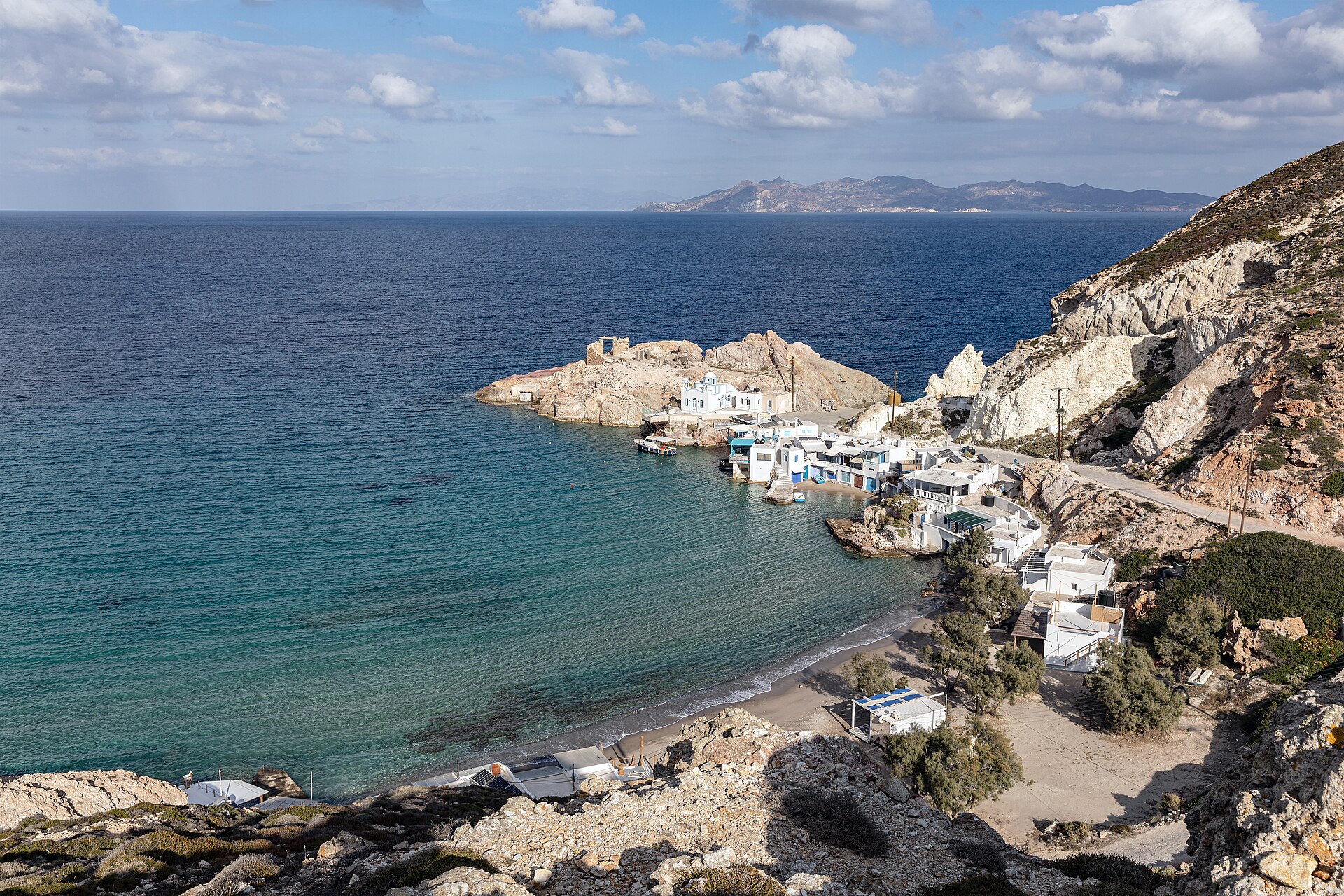
Milos is home to a unique architectural feature you won’t find anywhere else in Greece: the syrmata. These are traditional fishermen’s garages carved directly into the soft volcanic rock right at the water’s edge. The ground floor was always used to shelter boats from destructive winter storms, while the upper floor served as modest living quarters for fishing families during the summer months.
The finest and best-preserved examples are in the village of Klima, where locals paint their wooden doors and shutters in the most vivid, eye-catching colours so they can spot their own home from out at sea. The result is an impossibly photogenic row of red, yellow, blue, and green little houses stretching along the waterfront — many of which now operate as wonderfully characterful holiday apartments.
Come in the late afternoon, when the setting sun lights up the whole bay and creates an atmosphere that rivals the famous sunsets of Santorini — with a fraction of the crowd. You can wander along the narrow concrete platforms in front of the boathouses, watch cats dozing in the last of the sun, and soak up the unhurried, genuinely unspoilt island pace of life.
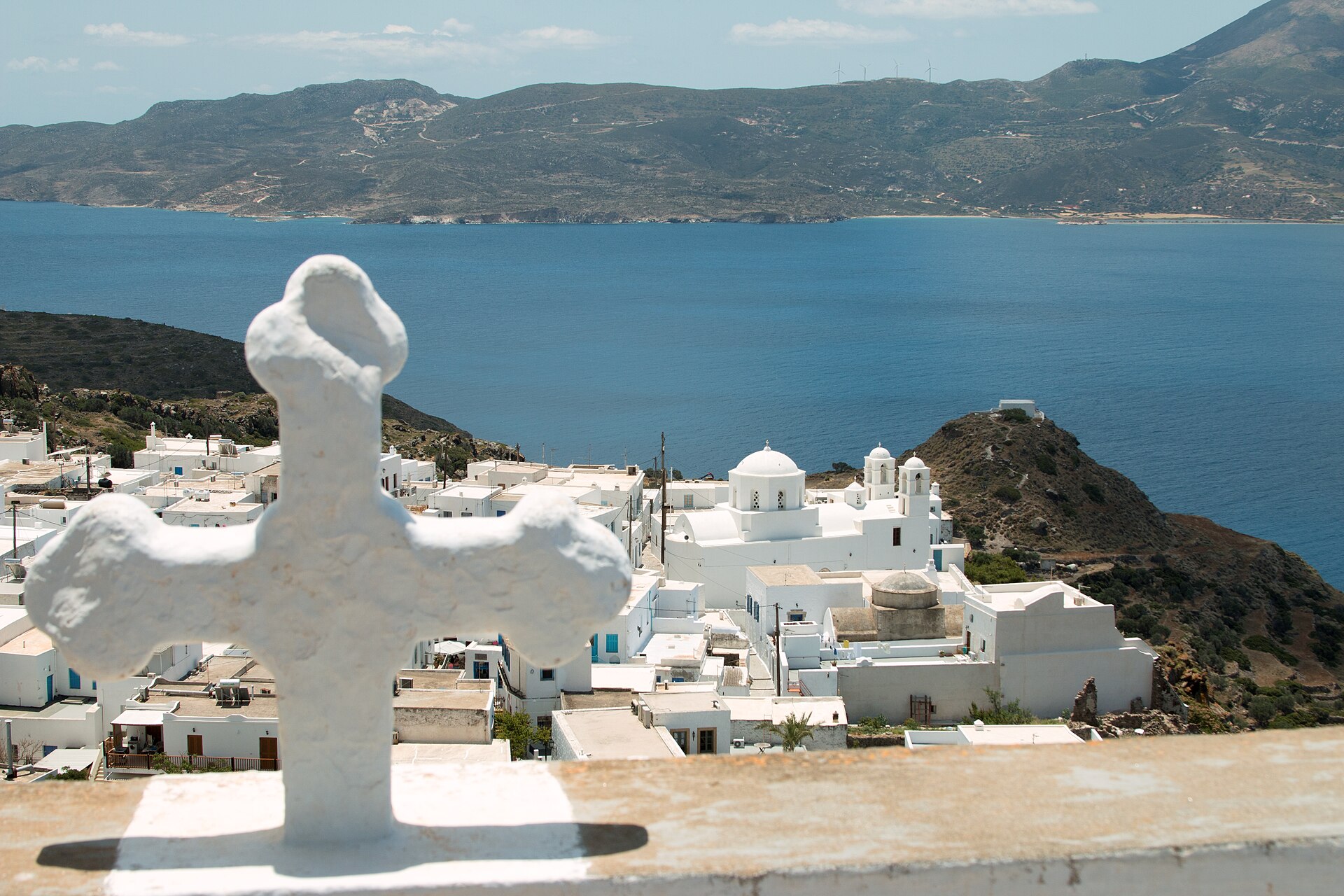
4. Plaka and the Best Sunset on the Island
Perched high on a hill above the sea, Plaka is the island’s capital and the very essence of traditional Cycladic architecture that we all know from postcards. Narrow labyrinthine lanes, dazzling white façades with blue shutters, small boutiques, and stylish cocktail bars make up this beautiful hilltop village. The entire historic centre is closed to traffic, so you can wander freely for hours — just leave your car in the free car park at the bottom of the hill.
Above the village stands the ruin of a Venetian castle, Kastro, reached via a fairly steep staircase that will give your legs a workout in the summer heat. The climb is absolutely worth it, though, for the sweeping panoramic views across the bay and the surrounding islands.
The area around the charming little church of Panagia Thalassitra is widely considered the finest sunset-watching spot on the island. As the colours of the sky reflect off the white-washed walls, the effect is truly magical — and word has got around. We’d recommend heading up at least an hour before sunset to claim a good spot on the low walls, so you can take it all in properly without the usual jostling for position.
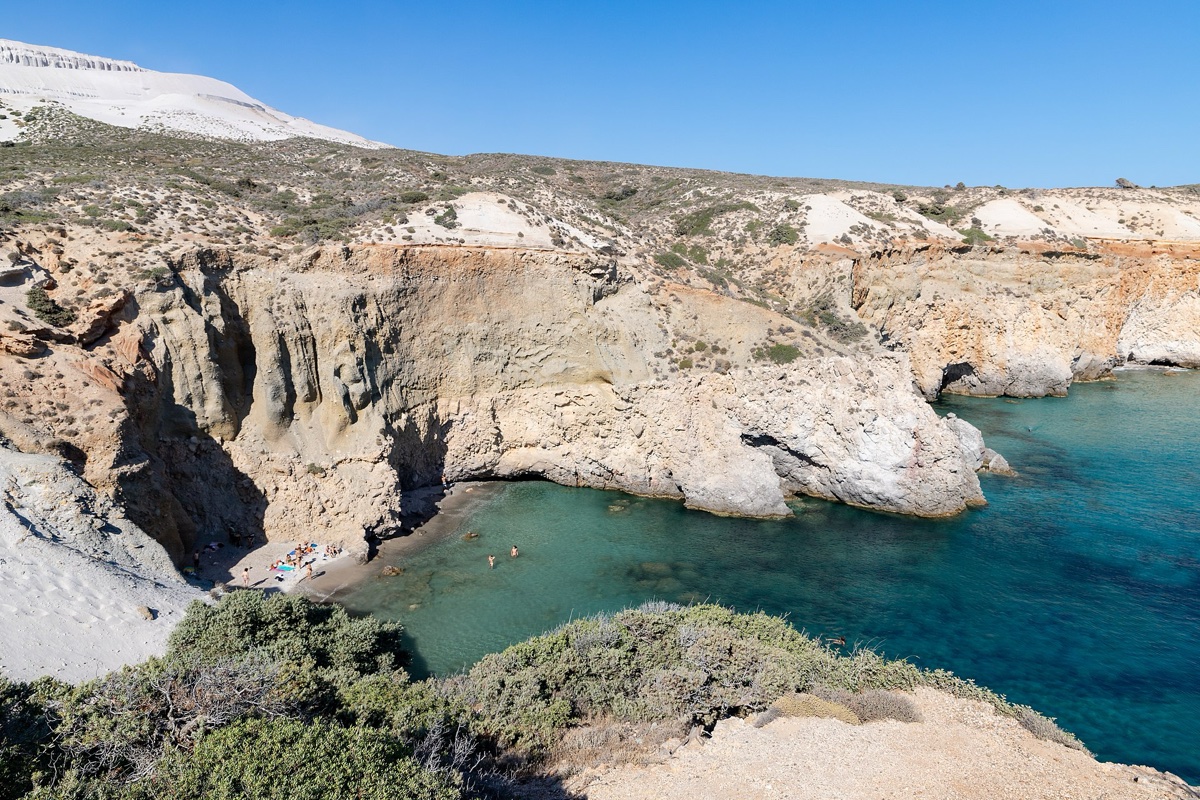
5. The Adrenaline Beach of Tsigrado
If heights don’t bother you and you enjoy a bit of adventure, don’t miss Tsigrado beach on the southern coast — it’s become a major social media sensation in recent years, and for good reason. The cove itself is tiny, with exceptionally fine sand and perfect turquoise water, but the real attraction is the approach. You have to squeeze through a narrow crack in the rock, then descend two fairly steep wooden ladders using a thick rope for support.
It’s more like mild scrambling than actual climbing, but sturdy footwear and a dash of courage are essential. Young children and anyone with limited mobility should probably skip this one. You park at the top and carry everything down in a rucksack — there are no sunbeds, no kiosk, and no facilities down at the beach.
Given how small the cove is, we recommend arriving early in the morning before it fills up and a queue starts forming on the ladder. The experience of swimming in this semi-enclosed rocky arena is so intimate and beautiful that the slightly hair-raising descent is more than worth it.
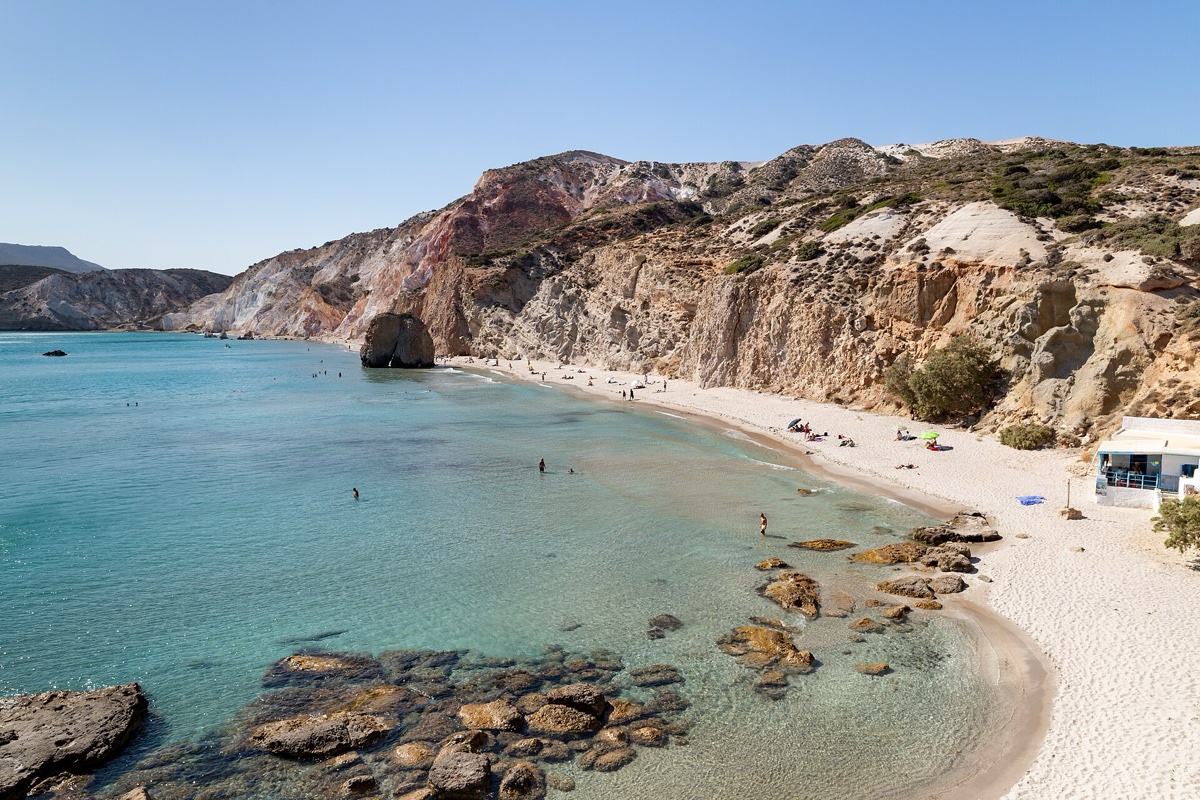
6. Geothermal Springs at Paleochori and the Firiplaka Cliffs
The island’s volcanic activity may have gone quiet on the surface, but the earth is very much still alive underneath. The clearest proof is the long beach of Paleochori, where hot geothermal springs called fumaroles bubble up directly through the sand and the shallow seabed. When you wade in close to the shore, you can feel warm bubbles rising from below — slightly sulphurous but utterly fascinating, like a natural jacuzzi under an open sky.
Some clever local restaurants make the most of this natural phenomenon, cooking food in pots buried in the hot volcanic sand. If you’re lucky, you’ll spot it happening — and then absolutely order whatever they’re making.
In the next bay along you’ll find Firiplaka, which is equally popular and famous for its spectacular volcanic cliffs in rich shades of red, pink, and orange. The sandy floor slopes gently into the water, making it ideal for a lazy all-day beach session. Unlike Tsigrado, it’s very easy to access, which makes it a firm favourite for a relaxed afternoon by the sea.
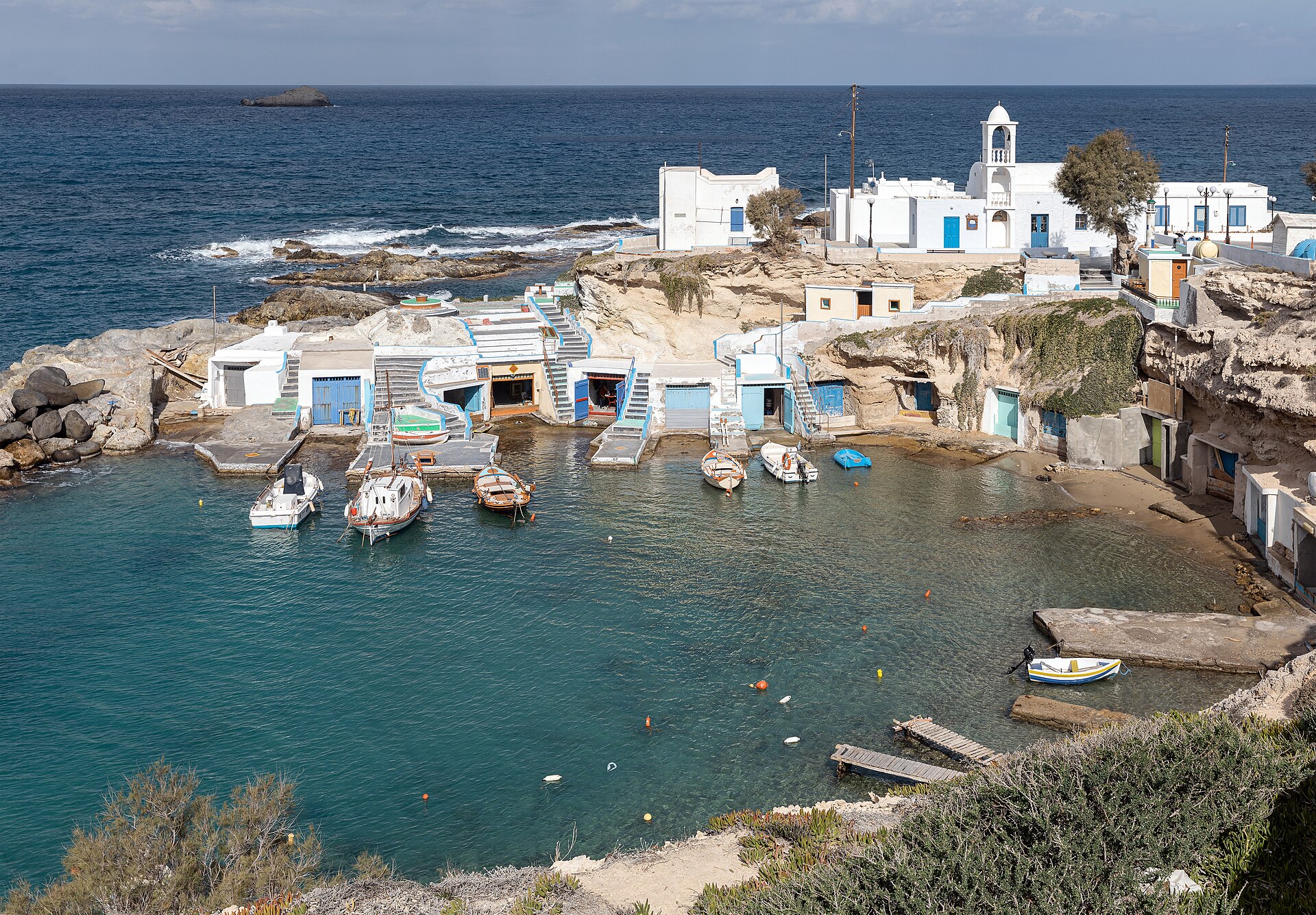
7. Fishing Village Charm in Mandrakia and Firopotamos
Beyond the famous Klima, the island hides several other picturesque little settlements that have kept their sleepy fishing-village character completely intact. Mandrakia is a tiny, impossibly photogenic harbour on the northern coast, with more brightly painted syrmata and small boats bobbing gently on the water. Strolling along the jetty and watching the fishermen go about their work feels like genuine balm for the soul.
Just ten minutes away by scooter lies the bay of Firopotamos, with its whitewashed chapel perched right on the cliff edge and water so clear it’s perfect for snorkelling. Schools of small fish dart between the old boathouses, and the atmosphere tends to be noticeably quieter than at the island’s better-known beaches — you can happily lay your towel out on the concrete jetty and no one will bat an eyelid.
A low wall, an iced coffee, a cat rubbing against your leg. You really don’t need anything else.
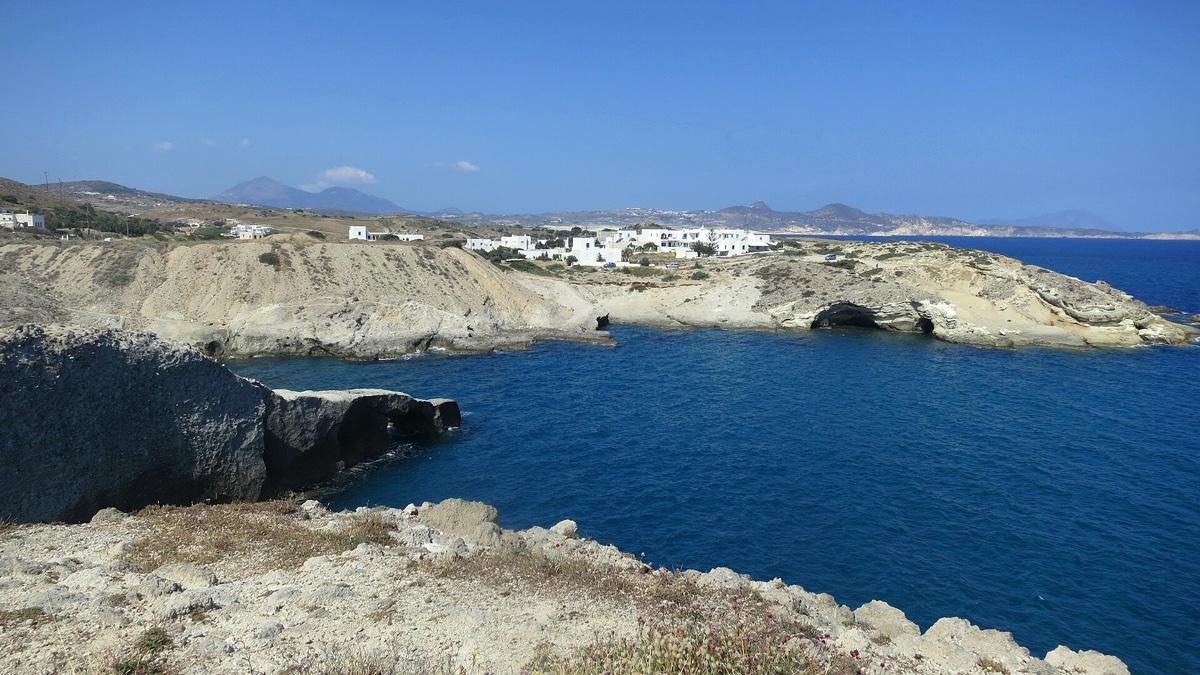
8. The Rock Fjord of Papafragas
On the northern coast near Pollonia, you’ll find a dramatic natural feature that looks like an enormous pool carved deep into solid rock. Papafragas is a very narrow sea gorge flanked by sheer vertical walls, through which the sea flows into a small sandy cove at the far end. The water here glows an extraordinary emerald green, and hidden sea caves dot the surrounding cliffs, just begging to be peered into.
One important heads-up: the official path down to the beach is currently closed due to rockfall risk, and the old carved steps are damaged and treacherous. Most visitors photograph this stunning gorge from the safety of the clifftops above, while the more adventurous swim in from the neighbouring and more accessible beach of Kapros.
Just nearby you’ll also find the significant archaeological site of Phylakopi, where you can explore the remains of a Bronze Age settlement. Despite its historical importance, it’s almost entirely off the tourist radar, so you’ll likely have these ancient ruins — with their sweeping sea views — entirely to yourself.
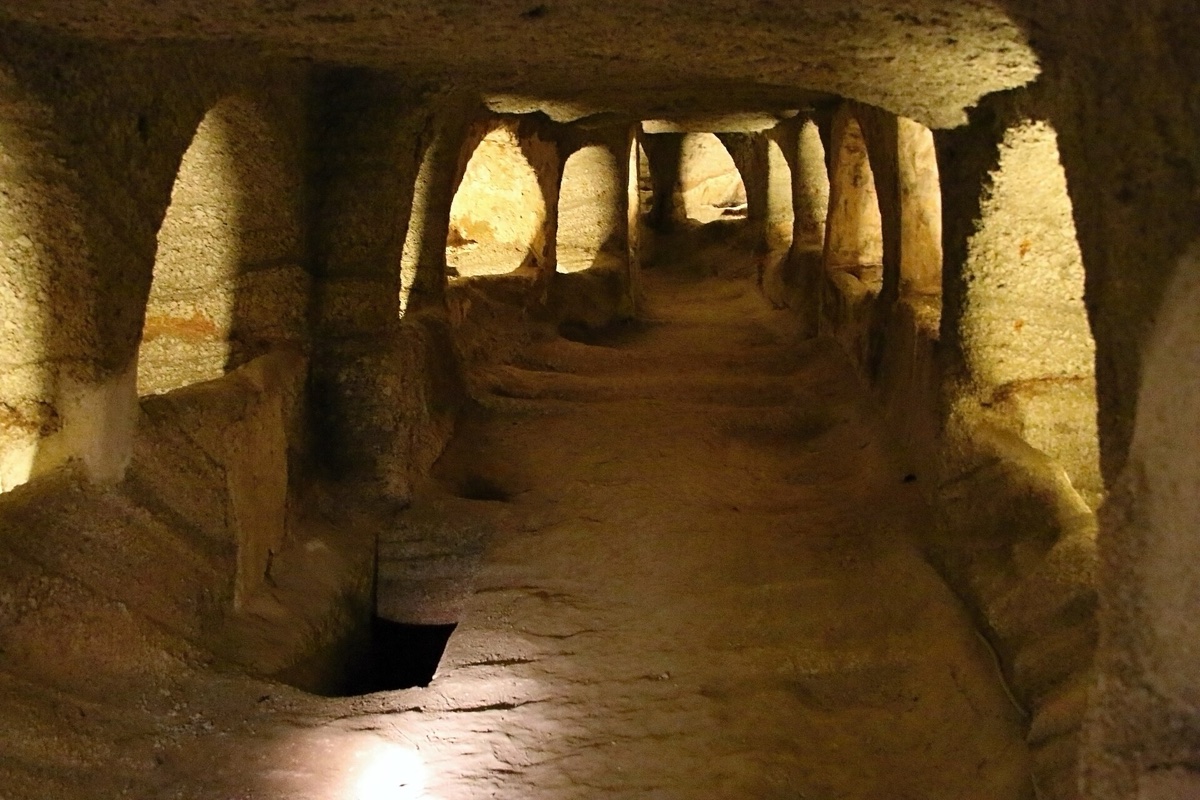
9. The Ancient Catacombs near Tripiti Village
Milos isn’t only about wild nature — its history is equally remarkable, stretching back thousands of years. Just below the pretty village of Tripiti, roughly 2.5 km from the capital Plaka, you’ll find one of the most significant early Christian catacombs in the world. This vast underground complex dates back to the first century AD and is believed to be the burial site of some seven to eight thousand of the earliest Christians.
In terms of historical significance, these catacombs rank third in the world — after those in Rome and the Holy Land. Only a small, carefully lit section of the tunnels is open to the public, but even that small portion carries an overwhelming sense of history and quiet reverence.
Admission is around €5–€10 and the tour of the tunnels takes roughly twenty minutes. Opening hours are typically Wednesday to Monday, 9am to 7pm. As a bonus, the underground chambers stay pleasantly cool — a very welcome respite on a hot summer’s day.
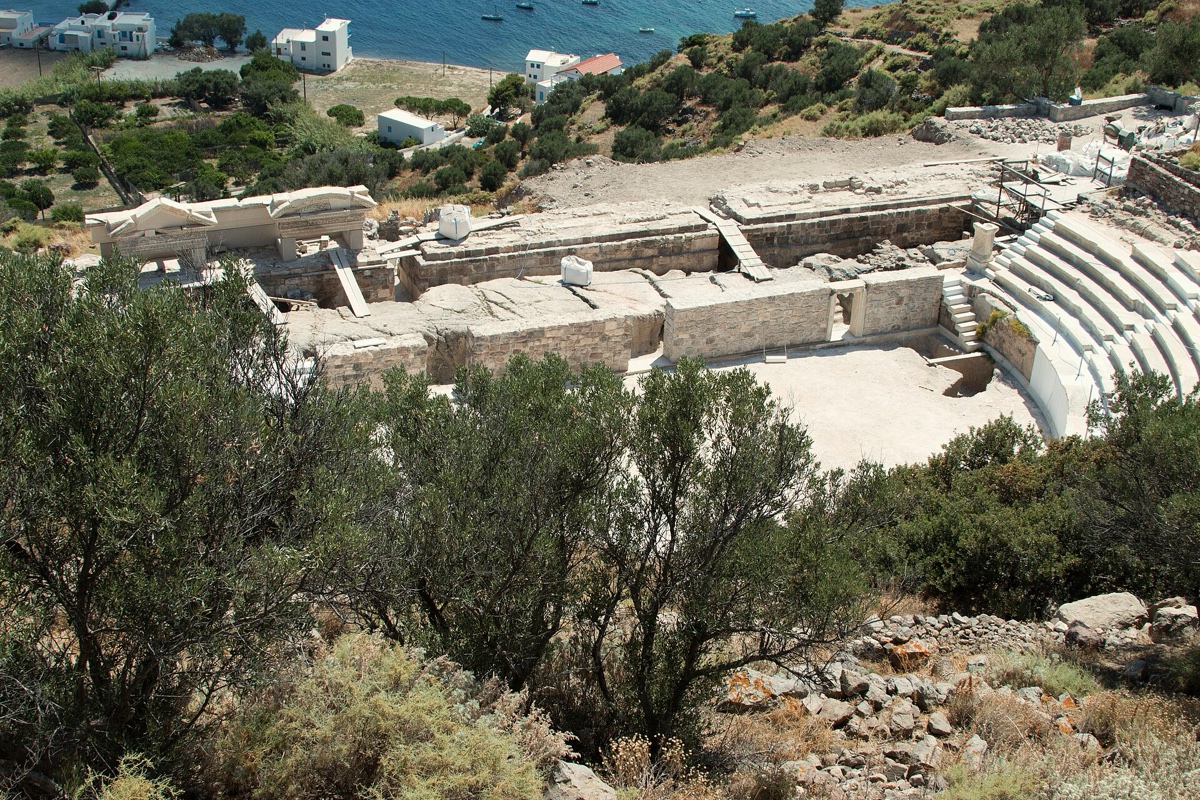
10. The Ancient Theatre and Birthplace of the Venus de Milo
Less than 700 metres from the catacombs stand the remains of an ancient Roman theatre, built from gleaming white Parian marble — making it a perfect combined stop for a half-day excursion. At its height, the theatre held an impressive 5,000 spectators, and it still offers a fantastic panoramic view over the bay and the village of Klima below. Entry to the theatre is free, and it’s well worth sitting on the ancient stone steps for a moment to let the atmosphere sink in.
And just a short distance from those steps, something remarkable happened on 8 April 1820: a local farmer named Yorgos was digging in his field when he unearthed the Venus de Milo — also known as the Aphrodite of Milos — a masterpiece dating to around 100 BC.
This stunning marble statue is now one of the crown jewels of the Louvre in Paris, and the French are rather protective of it. On the island itself, you’ll find only a modest commemorative plaque marking the discovery site and a highly faithful replica in the archaeological museum in Plaka — which is absolutely worth a visit.
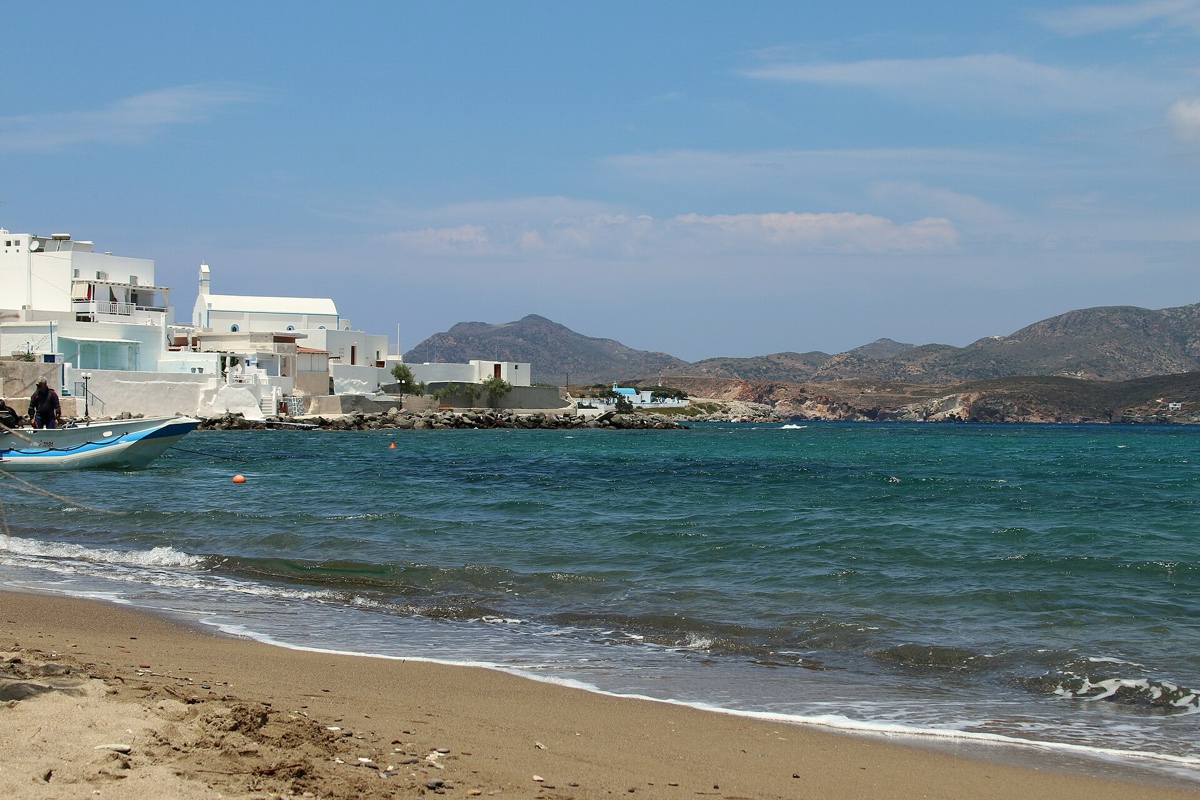
11. Pollonia and a Day Trip to Kimolos
At the north-eastern tip of the island lies the laid-back village of Pollonia, which has quietly transformed itself over recent years into an elegant and much-loved little resort. It has a beautiful tree-shaded sandy beach, excellent restaurants along a relaxed waterfront promenade, and an overall atmosphere of effortless calm that makes it particularly popular with couples and families. It’s the kind of place where an evening stroll ending in a good meal just feels absolutely right.
From the small jetty in Pollonia, a local ferry departs several times a day to the neighbouring island of Kimolos, operated by Blue Gem with the vessel Osia Methodia. The crossing takes just over 25 minutes, and a foot-passenger ticket costs around €2.40 — making this one of the cheapest and most rewarding half-day detours you’ll find anywhere in the Aegean.
Kimolos is even quieter than Milos itself, and it hides some real natural gems. The undisputed highlight is the gorgeous Prassa beach with its white sand and water so impossibly clear and turquoise that you could easily convince yourself you’d been teleported to the Caribbean.
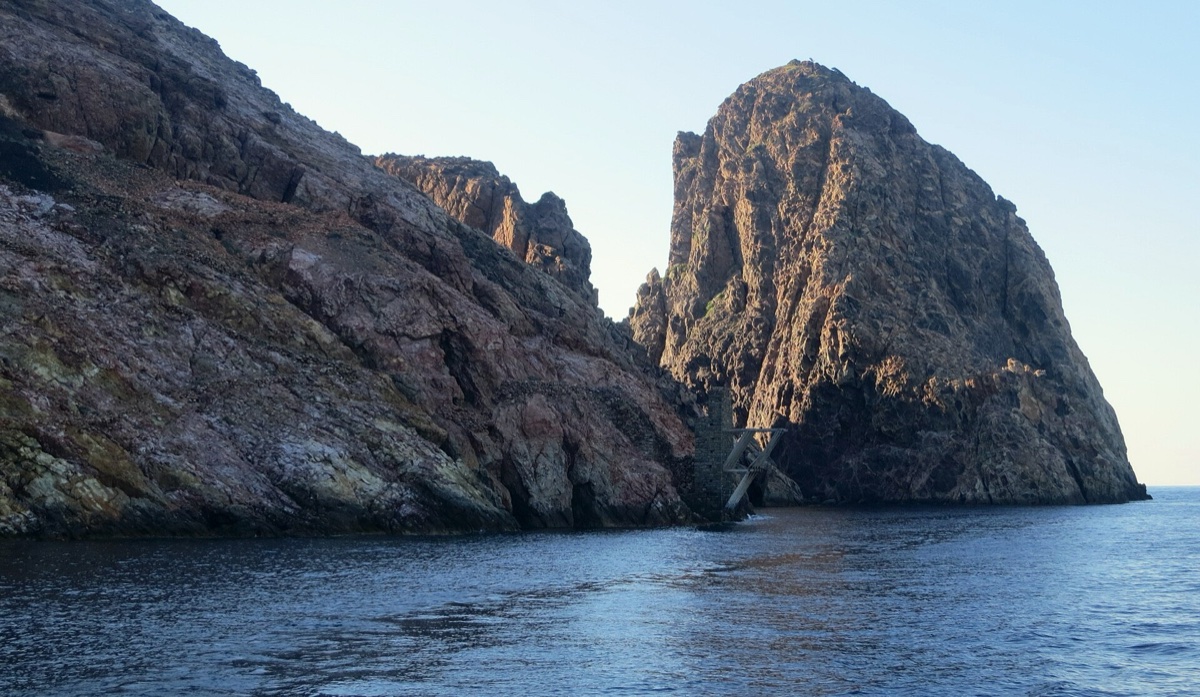
12. The Sykia Cave and the Martian Rocks of Cape Vani
The western coast of Milos is wild, almost entirely uninhabited, and largely only accessible by boat or a serious 4WD. Sykia is a vast sea cave whose roof partially collapsed over the centuries, leaving a hole through which daylight now falls directly onto the water, creating an emerald shimmer on the surface below. Inside the cave is a small pebble beach that smaller excursion boats can reach, letting you swim in this extraordinary natural cauldron.
A little further along, the dramatic headland of Cape Vani looks like a backdrop from a science-fiction film. An old manganese mine here has exposed rock faces blazing in intense shades of deep red, purple, and black — an extraordinary contrast against the blue of the sea.
If you want to reach Cape Vani overland, be aware that the rough gravel track requires a 4WD vehicle. Standard hire cars are strictly prohibited on this road, with rental companies voiding insurance for anyone who ignores the rule — so don’t try to cut corners and hire a proper jeep or quad bike instead.
13. A Relaxed Day at Plathiena Beach
When you’ve had your fill of adrenaline scrambles and long boat trips, head to the northern coast near Plaka for a proper rest. Plathiena beach sits in a broad bay sheltered by high rocky cliffs, roughly 2 km from the capital, and offers wonderfully soft sand with a very gentle slope into the sea. There are noticeably fewer people here than on the southern beaches, the water is calm, and it’s a fantastic spot for a relaxed afternoon with a book — or for families with younger children.
Thanks to its slightly out-of-the-way location, Plathiena is a genuine haven of peace. The narrow road to get here is part of the charm, and the reward is a beach so soft it could pass for a premium Caribbean resort. In summer, a small drinks and snack stand often sets up here. For the best experience, visit in the late afternoon, when the surrounding cliffs turn a beautiful shade of gold in the fading sunlight.
14. The Abandoned Sulphur Mines of Paliorema
This one is a genuine treat for fans of industrial history, urban exploration, and unusual photography. On the south-eastern coast of the island, the bay of Paliorema is home to the completely abandoned and slowly crumbling buildings of an old sulphur mine, also known as Thiorichia. Mining ceased here in the mid-twentieth century, but rusting mine carts, old wagons, rail tracks, and extraction machinery remain on-site, set directly into the colourful volcanic cliffs and being slowly swallowed by time.
Entry to the mine complex is entirely free, but you need to move carefully — the old structures are not fenced off and are in various states of decay. Swimming in the sea with a rusting industrial ruin as your backdrop is a strangely evocative experience unlike anything else you’ll find in Greece, and the photos come out brilliantly.
The steep, potholed track down requires good ground clearance or a proper 4WD. If you’re in a standard hire car, you’re better off joining an organised boat trip that occasionally stops here.
15. A Day Trip to the Uninhabited Island of Polyaigos
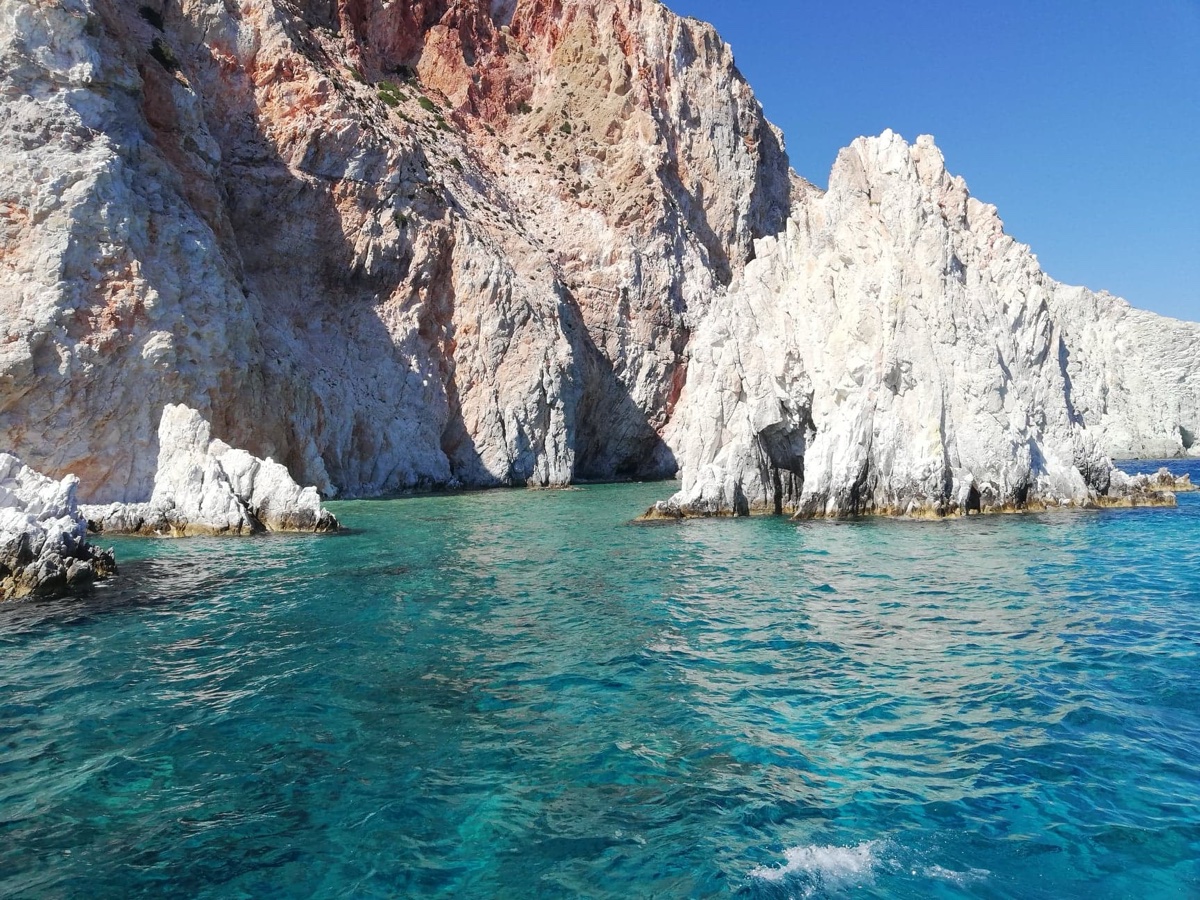
If time allows and you fancy swimming somewhere truly off the beaten track, book a full-day boat trip to the neighbouring island of Polyaigos. This sizeable chunk of land sits between Milos and Kimolos and is completely uninhabited — nothing here but sun-scorched wild nature and the occasional herd of feral goats. Precisely because no one lives here and there’s no regular boat service, the coves are blessed with the clearest, most vivid turquoise water in the entire Aegean Sea.
Catamarans depart most often from Adamas harbour and a full-day trip costs roughly €120–€150 per person. Boats usually moor near towering cliffs, and you can snorkel for hours in visibility so good you can see dozens of metres below the surface.
When you get home and struggle to explain why the holiday was so hard to put into words, think of Polyaigos. That particular shade of turquoise is genuinely impossible to describe properly. Most trips include refreshments on board as well, so you can simply sit back and enjoy the peace, far away from the crowds.
Map of points of interest for your phone
Where to Eat in Milos
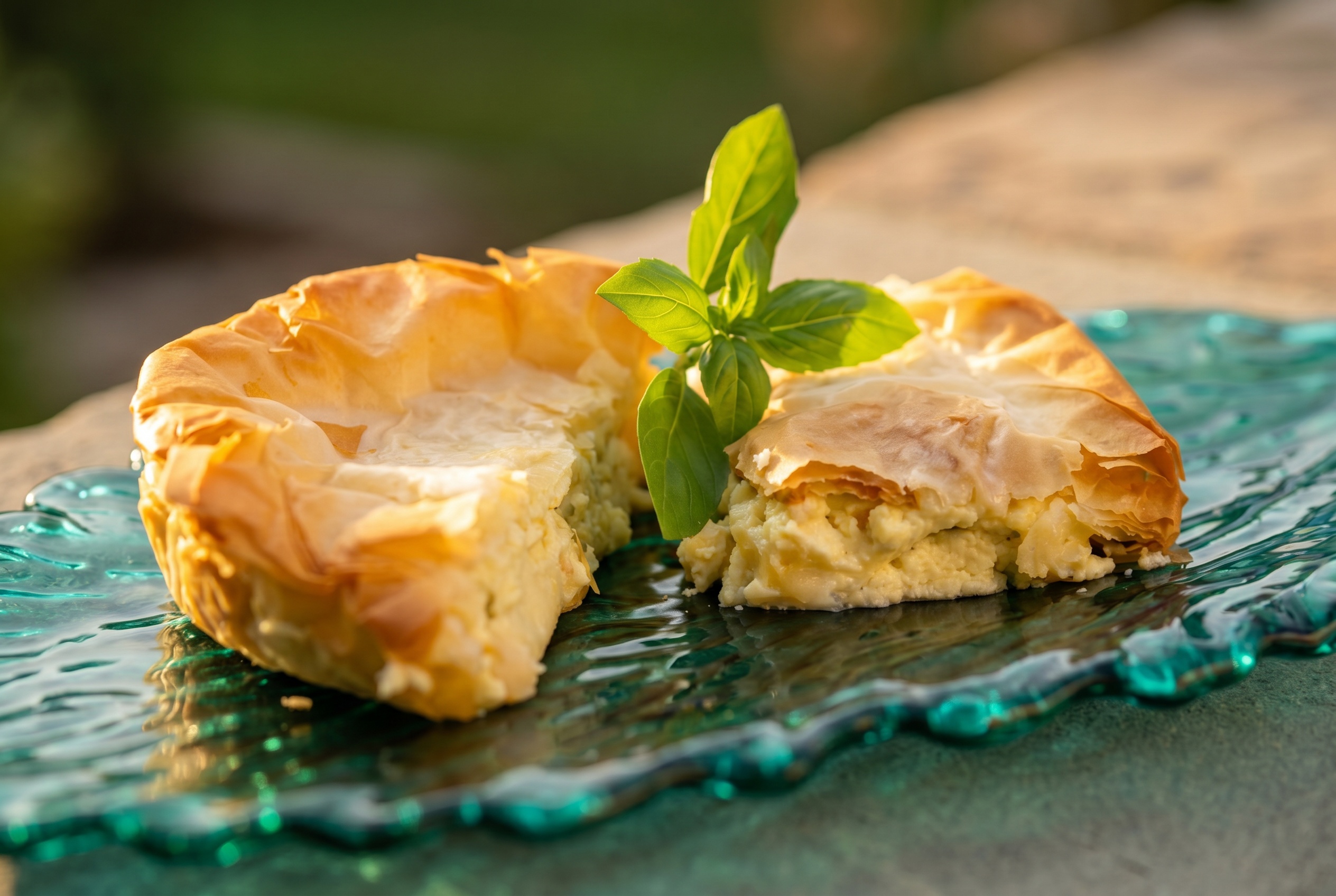
Greek food is a chapter in itself, and on Milos that’s doubly true. While Greece is well known for its grilled meat dishes, this island has some outstanding local specialities you really shouldn’t leave without trying. Top of the list is pitarakia — perfect little fried pastry pockets filled with sharp myzithra cheese and fresh mint. For something sweet, try karpouzopita: an unusual watermelon cake with honey and cinnamon that’s surprisingly delicious.
For excellent food, head to the famous taverna O! Hamos! near Papikinou beach in Adamas. Although this family-run place is celebrated for its slow-roasted meats from their own farm, vegetarians are very well served here too — think fantastic fried courgette with goat’s cheese, a superb meat-free moussaka, and veggie patties with a watermelon sauce that will genuinely win you over. Do expect queues, though: reservations aren’t taken and evenings are packed.
For the freshest seafood on the island, make the short drive north to the village of Mandrakia. The stand-out restaurant here is Medusa, renowned for its broad selection of daily fresh fish and seafood, with lunchtime queues to match. Order the sun-dried octopus, find a spot with a view over the colourful boathouses and the lapping waves, and order another glass of wine. You’ve earned it.
Where to Go Next from Milos
Milos has a brilliantly strategic location in the Cyclades, with ferry connections to more than eighteen other destinations across the Aegean — making it easy to combine with other islands.
- If you’re drawn to classic romance and iconic blue-domed views, check out our article on Santorini holidays. A fast ferry from Milos takes around two hours.
- Want to combine history with a lively nightlife scene? Read our guide on Mykonos holidays.
- If you’re planning a longer trip and want to explore a wider range of islands, have a look at our round-up of the most beautiful Greek islands for plenty of further inspiration.
- For practical tips before you travel, don’t miss our checklist of what to pack for a Greek island holiday.
Frequently Asked Questions
Planning a trip to Milos, Greece? Here are the answers to the most common questions to help you prepare — so you don’t overlook any important detail and can enjoy a stress-free holiday from the moment you arrive.
How do you travel to Milos?
The most common and practical route is to fly to Athens and then take a ferry from the port of Piraeus. Fast catamarans (SeaJets) make the trip in just under three hours and a ticket costs around 41 to 79 euros, while the slower ships (Blue Star) take about five to seven hours but can be had from as little as 33 euros. In summer, buy your tickets several months in advance. If you’re travelling outside the high season, ferry frequency drops a bit, so it’s best to double-check the timetables. The boat trip itself is a great experience, though.
Where can I fly to Milos from?
The island has a small domestic airport with direct flights exclusively from Athens on carriers like Olympic Air or Sky Express, with flights taking roughly 40 minutes. There are no direct flights from the Czech Republic—you’ll always need to connect through the Greek capital. Since smaller propeller planes are used, seat capacity is quite limited, so don’t leave your flight booking until the last minute.
Which Greek island is the most beautiful?
It depends on what you’re looking for in a holiday. Santorini is iconic with its blue-domed roofs, Naxos scores points with families thanks to its sandy beaches, and Milos is considered the most geologically interesting and diverse island in all the Cyclades with its more than seventy colorful beaches. Whichever you choose, the Cycladic architecture and excellent local food definitely won’t disappoint.
Where is the most beautiful sea in Greece?
Milos and its surroundings boast absolutely fantastic waters. The uninhabited island of Poliegos near Milos is regularly cited as having the absolute clearest and most turquoise water in the entire Aegean Sea, accessible only by boat. Plus, the diverse beaches here mean you can discover completely different coastline every day and never get bored.
How many days do I need on Milos?
For a relaxed exploration of the island, I’d recommend setting aside four to five days. This gives you time for a full-day boat trip to Kleftiko, leisurely walks through picturesque villages with colorful boat houses, and plenty of time to relax on volcanic beaches. However, if you’re planning to visit neighboring Kimolos or do more hiking along the remote western coast, feel free to extend your stay to a full week. The island definitely won’t bore you.
Do I need a car on Milos?
Yes, renting a car or a powerful ATV is practically essential if you want to discover hidden beaches and have freedom to explore. While buses do connect the main towns, their frequency drops significantly after dark, and the most interesting natural sites on the western part of the island are only accessible with a 4×4 vehicle. Car rental agencies also get very busy during peak season, so definitely reserve your vehicle from home as soon as you know your exact travel dates.
When is the best time to visit Milos?
The absolutely ideal months are May, June, and September. You’ll avoid the extreme August heat exceeding 30 degrees Celsius, the biggest tourist crowds, and especially the strong northern meltemi wind that often disrupts boat trip plans in midsummer. The September sea is also perfectly warm after the long summer, so even those who don’t usually seek out cooler water will enjoy swimming.
Tips and Tricks for Your Vacation
Don’t Overpay for Flights
Search for flights on Kayak. It’s our favorite search engine because it scans the websites of all airlines and always finds the cheapest connection.
Book Your Accommodation Smartly
The best experiences we’ve had when looking for accommodation (from Alaska to Morocco) are with Booking.com, where hotels, apartments, and entire houses are usually the cheapest and most widely available.
 🚗 Car rental on the roadVerified car rentals in the Cyclades
Search with the DiscoverCars comparison engine — it compares prices from dozens of local and international rental companies, and most bookings come with free cancellation.
Compare car prices in the Cyclades →Don’t Forget Travel Insurance
Good travel insurance will protect you against illness, accidents, theft, or flight cancellations. We’ve had a few hospital visits abroad, so we know how important it is to have proper insurance arranged.
Where we insure ourselves: SafetyWing (simple monthly subscription) and TrueTraveller (for extra-long trips).
Find the Best Experiences
Get Your Guide is a huge online marketplace where you can book guided walks, trips, skip-the-line tickets, tours, and much more. We always find some extra fun there!