

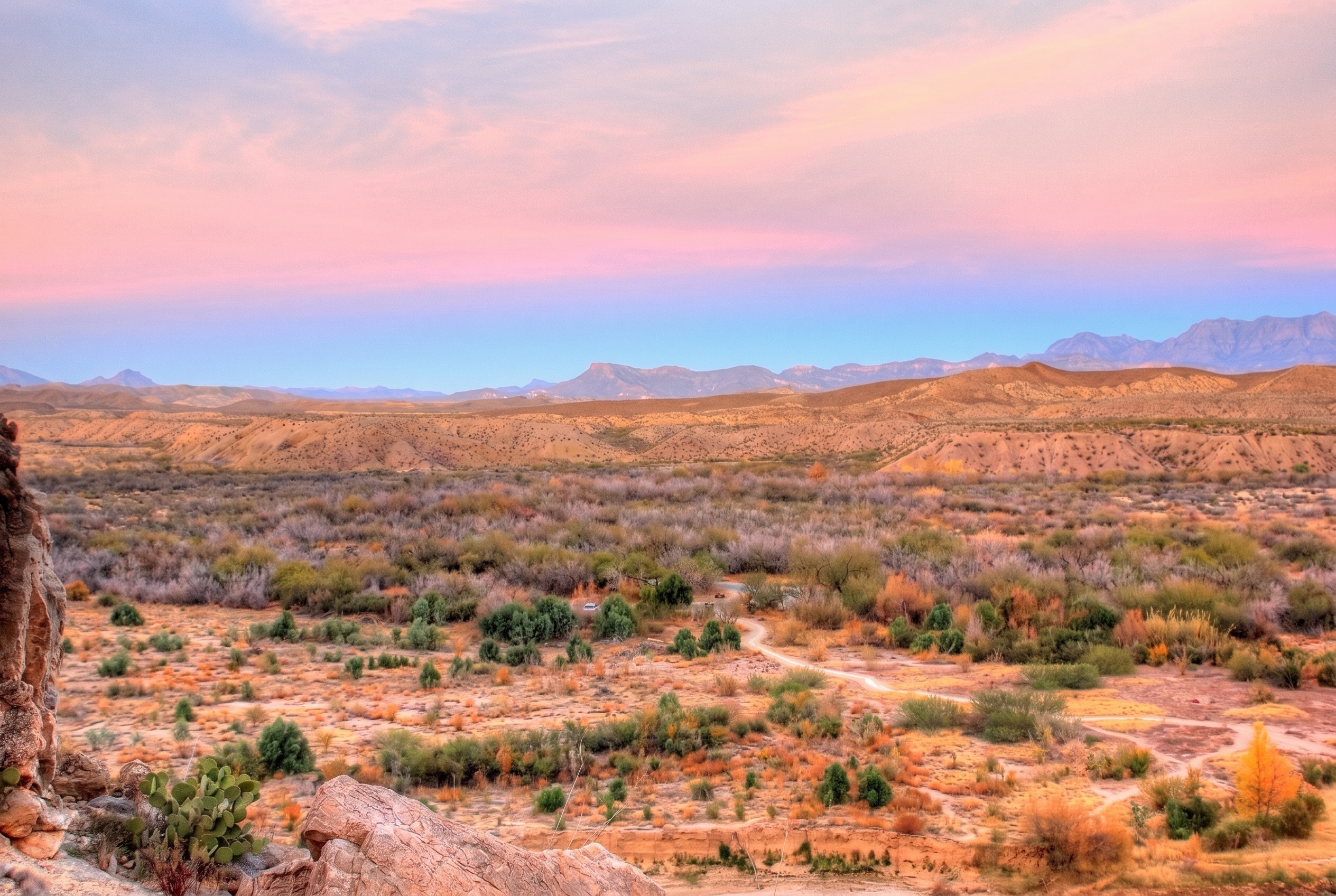
When someone says “Texas,” most people picture cowboys, steakhouses, and Dallas. Maybe Austin with its live music scene. But very few think of one of the most remote and rugged landscapes in all of America — Big Bend National Park. And that’s a shame, because this corner of Big Bend Texas can hit visitors harder than anyone expects.
Picture this: you’re standing on the edge of a canyon, the Rio Grande flowing below you, Mexico on the other side of the river, and absolute silence all around — no people, no cars, no phone signal. Just the wind, cacti, and the occasional roadrunner darting past (yes, the one from the cartoon, except in real life it’s smaller and doesn’t say “beep beep”). Then night falls and you look up — and there are more stars above you than you’ve ever seen in your life. Big Bend has the darkest night sky of any national park in the USA. That’s not a marketing slogan — it’s a verified fact and an experience that gives most visitors goosebumps.
This park is enormous — roughly the size of Luxembourg — yet it receives a fraction of the visitors that Yellowstone or the Grand Canyon get. And that’s precisely its greatest charm. No queues, no crowds, just you and the endless Texan wilderness.
In this article, you’ll find a complete guide to Big Bend National Park — 15 things to see and do, where to stay, when to visit, how much it costs, and plenty of practical tips to help you prepare without any nasty surprises. Let’s dive in.
TL;DR
- Big Bend National Park sits in southwest Texas right on the Mexican border. The nearest larger town is Alpine (about 100 miles away), but the park is truly in the middle of nowhere — and that’s its magic.
- Best time to visit is from October to April. In summer, temperatures regularly exceed 40 °C (104 °F) and hiking becomes miserable.
- Entrance fee is $30 (about £24) per vehicle for 7 days, or you can get an annual America the Beautiful Pass for $80.
- Accommodation is either inside the park (Chisos Mountains Lodge or camping), or in the nearby towns of Terlingua and Study Butte — where you’ll also find restaurants and petrol stations.
- Don’t miss: Santa Elena Canyon, Window Trail, Lost Mine Trail, Hot Springs on the Rio Grande, Ross Maxwell Scenic Drive, and stargazing.
- Fill up your tank before entering the park — there are no petrol stations inside and the nearest one is in Study Butte.
- Allow at least 3 days, ideally 4–5, so you can cover the main trails without rushing.
- For food, head to Terlingua — a ghost town with surprisingly brilliant food and an atmosphere you won’t find anywhere else.
The full destination guide: USA Travel Guide — guide and what to see
When to Visit Big Bend and How to Get There
Big Bend National Park is one of those places where timing truly makes or breaks your trip. And I’m not exaggerating one bit.
Best Time to Visit Big Bend Texas
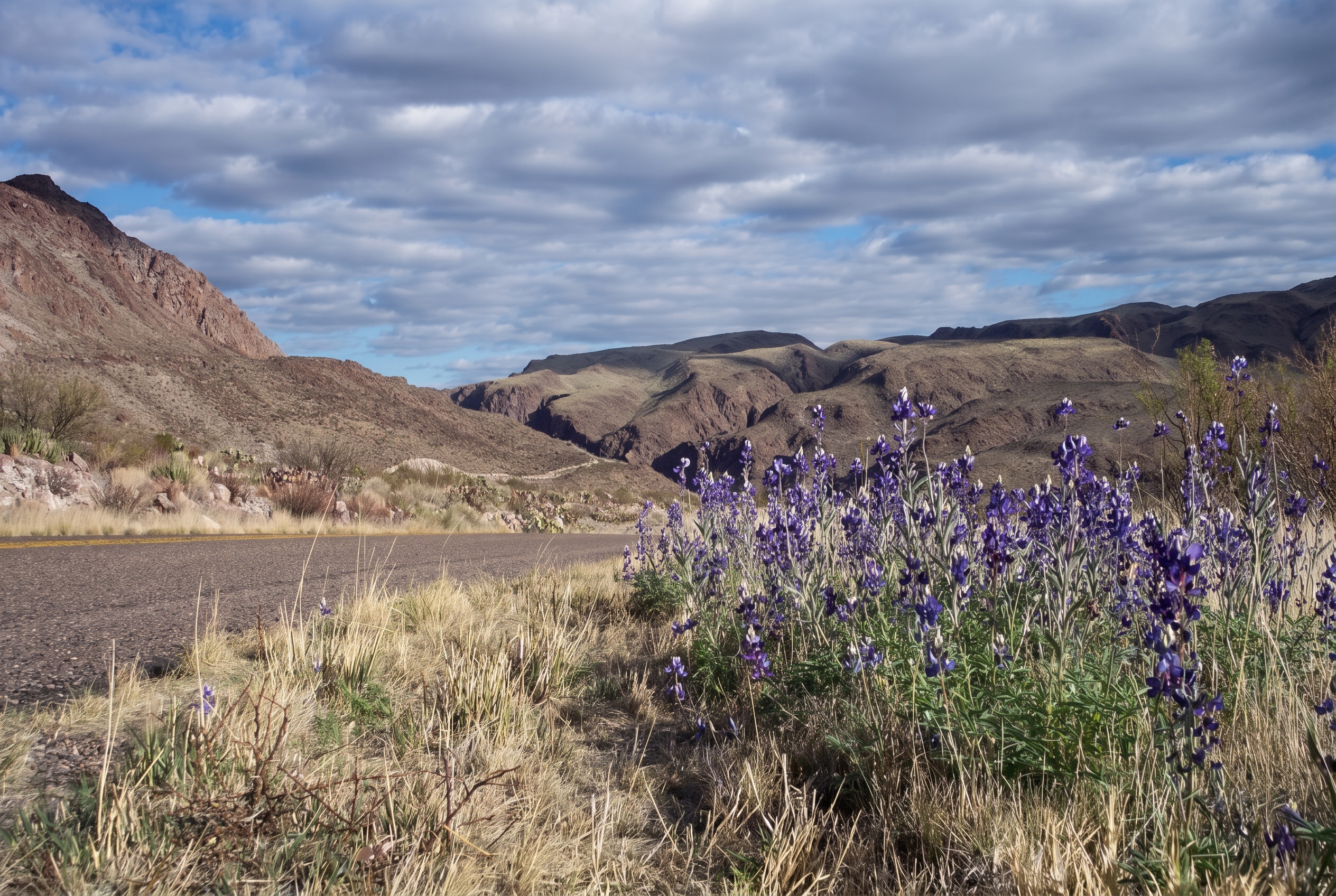
The ideal window is mid-October to mid-April. In autumn and winter, daytime temperatures hover around a pleasant 15–25 °C (59–77 °F), dropping to around freezing or just below at night (especially in the Chisos Mountains, which sit at higher elevation). Spring is similar, with the added bonus of wildflowers — if there’s been rain, the desert transforms into a colourful carpet of blooms for a few weeks, and it’s absolutely magical.
Avoid summer if you possibly can. July and August bring temperatures above 40 °C (104 °F) in the lower elevations, limited water supplies, and extreme dehydration risk. Ranger stations regularly treat hikers for heatstroke during summer. On top of that, June to October is monsoon season, when afternoon storms can cause flash floods in the canyons — and trust me, you don’t want to be caught in a flash flood warning at Santa Elena Canyon. 😅
November tends to be the sweet spot. A t-shirt is enough during the day, you’ll want a fleece in the evening, and you’ll only meet a handful of people on the trails.
How to Get to Big Bend National Park
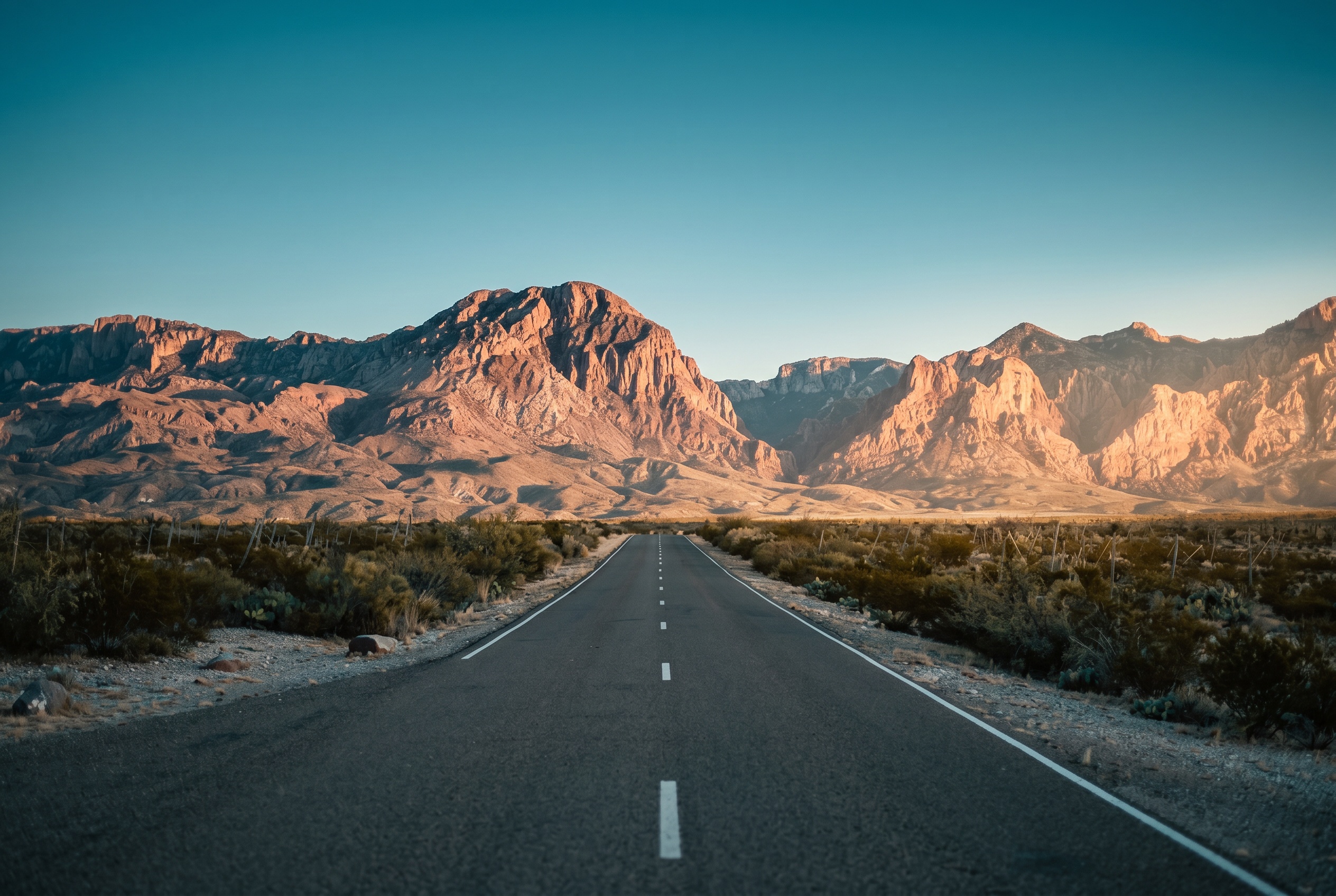
Now for the less romantic part: Big Bend is far from everything. And I mean genuinely far. The nearest larger town is Alpine, about 100 miles (160 km) from the park entrance. The closest airports with regular services are Midland/Odessa (4 hours by car) or El Paso (5 hours). From San Antonio or Austin, count on 6–7 hours of driving.
If you’re flying from the UK, the most practical route is to fly into Dallas, Houston, or Austin — airlines like British Airways, American Airlines, and United offer direct flights from London — and then pick up a hire car. A car is absolutely essential — there’s no public transport out here and Uber doesn’t work either (honestly, you barely even get phone signal 😁). We always book through DiscoverCars for car hire — they compare offers from different providers and it usually works out cheaper than booking directly.
TIP: Fill up your tank in Study Butte or Terlingua before entering the park. There are no petrol stations inside, and distances are huge — it’s over 100 miles from one end of the park to the other.
Where to Stay and How Much Big Bend Texas Costs
Accommodation around Big Bend isn’t exactly straightforward — this isn’t Rome where there’s a hotel on every corner. But options do exist, and some of them are genuinely unique. Let’s run through them.
Park Entrance Fee
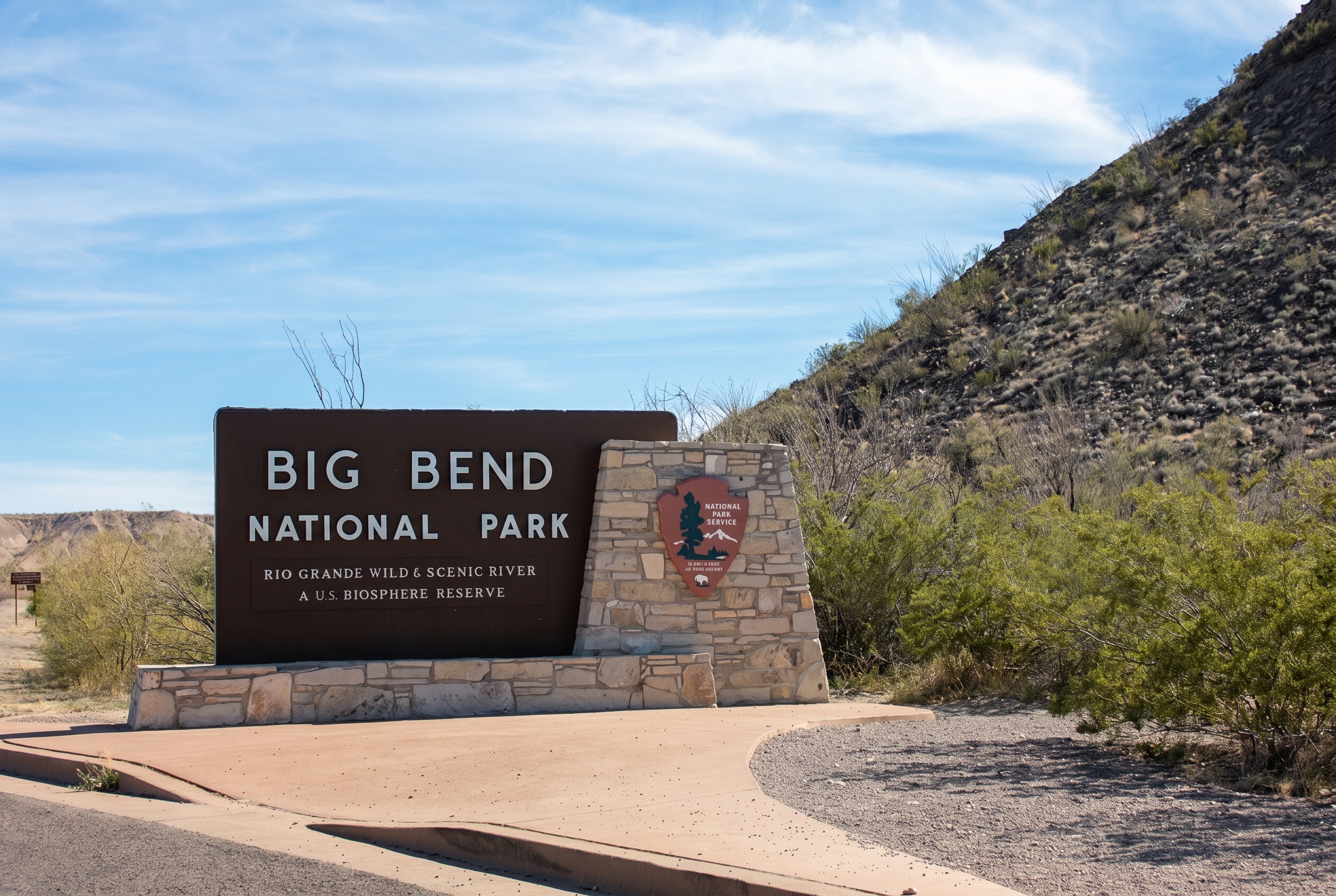
Entrance is $30 (about £24) per vehicle for 7 days. Motorcycles are $25, and pedestrians or cyclists pay $15. If you’re planning to visit multiple national parks in the US, the America the Beautiful Pass at $80 (about £64) is a no-brainer — it’s valid for a year and covers entry to all national parks and federal recreation areas. It pays for itself after just two park visits.
Big Bend Texas Hotels — Staying Inside the Park
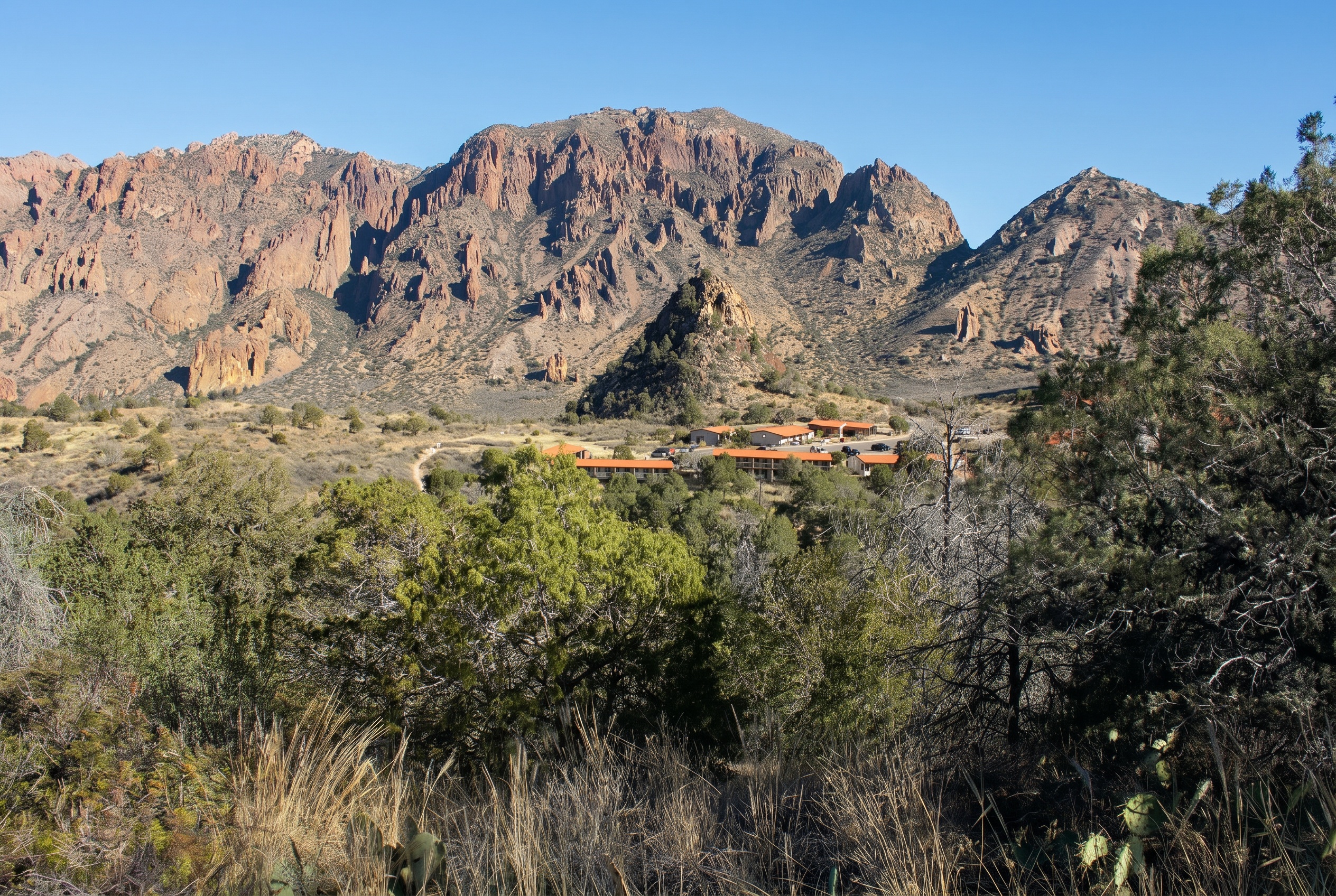
Chisos Mountains Lodge is the only proper accommodation with solid walls inside the park — and one of the few spots where you’ll get a sliver of phone signal (sliver being the operative word). The lodge sits in the Chisos Mountains valley at over 1,600 metres elevation, so it’s noticeably cooler here even in summer compared to down by the Rio Grande. Rooms are simple, clean, and functional — don’t expect luxury, but you’ll be sleeping right in the heart of a national park, and that’s an experience in itself. Prices range from $160 to $200 (£128–£160) per night. Book as early as possible — during peak season it fills up months in advance.
Big Bend Texas Camping — The park has three main campgrounds:
- Chisos Basin Campground — the most popular, set in the mountains with stunning views and close to trailheads. $16/night.
- Rio Grande Village Campground — down by the river, close to the hot springs. $16/night. In winter, migratory birds flock here, making it a paradise for birdwatchers.
- Cottonwood Campground — the smallest and quietest, close to Santa Elena Canyon. $16/night. No showers.
I’d recommend booking campsites through recreation.gov as early as you can — Chisos Basin fills up weeks in advance. If you arrive without a reservation, you can try the first-come-first-served sites, but it’s a gamble.
Accommodation Outside the Park — Terlingua and Study Butte
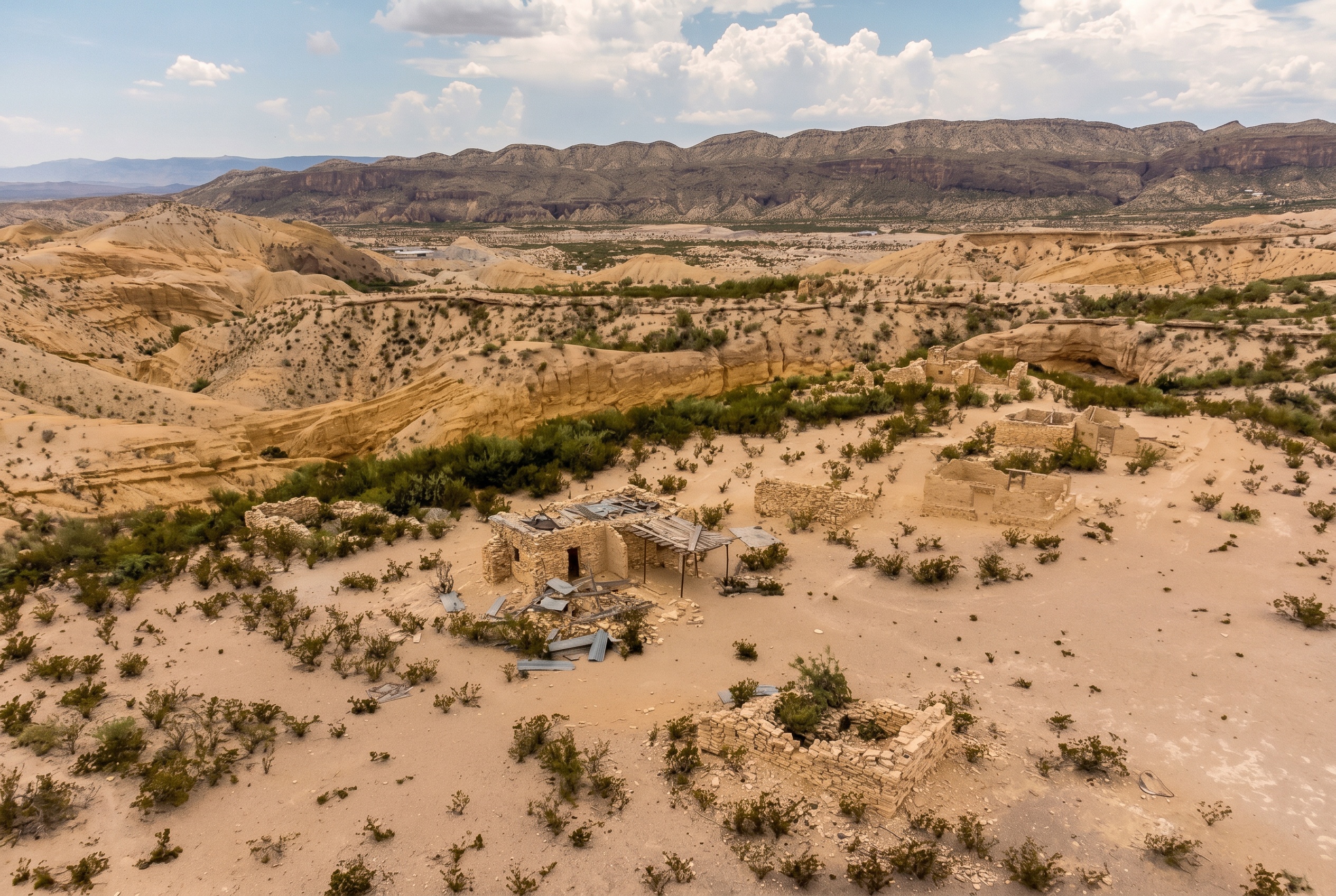
Terlingua and neighbouring Study Butte sit right by the park’s western entrance and serve as the de facto base for most visitors. Terlingua is a former mining town (now more of a ghost town with an artistic soul) and you’ll find a quirky mix of accommodation — from old mining cottages converted into Airbnbs and glamping tents to classic motels.
Prices range from $80 (about £64) for a basic motel to $200+ for stylish glamping cabins with desert views. During peak season (October–March) prices climb and places vanish quickly.
Our recommendations:
- La Posada Milagro — a gorgeous boutique stay partly carved into rock. Brilliant breakfasts. But it books up fast.
- Willow House in Study Butte — great value for money.
- Basecamp Terlingua — glamping with a swimming pool in the middle of the desert. Instagram-worthy and surprisingly comfortable.
How Much a Trip to Big Bend Costs — 4-Day Budget for Two
| Item | Cost (USD) | Cost (GBP approx.) |
| Park entrance fee (vehicle) | 30 | 24 |
| Accommodation 3 nights (Terlingua motel) | 300 | 240 |
| Car hire 4 days (from Midland) | 200 | 160 |
| Petrol | 80 | 64 |
| Food and drink | 200 | 160 |
| Total | 810 | 648 |
Of course, it all depends on your travel style — with camping and self-catering you can bring costs down significantly. On the flip side, Chisos Lodge and restaurants will push the budget higher.
15 Things to See and Do in Big Bend Texas
Now for the main event — let’s look at 15 places and experiences that make the journey to the end of the world (or at least the end of Texas) absolutely worth it. Big Bend is a vast park, so I’ve grouped the tips by area to help you plan routes without unnecessary backtracking.
1. Santa Elena Canyon — The Most Dramatic Canyon in Texas
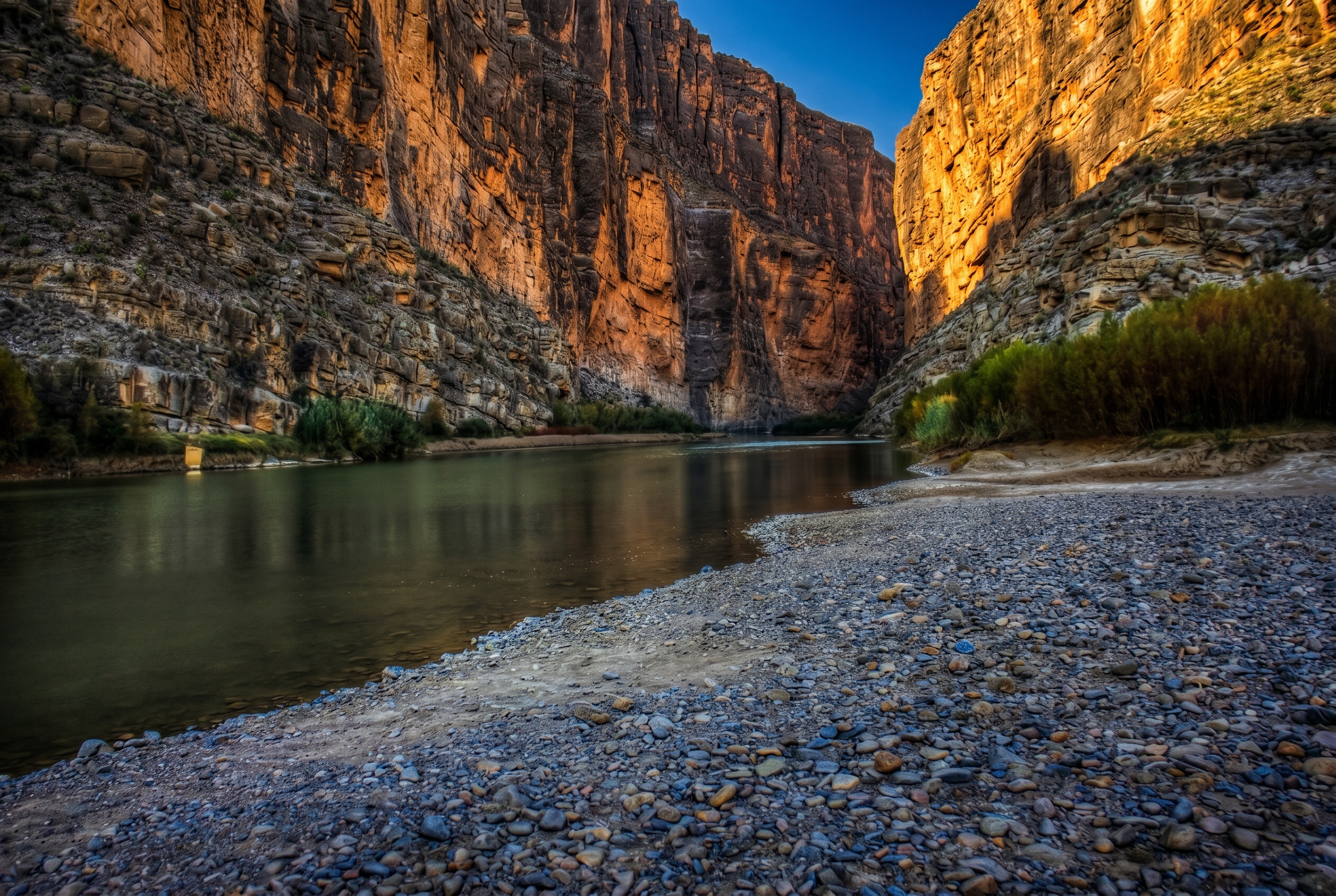
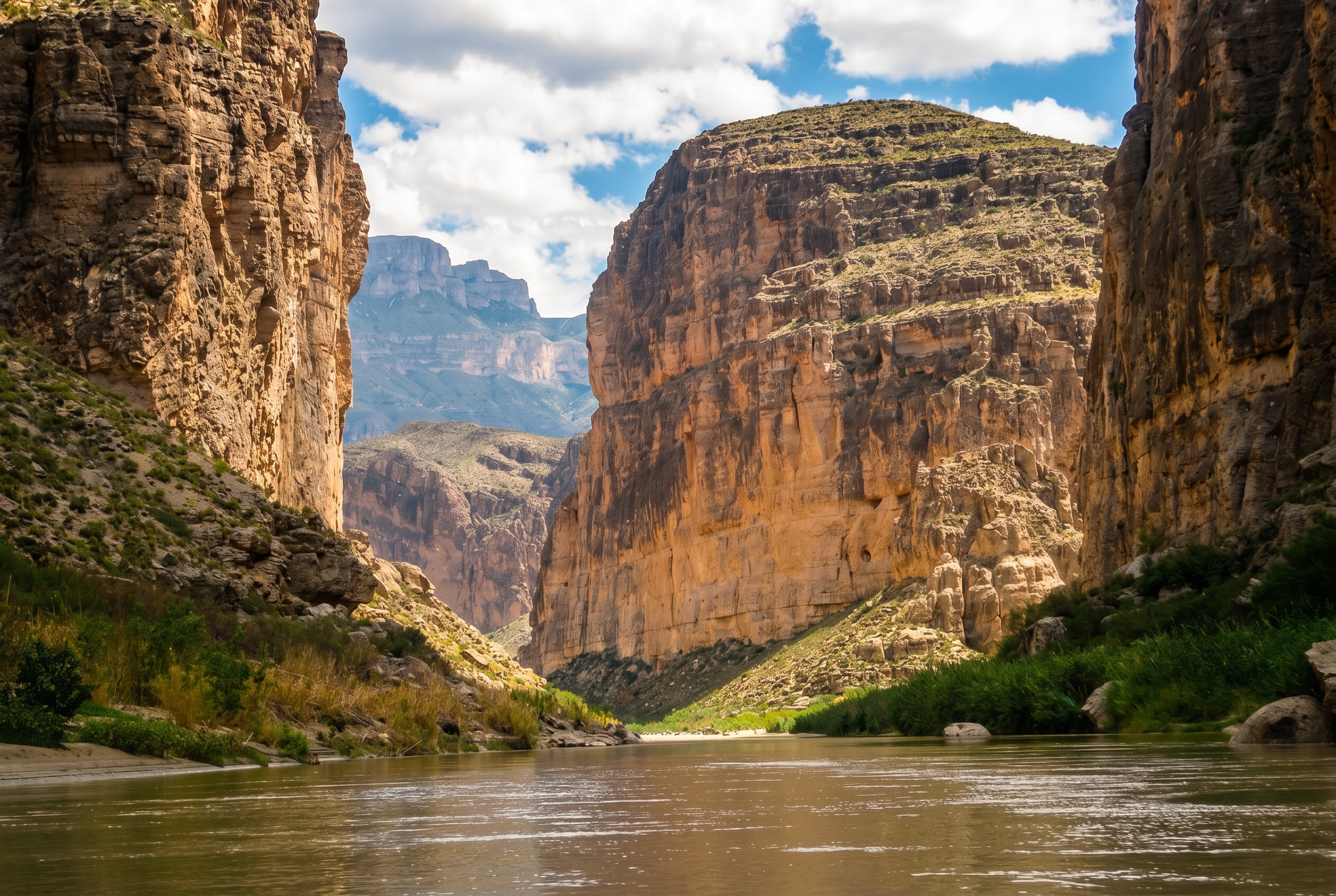
This is Big Bend’s most iconic spot and your number one must-see. Santa Elena Canyon plunges about 460 metres (1,500 feet) deep, with the Rio Grande threading through it like a thin ribbon — Texas on one side, Mexico on the other. That feeling of insignificance when you’re standing at the bottom gazing up at the sheer limestone walls — it can’t be described, only experienced.
A short trail (about 2.5 km / 1.5 miles return) leads to the canyon itself, starting with a ford across Terlingua Creek. Heads up — after rain the creek can swell and become impassable, so check with the ranger station before heading out. The trail is relatively easy: you climb some rock steps at the start and then walk along a gravel beach beside the river straight into the canyon.
It’s at its most beautiful early in the morning or late in the afternoon, when the sun lights up just one wall of the canyon and creates incredible contrasts. Arrive around eight in the morning and there’s a good chance you’ll have the whole place to yourself. Just you, the river, and the occasional shriek of a hawk.
Practical tip: Wear shoes that can get wet — the creek crossing is unavoidable and the depth changes.
2. Ross Maxwell Scenic Drive — A Road Trip Within a Road Trip
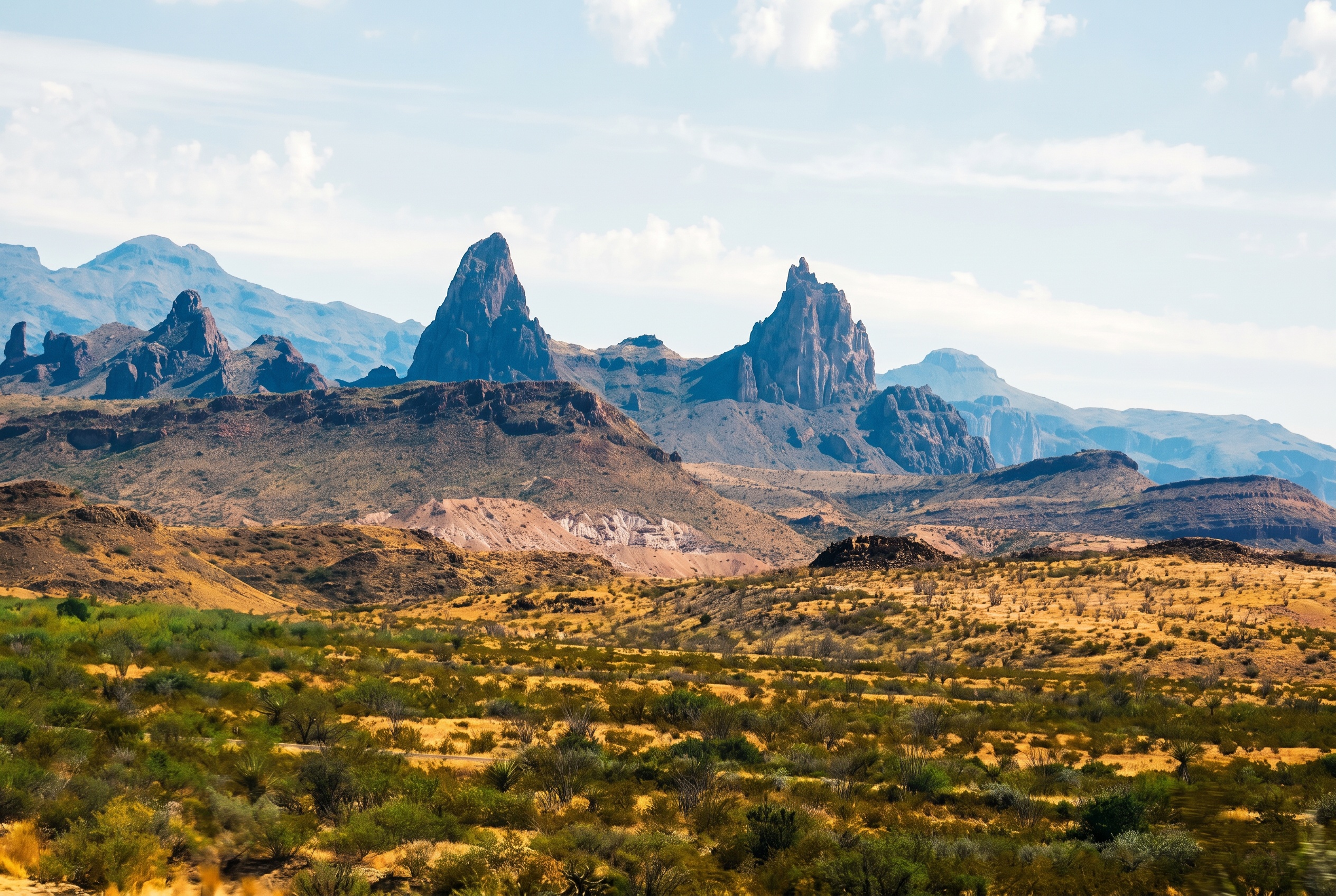
If you love scenic drives (and who doesn’t?), Ross Maxwell Scenic Drive is a 50 km (31-mile) road that runs from Chisos Basin down to Santa Elena Canyon, serving up one jaw-dropping moment after another along the way.
Stop at Sotol Vista Overlook — from here you get a panoramic view across the entire western section of the park, Santa Elena Canyon, and Mexico’s Sierra Ponce. It’s one of those spots where you suddenly realise just how enormous, empty, and beautiful this landscape truly is.
Another essential stop is Mule Ears Viewpoint — two pointed rock formations that genuinely look like donkey ears (Texans have a sense of humour). If you have time, detour to Tuff Canyon, a short trail of about 1 km where you walk through a narrow canyon carved from volcanic tuff.
Allow 2–3 hours for the entire scenic drive with stops. It works perfectly as a morning outing ending at Santa Elena Canyon.
3. Window Trail — A Sunset You’ll Never Forget
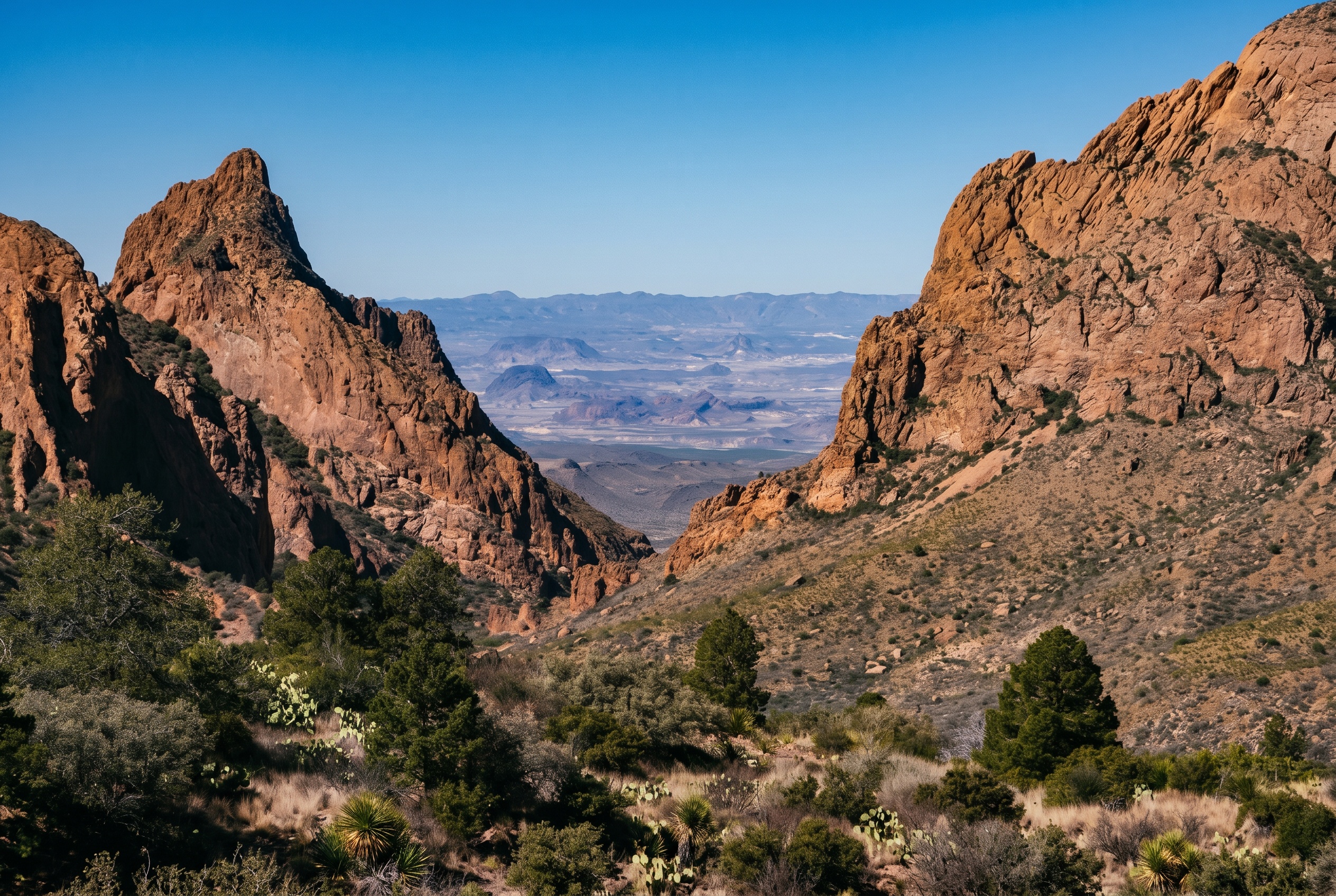
Window Trail is probably the most photographed spot in all of Big Bend — and rightfully so. The trail leads from Chisos Basin down a narrow canyon that opens at the end into “the Window” with a view over the desert below. Time your arrival for sunset and… it’s simply spectacular.
The trail is about 8 km (5 miles) return with roughly 160 metres (525 feet) of elevation change, but here’s the catch — you walk down first and climb back up, so the hardest part waits for you on the return. It’s no killer, but after a full day of hiking you’ll definitely feel it.
Along the way you’ll pass typical Chihuahuan Desert vegetation — agaves, cacti, and rugged rock formations. The last few hundred metres narrow into a rocky streambed (water flows here after rain) before the famous “window” opens up before you with views of Casa Grande and the desert plain.
Tip: Set off so you reach the window 30–45 minutes before sunset. And don’t forget a headtorch for the walk back — stumbling over rocks in the dark without a light is no one’s idea of fun. 😅
4. Lost Mine Trail — The Most Beautiful Hike in the Park
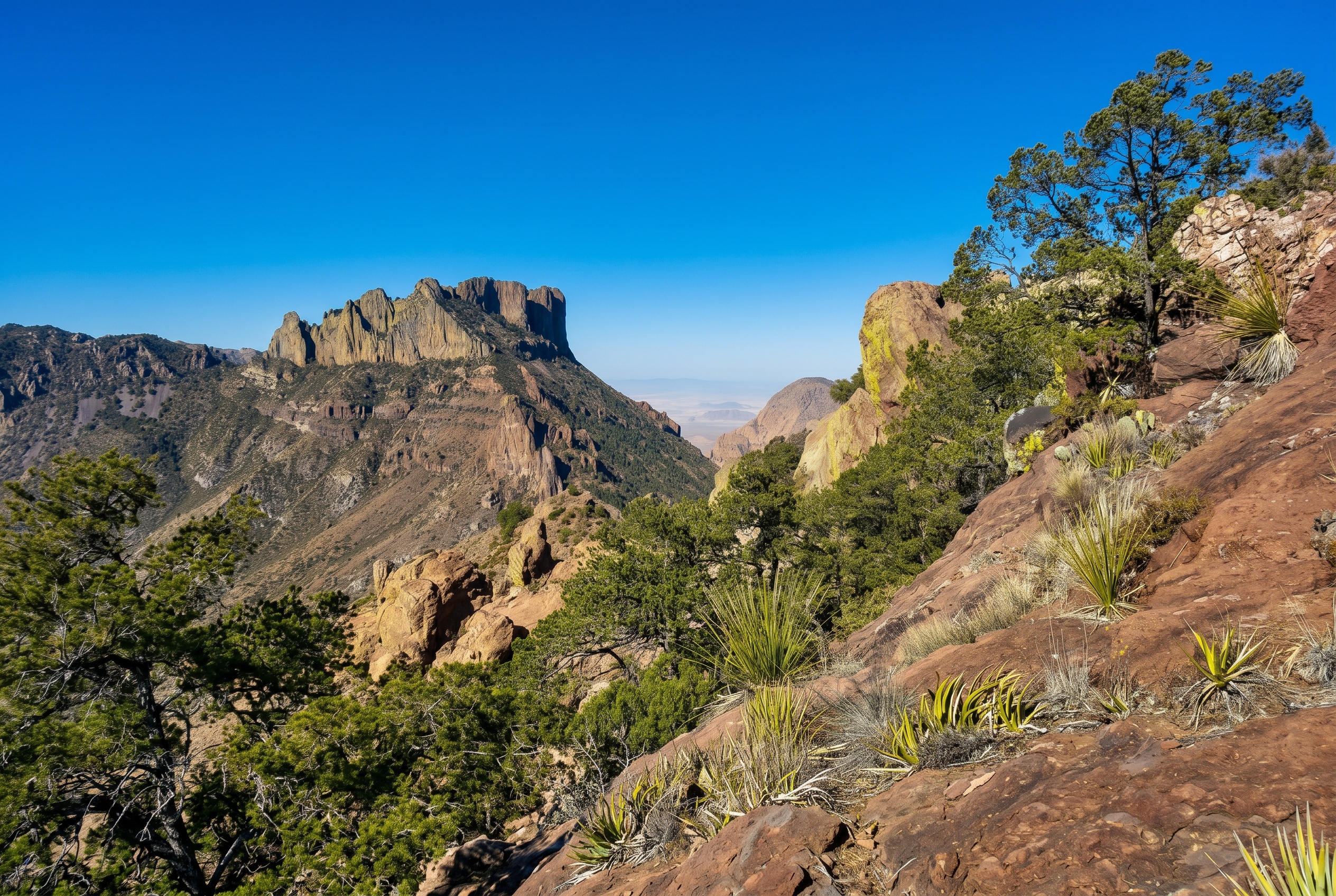
If you only have time for one hike in Big Bend, make it Lost Mine Trail. It’s arguably the most popular and highest-rated trail in the entire park, and once you’ve done it, you’ll understand why.
The trail starts at Panther Pass (the highest point on the park road, over 1,700 m / 5,575 ft) and climbs 8 km (5 miles) return along the Chisos Mountains ridge with about 350 metres (1,150 feet) of elevation gain. It’s not a stroll, but it’s no death march either — anyone with reasonable fitness can manage it.
And the views! From the summit you can see into Mexico, across the entire park, and down into Pine Canyon and Juniper Canyon. On a clear day, the vistas stretch for dozens of miles in every direction. It’s one of those moments where you just want to sit on a rock and simply be.
The trail is well-marked and maintained. Start early (ideally around 7:00–8:00 AM) — it’s cooler, and the small car park at Panther Pass tends to fill up after nine.
5. Hot Springs on the Rio Grande — A Soak With a View of Mexico
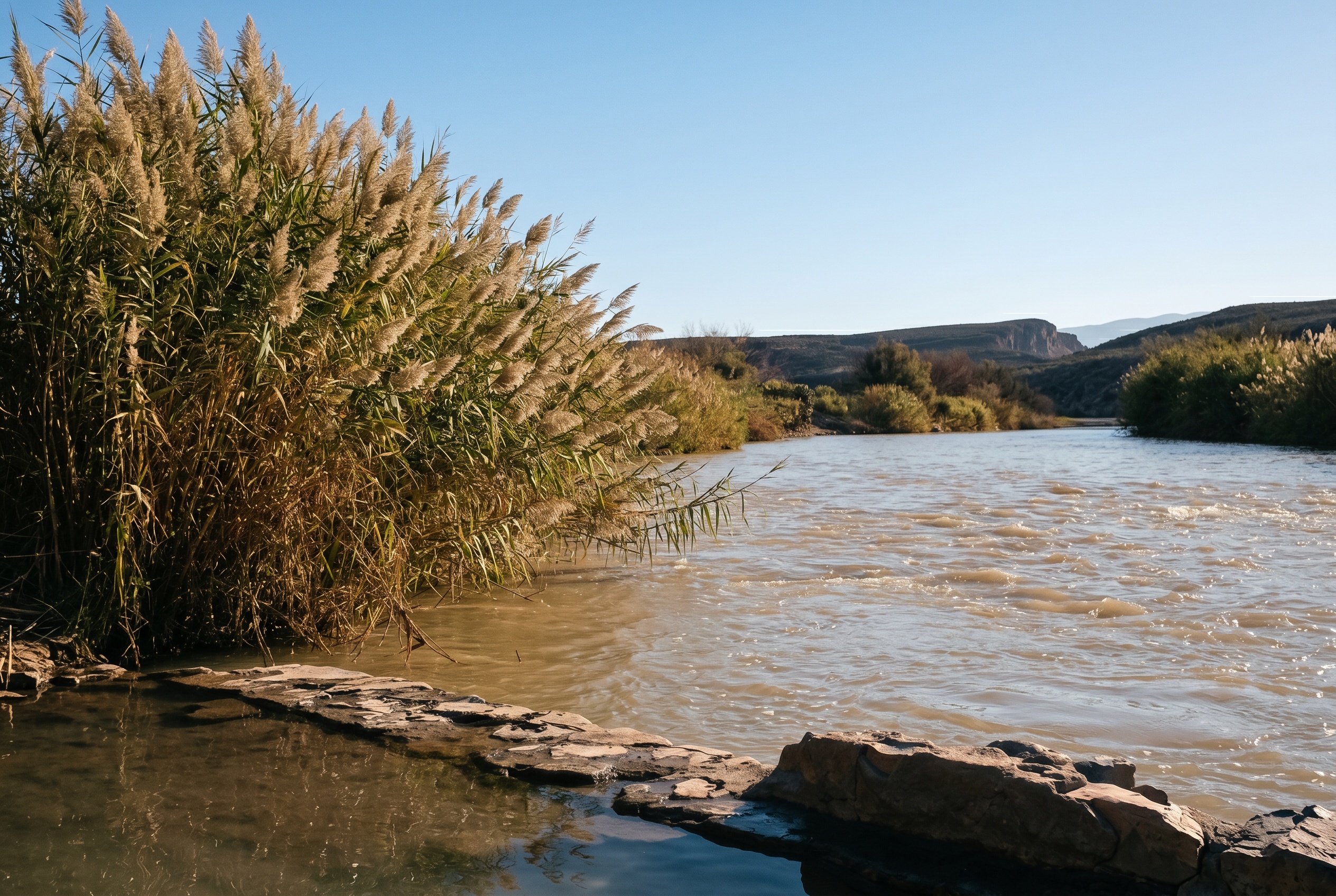
Picture this: you’re sitting in a natural rock pool of thermal water at around 40 °C (105 °F), your legs stretched out towards the Rio Grande, gazing straight at the Mexican mountains. No luxury resort, no entry fee — just you, hot water, and the desert.
The Hot Springs sit in the southeastern section of the park, reached via a gravel road (passable in a regular car, but take it slowly). From the car park, it’s a short, flat trail of about 1 km along the river, passing ruins of a historic bathhouse from the 1920s — back when people came from all over Texas to take the waters here.
The pool is small (fits about 5–6 people) and carved directly into the rock at the river’s edge. Hot water bubbles up from the ground and mixes with the cooler river water. The best time is early morning or at sunset — during the day in peak season there can be a queue (a relative queue — this is still Big Bend, after all).
On the stone wall above the pool, look out for Native American petroglyphs — they’re thousands of years old and give the whole place a mystical atmosphere.
Practical tip: Bring a towel and swimwear, obviously. The minor downside is that the pool bottom is slippery and covered in algae — sandals with straps are a much better choice than flip-flops.
6. Boquillas — An Afternoon Trip to Mexico
Here’s something most people don’t realise: you can cross into Mexico from Big Bend. And I mean legally, through the official Boquillas border crossing. On the Texas side, you hop into a rowboat, a local ferries you across the Rio Grande for a few dollars, and on the Mexican side a tiny village called Boquillas del Carmen awaits.
Boquillas is a sleepy Mexican hamlet of a few hundred people, where you’ll find two or three restaurants serving excellent Mexican food at pocket-friendly prices (enchiladas for $5, a margarita for $3). The people are friendly, the pace is slow, and the atmosphere is authentically Mexican — no touristy Cancún vibes here.
Important: The border crossing is only open on Wednesday, Thursday, Friday, and Saturday from 9:00 AM to 6:00 PM (check current hours on the NPS website). You must have a valid passport that allows re-entry to the USA. British passport holders can enter Mexico without a visa for short visits. On your return, you’ll go through passport control on the US side — it’s a small kiosk with an electronic system, but it works smoothly.
The river crossing costs about $5 per person. On the Mexican side, locals will offer you a ride on a horse or donkey into the village (about $5), or it’s roughly 1 km on foot along a dirt track.
Tip: Bring cash in small notes (both USD and Mexican pesos are accepted).
7. Chisos Basin — The Heart of the Park
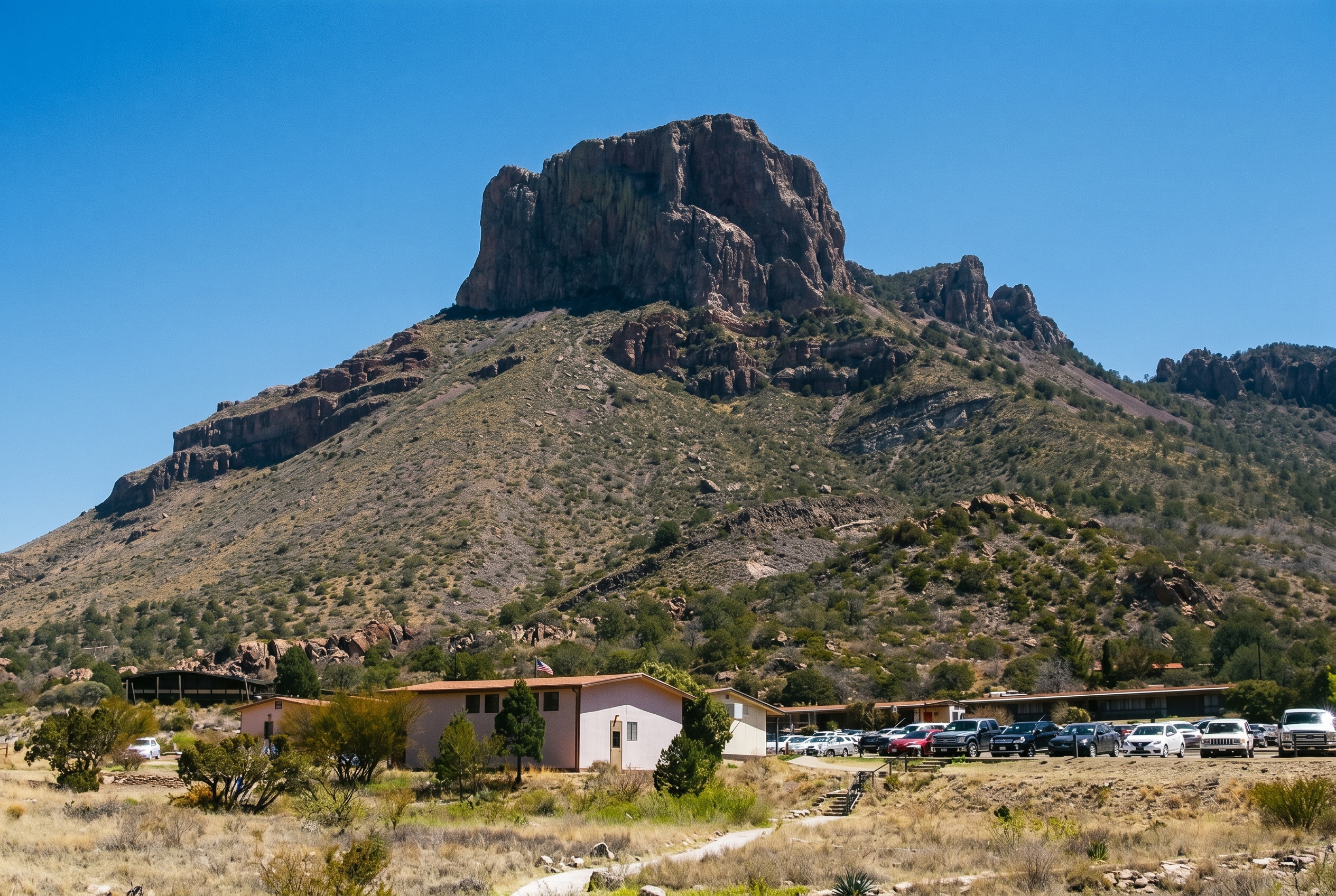
Chisos Basin is Big Bend’s natural hub — it sits in a valley surrounded by mountains and is where trailheads, accommodation, the restaurant, and the ranger station all converge. If you’re picking one base inside the park, this is it.
The drive into the basin is an experience in itself — the road climbs into the mountains, the landscape shifts from desert to a wooded valley of pines and oaks (yes, in the middle of the Texan desert!), and suddenly a valley ringed by dramatic rock walls opens before you. Casa Grande Peak dominates the skyline and looks like an enormous castle.
The basin is the starting point for the park’s best trails — Window Trail, Lost Mine Trail, Emory Peak Trail, and more. You’ll find Chisos Mountains Lodge with its restaurant (the only place in the park for a hot meal and a cold beer), a camp store with basic supplies, and a ranger station where staff can help you plan your itinerary.
Wildlife: Chisos Basin offers the best chance of spotting a black bear. The population returned here from Mexico in the 1990s and today around 30–40 bears live in the area. Rangers confirm they regularly show up near the campground. That’s why all campsites and trailheads have bear-proof food containers — use them.

8. Emory Peak — The Park’s Highest Point for the Adventurous
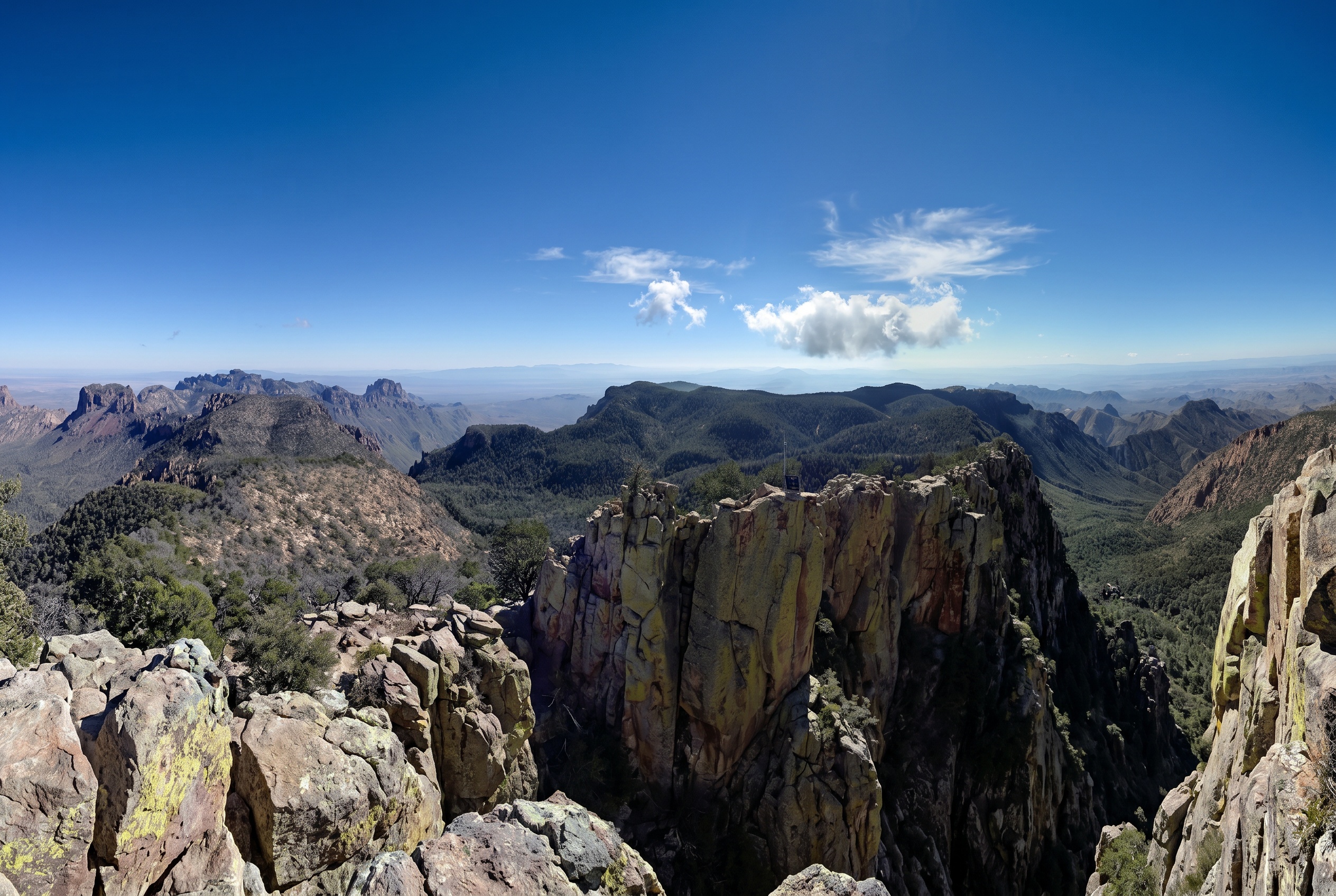
If you’re after a challenge, Emory Peak at 2,385 metres (7,825 feet) is the highest mountain in Big Bend. The trail is roughly 16 km (10 miles) return with over 760 metres (2,500 feet) of elevation gain, and the final push to the actual summit requires scrambling over rock (class 2–3 scramble).
The views from the top are — naturally — fantastic. On a clear day you can see for hundreds of miles in every direction. But be honest with yourself about your fitness and experience. That final rock section isn’t for everyone, and the wind at the summit can be ferocious.
Practicalities: Allow 5–7 hours for the full trail. Start at dawn. Carry at least 3 litres of water per person (more is better). And if the rock scramble isn’t your thing, stop at the saddle below the summit — the views are brilliant from there too.
9. Rio Grande Village and Surroundings — Birds, River, and Peace
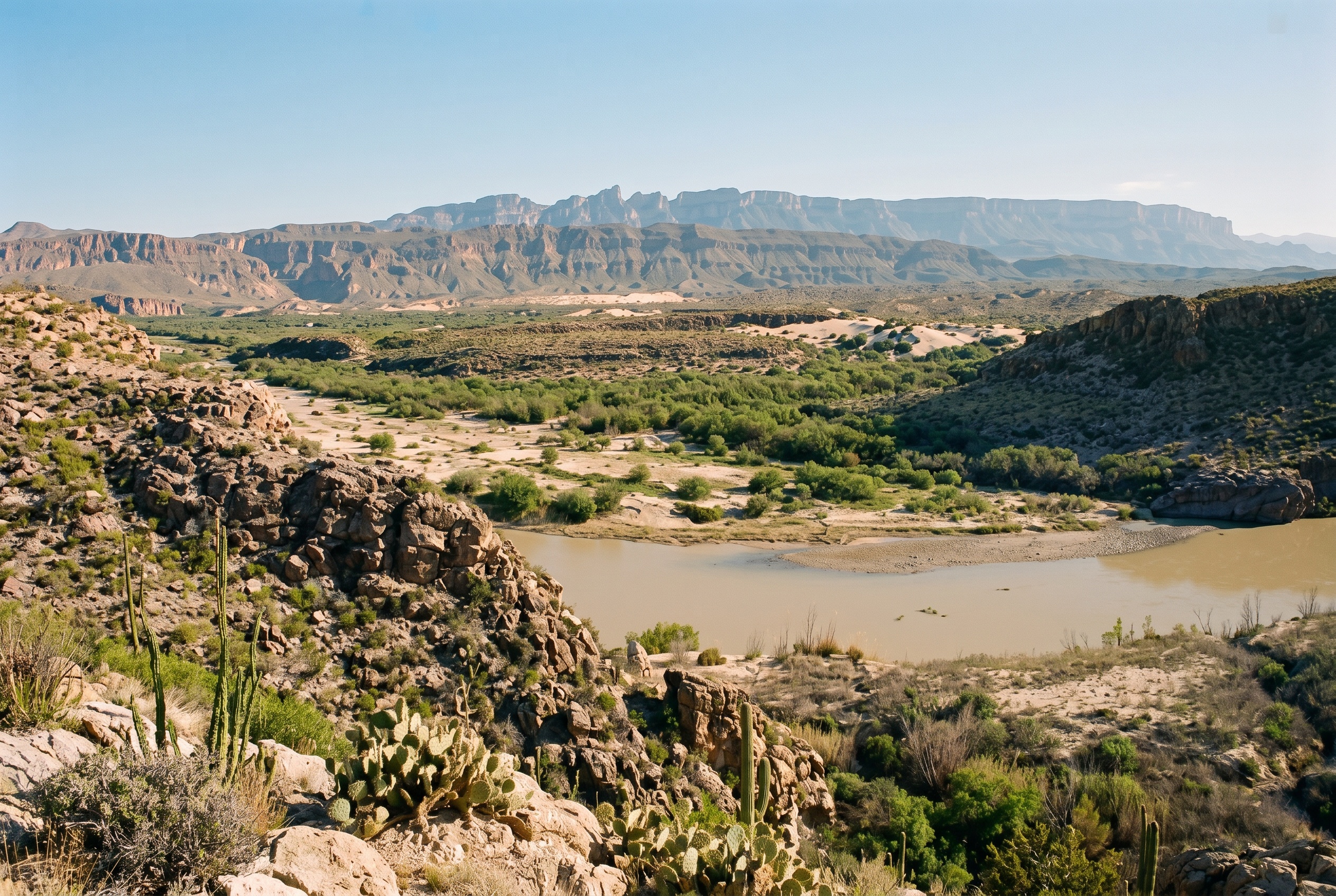
The southeastern part of the park around Rio Grande Village has a completely different feel to the mountainous Chisos Basin. You’re down by the river here, at around 550 metres elevation, surrounded by desert landscape with sparse cottonwood trees lining the Rio Grande.
Rio Grande Village Nature Trail is a short loop (about 1.2 km / 0.75 miles) that takes you through wetlands and ends on a hilltop with 360° views of the river, Sierra del Carmen on the Mexican side, and the surrounding desert. Easily manageable with children too.
This corner of the park is a birdwatcher’s paradise — over 450 bird species have been recorded along the river. In winter, migratory species arrive from across North America. Even if you’re not into ornithology, the hummingbirds buzzing around every bush are worth the visit alone.
10. Big Bend Texas Stars — The Darkest Sky in America
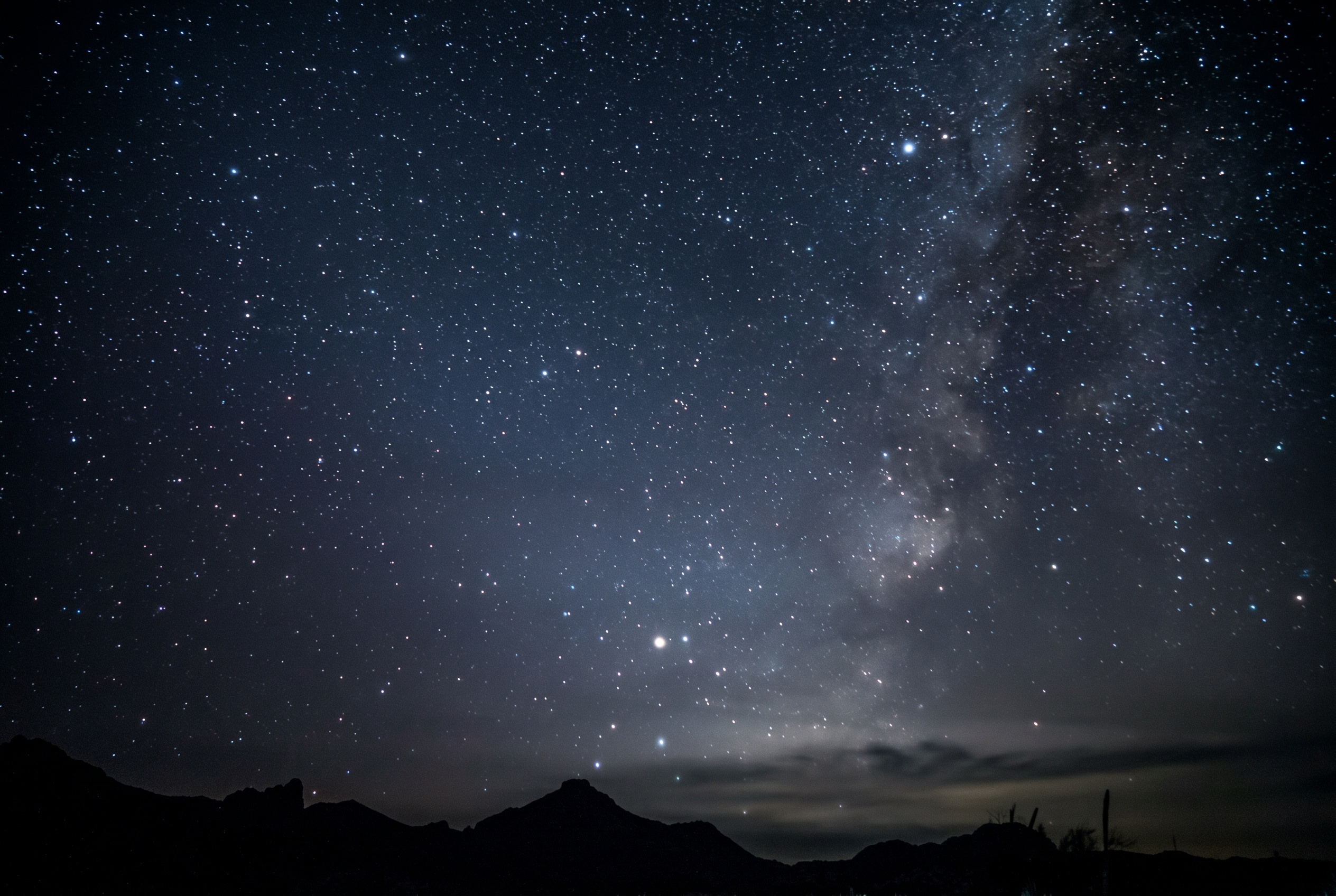
This deserves its own section because the night sky above Big Bend is one of the top reasons to visit. The park holds International Dark Sky Park certification, and measurements show it’s one of the darkest places in the entire United States. The nearest larger city (Odessa/Midland) is over 300 km away, so light pollution is virtually zero.
What does that mean in practice? You’ll see the Milky Way so clearly it looks painted across the sky. You’ll spot satellites, meteors, and planets with the naked eye. On a good night you can count over 2,000 stars (compared to roughly 200 visible from central London, for perspective).
The park runs regular astronomy programmes — a ranger will sit with you on a meadow, set up a telescope, and explain the constellations. It’s free and absolutely worth it, even if you know nothing about astronomy.
Tip: The best stargazing is during a new moon — check the lunar calendar when planning your trip. The top spots for observation are Chisos Basin (the surrounding mountains block any residual light from the campground) and Rio Grande Village.
11. Terlingua Ghost Town — A Ghost Town That’s Alive
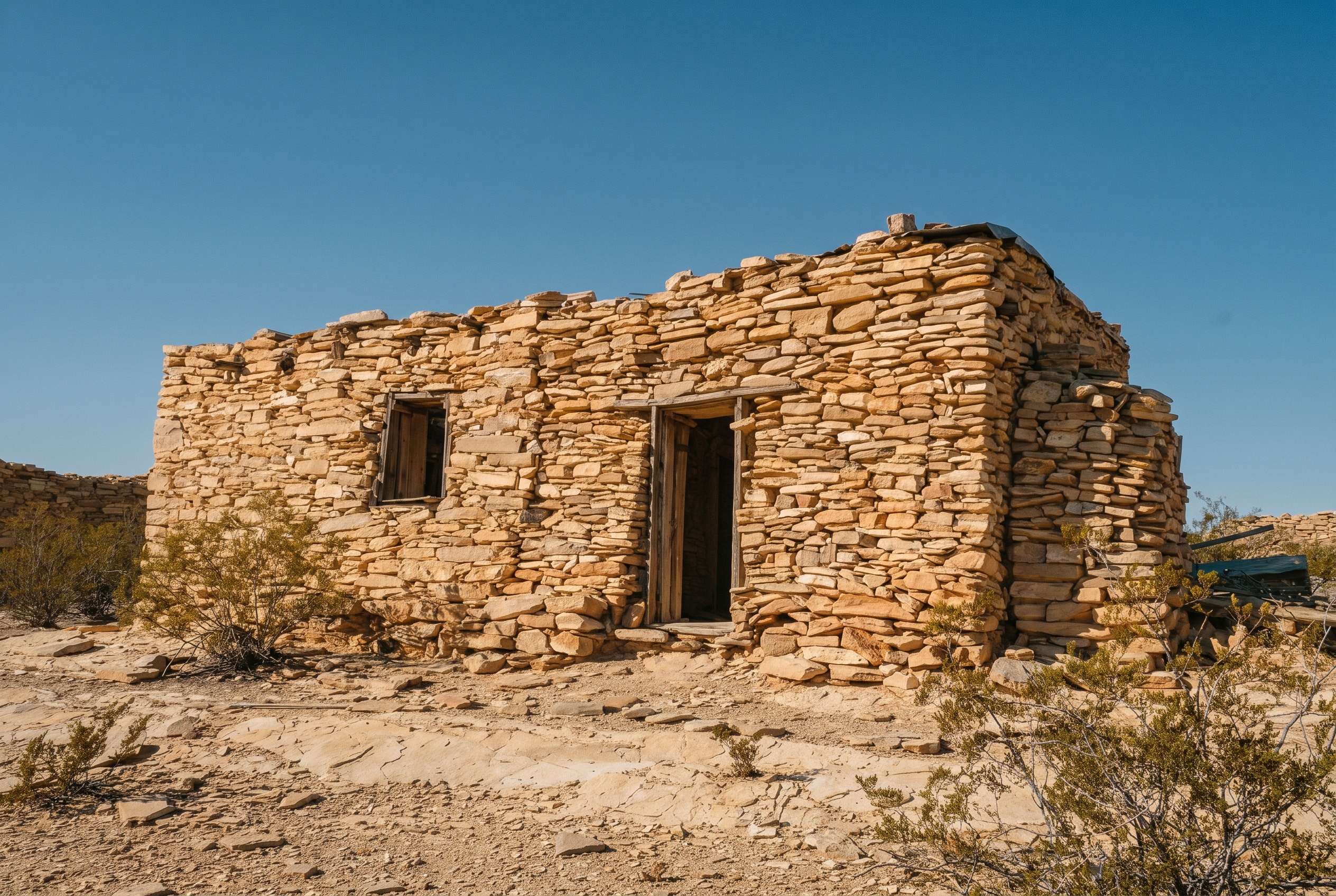
Terlingua is technically a ghost town — an abandoned mining settlement where mercury was extracted in the early 20th century. But “abandoned” is a relative term, because today about 60 permanent residents call it home, and you’ll find a restaurant, a bar, an art shop, and an atmosphere you’d sooner expect in an indie film than in real life.
The main attraction is the Starlight Theatre — a former cinema converted into a restaurant and bar. In the evenings there’s live music, steaks on the grill, and margaritas flowing freely. You sit under the stars (those stars again!) surrounded by crumbling walls of the old town and wonder how on earth a place like this can exist. Pure magic.
Terlingua Trading Company — a little shop selling everything from souvenirs and maps to local art. A great spot for picking up gifts that don’t look like your typical “buy a fridge magnet from a national park” fare.
Every November the town hosts the Terlingua International Chili Championship — yes, a chilli cook-off competition. Texas in a nutshell. 😁
12. Balanced Rock Trail — For Those Who Crave Solitude
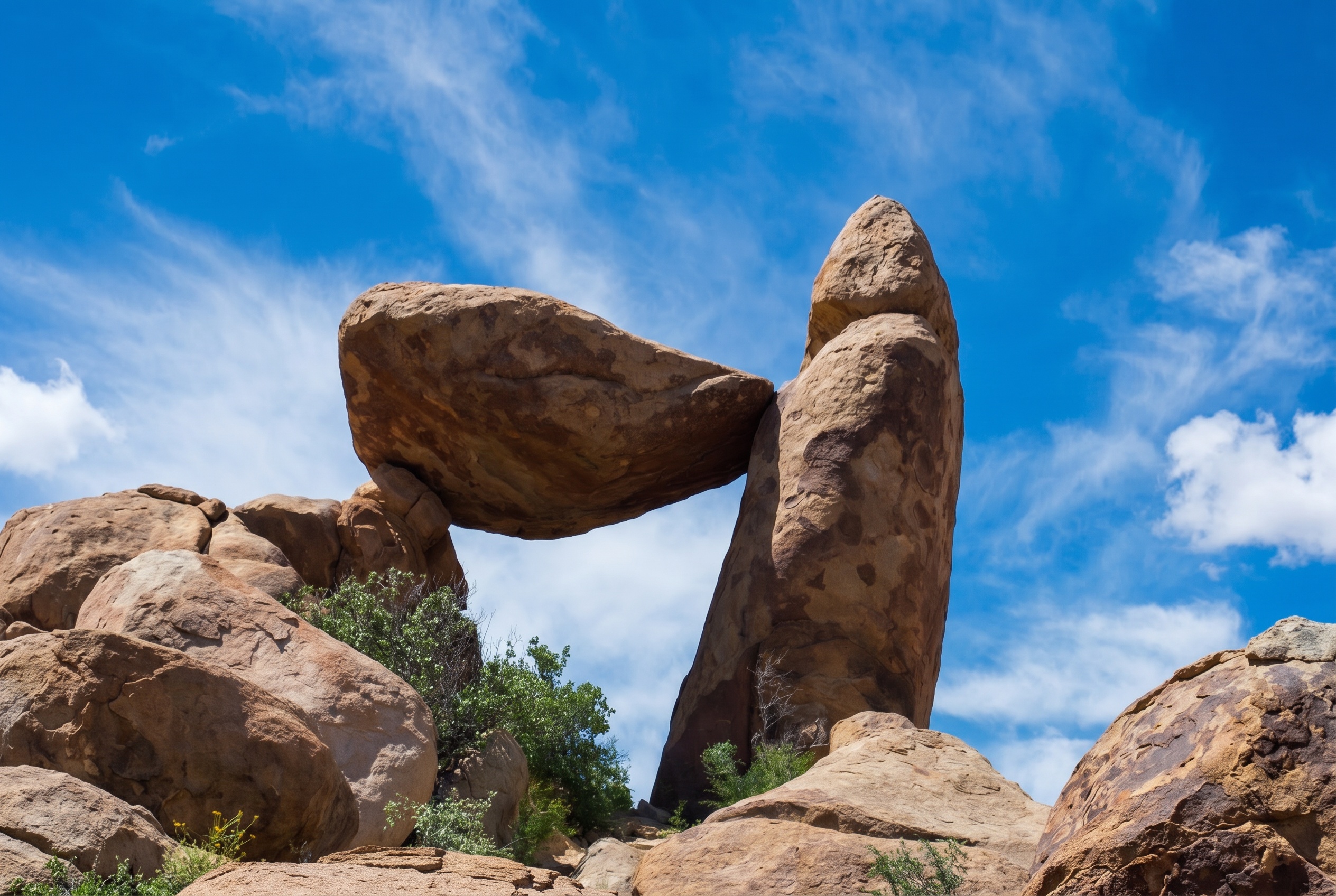
If you’re looking for a trail where you won’t see another soul, Balanced Rock Trail is your answer. It lies in the less-visited southwestern section of the park in the Grapevine Hills area, and the destination is a bizarre rock formation — a massive boulder perched on the tip of another boulder, as if placed there by a giant.
The trail is about 3.5 km (2.2 miles) return and relatively easy, though the final stretch requires a bit of scrambling over rocks. The formations around you look like they belong on another planet — smooth, rounded granite boulders stacked on top of each other at impossible angles.
Tip: Go early morning for the best photo light. The road to the trailhead is unpaved — passable in a regular car when dry, but check conditions at the ranger station after rain.
13. Castolon and the Historic Village
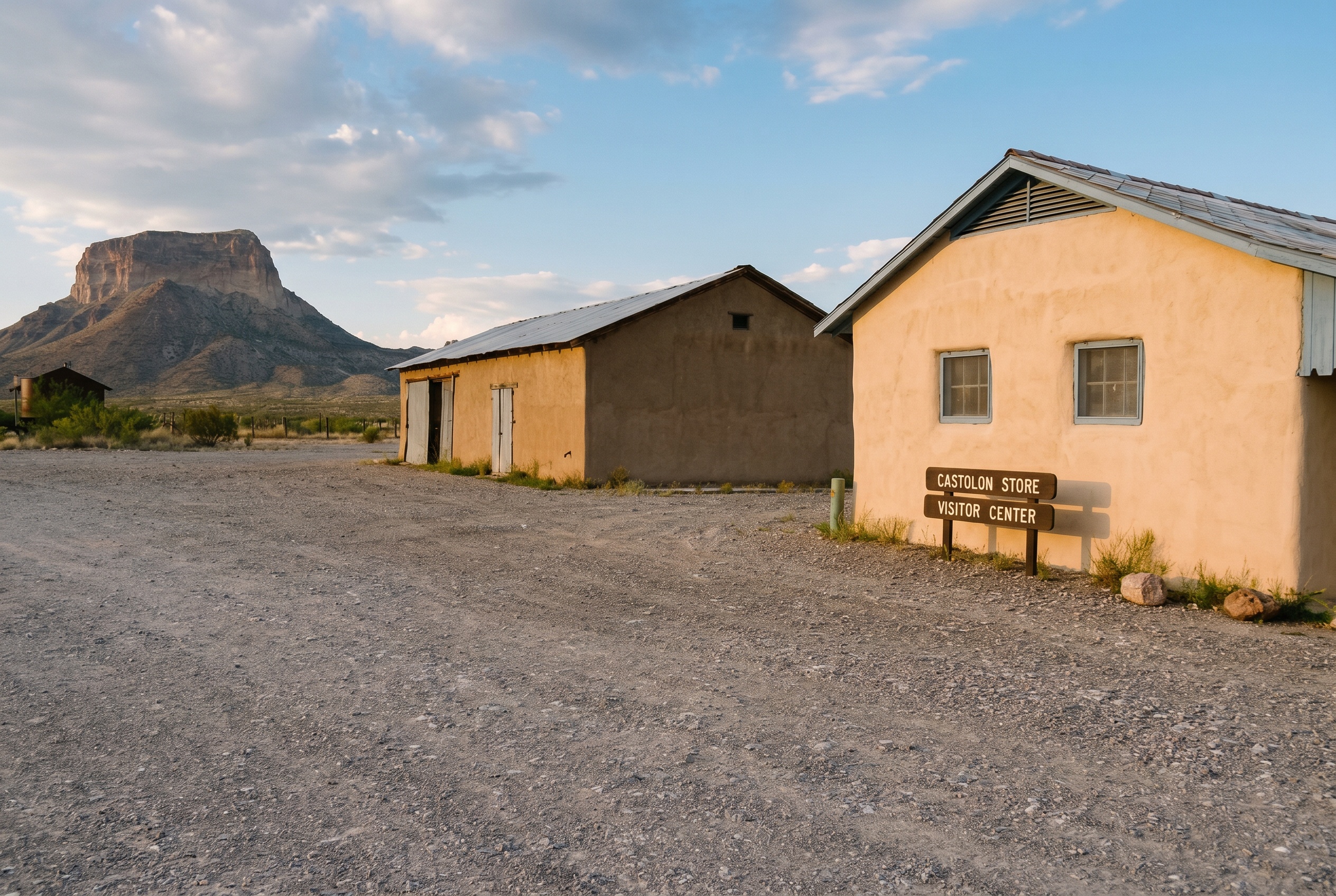
Castolon, in the western part of the park, is a former military post and trading station on the Mexican border. Today you’ll find a small visitor centre and Cottonwood Campground — the quietest campsite in the park, shaded by beautiful cottonwood trees.
Castolon Store (open seasonally) is the oldest shop in the park and sells basic supplies, cold drinks, and — most importantly — burritos. Quite possibly the best burritos on the entire Texan side of the river. 😁
From Castolon it’s a short drive to the Santa Elena Canyon trailhead, and the whole area offers the finest views of Mexico’s Sierra Ponce.
14. Chihuahuan Desert Nature Trail — The Desert Up Close
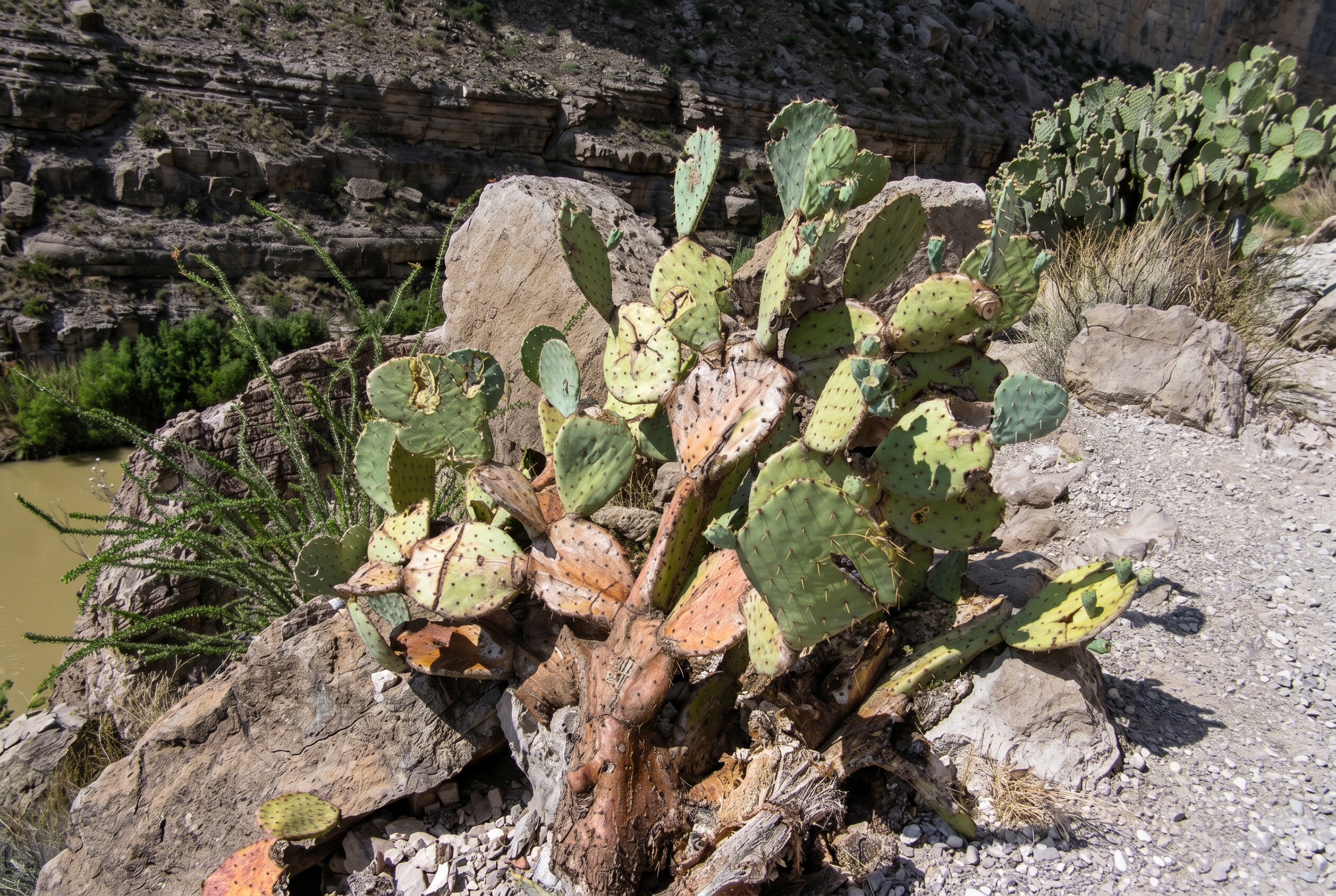
If you want to understand the Chihuahuan Desert (the largest desert in North America, with Big Bend sitting right in the middle), the Chihuahuan Desert Nature Trail near Dugout Wells is a perfect short walk.
It’s an interpretive trail of about 800 metres with information panels explaining the desert ecosystem — why cacti look the way they do, how animals survive in these temperatures, and the role water plays. Sound dull? It isn’t. Suddenly you start seeing the arid landscape with completely different eyes, noticing details — flowers on cacti, animal tracks in the sand, tiny lizards darting between rocks.
Bonus: Near Dugout Wells there’s a small spring with cottonwood trees that attracts wildlife — especially javelinas (peccaries, a type of wild pig). It’s not uncommon to spot an entire herd calmly drinking. Watch from a safe distance though — javelinas can get nasty when they feel threatened.
15. Big Bend Texas Map and Route Planning — Finding Your Way
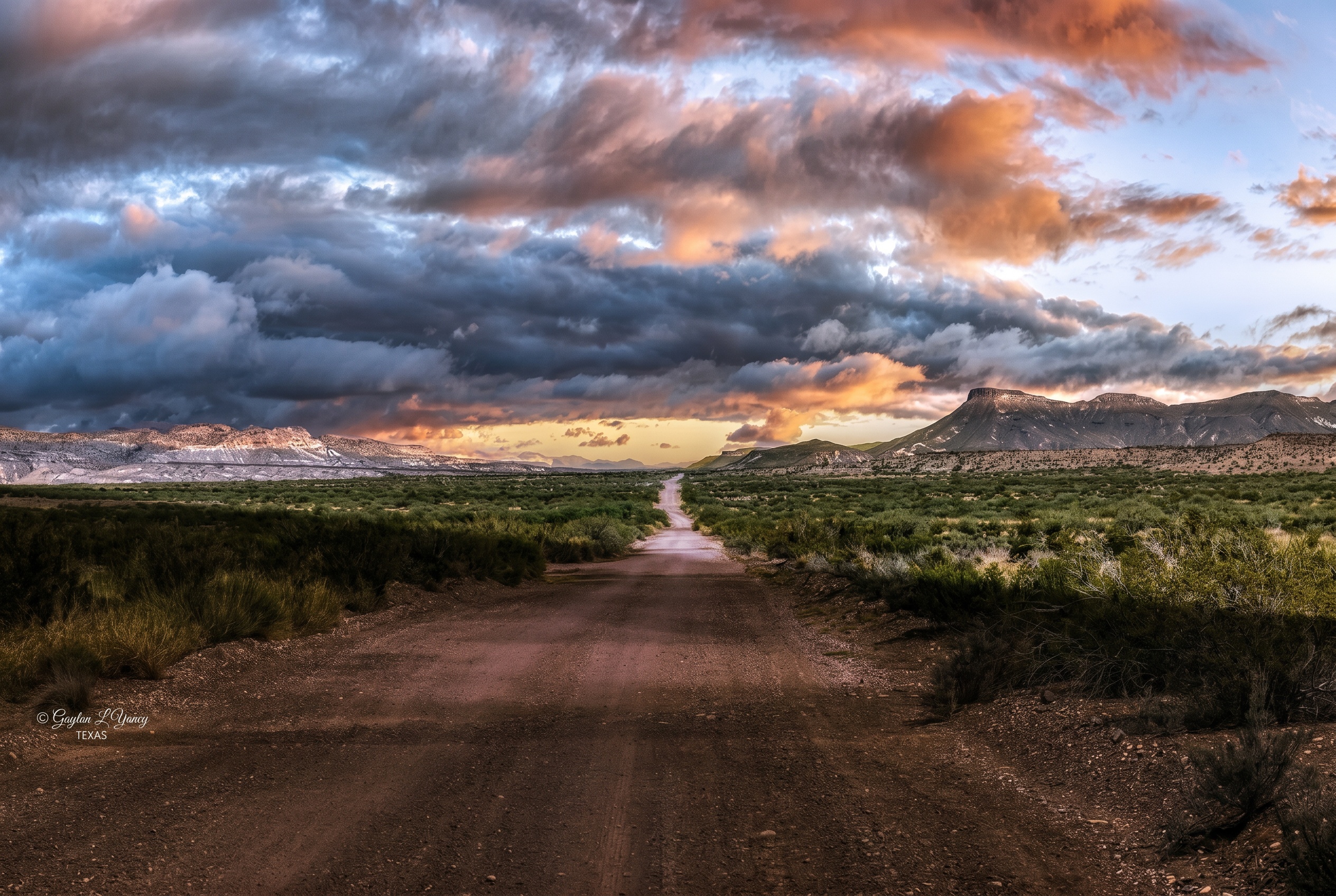
Big Bend is massive — covering over 3,200 km² (1,235 square miles), roughly the size of Luxembourg. The main park roads are paved, but distances are considerable. From Chisos Basin to Santa Elena Canyon, allow an hour’s drive; to Rio Grande Village, another hour in the opposite direction.
Download an offline map before you arrive (Google Maps supports offline maps, as does Maps.me) — mobile signal in the park is essentially non-existent. At the Panther Junction ranger station you can pick up a free paper map of the park — it’s clear and perfectly adequate for navigation.
Unpaved roads: The park has an extensive network of dirt roads, some of which lead to stunning remote spots (Old Maverick Road, Glenn Spring Road, River Road). Most require an SUV with higher clearance or 4WD — don’t attempt them in a standard saloon car. Always check current road conditions at the ranger station.
Map of points of interest for your phone
Where to Eat and Drink in Big Bend and Nearby
Food in Big Bend is a bit of a challenge — this isn’t exactly a culinary hotspot like Italy. But there are a few cracking options.
Inside the Park
Chisos Mountains Lodge Restaurant — the only restaurant inside the park. Breakfast, lunch, and dinner. The food is solid American fare — burgers, steaks, salads. Nothing extraordinary, but after a full day’s hiking that burger will taste like a Michelin-star meal. Prices reflect the location (burger around $15, steak $25–30).
Camp Store at Chisos Basin — basic groceries, sandwiches, and snacks. There’s a similar shop at Rio Grande Village.
Terlingua and Study Butte
Here’s a pleasant surprise — in a ghost town, you’ll find better food than in many a Texan restaurant:
- Starlight Theatre Restaurant & Saloon — steaks, Mexican cuisine, live music. The atmosphere is utterly unreal. Book a table in advance, especially at weekends.
- La Posada Milagro Coffeehouse — excellent coffee and light lunches. Breakfasts here are top-notch.
- Espresso y Poco Más — a little café with pizza, sandwiches, and ice cream. Perfect pit stop on the way to or from the park.
- Long Draw Pizza — open Thursday to Saturday only, wood-fired pizza. A local legend.
Practical tip: If you’re camping, stock up in Alpine or Marathon on your way to Big Bend — the selection in Study Butte is limited and pricier. A tried-and-tested strategy is to bring a cool box with food for breakfasts and lunches, then eat out in the evening.
Practical Tips and Final Advice
Water, Water, Water
The single most important piece of advice in this entire article: Carry more water than you think you need. The park recommends a minimum of 1 gallon (3.8 litres) per person per day, and that’s even when you’re not on a trail. Add more for longer hikes. Dehydration in the desert creeps up fast and insidiously — the dry air draws moisture from your body without you realising (you sweat less visibly, but you’re still losing fluids constantly).
Petrol and Driving
There are no petrol stations inside the park. Fill up in Study Butte. Distances within the park are significant — from Panther Junction to Santa Elena Canyon is 60 km (37 miles) one way. You can cover most of the park in a regular car on paved roads, but unpaved roads to more remote spots require an SUV or vehicle with higher clearance.
Phone Signal and Internet
Virtually non-existent. In Chisos Basin you might occasionally catch a weak AT&T signal, but don’t count on it. Even Chisos Mountains Lodge has no Wi-Fi (or only very limited). Download offline maps, save any important information beforehand, and embrace the digital detox. After the first day without your phone, you’ll realise how liberating it is. ☺️
Flights and Getting There
From the UK, look for flights to Texas via Dallas, Houston, or Austin. British Airways, American Airlines, and United all fly direct from London Heathrow. For the best deals, compare prices on flight comparison sites well in advance. Once in Texas, you’ll need a hire car — and then it’s a spectacular road trip out to Big Bend.
If you’re planning a longer road trip through Texas or the American Southwest (which we’d highly recommend!), have a look at our article on how to pack into carry-on luggage only.
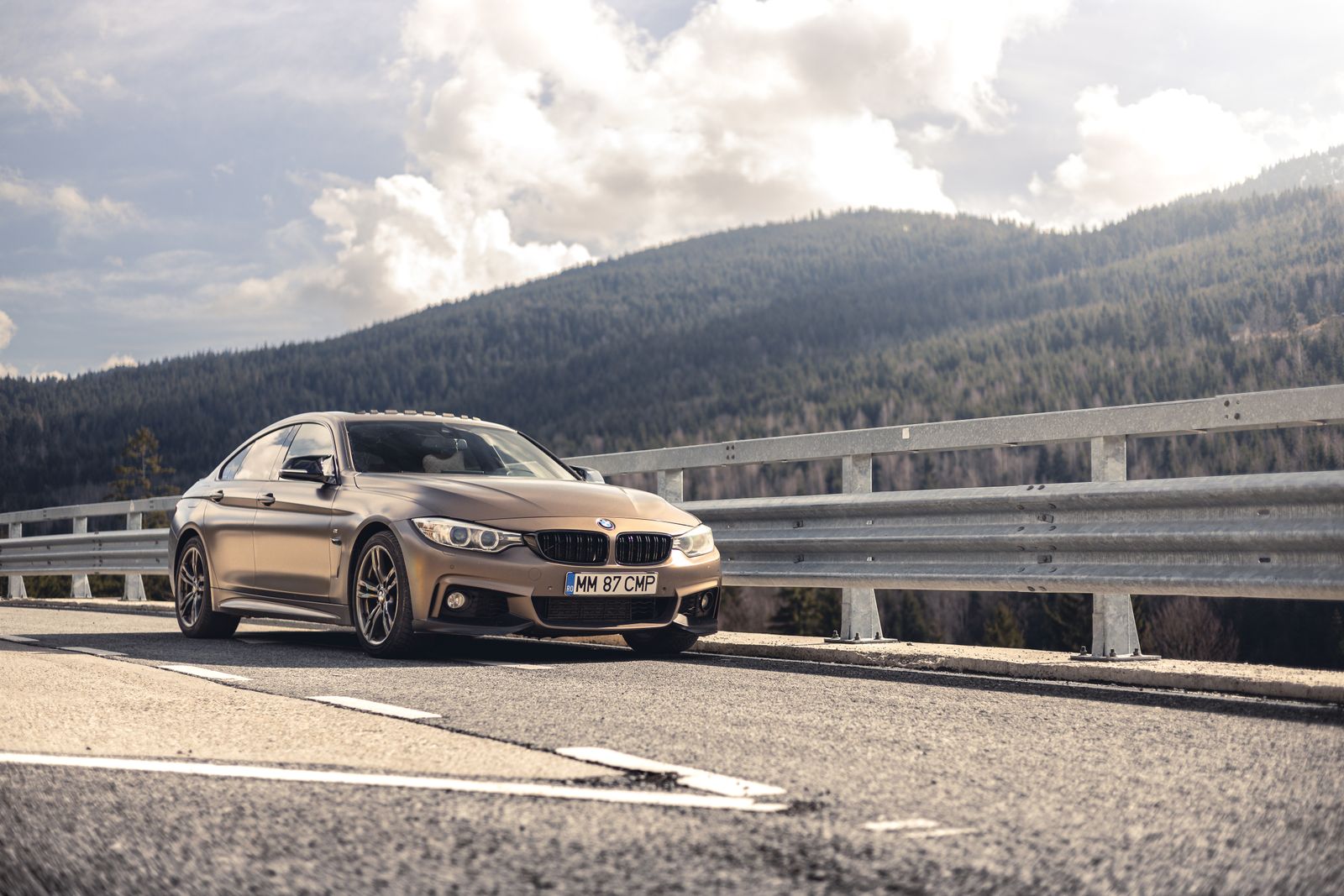 🚗 Car rental on the roadVerified rental cars in the United States
Search with the DiscoverCars comparison engine — it compares prices from dozens of local and international rental companies, and most bookings come with free cancellation.
Compare car prices in the United States →Travel Insurance
Don’t even think about travelling to the USA without insurance — healthcare in America costs an absolute fortune. We’ve been using SafetyWing for years and wrote a detailed SafetyWing review.
eSIM for Data
If you want mobile data at least in the towns around the park (inside the park itself, no eSIM will help you), we recommend Holafly — read our Holafly eSIM review.
Footwear
Big Bend means rocks, sand, cacti, and uneven terrain. Proper hiking boots are a necessity, not a suggestion. If you’re unsure which hiking boots to choose, check out our hiking boots guide.
FAQ — Frequently Asked Questions About Big Bend National Park
What is the closest town to Big Bend National Park?
The closest little towns right by the park are Terlingua and Study Butte (practically a single settlement near the western entrance). The nearest larger town is Alpine (about 170 km away), where you’ll find supermarkets, a hospital and more accommodation. If you’re looking for an airport, the closest is Midland/Odessa (about 370 km, a 4-hour drive).
What makes Big Bend so special?
Big Bend is a unique blend of three ecosystems — the Chihuahuan Desert, mountains (the Chisos Mountains) and the riverine landscape along the Rio Grande. It has one of the darkest night skies in the US, more than 1,200 plant species, over 450 bird species and 75 mammal species. And yet it sees just a fraction of the visitors compared to other parks — in 2023 it was around 450,000 people, while Great Smoky Mountains gets over 12 million a year.
Is entry to Big Bend National Park free?
No, the entrance fee is $30 per private vehicle for 7 days (motorcycle $25, hiker/cyclist $15). A few times a year (usually on MLK Day, the first day of National Park Week and Veterans Day) admission is free. The best value is the America the Beautiful Annual Pass for $80, which is valid for all national parks for a whole year.
Where to stay when visiting Big Bend?
You have two main options: inside the park (Chisos Mountains Lodge from $160/night or camping from $16/night) and outside the park in Terlingua/Study Butte (motels, Airbnb, glamping from $80/night). In high season (October–March) book as early as you can — the Chisos Lodge is often full months in advance.
How many days do I need for Big Bend?
The minimum is 3 days, ideally 4–5 days. In three days you can manage the main trails (Window Trail, Lost Mine Trail), Santa Elena Canyon, Hot Springs and stargazing at night. In 5 days you can add Emory Peak, Boquillas, Balanced Rock and a slower, stress-free pace. Dedicate one day to the western part (Ross Maxwell Drive + Santa Elena Canyon), one day to the Chisos Basin and its trails, and one day to the eastern part (Hot Springs, Rio Grande Village, Boquillas).
Is Big Bend safe?
Yes, the park is safe — but this is wilderness and desert, so the biggest risk isn’t people, it’s nature. Dehydration is danger number one, followed by flash floods in the canyons after rain, snakes (11 rattlesnake species, which mostly avoid people, but watch where you step) and bears (in the Chisos Mountains — store food in bear-proof containers). Cell signal in the park is practically nonexistent, so keep a full tank of gas, plenty of water, and tell someone where you’re going.
Can you visit Big Bend with kids?
Absolutely, but with some preparation. Shorter trails like Hot Springs Trail, Santa Elena Canyon Trail, Window View Trail (careful, not the Window Trail — that’s a different, longer one) and Rio Grande Village Nature Trail are doable even with younger children. Avoid summer (the heat is more dangerous for kids) and always have plenty of water and shade. The Junior Ranger Program at the ranger station is a great way to get kids involved — they get a booklet with activities and a badge at the end. 😊 Big Bend is one of those places that change you. Not dramatically, not instantly — but quietly, gradually. You stand in a canyon hundreds of millions of years old, looking at a river that separates two worlds, and suddenly you realize how small we are. And how beautiful it is. If you love nature, peace and quiet, and authentic experiences far from the tourist crowds — Big Bend is for you. Enjoy it. ☺️
Tips and Tricks for Your Vacation
Don’t Overpay for Flights
Search for flights on Kayak. It’s our favorite search engine because it scans the websites of all airlines and always finds the cheapest connection.
Book Your Accommodation Smartly
The best experiences we’ve had when looking for accommodation (from Alaska to Morocco) are with Booking.com, where hotels, apartments, and entire houses are usually the cheapest and most widely available.
Don’t Forget Travel Insurance
Good travel insurance will protect you against illness, accidents, theft, or flight cancellations. We’ve had a few hospital visits abroad, so we know how important it is to have proper insurance arranged.
Where we insure ourselves: SafetyWing (simple monthly subscription) and TrueTraveller (for extra-long trips).
Find the Best Experiences
Get Your Guide is a huge online marketplace where you can book guided walks, trips, skip-the-line tickets, tours, and much more. We always find some extra fun there!
More from USA Travel Guide
Full guide → Getting there · most readESTA for the USA 2026: How to Apply Step by Step
 What to seeMount Rainier National Park, Washington: 15 Tips on What to See and Do
 Itinerary14-Day Road Trip Through the Pacific Northwest: Oregon, Washington & Lake Tahoe
 What to seeOrlando, USA: 20 Best Things to Do + Theme Park Tips for 2026
 What to seeWhat to See in the USA? 10 Most Beautiful Places to Visit


