TL;DRIn Matera, in Italy’s southern Basilicata region, don’t miss the cave district of Sassi di Matera (a UNESCO site since 1993), Matera Cathedral, the Palombaro Lungo cistern and the Belvedere di Murgia Timone viewpoint. For food, Trattoria del Caveoso or Baccanti are both worth booking. The easiest way in is by bus from Bari (60–70 minutes, €6–9) or on the FAL railway (about 90 minutes, roughly €5). Plan for at least a full day, though 2 nights is better, and aim for April–June or September–October, when it’s not too hot and the crowds thin out. A weekend for two comes to €150–200 if you keep things simple, or €400–600 if you splash out on a cave hotel.
Imagine a stone city carved out of the rocks, with James Bond himself driving through its labyrinth of rocky alleys, staircases, and houses. If this sounds familiar, it’s because you’ve seen it in a movie. That enigmatic film town is Matera, nestled in the southern Italian region of Basilicata.
I must admit, my decision to visit Matera was heavily influenced by its appearance in the Bond movie“No Time to Die.” The captivating car chase through the narrow streets of this ancient stone city left me mesmerized. 😊
But Matera is far more than just a movie set. This awe-inspiring city has a rich history. Once a symbol of poverty and illness, Matera was a source of shame for Italy. Today, it stands in stark contrast as the pride of southern Italy and a UNESCO World Heritage Site.
Fascinating fact: Film tourism has led to a dramatic increase in visitors. In 2004, Matera attracted just 10,000 tourists. By 2017, this number had skyrocketed to 400,000, and in 2019, it reached 620,000. Although 2023 saw a slight decrease to 420,000 tourists, the city’s allure remains undeniable. (And as you can see, I’m part of that trend 😄).
Tip: Can’t get enough of Italy? Be sure to visit Cinque Terre National Park for more breathtaking sights and experiences.
You can visit Matera year-round, but the best weather is typically from April to November. While January and February are the coldest months, temperatures still remain a mild 15 to 18 degrees Celsius.
You have several options for visiting Matera. You can either stay in the town itself or choose to live in the surrounding area, such asBari, which also has an airport. Matera is ideal for a day trip or a visit of up to three days. During my trip, I combined my visit to Matera with a stop in the town of Alberobello.
Your choice of accommodation will depend on your schedule, but staying directly in Matera can be an unforgettable experience.
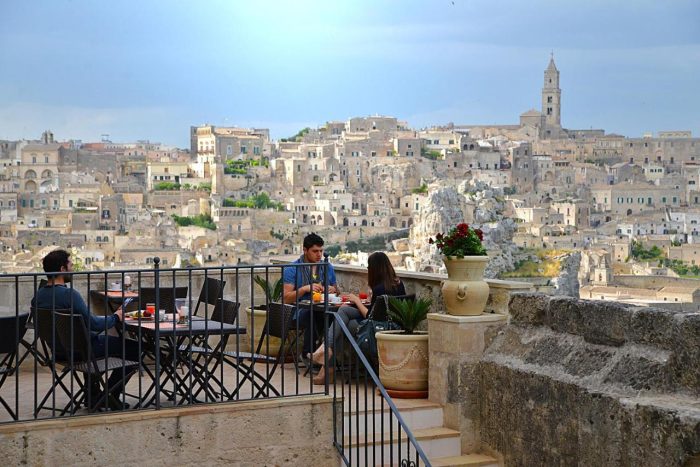
For a unique stay, you can book a cave room with breathtaking views of the city at Il Belvedere. If you’re looking for a more budget-friendly option, consider the Antica Torre di Iuso. For those seeking luxury, the Anima Pietra Luxury Suite is an excellent choice.
Accommodation in Matera in a rock hotel
22 tips on what to see and do in Matera
Matera will captivate you at first sight with its breathtaking views, intricate rock maze, and mysterious history. Wondering what to see in Matera? Here are my 22 top recommendations for things to see and do in this enchanting city.
A Walk Through the Historic Centre
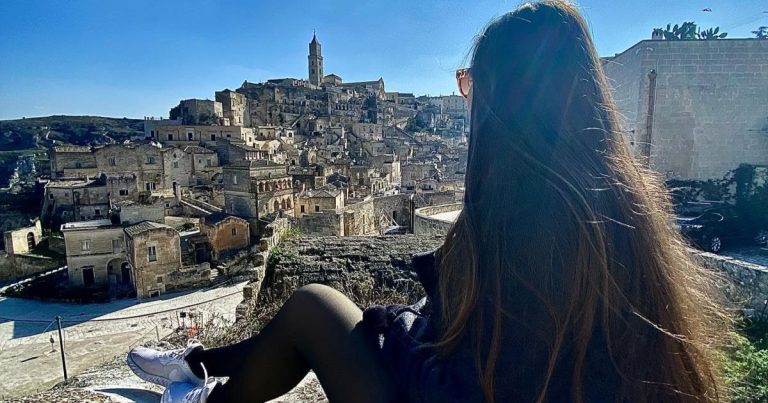
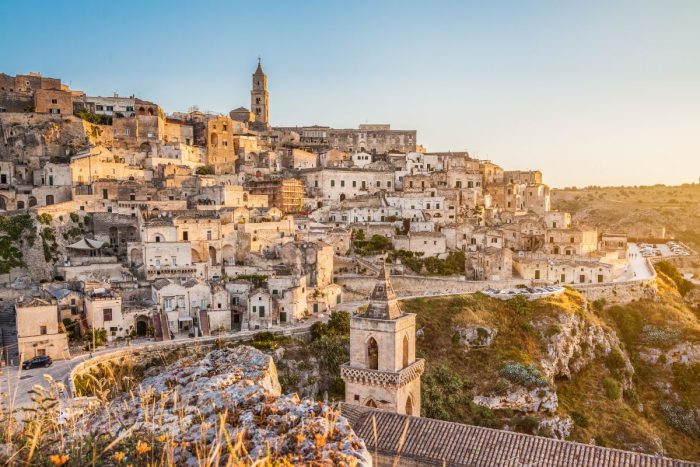
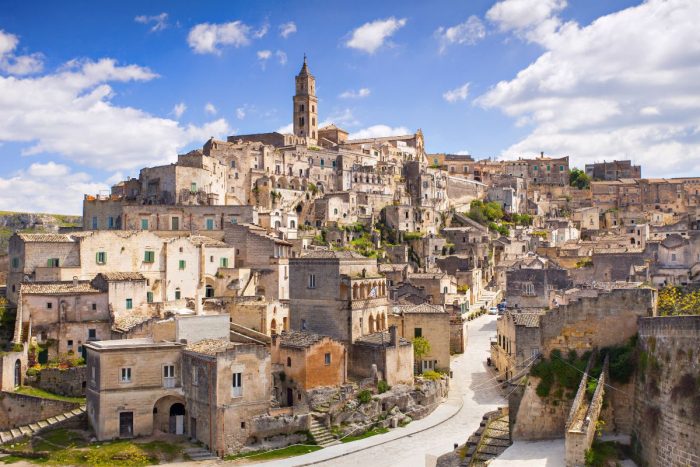
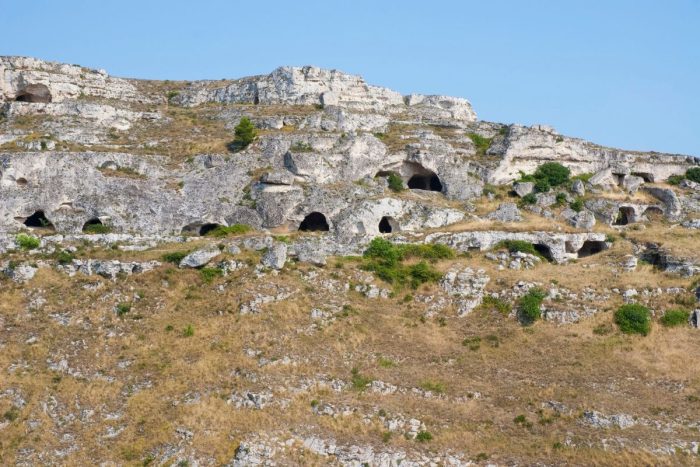
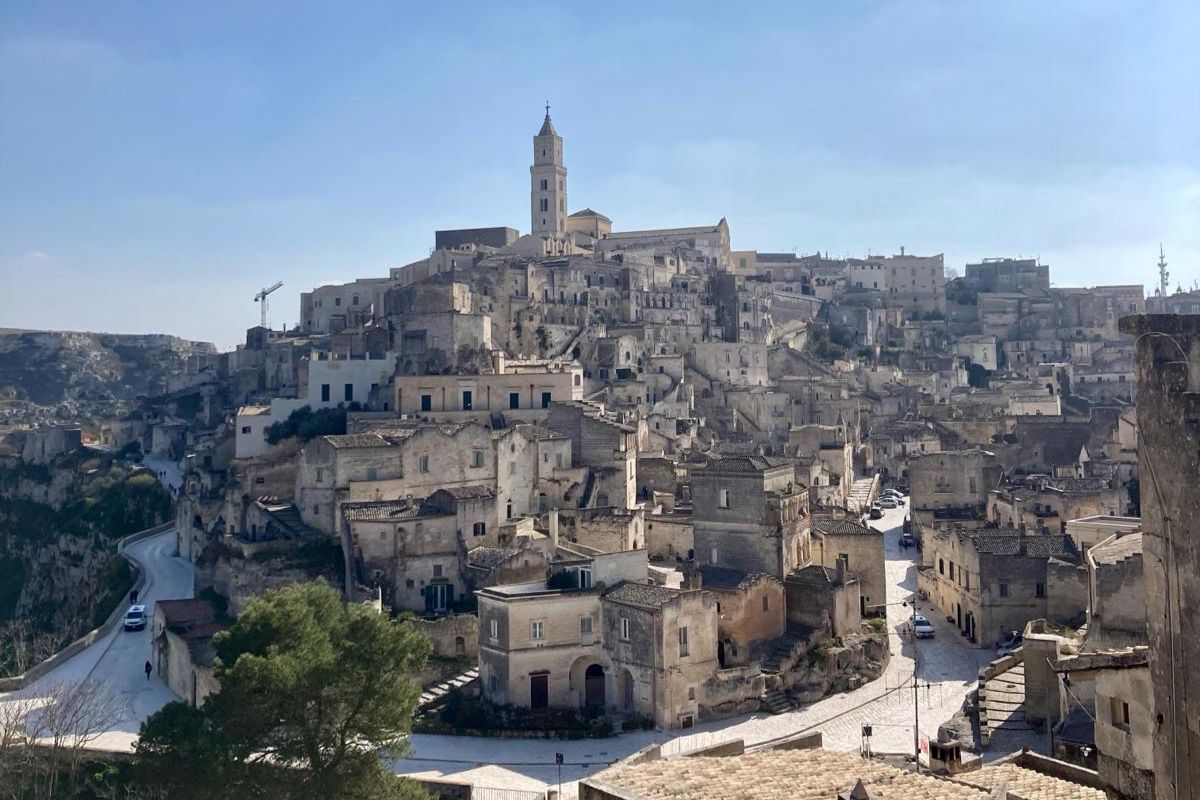
Matera’s main attraction is its historic district, Sassi di Matera, with a history that dates back to the Paleolithic era. People carved houses into the limestone tuff rock, creating homes that lacked hot water and electricity until the 1950s. These homes were shared with animals—not just pets like dogs, but also horses, cows, chickens, and pigs! 😯 This led to extremely poor hygienic conditions.
After World War II, Matera was an impoverished area plagued by diseases and infections due to poor sanitation. An interesting and tragic fact: infant mortality rates exceeded 50%!
What was once a symbol of disgrace is now a cultural treasure. Take a stroll through this stone town and immerse yourself in the spirit of ancient times while enjoying the stunning panoramas.
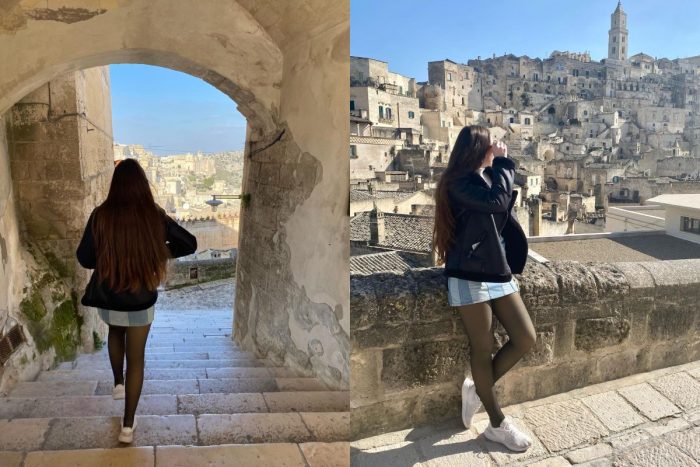
Recommendation: Plan your route in advance. Wandering aimlessly in Matera can cause you to miss many fascinating spots, and it’s quite easy to get lost in the winding stone streets.
Historical town in Matera
Cave houses in Sassi di Matera
The Sassi cave houses date back to the prehistoric troglodyte settlement and are believed to be among the first human settlements in Italy. The houses are excavated in calcarenitic rock, which is called “tufo”.
You can walk and explore the complexes of rock houses and narrow stone alleys, or take a guided tour through GetYourGuide.
Belvedere di Murgia Timone Viewpoint
For a stunning view of the entire city, head to the Belvedere di Murgia Timone viewpoint. From here, you can take in breathtaking panoramas of Matera.
Cathedral di Matera
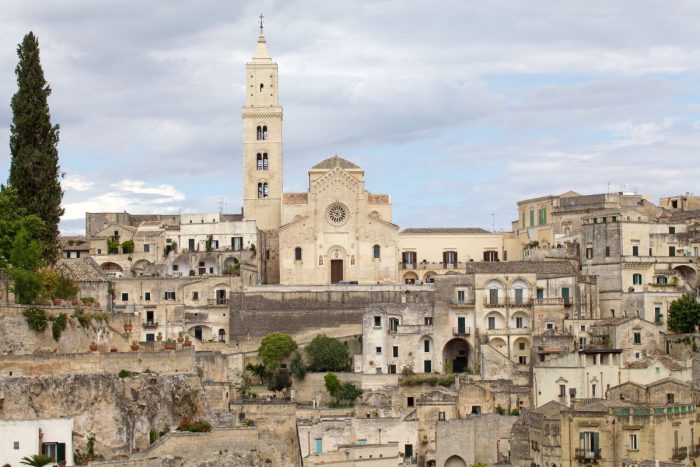
Don’t miss the Cathedral of Matera, built in the Apulian Romanesque style and dedicated to Madonna della Bruna and St. Eustachius, the patron saints of Matera. The intricate four-story bell tower is particularly striking and sure to catch your attention.
Cathedral di Matera
Ridola Museum
Founded by Senator Domenico Ridola in 1911, the Ridola Museum is housed in the Convent of Santa Chiara. This museum boasts a fascinating collection of archaeological artifacts discovered in and around Matera.
The exhibits feature ceramics, sculptures, tools, and other objects spanning from the Paleolithic era to the Middle Ages.
Ridola Museum
Laboratorio della Civiltà Contadina Museum
The Laboratorio della Civiltà Contadina museum offers a glimpse into life in the caves of Matera. It showcases traditional crafts, daily activities, and typical family dwellings.
Church of San Francesco D’Assisi
Located in the heart of Matera, the Church of San Francesco D’Assisi is a beautiful Catholic church built in the Baroque style.
Lanfranchi Palace
Situated in the city center, Lanfranchi Palace is a prime example of local architecture. Today, it houses a museum of medieval and modern art.
Church of Santa Maria di Idris
The Church of Santa Maria di Idris is a charming small church carved out of rock. It’s worth visiting for the stunning views from the outside and the exceptional frescoes inside.
🔗 These are affiliate links — they don't change your price and help us create content. · All experiences →
Palombaro Lungo
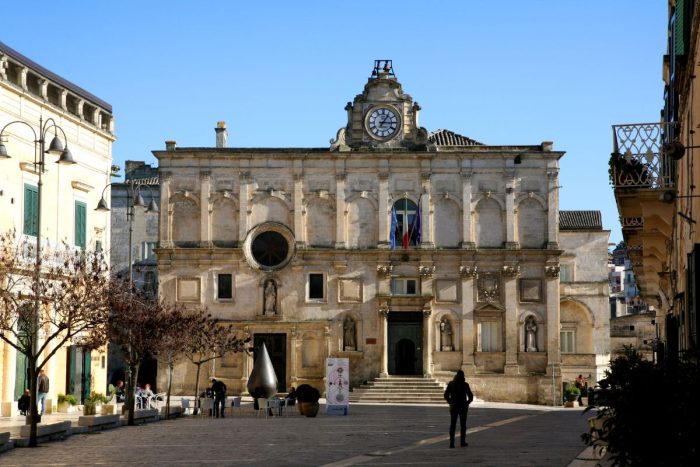
Palombaro Lungo is a remarkable underground cistern from the 16th century, once used to store water for the town’s inhabitants. Today, it is open to the public as part of a museum and can be found beneath Piazza Vittorio Veneto.
Piazza Vittorio Veneto
Castello Tramontano
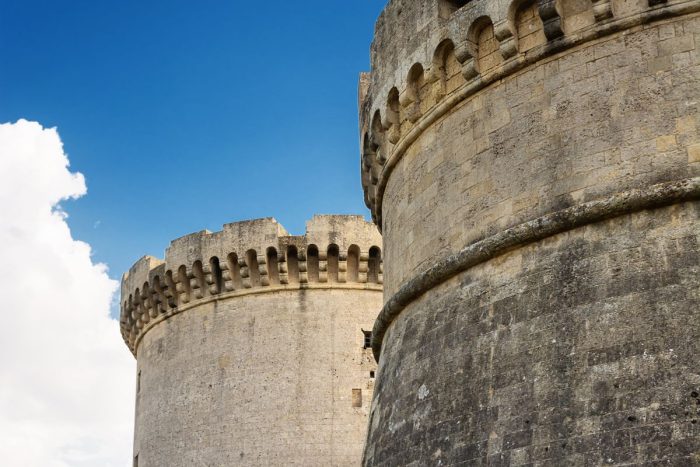
Perched on the hill above the center of Matera is Castello Tramontano, an unfinished fortress from the 16th century. Built by Count Giovan Carlo to oversee the town, the count was deeply in debt and unpopular with the locals due to the heavy taxes he imposed for the castle’s construction.
In 1514, angry citizens murdered Count Giovan Carlo, leaving the castle incomplete.
Castello Tramontano
Murgia Materana Park
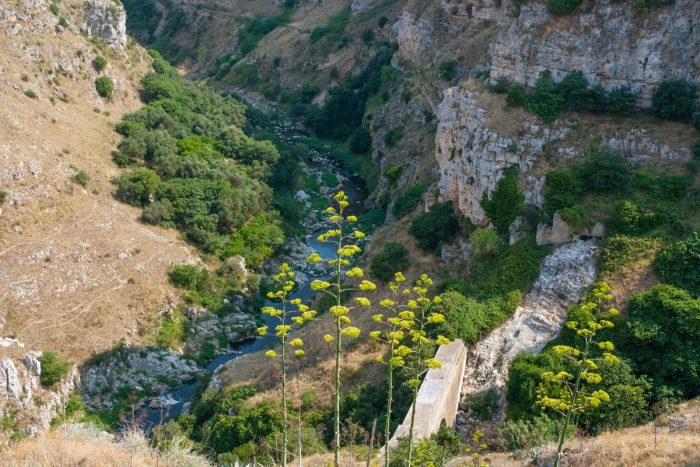
Explore the nature trails of Murgia Materana Park, where you can enjoy breathtaking views and visit the fascinating local caves.
Murgia Materana
Ponte Tibetano della Gravina
Within Murgia Materana Park, you’ll discover the nine-meter-high Tibetan suspension bridge, Ponte Tibetano della Gravina. This bridge connects the two banks of the canyon, offering a unique opportunity to admire the natural beauty and hidden spots of Matera as you walk across.
Nature in Matera
Casa Grotta di Vico Solitario
Experience the authentic lifestyle of an original dwelling at Casa Grotta di Vico Solitario, where a family of eleven lived alongside a horse, pig, and chickens. The space was used to its fullest potential, with children sleeping in drawers and a stable built right next to the bed.
La Fontana Dell’Amore
The Fountain of Dell’Amore features several beautiful sculptures and is tied to the romantic tradition of young people falling in love in Matera. Young men would wait by the fountain to strike up conversations with the girls who approached it.
Chiesa del Purgatorio
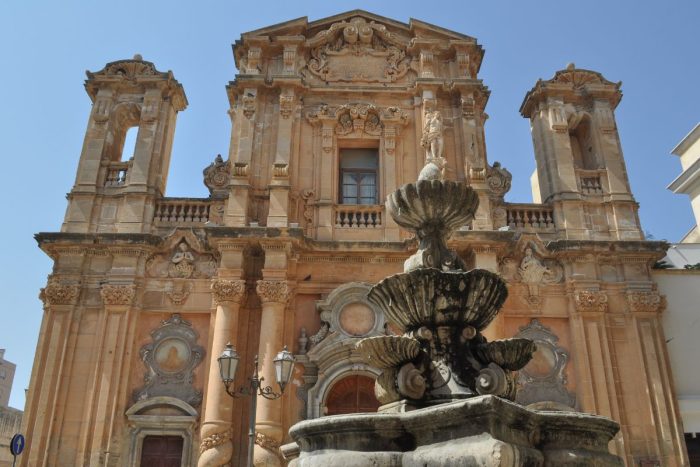
Located on Via Ridola, the Baroque Chiesa del Purgatorio is dedicated to the souls in Purgatory. Its unique facade is adorned with eerie skulls and death motifs, making it a fascinating sight to behold.
Chiesa del Purgatorio
Visit the Salvador Dalí Museum
Around Matera, you’ll find several statues by the Spanish artist Salvador Dalí. If you enjoy his style, be sure to visit his museum in Matera. Admission costs 12 euros.
Excursions Around Puglia
From Matera, you can take various excursions around the region. Get inspired by the wide range of trips available on the travel portal GetYourGuide. Here are some recommended destinations:
Bari: The capital of the Apulia region, located on the Adriatic coast in southern Italy. It perfectly combines a large, vibrant metropolis with a historic city. With an airport, Bari serves as an excellent base for exploring Puglia.
Alberobello: A small town in the Italian province of Bari, known for its unique trulli houses. These houses are built without mortar, covered with white lime plaster, and adorned with various ornaments.
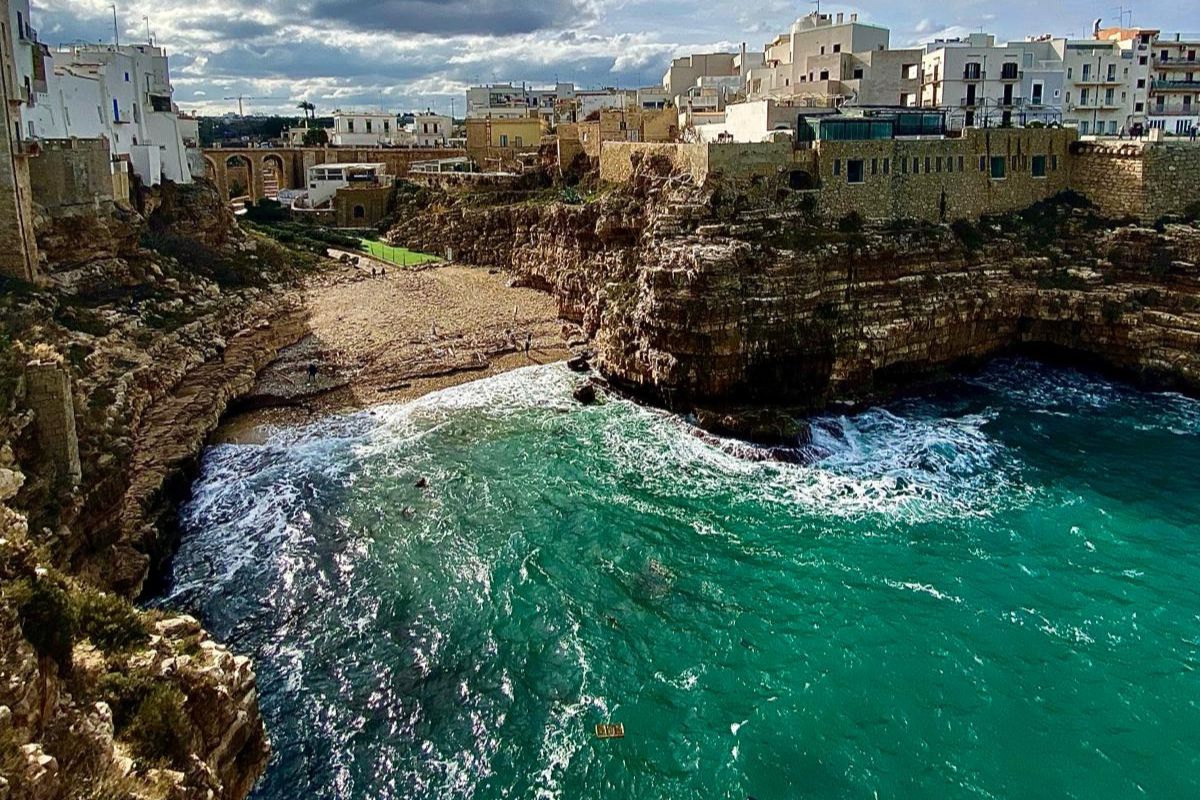
Polignano a Mare: A picturesque town on the Adriatic coast, famous for its stunning beach, white houses, and cliffs over the sea.
Potenza: The capital of the Basilicata region, located in southern Italy. This city is an important port on the Adriatic coast.
Pompeii: Take a longer trip to Pompeii, an ancient city near Naples. Destroyed in 79 AD by the eruption of Mount Vesuvius, Pompeii was buried under volcanic ash, preserving many buildings, streets, and artifacts from ancient Rome.
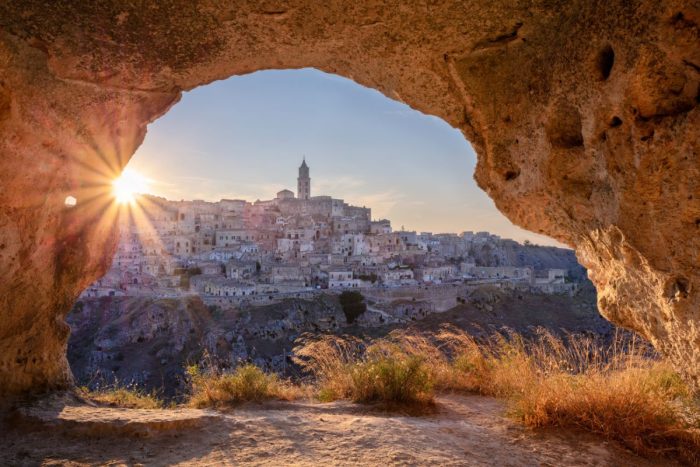
View of Matera from the local cave
Fun Facts About Matera
Matera is a breathtaking and mysterious place with several fascinating attractions:
Mussolini once said that Matera was only suitable for internal exile. In the 1950s, Prime Minister Alcide De Gasperi ordered the eviction of half the inhabitants to newly built tufa houses due to the deplorable sanitary conditions.
Matera was named the 2019 European Capital of Culture.
Matera is often referred to as the “Jerusalem of the South of Italy”.
The nearest airport is in Bari, from where you can take a train or bus. Matera is not directly accessible by car, but there are car parks on the outskirts of the town where you can leave your vehicle.
Is there an entrance fee to visit Matera?
No, entry to the city is usually free, but for some historical sites and museums you will need tickets.
What is typical of the local architecture?
Matera is famous for its “Sassi” – cave-like living structures carved into the limestone. These rock houses form the unique shape of the town.
Tips and Tricks for Your Vacation
Don’t Overpay for Flights
Search for flights on Kayak. It’s our favorite search engine because it scans the websites of all airlines and always finds the cheapest connection.
Book Your Accommodation Smartly
The best experiences we’ve had when looking for accommodation (from Alaska to Morocco) are with Booking.com, where hotels, apartments, and entire houses are usually the cheapest and most widely available.
Don’t Forget Travel Insurance
Good travel insurance will protect you against illness, accidents, theft, or flight cancellations. We’ve had a few hospital visits abroad, so we know how important it is to have proper insurance arranged.
Where we insure ourselves: SafetyWing (best for everyone) and TrueTraveller (for extra-long trips).
Why don’t we recommend any Czech insurance company? Because they have too many restrictions. They set limits on the number of days abroad, travel insurance via a credit card often requires you to pay medical expenses only with that card, and they frequently limit the number of returns to the Czech Republic.
Find the Best Experiences
Get Your Guide is a huge online marketplace where you can book guided walks, trips, skip-the-line tickets, tours, and much more. We always find some extra fun there!
TL;DRThis review of the BeSafe Pregnant iZi Fix, a Norwegian car seatbelt for pregnant women, rates it a comfortable and safe pick for travelling while expecting. The author tested it on a 3000 km one-way trip to Portugal and racked up roughly 10,000 km with it over her pregnancy. It fits using ISOfix or a standard 3-point belt, with clips that pull the strap down below bump height, and it swaps easily between the driver’s and passenger’s seat. She recommends getting one once the first trimester is over — she bought hers at 12 weeks. Downsides include the higher price, a shorter strap, and the fact that it won’t work with a tight skirt. The product meets ECE R16 certification and comes from BeSafe, a Norwegian brand founded in 1919.
Throughout my entire pregnancy, I travelled quite a lot – I flew to Lefkada in Greece during my first trimester and drove all the way to Portugal in my second (3,000 km one way!). That’s why finding the right pregnancy belt for safe and comfortable car travel during pregnancy was a priority from the very beginning.
I decided to put together this review of the BeSafe pregnancy belt for cars. In this article, you’ll also learn what a pregnancy car belt actually does and when you should start using one.
BeSafe Pregnant iZi Fix Review – Pregnancy seat belt adjuster
When Should You Start Using a Pregnancy Belt in the Car?
If you’re in your first trimester and your bump is starting to show, you’re probably wondering when to buy a pregnancy support belt for the car. Here’s the thing – if you’re planning to drive during pregnancy, experts recommend getting a maternity car belt right after the first trimester, or even sooner if your bump is growing early. Why?
You’re going to need it eventually anyway, and honestly, it’s incredibly comfortable – plus it’s so much safer for both you and your baby.
Some people will tell you they just held the seatbelt away from their belly and never used a pregnancy belt at all, but that’s genuinely risky and not worth the gamble.
Personally, I bought mine after week 12 of my pregnancy. I’m a little superstitious, so I didn’t buy anything pregnancy or baby-related before that point. After week 12, my bump started to grow, and once I installed the belt, I immediately felt more comfortable and safer in the car.
How Does a Pregnancy Seat Belt Work?
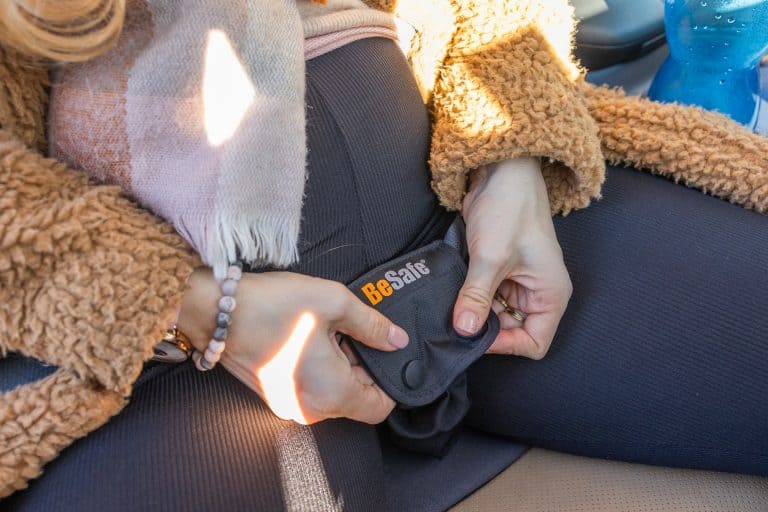
You install the pregnancy belt onto your car seat (and you can easily switch it between the driver’s seat and the passenger seat), then clip your standard seatbelt into the snap fasteners.
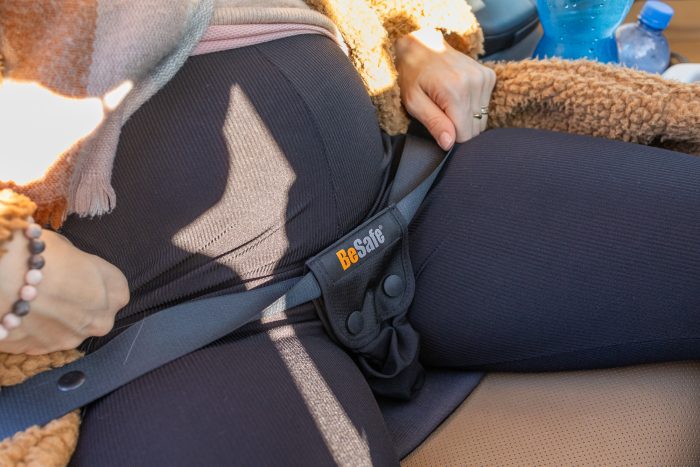
This means the seatbelt doesn’t press against your bump. It’s not just about comfort – it’s genuinely safer for you and your baby. The snap fasteners keep the pregnancy belt positioned below your bump and prevent it from riding up.
BeSafe Pregnant iZi Fix – pregnancy car belt
BeSafe Pregnant iZi Fix Review – My Experience
Let’s take a closer look at why I chose the BeSafe pregnancy belt for the car – specifically the BeSafe Pregnant iZi Fix model.
BeSafe Brand Quality
If you’re a fan of Scandinavian quality like I am, you’ll be pleased to know that BeSafe is a Norwegian brand founded back in 1919 by the Torgersen family.
When I was choosing a pregnancy support belt for the car, I was impressed that this Norwegian company has been developing and manufacturing safety products since 1963. Besides maternity car belts, they also produce a wide range of safety products for babies and toddlers.
Easy Installation and Switching Between Seats
I’m not exactly the handiest person, so I was really pleased to find that I could quickly figure out how to install the BeSafe pregnancy belt on the car seat. You can have it set up in just a few minutes (some people probably manage it in under a minute) and you’re ready to buckle up and go. Thanks to the simple installation, it’s also dead easy to switch the maternity belt between the passenger and driver’s seat.
The Pregnant iZi Fix can be attached to the seat in 2 ways: either using IsoFix connectors in your car or by securing it with the 3-point seatbelt.
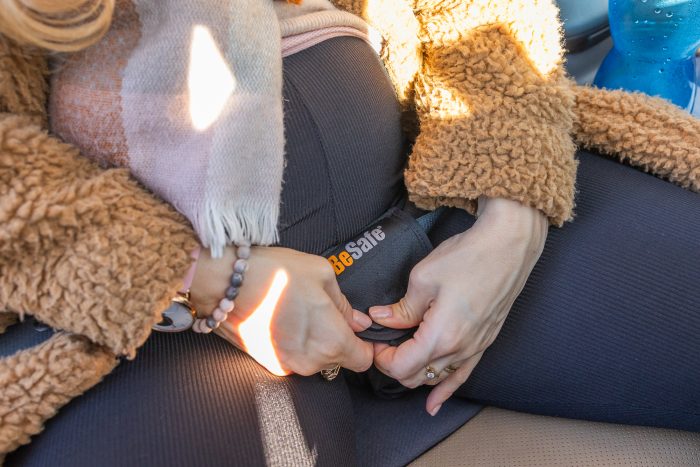
Fastening the BeSafe Pregnant iZi Fix – Pregnancy seat belt adjuster
Functionality, Safety and Comfort
Once the belt is installed in the car, buckling up is incredibly straightforward. The only thing that might be tricky is if you’re wearing a tight skirt, as the belt fastens between your legs. 😁
I was a little worried the belt might slip out of the fasteners, but it’s sturdy and solid. I drove about 10,000 km with it during my pregnancy, and I consider it the best investment not only in car safety but in comfort too.
With this pregnancy support belt, nothing digs in or presses against you – and as the weight piles on and various aches and pains creep in, it’s a relief to have one fewer thing to worry about.
Key Advantages of the BeSafe Pregnant iZi Fix
Simple installation using IsoFix or seatbelt,
ensures incredibly comfortable and safe travel,
can be used on both the driver’s and passenger’s seat,
protects both you and your baby,
can be used from the first trimester,
Scandinavian brand, Norwegian quality,
certified to ECE R16 standard.
Disadvantages of the BeSafe Pregnant iZi Fix
Can’t be used if you’re wearing a tight dress or a narrow skirt.
The strap around the seat is on the shorter side, though it wasn’t an issue for us.
Higher price point.
Is the BeSafe the Best Pregnancy Belt for Cars?
That’s a tough one to answer definitively since I haven’t had the chance to test every option out there. 😁 However, I’m very happy with the quality, comfort and ease of use. Plus, it’s made by a fantastic Norwegian brand that I genuinely trust.
Frequently Asked Questions
When should I buy a pregnancy seatbelt for the car?
By the end of your first trimester at the latest, when your belly starts to grow, you should start thinking about investing in a pregnancy seatbelt for the car.
How do I fasten a pregnancy seatbelt?
Pregnancy seatbelts have clips that you attach the belt to, which keeps the car’s seatbelt away from your belly so it won’t press against you.
How does a pregnancy seatbelt for the car work?
A pregnancy travel belt for the car works by pulling the car’s seatbelt below belly level, preventing it from pressing on your abdomen.
How do I choose a pregnancy seatbelt for the car?
Choose a brand that has the necessary certifications, then look at how it fastens and how it attaches to the seat to make sure it’s not too complicated.
Tips and Tricks for Your Vacation
Don’t Overpay for Flights
Search for flights on Kayak. It’s our favorite search engine because it scans the websites of all airlines and always finds the cheapest connection.
Book Your Accommodation Smartly
The best experiences we’ve had when looking for accommodation (from Alaska to Morocco) are with Booking.com, where hotels, apartments, and entire houses are usually the cheapest and most widely available.
Don’t Forget Travel Insurance
Good travel insurance will protect you against illness, accidents, theft, or flight cancellations. We’ve had a few hospital visits abroad, so we know how important it is to have proper insurance arranged.
Where we insure ourselves: SafetyWing (best for everyone) and TrueTraveller (for extra-long trips).
Why don’t we recommend any Czech insurance company? Because they have too many restrictions. They set limits on the number of days abroad, travel insurance via a credit card often requires you to pay medical expenses only with that card, and they frequently limit the number of returns to the Czech Republic.
Find the Best Experiences
Get Your Guide is a huge online marketplace where you can book guided walks, trips, skip-the-line tickets, tours, and much more. We always find some extra fun there!
TL;DRČeský Krumlov has 20 must-sees on offer, from the castle with its bear moat, through monasteries and the Egon Schiele Art Museum, to the Mirror Maze, the Graphite Mine and the Havranka via ferrata — and it pulls in over 2 million visitors a year. The castle, with its six tour routes, only opens partially from January to the end of March (just the Castle Museum and tower), with adult tickets costing 130–190 CZK. Spring and autumn are best for touring and milder weather, while summer brings the busiest cultural calendar, including the Revolving Auditorium, which seats 644. For a day out from Krumlov, head to the Granátník lookout tower, Hluboká Castle, or České Budějovice with its Samson Fountain and the 72.29-metre Black Tower.
Growing up in South Bohemia, Cesky Krumlov (Český Krumlov) has been a part of my life since childhood. Yet, each visit brings new surprises and discoveries. This enchanting town, attracting over two million visitors yearly, holds a special place in the hearts of Czechs and international travelers alike.
Cesky Krumlov is a hub of cultural festivities, offering a diverse range of music, a unique revolving theatre, and endless activities. Keep reading to learn the best times to visit, where to stay, and the must-see attractions and experiences in Cesky Krumlov.
Your ideal time to explore Cesky Krumlov depends on what you’re looking to experience. If a tour of the famous chateau is on your list, plan your visit outside of January through March, as the chateau closes its doors during these months. For this, spring or fall are your best bets.
Summer, however, is when Cesky Krumlov truly comes to life. The city buzzes with an array of musical and theatrical shows, alongside various other events, drawing the most visitors. Plus, summer weather is the most reliable—spring and autumn in the Czech Republic can be unpredictable.
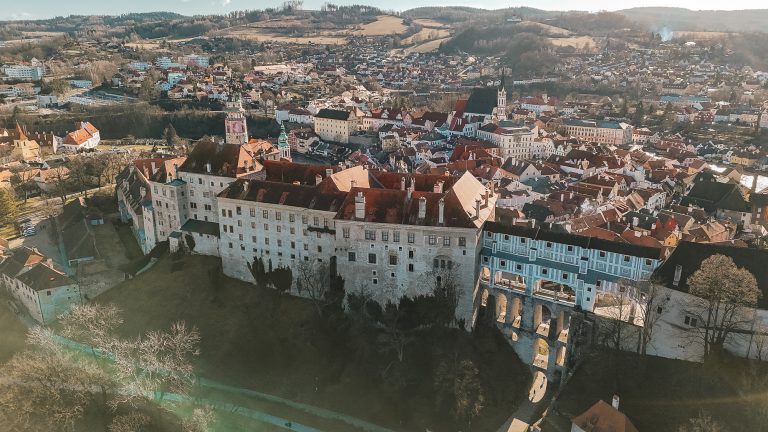
Cesky Krumlov
The atmosphere in Cesky Krumlov is magical, especially during Christmas. Even though there are fewer tourists, the town transforms with beautifully decorated houses, making it feel like you’ve stepped into a fairy tale.
If you’ve visited the castle before and are looking for budget-friendly accommodation and fewer crowds, consider January or February. These months are our favorite time to visit Cesky Krumlov. Just find a sunny day, and you’re set for an amazing long weekend.
How to Get to Cesky Krumlov from Prague
To reach the enchanting town of Cesky Krumlov from Prague, the most convenient option is to take a comfortable bus ride, you can book your trip through GetYourGuide. It’s important to note that renting a car for this trip is not the best choice, primarily due to the relatively high parking costs and the likelihood of parking spaces being occupied, especially during peak tourist seasons.
If you want to rent a car anyway, use Rental Cars, it is the best place to find car rentals.
For travelers seeking a seamless experience, I recommend using GetYourGuide, a reliable platform that provides various tour and transportation options. Get Your Guide offers a range of day trips from Prague to Cesky Krumlov, ensuring that you have a well-organized and stress-free excursion. With transportation included, you can focus on enjoying the captivating beauty and rich history of Cesky Krumlov without the worries of parking and navigation.
🔗 These are affiliate links — they don't change your price and help us create content. · All experiences →
Best Hotels in Cesky Krumlov: Where to Stay
If you’re traveling with dogs, we highly recommend staying at the Krumlovská pohádka, where we stayed during our last visit. It’s a gorgeous hotel right in the heart of the town, offering delicious breakfasts, friendly staff, and most importantly, it’s dog-friendly.
For those without pets, you’ll find a wider range of options. For instance, thePension Adalbert hotel boasts castle views and ranks among the top-rated hotels in Cesky Krumlov.
Best Hotel in Cesky Krumlov: Mill Apartments
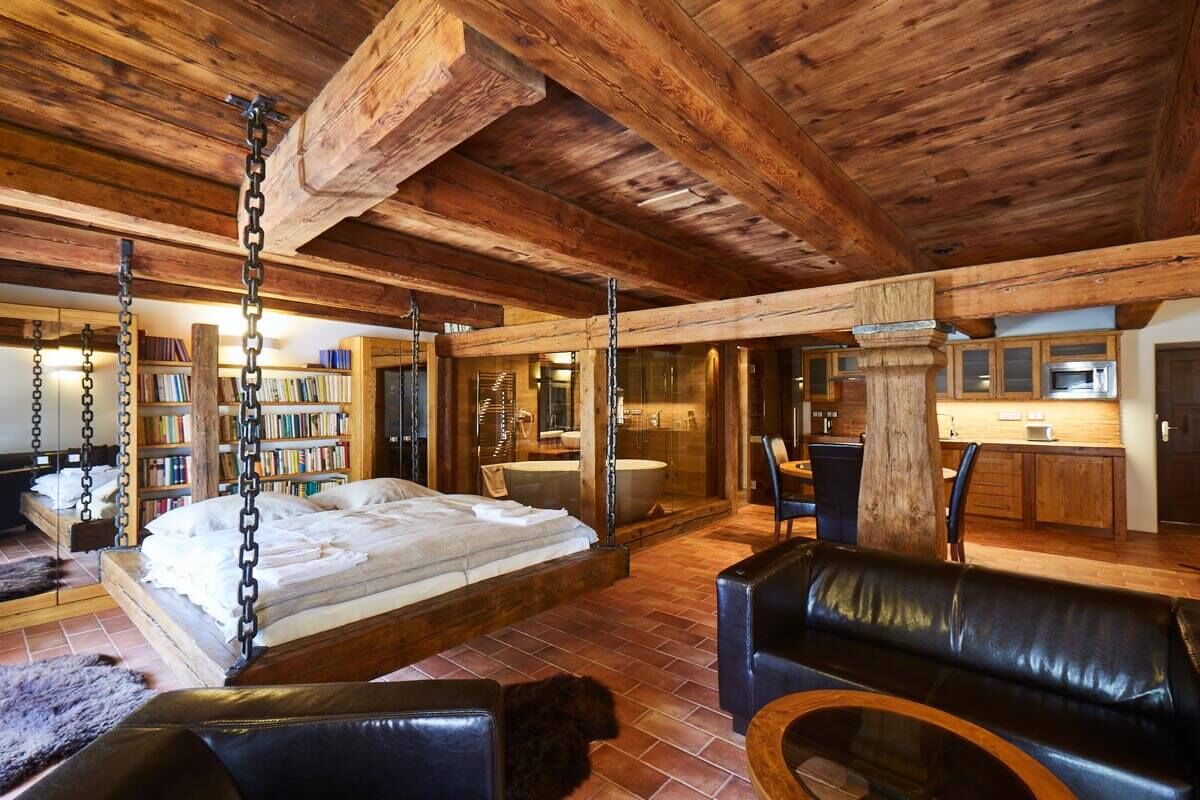
For a unique stay in Cesky Krumlov, consider the Mill Apartments. These sought-after accommodations often sell out quickly, so it’s wise to book well ahead of time, even months in advance, to secure your spot.
Lukáš and Lucie recommend
Where to stay in Český Krumlov
4 accommodations — wellness hotels, hotels and other accommodation options
20 Best Things to Do and See in Cesky Krumlov: Top Attractions
Cesky Krumlov offers much more than just a castle and bears, contrary to what some visitors might think. You could spend several days here and still not experience everything. Here are the top recommendations for things to see and do in Cesky Krumlov. Hope you will enjoy our list of top attractions in Cesky Krumlov.
What to do in Český Krumlov: go to the castle
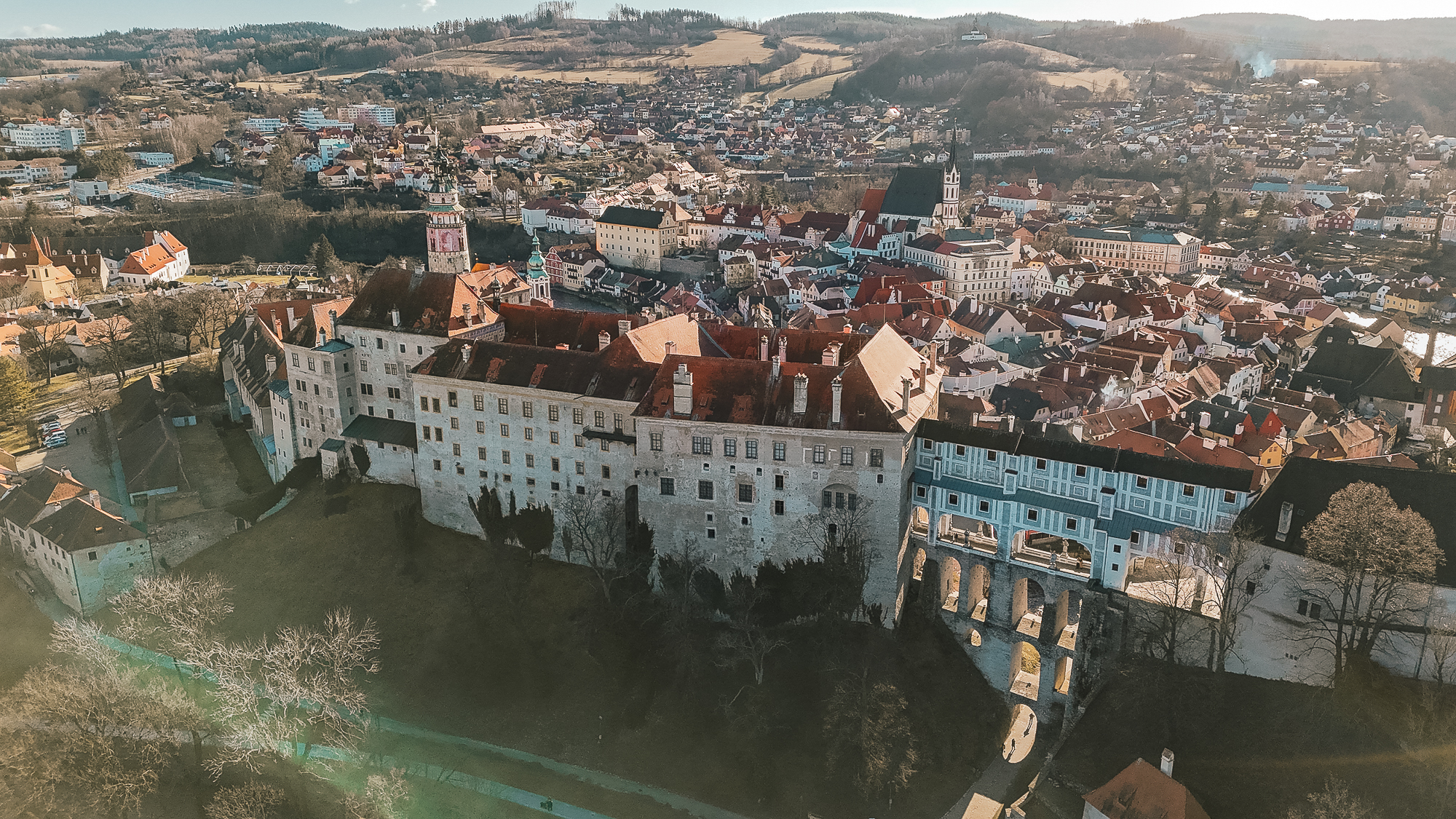
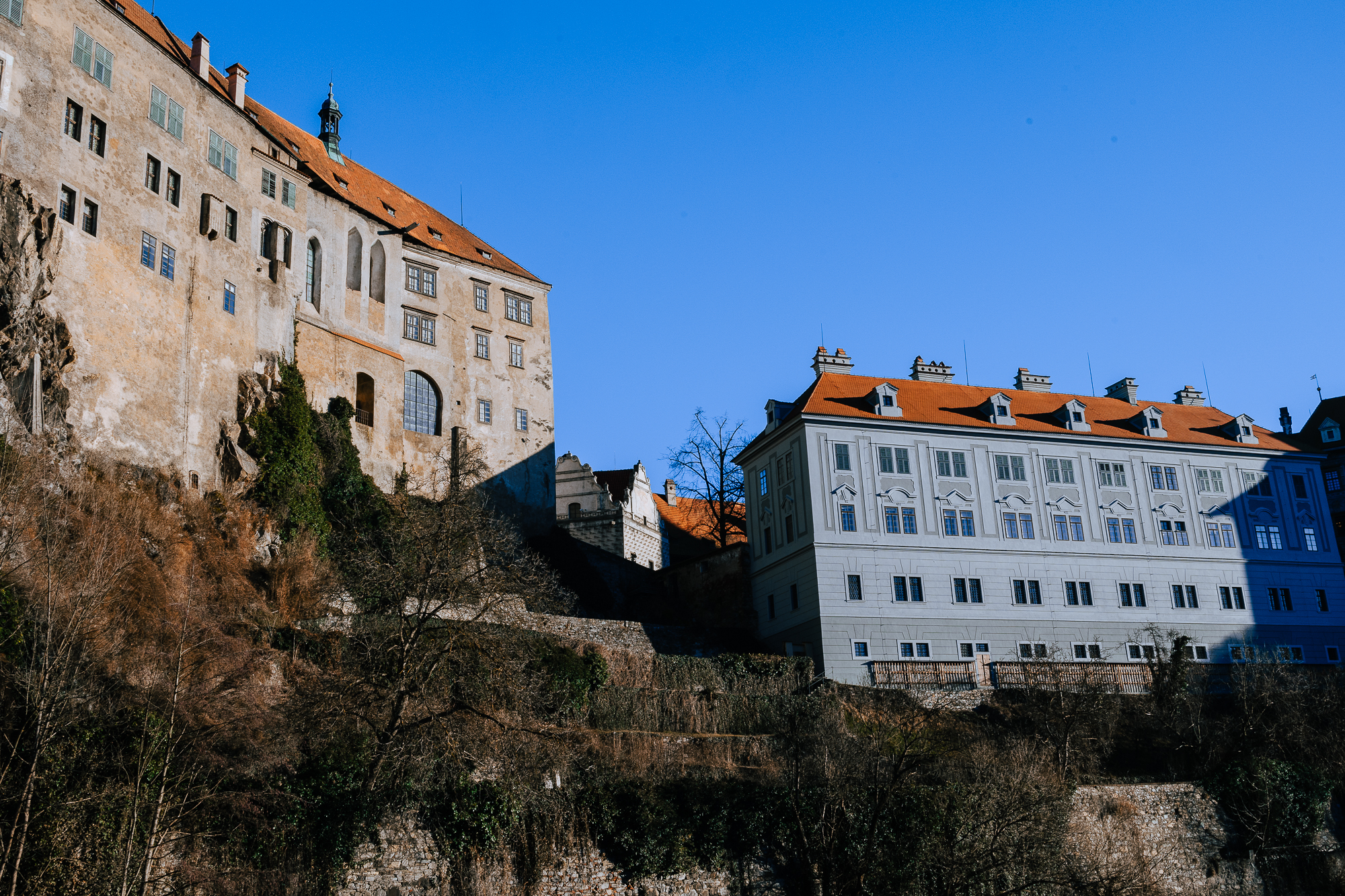
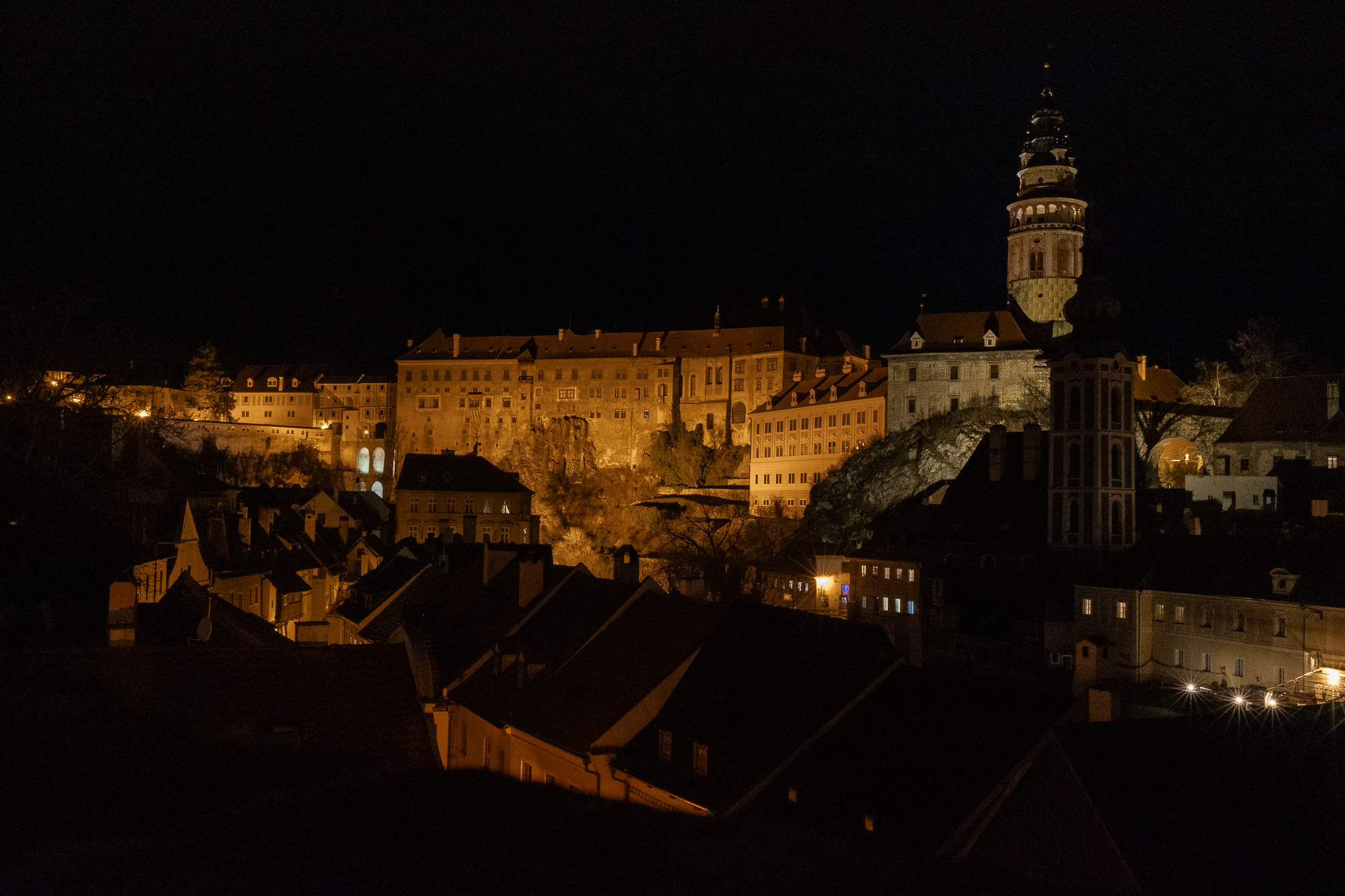
Castle Cesky Krumlov
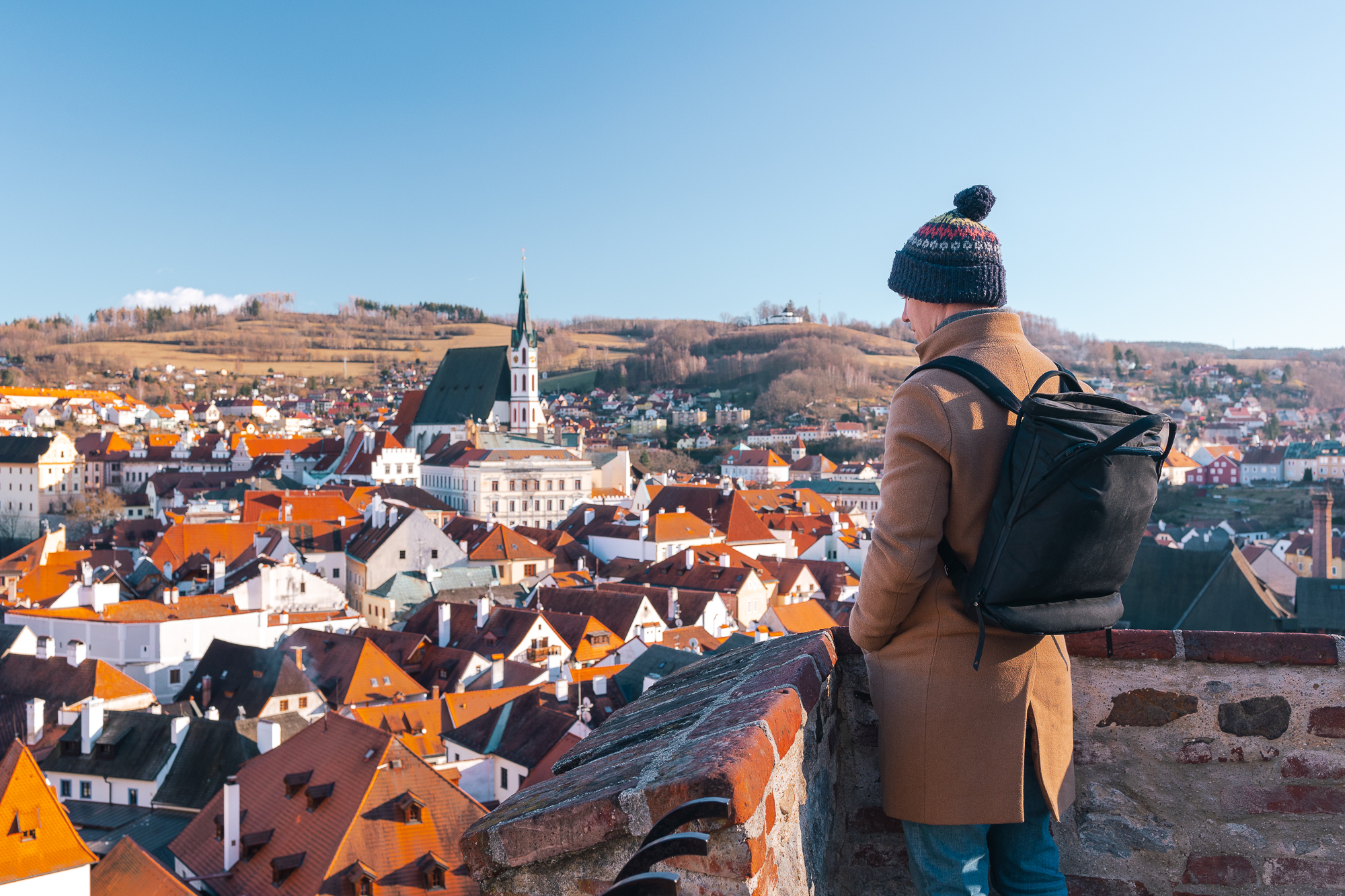
No trip to Cesky Krumlov would be complete without visiting its castle. Even if you visit during the off-season when indoor tours are not possible, make sure to explore the castle grounds. From here, you can capture stunning views of Cesky Krumlov.
The castle features six different tours. Visitors between January and March should note that only the castle museum and tower are open, except on Mondays when they’re closed. Keep in mind, tours begin early in the morning, so plan to start your day early.
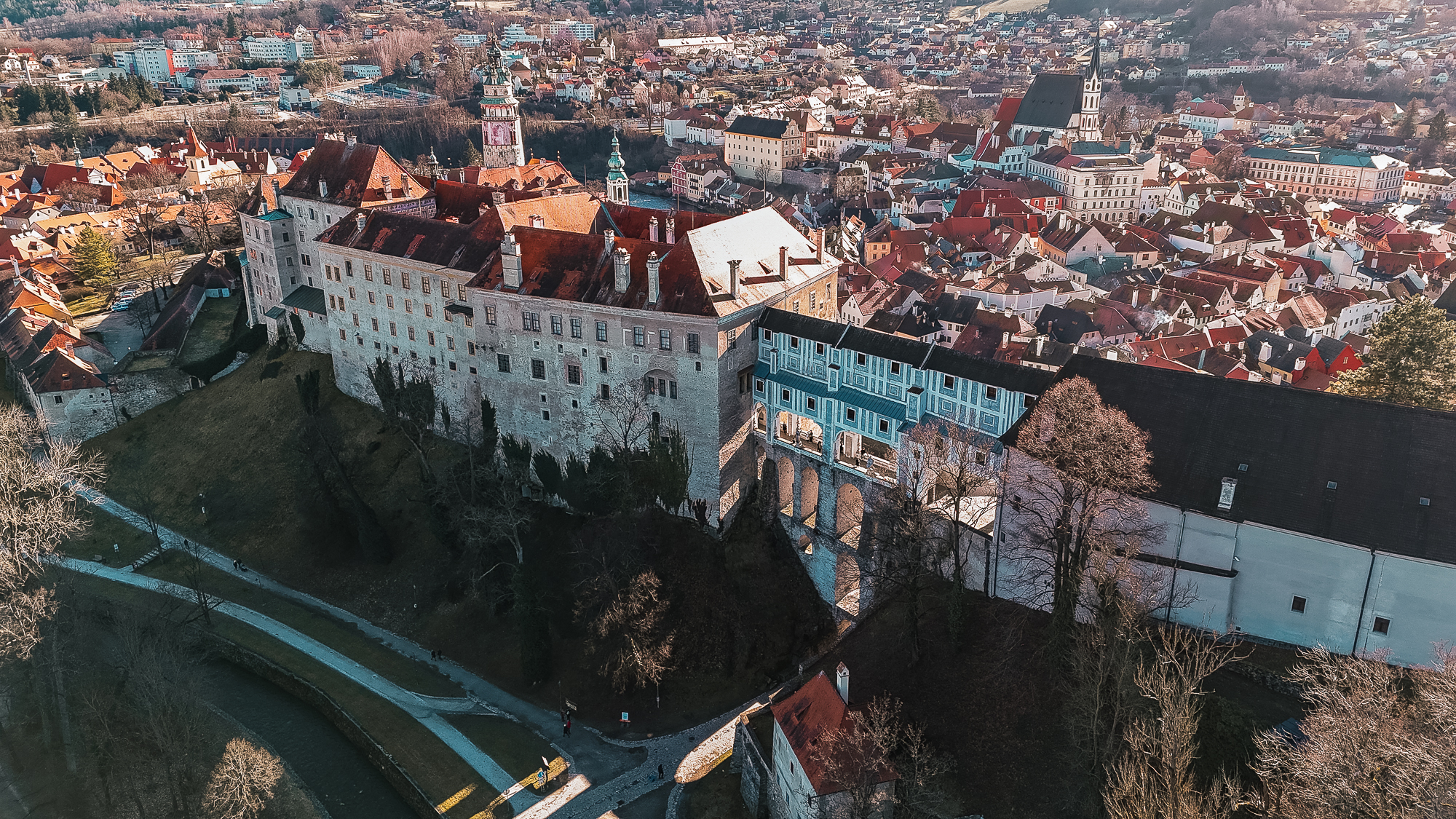
State Castle and Chateau Český Krumlov
The castle in Cesky Krumlov, now the second largest castle and chateau complex in Bohemia, was likely established in the early half of the 13th century. The earliest documented reference to the castle is from 1253, marking it as the residence of the noble Vítek from the Vítkov family.
After the Vítkov lineage of the Krumlov family died out in 1302, the castle came under the Rožmberk family’s control, who initiated a significant Renaissance makeover led by William of Rožmberk. Following the demise of the Rožmberk lineage, the castle was acquired by Emperor Rudolf II, and it eventually became the property of the Eggenbergs. The Eggenberg era saw Baroque renovations, including the establishment of the castle gardens and the creation of the first wooden theatre.
View of Český Krumlov from the castle
In 1719, the castle was inherited by the Schwarzenbergs, who introduced additional renovations in the Viennese Baroque style. However, during the latter half of the 18th century and particularly in the 19th century, the castle experienced a period of artistic and economic decline, losing its status as the primary residence of the family.
In 1947, the chateau, along with other properties owned by the Schwarzenbergs, was transferred to the state and later declared a national cultural monument. By 1992, the entire historical complex earned a spot on the UNESCO World Heritage List, marking its global significance and preserving its legacy for future generations.
Castle Český Krumlov
Practical information
Opening hours
From January to the end of March, only the Castle Museum and the Castle Tower are open for visits. For the rest of the year, additional tours are available.
For other months I recommend visiting the official website of the castle
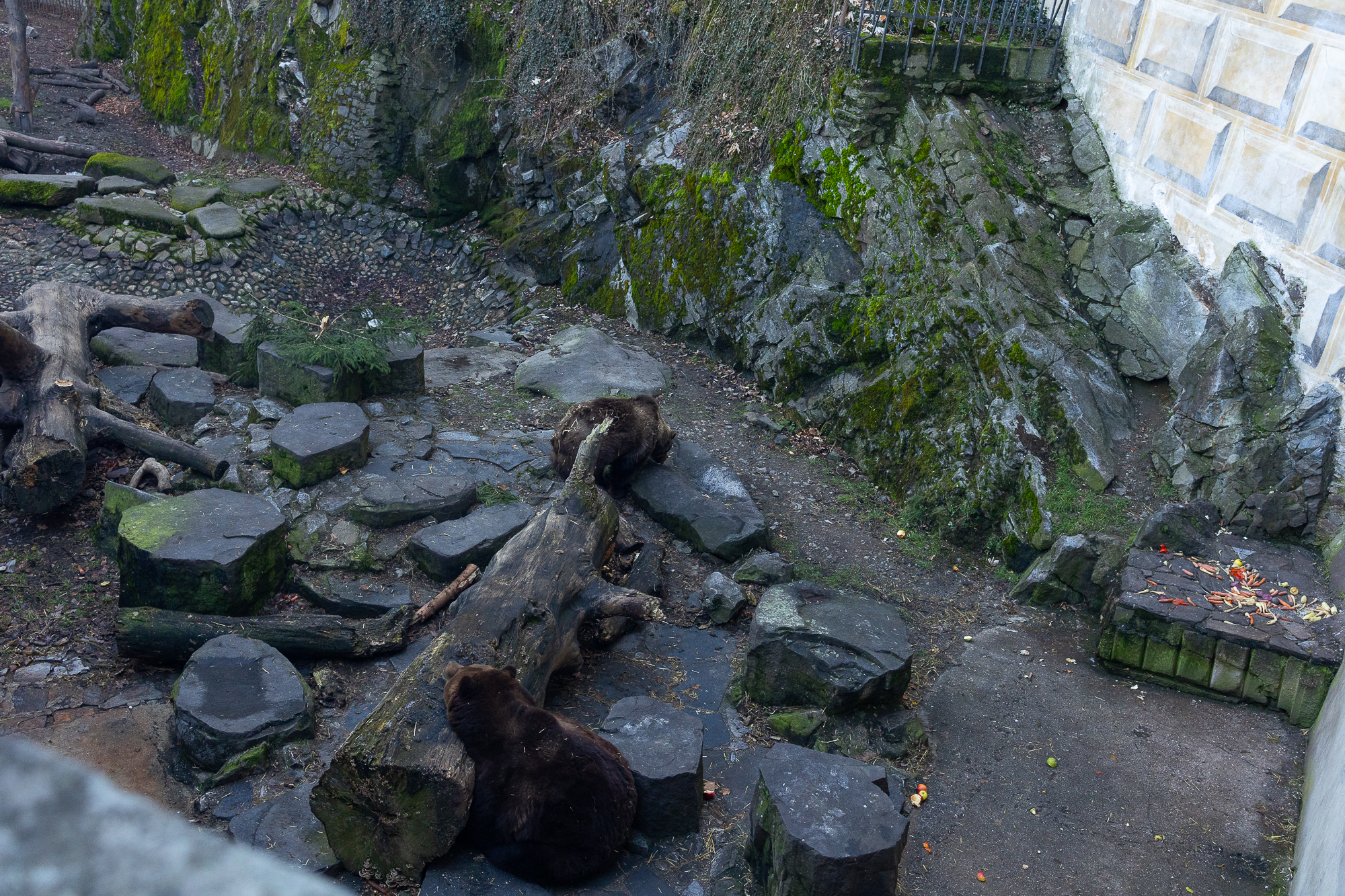
Bears have been a part of Cesky Krumlov since the 16th century during the Rosenberg era. Since 1707, they have been a feature of the castle’s moat. Presently, there are four bears residing there: the older bears, Vok and Kateřina, along with their cubs, Daxi and Hubert, all under the care of bear keeper Jan Černý.
Bears in Český Krumlov
Monasteries in Cesky Krumlov
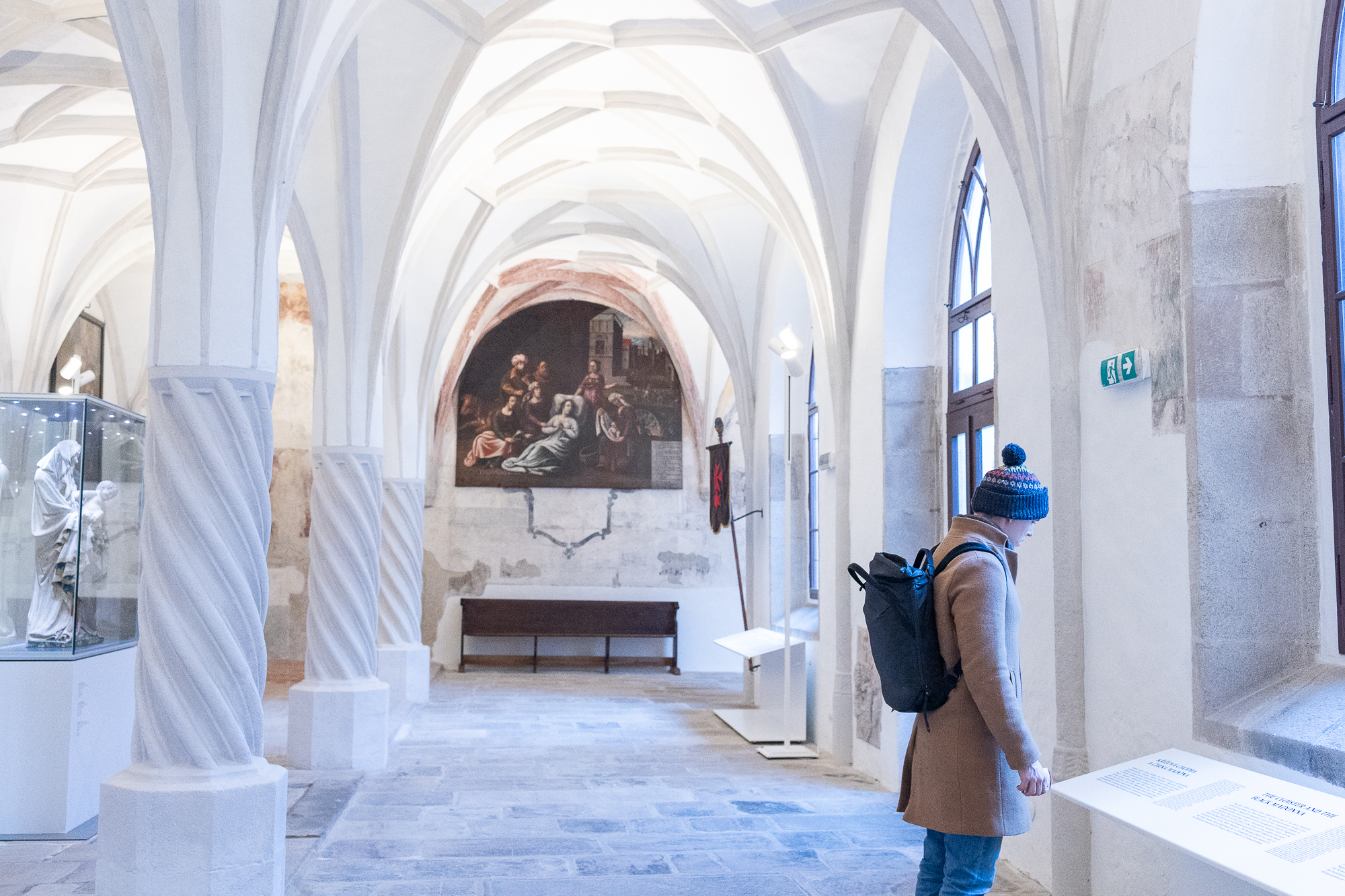
The monasteries in Cesky Krumlov are stunning examples of architectural beauty, and the renowned Czech Krumlov Madonna originated from here. Though the original has been sold to Vienna, leaving only a replica behind, a visit is still highly recommended – you won’t be disappointed!
Founded in the mid-14th century by Catherine of Rožmberk and her four sons, these monasteries emerged as significant hubs for religious and cultural activities. Over the centuries, they have experienced various significant phases of construction, featuring Gothic enhancements and Baroque refurbishments.
What to see in Český Krumlov: Monasteries
The convent of the Poor Clares met its end in 1782 due to the Josephine reforms, and the Minorite convent was dissolved in 1950, marking 600 years since its establishment.
Today, these monasteries stand as the most architecturally intact monastery complex in the Czech Republic, continuing to play a vital role in the Cesky Krumlov community. The entire complex is now under the stewardship of the town of Cesky Krumlov and the Knights of the Cross with the Red Star, who are responsible for its upkeep and the variety of programs it hosts.
3+ Galleries in Cesky Krumlov
3+ galleries is a family favorite in Cesky Krumlov, renowned for its rich collection of children’s book illustrations. This collection, acquired from Otakar Božejovský von Rawennoff, a co-founder of the Swiss publishing house Bohem Press, includes nearly 600 original pieces by 30 artists from 16 countries, showcasing works from the late 20th century up to the early 21st century.
The gallery’s exhibitions are often curated around themes or dedicated to the work of a particular artist, making it a hub of artistic exploration. It features interactive exhibitions that invite visitors into worlds of creativity: from experiencing the ancient art of letterpress printing, learning in the Scriptorium as a scribe, discovering the healing properties of herbs, to experimenting in the Alchemical Laboratory.
Additionally, hands-on craft workshops allow guests to work with various materials and techniques, offering a unique insight into the artistic process. This engaging environment makes it a top pick for what to do and see in Cesky Krumlov, especially for families looking to immerse themselves in art and creativity.
Blacksmith’s shop in the Craft Alley
Craft Alley (Řemeslná ulička)
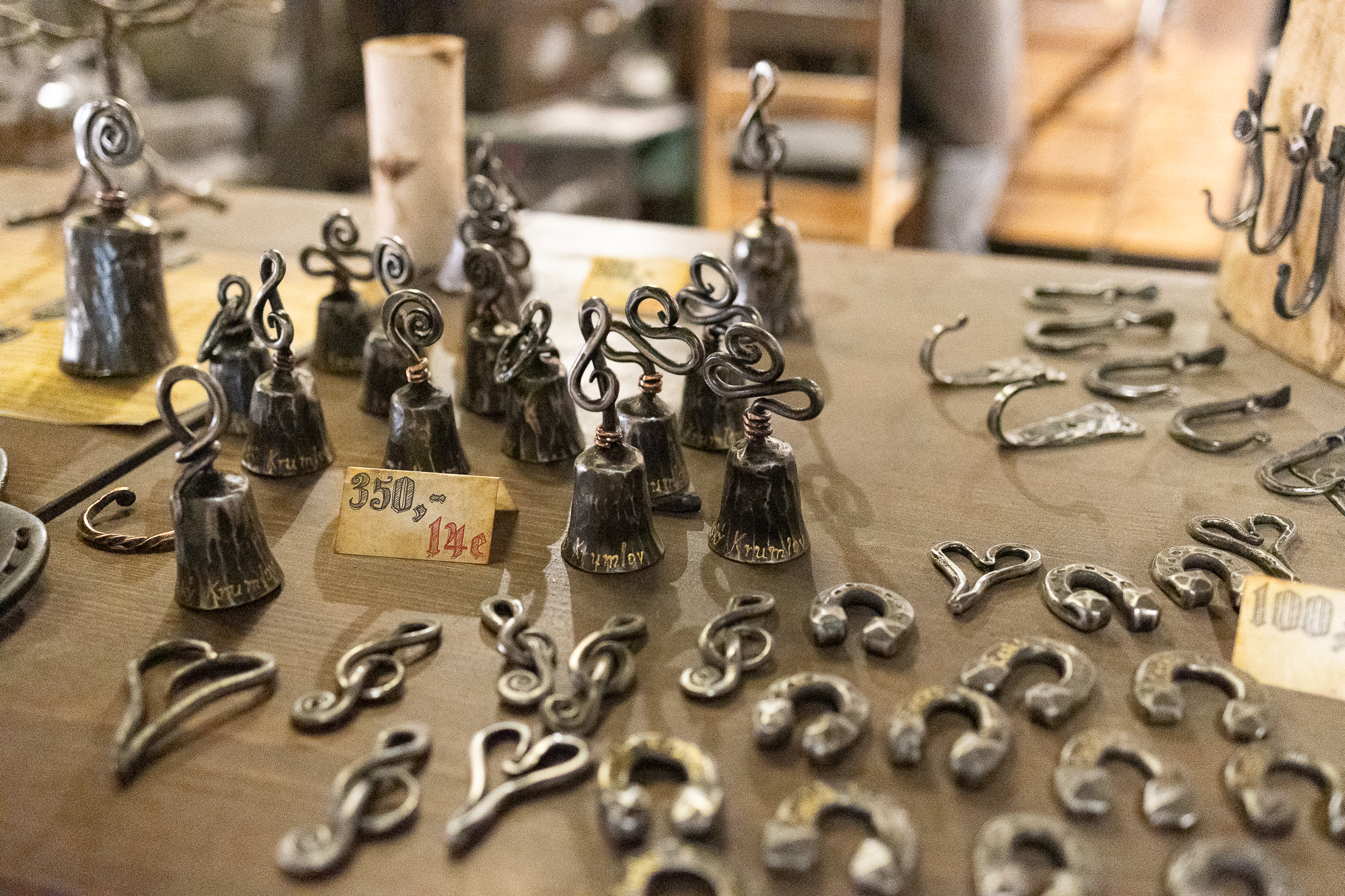
Right next to the 3+ Gallery, you’ll stumble upon the Héfaistos Art Forge, home to a real blacksmith where you can purchase unique, handmade runes or pendants. We picked up a bell meant for Baby Jesus (we don’t have Santa Claus) here. 😁 With a little one on the way, we’re excited to have something special to ring during Christmas when Baby Jesus makes his rounds.
Craft Alley doesn’t stop there—it also boasts glassblowing artisans and leather craftsmen, offering a peek into traditional skills and the opportunity to find one-of-a-kind treasures. This spot is a must-visit for those exploring what to do and see in Cesky Krumlov, especially for those looking to take a piece of the town’s artisan culture home.
Lazebnický most – Lazebnicky Bridge in Cesky Krumlov
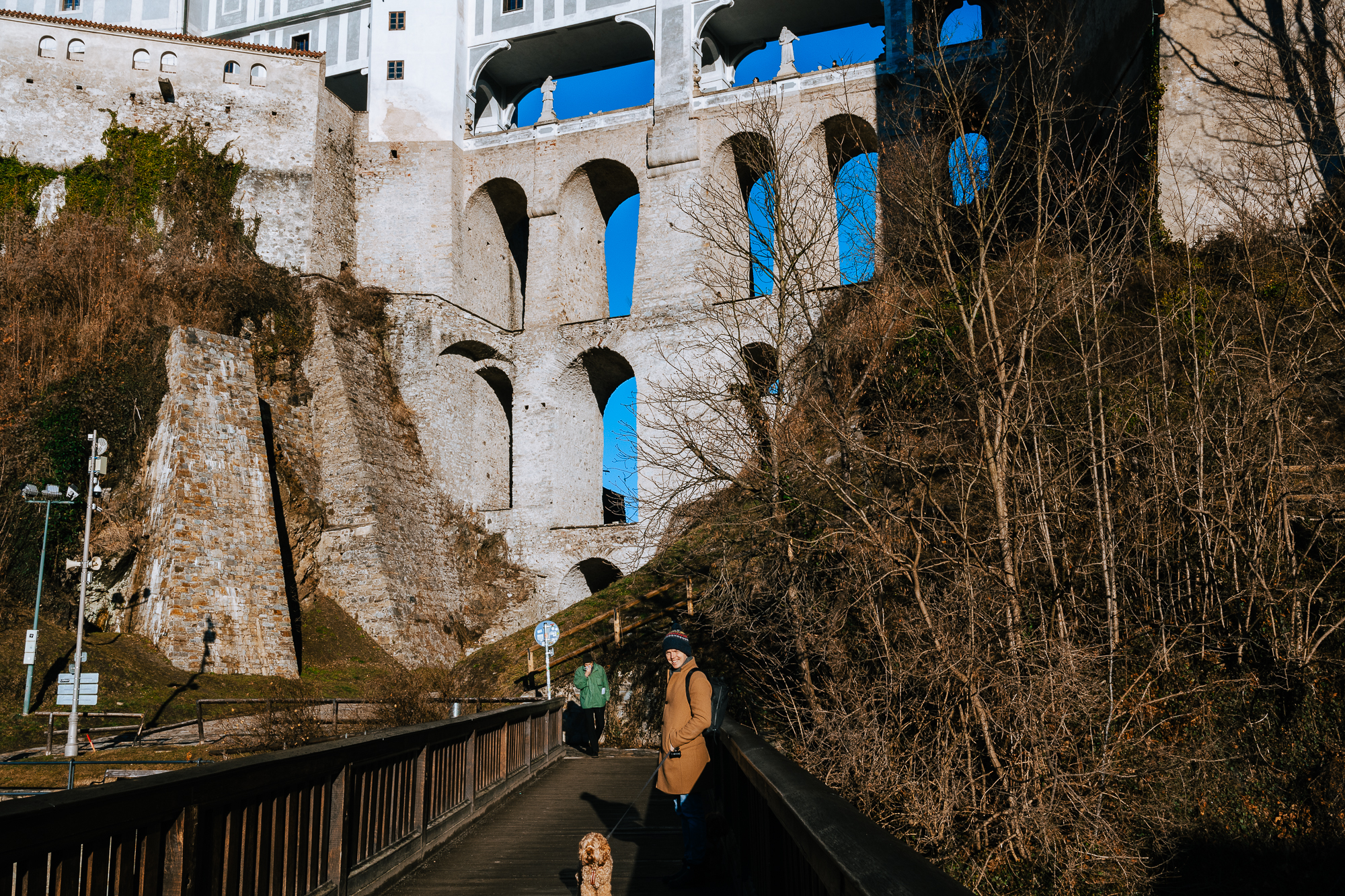
Lazebnický most serves as a vital link between the Latrán area and the Old Town, with its current design dating back to the 1930s of the 19th century. This bridge stands on two stone abutments and a central pillar that supports the steel girders above. These girders are then topped with a wooden covering, lending the bridge its distinctive look.
What to see in Český Krumlov: the Lazebnický Bridge
Before the construction of the current structure, there was a footbridge in the same location, which was destroyed in 1830. Over time, the Lazebnický Bridge has seen multiple renovations to both accommodate technical advancements and maintain its historical essence.
The bridge gets its name from the nearby “lazebny,” situated in the outermost house on the left bank of the Vltava River. Historically, this place was recognized for its “free manners,” adding a unique cultural context to the bridge’s significance in the area.
Take a Walk Around Latran
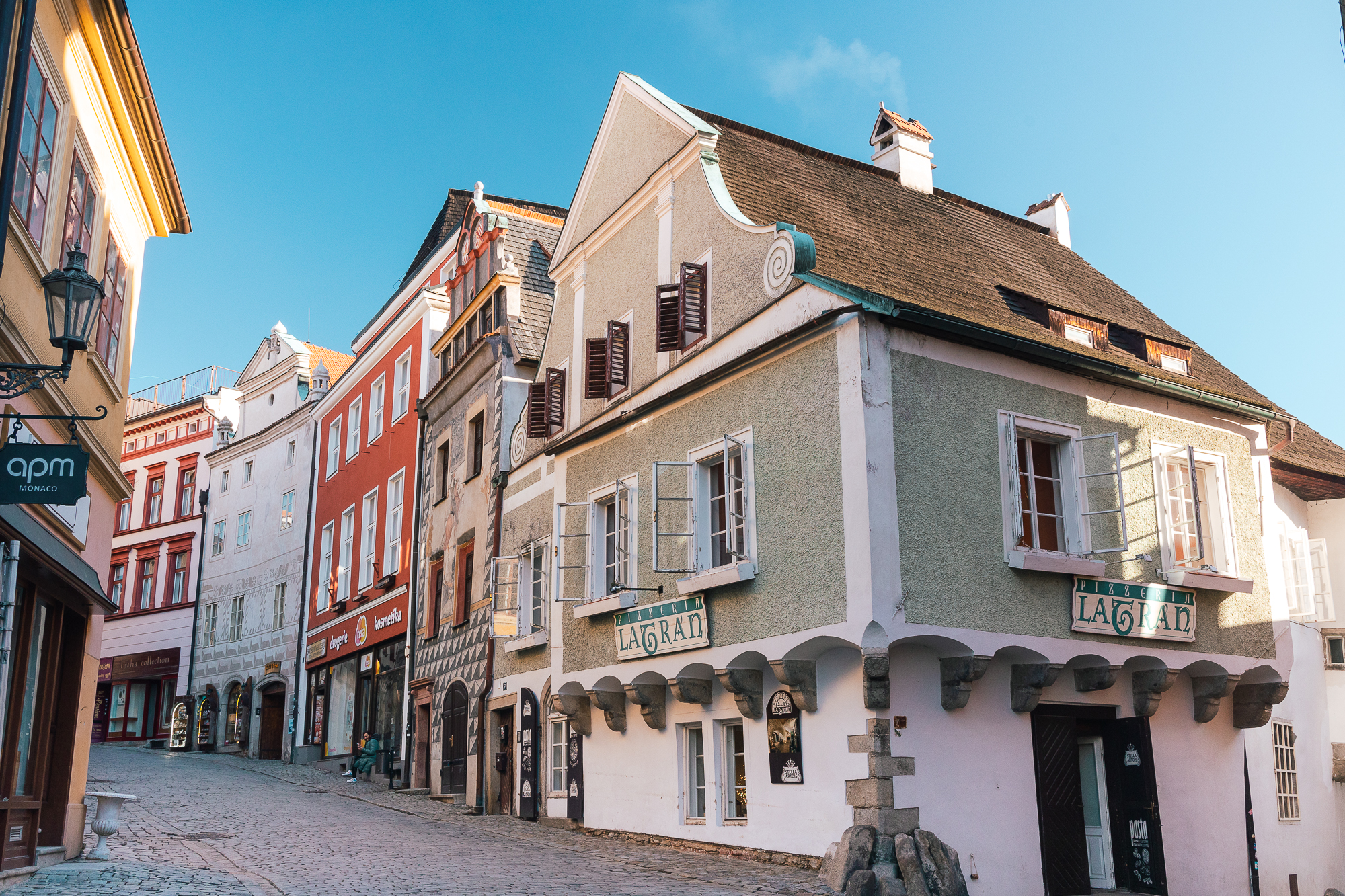
Latrán is arguably the most picturesque area of Cesky Krumlov. Nestled on the left bank of the Vltava River, right beneath the castle, it once stood as a distinct town before merging into Cesky Krumlov. The name “Latrán” comes from the Latin word “latus,” meaning “side,” which aptly describes its location near the castle.
In Latrán, you’ll discover a wealth of significant historical buildings, including the notable Budweis Gate. This district’s rich history and stunning architecture make it a must-visit for anyone exploring the beauty and heritage of Cesky Krumlov.
A walk around Český Krumlov: Latrán
Budweis Get (Budějovická brána) in Cesky Krumlov
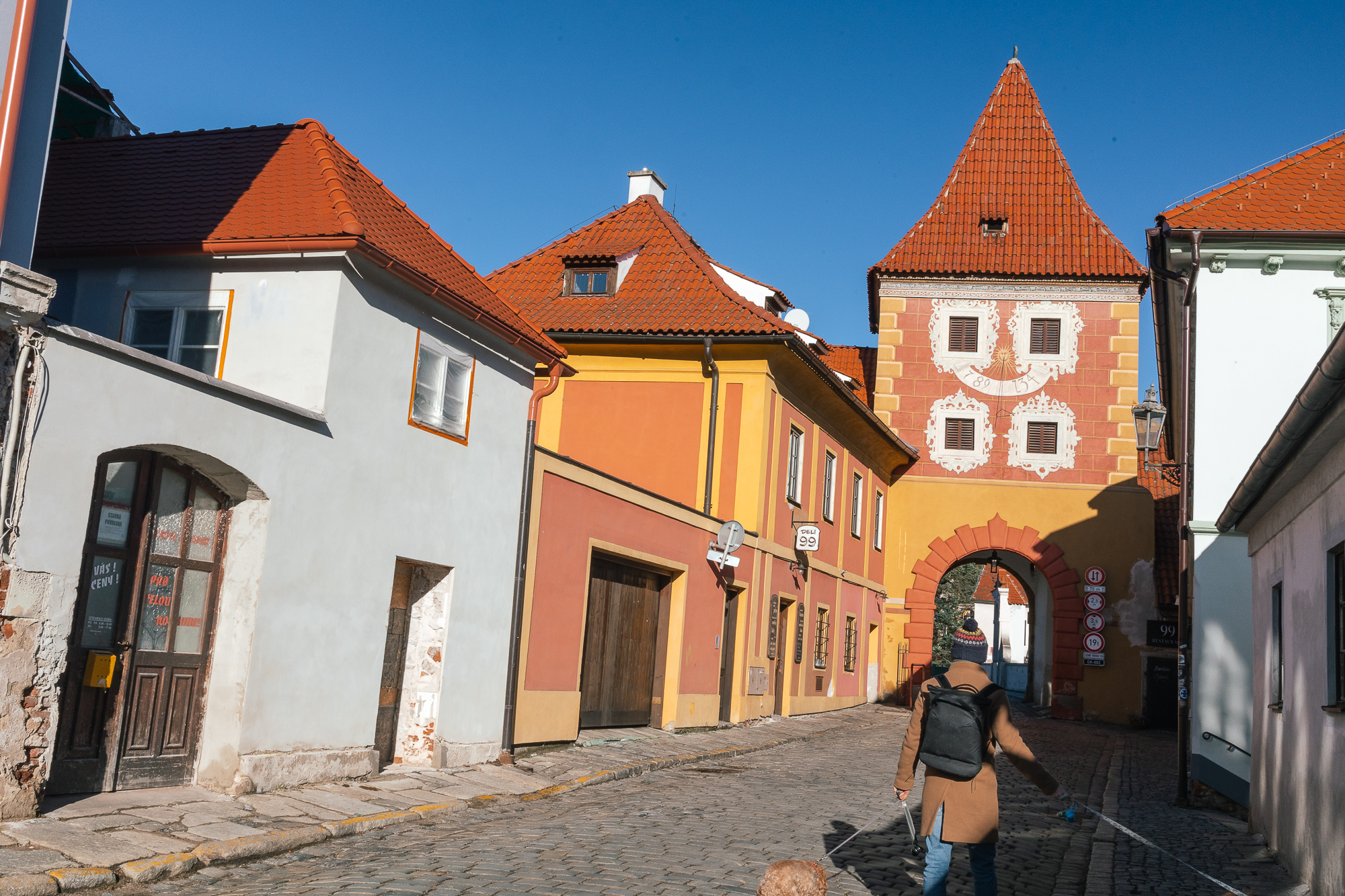
As you wander through the historic heart of Cesky Krumlov, make sure to visit the Budweis Gate (Budějovická brána).
Constructed from 1598 to 1602, this gate is the sole survivor among the nine original city entrances. Its most striking features are the captivating fresco adorning its facade and the exquisite sundial, both of which are sure to catch your eye.
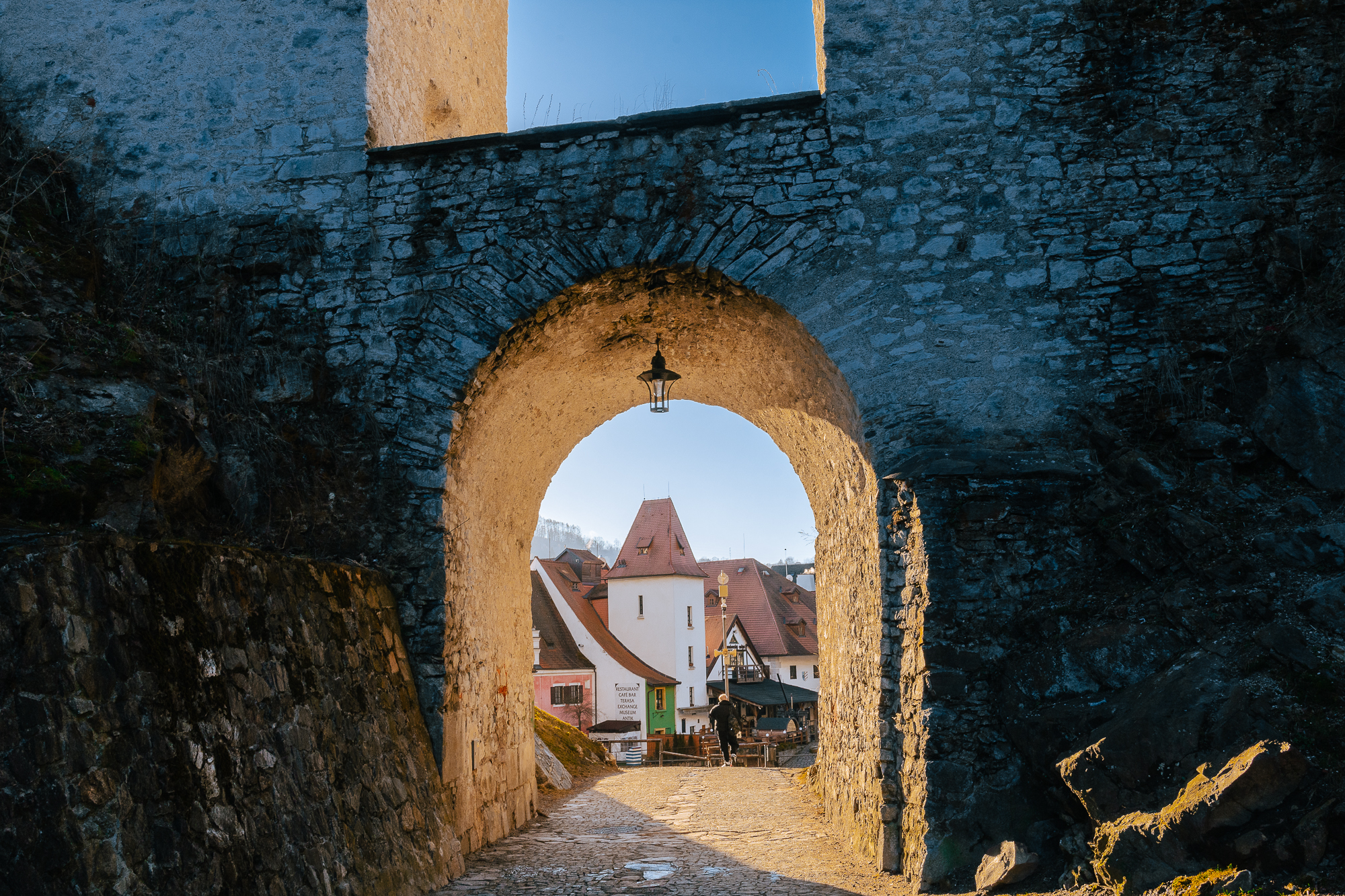
Budějovice Gate in Český Krumlov
Museum of Trade
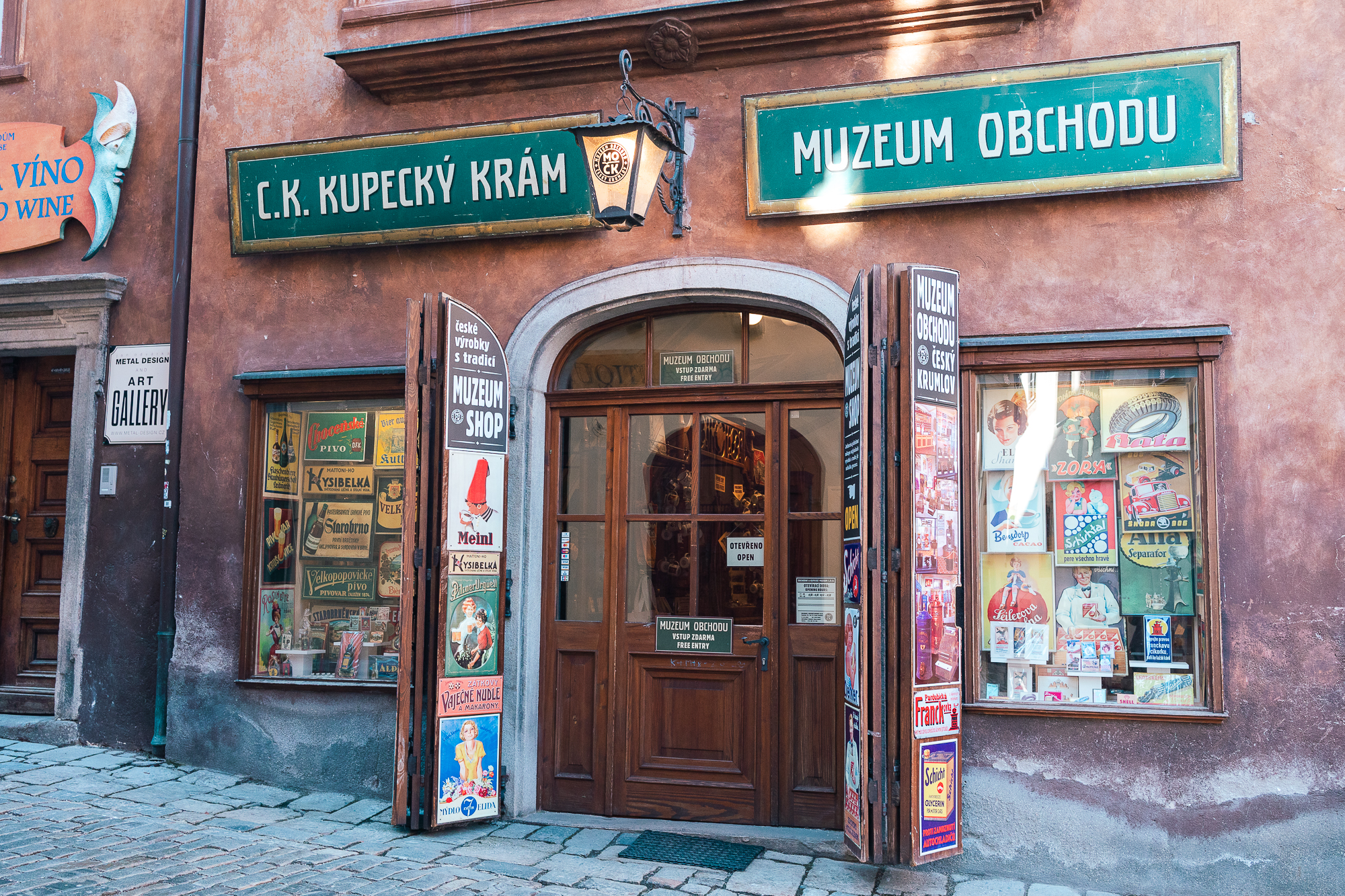
The Museum of Trade is a haven for retro and vintage enthusiasts. Don’t miss the museum shop, where you’ll discover a treasure trove of items and advertisements from the previous century. It’s also a great place to pick up unique and unconventional souvenirs. The best part? Entry is free, and while the operator hopes you’ll make a purchase, there’s no pressure to do so. Enjoy your visit!
Things to do in Cesky Krumlov: Visit the Museum of Commerce
Josef Seidel Photo Stuido
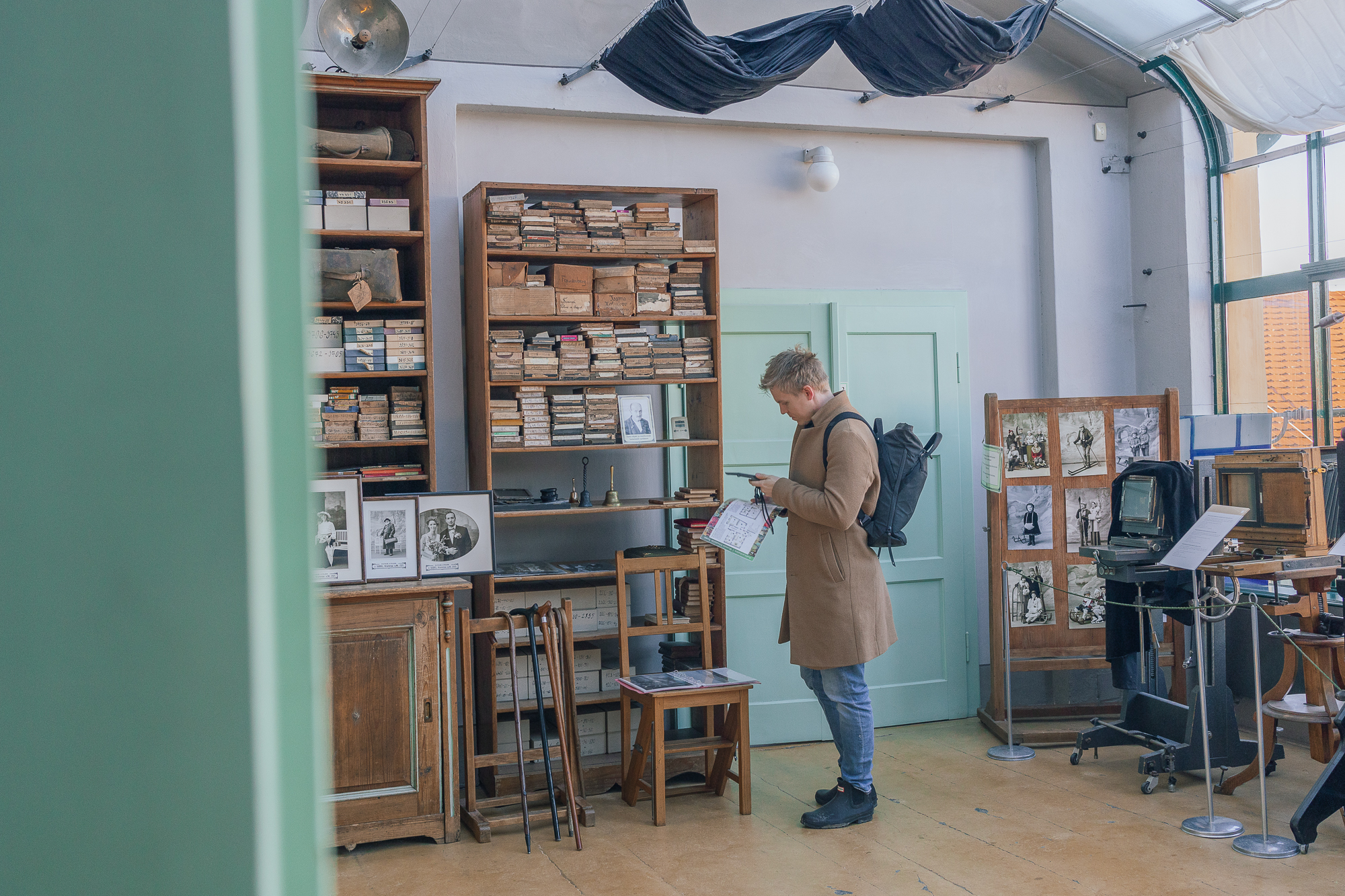
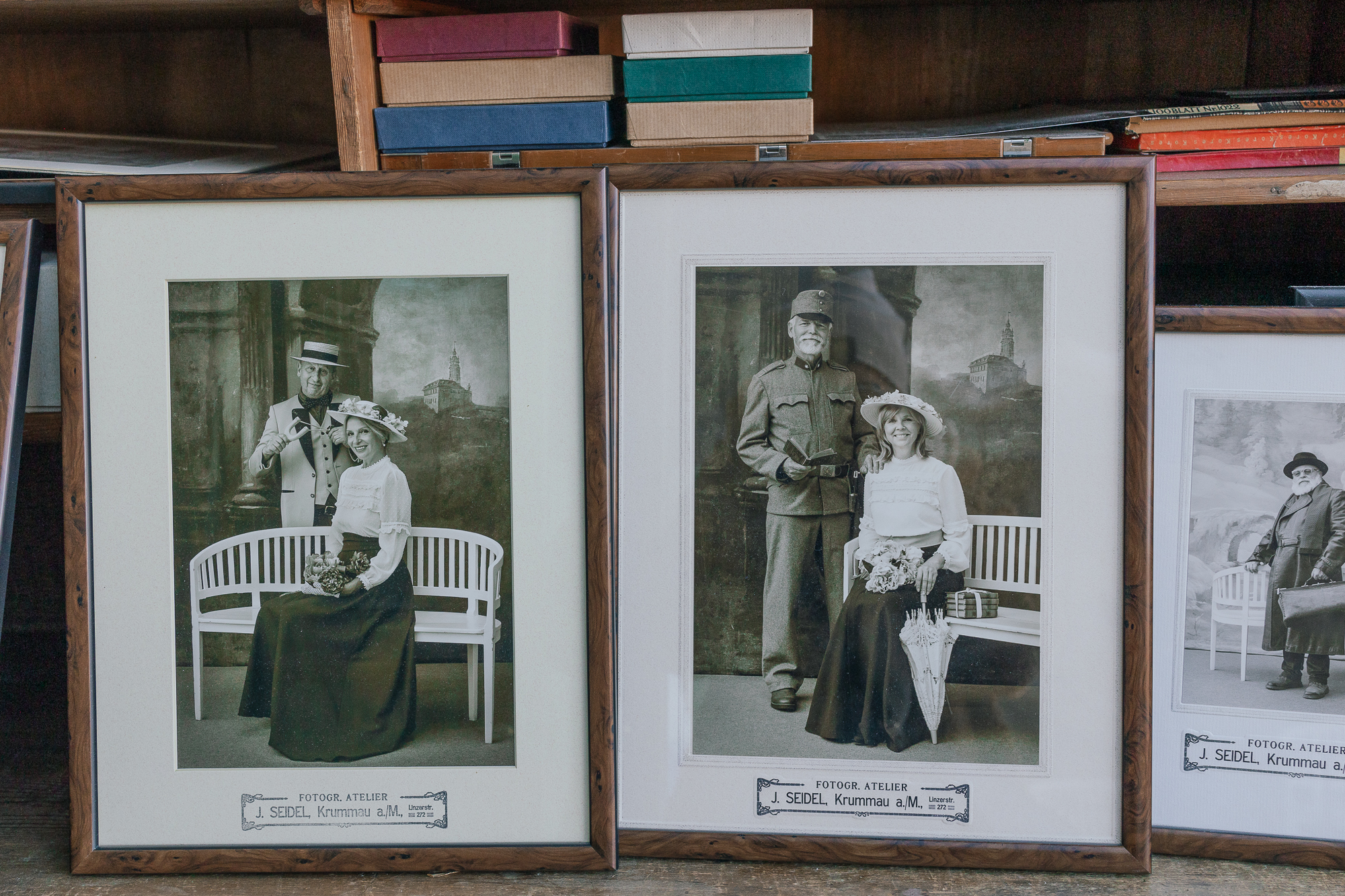
Our favorite stop was Josef Seidel’s studio, a delightful place where you can delve into the art of vintage photography. Not only can you learn about the techniques of old-time photography, but you can also have your very own period photograph taken. Keep in mind that it’s essential to schedulean appointment in advance.
Things to do in Cesky Krumlov: Visit Josef Seidel’s Studio
This studio, now transformed into a museum, was established by the renowned Šumava (Czech Mountains in South Bohemia) photographer Josef Seidel and his son František. Originally, this house was solely dedicated to the studio’s operations, with the family residing in the neighboring house.
Today, the house retains the same furnishings as when the photographer’s family both lived and worked there, offering a glimpse into their life and artistry.
Things to do in Cesky Krumlov: Have your period photo taken
The Seidel Photo Studio Museum is open from Tuesday to Sunday.
Egon Schiele Art Museum
The Egon Schiele Museum enjoys far more popularity than the Josef Seidel Studio. When planning a visit, it’s important to note that you’ll encounter reproductions rather than original works. Nevertheless, the museum offers valuable insights into Egon Schiele’s life and artistic journey. For art enthusiasts, it’s an absolute must-visit destination, providing a rich understanding of this iconic artist.
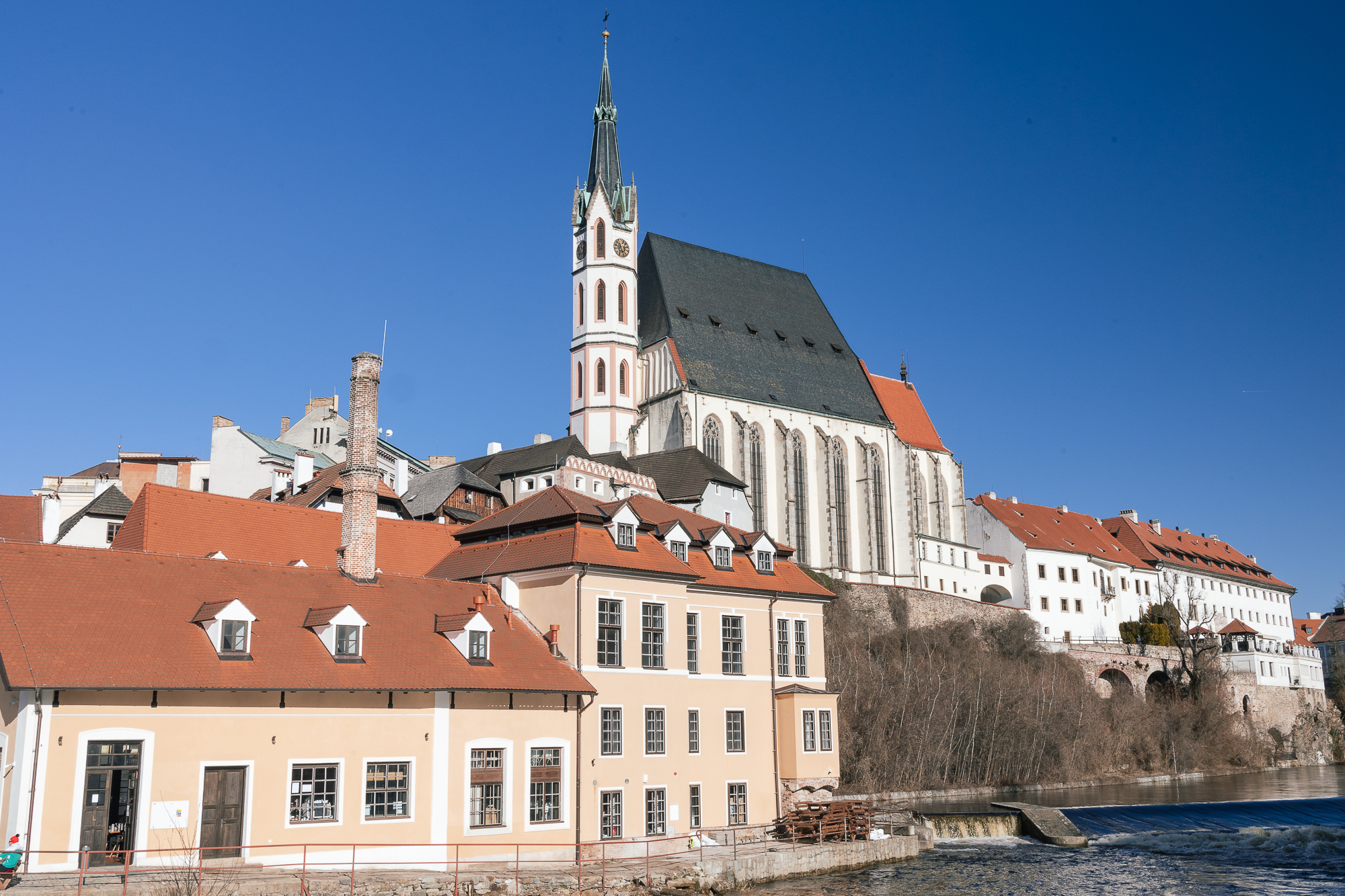
Church of St. Vitus in Český Krumlov
he history of the church on this site dates back to its founding in 1309. The most significant transformation, which shaped the church’s current look, occurred between 1407 and 1439 under the patronage of the Rosenbergs, particularly Henry III of Rosenberg.
Inside the church, you’ll be captivated by its remarkable vaulted ceilings and 15th-century frescoes, though some elements were removed during a 19th-century neo-Gothic renovation. Today, the Church of St. serves as a place for religious ceremonies and occasionally hosts classical music concerts, preserving its cultural and historical significance for both worship and the arts.
Church of St. Vitus in Český Krumlov
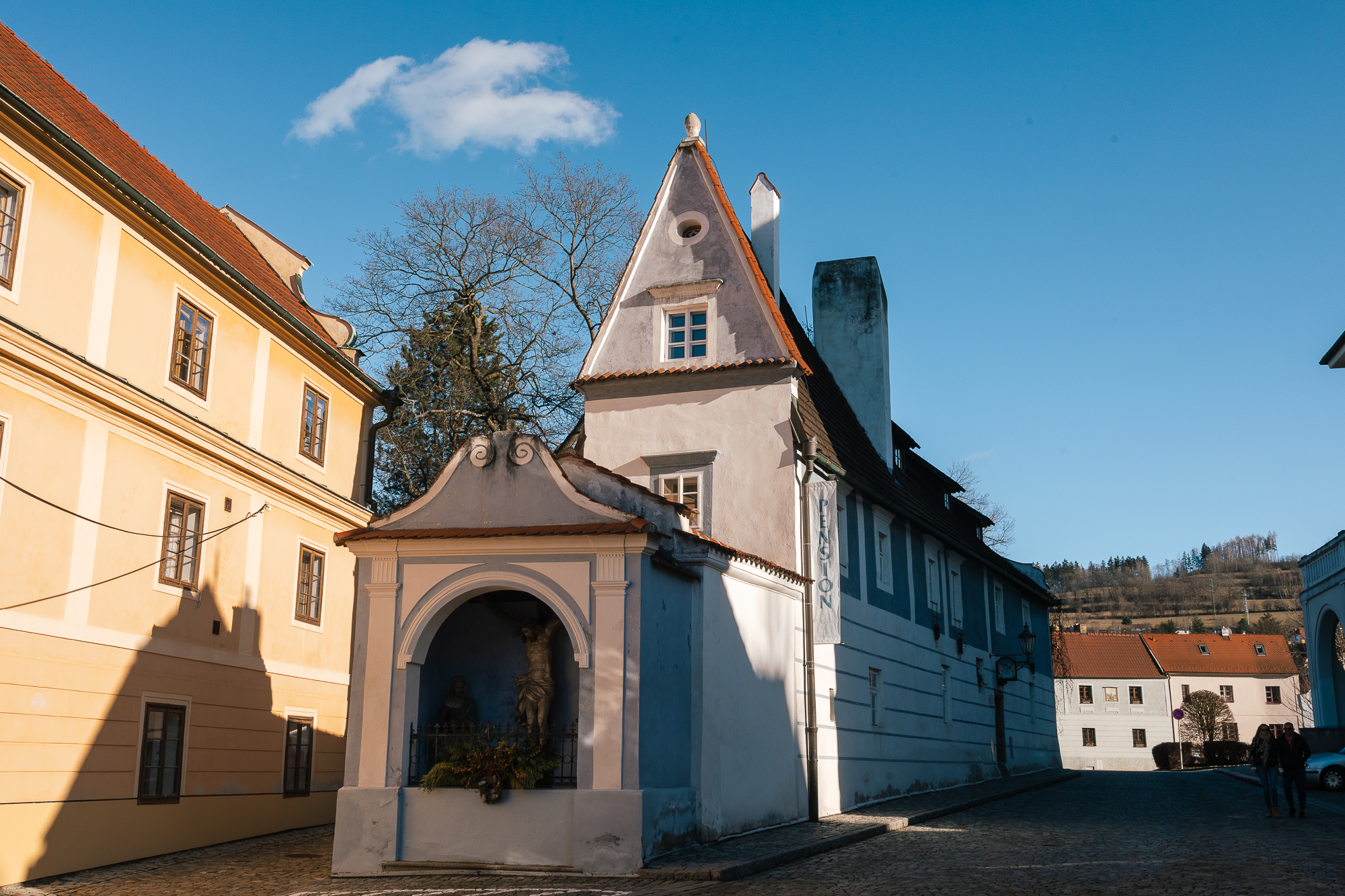
Chapel featuring Calvary on Linecká Street
A truly charming structure that drew our gaze is the Chapel featuring the Calvary sculpture on Linecká Street. It’s conveniently located right beside the cozy Ideal café and the photography studio of Josef Seidel, creating a picturesque corner of exploration in Cesky Krumlov.
Chapel with a sculpture of Calvary in Linecká Street
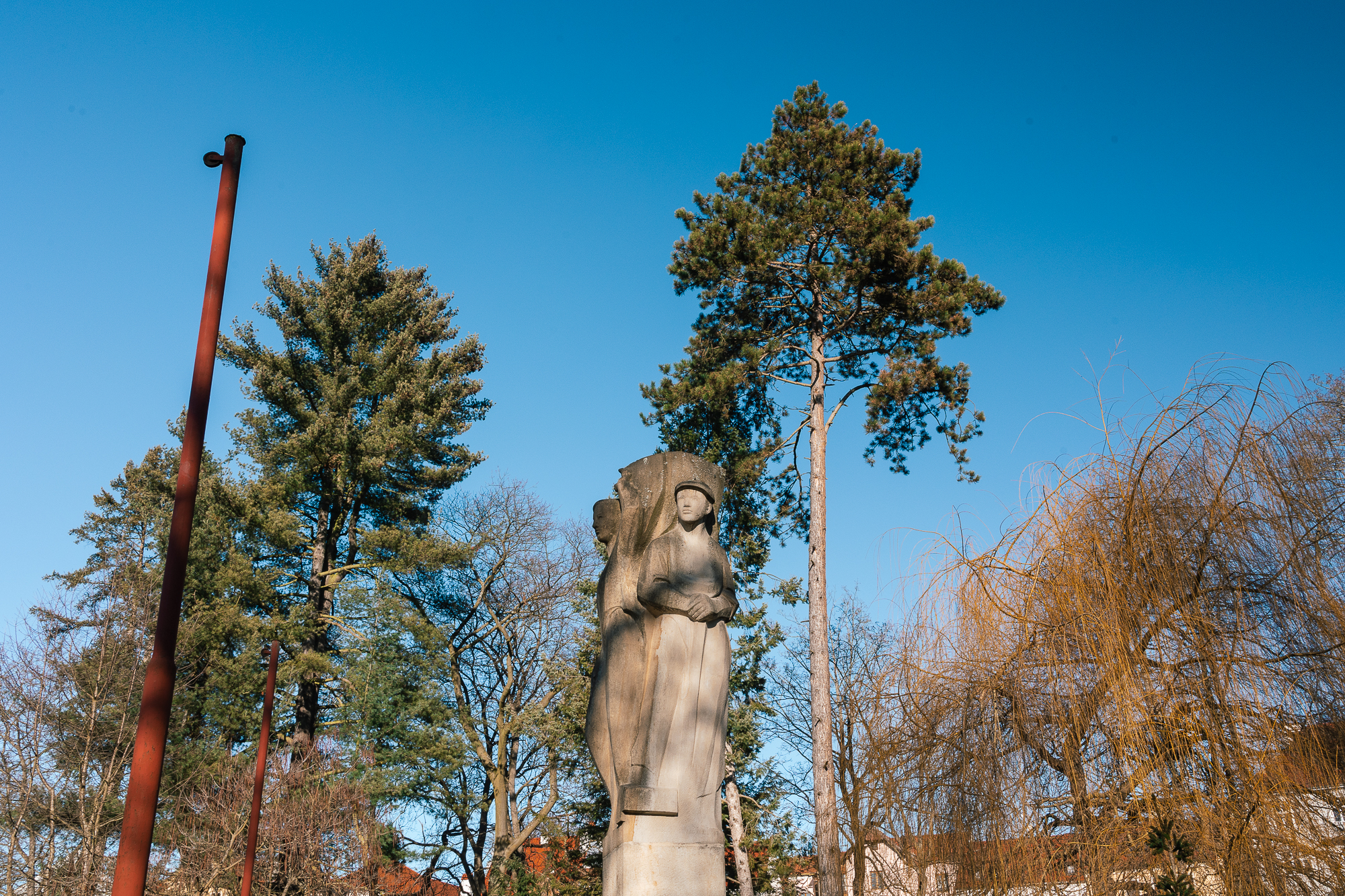
City Park Cesky Krumlov
For a serene daytime retreat, make your way to the delightful city park. Here, you can bask in the beauty of Cesky Krumlov while taking in scenic vistas of the city. The park also houses the Memorial to the Struggle and Victory over Fascism, along with the Friedrich Ludwig Jahn Memorial, offering a peaceful and historically significant setting for relaxation.
Seminary Garden
If you’re seeking a breathtaking viewpoint in Cesky Krumlov, don’t miss the Seminary Garden. It’s one of the city’s most beloved spots, providing a panoramic vista of the magnificent castle.
Mirror Labyrinth in Cesky Krumlov
What to do in Cesky Krumlov with kids? Consider a visit to the Czech Republic’s largest mirror labyrinth, a world of endless corridors and optical illusions. This mirror maze ranks among the largest in Europe, boasting around 90 mirrors. Additionally, there’s a smaller but equally unique crystal maze crafted from clear glass. You’ll find this captivating mirror labyrinth on Široká Street in Cesky Krumlov, promising hours of family fun and excitement.
Wax Museum in Cesky Krumlov
Another intriguing attraction that appeals to both adults and children is the Wax Museum in Cesky Krumlov. While some may have varying opinions on this type of entertainment, it’s an experience worth having at least once in a lifetime. 🤭
Within the museum, you’ll encounter famous Czech figures like T. G. Masaryk, E. Beneš, and V. Havel, alongside globally renowned personalities such as Picasso, Dali, and Einstein. It’s a chance to get up close to these iconic individuals, making it a unique and memorable visit in Cesky Krumlov.
Rotating Auditorium in Cesky Krumlov
The theater in Cesky Krumlov draws visitors from all across the Czech Republic who come to experience the unique revolving auditorium, even though it has been a topic of controversy. Originally, the turntable could accommodate only 60 spectators, but in 1994, it was replaced with a more advanced auditorium from Škoda Plzeň, capable of hosting 644 audience members.
What makes this auditorium special is its picturesque setting within the castle’s forest park, providing a stunning backdrop for theatrical performances. It accommodates a diverse range of productions, from classic Czech fairy tales to Shakespearean dramas, operas, and ballets.
During the season, which spans from June to September, around eighty performances take place here, attracting up to 55,000 spectators. Despite its popularity, the auditorium’s location in the castle garden has sparked long-standing debates and criticisms. UNESCO has expressed concerns about its impact on the historic castle park environment and recommended its relocation.
In 1992, there were promises to remove it, but this didn’t happen, leading to fears that Český Krumlov might be removed from the UNESCO World Heritage List.
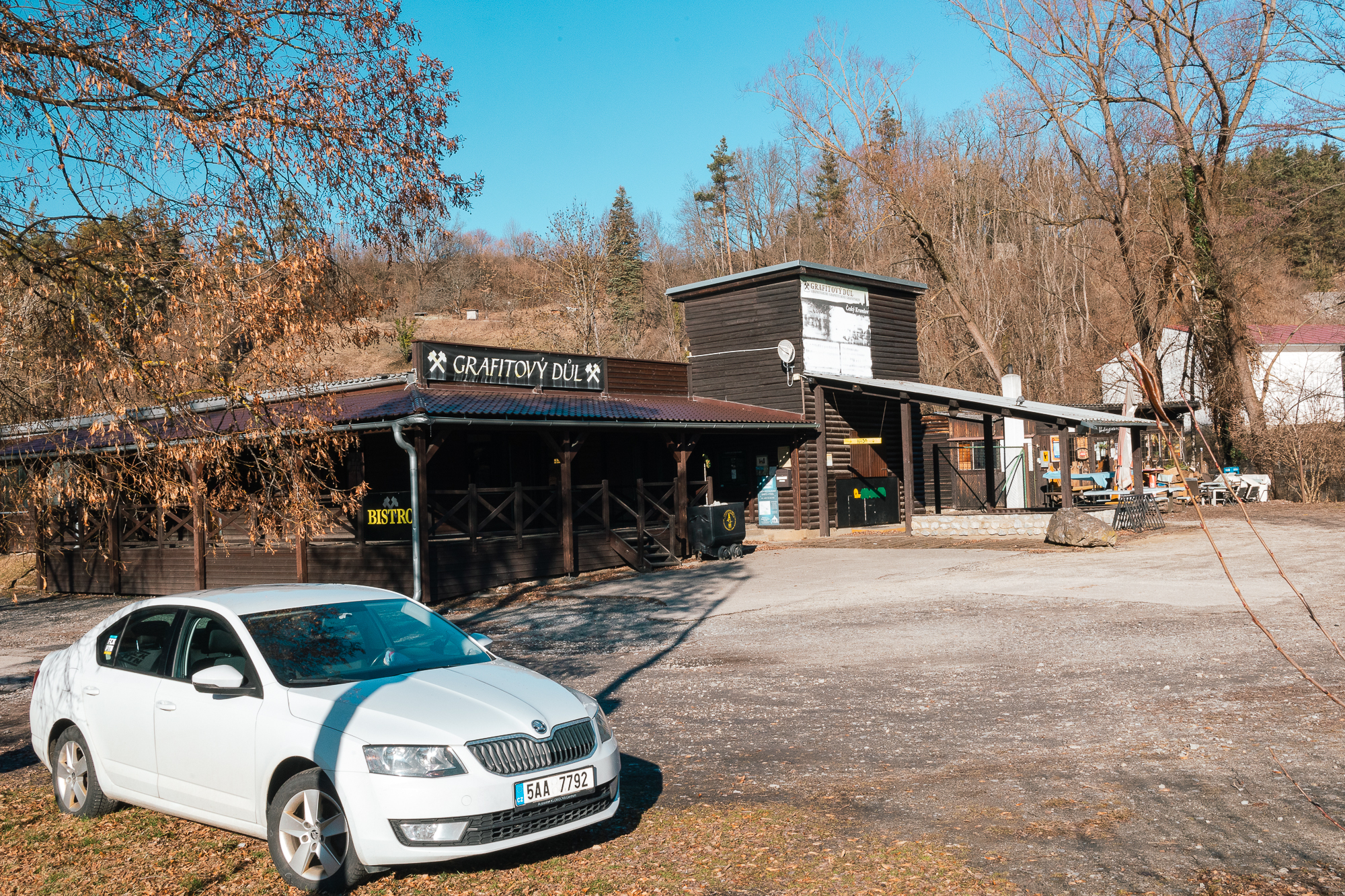
Graphite Mine Cesky Krumlov
For those seeking an adrenaline rush or have adventurous kids in tow, consider a trip to the youngest graphite mine in the Czech Republic, established in 1975.
We strongly advise reserving tickets in advance for a designated time slot since, like everything in Cesky Krumlov, this attraction tends to get quite crowded. The mine maintains a temperature of around 10 degrees, and be prepared for a descent, so dress accordingly. Upon arrival, you’ll be provided with boots, a helmet, and a flashlight. For an added thrill, you can even take a ride on the mine train. This excursion promises an exciting underground adventure for all ages!
Graphite mine in Český Krumlov
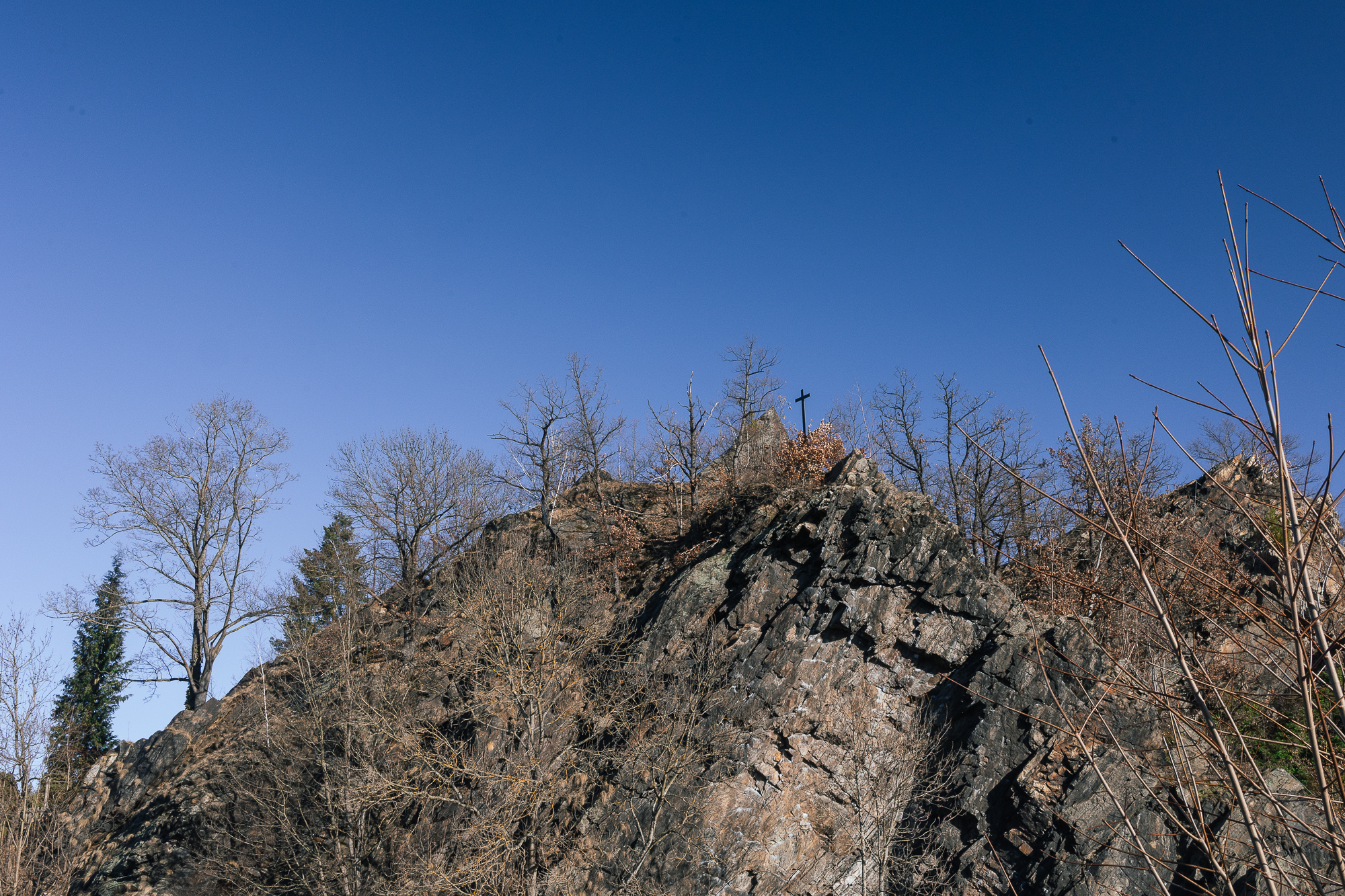
Via Ferrata Ravenna
If you’re craving an adrenaline rush in Cesky Krumlov, don’t miss the Havranka Ferrata. This thrilling adventure is set against the stunning backdrop of the Havraní skála rock formation on the right bank of the Vltava River, just a short stroll from the city center.
At the moment, you can take on the first ferrata route, rated as C in difficulty, and the second route, rated as B. Keep an eye out for upcoming routes, as more exciting challenges are in the works. It’s a fantastic way to add an extra dose of adventure to your Cesky Krumlov experience!
Via Ferrata in Český Krumlov
Best Restaurants and Cafes in Cesky Krumlov
In the past, Český Krumlov was infamous for its subpar food at exorbitant prices. While prices have now leveled with Prague, the restaurant quality hasn’t seen a significant improvement. Thankfully, the café scene is a different story. 😁
Tips for the Best Cafes in Cesky Krumlov
When it comes to the best cafés in Český Krumlov, they are a much safer bet than restaurants. If you’re content with the food they serve, I highly recommend dining at these cafés. 😁 Even if they primarily offer breakfast or desserts, the quality is on a whole different level compared to the restaurants. Enjoy your culinary adventures in Český Krumlov!
Finding good and affordable restaurants in Cesky Krumlov can be a bit challenging. In the past, the Travellers restaurant in the hostel used to serve excellent food at great prices.
For vegetarians, a top choice would be the Laibon restaurant, offering homely dishes with simple flavors. While it may not offer an extensive range of flavors, the food is satisfying, and the service has a quirky yet friendly charm.
If you’re a fan of Asian cuisine, consider trying My Saigon. While it might not be exceptional, it still ranks among the better dining options in Český Krumlov.
Feel free to share your dining recommendations in the comments!
Best Trips around Cesky Krumlov
If you plan to spend more days in Český Krumlov, it would be a shame not to visit other places nearby.
Granátník Lokout Tower
Just a short distance from Cesky Krumlov lies the unassuming Granátník lookout tower. The journey from the parking area typically takes around an hour and ten minutes, so it’s advisable to allocate at least 2.5-3 hours for the entire excursion. It’s a delightful stroll, perfect for stretching your legs, enjoying the fresh air, and immersing yourself in the beauty of the local natural surroundings.
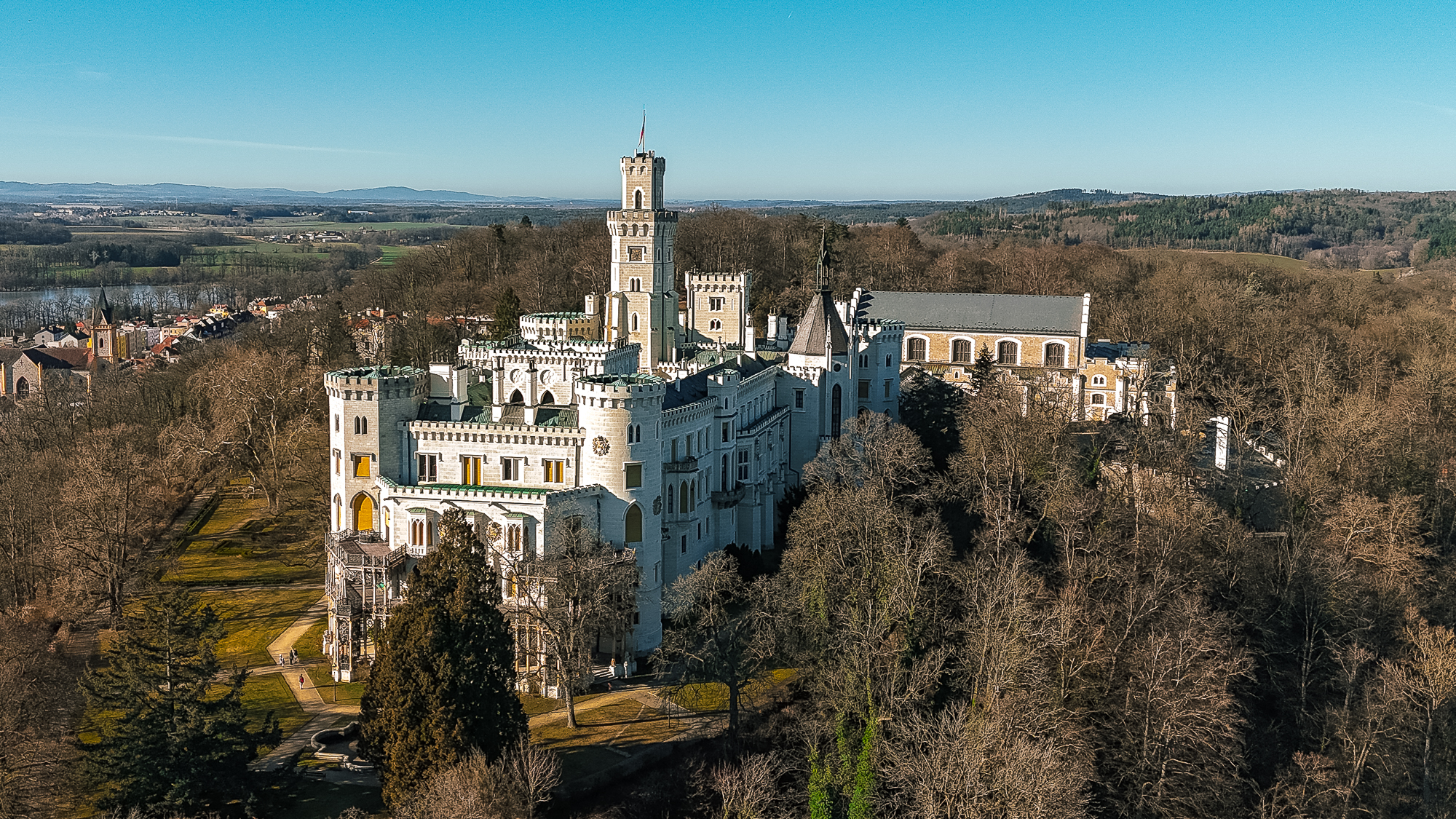
Hluboká Chateau
This picturesque Chateau is open year-round and stands as a Czech architectural treasure, drawing inspiration from English Gothic and the illustrious Windsor Castle.
Tip for a trip from Český Krumlov: Hluboká Castle
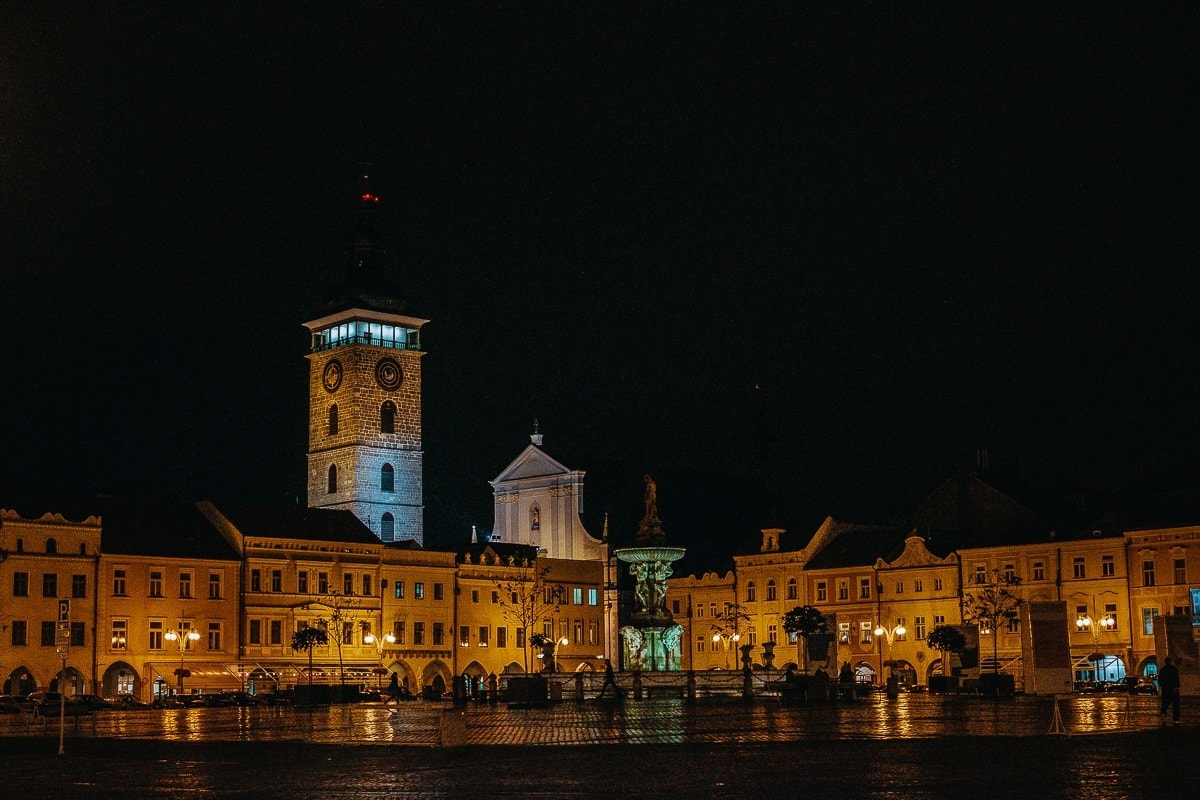
České Budějovice
In the Czech language, there’s a saying that goes, “Everyone wants to live in České Budějovice.” While I may not entirely agree, I must admit that České Budějovice is undeniably beautiful and well worth a visit, particularly its charming city center.
The town was established in 1265 under the reign of Czech king Přemysl Otakar II. Its origins can be traced back to the original settlement of Budivojovice, named after Budivoj of Železnice, a noble associated with King Přemysl Otakar I.
In České Budějovice, you’ll encounter some notable attractions. These include the largest fountain in the Czech Republic, known as Samson’s Fountain, and the largest fresco depicting St. Christopher, located in the monastery church of the Presentation of the Virgin Mary.
Other historic landmarks in the town encompass the church of St. Procopius and St. John the Baptist, dating back to the early 13th century, and the Black Tower. The Black Tower, constructed as a watchtower between 1549 and 1577, stands as the city’s tallest building, soaring to a height of 72.29 meters.
Frequently Asked Questions
What to do with children in Český Krumlov?
Take them to Gallery 3+, the Mirror Labyrinth or the Wax Museum. Book a photo experience in Josef Seidel’s studio or a tour of the Graphite Mine.
What to do in Český Krumlov when it rains?
If it’s raining, take a tour of the castle, explore museums like Josef Seidel’s studio or Gallery 3+. Take a look inside the monasteries or head to the Mirror Labyrinth.
How many tourists visit Český Krumlov every year?
More than 2 million tourists visit Český Krumlov every year.
What is Český Krumlov famous for?
Český Krumlov is famous for its bears, castle and beautiful historical centre.
What to do in Cesky Krumlov in one day?
In a single day, you can explore the castle, bear moat, monasteries, and take a leisurely stroll through the town. Cesky Krumlov offers a wealth of attractions that can be enjoyed in just one full day!
🔗 These are affiliate links — they don't change your price and help us create content. · All experiences →
Tips and Tricks for Your Vacation
Don’t Overpay for Flights
Search for flights on Kayak. It’s our favorite search engine because it scans the websites of all airlines and always finds the cheapest connection.
Book Your Accommodation Smartly
The best experiences we’ve had when looking for accommodation (from Alaska to Morocco) are with Booking.com, where hotels, apartments, and entire houses are usually the cheapest and most widely available.
Don’t Forget Travel Insurance
Good travel insurance will protect you against illness, accidents, theft, or flight cancellations. We’ve had a few hospital visits abroad, so we know how important it is to have proper insurance arranged.
Where we insure ourselves: SafetyWing (best for everyone) and TrueTraveller (for extra-long trips).
Why don’t we recommend any Czech insurance company? Because they have too many restrictions. They set limits on the number of days abroad, travel insurance via a credit card often requires you to pay medical expenses only with that card, and they frequently limit the number of returns to the Czech Republic.
Find the Best Experiences
Get Your Guide is a huge online marketplace where you can book guided walks, trips, skip-the-line tickets, tours, and much more. We always find some extra fun there!
TL;DRAlberobello is a magical little town in the Apulian province of Bari, famous for its one-of-a-kind trulli — round whitewashed houses with conical stone roofs. There are hundreds of them, and people still live in many, while the Rione Monti and Aia Piccola districts are on the UNESCO list. Wandering the lanes, browsing local shops and tasting Apulian food are the highlights. It’s worth visiting all year round, though spring and autumn are loveliest, once you dodge the peak heat and crowds. The guide has 19 tips on what to see, where to stay, and day trips around Apulia.
Have you ever heard of Alberobello? It might sound like something out of a fairy tale, but this charming little town in the province of Bari, located in the heart of Puglia,Italy, is very real and utterly magical.
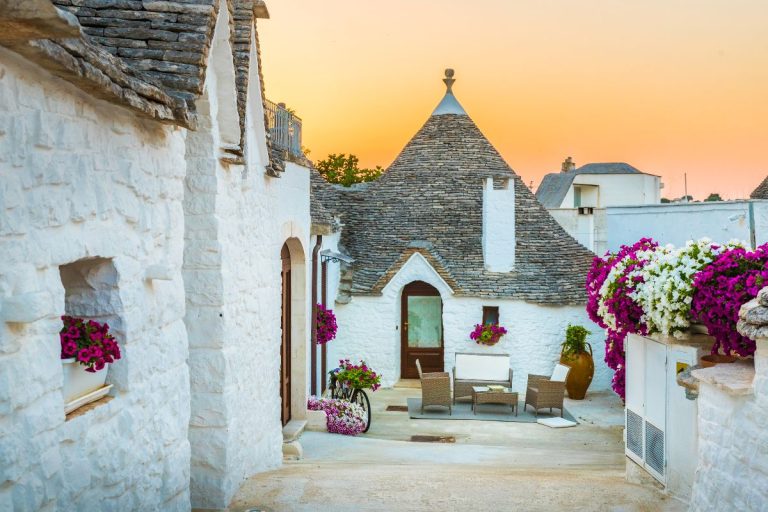
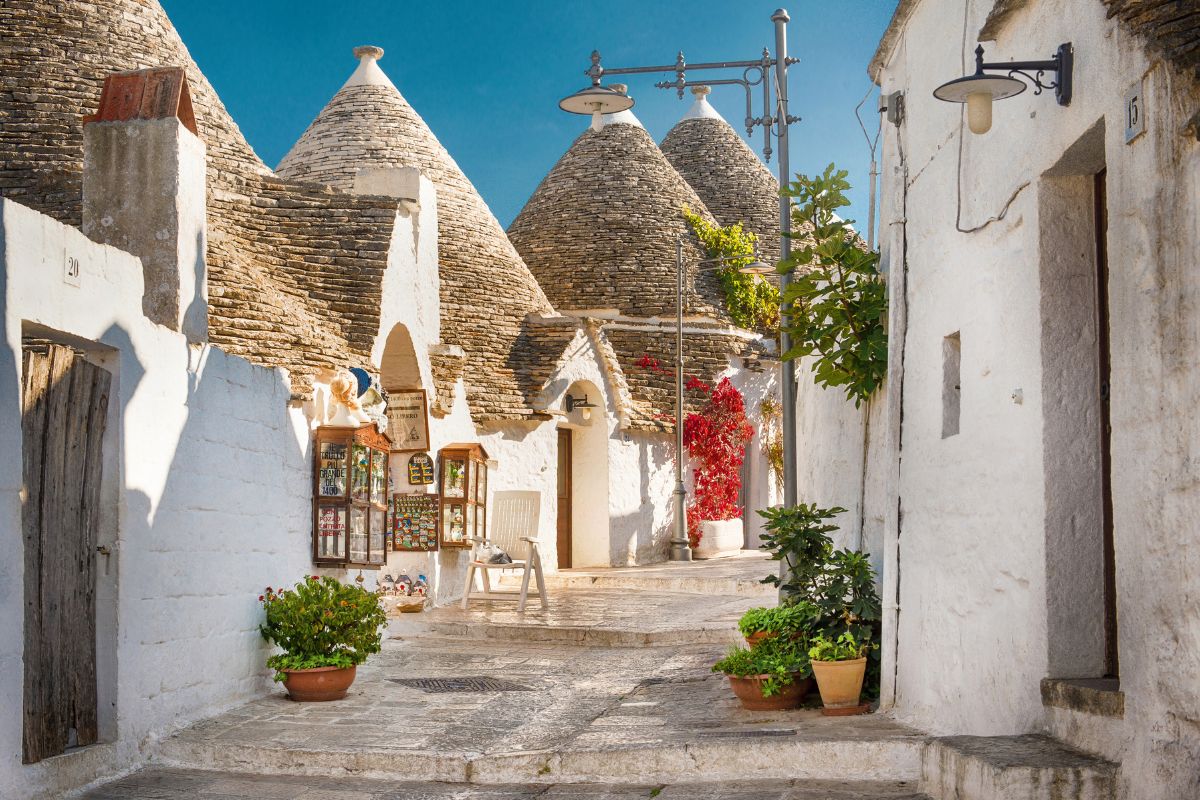
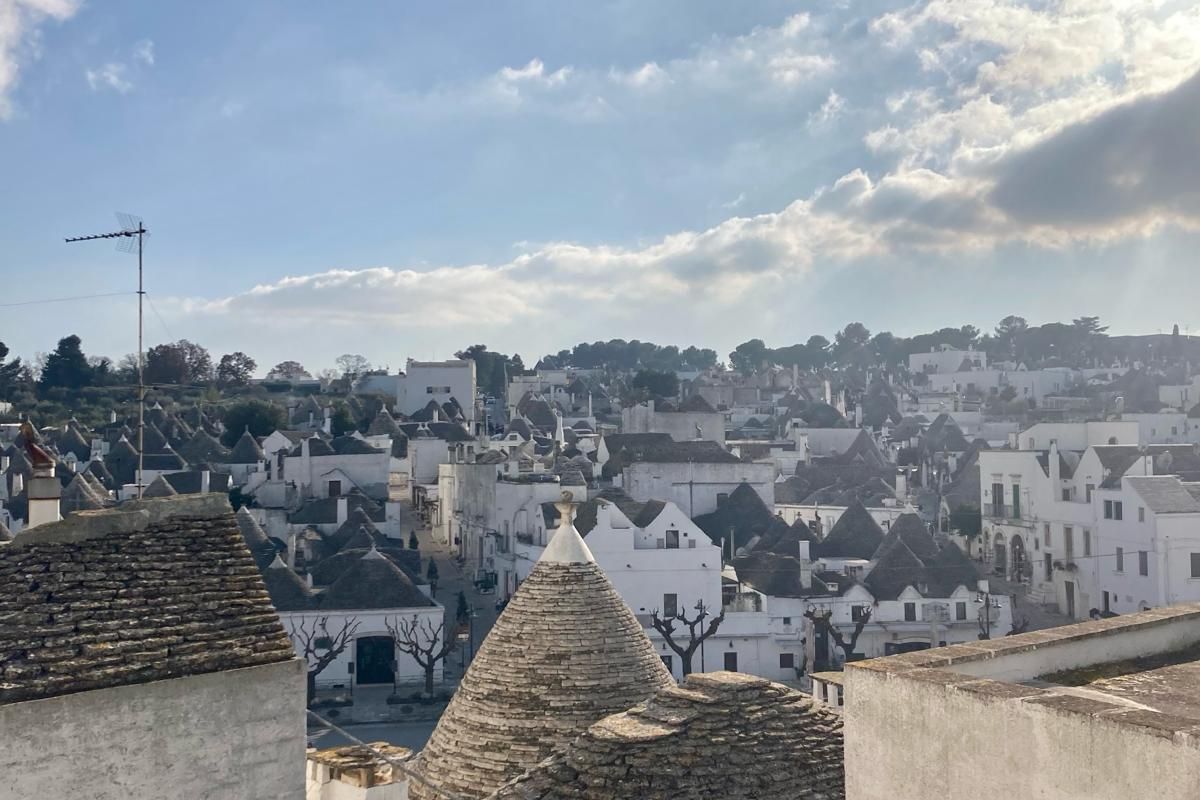
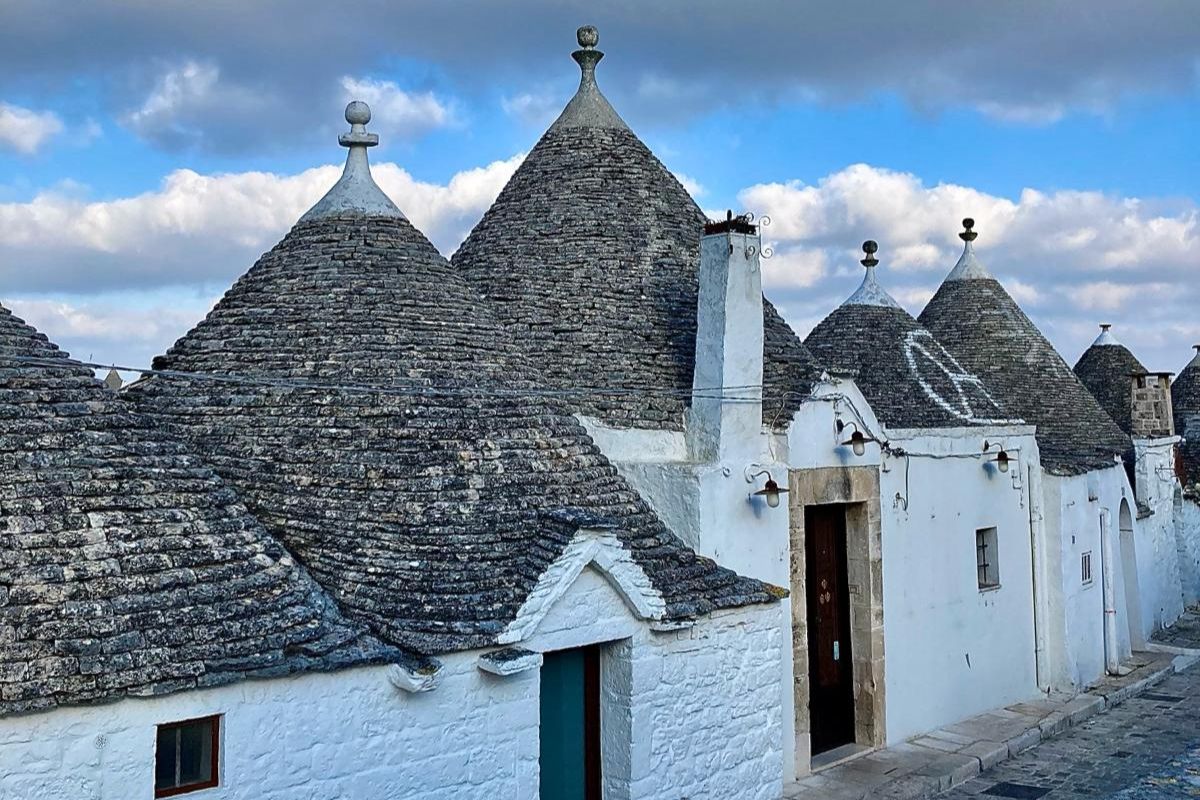
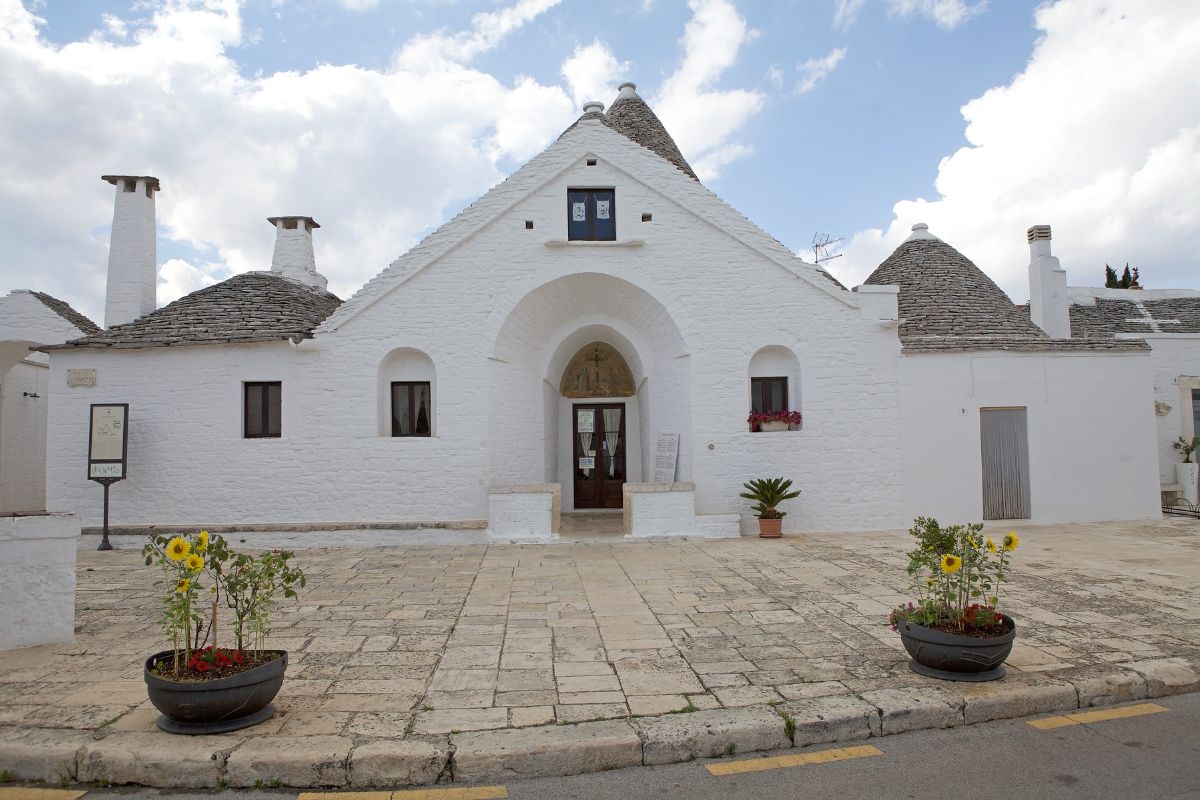
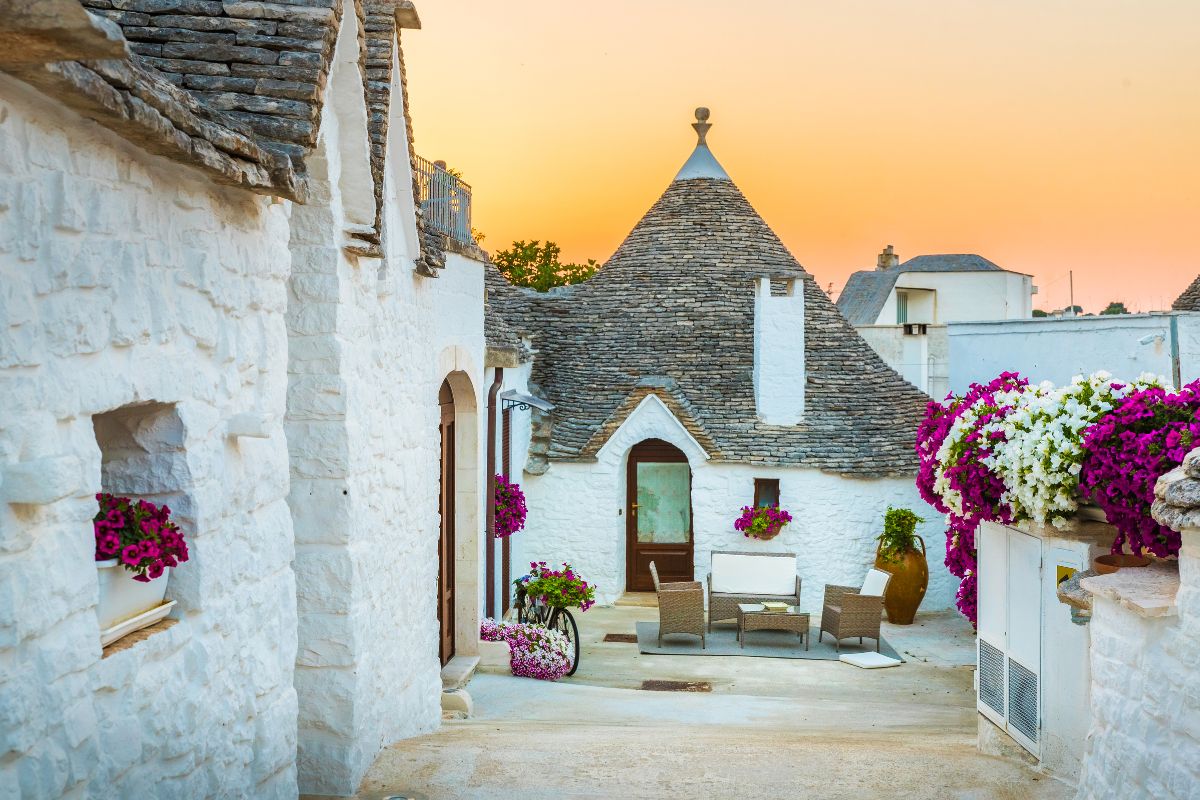
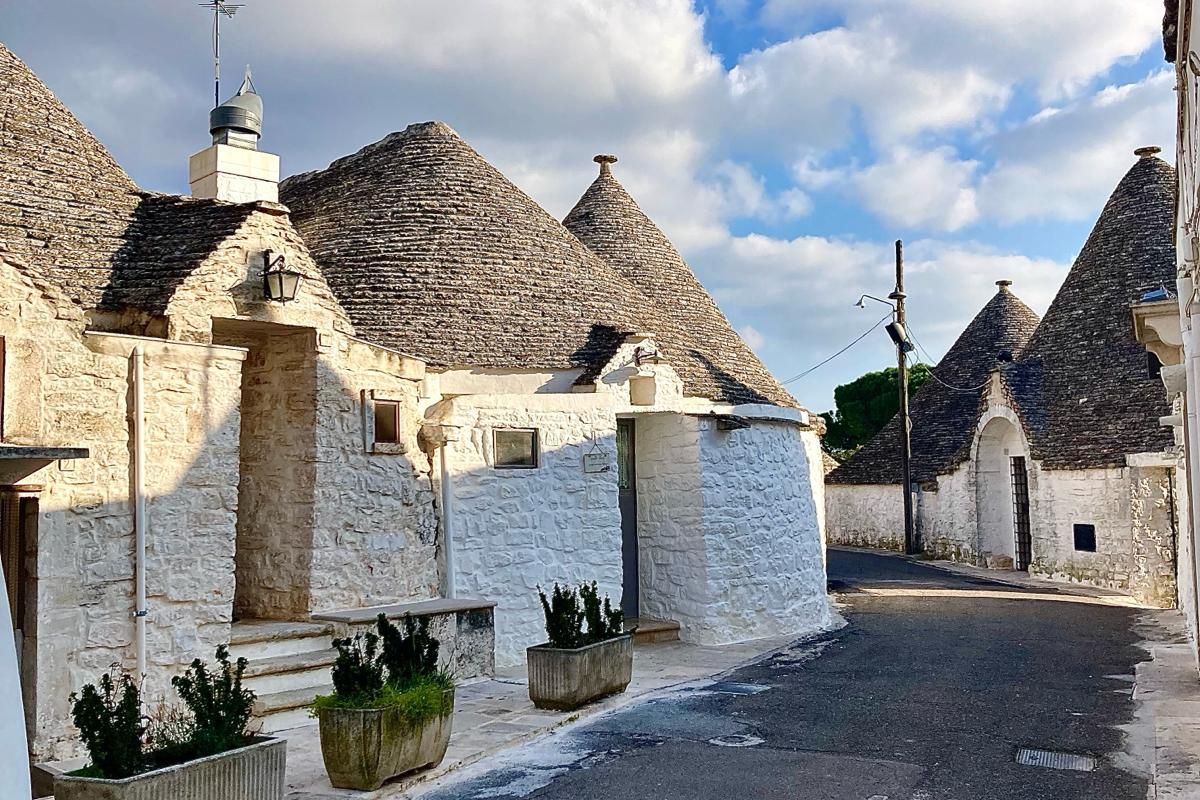
Alberobello is world-renowned for its unique trulli architecture. These circular white houses, adorned with various decorative symbols and topped with distinctive grey stone roofs resembling bird nests, are like nothing you’ve seen before.
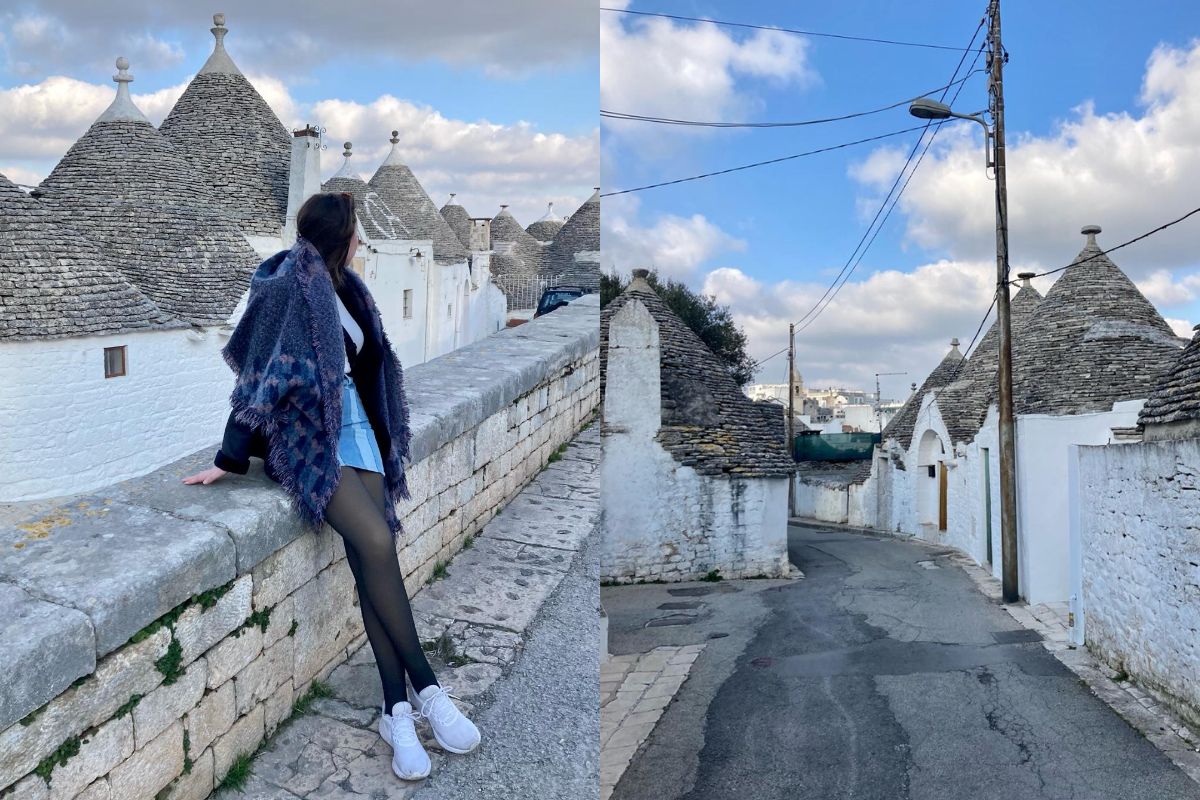
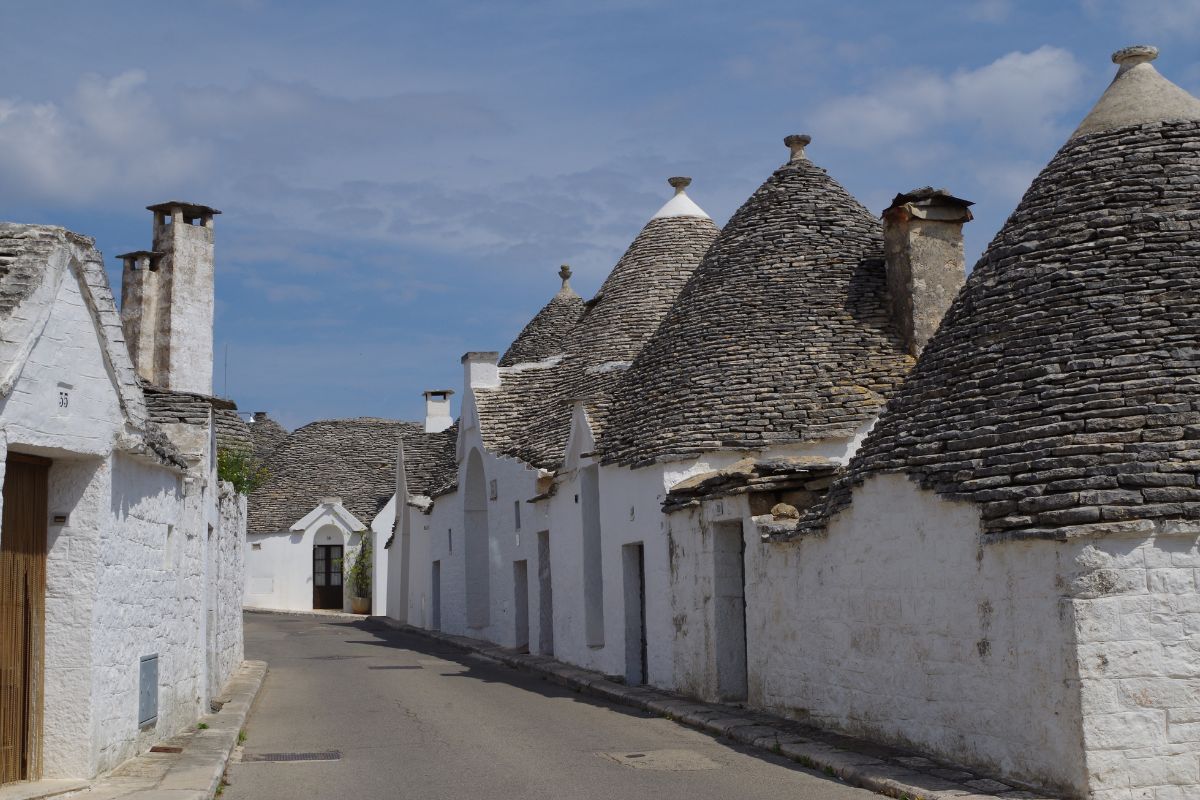
While you may stumble upon intriguing trulli houses scattered across the Puglia region, Alberobello is the true “Trulli Town.” Here, Trulli houses line the streets, creating a picturesque landscape that seems frozen in time. Some of these historic homes are still inhabited today, adding to the town’s living history.
Let’s explore the best things to do and see in Alberobello, including where to stay and the perfect time to visit this enchanting destination.
You can visit Alberobello year-round, but the best time to go is between April and November.
The warmest months are June to August, while January and February are the coldest. However, don’t expect freezing conditions—temperatures rarely drop too low. I visited in February, and the weather was pleasantly sunny, with temperatures around 15°C (59°F) 😊.
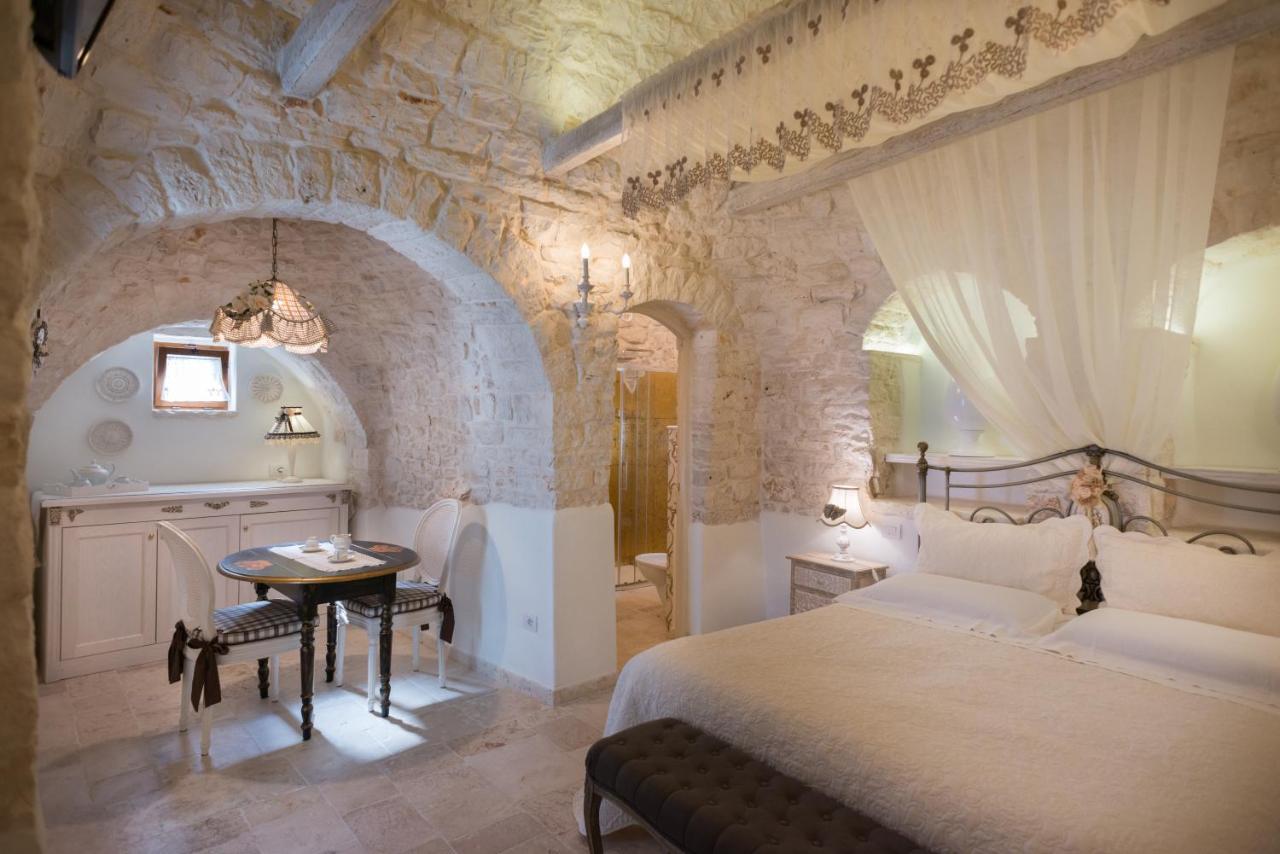
There’s no need to find long-term accommodation in Alberobello, as the town is perfect for a day trip. However, if you want to make your visit truly unforgettable, consider staying in one of the charming trulli houses.
Accommodation in trulli houses is an exceptional experience.
19 Best Things to Do and See in Alberobello
Alberobello may be a small town, but it has plenty to offer. I’ve put together 19 must-seespots in this enchanting town to help you make the most of your visit.
TIP: Don’t miss our article on other must-visit Italian destinations!
View of Alberobello
Iconic Trulli Houses of Alberobello
The main attraction of Alberobello is undoubtedly its iconic trulli houses. These unique structures are built without mortar, using carefully crafted stones, and topped with conical roofs adorned with white symbols. Originally, each trulli had just one room with thick walls.
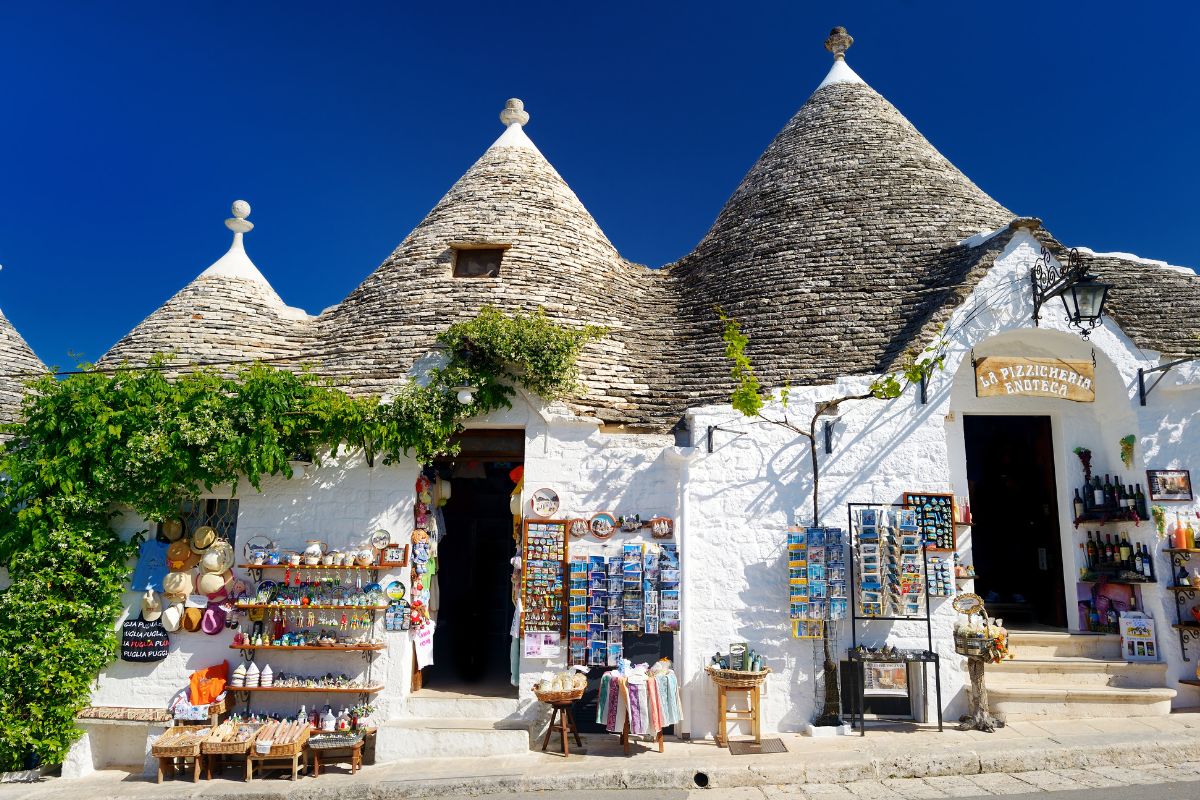
As you explore the town, you’ll find yourself walking through a charming maze of these white houses. Some of the trulli have even been converted into souvenir shops, allowing you to step inside and experience their distinctive architecture up close.
Trulli houses in Alberobello
Quartier Rione Monti
Alberobello is divided into two main districts, one of which is Rione Monti district. This district is the more bustling and tourist-friendly area, home to around a thousand trulli houses set on a gentle hillside. Here, you’ll find an array of souvenir shops nestled among these iconic structures.
Quartier Rione Monti
Rione Aia Piccola
Rione Aia Piccola is the quieter district of Alberobello, home to around 400 trulli houses. Unlike the busier areas, you’ll find this part of town peaceful and free from crowds of tourists.
Quartier Riona Aia Piccola
Trullo Sovrano
Trullo Sovrano is the only two-story trullo that still retains its original authentic furnishings. Built-in the 18th century by the Perty family as their private residence, this unique structure stands out for its grandeur.
Its remarkable design and historical significance have earned it a place on the UNESCO World Heritage list. You can visit Trullo Sovrano at 10 Piazza Sacramento.
Trullo Sovrano
Church of St. Anthony of Padua
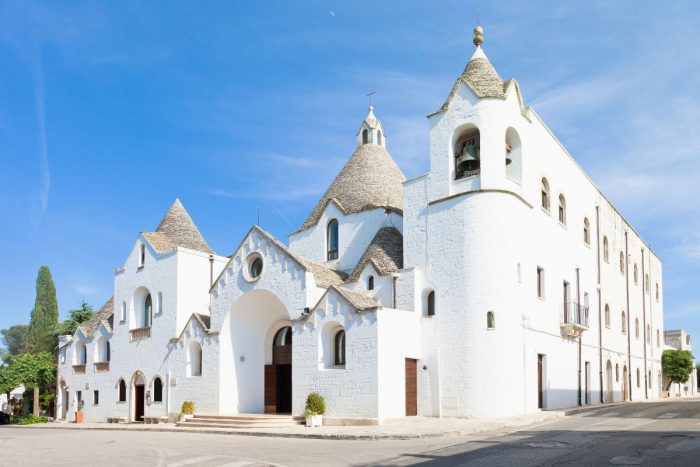
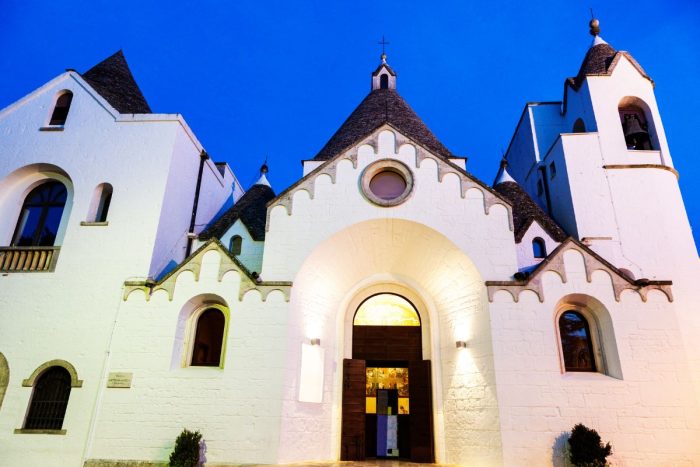
The standout feature of the Rione Monti district is the Church of Saint Anthony of Padua, built in 1926. This unique church, constructed in the traditional Trulli style, blends seamlessly with the surrounding houses. It was commissioned by Father Antonio Lippolise, who wanted to provide the local poor with a place of worship that felt just like home.
Church of St. Anthony of Padua
Casa D’Amore
Casa D’Amore, also known as the House of Love, is located in King Ferdinand IV Square. Built in 1797, this was the first trulli house constructed with mortar, marking the year Alberobello became a free town.
Basilica of St. Cosmas and Damian
The Basilica, dedicated to the patron saints of Alberobello, Saints Cosmas and Damian, was built in 1885. This neoclassical structure houses the remains of the brothers, making it a significant landmark in the town.
Basilica of St. Cosmas and Damian
Trullo Siamese
In the Rione Monti district, you’ll find the unique “Siamese” trulli house, notable for its two separate trulli structures joined under a shared double roof.
This house has no windows and features two entrances. Interesting fact: According to local legend, it was once home to two brothers. One was engaged to a girl who later fell in love with the other brother, becoming his mistress, which adds an intriguing layer to its history.
🔗 These are affiliate links — they don't change your price and help us create content. · All experiences →
Villa Donnaloja
Villa Donnaloja is a lush urban park in Alberobello, perfect for taking a break, enjoying a snack, or relaxing in the shade.
Church of St. Lucia
Another must-see in Alberobello is the Church of Saint Lucia, located in Piazza San Girolamo. This church was built to welcome the many faithful who visited the town.
Church of St. Lucia
Pezzolla Museum
In town, you can explore a museum dedicated to showcasing traditional life in Alberobello and the rich history of the trulli houses.
Excursions from Alberobello
A single day in Alberobello is enough to experience its charm, but if you’re staying longer, you can explore the surrounding Puglia region. You can easily book excursions through the travel portal GetYourGuide.
You can visit the following places:
Locorotondo: A charming town in southern Italy, Locorotondo is known for its bright white trulli houses, typical of the Apulia region.
Martin Franco: Traditional trulli houses can also be found around Martina Franca, a town characterized by its Moorish atmosphere.
Bari: For a mix of history and modernity, visit Bari, the second-largest city in southern Italy.
Monopoli: A small coastal town rich in history, Monopoli boasts numerous beaches.
Matera: A breathtaking town literally carved out of rock, Matera was the filming location for the James Bond film No Time to Die.
Polignano a Mare: This seaside town, perched on cliffs, offers stunning views and beautiful beaches.
Brindisi: An Italian port town, Brindisi is surrounded by two bays that create a natural harbor.
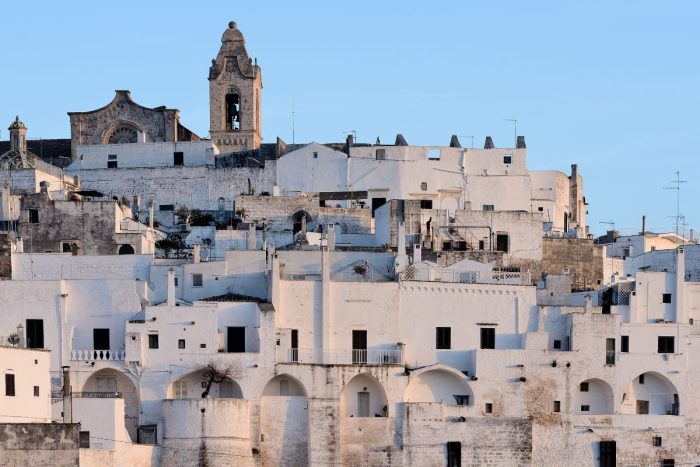
Ostuni: Known as the “White Town” for its snow-white houses stacked atop each other, Ostuni offers a rich history and lovely beaches.
To conclude, here are a few interesting facts about Alberobello:
The origin of trulli houses dates back to the second half of the 16th century.
Trulli houses were constructed from stone without using mortar or other binding materials. This design allowed them to be quickly dismantled, which was a practical solution to avoid taxation. Remarkably, some of these trulli are still inhabited today.
In 1996, Alberobello was recognized for its exceptional architecture and was added to the UNESCO World Heritage list.
Alberobello is even more magical at sunset
Frequently asked questions:
Where is Alberobello?
Alberobello is a picturesque historic town in southern Italy, located in the Apulia region.
Why is Alberobello famous?
Alberobello is famous for its traditional trulli houses, which are unique and characteristic of the area. This architecture was built without the use of mortar and is a UNESCO World Heritage Site.
How do I get to Alberobello?
Alberobello is accessible from different parts of Italy. The nearest airports are in Bari and Brindisi.
Tips and Tricks for Your Vacation
Don’t Overpay for Flights
Search for flights on Kayak. It’s our favorite search engine because it scans the websites of all airlines and always finds the cheapest connection.
Book Your Accommodation Smartly
The best experiences we’ve had when looking for accommodation (from Alaska to Morocco) are with Booking.com, where hotels, apartments, and entire houses are usually the cheapest and most widely available.
Don’t Forget Travel Insurance
Good travel insurance will protect you against illness, accidents, theft, or flight cancellations. We’ve had a few hospital visits abroad, so we know how important it is to have proper insurance arranged.
Where we insure ourselves: SafetyWing (best for everyone) and TrueTraveller (for extra-long trips).
Why don’t we recommend any Czech insurance company? Because they have too many restrictions. They set limits on the number of days abroad, travel insurance via a credit card often requires you to pay medical expenses only with that card, and they frequently limit the number of returns to the Czech Republic.
Find the Best Experiences
Get Your Guide is a huge online marketplace where you can book guided walks, trips, skip-the-line tickets, tours, and much more. We always find some extra fun there!
TL;DRIn Bari, the largest city in Puglia and southern Italy’s second city, the historic centre of Bari Vecchia is the main draw, along with the Basilica of St Nicholas, Castello Normanno-Svevo, the Lungomare seafront and Via dell’Arco Basso, where you’ll see women hand-rolling orecchiette pasta right on the street. The article rounds up 26 tips on what to see and do in Bari, including swimming at Lido San Francesco, Pane e Pomodoro and Canalone beaches. Two to three days is enough to cover the main sights, and while July, August, May, June and September are the best months, Bari works as a year-round destination. It’s also an easy base for day trips to Alberobello, Polignano a Mare, Matera, Monopoli or Lecce.
Ready to explore Bari together? No, I didn’t mean Bali in Indonesia! We’re headed to Bari inEurope, the captivating capital of Apulia in southern Italy.
Bari, the second largest city in southern Italy after Naples, invites you to dive deep into its rich history. Stroll through its charming, timeworn streets and hidden corners, where you’ll encounter friendly Italian “nonne” (grandmothers) at every turn, while colorful laundry sways gently above you.
But Bari isn’t just about its past, it’s a vibrant blend of modern city life and historic charm. The bustling metropolis is alive with energy, yet its stone streets in the historic center still echo with the stories of old.
Bari also serves as the perfect gateway to explore the many other wonders of the Apulia region. Let’s explore the best things to do and see in Bari.
Bari enjoys typical Mediterranean weather, making it a destination you can visit year-round. For those seeking a sunny summer getaway, the best months to visit are July and August, as well as May, June, and September.
But don’t overlook the winter months—Bari in February, for example, offers mild temperatures averaging around 15°C (59°F), making it a pleasant escape even in the cooler season.
Bari: weather and sea temperature by month
🌡️ Warmest: July (daytime 32 °C) · 🌊 Warmest sea: August (28 °C) · ☔ Least rainfall: July
Month
Day
Night
Sea
Rainy days
January
13 °C
6 °C
14 °C
10
February
15 °C
7 °C
14 °C
6
March
16 °C
8 °C
14 °C
10
April
19 °C
10 °C
16 °C
10
May
23 °C
15 °C
19 °C
8
June
29 °C
20 °C
24 °C
5
July
32 °C
22 °C
27 °C
4
August
32 °C
22 °C
28 °C
5
September
28 °C
19 °C
26 °C
6
October
23 °C
15 °C
23 °C
6
November
19 °C
12 °C
19 °C
11
December
15 °C
9 °C
16 °C
9
Source: climate normal 2019–2024 (Open-Meteo, measured data)
Where to stay in Bari
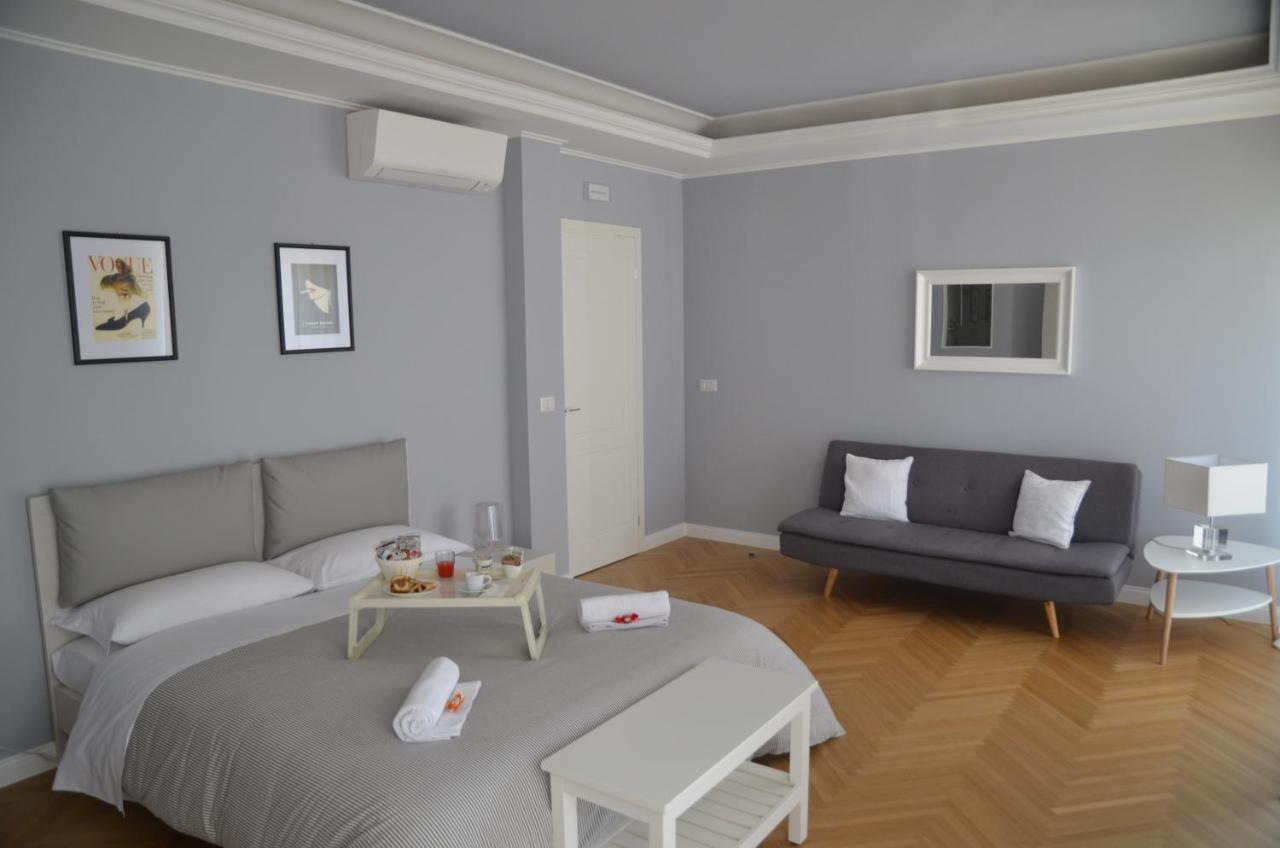
When it comes to accommodation, it all depends on your preferences. If you want to stay in the heart of the city and easily explore Bari, consider booking at Room 56 or Room 24 R. If you’re more inclined towards a beachside experience, Casa al Mare is the perfect choice.
Accommodation in Bari
26 Best Things to Do and See in Bari
If Bari isn’t on your bucket list yet, it’s time to add it! Known as the Gateway to the East,Barihas something for everyone. Join us as we explore 26 best things to do and seein Bari.
Bari Vecchia: A Walk Through the Historic Old Town
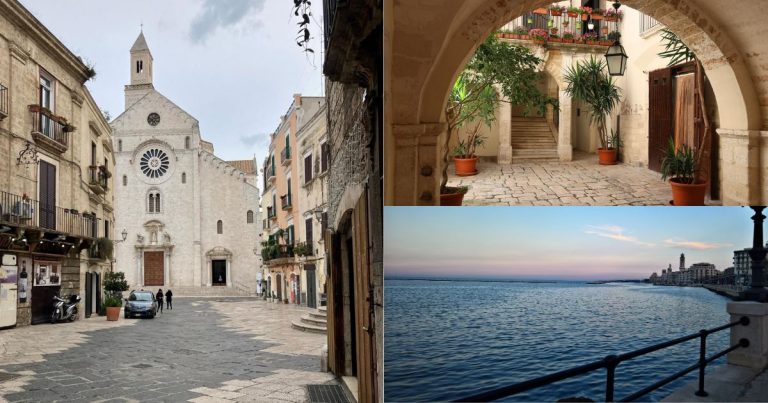
The iconic old town of Bari Vecchia is an absolute must-see. Wander through its narrow, winding alleyways, where you’ll find centuries-old houses dating back to the 10th century and numerous historical landmarks. Along the way, you’ll encounter plenty of locals and have the chance to relax at a charming restaurant or café.
Old Town
Basilica of San Nicola: Bari’s Historic Landmark
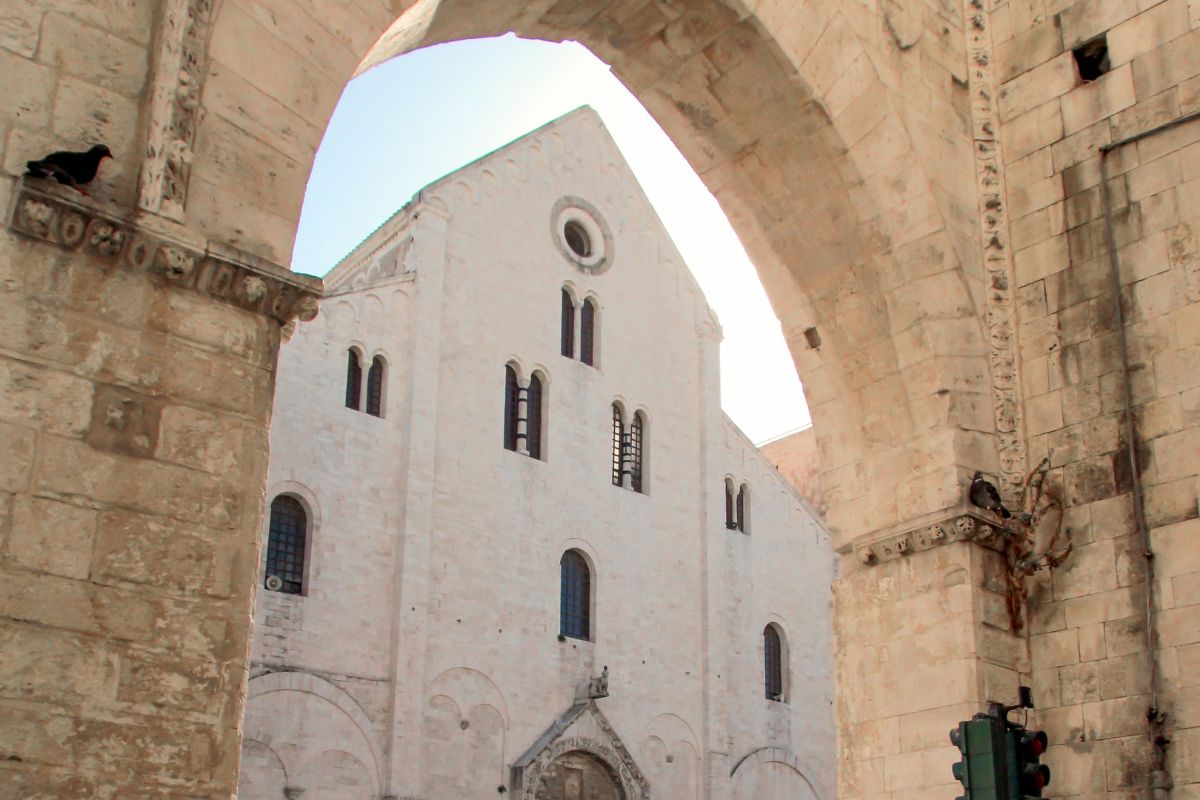
In the historic center of Bari, you’ll find the stunning Basilica of St. Nicholas, a unique structure that resembles a castle more than a traditional church. The basilica is open daily, except Sundays, and you can explore the interior for a fee of 3 euros.
Basilica of San Nicola
San Sabina Cathedral: Explore Bari’s Historic Gem
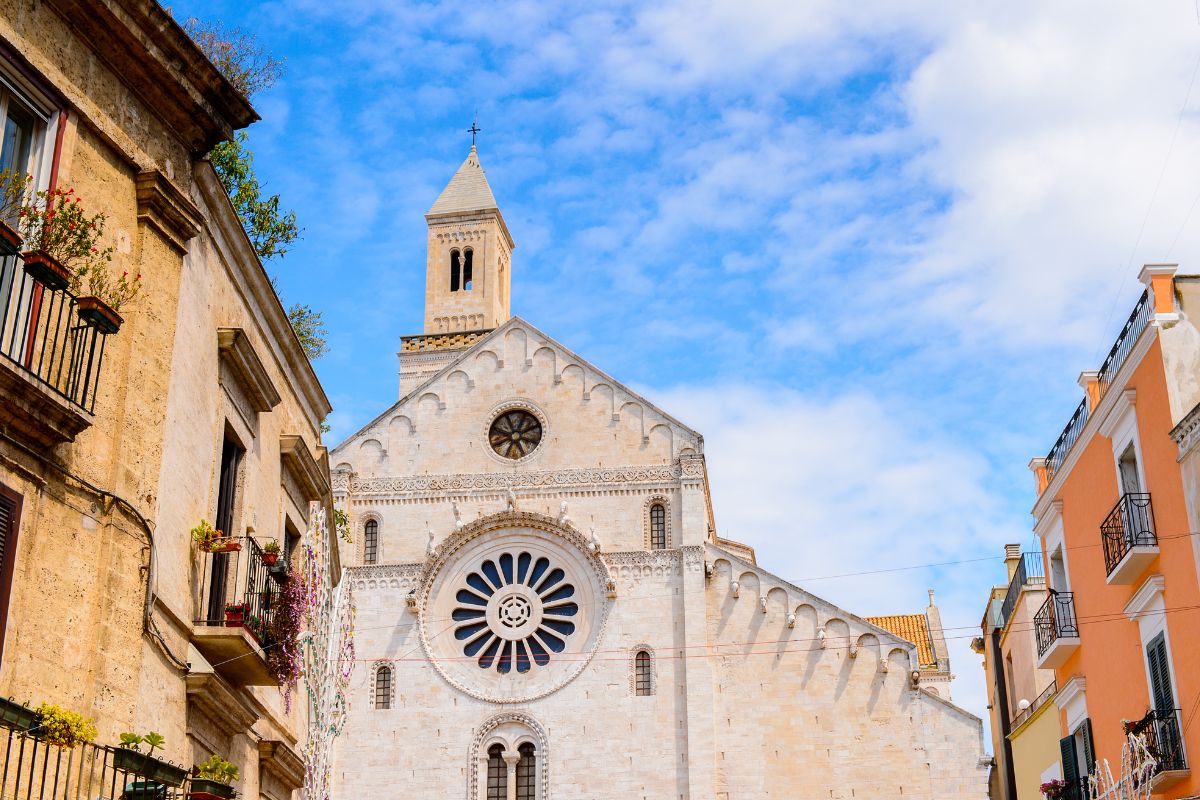
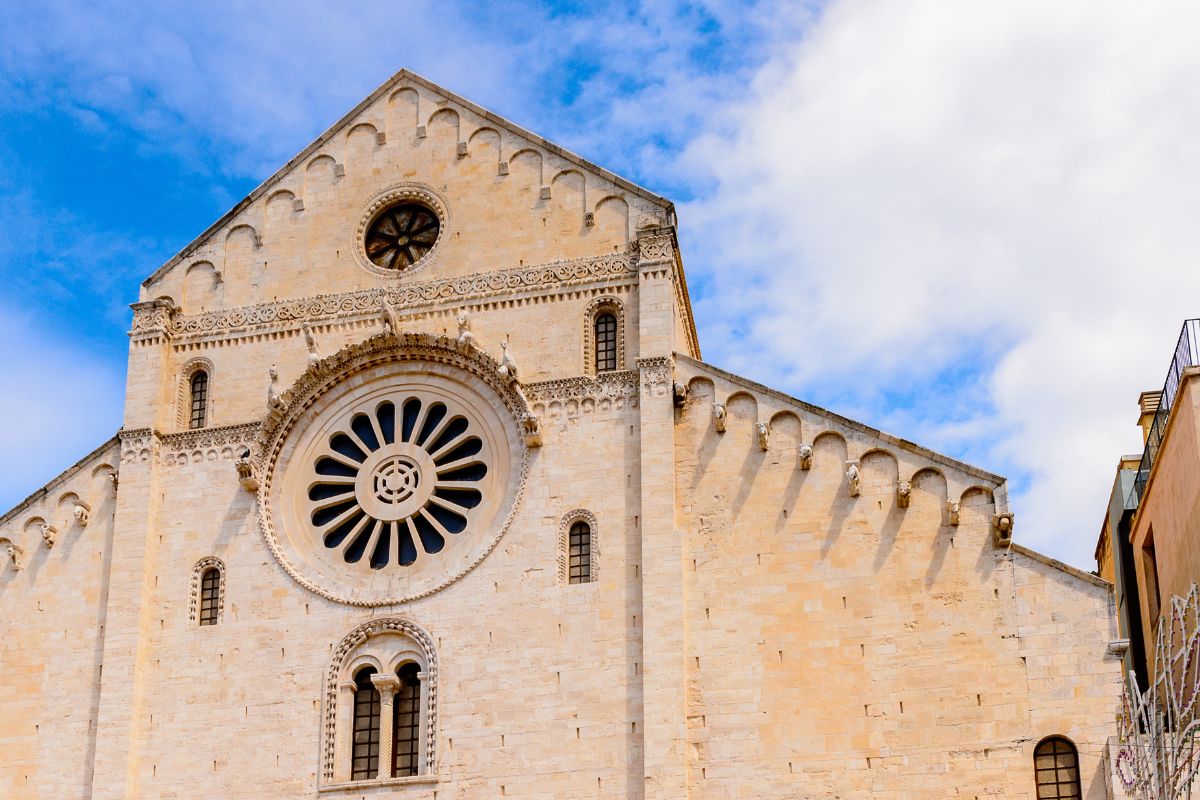
Another notable, though smaller, church is the Cathedral of St. Sabinus, a beautiful example of the Apulian Romanesque style. It is open daily, and admission is free.
San Sabia Cathedral
Via dell’Arco Basso: Discover Bari’s Iconic Street of Handmade Pasta
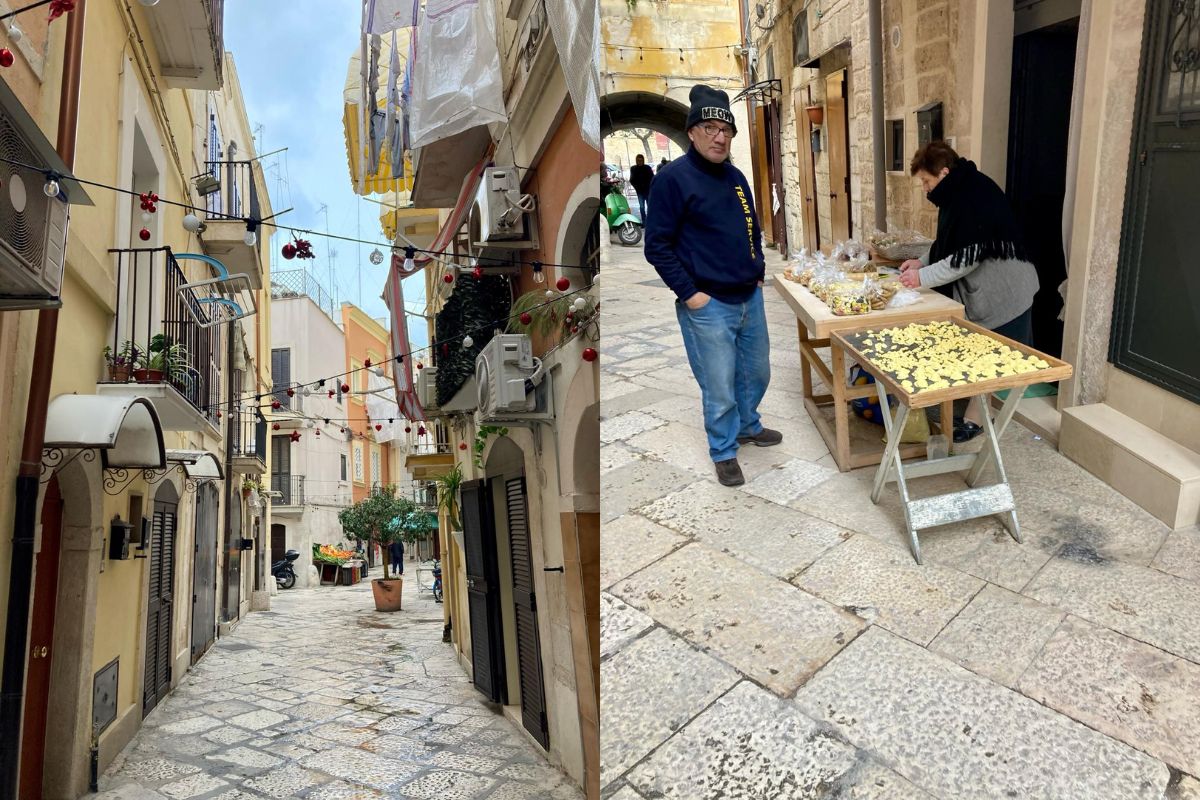
One of the most popular and fascinating spots in Bari is Via dell’Arco Basso, renowned for the local Italian women who sit at wooden tables, skillfully crafting fresh pasta dishes like orecchiette, cavatelli, and strascinati, traditional specialties of the Puglia region.
Streets of Bari
Piazza Mercantile: Bari’s Vibrant Historic Square
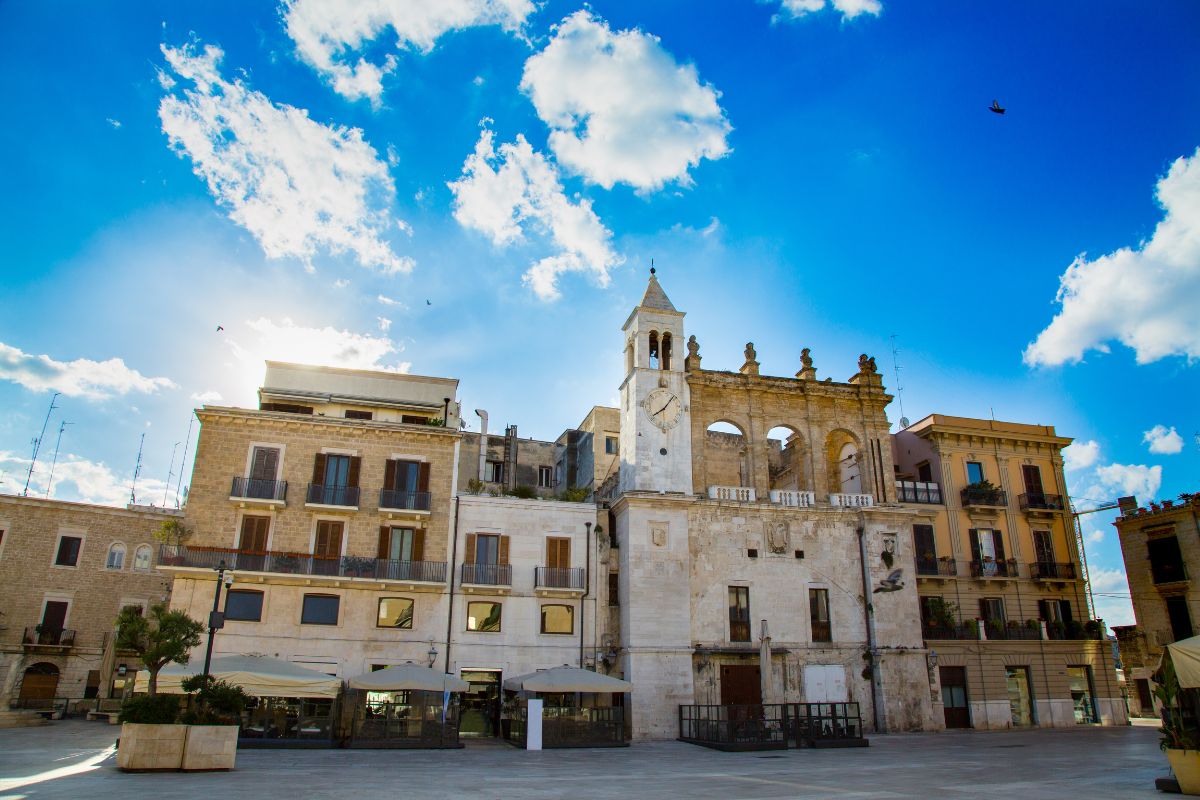
In the historic center of Bari, you’ll discover Piazza Mercantile, also known as the Business Square, where significant city buildings began to emerge in the 15th century. The centerpiece of the square is the Palazzo del Sedile, featuring the town hall and its iconic clock tower.
Piazza Mercantile
Largo Albicocca: Bari’s Charming Hidden Square
Another square you shouldn’t miss is Largo Albicocca, a symbol of Bari’s revitalization.
Corso Vittorio Emanuele: Explore Bari’s Historic Boulevard
Corso Vittorio Emanuele is the vibrant shopping street that connects Bari’s historic center with its more modern district. Along this bustling boulevard, you’ll find a pedestrian promenade lined with restaurants, cafés, and shops.
Corso Vittorio Emanuele II: Bari’s Premier Shopping and Dining Street
In the modern part of Bari, you’ll find Corso Vittorio Emanuele II, the main artery of urban life. This bustling street is lined with shops, boutiques, restaurants, and cafés on both sides, offering a vibrant experience for visitors.
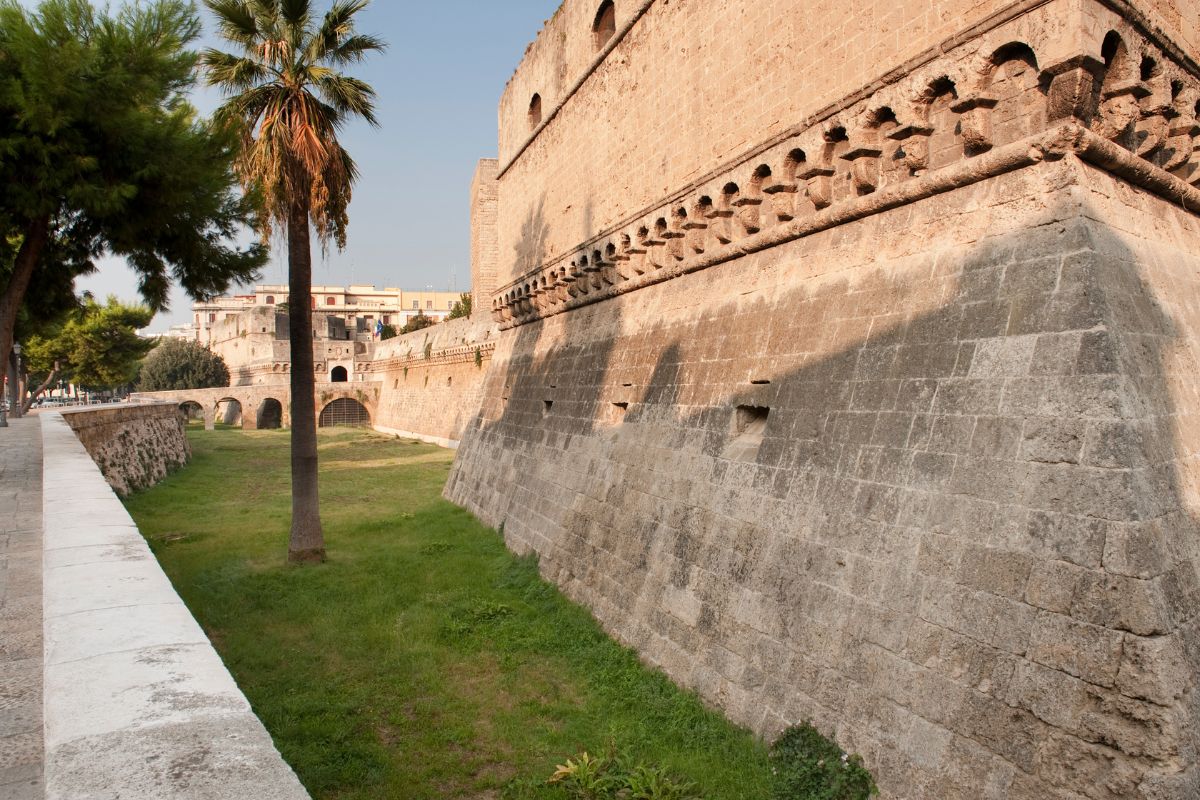
In the heart of Bari, you’ll find the Norman-Swabian Castle, a 12th-century fortress that now hosts various cultural events. Perched on an elevated position, it offers stunning views of the city.
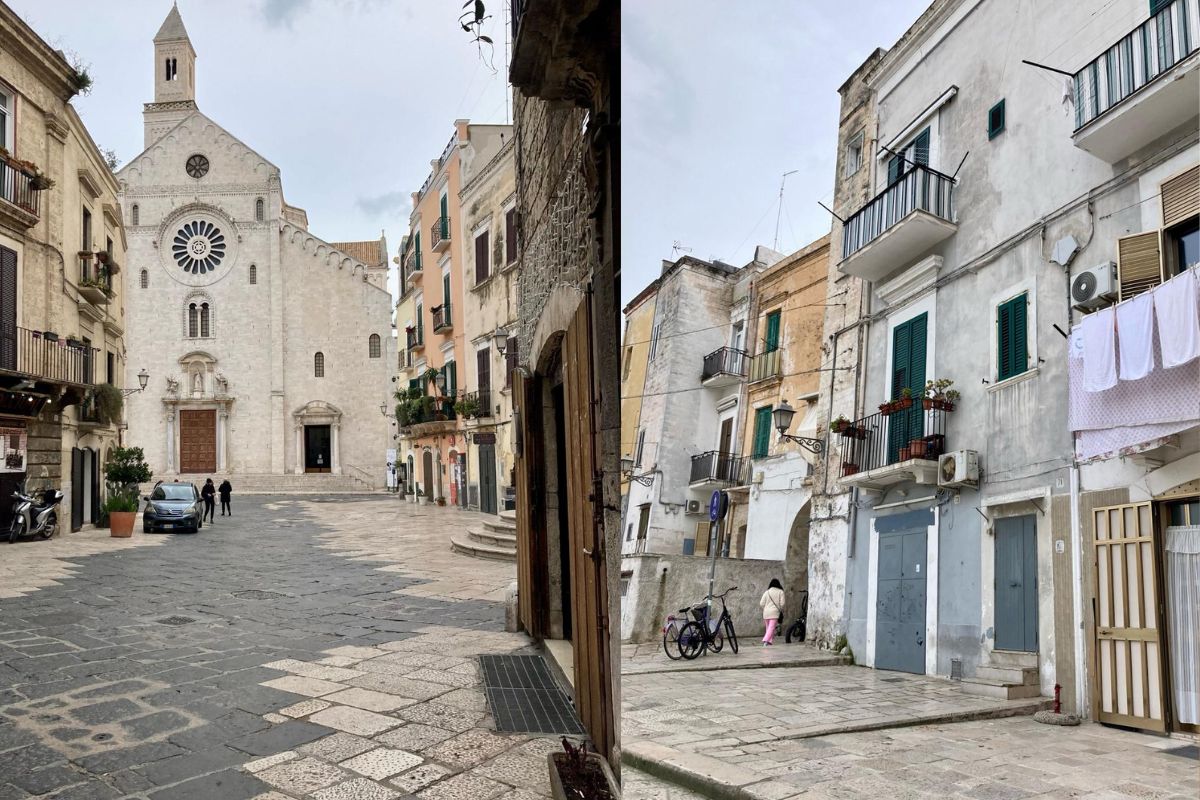
Castello Normanno-svevo
Mercato Coperto Santa Scolastica: Discover Bari’s Covered Market
Visit Bari’s traditional Mercato Coperto Santa Scolastica to experience a true taste of local flavors. This vibrant market offers a wide variety of fresh foods, including fruits, vegetables, pasta, olives, cheeses, seafood, and fish.
Murat District
Murat is a modern neighborhood nestled between the Old Town and the railway station. This district is bustling with shops, restaurants, and cafés, making it a lively area to explore.
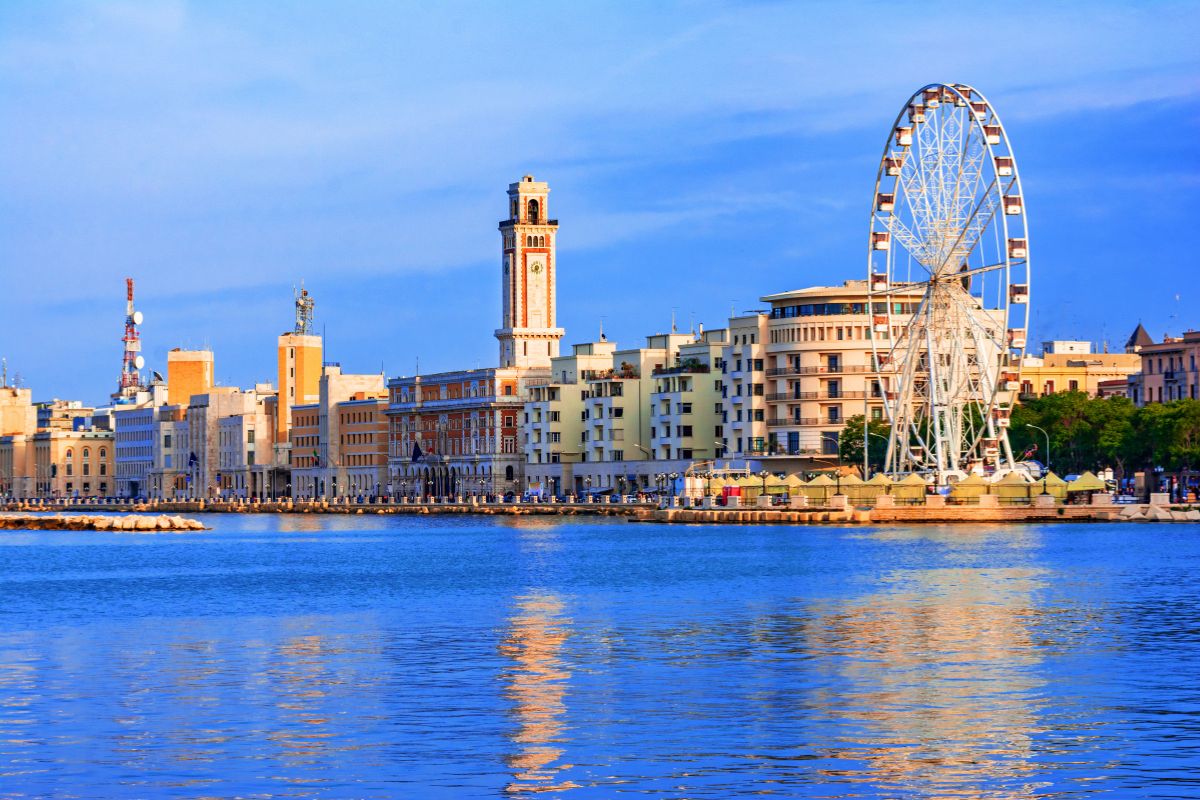
Ferris wheel
In Bari, you can take a ride on the Ferris wheel and enjoy breathtaking views of the sea and the city. Standing 55 meters tall, the Ferris wheel operates daily from 10:00 AM until late in the evening.
Blue Sky Wheel
Teatro Margherita: Discover Bari’s Iconic Seaside Theater
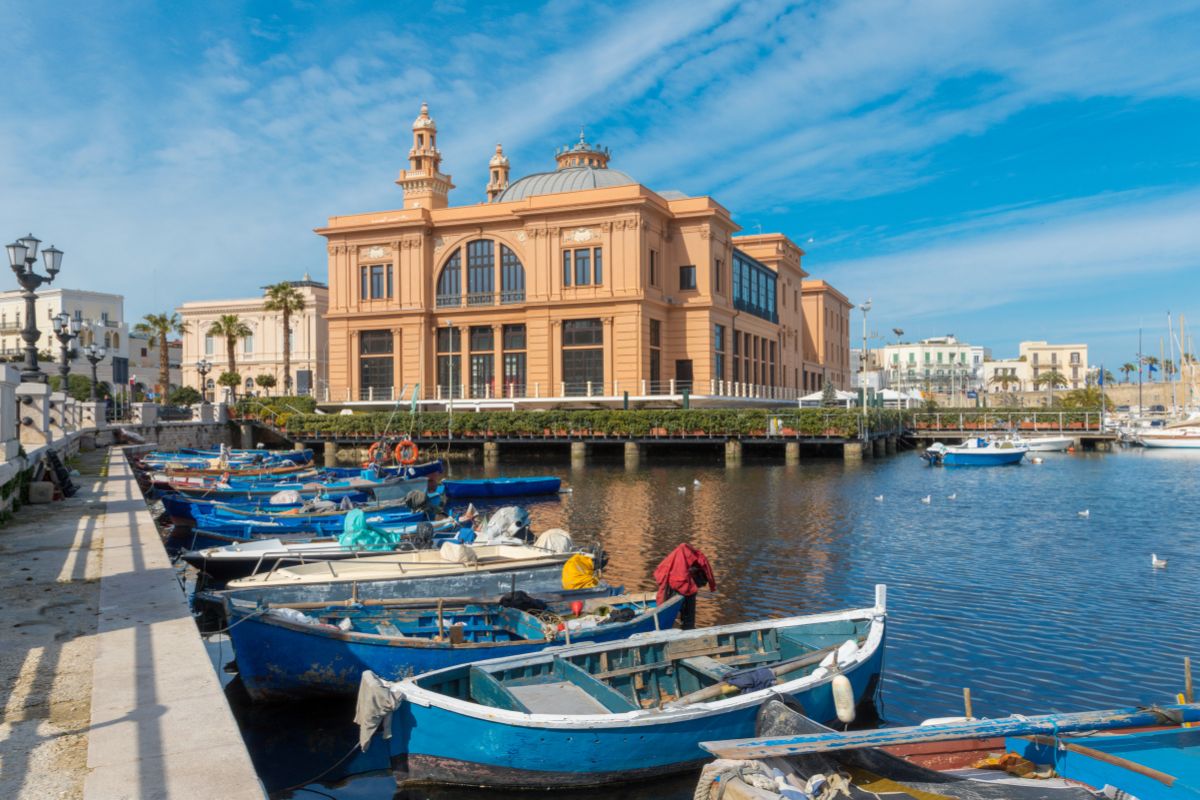
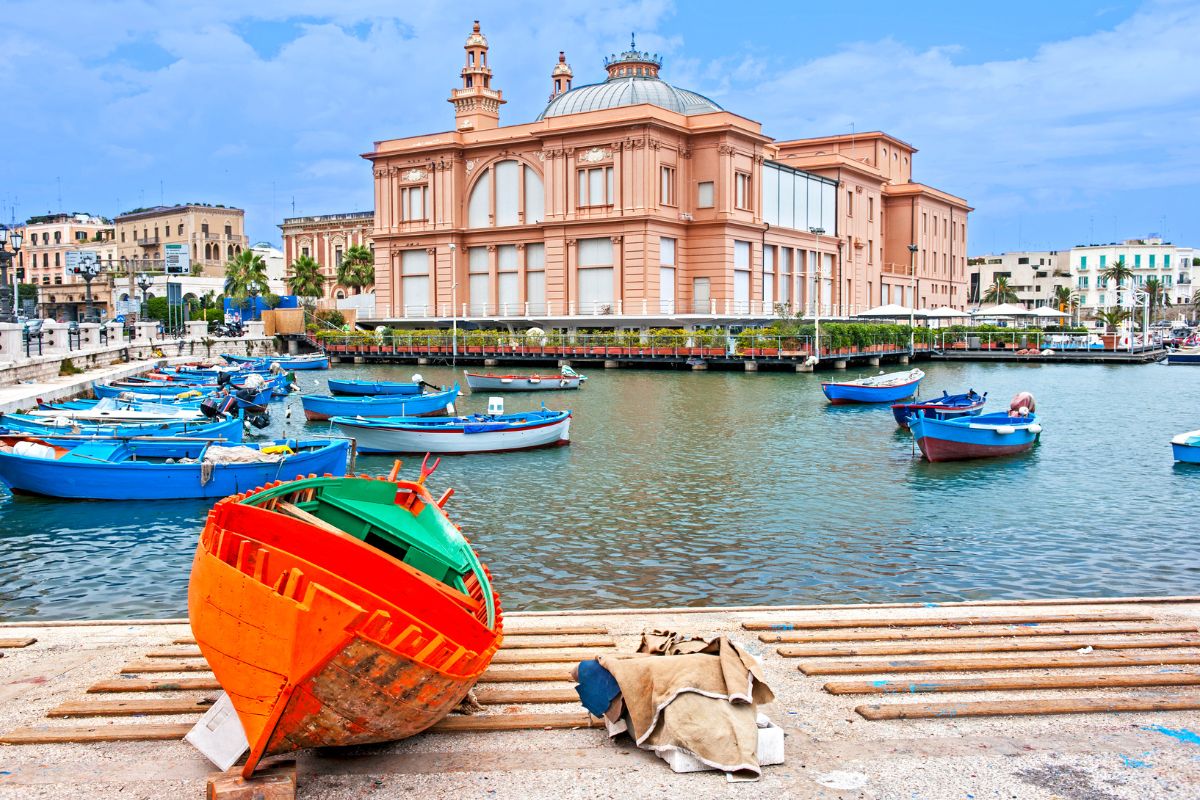
Another iconic landmark in Bari is the Margherita Theatre, located along the Lungomare Imperatore Augusto in the city center, with stunning views of the sea. Although it no longer functions as a theater, the building now houses a museum. Visitors can explore the theater’s interior for free when exhibitions are not taking place.
Margherita Theatre
Discover the Magic of Teatro Petruzzelli: Bari’s Cultural Gem
The largest theatre in Bari, the Petruzzelli Theatre, was named after the Petruzzelli brothers who funded its construction. If you’re a culture enthusiast, attending a performance at this iconic venue—whether it’s a play, opera, or ballet—is a must during your visit to Bari.
Petruzzelli Theatre
Explore the Scenic Seaside Walks in Bari
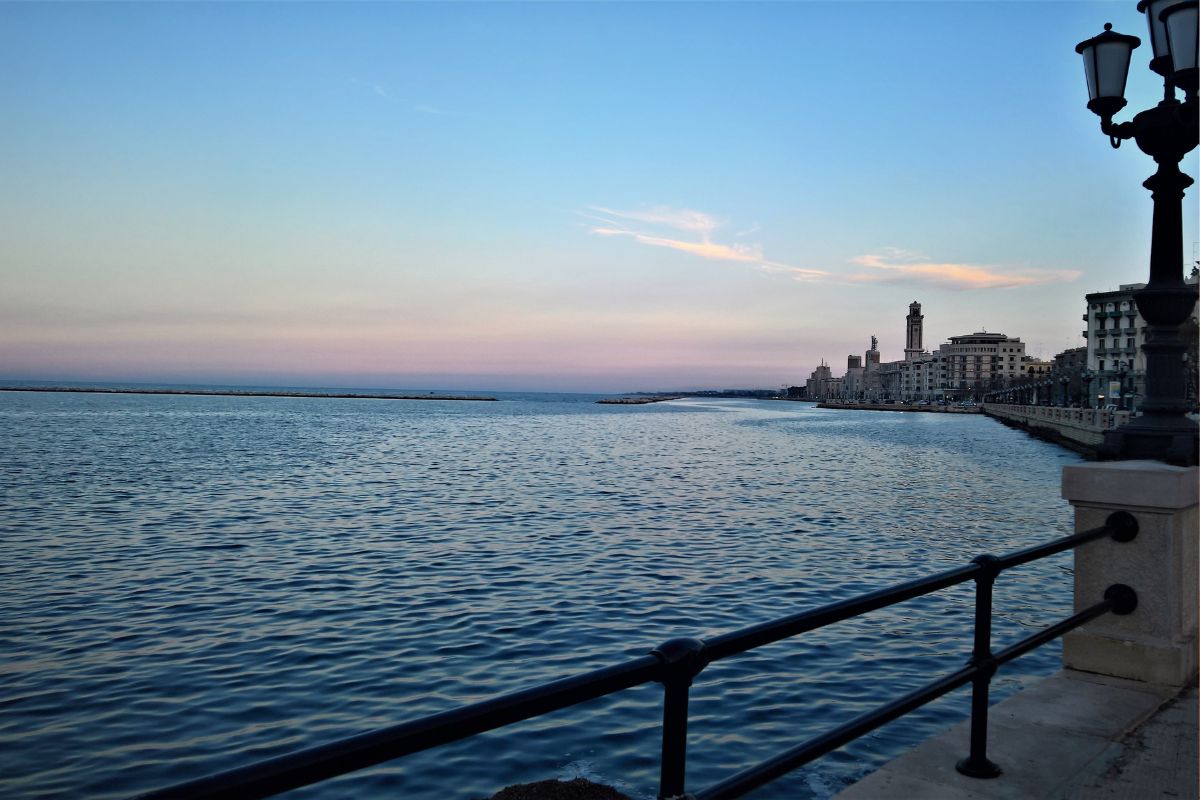
Bari, situated along the shores of the Adriatic Sea, offers a picturesque stroll along its Lungomare promenade. This scenic route stretches from Giradini Baden Park to the new harbor, inviting you to enjoy the beauty of the waterfront.
Lungomare Promenade
Porto Vecchio di Bari
In the heart of Bari lies the Porto Vecchio, the city’s historic old port. This bustling hub serves as the center of fishing and trade for the entire Apulia region.
Old Harbour
Discover the Scenic Pier Sant’Antonio in Bari
At Bari’s old port, you’ll find the stone pier of Sant’Antonio, primarily used by fishermen and cruise ships. You can take a stroll along the pier all the way to the lighthouse at its tip.
Beaches and swimming in the sea
If you’re planning a summer visit to Bari, you’ll likely want to find great spots for swimming. Bari offers several local beaches:
Lido San Francesco,
Sir and Pomodoro,
Canalone.
However, for even more stunning beaches, consider exploring the surrounding areas, such as Polignano a Mare, Monopoli, or the Gargano Peninsula.
Trips to other cities
As I’ve mentioned, Bari’s central location makes it an ideal base for exploring other beautiful destinations in Apulia. I highly recommend renting a car to visit nearby cities at your own pace.
But don’t worry if renting a car isn’t an option—Bari also boasts excellent train and bus services for getting around.
Tip: For more trips and experiences in and around Bari, check out the travel portalGetYourGuide.
Alberobello: A UNESCO World Heritage Site
Just an hour and a half from Bari lies the enchanting town of Alberobello, a UNESCO World Heritage Site renowned for its distinctive trulli houses. These white, circular dwellings are topped with unique grey stone domes, creating a fairytale-like atmosphere.
Alberobello
Trulli houses can be found throughout Puglia, but Alberobello is the true capital of these iconic structures, boasting the highest concentration of them. If you have the opportunity, make sure Alberobello is on your must-visit list.
🔗 These are affiliate links — they don't change your price and help us create content. · All experiences →
Discover the Coastal Beauty of Polignano a Mare
The coastal town of Polignano a Mare is just a half-hour from Bari and easily accessible by direct train, making it a perfect destination for those without a car or anyone looking for a change of scenery from Bari.
Polignano a Mare
Polignano a Mare is a stunning town perched on cliffs overlooking the sea, offering breathtaking views. If you visit in the summer, you’ll find the famous Lama Monachile beach, though it’s likely to be crowded.
Tip: The beach is equally beautiful in the winter months and often completely empty, making it a peaceful spot to admire the scenery.
🔗 These are affiliate links — they don't change your price and help us create content. · All experiences →
Explore the Ancient Wonders of Matera: Italy’s Cave City
All Bond fans will be excited to visit the rock-hewn city of Matera, and to be honest, even those who aren’t Bond enthusiasts will be captivated. Matera was a filming location for the 2021 movie No Time to Die. (Are you already humming the theme song? 😊)
Beyond its cinematic fame, Matera is a town carved into the rock, resembling a mysterious labyrinth of stone houses, narrow alleys, and winding staircases. The oldest part of the city is recognized as a UNESCO World Heritage Site.
The rock town of Matera
Matera is an absolutely breathtaking destination, and I wholeheartedly recommend visiting it. It’s about an hour’s drive from Bari, though there isn’t a direct train route.
🔗 These are affiliate links — they don't change your price and help us create content. · All experiences →
Monopoli
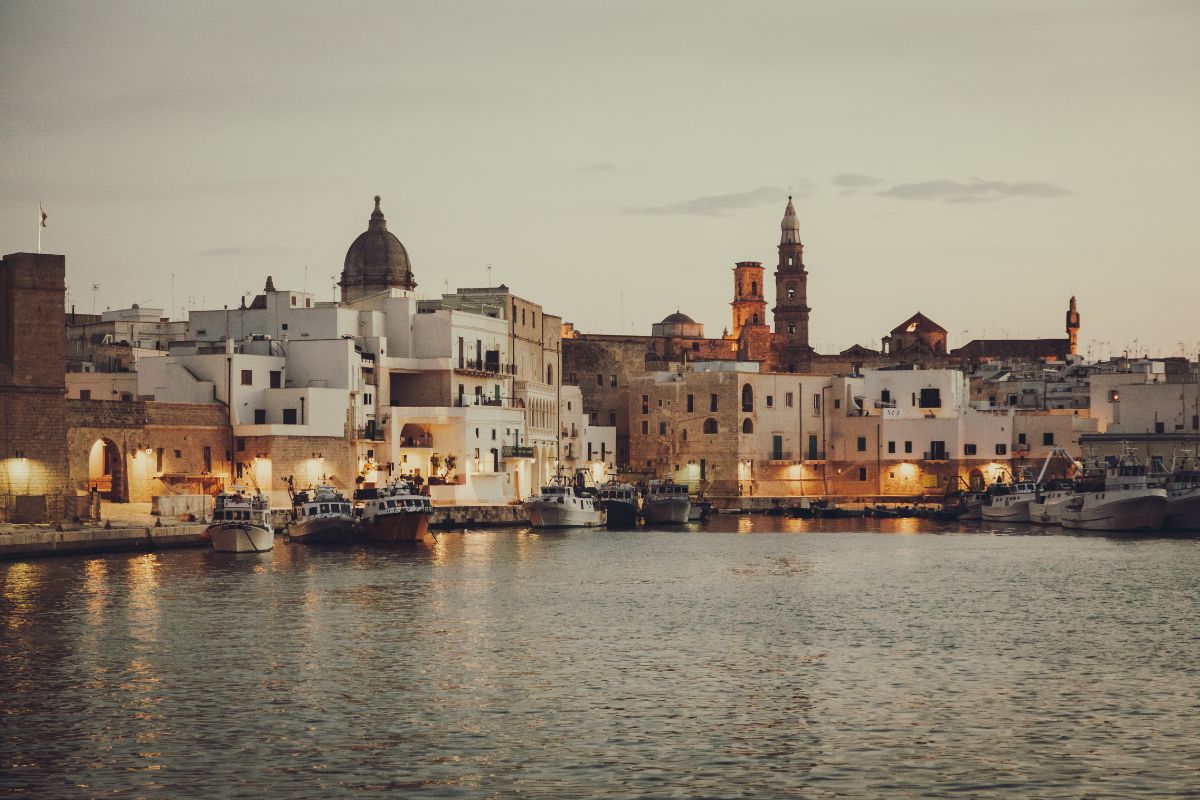
Monopoli is another charming Italian coastal town, ideal for long walks and hikes. Located about 50 kilometers from Bari, it’s easily accessible by direct train. This typical Italian town features a historic center and a rugged coastline, perfect for swimming in the sea.
Monopoli
Grotte di Castellana: Italy’s Largest Cave System
Just 15 kilometers from Alberobello, near the village of Castellana, you’ll find the stunning Grotte di Castellana, one of Italy’s most beautiful and extensive cave systems, formed by an underground river. Guided tours are the only way to explore these breathtaking caves.
🔗 These are affiliate links — they don't change your price and help us create content. · All experiences →
Barletta
Barletta is a town that beautifully blends history with beachside relaxation, making it one of the largest resorts in Puglia. The town features a historic center filled with monuments, as well as beach resorts complete with restaurants and cafes.
Barletta
Gargano: Puglia’s Stunning Coastal Peninsula
The Gargano Peninsula offers visitors a blend of historical monuments, stunning beaches, and scenic mountain hikes. It’s also home to Monte Sant’Angelo, a UNESCO-listed pilgrimage village.
Gargano
Lecce: The Florence of the South
A final recommendation for a day trip from Bari is the Baroque city of Lecce, just a 1.5-hour train ride away.
Lecce
In Lecce, you can marvel at its majestic palaces, historic homes, and stunning cathedrals.
You can visit Bari for its history, old town, modern centre, monuments, beaches and southern Italian atmosphere.
When to go to Bari?
The best and most enjoyable months to visit Bari are the spring months, but you can also travel to Bari in the summer season or, conversely, in the winter months.
Where to swim in Bari?
You can swim at the town’s Lido San Francesco or Pane a Pomodoro beaches.
Does Bari have a lively nightlife?
Yes, Bari has a lively nightlife. In the city centre you will find many bars, clubs and restaurants where you can experience the atmosphere of a southern Italian night.
How many days to spend in Bari?
We recommend at least 2 to 3 days to visit the main sights of Bari.
What is a typical Bari dish?
In Bari you can enjoy traditional Southern Italian cuisine. The speciality is pasta Orecchiette with tomato sauce and mozzarella.
Tips and Tricks for Your Vacation
Don’t Overpay for Flights
Search for flights on Kayak. It’s our favorite search engine because it scans the websites of all airlines and always finds the cheapest connection.
Book Your Accommodation Smartly
The best experiences we’ve had when looking for accommodation (from Alaska to Morocco) are with Booking.com, where hotels, apartments, and entire houses are usually the cheapest and most widely available.
Don’t Forget Travel Insurance
Good travel insurance will protect you against illness, accidents, theft, or flight cancellations. We’ve had a few hospital visits abroad, so we know how important it is to have proper insurance arranged.
Where we insure ourselves: SafetyWing (best for everyone) and TrueTraveller (for extra-long trips).
Why don’t we recommend any Czech insurance company? Because they have too many restrictions. They set limits on the number of days abroad, travel insurance via a credit card often requires you to pay medical expenses only with that card, and they frequently limit the number of returns to the Czech Republic.
Find the Best Experiences
Get Your Guide is a huge online marketplace where you can book guided walks, trips, skip-the-line tickets, tours, and much more. We always find some extra fun there!
TL;DRCinque Terre is a string of five colourful fishing villages perched on the cliffs of the Ligurian coast — Monterosso al Mare, Vernazza, Corniglia, Manarola and Riomaggiore — and a UNESCO World Heritage Site. Top picks include a swim at Fegina beach in Monterosso, a walk along the Sentiero Azzurro (12km, linking all five villages), a boat trip, plenty of pesto and wine, and a side trip to Portovenere and the Bay of Poets. The villages are strung along 12 kilometres of coastline, and you can hop between them by train for 5 euros a ride, or get a Cinque Terre card from 18.20 euros a day. May to September is best for swimming, while March to May or September and October are quieter alternatives. One day is enough to see all five villages, but give yourself 3 to 4 days if you want to take it slower.
Imagine vibrant, colorful houses perched on rugged cliffs, overlooking the shimmering turquoise waves of the Mediterranean. It sounds like a scene from a fairy tale, doesn’t it? In Cinque Terre National Park, Italy, you can step right into this enchanting story.
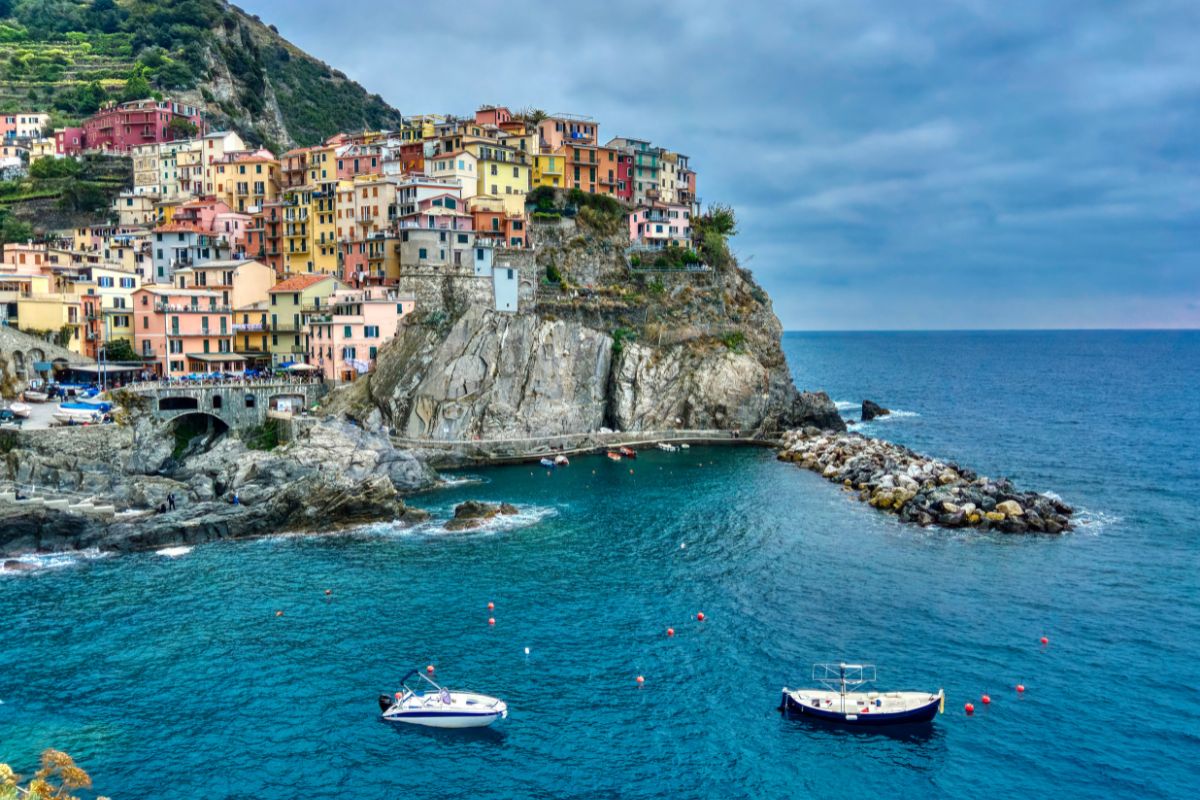
Nestled along the Ligurian Riviera, Cinque Terre comprises five stunning villages, each seemingly carved into the dramatic rock formations. This entire region is recognized as a UNESCO World Heritage Site, and it’s easy to see why.
Every village has its unique charm, offering awe-inspiring views and that quintessential dolce vita atmosphere that defines the Italian coast. Whether you’re strolling through the narrow streets, savoring local cuisine, or simply soaking in the breathtaking landscapes, Cinque Terre promises an unforgettable experience.
Cinque Terre is a beloved destination, attracting both tourists and locals, so you can expect it to be busy year-round. The villages are quaint, with narrow streets, adding to the charm but also the crowds.
If you enjoy summer holidays and swimming, the best time to visit is between May and September. However, be prepared for peak tourist season during these months, especially when Italians are on holiday.
For those who prefer hiking and don’t mind warmer weather, March to May or September and October are ideal times to explore Cinque Terre.
Cinque Terre: weather and sea temperature by month
🌡️ Warmest: August (daytime 28 °C) · 🌊 Warmest sea: August (27 °C) · ☔ Least rainfall: July
Month
Day
Night
Sea
Rainy days
January
11 °C
5 °C
15 °C
12
February
12 °C
6 °C
14 °C
10
March
14 °C
7 °C
14 °C
10
April
16 °C
9 °C
16 °C
13
May
19 °C
13 °C
19 °C
16
June
24 °C
18 °C
23 °C
10
July
27 °C
21 °C
26 °C
6
August
28 °C
21 °C
27 °C
9
September
24 °C
17 °C
24 °C
11
October
20 °C
14 °C
21 °C
14
November
15 °C
9 °C
19 °C
15
December
12 °C
6 °C
16 °C
14
Source: climate normal 2019–2024 (Open-Meteo, measured data)
How Many Days to Spend in Cinque Terre for the Best Experience
The number of days you spend in Cinque Terre will depend on your preferences, your planned activities, and how you choose to explore the villages. If you opt for the train, it’s possible to visit all five villages in a single day.
However, if you prefer a more relaxed pace, consider setting aside 3 to 4 days to fully experience and enjoy Cinque Terre.
Best Hotels in Cinque Terre
You don’t need to stay in Cinque Terre to explore it, but staying there offers a unique opportunity to experience the region more intimately than just a day trip. Despite what you might think, each village has plenty of accommodation options.
Cinque Terre is well-connected by rail, making the train the easiest way to get around. You can reach Cinque Terre from La Spezia, Levanto, or even the farther city of Genoa. I traveled from Genoa, and it was just an hour away on a clean, air-conditioned train.
If you’re anywhere in the Liguria region, getting to Cinque Terre is relatively simple, thanks to Italy’s efficient train network. (Though not perfect—I encountered a surprise train strike during my trip! 😄 But still better than Czech Railways.)
For train travel, I recommend using the Trenitalia app. It lets you find connections and purchase tickets on the go. (And fortunately, no strikes get scheduled through the app! 😄).
Cinque Terre National Park
Best Ways to Travel Between Villages in Cinque Terre
Since the railway runs through all the villages in Cinque Terre, taking the train is a convenient way to travel between them. The train stops at each village, and you can purchase a Cinque Terre Card, which allows unlimited travel between the villages. The card’s price varies based on age, the number of days, and whether you want to include access to the hiking trails. You can purchase it online.
Each train ride between villages costs €5, so you’ll need to decide if the card is worth it for your trip. For instance, visiting three villages would cost €15, while a one-day pass costs €18.20.
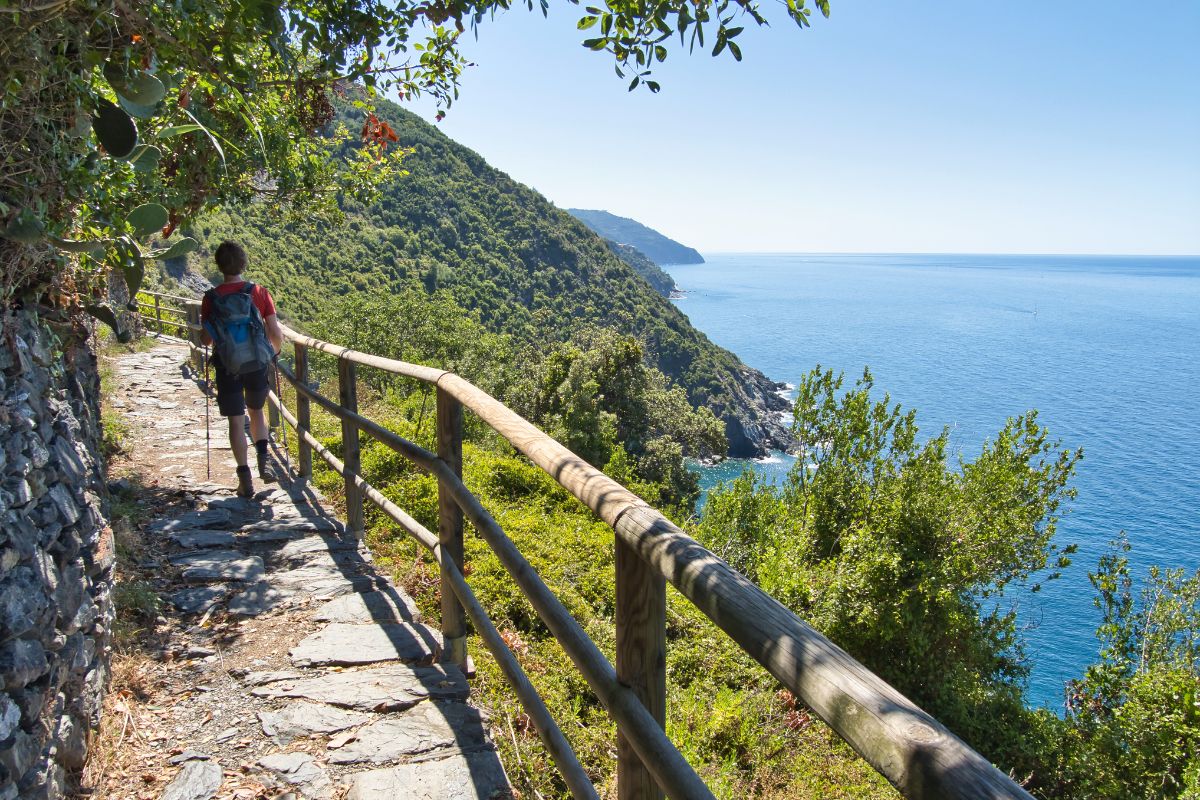
For those who enjoy hiking, there are trails connecting the villages in Cinque Terre. However, these trails aren’t always open due to landslides, so be sure to check their availability beforehand. Keep in mind that there is a fee to access the coastal paths.
Another option is taking a boat tour, which drops you off at each village. While this is likely the most expensive option, the views from the sea are breathtaking and worth the extra cost.
🔗 These are affiliate links — they don't change your price and help us create content. · All experiences →
14 Best Things to Do and See in Cinque Terre
As mentioned earlier, Cinque Terre is made up of five charming villages, each worth exploring. Whether you decide to visit all of them or just a select few, there’s so much more to discover. Here are my 14 top tips on what to see and do in Cinque Terre.
Monterosso al Mare
Monterosso al Mare
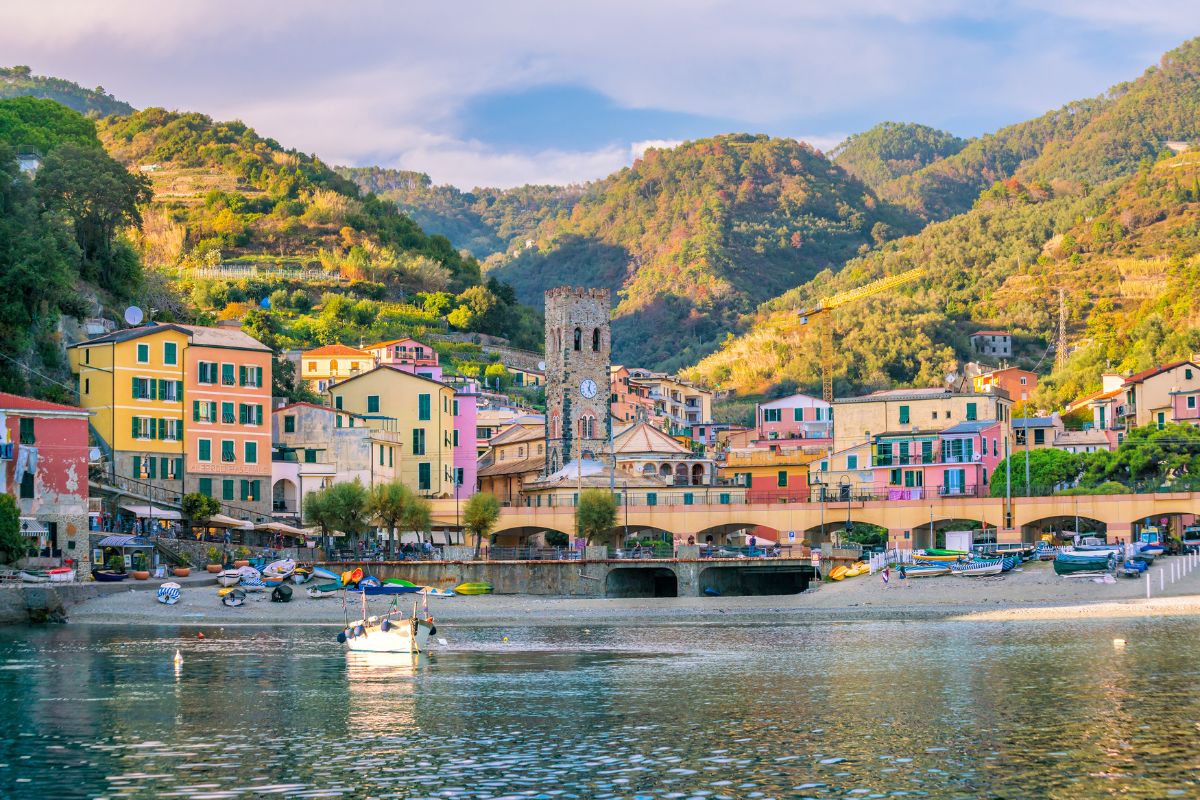
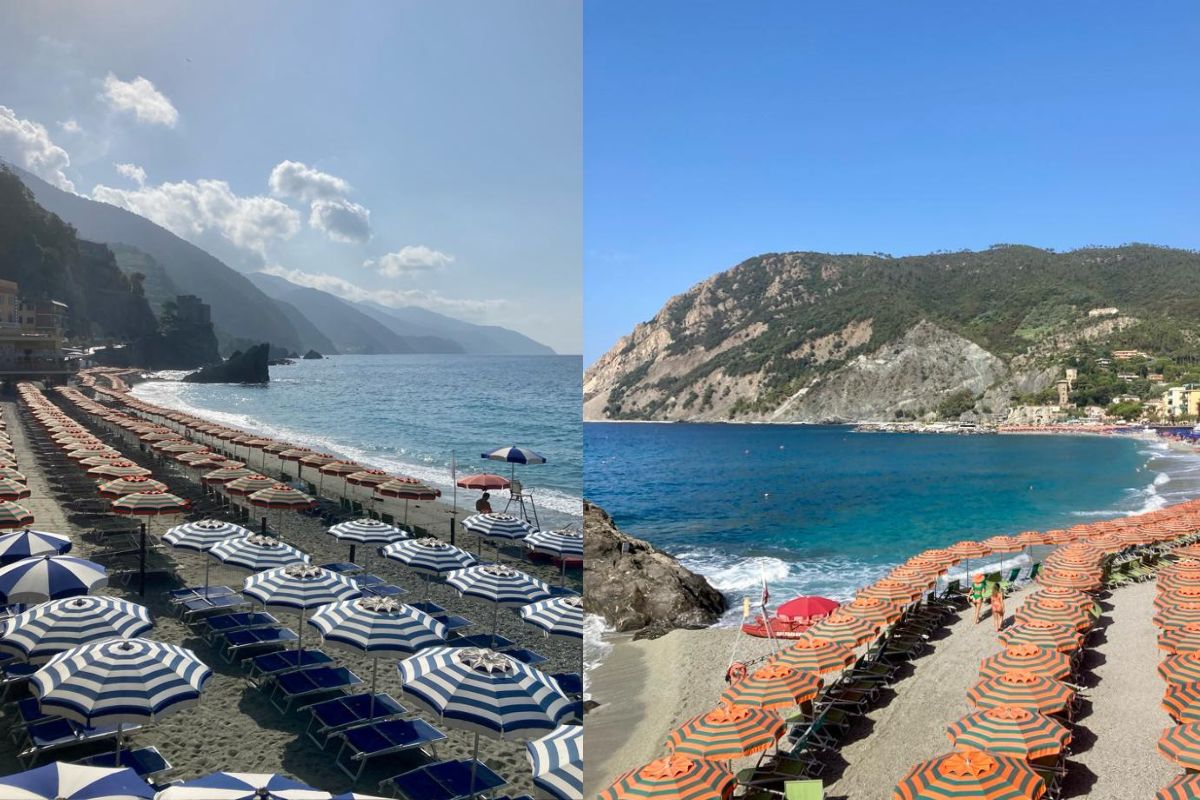
The first village I visited was Monterosso al Mare, the largest of the five. It’s nestled in a bay on the eastern side of Punta Mesco cape and is divided into two distinct parts: the historic old town and the more modern area, separated by a rocky cliff.
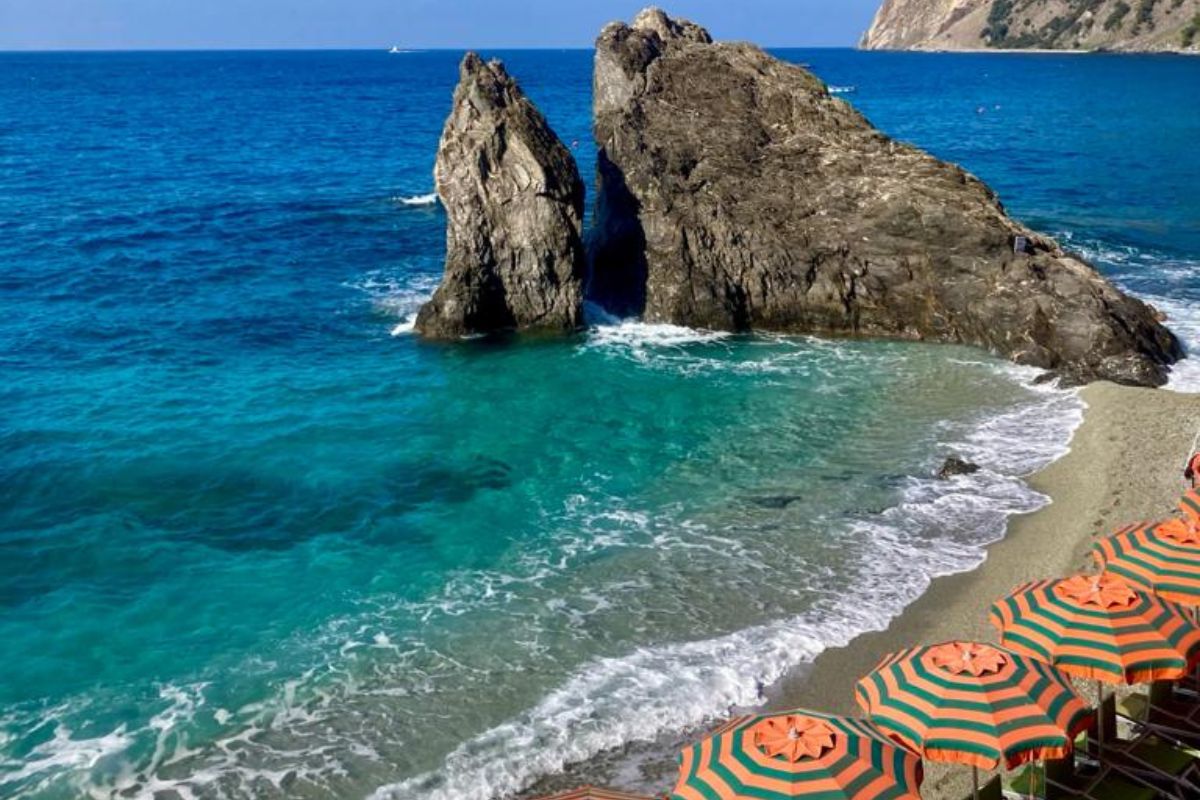
Monterosso al Mare is essentially the hub of Cinque Terre, home to the expansive Fegina beach resort. The beach here is very accessible, making it ideal for families with children. Monterosso offers the best swimming conditions of all the villages, which is why it tends to attract large crowds and long queues.
In addition to its beach, Monterosso boasts beautiful landmarks, such as the Gothic Church of San Giovanni Battista, dating back to the late 13th century, and the 17th-century Capuchin Monastery of San Francesco.
TIP: Arrive early in the morning, before 9:00 AM, to enjoy the village before the crowds arrive.
Monterosso al Mare
Manarola
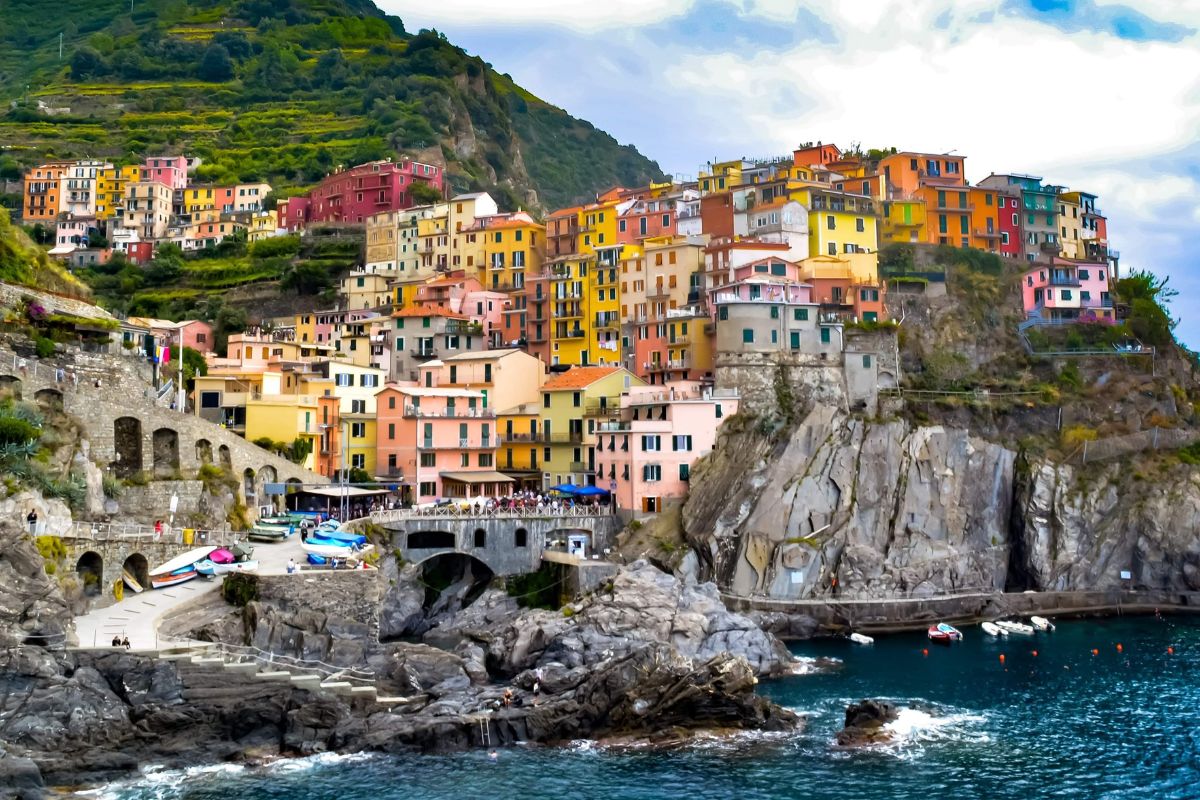
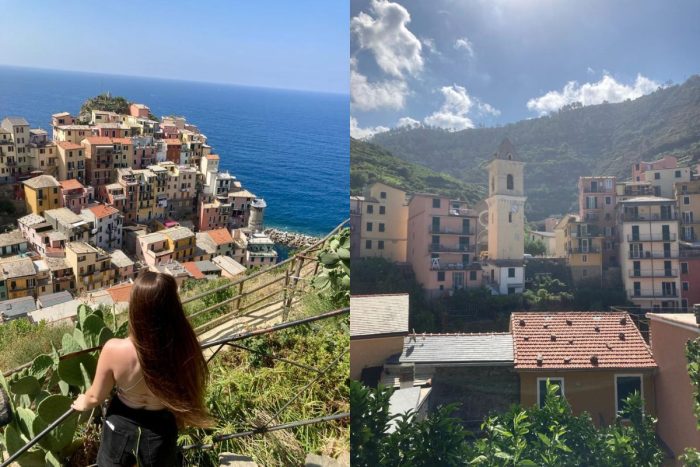
Manarola is likely the village you’ve seen in iconic photos of Italy. As the oldest of the five Cinque Terre villages, it captivates visitors with its stunning views of pastel-colored houses perched on cliffs overlooking the wide-open sea. The village is also home to the 14th-century Church of San Lorenzo.
Often ranked among the most beautiful villages in Europe and the world, Manarola draws visitors with its breathtaking vistas, charming town center, and the picturesque Piazza Castello.
Manarola
Riomaggiore
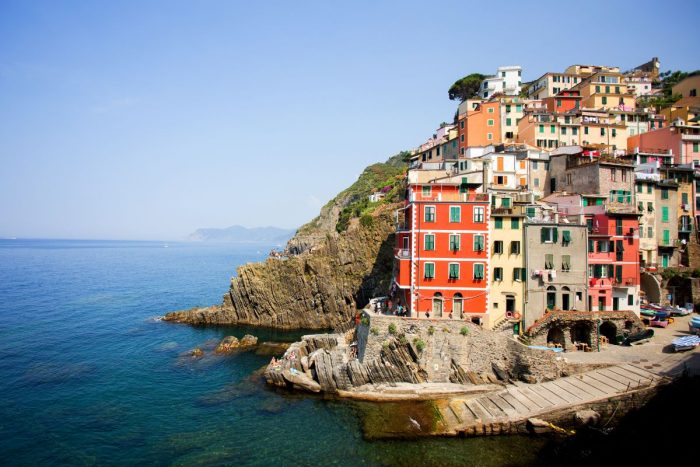
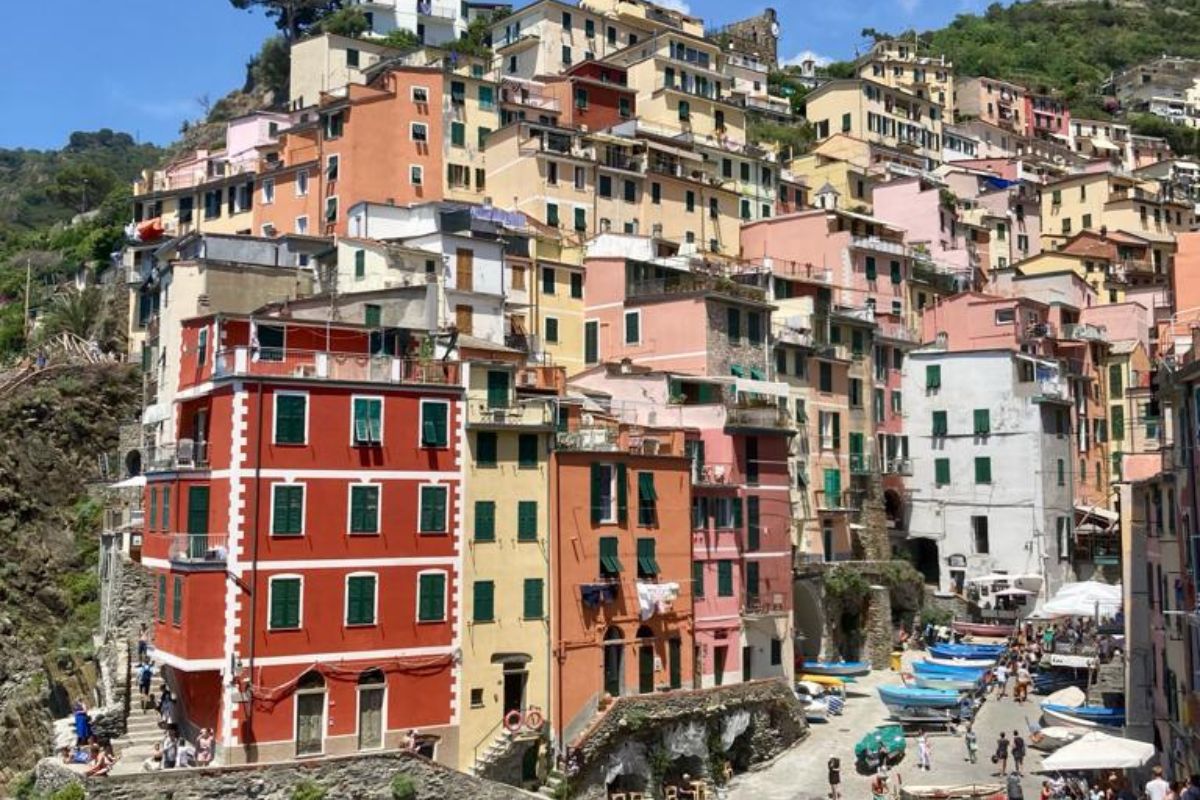
Riomaggiore is another enchanting village, with picturesque houses cascading down the hillside above the harbor. The view is truly breathtaking.
Between the main part of Riomaggiore and the train station, you’ll find the small military fortress, Castello di Riomaggiore, as well as the main municipal church, San Giovanni Battista, which stands proudly in the square.
Swimming is also an option in Riomaggiore. The village’s only beach is located about 150 meters from the harbor. While it’s a beautiful spot with crystal-clear water, access can be a bit challenging, and the beach itself is rocky.
Riomaggiore
Vernazza
Vernazza, the third largest village in Cinque Terre, is often regarded as the most beautiful by many visitors. It boasts two main landmarks: the medieval Castello Doria and the Romanesque Church of San Margherita. You can explore the castle for a small fee of 1.5 euros.
Naturally, Vernazza offers some stunning viewpoints, with the best views found at the harbor or from the watchtower. It also has the only natural harbor in the entire Cinque Terre region.
Vernazza
Corniglia
The village of Corniglia sits 90 meters above sea level, so be prepared to climb a significant number of stairs from the train station to reach it. Corniglia is the smallest of the Cinque Terre villages, with only about 150 residents, making it the least visited.
Despite its size, Corniglia offers a beautiful natural beach, several charming squares, and the small Gothic Church of San Pietro. It’s also the only village in Cinque Terre without its own boat harbor or direct access to the sea.
Corniglia
Boating along the Cinque Terre
Seeing Cinque Terre from the water offers a completely unique perspective! Consider booking a boat tour along Cinque Terre National Park to explore each village from the sea. Various companies offer cruises departing from different towns, with prices starting at around 20 euros.
🔗 These are affiliate links — they don't change your price and help us create content. · All experiences →
Best Beaches and Swimming Spots in Cinque Terre
The crystal-clear waters of Cinque Terre are perfect for swimming, and the area boasts several beautiful beaches. Some of the best beaches include:
Fegina: A sandy beach in Monterosso al Mare, offering the best access to the sea, along with sunbeds, umbrellas, and nearby restaurants.
Guvano: A natural beach in the rugged village of Corniglia, perfect for those seeking a more secluded experience.
Vernazza: A beach in the village of Vernazza, featuring pebbles and rocks, ideal for those who appreciate a more rustic setting.
Spiaggia di Riomaggiore: A pebble and stone beach in the village of Riomaggiore, offering a unique and picturesque spot for swimming.
Cinque Terre beaches
Kayaking
Cinque Terre is home to stunning waterfalls and caves, best explored by kayak. You can rent a kayak for just 5 euros per hour to discover these hidden gems up close.
Sentiero Azzurro trail
As mentioned earlier, Cinque Terre is a hiker’s paradise, boasting an extensive network of trails for all skill levels. The most popular and well-known is the Sentiero Azzurro, or Blue Trail.
This 12-kilometer trail links all five villages and offers breathtaking views along the way.
🔗 These are affiliate links — they don't change your price and help us create content. · All experiences →
Taste the local delicacies
Remember, you’re still in Italy, and Cinque Terre is no exception when it comes to local culinary delights. The Liguria region is known for its excellent fish, seafood, game, and hearty soups. One of the area’s signature dishes is basil pesto, made from fresh basil, pine nuts, garlic, and grated Parmesan cheese.
Make your own pesto
Since we’ve touched on pesto, it’s worth noting that you can try your hand at making your own while in Cinque Terre.
Local chefs offer workshops where you’ll learn to craft authentic pesto, Italian style. You’ll also get to enjoy delicious wine and a great meal as part of the experience—and it’s definitely worth it!
You can find these classes on the GetYourGuide portal.
Wine tasting
The abundance of vineyards in Cinque Terre is something you can’t miss, so be sure to sample the local wines during your visit. Cinque Terre’s wines are among the finest in the Liguria region.
🔗 These are affiliate links — they don't change your price and help us create content. · All experiences →
Portovenere
While Portovenere isn’t officially one of the five villages of Cinque Terre, it is also a UNESCO World Heritage Site and well worth a visit if you have the time.
Portovenere charms visitors with its colorful houses, rocky cliffs, scenic promenade, and historic churches and castles. Notable landmarks include St. Peter’s Church, St. Lawrence Church, Doria Castle, the Porta del Borgo, and theCapitoline Tower.
Portovenere
The Bay of Poets
Just a few kilometers from Cinque Terre lies the Bay of Poets, a destination well worth exploring. This picturesque bay earned its name from the many artists and poets who frequented the area for inspiration. The bay also surrounds the charming town of Portovenere, adding to its allure.
The Bay of Poets
Lukáš and Lucie recommend
Where to Stay in Cinque Terre
4 accommodations — wellness hotels, hotels and other accommodation options
Cinque Terre is a truly stunning destination and absolutely worth visiting. Here are a few fascinating facts about it:
The villages are spread out over 12 kilometers of coastline.
Originally, the villages were not connected by rail. It wasn’t until 1874 that the railway line between Genoa and La Spezia linked them together.
The original inhabitants were primarily fishermen and wine growers.
In 1997, Cinque Terre was designated as a UNESCO World Heritage Site.
The name “Cinque Terre” translates to “Five Lands,” referring to the five villages.
The colorful houses aren’t just for aesthetics—they were painted brightly to help fishermen easily spot their homes when returning from the sea.
Little houses in Riomaggiore
Frequently asked questions:
What is Cinque Terre?
Cinque Terre is the name given to five picturesque fishing villages on Italy’s Ligurian coast. These villages are Monterosso al Mare, Vernazza, Corniglia, Manarola and Riomaggiore.
How do I get to Cinque Terre?
The nearest airport is Pisa or Genoa, and from there you can continue by train or bus. The villages are also accessible by boat. You can also use trains or trails to travel between villages.
Is Cinque Terre suitable for families with children?
Yes, you can visit Cinque Terre with children. However, some of the trails are steeper, so make sure to adjust the hike for children. The beaches are ideal for relaxing and swimming.
Tips and Tricks for Your Vacation
Don’t Overpay for Flights
Search for flights on Kayak. It’s our favorite search engine because it scans the websites of all airlines and always finds the cheapest connection.
Book Your Accommodation Smartly
The best experiences we’ve had when looking for accommodation (from Alaska to Morocco) are with Booking.com, where hotels, apartments, and entire houses are usually the cheapest and most widely available.
Don’t Forget Travel Insurance
Good travel insurance will protect you against illness, accidents, theft, or flight cancellations. We’ve had a few hospital visits abroad, so we know how important it is to have proper insurance arranged.
Where we insure ourselves: SafetyWing (best for everyone) and TrueTraveller (for extra-long trips).
Why don’t we recommend any Czech insurance company? Because they have too many restrictions. They set limits on the number of days abroad, travel insurance via a credit card often requires you to pay medical expenses only with that card, and they frequently limit the number of returns to the Czech Republic.
Find the Best Experiences
Get Your Guide is a huge online marketplace where you can book guided walks, trips, skip-the-line tickets, tours, and much more. We always find some extra fun there!
TL;DRThe Netherlands’ best spot for tulips is Keukenhof park near the town of Lisse, about 30–40 minutes’ drive from Amsterdam, where over 7 million flowers and 800 tulip varieties bloom across 32 hectares. The season runs from late March to mid-May, with mid to late April being the prettiest stretch. Admission comes to roughly €18.5–€22 for adults and €9–€10 for kids. Two hours is enough to see the park, but allow half a day if you’re adding a boat trip or a bike ride. Beyond Keukenhof, it’s worth visiting the tulip fields around Bollenstreek and Noordoostpolder, or catching the Bloemencorso Bollenstreek flower parade, which runs 42 kilometres from Noordwijk to Haarlem.
Luky’s mom loves flowers, so we went together to Keukenhof, the world’s largest tulip paradise, located in Holland. You don’t have to be the biggest fan of tulips or flowers to be blown away by the endless colourful plains of tulips that cover 32 hectares.
In this article we will tell you everything you need to know for your visit to Keukenhof. We tell you when to go to the Tulips in Holland, how to get to Keukenhof from Amsterdam and where to stay.
Below the article you will find a link where to buy tickets, we bought them more than two months in advance🤯, they tend to sell out very quickly on the best days.
Luky with his mother in Keukenhof, Holland
When do tulips bloom in Holland
Tulips and Holland belong together as much as the Czech Republic and beer. Here, however, you can have the beer all year round, while you have to go to Holland to buy tulips from the end of March to the beginning of May.
Where to go for tulips in the Netherlands?
Definitely the Keukenhof! Keukenhof Park is one of the most famous and most visited places in the Netherlands, where you can see millions (really millions) of tulips in bloom. It is only open for two months of the year when the plants are at their peak bloom.
It is close to Amsterdam, making it ideal to combine a visit to Amsterdam with a visit to the Keukenhof.
Keukenhof: Where to go for tulips in the Netherlands
Where to stay
If you want to stay near the Keukenhof, I recommend booking your accommodation especially early. Otherwise, the best will be gone. A great hotel is the Alexander Hotel, which is a few kilometres from the gardens.
Another alternative is to stay in Amsterdam and then take the shuttle bus(you can buy a ticket with a pass via GetYourGuide)
In the centre is the super City Hotel Amsterdam or Hotel Oscar. If you’re looking for something cheaper, see if there’s availability at the Campanile Hotel & Restaurant Amsterdam, located at the final metro station.
Alexander Hotel – tips on where to stay near Keukenhof
Lukáš and Lucie recommend
Where to stay near Keukenhof
5 accommodations — hotels and other lodging options
The Keukenhof is the most famous garden in Europe, where you can admire probably the largest number of flowering tulips in one place. On 32 hectares of beautiful forest park you will find more than 7 million flowers and about 800 different species.
Specifically:
Tulips,
Daffodils,
hyacinths,
Anemones,
lobellas,
hundreds of azaleas,
rhododendrons,
Japanese sakura and other mature trees.
Everything is nestled between lakes and canals and of course there is the traditional very photogenic windmill. 😁
The flowers glow in different colours and are always planted in 3 layers to ensure that they are always in bloom throughout the park’s opening hours.
The park opened to the public in 1950 and attracted 236,000 visitors in its first year. Today, it is visited by over a million tourists a year!
Where is Keukenhof?
Keukenhof is located in Lisse, the Netherlands, about 30 minutes’ drive from Amsterdam.
How to get to Keukenhof from Amsterdam?
Keukenhof is easy to get to by car, which you can rent at Amsterdam airport (we mostly use DiscoverCars) or simply book a bus tour through GetYourGuide.
🔗 These are affiliate links — they don't change your price and help us create content. · All experiences →
Opening hours of Keukenhof
As mentioned above, tulips do not bloom all year round, so it makes sense that the Keukenhof is not open all year round, but only when the tulips are at their most beautiful, which is usually from the end of March to mid-May.
If you want to go to the Keukenhof, be sure to buy your tickets online well in advance. Over a million tourists visit the Keukenhof every year and many travellers don’t get in because there are no tickets left!
We bought our tickets more than two months before we left for Holland. 🤭
If you don’t buy a ticket in advance, it could be that they simply won’t be there. Tickets are bought for a specific date and you can spend the whole day in the gardens. Prices are around EUR 18.5 for adults and EUR 9 for children.
We bought our tickets on GetYourGuide, which we have had good experience with for a long time. What’s more, you can buy them directly with transport from Amsterdam. ☺️
🔗 These are affiliate links — they don't change your price and help us create content. · All experiences →
Things to see and do in Keukenhof
It’s obvious: Seeing flowers, enjoying and taking pictures. 😁The park is a feast for your eyes, you can try to count how many types of tulips you have seen. As I mentioned above, there are more than 800 species of tulips.
You can also visit various exhibitions dedicated to tulips, where you can learn more about their history, cultivation and different varieties.
If you get hungry, don’t worry, there are refreshment stands and restaurants where you can easily recharge or drop off less enthusiastic fellow hikers.
Of course, there are also souvenir shops , you can buy bags, magnets, ceramics and cup holders with motifs of tulips and other flowers. For gardeners, perhaps the most enticing fact is that they can buy flower bulbs that they can then plant in their own garden.
Tips and Tricks for Your Vacation
Don’t Overpay for Flights
Search for flights on Kayak. It’s our favorite search engine because it scans the websites of all airlines and always finds the cheapest connection.
Book Your Accommodation Smartly
The best experiences we’ve had when looking for accommodation (from Alaska to Morocco) are with Booking.com, where hotels, apartments, and entire houses are usually the cheapest and most widely available.
Don’t Forget Travel Insurance
Good travel insurance will protect you against illness, accidents, theft, or flight cancellations. We’ve had a few hospital visits abroad, so we know how important it is to have proper insurance arranged.
Where we insure ourselves: SafetyWing (best for everyone) and TrueTraveller (for extra-long trips).
Why don’t we recommend any Czech insurance company? Because they have too many restrictions. They set limits on the number of days abroad, travel insurance via a credit card often requires you to pay medical expenses only with that card, and they frequently limit the number of returns to the Czech Republic.
Find the Best Experiences
Get Your Guide is a huge online marketplace where you can book guided walks, trips, skip-the-line tickets, tours, and much more. We always find some extra fun there!
TL;DRHere’s a round-up of 25 Czech and Slovak fashion labels and slow-fashion picks, covering designer pieces, everyday wear, underwear, shoes and bags all made closer to home. Designers worth a look include Lada Vyvialová, Sophistic by Veronika, Leeda, Josefina Bakošová, Zuzana Osaka and Zuzana Kubíčková, alongside brands like Triola (going since 1919), TerezaVu (on the scene for over eight years) and shoemaker Novesta (making shoes since 1939 in Partizánske and Zlín). There’s also room for Be Lenka’s barefoot shoes, Bagind rucksacks made in Jaisalmer, India (a 65-year-old tradition), and Leathery bags from Strakonice. The piece defines slow fashion as the opposite of fast fashion, built around quality, ethical production and sustainable materials.
Where to buy Czech clothes that are not only made on slow-fashion principles, but also look great? That’s a question I’ve been dealing with for the last couple of years. There are not a few Czech brands and Czech designers, but they are hard to find. I have therefore prepared a very comprehensive list of Czech designers and Czech fashion brands.
In my list you will not only find clothes from leading Czech designers of the highest quality, but I have also prepared for you Czech clothing brands that sew simple leisurewear, underwear or produce quality shoes or handbags.
What is slow fashion?
Simply put, slow fashion is the opposite of fast fashion. It advocates buying better quality clothing that lasts longer and values fair treatment of people, animals and the planet.
The beginnings of slow fashion
In the last ten years or so, a wave of change has swept through the fashion industry. More and more brands are rejecting fast fashion and opting for a more sustainable approach to clothing production.
The term “slow fashion” arose quite organically. Following the phenomenon of the slow food movement, it was invented by Kate Fletcher from the Centre for Sustainable Fashion. As with the slow food movement, Fletcher saw the need for a slower pace in the fashion industry.
Slow fashion is the antithesis of the fast fashion model that emerged about 20 years ago, when clothes became cheaper and trend cycles accelerated. Given that brands like H&M burn many tons of unsold clothing each year, despite ongoing sustainability efforts to close the loop in fashion, it’s clear that this philosophy is an essential part of the movement.
What is sustainable fashion?
No matter what background you come from, we can probably all agree on a few basic things – no one should die because of a t-shirt, and we shouldn’t release toxic substances into our planet just because we want a $200 t-shirt. I think we can also agree that we don’t want clothes that have child labour behind them. Unfortunately, the malls are full of such clothes.
So what does the term sustainable fashion really mean?
Sustainable fashion refers to clothing that is designed, produced, distributed and used in an environmentally friendly way.
Ethical fashion, a related term that is also prevalent in the world of conscious consumerism, refers to clothing that is produced under fair conditions. This means that those who produce are not exploited and child labour is not behind the clothes.
Why invest in slow and sustainable fashion?
Despite the widely publicised environmental impacts of the fashion industry, the fashion industry continues to grow, mainly due to the rise of fast fashion, which is based on cheap production, frequent consumption and short-term use of garments. The impacts of the fashion industry include more than 92 million tonnes of waste produced annually and 79 trillion litres of water consumed.
The fashion industry is the third largest consumer of water in the world. If the fashion industry continues at its current pace, the water consumption to power it will double by 2030. With fresh water running out, this is a huge burden not only on the planet but also on humanity.
Cotton textiles as the biggest problem of the fashion industry
Cotton fabrics are a major problem, as they are the third most used fabric in the world. To produce one kilogram of unprocessed cotton today requires 10 000 litres of water. In addition, 100-150 litres of water are needed to process a kilogram of cotton.
Unfortunately, it is not only the water consumption that puts a strain on the environment during cotton production; large amounts of pesticides and chemicals are also used as standard in cotton cultivation. Up to 16% of insecticides used in the world are applied to cotton.
Why buy local fashion made in the Czech Republic or Slovakia?
By buying Czech fashion, you are not only supporting the people of the Czech Republic, but you are also reducing the ecological impact. Local brands often have smaller production runs and more control over their supply chains. And local clothing production generally means higher quality and more original designs. Plus, you reduce logistics costs and ensure that products are not sewn by poorly paid child labour in Asia.
Czech fashion doesn’t always have to be slow or sustainable
TJust because something is Czech does not mean that it is of higher quality or sustainably produced. They are Czech clothing brands, where we do not know the origin of production or the origin of the material and there are Czech brands where we know that the goods are not produced in the Czech Republic but in China or in another Asian country.
Czech designer clothes from designers
Now let’s take a look at my favourite Czech designer clothing brands, i.e. more expensive designer clothes made in the Czech Republic that you should know.
1) Lada Vyvialová
Lada has been a top priority for me for several years now, and it’sespecially because I rode from the Czech Republic to Greece on e-bikes in the dress she made me. She sews and designs in the Czech Republic on the slow-fashion principle and works with nanotechnologies that make the materials self-cleaning, antibacterial and UV filtered.
That’s why I approached her myself to design a collection of clothes for nanoSPACE, where I am sure that the materials, dyeing and sewing will be of high quality. I’ve had her clothes in my closet for years and they still look great. It is a comfortable and elegant outfit that can be worn to almost any type of event.
Collection 2022/2023 nanoSPACE by LADA
2) Sophistic by Veronika
I am glad that Sophistic was one of the first Czech brands I invested in. The brand has been around since 2010 and the designs are by Czech designer Veronika Štěrbová. It focuses mainly on sustainable fashion and high quality and comfortable clothes.
In addition, the e-shop offers a range of pieces that are timeless and easy to mix and match. If you’re a fan of capsule wardrobes, Sophistic is where you’ll love to shop.
3) Leeda
The Czech brand Leeda is the brainchild of designer Lucie Kutálková, who founded it in 2012 together with Lucie Trnková. The brand’s main philosophy is quality materials and handcrafting, we can rely on quality. You will find dresses made of real silk and very variable dresses.
You might have seen me in a Leedy dress at my brother’s wedding. Lately, her collection has featured very colourful and extravagant prints. For me, Leedy clothes are not clothes for everyday wear, but rather for occasions.
4) Josefina Bakošová
Josefina Bakošová has been known in the Czech environment since 2007, when she founded the Chi-chi brand. She now designs under her own name and focuses more on minimalist yet sophisticated cuts.
Josefína Bakošová loves men’s cuts on women and designs mainly what she herself misses in the shops. Most of her pieces are strongly timeless, high quality and will last a long time in your closet.
5) Tradition – Zuzana Osaka
Zuzana Osako became famous at the 2021 Summer Olympics in Tokyo, where she designed the outfit for the opening ceremony for the Czech Olympic and Paralympic team. Tradition has been on the market since 2015 and is dedicated to clothing inspired by the folklore regions of Podluží and Hanácké Slovácko. Production is domestic and ethical.
6) Pop by Zuzana Kubíčková
She only introduced her first collection in 2018. Zuzana Kubíčková focuses on a timeless and easy to mix and match collection of clothing that fulfils everything you need to create a capsule wardrobe.
Czech fashion brands
Let’s now take a look at more affordable Czech clothing.
7) SUTU
Zlín-based slow fashion clothing brand that creates in the principles of sustainability with respect for the environment and work ethics. The main purpose is to produce clothes from local materials and also to create limited upcycled collections.
8) Simply Self
We do not know the origin of the substances, it is not clear to what extent it is sustainable
Brand of the Czech model and finalist of the beauty contest Czech Miss 2012. Her clothes have simple cuts that fit perfectly into a capsule wardrobe. Clothes are manufactured in the Czech Republic. I really liked her clothes because the cuts are really flattering, unfortunately they don’t last long, the quality is average. It’s not clear whether it is slow fashion or to what extent it is ethical.
9) My My
The Czech brand Moja Moja offers very elegant and sexy pieces, some of them at very reasonable prices. Unfortunately, the origin of the material is unknown, nor is it known whether it is an ethical or sustainable fashion.
The quality of the clothes I got from the e-shop was rather average or below average, but it could have been a specific piece, anyway, since the origin is not obvious, it is not a shop I regularly shop at.
10) Young Primitive
A brand that will excite especially the sportier types. Their clothes are minimalistic, simple and timeless. The brand was founded in 1999 and the first T-shirts were created in 2004. However, they have only gained popularity in recent years. It also offers clothing for children.
11) Poner
The fashion brand of siblings Jakub and Nikol, which is very popular with actors and models. Unfortunately, the origin of the material is unknown, nor is it known whether it is an ethical or sustainable fashion.
12) Kinoko
Czech leggings specialist. Offering leggings for sports and non-sports activities, their leggings are designed and manufactured in the Czech Republic.
The origin of the material is not clear. These are some of the most comfortable leggings I have ever tried. At first I was absolutely thrilled with them and bought several types, unfortunately I was disappointed with the quality. They didn’t even last a year.
13) My piece
Shop with Czech clothing that is designed, cut, sewn and printed in the Czech Republic. They mainly use ecological, certified natural or recycled materials in their production. The cuts are simple, rather casual.
14) Pura Vida
The most colourful Czech clothing brand is definitely Pura Vida. It uses mainly sporty materials and cuts, but thanks to its distinctive and cheerful design, you will look great in them even in the city.. What I like about the brand is that they try to make clothes for all body shapes.
Pura vida
Czech lingerie brands
Would you like to invest in lingerie brands that are made in the Czech Republic? There’s less choice here, but there are still some worth mentioning. You may be surprised to know that it is made in the Czech Republic.
15) Triola
All Czech women with big breasts know Triolo. Triola is a Czech bra specialist that has been on the market since 1919. The designs are created in the Czech Republic and production takes place in the Horní Jiřetín plant. They use materials mainly from southern Europe.
16) Lorii
Very feminine and sexy lingerie hand sewn from Czech and Italian fabrics. If you like lace and elegant cuts. The founder of the brand is photomodel Petra Lorencová.
17) Corpus
Corpus Lingerie is a very young brand founded by two sisters from Brno, which produces lingerie made of bamboo viscose with 5% elasten. It offers very simple bland cuts and neutral colours.
However, you will find a very small selection on their e-shop. It is known mainly for the fact that the campaign was made in collaboration with the Czech influencer Kristýna Dolejšová.
18) TerezaVu
Tereza Vu is a luxury lingerie brand that has been on the market for over eight years. Fashion designer Tereza Vu Hanč uses silk, French lace and bold cuts for her models.
Czech shoe brands
In the Czech Republic you can also find interesting brands of shoes, some are less, others more quality. That is why I have presented a list of the best ones that are produced in our beautiful basin.
19) Vasky
Zlín footwear brand, which focuses mainly on leather leisure shoes. Their founder is Václav Staně, who through them fulfils his wish to restore the honest shoemaking tradition in the Czech Republic.
20) Monica Sofia
For lovers of tall shoes, there is the Monica Sofia brand , by the Czech model of the same name. On the shop you will find luxury handmade leather shoes, sneakers, pumps, sandals and handbags that are sewn in Spain and Portugal. A portion of the profits from each pair sold goes to the Cabo Verde Hope Foundation to support poor Cape Verdean families.
21) Bohempia
Bohempie has been on the market since 2015 and focuses on footwear and clothing made from technical hemp. The shoes they offer are eco-friendly, sustainable and have a minimalist design. It is produced partly in the Czech Republic and in the surrounding countries of Central Europe.
22) Belenky
Czech brand Be Lenka is a manufacturer of barefoot shoes that are sustainably produced on the principle of slow-fashion in the Czech Republic and Slovakia.
23) Novesta
Novesta has been producing rubber-textile shoes since 1939, when the famous shoemaker Jan Antonín Bat’a opened a shoe factory in a small town in the middle of Slovakia, in Partizánské. Today they have a production plant in Zlín. Traditional manufacturing practices are enriched by slow fashion trends or PETA certification, which designates collections that contain no animal ingredients and have not been tested on animals.
Czech manufacturers of handbags and backpacks
If you are thinking about investing in a Czech handbag or backpack brand, I have two nice tips that you should definitely know.
24) Bagind
Bagind is a Czech brand of leather backpacks and handbags, but its production is in India. It was founded in 2015 by Lukáš Matějček. All products are made in several family houses in the middle of the Indian city of Jaisalmer, where backpacks have been made for 65 years and were once made for the Indian royal family.
25) Leathery
Small Czech company from Strakonice, which focuses on the production of designer handbags made of leather. Their handbags are original and well made. You won’t find similar designs anywhere else.
Search for flights on Kayak. It’s our favorite search engine because it scans the websites of all airlines and always finds the cheapest connection.
Book Your Accommodation Smartly
The best experiences we’ve had when looking for accommodation (from Alaska to Morocco) are with Booking.com, where hotels, apartments, and entire houses are usually the cheapest and most widely available.
Don’t Forget Travel Insurance
Good travel insurance will protect you against illness, accidents, theft, or flight cancellations. We’ve had a few hospital visits abroad, so we know how important it is to have proper insurance arranged.
Where we insure ourselves: SafetyWing (best for everyone) and TrueTraveller (for extra-long trips).
Why don’t we recommend any Czech insurance company? Because they have too many restrictions. They set limits on the number of days abroad, travel insurance via a credit card often requires you to pay medical expenses only with that card, and they frequently limit the number of returns to the Czech Republic.
Find the Best Experiences
Get Your Guide is a huge online marketplace where you can book guided walks, trips, skip-the-line tickets, tours, and much more. We always find some extra fun there!
TL;DRThis review confirms that Czech label Pura Vida from Brno makes colourfast, well-designed clothing, stitched in Czechia from decent materials. The author tested a Little Prince hoodie for four months on trips around Czechia, Spain and Portugal, including some chilly days on the cliffs in October and November. After more than 20 wash cycles, the hoodie hasn’t faded, the seams are still straight, and the fabric (80% polyester, 20% elastane) keeps its shape and warmth. Illustrator Petruccya founded the brand in 2015, with the first collection launching in 2016. The verdict: Pura Vida is worth the money for the quality, the design, and the fact that you’re backing Czech seamstresses.
Pura Vida is probably the most colourful Czech clothing brand out there — but some of their pieces will win over even minimalists like me. I’ve been testing their Little Prince sweatshirt for the past four months, and it’s travelled with me through Czechia, Spain, and Portugal. This Pura Vida review is the result of that real-world testing.
In this Pura Vida review, you’ll find out how the sweatshirt held up after more than 20 wash cycles and how it performed during cliff walks along the coast. We’ll look at what makes Pura Vida so special, what you should know about the brand, and what catches your eye from the very first glance.
Pura Vida Review: How did the clothing hold up after 20+ wash cycles?
What You Should Know About the Pura Vida Brand
The Pura Vida brand was born in Brno, Czech Republic, in 2015, and it’s a living example of how quickly a brilliant idea can grow into a sizeable business with a deep social impact.
The founder of Pura Vida is Petruccya, a talented illustrator, painter, and interior designer. Together with her team, she brought to life a brand that stands out not only for its originality and quality but also for its sustainability and social responsibility.
Close-up of the Little Prince sweatshirt
From the very first design to the current collection, Pura Vida focuses on well-cut, colourful pieces with original designs. They offer clothing that lifts your mood just by looking at it — and boosts your confidence when you wear it, thanks to flattering, well-fitting cuts.
The designs are the work of artists from around the world, including Petruccya herself, who creates most of the popular leggings patterns. Every piece of clothing is unique, and most are produced in limited editions and quantities.
In the early days, Pura Vida was just a small project — a handful of leggings and sweatshirts sold through Petruccya’s website. But it quickly became a favourite among women looking for a bold, unique style. The first full collection launched in 2016, and the brand has been growing ever since. ☺️
Little Prince sweatshirt by Pura Vida
Pura Vida Meaning: What Does It Stand For?
The phrase “Pura Vida” is a Spanish expression that originates from Costa Rica. The literal pura vida definition is “pure life” or “simple life,” but in Costa Rican culture, it carries a much deeper meaning. For the people of Costa Rica, Pura Vida is a life philosophy reflecting an optimistic, happy approach to life — embracing it as it comes and celebrating it in all its fullness and beauty.
The expression is used in countless contexts — as a greeting, to express gratitude, to say everything’s alright, or even to convey happiness and contentment.
In the context of this clothing brand, the term “Pura Vida” reflects their philosophy and values: joy, optimism, originality, and ethical production.
Love exists! I adore the little messages on Pura Vida clothing.
What I Love About Pura Vida
I personally love supporting independent clothing brands, but sometimes the quality or ethical standards can be a letdown. Thankfully, that’s not the case with Pura Vida! Here’s what stands out about this brand:
Gorgeous design,
incredibly colourful pieces,
well-cut and beautifully fitting styles,
suitable for all body types,
a proudly Czech brand,
everything sewn in the Czech Republic,
high-quality materials and precise craftsmanship.
Is Pura Vida Good Quality? My Testing Results
I didn’t want to write this review until I’d washed the Pura Vida sweatshirt at least 20 times. That’s a fair amount of wear and tear — enough to reveal whether anything happens to the colours.
Pura Vida after 20 wash cycles
Material Comfort
Pura Vida leans more towards sporty clothing. The Little Prince sweatshirt itself is made from 20% elastane and 80% polyester. On the Pura Vida website, they claim it’s made from the highest-quality material they could find on the market — and based on my experience below, I’d say that’s probably true.
The inside has a soft, brushed lining, which means the Little Prince sweatshirt is surprisingly warm without being bulky — and that’s a real bonus. I wore it during October and November while hiking along the cliffs in Portugal, and at times I was genuinely too warm! Not something I expected from such a lightweight sweatshirt. 😀
Pura Vida
How Well the Colours Hold Up After Washing
I can say with confidence that, even though it’s a black sweatshirt, the colours don’t bleed. They remain vibrant and show no signs of fading. I always worry that when white and black are combined, the white will turn greyish after just a few washes. That didn’t happen here. ☺️
Seam and Stitching Quality
You can often judge the quality of clothing by its seams. In this case, they’re beautifully straight and even after 20 washes, the sweatshirt still holds its shape and looks just as good as the day it arrived at my doorstep.
Design
I tend to prefer minimalist patterns, and my wardrobe is definitely not as colourful as Pura Vida’s range. That’s exactly why I chose the black Little Prince sweatshirt — and I fell in love with it. I wore it practically every day through October and November in Portugal and Spain.
Pura Vida also offers pieces for expectant mums. My sweatshirt isn’t a maternity item (luckily I still fit into it at 7 months!), but they do carry maternity leggings.
Final Verdict
If you’re wondering whether it’s worth investing in the Czech brand Pura Vida — whether for yourself or as a gift — the answer is a definite yes. Not only do you get an original design for your money, but the materials are exceptionally high quality and the colours remain vivid even after 20+ washes. Plus, you’ll be supporting skilled Czech seamstresses!
Tips and Tricks for Your Vacation
Don’t Overpay for Flights
Search for flights on Kayak. It’s our favorite search engine because it scans the websites of all airlines and always finds the cheapest connection.
Book Your Accommodation Smartly
The best experiences we’ve had when looking for accommodation (from Alaska to Morocco) are with Booking.com, where hotels, apartments, and entire houses are usually the cheapest and most widely available.
Don’t Forget Travel Insurance
Good travel insurance will protect you against illness, accidents, theft, or flight cancellations. We’ve had a few hospital visits abroad, so we know how important it is to have proper insurance arranged.
Where we insure ourselves: SafetyWing (best for everyone) and TrueTraveller (for extra-long trips).
Why don’t we recommend any Czech insurance company? Because they have too many restrictions. They set limits on the number of days abroad, travel insurance via a credit card often requires you to pay medical expenses only with that card, and they frequently limit the number of returns to the Czech Republic.
Find the Best Experiences
Get Your Guide is a huge online marketplace where you can book guided walks, trips, skip-the-line tickets, tours, and much more. We always find some extra fun there!
TL;DRAmong the 30 best things to see in Amsterdam are the romantic canals (over 100 kilometres, 1,500 bridges, 90 islands), colourful gabled houses, the Anne Frank House, Dam Square with the Royal Palace, the Red Light District, the Rijksmuseum with more than 8,000 artefacts, the Van Gogh Museum with over 200 paintings, the ADAM Lookout viewpoint, and a trip to Keukenhof, about 30 minutes’ drive away, with over 7 million tulips. Three days is enough for Amsterdam, and the best months to visit are April and May, ideally combined with Keukenhof, for which you’ll need to book tickets in advance. The centre is easy to explore on foot, otherwise trams are handy — a day ticket costs 8 euros.
When you think of Amsterdam, what comes to mind? For many, it’s the picturesque canals lined with colorful houses, vibrant tulips, iconic windmills, and that unmistakable scent of marijuana lingering in the air.
Amsterdam, one of the world’s most popular cities to visit, has earned its place on the global stage. The capital and largest city of the Netherlands offers a unique blend of rich history, quirky (and slightly crooked) architecture, a wealth of museums, and an endless sea of bicycles—all wrapped up in the city’s famously laid-back vibe.
In this guide, we’ll explore the best things to do and see in Amsterdam, the ideal times to visit, and the perfect places to stay during your trip.
Amsterdam is stunning year-round, but the best time to visit is during the spring and summer months. If you want to experience the breathtaking tulip fields at Keukenhof, plan your trip for late March, April, or early May. Be sure to purchase your tickets well in advance, as they tend to sell out quickly for popular dates.
Tulips in Keukenhof
Best Hotels in Amsterdam
Amsterdam is known for being one of the priciest cities in Europe when it comes to accommodation. However, budget-friendly options are available if you’re willing to stay on the outskirts of the city.
You can easily explore Amsterdam’s city center on foot, but if you’re staying farther out or want to visit attractions beyond the center, you’ll need to use public transportation. Amsterdam’s well-connected transit system includes trams, buses, the metro, and ferries.
Trams are likely to be your go-to option, as they have an extensive network throughout the city and can take you to almost any major sight. You can purchase tickets at vending machines or from newsstands, and you’ll need to scan your ticket each time you board and exit. A full-day ticket costs around 8 euros, while a three-day ticket is approximately 19 euros.
For destinations on the city’s outskirts, buses and the metro are more suitable options.
If you want to experience Amsterdam like a local, consider renting a bike. The city is flat and has a vast network of cycling paths, making it easy and enjoyable to get around on two wheels. You can conveniently rent a bike through apps like Flickbike.
Cycle around Amsterdam like a local.
30 Best Things to Do and See in Amsterdam
While Amsterdam might not have the iconic landmarks of London or Paris, it offers plenty of excitement and charm that can keep you entertained for days. My 30 best things to do and see in Amsterdam will certainly convince you of that!
Romantic water canals
Amsterdam wouldn’t be the same without its stunning canals. The city center is essentially a maze of waterways, perfect for a romantic stroll as you soak in the relaxed pace of local life.
Amsterdam’s canals stretch over 100 kilometers, connecting 90 islands with more than 1,500 bridges, earning the city its nickname, “Venice of the North.”
You’ll also notice the charming houseboats lining the canals, where some locals have made their unique homes.
Characteristic water channels
Characteristic colourful houses
As you stroll along the canals and through Amsterdam’s city center, you’ll notice the colorful, iconic houses that define the city’s charm. These houses, stacked closely together, are famously crooked and asymmetrical, almost as if they were designed by a tipsy architect.
The houses are not only known for their vibrant colors but also for their distinctive curved windows and doors. Some even lean forward slightly—a necessity due to the narrow staircases inside, which require furniture to be hoisted through windows. You might spot hooks on the exteriors, used as pulleys for this purpose.
Amsterdam’s houses are also notably narrow, a result of historical taxes that made wider homes more expensive. To save on costs, residents built tall, slender houses instead.
Interesting fact: If you’re curious about how these homes are decorated inside, you’re in luck—many have open windows without curtains or blinds, allowing you a glimpse right into the kitchens.
Houses in Amsterdam
House of Anne Frank
For two years, Anne Frank and her Jewish family hid from the Nazis in a house in Amsterdam. Today, that hidden space is a museum that offers a poignant glimpse into this dark chapter of history, guided by the powerful words of Anne’s diary entries.
House of Anne Frank
I highly recommend visiting the Anne Frank House, it’s an experience that will leave a lasting impact.
Tip: Be sure to book your museum tickets well in advance, as they often sell out quickly. You can use platforms like GetYourGuide to secure your spot early.
🔗 These are affiliate links — they don't change your price and help us create content. · All experiences →
Bloemenmarkt flower market
Along the Singel Canal, you’ll discover the Bloemenmarkt, a unique floating flower market. While it’s famous for its vibrant tulips, you’ll also find a wide variety of other flowers and all sorts of gardening supplies. You can even pick up tulip bulbs to take home and plant yourself.
Flower market on the water
Dam Square
Dam Square, located in the heart of the city, is Amsterdam’s main square. It’s home to several iconic landmarks, including the Royal Palace, the National Monument, and the Nieuwe Kerk Protestant Church.
Dam Square
Red Light District
One of Amsterdam’s most iconic areas is the Red Light District, located in the oldest part of the city center. Take an evening stroll through this district to experience its unique and free-spirited atmosphere.
Here, you’ll see red-lit windows displaying scantily clad women, alongside numerous coffee shops and sex shops on nearly every corner. Despite its reputation for legal prostitution and marijuana use, the area is surprisingly safe to explore.
Red Light District
Coffee shops
Amsterdam is also well-known for its coffee shops—and no, we’re not talking about places that serve coffee. These establishments offer light drugs like marijuana and hashish, which are legal in the city.
The Bulldog, Amsterdam’s very first and oldest coffee shop, holds a special place in the city’s history. Located on Leidseplein Square, it occupies the site of a former police station.
The oldest Bulldog coffeeshop
Oude Kerk
Amidst the vibrant Red Light District, you’ll find Amsterdam’s oldest surviving building, the Oude Kerk, or Old Church, which dates back to 1213.
Oude Kerk Church
Nieuwe Kerk
The Nieuwe Kerk, or New Church, is located on Dam Square, right next to the Royal Palace. This Gothic-style building dates back to the 15th century.
Royal Palace Koninklijk Paleis
As I mentioned earlier, the Royal Palace is located on Dam Square, but no members of the royal family reside there. The palace is used for official visits, while the royal family is primarily based in The Hague.
Built in the 17th century, the palace is open to visitors daily from 10 AM to 5 PM. Tickets can be conveniently purchased online.
What to see in Amsterdam: the Royal Palace
The smallest house in Amsterdam (Oude Hoogstraat 22)
A charming little curiosity in Amsterdam is the city’s smallest house, located at Oude Hoogstraat 22. Measuring just two meters wide and five meters long, it’s a must-see for those exploring the city.
What to see in Amsterdam: The smallest house in all of Amsterdam
Rijksmuseum
In Amsterdam, be sure to visit the Rijksmuseum, the national museum of the Netherlands and the largest in the country, featuring over 8,000 artifacts. To skip the lines, purchase your tickets in advance through GetYourGuide.
🔗 These are affiliate links — they don't change your price and help us create content. · All experiences →
Streets of Damrak
Damrak is the main avenue that connects the central railway station to the city center. Along this route, you’ll find the historic former stock exchange building and a partially filled canal lined with photogenic houses, perfect for capturing the essence of Amsterdam.
Main street Damrak
Jordaan district
The Jordaan district is definitely worth a visit, known for its beautiful architecture, charming restaurants, galleries, and unique shops. It’s also one of the most sought-after and expensive neighborhoods in Amsterdam when it comes to housing.
Negen Straatjes district
Located between the Prinsengracht and Singel canals, you’ll find the picturesque Nine Streets district. Explore its winding streets and enjoy a variety of restaurants, cafes, and boutique shops.
Amsterdam-Noord district
Amsterdam Noord is a district that’s accessible only by ferry, which is free with your public transport ticket. The short boat ride takes you across the water to a part of the city known for its modern architecture and vibrant street art.
If you’re looking for more affordable accommodation, Amsterdam Noord is a great choice.
Amsterdam-Noord
Waag Gate
In Nieuwmarkt Square, you’ll find the Waag, the oldest non-religious building in Amsterdam. This historic city gate dates back to the 15th century.
Waag City Gate
Centraal Central Station
Amsterdam Central Station is a majestic and fascinating landmark, quite different from Prague’s Hlavní Nádraží. It’s a historic monument and the largest transportation hub in the Netherlands.
Amsterdam Central Station
Basilica of St. Nicholas
The tallest cathedral in Amsterdam is St. Nicholas Basilica, a Roman Catholic church known for its asymmetrical design and a dome that soars 58 meters high.
Visitors can explore the basilica for free outside of Mass times, from 11 AM to 4 PM, and on Sundays from 9:45 AM to 2 PM.
Basilica of St. Nicholas
ADAM Lookout
On the other side of Amsterdam, you’ll find the A’DAM Lookout, a high-rise building offering stunning panoramic views of the entire city, along with some thrilling adrenaline-pumping activities.
I recommend purchasing your tickets online in advance through their website—it’s cheaper that way.
ADAM Lookout on the other side of Amsterdam
De Gooyer Windmill
The Netherlands is famously known for its windmills, and in Amsterdam, you can find the tallest wooden windmill, standing at 26.6 meters high. This historic windmill dates back to 1725.
Windmill
Vondelpark
Escape the city’s hustle and bustle at Vondelpark, a spacious, green oasis filled with flowers and ponds. Relax on the grass, savor some Amsterdam snacks, or catch a show at the open-air theater.
Tip: If you’re craving a treat, try the Stroopwafels or the famous Patat cone fries.
Vondelpark
Albert Cuyp Market
If you’re still up for more walking and shopping, head to the Albert Cuyp Market, the largest and most popular market in Amsterdam. Here, you’ll find everything from food and souvenirs to fabrics, clothing, carpets, jewelry, and cosmetics.
Heineken Beer Museum
If you’re a beer enthusiast, a visit to the Heineken Museum is a must. Here, you can delve into the history of the Heineken company, learn about the brewing process, and, of course, enjoy some beer tasting.
Beer Museum
NEMO Museum of Science and Technology
If you’re visiting Amsterdam with children, I highly recommend the NEMO Science and Technology Museum. It offers a fun, educational, and interactive experience for all ages. Even if physics and chemistry aren’t your thing, the sheer size and design of the museum are impressive in themselves.
NEMO Science Museum
Van Gogh Museum
Another must-visit museum is the one dedicated to the renowned Dutch painter Vincent Van Gogh. Inside, you’ll find over 200 paintings and 400 drawings on display. To skip the lines, purchase your tickets in advance through GetYourGuide.
🔗 These are affiliate links — they don't change your price and help us create content. · All experiences →
Moco Museum
Let’s stick with museums for a moment, as Amsterdam has plenty to offer. The Moco Museum is a standout, showcasing modern art and featuring works by renowned street artists like Banksy and Haring.
Begijnhof
The Begijnhof is a hidden gem within the city—a peaceful courtyard with a history that stretches back to the Middle Ages. Here, you’ll find beautifully preserved old houses that were once home to single religious women of the Beguine sisterhood.
Within the Begijnhof, you can also explore the oldest wooden house in Amsterdam and the “Hidden Church,” both of which are open for visitors.
Courtyard Begijnhof
EYE Film Institute
The striking building in Amsterdam that resembles a space station is the EYE Film Institute. Located on the riverbank opposite the central station, it houses several cinema screens where films are shown. In the basement, you can explore an exhibition dedicated to the history of cinema.
Most Magere Brug
Amsterdam boasts over 1,500 bridges, but the most renowned is the Magere Brug. This iconic drawbridge is a quintessential example of traditional Dutch architecture, celebrated for its elegant design and functionality.
Magere-Brug
Lukáš and Lucie recommend
Where to stay in Amsterdam
4 accommodations — hotels and other lodging options
If you’re seeking unique tours and experiences in Amsterdam, I recommend exploring the options available on GetYourGuide.
Boating on the canal
Seeing Amsterdam from the water offers a whole new perspective! Hop on a guided boat cruise and enjoy a glass of wine or Heineken beer as you take in the city’s sights from the canal.
🔗 These are affiliate links — they don't change your price and help us create content. · All experiences →
Tour of the brothel
If you’re curious about the secrets and taboos of the erotic industry, avisit to the upscale erotic club Bonton is a must. During the tour, a former sex worker will guide you and openly answer even the most sensitive questions.
Swing OverTheEdge
If you’re an adrenaline junkie, the A’DAM Lookout is perfect for you. Experience the thrill of Europe’s highest swing, where you’ll be suspended nearly 100 meters above the ground, taking in breathtaking views of all of Amsterdam.
Where to go on a trip from Amsterdam?
If you’re in Amsterdam between March and May, don’t miss a trip to Keukenhof to see the tulips! At Keukenhof, you’ll be treated to a stunning display of over 7 million tulips, featuring 800 different varieties.
Keukenhof – a tip for a trip from Amsterdam
Be sure to purchase your tickets online in advance, as they often sell out—sometimes even months ahead for the most popular dates. You can easily buy tickets through GetYourGuide, which also offers transportation from Amsterdam. Alternatively, you can rent a car through DiscoverCars and make the 30-minute drive to Keukenhof on your own.
🔗 These are affiliate links — they don't change your price and help us create content. · All experiences →
Frequently Asked Questions
How many days to fly to Amsterdam?
You can stay in Amsterdam for up to 3 days, but you can stay longer.
When is the best time to fly to Amsterdam?
The best months to visit are April and May, but you won’t go wrong in the summer or autumn.
What to look out for in Amsterdam?
As in any busy city, beware of pickpockets and thieves.
What is a coffee shop?
Coffee shops can be found mainly in the Netherlands. They are marijuana shops, which is legal here.
Tips and Tricks for Your Vacation
Don’t Overpay for Flights
Search for flights on Kayak. It’s our favorite search engine because it scans the websites of all airlines and always finds the cheapest connection.
Book Your Accommodation Smartly
The best experiences we’ve had when looking for accommodation (from Alaska to Morocco) are with Booking.com, where hotels, apartments, and entire houses are usually the cheapest and most widely available.
Don’t Forget Travel Insurance
Good travel insurance will protect you against illness, accidents, theft, or flight cancellations. We’ve had a few hospital visits abroad, so we know how important it is to have proper insurance arranged.
Where we insure ourselves: SafetyWing (best for everyone) and TrueTraveller (for extra-long trips).
Why don’t we recommend any Czech insurance company? Because they have too many restrictions. They set limits on the number of days abroad, travel insurance via a credit card often requires you to pay medical expenses only with that card, and they frequently limit the number of returns to the Czech Republic.
Find the Best Experiences
Get Your Guide is a huge online marketplace where you can book guided walks, trips, skip-the-line tickets, tours, and much more. We always find some extra fun there!