

When you start planning a trip to this wild Australian island, you’ll quickly discover one crucial thing: Tasmania accommodation doesn’t work like a classic city break, where you stay in one hotel and take day trips from there. Tasmania is made for a road trip, and you’ll gradually travel around the island, so the question isn’t which single hotel is absolutely the best. The real challenge is deciding how many bases to choose and in what logical order to arrange them.
Many travellers find that choosing the wrong distance between overnight stops can ruin an entire day. The island may look small on a map, but the roads are incredibly winding and hilly, and journeys take much longer than you might expect. The biggest trap, however, is Tasmania’s wildlife: at dusk and during the night, you should drive at no more than 65 km/h to avoid collisions with the kangaroos and wombats found almost everywhere.
This guide covers twelve bases, with specific tried-and-tested hotels and campsites that guests rate highly. We’ll also take a detailed look at national park entry fees, because they are closely linked to your accommodation plans and make up a significant part of the budget.

TL;DR
- Plan around daylight: Arrange your journeys so that you reach your hotel before dark. Night driving is dangerous because of wildlife, and the recommended speed is 65 km/h.
- Number of bases: Three strategic bases are enough for a week, choose four for a ten-day trip, and book five or six different addresses for a two-week road trip.
- The key Parks Pass: If you plan to visit several national parks, buy the two-month Parks Pass Holiday. It already pays off after visiting two or three major reserves.
- Cradle Mountain is different: This famous national park has its own entry system and a compulsory shuttle bus, which you need to factor in when buying tickets.
- First-night logistics: If you arrive by ferry, Devonport will usually be your first base, while air passengers generally start in Hobart or Launceston.
- Book early: In places such as Coles Bay, Cradle Mountain and Strahan, you need to reserve accommodation months in advance because availability is limited.
- A trip to Maria Island: No cars are allowed on this beautiful island. Visit for the day or stay at the basic campsite without your vehicle.
How Many Bases Should You Choose?
The right number of bases depends mainly on how much time you have on the island. Leave European motorway habits at home: Tasmanian roads demand your full attention and constant braking for corners. The route between the two biggest cities, Hobart and Launceston, is only 198 km but takes at least two hours and 15 minutes of driving without stops. If you travel from Hobart to the mountain lake at Cradle Mountain, expect 293 km, taking almost four hours out of your day.
The shorter route from Launceston to Cradle Mountain is 140 km and roughly an hour and a half, which is more manageable but still requires careful planning. The shortest journey is usually from central Hobart to the summit of kunanyi, just 21 km away, although the hairpin bends make it a good 26-minute drive. These times apply only in ideal daylight conditions. As soon as the sun starts to drop, the whole driving situation changes dramatically. The recommended evening speed of 65 km/h is not an unnecessary rule: Tasmanian devils, wombats and wallabies have a habit of jumping straight in front of cars.
To avoid the stress of finding your way along icy roads at night, there is one simple rule for choosing the number of bases. On shorter trips, try to minimise how often you repack your bags, while longer expeditions allow you to change addresses more frequently. This table gives you a rough idea of how to plan your itinerary.
| Trip length | Number of bases | Why choose this model |
|---|---|---|
| 7 days | 3 bases | You can explore Hobart, move to the east coast and finish in Launceston without packing every day. |
| 10 days | 4 bases | An ideal compromise that lets you add remote Cradle Mountain and spend at least two nights in each place. |
| 14 days | 5–6 bases | You can circle the entire island, including the wild west coast and remote northwest, with enough time to rest. |
Parks Pass: Accommodation and Entry Fees Go Together
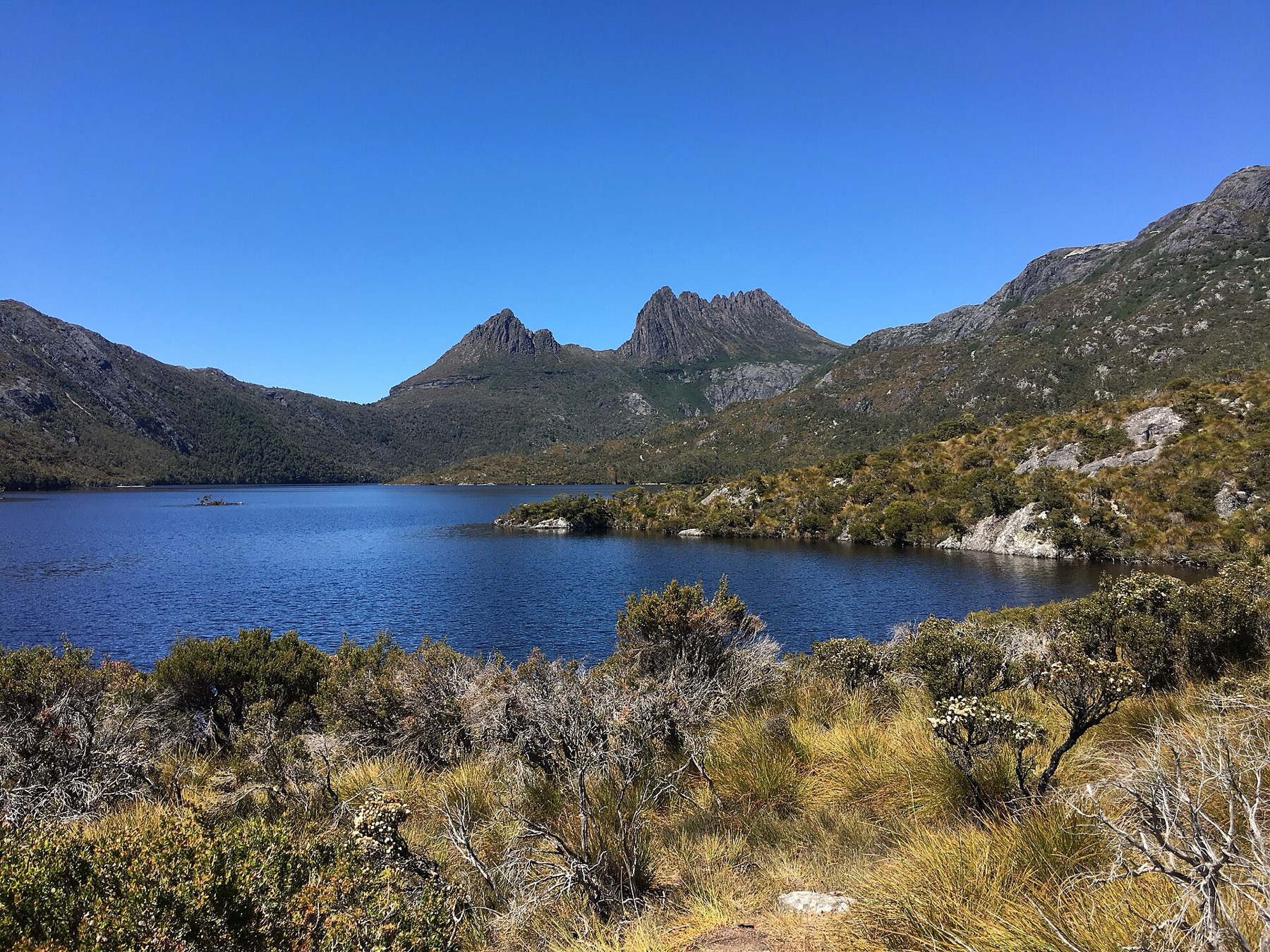
When budgeting for accommodation and travel, don’t forget national park entry fees, which are a major part of the Tasmanian experience. Tasmania has a specific Parks Pass system, and the price list valid from July 2026 offers several options. A basic one-day pass costs AUD 49.15 per vehicle, or AUD 24.55 per person if you aren’t travelling by car. It is valid for 24 hours, but if you plan to sleep in nature and spend several days there, the cost quickly adds up.
That’s why buying a longer-term pass is so important. The two-month Holiday Pass costs AUD 98.35 per vehicle or AUD 49.20 per person and covers entry to all national parks across the island. Many international guides don’t explain this option clearly enough, yet it pays for itself after your third national park. If you live on the island or plan repeated visits during the year, you can buy an Annual Pass for AUD 104.75, but for most visitors the Holiday Pass is the obvious choice. The price list applies from July 2026; check current prices at parks.tas.gov.au.
When planning your route, pay close attention to one major exception. Famous Cradle Mountain has its own separate entry system, which works differently from the rest of the island. Entry costs AUD 30.70 for an adult, AUD 12.30 for a child and AUD 73.75 for a family, including the compulsory shuttle bus. If you already have an island-wide Holiday Pass, park entry is free, but you still need to buy a shuttle bus ticket for AUD 15.50, valid for 72 hours.
Where to Fly or Sail In—and Where to Spend Your First Night
Your first night on the island depends entirely on how you travel to Tasmania. Tasmania currently has no international airport, so you’ll always need to connect on the Australian mainland. Most visitors fly into one of the two largest cities. A flight from Melbourne to Hobart or Launceston takes a comfortable one hour and 20 minutes. From Sydney, the flight takes around one hour and 50 minutes, which is still a very easy and quick journey.
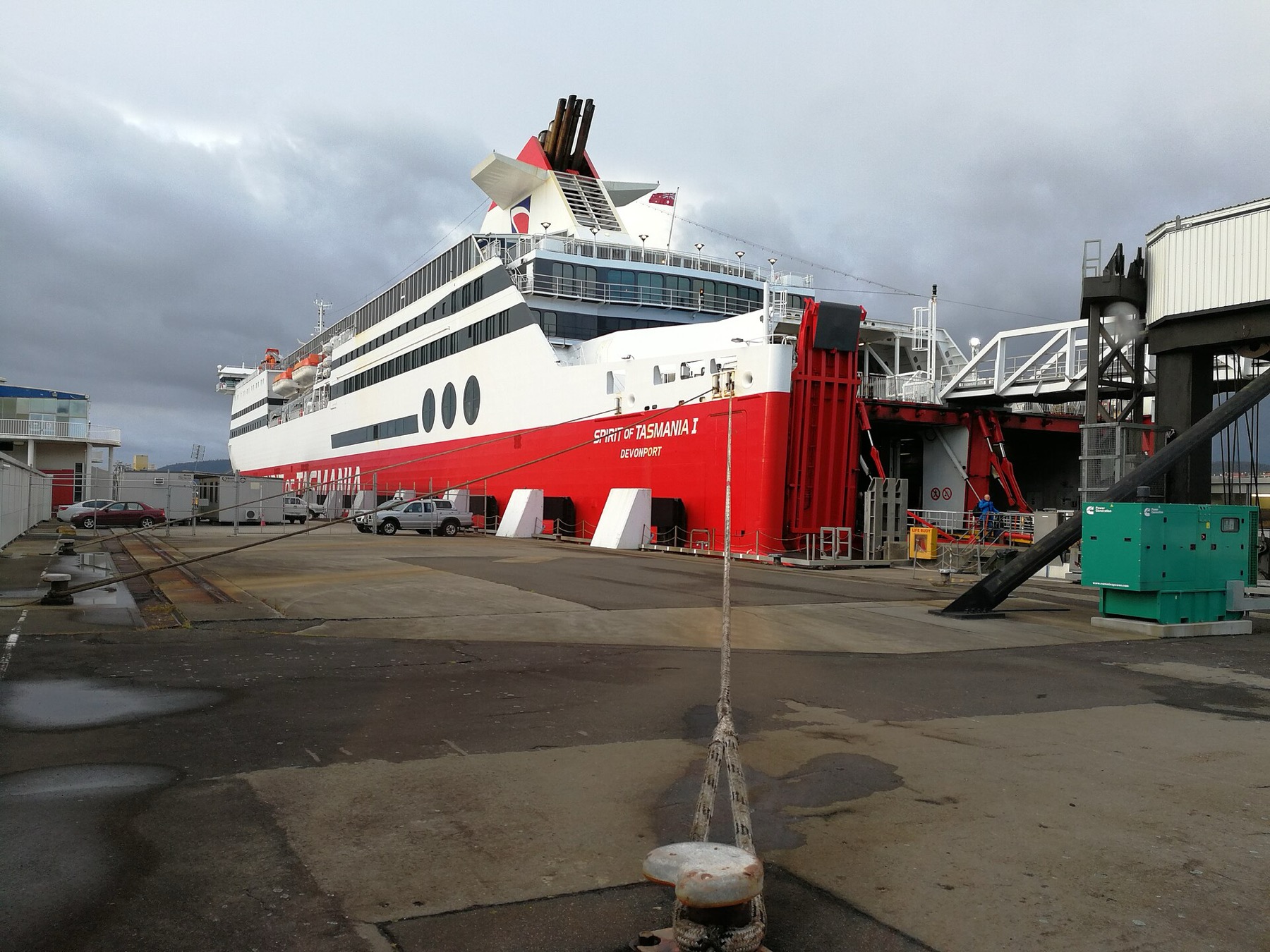
The ferry offers a completely different experience and is popular with travellers bringing their own or a rented car from the mainland. The Spirit of Tasmania sails from Geelong near Melbourne to Devonport in the north, covering 448 km across the notoriously rough Bass Strait. The crossing usually takes nine to 11 hours, the cheapest adult ticket starts at AUD 109, and most services run overnight so you don’t lose a day. Although fleet modernisation has been discussed for years, the new ships are not operating yet and passengers still use the older but reliable vessels.
If you’re considering taking a rental car on the ferry, check the terms and conditions carefully. Most major mainland rental companies strictly prohibit taking their vehicles on the ferry, so you’ll probably need to hire a car once you reach the island. Either way, a car is practically essential for exploring Tasmania, as public transport outside the main cities is very limited. Travellers arriving on the night ferry usually spend their first night in Devonport, while air passengers generally stay in Hobart or Launceston.
12 Tasmania Accommodation Bases Worth Considering
Now for the main part. I’ve chosen twelve strategic places that make it easiest to explore the island. You certainly don’t need to sleep in all of them—just choose the ones that fit your itinerary and pace. For every base, I’ve also included specific Tasmania accommodation tips, whether you’re looking for luxury, a family-friendly stay or simply a clean bed for the night.
Remember that, especially in high season, rooms disappear incredibly quickly. Tasmania is not a destination where you can wait until sunset to look for a place to stay.
1. Hobart
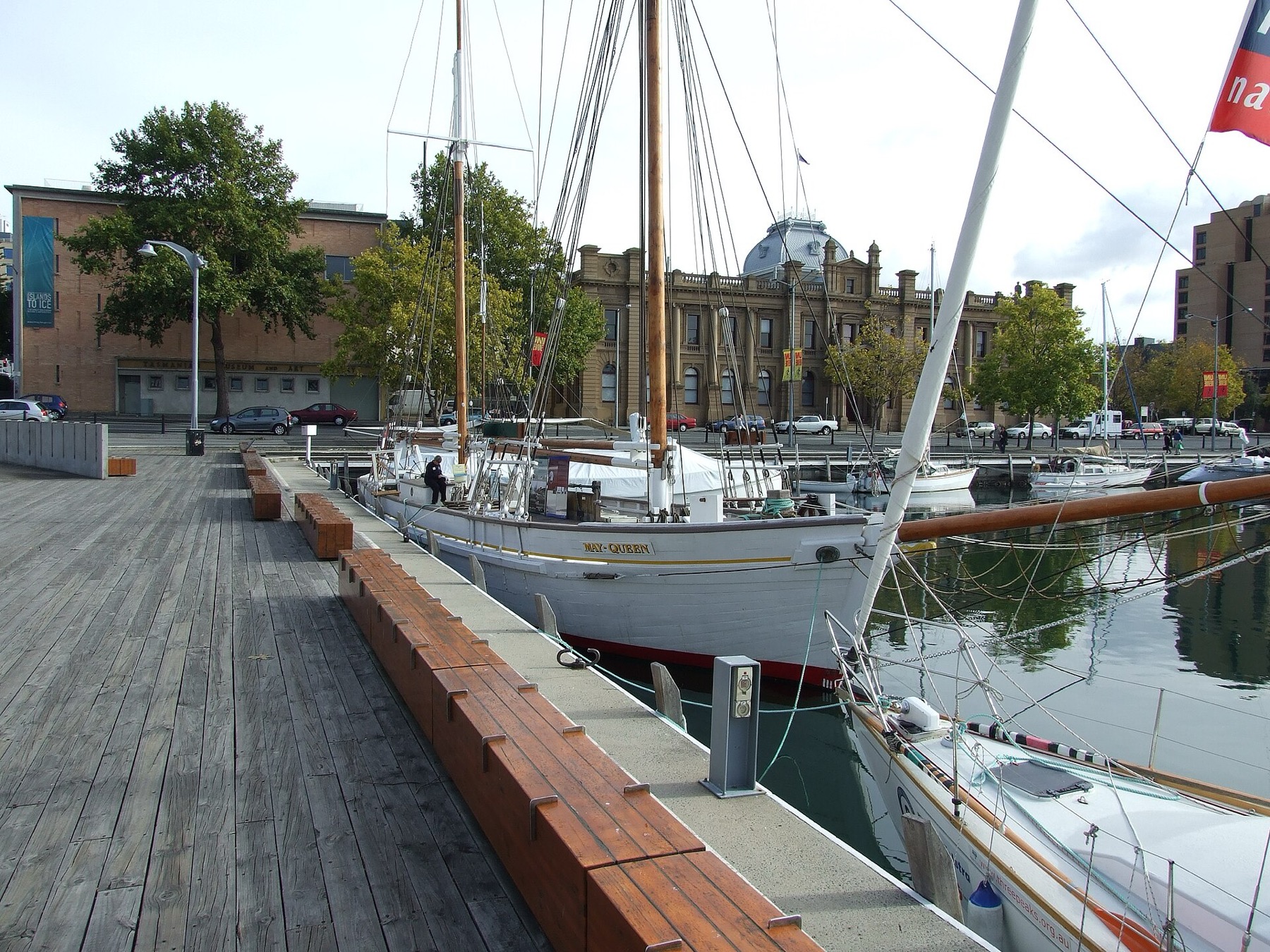
The island’s capital and largest city is the natural starting point for most travellers. You’ll find the famous Saturday Salamanca Market, the fascinating and controversial MONA art museum and the historic Battery Point neighbourhood. The majestic kunanyi rises directly above the city and offers fantastic views on a clear day. The beautiful botanical gardens and the historic Cascades Female Factory are also worth visiting. From Hobart, you can easily take day trips to Bruny Island or the ruins of Port Arthur.
This is an ideal base for your first days after arriving, when you need to adjust, stock up on supplies and take in the relaxed local atmosphere. It suits food lovers, history fans and anyone who enjoys a little city life, although Hobart is still peaceful compared with Sydney. If you’re looking for complete wilderness and solitude, don’t stay longer than two nights before heading to the national parks. Distances to nearby nature spots are manageable, making the city an excellent launch pad for southern Tasmania.
Where to stay? Guests highly recommend the luxurious The Tasman, a Luxury Collection Hotel, Hobart, with an impressive Google rating of 4.7 (575 reviews), housed in a beautifully restored historic building. Another excellent harbour-side option is MACq 01 Hotel, rated 4.8 (1,304 reviews), with unique design rooms inspired by Tasmanian history. Travellers on a tighter budget praise the very clean Narrara Backpackers, rated 4.6 (272 reviews). 💡 Tip: The harbour has excellent restaurants, but remember that the famous Salamanca Market really operates only on Saturday mornings.
2. Battery Point and Salamanca
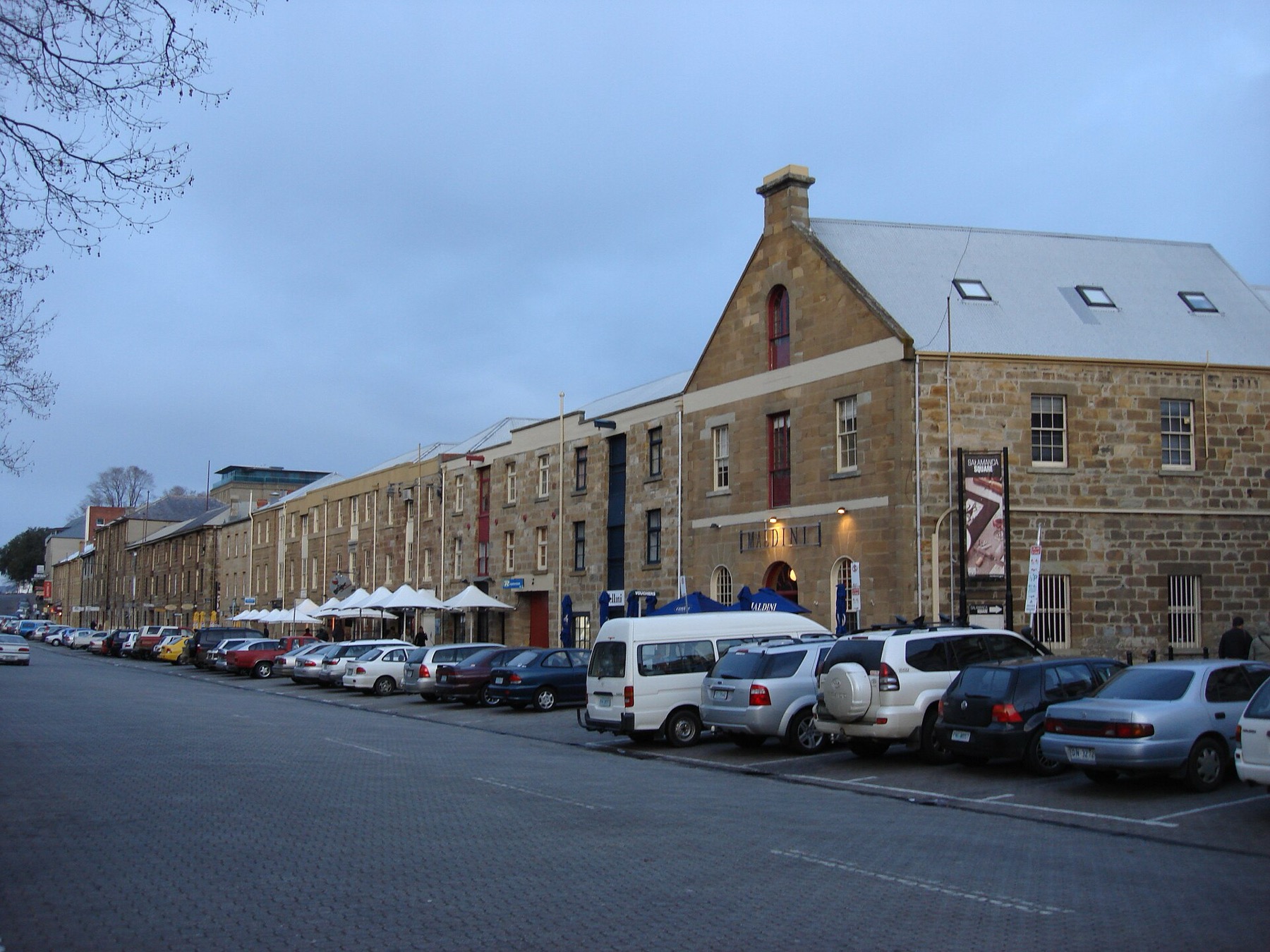
Although Battery Point is technically part of Hobart, its atmosphere is so distinctive that it deserves to be treated as a separate base. This historic district, filled with sandstone cottages and narrow lanes, feels like old England and is wonderfully romantic. Nearby Salamanca Place has excellent independent cafés, galleries and boutiques open throughout the week. It’s a place where you can go for an evening walk without starting the car—an enormous relief after days behind the wheel.
You’ll love this area if you’re looking for romance or want to stay within walking distance of the best restaurants and bars while still sleeping peacefully at night. Compared with central Hobart, it has a village-like calm, yet Constitution Dock is only a few minutes away on foot. It’s less suitable for travellers with large caravans, as parking in the narrow historic streets can be stressful.
One of the area’s top choices is historic Lenna Of Hobart Hotel, rated 4.6 on Google (525 reviews), with beautiful garden views. For a more intimate, social atmosphere, guests love MONTACUTE BOUTIQUE BUNKHOUSE, rated 4.6 (379 reviews), probably the island’s prettiest boutique hostel. A great mid-range option is Battery Point Manor, rated 4.5 (126 reviews). 💡 Tip: On your walks, look out for old bakeries serving some of the city’s best morning pastries.
3. Launceston
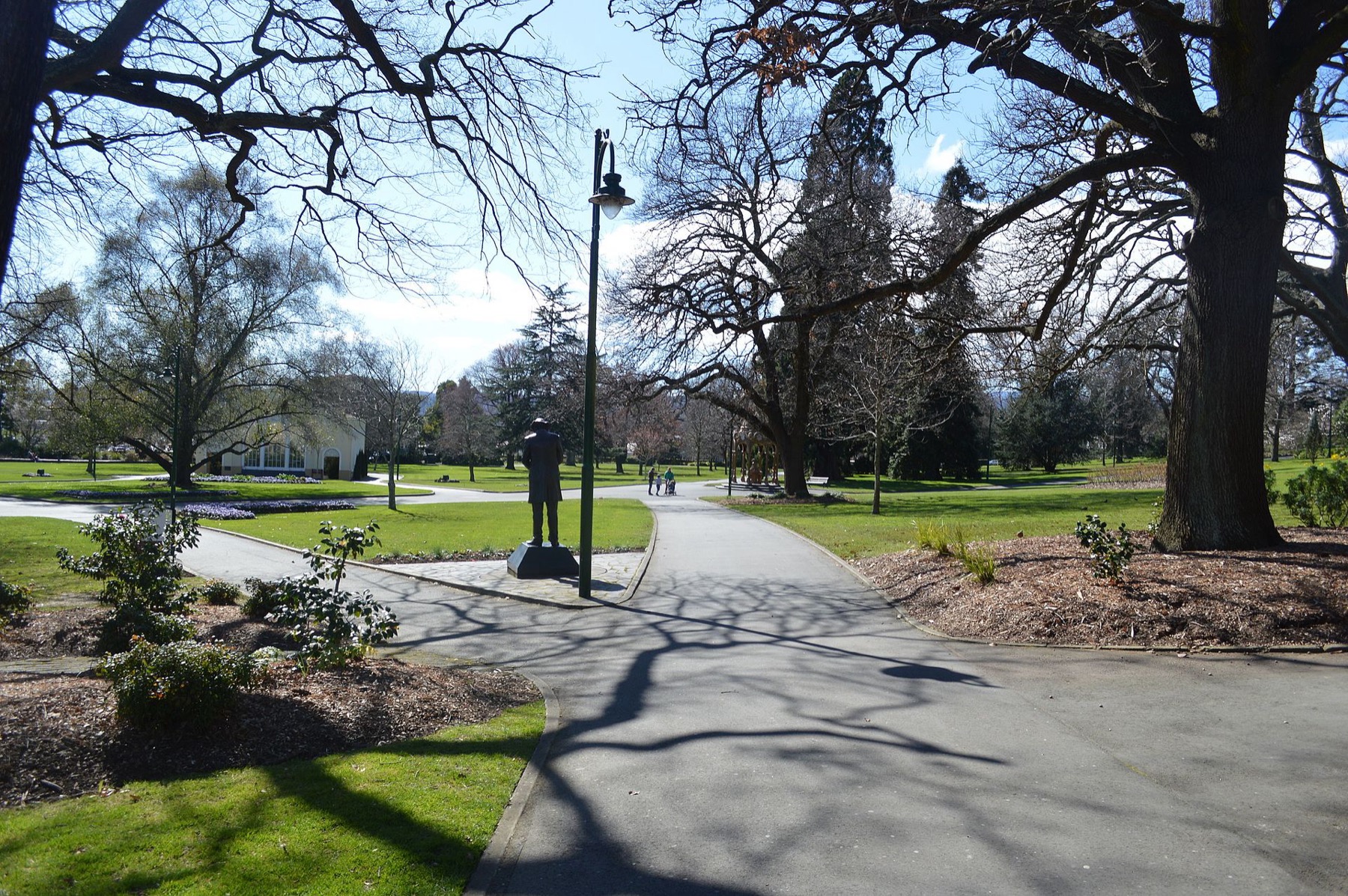
Tasmania’s second-largest city lies in the north. Its biggest attraction is undoubtedly the dramatic Cataract Gorge, just a few minutes’ walk from the centre. You can ride the historic chairlift, which boasts the world’s longest single-span section at an impressive 308 metres. The city flows into the fertile Tamar Valley, known for apple orchards, excellent cider and sparkling wine. In summer, you can also visit the famous Bridestowe lavender fields; there is currently no entry fee, but check before travelling.
Launceston is an excellent base for exploring northern Tasmania and enjoying the local food scene. The city is ideal for wine and food lovers, as nearby farms produce some of the island’s best cheese and fruit. Logistically, it’s a good starting point for the east coast or for travelling west towards Cradle Mountain. Many travellers choose it as their last stop before flying back to the Australian mainland.
For accommodation with lovely water views, reviewers recommend Peppers Seaport Launceston, rated 4.5 on Google (716 reviews), with modern apartments at the harbour. In the heart of town, Launceston Central Apartments, rated 4.3 (290 reviews), puts everything within walking distance. For a modern, minimalist stay, guests recommend the unusual Pod Inn, rated 4.2 (347 reviews). 💡 Tip: Set aside at least one afternoon for a drive through the Tamar Valley and stop at local farms for fresh produce.
4. Coles Bay and Freycinet
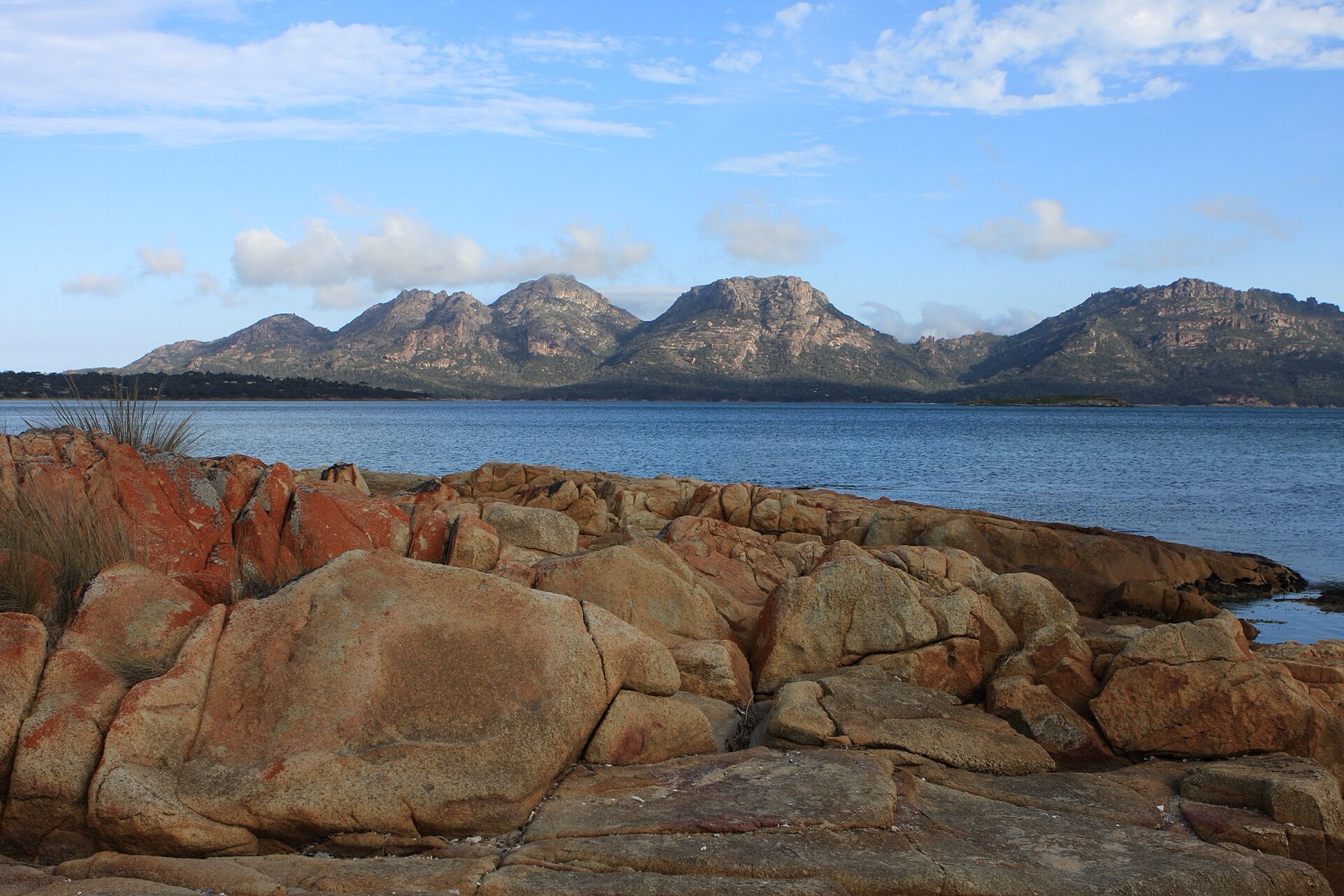
This east-coast area is synonymous with natural beauty and is probably the most photographed place in Tasmania. The small town of Coles Bay is the main gateway to Freycinet National Park, home to iconic Wineglass Bay. The lookout is reached by a moderately demanding 2.6 km trail, taking roughly an hour to an hour and a half uphill. Cape Tourville lighthouse is also worth visiting, with a short 20-minute circuit, although the trail is not fully accessible and wheelchair users may encounter difficulties.
You can hardly go wrong here: the surrounding nature and white-sand beaches speak for themselves. This base is perfect for active travellers who want to hike after breakfast and watch the sunset over the pink granite peaks of the Hazards. However, the area’s popularity means that summer infrastructure is extremely busy. If you’re visiting in high season, book accommodation many months ahead.
For the ultimate luxury experience, reviewers highlight the incredible Saffire Freycinet, with a perfect Google rating of 4.9 (282 reviews), one of the world’s leading luxury lodges. A popular, more accessible option inside the national park is Freycinet Lodge, rated 4.5 (1,039 reviews), where you stay in beautiful timber cabins among the trees. For something modern and intimate, guests recommend numie, rated 4.7 (98 reviews). 💡 Tip: Visit the Wineglass Bay lookout early in the morning to avoid the heat and the crowds arriving by bus at midday.
5. Swansea
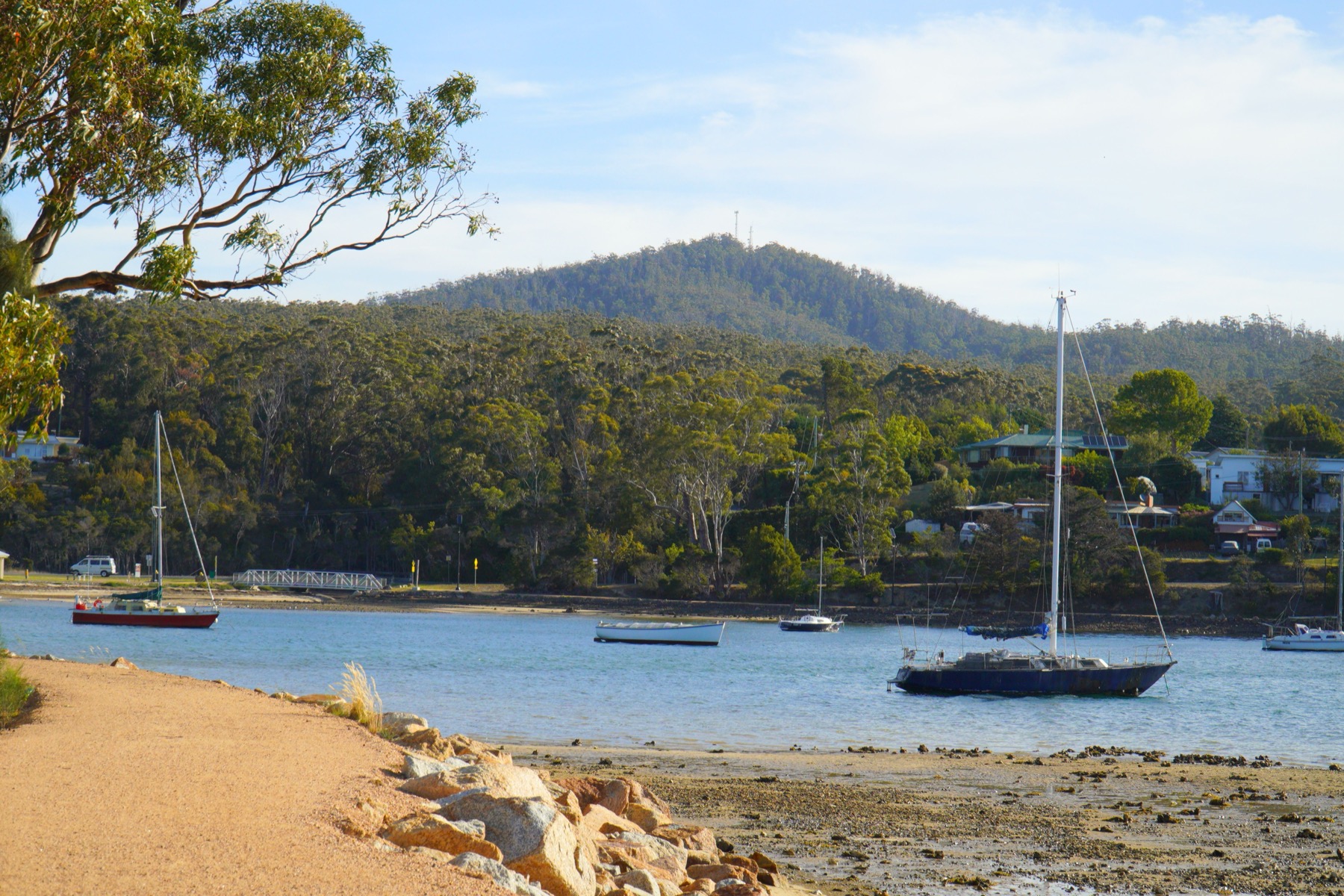
If Coles Bay is sold out or you want a quieter atmosphere, Swansea is an excellent alternative. It sits on the shore of Great Oyster Bay and offers breathtaking views across the water towards the peaks of Freycinet National Park. The town has a rich history, beautiful colonial buildings, a small local museum and excellent cafés. Long sandy beaches near town are often almost deserted, unlike those in the famous national park.
Swansea is a great base for travellers who want to explore the east coast at their own pace. It suits families with children and older couples who prefer a slower rhythm and easy access to essential services. Freycinet National Park is about a 45-minute drive away, which is perfectly manageable for a morning trip. It isn’t ideal for backpackers looking for nightlife: after 8 pm, the town settles into deep sleep.
Guests seeking romance and privacy often choose wonderful Wagners Cottages, with a flawless Google rating of 5 (87 reviews). Elegant accommodation with water views is available at Piermont Retreat, rated 4.5 (391 reviews), with private beaches and an excellent restaurant. For families and practical travellers, Swansea Beach Chalets, rated 4.6 (688 reviews), is a great choice. 💡 Tip: Buy a bottle of Tasmanian wine in town—the sunset over the bay is magical from here.
6. Bicheno
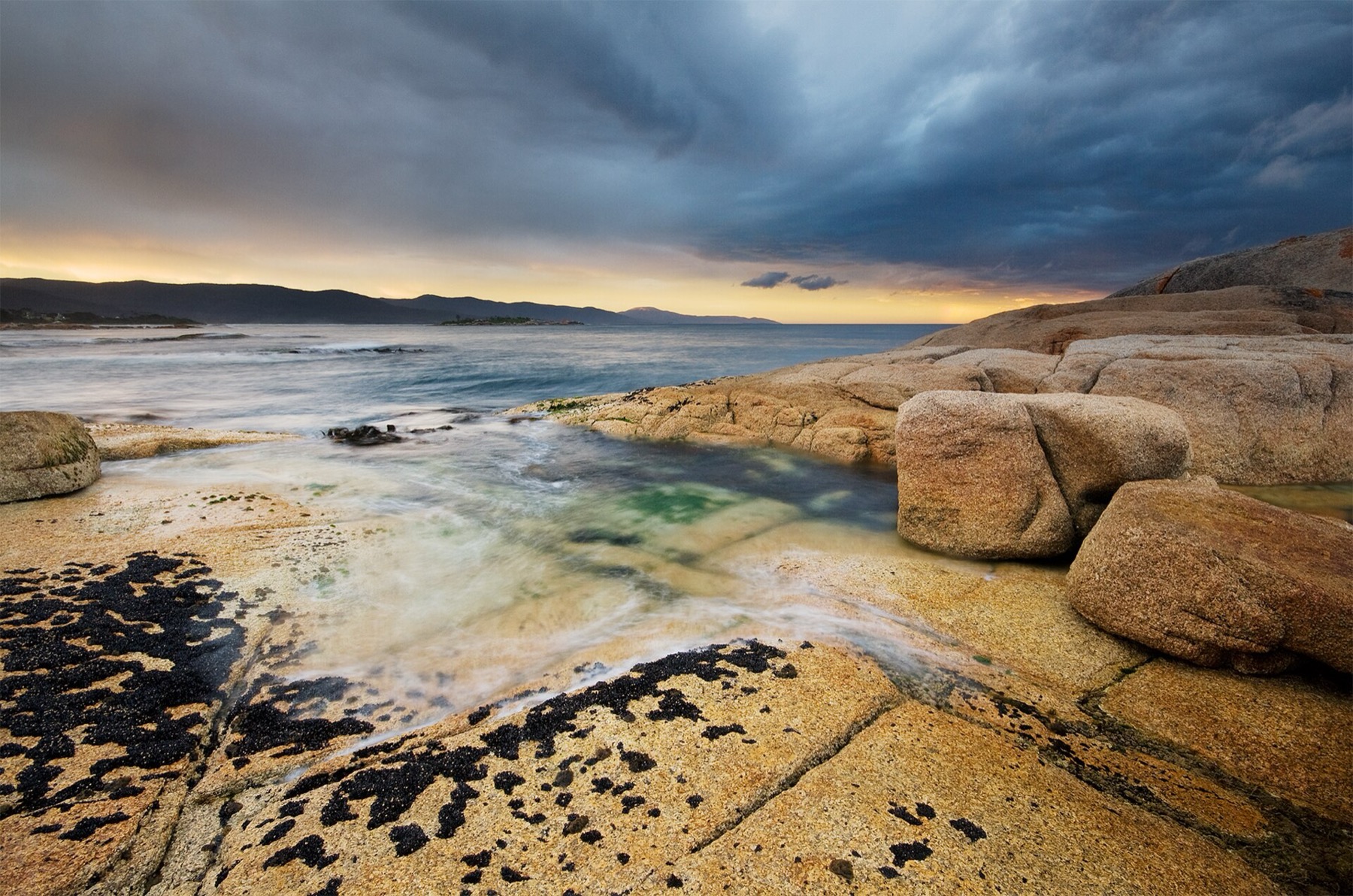
The coastal town of Bicheno lies north of the Freycinet Peninsula and offers a completely different, laid-back surfing atmosphere. Its biggest attraction is a large colony of little penguins, which return from the ocean to their beach nests every evening after dark. You’ll also find the spectacular Bicheno Blowhole, where pressurised water shoots high into the air, as well as excellent snorkelling conditions. The town feels pleasantly holiday-like, with plenty of good bakeries and cafés for refuelling.
Bicheno is a perfect base for families with younger children and anyone wanting a classic Australian coastal experience. It’s a great starting point for East Coast Natureworld and morning trips to nearby Douglas-Apsley National Park. Logistically, it breaks up the journey between Launceston and Hobart if you’re travelling along the east coast. It may not have Coles Bay’s dramatic scenery, but everything is calmer and there are fewer crowds.
Guest reviews often point to the popular Apartments on Fraser Bicheno, with a perfect Google score of 5 (87 reviews), offering excellent facilities for independent travellers. If you want to stay close to the water, look at Bicheno by the Bay, rated 4.4 (383 reviews), with comfortable cabins surrounded by nature. Travellers with caravans or those seeking a budget-friendly option can choose Bicheno East Coast Holiday Park, rated 4.3 (419 reviews). 💡 Tip: Always book an official evening penguin tour. Local guides know how to avoid disturbing the animals and use safe red lights.
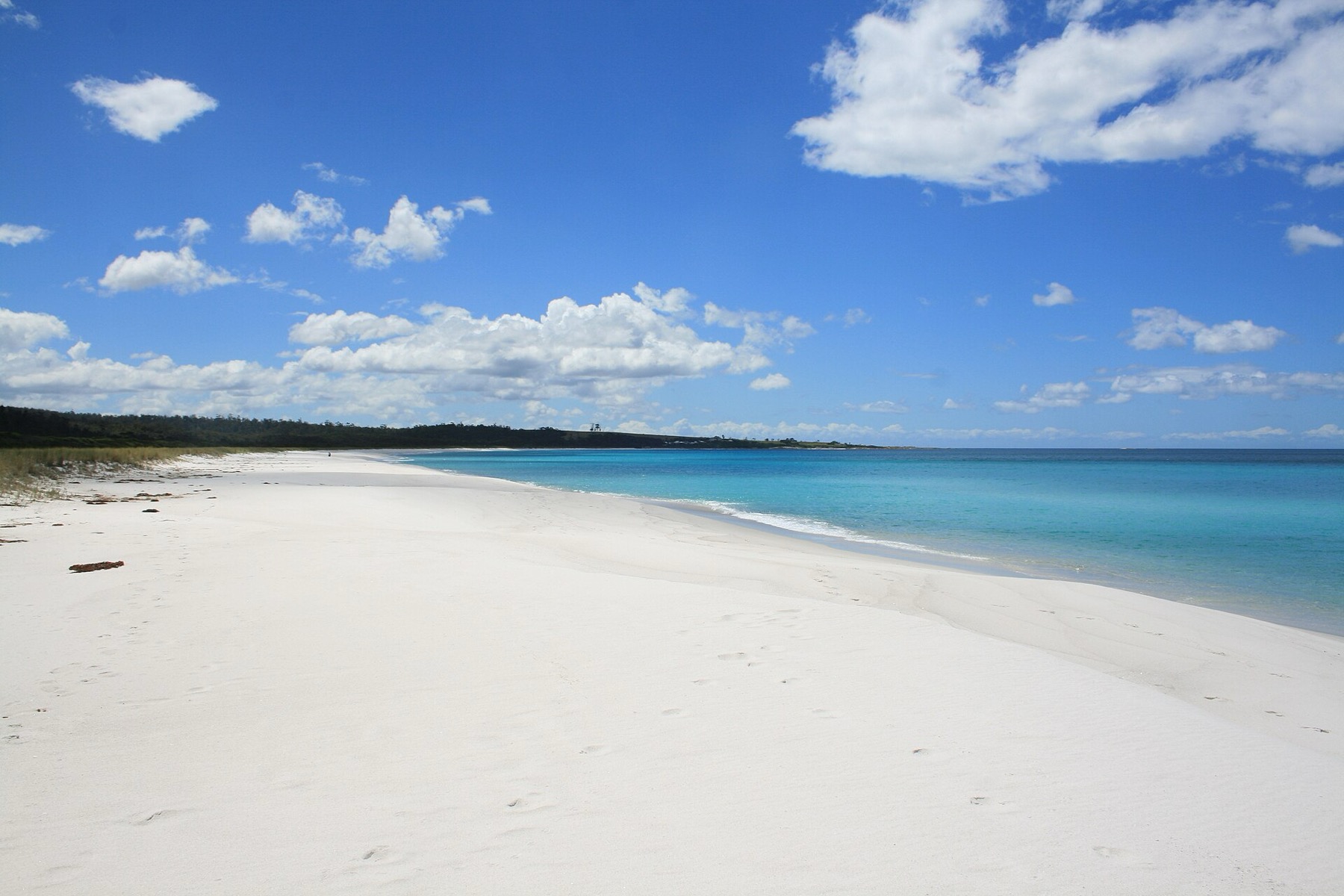
7. St Helens and the Bay of Fires
Continue north along the coast and you’ll reach St Helens, the largest town in the island’s northeast. It is the main gateway to the magical Bay of Fires, famous for dazzling white beaches and huge granite boulders covered in vivid orange lichen. The contrast between turquoise ocean, white sand and fiery rocks creates one of Tasmania’s most beautiful colour palettes. St Helens itself is a busy port where you can stock up on supplies and find excellent cafés.
This base is essential for exploring the island’s northeastern tip and suits anyone who enjoys long walks along empty beaches. It is also a paradise for mountain bikers, with a high-quality network of forest trails nearby. It’s an ideal overnight stop if you’re leaving the east coast and heading inland towards Launceston. If you prefer warmer weather, you’ll be pleased to know this is one of the sunniest areas on the island.
Tasman Holiday Parks – St Helens, rated 4.7 on Google (527 reviews), offers everything from campsites to luxury cabins. For a classic, clean motel, guests recommend Anchor Wheel Motel, rated 4.7 (219 reviews), with traditional Australian hospitality. If you prefer more space and self-catering, choose Georges Bay Apartments, rated 4.5 (199 reviews). 💡 Tip: Spend a full day in the Bay of Fires and follow the coastal road north to The Gardens; every cove is different and more beautiful than the last.
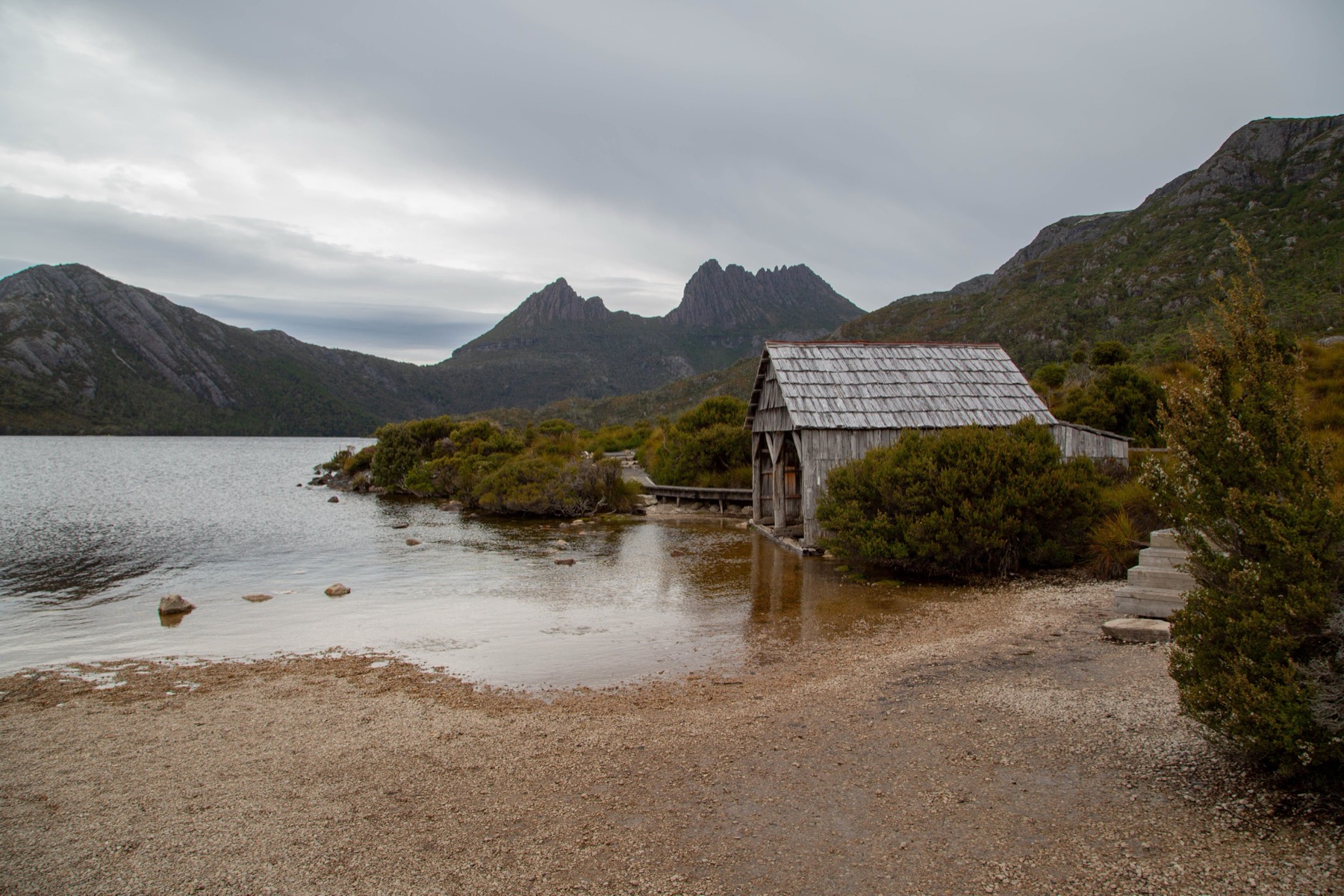

8. Cradle Mountain
This is the heart of Tasmanian wilderness and a place no itinerary should miss. Cradle Mountain–Lake St Clair National Park offers rugged alpine scenery and mysterious Dove Lake, and it is the starting point for the famous multi-day Overland Track. As mentioned above, it has its own entry system and a compulsory shuttle bus, so you cannot drive your own car to the lake during visiting hours. Weather changes by the minute, and even in midsummer you may encounter icy wind or a snow shower, so layers are essential.
Staying in the Cradle Mountain area is strategically important if you want to start hiking early or return from the mountains in the evening. This base is essential for hikers and photographers, as the morning mist over the lake is magical. It is also the place where you need to book furthest ahead: in high season, everything can sell out months in advance. If you can’t find a place near the park, you’ll have to commute from further away and lose valuable daylight.
One of the loveliest places to stay is Cradle Highlander, rated 4.9 on Google (717 reviews), offering rustic cabins in the forest. A practical and extremely popular option is spacious Discovery Resorts – Cradle Mountain, rated 4.6 (893 reviews), with everything from cabins to tent sites. For traditional mountain comfort and a large fireplace, reviewers often mention Peppers Cradle Mountain Lodge, rated 4.2 (1,959 reviews). 💡 Tip: After a long hike, book a session at the local mountain spa—the best way to soothe tired legs.
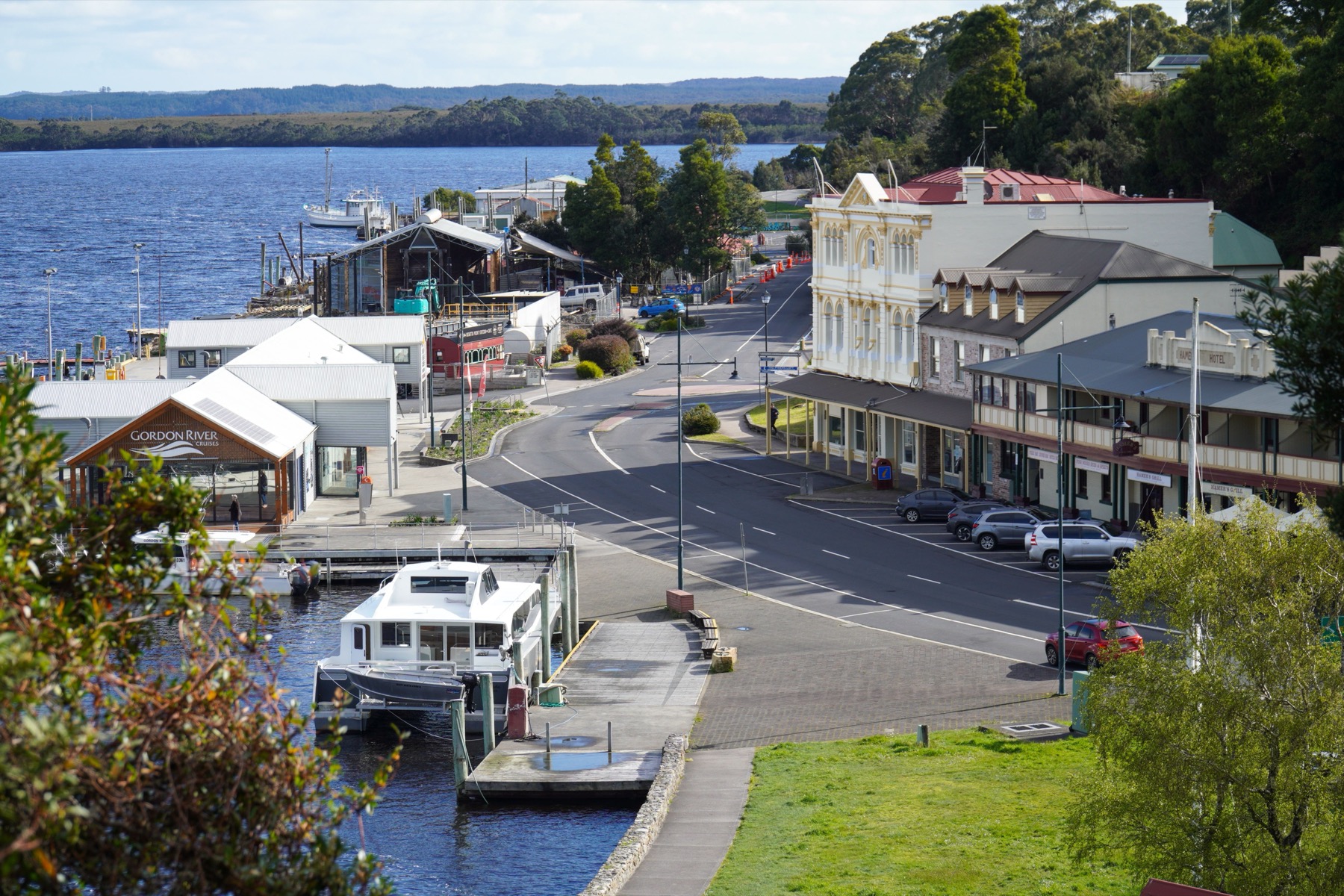
9. Strahan
Strahan lies at the end of a road that seems to lead from nowhere to nowhere, giving it the atmosphere of a place you visit deliberately, never by accident. It sits on vast Macquarie Harbour and is the main gateway to the wild Gordon River, where cruises travel through dark rainforest. The area is known for its brooding atmosphere, frequent mist and impenetrable wilderness surrounding the town. Nearby you’ll also find the huge Henty Dunes and the endless, windswept Ocean Beach.
Strahan is a base for adventurers who want to experience untamed Tasmania and don’t mind long drives. It’s ideal if you want to take a river cruise or a historic steam train through the rainforest. It isn’t suitable for travellers with a packed itinerary, because getting here from the north or east takes a long time on winding mountain roads. To enjoy the west coast properly, stay for at least two nights; otherwise you’ll spend most of your time driving.
Top-rated stays in this remote area include comfortable Marsden Court Apartments, rated 4.6 on Google (105 reviews), where you can cook with local ingredients. For a more stylish stay with beautiful water views, guests recommend Risby Cove Boutique Hotel, rated 4.3 (435 reviews), which also has a renowned restaurant. A dependable traditional option is Motel Strahan, rated 4.3 (168 reviews). 💡 Tip: Book your Gordon River cruise as early as possible because boat capacity is limited and it’s the reason almost everyone comes here.
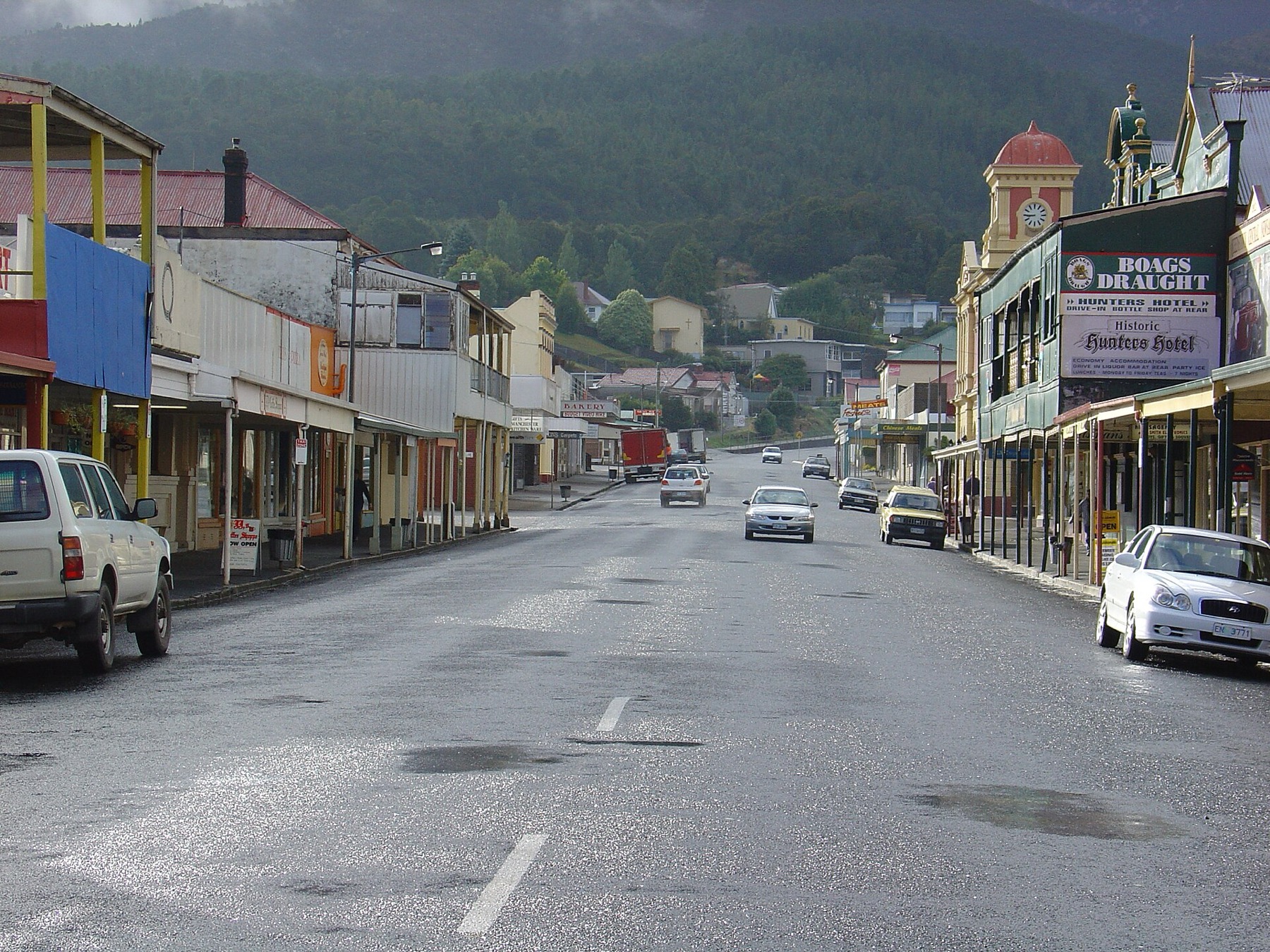
10. Queenstown
Queenstown lies about 45 minutes inland from Strahan and has a genuinely shocking landscape. Decades of intensive copper mining created bare, colourful mountains without trees, resembling the surface of Mars and contrasting sharply with the surrounding rainforest. The famous road with 99 bends leads into town—a motorcyclist’s dream and a motion-sickness sufferer’s nightmare. Today the town is slowly moving beyond its mining past, with small galleries opening and a strong sense of industrial nostalgia.
Queenstown is a fantastic and often more affordable alternative to nearby Strahan for exploring the west coast. It suits fans of industrial heritage, raw history and dramatic photography, as the surrounding landscape is visually fascinating. It’s also a good stop if you’re travelling from Hobart towards Cradle Mountain and want to split the journey. If you’re seeking lush untouched nature and classic romance, however, this lunar landscape may come as a shock.
Accommodation matches the town’s rugged character. Reviewers love Gold Rush Inn (Google 4.4, 309 reviews) for its dependable motel standard. For old-world atmosphere, try historic Railway Hotel (4.2, 141 reviews) in the centre. For genuine patina, look at the grand Empire Hotel (3.9, 799 reviews), with a beautiful antique staircase made from local timber. 💡 Tip: Stop at Ironblow Lookout above town for the best view of the colourful walls of the abandoned open-cut mine.
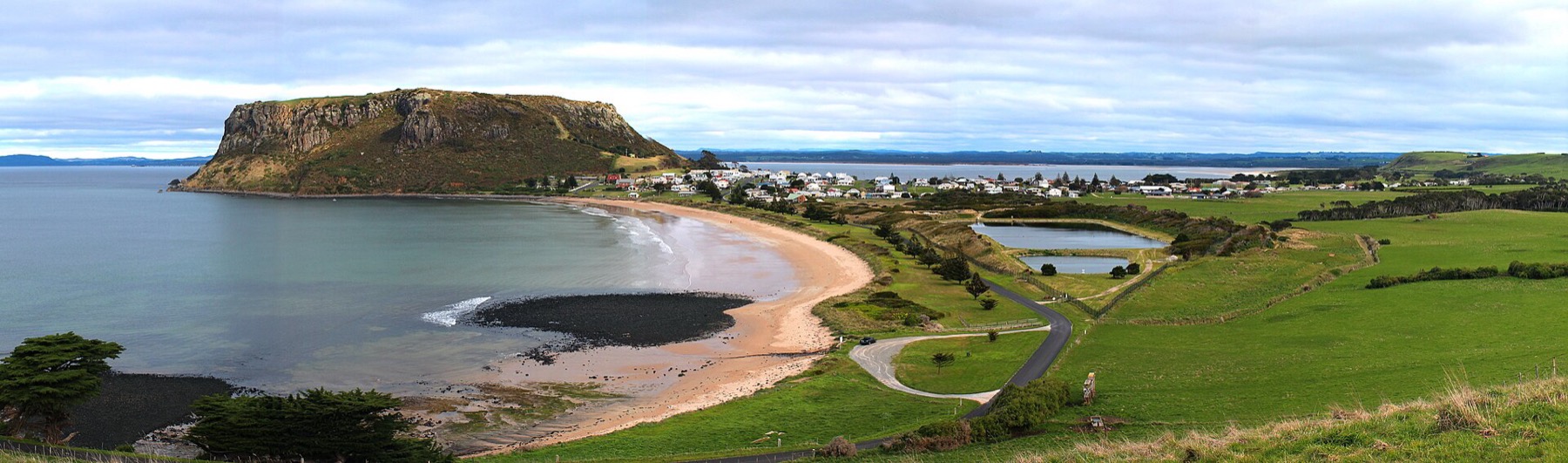
11. Stanley and the Northwest
Far along the northwest coast lies the historic fishing village of Stanley, dominated by the huge basalt monolith known as The Nut. This enormous rock rises directly from the ocean, and you can take a chairlift or climb the steep path for views across the wind-battered landscape. The village is full of beautifully preserved 19th-century houses, creating the feeling that you’ve reached the end of the world. The air is famously clean, and the whole area is known for excellent agricultural produce.
This base is a reward for travellers with more time who don’t mind leaving the main loop. It’s perfect for architecture photographers, peace seekers and fans of dramatic coastlines where waves crash against the cliffs. Logistically, it requires a detour from the north coast, so visit only if you have at least ten days in your itinerary. If you like warm swimming and calm weather, look elsewhere—the wind here can be relentless.
For accommodation, guests praise the charming Stanley Village, rated 4.7 on Google (110 reviews), which fits the historic character perfectly. Another 19th-century gem is the beautifully restored Hanlon Guest House, rated 4.6 (108 reviews), with an old-English atmosphere. The modern campsite and cabin park BIG4 Tassie Getaway Parks Stanley, rated 4.6 (724 reviews), is also popular. 💡 Tip: An evening walk along the coast to the foot of The Nut is magical, but dress warmly—the ocean wind is cold in every season.
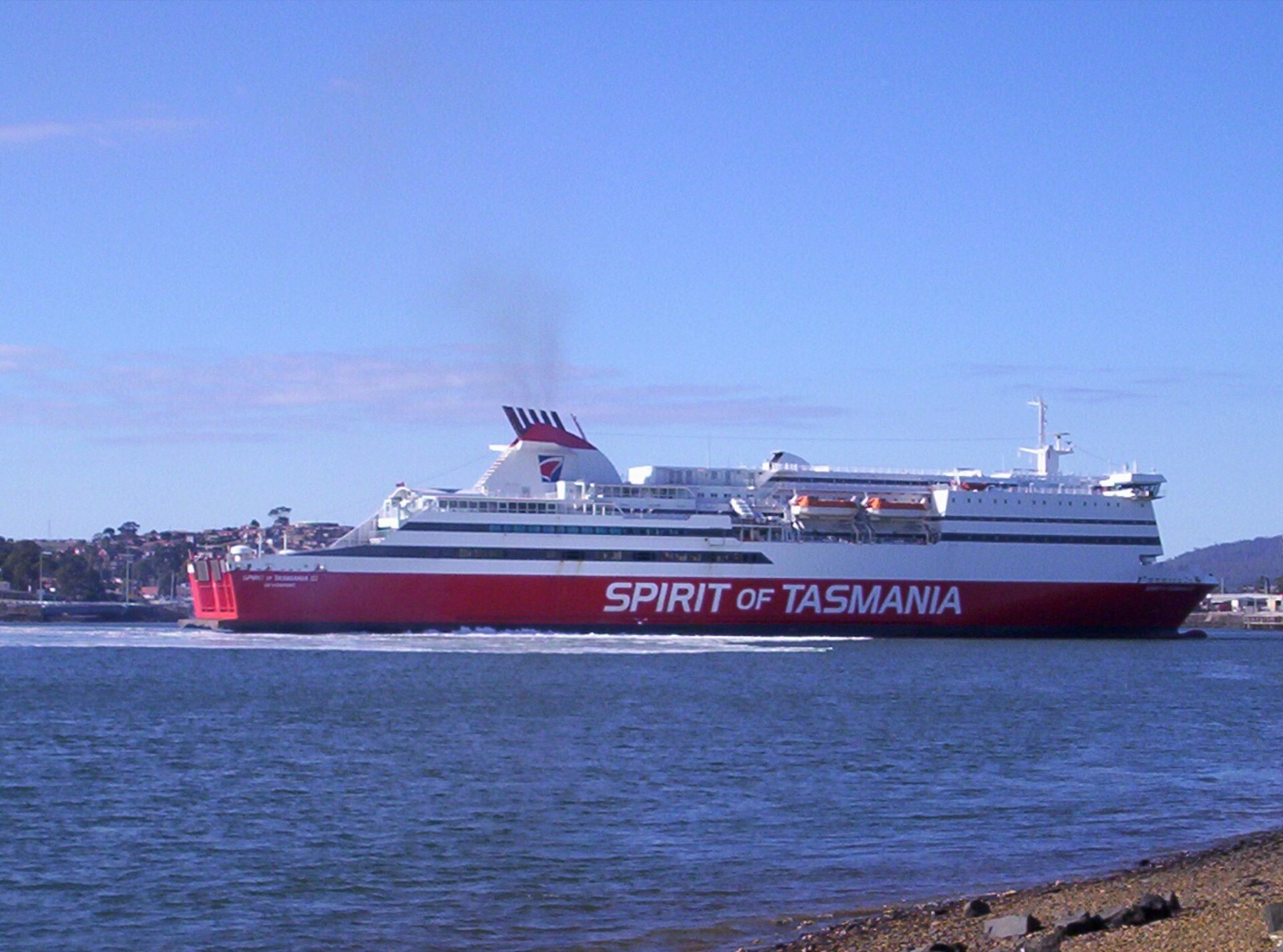
12. Devonport
Our final strategic base lies on the north coast at the mouth of the Mersey River, and its role is crucial for many travellers. Devonport is home port to the large Spirit of Tasmania ferries connecting the island with the Australian mainland. The town has a pleasant waterfront promenade, a lighthouse at Mersey Bluff and serves as northern Tasmania’s main transport and commercial hub. While it isn’t a place you visit primarily for natural beauty, its practical importance cannot be ignored.
You’ll mainly use Devonport in two situations, both purely logistical. It is an ideal first-night base if you have just arrived on the night ferry and are too tired for a long inland drive. It’s equally logical for your final night if you have an early morning sailing back to Melbourne. Tourists rarely stay longer, as nearby areas such as Cradle Mountain and Launceston offer more appealing ways to spend your time.
For the best the area offers, reviewers love The Cove Tasmania, rated 4.9 on Google (387 reviews), just outside town with luxurious ocean views. In the centre, travellers often choose modern and dependable Novotel Devonport, rated 4.5 (789 reviews), close to the terminal. History and boutique accommodation fans praise the beautiful guesthouse The Grand On Macfie, rated 4.9 (155 reviews). 💡 Tip: If you’re taking an early ferry, stay as close to the port as possible. Vehicle check-in requires an early arrival, and every extra minute of sleep helps.
Accommodation by Travel Style
To make sense of all these hotels, here’s a quick overview based on different travel styles. I haven’t included prices because they change dramatically according to the season and occupancy, so always check the current offer for your dates.
| Accommodation | Base | Google rating | Best for |
|---|---|---|---|
| Saffire Freycinet | Coles Bay | 4.9 (282 reviews) | A luxury experience for the most demanding travellers with no fixed budget. |
| The Tasman, a Luxury Collection | Hobart | 4.7 (575 reviews) | Fans of five-star comfort and historic architecture in the centre. |
| Cradle Highlander | Cradle Mountain | 4.9 (717 reviews) | Romantics seeking a cabin in wild mountain scenery. |
| Wagners Cottages | Swansea | 5 (87 reviews) | Couples wanting complete privacy and peace on the east coast. |
| Freycinet Lodge | Coles Bay | 4.5 (1,039 reviews) | Active travellers who want to sleep inside the national park. |
| Lenna Of Hobart Hotel | Battery Point | 4.6 (525 reviews) | History lovers who prefer quieter neighbourhoods with period atmosphere. |
| Marsden Court Apartments | Strahan | 4.6 (105 reviews) | Independent travellers who want to cook after a long journey. |
| Tasman Holiday Parks | St Helens | 4.7 (527 reviews) | Families seeking good facilities and campsites near beaches. |
| Discovery Resorts | Cradle Mountain | 4.6 (893 reviews) | Practical travellers wanting a wide choice of accommodation near the mountains. |
| Narrara Backpackers | Hobart | 4.6 (272 reviews) | Backpackers and solo travellers looking for a clean, friendly stay. |
| MONTACUTE BOUTIQUE BUNKHOUSE | Battery Point | 4.6 (379 reviews) | Design-hostel fans who don’t mind sharing spaces. |
| Pod Inn | Launceston | 4.2 (347 reviews) | Modern nomads who need a clean, cleverly designed bed for the night. |
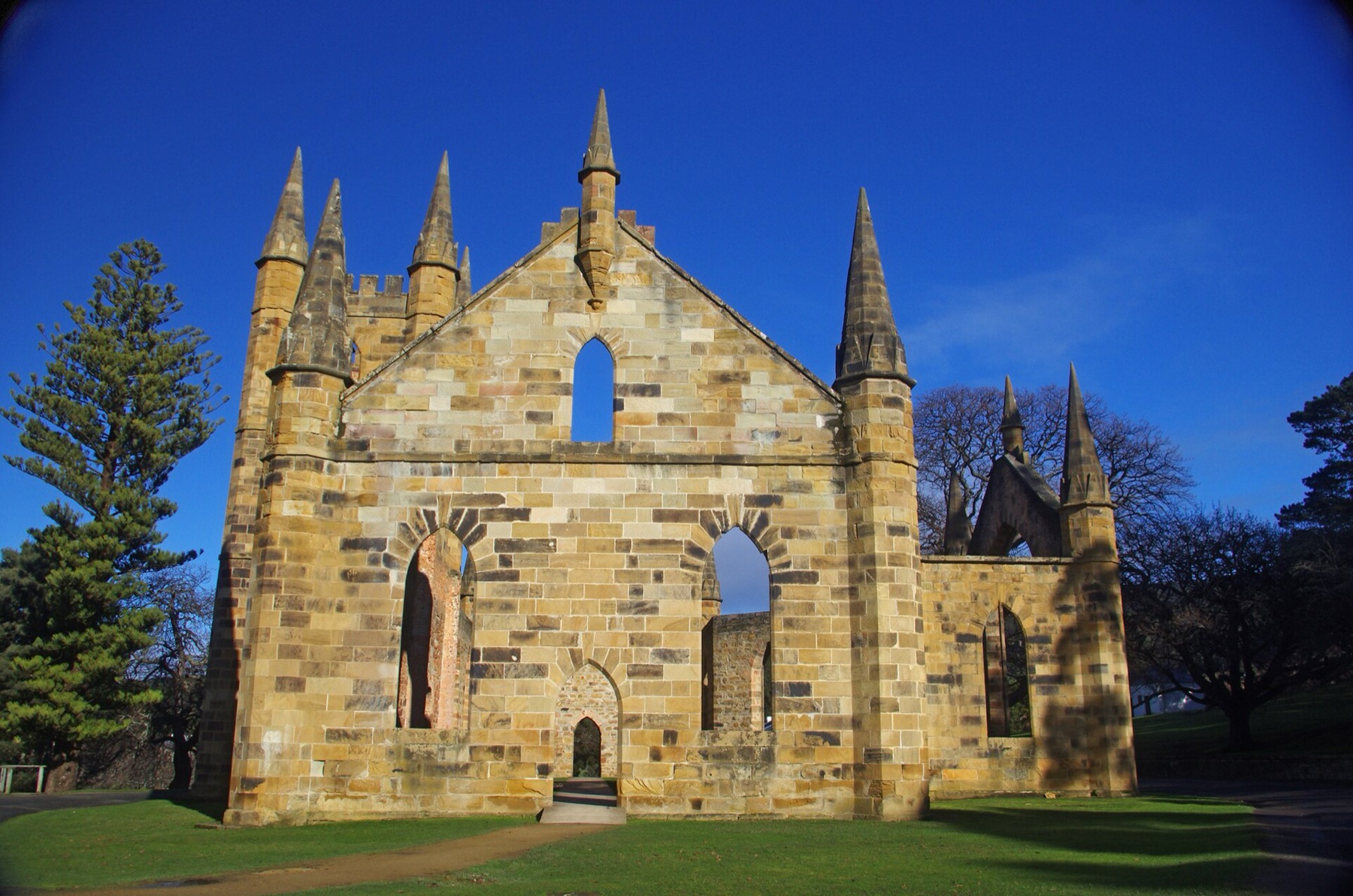
Port Arthur, Maria Island and Other Excursions
When choosing bases, think about day trips to places where sleeping is impossible or requires special logistics. A good example is the Tasman Peninsula, home to the historic Port Arthur, listed as a UNESCO World Heritage Site for its convict history. Its peaceful setting and beautifully preserved ruins attract many visitors. Although you can stay nearby, most travellers visit on a day trip from Hobart, about an hour and a half away.
Beautiful Maria Island National Park is a special case, as all cars are strictly prohibited. You can reach the island only by ferry from Triabunna (about 30 minutes; a return ticket costs AUD 59 for an adult and AUD 36.50 for a child). Leave your car on the mainland and continue on foot or by bicycle, accompanied by wombats and historic ruins—a wonderfully charming combination. The only accommodation is a very basic campsite or an old hostel without electricity, so if you want comfort, stay in Triabunna and visit the island as a day trip.
Another popular day trip from Hobart is Bruny Island, a paradise for foodies, with a lighthouse and dramatic cliffs. Try local artisan cheeses, excellent apples and cider, as well as the fresh oysters farmed in the cool bays. You can take a car across on the small ferry, but many people visit for the day and return to the comfort of their Hobart base in the evening.

When to Book and What to Avoid
When you travel to Tasmania has a major effect on hotel prices and how far ahead you need to book. The main summer season runs from December to February, when the island enjoys around 15 hours of daylight—ideal for long drives and hikes. Accommodation is most expensive then, Australian holidaymakers fill the island and bushfire season is a serious concern. In summer, you must book in small locations such as Coles Bay, Cradle Mountain and Strahan months ahead, or you may find yourself without a room.
Spring and autumn are a fantastic compromise if you want to save money and enjoy steadier weather without the crowds. Autumn colours the mountain trees in incredible shades of yellow and orange, which photographers heading to Cradle Mountain will especially appreciate. Winter, peaking in July and August, brings significantly lower hotel prices and the chance to see the Southern Lights (Aurora Australis) in the south. However, mountain roads can ice over in winter, and snow may fall on kunanyi surprisingly even in summer, so warm clothing is essential all year round.
Where to Eat
Although this article is mainly about accommodation, a trip wouldn’t be complete without good food. So where should you eat in Tasmania? You don’t need to overthink it: the best culinary experiences are usually right where you’re staying.
Markets and Farm Produce
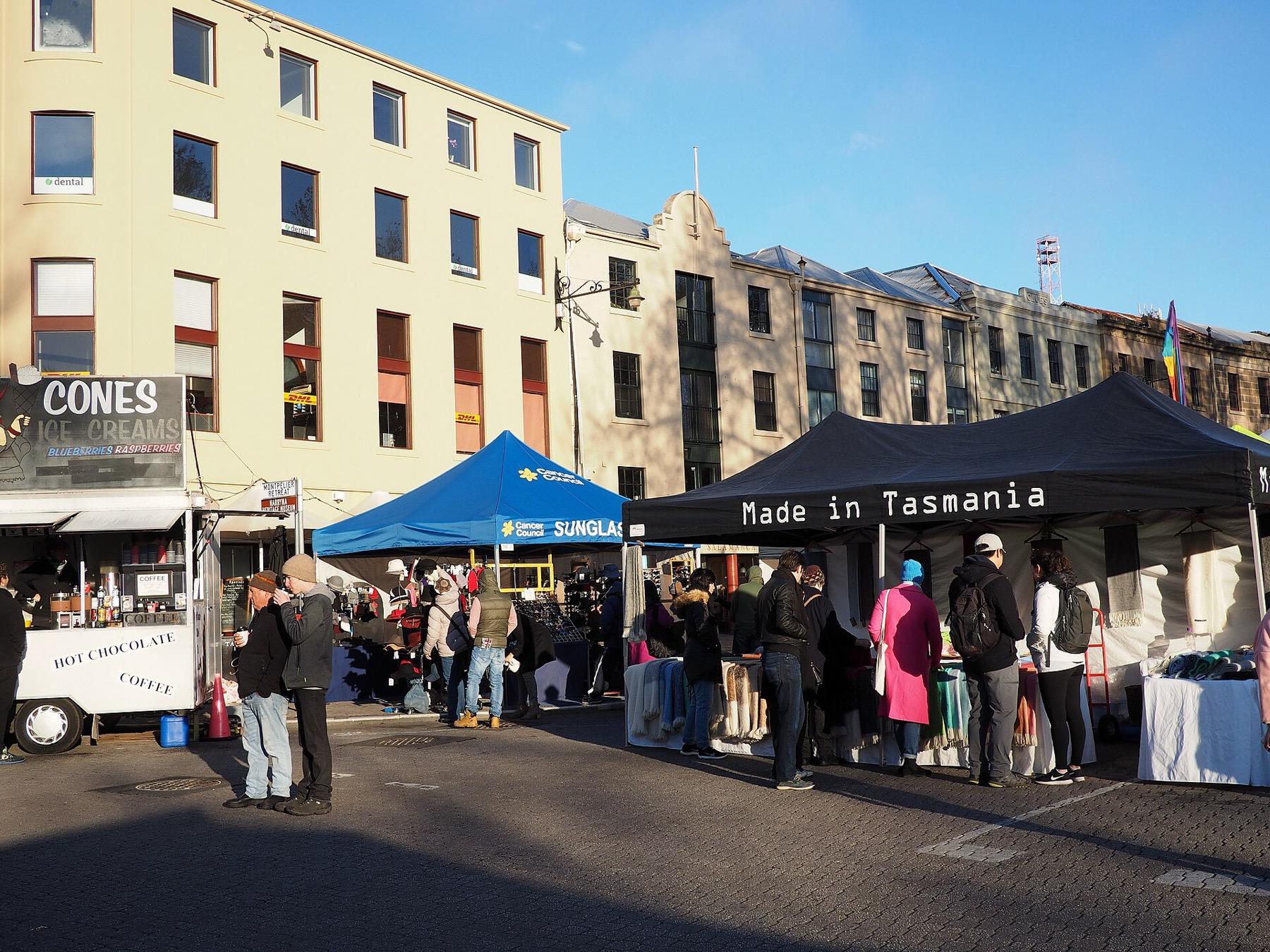
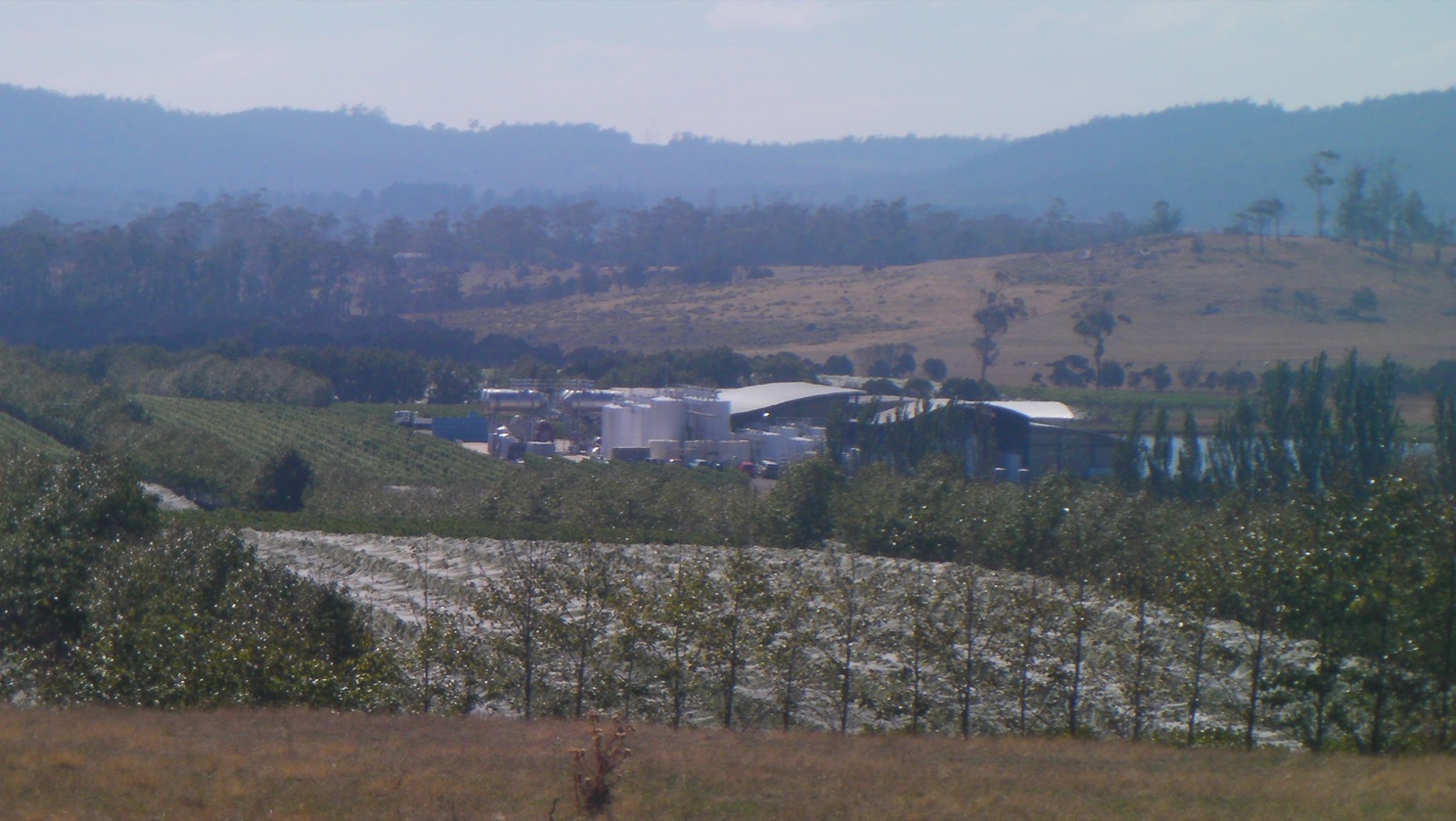
In Hobart, don’t miss the Saturday Salamanca Market, where you can buy fresh ingredients and ready-to-eat food. You’ll also find excellent places around Constitution Dock. Near Launceston, visit the fertile Tamar Valley. Local farms produce excellent cider, sparkling wine and cheese. From Hobart, take a day trip to Bruny Island, a true foodie paradise with artisan cheese and apples; the local speciality is fresh oysters.
Trusted Hotel Restaurants
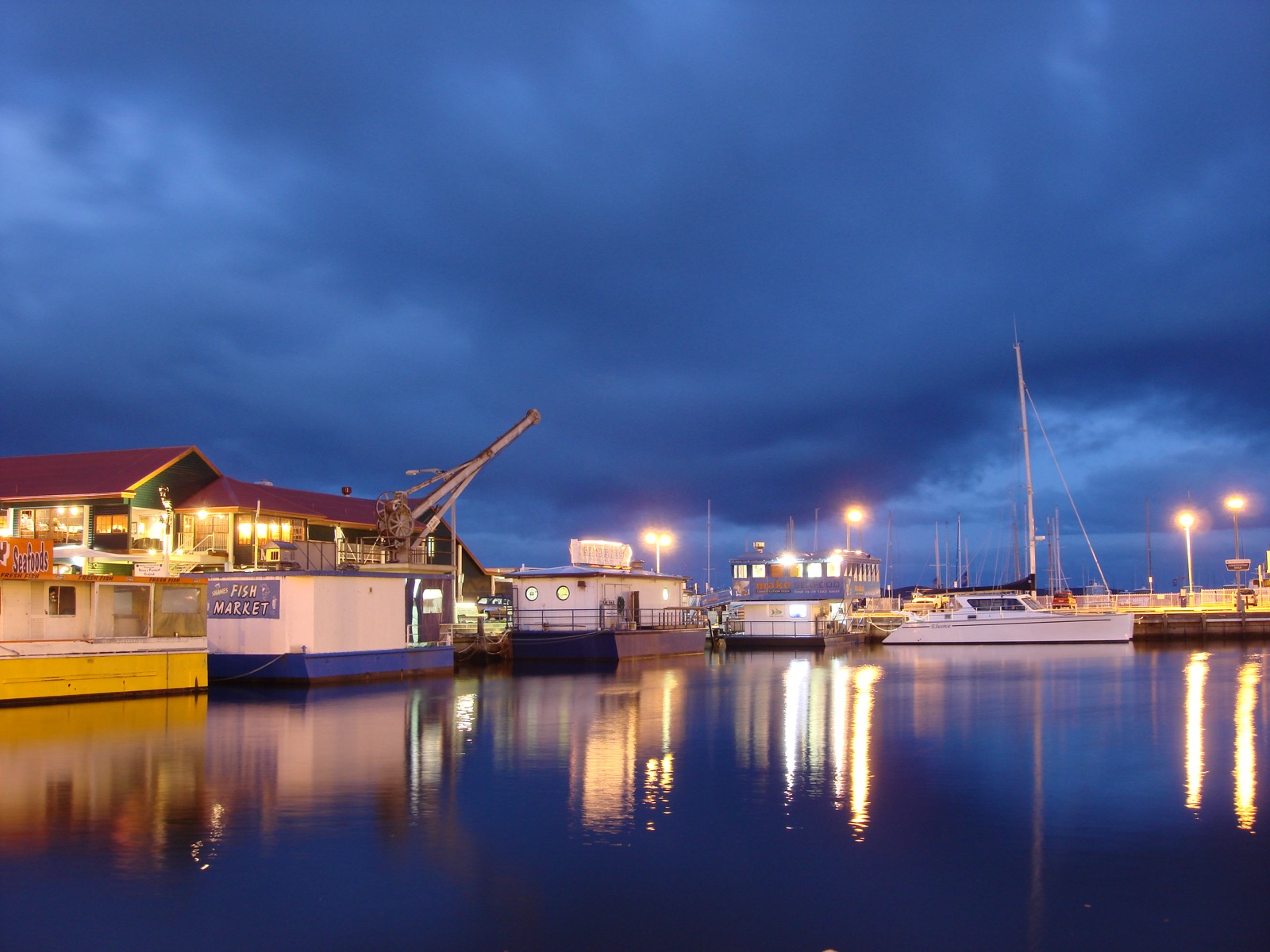
After a day in the wilderness, you may be so tired that you’ll appreciate dinner right where you’re staying. Piermont Retreat in Swansea offers a luxurious dining experience. On the wild west coast, guests particularly praise the restaurant at Risby Cove Boutique Hotel. In both cases, I recommend booking a table in advance, even if you’re staying at the hotel.
What to Read Next
If planning a trip Down Under has captured your imagination, don’t miss our main guide, Tasmania: 20 Things to See + Road Trip Itinerary, where we cover the full route in detail. For broader context, read Australia Travel: 30 Most Beautiful Places + Practical Tips. If you’re flying to the island from the mainland, you may also enjoy Melbourne, Australia: 23 Things to See and Do and Where to Stay in Melbourne: Neighbourhoods and Trusted Hotels. For long-distance travellers, we also have a comprehensive Australia Road Trip: Visas, Routes and Costs.
Frequently Asked Questions
How many bases should I choose?
For a week-long holiday, three bases will be enough so you don’t have to constantly pack. If you have ten days in Tasmania, choose four strategic locations. For a full two-week circuit around the entire island, it’s ideal to spread your accommodation across five to six different bases to minimize long and tiring drives between regions.
Is the Holiday Parks Pass worth it?
Yes, the two-month Holiday Pass for 98.35 AUD per vehicle pays for itself by your third national park visit. It’s demonstrably the best value option for the vast majority of tourists who drive around the island and want to see as much nature as possible. But don’t forget one important thing: this pass doesn’t include the mandatory shuttle bus in Cradle Mountain National Park, which you have to purchase separately.
Where should I sleep the first night?
It depends entirely on your chosen mode of transport. If you fly to the island from the mainland, your first base will automatically be Hobart or Launceston. However, if you arrive on the overnight Spirit of Tasmania ferry, your first stop will be the port city of Devonport, where you can comfortably rest after the long voyage.
Do I need a car?
Yes, renting a car is practically essential for fully exploring the island. Public transport works reasonably well between the largest cities, but you simply won’t reach the national parks and more remote natural attractions without your own vehicle. However, consider renting a car directly on the island, as many mainland rental companies prohibit taking vehicles on the ferry.
Where should I stay near Cradle Mountain?
From a logistical standpoint, it’s best to sleep as close to the park entrance as possible, ideally in accommodations like Cradle Highlander or Discovery Resorts. This saves you very precious morning hours and lets you head out to Dove Lake earlier, before the trails fill with crowds of tourists. However, capacity here is extremely limited, so book well in advance.
Where should I stay for Wineglass Bay?
The absolutely ideal base is the town of Coles Bay, which sits right at the entrance to the famous Freycinet National Park. If you can’t find availability there, an excellent and somewhat quieter alternative is nearby historic Swansea or the more laid-back surfer town of Bicheno, from where you can comfortably drive to the bay in just under an hour.
Is Tasmania expensive for accommodation?
Hotel prices on the island change dramatically depending on the season. In the summer months from December to February and during all public holidays, prices rise sharply and accommodation ranks among the most expensive in all of Australia. Conversely, in winter you can find very attractive discounts even at the best premium resorts and boutique hotels.
When should I book?
If you’re planning your trip during peak Tasmanian summer, from December to February, you should book hotels many months in advance. This is especially true for small and highly popular locations like Coles Bay, the Cradle Mountain mountain area, or remote Strahan on the wild west coast of the island, where capacity disappears at lightning speed.
Can you sleep on Maria Island?
On the island itself there are absolutely no conventional hotels and there’s a strict ban on cars. You can only spend the night there in your own tent at a basic campground or in an old convict barracks with no access to electricity. The vast majority of tourists therefore prefer more comfortable accommodation in the port town of Triabunna on the mainland and only make a day trip here.
Is it safe to drive after dark?
Night driving across the entire island is strongly discouraged due to the huge amount of wildlife that crosses roads after dark. If you absolutely must drive, the maximum recommended speed is just 65 km/h. Always plan your route so you arrive at your next base safely in full daylight, avoiding unnecessary stress.
Tips and Tricks for Your Vacation
Don’t Overpay for Flights
Search for flights on Kayak. It’s our favorite search engine because it scans the websites of all airlines and always finds the cheapest connection.
Book Your Accommodation Smartly
The best experiences we’ve had when looking for accommodation (from Alaska to Morocco) are with Booking.com, where hotels, apartments, and entire houses are usually the cheapest and most widely available.
Don’t Forget Travel Insurance
Good travel insurance will protect you against illness, accidents, theft, or flight cancellations. We’ve had a few hospital visits abroad, so we know how important it is to have proper insurance arranged.
Where we insure ourselves: SafetyWing (best for everyone) and TrueTraveller (for extra-long trips).
Why don’t we recommend any Czech insurance company? Because they have too many restrictions. They set limits on the number of days abroad, travel insurance via a credit card often requires you to pay medical expenses only with that card, and they frequently limit the number of returns to the Czech Republic.
Find the Best Experiences
Get Your Guide is a huge online marketplace where you can book guided walks, trips, skip-the-line tickets, tours, and much more. We always find some extra fun there!


