

When Lukáš and I first set out to explore the charms of winter Budapest, I remember exactly the moment we slipped into the hot water while it was freezing outside, thick clouds of white steam rising all around us. That’s the magic of the Budapest thermal baths — this is the only capital city in the world that literally sits on top of a bubbling geothermal cauldron, and skipping the baths would be an absolute sin. Beneath the city, an incredible 123 natural springs bubble away, releasing tens of millions of litres of healing water every single day.
It’s an unreal experience that blends the romance of historic palaces with the totally ordinary daily routine of the locals. In today’s guide I’ll show you 8 tips for the best baths, advise you where to head for perfect relaxation, and — most importantly — warn you which famous spots are currently behind scaffolding. You’ll also find out why nobody lends you a towel anymore and how to dodge the endless queues.
Although it’s often claimed that Budapest’s baths are themselves a protected UNESCO monument, that’s not actually the case — even though some of them lie within the protected zone of Andrássy Avenue or Castle Hill. Let’s dive together into the secrets of Ottoman hammams, Art Nouveau palaces and hidden little pools, where time flows just a little slower and more pleasantly. ☺️
TL;DR
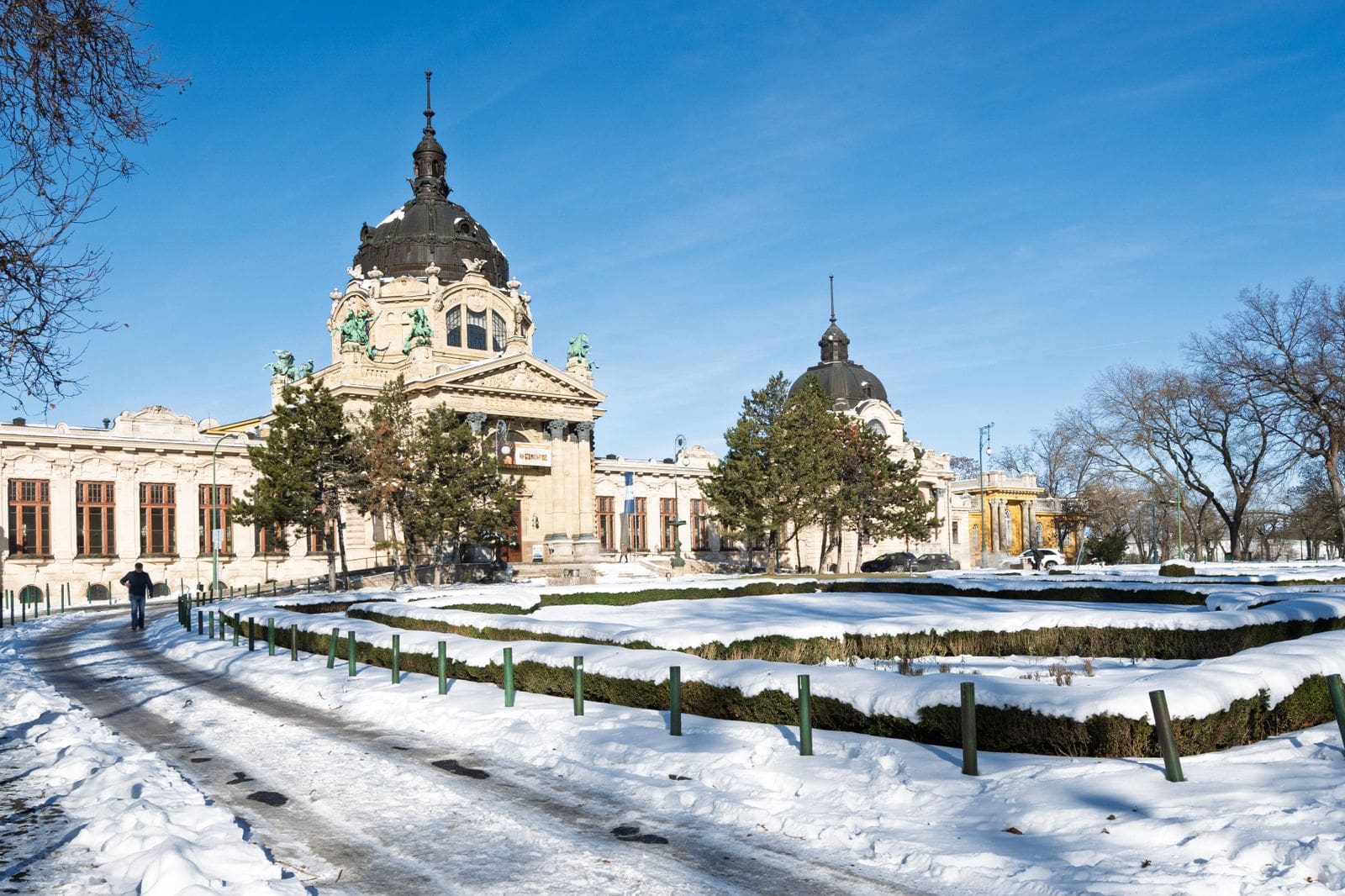
- The flagship: Széchenyi is the largest and most famous bath complex in Europe, with its iconic yellow buildings and outdoor pools where locals play chess.
- Best view: Rudas offers an amazing rooftop hot tub overlooking the Danube, but watch out for gender-segregated days in the historic section.
- Closed icons: The famous Gellért baths and historic Király are completely closed in 2026 due to a huge renovation (Gellért until 2028).
- Where the locals go: Lukács baths are cheaper, less touristy and boast the highest-quality healing water in the city.
- Secret tip: Veli Bej is a beautiful, quiet Turkish bath from the 16th century, cleverly hidden inside a modern hospital complex.
- Bring your own towel: After the pandemic most baths scrapped their rental services, so you must bring your own towel and clean flip-flops are mandatory.
- No children: Since August 2025 a strict government ban prevents children under 14 from entering thermal pools — families should head to the Palatinus lido instead.
- Buying tickets: Always buy tickets to the most popular baths (especially Széchenyi) online in advance to skip the hour-long queues.
The full destination guide: Hungary — guide and what to see
When to visit the thermal baths in Budapest
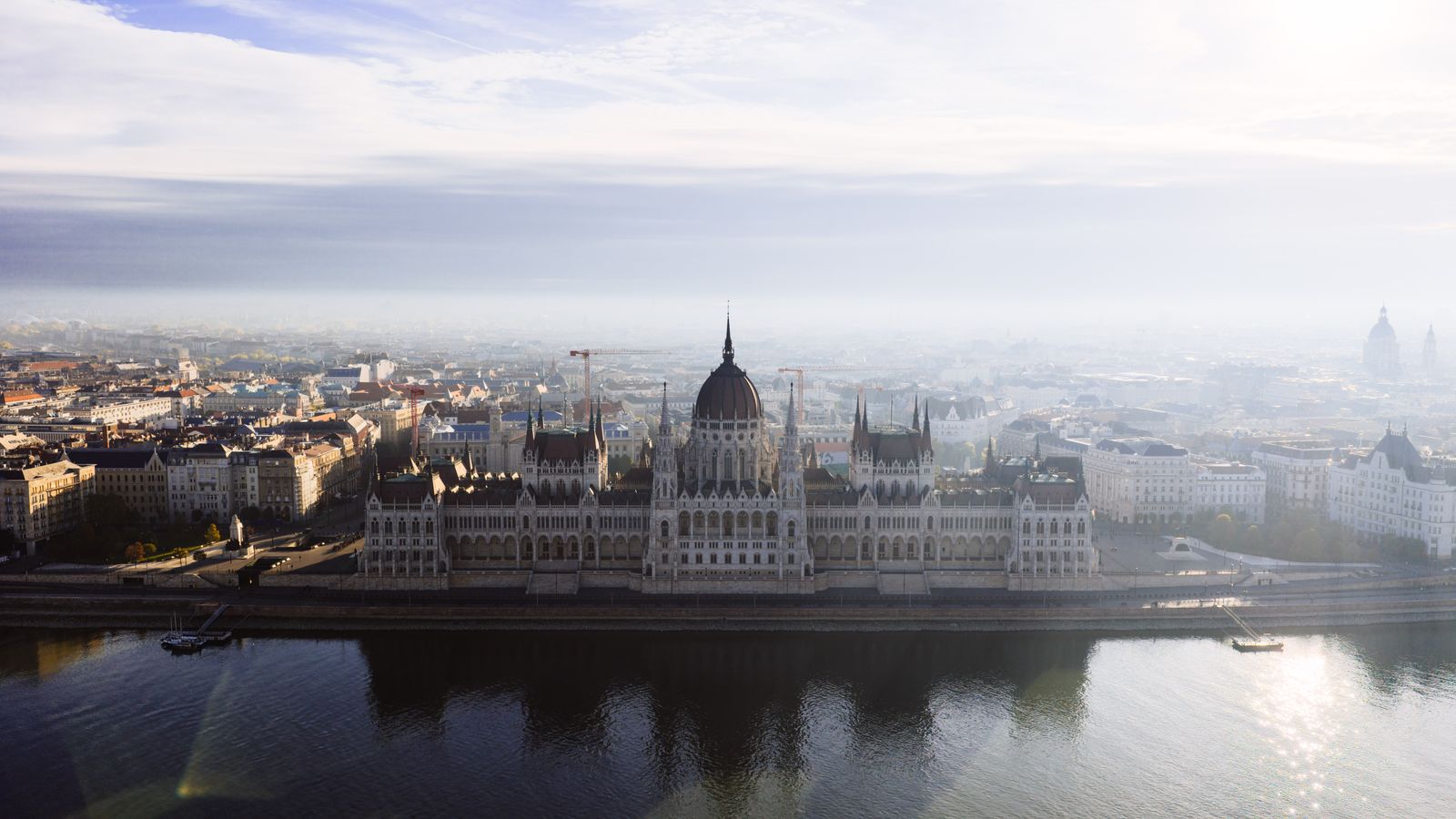
If you ask me about the absolute best time to enjoy the thermal springs, my answer will be crystal clear. It’s most magical in winter or late autumn. There’s nothing better than sinking into an outdoor pool at 38 °C after a whole day of dashing around the frosty city, with snowflakes starting to fall on your head. The contrast between the icy air and the hot water is incredibly refreshing and has an absolutely unforgettable atmosphere — this is exactly why the Budapest thermal baths in winter are so special.
On the other hand, spring and autumn are ideal for those who want to combine sightseeing with a soak in warmer but still bearable weather. The baths also get busy in summer, as both Hungarians and tourists use them as giant swimming pools. Just be prepared: sitting in 40-degree water when it’s 35 in the shade isn’t for everyone, and it can really drain you. So in summer I’d recommend the cooler swimming pools or family lidos instead.
As for specific days of the week, definitely try to avoid weekends and public holidays. Not only are the baths hopelessly packed from Friday to Sunday, but the admission is noticeably more expensive on those days. By the way, prices are adjusted for inflation every January, so factor that in when planning your budget. If you absolutely must go at the weekend, get up early.
The best strategy for a peaceful experience is to arrive right at opening time, which is usually between seven and eight in the morning. Most tourists are only just having breakfast, and you’ll have the most beautiful pools all to yourself. Some complexes even offer discounted early-morning admission. Around noon the baths start filling up, and by afternoon it’s shoulder to shoulder.
Where to stay in Budapest
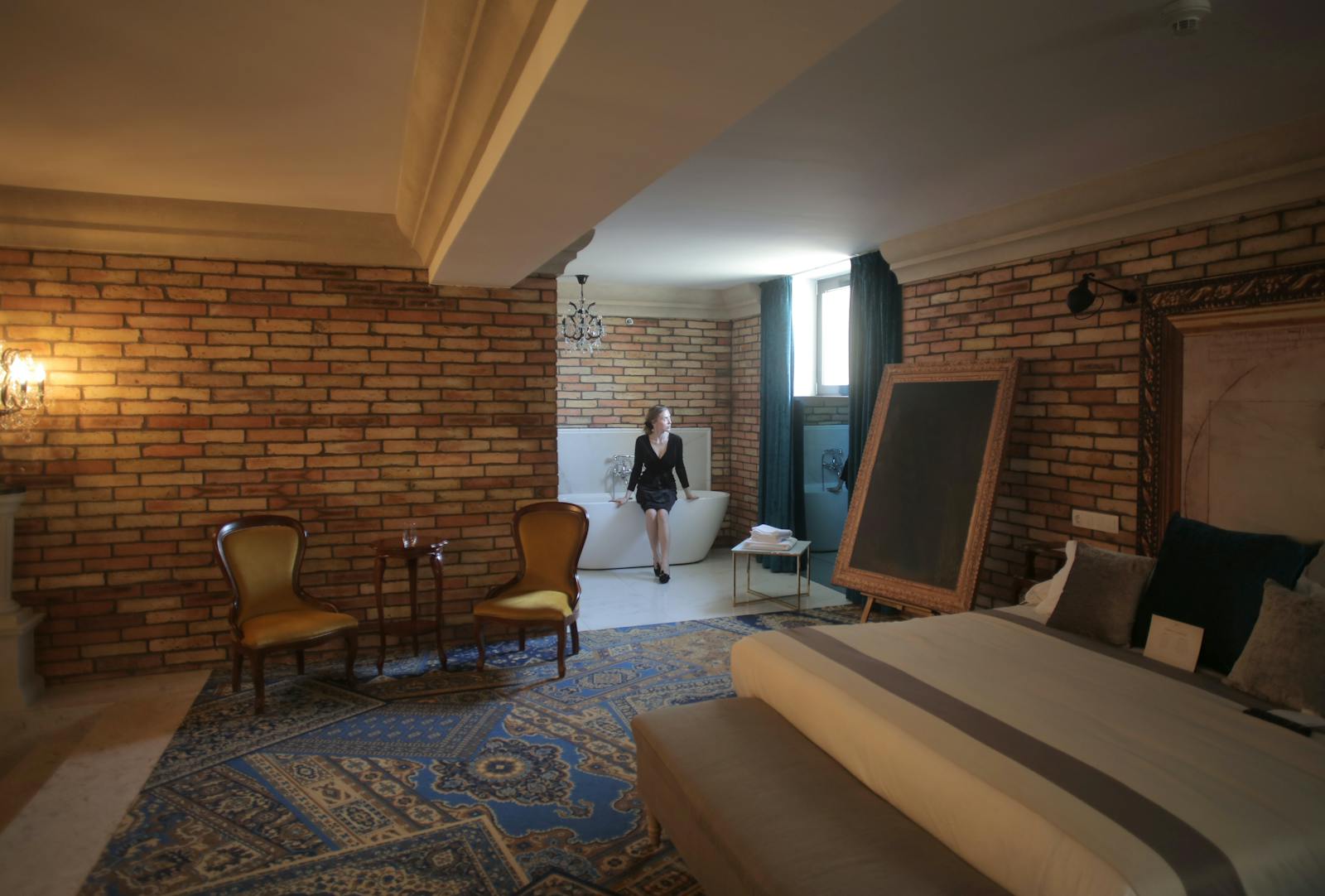
There’s a huge range of accommodation in Budapest, but if your main goal is relaxing in warm water, it pays to stay strategically. The city is split by the river into hilly Buda and flat Pest. If you want to be close to the largest baths, Széchenyi, look for accommodation on the Pest side near Andrássy Avenue or the City Park. From this area you can also easily walk to most of the sights and to some great vegetarian bistros and cafés.
If you’re after pure luxury and want the spa experience right inside your hotel, I highly recommend the gorgeous Corinthia Budapest. This historic hotel has its own incredibly photogenic Royal Spa that looks like something out of a fairytale. That way you don’t have to mix with the crowds of tourists at all, and you can head down to the pool straight from your room in a bathrobe. It’s a pricier option, but for a romantic long weekend it’s definitely worth considering.
For those who want to stay on the Buda side just a few steps from the Ottoman Rudas baths, the Hotel Clark Budapest is a fantastic choice. It sits right by the famous Chain Bridge below Buda Castle, has stunning design and offers breathtaking views. From here it’s just a pleasant stroll across the river to the centre of Pest. We usually book all our stays through our favourite Booking.com, where you can also grab some nice deals.
A third tip, if you’re looking for modern elegance a little further from the biggest tourist buzz, is the Kozmo Hotel Suites & Spa. It’s in a quieter part of the eighth district, offers huge and beautifully furnished rooms, and their approach to guests is absolutely first class. They also have their own luxury wellness area, so if you don’t feel like braving the crowded public baths, you can relax right there.
8 best thermal baths in Budapest: what to see and do
Let’s take a look at some specific tips on where to go for thermal springs in Budapest. I’ve picked out the most famous icons, hidden local gems and places you should currently avoid. You’ll also find out how much everything costs and what the current rules are for 2026.
1. Széchenyi Baths: the yellow icon and the chess players
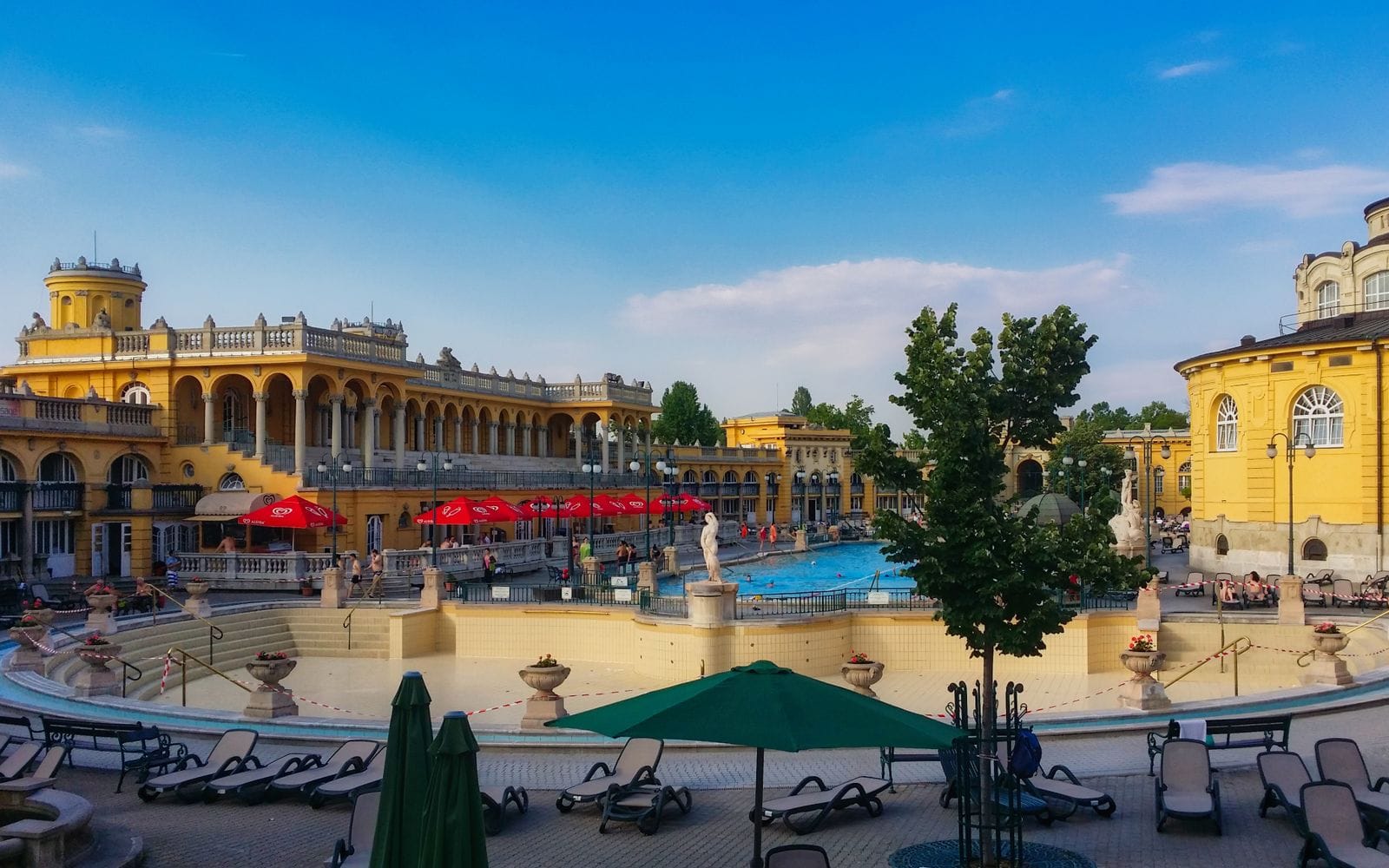
This is an absolute classic — a visit to Budapest simply wouldn’t be complete without it. The brilliant yellow neo-Baroque palace from 1913 sits in the City Park on the Pest side and it’s the largest medicinal bath complex in Europe. Inside and out you’ll find a total of 18 pools with water temperatures ranging from 26 to 40 °C. This is exactly the place from postcards and Instagram, so be prepared: you’ll never have it to yourself.
The biggest draw is the three enormous outdoor pools. The middle one is for swimming (you’ll only be let in with a swim cap), but the two side pools are purely for relaxing and sit at a lovely 37 to 38 °C. It’s here you’ll see that legendary scene of older Hungarian gentlemen standing shoulder-deep in the water, playing chess on floating boards. It’s wonderfully authentic — a tradition that’s been going since the days of the Cold War.
💡 Tip: what’s the deal with lockers and cabins? When buying your ticket you’ll have to choose. A locker is a classic metal cubby where you stash your backpack. A cabin, on the other hand, is a small, private lockable room where you can comfortably change and even fit a small suitcase. If you’re going as a couple, it’s more than enough to take one cabin and one cheaper locker ticket.
As for 2026 prices, budget roughly 13,200 HUF (about €33) for a weekday locker and up to 15,800 HUF (just under €40) for a weekend cabin. I’d definitely recommend buying tickets online in advance — for example through GetYourGuide — so you can show them on your phone and skip those crazy queues at the ticket desks. Just watch out for one thing: from 20 April to 3 June 2026 the middle outdoor swimming pool will be closed for maintenance, though the thermal pools will run as normal.
2. Rudas Baths: Ottoman mystique and a rooftop hot tub
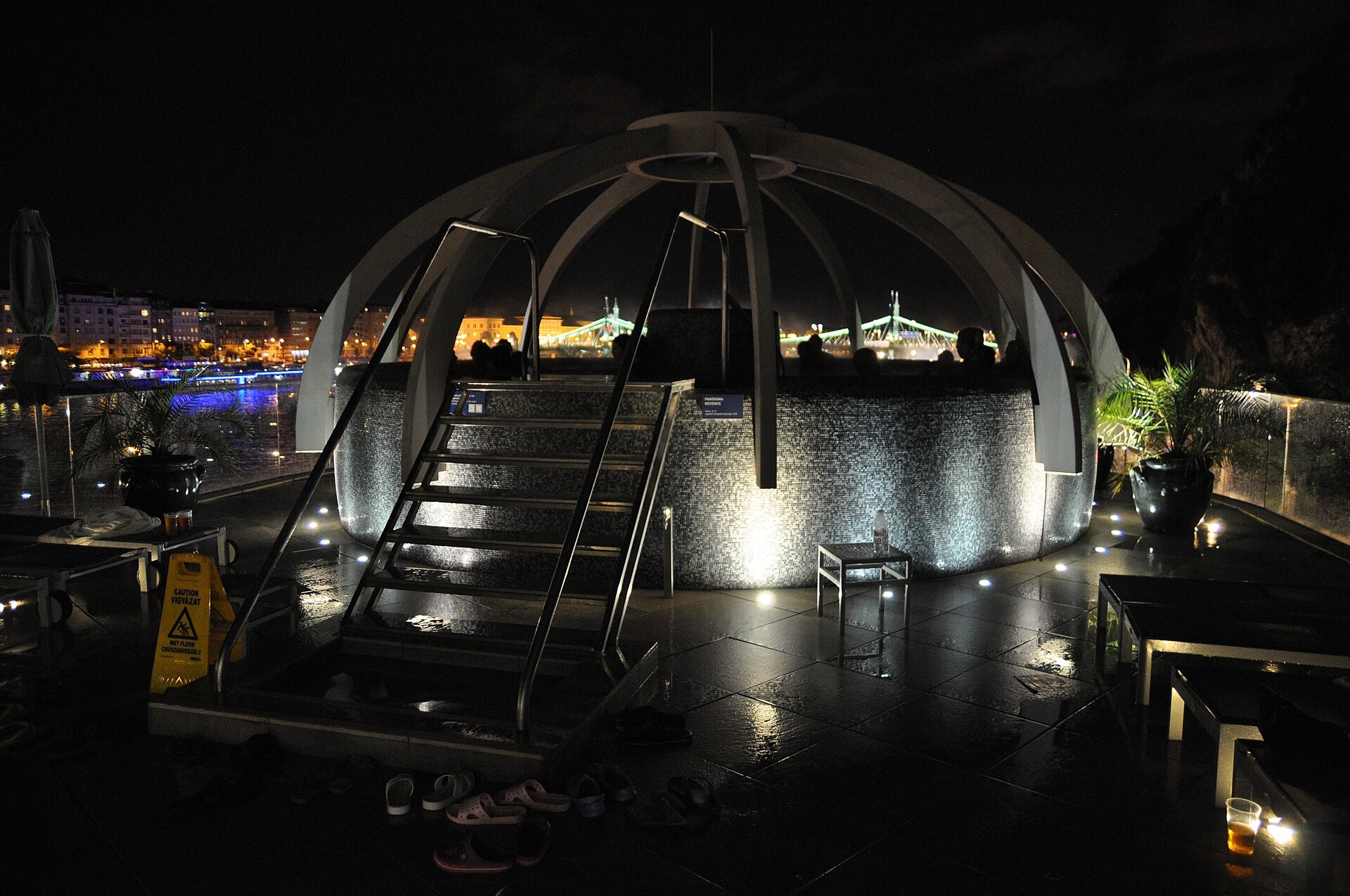
This is probably our favourite complex, offering a completely different atmosphere from the pompous Széchenyi. Rudas sits right beneath the cliffs of Gellért Hill on the Buda embankment, and at its heart are the original Turkish baths from 1550. When you step into the old hammam, you’re enveloped by dim light, thick steam and a beautiful centuries-old stone dome, through whose small coloured glass panels rays of light stream in.
Alongside the historic section, there’s also a modern wellness extension that hides the biggest treasure of all. On the roof there’s a panoramic hot tub at 36 °C, from which you get a breathtaking view straight over the Danube, the bridges and the whole of Pest. When Lukáš and I sank into this rooftop tub at sunset, it was probably the most romantic experience of the entire trip. Admission is around 12,000 HUF on weekdays and 15,000 HUF (about €38) at the weekend.
⚠️ Critical warning for couples: the historic Turkish section follows old rules and has gender-segregated days! On Monday, Wednesday, Thursday and Friday mornings it’s men only, while on Tuesday it’s women only. If you head there with your partner on those days, you won’t be let into the old hammam together. For mixed (coeducational) bathing you’ll need to come at the weekend, when men and women can bathe everywhere together.
3. Gellért and Király Baths: the harsh reality of 2026
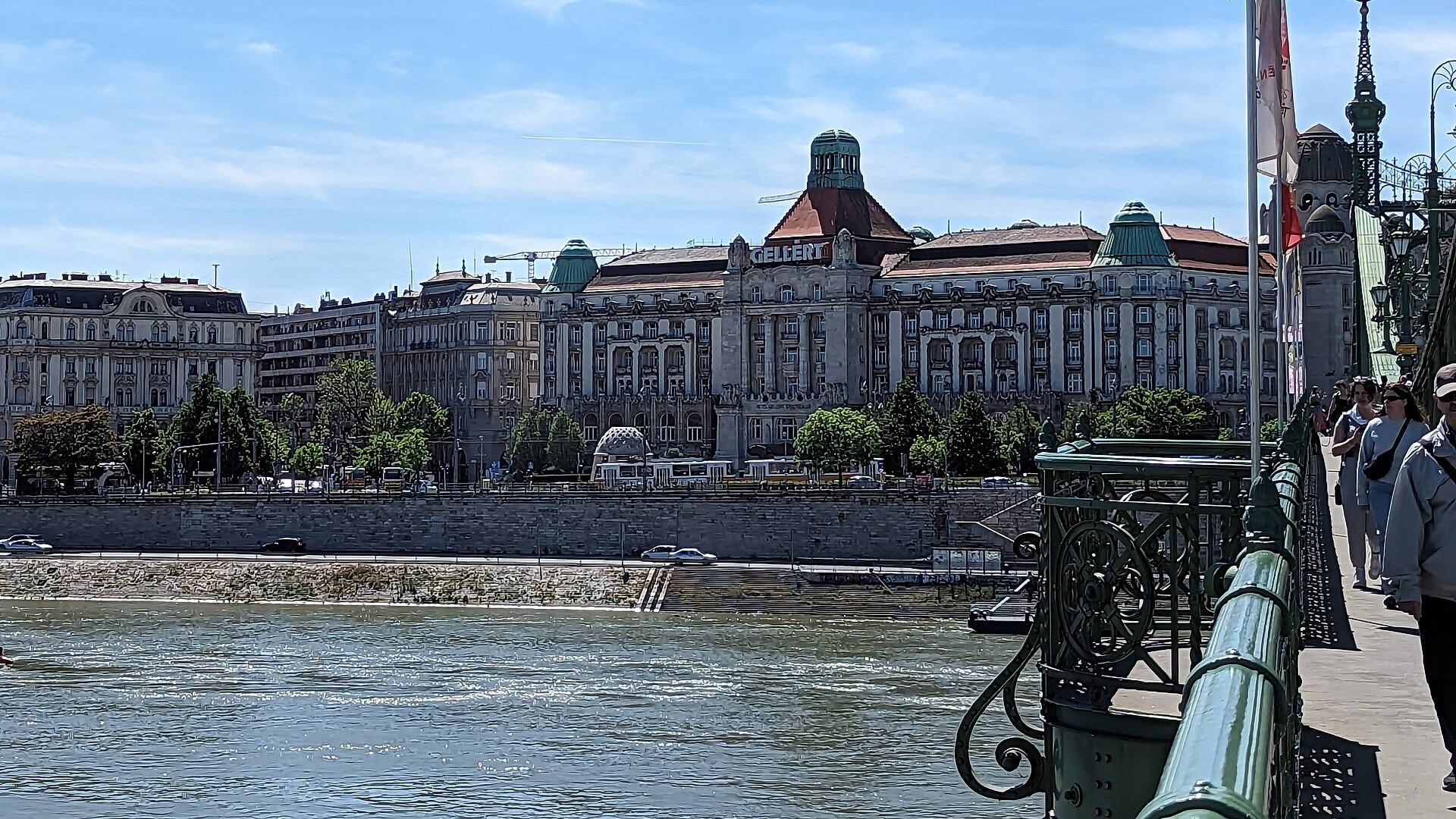
This is the section that probably won’t cheer you up, but it’s absolutely essential for your planning. If you were looking forward to the famous Art Nouveau Gellért baths with their iconic turquoise mosaics and glass roof, I have to disappoint you. The Gellért baths closed completely on 1 October 2025 and face a massive, multi-year renovation costing a fortune — after half a century without any major repairs, the building had simply had its day.
The reopening of this beautiful palace is planned for 2028 at the earliest. In 2026 you simply won’t get into the pools — at most you can walk around and admire the beautiful hotel façade from the outside. So don’t get caught out by old guidebooks or internet articles that still recommend it as a highlight of your itinerary.
The exact same fate is currently shared by the small historic Király baths, which have been closed long-term for restoration. So if you’re looking for a Turkish alternative, head instead to the Rudas baths mentioned above, or the hidden gem Veli Bej, which I’ll tell you about shortly. That way you’ll spare yourself the pointless disappointment of standing in front of locked doors.
4. Lukács Baths: where the real locals bathe
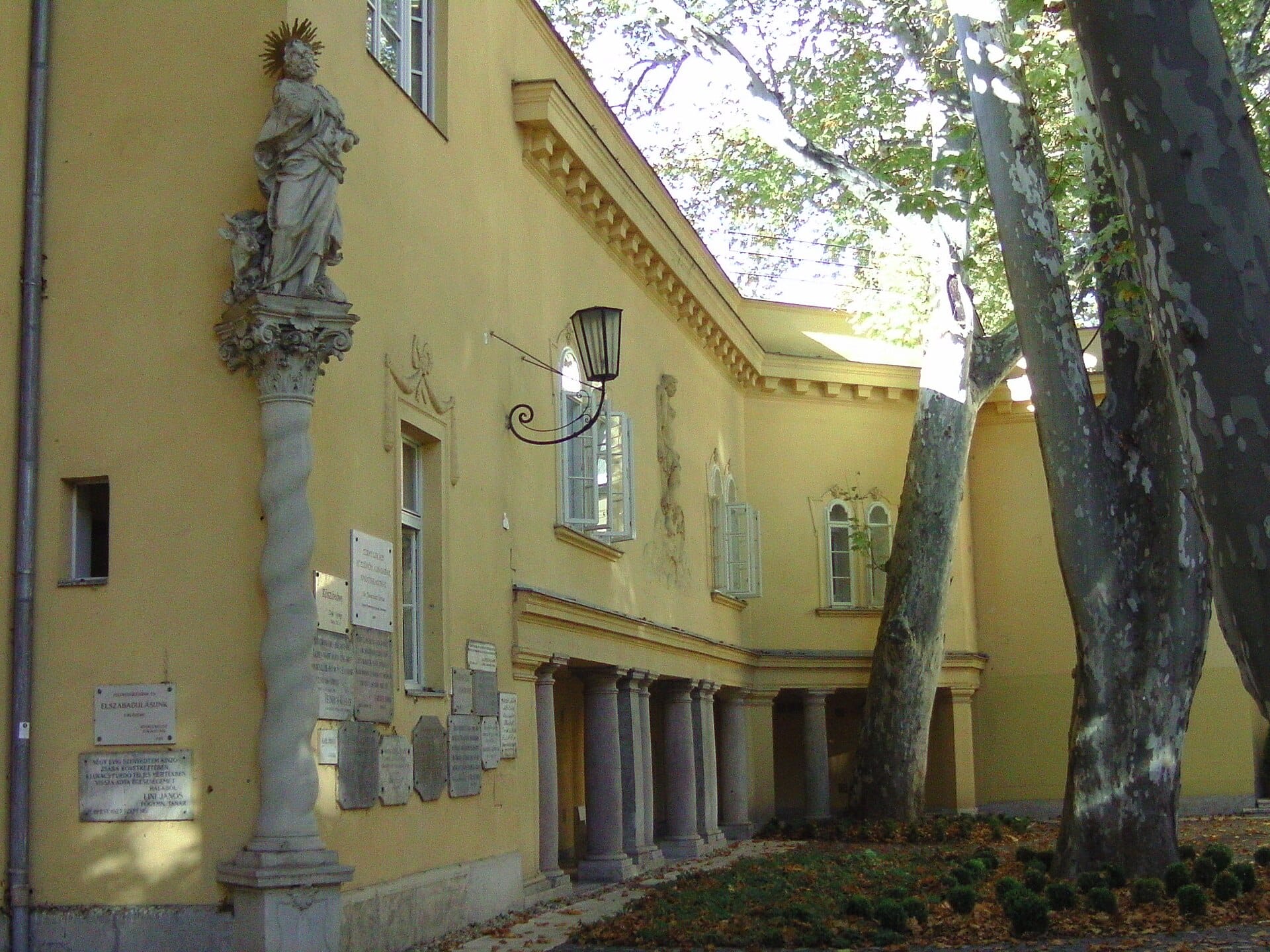
While Széchenyi is bursting at the seams under a barrage of tourists with phones in hand, the people of Budapest have been coming to the Lukács baths in the second district of Buda for generations. This complex doesn’t look quite so polished and sometimes feels like a little labyrinth, but it has a totally unmistakable, calm and authentic atmosphere. Most of the time you’ll hear only Hungarian and experience the genuine bathing routine.
The main draw here is the water. The springs beneath the Lukács baths are renowned for their exceptionally strong healing effects on the musculoskeletal system, and the water quality is considered the absolute best in the city. Another huge advantage is the price, since Lukács is one of the cheapest of the large historic baths. A weekday locker will set you back roughly 7,000 HUF (about €18), which is a huge difference compared to Széchenyi.
💡 Tip on restrictions: they’re open daily from 7:00 to 19:00, and on Tuesdays right up to ten in the evening. Just watch out if you’re going in spring 2026. From 18 May the men’s changing room will be renovated and the experience pool will be closed for a few days. Otherwise, though, it’s a perfect hideaway from the crowds.

5. Veli Bej Baths: a hidden Turkish gem without the crowds
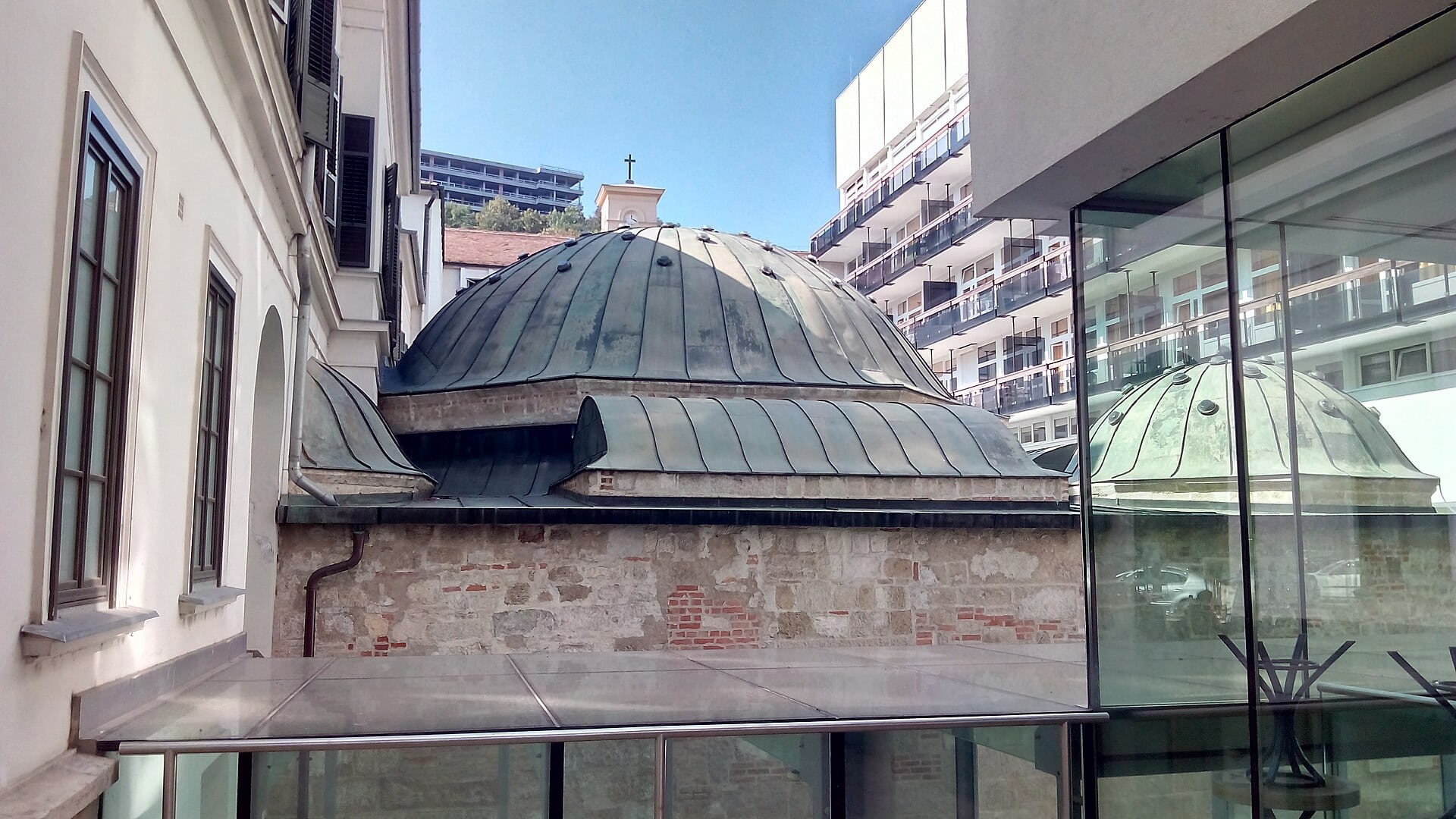
If you really can’t stand overcrowded places and are after complete peace and quiet, you have to head to the Irgalmasok Veli Bej baths. These baths from the 16th century are cleverly tucked away inside a modern hospital complex, so most ordinary tourists have no idea they even exist. It’s a small but beautifully restored space.
Their biggest advantage, besides the utter zen and silence, is the fact that they’re fully coeducational every day of the week. So you don’t have to fuss over separate days for men and women like at the nearby Rudas baths — you can simply come here with your partner any time. Admission is very friendly, hovering around 5,700 to 7,200 HUF (roughly €14–18) for a pleasant three-hour block.
They do have fairly specific opening hours, though. They’re always closed between noon and three in the afternoon, presumably for cleaning and to fit the hospital routine. On Monday and Tuesday they only open in the afternoon from 15:00 to 21:00, while for the rest of the week you can also come in the morning from six to twelve. It’s definitely worth the bit of extra planning.
6. SPArty: nighttime wildness in a hot pool

This is definitely not a tip for lovers of silence and healing treatments. The SPArty (Spa Party) concept is a huge nighttime event held every Saturday from February to December in the outdoor pools of the Széchenyi baths. From half past nine in the evening until two in the morning, the pools transform into one of the wildest clubs in Europe, with loud EDM, laser lights and foam cannons.
It’s a massive draw for young people and stag and hen parties from all over the world. Entry is strictly 18+ and security rigorously checks passports or ID cards. It’s not cheap fun either, though: a basic ticket with a locker will cost you a hefty €65, and premium packages with drinks can easily climb over €120.
⚠️ Warning about payment: the biggest controversy around these parties is the SpartyPay system. Inside, you can’t buy drinks with a card or with cash. You have to top up a special wristband — which involves queuing — the drinks are expensive, and according to reviews any unspent balance is rather complicated to get refunded. If you’re after relaxation, give this place a very wide berth on a Saturday night.
7. Beer Spa: a hop bath for two
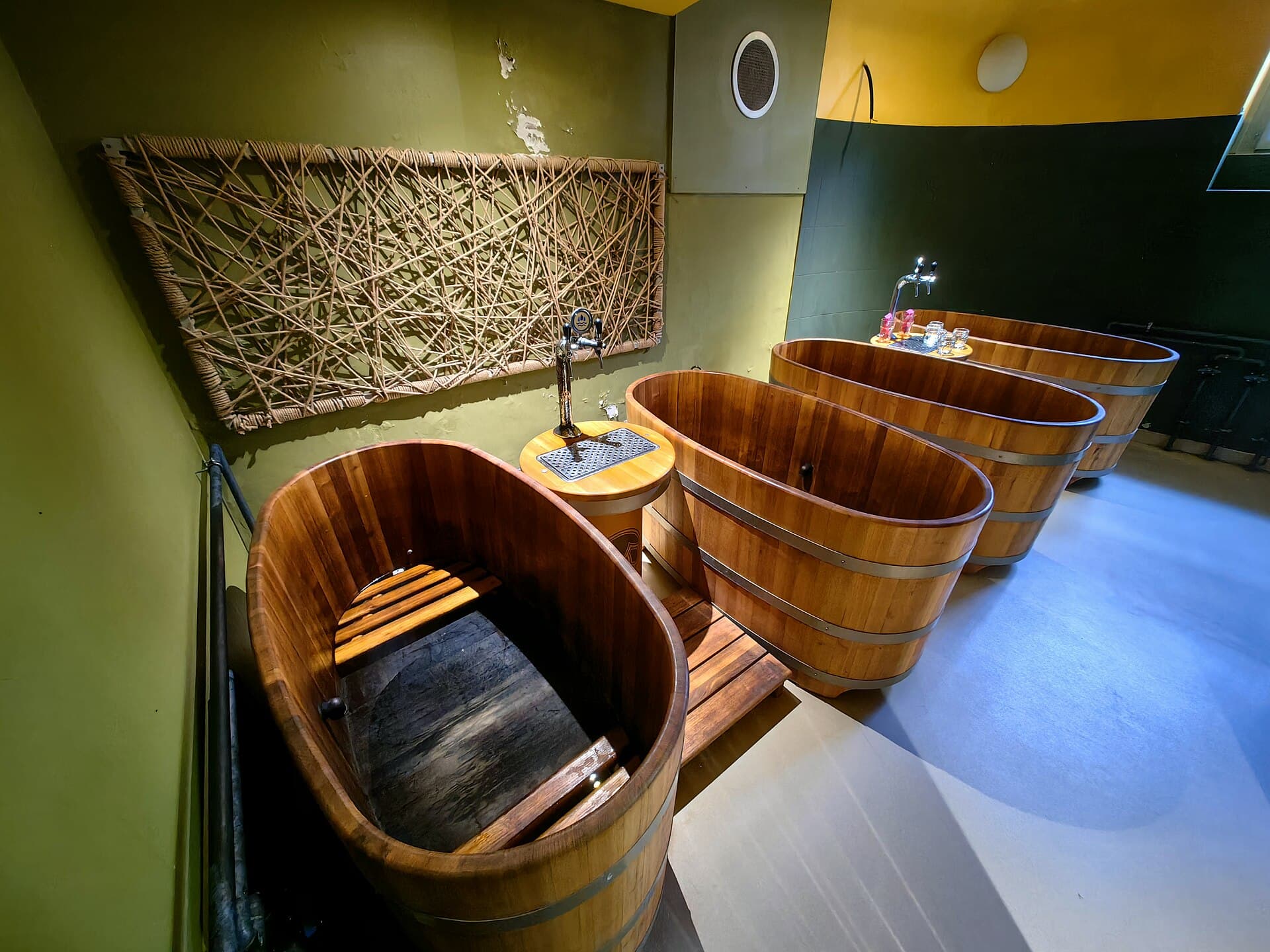
This is a great experiential attraction you’ll find built right into the Széchenyi and Lukács complexes. You book a large wooden tub for two, which they fill with 36 °C thermal water and the staff mix in natural beer ingredients — malt, hops and brewer’s yeast. It’s said to work wonders for your skin and to relax your muscles beautifully.
The best detail? From a tap fixed right to the side of your tub, you can pour yourself unlimited lager for the full 45 minutes. Lukáš and I aren’t big beer drinkers, but for a group of friends or as a funny gift for your partner after a whole day of walking around the city, it’s absolutely ideal.
Price-wise it works out at roughly €69 for the basic treatment at Széchenyi. You can also buy a great-value package combining the beer spa and fast-track entry (Fast Track) with a cabin for the whole Széchenyi complex, which comes to around €111. At the Lukács baths it’s a bit cheaper. It’s not exactly a serious medical treatment, but it guarantees loads of fun.
8. Palatinus Baths and the government ban for children
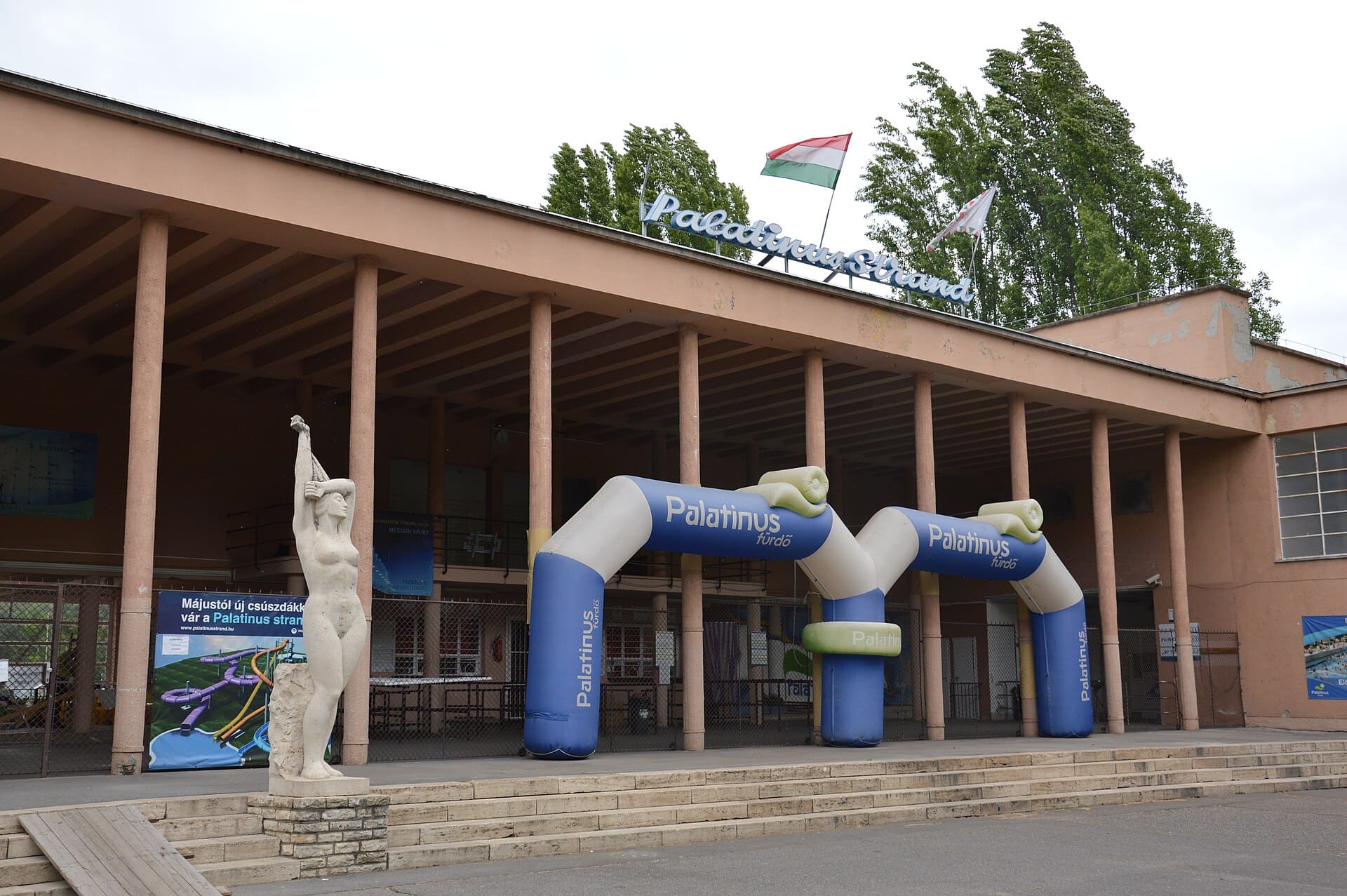
This last tip is extremely important for all parents. Since 1 August 2025, a government regulation has been in force in Hungary under which children under 14 are strictly banned from entering medicinal and thermal pools. The reason is the excessively high temperature and strong mineral composition, which doctors say could negatively affect a child’s cardiovascular and hormonal system.
Famous complexes such as Széchenyi, Rudas and Veli Bej strictly enforce this blanket ban and simply won’t let children in (the only exception is a medical prescription). Does this mean a family holiday in Budapest is off the table? Not at all — you just need to change your destination and head to the Palatinus complex on Margaret Island.
The Palatinus lido works more like a modern water park surrounded by greenery. Here you’ll find safe pools with milder temperatures, slides, a wave pool and plenty of attractions to keep children entertained all day. Another family-friendly alternative is the smaller Dandár baths. Always carefully check the current age limits on their official websites before you set off, though.
Practical manual: etiquette, towels and lockers
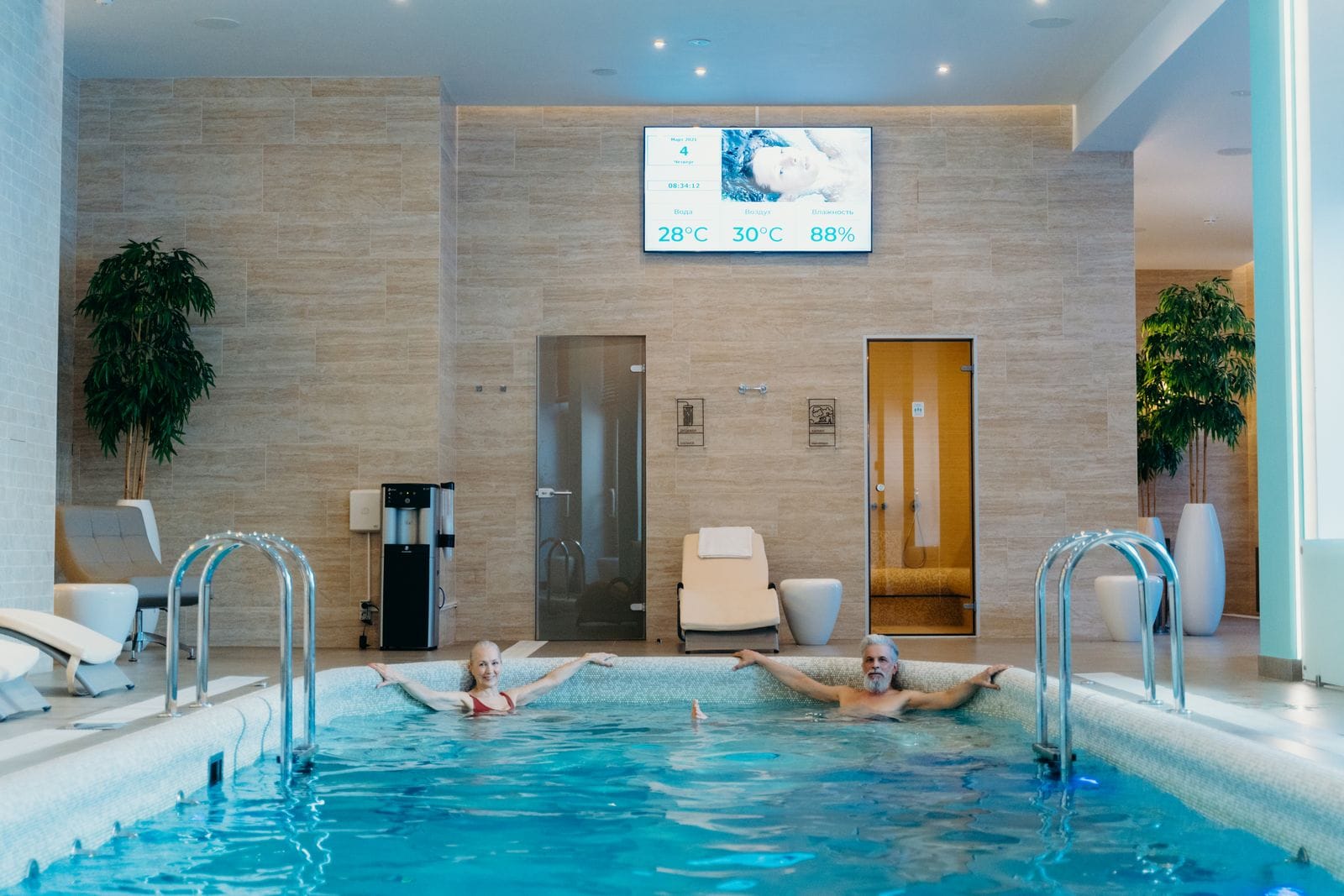
A visit to the Budapest baths comes with its own specific rules and rituals. To stop you fumbling at the turnstiles and to avoid any nasty surprises, I’ve put together a short practical checklist. One of the biggest changes compared to previous years is the towel policy. After the pandemic, most baths scrapped their rental services altogether for hygiene and capacity reasons.
Unless you buy some overpriced VIP package, you absolutely must bring your own towel from your hotel. Likewise, clean flip-flops or rubber sandals are mandatory practically everywhere (definitely at Rudas and Lukács). The floors around the pools are incredibly slippery, and for hygiene reasons security may even tell you off if you’re without them. Swimwear is of course required everywhere; nudity is only tolerated in a few separate hotel saunas.
💡 Tip on getting your bearings: at the ticket desk you’ll get a silicone wristband with a chip. Keep it on your wrist, even in the water. It’s used to beep at the turnstile and works as the key to your locker. You only need a swim cap if you want to do some proper laps in the cooler swimming pools; in all the other relaxing hot tubs it’s not needed. Showering before entering the water is absolutely compulsory, and don’t forget that in the saunas and rest areas you speak quietly.
Where to go next from Budapest
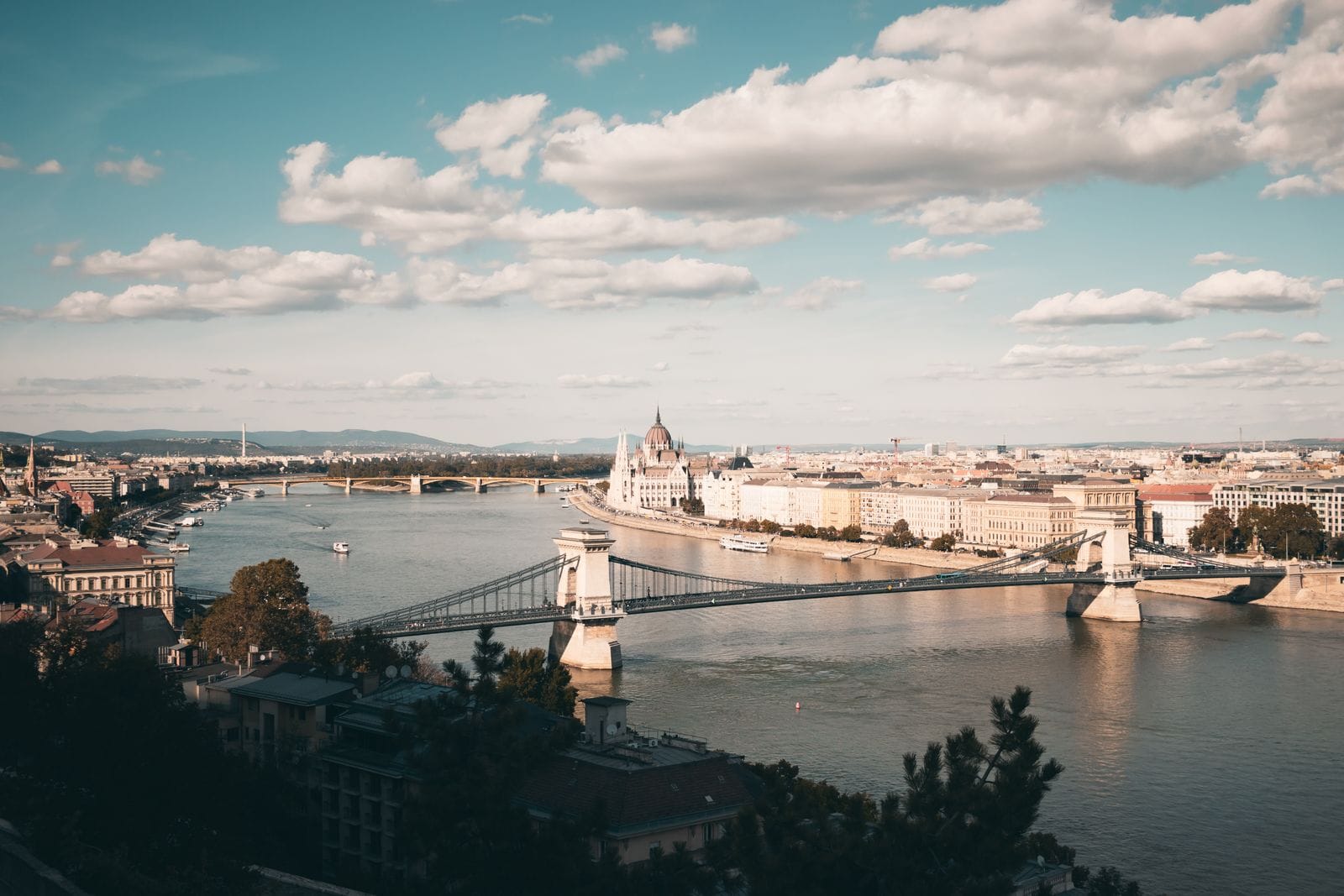
Budapest offers so much more than just hot water. Once you’ve relaxed enough, be sure to head out and explore the lanes, cafés and sights. We’ve written an extensive article full of inspiration for you: check out 66 tips on what to see in Budapest, where you’ll find a detailed itinerary and our favourite routes through the city, including the amazing views from the Fisherman’s Bastion or some great vegetarian bistros we love returning to.
If you’re heading to Hungary in winter for some snowy romance, you can’t miss the festive cheer. Read our article about what the Christmas markets in Budapest are like. They’re considered some of the most beautiful in Europe — the square in front of St Stephen’s Basilica smells of cinnamon and the atmosphere is simply magical. It’s the perfect evening plan after you’ve climbed out of the baths.
And if the spa culture has captivated you so much that you’d like to explore springs beyond the capital, we have more tips for you. Hungary is dotted with thermal springs from north to south. So we’ve put together an overview of thermal baths across the whole of Hungary, where you’ll find tips on the cave baths in Miskolctapolca or the legendary thermal lake in Hévíz.
Where to go next for water
Frequently asked questions
Are spas suitable for pregnant women?
Doctors generally do not recommend pregnant women stay in hot thermal water (above 36 °C), as it can lead to overheating of the body. It’s better to consult with your doctor and possibly use only cooler swimming pools.
Can you pay by card at the spa?
“`html
Yes, at the cash registers and in most indoor snack bars you can easily pay with a regular payment card. The exception is the night SPArties, where a special rechargeable wristband system is used.
“`
Do I need to know Hungarian to get by?
Not at all. In all the major baths like Széchenyi, Rudas or Lukács, staff commonly speak English. Information signs and price lists are always written in both Hungarian and English.
Can you drink water directly from springs?
“`html
You definitely shouldn’t drink from the pools, but in some baths (for example in Lukács or Széchenyi) you’ll find special drinking fountains with healing mineral water. It has a specific taste, often quite sulfurous, and is drunk in small sips for digestion.
“`
Can I take photos with my phone inside the pools?
In large outdoor pools (e.g. at Széchenyi) taking photos is completely normal and tolerated. However, inside the quiet Turkish baths, changing rooms and saunas, it’s best to put your phone away, out of consideration for others.
What’s the dress code for the spa?
“`html
Absolutely standard. Classic swimwear (both women’s and men’s) and clean rubber slippers are mandatory. Beach shorts with pockets are sometimes frowned upon by lifeguards, but classic fitted swimwear or bikinis are perfectly fine.
“`
Can I go to the spa when it’s raining?
Absolutely! Bathing in hot water during rain or snow is one of the best experiences. Plus, all the large complexes have a huge number of indoor covered pools, so you can take shelter anytime.
Tips and Tricks for Your Vacation
Don’t Overpay for Flights
Search for flights on Kayak. It’s our favorite search engine because it scans the websites of all airlines and always finds the cheapest connection.
Book Your Accommodation Smartly
The best experiences we’ve had when looking for accommodation (from Alaska to Morocco) are with Booking.com, where hotels, apartments, and entire houses are usually the cheapest and most widely available.
 🚗 Car rental on the roadVerified rental cars in Hungary
Search with the DiscoverCars comparison engine — it compares prices from dozens of local and international rental companies, and most bookings come with free cancellation.
Compare car prices in Hungary →Don’t Forget Travel Insurance
Good travel insurance will protect you against illness, accidents, theft, or flight cancellations. We’ve had a few hospital visits abroad, so we know how important it is to have proper insurance arranged.
Where we insure ourselves: SafetyWing (best for everyone) and TrueTraveller (for extra-long trips).
Why don’t we recommend any Czech insurance company? Because they have too many restrictions. They set limits on the number of days abroad, travel insurance via a credit card often requires you to pay medical expenses only with that card, and they frequently limit the number of returns to the Czech Republic.
Find the Best Experiences
Get Your Guide is a huge online marketplace where you can book guided walks, trips, skip-the-line tickets, tours, and much more. We always find some extra fun there!


