While most historic towns grew up rather haphazardly over the centuries, this East Bohemian city of Hradec Králové did something unusual at the start of the twentieth century: it commissioned its brand-new face from the very best urban planners and visionaries of the era.
Brick Gothic rubs shoulders quite naturally with clean functionalism here, broad boulevards flow seamlessly into sprawling parks, and the ever-present greenery around the confluence of the Elbe and Orlice rivers invites you out for long afternoon walks and sports.
Together we’ll walk through the fifteen best places to see in Hradec Králové, and you’ll discover why it’s nicknamed the “Salon of the Republic”. I’ll throw in tips for fans of good coffee, history, and easygoing flat-terrain cycling, too.
TL;DR: what to see in Hradec Králové
- Great Square: the very heart of the historic centre, lined with beautiful houses and arcades full of cafés
- White Tower: a nearly 72-metre-tall Renaissance landmark built of Hořice sandstone, with a stunning view over the whole city
- Cathedral of the Holy Spirit: an imposing red-brick Gothic structure founded by Queen Elizabeth Richeza
- Architecture of the Salon of the Republic: a unique urban concept by architects Jan Kotěra and Josef Gočár that gave the city its modern face
- Confluence of the Elbe and Orlice: a peaceful relaxation zone with the nearby Jirásek Gardens, where you’ll even find a picturesque little wooden church
- Hradec forests: a vast natural area on the edge of the city, criss-crossed by tens of kilometres of paved trails for cyclists and skaters
The full destination guide: Czechia — guide and what to see
When to visit Hradec Králové
Hradec is lovely all year round, really — each season just suits it in its own way. It’s a lively university town, so there’s always something going on. Spring and summer are ideal for anyone who wants to spend time outdoors: the city turns beautifully green, café terraces come alive, and the parks fill up with students and families. It’s also the best time to hop on a bike and head out to explore the surrounding countryside, or to cool off at one of the local swimming spots.
If you prefer a quieter exploration of architecture and history, the autumn months won’t disappoint. The brick buildings and functionalist structures take on a special, melancholy charm in the soft autumn light surrounded by coloured leaves, which any photography lover will appreciate. Winters here are usually fairly calm, but in December the historic centre lights up with Christmas markets and you can wander the snowy lanes with a cup of hot punch in hand. The city doesn’t sit in any harsh mountain region either, so you can reach it easily by train and arrive without weather worries. From the UK, the simplest route is to fly into Prague (with the likes of British Airways, easyJet or Ryanair) and then take a direct train, which gets you to Hradec in roughly an hour and a half.
Where to stay in Hradec Králové
Choosing accommodation in Hradec is easy, because plenty of lovely hotels sit right in the centre or just a few steps from it. The city is compact and you can walk everywhere, but staying close to the sights always comes in handy — especially when you want to head out for a nice dinner in the evening or stroll along the illuminated riverside.
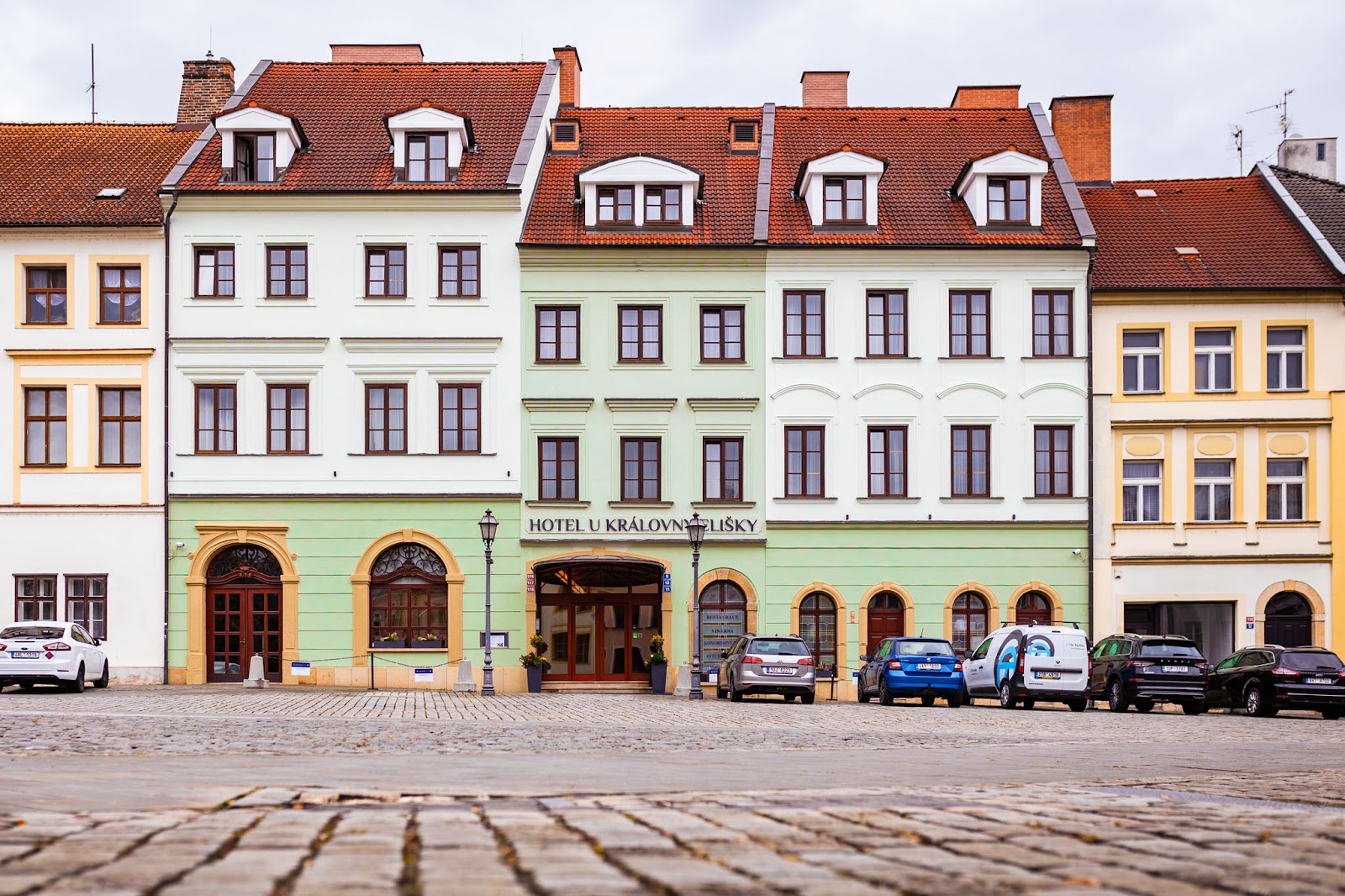
If you’re after something special and you love a sense of history, seasoned travellers recommend Hotel U Královny Elišky Hradec Králové, set in beautifully restored original townhouses right in the historic core and offering pleasant wellness facilities too. An equally charming option right on the Great Square is Nové Adalbertinum Hradec Králové, a former monastery where peace and history greet you while all the cafés are literally just metres away.
For lovers of modern design there’s EA Hotel Tereziánský dvůr Hradec Králové, right next to the historic centre, with elegant rooms and its own wellness area where you can recover after a full day on your feet. Among the tried-and-tested classics are the Grandhotel Hradec Králové with its traditional charm, and the Hotel Černigov Hradec Králové right opposite the main railway station — handy above all when you arrive by public transport and don’t fancy hauling your suitcases far.
15 best things to see and do in Hradec Králové
There are fifteen main highlights, and you can comfortably cover them all on foot in one packed day. Just be warned: once you add a few trips into the surrounding area, you’ll suddenly realise a whole weekend would come in handy. Whether you’re into medieval history, First-Republic functionalism, or simply some quiet time by the water, you’ll find something here.
1. The Great Square
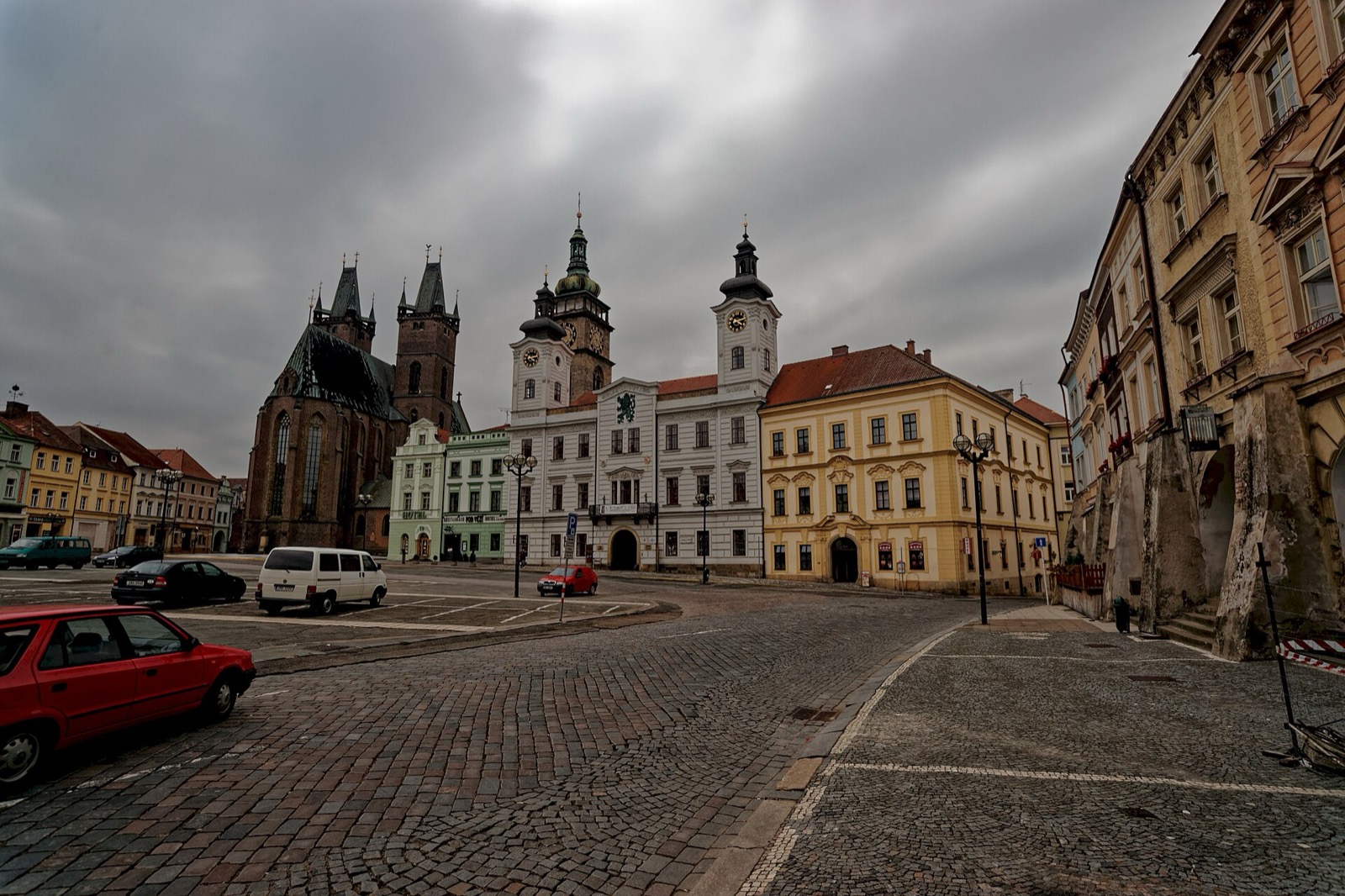
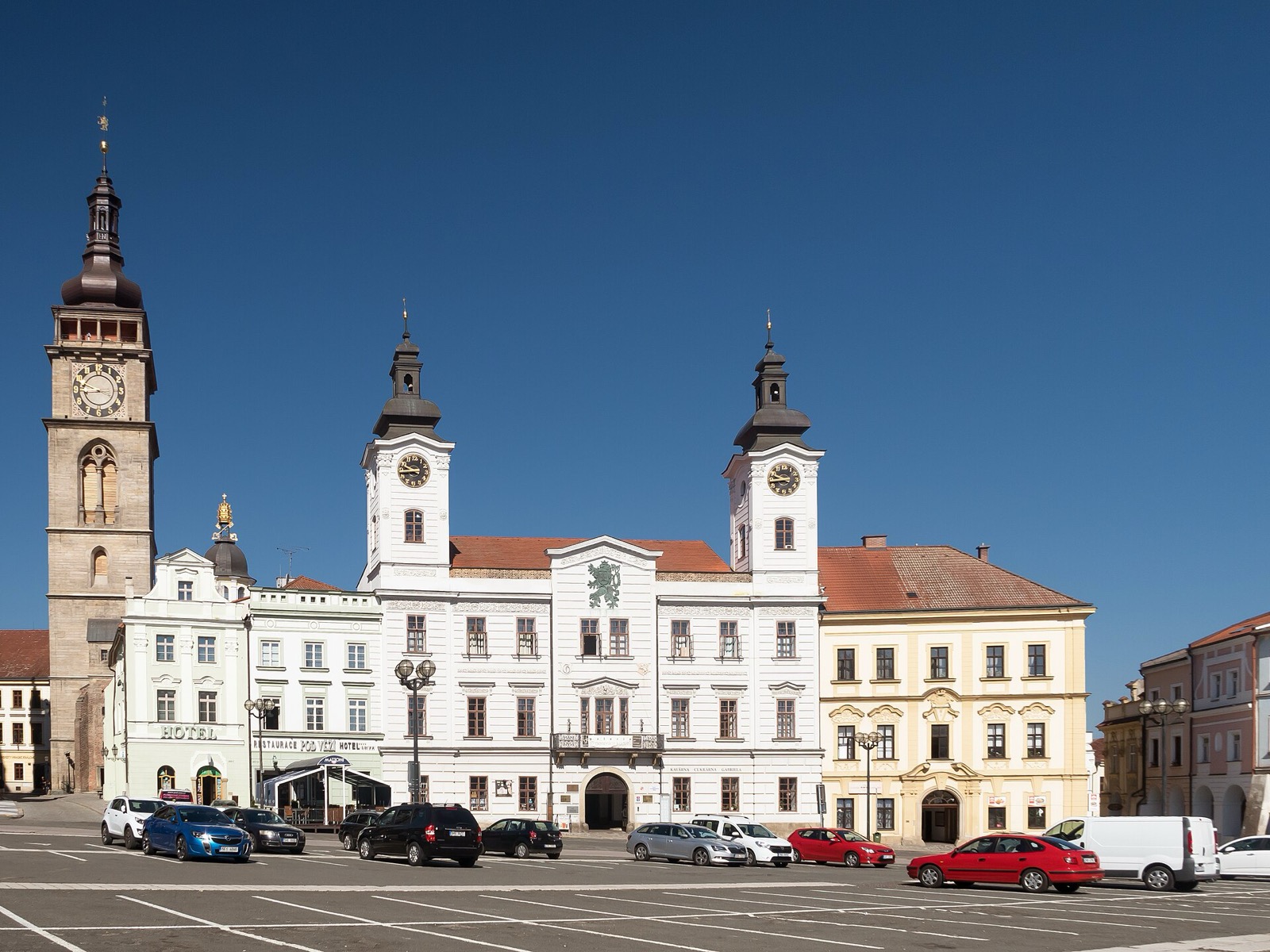
Your steps will most likely head straight for the Great Square, which forms the historic core of the city and is lined with beautiful Renaissance and Baroque houses. Most of them boast picturesque arcades that today hide cosy cafés, restaurants and small shops, so you can wander around discovering interesting details on the façades. In the middle of the square stands the proud Marian plague column from 1717, and you’ll find several of the city’s main landmarks clustered together here.
It’s worth knowing that for many years part of the square served as a large car park, and various improvements to the space are currently underway or planned — so on paper it might not sound like the most idyllic spot under the sun. Even so, it retains enormous charm and rightly ranks among the most picturesque urban spaces in the country, especially at dusk when the street lamps flicker on and the historic buildings take on a warm glow.
2. The White Tower
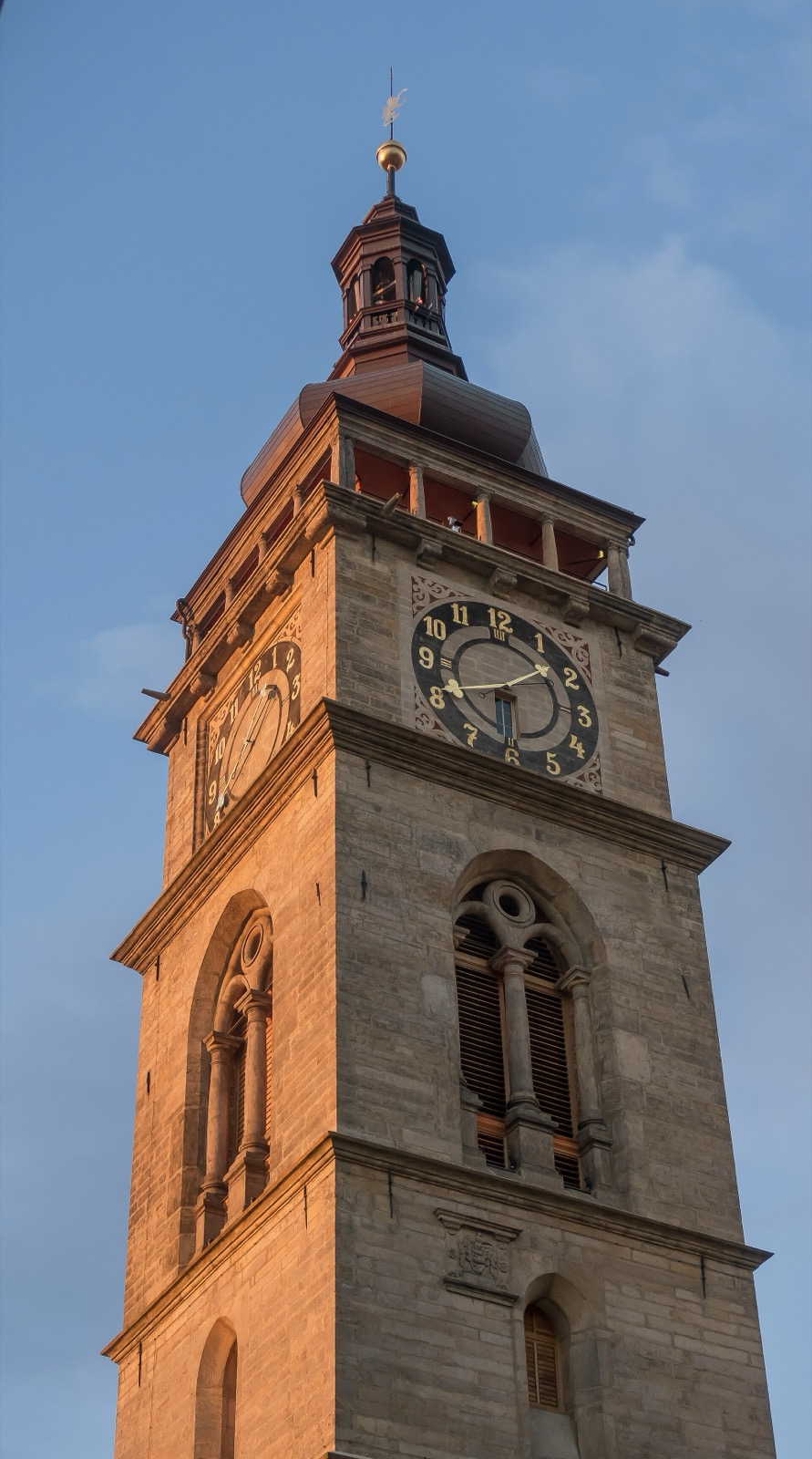
Right on the square, the White Tower is sure to catch your eye — an unmissable Renaissance landmark of the entire Old Town that rises to a respectable height of 72 metres. It takes its name from the pale Hořice sandstone it was built from between 1574 and 1589, and its bright silhouette is visible from afar. If you don’t mind a bit of physical effort, definitely make your way up to the viewing gallery, reached by exactly 226 steps.
The climb pays off, because you’re rewarded with a gorgeous view over the red roofs of the historic centre, the river confluence and the wider surroundings — and on a clear day they say you can see all the way to distant mountain peaks. Inside the tower hangs the Augustin bell, cast back in 1509 and weighing around ten tonnes, which makes it one of the three largest historic bells in the entire Czech Republic — a remarkable technical and historical detail.
3. Cathedral of the Holy Spirit
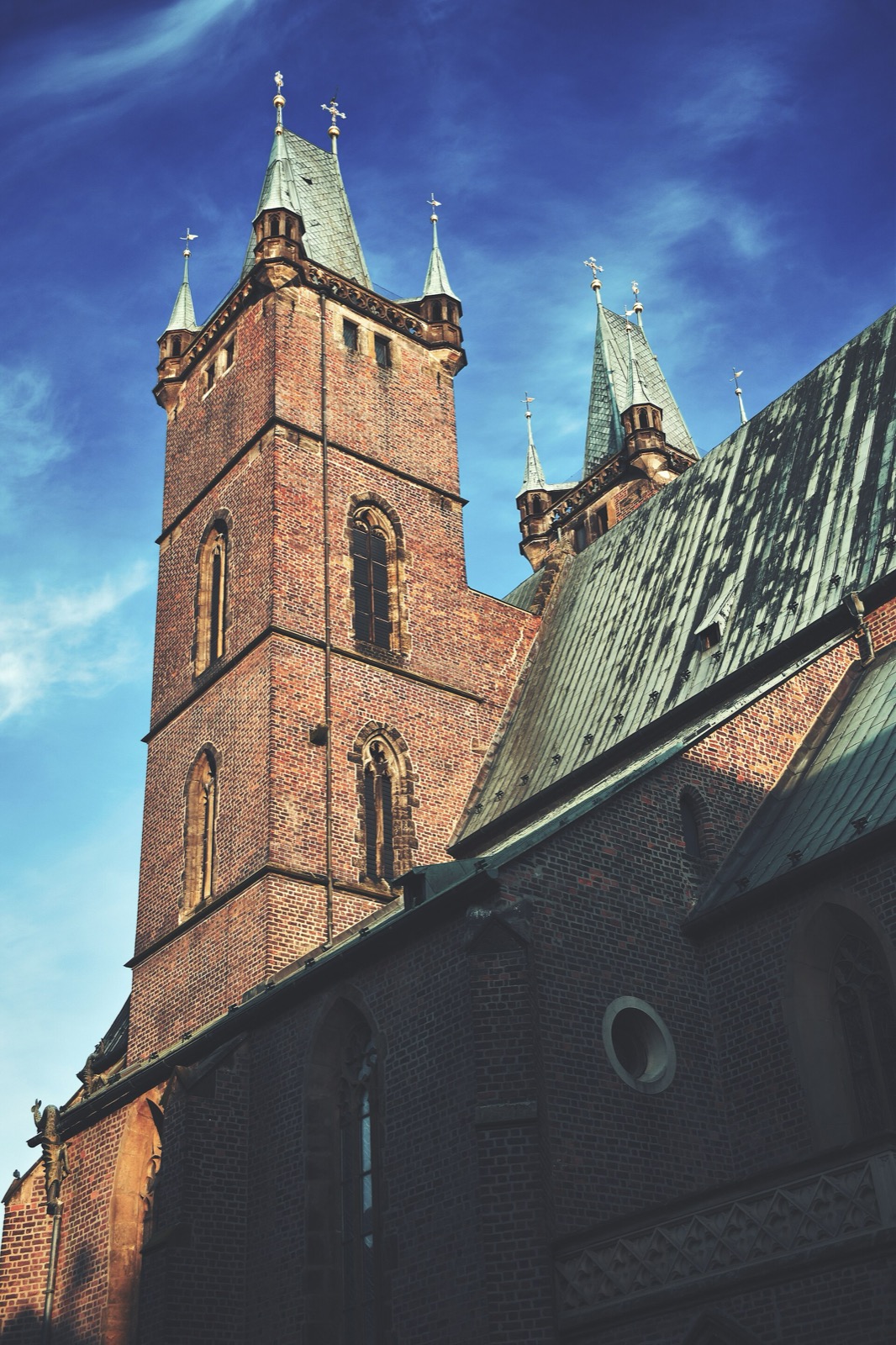
Right next to the White Tower stands the majestic Cathedral of the Holy Spirit, which creates an interesting visual contrast as it’s built of typical red, unplastered brick. This striking brick Gothic gives the building a very distinctive look that you might associate more with Polish or German cities than with typical Czech architecture. The cathedral was founded around 1307 by Queen Elizabeth Richeza, and its two towers are a firm part of the city’s unmistakable skyline.
Be sure to step inside — not only for the vaulting and stained glass, but also because it houses a rare tin baptismal font from 1406, considered the oldest of its kind in the country. The church was elevated to the status of a full cathedral in 1664, when a bishopric was established in the city, and ever since it has served as the main spiritual centre of the whole region.
4. Museum of East Bohemia
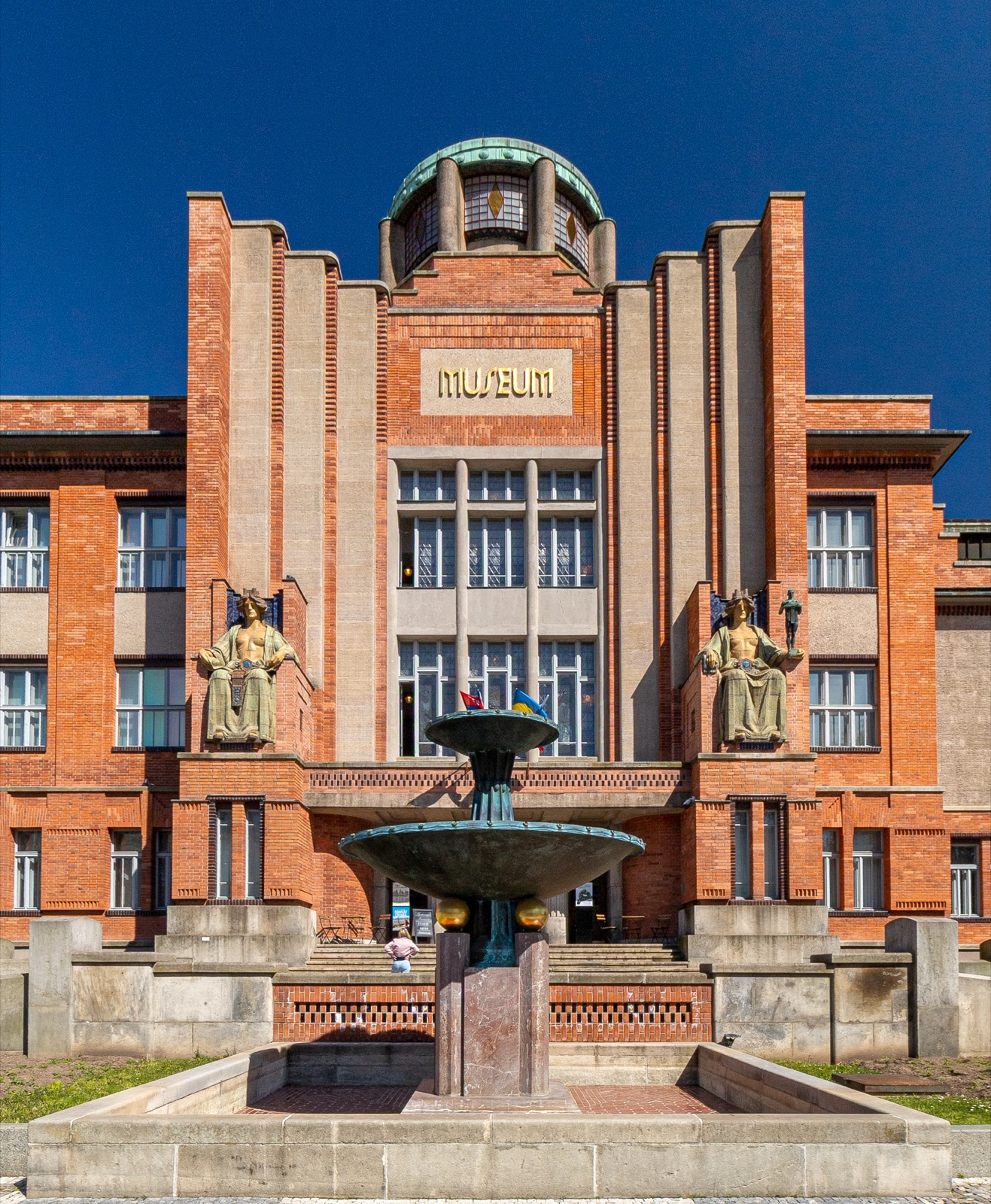
When you come down from the historic hill towards the Elbe to Eliščino nábřeží (Elizabeth’s Embankment), you’ll spot a building that grabs your attention at first glance and ranks among the city’s greatest treasures. The Museum of East Bohemia occupies an imposing structure from 1909–1912, designed by the famous architect Jan Kotěra, and it represents the peak of Czech Art Nouveau and the emerging modernism. The exposed-brick building feels monumental yet wonderfully elegant, and rightly holds the status of a national cultural monument.
The entrance façade is guarded by two enormous allegorical statues of seated women symbolising Art and Industry, and the whole exterior and interior of the museum is thought out down to the smallest detail. Inside there are exhibitions on the region’s history and nature, but honestly, even if you skipped the displays and just walked the corridors, it would be worth it. The building is an experience in itself.
5. Gallery of Modern Art
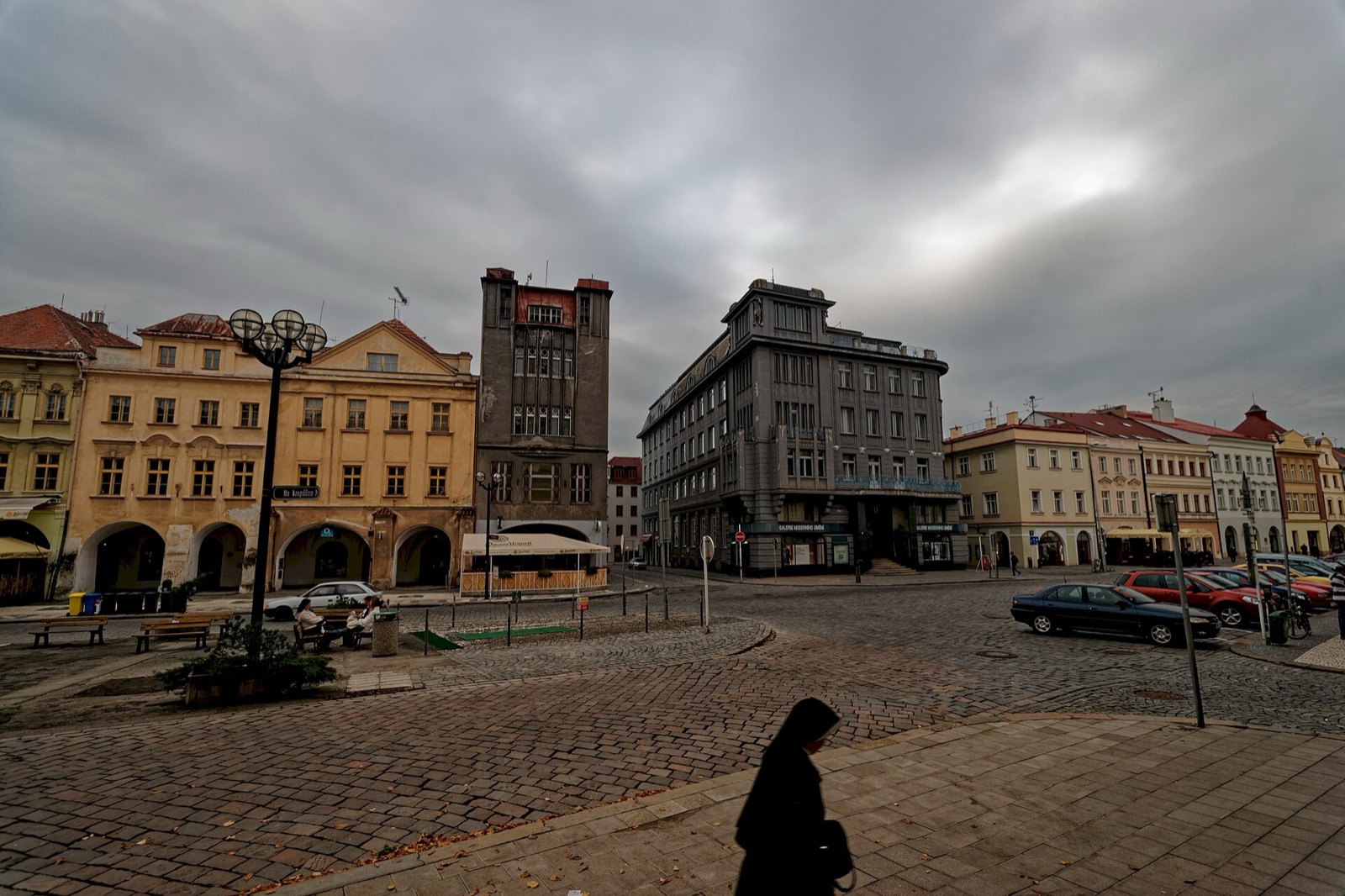
Back on the Great Square sits another remarkable institution that would be a shame to miss — the Gallery of Modern Art. It’s housed in a beautiful Art Nouveau building, the former Mortgage Credit Bank, designed between 1911 and 1912 by architect Osvald Polívka, and even the entrance, framed by mighty bronze sculptures by Ladislav Šaloun, hints that something special awaits inside.
The collection is genuinely extensive and covers the whole sweep of Czech modern art, so lovers of paintings and sculpture can easily spend a whole afternoon here. Another big draw is the rooftop viewing terrace, which offers a slightly different but equally interesting view of the square and the landmarks opposite — an ideal spot for taking some lovely photos.
6. Architecture of the Salon of the Republic (Josef Gočár)
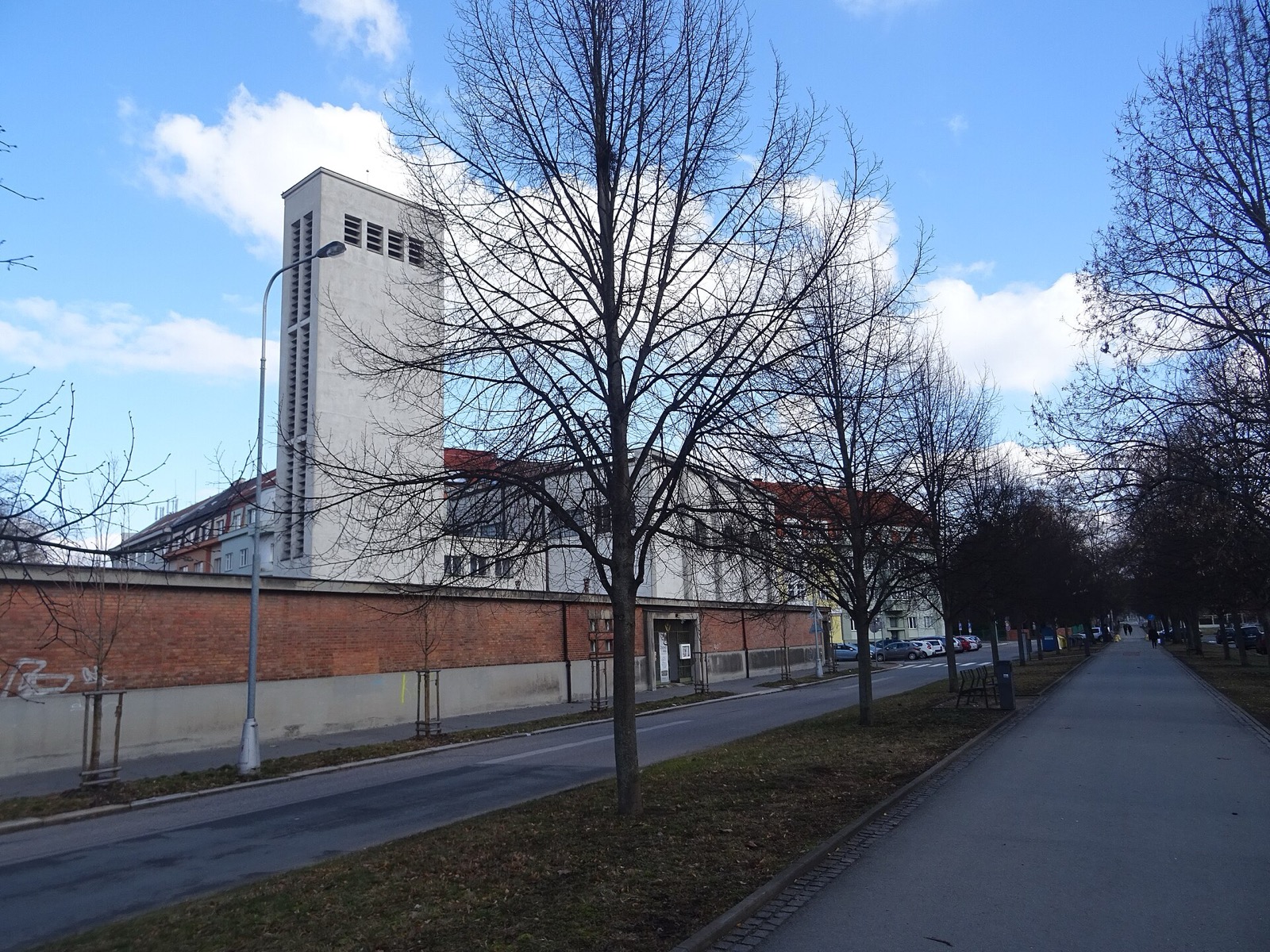
Say “Hradec Králové” and many people immediately think of the nickname “Salon of the Republic”, earned by the city for its incredibly well-conceived interwar urban planning. It was all kicked off by the enlightened mayor František Ulrich, who led the city from 1895 to 1929 and decided to transform a former military fortress into a modern European metropolis. He brought in top-tier architects and laid the foundations for systematic development, with Kotěra’s work seamlessly continued by his talented pupil Josef Gočár.
In 1925 Gočár drew up a comprehensive regulatory plan that strictly prescribed building heights, street lines and broad belts of greenery, which is why the city feels so airy and coherent. Among his best-known works that you can admire here are the functionalist Ambrož Congregation church (1926–1930), the imposing J. K. Tyl Grammar School building, whose entrance is meant to evoke an open book, as well as the Anglo-Bank building and the tannery school. You simply won’t find such a concentration of functionalism in one place anywhere else in the country, and a walk among Gočár’s buildings is a bit like an open-air lesson in modern architecture.
7. The Bono Publico Staircase
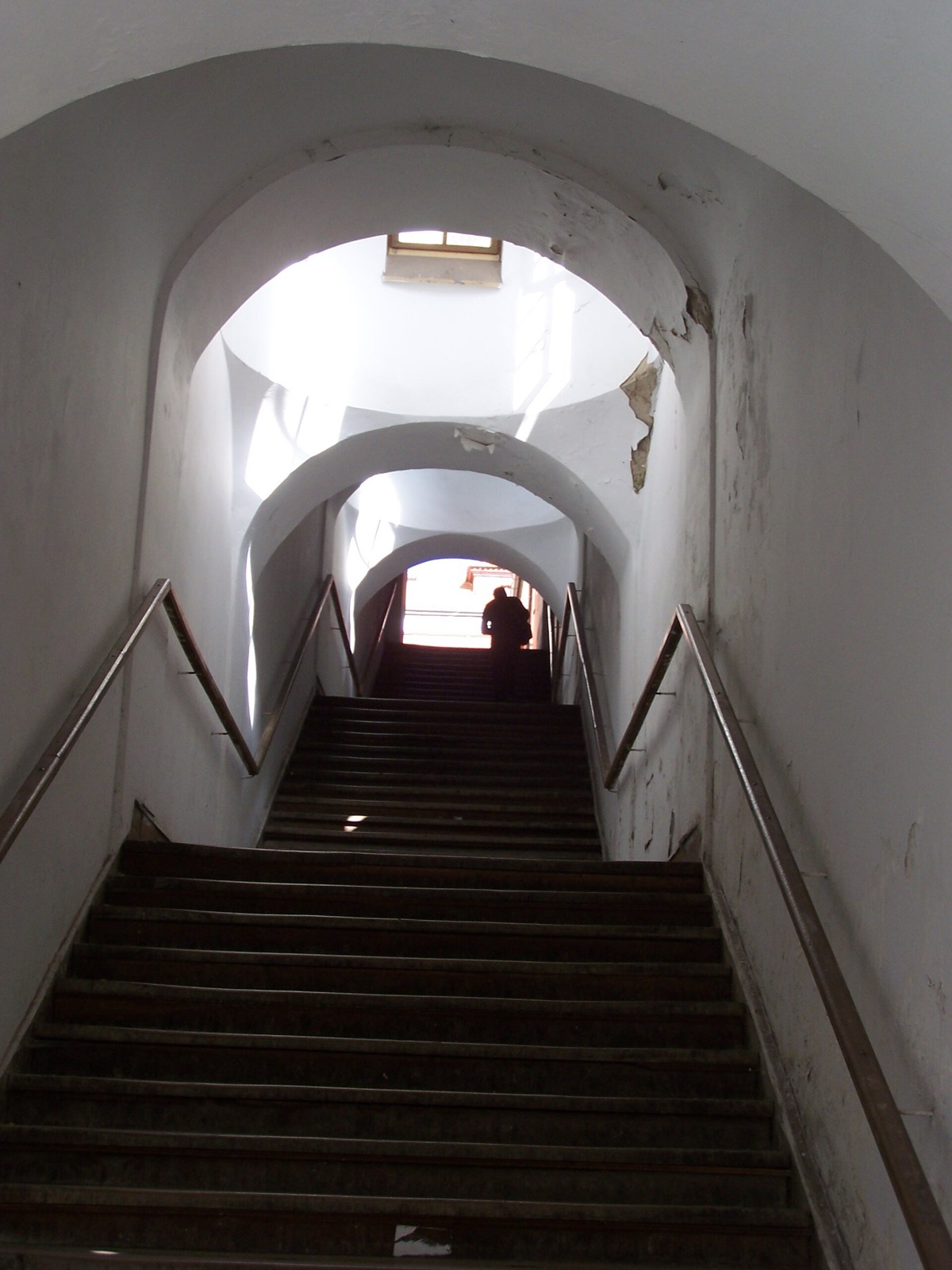
Because the historic centre sits on a raised hill while the rest of the city spreads out on the flat ground by the rivers, the two levels are connected by some interesting staircases — the most famous of which is undoubtedly Bono Publico. This covered Empire-style staircase links the Great Square with Komenského Street, and its Latin name aptly translates as “for the public good”. It took on its current form back in 1839, and after a recent sensitive restoration it’s not only visually beautiful but, thanks to a special sound system, you can even listen to gentle music as you walk through it.
An architectural curiosity is that right next to this historic staircase stands the more modern concrete Gočár Staircase, built between 1909 and 1910. You get a unique chance to see two completely different concepts for bridging a height difference side by side, created in entirely different eras and representing different approaches to shaping public space.
8. Confluence of the Elbe and Orlice and the Prague Bridge
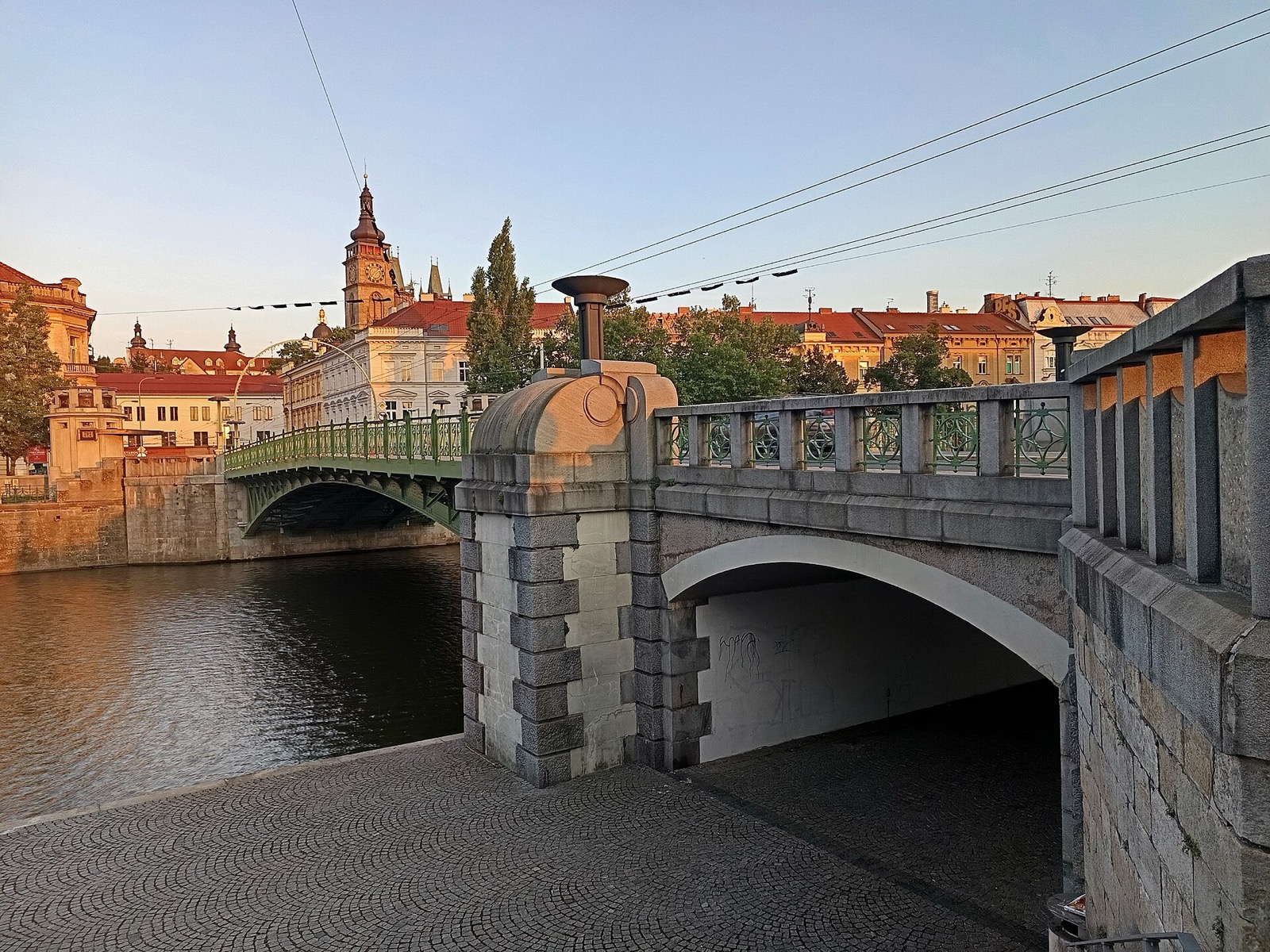
One of the city’s greatest natural assets is that two major rivers, the Elbe and the Orlice, meet right within it, creating beautiful spots to relax by the water. Eliščino nábřeží, a popular embankment, runs alongside the rivers and is perfect for slow walks under the trees, a morning run, or simply that ordinary pleasure of sitting on a bench with a coffee when the sun is shining. Thanks to the river there’s always plenty of space, and slowing down comes completely naturally here.
The lovely Art Nouveau Prague Bridge from 1910 arches across the Elbe and is worth a closer look in its own right. It’s decorated with elegant stone lamps and wrought-iron details, and when you stand on it you get one of the prettiest views of the old town’s silhouette, with the towers reflected in the water’s surface.
9. Jirásek Gardens and the wooden church
If you keep going along the rivers all the way to the confluence of the Elbe and Orlice, you’ll reach the Jirásek Gardens, a sprawling, immaculately maintained park full of mature trees and flower beds. It’s a spacious green space a stone’s throw from the busy centre, where students come to read and where you’ll quickly forget that a moment ago you were standing on a square full of people — the perfect place to rest after a morning of sightseeing.
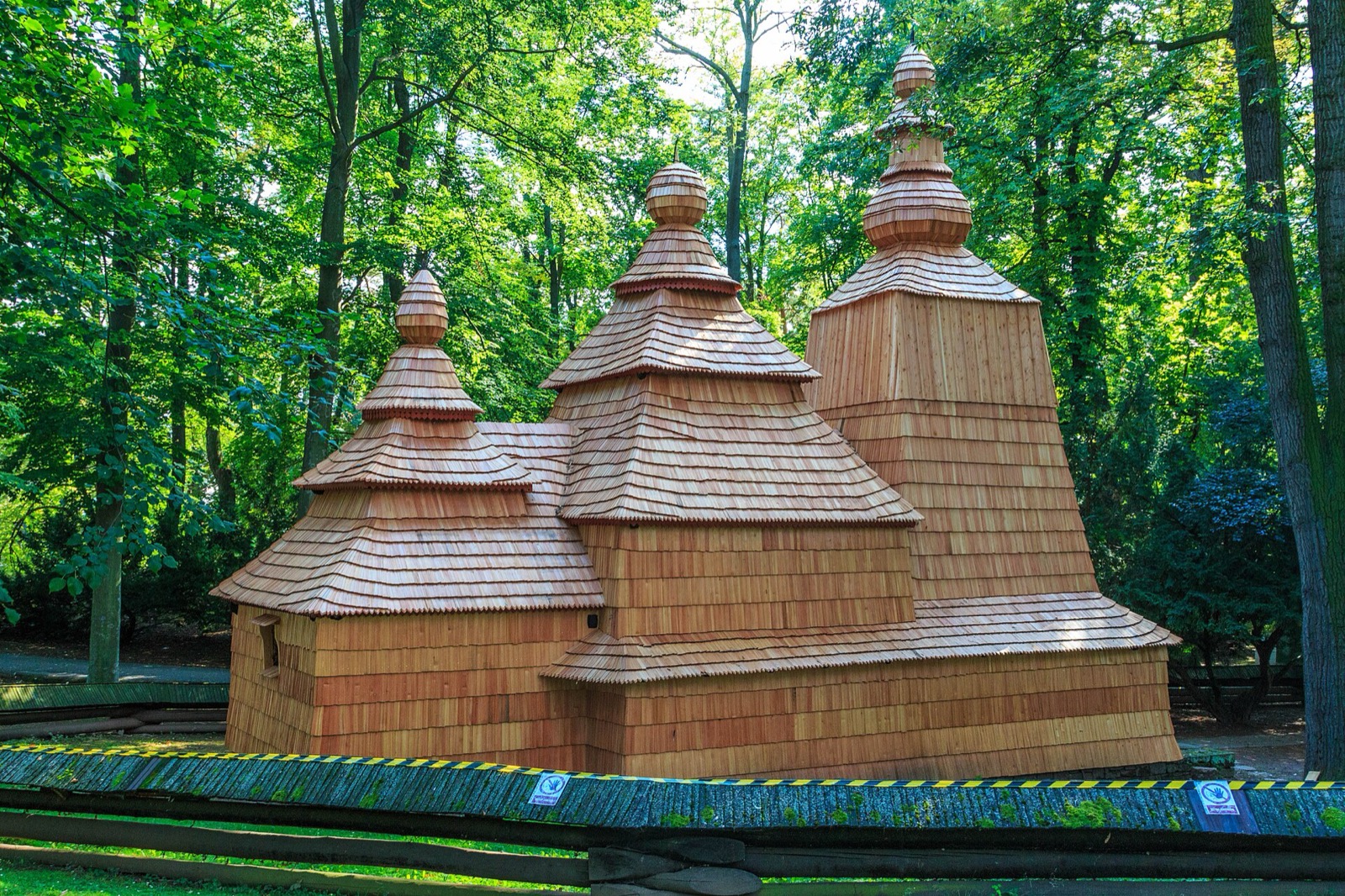
The park’s biggest surprise, though, is the small wooden Church of St Nicholas, which stands here almost like an apparition and looks as if it doesn’t quite belong. It was originally built in the eastern Slovak village of Habura, but in 1935 it was bought, dismantled and transported to Hradec Králové, where it was reassembled and thus saved from certain destruction. Its shingle roof and timber walls make a wonderfully romantic feature in the city park.
10. The Giant Aquarium
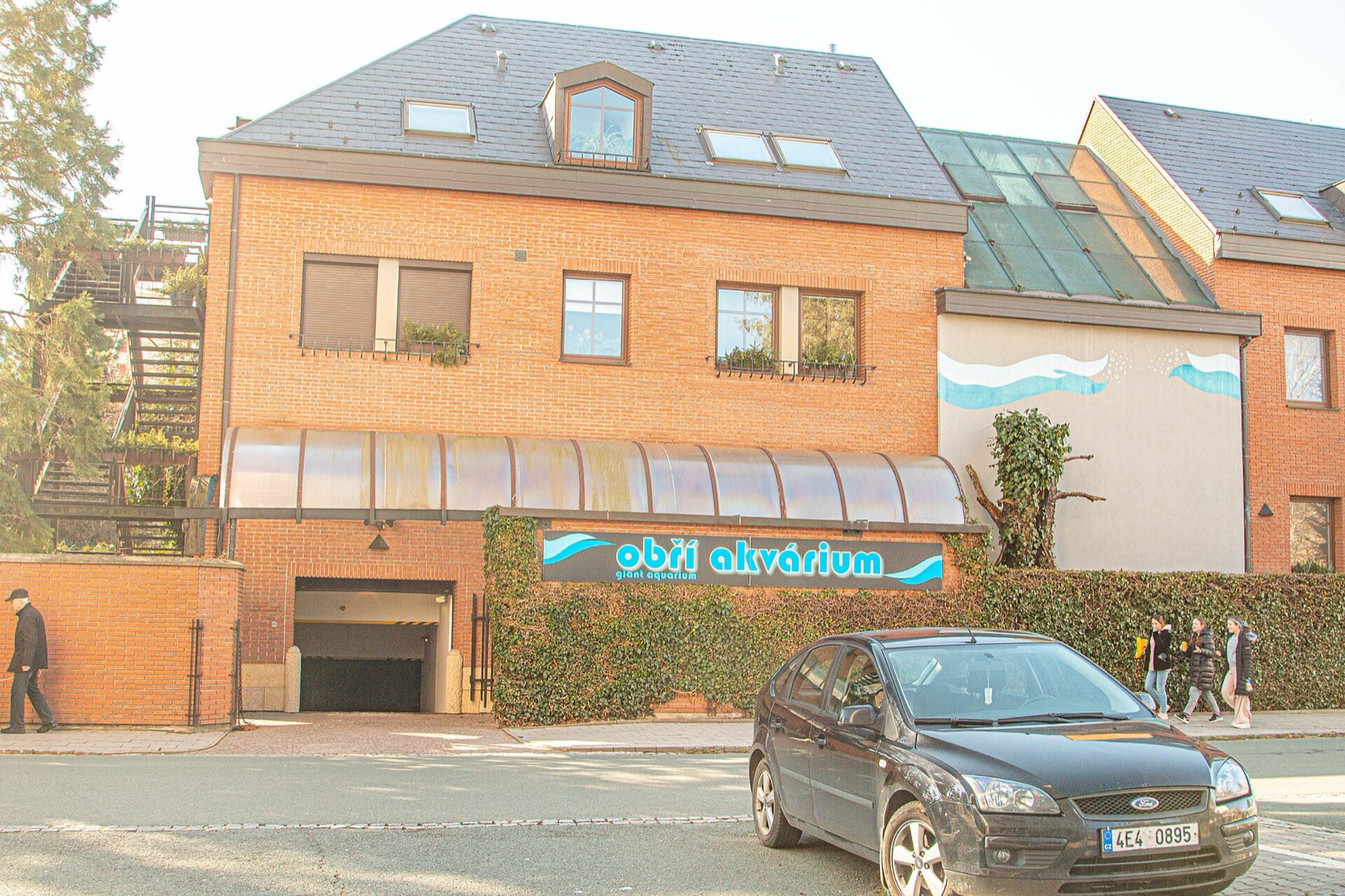
For lovers of nature and the underwater world, the city has one big rarity: the Giant Aquarium, which holds the title of the largest freshwater aquarium in the Czech Republic. It opened in 1998 and boasts the country’s very first visitor underwater tunnel, which puts you right in the middle of the watery realm with fish gliding just above your head and all around you.
The main tank holds an incredible 130,000 litres and is home to more than five hundred tropical freshwater fish originating from the rivers of South and Central America. The visit is also cleverly designed, because the complex includes an artificial tropical rainforest with a wooden walkway, where you experience the proper high humidity and heat of the jungle before descending below the water’s surface to the aquarium itself.
11. Observatory and planetarium
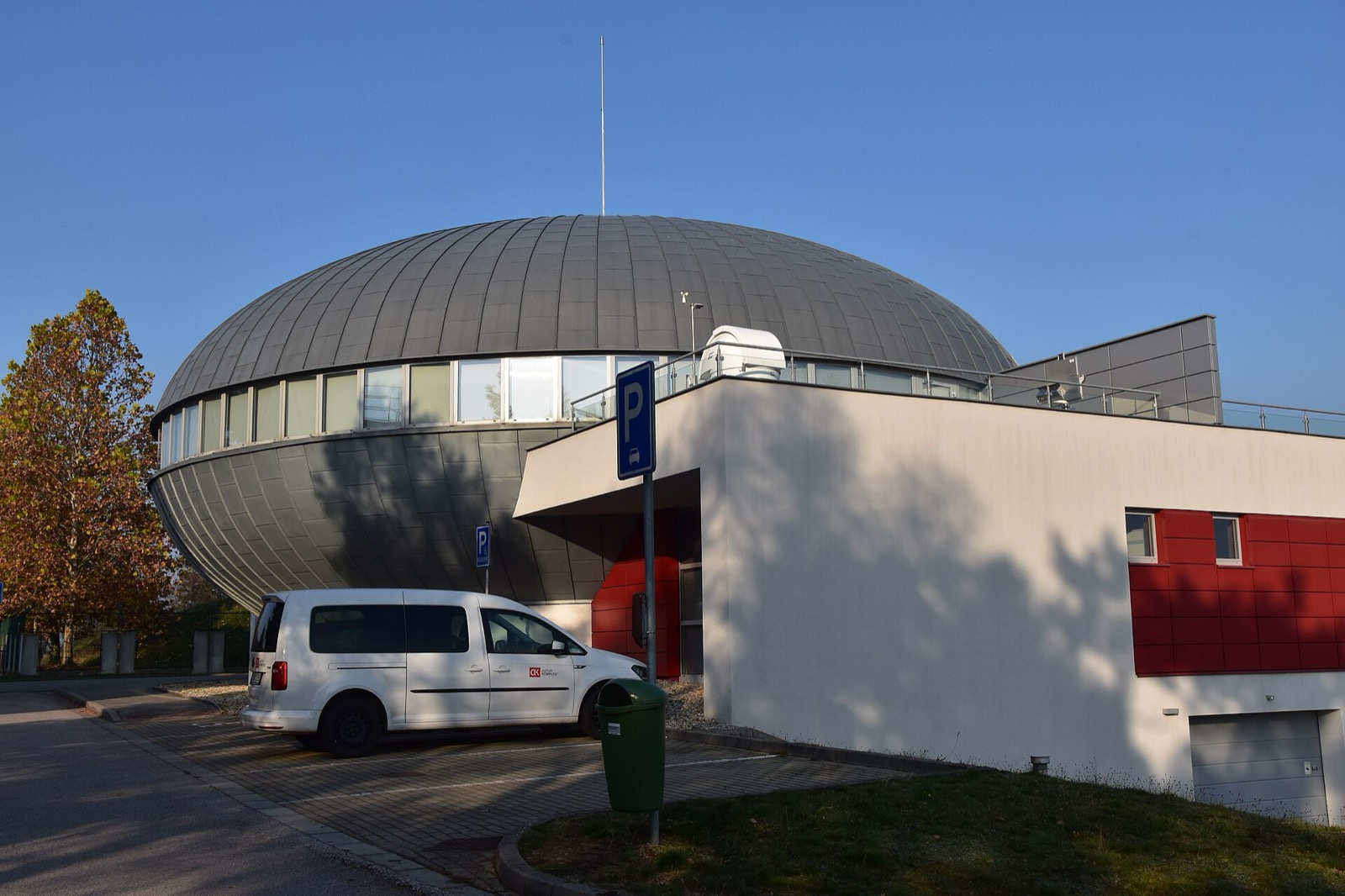
Once you’ve had your fill of history and architecture, you can lift your gaze to the heavens at the modern Observatory and Planetarium on the southern edge of the city. The digital planetarium offers top-quality projections of the starry sky onto a giant dome and regularly rotates its programmes, which are engaging both for families with children and for adults who want to learn something new about the universe and the constellations.
Besides the projections, on clear evenings they also hold classic astronomical observations of the sky through telescopes from the observatory dome, which has a magic all of its own. It’s an especially great idea for autumn evenings when it gets dark early, or as a backup plan for rainy days when you don’t fancy wandering the city with an umbrella in hand.
12. Flošna swimming pool and summer bathing
If you head to East Bohemia in the middle of a hot summer, you’ll soon start looking for somewhere to cool off — and in that respect the Flošna swimming complex will be your saviour. This modern facility sits practically in the city centre and offers both an indoor section for cooler days and a vast outdoor area dominated by a 50-metre swimming pool, a large recreational pool with attractions and, of course, plenty for the little ones too.
Anyone who isn’t keen on a classic chlorinated pool packed with people, and prefers nature instead, can head to the edge of the city to Stříbrný rybník (Silver Pond). The natural bathing here offers a calmer atmosphere, sandy beaches and the chance to rent pedalos or paddleboards, so you can easily while away a whole lazy afternoon surrounded by trees.
13. Hradec forests and a bike ride
Hradec Králové sits on completely flat terrain, which makes it a renowned paradise for cyclists — and you’ll notice it the moment you arrive, because people on bikes are everywhere, and at every age. Just beyond the city gates spread the vast Hradec forests, which hide an incredibly dense network of quality paved cycle paths and long inline circuits with smooth asphalt that are an absolute joy to ride.
Renting a bike and heading out for a few hours beneath the tree canopies is considered by locals to be one of the best ways to spend free days, and we recommend joining them. The trails are very easy to follow, with no demanding climbs, and along the way you’ll come across various rest stops, gamekeepers’ lodges and snack bars where you can refuel — so it’s an ideal activity even for fair-weather athletes.
14. The Old Town Hall and Chapel of St Clement
Returning to the historic core on the Great Square, you’ll come across a pair of buildings that form an inseparable part of the local history. The Renaissance-Baroque Old Town Hall draws the eye with its ornate façade and dignified appearance, recalling the city’s importance in past centuries, when the fortunes of the entire region were directed from here.
Right next to the town hall huddles the small but all the more significant Chapel of St Clement, one of the very oldest surviving structures in the whole city. Together with the plague column and the White Tower, it forms a kind of quiet overview of the centuries in one place.
15. Church of the Assumption of the Virgin Mary
The final stop on our list of Great Square landmarks is the Church of the Assumption of the Virgin Mary, a former Jesuit church dating from the mid-seventeenth century. Its two elegant towers form an important part of the city’s characteristic skyline and add another interesting element to the view of the dominant White Tower and the brick cathedral opposite.
Inside this sanctuary hides an immensely rich and intricate Baroque decoration that contrasts with the relatively more restrained exterior — and above all, a deep sense of calm reigns here. Opening the heavy wooden doors and disappearing for a moment from the bustle of the square into the quiet and cool is exactly the kind of pause that leaves you glad you stepped inside.
💡 Tip with kids: If you’re travelling with younger children, don’t miss a ride on the Hradec tourist train, which trundles through the most interesting parts of the city during the summer season, or promise them a visit to the Giant Aquarium, where the walk through the glass tunnel below the surface is guaranteed to keep them entertained for ages.
Map of points of interest for your phone
Where to eat in Hradec Králové
After a full day of marching around the city and the forests, you’ll have earned a good meal — and Hradec won’t let you down here. There are more cafés and good restaurants than you’d expect. If you count yourself among the speciality coffee crowd, Hradec will thrill you, because cosy spots can be found on every corner. Right on the Great Square you can pop into the popular Café Na kole, whose name and décor both nod to the local passion for cycling, or the nearby Café 149, where alongside coffee you can also enjoy excellent cakes. Local roasters such as Pepe Coffee and LamCafé are well worth a mention too — they really understand coffee in depth — and if you’re after a hearty morning breakfast before a day trip, head to BISTRO V PEKÁRNĚ.
When it comes to mains, we can happily recommend some great vegetarian options that will please far more than just committed meat-avoiders. You can stop at the popular branch of Dhaba Beas, where you serve yourself fresh Indian and vegetarian food by weight, exactly to your taste — ideal for a quick, light lunch. Also highly praised is Bazalka ve dvorku, which offers a large and varied selection of meat-free dishes prepared from quality ingredients, so you’ll leave full and satisfied without having to compromise on your healthy-eating standards.
Day trips from Hradec Králové
If you decide to stick around the region for two or three days, which we warmly recommend, plenty of options open up for venturing beyond the city limits. The surroundings are full of beautiful sights and attractions you can reach by car in a few dozen minutes, and they’ll offer you a completely different perspective on East Bohemia.
- Safari Park Dvůr Králové: about thirty kilometres from the city, it offers the largest collection of African animals in all of Europe. You can drive through it in your own car or take a safari bus on a genuine African and lion safari right among herds of zebras and giraffes, and the park is also world-famous for its successful breeding of the rare northern white rhinoceros.
- Kuks Hospital: a unique Baroque complex commissioned by Count Sporck that will astonish you with its monumentality and beauty. Here you’ll find the famous statues of the Virtues and Vices by sculptor Matthias Bernard Braun, a breathtaking historic Baroque pharmacy, and hidden nearby in the woods is the mysterious Braun’s Bethlehem, carved directly into the sandstone rocks.
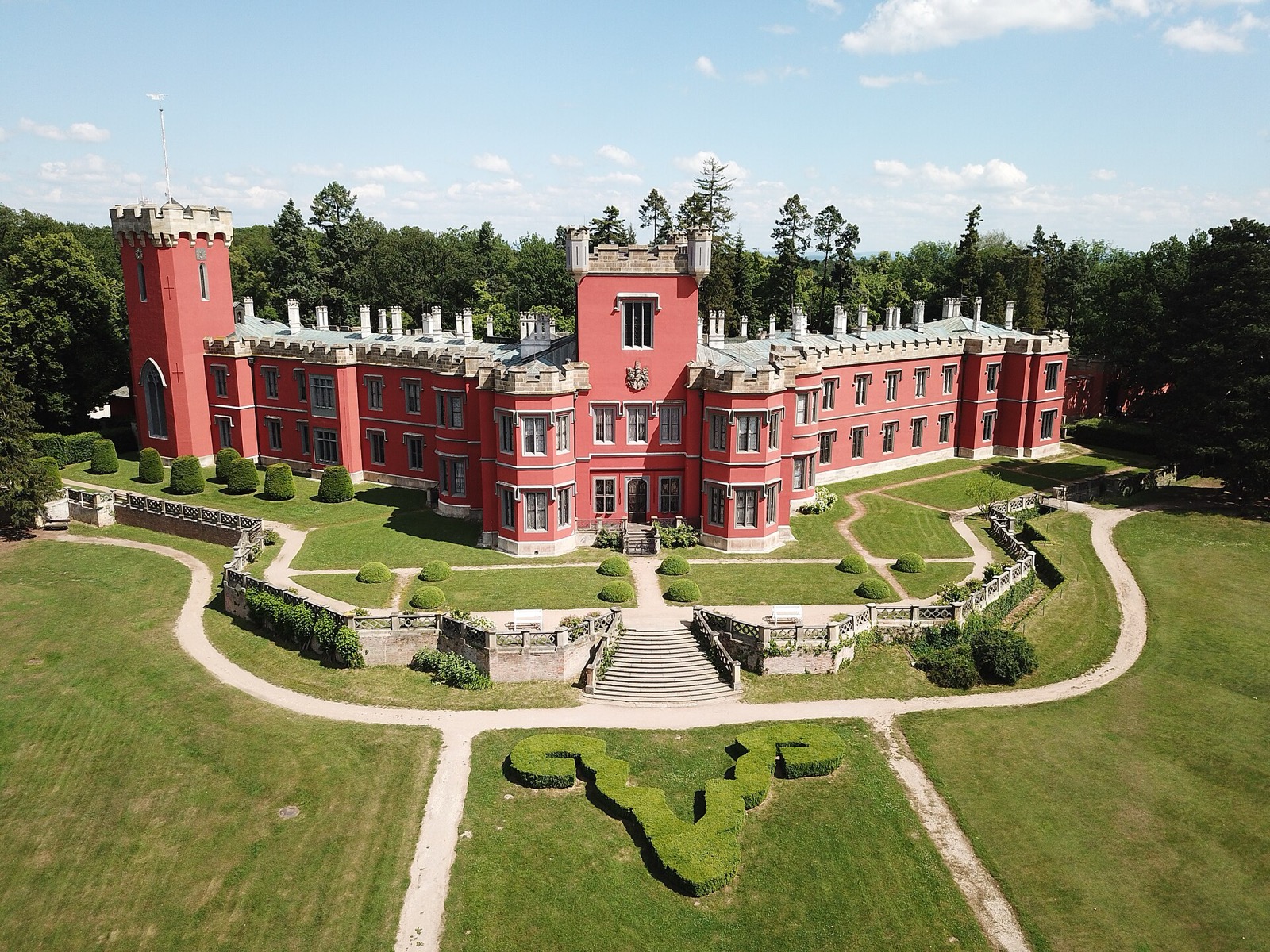
- Hrádek u Nechanic château: just under twelve kilometres from the city stands this gorgeous neo-Gothic château of the Harrach family, built between 1839 and 1857. It resembles a romantic Tudor mansion somewhere in England more than a typical Czech château, which makes it very popular with film crews too.
💡 GetYourGuide tip: If you prefer organised experiences and don’t want to deal with buying tickets on the spot, you can conveniently sort out plenty of admission tickets to monuments and zoos, as well as ideas for interesting guided tours in the region, well in advance through GetYourGuide, so you can skip any queues at the ticket office.
Where to go next
Once you’ve explored Hradec and its surroundings, you can find inspiration for more journeys around our country. Czech cities and regions have plenty to offer, and we’ve got several other articles to help you with your planning.
- Where to go on holiday in the Czech Republic
- The best water parks in the Czech Republic
- Christmas markets in Hradec Králové
Frequently asked questions
How long does the trip from Prague to Hradec Králové take?
The train journey from Prague usually takes somewhere between an hour and an hour and a half, with most connections on this roughly 102-kilometer route running conveniently without transfers. A common and very frequent alternative is also the direct bus lines, which travel via the highway and take roughly the same time as the train.
How much time do I need to visit the city?
For exploring the historic center itself, a walk along the river confluence, and visiting one or two monuments or museums, you’ll easily have enough with one full day. However, if you’re planning to cycle into the local forests or take a trip to the surrounding area, for example to Kuks or the Safari Park, definitely set aside two to three days.
Why is the city called the salon of the republic?
This flattering nickname was earned by the city for its extraordinarily well-thought-out and visionary interwar urbanism. The enlightened mayor František Ulrich invited leading architects such as Jan Kotěra and Josef Gočár to develop the city, who designed modern districts full of greenery, wide streets and quality functionalist architecture, thereby creating a highly representative urban space.
Is Hradec Králové suitable for cyclists?
Yes, the city and its immediate surroundings are perfect for cyclists, as it lies in completely flat terrain and has excellent infrastructure. Just beyond the city begin the extensive Hradecké forests, through which run dozens of kilometers of high-quality paved cycling paths, where families with children or inline skaters can safely ride.
Where can you find the best view in the city?
The most beautiful panoramic view of the entire historic center and wide surroundings opens up from the gallery of the Renaissance White Tower, which stands right on the Large Square. You’ll need to conquer over two hundred steps to reach the top, but the view of the river confluence and, on a clear day, even the distant mountains is definitely worth the effort.
Tips and Tricks for Your Vacation
Don’t Overpay for Flights
Search for flights on Kayak. It’s our favorite search engine because it scans the websites of all airlines and always finds the cheapest connection.
Book Your Accommodation Smartly
The best experiences we’ve had when looking for accommodation (from Alaska to Morocco) are with Booking.com, where hotels, apartments, and entire houses are usually the cheapest and most widely available.
Don’t Forget Travel Insurance
Good travel insurance will protect you against illness, accidents, theft, or flight cancellations. We’ve had a few hospital visits abroad, so we know how important it is to have proper insurance arranged.
Where we insure ourselves: SafetyWing (simple monthly subscription) and TrueTraveller (for extra-long trips).
Find the Best Experiences
Get Your Guide is a huge online marketplace where you can book guided walks, trips, skip-the-line tickets, tours, and much more. We always find some extra fun there!