When you look at a detailed map of Norway, Jotunheimen National Park forms a vast wilderness full of jagged peaks and deep valleys. The name fittingly translates as the home of giants, and once you see this majestic landscape with your own eyes, you’ll understand why. It’s right here in this inland region that the very highest summits in all of Scandinavia rise up, which is exactly why Jotunheimen in Norway belongs on every hiker’s bucket list.
If you’re planning a summer trip up north and you love high-mountain hiking, Jotunheimen is one place you definitely shouldn’t skip on your itinerary. You’ll find absolutely breathtaking glacial lakes with turquoise water, more than two hundred mountains topping two thousand metres, and some of the most famous treks in all of Norway.
In this article we’ll take a detailed look at 8 tips for the most beautiful spots and unforgettable hikes this rugged corner of nature has to offer. I’ll also help you figure out the best time to visit, how Norway’s mountain hut system works, and what to watch out for most when planning your mountain trips.
TL;DR
- Main season: Most people visit Jotunheimen from late June to mid-September; at other times the mountain trails are buried under snow and the huts are closed.
- Most famous trek: The Besseggen ridge is one of the best-known routes in the country, takes 6 to 8 hours and demands good physical fitness.
- Highest mountain: Galdhøpiggen stands at 2,469 metres, and the easiest way up is with a guide across the glacier from the Juvasshytta hut.
- Getting there and around: The best option is to come in your own or a hire car from Oslo (the drive takes roughly 4 to 5 hours) via the picturesque little village of Lom.
- Where to stay: Look for accommodation in the iconic mountain huts run by the DNT association, such as Gjendesheim or Spiterstulen, but book them well in advance.
- Turquoise lake: Most trips start at the enormous Lake Gjende, which has a regular passenger boat service for hikers.
The full destination guide: Norway — guide and what to see
When to Visit Jotunheimen
High mountains set their own rules, and that’s why Jotunheimen can’t be safely visited all year round. The main — and really the only — hiking season runs from late June to mid-September, when the snow clears from most trails and the mountain roads open. Come any earlier and you risk impassable routes and closed accommodation.
The winter and spring months in the national park are reserved purely for extreme skiers and experienced ski mountaineers. On top of that, the weather here can turn from clear skies into a snowstorm within a matter of minutes, even in the middle of summer. Always keep an eye on the latest forecasts and pack warm, waterproof clothing in your backpack.
During July and August you’ll have to share the most famous routes with a fair number of other hikers from all over the world. If you’d rather enjoy the mountains in peace, head out in the first half of September, when the landscape starts to glow with beautiful autumn tones and the crowds thin out considerably.
Where to Stay in Jotunheimen and How Much It Costs
💡 Tip for accommodation and experiences: We like to look for places to stay on Booking.com, which usually has the best cancellation policies. For tickets, tours and activities, it pays to compare and book through GetYourGuide.
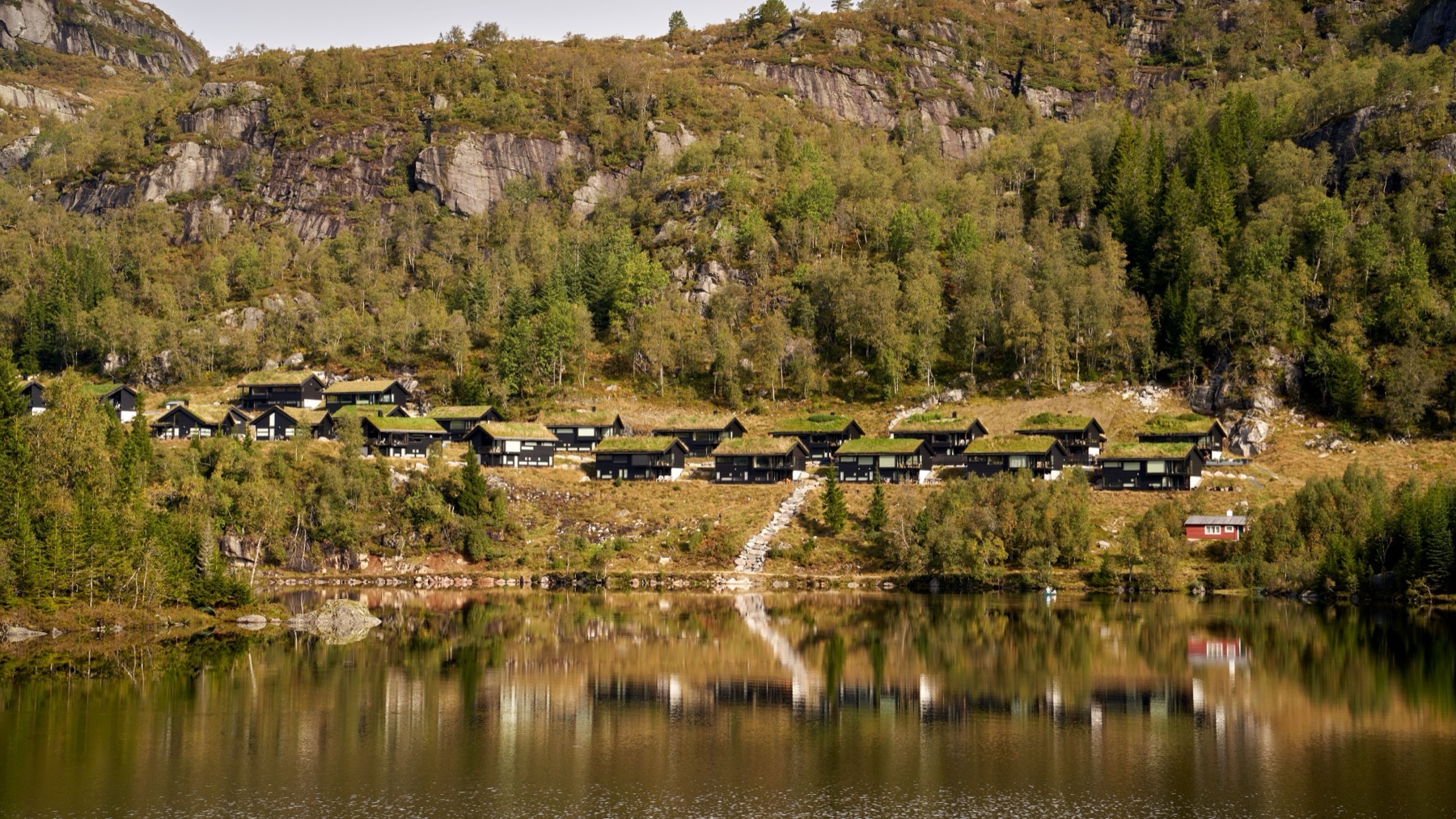
Accommodation in the national park is very particular, centred mainly around large mountain huts and strategically placed villages on the edge of the area. Norway is one of the pricier destinations, and a night in the mountains is no exception — as a rough guide, expect dorm beds in hiking lodges to cost from 300 to 800 NOK (roughly €27 to €71). If you prefer the privacy of a mountain hotel, budget around 1,200 to 2,200 NOK (about €106 to €195) per night.
The main starting point for the eastern part of the park is the Gjendesheim mountain hut, which sits right at the trailhead for the famous Besseggen ridge. It’s hugely popular, and if you want to sleep here in the summer season you’ll need to reserve your spot many months ahead.
For conquering the highest peaks, hikers traditionally use the Spiterstulen mountain hotel or the popular Turtagrø hut on the western side of the park. Both spots offer great facilities, drying rooms for wet clothes, and hearty Norwegian breakfasts to fuel you up before a tough climb. You can search for and book them in the usual way through portals like Booking.
If you’re after a bit more civilisation and standard services, the picturesque village of Lom is a great choice on the northern edge of Jotunheimen. Here you’ll find a beautiful wooden stave church (stavkirke), a renowned local bakery with excellent cinnamon buns, and a wide range of guesthouses as well as cosy campsites with small cabins.
Famous Treks and the Highest Mountains of Jotunheimen
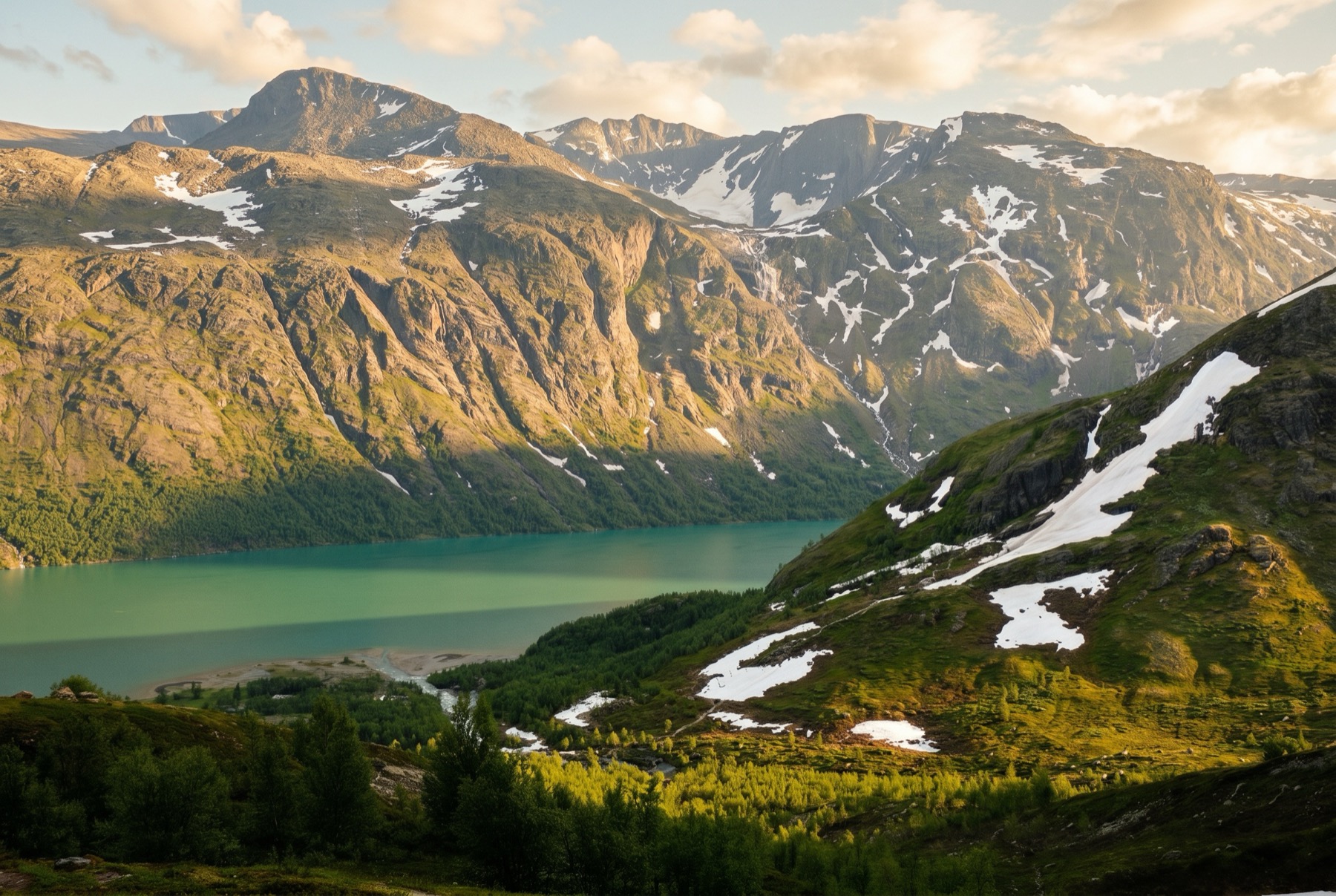
The national park is laced with hundreds of kilometres of marked trails, but a few of them stand head and shoulders above the rest. The most famous hikes draw mountain lovers to Jotunheimen from all over the world, and they call for not only good boots but solid physical fitness too. Let’s take a look at three iconic routes no capable hiker should miss.
When planning these trips, always bear in mind that Norwegian distance signs can be a touch optimistic. A route that looks like an afternoon stroll on the map often stretches into a full day in rocky terrain. So the key is an early morning start and plenty of food and drink in your backpack.
1. The Besseggen Ridge
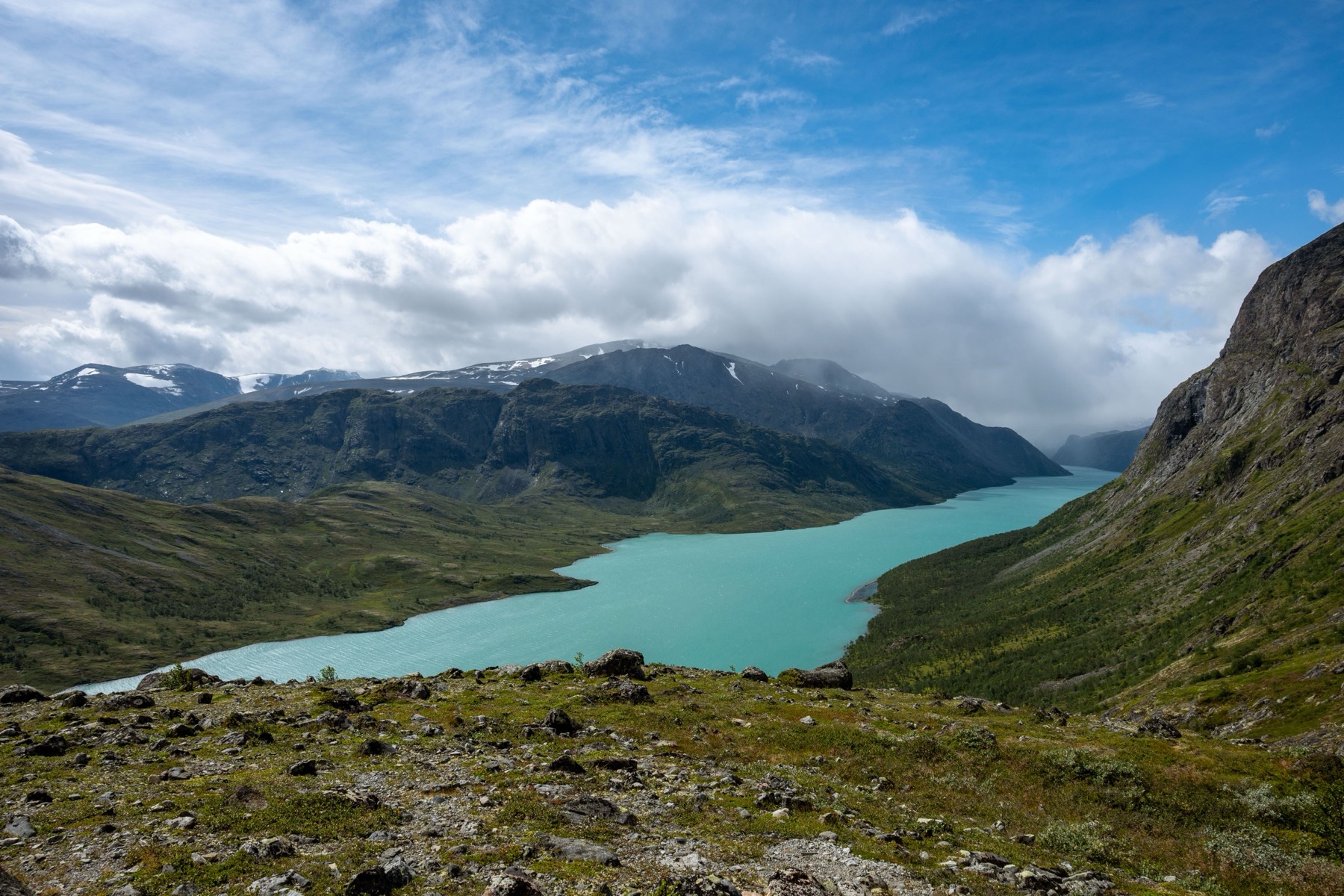
This is an absolute Norwegian classic and a trek pretty much every local hiker wants to tick off at least once in their life. The route is roughly 14 kilometres long and takes 6 to 8 hours of hard slog across fairly demanding rocky terrain. Most people make the morning easier by hopping on the boat at Gjendesheim, riding to the hamlet of Memurubu, and then walking back along the ridge.
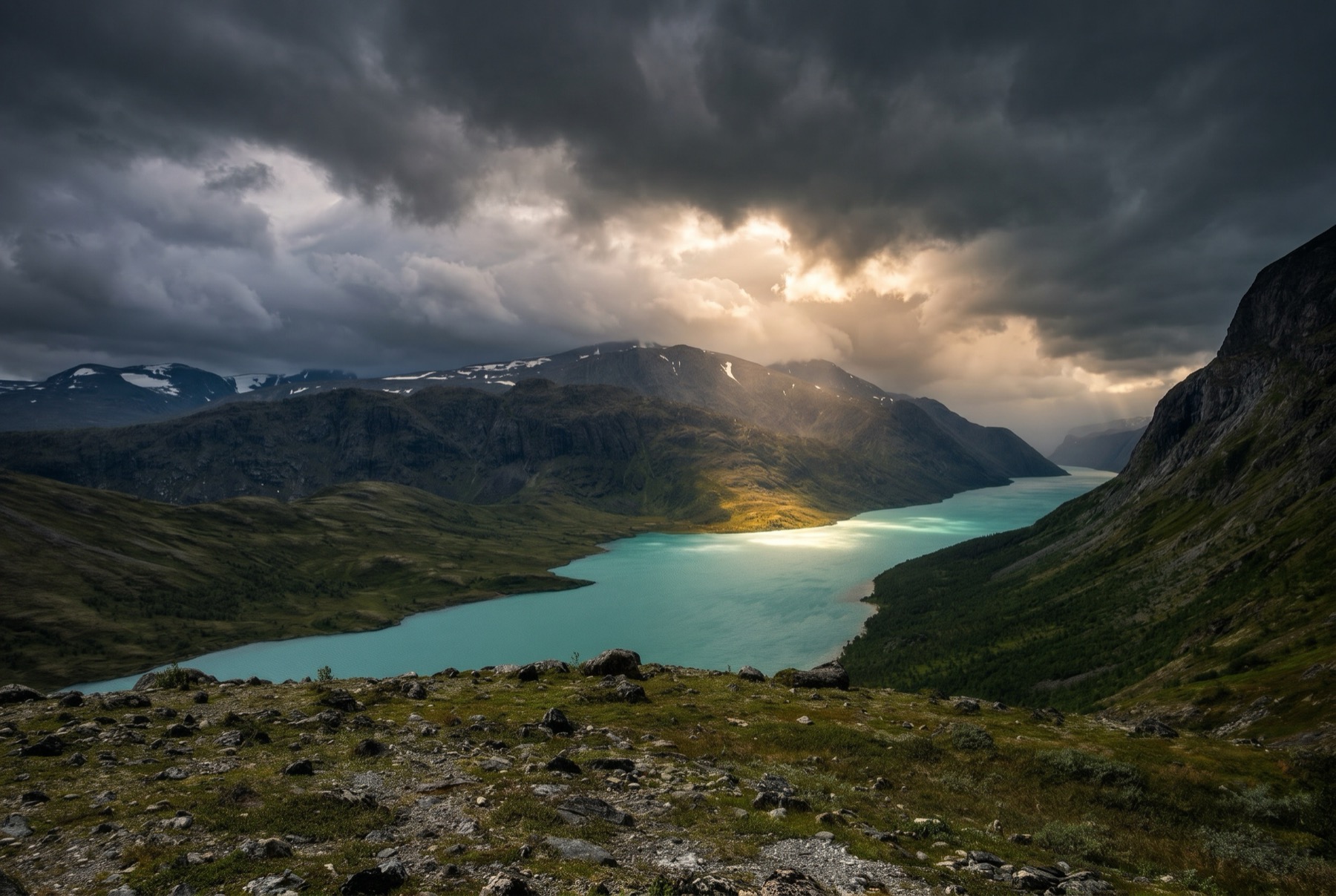
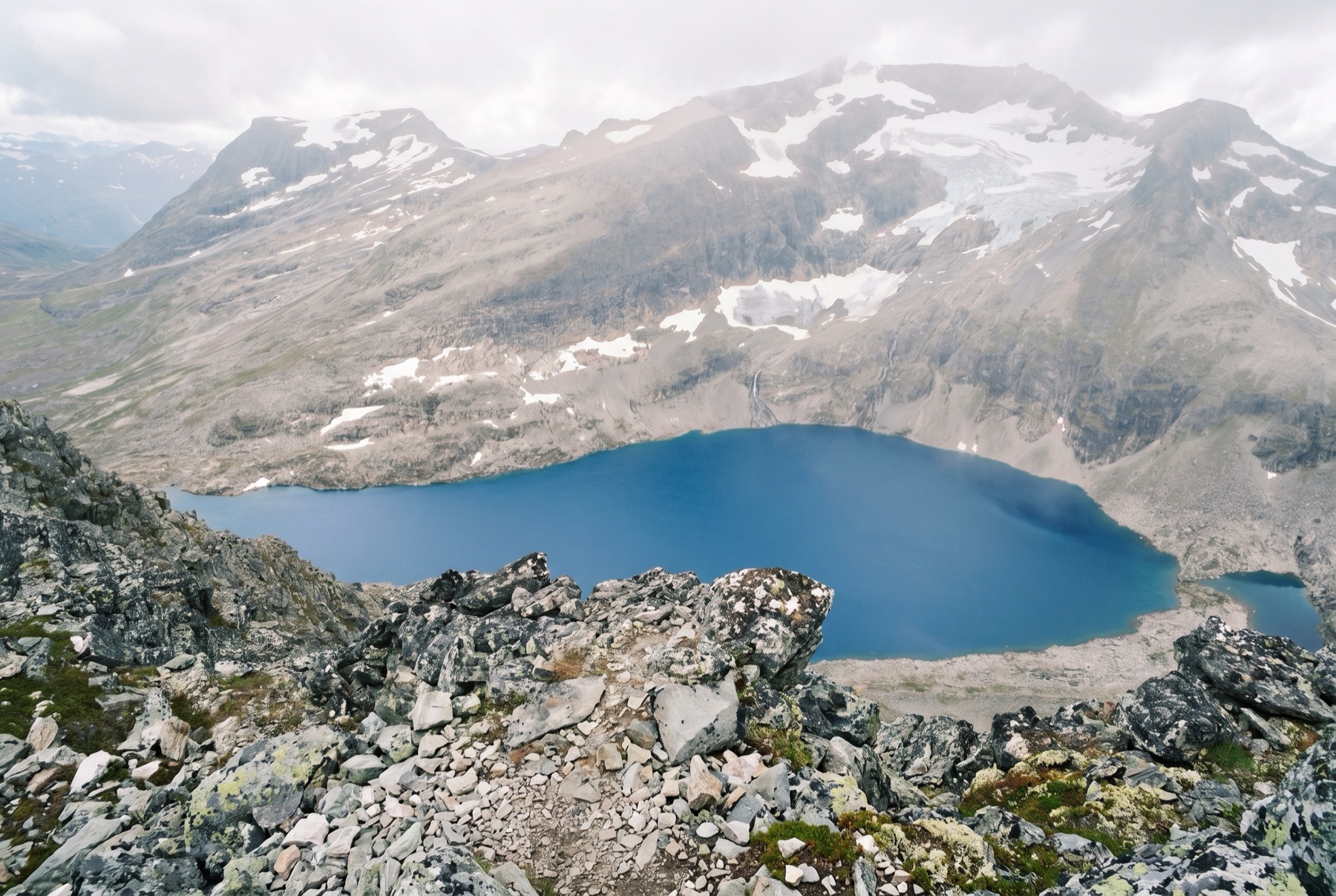
The most spectacular part of the whole hike is the incredible colour contrast between two large lakes. While Lake Gjende far below shines a vivid emerald, the neighbouring Lake Bessvatnet is deep blue — and it sits a full 400 metres higher. The views from the highest point of the ridge are so jaw-dropping you won’t know where to point your camera first.
💡 Tip: The Besseggen trek really isn’t for anyone with a strong fear of heights. At the narrowest point of the ridge the terrain is very steep and you’ll occasionally need to use your hands to safely scramble higher. In rain or strong wind this route is, for obvious reasons, not recommended at all.
2. Galdhøpiggen, Norway’s Highest Mountain
Climbing the roof of all Scandinavia is a huge draw, and luckily it isn’t as tricky as the altitude of 2,469 metres might suggest. The easiest and most popular route starts at the Juvasshytta mountain hut, from where you can only go up with a certified guide. The reason is that you have to cross the treacherous Styggebreen glacier, where for safety reasons all hikers must be roped together.
If you fancy a bigger physical challenge and don’t want to pay for a guide, there’s a second option. A free route leads up from the Spiterstulen mountain hotel and avoids the glacier crevasses, but it’s steeper and tougher in terms of elevation gain. The round trip from this side takes roughly 8 to 9 hours and will test your stamina to the max.
In good weather, the summit of Galdhøpiggen itself serves up a truly phenomenal 360-degree view over a whole quarter of southern Norway. There’s even a small, cosy stone hut perched right on the top of the mountain, where after a strenuous climb you can buy a warm tea, coffee or a light snack and thaw out a little before the descent.
3. Glittertind
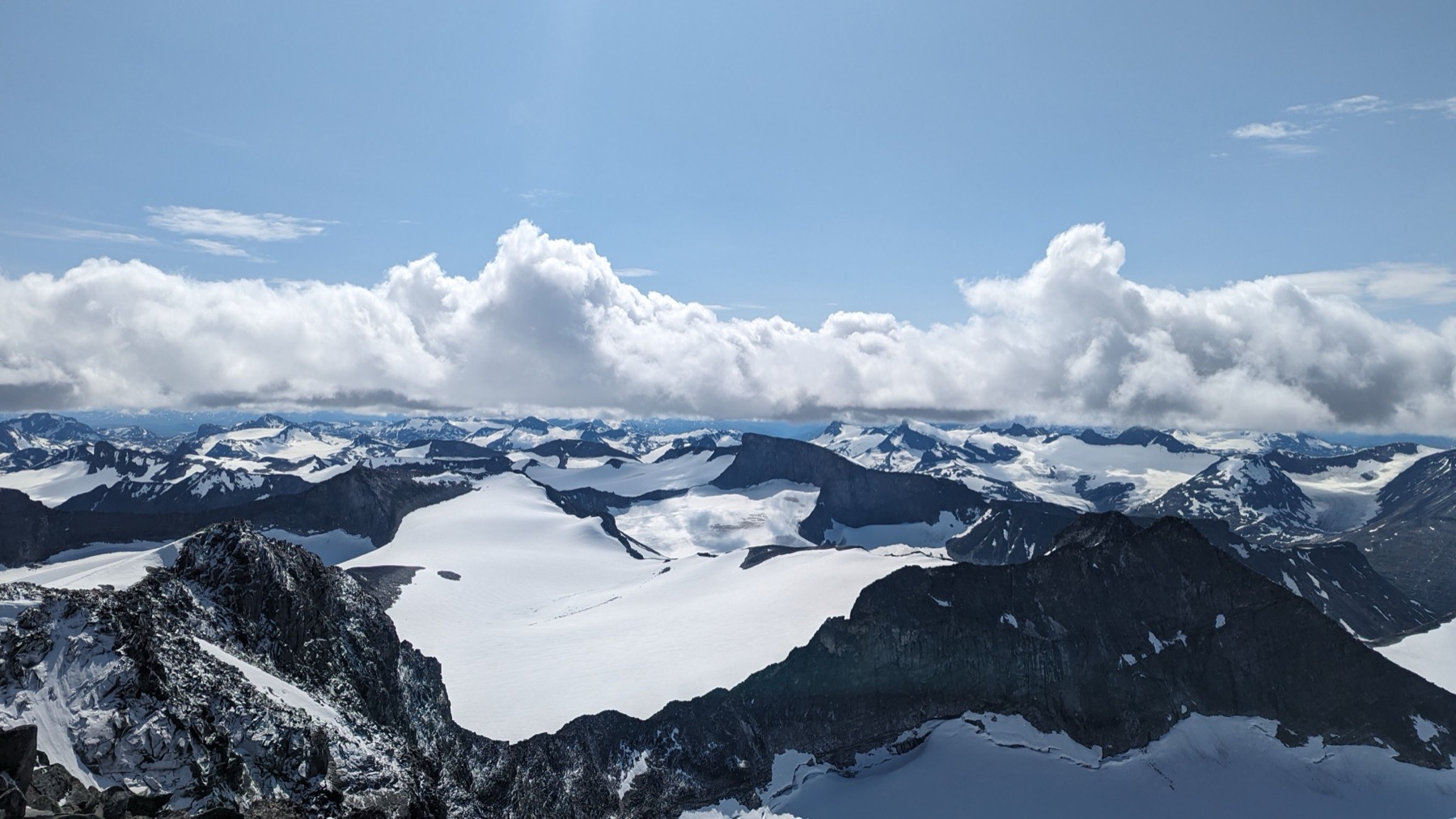
At around 2,465 metres, Glittertind is Norway’s second-highest mountain and for decades it battled Galdhøpiggen for the top spot. That’s because a thick glacier cap sits right on the very summit, and its thickness changes over the years, so the mountain’s overall height keeps shifting with the amount of snow and the rate of melt.
The climb up Glittertind is a little less busy than the hike up Galdhøpiggen, which makes it a great choice for anyone who loves mountains without the crowds. The usual starting point is the Glitterheim mountain hut, from where the trail to the summit is fairly clear and well marked. The whole hike takes around 7 hours, with a steeper climb across snowfields waiting for you at the end.
Your reward for all that effort is a one-of-a-kind feeling as you stand on the very edge of a mighty snow cornice. The views of the jagged mountain ridges all around are extraordinarily dramatic and are said to be some of the most photogenic in all of Jotunheimen National Park.
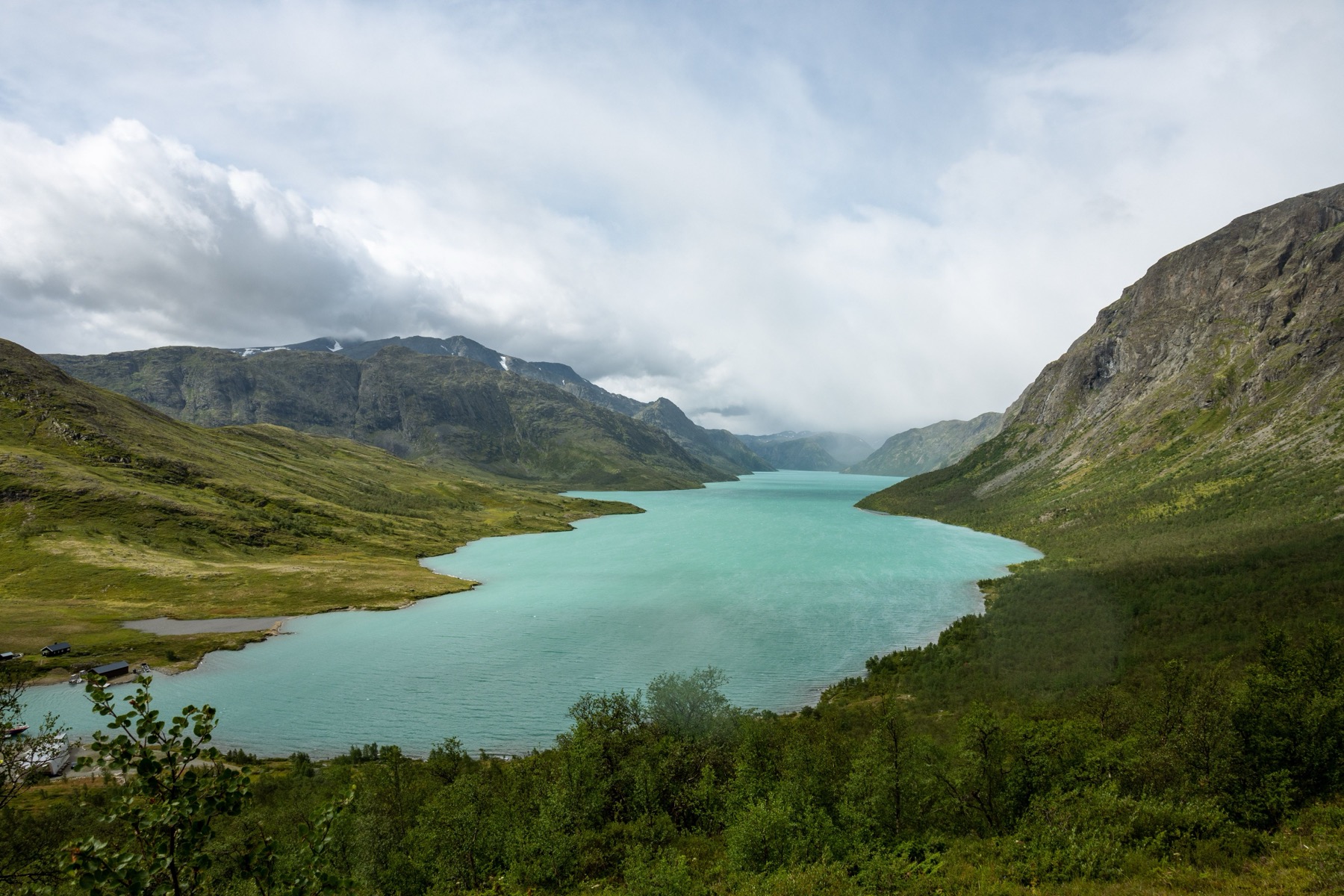
Lakes, Glaciers and Mountain Roads
Jotunheimen National Park isn’t only the domain of tireless climbers with heavy backpacks. This area also offers gorgeous scenic drives and stunning bodies of water that you can admire with far less physical effort. In the next section we’ll cover the spots where the star of the show is the untamed element of water in all its forms.
Whether you opt for a cruise across a turquoise lake or a drive along the highest road, always set aside plenty of time for unplanned stops. The scenery changes around every bend, and the urge to pull over and simply soak up the surrounding glaciers will be utterly irresistible.

4. The Turquoise Lake Gjende and Boat Service
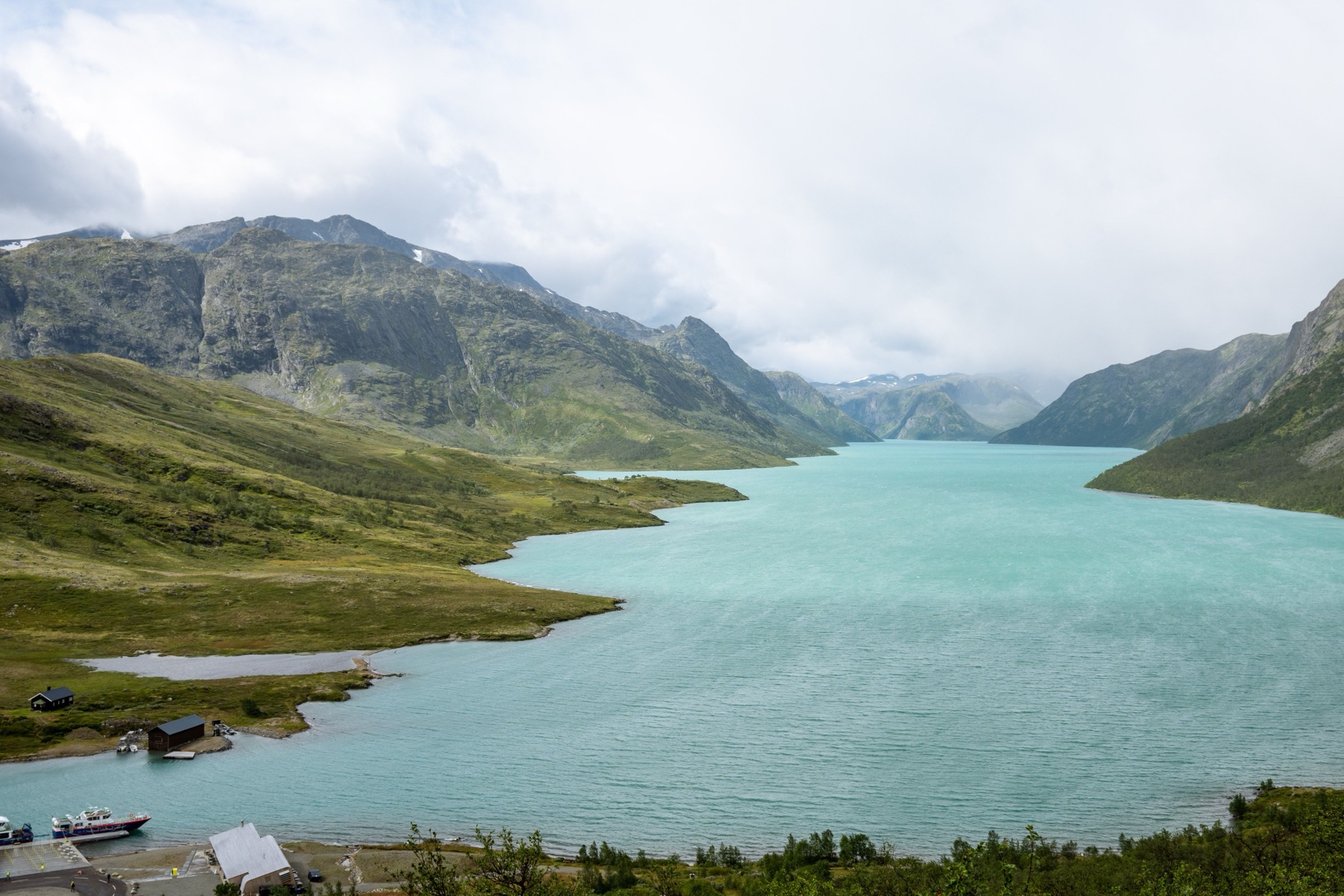
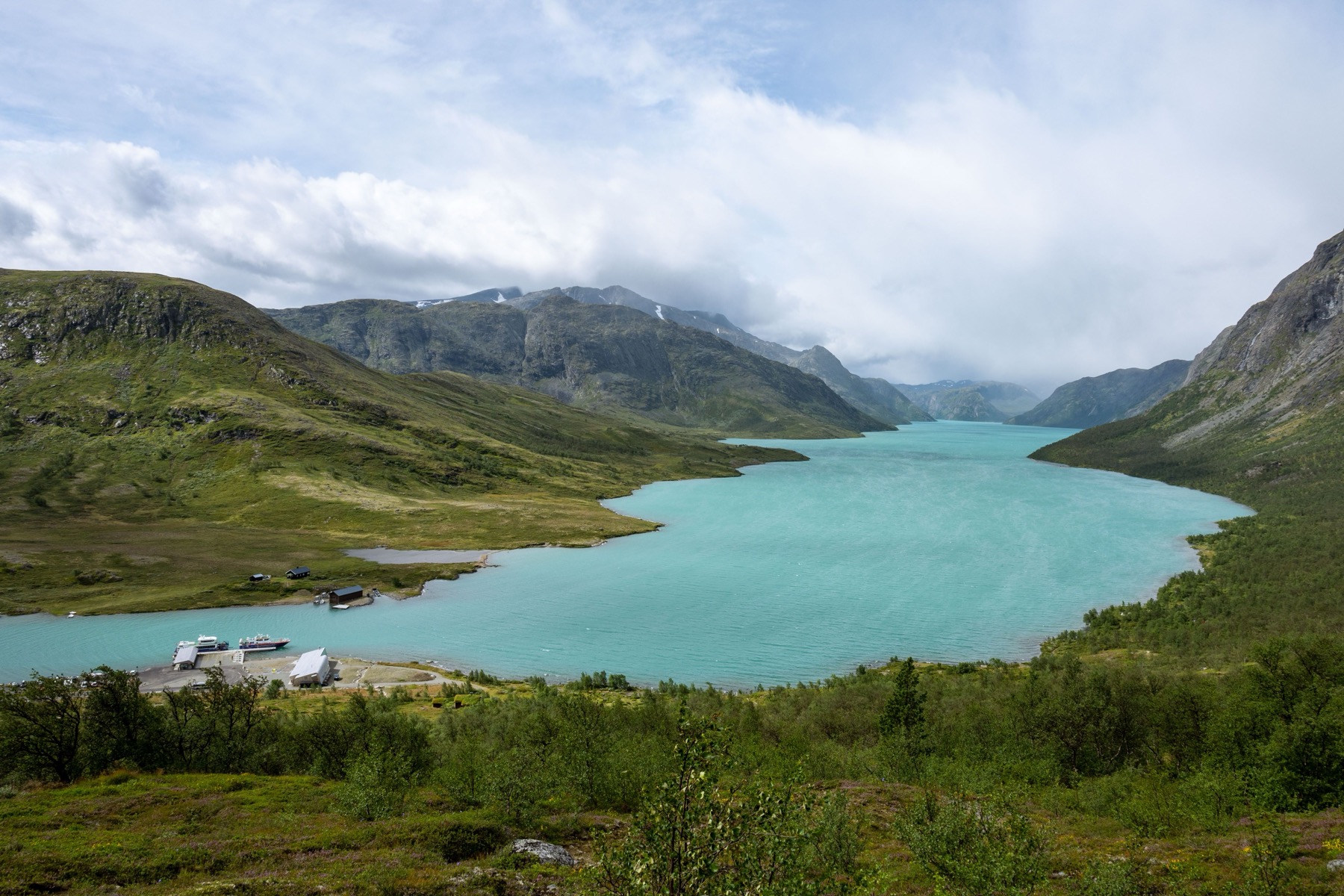
Lake Gjende is the figurative beating heart of the entire national park, and its long, narrow shape squeezed between steep mountains looks more like an enormous fjord. The most striking thing about the lake is its bright, opaque emerald colour, caused by fine rock flour that the melting glaciers from the surrounding hills constantly wash into the water.
The traditional Gjendebåten boat service works brilliantly for getting around the lake and runs throughout the summer. Regular boats shuttle between the landing stages at Gjendesheim, Memurubu and Gjendebu, which makes it incredibly easy for hikers to plan all sorts of day trips and multi-day treks across the park.
💡 Tip: Boat tickets for Gjende very often sell out well in advance during high season. Be sure to buy your tickets online with plenty of time to spare, otherwise you can easily end up stuck on the shore with your carefully planned trek ending before it even began.
5. The Sognefjellet Mountain Road
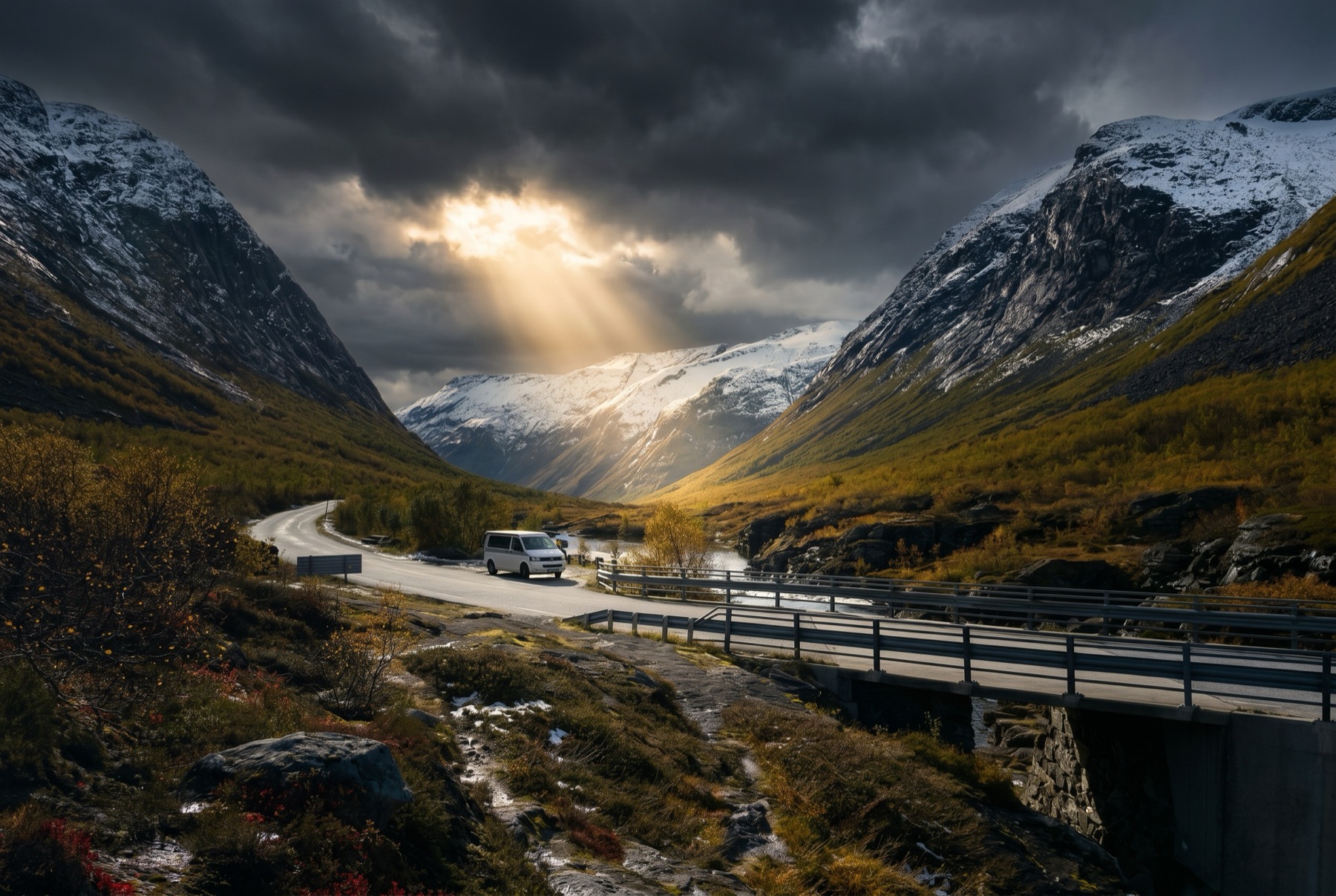
If you love driving and scenic routes, taking on the road known as Route 55 will be a dream come true. This national tourist route links the village of Lom with the deep Sognefjord, and as the highest mountain pass in northern Europe it climbs to an impressive altitude of 1,434 metres.
The road winds straight through the wildest parts of Jotunheimen and offers fantastic views of the surrounding glacial fields. What’s remarkable is that towering walls of snow often line the edges of the road even in the middle of high summer, creating a thoroughly surreal atmosphere you simply won’t experience back home in Central Europe.
Several superb, architecturally striking viewpoints have been built along the Sognefjellet road, where you can take a break. I’d recommend stopping at the Mefjellet viewpoint, for example, where you’ll find a modern stone sculpture and can quietly drink in the silence of the vast mountain plateaus.
6. Glaciers and Guided Tours
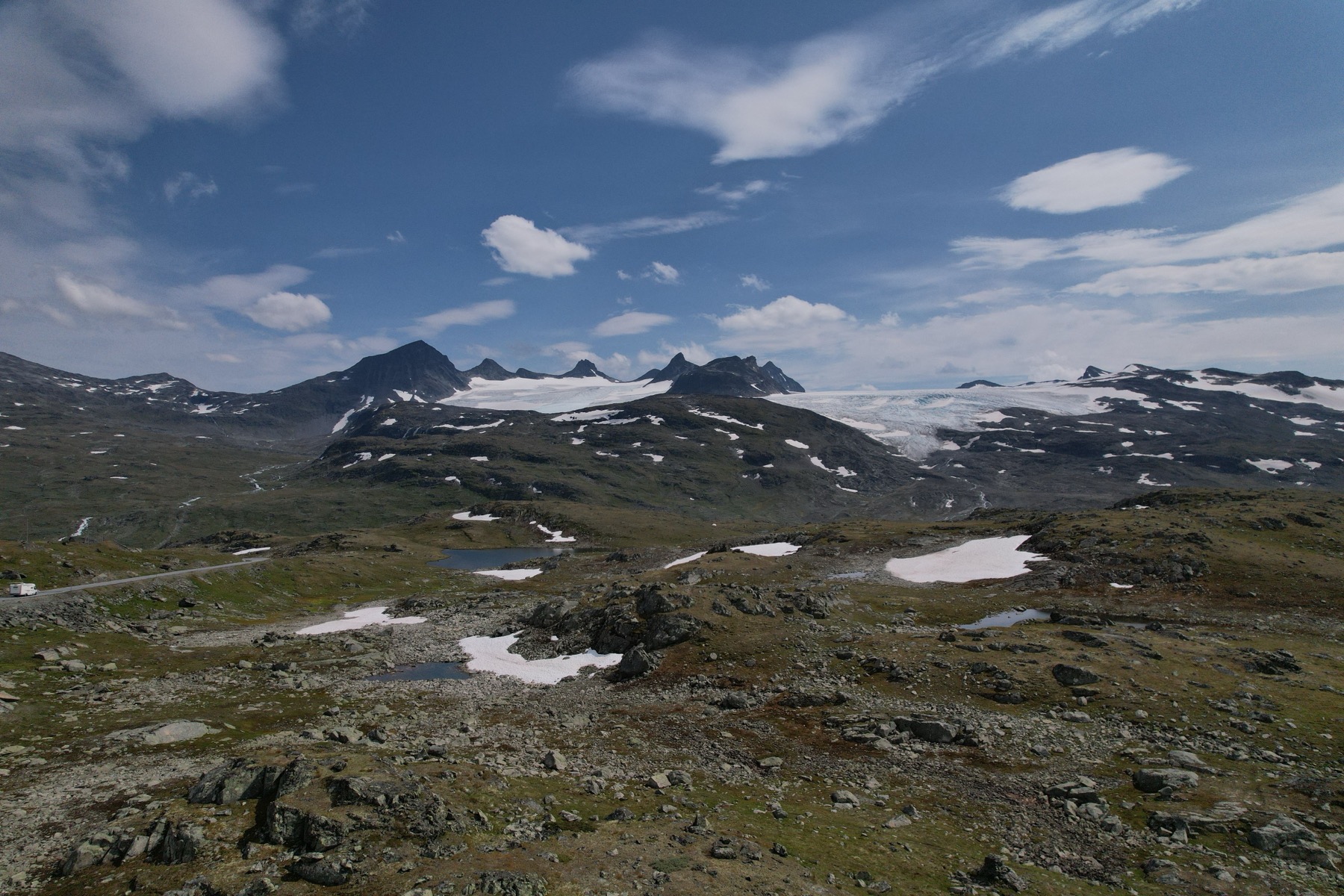
Jotunheimen is home to many fascinating glaciers, the standouts being huge masses of ice like Smørstabbreen and the treacherous Styggebreen. Walking across the wrinkled blue ice is an amazing experience, but you should never attempt it alone or without gear, because deep crevasses are often deceptively hidden under a thin layer of fresh snow.
If you don’t have your own crampons, ice axes and — above all — the right experience of moving on a glacier, the only safe way is to book a tour with a local guide. The professionals will kit you out with everything you need, rope you in, and safely lead you through the labyrinth of ice crevasses and beautiful blue caves.
💡 Tip: Don’t leave booking these specific trips to the last minute. Various glacier tours and climbs are very easy to find and reserve through GetYourGuide, where you’ll find reviews of verified local agencies and the reassurance that you’re in the hands of experienced mountaineers.
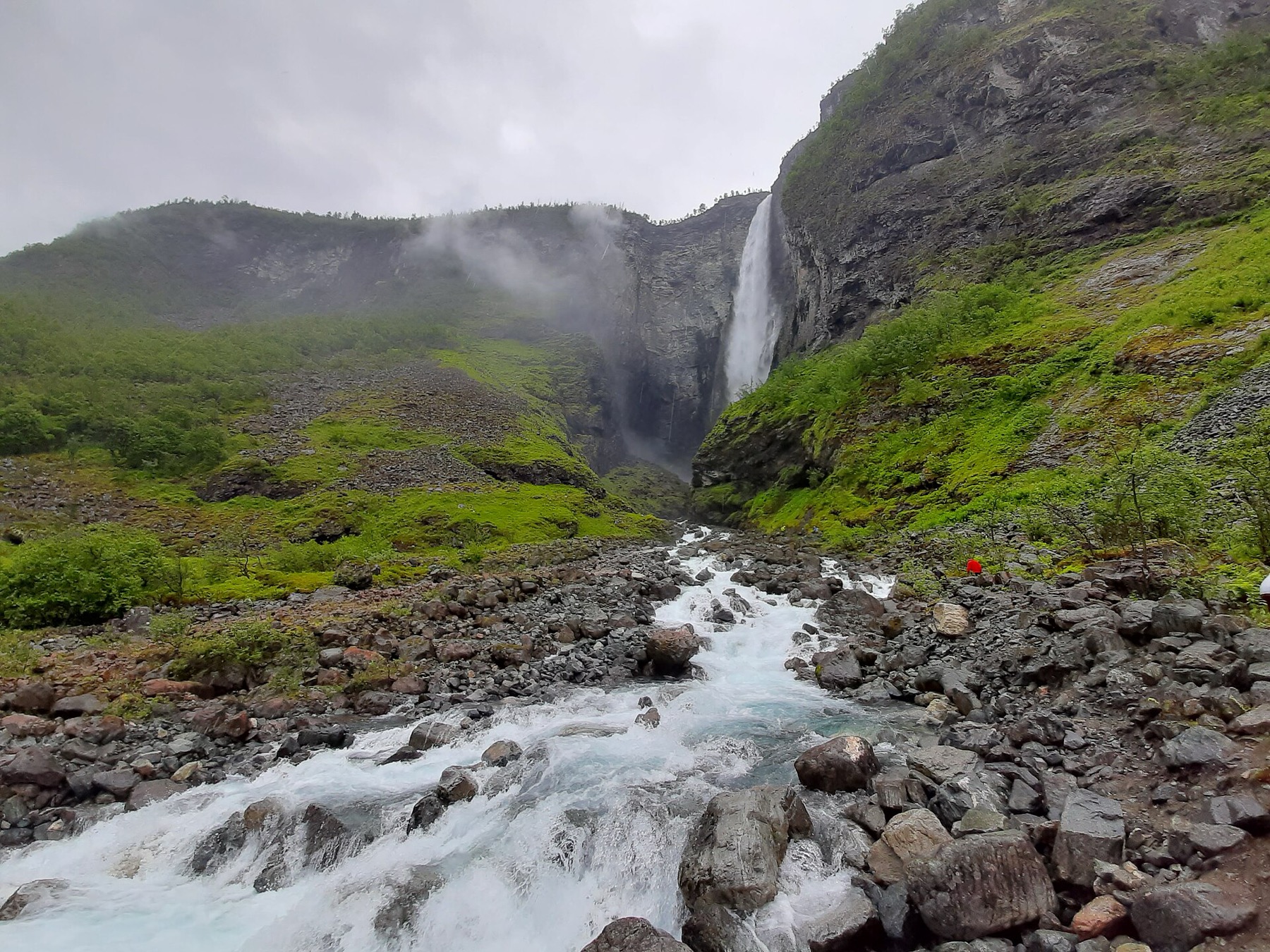
7. The Vettisfossen Waterfall
Although you’ll find waterfalls on almost every corner in Norway, Vettisfossen in the Utladalen valley near the hamlet of Øvre Årdal deserves very special attention. It’s one of the highest free-falling waterfalls in the country, with a staggering drop of around 275 metres, plunging with an enormous roar from a sheer cliff face deep into a forested canyon.
Unlike some of Norway’s famous waterfalls that you can comfortably reach by car, getting to Vettisfossen means earning it on foot. The hike begins at the Hjelle farm and leads through a gorgeous green valley alongside a wild river, with the whole round trip taking roughly 3 to 4 hours of pleasant walking over gentle terrain.
When you finally reach the viewpoint below the waterfall, the sheer power of the falling water will completely blow you away. The spray flies tens of metres and creates beautiful rainbows in the sunlight, so I’d recommend packing a light rain poncho or a waterproof jacket so you don’t get soaked before you’ve managed to snap your souvenir photo.
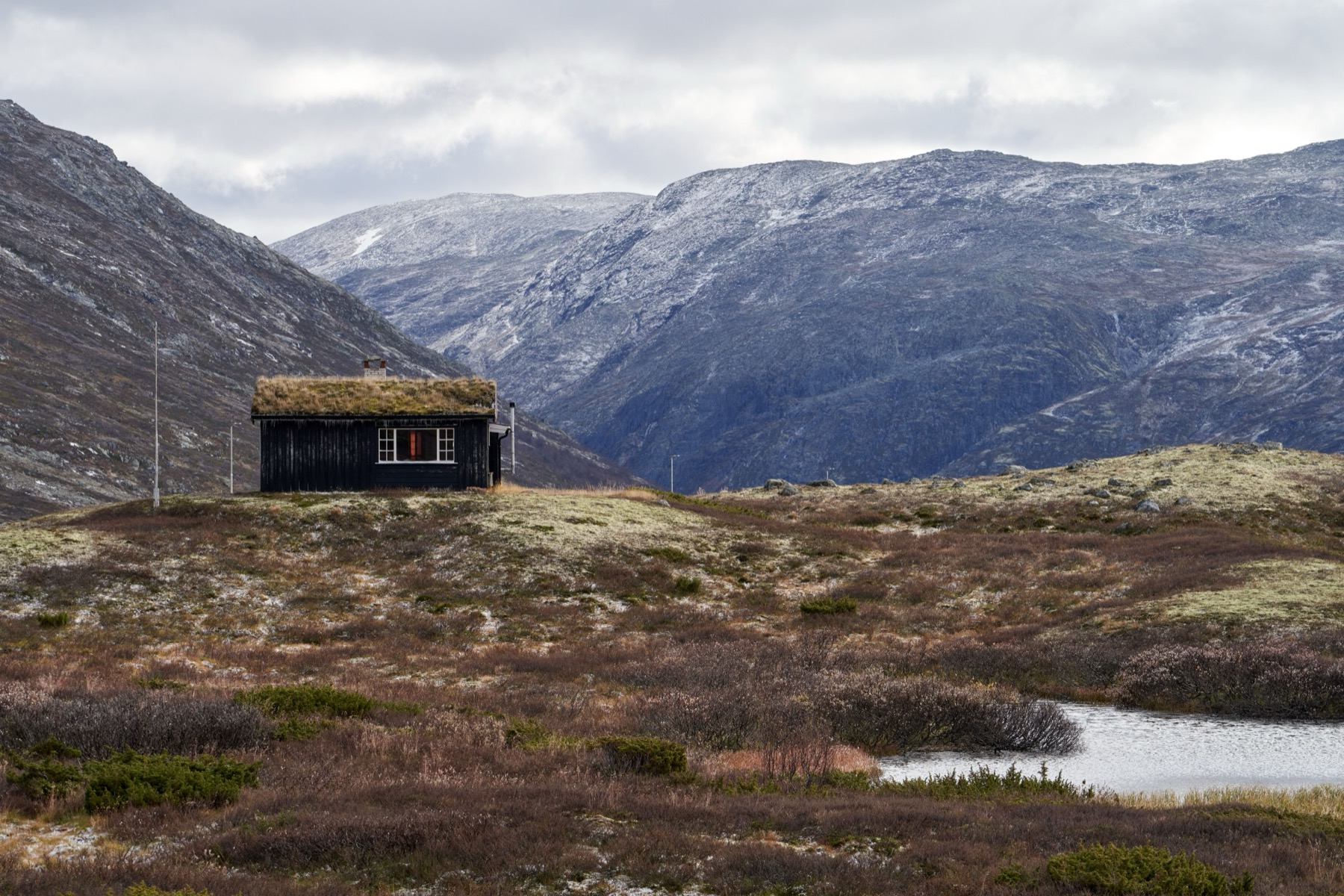
8. The DNT Mountain Hut Network and Multi-Day Treks
You’ll get to know the true character of Jotunheimen best when you work up the courage to set off on a multi-day crossing with a pack on your back. The Norwegian Trekking Association (DNT) maintains a fantastic network of mountain huts here, thanks to which you don’t have to carry a heavy tent and can travel fairly light through stunning nature from one shelter to the next.
The classic routes often connect iconic huts like Gjendesheim, Glitterheim, Spiterstulen or the popular base of Leirvassbu. At most of the larger staffed huts you can buy a hearty hot dinner made from local ingredients and pack a lunch box for the next day’s leg in the morning, which makes the logistics of the whole trek enormously easier.
💡 Tip: If you plan to stay in the huts often, consider membership of the DNT association. Members get significant discounts on accommodation as well as on supplies from the hut pantries, and the annual fee will pay for itself very quickly on a longer trek through the Norwegian mountains.
Where to Go Next from Jotunheimen
Once you’ve explored and hiked Norway’s highest mountains, it would be a shame not to carry on discovering the other gems this country has to offer. Just a short way west of the national park the landscape begins to break dramatically and plunge into the depths of the ocean, giving rise to Norway’s most famous natural phenomenon.
If you’re not sure exactly where to point your steering wheel next, we’ve put together an extensive article, Norway: 50 Things to See, packed with plenty more inspiration. You might also be interested in our detailed guide to the Norwegian fjords, which you can reach from Jotunheimen along the very same scenic Sognefjellet mountain road.
For a complete overview of what else the lower half of the country has in store, take a look at our piece Southern Norway: What to See. And if you’re still not sure which month to head north, our detailed breakdown of Norwegian weather and the ideal time to travel will definitely help.
Frequently Asked Questions
How difficult is the Besseggen ridge hike?
It’s a fairly challenging hike that measures about 14 kilometers and takes most people 6 to 8 hours. Especially at the narrowest point of the ridge, the terrain is very steep, you occasionally have to use your hands to hold on, and therefore the route requires good physical fitness and sturdy footwear.
Which mountain is the absolute highest in Norway?
The highest peak in Norway and indeed all of Scandinavia is Galdhøpiggen, which is located right in Jotunheimen National Park and reaches an elevation of 2,469 metres. At the very summit of the mountain, there’s a small mountain hut.
When can you visit Jotunheimen National Park?
The main season for hiking and multi-day treks is relatively short, lasting from the end of June to mid-September. At other times, trails are covered in deep snow, mountain huts are closed, and mountain roads are impassable.
How to best get to the Jotunheimen area?
The most comfortable option is to come by your own or rented car directly from Oslo, which is a journey that takes approximately 4 to 5 hours of driving. An excellent northern starting point to the park is the picturesque village of Lom. Public transportation here is very limited.
Do I need a guide to climb Galdhøpiggen?
Depends on the chosen route. If you take the popular and easier path from Juvasshytta hut, a guide is mandatory because you need to safely cross the glacier. If you choose the free but much steeper route from Spiterstulen hotel, you don’t need a guide as you avoid the glacier.
Where can you stay overnight in the national park?
The most commonly used accommodations are the iconic tourist lodges of the DNT association, such as Gjendesheim or Spiterstulen, as well as various mountain hotels. If you prefer more amenities, you can stay at campsites or guesthouses in the village of Lom. During the season, make sure to book everything in advance.
Why does Lake Gjende have such a striking turquoise color?
The fine glacial flour, which is constantly carried into the water by rivers from the surrounding melting glaciers, is responsible for the lake’s stunning emerald color. These tiny mineral particles then scatter sunlight in a specific way, creating this beautiful visual effect.
Tips and Tricks for Your Vacation
Don’t Overpay for Flights
Search for flights on Kayak. It’s our favorite search engine because it scans the websites of all airlines and always finds the cheapest connection.
Book Your Accommodation Smartly
The best experiences we’ve had when looking for accommodation (from Alaska to Morocco) are with Booking.com, where hotels, apartments, and entire houses are usually the cheapest and most widely available.
 🚗 Car rental on the roadVerified rental cars in Norway
Search with the DiscoverCars comparison engine — it compares prices from dozens of local and international rental companies, and most bookings come with free cancellation.
Compare car prices in Norway →Don’t Forget Travel Insurance
Good travel insurance will protect you against illness, accidents, theft, or flight cancellations. We’ve had a few hospital visits abroad, so we know how important it is to have proper insurance arranged.
Where we insure ourselves: SafetyWing (simple monthly subscription) and TrueTraveller (for extra-long trips).
Find the Best Experiences
Get Your Guide is a huge online marketplace where you can book guided walks, trips, skip-the-line tickets, tours, and much more. We always find some extra fun there!