

Utah is one of those dreams that gets right under your skin – red rock, arches carved by the wind, canyons so deep you can barely make out the bottom. But between “I want to see it” and “I’m going” sit a few annoying questions: how much does the whole thing cost, when is the best time to set off, and are you better off with a package tour or planning it all yourself?
Here in one place you’ll find three things: up-to-date tour and flight prices that we refresh every morning, our tried-and-tested tips from our own travels and articles about the individual parks, and a clear plan for when and what to book so you don’t end up overpaying.

What to see and do in Utah
Utah is all about its national parks – the famous “Mighty Five.” Each has its own character, and we’ve driven all five, so we know where it’s worth going and what you can happily skip.
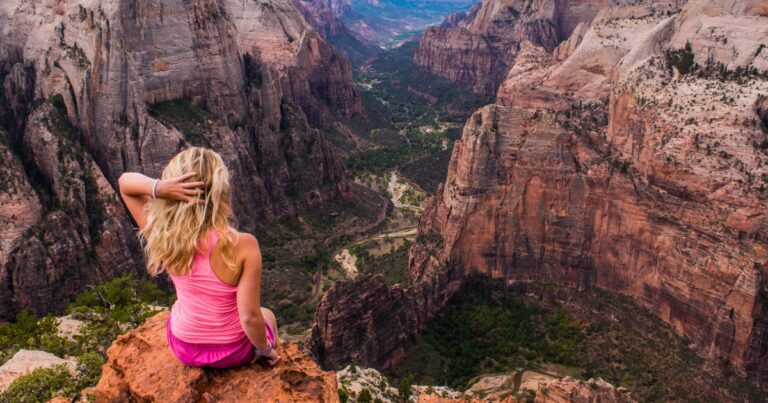
- Zion – the most-visited park, with narrow canyons; the iconic experiences are the climb up Angels Landing and wading the river in The Narrows.
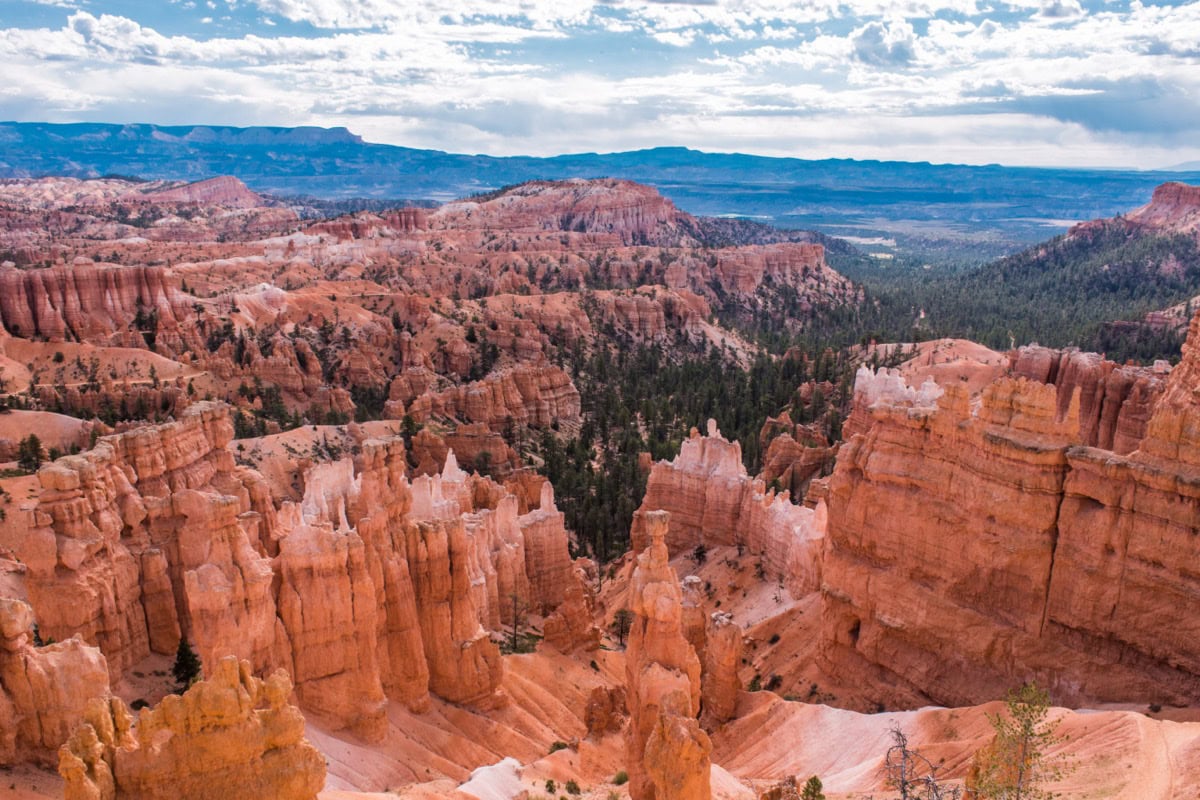
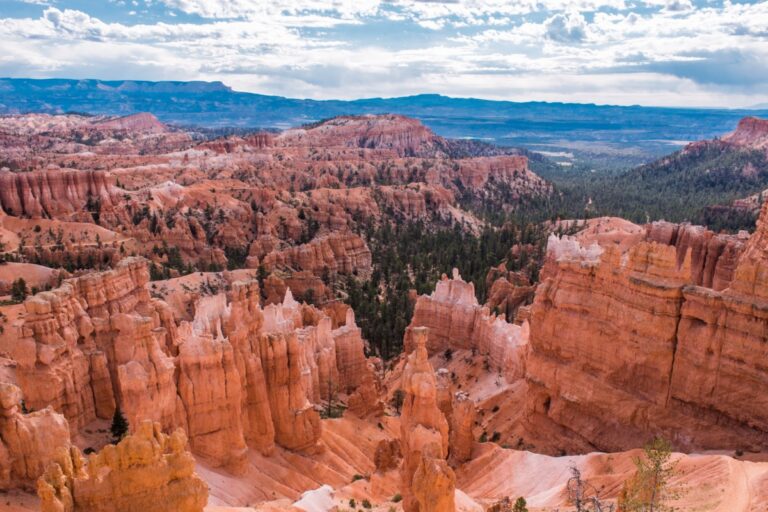
- Bryce Canyon – a forest of orange rock spires (hoodoos), most beautiful at sunrise from Sunrise Point.
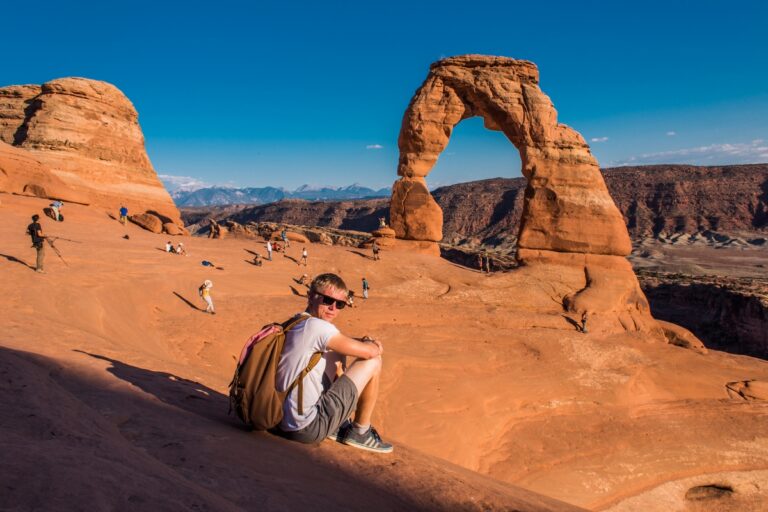
- Arches – over 2,000 natural arches, led by the famous Delicate Arch.
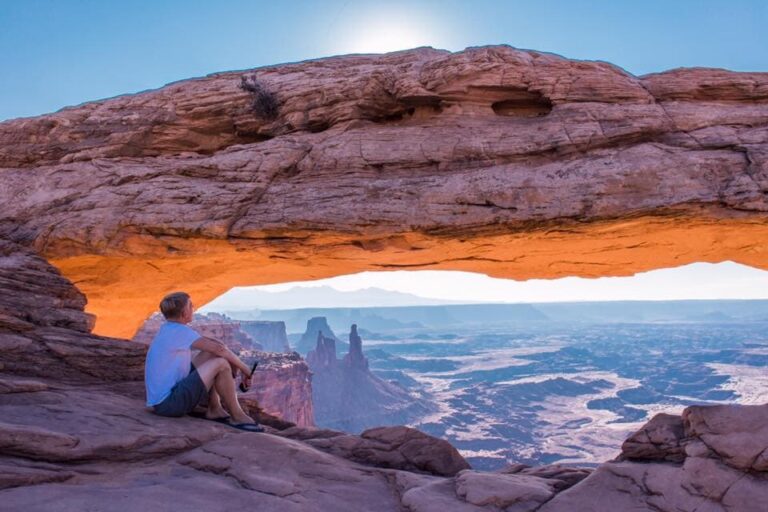
- Canyonlands – the vast canyons of the Colorado and Green rivers; the most accessible area is Island in the Sky.
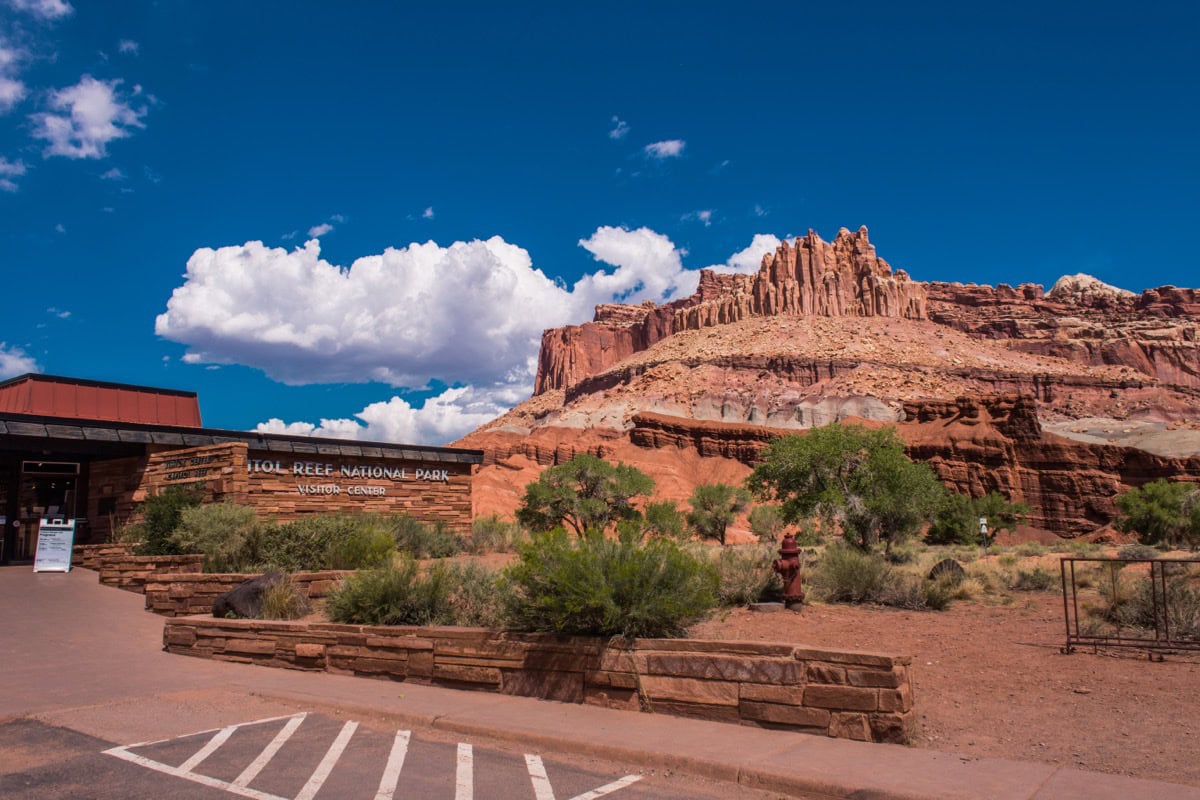
- Capitol Reef – the least crowded of the five, with orchards and quiet scenic drives.
Our favourite trio for a first visit is Zion, Bryce and Arches – they combine nicely and each shows you a completely different side of Utah. If you have the time, add Canyonlands and Capitol Reef for some peace and solitude.
When to visit Utah
The best time to go is spring (April–May) or autumn (September–October). The weather is pleasant for hiking, the crowds are thinner than in summer, and the colours of the rock really come alive.
Summer (June–August) is downright scorching – in the lower parks like Arches and Canyonlands temperatures regularly climb past 35–40 °C, and hikes have to be planned for early morning. Watch out, too, for sudden flash floods in the narrow canyons (typically The Narrows). On top of that, summer is the priciest and most crowded time – the car parks at Zion are often full before nine.
Winter has its own magic – a snow-covered Bryce Canyon is a fairy tale – but expect freezing temperatures, shorter days and some parts of the parks closed. Bryce sits at over 2,400 m above sea level, so it can be properly cold there even when it’s warm down below.
How to get to Utah
There are no direct flights from the Czech Republic to Utah – you’ll always change somewhere along the way. The most common gateway is Salt Lake City (SLC) airport, the main entry point for the northern part of the state. From Prague you’ll usually fly with one connection at a European hub (Amsterdam, Frankfurt, Paris) and then across the Atlantic, or with a connection in the US. The total journey takes around 13–17 hours depending on the route.
For the southern parks (Zion, Bryce) it’s often more practical to fly into Las Vegas (LAS) – from there it’s only about 2.5–3 hours’ drive to Zion and the flights tend to be cheaper. Getting around Utah without a car is tricky, so you’ll pretty much always want to pick up a rental car right at the airport.
Renting a car
In Utah a car is practically essential – the parks are far apart and there’s basically no public transport between them. A car only doesn’t pay off if you’re travelling with a tour operator that handles transport for you, or if you’re staying at a single park served by a shuttle (like Zion). But for a classic road trip through the Mighty Five, your own car is a must.
- Book in advance through a rental comparison site – picking one up on the spot in season tends to be expensive, and cars sometimes run out.
- Check the insurance – the base price often doesn’t include full cover; add CDW/SLI or have it through your own policy so there are no surprises at the desk.
- Expect a deposit on a credit card (not a debit card), and check the mileage limit – for a road trip you want unlimited mileage.
- Tolls in Utah are minimal, but if you head into neighbouring states, it’s handy to have electronic tolling sorted through the rental company.
Where to stay in Utah
In Utah, accommodation revolves mainly around the parks. For Zion, the most convenient base is the little town of Springdale right at the gate – prices are higher, but you’ll save time. For Arches and Canyonlands, the hub is the town of Moab, with a full range of hotels, motels and campgrounds. For Bryce, the village of Bryce Canyon City and its surroundings do the job.
- Motels and hotels – the most practical option near the parks; book well ahead, as they fill up fast in season.
- Campgrounds and RV parks – the cheapest option, popular with adventurers in a motorhome; in-park campgrounds book up months in advance.
- Larger cities (Salt Lake City) – a wider choice and better prices, but far from the parks.
Our tip: if you’re touring several parks, pick 2–3 bases rather than sleeping somewhere different every night – you’ll save loads of time and the hassle of constantly moving on.
Package tour or independent travel?
A package tour pays off when:
- you’re heading to the US for the first time and don’t want to deal with the ESTA, the car rental or route planning;
- you’d rather not drive the long distances between parks yourself;
- you want the certainty of a set programme and a guide to lead the way;
- you’re travelling solo and want to split the costs across a group.
Go it alone when:
- you want freedom over your pace – staying longer in one place, less in another;
- you love driving and the road trip is part of the experience for you;
- you want to save money and put the trip together your own way;
- you don’t mind arranging the bookings, the car and the entry fees yourself.
The two of us drove Utah independently by car, and we’d recommend that for most people – the flexibility is worth it and it works out cheaper in the end. But if you’re heading to America for the first time and the logistics scare you, a tour takes a lot of worry off your shoulders and makes that first trip far simpler.
Budget: daily costs in Utah
| Level | Accommodation | Food | Transport & activities | Total/day |
|---|---|---|---|---|
| Backpacker | 30 $–50 $ (camp, hostel) | 17 $–25 $ | 25 $–40 $ (car, entry fees) | approx. 70 $–115 $ |
| Standard | 75 $–130 $ (motel, 3*) | 30 $–50 $ | 40 $–60 $ | approx. 145 $–240 $ |
| Comfort | 150 $–260 $ (4*+ hotel) | 55 $–95 $ | 65 $–105 $ | approx. 270 $–460 $ |
Prices are a rough guide per person per day, excluding flights, and assume a car shared between two. A big chunk is the car rental and fuel — travelling as a pair or more works out better value. It’s also worth getting the annual America the Beautiful pass for 80 USD, which covers entry to all the national parks.
How to save when planning
- Buy flights 3–6 months ahead – transatlantic flights to the US are usually cheapest in this window, and last-minute deals here are almost never worth it. Search for flights in our finder.
- Compare SLC and Las Vegas – the difference in airfare can be significant, and depending on your park route, one of these gateways could save you thousands.
- Book accommodation near the parks in advance – in season (April–October) both Springdale and Moab fill up months ahead, and at the last minute you’ll seriously overpay. Take a look at our accommodation tips.
- Sort out entry with the annual pass – the America the Beautiful pass at 80 USD pays off from three parks onwards; otherwise you pay for each one separately.
- Book activities with limited capacity early – the Angels Landing permit in Zion, for example, is allocated by lottery in advance. You’ll find what to book ahead in the what to book early section.
- Keep an eye on tours over time – prices and availability change; you’ll find current offers in the current tours section.
Practical information
- Language and payments – they speak English, and you can pay by card absolutely everywhere; cash in dollars only really comes in handy for tipping. A tip of 15–20% is standard in restaurants.
- Entry to the US – Czech citizens need an approved ESTA authorisation; sort it out online at least a few days before you fly.
- Connectivity – signal in the parks is often weak or non-existent, so download maps and bookings offline. A data eSIM is the easiest way to be online the moment you land.
- Safety – Utah is very safe; the biggest risks are natural: heat, dehydration and flash floods in the canyons. Always carry plenty of water (3–4 litres per person for a full-day hike is no exaggeration).


