When Lukáš and I first drove through Utah, we planned to “just stop by” Capitol Reef National Park Utah on our way between Bryce Canyon and Arches. An hour or two, snap a few photos of some rocks, and move on. We ended up staying two days — and still left feeling like it wasn’t enough. 😅
Capitol Reef is that park your friends never tell you about, because they don’t know about it themselves. While you’re crammed into shuttle buses at Zion and queuing for Delicate Arch at Arches, here you stand completely alone amid red canyons, 100-million-year-old geological layers, and fruit orchards where you can pick peaches. Yes, peaches. In a national park. In the desert. 🍑
In this article, you’ll find a complete guide to Capitol Reef National Park — from the most beautiful hikes and viewpoints to the mysterious Cathedral Valley, plus practical tips on where to stay, how much it costs, and how long to spend here. I’ve put together 15 tips on what to see and do, and trust me, you’ll fall in love with this place just as much as we did.
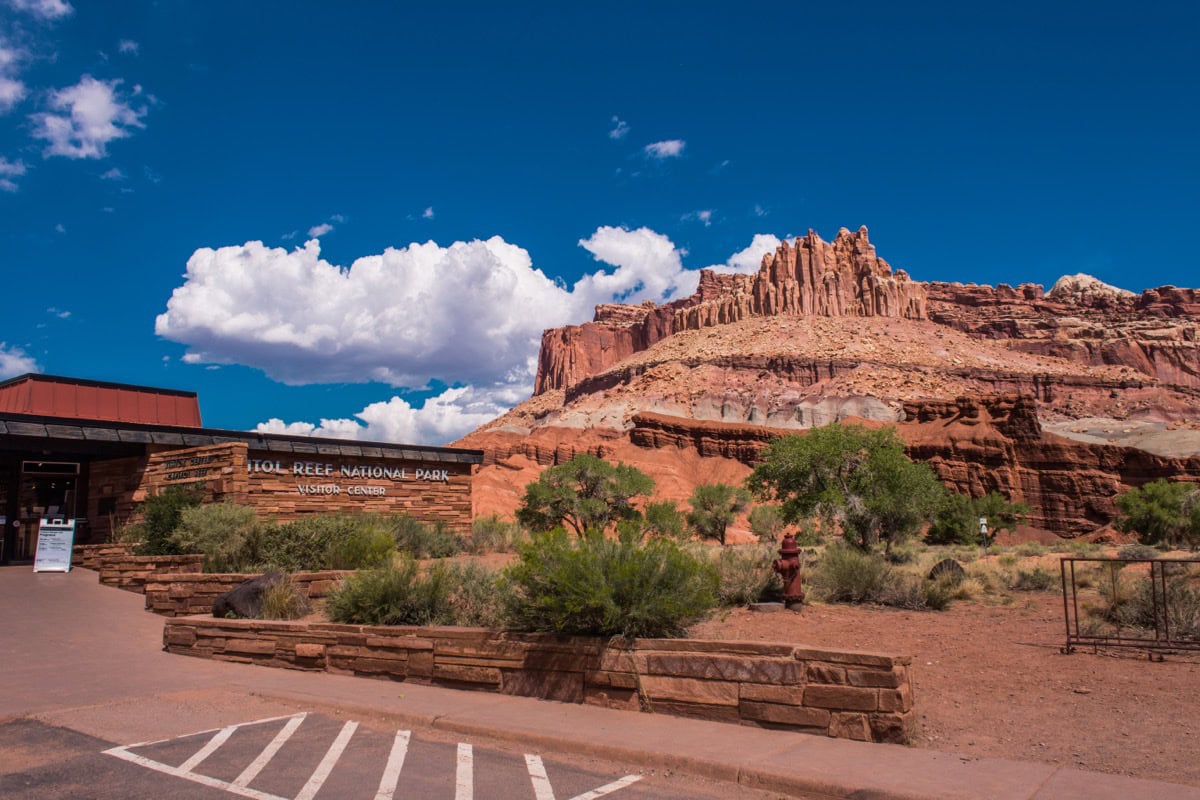
TL;DR
- Capitol Reef is the least visited of Utah’s five national parks — the so-called Mighty Five — and that’s its greatest charm. No crowds, no reservations needed, just you and 100 million years of geology.
- Waterpocket Fold is the main geological attraction — a nearly 100-mile-long “wrinkle” in the Earth’s crust that you won’t find anywhere else.
- Scenic Drive (about 8 miles) can be enjoyed from your car, so even those who’d rather not hike for miles will appreciate the park.
- The best hikes are Hickman Bridge (easy, 1.7 miles), Cassidy Arch (moderate, jaw-dropping views), and Cohab Canyon (a hidden gem).
- Fruita — a historic settlement in the heart of the park with orchards where you can pick fresh fruit in season (for a small fee).
- Cathedral Valley is the wild, remote section of the park accessible only by 4WD — and worth every minute of bouncing along rough roads.
- The nearest town is Torrey (15 minutes from the entrance), where you’ll find accommodation and restaurants.
- Allow at least 1–2 full days for the park, ideally 3 if you want to explore Cathedral Valley.
- Entry fee is $20 per vehicle (7-day pass) or free with an America the Beautiful Pass ($80 per year for all US national parks).
- The best time to visit is spring (April–May) and autumn (September–October) — pleasant temperatures and gorgeous colours.
The full destination guide: Utah — guide and what to see
When to visit Capitol Reef and how to get there
Capitol Reef sits in central Utah, far from everything yet surprisingly well connected to a loop of the other Utah national parks. Let’s go over when to visit and how to actually get here so you can plan your trip stress-free.
Best time to visit
Spring (April–May) and autumn (September–October) are ideal. Temperatures hover between 15–25 °C (60–77 °F), which is perfect for hiking. In spring, the fruit trees in Fruita burst into bloom — it’s a stunning sight, and if you’re lucky, you’ll catch a few late wildflowers in the canyons too.
Summer (June–August) is brutal. Temperatures regularly exceed 35 °C (95 °F), and on exposed trails it can climb above 40 °C (104 °F). If you’re visiting in summer (we did too, because we simply had no choice 😅), hit the trails early in the morning or late in the afternoon and bring at least 3 litres of water per person. And a hat. Seriously, a hat.
Winter (December–February) is quiet and has its own charm — red rocks dusted with snow are incredibly photogenic. However, some roads (Scenic Drive, Cathedral Valley) may be closed due to snow or mud. Night-time temperatures drop well below freezing.
How to get to Capitol Reef
The park sits on Highway 24, which runs right through it — and it’s one of the most beautiful roads we’ve driven in the USA. The nearest major cities:
- Salt Lake City — approx. 230 miles (3.5–4 hours by car)
- Las Vegas — approx. 370 miles (5.5–6 hours)
- Moab (Arches, Canyonlands) — approx. 145 miles (2.5 hours)
- Bryce Canyon — approx. 120 miles (2 hours)
The most common scenario is fitting Capitol Reef into a Utah national parks road trip. Something like Zion → Bryce → Capitol Reef → Canyonlands → Arches. We did exactly this and it worked perfectly — Capitol Reef fell right in the middle as the “relaxing” park (relaxing in quotation marks, because the hikes will still give your legs a proper workout).
A car is essential. There’s no public transport here. If you’re flying into the US from the UK, you’ll most likely land at Salt Lake City or Las Vegas and pick up a hire car. We’ve had consistently good experiences with DiscoverCars, which lets you compare offers from multiple agencies — you’ll usually find a better deal than going directly to the rental company’s website. For Capitol Reef you don’t necessarily need a 4WD (unless you’re heading to Cathedral Valley); a standard saloon or SUV is fine for Scenic Drive and all the main trails.
Park entrance fees
Highway 24 is free — it runs through the park and you can stop at several viewpoints and trailheads without paying. But if you want to drive Scenic Drive (and you do, trust me), you’ll need to pay the entrance fee:
- $20 per vehicle (valid for 7 days)
- Free with an annual America the Beautiful Pass ($80, about £65), which covers all US national parks
If you’re road-tripping through multiple parks, the America the Beautiful Pass pays for itself from the third park onwards. We had one and it saved us roughly three times over. If you’re planning to visit more parks in the US, check out our article on the most beautiful places in the USA — Capitol Reef is in there, of course.
Where to stay and how much Capitol Reef costs
There’s no accommodation inside the park itself (unless you count campsites), but the surrounding area offers a surprisingly decent selection. The closest and most practical base is the small town of Torrey, just a 15-minute drive from the park’s western entrance. Another option is Bicknell (20 minutes) or Hanksville (50 minutes east, handy if you’re heading towards Moab).
Torrey — the best base
Torrey is a tiny community of a few hundred people, but it has everything a visitor needs — motels, B&Bs, a handful of restaurants, and even a charming little café. Prices are noticeably more affordable than accommodation near more popular parks (hello, Springdale near Zion and your $300-a-night rooms 😅).
Approximate prices per night (for two):
- Budget motel — $80–120 (about £65–95)
- Mid-range (B&B, lodge) — $120–200 (about £95–160)
- Upscale lodge — $200–350 (about £160–280)
Camping in the park
If you love sleeping under the stars, Fruita Campground is one of the most beautiful campsites we’ve stayed at in America’s national parks. It sits right among the fruit orchards, at night there’s absolute darkness (Capitol Reef is a certified International Dark Sky Park!), and in the morning you wake to birdsong. You might even snag a pitch beneath a centuries-old tree.
- Price: $25/night (about £20)
- 71 sites, reservations via Recreation.gov
- In season (March–October) it fills up fast — book at least 2–3 months ahead
- There are NO showers, but drinking water and toilets are available
Another option is Cathedral Valley Campground (6 sites, free, no water) on a first-come-first-served basis — strictly for those with a 4WD and an adventurous spirit.
How much 2–3 days at Capitol Reef costs (for two)
A rough budget for 2–3 days for two people:
- Accommodation (2 nights in a motel in Torrey): $160–300 (£130–240)
- Entrance fee (or a proportional share of America the Beautiful Pass): $20–40 (£16–32)
- Petrol (from Bryce Canyon and back + driving around the park): $40–60 (£32–48)
- Food (restaurants in Torrey + snacks): $80–150 (£65–120)
- Total: roughly $300–550 (£240–440)
Compared to other Utah parks, Capitol Reef is significantly cheaper — mainly thanks to accommodation prices in Torrey, which are often 30–50% lower than Springdale (Zion) or Moab (Arches).
Capitol Reef: 15 things to see and do
Now for the main event — specific tips on what to see and do in Capitol Reef National Park. I’ve arranged them from must-sees you can tick off in half a day through to the Cathedral Valley adventure for those with more time. Below each tip you’ll find practical info — distance, difficulty, and how long to allow.
1. Scenic Drive — the most beautiful 8 miles on four wheels
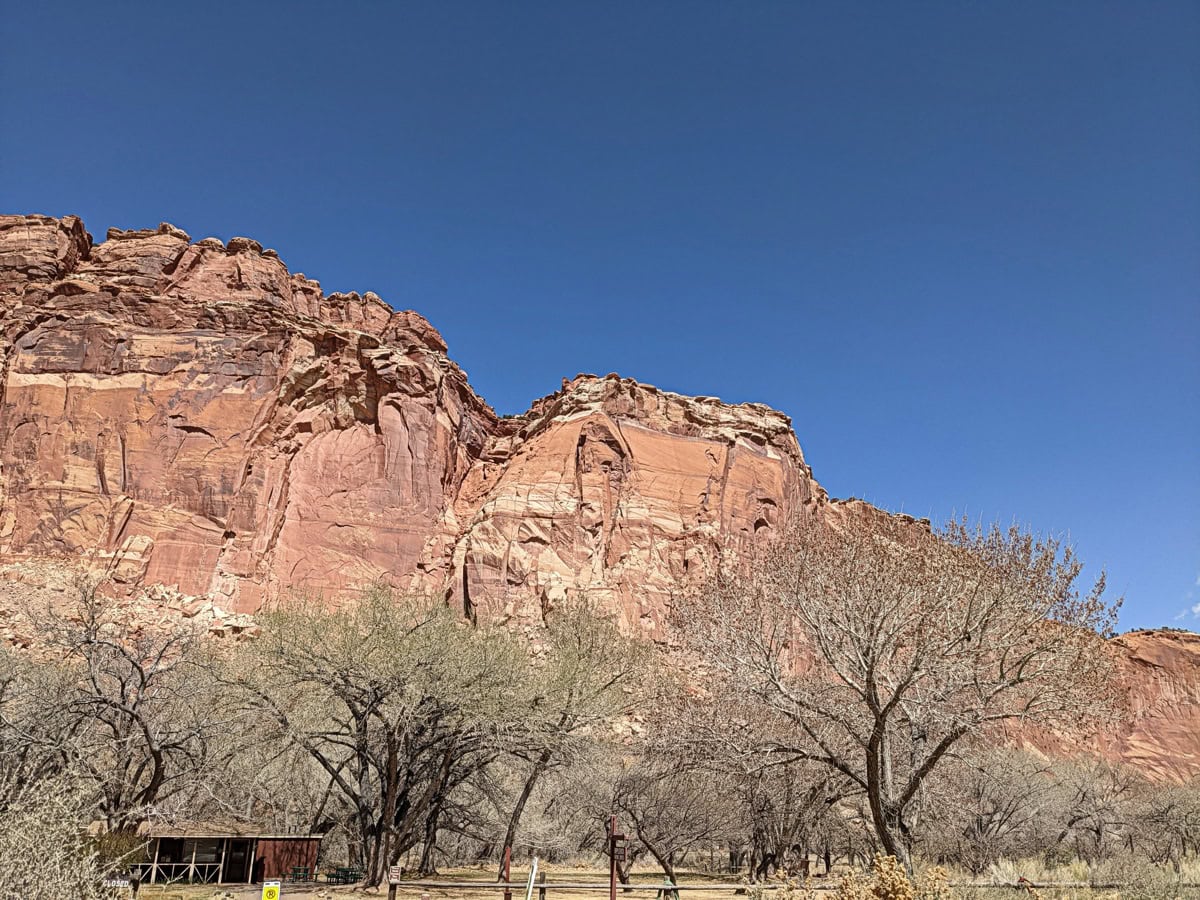
If you’re really short on time at Capitol Reef, Scenic Drive is the absolute minimum you need to see. It’s an 8-mile paved road heading south from Fruita along the base of Waterpocket Fold, and I guarantee you’ll be pulling over every few hundred metres.
The road winds through red, orange, and white layers of rock that look as if they’ve been painted. Several short side roads and viewpoints branch off — Grand Wash and Capitol Gorge are the two most interesting (and each has its own hike, see below). At the end, Scenic Drive transitions into an unpaved road continuing further south — you’ll need a higher-clearance vehicle for that stretch.
Practical info: Scenic Drive takes roughly 1–2 hours without stops, but with photos and short detours, budget 3–4 hours. It requires the $20 entrance fee or an America the Beautiful Pass. There are virtually no facilities along the road — bring water and snacks.
2. Waterpocket Fold — a geological marvel found only here
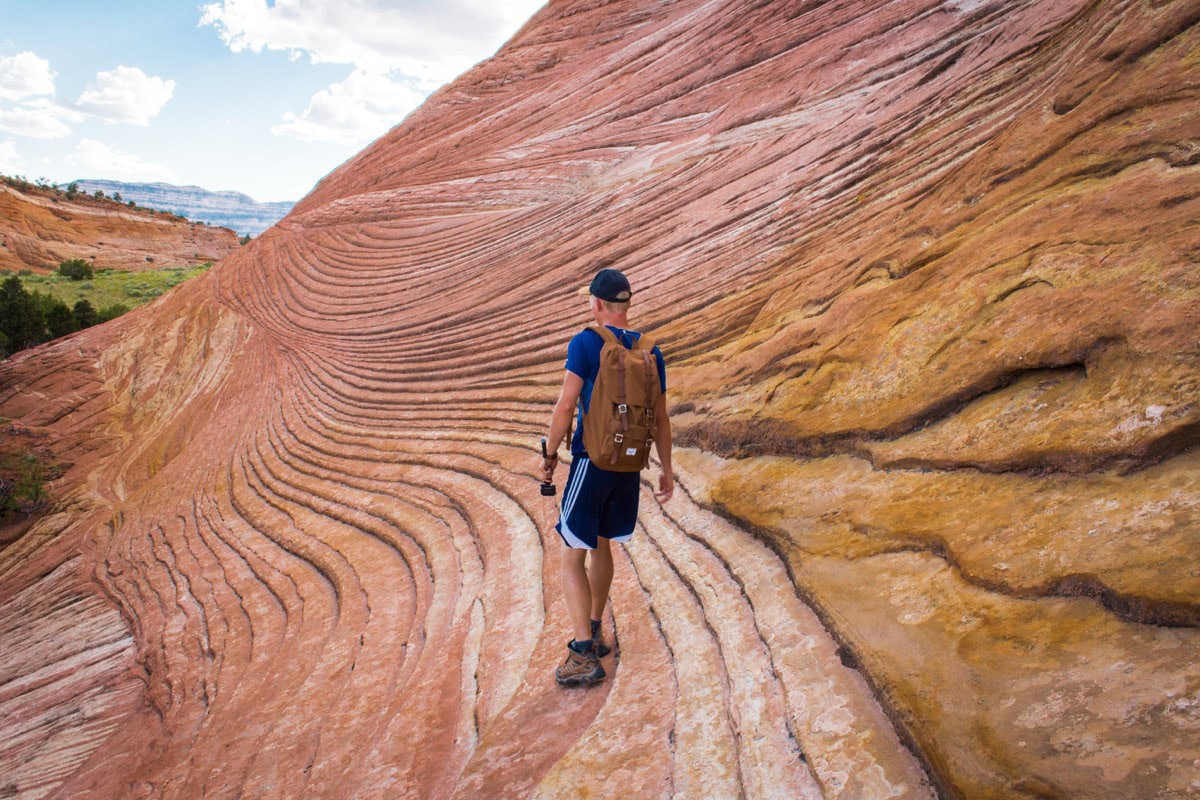
This is the reason Capitol Reef exists as a national park in the first place. Waterpocket Fold is a nearly 100-mile-long monocline — a massive “wrinkle” in the Earth’s crust where geological layers have been tilted upward, exposing millions of years of the planet’s history like the pages of an open book.
You can see it best from viewpoints along Highway 24 and Scenic Drive, but if you want to truly grasp its scale, head to Strike Valley Overlook (at the southern end of the park, high-clearance vehicle needed). From there, the Fold stretches in both directions beyond the horizon, looking like a rumpled blanket in shades of red, white, and grey.
Waterpocket Fold formed roughly 50–70 million years ago during the same mountain-building process that created the Rocky Mountains, and erosion has been slowly uncovering it ever since. The result is simply breathtaking. You stand there thinking how absurd it is that so few people know about this.
3. Hickman Bridge Trail — the perfect hike for everyone
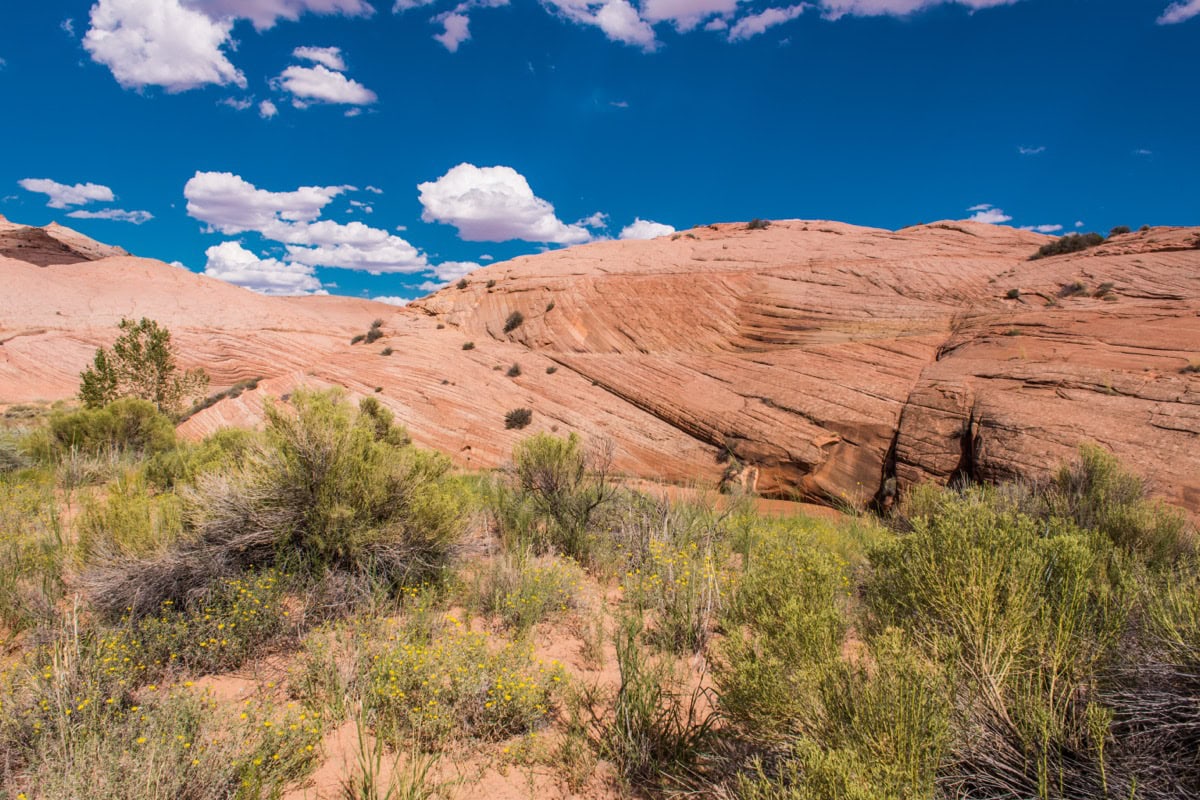
If you only do one walk at Capitol Reef, make it Hickman Bridge. This trail is short (1.7 miles round trip), relatively easy, and the reward at the end is huge — a natural rock bridge spanning 130 feet, one of the largest in Utah.
The trailhead is on Highway 24 (parking is free, no entrance fee required) and it climbs gently along the side of a canyon. Along the way you’ll pass smaller rock formations and views of the Fremont River in the valley below. When you reach the bridge itself, it feels like standing inside a cathedral — the arch soars high above you and light filters through it in the most magical way.
Practical info: About 400 feet of elevation gain. Allow 1–1.5 hours. Morning light is gorgeous for photos and it’s not yet scorching hot. Bring water even for this short trail — we’re in the desert.
4. Cassidy Arch Trail — for those who want a bit of adrenaline
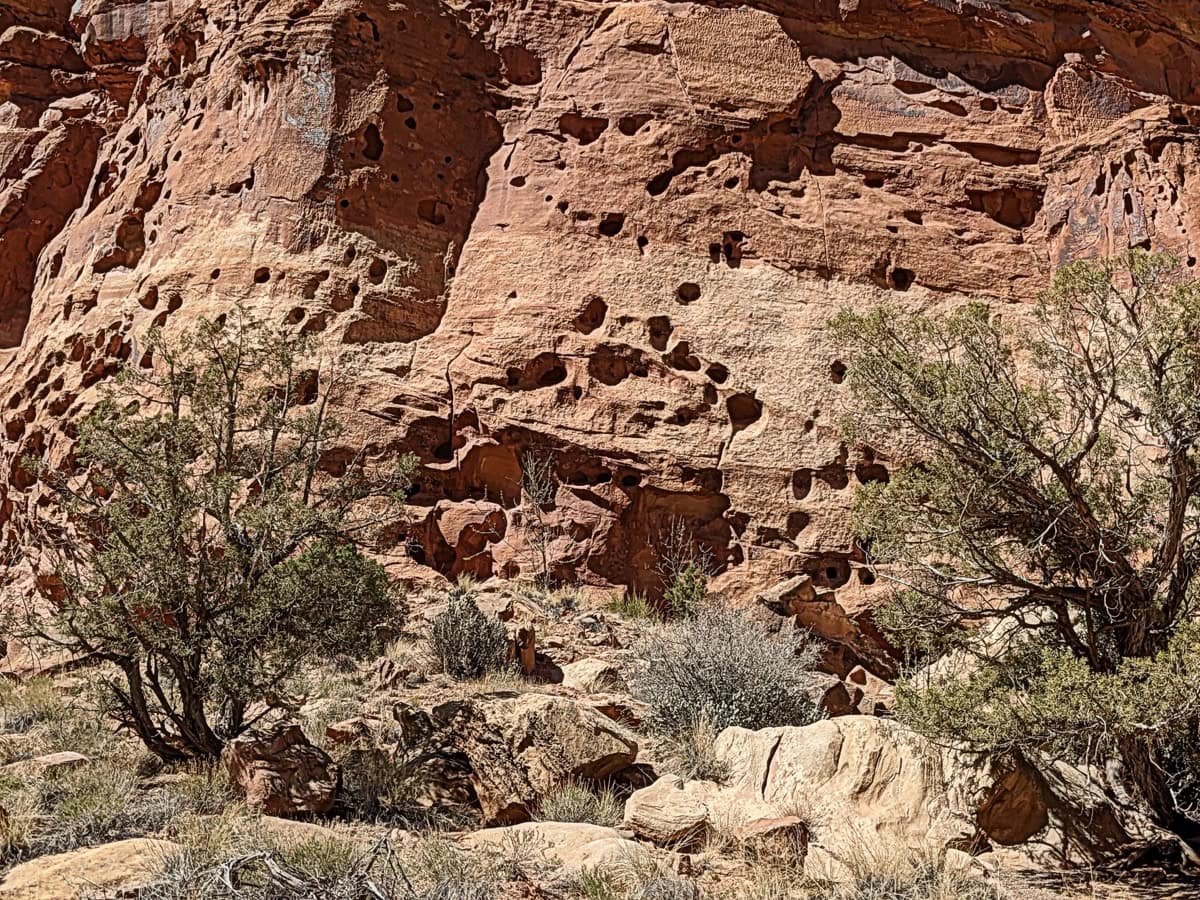
Named after Butch Cassidy (yes, the infamous outlaw actually hid out around here!), Cassidy Arch Trail takes you to the top of a rock arch that you can stand on. And look down. And gulp. 😅
The trail starts at Grand Wash on Scenic Drive and is rated moderate — 3.5 miles round trip with about 650 feet of elevation gain. Most of the climbing is in the first half; then the path levels out and follows the canyon rim with views that will take your breath away. When you reach the arch, you can climb onto it (at your own risk) and stand right on its spine. Lukáš lay on his stomach and photographed the drop — I stood a bit further back pretending I was totally fine with it. 😁
Practical info: Allow 2–3 hours. Avoid the midday sun — the trail is largely exposed. Don’t forget sturdy footwear (check out our favourite hiking boots).
5. Grand Wash — a walk along the canyon floor
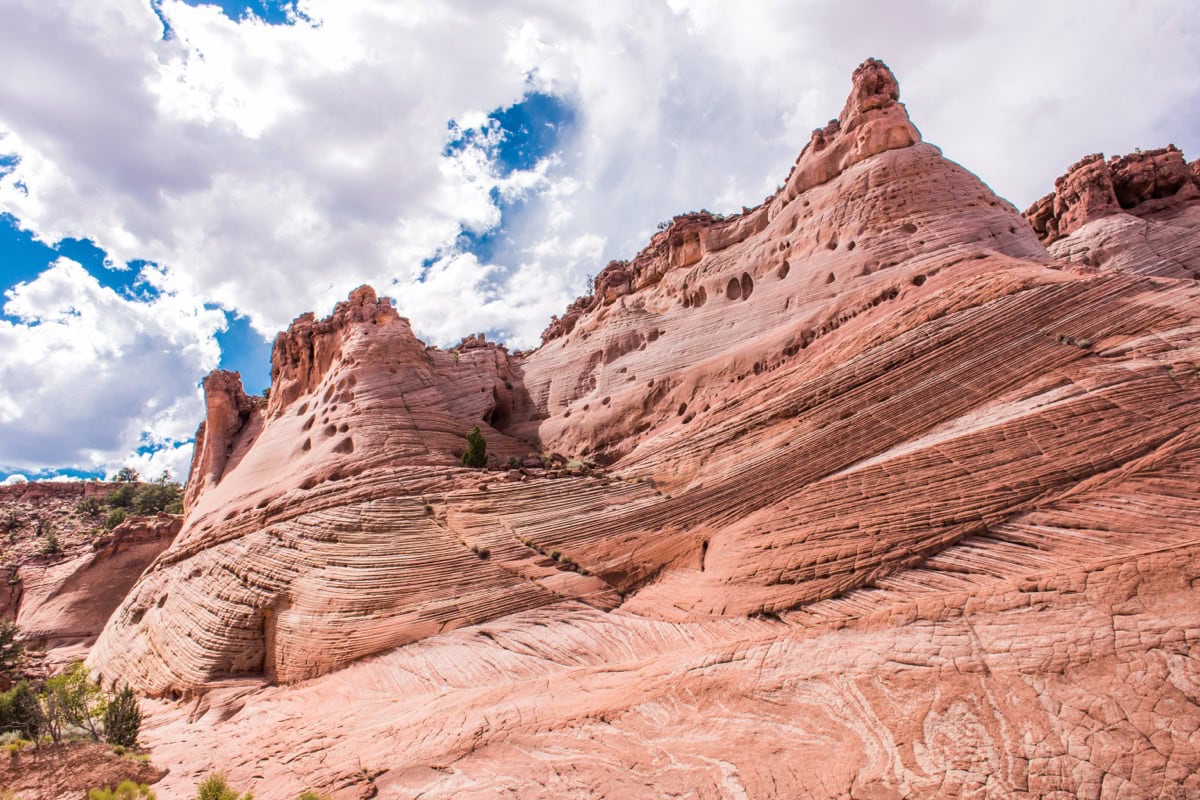
Grand Wash is one of those trails where you feel truly small. You walk along the bottom of a narrow canyon with walls towering hundreds of feet on either side, and all you can see above is a thin strip of sky. It’s a bit like The Narrows in Zion — minus the water, minus the crowds, and minus the shuttle bus.
The trail is flat (2.8 miles round trip, virtually no elevation gain), so absolutely anyone can manage it — families with children, grandparents, everyone. In some spots the canyon walls are just a few metres apart and display gorgeous stripes in shades of orange and cream.
Important warning: Grand Wash is a flash flood area. If there’s any forecast of storms (even distant ones!), DO NOT enter the canyon. Flash floods in Utah are deadly and arrive without warning. Check the weather on the NPS website each morning.
Practical info: 1–1.5 hours, easy. Starts from Scenic Drive or from Highway 24 (the opposite end of the canyon). Most beautiful in the morning when sunbeams penetrate the canyon and illuminate the walls.
6. Capitol Gorge Trail — petroglyphs and historic inscriptions
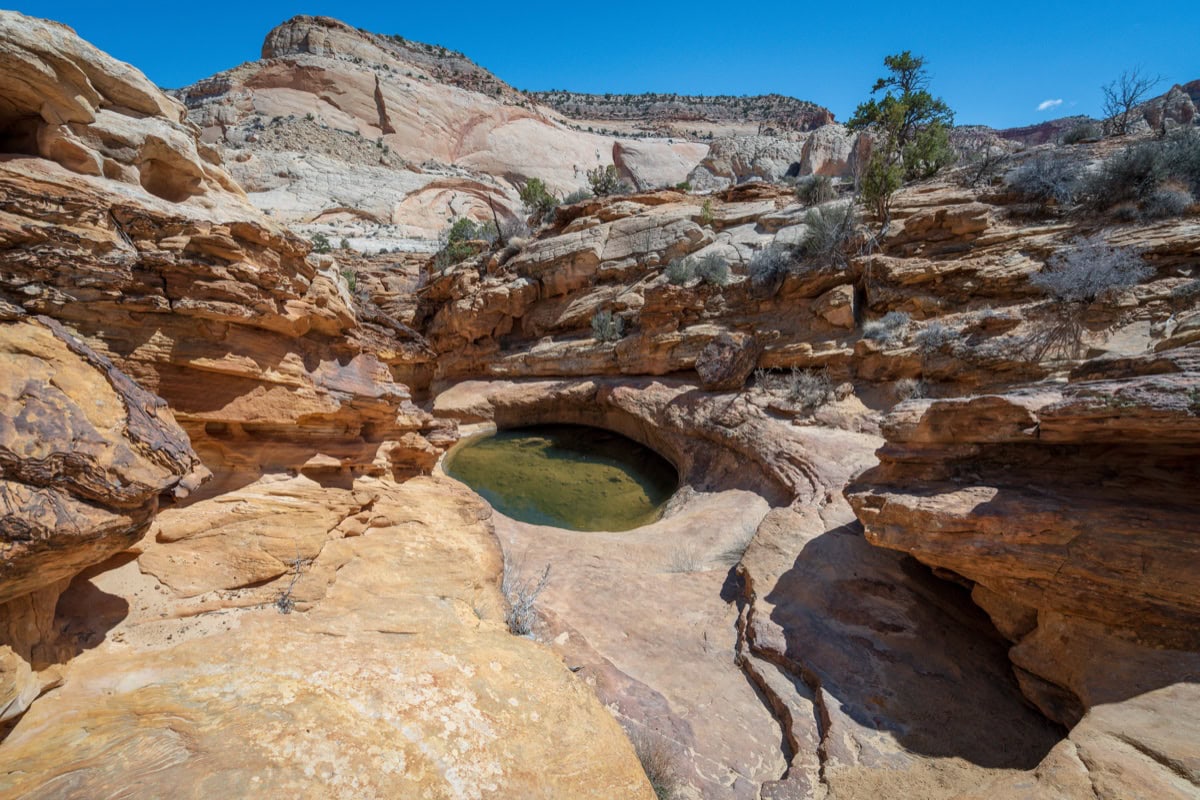
Capitol Gorge is another canyon walk, but with a historical bonus. At the end of Scenic Drive (where the tarmac gives way to dirt) you’ll find a trail leading through a narrow gorge. Along the way you’ll pass the Pioneer Register — a rock wall where early settlers and travellers scratched their names starting back in 1871.
It’s a peculiar feeling — standing before the names of people who passed through here with ox-drawn wagons 150 years ago, wondering what they must have felt when they first laid eyes on these red canyons. Further along the trail you’ll also find “water tanks” — natural rock hollows that collect rainwater (and that’s actually where the whole park gets its name — “waterpocket” fold).
The trail is easy, 2 miles round trip, and works brilliantly as a combo with Scenic Drive — park at the end of the road, walk through the gorge, and head back.
Practical info: 1–1.5 hours. The same flash flood warning applies as for Grand Wash. The car park at the end of Scenic Drive is small — arrive in the morning if possible.
7. Fruita — orchards in the middle of the desert
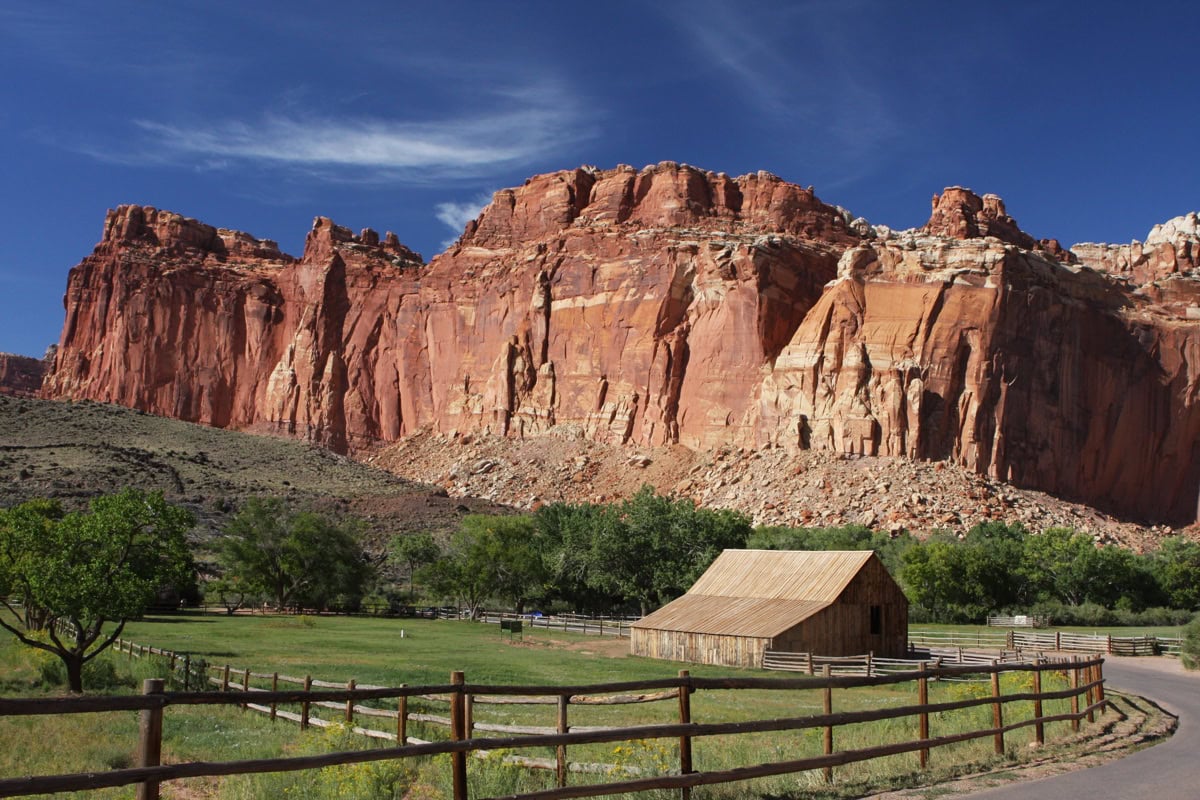
This is probably the most surreal experience in Capitol Reef. In the middle of a desert national park, you stumble upon lush green orchards of cherries, apricots, peaches, pears, and apples. Fruita is the remnant of a 19th-century Mormon settlement, and the National Park Service maintains the orchards to this day — irrigation canals and all.
And here’s the best part: when it’s harvest season, you can pick the fruit yourself. You pay just a small fee (in 2024 it was $1 per pound) and pick straight from the tree. Cherries in June, apricots and peaches in July and August, apples and pears in autumn. A sign at the entrance to each orchard tells you whether it’s currently “open for picking” or not.
We picked apricots in July and I have to say they were the best apricots I’ve ever eaten. Maybe because we’d travelled thousands of miles from Europe to get them. 😅 Or maybe because they’d ripened on the tree in the desert sun and were warm and sweet. Either way — an unforgettable experience.
Around the orchards you’ll also find historic buildings (a schoolhouse, a barn, and Gifford Homestead, where they sell homemade pies) plus a lovely picnic spot by the Fremont River.
8. Petroglyphs Panel — art that’s 1,000 years old
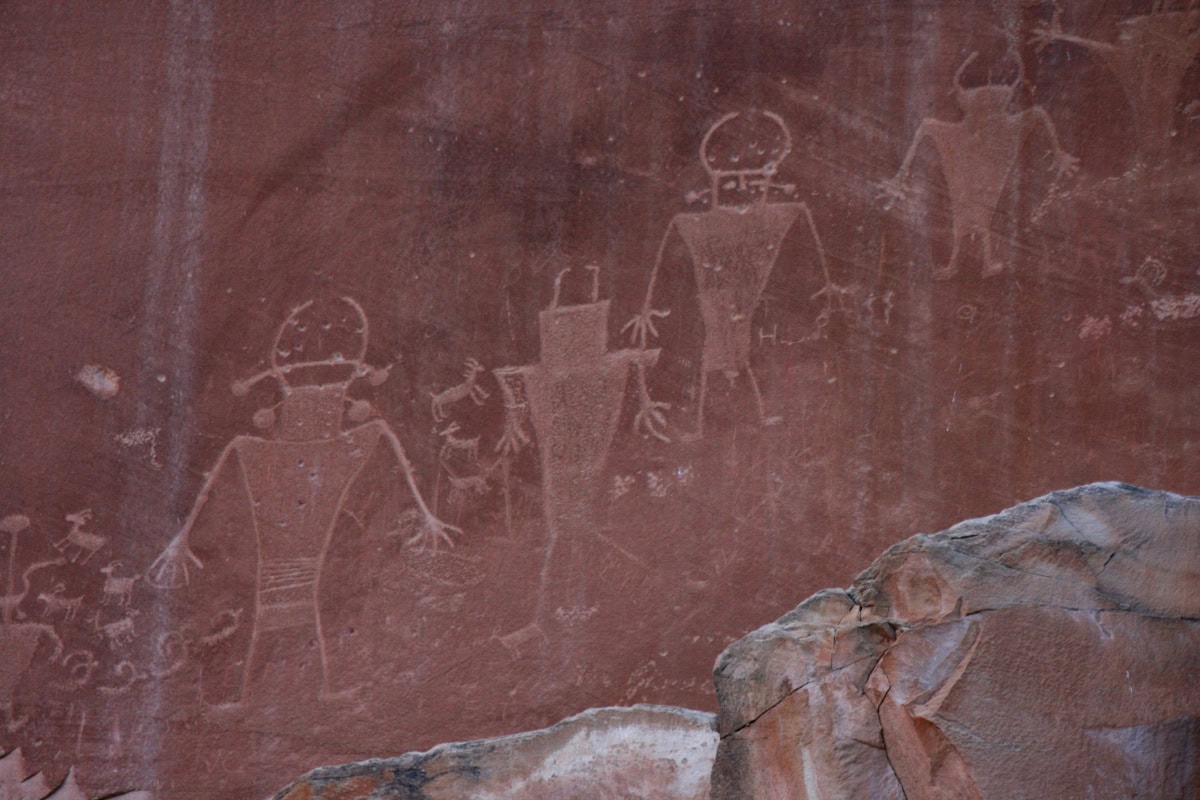
Right along Highway 24, just a few minutes from the Visitor Center, you’ll find one of the most accessible displays of rock art in all of Utah. The Fremont Petroglyphs were created by the Fremont people, who lived here roughly 600–1,400 years ago, and depict human figures, bighorn sheep, and other animals.
The petroglyphs are visible right from the car park — just walk to the information board and look up at the rock wall above. They’re surprisingly detailed and well preserved. I recommend bringing binoculars or a telephoto lens — some details are best appreciated with magnification.
Practical info: A 15–30-minute stop. Free (on Highway 24). Don’t try to climb closer — it’s prohibited and damages the rock.
9. Cathedral Valley — wild and remote beauty
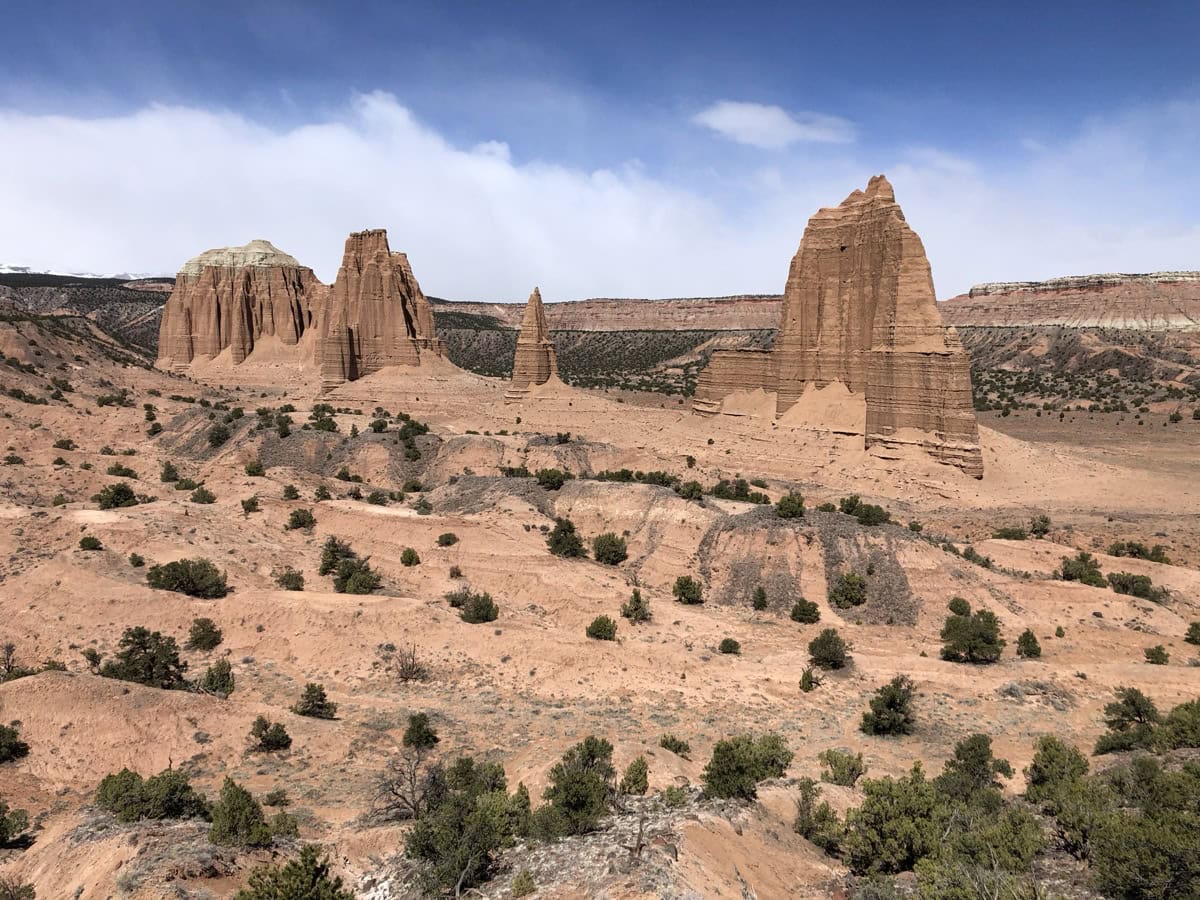
If you have the time, courage (and a 4WD vehicle), Cathedral Valley is the most dramatic part of Capitol Reef. Enormous rock monoliths — “cathedrals” — rise from the desert floor to heights of dozens of metres and look like they belong on another planet.
The most famous formations are the Temple of the Sun and Temple of the Moon — two rock towers standing side by side in the middle of absolutely nothing, looking utterly unreal at sunrise or sunset. If you’ve ever seen iconic photos from Capitol Reef, chances are they featured these two.
How to get there: The Cathedral Valley Loop is a roughly 60-mile circuit on unpaved roads. You need a 4WD with high clearance — the route includes a ford across the Fremont River (depth varies by season, typically 1–2 feet). The drive takes a full day (6–8 hours with stops). No petrol, no water, no phone signal.
Important: Before setting out, stop at the Visitor Center and ask about current road conditions and the water level at the ford. The rangers are brilliant and will honestly tell you whether it’s doable in the current conditions or not.
10. Cohab Canyon Trail — a hidden gem
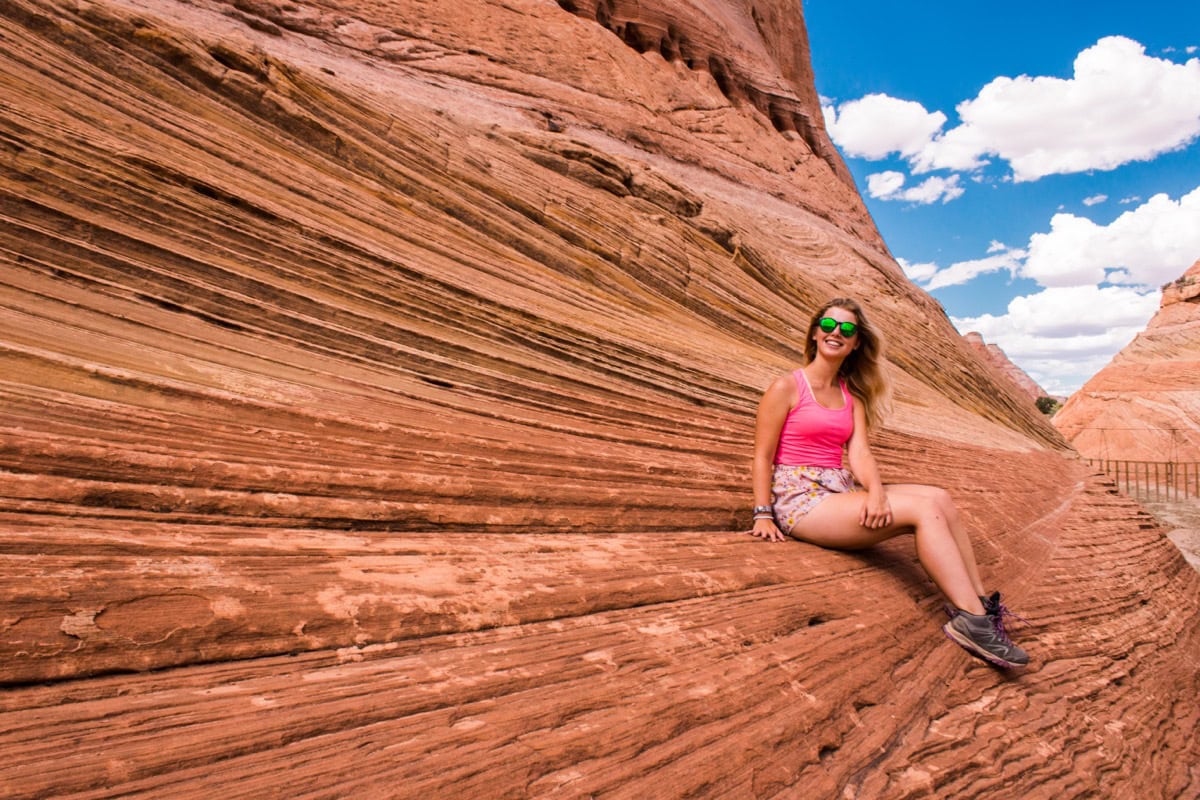
Cohab Canyon is my personal favourite and a trail that barely anyone talks about. The name is short for “cohabitation” — the canyon was supposedly used as a hiding spot by Mormon polygamists fleeing federal marshals in the 19th century. The backstory is fascinating, but the trail itself is even better.
The climb from the road near Fruita is short but steep (the first 10 minutes will leave you breathless), but then you enter a hidden canyon filled with small caves, rock windows, and bizarre eroded formations. The full trail is 3.4 miles round trip, and at the far end you have the option of descending to Highway 24.
Practical info: About 400 feet of elevation gain, 1.5–2 hours. Most beautiful in the afternoon when the sun lights up the canyon. Remarkably few people — we only encountered three other couples during our entire walk.

11. Sunset Point — a sunset you’ll never forget
Sunsets in Utah are generally incredible, but Sunset Point at Capitol Reef is something else entirely. The viewpoint sits just off Highway 24 (a short detour, about a 10-minute walk) and offers a panoramic view of Waterpocket Fold as it transforms from orange through deep red to purple in the fading light.
We turned up with a bottle of wine and a bag of crisps and spent an hour and a half here. Not a soul around — just us and that view. This moment burned itself into our memory more than any famous trail.
Practical info: Arrive about 45 minutes before sunset. The car park is tiny (roughly 5 spaces). Bring a jacket — temperatures drop quickly after dark.
12. Capitol Dome — the iconic “Capitol building”
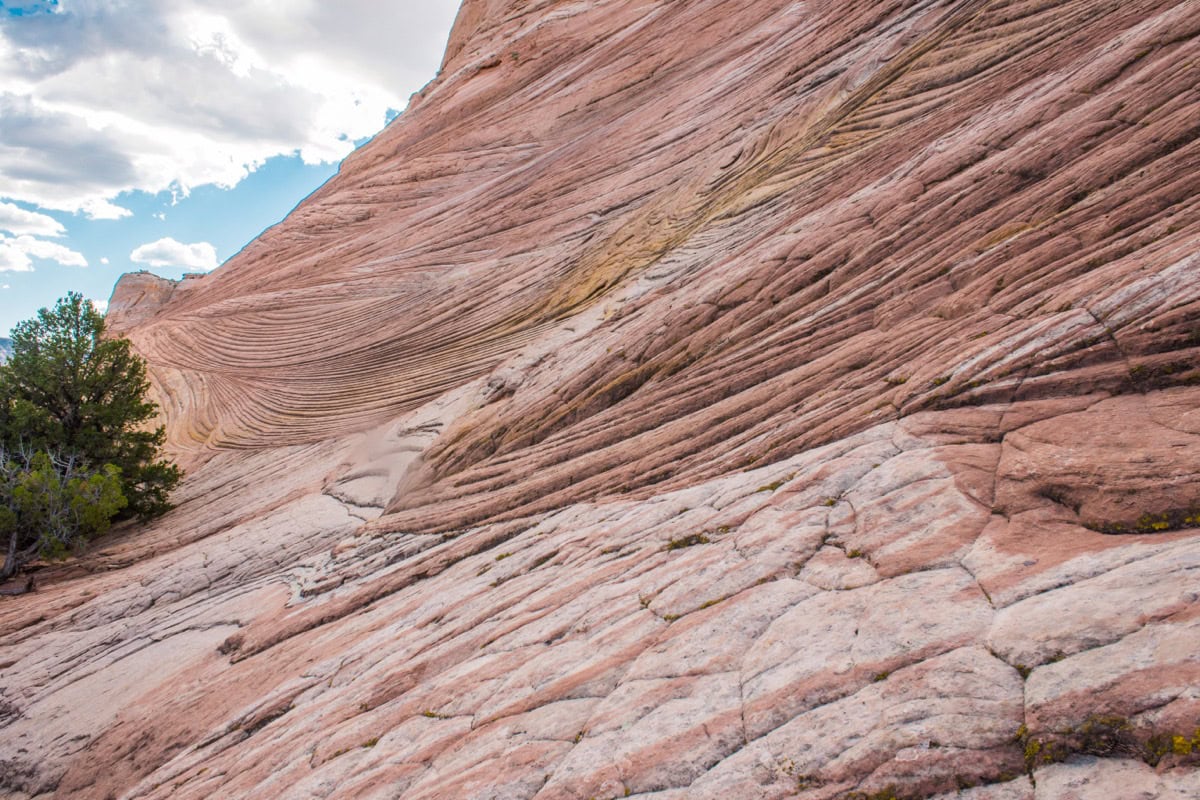
This is the formation that gave the entire park its name. Capitol Dome is a massive white sandstone dome of Navajo sandstone that bears a striking resemblance to the dome of the US Capitol in Washington, D.C. You’ll get the best view from Highway 24, roughly where the Hickman Bridge Trail car park is located.
You don’t need to walk up to it specifically — it’s clearly visible from the road and makes a brilliant backdrop for photos. But if you fancy getting closer, the Hickman Bridge trail will take you right into its neighbourhood.
13. Notom-Bullfrog Road — a drive to the end of the world
If you love driving remote roads (and who doesn’t?), Notom-Bullfrog Road is a 60-mile route running along the eastern side of Waterpocket Fold. The first 30 miles are paved, the rest is unpaved — but passable in a standard car in dry conditions.
The road offers an entirely different perspective of the park compared to Scenic Drive — here you’re on the “other side” of the Fold, viewing its eastern face, which is less dramatic but far more intimate. Hardly any cars, no car parks, no tourists. Just you and an endless red landscape.
14. Night skies — Capitol Reef as a Dark Sky Park
Capitol Reef has been a certified International Dark Sky Park since 2015, and the night sky here is in a league of its own. If you’ve never seen the Milky Way with the naked eye, this is where you’ll see it. Clearly, vividly, stretching across the entire sky like a painting.
The best stargazing spots are Panorama Point and Goosenecks Overlook (both off Highway 24, short detours). The park also occasionally hosts ranger-led stargazing programmes — check the current schedule at the Visitor Center.
Tip: The night before your visit, check the moon phase. The best conditions are around the new moon, when the sky is darkest. And bring warm layers — even in summer, night-time temperatures can drop to around 10 °C (50 °F).
15. Goosenecks Overlook and Panorama Point — viewpoints from the car
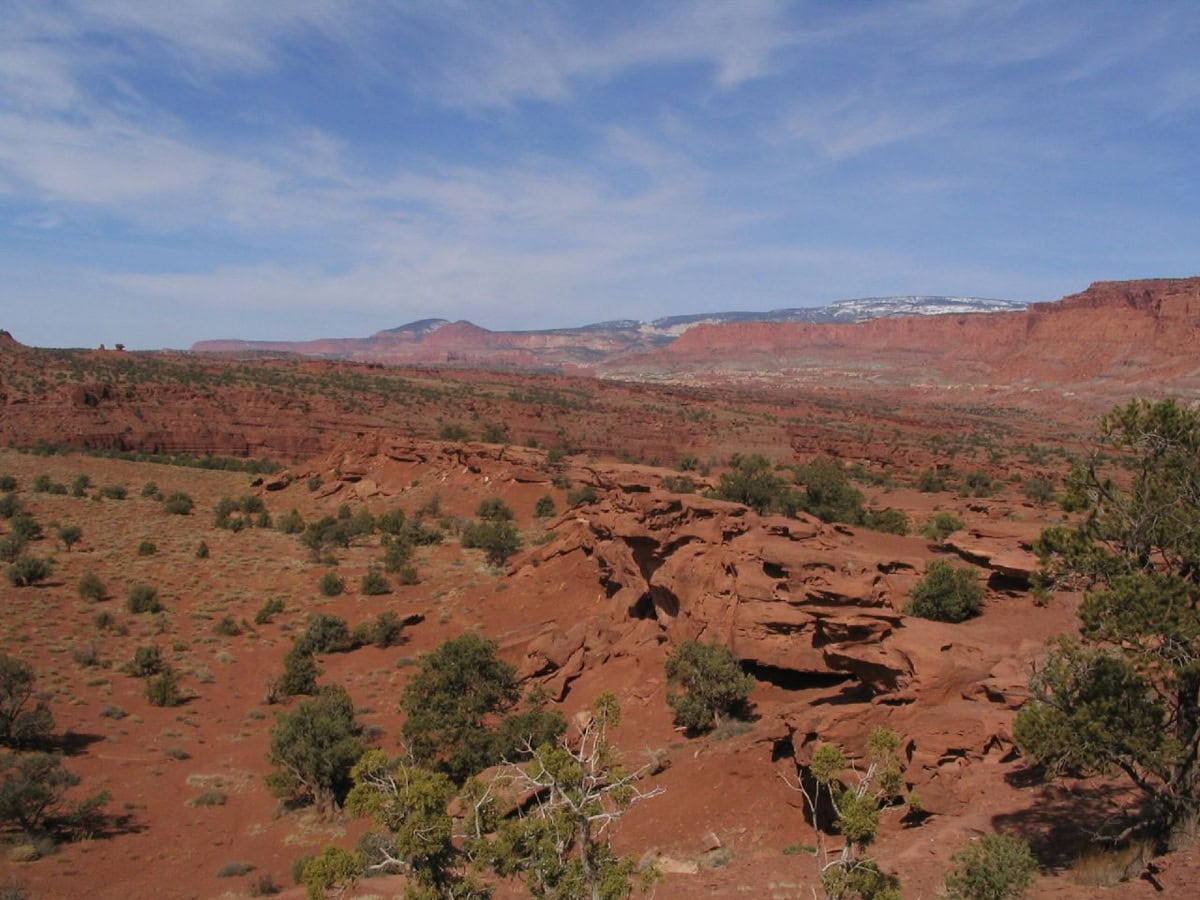
To round things off, two spots you can tick off in 15 minutes that will still leave you gobsmacked. Goosenecks Overlook offers a view of Sulphur Creek’s meanders far below — the creek twists through tight bends like a snake, carving a deep canyon as it goes.
Panorama Point is right next door and delivers a 360° view of the entire area — Waterpocket Fold on one side, Boulder Mountain on the other, and an endless red plain everywhere in between. Both viewpoints are accessed via short side roads off Highway 24 and have small car parks.
Practical info: Perfect on your way into or out of the park — no extra time needed. Morning or late afternoon for the best light.
Map of points of interest for your phone
Where to eat and drink near Capitol Reef
Don’t worry, you won’t go hungry around Capitol Reef — though the choice is naturally more limited than in a big city. Most restaurants are in Torrey, with a few options in Bicknell as well.
Restaurants in Torrey
Capitol Reef Café — the most well-known restaurant near the park, and deservedly so. Local ingredients, excellent burgers, veggie options, and homemade desserts. Mains run about $15–25 (£12–20). I recommend the trout — it’s fresh and beautifully prepared.
Rim Rock Restaurant — a slightly more upscale place with views of the red cliffs. Steaks, pasta, wine. Mains $20–35 (£16–28). Reservations recommended in season.
Torrey Schoolhouse B&B — if you’re staying here, their breakfasts are legendary. Homemade baked goods, fresh fruit, and strong coffee.
Inside the park
There’s no restaurant inside the park — but at Gifford Homestead in Fruita they sell homemade pies made with fruit from the local orchards. An apricot pie for $2–3 is an obligatory stop. They also sell jams, honey, and other local products.
Otherwise, bring your own snacks, plenty of water, and fruit. There are no shops or vending machines inside the park. The nearest (small) supermarket is in Torrey or Bicknell; for a bigger shop, stock up in Richfield or Moab beforehand.
Practical tips to wrap up
What to pack
Capitol Reef is a desert — pack smart. The essentials:
- Lots of water (3+ litres per person per day when hiking)
- Sun protection — wide-brimmed hat, SPF 50 sunscreen, sunglasses
- Sturdy hiking boots (see our hiking boot recommendations)
- Layers — mornings and evenings can be chilly even in summer
- Torch or headlamp — for stargazing and finding your way back from Sunset Point in the dark
- Snacks — you can’t buy anything in the park
Flights and getting there
For affordable flights to the US from the UK, search on Skyscanner or Google Flights — they’re great for comparing airlines and routes. The most common gateways to Utah are Salt Lake City or Las Vegas, both served by direct flights from London. From either city you’ll continue by car.
Travel insurance
Don’t travel to the US without insurance — healthcare costs are astronomically expensive. For shorter trips we use AXA, and for longer adventures around the world we recommend checking out our SafetyWing review.
Mobile data
Phone signal at Capitol Reef ranges from very weak to non-existent — don’t count on mobile data in the central part of the park. In Torrey you’ll usually get signal (depending on your provider). Download offline maps before you go! If you’d like an eSIM for your US trip, have a read of our Holafly review or check out Yesim as an alternative.
FAQ — Frequently asked questions about Capitol Reef
What makes Capitol Reef so special?
Capitol Reef protects Waterpocket Fold — a nearly 100-mile-long geological “wrinkle” in the Earth’s crust and one of the largest exposed monoclines in the world. Combined with the fruit orchards at Fruita, petroglyphs over 1,000 years old, natural rock arches, and minimal crowds, Capitol Reef is a truly unique national park. It’s the least visited of Utah’s “Mighty Five” and that’s exactly why it retains a Wild West atmosphere that you’ll struggle to find at the more popular parks.
Can you see Capitol Reef from your car without getting out?
Yes! Highway 24 passes through the park for free and offers several viewpoints right from the road (Panorama Point, Goosenecks Overlook, the petroglyphs). Scenic Drive (8 miles, $20 entrance fee) is another beautiful road where you can enjoy most of the scenery from behind the wheel. Of course, I’d recommend at least one short trail — Hickman Bridge (1.7 miles) or Grand Wash (2.8 miles) — but if you have limited mobility or are short on time, even just driving through is absolutely worth it.
How much time do you need at Capitol Reef?
At a minimum, half a day for Scenic Drive and one trail. Ideally 1–2 full days for the main attractions (Scenic Drive, Hickman Bridge, Cassidy Arch, Fruita, Sunset Point). If you want Cathedral Valley, add another full day. We spent two days here and left feeling we could easily have filled a third.
What is the nearest town to Capitol Reef?
Torrey, Utah — it’s a 15-minute drive west of the park entrance. You’ll find accommodation, restaurants, and basic amenities here. Other options include Bicknell (20 minutes) and Hanksville (50 minutes east, handy if you’re continuing on to Moab).
Do I need a 4WD vehicle?
For Scenic Drive, Highway 24, and all the main trails, a standard saloon or SUV will do. You only need 4WD for Cathedral Valley (unpaved roads + river ford) and the unpaved section of Notom-Bullfrog Road in wet conditions. Most visitors get by perfectly fine without 4WD.
Is Capitol Reef safe? What should I watch out for?
The park is safe, but nature here doesn’t mess about. Three main risks: dehydration (bring plenty of water, even on short hikes), flash floods (never enter narrow canyons if storms are forecast — even distant ones!), and heat (summer temperatures exceed 40 °C / 104 °F in the sun). Mobile signal inside the park is minimal, so don’t rely on it. Always tell someone where you’re going and bring a physical map.
Is the America the Beautiful Pass worth it?
If you’re visiting at least 3 national parks in a year, absolutely. The pass costs $80 (about £65) and covers entry to all US national parks and federal recreation areas for one year. Entry to Capitol Reef alone is $20, Zion is $35, Arches is $30 — so on a typical Utah road trip the pass pays for itself straight away.
Tips and Tricks for Your Vacation
Don’t Overpay for Flights
Search for flights on Kayak. It’s our favorite search engine because it scans the websites of all airlines and always finds the cheapest connection.
Book Your Accommodation Smartly
The best experiences we’ve had when looking for accommodation (from Alaska to Morocco) are with Booking.com, where hotels, apartments, and entire houses are usually the cheapest and most widely available.
 🚗 Car rental on the roadVerified rental cars in Utah
Search with the DiscoverCars comparison engine — it compares prices from dozens of local and international rental companies, and most bookings come with free cancellation.
Compare car prices in Utah →Don’t Forget Travel Insurance
Good travel insurance will protect you against illness, accidents, theft, or flight cancellations. We’ve had a few hospital visits abroad, so we know how important it is to have proper insurance arranged.
Where we insure ourselves: SafetyWing (simple monthly subscription) and TrueTraveller (for extra-long trips).
Find the Best Experiences
Get Your Guide is a huge online marketplace where you can book guided walks, trips, skip-the-line tickets, tours, and much more. We always find some extra fun there!