

Romania draws you in with the wild Carpathians, medieval towns in Transylvania, and prices so low you’ll double-check whether you read them right. But the moment you switch from daydreaming to planning, that nagging uncertainty kicks in: how much will it all cost, when is the best time to go, and is a package tour worth it, or should you strike out on your own?
On this page we’ve pulled together three things: up-to-date tour and flight prices that we refresh every morning, our own tips from travelling around Romania, and a plan for when and what to book so you don’t end up overpaying.

What to see and do in Romania
Romania is bigger and more varied than most people expect. You can fit in mountains and the sea in just a few days, but we’d urge you not to rush — a slow pace really pays off here. These are the places and experiences the two of us just can’t get enough of:
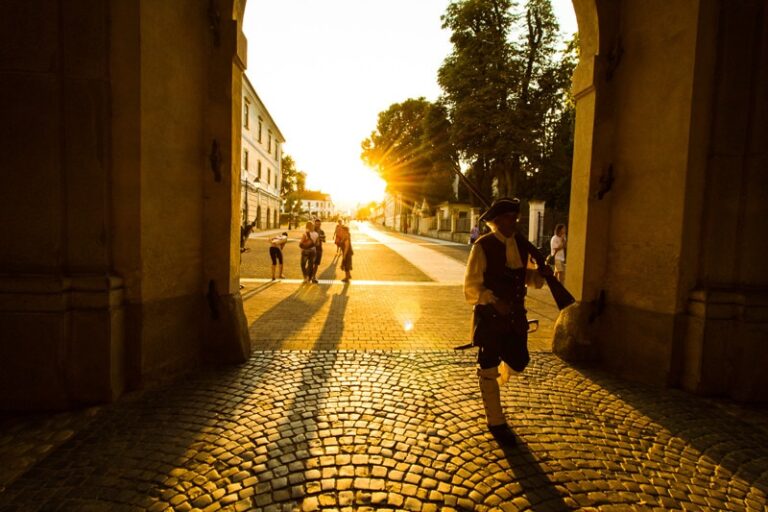
- Transylvania – Brașov, Sibiu and Sighișoara with their colourful facades and old town walls. This is also home to the famous Bran Castle, which Dracula honestly has little to do with, but the photo is worth it.
- Transfăgărășan – perhaps the most beautiful mountain road in Europe, open only a few summer months. Hairpin bends, Bâlea Lake and flocks of sheep right on the tarmac.
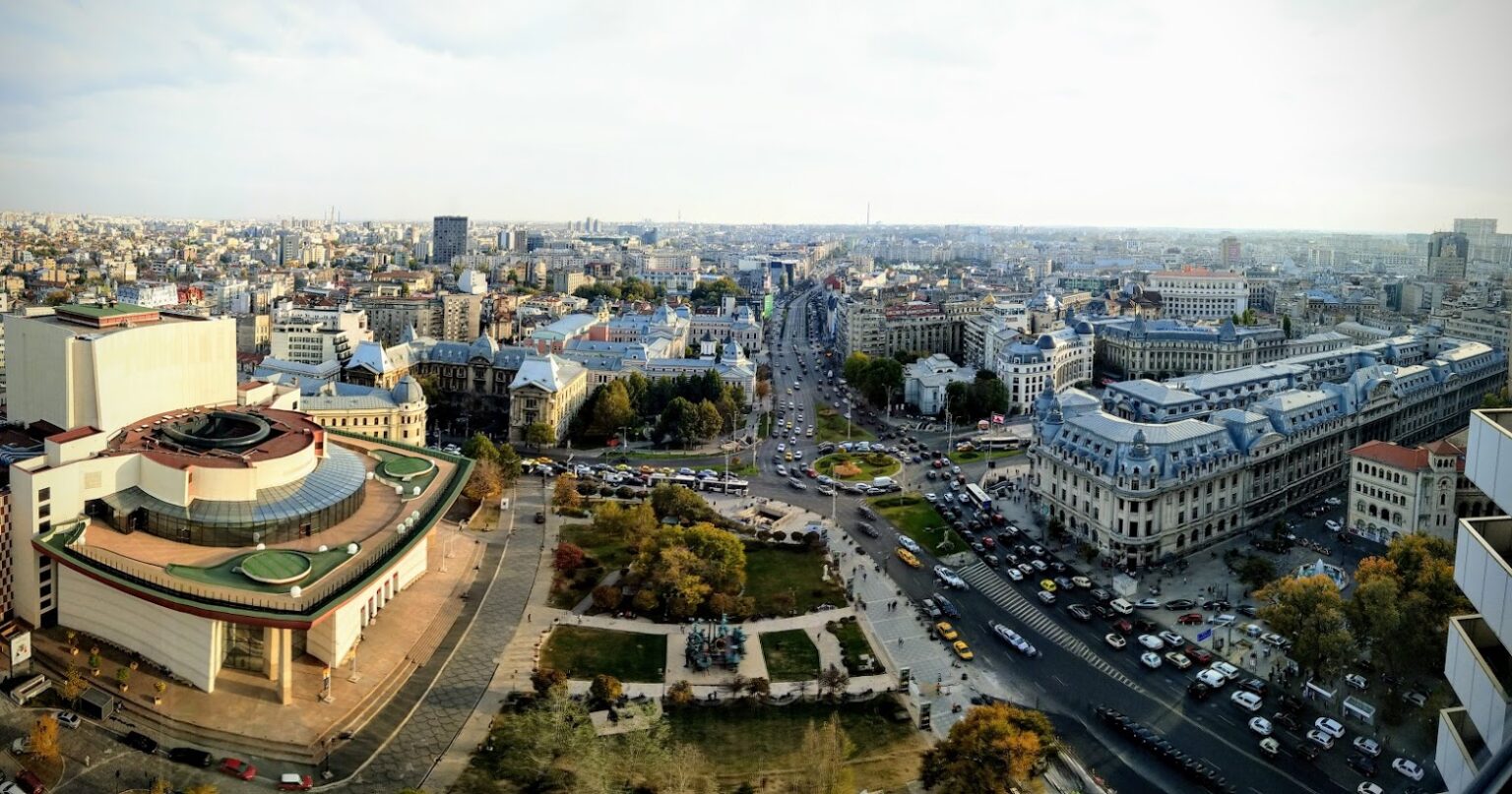
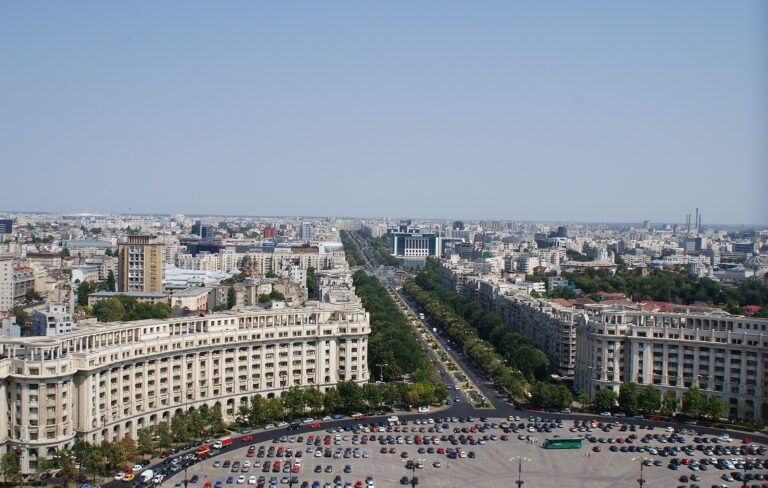
- Bucharest – the contrast between the pompous Palace of the Parliament and crumbling old villas. A great place to grasp Romania’s national pastime — sitting and people-watching.
- Stray dogs are everywhere in Romania, sometimes almost touchingly so. We covered how to handle them in our article The dogs here are like oversized pigeons.
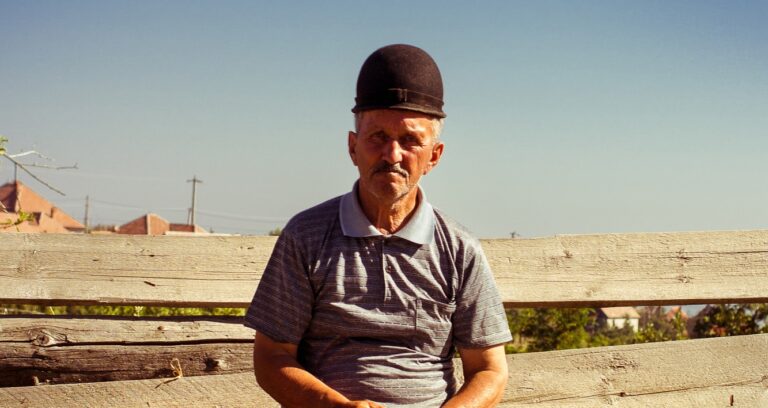
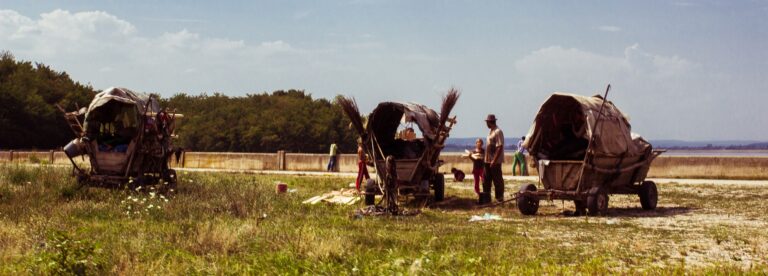
- The countryside and Maramureș – wooden churches, horse-drawn carts and a way of life that seems to have stopped fifty years ago. This is where you’ll see most clearly how it works: things are tidy mainly where the EU money flows.
Honestly: Romania isn’t a polished holiday destination and in places it’s a bit rough around the edges. But we take that as part of the experience, and in our articles about Romania we don’t sugarcoat anything.
When to visit Romania
The best time for Romania is from May to September. Late spring (May–June) is ideal for the mountains and towns — everything is green and in bloom, and it’s not yet muggy. If you want to drive the Transfăgărășan, bear in mind it’s typically only passable from July to October, otherwise it’s under snow.
Summer (July–August) is the hottest, with temperatures well over 30 °C in Bucharest and along the Black Sea coast, and the towns buzzing with tourists. By contrast, September is the sweet spot in our view — warm, fewer crowds and lower prices. Off-season (November–March) Romania is cheap and quiet, but many mountain roads and attractions are closed and the weather in the Carpathians can turn harsh.

How to get to Romania
Flying is the quickest way to get from Czechia to Romania: the flight to Bucharest takes about 2 hours. Besides the capital, you can also fly to regional cities like Cluj-Napoca or Timișoara, which is handy if you’re heading straight for Transylvania. Sometimes you’ll find direct flights, other times you’ll change in Vienna, Budapest or another hub.
By car it’s around 1,000–1,300 km from Prague to Romania depending on your destination, which realistically means a full day’s drive through Slovakia and Hungary. It’s worth it mainly when you want to explore the mountains and countryside, which are otherwise hard to reach. Train or bus is cheap but slow. For longer routes within the country, allow plenty of time — Romanian railways are no express service.
Renting a car
A car in Romania is worth it as soon as you want to head into the mountains and countryside. You’ll struggle to reach the Transfăgărășan, Maramureș or small villages by public transport. On the other hand, if you’re staying in Bucharest or other big cities, a car is just dead weight. Parking and getting around the centre are not worth the hassle.
- Book ahead through a comparison site – on the spot in season it tends to be expensive with little choice.
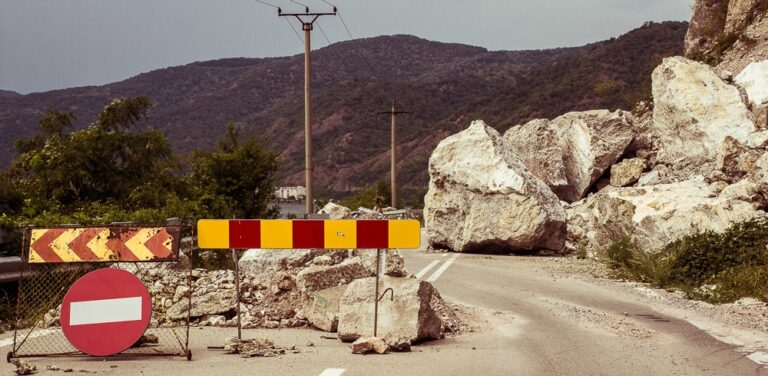
- Insurance: expect a high excess, so extra cover (CDW/deposit) is worth it — the roads are in poor shape in places.
- Deposit – rental companies routinely block one on your credit card, so make sure you have enough headroom.
- The road vignette (rovinietă) is mandatory and is usually included with a rental car — confirm this at pick-up.
Where to stay in Romania
Accommodation is one of the main reasons Romania is worth the trip — you get noticeably better quality for your money than at home. In towns like Brașov or Sibiu you’ll find lovely guesthouses and apartments in the historic centre for just a few hundred crowns, while Bucharest has the widest choice: from hostels to design hotels.
- Transylvanian towns (Brașov, Sibiu, Sighișoara) – guesthouses and apartments in the centre, an ideal base for mountain trips.
- Bucharest – everything from the cheapest hostels to luxury hotels; pick a neighbourhood near the old town.
- The countryside and Maramureș – farm stays and guesthouses run by locals, where you’ll get home-cooked food and a real taste of village life.
- The mountains and Transfăgărășan – mountain lodges and campsites; book ahead in season, as there isn’t much capacity.
Package tour or independent travel?
Romania can be done either way and both options make sense. Here’s a quick comparison:
A package tour is worth it when…
- you want to see the main sights (Transylvania, Bran, Transfăgărășan) in a few days without any planning,
- the language barrier and the state of the roads don’t appeal to you and you want transport sorted,
- it’s your first visit and you want an overview to come back to on your own next time.
Go it alone when…
- you want to travel at your own pace and stop wherever you like,
- you don’t mind getting behind the wheel and touring the mountains and villages,
- you want to save — Romania is cheap and an independent trip works out well here.
The two of us are classic “do-it-yourself” travellers, and Romania is exactly the kind of country where that pays off — our best experiences were well off the tour routes. But if it’s your first visit and you’re short on time, a package tour will save you the hassle, and we’d happily recommend it as a starting point.
Budget: daily costs in Romania
| Level | Accommodation | Food | Transport & activities | Total/day |
|---|---|---|---|---|
| Backpacker | 60 lei–100 lei (hostel, shared room) | 40 lei–60 lei | 30 lei–50 lei | 125 lei–210 lei |
| Standard | 135 lei–240 lei (guesthouse, apartment) | 80 lei–120 lei | 60 lei–100 lei | 270 lei–450 lei |
| Comfort | 350 lei+ (hotel) | 155 lei+ | 135 lei+ (car, entry fees, trips) | 650 lei+ |
Prices are a rough guide per person per day, not including travel to the country. Romania is one of the cheaper European destinations — for standard comfort you’ll spend significantly less than in Western Europe, especially on food and accommodation.
How to save when planning
- Flights to Romania are best bought 2–3 months ahead, even earlier for summer. Last-minute deals usually don’t drop the price here. Search for flights in our search tool.
- Accommodation in season (July–August) in the mountains and popular towns should be booked early, or you’ll pay more for a worse room. Our accommodation tips.
- Tours: first-minute deals pay off for the main summer dates, last-minute more for the off-season. Check out the current tours and compare them with going it alone.
- Activities like mountain hikes or guided tours should be booked in advance, especially in summer. What to book early.
Where do people overpay most? Mainly on food and coffee right by the most touristy spots and on taxis from the airport — a few streets away the price is half, and in Bucharest ride-hailing apps work reliably.
Practical information
- Currency: the Romanian leu (RON), not the euro. Always keep some cash for small shops and the countryside; larger establishments take cards without any problem.
- Language: Romanian. In tourist spots and with younger people you’ll get by in English; in the countryside a few words and a smile go a long way.
- Connectivity: Romania is in the EU, so roaming works just like at home. If your plan has a low data limit, an eSIM is worth it — handy for maps and navigation on trips.
- Safety: Romania is safe; the main things to watch out for are the traffic and stray dogs. We shared our take in the article As long as they don’t have guns, it’s all fine.
- Driving: roads vary in quality, and in the mountains expect slow going and horse-drawn carts. For motorways and express roads you need an electronic road vignette (rovinietă).


