

You’ve been dreaming of Apulia for ages — whitewashed towns above a turquoise sea, fresh pasta for a few euros, olive groves stretching to the horizon. But then the practical questions creep in: how much does it all cost, when is it actually worth going so you don’t melt in the heat or get swallowed by crowds, and should you book a package or do it yourself? That’s exactly where the two of us once stood, so we went and figured it all out for you. ☺️
On this page you’ll find three things: up-to-date package and flight prices that we refresh every morning, so you’re not looking at last year’s numbers; our hands-on tips from our own trips and articles — where to head and what to avoid; and a plan for when and what to book, so you don’t overpay for nothing.

What to see and do in Apulia
Apulia is the “heel of Italy’s boot,” and you’ll find a completely different Italy here than up north — slower, cheaper and with the sea on three sides. Here are the places that make it worth the trip:
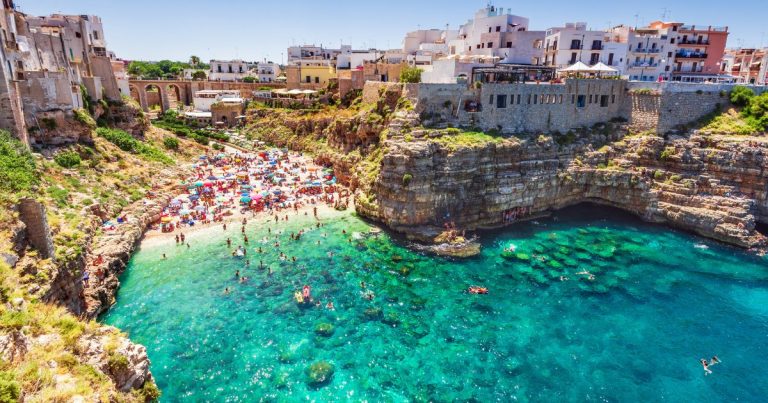
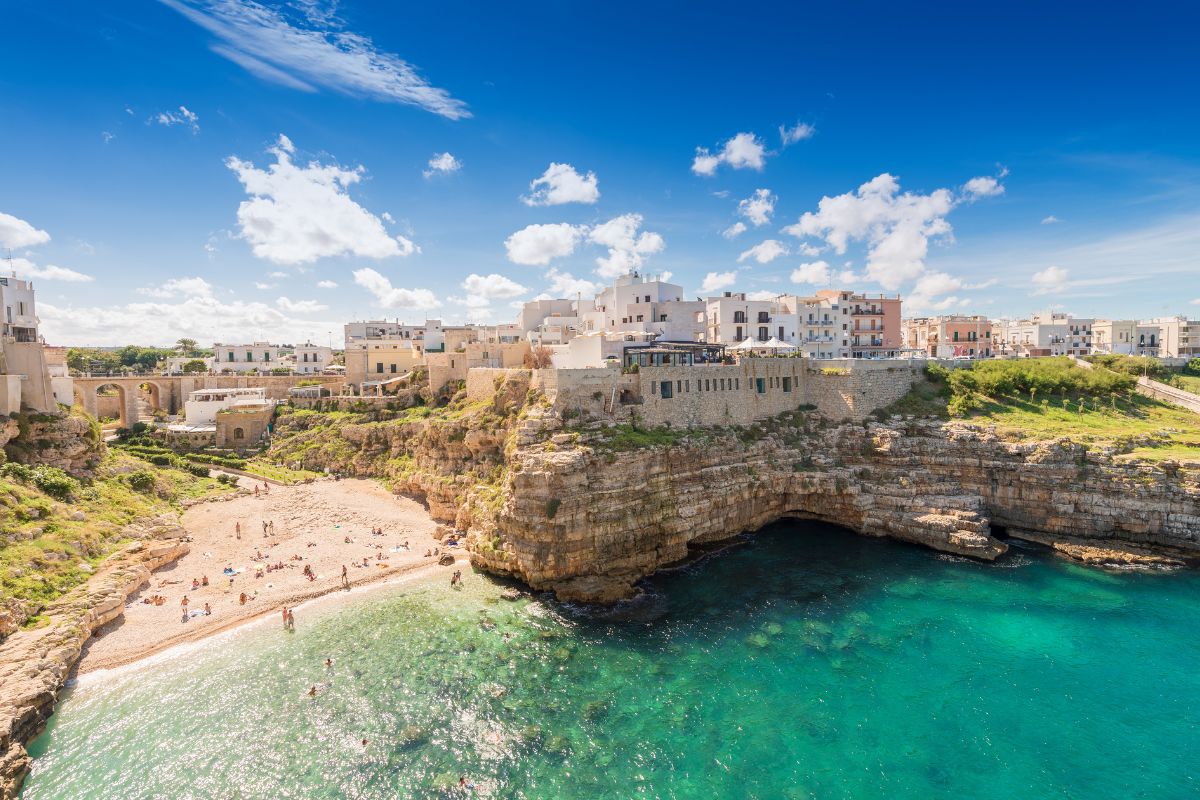
- Polignano a Mare — a town clinging to clifftops above the sea, home to the famous Lama Monachile beach tucked between the rocks. Our favourite, and the perfect place for day one.
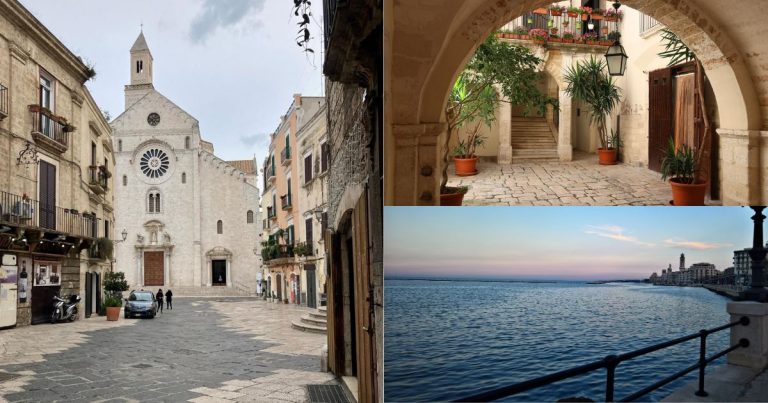
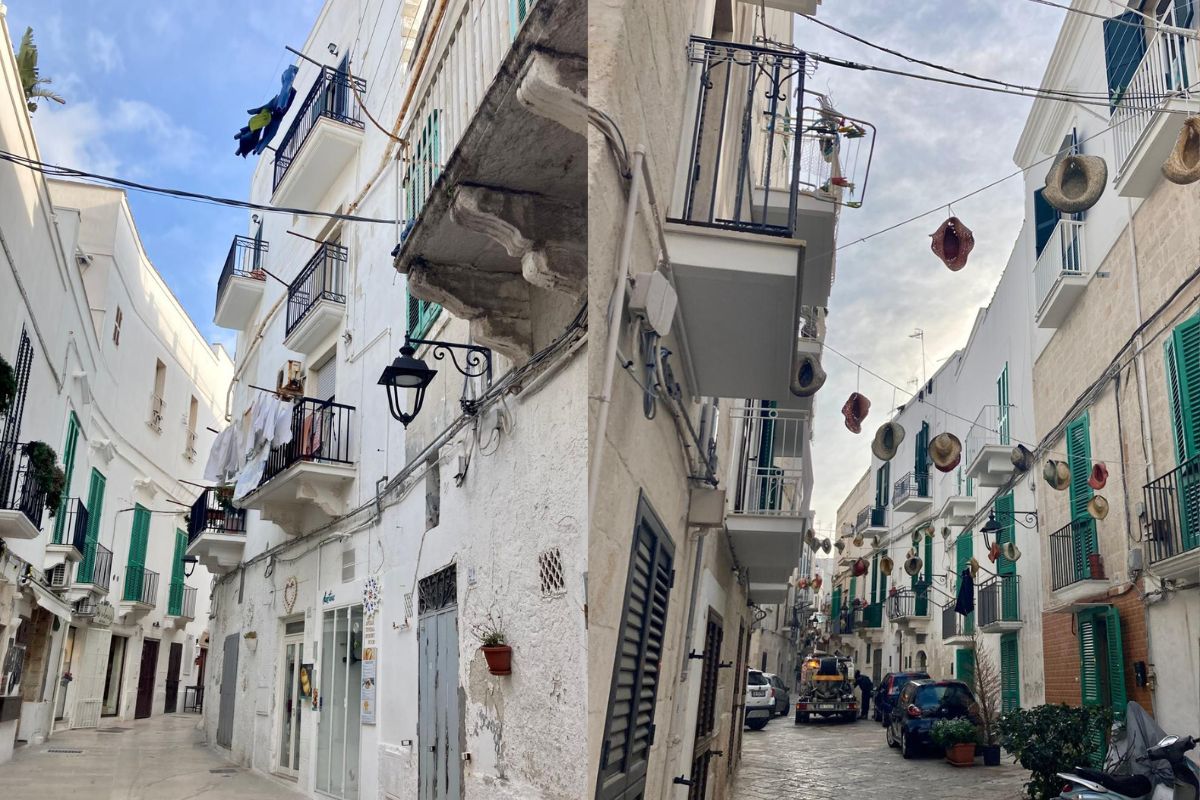
- Monopoli — a harbour town with a gorgeous old centre, fewer tourists than Polignano and ideal for slow wandering and dinner by the sea.
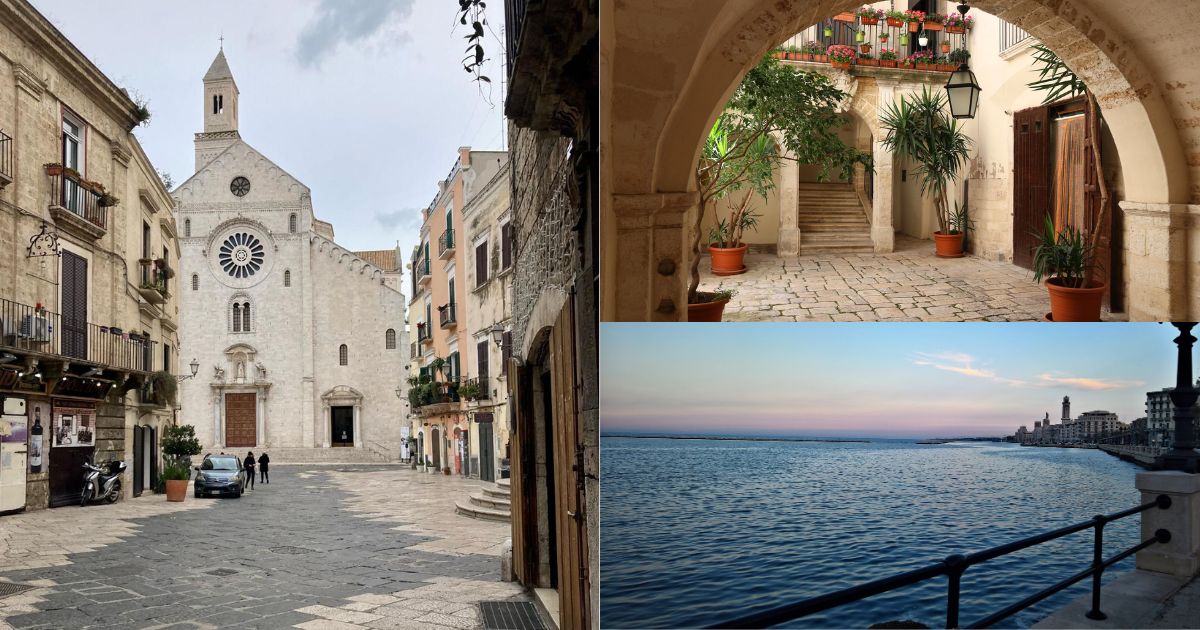
- Bari — the regional capital and your gateway. The old town, Bari Vecchia, where women hand-make orecchiette right on the street, is worth a day in its own right.
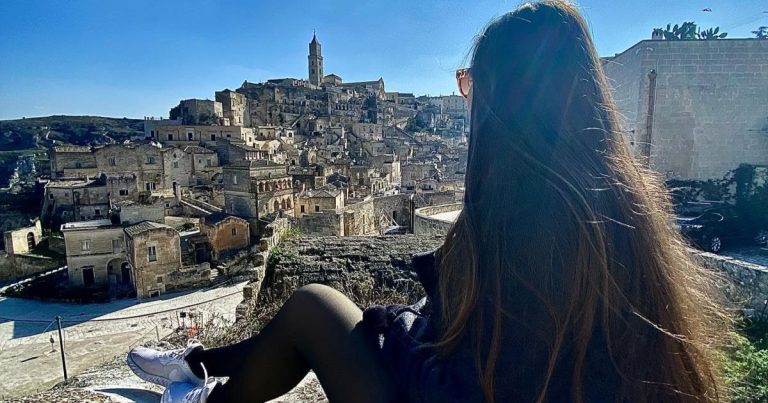
- Matera — technically just over the border in neighbouring Basilicata, but a short hop from Apulia. The sassi cave city is one of the oldest continuously inhabited places on earth. An absolute must-see stop.
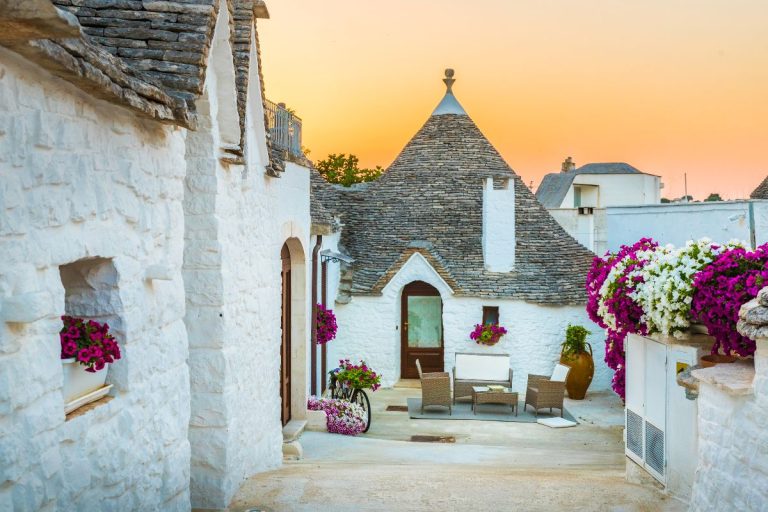
- Alberobello — a town of trulli houses with conical roofs, listed by UNESCO. Heavily touristed, but magical in the early morning before the crowds.
- Lecce and Salento — the “Florence of the south” in baroque, and the southernmost tip with the prettiest beaches (Pescoluse, Porto Cesareo).
When to visit Apulia
The best time for Apulia, in our view, is May, June and September. The sea is already (or still) pleasant for swimming, temperatures hover around a comfortable 24–28 °C, and there’s none of the peak-season heat and crush.
July and August are the hottest and at the same time the most expensive and busiest — regularly over 30 °C in Bari, packed beaches and accommodation at double the price. If you’re not tied to the school holidays, the two of us steer clear of this stretch. We’ve broken down month-by-month temperatures in our article on the weather in Bari.
For the cities (Bari, Lecce, Matera) without swimming, off-season spring and autumn — April or October — are great too. It’s warmer than back home, prices are down and the sights are empty. Only the sea might not tempt you in for a dip.

How to get to Apulia
Flying is the quickest option. The main gateway to Apulia is Bari Airport (BRI), or Brindisi Airport in the south of the region. From back home you’ll usually fly with one connection (typically via Rome, Milan or another European hub), with the odd direct seasonal route popping up in summer. Reckon on roughly half a day of travel including the connection. From Bari you can then get around the region comfortably by train or car.
By car it’s down through Austria and the whole length of Italy — around 1,500 km and 15+ hours of pure driving, realistically split over two days with an overnight stop along the way (around Bologna, say). It pays off mainly when you want to cover more places, you’re bringing more people or you’re planning a longer stay. The alternative is a ferry across the Adriatic (from Croatia or Greece), but for most travellers the most practical combo is flying in plus a car on the ground.
Renting a car
A car makes a lot of sense in Apulia if you want to head inland — to the trulli, masserie, through the olive groves and to the more remote beaches of Salento. Public transport barely reaches these places, and a car gives you a whole different kind of freedom. On the other hand, if you’re only planning the coastal towns of Bari–Polignano–Monopoli and relaxing by the sea, the train is plenty and a car would just mean extra cost and parking hassle.
- Book through a comparison site and in advance — it’s usually pricier on the spot and cars run out in peak season.
- Watch the insurance and deposit — basic cover often comes with a high excess, so supplementary insurance (even from a third party) pays off. The deposit is held on your card, so reckon on a few hundred euros.
- ZTL zones in historic centres (Bari, Lecce) are monitored by cameras — the fine arrives at your door. Park outside and walk into the centre.
- Fill up at branded petrol stations; the motorways are mostly toll-free here, but check your route.
Where to stay in Apulia
Where you rest your head depends a lot on what you want from the trip. Our recommendations by area:
- The Polignano–Monopoli coast — an ideal base if you want to combine the sea with day trips. Everything’s close to hand, with good train links to Bari.
- Bari — handy for your first/last night thanks to the airport, with good prices and plenty of city life.
- Valle d’Itria (Alberobello, Locorotondo, Ostuni) — the inland area of trulli and olive groves. Here we recommend trying a masseria — a converted country farmhouse, often with a pool.
- Salento (Lecce, Otranto, Gallipoli) — for lovers of the prettiest beaches and baroque, though further from Bari.
The most common options are apartments and B&Bs, which offer fantastic value for money in Apulia, plus romantic masserie for those after a bit more. In peak season, book well ahead — the best spots by the sea are the first to go.
Package tour or independent travel?
A package is worth it when…
- you want transport, accommodation and itinerary all sorted for you so you can just enjoy it;
- you’re flying for the first time and don’t like dealing with logistics, car rentals and bookings;
- you’re going for a shorter time and want to see the most in a week with a guide;
- you’re travelling with parents or in a bigger group, where organising it all alone is a chore.
Go DIY when…
- you like your own pace and want to linger longer in a beautiful spot;
- you don’t mind planning flights, accommodation and a car (in Apulia it really is easy);
- you want to save money — going solo usually works out cheaper than a package;
- you’re drawn to the interior, the masserie and the off-the-beaten-track places.
The two of us travel to Apulia independently — the region is easy to navigate, transport is cheap and improvising is all part of the fun. But if this is your first trip around Italy or you simply don’t want to deal with a thing, a package is a perfectly valid choice and the peace of mind is worth it.
Budget: daily costs in Apulia
| Level | Accommodation | Food | Transport & activities | Total/day |
|---|---|---|---|---|
| Backpacker | 20 €–30 € (hostel, cheap B&B) | 12 €–18 € (street food, focaccia, your own supplies) | 8 €–14 € (train, public transport) | approx. 40 €–65 € |
| Standard | 40 €–70 € (apartment, B&B) | 25 €–35 € (trattoria, lunch and dinner) | 20 €–30 € (car, entry fees, boat trip) | approx. 85 €–140 € |
| Comfort | 100 €–200 € (masseria, seaside hotel) | 45 €–70 € (restaurants, fish, wine) | 40 €+ (car, tours, experiences) | approx. 185 €–310 € |
Prices are indicative, per person per day (excluding flights/transport from home). Apulia is one of the cheaper corners of Italy — food and accommodation come noticeably cheaper here than up north or in Tuscany.
How to save when planning
- Book flights 2–4 months ahead for summer dates — the closer to the holidays, the pricier they get. Weekdays and shoulder months (May, September) come cheapest. Search for flights with our finder.
- Book seaside accommodation early — the best (and cheapest) spots in Polignano and Monopoli are the first to go. Off-season, on the other hand, feel free to book last minute. Take a look at our accommodation tips.
- Package holidays: early-bird deals pay off for peak season and popular dates, while last-minute works if you’re flexible and don’t mind a bit of risk. You’ll find current offers in the latest packages section.
- Where you overpay: restaurants right on the main square, parking in town centres and boat trips bought on the spot. Better to book activities ahead — see what to book in good time.
- Cars — rent through a comparison site and book ahead; it’s usually pricier on the spot and popular vehicles run out fast.
Practical information
- Language: Italian; you’ll get by in English in touristy spots, while inland it’s more a matter of hand gestures — but Italians are friendly and helpful.
- Payments: you can pay by card in most places, but always keep some cash on you for small trattorias, markets and parking machines.
- Connectivity: the easiest option is an eSIM — activate it before you leave home and you’ll have data for navigation and bookings the moment you land, with no hunting for a local SIM.
- Safety: Apulia is laid-back; just keep an eye on your things in the car and your bag in crowds in the bigger cities (especially Bari), as you would anywhere.
- Transport: trains between the coastal towns are cheap and reliable, but you’ll struggle to reach the interior (trulli, masserie) without a car.


