

The moment you step off the ferry and take your first deep breath, you feel it instantly, because the air here is saturated with an unmistakable blend of wild thyme, rosemary, myrtle and sun-scorched earth. Corsicans call this dense scrubland the maquis, and legend has it that the famous Napoleon Bonaparte could have recognised his native island blindfolded, purely by this distinctive fragrance. Corsica, rightly nicknamed L’Île de Beauté, or the Island of Beauty, is by no means only about intoxicating scents and endless beaches. In reality it is a huge, rugged mountain range that looks as if someone had picked it up and dropped it right into the middle of the Mediterranean. So don’t expect a polished French Riviera with manicured promenades here; instead, prepare for untamed nature, roads winding above sheer drops, and a sea so unbelievably coloured that you’d normally only see it in the airbrushed brochures of exotic travel agencies.
If you’re looking for a destination where you can head out for a proper high-mountain trek in the morning and wash off the sweat in a perfectly turquoise lagoon in the afternoon, the southeast coast around Porto-Vecchio in Corsica is the absolutely ideal choice for you. It is precisely in this area that you’ll find the most beautiful beaches on the whole island, often nicknamed Europe’s Polynesia thanks to their fine white sand and crystal-clear water. Just be prepared that in high season you certainly won’t be the only one who knows about this splendour, which is why it pays to plan your whole holiday at least a little strategically. In this guide we’ll take a look together at how to make the most of this corner of the Mediterranean, where to find the best coves, and how to avoid the biggest crowds of tourists.
TL;DR
- You won’t manage without a car: Public transport in Corsica is very unreliable, and to explore the hidden beaches and mountain villages you’ll definitely need your own or a rental car.
- Avoid August: If you can, plan your trip for May, June or September, because in August the island is bursting at the seams under the onslaught of French and Italian visitors, prices soar and there are traffic jams everywhere.
- The most famous triangle of beaches: Palombaggia, Santa Giulia and Rondinara are absolute must-sees, but you have to set out early in the morning just to find a parking spot.
- The contrast of mountains and sea: Don’t forget to set aside at least one day for a trip into the Ospedale mountains, which lie just above the town and offer a wonderful escape from the summer heat.
- Book ferries early: In 2026, return ferry tickets for two people plus a car range from around €250 to €1,000 depending on how far in advance you book.
- A vegetarian paradise: Corsica offers great meat-free options, so be sure to try the local cheeses, pasta made with chestnut flour, and the fantastic pizza that clearly reveals the strong Italian influence.
When to visit Porto-Vecchio
Choosing the right time is absolutely crucial for Corsica and can mean the difference between a dream holiday and constant stress in traffic jams. There is one truly fundamental rule here, and it is that you should give the month of August a very wide berth. That’s the time when both the French and the Italians take their nationwide holidays and literally storm the island, so compared to July there are two to three times more people about. The narrow access roads to the beaches turn into endless car parks, accommodation prices shoot up to absurd heights, and at the very best spots you won’t have anywhere to put your towel down. If you’re after peace and quiet and want to soak up the authentic atmosphere, you simply have to travel outside this peak of the season.
The most beautiful months to visit are undoubtedly June and September, when the sea is lovely and warm, the sun is fiercely strong, but the evenings are still pleasantly fresh. September in particular is absolutely fantastic, because after a whole summer the water in the coves around Porto-Vecchio is warmed to an amazing 25 degrees and the crowds of tourists are long gone. May, on the other hand, is ideal for those of you who want to combine beach time with active hiking in the mountains, because temperatures hover around a pleasant 23 degrees and the whole landscape is in incredibly lush bloom. If you’re travelling from the UK, the easiest way is to fly to Figari airport near Porto-Vecchio, with seasonal connections from London, or to reach the island via Nice and then take a ferry, with the crossing from Nice to Bastia taking roughly six to seven hours. Ferries from Italy have historically been the cheapest, but whatever route you choose, book your tickets a very long way in advance.
The winter months from November to March are very quiet on the island, but I really wouldn’t recommend them for a classic holiday in Porto-Vecchio. Most hotels, campsites and beach restaurants are closed during this period, and the mountain passes can even be snowed under. Corsica settles into hibernation, ferries run only on very limited schedules, and life concentrates in the larger towns such as Bastia or Ajaccio. But if you just want to walk along empty beaches in a jacket and soak up the melancholy atmosphere, winter Corsica definitely has something to offer too.
Where to stay in Porto-Vecchio
💡 Tip for accommodation and experiences: We prefer to look for accommodation on Booking.com, which usually has the best cancellation terms. Tickets, tours and activities are then worth comparing and buying through GetYourGuide.
Choosing where to stay depends mainly on how mobile you want to be and whether you prefer the town’s nightlife or rather a peaceful morning right by the beach. Porto-Vecchio itself is divided into two main parts, namely the busy harbour down by the sea and the historic old town, which rises high up on the hill. Staying right in the old town is incredibly romantic, because you have all those charming alleyways and excellent restaurants literally on your doorstep, but you have to reckon with the fact that parking here can be a real headache in season. You’ll often have to leave your car in large paid car parks below the hill and walk up to your hotel, which can be quite demanding with heavy suitcases after a day spent in the sun.
If your main goal is exploring the beaches, I recommend looking for accommodation to the south of the town, towards the bays of Santa Giulia or Palombaggia. That way you avoid the daily morning drive through the congested town centre, and you’ll be among the first on the beach, which is absolutely key to grabbing a good spot. You’ll find lovely places to stay, for example in residences and hotels scattered among the pine groves, where you have complete peace and often even your own pool in case you don’t fancy heading down to the sea. A very popular option in Corsica is also the superbly equipped campsites, which offer the rental of modern mobile homes with air conditioning and their own terrace. Wild camping is strictly forbidden and fined across the whole island, so official campsites are a great choice for those who want to save money but don’t want to give up comfort.
A great compromise is staying near the harbour, where you’ll find, for example, the very well rated Hotel Costa Salina, which offers a beautiful view of the salt pans and the sea while being just a few minutes’ walk from the centre. If you’re after something truly luxurious and exceptional, take a look at the resorts towards Cala Rossa, home to the most prestigious addresses in the entire area. Whatever option you decide on, don’t forget to book your dream spot early through Booking, because the best deals around Porto-Vecchio disappear as early as the start of spring, and relying on a last-minute find here really doesn’t pay off.

11 things to see and do in Porto-Vecchio, Corsica, and the surrounding area
Let’s take a look together at the very best this sun-drenched part of Corsica has to offer. We’ll focus not only on the most famous beaches that you simply have to see with your own eyes, but we’ll also head into the cool mountains and the winding streets of historic towns. I recommend hiring a car straight after your arrival and setting aside at least four to five full days to explore this area, so you can enjoy everything calmly and without unnecessary rushing.
1. Palombaggia beach with red rocks
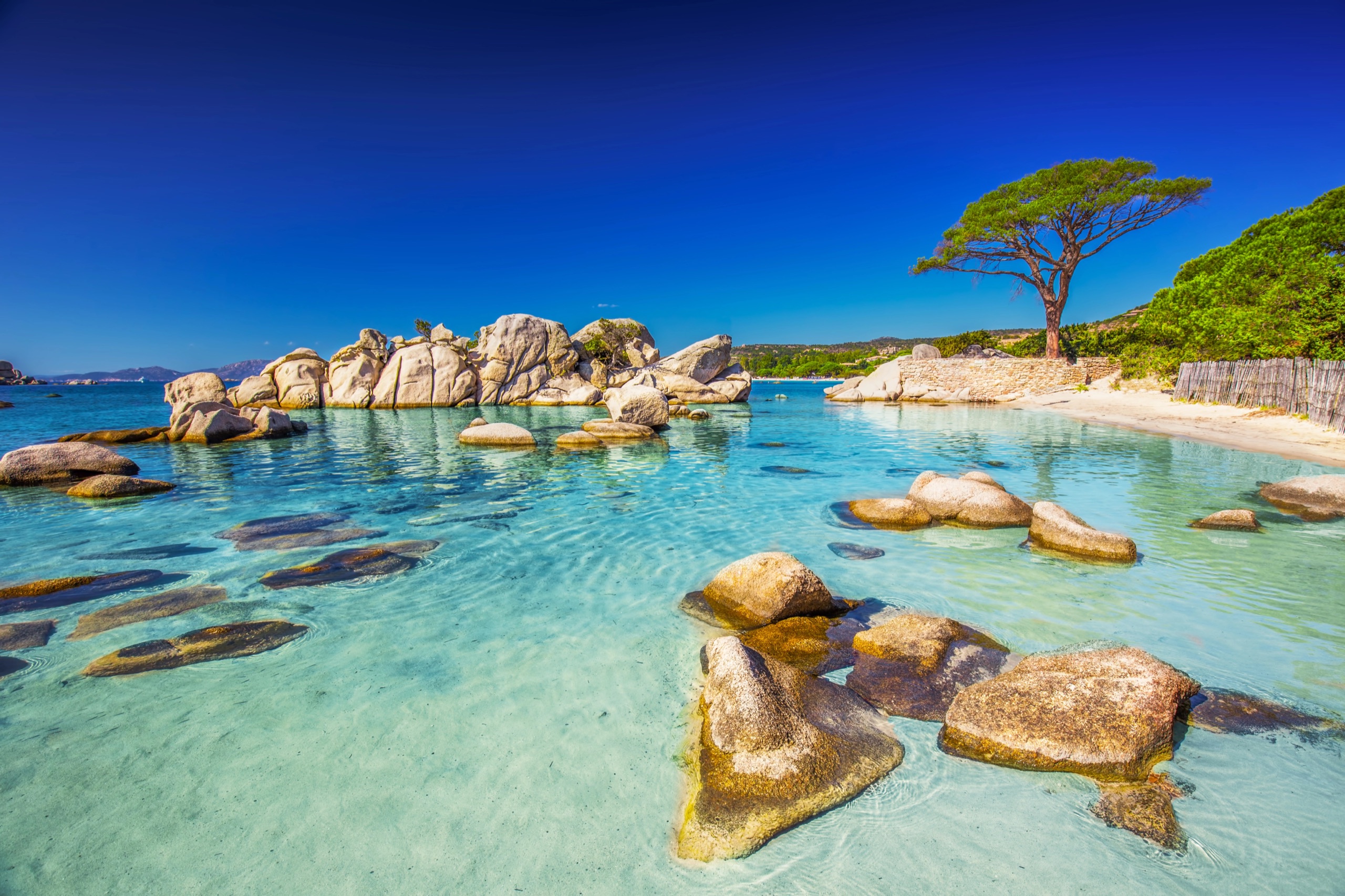
Palombaggia is undoubtedly the most famous beach on the whole island, and the moment you set foot on it, you’ll instantly understand why. It’s photogenic kitsch in the best possible sense of the word, where snow-white sand meets incredibly shallow, calm water. The whole bay is fringed by the mighty crowns of umbrella pines, which provide merciful shade during the hot summer days, and here and there dramatic red porphyry rocks jut out of the turquoise water. That colourful contrast of red rock, blue surface and green pines is a feast for the eyes, and I guarantee you’ll take the most beautiful photos of your entire holiday here.
But because the beach is so iconic, you have to be prepared for the fact that absolutely everyone knows about its beauty. The narrow access road fills up with cars very quickly, and by nine in the morning the search for a free spot turns into a rather exhausting game of combat. That’s why I recommend setting an alarm, heading here right after breakfast, and enjoying that beautiful morning atmosphere when the sea is as smooth as a mirror and only a few early birds are lying on the sand. Around the beach you’ll find several paid car parks where all-day parking costs around €10 to €15 for 2026, so be sure to have enough change or a payment card ready.
💡 Tip: When you tire of lying on the main beach, walk along the coast southwards to the smaller and slightly quieter Tamaricciu beach. It’s separated by just a small rocky headland and offers an amazing view of a single lone pine growing right on a rock reaching into the sea, which is, by the way, one of the most photographed motifs in all of Corsica.
2. Santa Giulia bay and its turquoise lagoon
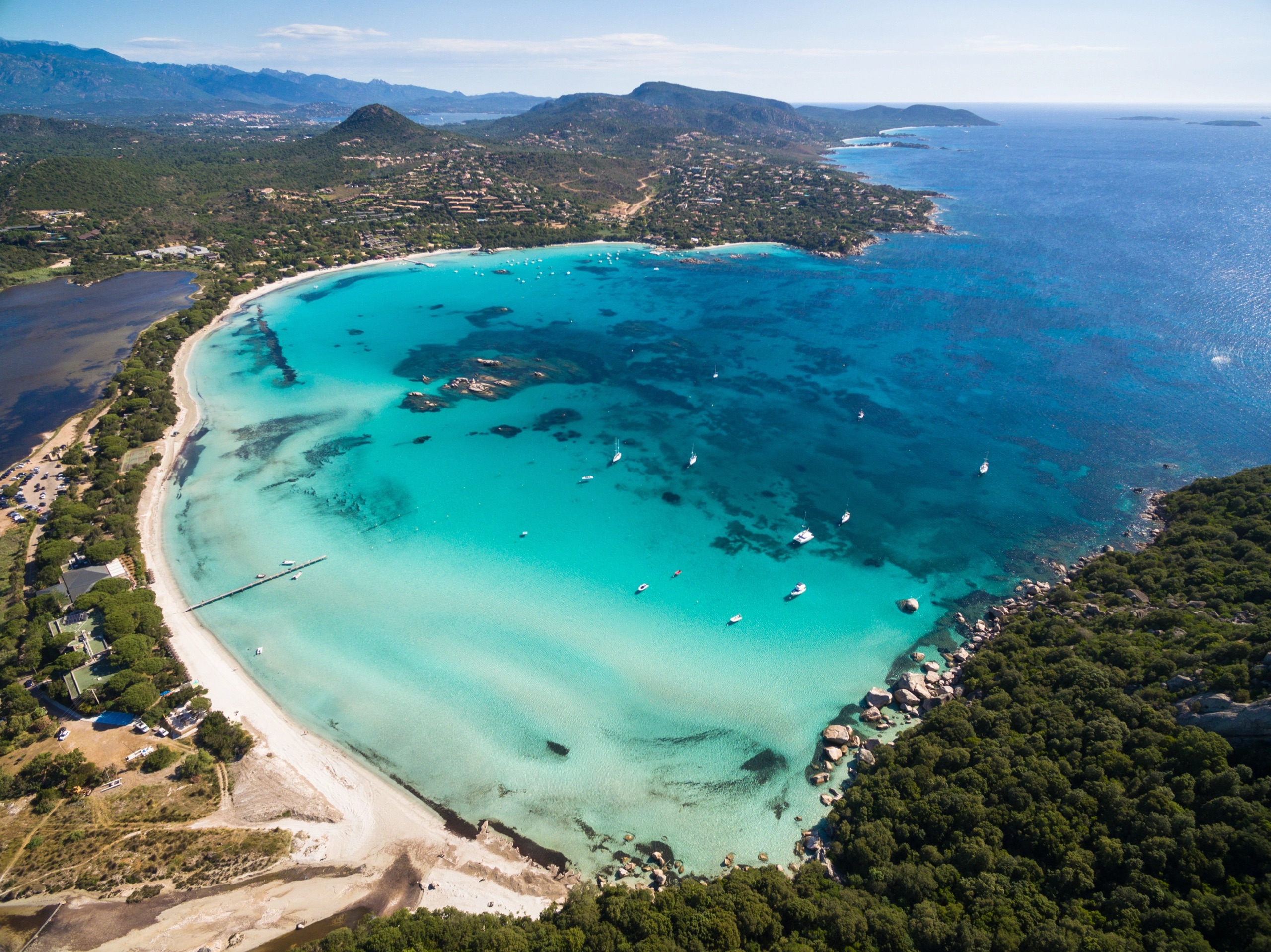
While Palombaggia is wilder thanks to its red rocks, neighbouring Santa Giulia is more reminiscent of an enormous, luxurious swimming pool. The bay is naturally shaped into a perfect horseshoe and forms a sheltered lagoon where the water is extremely calm and incredibly shallow for a very long way out. You can wade tens of metres into the sea and the water will barely reach your waist, which makes this a complete paradise for anyone who isn’t a strong swimmer, or for families with smaller children. The bottom is covered with the finest pale sand without a single pebble, so you can happily leave your water shoes at the hotel and enjoy the soft footing.
Thanks to its incredibly calm surface, Santa Giulia is also the main hub for all sorts of easy-going water sports and activities. It’s the best place on the island where you can hire a paddleboard for around €15 to €20 an hour and just quietly glide across the crystal-clear surface. The water here is so clean that you’ll easily see all the way to the bottom from your board and can watch shoals of little fish swimming below you. Along the beach runs a long wooden promenade full of pleasant restaurants and bars, where at midday you can treat yourself to a great vegetarian pizza with fresh basil or excellent pasta made from local chestnut flour.
💡 Tip: Parking at Santa Giulia is a little better organised than at Palombaggia, but even so the sprawling car parks fill up incredibly quickly. If you arrive later in the afternoon, around four o’clock, the first visitors are often already leaving, so you can easily snag a great spot and, on top of that, enjoy the beautiful late afternoon sun that turns the whole bay golden.
3. Rondinara tucked away in its bay
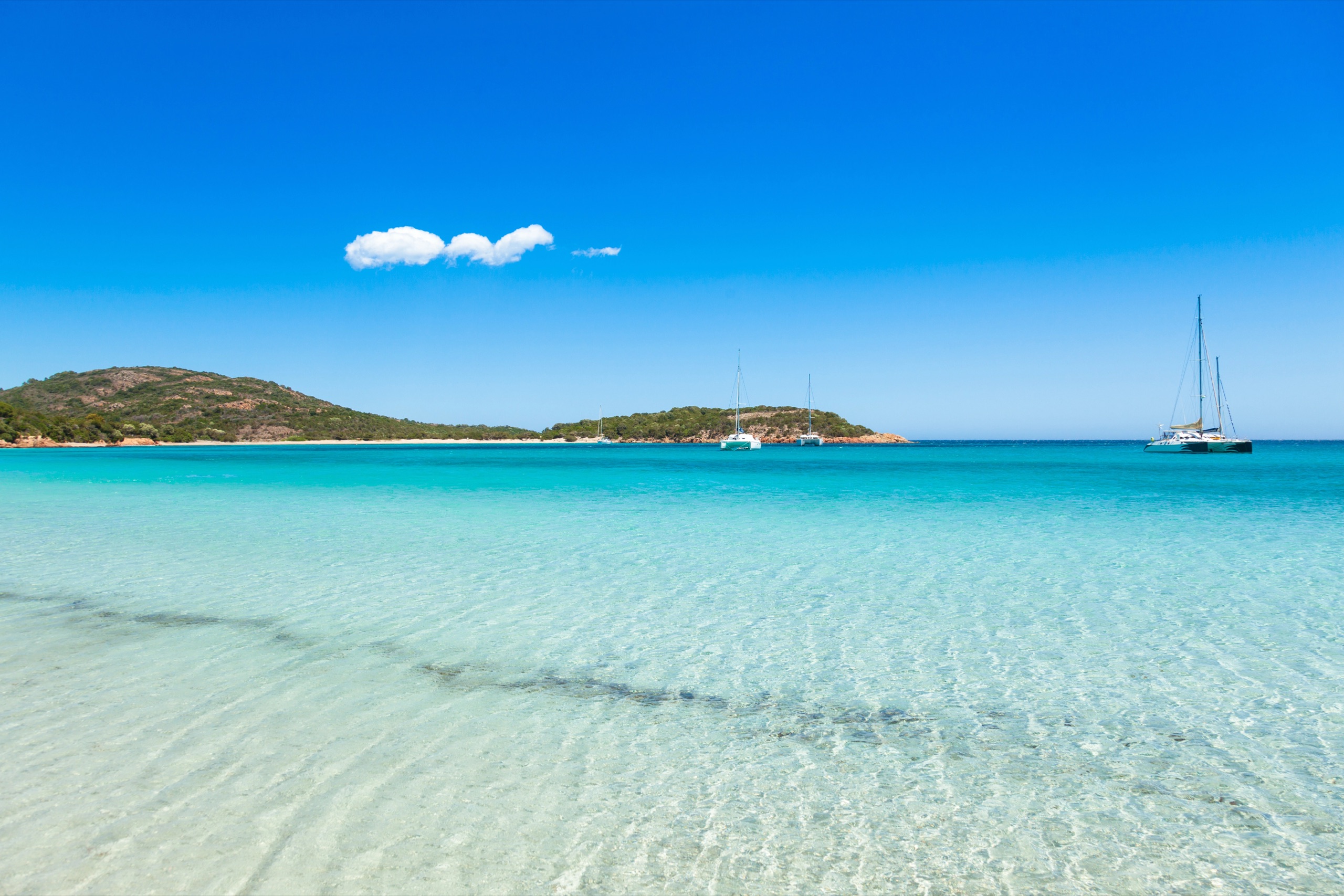
When you head a little further south from Porto-Vecchio along the winding road towards the town of Bonifacio, you’ll come across Rondinara beach, often described as one of the greatest natural gems of the Mediterranean. Its unique shape resembles an almost closed shell or the letter C, and the water here is firmly held between two wooded peninsulas that protect it from the open sea. In 2019 it was even included in the prestigious ranking of the TOP 10 best beaches in the world, and at first sight from the viewpoint above the bay you’ll immediately understand why. The white sand contrasts sharply with the deep blue water, and the whole scene feels incredibly soothing.
Rondinara’s biggest advantage is its geographical location and its perfectly sheltered shape, which you’ll appreciate above all in unsettled weather. The bay is superbly protected from strong wind, so even when it’s blowing unpleasantly on the rest of the coast and big waves are forming, here you’ll find an oasis of complete calm and a surface without a single ripple. A fairly narrow and twisting road, about eight kilometres long, leads from the main road to the beach, and at the end of it a huge paid car park awaits you. The journey is definitely worth it, because thanks to its more remote location Rondinara has a slightly wilder and more natural atmosphere than the beaches right next to Porto-Vecchio.
💡 Tip: Don’t just stay on the main sandy stretch; set off on a short walk along the right-hand peninsula that closes off the bay. Well-trodden paths lead through the fragrant maquis shrubs, and you can often meet free-roaming semi-wild cows here, which sometimes even come to sunbathe right on the beach among the tourists, adding that genuine island colour to the place.
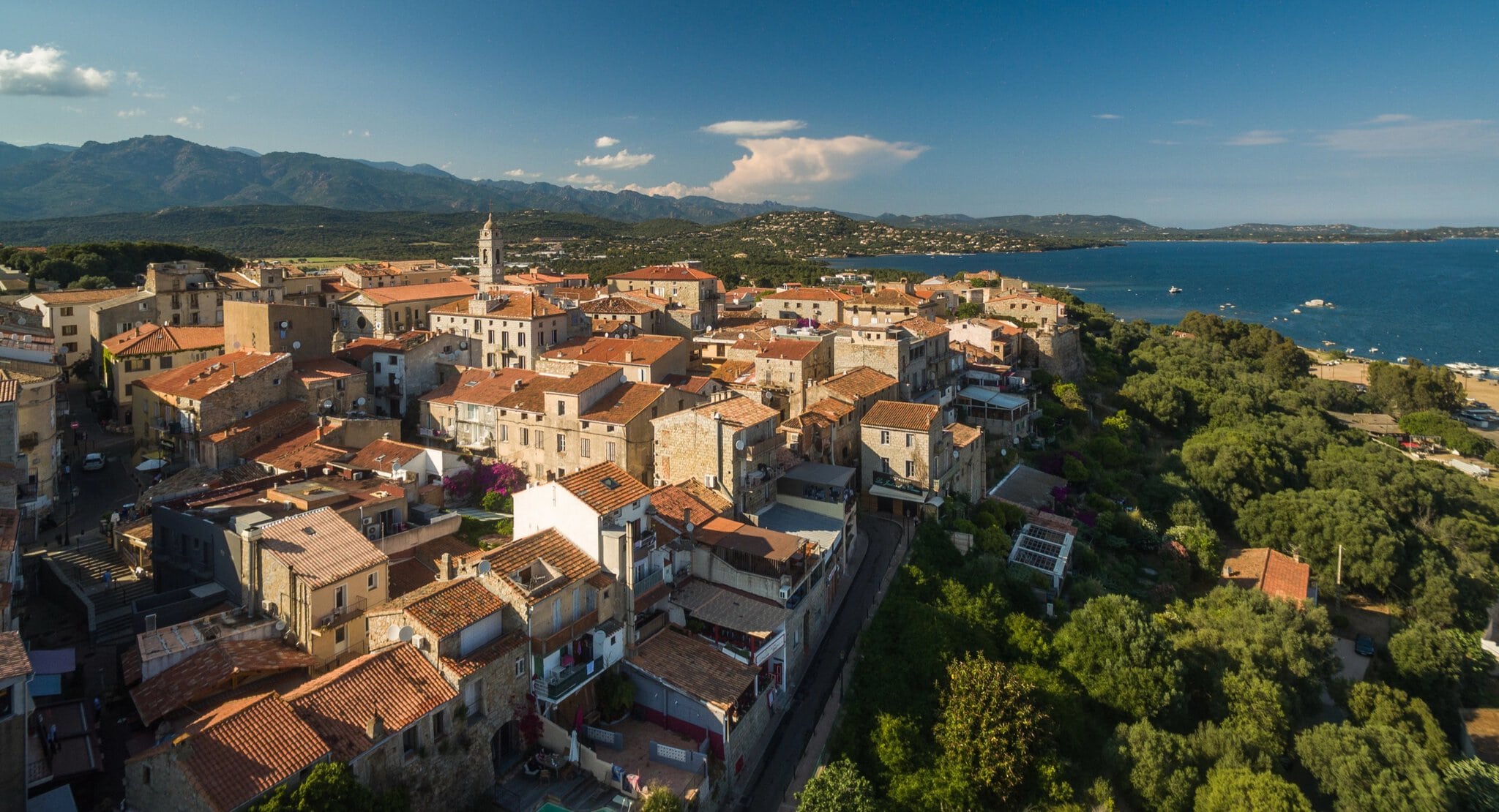
4. Porto Vecchio old town
When you want a break from sunbathing and swimming, head out to explore the town of Porto-Vecchio itself. Its historic heart, the old Genoese citadel, rises majestically on a hill high above the modern harbour and offers absolutely breathtaking views over the wide surroundings and the famous salt pans. The town was founded in the sixteenth century and to this day retains its fortress character with massive stone walls, bastions and narrow passageways that were meant to protect the inhabitants from pirate raids. As soon as you pass through the old Porte Génoise gate, you find yourself in a maze of winding cobbled streets lined with old stone houses, small squares and hidden cafés.
The best time to visit the old town is undoubtedly late afternoon or early evening, when the worst of the heat eases and the town starts to come alive. The main square, Place de la République, with its beautiful Saint-Jean-Baptiste church, fills up in the evening with café and restaurant terraces, and the whole atmosphere begins to pulse incredibly with typical Mediterranean life. You can wander endlessly, peeking into little boutiques with local products, tasting excellent meat-free specialities such as pasta with fresh Corsican brocciu cheese, and soaking up that genuine relaxed vibe with a glass of chilled local wine in hand. From the walls you can then watch the sun slowly set behind the majestic peaks of the nearby mountains.
💡 Tip: If you want to experience a slightly calmer atmosphere and avoid the evening crowds, try getting up early and heading into the old town first thing in the morning. You’ll have the narrow streets almost to yourself, you’ll see the locals over their morning coffee, and the light for photographing the old walls will be absolutely perfect.
5. The historic salt pans and the city of salt
It might surprise you that Porto-Vecchio bears the historic nickname Cité du Sel, meaning the city of salt, and this fact is deeply rooted in the very history of the whole area. When you look down from the walls of the old town towards the harbour, you’ll surely notice the extensive stretches of water, which are precisely those famous salt pans that once represented the main source of wealth for the entire region. Extracting sea salt has a huge tradition here, although these days the salt is mined more for local and tourist purposes than as a massive industrial sector with enormous exports. The pans create a beautiful geometric pattern, and at sunset the sky is reflected on their calm surface, which makes them a wonderful spot for an evening stroll.
The town’s history is, however, connected with these wetlands in a rather dark way too, one that shaped the lives of the local inhabitants. The very marshes and stagnant water around Porto-Vecchio were for centuries a breeding ground for dangerous mosquitoes, and the whole area was notoriously known as a hotspot for malaria. For generations, the Corsicans therefore practised what is known as transhumance, when for the entire summer they fled from the coast to the healthier and cooler climate of the mountains, returning to the sea only for the winter. It was only after the Second World War, when malaria was finally eradicated on the island, that Porto-Vecchio could take a full breath and begin building its present-day tourist fame.
💡 Tip: Every year at the beginning of September, Porto-Vecchio holds a traditional salt harvest festival, the so-called Récolte du Sel. If you visit the town at this time, you can see demonstrations of traditional hand-harvesting of salt crystals and buy fresh sea salt flavoured with maquis herbs directly from local producers as a great and authentic souvenir.
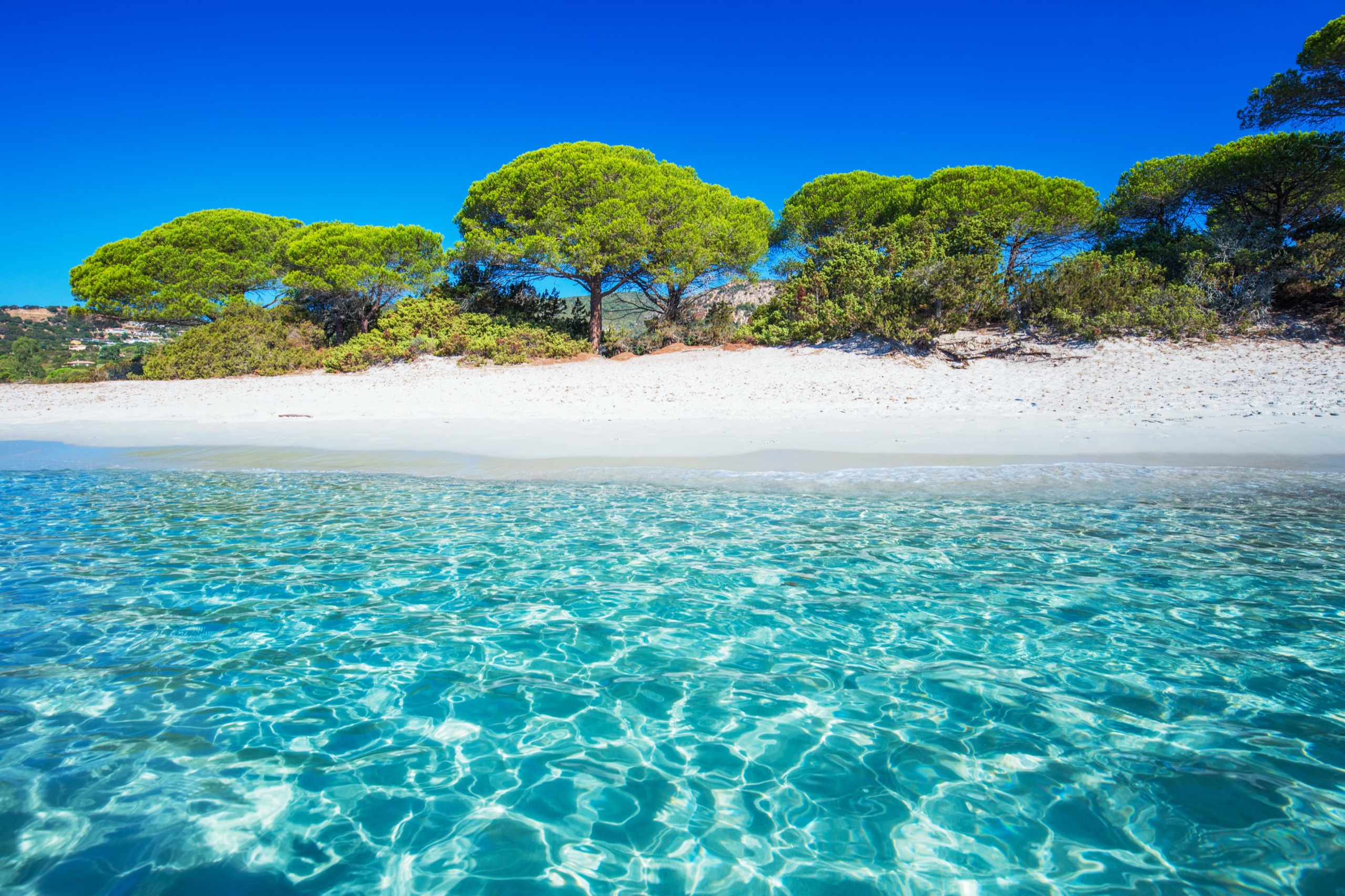
6. Pinarello beach in the bay with a tower
If you want to escape the biggest crowds that head south of the town, go the other way, a short distance north to the picturesque Pinarello bay. This huge bay, several kilometres long, offers beautiful white sand, a very gentle entry into the water and, compared to the famous Palombaggia, a much more relaxed and less commercial atmosphere. The bay is fringed by an extensive pine forest, which provides wonderful natural shade right at the edge of the beach, so you don’t even need to bring a parasol or rent expensive sun loungers. The water here is beautifully clean and, thanks to the size of the whole bay, even at the height of summer you’ll always find a spot where you can spread out your blanket in peace and enjoy the sound of the waves.
The landmark of the whole area is a small peninsula, on top of which the old Genoese watchtower Tour de Pinarello proudly rises. Corsica is literally dotted with these towers; in the sixteenth century the Genoese built dozens of them as a defence system against pirates, and to this particular tower you can take a very pleasant and easy walk. The path starts at the northern end of the beach, leads through the fragrant maquis scrub, and from the top by the tower you’ll be treated to a breathtaking view of the whole bay and the majestic Corsican mountains rising in the distance.
💡 Tip: Along Pinarello beach there’s a small village of the same name with several very pleasant restaurants and cafés right by the sea. It’s the ideal place where, after a swim, you can have a long, lazy lunch, taste fantastic vegetarian tapas or pizza, and watch the little boats bobbing on the calm surface.
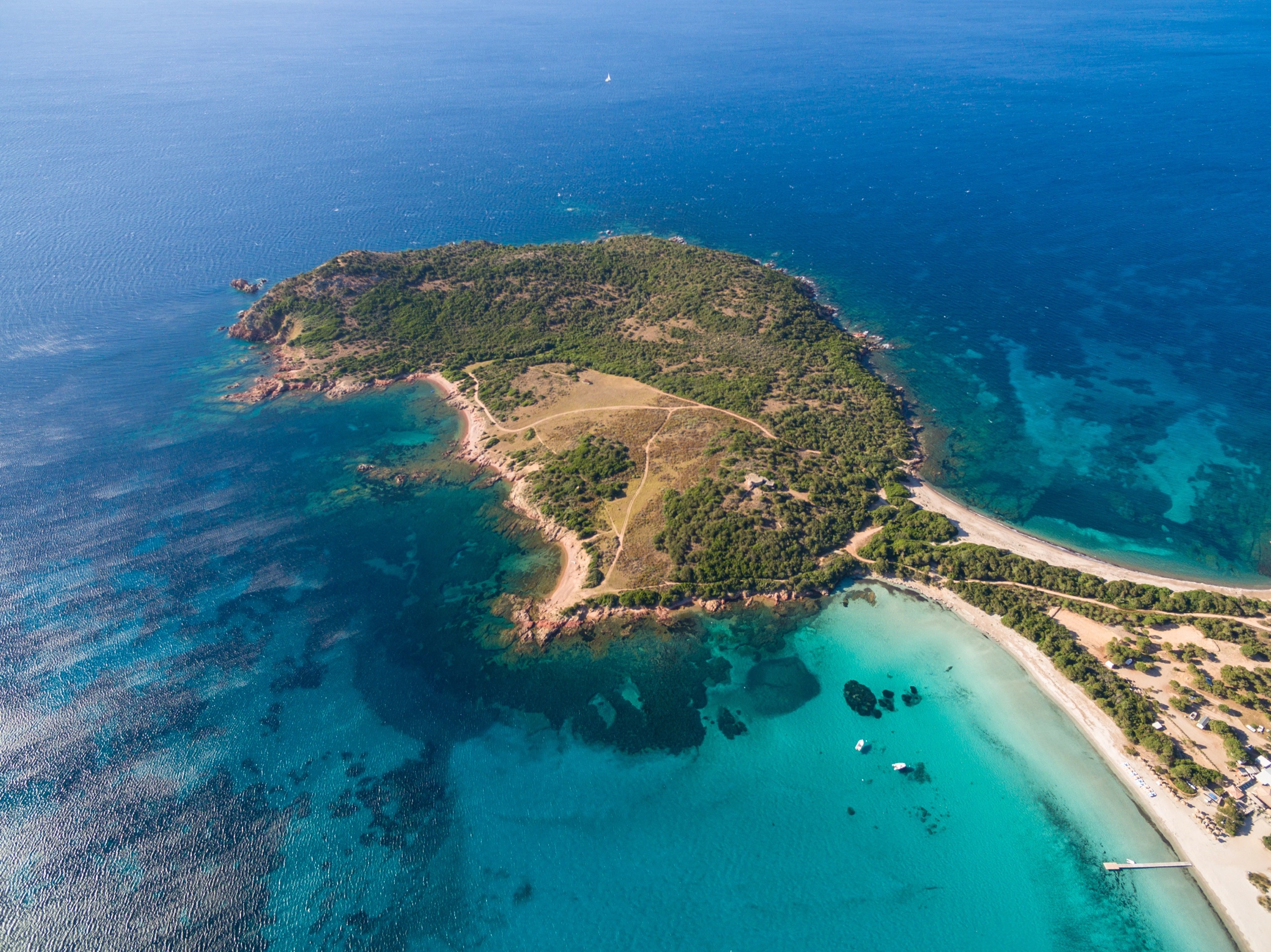
7. The luxurious Cala Rossa bay
North of Porto-Vecchio you’ll also find the Cala Rossa area, which is the absolutely most luxurious and most exclusive part of the whole bay. It’s a place where beautiful private villas and luxury boutique hotels hide among the fragrant pines, and the whole bay radiates an incredibly peaceful, almost slightly refined atmosphere. The sand here has a slight reddish tint, which is, after all, how the whole bay got its name, and the water shimmers with every imaginable shade of emerald and turquoise. The beach is superbly protected from the waves and the entry into the sea is very comfortable, so it’s another absolutely ideal place for a full day of relaxation with a book in hand.
Despite its luxurious character and the presence of expensive resorts, Cala Rossa beach is fully open to the public and is definitely worth a visit. You’ll find very well-equipped water sports centres here, excellent beach bars with comfortable loungers and a fantastic view of the whole of Porto-Vecchio on the opposite shore of the wide bay. It’s a place you come to for peace, top-notch service and complete relaxation, so if you want to push the boat out for one day of your holiday and treat yourself to something extra, Cala Rossa definitely won’t disappoint you.
💡 Tip: Even though this area is very prestigious, parking here is surprisingly a little easier than at the well-known beaches to the south. You’ll find smaller free car parks along the access road, but even so the popular rule applies that the early bird gets the space, so don’t lie in.
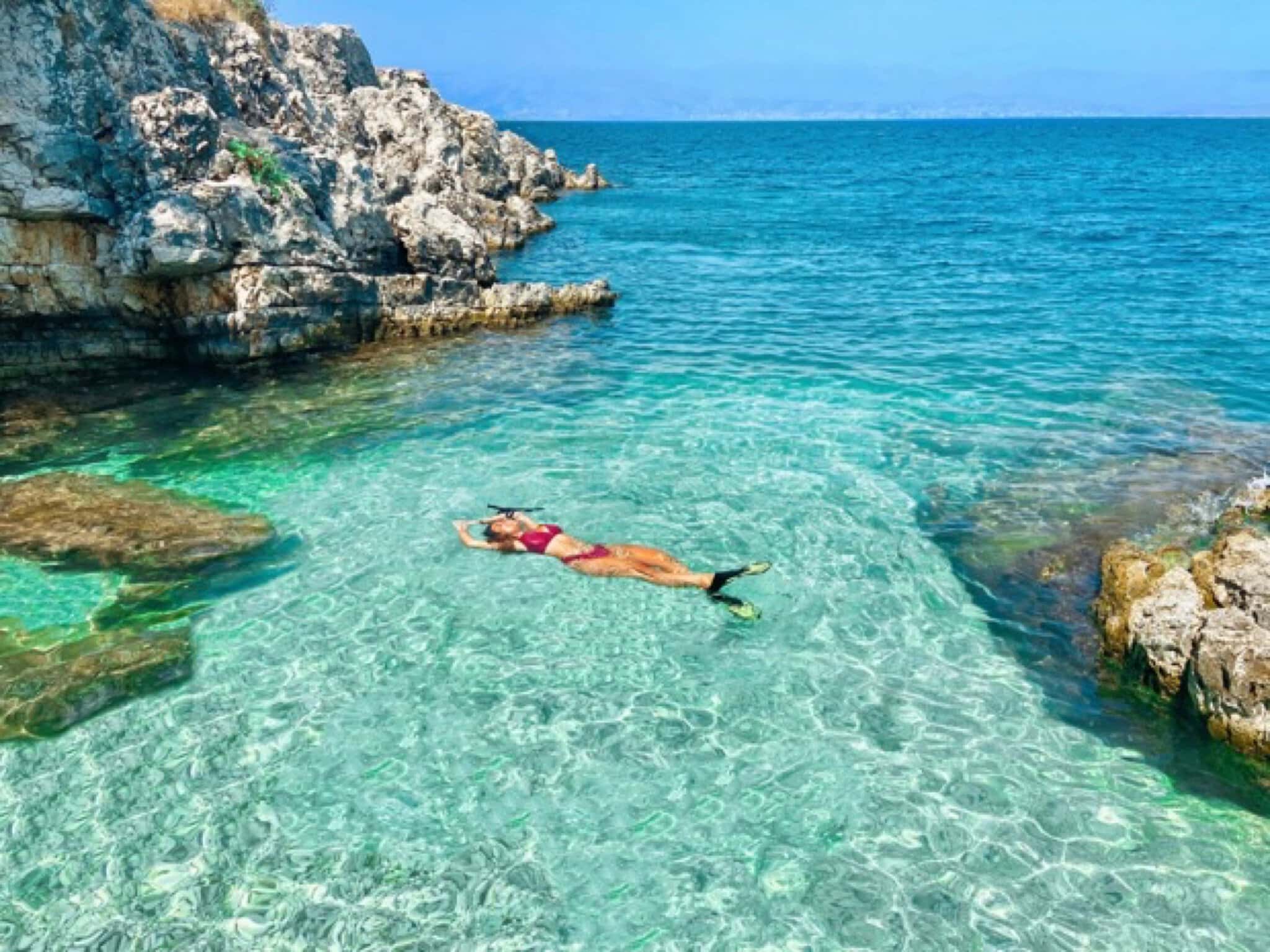
8. Snorkelling, water sports and GetYourGuide tours
The Corsican sea is so clean and clear that it would be an enormous sin to just lie passively on the shore and not explore what lies beneath the surface. The area around Porto-Vecchio offers absolutely fantastic conditions for snorkelling; you just need to grab a mask and head to the nearest rocky headland at the edges of the big beaches. Especially near Palombaggia and Rondinara, huge shoals of colourful fish dart around the submerged red rocks, and beneath the surface things are teeming in the most wonderful way. The water here is so clear that visibility often exceeds twenty metres, so you’ll feel more like you’re in a huge, carefully maintained aquarium than in the Mediterranean Sea.
If you’re tempted by something a little more action-packed, you can make use of the endless options for organised trips and activities on the water, of which there really are plenty here. A great idea is to book a half-day or full-day boat trip that takes you to hidden coves you simply can’t reach by land, and these experiences can be very easily and safely booked through the GetYourGuide app. The guides will take you to the best spots, lend you quality equipment and all you have to do is let yourself be carried away on the waves. Very popular too is hiring sea kayaks, on which you can explore the rugged coastline yourself and discover small deserted beaches where you’ll be completely alone.
💡 Tip: If you’re heading out snorkelling, I recommend avoiding the middle of beaches, where there’s only bare sand and no hiding places for marine creatures. Always head to the edges of the bays where rocks rise from the water, because that’s where all the underwater life hides and where you’ll see the most.
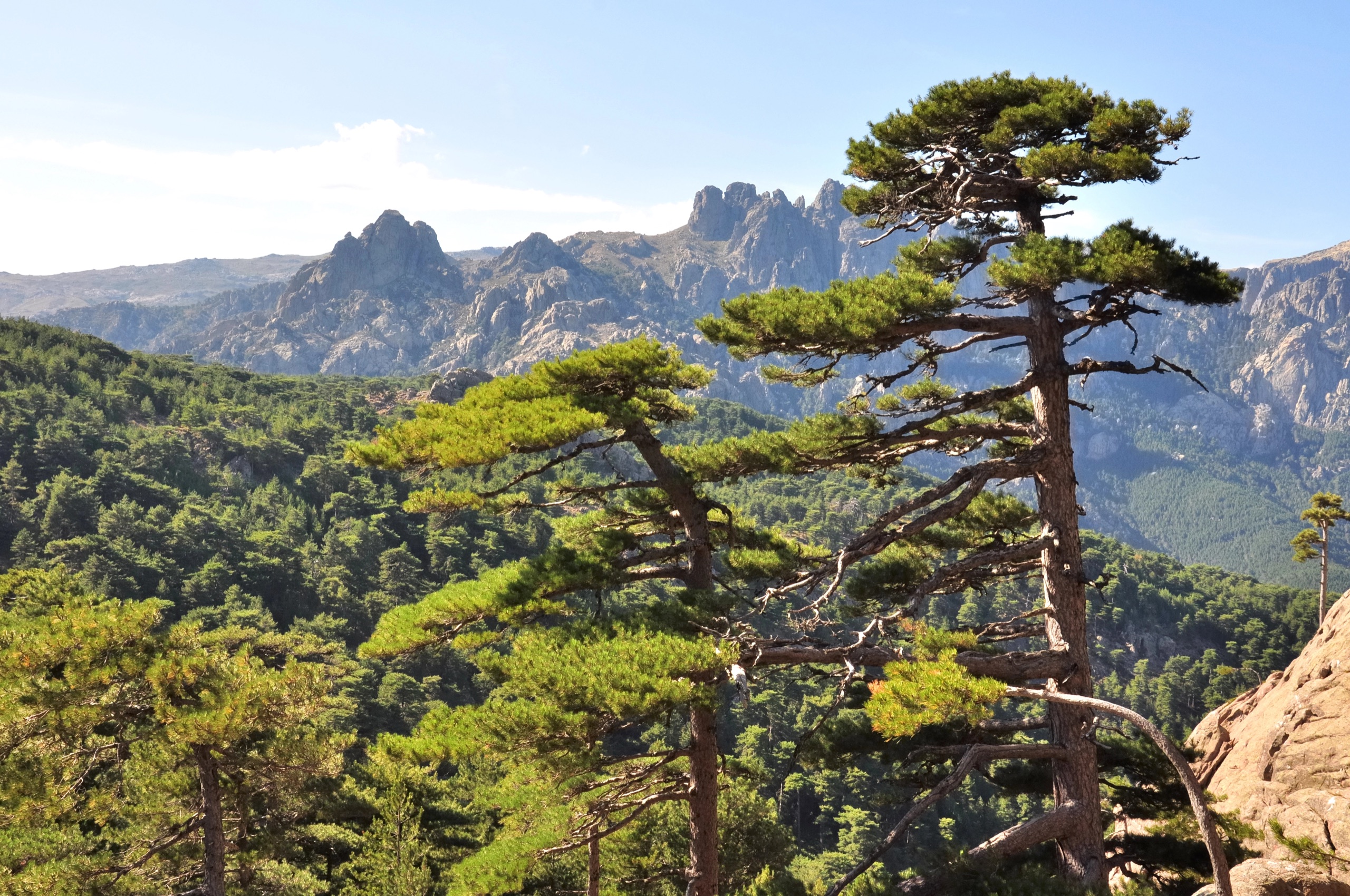
9. Escape to the mountains: the Ospedale range and reservoir
When you get tired of endlessly lying on the beach and fancy a change, just hop in the car and after a mere thirty-minute drive from Porto-Vecchio you’ll find yourself in a completely different world. The Ospedale mountains rise steeply right behind the town and offer a wonderful escape from the summer heat into the shade of huge pine and larch forests that smell gorgeously of resin. The road that leads there is admittedly full of sharp hairpin bends, but the panoramic views from it over the whole bay and the shimmering sea far below you are simply priceless. The temperature drops noticeably with every kilometre you climb, so even in the middle of the sweltering summer don’t forget to pack a light jumper so you’re not caught out.
At the heart of this whole stunning mountain area is the amazing man-made Lac de l’Ospedale reservoir, surrounded by dense coniferous forests, its banks strewn with enormous granite boulders. When the water level is a little lower at the end of summer, a bizarre landscape forms around the lake, full of dry tree trunks jutting out of the sand, which gives an almost mystical and mysterious impression. The whole area is literally criss-crossed with superbly marked hiking trails of every conceivable difficulty, from simple flat walks around the lake to demanding climbs to the surrounding rocky peaks, so both families with children and experienced mountaineers will find something for them here.
💡 Tip: Be sure to take the roughly two-hour walk to the Piscia di Gallu waterfall, which plunges from an incredible sixty metres straight over a bare rock face. The route leads through a beautiful pine forest, and at its end a very steep descent to the waterfall itself awaits you; it’s a little demanding, but the visual reward is definitely worth the effort.
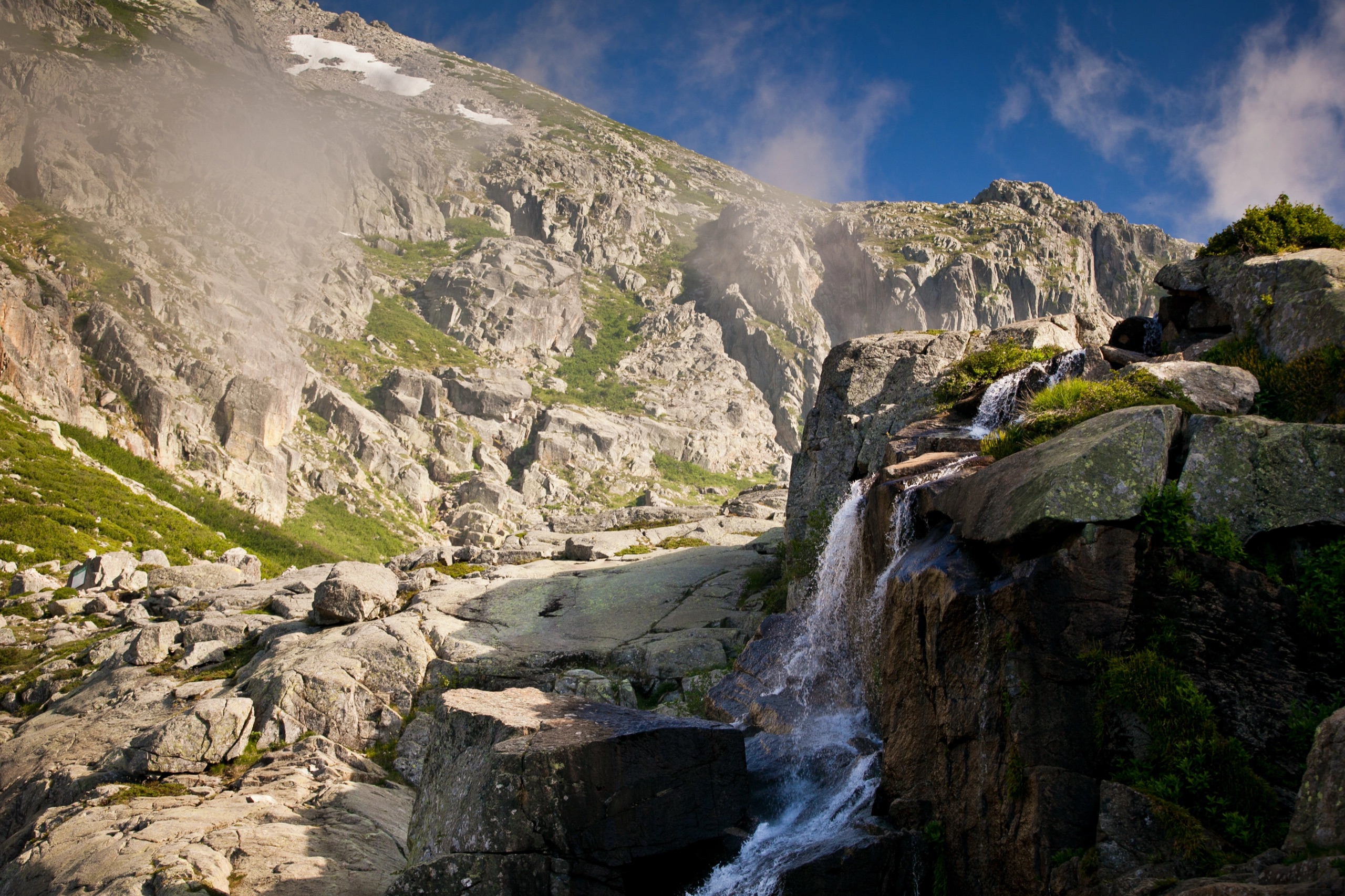
10. The Cavu valley and its refreshing natural pools
If you want to cool off in fresh water but don’t fancy climbing high into the mountains to the reservoir, you have to head to the valley of the Cavu river, located just a little north of Porto-Vecchio near the village of Sainte-Lucie. Over many thousands of years, this mountain river has carved beautiful natural pools and cascades into the white granite rocks, filled with incredibly clean and perfectly clear water. The water here is admittedly noticeably cooler than the warmed sea on the coast, but in the hot Corsican summer it’s exactly the refreshment you’ll desperately need after several days spent in the sun.
The valley is very easily accessible for visitors; a dusty road runs along the river with several large lay-by car parks, from which it’s just a few short steps to the water. You can sunbathe for hours here on the huge smooth rocks, jump off them into the deep pools, or just let yourself be massaged by the little waterfalls that cheerfully tumble from one pool into the next. It’s an absolutely idyllic spot that perfectly combines the wildness of Corsican nature with incredible relaxation, and you’ll often come across local families here rather than huge crowds of foreign tourists.
💡 Tip: Right in the valley, by one of the large car parks, there’s a great rope park and a very pleasant restaurant with a huge terrace, where after a refreshing swim you can treat yourself to excellent meat-free food or a cold draught beer with a view of the babbling river.
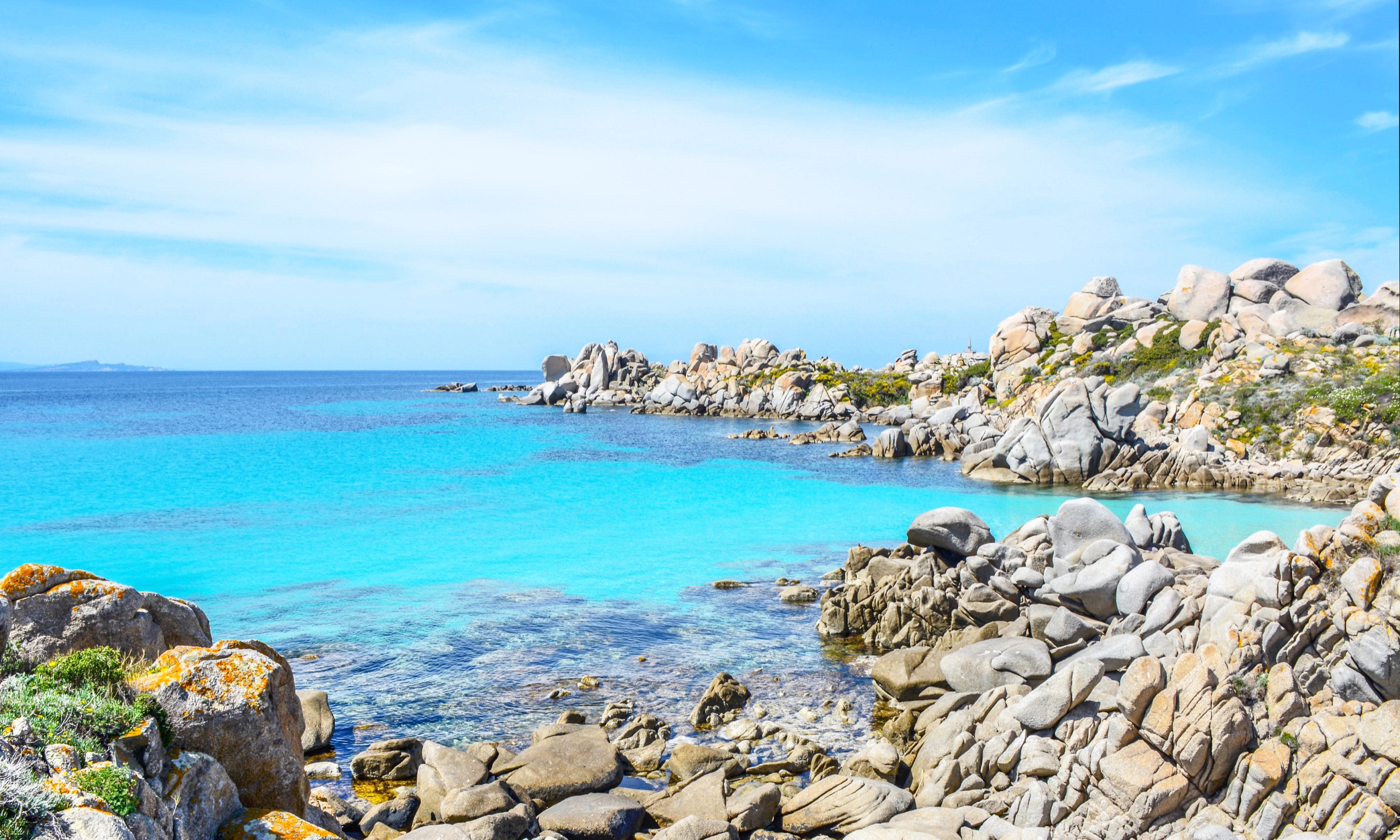
11. Boat trip to the uninhabited Lavezzi islands
Although the magical Lavezzi archipelago lies closer to the town of Bonifacio, regular full-day boat trips run here from Porto-Vecchio, and you definitely shouldn’t miss them during your holiday. It’s a protected nature reserve made up of a pile of enormous granite boulders scattered completely chaotically in crystal-clear water, right on the border between Corsica and Italian Sardinia. As soon as you step off the excursion boat onto the shore, you feel as though you’re literally on another planet. You won’t find any hotels here, no shops, no refreshment stalls and not even any trees, just pure and completely raw nature, fine snow-white sand and a turquoise sea.
A trip to this area requires careful preparation, because there’s no natural shade at all on the islands where you could hide. You have to pack enough drinking water for the whole day, plenty of high-factor sunscreen, a proper hat and your own food, otherwise you really won’t survive here in the summer sun. But your reward will be swimming on the most deserted and most beautiful beaches for miles around, fantastic conditions for snorkelling among the enormous rocks, and a feeling of complete detachment from the surrounding civilisation. Be sure to book your return boat ticket from the harbour well in advance, because the capacity of the excursion boats is strictly limited and demand in high season is enormous.
💡 Tip: Given that the sun here reflects aggressively off the pale sand and granite rocks, you’ll burn at least twice as fast as on an ordinary beach. Bring a light beach tent with you, or at least a large parasol, so you have a chance to hide in the cool shade for a while.
Where to go next from Porto-Vecchio
Corsica may be an island, but it’s so vast and immensely varied that one holiday is definitely not enough to explore it. Once you’ve driven the whole Porto-Vecchio area from top to bottom, it’s time to venture a little further and discover more amazing places, of which there really are countless.
Your first stop should definitely be the town of Bonifacio, which literally defies gravity and balances right on the edge of the dazzling white limestone cliffs at the very south of the island. It’s less than an hour’s drive from Porto-Vecchio, it’s one of the most beautiful towns in the entire Mediterranean, and its historic citadel and legendary Aragonese Staircase, made up of 187 steps carved straight into the sheer rock, will reliably take your breath away.
If, on the other hand, you’re tempted by mountains and rugged nature, head inland and explore the amazing granite towers of the Aiguilles de Bavella, which rise above the pine forests and are an absolute paradise for climbers and hikers. And if you want a complete picture of everything this incredible island hides, be sure to read our big guide, where you’ll find plenty more practical tips for the whole of Corsica.
Frequently asked questions
Do I absolutely need a car for vacation in Porto-Vecchio?
Yes, a car is an absolute and unavoidable necessity here. While public transport theoretically exists on the island, buses run very rarely, are unreliable, and often won’t get you to the most beautiful secluded beaches or mountain villages at all. Without a car, you’ll be limited to just the immediate vicinity of your hotel and will miss out on the vast majority of the beauty and hidden gems of the entire area.
How much does the ferry to Corsica cost?
Ticket prices fluctuate quite a bit depending on the season and route. In 2026, a foot passenger will pay between 40 and 100 euros. But once you add a car and travel as a couple, a return ticket will set you back anywhere between 250 and 1000 euros. It mainly depends on how far in advance you book and whether you manage to avoid the priciest month of August. The cheapest connections often depart from Italian ports.
Are the beaches in the area sandy or pebbly?
The area around Porto-Vecchio is famous precisely for its gorgeous and very fine white sand, which resembles the exotic Caribbean. Most of the famous bays such as Palombaggia, Santa Giulia or Rondinara have perfectly sandy bottoms without stones, so you won’t need special water shoes at all and entering the sea is very pleasant even for children.
Is parking good at the beaches?
Parking is a huge problem during the peak summer season that requires strategic planning. While most popular beaches do have paid parking lots costing around 10 to 15 euros per day, they fill up incredibly fast from early morning. If you want to park in peace and without stress, you need to head to the beach right after breakfast around eight o’clock, or alternatively try your luck in the late afternoon.
Are there jellyfish or sharks in the sea in Corsica?
Sharks do naturally occur in the Mediterranean Sea, but you’ll encounter them only extremely rarely off the Corsican coast and they’re not dangerous to people. Jellyfish can appear occasionally, usually brought in by stronger sea currents after big storms, but it’s not any massive problem that should ruin your holiday or put you off swimming.
Is food expensive in Corsica?
Corsica is generally one of the pricier French destinations. For a classic dinner at an average restaurant, you’ll pay around 25 to 40 euros per person. A great and significantly cheaper alternative for vegetarians is the fantastic local pizza, which you can get here for around 12 to 15 euros, or excellent pasta enriched with local chestnut flour and traditional cheeses.
Can you drink tap water in Corsica?
Yes, tap water throughout Corsica is completely safe and drinkable without any problems. In mountainous areas, it’s even very high quality and tasty. However, for full-day trips to the beaches, always bring plenty of water with you in bottles, as staying hydrated by the sea can be quite challenging due to the extreme summer heat, and stalls aren’t available everywhere.
Tips and Tricks for Your Vacation
Don’t Overpay for Flights
Search for flights on Kayak. It’s our favorite search engine because it scans the websites of all airlines and always finds the cheapest connection.
Book Your Accommodation Smartly
The best experiences we’ve had when looking for accommodation (from Alaska to Morocco) are with Booking.com, where hotels, apartments, and entire houses are usually the cheapest and most widely available.
 🚗 Car rental on the roadVerified rental cars in France
Search with the DiscoverCars comparison engine — it compares prices from dozens of local and international rental companies, and most bookings come with free cancellation.
Compare car prices in France →Don’t Forget Travel Insurance
Good travel insurance will protect you against illness, accidents, theft, or flight cancellations. We’ve had a few hospital visits abroad, so we know how important it is to have proper insurance arranged.
Where we insure ourselves: SafetyWing (best for everyone) and TrueTraveller (for extra-long trips).
Why don’t we recommend any Czech insurance company? Because they have too many restrictions. They set limits on the number of days abroad, travel insurance via a credit card often requires you to pay medical expenses only with that card, and they frequently limit the number of returns to the Czech Republic.
Find the Best Experiences
Get Your Guide is a huge online marketplace where you can book guided walks, trips, skip-the-line tickets, tours, and much more. We always find some extra fun there!


