

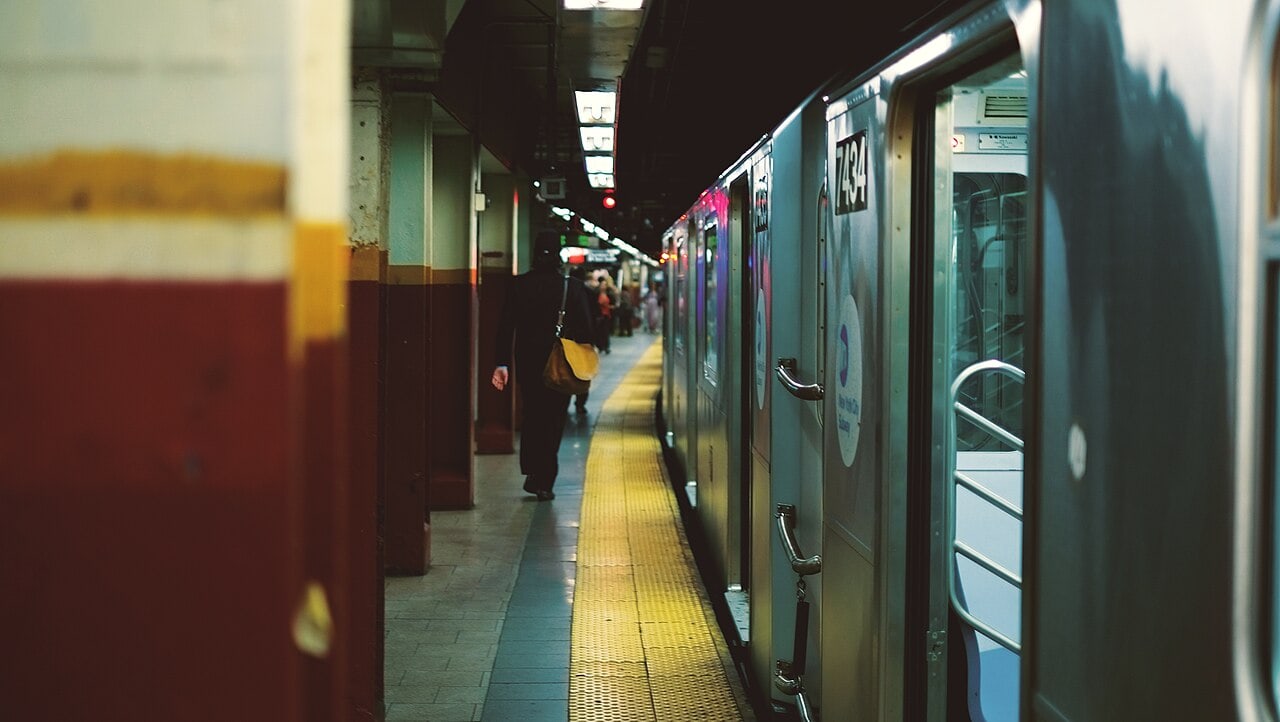
You’re standing at the edge of the platform and hear the familiar rumble of an approaching train in the distance. Finding your way around a huge, unfamiliar metropolis can trip up even seasoned travellers. But New York transportation actually works far more logically than it seems at first glance. Thankfully, these days you no longer need to decode complicated fare zones or hunt in confusion for ticket machines.
The city’s iconic subway is the main bloodstream of the entire city. It’ll reliably get you almost anywhere. This detailed guide will walk you through all the latest news and changes for 2026. You’ll find the exact ticket prices for every mode of transport. And you’ll learn how to travel from the airport to your hotel without needless stress or getting lost.
We’ll go step by step through paying with a contactless card at the turnstiles. We’ll look at the tricky airport taxis as well as the fantastic sightseeing ferries. You’ll also discover the new rules for driving cars into central Manhattan. Your comfortable journey starts right now. 😊
TL;DR
- As of 1 January 2026, the paper MetroCard is gone for good and you pay exclusively contactless through the OMNY system.
- A single standard ride costs exactly $3.
- The weekly cap stops your spending at $35 (after 12 rides you travel the rest of the week for free).
- From JFK airport, the fastest way to the centre is the LIRR train (35 to 45 minutes for under $17).
- A yellow cab from JFK has a flat rate of $70, but with tolls and tip you’ll realistically pay over $100.
- The New York subway runs non-stop, 24 hours a day, 7 days a week.
- Newark airport (EWR) has announced a weekday morning shutdown of the AirTrain for 2026.
The full destination guide: North America — guide and what to see
Subway and OMNY: How to Pay and How to Ride
The underground railway is the fastest way to move between neighbourhoods. It runs without a single overnight pause. During the day, trains come every few minutes. At night the wait stretches a little, but you’ll always reach your destination. You’ll find stations on practically every corner, and you’ll recognise them by the distinctive green or red lamps at the entrance to the underground.
Paying with the OMNY System
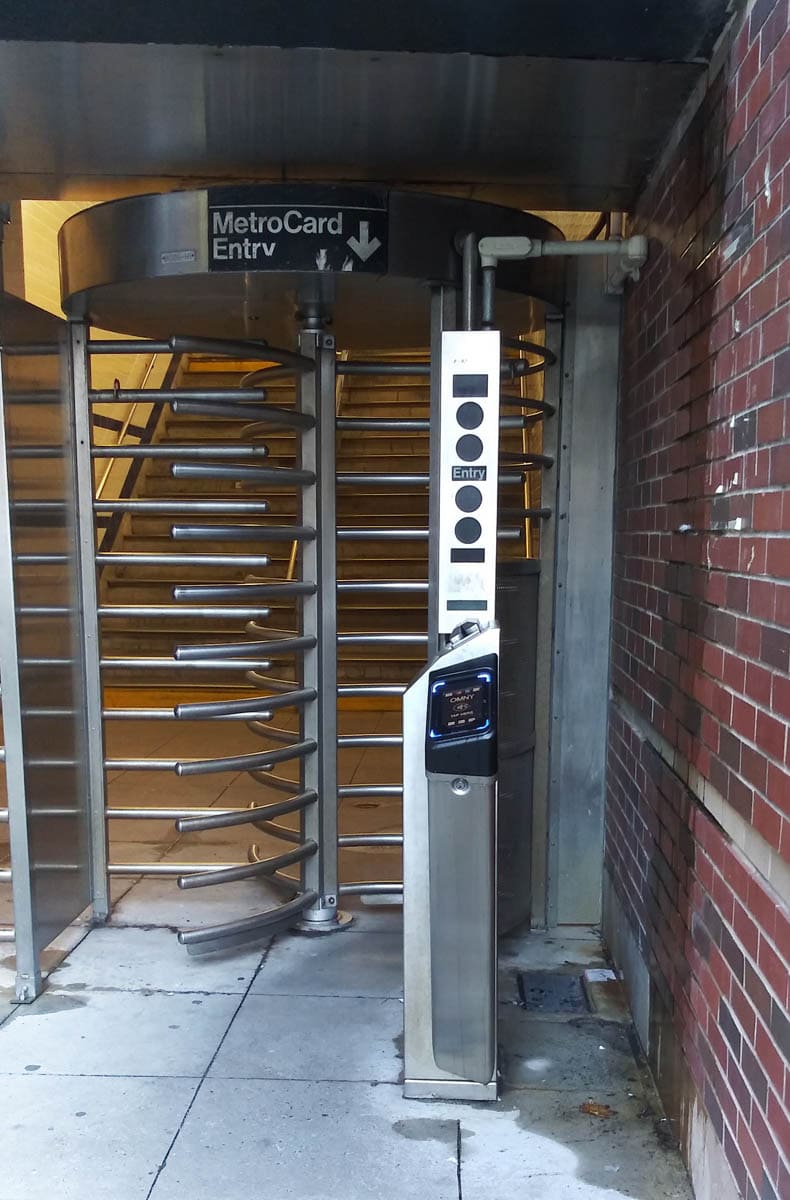
The OMNY system (One Metro New York) has completely rewritten the rules of travel. The old yellow paper MetroCards were retired for good on the first of January 2026. The turnstiles no longer allow you to swipe magnetic cards. All New York transportation now relies on contactless technology. All you need is an ordinary bank card issued by your UK bank.
You can just as easily use a phone with Apple Pay or Google Pay. Walk up to the turnstile and simply tap your device on the reader. The screen instantly turns green and you can walk through onto the platform. You don’t need any special app. You don’t have to register anywhere in advance. Everything works smoothly the moment you land.
💡 Tip: Keep your phone charged. If your battery dies, you won’t be able to pay at the turnstile. Just to be safe, carry a physical bank card with you as a backup. You’ll find more about the contactless system at omny.info.
How Much the Subway Costs and How the Weekly Cap Works
A single subway ride costs $3.00. That fare also covers a transfer to a local bus, as long as you catch it within two hours of your first tap. The transfer happens automatically. When you board the bus, tap the same card again and the system won’t charge you a penny more.
The biggest advantage of OMNY is the so-called weekly fare cap. The limit is set at $35 over 7 consecutive days. The maths is simple. You pay for the first 12 rides. Once you hit that amount, every additional ride that week is automatically free. You could then ride a hundred times and not a single cent will leave your account.
There’s one important rule you have to follow, though. Tap with exactly the same device at the turnstiles all week. If you start paying with a physical card, you have to stick with it. If you use Apple Pay on your phone, don’t use Apple Pay on your watch. The system treats the watch and the phone as two separate devices, and the weekly cap would be counted for each one separately.
Finding Your Way on the Subway: Uptown, Downtown, Express
Basic orientation in Manhattan comes down to understanding two directions. A sign reading Uptown means the train is heading north towards the Bronx. Downtown points south towards the Statue of Liberty and Brooklyn. Always check the sign above the stairs before you enter a station. Some smaller stations have separate entrances for each direction, and you can’t switch sides once you’re underground.
Another quirk is that trains are split into local and express. Local trains dutifully stop at every station along the route. Express trains sail past the smaller stations without mercy and only stop at the main hubs. On the map you’ll spot an express stop by a white dot. A black dot marks a station where only local trains stop.
On the platform, always watch the light-up boards. They show the letter or number of the line and its final stop. The colour of a line on the map is only a rough guide. Two lines of the same colour can branch off into completely different neighbourhoods at a certain point. So always follow the specific letter on the front of the incoming train.
From the Airport to the Centre: JFK, Newark and LaGuardia
The trip from the airport to your hotel is often the first test of your travel skills. New York is served by three major international airports. Each lies in a different part of the metropolis and each offers slightly different transport options. I’ve put together a clear table of the best connections for you.
| Airport | Best connection | Price | Time |
|---|---|---|---|
| JFK | AirTrain + LIRR train | under $17 | 35–45 min |
| JFK | AirTrain + subway A/E | approx. $11.75 | 60–90 min |
| Newark (EWR) | AirTrain + NJ Transit | $15.75–17.25 | 30–40 min |
| LaGuardia (LGA) | Bus Q70 + subway | $3 | 45–60 min |
JFK (Queens): Fastest by Train
John F. Kennedy Airport welcomes most European flights. An automated shuttle train called the AirTrain departs right from the terminals. A ride costs $8.75 and drops you at two important transfer stations. It’s entirely up to you which route into Manhattan you take from there.
The first option is the classic New York subway. At Jamaica station you can transfer to the E, J or Z lines. At Howard Beach you can pick up the A line. This route will cost you around $11.75. Bear in mind, though, that the trip into the centre takes an hour to an hour and a half. Subway cars also have no special space for large luggage.
A far better option is the LIRR (Long Island Rail Road) commuter train. You transfer to it at Jamaica station. It’ll whisk you to the enormous Penn Station or Grand Central in just 35 to 45 minutes. A ticket costs from $2.75 to $7.75 depending on the time of day. At weekends you can buy a bargain CityTicket for $5. All in, you’ll stay under $17 and save yourself a lot of precious time.
Newark (EWR): Watch Out for the 2026 Shutdown
Newark Airport sits in the neighbouring state of New Jersey. The journey into Manhattan from here is often shorter than from JFK. The standard route goes like this. You board the airport AirTrain for $8.75. At Newark Liberty Airport Station you transfer to an NJ Transit train. That takes you to Manhattan’s Penn Station. The whole trip costs $15.75 to $17.25 and takes 30 to 40 minutes.
2026 has brought a major complication for travelling from Newark, however. Since 15 January 2026, there’s been an extensive shutdown of the AirTrain airport shuttle. The shutdown applies on weekdays from 5:00 to 15:00. During those hours you have to use a replacement bus service, which annoyingly drags out the whole process. At weekends and in the afternoons the AirTrain runs normally.
💡 Tip: Before you fly out, check the current train timetables and information on the replacement bus service on the operator’s official website, njtransit.com.
LaGuardia (LGA): Free Bus
LaGuardia Airport is used mostly for domestic flights. If you’re flying in from another American city, chances are you’ll land right here. This airport has no train connection at all. Even so, it’s the cheapest of all three airports to reach the centre from.
The special Q70 bus route (LaGuardia Link) stops right outside the terminal. The ride is free for all passengers. The bus takes you to Jackson Heights station in Queens. From there you simply tap your bank card, pay $3 for the subway and carry on straight into Manhattan. The journey takes 45 to 60 minutes.

Taxis, Uber, Bikes and Ferries
The subway is the backbone of getting around, but sometimes you’ll need other modes of transport too. New York offers a colourful range of options. Some will spare your aching feet, others serve up fantastic views of the city skyline. You’ll quickly discover, though, that driving on the surface has its pitfalls.
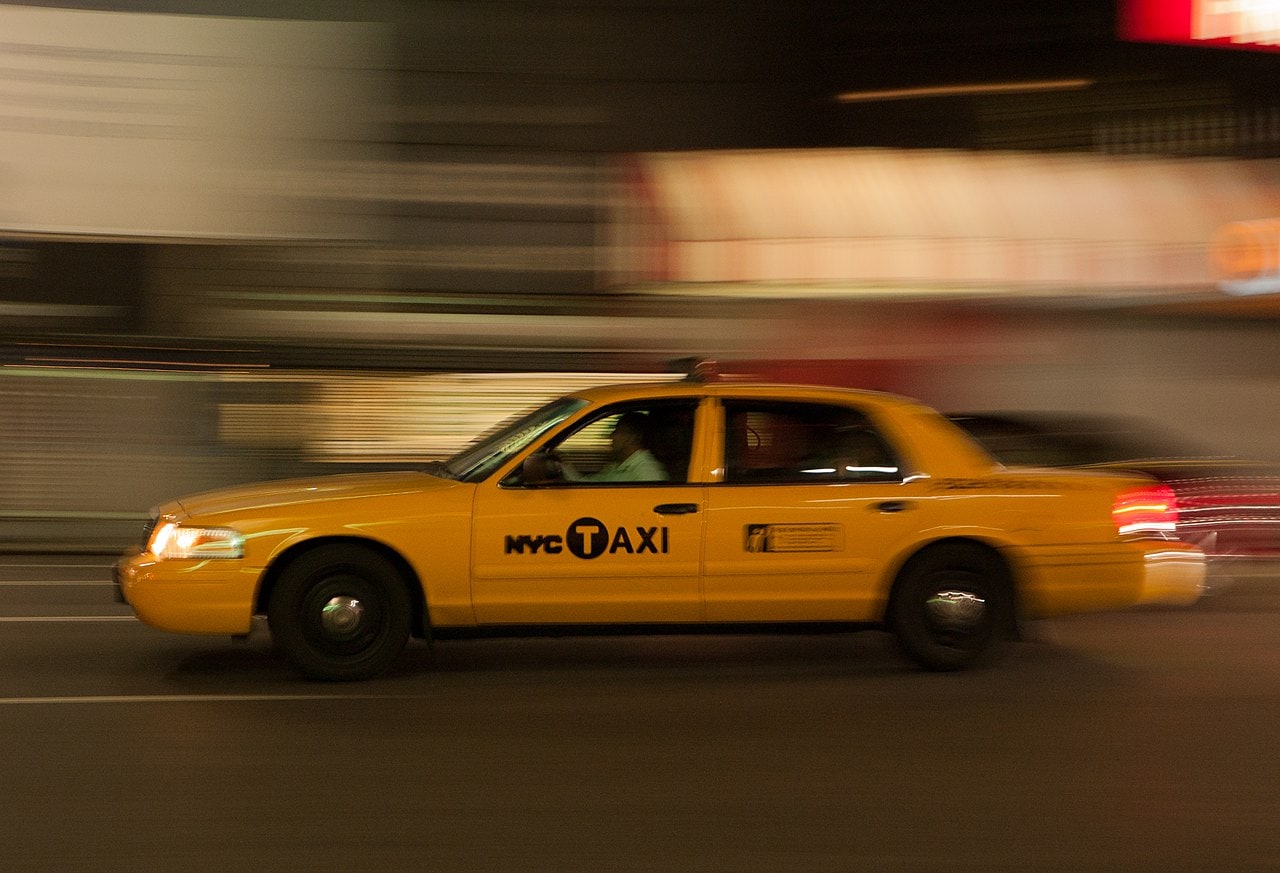
Yellow cabs are one of the city’s symbols. If you take a taxi from JFK airport to Manhattan, the driver will offer you a so-called flat rate of $70. That fixed price sounds very tempting at first. But tourists often forget about the various surcharges. On top of the base fare come airport fees, state taxes, tolls for bridges or tunnels, and of course the customary tip. Realistically, you’ll pay over $100 for the trip from JFK.
Apps like Uber and Lyft work reliably in the city. Cars turn up within a few minutes of ordering. But prices change dynamically depending on current demand and traffic conditions. During rush hour or heavy rain, fares can shoot up to astronomical levels. On top of that, driving often takes forever thanks to the ever-present gridlock.
💡 Tip: 2026 saw the Congestion Pricing system (a charge for driving into the centre) fully kick in. This zone covers all of Manhattan south of 60th Street. A private car pays $9 to enter during the day and $2.25 at night. These charges also feed into the cost of alternative transport. A $0.75 surcharge is added to every yellow-cab ride in this zone. For apps like Uber and Lyft the surcharge is even higher, at $1.50 per ride. You’ll find the details at congestionreliefzone.mta.info.
If you prefer to get some fresh air, try the Citi Bike shared bikes. You’ll find the blue docking stations all over the city. You can rent a classic pedal bike or a faster e-bike. To unlock a bike you need the official app. The system works brilliantly for short hops along the river or a ride across Central Park. You’ll find fare info at citibikenyc.com.
The NYC Ferry boats offer great value for money and a memorable experience. A single ride costs $4.50. From the deck you’ll get wonderful views of the skyscrapers, the Brooklyn Bridge and the Statue of Liberty. Note that OMNY does not work on the boats. You have to buy your ticket in advance in the official NYC Ferry app and activate it before boarding.
Also worth a mention is the Roosevelt Island Tram cable car. The red cabins carry you high above the East River from Manhattan to Roosevelt Island. From the tram you’ll get a close-up view of the Queensboro Bridge and the busy streets below. A single ride costs the same $3 as a regular subway trip, and you pay for it simply by tapping your card at an OMNY turnstile.
Tips and Traveller Experiences
When planning your trip, it pays to learn from other people’s mistakes. I’ve gathered the most important tips from those who’ve already explored the city successfully. They’ll save you a lot of stress and money.
- The most common piece of advice is crystal clear. Don’t buy any special travel cards in advance. Just arrive and tap your contactless card or phone at the turnstile. The OMNY system works flawlessly for tourists.
- From JFK airport, travellers strongly recommend the LIRR train over a taxi. You’ll save loads of time, avoid throwing money away and neatly dodge the endless queues on the motorway.
- Be very wary of yellow cabs from JFK. Travellers warn that the promised $70 flat rate is just the bare bones. With tolls and the mandatory tip, the final total realistically climbs past $100.
- Before your trip, download Google Maps or Citymapper with live departures onto your phone. The New York subway has frequent closures, especially at weekends, and the app will steer you onto an alternative route in good time.
For the very latest information on closures and transport changes, I always recommend visiting the official MTA website. You’ll find live maps there as well as alerts about planned weekend track repairs.
Where to Stay (Near the Subway)
When choosing a hotel in New York, one golden rule applies. Your accommodation should be no more than a 10-minute walk from the nearest subway station. After a full day of walking the city, you’ll appreciate every step saved. Look for stations where several different lines stop. That gives you more flexibility when planning day trips and helps you avoid awkward transfers.
On the map below you can easily find accommodation right next to subway stations. Take a look at hotels in the well-connected Midtown or compare all accommodation in New York by distance to the subway and price.
Where to Go Next in New York
You’ve got getting around down to a fine art. Now you can dive into planning the actual programme. I’ve prepared more detailed articles to help you put together the best possible itinerary.
- 44 things to see in New York
- Itinerary for 3, 5 and 7 days in New York
- New York in 3 days: what not to miss
Frequently Asked Questions
How do you pay in the New York subway?
“`html
From 2026 onwards, payment is exclusively contactless using the OMNY system. Paper MetroCard tickets are no longer valid. At the turnstile, simply tap your regular payment card, mobile phone with Apple Pay, or watch with Google Pay. The turnstile will turn green and you can pass through.
“`
How much does a subway ride cost in New York?
One ride costs 3.00 USD. This price includes a free transfer to a local bus within two hours of the first tap. There’s also a weekly cap of 35 USD. If you pay for 12 rides with the same device within 7 days, you ride free for the rest of the week.
How to get from JFK Airport to downtown?
The fastest and most convenient route is a combination of the AirTrain airport shuttle (8.75 USD) and the LIRR commuter train from Jamaica station to Penn Station or Grand Central (2.75 to 7.75 USD). The entire journey costs under 17 USD and takes 35 to 45 minutes. This way you’ll avoid unpredictable traffic jams.
Does the subway run at night in New York?
Yes, the New York subway operates 24 hours a day, 7 days a week. During nighttime hours, the intervals between trains are simply extended and some express lines switch to local service (stopping at all stations).
Is it worth taking a taxi or Uber in New York?
For regular trips around the city, driving doesn’t really pay off due to frequent traffic jams and high prices. Moreover, south of 60th Street in Manhattan, there’s a congestion pricing fee that increases the cost of every taxi ride by 0.75 USD and Uber by 1.50 USD. It’s faster and cheaper to travel underground.
What is OMNY?
OMNY (One Metro New York) is a modern contactless payment system for fares in New York’s public transportation. It replaced the old yellow MetroCard. It allows passengers to pay for their ride by simply tapping their own bank card or smartphone directly at the turnstile.
Tips and Tricks for Your Vacation
Don’t Overpay for Flights
Search for flights on Kayak. It’s our favorite search engine because it scans the websites of all airlines and always finds the cheapest connection.
Book Your Accommodation Smartly
The best experiences we’ve had when looking for accommodation (from Alaska to Morocco) are with Booking.com, where hotels, apartments, and entire houses are usually the cheapest and most widely available.
 🚗 Car rental on the roadVerified rental cars in the United States
Search with the DiscoverCars comparison engine — it compares prices from dozens of local and international rental companies, and most bookings come with free cancellation.
Compare car prices in the United States →Don’t Forget Travel Insurance
Good travel insurance will protect you against illness, accidents, theft, or flight cancellations. We’ve had a few hospital visits abroad, so we know how important it is to have proper insurance arranged.
Where we insure ourselves: SafetyWing (best for everyone) and TrueTraveller (for extra-long trips).
Why don’t we recommend any Czech insurance company? Because they have too many restrictions. They set limits on the number of days abroad, travel insurance via a credit card often requires you to pay medical expenses only with that card, and they frequently limit the number of returns to the Czech Republic.
Find the Best Experiences
Get Your Guide is a huge online marketplace where you can book guided walks, trips, skip-the-line tickets, tours, and much more. We always find some extra fun there!


