

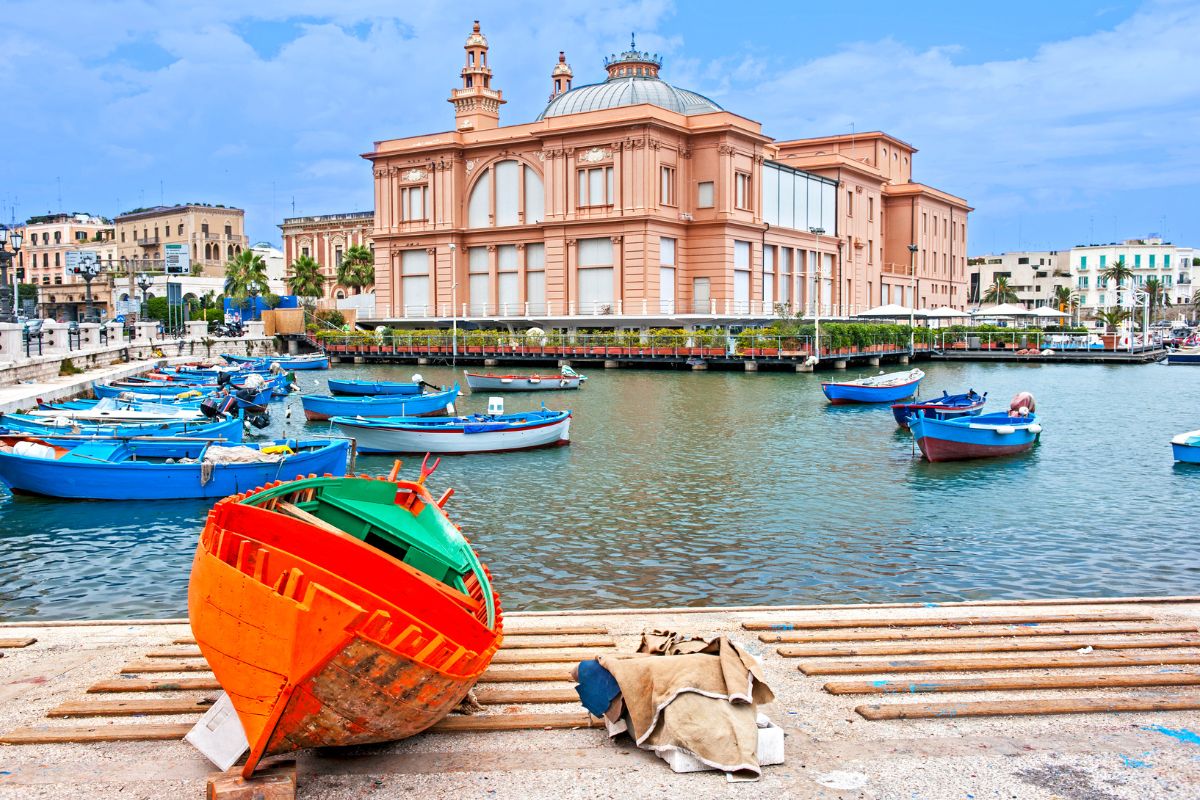
Puglia won us over not just with its endless coastline and adorable little towns, but mostly with that incredible atmosphere where you sit in the evening with a bottle of local Primitivo wine, nibble on crunchy taralli in a tiny piazza, and soak in the warm air that smells of the sea. When we were planning our trip, we spent quite a while figuring out what the weather in Bari, Italy is actually like in different seasons, because we wanted to combine exploring the inland with the occasional cool-down in the waves.
Finding the right balance between bearable temperatures and quieter streets can sometimes be a real puzzle, especially if, like us, you enjoy soaking up the sights without having to squeeze through crowds of tired tourists. A lot of you asked me on Instagram when to go to Bari so that it makes the most sense in terms of swimming, prices, and that longed-for peace and quiet, so I decided to put all our observations down nicely in one place. Although southern Italy has a reputation as a sun-drenched paradise, the climate here can still throw you a few surprises.
In this article, I’ll let you in on which months reliably help you dodge the worst of the African heat, when it’s worth packing your swimsuit, and what to prepare for if you set off to explore the beauty of Puglia outside the main tourist season.
TL;DR
- The best months for exploring the city and taking day trips around the area are May, June, and September, when there’s pleasant spring or autumn warmth and you avoid the biggest tourist crowds.
- If you’re mostly after swimming, you’ll find ideal conditions from July to early October, because the Adriatic Sea warms up for a good long stretch and holds its temperature even during Indian summer.
- August across all of Puglia means Italian holidays and the Ferragosto festival, which translates to extreme crowds, the highest prices, and afternoon temperatures that can climb to an uncomfortable 35 °C.
- The off-season from November to March offers empty streets and cheap flights, but you’ll need to bear in mind that plenty of restaurants and smaller coastal resorts will be closed.
- Summer here is typically Mediterranean, meaning really dry and generously sunny, so you definitely don’t need to pack an umbrella in July or August.
- The local climate is strongly shaped by winds, with the occasional hot scirocco from Africa bringing muggy air and Saharan sand, while the cooler tramontana in winter nicely clears the sky.
Bari, Italy Weather by Month: Temperatures, Sea, and Rainfall
Before you start enthusiastically buying plane tickets, it’s probably best to look at the hard data so you know exactly what you’re getting into and what to actually expect from the Italian south. I’ve put together a clear table based on long-term averages for the whole region, so you can easily get a sense of how temperatures and rainfall evolve over the course of the year.
| Month | Day max °C | Night min °C | Sea °C | Rainfall / rainy days | Sun h/day |
| January | 13 | 4 | 14 | 55 mm / 7 days | 4.5 |
| February | 13 | 4 | 14 | 65 mm / 8 days | 5 |
| March | 16 | 6 | 14 | 40 mm / 7 days | 6 |
| April | 19 | 9 | 15 | 40 mm / 6 days | 7.5 |
| May | 24 | 13 | 18 | 35 mm / 5 days | 9 |
| June | 28 | 17 | 22 | 25 mm / 4 days | 10.5 |
| July | 30 | 20 | 25 | 25 mm / 3 days | 11.5 |
| August | 31 | 20 | 26 | 30 mm / 4 days | 10.5 |
| September | 26 | 17 | 25 | 60 mm / 5 days | 8.5 |
| October | 22 | 13 | 22 | 60 mm / 6 days | 7 |
| November | 18 | 9 | 17 | 75 mm / 8 days | 5 |
| December | 14 | 6 | 15 | 55 mm / 7 days | 4 |
When you look closer at those numbers, you’ll immediately notice that the coast enjoys a gorgeous Mediterranean climate, characterised mainly by long, dry, and generously sunny summers. The hottest period is, naturally, July and August, when daily highs steadily climb to 30–31 °C and rainfall drops to a bare minimum, so you can soak up the sun to your heart’s content 😁. Winters, on the other hand, are fairly mild, with the average annual temperature hovering around 17 °C, and snow is an absolute rarity here — though January and February, with daytime temperatures around 13 °C and chilly nights, probably won’t tempt you to linger on outdoor terraces in the evening.
The distribution of rain is interesting too, because while in summer you’ll barely see a drop and the sun shines for over 11 hours a day, the autumn and winter months can sometimes really complain. The total annual rainfall is roughly 570 mm, which is quite low by Italian standards, with November being by far the rainiest month, averaging 75 mm. Occasionally hot air blows over Puglia straight from Africa, which can push temperatures well past 35 °C — extreme records even mention 45 °C — but these are exceptional heatwaves rather than your everyday standard that you’d need to dread.
When to Go to Bari and Puglia Based on Your Trip Type
We all have slightly different expectations of the ideal holiday, so while some people don’t mind lounging by the water all day, Luke and I prefer wandering through historic centres and hunting down the best creamy gelato around. So let’s break down in detail which period will be the absolute best choice for your specific plans.
Best time for swimming
If your idea of a holiday is mostly spent in the waves and on the sand with a book in hand, then your main window is from early July to the end of September. In these months the Adriatic Sea is wonderfully warm at around 24–26 °C, so you can happily stay in for hours without your teeth chattering after five minutes. For the ideal combination of reliably warm water and slightly fewer people, I’d honestly recommend aiming for June or going straight for September, when the wildest crowds vanish from the beaches and the coastal atmosphere calms down beautifully.
Best time for exploring the city and day trips around Puglia
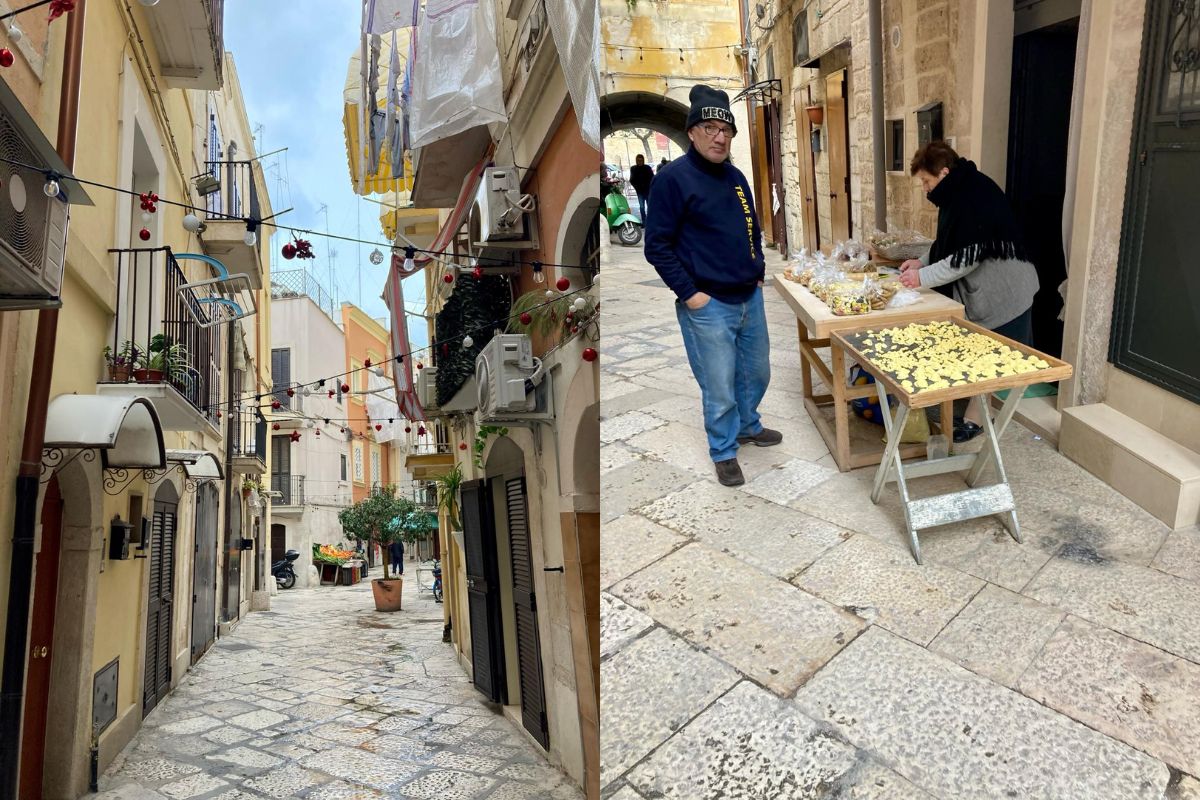
This is hands down our favourite part of the year, because daytime temperatures between 18 and 28 °C are simply ideal for long walks and discovering all those wonderful historic corners. If you head out in spring from mid-April to mid-June, all of Puglia is beautifully in bloom and nature is gorgeously fresh, while the autumn dates from September to early October offer pleasant warmth without the exhausting mugginess. During these months you won’t melt while touring the inland trulli houses, everything will be dry, and you’ll fully enjoy the evenings with a light jumper over a plate of excellent caprese with fresh local burrata.
Off-season: when it’s quiet and cheapest
Sometimes you just need a few days to switch off completely, soak up the authentic Italian atmosphere, and not spend your annual savings doing it — which is exactly what late autumn from October to November or early spring around March and April are perfect for. The old town of Bari itself stays beautifully lively and full of energy all year round, so you definitely won’t miss out on an excellent morning cappuccino with a fresh croissant, even if the smaller surrounding resorts are pretty much asleep. It’s an absolutely brilliant time for anyone who loves peace and quiet, doesn’t mind the occasional shower or chillier evenings, and wants to enjoy that rare luxury of half-empty historic landmarks.
What to avoid: August heat, Ferragosto, and winter
If you can choose your dates and don’t absolutely have to, try to steer clear of August, because that’s the month when most Italians take their mandatory company-wide holiday. Around the Ferragosto festival, which falls exactly on 15 August, the entire coastline turns into one enormous and incredibly expensive anthill, where you’ll pay astronomical sums for accommodation and queue for a table at restaurants. Temperatures, especially further inland away from the sea, routinely exceed 35 °C, which turns exploring those baking-hot historic centres into quite the test of endurance 😅. Winter itself, from December to February, does tempt with extremely low flight prices, but you’ll have to come to terms with the fact that it rains far more than at any other time of year, and plenty of those lovely countryside farms — known as masserie — and beloved family restaurants take their long operating break.
Sea Temperature and Swimming
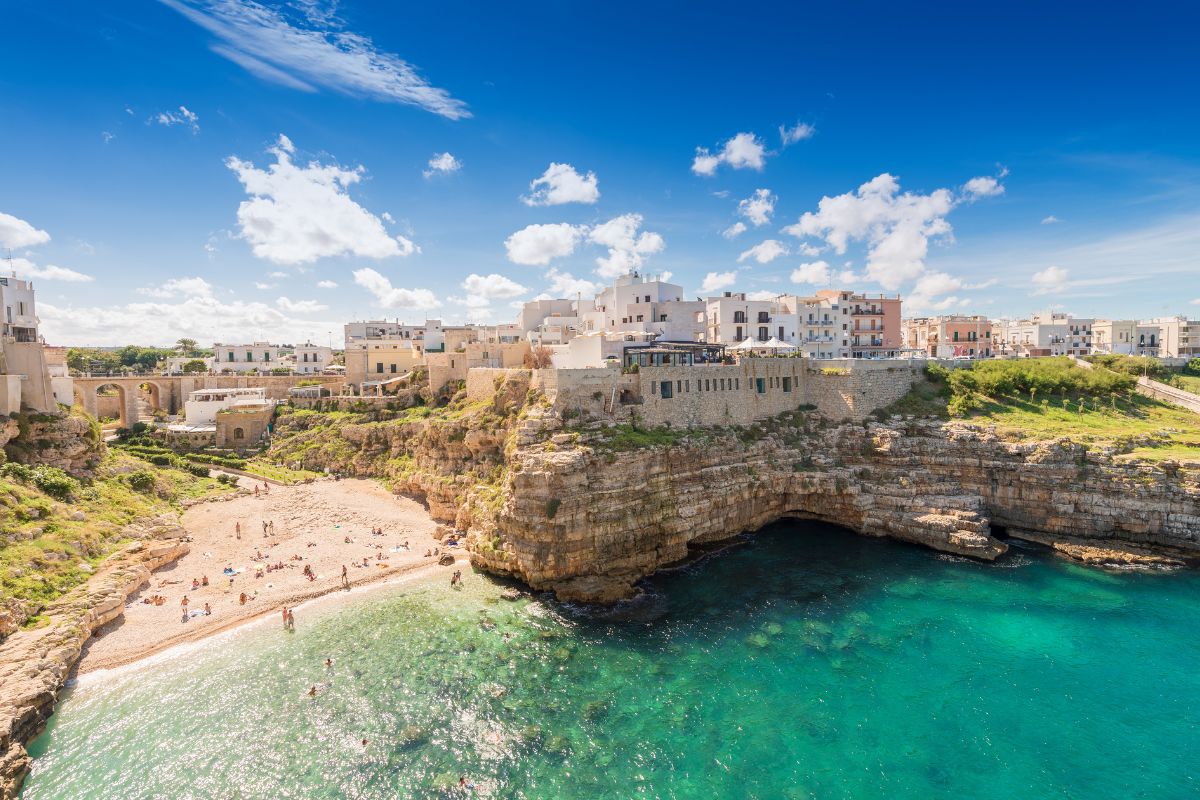
Swimming in southern Italy is a chapter all of its own, because the Adriatic Sea that laps stunning Puglia from this side wakes up from its winter slumber rather slowly and takes its time. From roughly January to March the water temperature huddles at a chilly 14 °C, and although it can already be sunny and warm outside in May, the sea at around 18 °C is really only suited to the hardier among you. The turning point comes in June, when the water warms up to an acceptable 22 °C and the official swimming season can finally begin. The warmest sea then awaits you between July and September, when temperatures hold steadily around a lovely 25–26 °C — in my opinion the absolute ideal for a whole day of carefree lounging on the beach.
But what I love most about the whole region is its long and generous Indian summer, which lets you stretch out the beach fun rather nicely and unexpectedly. The sea has that incredibly handy quality of holding onto its accumulated summer heat far longer than the surrounding air, so all through September you’ll be swimming in water around 24–25 °C, and even in early October the buoys still report a wonderfully bearable 21–23 °C ☺️. In practice, it’s completely normal for locals and tourists alike to catch a tan and leap into the waves right up until mid-October, before some more pronounced autumn cool-down finally arrives.
Bari as the Gateway to Puglia: When to Set Off for Trulli and Little Towns
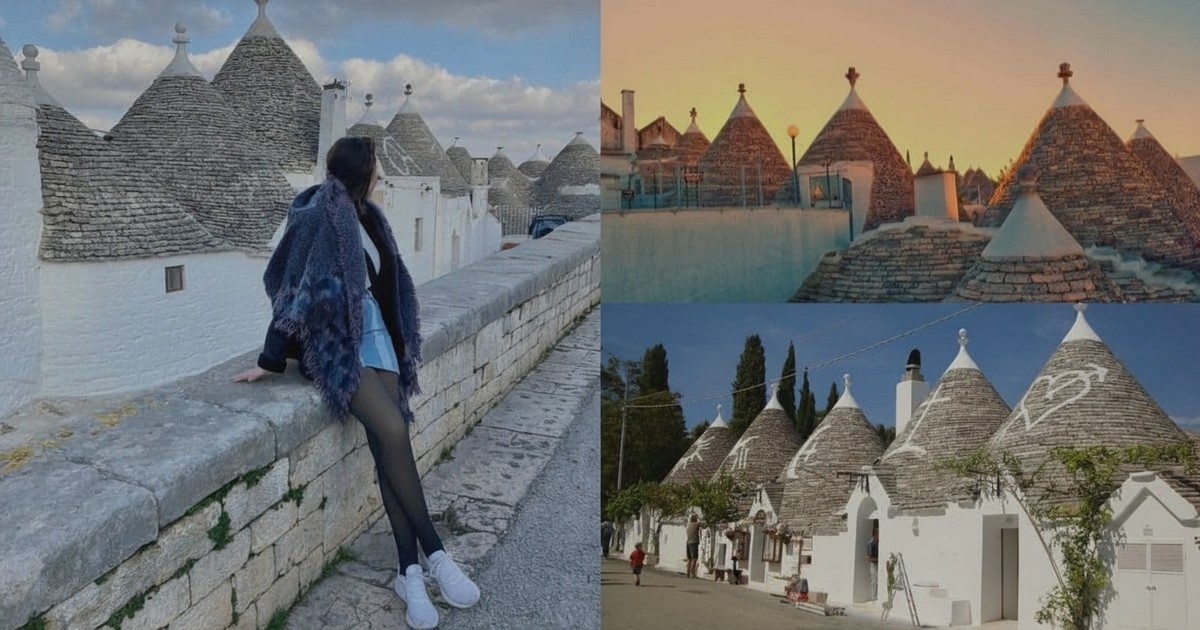
Although the regional capital really is a brilliant and lively base, it would be an enormous shame to stay within its walls and never set off to discover the incredible architectural beauty this part of southern Italy has to offer. Luke and I absolutely fell in love with slow drives along the coast, discovering the clifftop town of Polignano a Mare, getting lost in the snow-white romantic alleys of Ostuni, or admiring the old fishing harbour in Monopoli. A truly special and magical chapter is inland Alberobello, where you’ll find those famous little white houses with conical roofs called trulli, which look like they fell straight out of a fairytale book.
If you’re planning exactly these kinds of sightseeing trips, think very carefully about that unfortunate month of August, when hundreds of thousands of Italians from across the peninsula head to Puglia. Around the aforementioned Ferragosto festival, the narrow roads are jammed to bursting point, finding a safe parking spot borders on a miracle, and capacities of all kinds are completely maxed out. The best time for exploring these countryside gems is, in our personal experience, late April to June, when everything around blooms beautifully in spring, or the period from September to mid-October, marked by gradually thinning crowds, reasonable prices, and the fragrant harvest of olives and wine in full swing.
In the winter months, on the other hand, you’ll have to plan ahead for the fact that many smaller resorts and seaside destinations slip into a strange kind of slowdown and quiet hibernation. While in larger Lecce or right in the old town of Bari you can easily pop into a great osteria for excellent homemade orecchiette pasta even in the middle of January, elsewhere you may quite easily run into deserted streets and firmly lowered shutters, so finding an open little café can sometimes be a job for a detective.

Winds in Bari: Scirocco and Tramontana
If we only talked about the degrees Celsius on the thermometer when assessing the weather, I wouldn’t be telling you the whole truth, because the “feels-like” temperature here is hugely influenced by the winds, which are simply an inseparable part of everyday coastal life. You’ll fairly often encounter the south-easterly wind called the scirocco, a rather unwelcome guest arriving straight from Africa, which usually brings waves of unpleasant heat, oppressive mugginess, and sometimes a fine layer of Saharan sand. Overnight, that sand can coat parked cars and clean balconies in a thin orange film, so a morning clean-up is all but guaranteed.
In the winter months, by contrast, the northerly tramontana wind makes itself heard rather forcefully — it can be properly cold and reach gusts of around 60 km/h, but its huge advantage is that it can beautifully brighten the entire sky, blow away the grey clouds, and lower the humidity. In the hot summer months, the north-westerly maestrale is then literally a lifesaver, wonderfully easing the scorching coastal climate, reducing the mugginess, and making sure you don’t bake by the sea, while inland Puglia at that time of year typically shimmers with heat around 28–32 °C.
By the way, if you happen to plan your trip for early May — specifically from the 7th to the 9th of May — the city hosts huge and incredibly moving celebrations of its patron saint, Saint Nicholas (San Nicola), and at this time of year the spring weather, with temperatures around 22–23 °C, is already absolutely magical.
What to Pack for Bari
Packing the right suitcase for southern Italy might seem like an absolute breeze at first glance, but in reality it always hugely depends on which particular month your trip lands in. If you’re going during the main dry summer season, you’ll get by perfectly well with light, airy dresses, linen shirts, a few swimsuits, and a really good high-SPF sun cream, because the sun here packs an enormous punch. Comfortable walking shoes for the slippery stone streets are a must basically all year round, because elegant heels and ancient winding cobblestones don’t get along too well — as my own painful experience has taught me.
For those lovely spring and autumn months, I’d definitely recommend tossing a smart extra layer into your bag, because the evenings — when the wind blows in off the sea — can be surprisingly chilly, so a light jumper or a favourite denim jacket certainly won’t go to waste at the bottom of your case. In winter, especially on days when the forecasters announce that icy northerly tramontana, you’ll want a proper warmer coat and, just to be safe, a waterproof jacket or raincoat — because when the rain does come down here in the south in winter, it’s rarely just a gentle romantic drizzle.
Where to Stay in Bari
Choosing the right neighbourhood for your temporary home can make your trip immensely more enjoyable, and Luke and I love staying right in the old town known as Bari Vecchia best of all, where you’re surrounded by that genuine historic family atmosphere and morning walks through the empty narrow alleys are simply priceless. But if you prefer more breathing room, wider shopping boulevards full of boutiques, and need to be as close as possible to the main train station for frequent trips around Puglia, then the slightly more modern and spacious Murat district is an absolutely brilliant choice. Gorgeous accommodation with a stunning rooftop terrace and great city views is offered, for example, by Palazzo Calò, or you can stay at the immensely elegant Oriente Hotel Bari, which sits just a short stroll from the famous Petruzzelli theatre.
Where to Next
If you’ve got a fairly clear idea of which month you’ll set off and what to pack, all that’s left is to fine-tune your dream itinerary and figure out everything you’ll explore in the famous heel of the Italian boot. I’ve put together a few more practical guides full of our favourite spots and tips, so you no longer have to grope around for ages and can get straight to enjoying the great food, delicious wine, and gorgeous views.
Frequently Asked Questions
What’s the weather like in Bari in September?
September is, in our opinion, one of the absolute best times to visit all of southern Italy. During the day, average temperatures hover around a lovely 26°C, nights are pleasant at 17°C making for good sleep, and the sea is beautifully warmed up after the long summer to 24-25°C, so you can perfectly enjoy both swimming and sightseeing.
Can you swim in Bari?
Yes, absolutely, and very pleasantly too. The main swimming season here runs from June to the end of September, when the Adriatic Sea has a great temperature between 22 and 26°C, and in really long, warm years, plenty of enthusiasts happily swim well into the first half of October.
What’s the weather like in Bari in May?
May is an absolutely wonderful month for all-day trips and walks around the surrounding towns, because the sun is already shining nicely and pleasantly, there’s minimal rain, and daytime temperatures are around a pleasant 24°C. Unfortunately, it’s usually not quite right for swimming in the sea yet, because the water warms up slowly and tends to be a rather chilly 18°C at that time.
What’s the weather like in Bari in October?
October offers more of a calm Indian summer with average daytime temperatures around 22°C and surprisingly quite warm sea, which still holds between 21 and 22°C. However, you need to expect that around the first week of October, sudden cooling sometimes arrives and the first significant autumn rains appear.
What’s the weather like in summer?
Summer throughout Apulia is typically Mediterranean, which in practice means absolute dryness, an absolute minimum of precipitation, and plenty of strong sunshine with average afternoon temperatures around 30-31°C. However, when the hot African scirocco wind kicks in, temperatures can quickly climb above 35°C, especially inland, which is beyond the reach of the cooling sea breeze.
When should you go to Apulia?
If you want to cleverly combine swimming with sightseeing and not spend a fortune on accommodation, September is definitely the most recommended month, when prices drop, beaches gradually empty out, and the weather remains very stable. Close behind in terms of ideal travel conditions are spring months May and June.
Does it rain a lot in Bari?
Compared to central or northern Europe, there’s relatively little precipitation here, with only around 570mm falling throughout the entire year. In the sunny summer months it hardly rains at all, with averages showing just 25-30mm of water, while you’ll see the most umbrellas in the streets during autumn November, which typically brings around 75mm of precipitation.
Is Bari too crowded in August?
Yes, August marks the absolute peak of tourist season for the whole country, because locals themselves take their summer holidays en masse. Especially around the sacred Ferragosto holiday, you’ll encounter clogged roads, huge crowds on all the beaches, and the highest accommodation and service prices of the entire year.
Tips and Tricks for Your Vacation
Don’t Overpay for Flights
Search for flights on Kayak. It’s our favorite search engine because it scans the websites of all airlines and always finds the cheapest connection.
Book Your Accommodation Smartly
The best experiences we’ve had when looking for accommodation (from Alaska to Morocco) are with Booking.com, where hotels, apartments, and entire houses are usually the cheapest and most widely available.
 🚗 Car rental on the roadVerified rental cars in Apulia
Search with the DiscoverCars comparison engine — it compares prices from dozens of local and international rental companies, and most bookings come with free cancellation.
Compare car prices in Apulia →Don’t Forget Travel Insurance
Good travel insurance will protect you against illness, accidents, theft, or flight cancellations. We’ve had a few hospital visits abroad, so we know how important it is to have proper insurance arranged.
Where we insure ourselves: SafetyWing (best for everyone) and TrueTraveller (for extra-long trips).
Why don’t we recommend any Czech insurance company? Because they have too many restrictions. They set limits on the number of days abroad, travel insurance via a credit card often requires you to pay medical expenses only with that card, and they frequently limit the number of returns to the Czech Republic.
Find the Best Experiences
Get Your Guide is a huge online marketplace where you can book guided walks, trips, skip-the-line tickets, tours, and much more. We always find some extra fun there!


