

Almost everyone dreams of the Algarve – golden cliffs, turquoise sea and sunshine pretty much all year round. But getting from daydream to packed suitcase means answering a few annoying questions first: how much will the whole thing cost, when’s the best time to go so it isn’t crowded and pricey, and should you book a package or go it alone? The two of us have crisscrossed southern Portugal, and we know this very uncertainty is what often holds people back.
That’s why we put together this hub. You’ll find up-to-date package and flight prices that we refresh every morning, our own hands-on tips from our trips and articles, and above all a plan for when and what to book so you don’t overpay for nothing.

What to see and do in Algarve
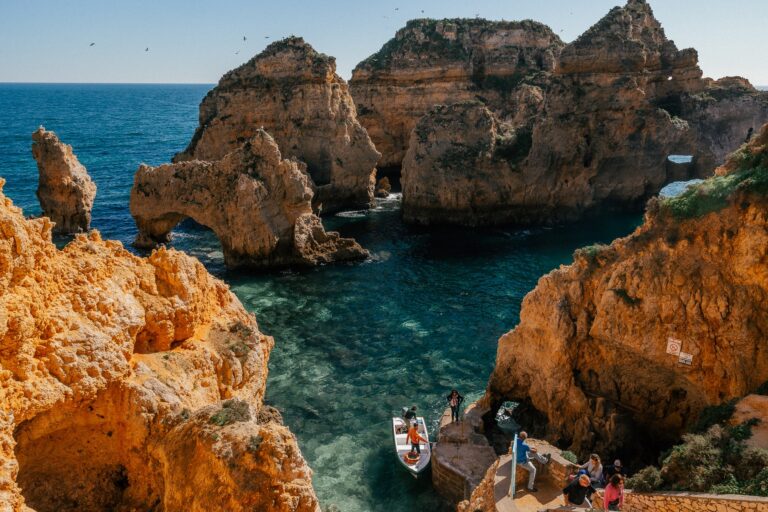
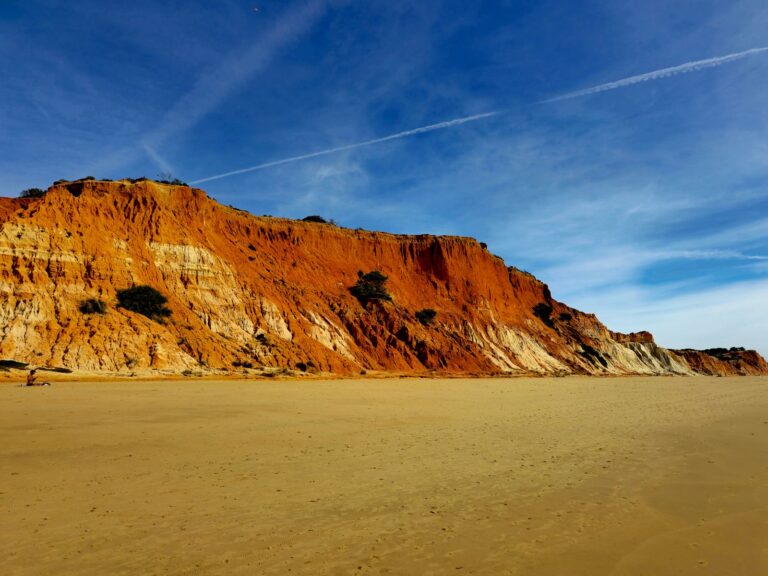
The Algarve isn’t just one beach – it’s an entire coastline full of different moods. Wild nature and ocean in the west, the famous cliffs in the middle, calmer lagoons and fishing towns in the east. Here’s what we think you simply can’t miss:
- Benagil Cave – the iconic sea cave with a hole in its roof that draws just about everyone here. We’ll show you how to get inside and when to come to dodge the crowds.
- Sunny Albufeira as the buzzing hub of the action, and quieter Carvoeiro right by the cliffs.
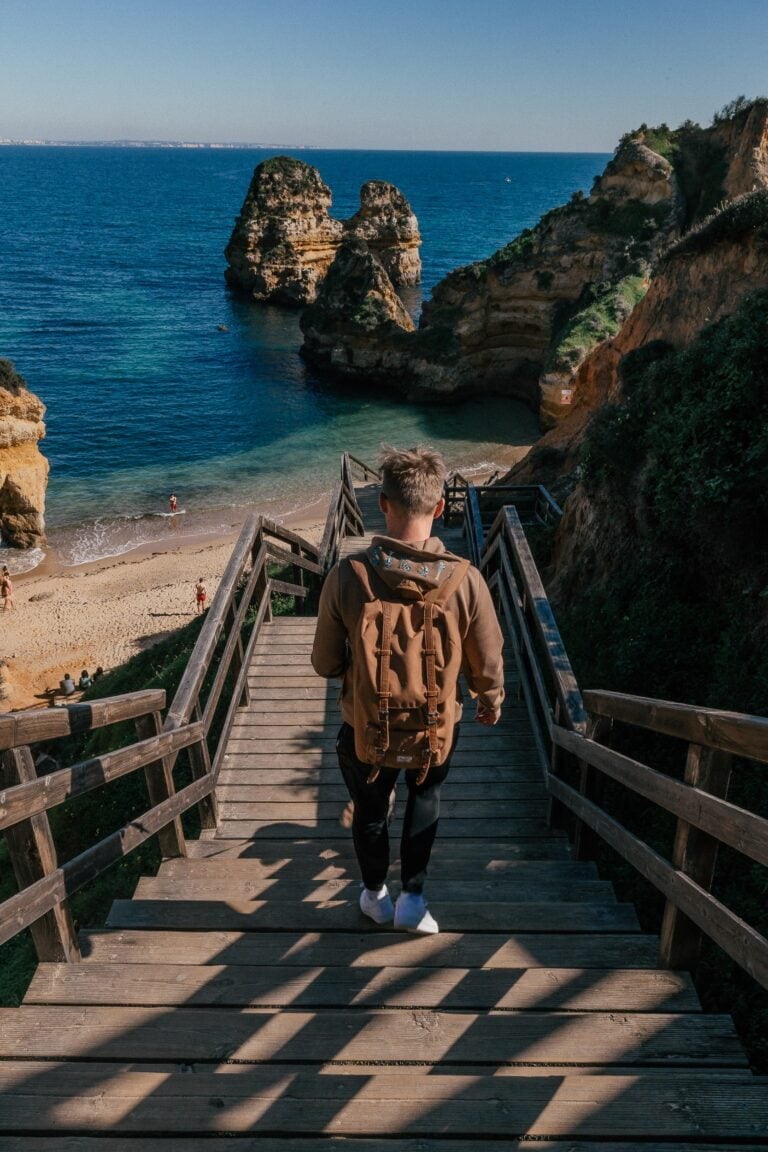
- Lagos with the Ponta da Piedade cliffs and the wild end of Europe at Sagres.
- Eastern lagoons and salt: picturesque Tavira, the fishing town of Olhão and the region’s gateway, Faro.
- Inland history: hilltop Silves and the market town of Loulé.
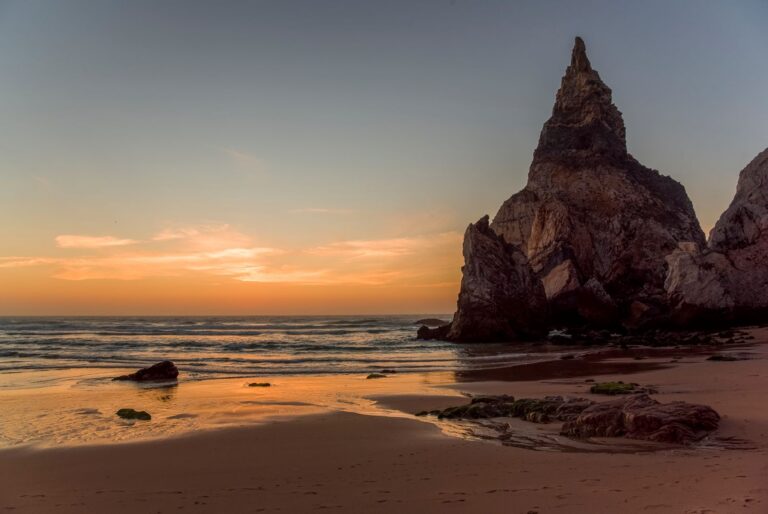
- The surfer’s west around Aljezur and the hunt for the most beautiful beach of all – see our pick of the most beautiful beaches in the Algarve.
If you’re wondering how to fit all this into one trip, the thing that worked best for us was our 7-day Algarve road trip – a ready-made route you can simply follow.
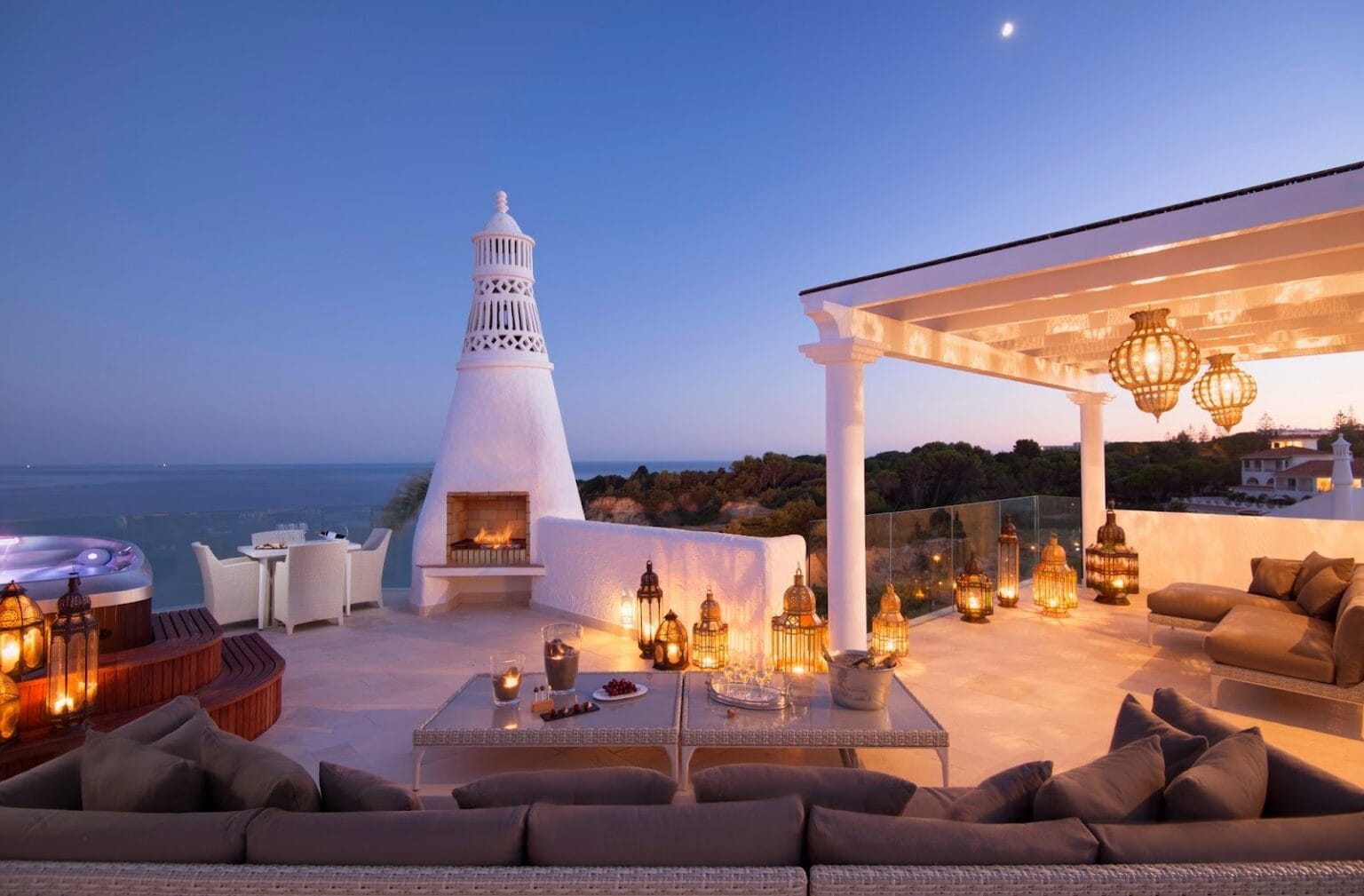
When to visit Algarve
The Algarve has one big advantage – the season here is long. You can swim and sunbathe roughly from May to October, when it’s warmer and the sea is bearable. The peak of summer, July and August, is the hottest (regularly over 30 °C), but also the priciest and most crowded – prices shoot up and the beaches and Benagil Cave fill with crowds.
That’s why our favourite is September and early October: the sea is at its warmest after summer, the sun is still reliable, but there are noticeably fewer people and lower prices. It’s also lovely in May and June, when the region is green and in bloom. If you’re not after swimming but sightseeing, towns and lower prices, the Algarve works in winter too – it’s mild, sunny and peaceful, just with a cold sea and some beach venues closed.
In short: for relaxed swimming go in September, for budget sightseeing in spring or winter, and save peak summer only for when you’re tied to school holidays.
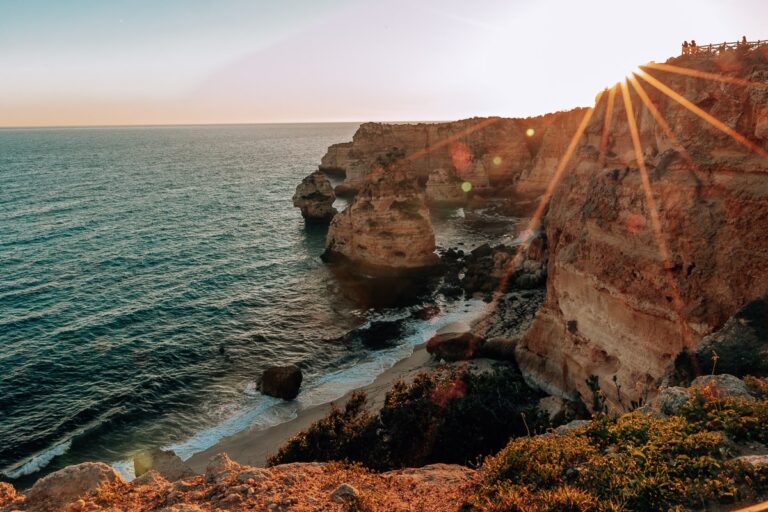
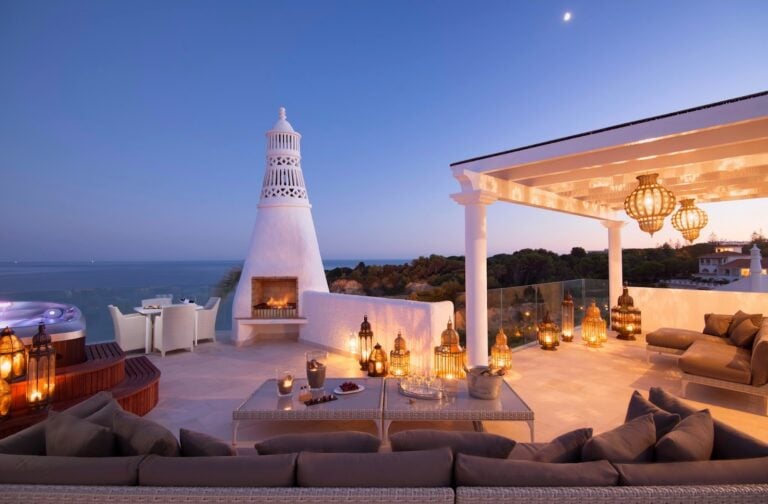
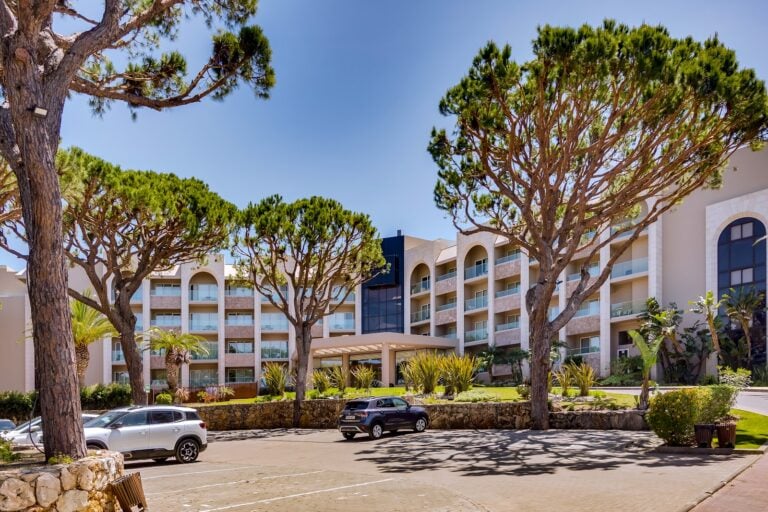
How to get to Algarve
Flying is the easiest option. The region’s main gateway is Faro Airport (FAO), which sits right in the Algarve and is within an hour’s drive of most towns. In season there are sometimes direct seasonal flights, otherwise you’ll connect – typically via Lisbon, Porto or a Western European hub. Reckon on roughly 5–8 hours of travel including the layover.
The other option is to fly into Lisbon and travel down to the Algarve – by car or long-distance bus it’s about 2.5–3 hours on the A2 motorway. Driving across Europe is over 2,500 km one way, so it only makes sense for a long road trip, not a one-week getaway. Travelling here by ferry is, in practice, not an option.
Renting a car
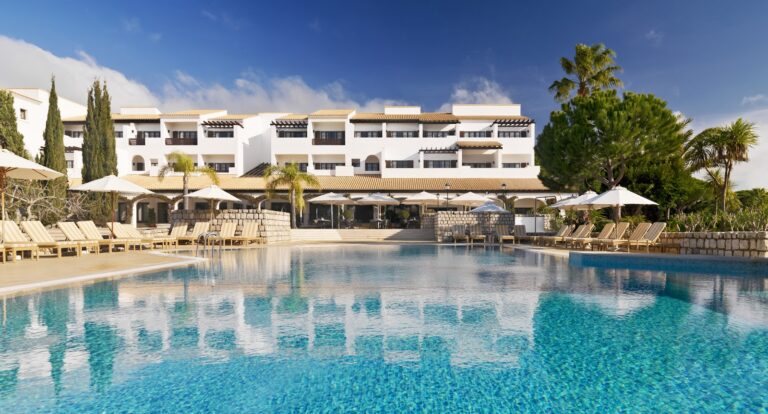
In our view, a car is the best investment in freedom you can make in the Algarve. It always pays off when you want to tour several towns and, above all, the hidden beaches and cliffs the bus doesn’t reach. You don’t need one, though, if you’ve booked into a single resort (Albufeira, Praia da Rocha) and plan to spend the week by one pool – that works out cheaper without a car, and you can use local transfers for the odd outing.
- Book ahead through a comparison site – in season prices on the spot rise sharply and small cars disappear.
- Watch out for insurance and the deposit: the cheapest deals tend to come with a high excess and block over 990 € on your card. Excess insurance is worth it.
- Tolls: Portuguese motorways use electronic tolling – check with the rental company how it’s handled (transponder) so you don’t get a fine after you’re back home.
- Fill up away from the airport and park for free a short walk from the centres, not right on the main paid spots.
Where to stay in Algarve
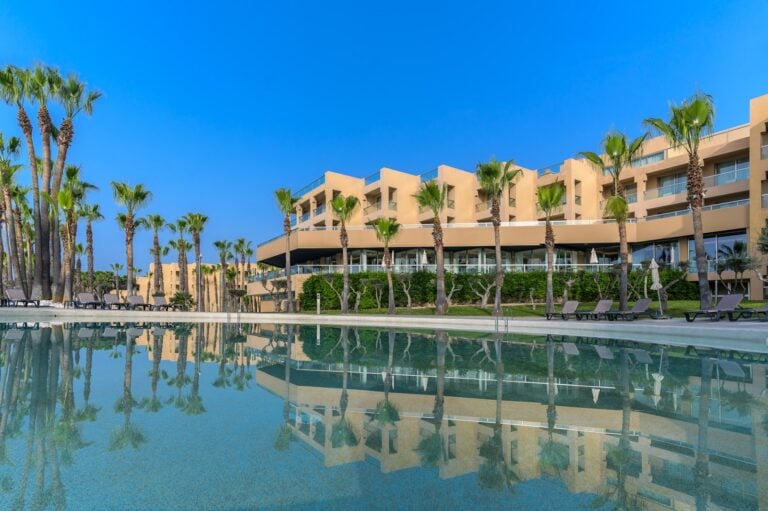
Where to stay depends a lot on what you want from your holiday. Here’s a rundown of the areas by style:
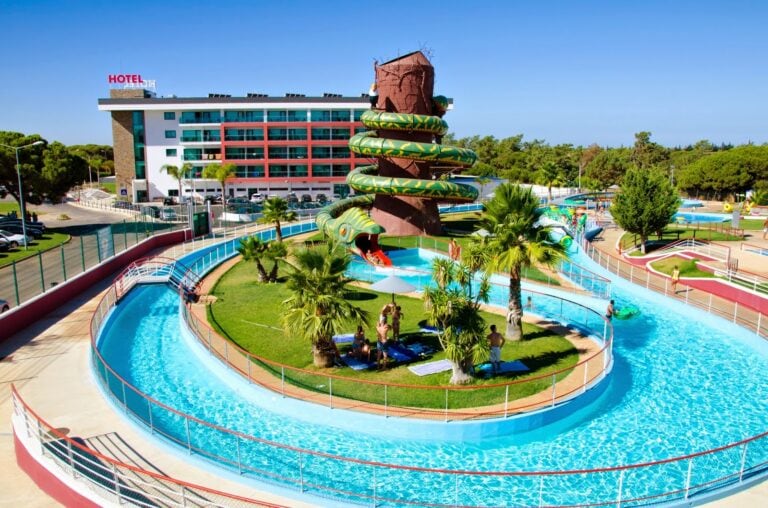
- Albufeira and around – the most action, restaurants, bars and life. Ideal if you want everything on your doorstep and don’t need peace and quiet.
- Lagos, Carvoeiro, Praia da Rocha – beautiful cliffs and beaches, a great base for the central Algarve and trips to Benagil Cave.
- Tavira, Olhão, Faro (the east) – calmer, more authentic, closer to the Ria Formosa lagoons. Great for couples and those after a laid-back vibe.
- Sagres and the west coast – wilder nature, surfers and solitude; don’t come here for the nightlife.
If you’re planning a road trip, it pays to split your stay across 2–3 bases (e.g. the centre and the east) so you’re not constantly driving. For longer stays, apartments with a kitchenette are great – you’ll save on food, and in season it’s worth booking well ahead, because the best price-to-location deals disappear first.
Package tour or independent travel?
Package or go it alone? Here’s our honest comparison for the Algarve:
A package is worth it when…
- you want one resort, peace by the sea and nothing to sort out (flights, transfer and hotel in one);
- you’re travelling with kids and will appreciate all-inclusive and peace of mind;
- you don’t want to spend time planning and watching flight and accommodation prices.
Go it alone when…
- you want to see more towns, beaches and the interior and set your own programme;
- you’re planning a road trip and don’t mind arranging the car, accommodation and route;
- you’re flexible on dates and want maximum control over your budget.
The two of us are firmly team “go it alone” – the Algarve is ideal for independent travel, the distances are short and you can get by in English. But honestly: if you just want to switch off and lie by the sea for a week with no worries, a well-chosen package will save you a lot of hassle and often money too.
Budget: daily costs in Algarve
| Level | Accommodation | Food | Transport & activities | Total/day |
|---|---|---|---|---|
| Backpacker | 20 €–30 € (hostel, shared room) | 12 €–18 € (self-catering, cheap set menu) | 10 €–16 € (public transport, free beach) | approx. 40 €–65 € |
| Standard | 45 €–80 € (apartment, 3* hotel) | 20 €–30 € (restaurants, lunch menu) | 20 €–35 € (car, boat trip, entry fees) | approx. 85 €–145 € |
| Comfort | 100 €–200 € (4* hotel, nice apartment) | 35 €–60 € (quality restaurants, fish) | 40 €–80 € (car, private trips) | approx. 175 €–340 € |
The prices are indicative and assume summer; out of season, and especially on accommodation, you can easily save a third. Compared with northern Europe the Algarve is still pleasantly affordable — what drives the price most is the location of your accommodation and peak summer.
How to save when planning
In the Algarve, timing is the main way to save. Here’s what works for us:
- Buy flights around 2–4 months ahead and avoid school holidays – the price difference is usually significant. Check departures from several airports too. Search for flights in our flight finder.
- Book accommodation early in season (even six months ahead) – the best price-to-location deals go first. Out of season, last minute tends to work out better. Our accommodation tips.
- Watch packages in two windows: first minute (an early-booking discount) and last minute. Take a look at the latest packages.
- Book popular activities (Benagil, boat trips) in advance – on the spot they tend to be pricier and sold out. What to book early.
- The biggest overpaying happens on food right by the most famous beaches and on impulse parking – one street over you can save up to half.
Practical information
- Language and getting by: Portuguese is the official language, but in tourist spots you’ll get by in English without any trouble. A few words (obrigado/obrigada) always go down well.
- Payments: Portugal is in the eurozone and uses the euro. You can pay by card almost everywhere, but keep a few euros in cash for markets, smaller cafés and parking machines.
- Connectivity: roaming works within the EU, but for a longer stay or guaranteed data the easiest option is an eSIM – switch it on before you fly and you’ll have navigation sorted the moment you land.
- Safety: the Algarve is calm and safe. Just keep an eye on your things on the beaches and in busy Albufeira bars; otherwise no stress.
- Getting around: buses run along the coast, but for freedom and hidden beaches a car is invaluable (more in the car rental section).


