

When you think of Canada, most people picture untamed wilderness, deep forests, and bears — but the capital of British Columbia is a completely different world. Victoria, Canada is essentially a little slice of old England that someone accidentally relocated to the west coast of North America. Lovingly nicknamed the “City of Gardens,” it immediately surprised me with its incredibly laid-back atmosphere, historic brick buildings, and the fact that red double-decker buses actually cruise down the streets. ☺️
I’ve put together everything I think is genuinely worth your time — from the harbour to afternoon tea at the Empress to orcas on the horizon — and I’m upfront about what disappointed me too.
The full destination guide: British Columbia — guide and what to see
TL;DR
If you’re sitting on the ferry right now, frantically Googling things to do in Victoria BC today, and just need a quick rundown of the highlights, here are the key things you absolutely shouldn’t miss:
- Most photographed downtown: Inner Harbour is the heart and soul of the city, home to the majestic Parliament Buildings and the historic Fairmont Empress hotel.
- A foodie experience: Traditional British afternoon tea at the Empress hotel is pricier, but worth every penny.
- Floral paradise: Butchart Gardens ranks among the most beautiful gardens in the world and is a must-visit regardless of the season.
- Wildlife encounters: Victoria is one of the best places on earth for whale and orca watching right from the ocean.
- History and curiosities: Canada’s oldest Chinatown hides Fan Tan Alley — the narrowest commercial street in all of North America.
- Relaxation and views: Fisherman’s Wharf offers adorable colourful houseboats and fantastic food right on the water.
When to Visit Victoria and How to Get There
Planning a trip to Victoria requires a bit of preparation, as the city sits on the southern tip of Vancouver Island — so you can’t simply drive there on a motorway. You’ll find, though, that the journey itself becomes the first great adventure of your trip.
The most common — and arguably most romantic — way to reach Victoria is by ferry with BC Ferries from Vancouver. You depart from Tsawwassen terminal and the crossing to Swartz Bay near Victoria takes about an hour and a half. The route weaves through a stunning bay dotted with small forested islands, and it’s not uncommon to spot whales or seals right from the ferry deck. I strongly recommend booking ferry tickets well in advance online during summer, as they sell out completely. If you’re in a hurry and have been searching for flights to Victoria BC, you can take small seaplanes that take off directly from the water in downtown Vancouver and land right in Victoria’s Inner Harbour — pricier, but an absolutely spectacular experience. If you’re flying from the UK, look for affordable flights on comparison sites — you’ll typically fly into Vancouver (YVR) with airlines like Air Canada or British Airways from London Heathrow, then connect to Victoria from there.
As for the weather, Victoria’s climate is incredibly mild by Canadian standards. Winters are rainy but rarely see snow, and summers are pleasantly warm without being unbearably hot. The best time to visit is from spring through autumn. I’d honestly recommend early spring, because Victoria has an enormous number of cherry trees and their spring blossoming transforms the entire city into a pink dream. Before heading out on any specific excursions, always double-check the 10-day weather forecast for Victoria BC, as coastal weather can change quite quickly.
And if you’re planning to explore the island further and discover the wild nature beyond the city, I’ve had consistently great experiences renting cars through comparison platforms — just make sure to book well ahead, including a spot on the ferry.
Where to Stay in Victoria and How Much It Costs
Victoria isn’t exactly a budget destination, and accommodation will likely take a significant chunk of your budget, especially if you visit during the peak summer season. That said, it’s a city where paying a bit more for location genuinely pays off — you’ll be able to walk to most attractions comfortably.
Victoria’s centre is surprisingly compact. The best — and naturally most expensive — area to stay is around Inner Harbour and the Downtown district. If you base yourself here, Parliament, the museum, and the best restaurants will all be a stone’s throw from your room. A decent hotel room in the centre will cost roughly 250 to 400 CAD per night in season (around €170 to €270). If you fancy the luxury of the iconic Fairmont Empress hotel, be prepared to pay easily double that.
For slightly friendlier prices, look for accommodation in James Bay, a gorgeous, quiet residential neighbourhood full of historic houses just behind Parliament. Walking through these streets, I stopped in front of a garden gate more than once, wondering whether I could simply move in. You’ll find plenty of smaller guesthouses and bed-and-breakfast options with a homely atmosphere here.
In terms of overall living costs, Victoria is comparable to Vancouver. A standard restaurant meal costs 25 to 40 CAD (roughly €17 to €27), a beer at a pub runs about 8 CAD (€5.50), and attraction entry fees range between 20 and 50 CAD. When you pull up a map of Victoria BC on your phone and start planning your routes, you’ll be pleased to know the centre is very walkable, and a reliable, reasonably priced bus network covers the more distant spots.

Victoria Canada: 12 Best Things to See and Do
Right, now for the good stuff. Comfortable shoes are an absolute must — I underestimate this every single time and regret it every single time. Even though Victoria city is relatively small, you’ll rack up quite a few kilometres on foot.
1. Inner Harbour and the Majestic Parliament Buildings
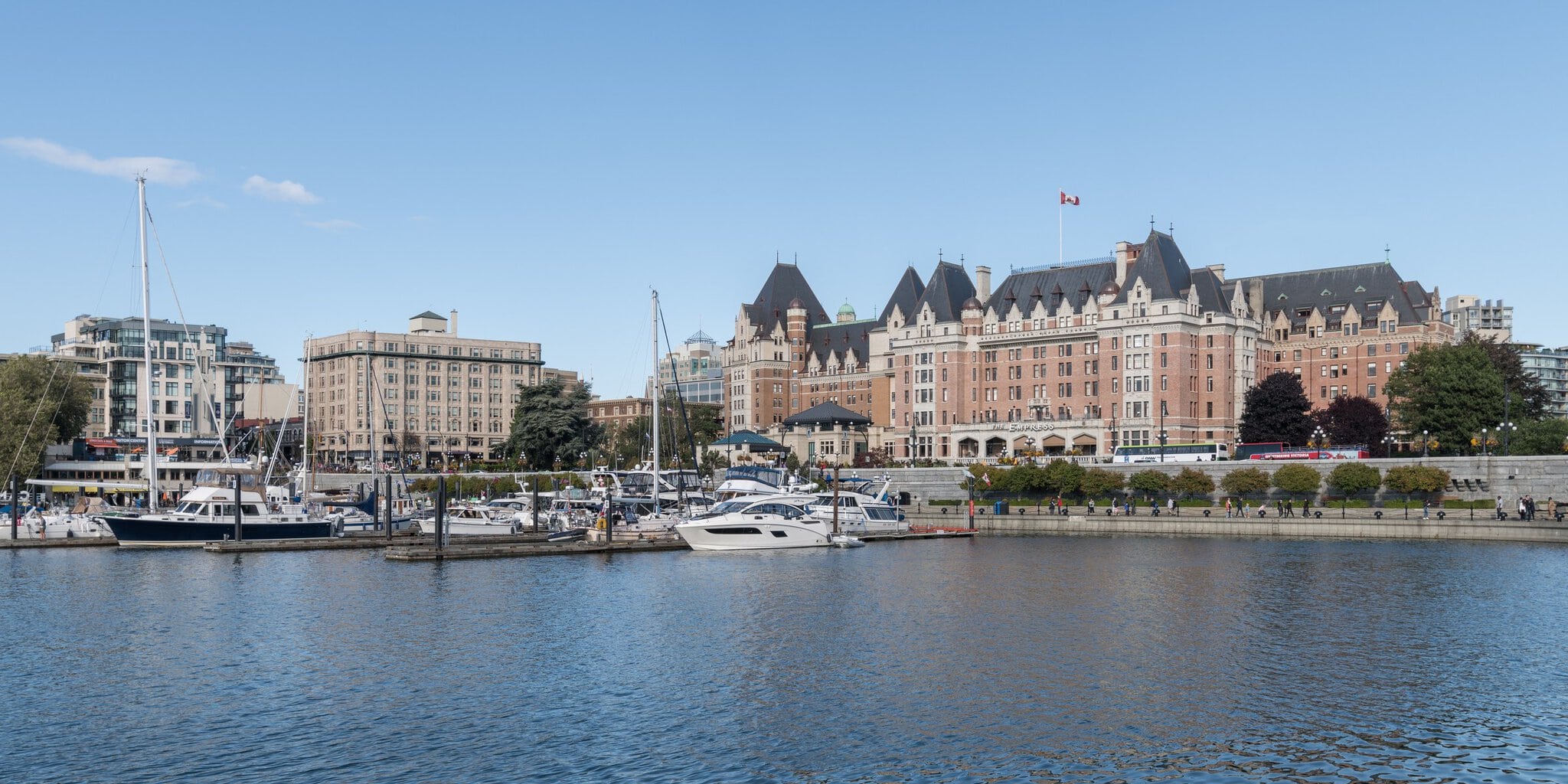
Inner Harbour is the absolute heart and soul of Victoria, and the entire city revolves around it. Every time I come here, I feel like I’ve stepped inside a postcard. Small boats and luxury yachts bob on the water, seaplanes touch down every few minutes, and street performers and buskers line the waterfront.
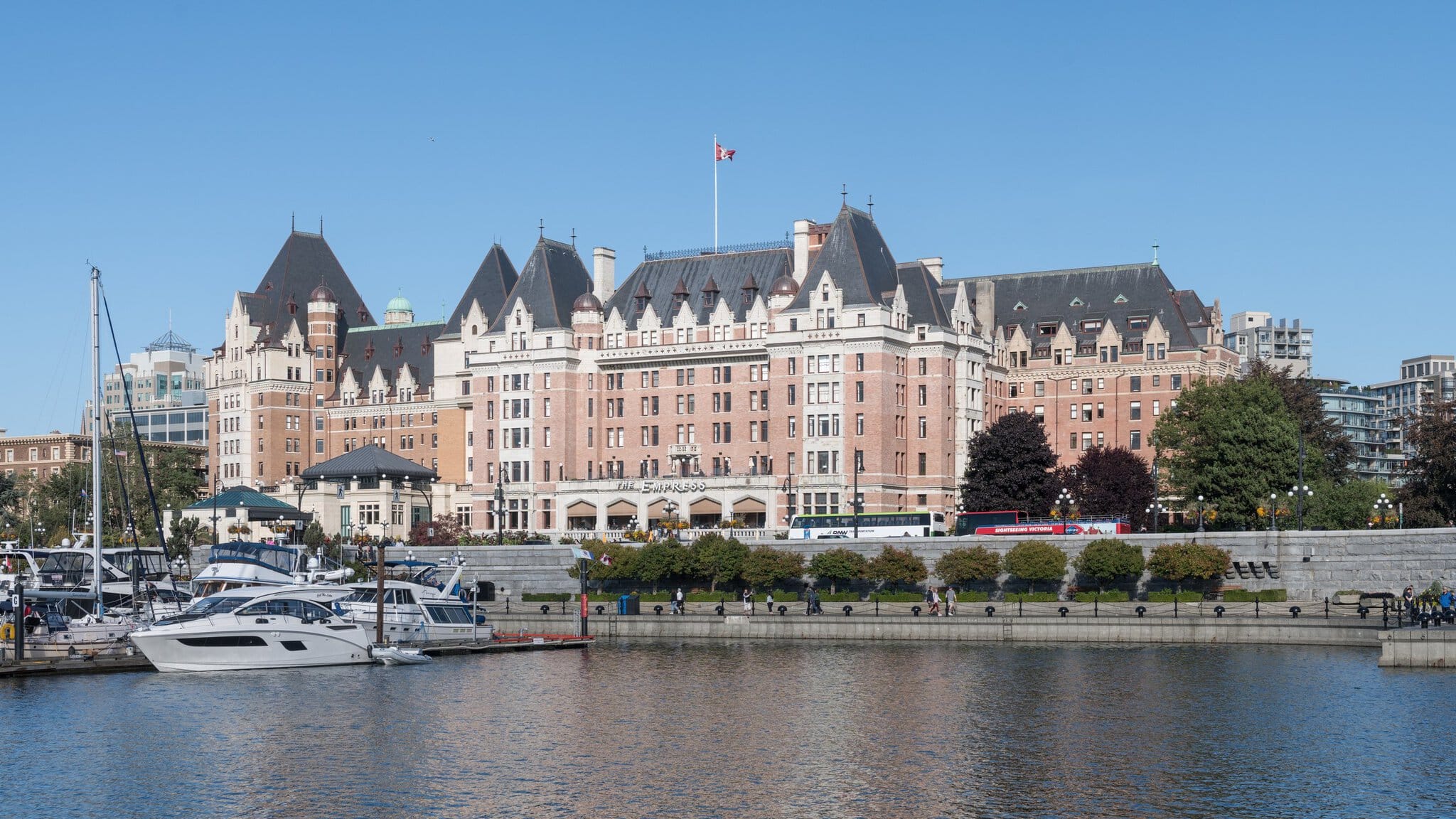
The most striking landmark overlooking the harbour is the British Columbia Parliament Buildings. These massive stone structures with copper domes look very stately during the day, but the real magic happens at dusk. Back in 1897, the architect fitted the building with over three thousand lightbulbs that trace its entire outline after dark. It’s an incredibly romantic sight, best enjoyed from a bench on the waterfront with a cup of hot coffee in hand.
If you’re interested in history and politics, you can go inside Parliament for a free guided tour that explains how the Canadian political system works. The tour is apparently quite interesting, but I’ll be honest — I’ve never actually done it. I’m perfectly happy to admit that I much prefer sitting on the grass in front of the building, watching the harbour bustle, and soaking in the peaceful atmosphere, interrupted only by the occasional toot of a boat horn.
2. Traditional Afternoon Tea at the Fairmont Empress
Right across from the harbour stands another iconic building — the grand, ivy-covered Fairmont Empress hotel. Even if you’re not staying here, you absolutely must try their famous Afternoon Tea, because it’s an experience you won’t forget. It’s been running since 1908, and they’ve served kings, queens, and Hollywood stars.
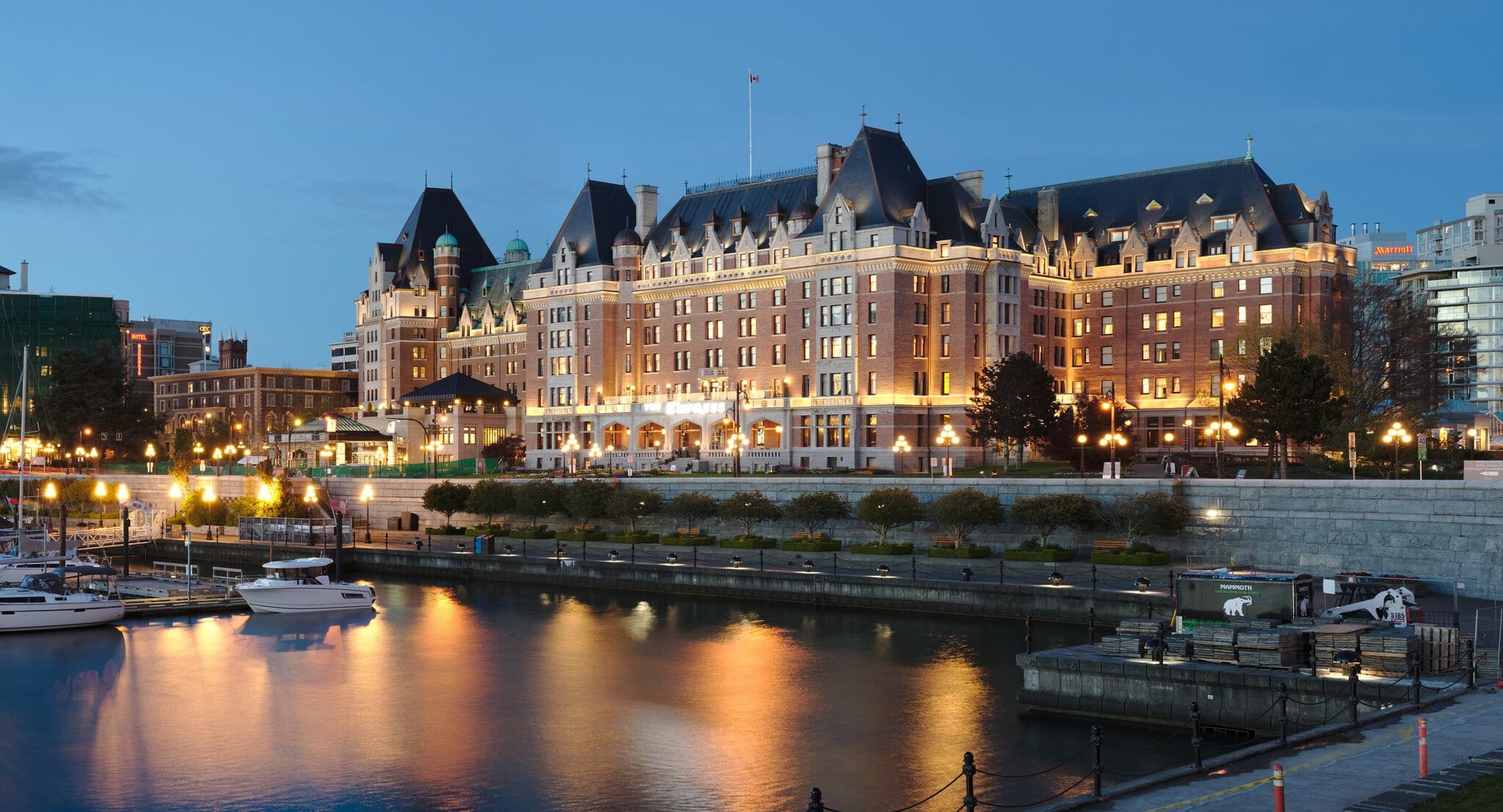
Fair warning, though — it’s not cheap. Afternoon tea costs around 75 to 90 CAD per person (depending on the season, roughly €50 to €60), which might seem a lot for tea and a few cakes. But what you’re really paying for is the experience and the elegance. They seat you in a grand salon overlooking the harbour, serve their own special tea blend in rose-patterned porcelain, and bring out a three-tiered tray of perfect finger sandwiches, warm scones with homemade strawberry jam and clotted cream, and exquisite petit fours.
Try to dress up a bit for the occasion, as the hotel has a smart casual dress code. It’s one of those moments where you genuinely feel like British aristocracy on holiday — and we absolutely loved every second of it, even though we had to survive on cheaper bistro meals for the rest of the day 😅. You’ll definitely need to book in advance online, especially in summer when tables fill up weeks ahead.
3. Butchart Gardens — A Floral Masterpiece
If you could only see one thing outside Victoria’s city centre, it has to be Butchart Gardens. Located about a 30-minute drive north of downtown, these gardens are genuinely a world-class attraction. Admission is around 41 CAD (roughly €28) — an investment you absolutely won’t regret.
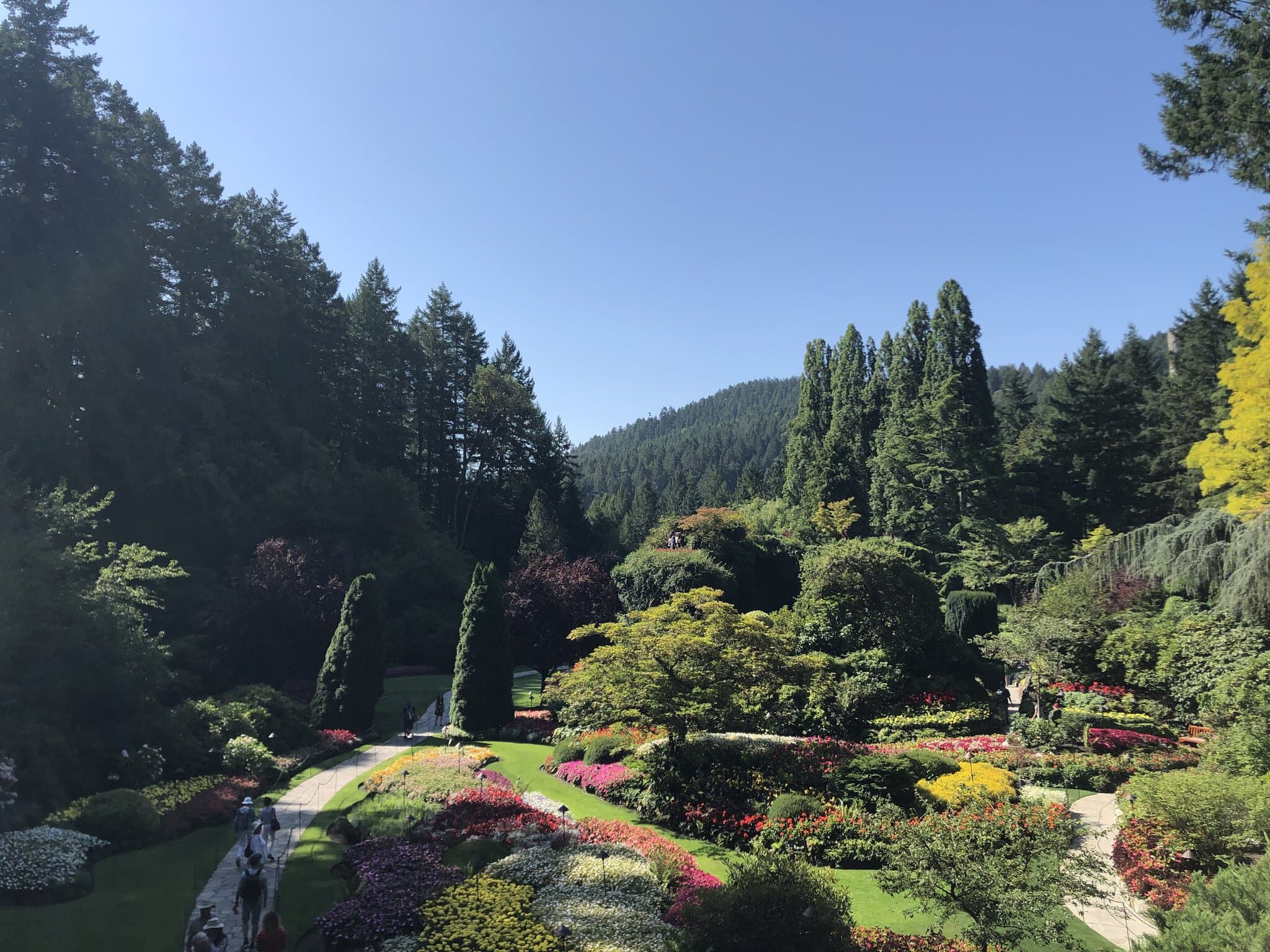
The story behind this place is quite fascinating. Originally, it was a huge, ugly limestone quarry owned by the Butchart family. When the quarry was exhausted, Jennie Butchart decided to transform the moonscape into a garden and had tonnes of fertile soil hauled in from surrounding farms. The result is the Sunken Garden — and when you first peer down into it from the lookout above, your jaw will genuinely drop.
The gardens are open year-round and look completely different each season. Spring brings tens of thousands of tulips and daffodils, summer dazzles with massive blooming roses, and in autumn the Japanese Garden erupts in incredible shades of red and gold. We love arriving first thing in the morning right when the gates open, before the tourist crowds descend — the whole place feels impossibly magical and peaceful.
4. Whale and Orca Watching
The ocean around Vancouver Island teems with marine life, and Victoria is one of the world’s premier bases for whale watching. The waters surrounding the island are home to both resident and migrating pods of orcas (killer whales), humpbacks, and minke whales.
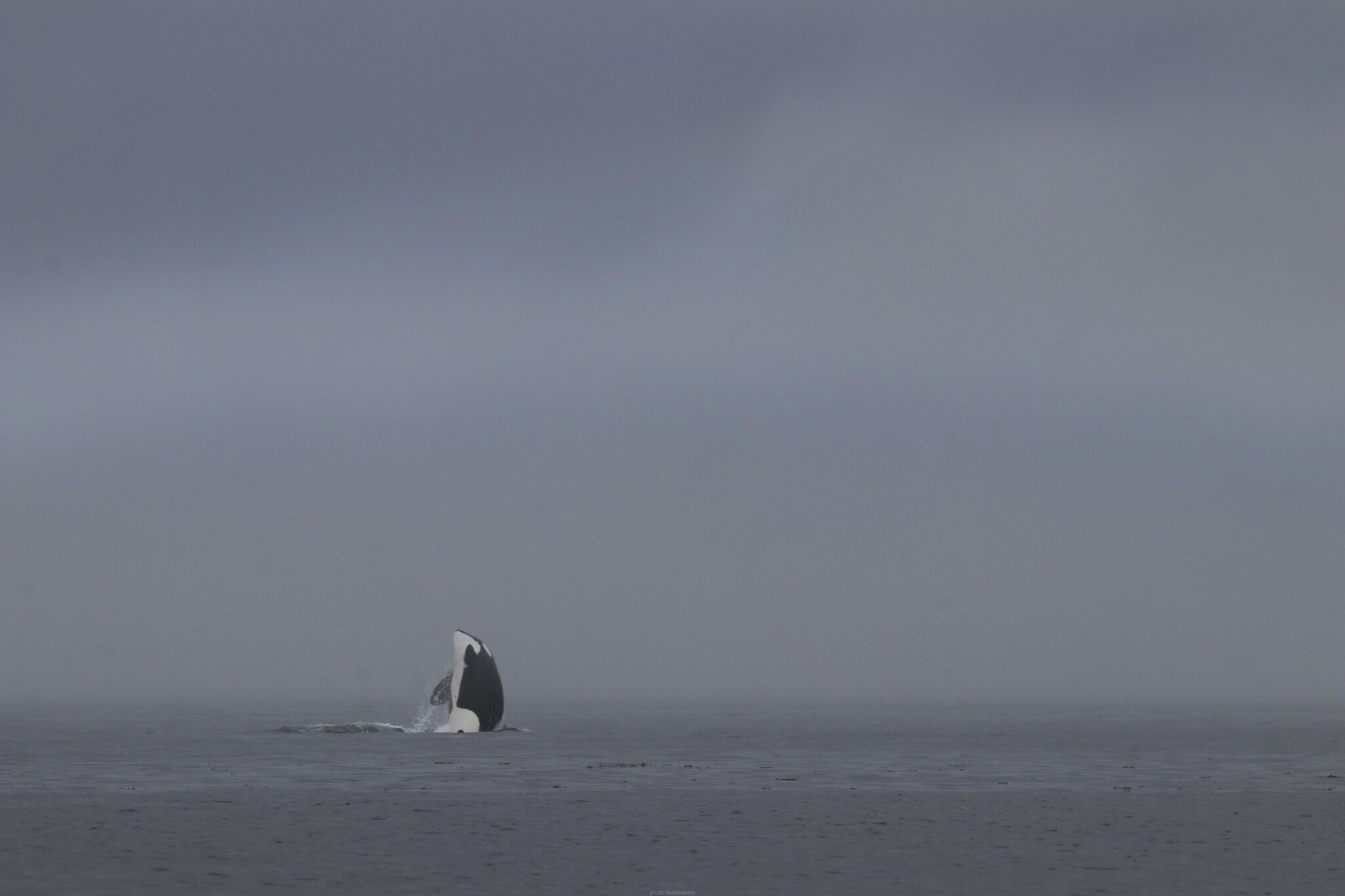
Several companies run daily trips from Inner Harbour. You can choose either a larger, enclosed, heated vessel — a great option for families with children — or hop aboard a small, fast Zodiac inflatable. We’d wholeheartedly recommend the Zodiac. They’ll squeeze you into enormous red survival suits that make you look like the Michelin Man and you can barely move, but the experience of being so close to the water, feeling the salt spray on your face, and seeing a massive black orca fin just metres away — it’s simply indescribable.
The trip typically lasts about three hours and costs around 130 to 150 CAD per person (roughly €90 to €100). The captains are highly experienced and share whale-sighting information with each other, so the chances of spotting them are quite high (some companies even offer a free repeat trip if you don’t see any whales). I’d recommend booking in advance through a platform like GetYourGuide, which often offers free cancellation.
5. The Colourful Houseboats of Fisherman’s Wharf
About a fifteen-minute stroll from Inner Harbour towards the ocean, you’ll stumble upon Fisherman’s Wharf — a wonderfully unique and ridiculously photogenic corner of the city. It’s essentially a network of wooden docks lined with brightly painted floating homes (houseboats) where locals actually live year-round.
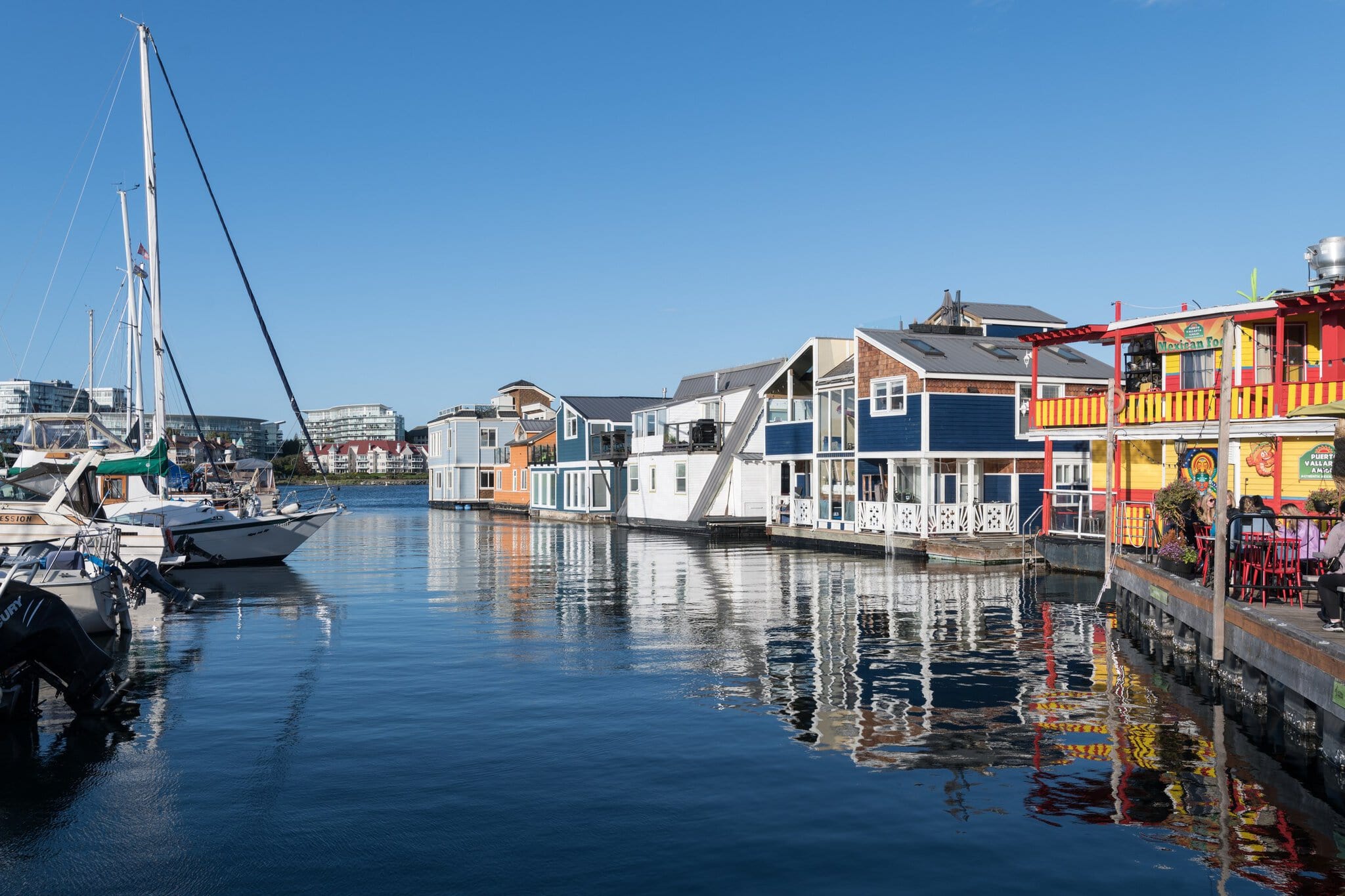
Some houseboats are small and charming, others look like modern floating villas, but they all share one thing in common — vivid paint jobs and overflowing flower boxes. Beyond the residential homes, you’ll find several floating food stalls. Head here around lunchtime, grab some fresh fish and chips from Barb’s Fish and Chips, park yourself on a wooden bench, and watch the lively bustle of the little harbour.
Feeding the harbour seals is now strictly forbidden (and the fines are genuinely hefty), but you’ll see them anyway — they hunt their own fish and couldn’t be more relaxed about it. To get back to the centre, by the way, you can hop on the little yellow Victoria Harbour Ferry water taxi, which is both faster and more fun than walking.
6. Royal BC Museum
My mum and I aren’t usually big museum people, but this one genuinely blew us away. Mum spent two hours in the First Nations section and I practically had to drag her out so we wouldn’t miss dinner. The Royal BC Museum ranks among the best in all of Canada. The exhibits aren’t just glass cases and long labels — the entire museum is built around incredible dioramas and immersive spaces.
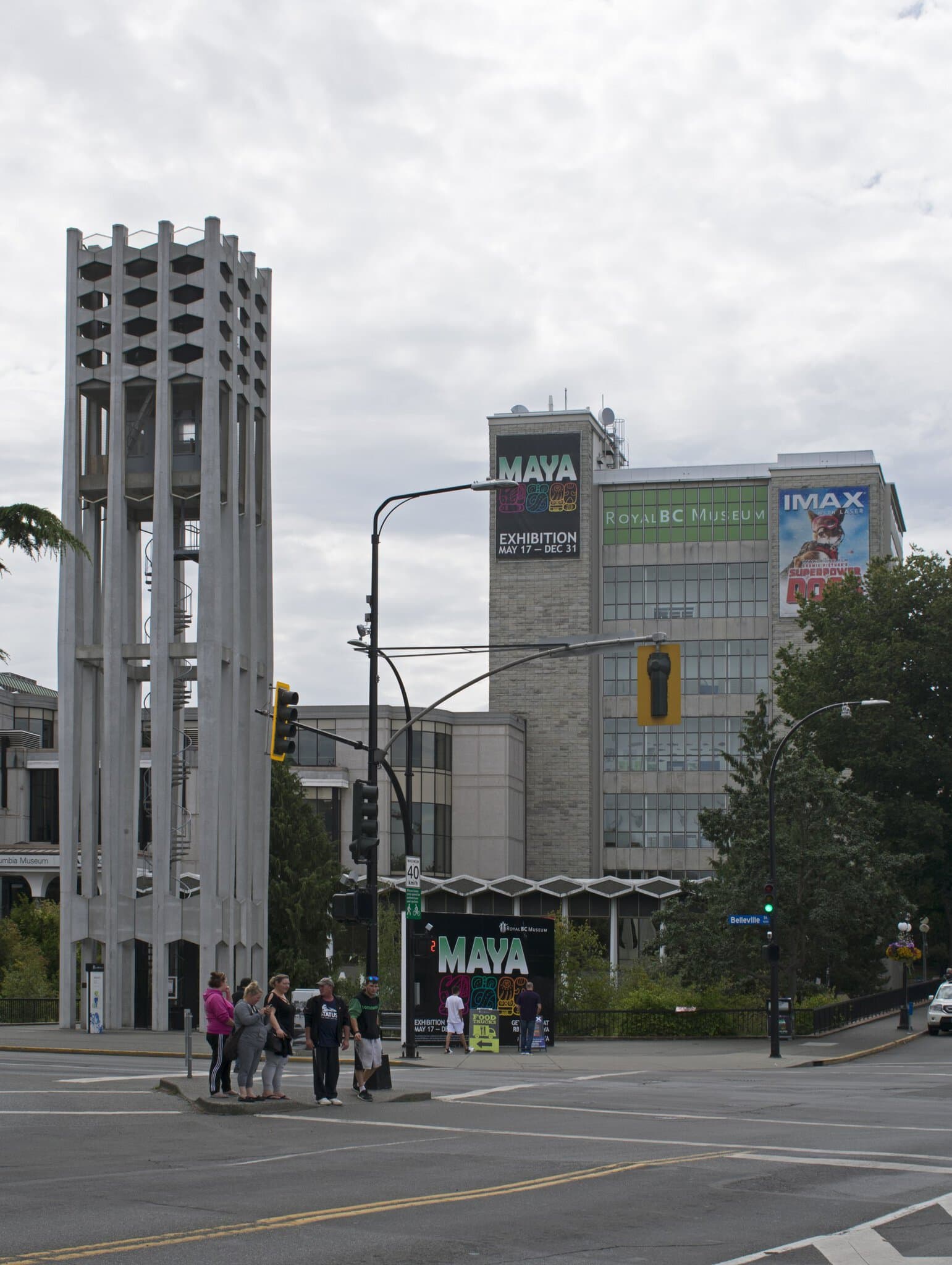
The most breathtaking section is dedicated to the Indigenous peoples (First Nations) of the Pacific coast. You’ll see enormous, intricately carved totem poles, ceremonial masks, and full-scale traditional dwellings. You’ll learn a great deal about the complex and often deeply painful history between colonisers and local Indigenous communities — essential context for understanding modern Canada.
On the second floor, an elaborate natural history exhibition awaits where you walk through a life-size rainforest, caves, and an underwater world. Admission is around 29 CAD (roughly €20), and you could easily spend three hours here without a moment of boredom.
7. Chinatown and the Narrowest Alley — Fan Tan Alley
Victoria’s Chinatown may not rival Vancouver’s or San Francisco’s in size, but it holds one enormous distinction — it’s the oldest Chinatown in all of Canada and the second oldest in North America. It sprang up in the mid-nineteenth century during the Gold Rush, when thousands of Chinese workers and merchants arrived.
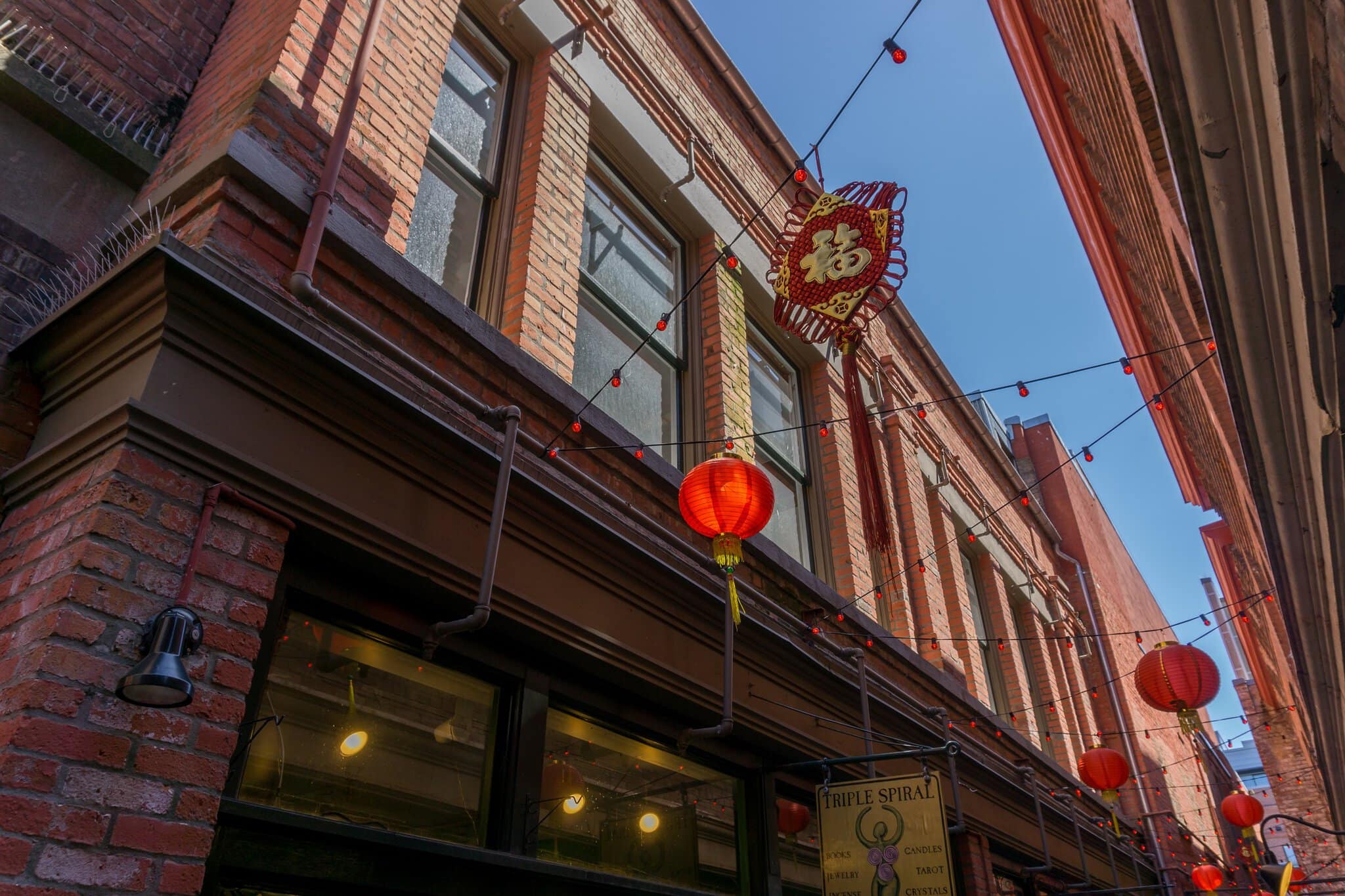
Today it’s a fascinating jumble of brick buildings, colourful lanterns, tea houses, and traditional Chinese medicine shops. The beating heart of the neighbourhood is Fan Tan Alley. This unassuming passage holds the record as the narrowest commercial street in all of North America — at its tightest point it measures just ninety centimetres across, so if you’re carrying a large backpack, you might genuinely get stuck.
In the past, it was a hotbed of illegal gambling and opium dens riddled with secret escape routes, but today you’ll find small art galleries, vinyl record shops, and stylish boutiques. You’ll often come across very distinctive handmade silver jewellery here. I discovered a brand called Pyrrha (they make jewellery from antique wax seals and it’s absolutely stunning), bought a necklace, and still wear it to this day as a souvenir I’m genuinely proud of.
8. Beacon Hill Park and the Historic Mile Zero
When you need a break from the city buzz, head on foot to the vast Beacon Hill Park, which stretches south of the centre. It’s a huge green oasis full of towering trees, ponds, beautifully manicured flower beds, and winding paths.
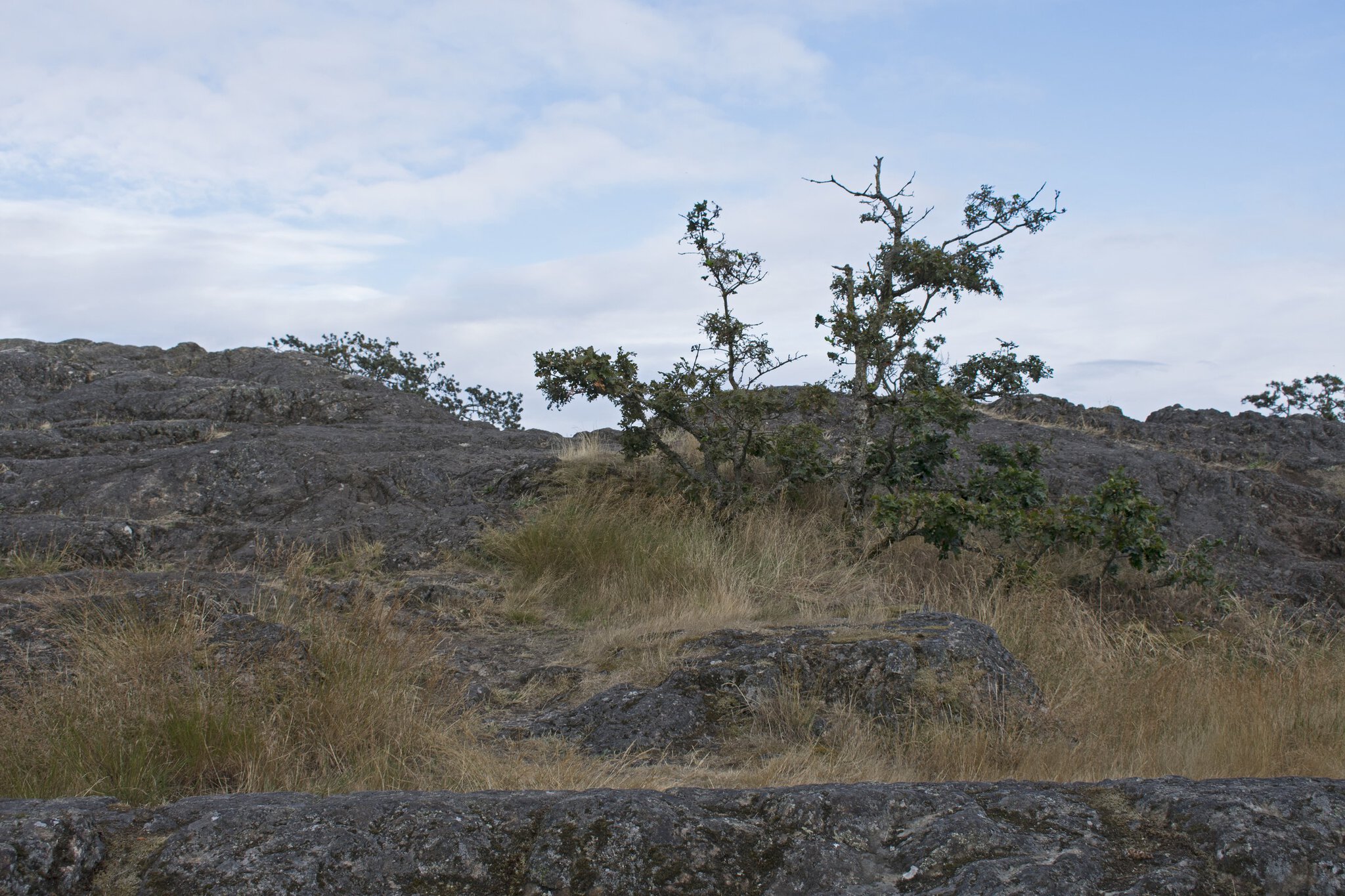
The park has one wonderfully quirky feature — dozens of peacocks roam freely throughout it. At times you’ll feel like you’re in a fairy tale as a peacock fans out its magnificent tail right on the lawn in front of you. If you’re travelling with kids, definitely don’t skip Beacon Hill Children’s Farm, where little ones can pet freely roaming goats.
At the park’s southern edge, where the land meets the ocean, you’ll find an understated but significant monument marked Mile 0. This spot marks the very beginning (or end, depending on your perspective) of the iconic Trans-Canada Highway, which stretches an incredible 8,000 kilometres across the entire country to the far eastern coast in Newfoundland. We stood there for about ten minutes, gazing at the snow-capped peaks across the strait, not really wanting to move. One of those moments when you wonder why you live anywhere else.

9. Craigdarroch Castle and a Baron’s Fortune
Canada isn’t exactly a country where you’d expect medieval castles, but Victoria has its own very distinctive Craigdarroch Castle. It’s a grand mansion in an ostentatious Victorian style, built in the 1880s by Scottish coal baron Robert Dunsmuir, one of the wealthiest men in the entire province at the time.
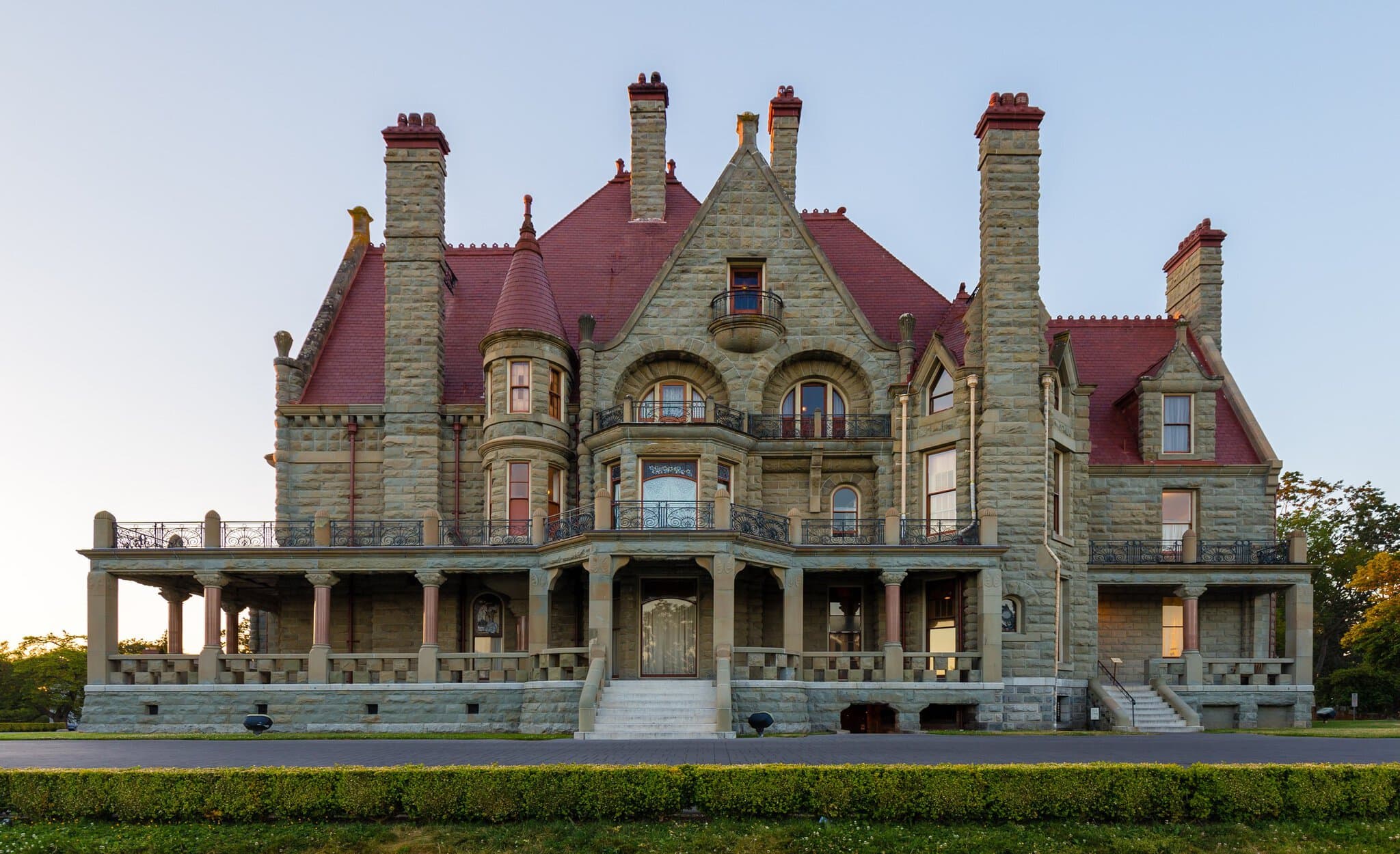
Sadly, the baron didn’t live to see his mansion completed, but the house still stands today as a fascinating museum. From the outside, the building with its small turrets looks rather stately, but the real opulence awaits inside. The interiors are clad in the finest wood from around the world, filled with an incredible amount of original furniture and dozens of gorgeous stained-glass windows.
Admission is around 20 CAD (roughly €14) and the tour takes about an hour. Don’t expect knights or dungeons — it’s more of a lavish showcase of what a person could build in the nineteenth century when they had truly, deeply serious money. The oak staircase alone is stunning, and I walked up and down it three times, just for the sheer joy of it.
10. Spring Spectacle — Cherry Blossoms in Victoria
If you manage to time your trip to Victoria between late February and early April, you’ll witness one of the most beautiful natural displays the city has to offer. Thanks to its exceptionally mild climate, Victoria boasts one of the earliest and most spectacular spring blossoms in all of Canada.

The city is positively studded with thousands of cherry and plum trees whose canopies transform into enormous pink and white clouds. Streets like View Street and the areas around James Bay become carpeted in petals that drift through the air like colourful snow. Locals absolutely adore it — the first blooms symbolise the definitive end of the grey, rainy winter.
There are even special blossom maps you can follow to plan a full-day walking route. It’s an incredibly photogenic time, and if you’re considering a spring trip and can’t decide on dates, I’d recommend aiming for this window. My mum and I were there in early March and I took about four hundred photos, half of which are nothing but trees. Mum was very patient.
11. Cycling the Galloping Goose Regional Trail
Victoria is an incredibly bike-friendly city, packed with protected cycle lanes and considerate drivers, but its crowning glory is the Galloping Goose Trail. This former railway line has been ripped up and transformed into a gorgeous, roughly sixty-kilometre trail that winds from the city centre deep into forested countryside and small rural communities far from civilisation.
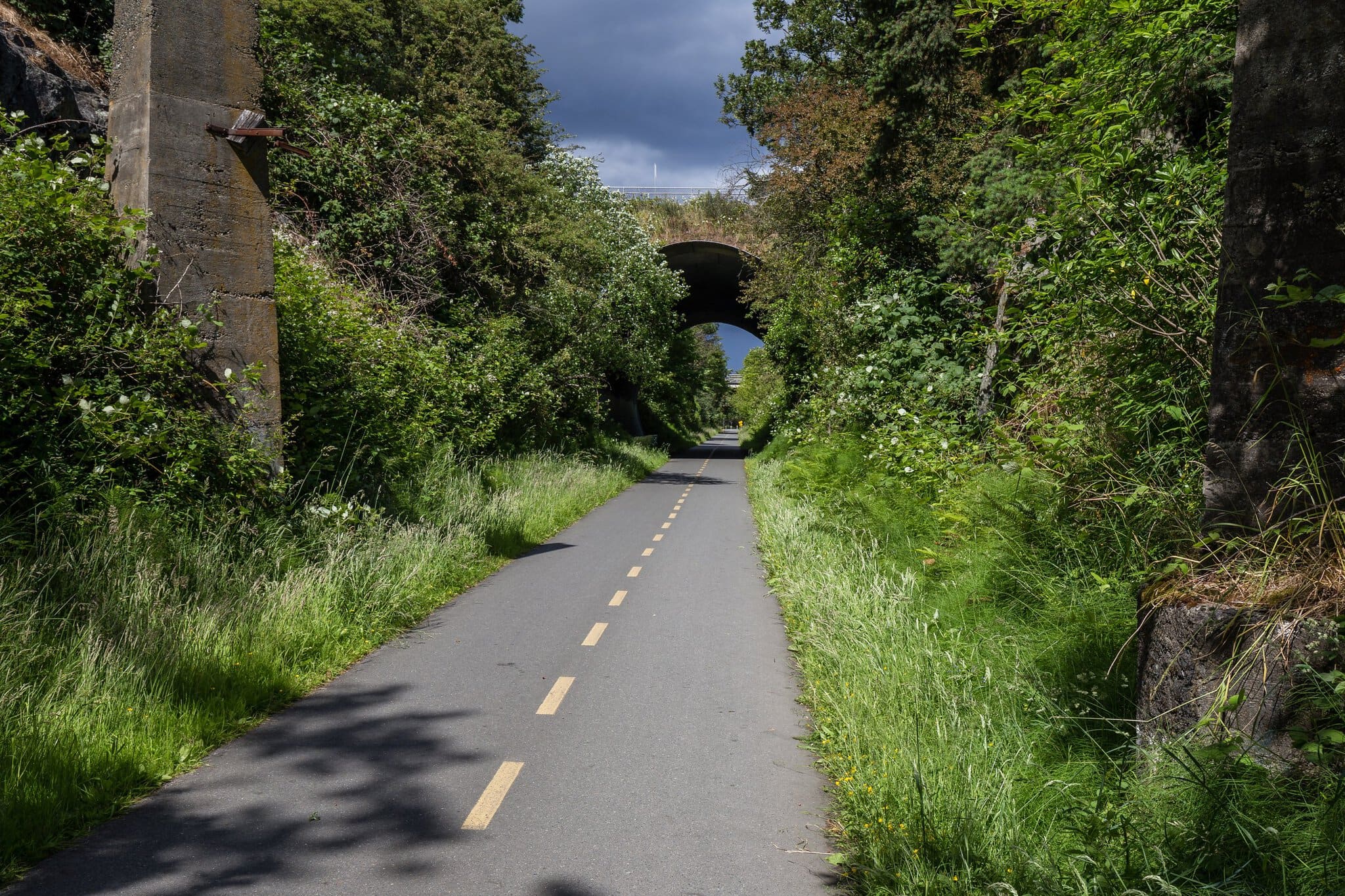
You can easily rent a bike (or an e-bike if you’d rather not work too hard) right in the city centre for a half day and set off. The route is mostly beautifully flat and surrounded by greenery, with plenty of small cafés and blackberry bushes along the way where you can stop for a quick snack.
You obviously don’t need to ride the entire trail — a few hours out of the city and back is more than enough. It’s hugely relaxing and a brilliant way to see places you’d never reach by car or on foot — and a lovely way to stretch your legs after all those generous meals at the local restaurants.
12. A Slow Afternoon in the Elegant Oak Bay
If you want to experience the real “old British Victoria,” head to the outlying neighbourhood of Oak Bay. Situated slightly off-centre on the eastern shore, this district is full of grand homes, quiet lanes, and small independent boutiques selling antiques and designer clothing. Locals walk their dogs here at a pace that suggests they’re in absolutely no hurry — and I suspect they’re not — and I honestly envy them.
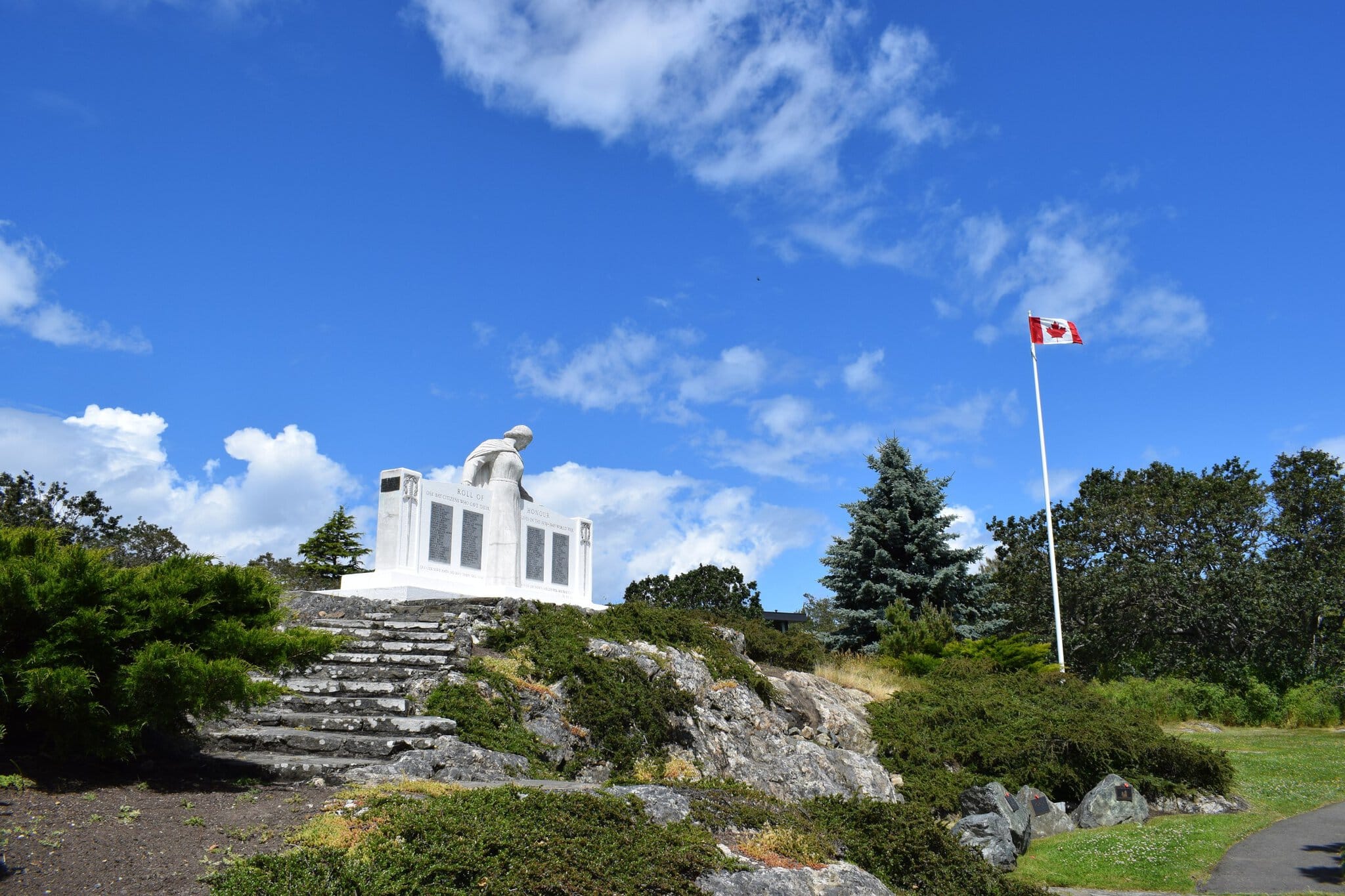
Stop by the local marina, where a wonderfully relaxed island vibe washes over you — grab a superb coffee overlooking moored yachts and the occasional seal. Oak Bay Avenue is then the perfect spot for quiet shopping and soaking up the atmosphere, with several smaller, less touristy tea rooms where you can enjoy excellent afternoon tea at noticeably friendlier prices than the famous Empress hotel.
This area has its own unique charm, and for many visitors it’s their favourite part of the entire city — free from tourist crowds, filled instead with dog-walking locals simply enjoying the quiet life.
Map of points of interest for your phone
Where to Eat in Victoria and What to Try
The food scene in Victoria is incredibly rich. The city benefits massively from its coastal location, so you’ll find phenomenal fresh seafood everywhere. There’s also a strong student community, which means the café culture is thriving and specialty coffee is a given.
If you’re hunting for the best restaurants in Victoria, Canada, focus on seafood. An absolute institution is Red Fish Blue Fish — a small, wood-clad container built right on a pier in Inner Harbour. The queue can stretch over an hour, but their wild salmon fish and chips and incredible fish tacos are genuinely worth the wait.
For breakfast, I’d recommend Blue Fox Cafe (the eggs Benedict here are on another level) or Jam Cafe for pancakes. But beware — on weekends you’ll be queuing outside at eight in the morning, and I’m really not the type to do that. I did it. No regrets. For coffee, my mum and I always pop into Habit Coffee — it’s a safe bet with lovely staff. Also make sure to explore Victoria’s many small craft breweries and sample the local beer.
Where to Go Next in Canada and Pre-Trip Essentials
Victoria is a fantastic jumping-off point from which to start exploring the far wilder corners of Canada’s west coast — it would be a shame to stay in the city alone.
- From Victoria, definitely head further north to explore the rest of Vancouver Island. Along the way, you can stop at the endless surfing beaches in Tofino and walk through ancient rainforests full of towering old-growth trees.
- On your way back to the mainland, check out our tips on what to see in Vancouver — a modern, gleaming metropolis embraced by snow-capped mountains on all sides that we absolutely adore.
- eSIM card: Don’t forget to sort out mobile data before flying to Canada so you can use navigation on the road and around the city. We regularly use eSIMs and in our Holafly review you’ll find out why we think it’s currently the best and easiest option.
- Travel insurance: Never, ever travel outside Europe without insurance. If you’re looking for health cover for longer trips that might involve working remotely or digital nomad life, read our SafetyWing review.
 🚗 Car rental on the roadVerified rental cars in British Columbia
Search with the DiscoverCars comparison engine — it compares prices from dozens of local and international rental companies, and most bookings come with free cancellation.
Compare car prices in British Columbia →Frequently Asked Questions (FAQ)
I’ve put together quick answers to the most common questions to make planning your trip to Victoria as easy as possible.
What should I see in Victoria?
The main attractions include Inner Harbour with the Parliament Buildings, the luxurious Fairmont Empress hotel, the stunning Butchart Gardens, the Royal BC Museum, and the charming floating homes at Fisherman’s Wharf. Definitely make time for a whale watching boat tour as well.
How many days do I need to visit Victoria?
Two to three full days is absolutely ideal to explore the entire downtown area at a relaxed pace, sit in a café, enjoy afternoon tea, take a trip out of the city to Butchart Gardens, and go on a half-day whale watching cruise without feeling rushed or stressed.
What’s the difference between Vancouver and Victoria?
Vancouver is a huge, modern, and fast-paced metropolis full of glass skyscrapers and international business, located on the Canadian mainland. Victoria, situated on a neighboring island, is by contrast a smaller, quieter, and more historic city with distinctly English architecture and a slower pace of life.
Do I need to book the ferry from Vancouver in advance?
Yes, if you’re traveling with a car and especially during the summer season, booking BC Ferries tickets online is almost essential to avoid waiting at the port for several hours for the next available ferry. For foot passengers without a car, it’s usually not as much of an issue.
When’s the best time to see whales and orcas near Victoria?
Whales and various species of marine mammals can be found around the island year-round, but the peak and most successful season for orca watching runs from May through roughly the end of October.
Can you pay with US dollars in Canada?
No, in Canada you pay with Canadian dollars (CAD). While some tourist spots near the American border might accept US bills, the exchange rate is usually very unfavorable. We recommend paying by card everywhere – you’ll rarely need cash here.
Is afternoon tea at the Fairmont Empress worth it?
If you’re looking for a cheap snack, then definitely not, as prices run around 75 to 90 CAD per person (approximately 50 to 60 EUR). However, if you want to treat yourself to a luxurious experience full of English elegance, excellent service, and taste something traditional in a beautiful historic setting, it’s an experience worth the money.
Tips and Tricks for Your Vacation
Don’t Overpay for Flights
Search for flights on Kayak. It’s our favorite search engine because it scans the websites of all airlines and always finds the cheapest connection.
Book Your Accommodation Smartly
The best experiences we’ve had when looking for accommodation (from Alaska to Morocco) are with Booking.com, where hotels, apartments, and entire houses are usually the cheapest and most widely available.
Don’t Forget Travel Insurance
Good travel insurance will protect you against illness, accidents, theft, or flight cancellations. We’ve had a few hospital visits abroad, so we know how important it is to have proper insurance arranged.
Where we insure ourselves: SafetyWing (best for everyone) and TrueTraveller (for extra-long trips).
Why don’t we recommend any Czech insurance company? Because they have too many restrictions. They set limits on the number of days abroad, travel insurance via a credit card often requires you to pay medical expenses only with that card, and they frequently limit the number of returns to the Czech Republic.
Find the Best Experiences
Get Your Guide is a huge online marketplace where you can book guided walks, trips, skip-the-line tickets, tours, and much more. We always find some extra fun there!


