

Mexico is a land of contrasts. Cheerful tourists walking past newspapers full of dead bodies, perfect white beaches and stinking mountains of seaweed piling up on the shore. The total slowness of smiling people, a beautiful language and sunshine. That’s life in Yucatan Mexico — and so much more.
It’s quite likely that one day I’ll simply refuse to get on a plane. While Lukáš enjoys flying more and more, I’m sinking deeper into fear and dread with every flight. I break into a sweat, my heart starts pounding and I have to breathe deeply. I can’t control it. The twelve-hour flight from London to Mexico was dreadful — we flew through heavy turbulence for half the journey, and while the girl next to us slept, I felt sick and tears were streaming down my face. I kept telling myself: this is a bad sign, where am I even going.
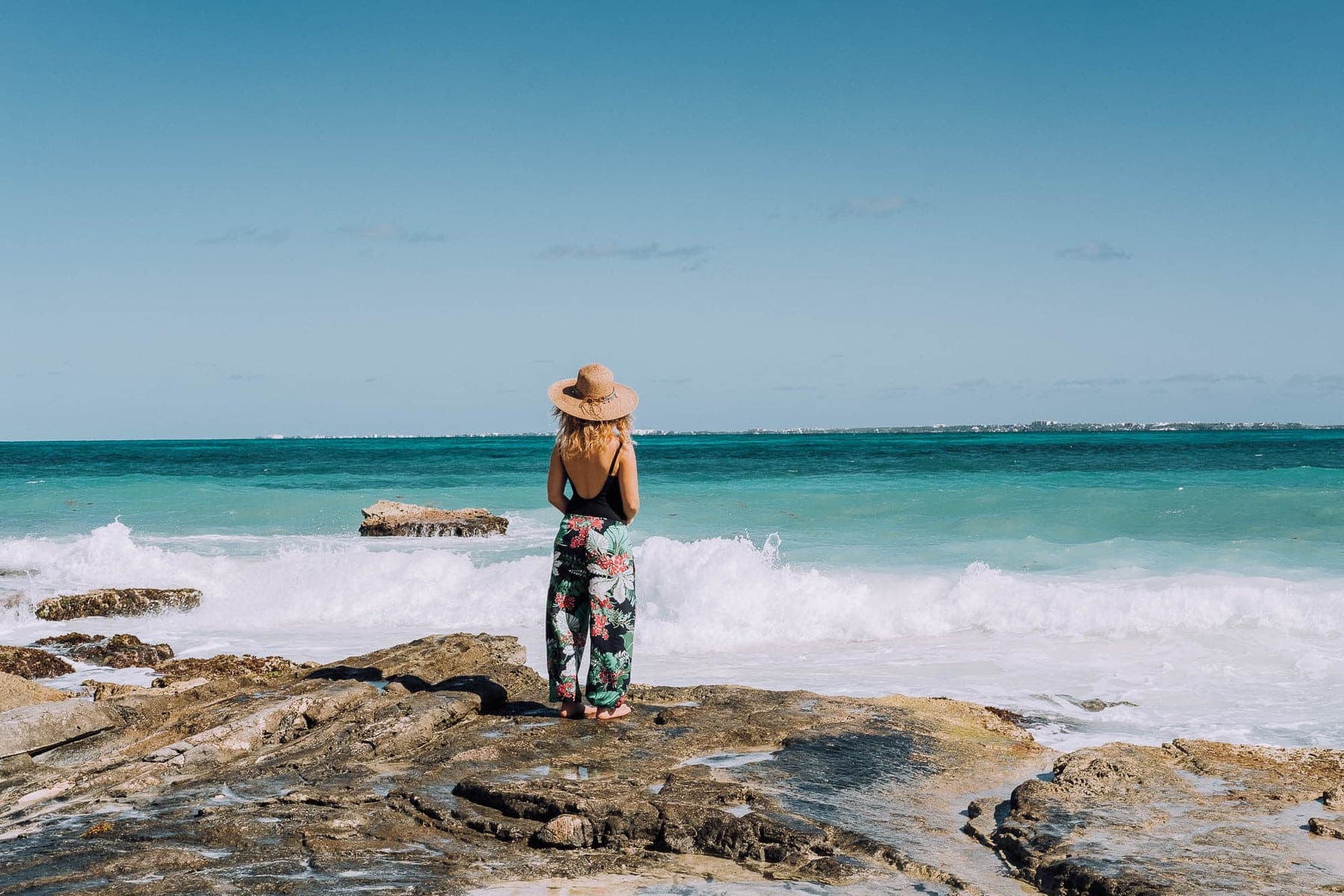
Apart from the murders in the newspapers, everything was completely different
When we’re in a foreign country, we tend to be on guard. We clutch our money belts, put locks on our backpacks and watch out for anyone pulling a knife or a gun. We were prepared for the same in Mexico. Gangs shoot at each other here regularly. And the media show you the dead bodies exactly as they really are.
So on day three in the Yucatan, we’re looking at the newspapers in local 24/7 shops, where there’s a corpse with a bullet hole in its head lying in a pool of blood — but apart from it being revolting, it does absolutely nothing to our vigilance. The plane landed, we got into a taxi, and we must have left our caution somewhere on the seat. It’s nothing unusual — I once left my passport on a seat.
Cancún is a tidy city that reminds you of Miami, just — as I like to say — “without the angry Americans.” Instead, you’ve got Miguels and Amariles everywhere, plus Americans in relaxation mode on the beaches with mojitos in hand. Miguel and Amariles were our friends in Canada. Crazy, friendly Mexicans who treated us like family. So we had the feeling that our Canadian-Mexican family was walking around everywhere. We felt at home from the very first moment.
Digital nomad life in Playa del Carmen

After a week in Cancún, we moved to Playa del Carmen, where we rented a small house for about €350 per month. Everyone had recommended Playa del Carmen, saying it was the ideal spot for digital nomads. A month there was fine, but honestly, there are much better places in Mexico for digital nomads.
Playa del Carmen is a fairly large city, and if you don’t live in the centre, you’re stuck in a very small area with nothing to do. To be fair, we don’t go to bars and nightlife leaves us cold. Renting a car or a scooter costs quite a bit of money, so unless you’re travelling every day, it definitely doesn’t pay off.
Stinking mountains of seaweed and dead coral
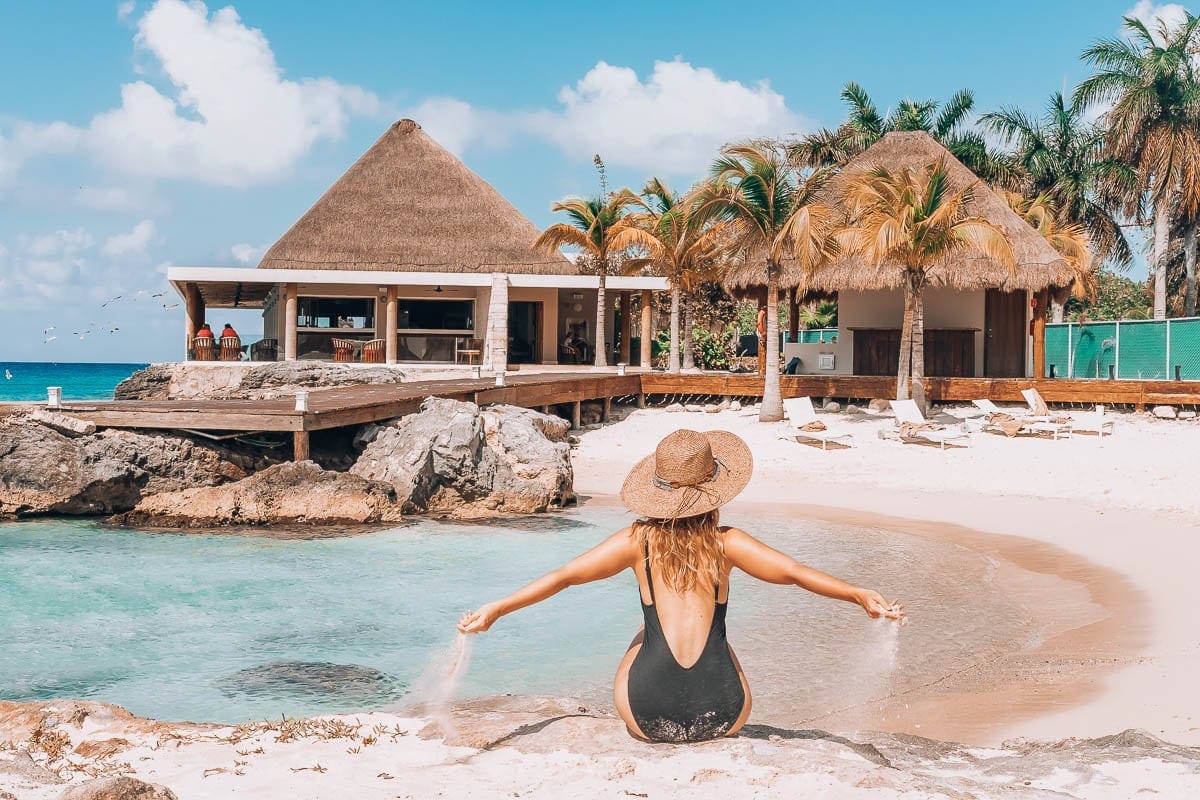
Even though we had bikes borrowed from our landlords, it still took us 40 minutes to cycle into town and 15 minutes to get to the shops. Our lovely cheap house essentially meant we didn’t see or experience much during the first month. On the other hand, we only interacted with locals and lived completely outside the tourist bubble.
Playa del Carmen is visibly suffering from global warming right now. Over the past five months, 30% of the coral has disappeared, but that’s not all. In recent years, rising water temperatures have been washing enormous amounts of seaweed onto the beaches. This used to happen before too, but only for a few weeks during the season. Now the mounds of stinking seaweed cover the beaches for most of the season, so if we wanted a beautiful beach, we had to pay for a ferry to Cozumel.
What are the prices in Yucatan Mexico?
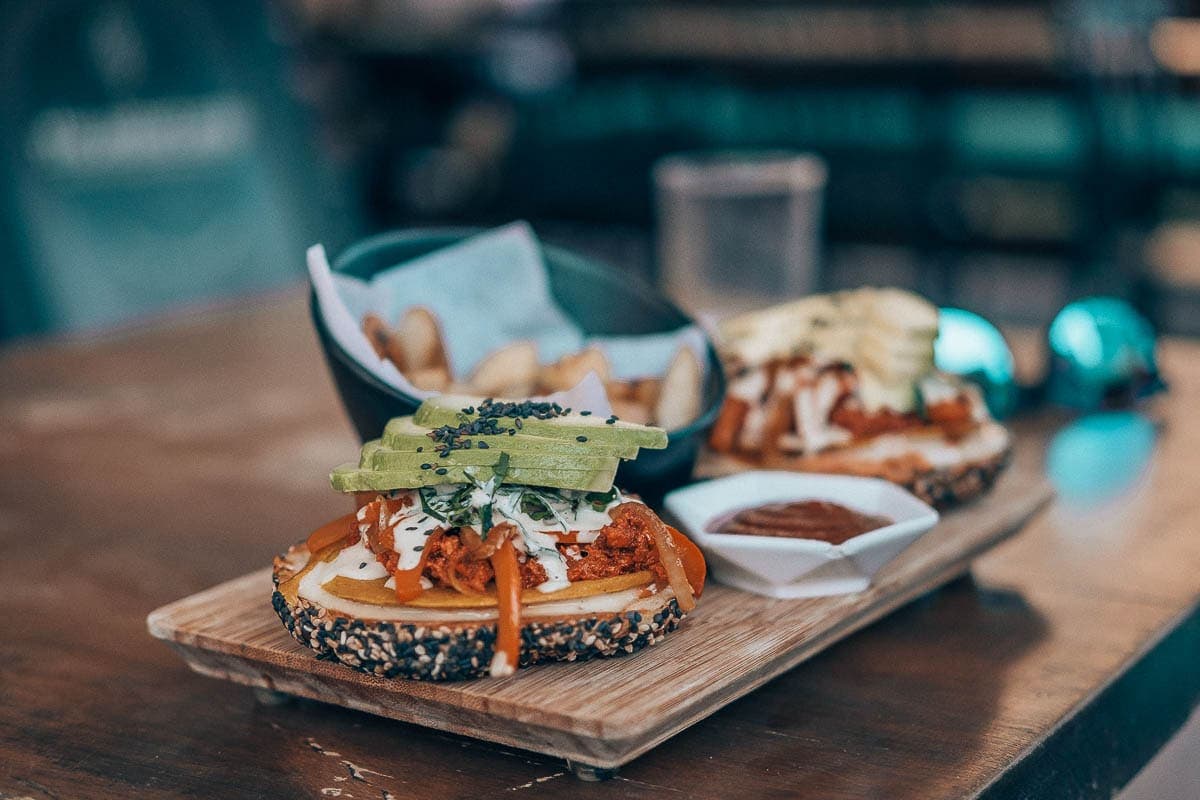
Prices in the Yucatan are fairly similar to those in Western Europe. Local produce is cheap, so lovers of tropical fruit will be in paradise, but imported food is expensive. If you don’t cook with local ingredients and want to make British or Italian dishes, your cost of living will go up significantly. In restaurants, you’ll typically eat for around €5–6 per person; away from tourist spots, prices are lower, while in very touristy areas, expect a hefty surcharge. Overall, you can travel and live here relatively cheaply, but don’t expect Asian-level prices.
Safety in Mexico
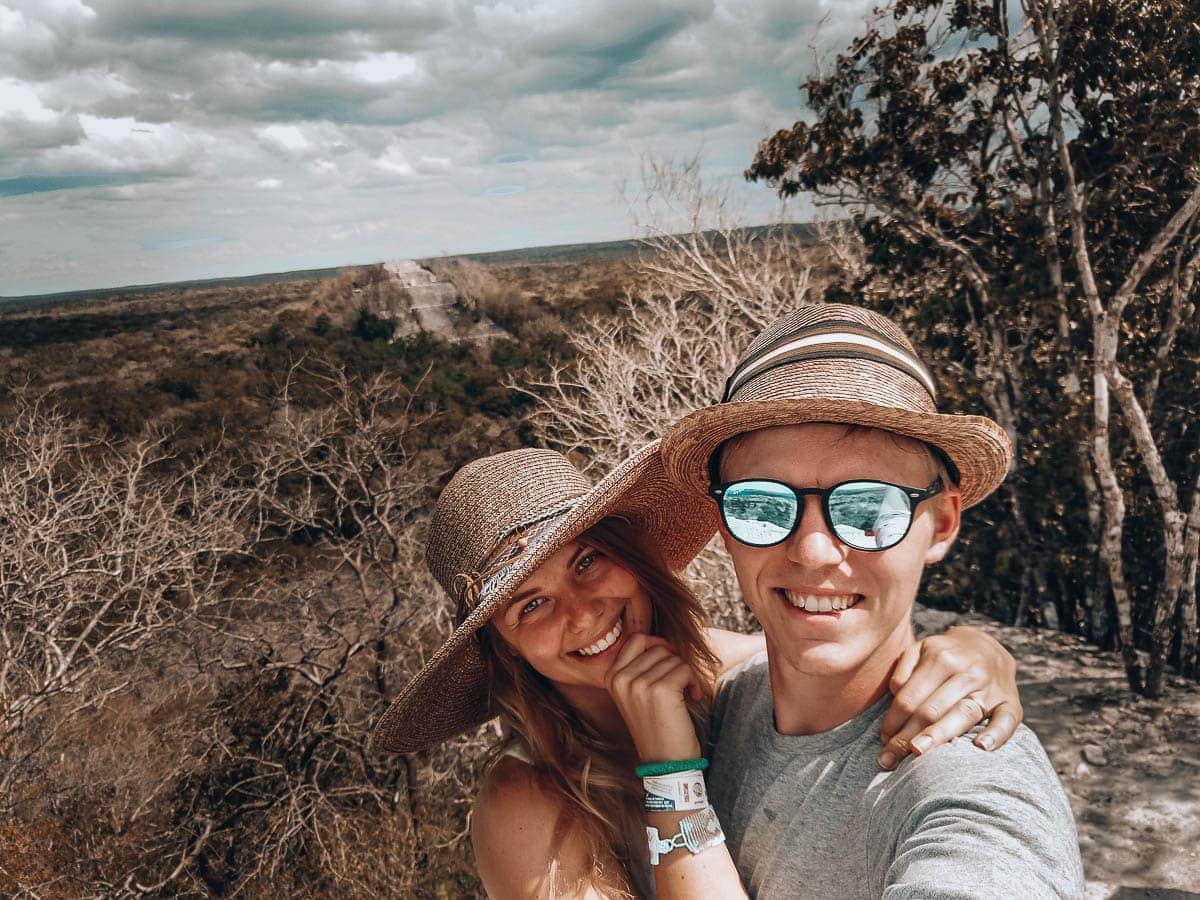
Mexico was the first country where I saw dead bodies in the newspapers almost every day. The good news (for us tourists at least) is that locals face more danger than visitors. Most murders take place between drug cartels, and they understand that tourism is vital for all of Mexico. If you stay away from drug dens, you’ll be fine.
Petty theft isn’t common in the Yucatan, but if someone does mug you, definitely don’t resist — thieves can react aggressively. In our 2 months in the Yucatan, we never once found ourselves in a situation where we felt in danger.
Five Mexicans to one European
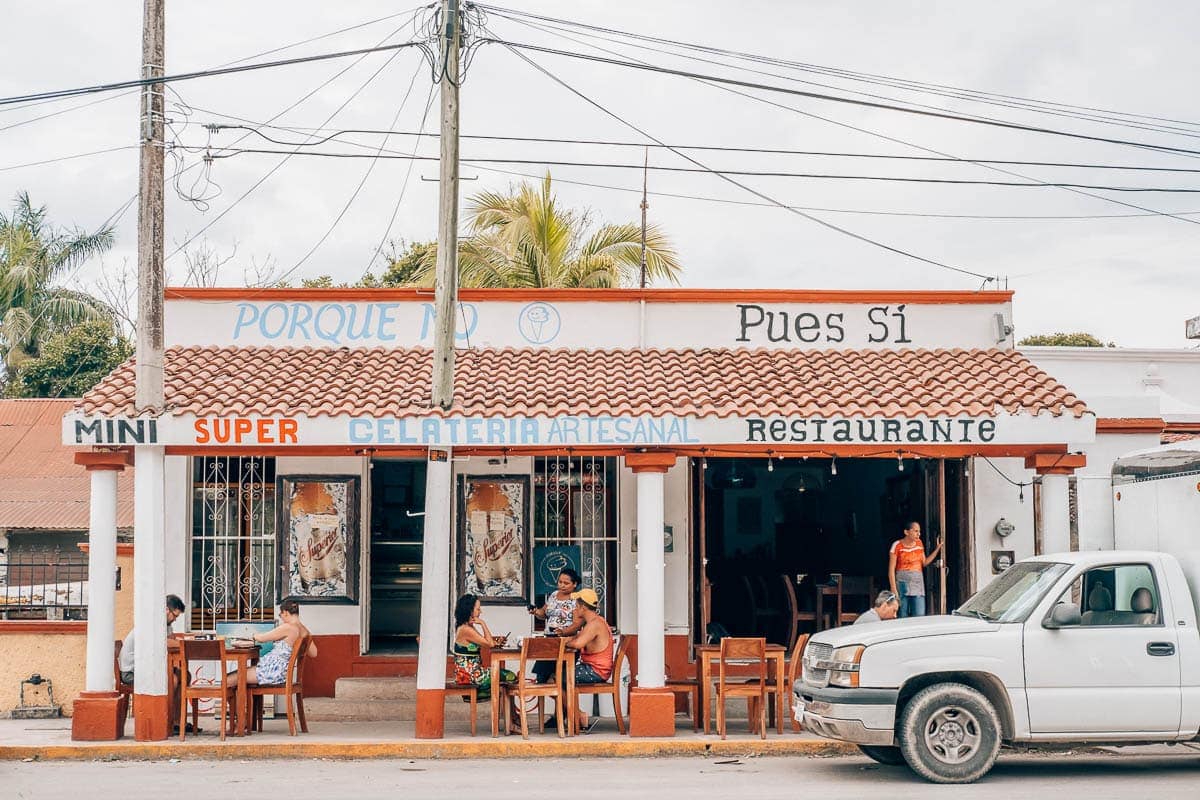
I don’t like jumping to conclusions, but after a month of observing local service, I started thinking it couldn’t be a coincidence. What exactly? Even in empty (completely empty) restaurants, they always have five waiters, but that means only one thing. You will wait. And by that I mean you will wait a long time. To save our sanity, we turned it into a sport.
We watch the Mexicans in restaurants do twenty unnecessary things before they come to you, twenty unnecessary things before they place your order in the kitchen, twenty completely unnecessary things before they decide that the food has been sitting on the kitchen pass long enough to be brought to you, and then another twenty things and a little dance around the counters before the food actually arrives at your table. I’m not exaggerating.
If you’re going out for dinner, don’t go starving. Trust me. And if a place has a sign that says “we are not a fast-food restaurant,” they’re warning you that it’s going to take a really long time. We saw this sign in restaurants frequently, and every time we waited 1.5 hours for our food. Fortunately, these restaurants usually serve nachos and salsa before the meal. Those arrive in about thirty minutes, though. Don’t go to restaurants hungry!
Once we stopped at a café next to a petrol station for a quick breakfast to save time and head out on a day trip early. What a rookie mistake!
We were the only customers, three waitresses were “serving” in the café, and we could see two more people in the little kitchen at the back. We ordered two coffees, two sandwiches and one muffin. We waited 35 minutes for our quick breakfast, and the ladies forgot the muffin. When we reminded them, they made it up to us with an enormous grimace of horror and a fit of giggles. We couldn’t hold it against them — after a month and a half in Mexico, we should have known better. Five Mexicans do the work of one European.
Internet in Mexico: A daily surprise
People had us quite worried about the internet. Supposedly it’s slow in Mexico. In the end, we found that wasn’t the problem. When the internet works, it’s fast. The problem is different — you can never be sure it will work. Just because the internet is super fast somewhere one day doesn’t mean it will work the next.
Sometimes it’s because of network overload, other times it’s about the alignment of the stars — either way, whether the internet will work or not is always a surprise. In Mexico, you have to get used to the fact that probability doesn’t follow mathematical formulas here — it’s always fifty-fifty. It either works, or it doesn’t.
That said, you can absolutely work in Mexico in peace. Outages aren’t that frequent, they usually last a few hours, and the longest we went without internet was about a day. If you’re worried about staying connected, consider getting an eSIM from Holafly or Yesim as a backup for mobile data.
WhatsApp is food, WhatsApp is a car, WhatsApp is king
Every Mexican has WhatsApp. And everything can be arranged through WhatsApp. You can order food, rent a car, and book a hairdresser. Everything in Mexico works through WhatsApp.
Aversion to English and gringos
We’ve travelled through quite a few countries, but Mexico was the first where we encountered an absolute disregard for English. Even in museums, where at first glance it seems like the signs will be in English, it often turns out that only the first half of the museum is translated — in worse cases only a third, and in most cases just the introductory panel.
There’s no point fighting it — just learn the basics of Spanish. You’ll be much better off. After two weeks, we gave up on English and switched to our bad Spanish. Thanks to that, we were never targeted by petrol station scams (yes, that happens) and nobody was unpleasant to us. Spanish breaks the ice. Yes, even bad Spanish.
Sure, you might occasionally get something on your plate that you didn’t order, or buy the wrong phone plan, but you’ll break free from their assumption that you’re a gringo (an American). By the way, if you speak English, make sure to quickly let them know you’re not from America but from Europe. If they respond with some weird name, that’s right — they’re trying to say “David Beckham.” Mexicans love football.
Still, in some situations it won’t help when you look like a gringo at first glance — for example, when you’re in a position where you can’t verbally protest that you’re from Europe. For those moments, there’s one more rule you should know about.
The 200 pesos rule, or how they tried to take our driving licence
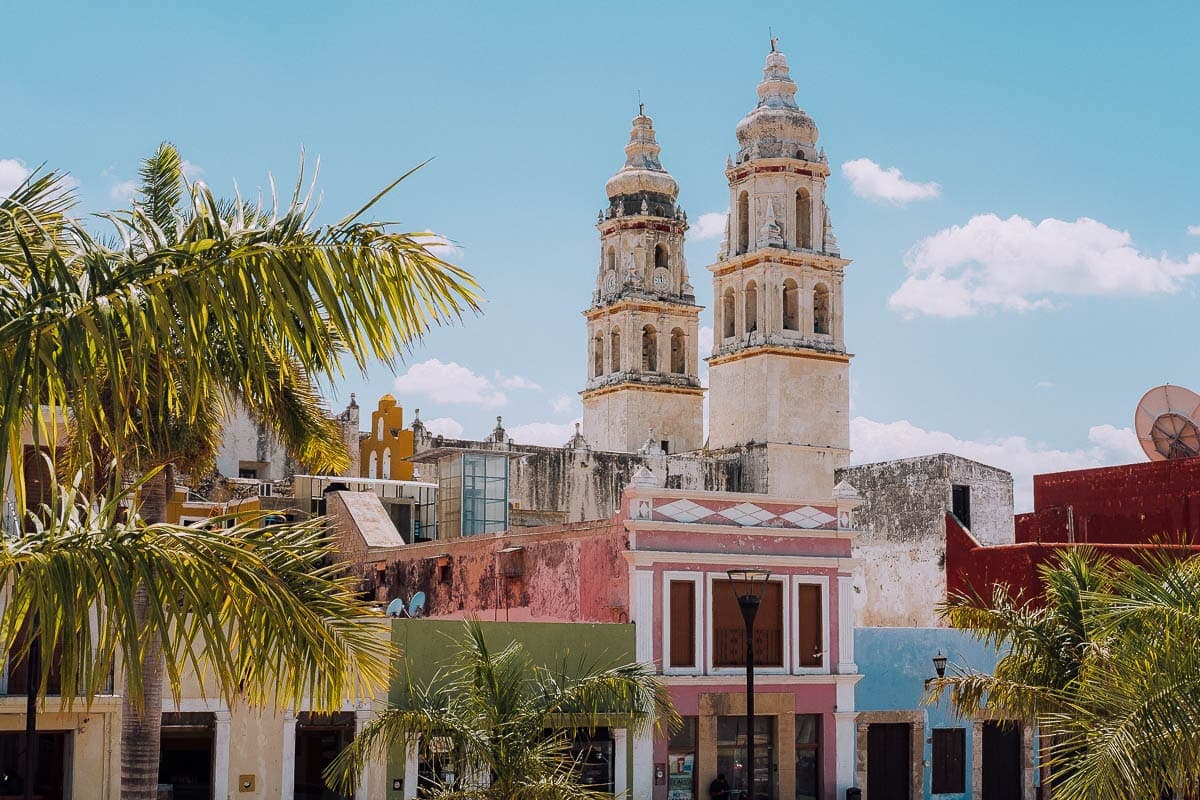
“If a cop stops you, give him 200 pesos — that’s their daily wage.” I really don’t know if those words are true, but I’m glad I read them on some American forum. In March, we set off on a road trip around the Yucatan and had no problems until Campeche. But we almost didn’t make it out of Campeche. They wanted to confiscate our driving licence for two days.
Lukáš missed a sign and was driving at 80 km/h on a road with a 40 km/h limit — just like all the other cars — but we were the only white people, so they only stopped us.
“You’ll have to come to the station with us,” the officer explains to Lukáš for the third time, repeating again that he has to take our licence and give us a fine of 1,200 pesos (about €60). We finally understood what he was saying.
“Isn’t there another way?” Lukáš tries in our terrible Spanish. The officer turns to his younger colleague. They chat for a while, waving their hands about, and after finishing the drama, they come back and the officer speaks:
“You can give us 1,200 pesos on the spot.”
Lukáš is already reaching for his wallet.
“1,200 pesos is too much,” I hiss and grab the wallet from him. I’m taking a risk. Lukáš throws me a nervous look.
“Tell them we only have 200 pesos.” I mutter while pretending to rummage through the wallet, hoping they won’t see the orange bills with Frida and Diego Rivera on them.
“I only have 200 pesos.” Lukáš waves the banknote in front of the rolled-down window and I hand him one US dollar and some coins with a feigned look of desperation.
“And one American dollar, and here’s 10, well — 12 pesos.” Lukáš plays along in our little comedy.
The officer frowns and moves on to the next act of the drama. He does a loop around their vehicle with the younger officer and finally comes back and says:
“Fine then, go ahead, but be careful.” Drenched in sweat, we drive away.
(Ir)regular opening hours: Where did it go wrong?
Don’t trust Google Maps. Don’t trust Google. Opening hours and even locations can be completely wrong. In fact, even what’s written on the door might not be true. If they say (on the door) that they’re open Tuesday to Saturday, that’s merely a rough guide.
They can be closed at any time and for any reason. Sometimes it’s a public holiday (that’s understandable), other times it’s because it’s Monday (also understandable in Mexico), the next week it might be a beer festival, or a Wednesday, or a Friday — and the reason it’s closed, you’ll never find out.
In Mexico, practically nothing is set in stone, and you’ll just have to accept that. We even saw an “open” sign on the door when the place was closed. The one thing you can be sure of is that you’ll love Mexico despite all its problems. Just like we do. A single smile from a Mexican will probably be enough.
Tips and tricks for travelling around the Yucatan
What to packCheck out our packing guide for travel, which will help you prepare. Choose the right travel backpack, browse travel gadgets and don’t forget anything important at home. Where to find flightsSearch for cheap flights on Kiwi — it’s our favourite portal. Make sure to read our guide to finding cheap flights. Car rentalWe regularly use the comparison site RentalCars.com, which helps us choose the best car rental provider. Booking accommodationBooking.com is our favourite hotel search engine. We always compare hotels with local flats and rooms on Airbnb (get a discount here). Read about how we find cheap accommodation. Don’t forget travel insuranceTravel insurance is an absolute must. For shorter trips, we choose AXA (50% discount) and for longer trips, the British insurer True Traveller. Check out our comparison of all travel insurance providers and pick the one that suits you best. Guidebook we recommend: Lonely Planet Yucatan |
More articles about the Yucatan you might enjoy
What to Do in Tulum? 12 Things You Must Try
Chichen Itza: Mayan Ruins and a Mexican Wonder of the World
Laguna Bacalar: 8 Things to Do + Where to Eat
10 Tips for San Francisco de Campeche, Mexico
Tips and Tricks for Your Vacation
Don’t Overpay for Flights
Search for flights on Kayak. It’s our favorite search engine because it scans the websites of all airlines and always finds the cheapest connection.
Book Your Accommodation Smartly
The best experiences we’ve had when looking for accommodation (from Alaska to Morocco) are with Booking.com, where hotels, apartments, and entire houses are usually the cheapest and most widely available.
Don’t Forget Travel Insurance
Good travel insurance will protect you against illness, accidents, theft, or flight cancellations. We’ve had a few hospital visits abroad, so we know how important it is to have proper insurance arranged.
Where we insure ourselves: SafetyWing (best for everyone) and TrueTraveller (for extra-long trips).
Why don’t we recommend any Czech insurance company? Because they have too many restrictions. They set limits on the number of days abroad, travel insurance via a credit card often requires you to pay medical expenses only with that card, and they frequently limit the number of returns to the Czech Republic.
Find the Best Experiences
Get Your Guide is a huge online marketplace where you can book guided walks, trips, skip-the-line tickets, tours, and much more. We always find some extra fun there!


