

Can you smell that faint whiff of sulphur, with pitch-black volcanic scoria crunching under your boots? That’s exactly the feeling that completely captivated me when Lukáš and I first stood in the middle of a lunar landscape in Iceland. Volcanoes have something incredibly magical and terrifying about them, and these fiery mountains have fascinated humankind since time immemorial. That’s why we’ve put together a guide to the most famous volcanoes in the world.
Whether it’s smouldering giants, glacier-capped peaks or perfectly symmetrical cones, volcano tourism is a massive hit these days. We absolutely fell in love with volcanic regions, and exploring craters is one of our favourite travel experiences.
I’m going to take you to the planet’s most famous fiery mountains. We were lucky enough to explore some of them in person, while others are ones travellers from all over the world rave about and that sit high on our bucket list.
TL;DR
The world’s most famous and beautiful volcanoes include Italy’s Vesuvius and Etna, snow-capped Japanese Mount Fuji, Hawaiian Kilauea, Indonesian Bromo and the iconic Teide on Tenerife. Among the most massive volcanoes are Hawaii’s Mauna Loa and Africa’s Kilimanjaro, while Iceland’s Reykjanes Peninsula currently offers the chance to watch brand-new crust forming. Most of these volcanoes can be visited safely, as long as you follow current guidance from local authorities.
Summary
- The world’s highest volcano: Ojos del Salado on the Chile–Argentina border (roughly 6,893 m above sea level).
- The largest active volcano: Hawaii’s Mauna Loa, which takes up a huge chunk of the Big Island.
- The most active regions as of 2026: Hawaii’s Kilauea, Italy’s Etna and the restless Reykjanes Peninsula in Iceland.
- Supervolcanoes: Yellowstone in the USA is the most famous, but scientists reassure us there’s no imminent eruption on the horizon.
- Most dangerous in Europe: Vesuvius looms right above the three-million-strong metropolitan area of Naples.
- Bookings required: Both Teide (Tenerife) and Mount Fuji (Japan) now require advance online reservations and summit permits.
- The most famous flight disruption: Iceland’s Eyjafjallajökull grounded over 100,000 flights across Europe with its ash in 2010.
- Climbing to an active crater: On Etna or Stromboli you can safely watch volcanic activity accompanied by certified guides.
16 of the Most Famous Volcanoes in the World
Let’s take a closer look at sixteen volcanoes that have shaped our planet and still take the breath away from millions of visitors. Each of these mountains is completely different and offers a truly unique experience, whether you’re craving a challenging trek or just want to soak up the views from a safe distance.
1. Fagradalsfjall and the Reykjanes Area (Iceland)
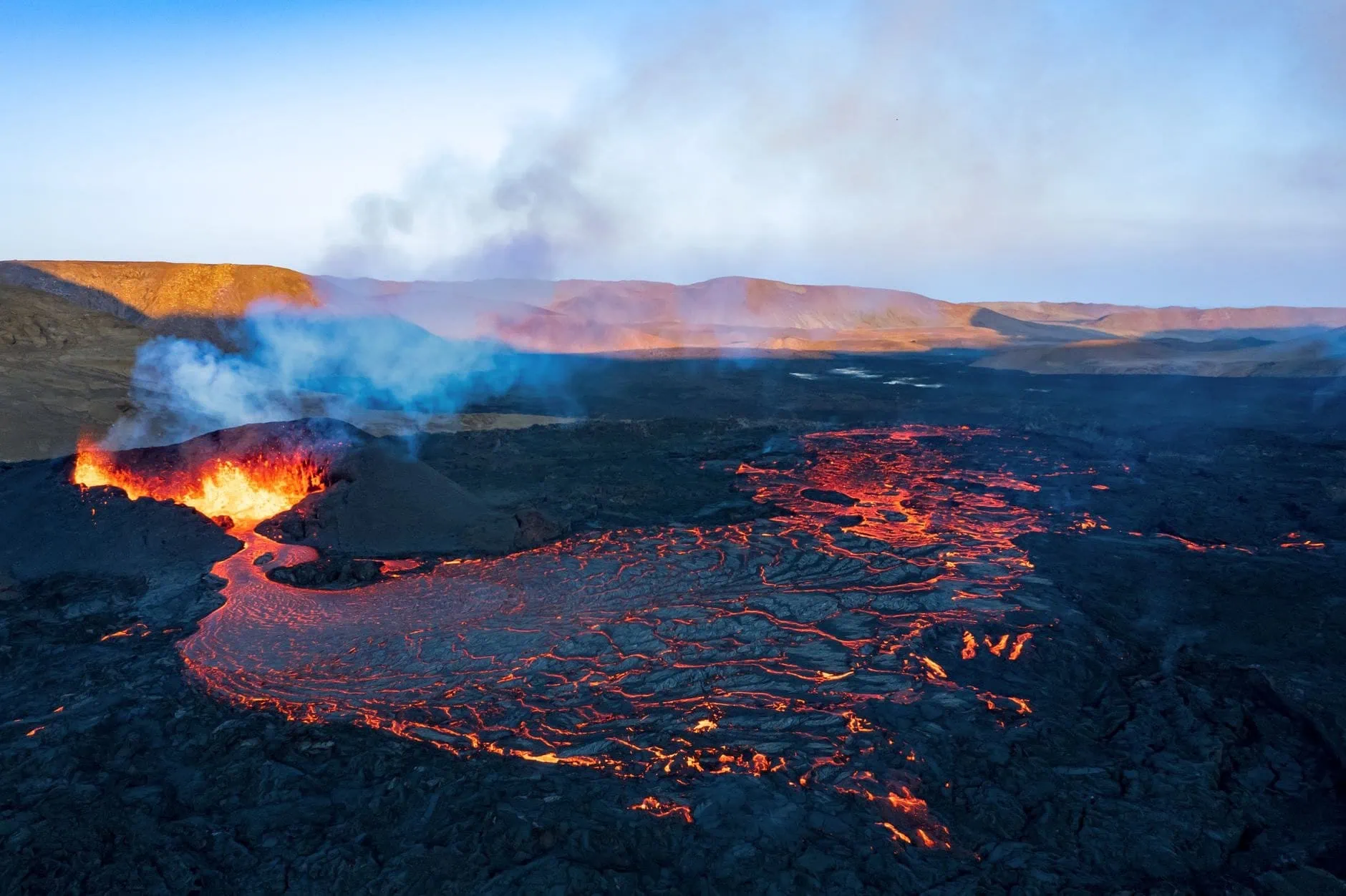
When Iceland’s Reykjanes Peninsula woke up in 2021 after 815 years of calm, it was an absolute geological miracle. We were incredibly lucky to explore the volcanoes of Iceland and Reykjanes in person and walk around the still-warm lava fields near Mount Fagradalsfjall. Seeing a solidified black river with smoke rising off it with your own eyes is an experience Lukáš and I will never forget. Along the way we also didn’t skip the stunning Kerið and Víti craters, which look like gateways to another world.
Since 2021 there’s been a whole series of twelve eruptions here, gradually reshaping the entire peninsula. While the first eruptions near Fagradalsfjall were fairly accessible to tourists, the series near the town of Grindavík in 2024 and 2025 forced evacuations and strict closures. As of 2026 the activity is on pause, but magma is still building up beneath the surface, and this area is far from finished.
💡 Tip: If you’re heading to Iceland, always check safetravel.is and vedur.is, because closures and safety zones here change literally from one day to the next. Never venture onto unmarked trails — the solidified lava crust can be fragile, and toxic gases still lurk beneath it.
2. Teide (Tenerife, Spain)
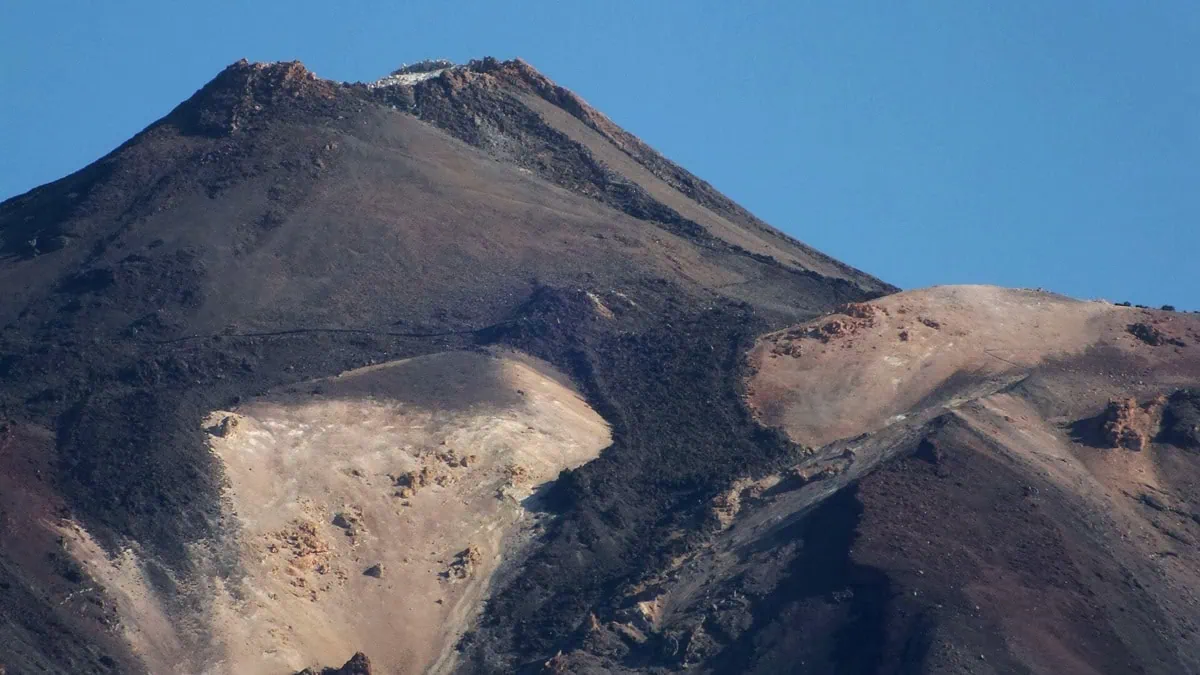
At 3,715 m above sea level, Teide in the Canary Islands is the highest mountain in all of Spain — and we absolutely adore it. The vast Las Cañadas caldera the peak rises from resembles a perfect Martian landscape full of bizarre rock formations. During our exploration of Tenerife we were completely blown away by the contrast between the green coastline and the parched volcanic centre. The Teide summit itself has been dormant for around a thousand years, though the island last erupted in 1909.
Climbing Teide is a huge draw today, but there’s one significant catch. Even though the cable car whisks you up to 3,555 metres, you can’t reach the actual Pico summit without a permit sorted in advance. The permit is free, but places are extremely limited and sell out months ahead.
💡 Tip: Don’t underestimate the altitude. Even taking the cable car up, altitude sickness and biting cold can catch you off guard. Definitely pack a warm jacket and plenty of water, and take it slow so you can really enjoy that breathtaking view of the neighbouring islands.
3. Puy de Dôme and the Chaîne des Puys (France)
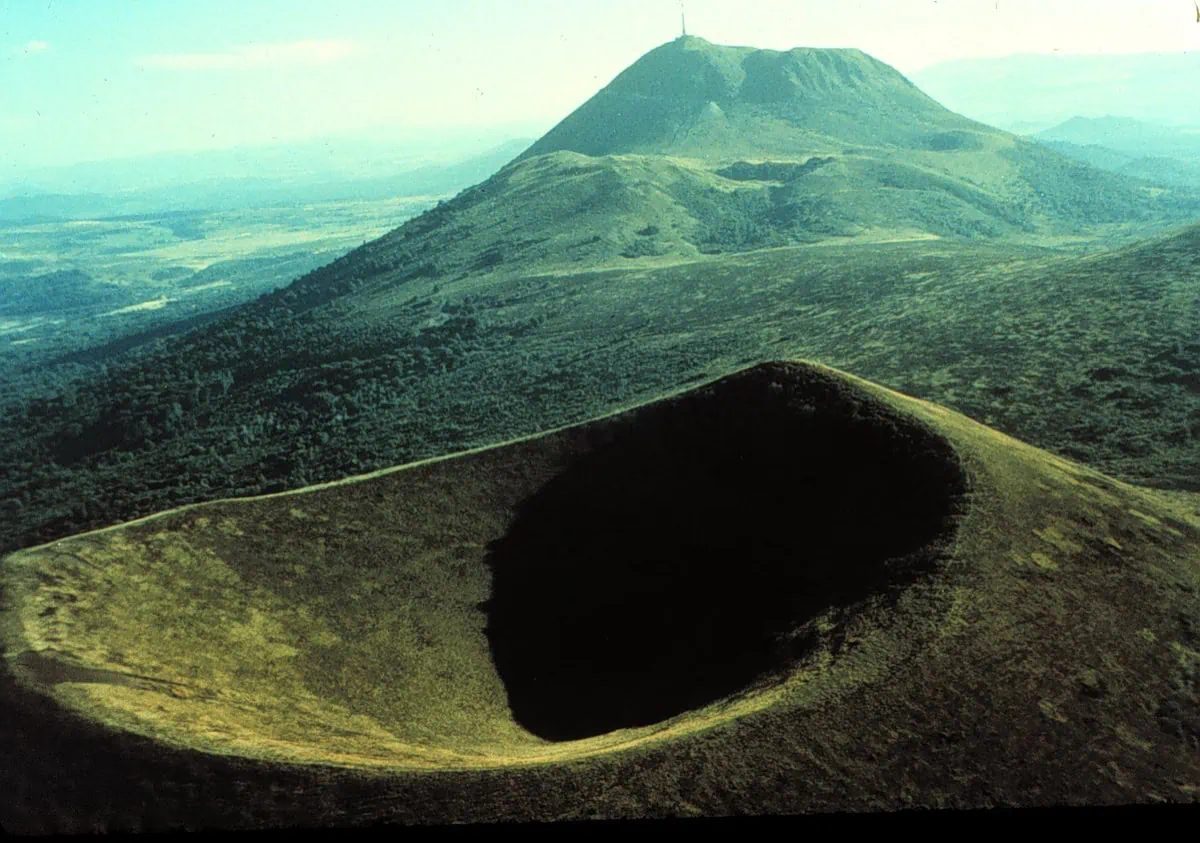
Hidden in the French region of Auvergne is one of the best-preserved volcanic chains in the world, a UNESCO World Heritage Site since 2018. We visited the Auvergne volcanoes and were utterly enchanted by that endless green sea of cones and craters. The star of the show here is the lava dome Puy de Dôme, which rises to 1,465 metres and offers a perfect 360-degree view over dozens of other dormant volcanoes nearby.
This area is incredibly friendly for families and casual walkers alike. You don’t have to slog up to the top of Puy de Dôme on foot at all — the modern Panoramique des Dômes cog railway takes you up comfortably. Up top you’ll find not only lovely scenic trails but even the remains of an ancient temple dedicated to the god Mercury.
💡 Tip: The best time to visit is definitely from May to early October, when there’s great visibility and pleasant weather. The Auvergne volcanoes have been dormant for around seven thousand years, so you can enjoy the peaceful scenery without any worries about sudden volcanic activity.
4. Vesuvius (Italy)
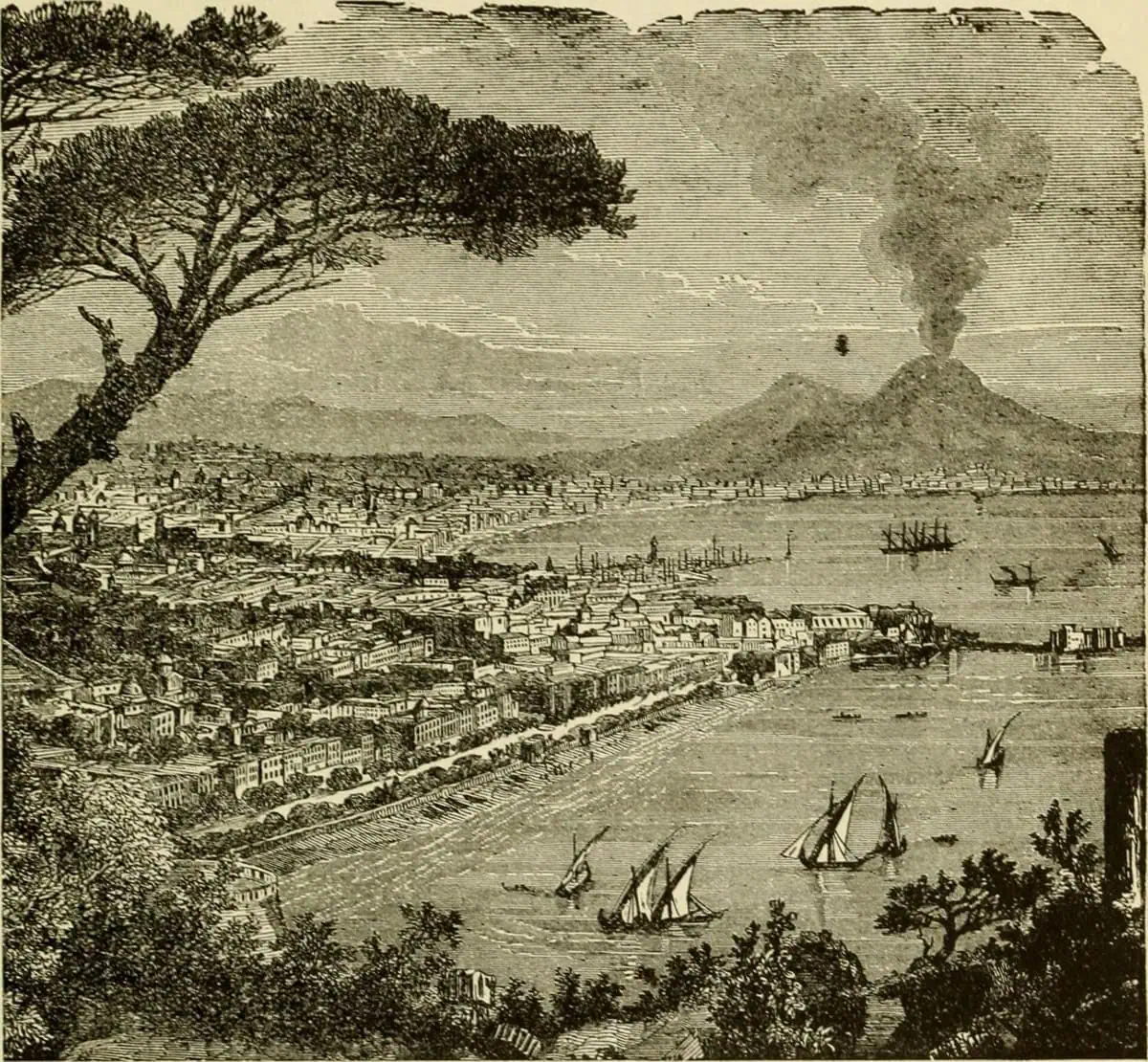
Italy’s Vesuvius earned its place in the history books with its devastating eruption in AD 79, which buried the ancient city of Pompeii and Vesuvius under layers of ash. Today this 1,281-metre stratovolcano is one of the most closely watched volcanoes in the world, since around three million people live in its immediate vicinity. It’s rested quietly since its last eruption in 1944, and as of 2026 it sits at the lowest, green alert level.
Travellers rave about how easy the walk up to the crater is these days. You can drive or take a bus right up to the Quota 1000 car park, and from there it’s only about 30 to 40 minutes on foot up a dusty trail. You won’t see any bubbling lava at the top, but that panoramic view of the Bay of Naples is said to be absolutely priceless.
💡 Tip: Crater tickets must be bought online in advance for a specific time slot. You won’t get tickets at the gate anymore, and local touts often offer them with ridiculous mark-ups. Definitely wear sturdy shoes — the loose scoria on the trail is pretty slippery.
5. Etna (Sicily, Italy)
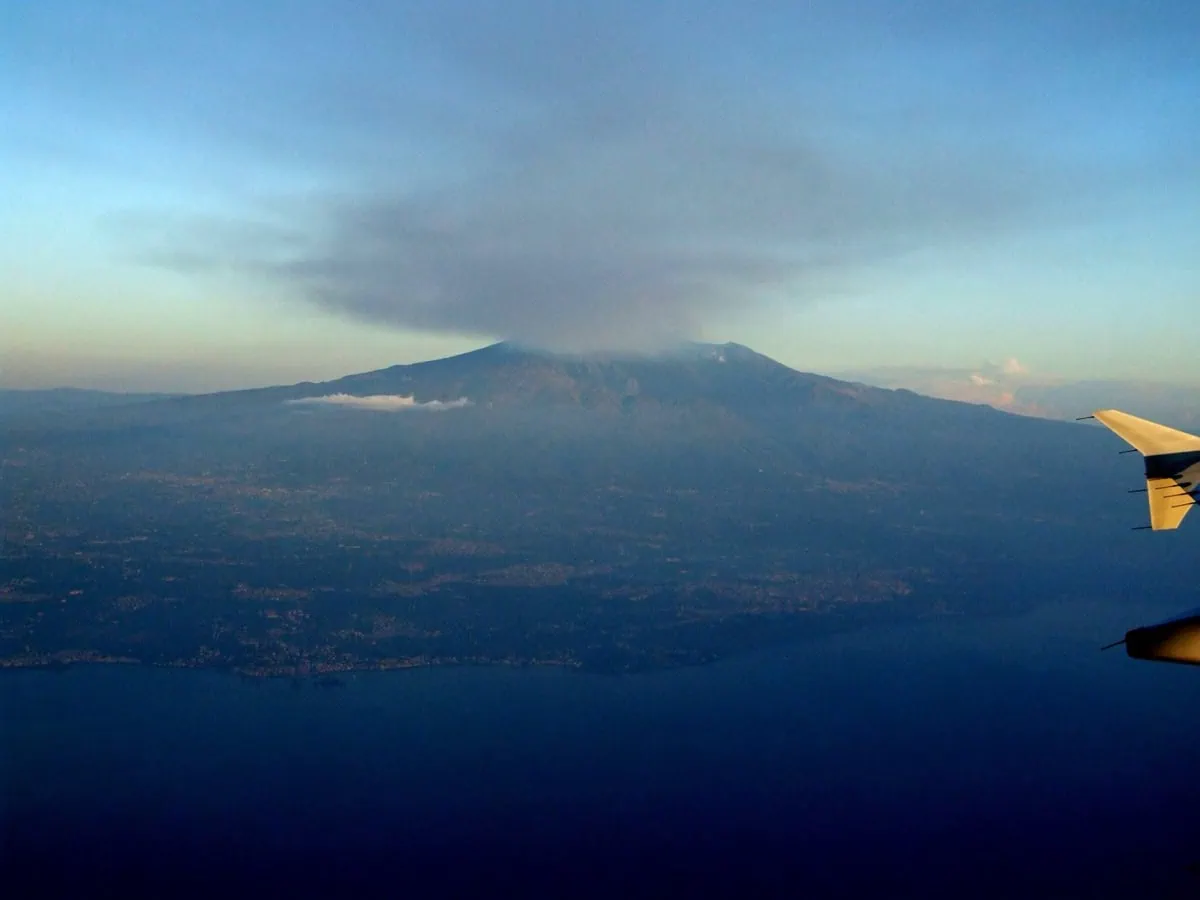
At over 3,350 metres, Sicily’s Etna is the largest and most active volcano in all of Europe. Its height constantly fluctuates depending on the latest eruptions, and the mountain is practically in non-stop activity. According to videos and travellers‘ tales, it’s an utterly elemental place where lava flows regularly alternate with huge ash clouds that occasionally even shut down the nearby airport in Catania.
Etna’s accessibility for tourists is fantastic, though. From the south side, the Funivia dell’Etna cable car takes you up to an impressive 2,500 metres, and from there you can continue even higher by off-road buses. To reach the active summit craters themselves, however, you can only go with a certified mountain guide — going it alone is strictly forbidden.
💡 Tip: Apparently the biggest surprise on Etna is the huge temperature shock. While you’re roasting in thirty degrees down in Catania, up on the volcano the temperature can easily drop to ten degrees with an icy wind blowing. Long trousers and a proper windproof jacket are an absolute must here, even in the middle of a hot summer.
6. Stromboli (Aeolian Islands, Italy)
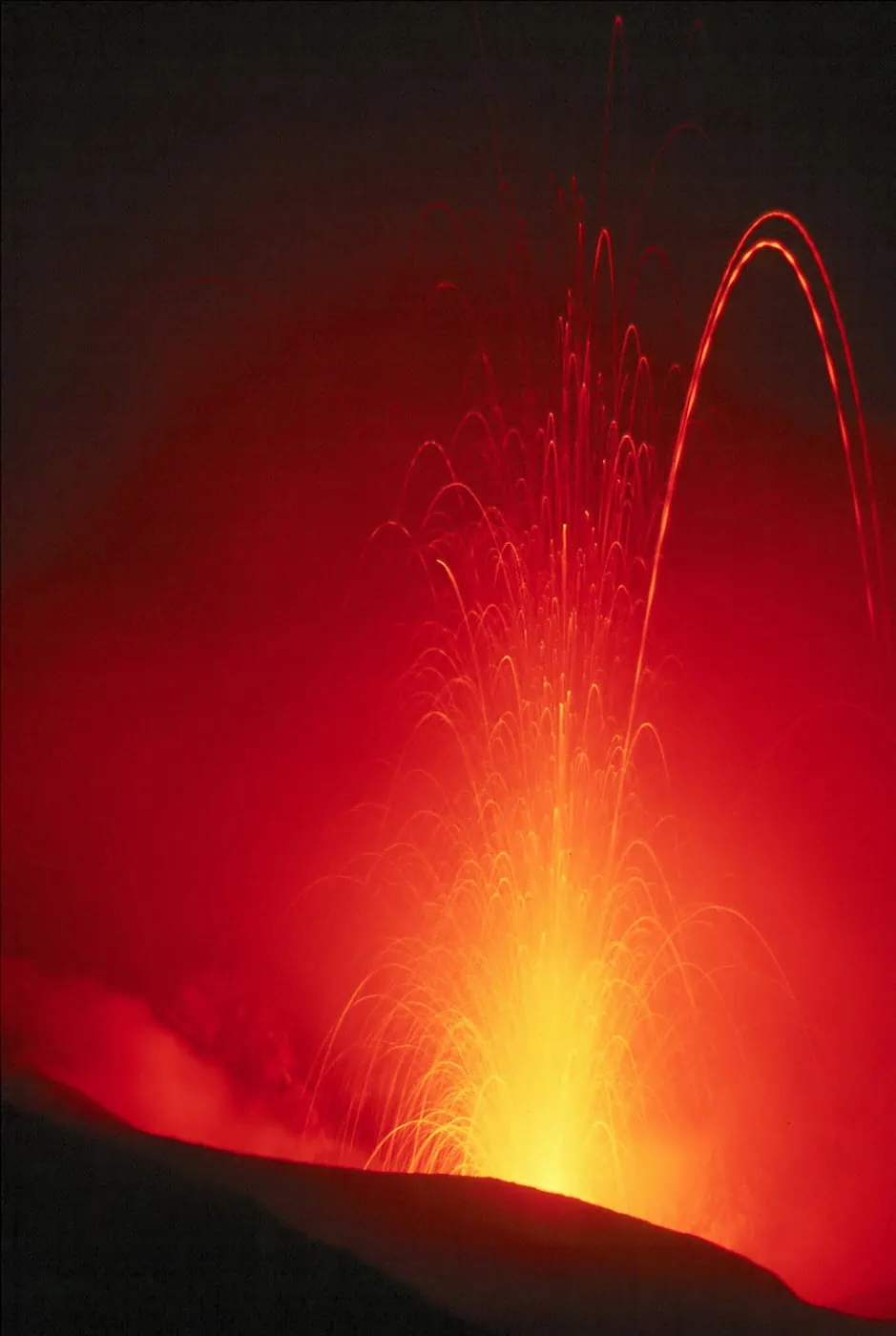
The tiny island of Stromboli in the Tyrrhenian Sea is essentially one big active stratovolcano poking out of the water to a height of 924 metres. This volcano is nicknamed the Lighthouse of the Mediterranean, because its regular fiery explosions have helped sailors navigate since ancient times. Strombolian activity here has been almost continuous for at least the last ninety years, with mild bursts recurring every few dozen minutes.
After stronger eruptions in 2019, the safety rules for climbing were significantly tightened. Currently you can walk freely up to around 290 metres, while higher up you’re only allowed with an authorised guide. The limits change constantly depending on the volcano’s mood, though, so you need to double-check the situation right before you arrive.
💡 Tip: The absolute traveller favourite here is the evening and night-time trips. Whether you set out on a hike at dusk or opt for a scenic boat cruise beneath the Sciara del Fuoco slope, watching glowing chunks of lava shooting into the darkness is said to be a once-in-a-lifetime experience.
7. Santorini (Greece)
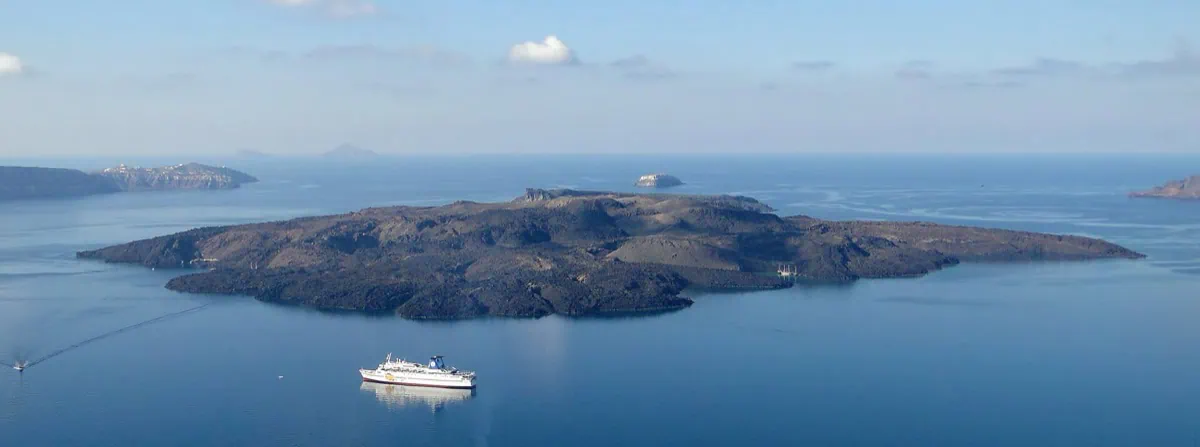
Just about everyone recognises the romantic Greek island of Santorini from photos, but few people realise those gorgeous white villages are balanced right on the edge of a huge flooded caldera. This whole shape formed around 1600 BC during the massive Minoan eruption, which was so gigantic it likely gave rise to the famous legend of lost Atlantis. Today’s active centre is made up of the small black islets of Nea Kameni and Palea Kameni in the middle of the bay.
Very popular boat trips run out to the volcanic cone of Nea Kameni itself. From the port you’re ferried to the island, where you can hike up a dusty path some 130 vertical metres to smouldering fumaroles. There’s a strong sulphurous smell everywhere, and you’ll occasionally come across hot springs you can jump into from the boats for a swim.
💡 Tip: As of 2026 the Greek volcano is officially in a dormant phase, although recent seismic activity gave the authorities a bit of a headache. Don’t forget to bring a hat, plenty of water and, above all, sturdy shoes on the trip. The island is basically just a heap of sharp black lava with absolutely no shade.
8. Eyjafjallajökull (Iceland)
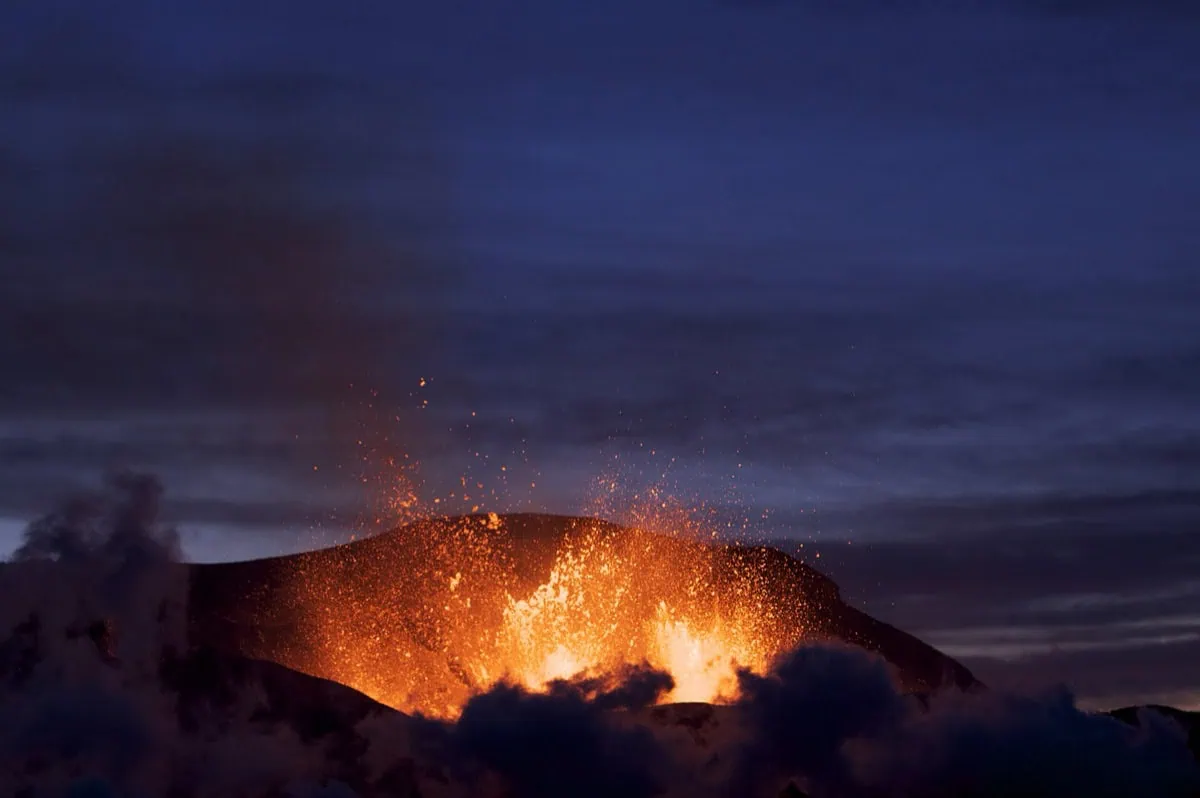
This Icelandic stratovolcano with the utterly unpronounceable name became a literal global celebrity in April 2010. Hidden beneath a massive glacier, the volcano erupted and spewed enormous amounts of extremely fine ash into the atmosphere. That cloud halted almost all air traffic over Europe for several days, grounded over a hundred thousand flights and disrupted the lives of millions of travellers worldwide.
The volcano sits right on the stunning south coast of Iceland, just a short way from the famous Skógafoss waterfall. Ordinary tourists don’t head up to the glacier-covered summit itself — that’s a job for well-equipped expeditions. Far more popular is the renowned Fimmvörðuháls trek, which leads you through beautiful volcanic scenery all the way to the new craters from 2010.
💡 Tip: If you’re driving the main Ring Road, definitely stop at the little Þorvaldseyri visitor centre right beneath the volcano. It was founded by a local farming family whose pastures were buried in ash at the time, and you’ll see fascinating authentic footage from the eruption.
9. Mount Fuji (Japan)
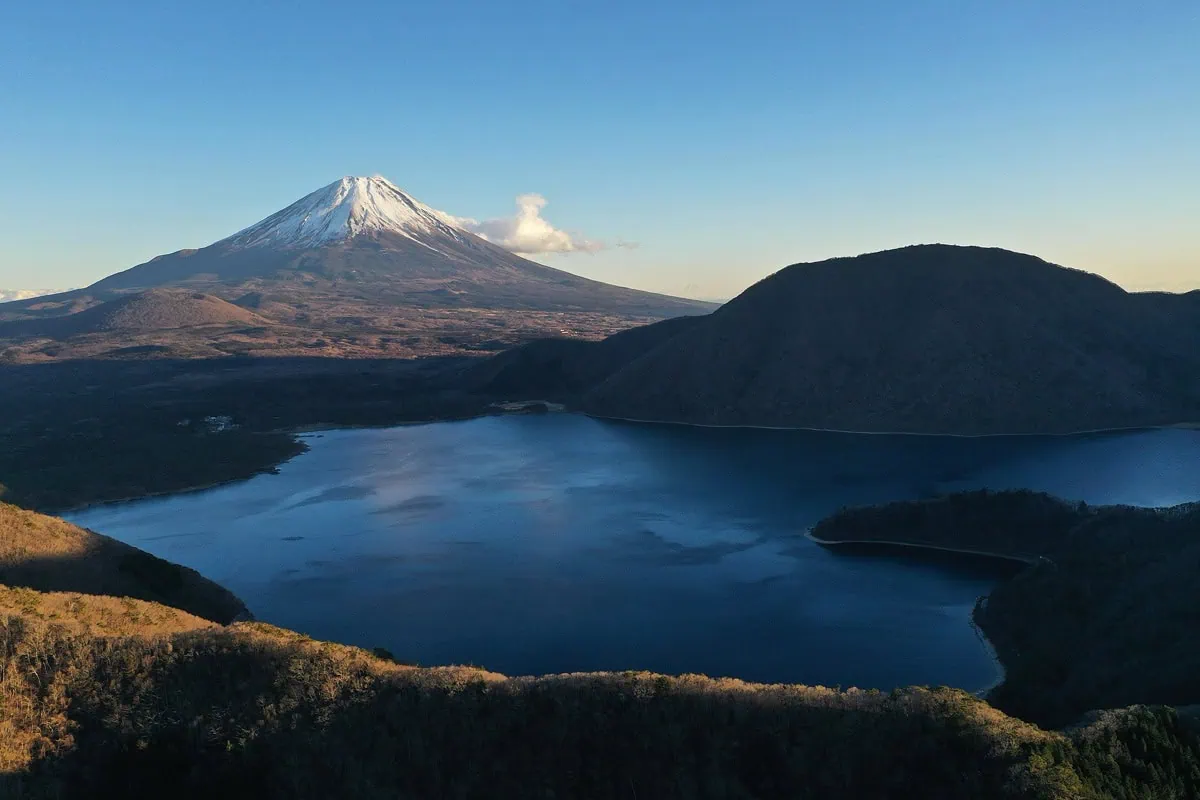
At 3,776 metres, Mount Fuji is Japan’s highest mountain, and its perfectly symmetrical, snow-capped cone is an icon of the entire country. This stratovolcano is still considered active, but it last made itself known in a big way in 1707, when its ash buried the then-capital Edo, today’s Tokyo. Since 2013 the mountain has rightly been a UNESCO World Heritage Site as a sacred place and a source of artistic inspiration.
Climbing Fuji is a huge dream for many travellers, but the rules have tightened considerably recently. The official season only runs from July to early September, and since 2025 there’s a flat fee of 4,000 yen (roughly £22) per person on all access routes. The most popular Yoshida route also has a strict daily limit, and you’ll only be let up with an advance online reservation.
💡 Tip: Travellers most often choose the two-day option. On the first day they set off to a mountain hut, nap for a few hours and then climb to the summit early in the morning to catch the breathtaking sunrise, known as goraikō. The air is quite thin up top, so a slow pace is the key to success.
10. Bromo (Indonesia)
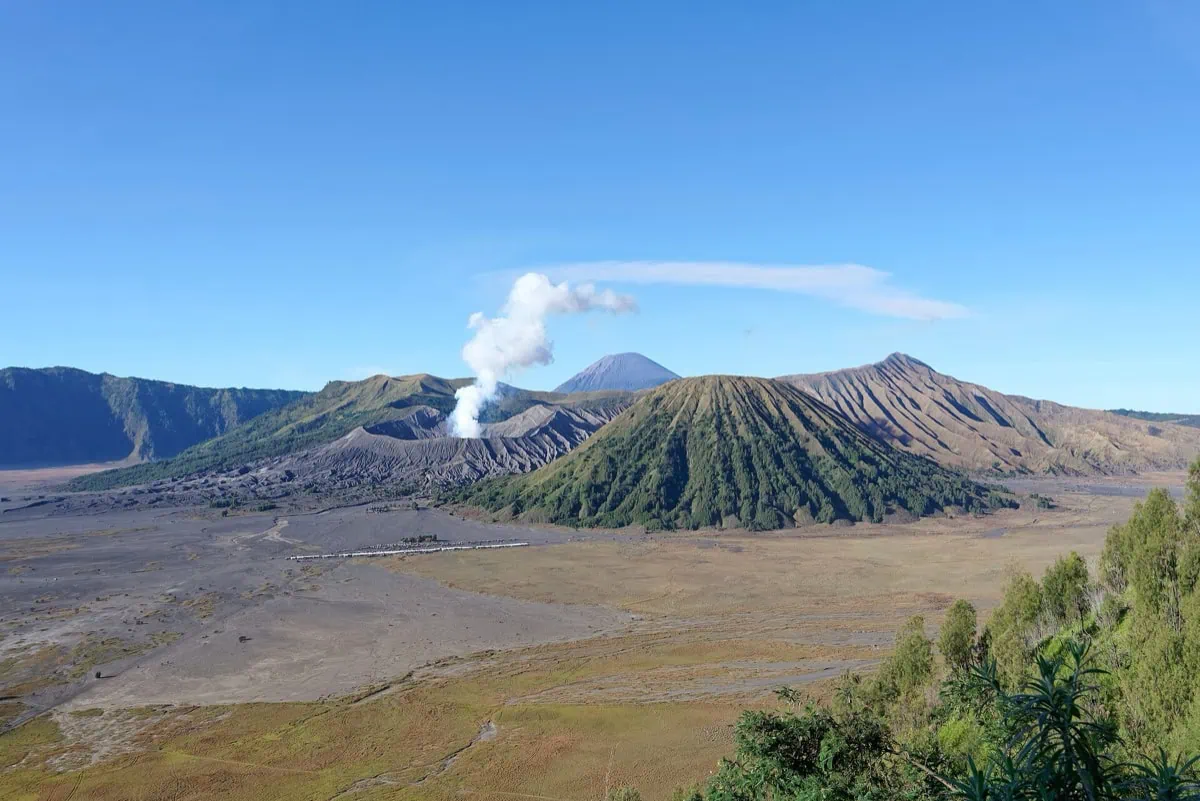
Indonesia’s Bromo volcano on the island of Java offers one of the most beautiful and most photographed natural scenes on the entire planet. This 2,329-metre stratovolcano sits in the middle of the huge old Tengger caldera, whose floor is formed by the so-called Sea of Sand. Bromo is a very active volcano with a constantly rising cloud of sulphurous gases, and small eruptions occur here roughly every two to four years.
The classic visit starts brutally early in the morning. Hired jeeps take tourists up to the Penanjakan viewpoint, from where you watch the magical sunrise over the whole caldera. Then you drive down into the Sea of Sand, followed by a climb up 253 steps right to the rim of the smoking Bromo crater.
💡 Tip: Reviews often warn about the enormous cold at the viewpoint at night. While it’s hot in Java during the day, temperatures in the mountains can easily drop to five degrees before dawn. Bring a warm jacket and a hat, and be prepared to share that best view with dozens of other enthusiasts.
11. Krakatoa (Indonesia)
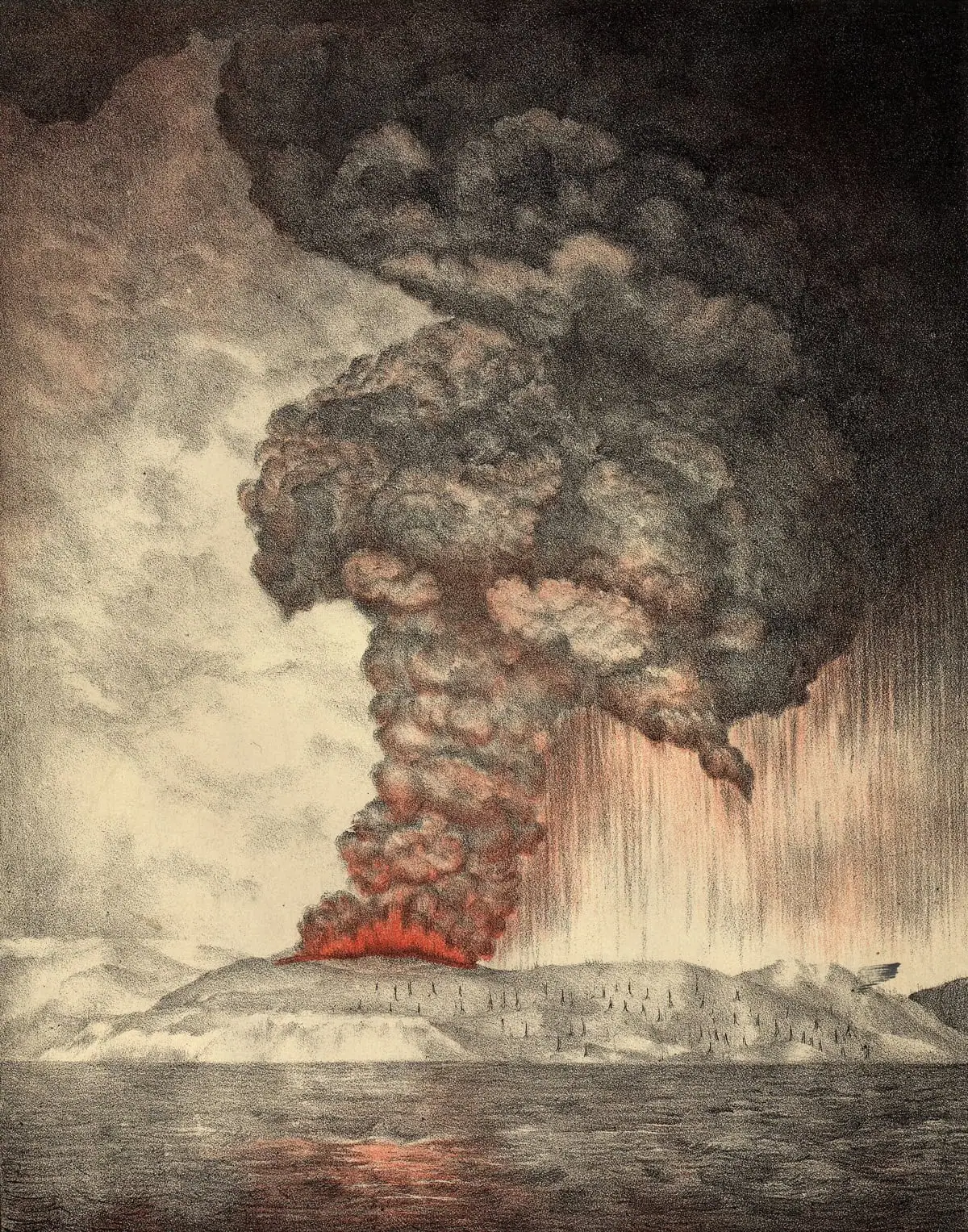
Just about everyone knows the name Krakatoa, because its staggering explosion in 1883 ranks among the most tragic events in modern history. That eruption triggered a giant tsunami that claimed tens of thousands of lives, and the sound of the blast was reportedly heard as far away as Australia. The original island almost vanished, but in 1927 a new volcano called Anak Krakatau — Child of Krakatoa — rose from the sea and has been growing ever since.
As of 2026 this volcano is still extremely active, and Indonesian authorities maintain a strict alert level. Due to the risk and the recent crater collapse in 2018, climbing onto the island itself is strictly forbidden. You can only get to the volcano via organised boat trips that keep a safe distance of several kilometres.
💡 Tip: Even though you won’t set foot on the crater, the boat trips are well worth it. If you take an evening or night-time cruise from Java or Sumatra, with good visibility you have a great chance to watch glowing Strombolian bursts and lava fountains right from the deck — an absolutely unique spectacle.
12. Kilimanjaro (Tanzania)
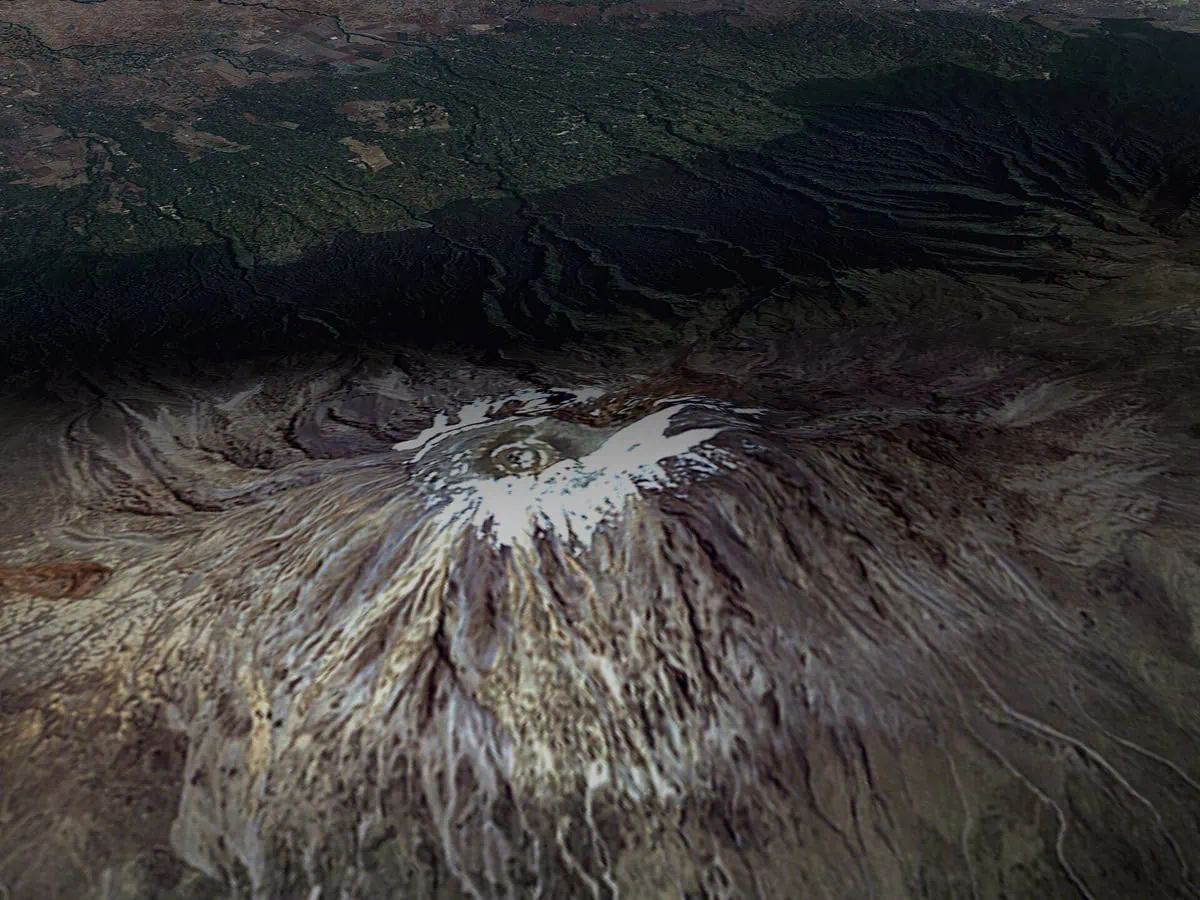
The African giant Kilimanjaro, at 5,895 metres, is not only the highest mountain on the entire continent but also the tallest free-standing mountain in the world. The massif is made up of three volcanic cones, the highest of which, Kibo, is considered a dormant volcano. The last major eruption here happened hundreds of thousands of years ago, but the crater still hosts mildly active fumaroles that prove the mountain hasn’t gone completely cold inside.
A huge draw of Kilimanjaro is that you can reach the summit on an ordinary trek without any technical mountaineering gear. The climb is only permitted with a licensed local guide and a team of porters, though. Along the way you’ll pass through five incredible climate zones, from tropical rainforest to Arctic desert with iconic glaciers.
💡 Tip: The biggest enemy on this mountain isn’t the volcano but the high altitude. Experienced guides will constantly urge you to keep the Swahili pole pole pace, which means slowly, slowly. Longer, seven- or eight-day routes have a far higher success rate thanks to better acclimatisation than the shortest ones.
13. Mount St. Helens (USA)

The American stratovolcano Mount St. Helens in Washington State showed the world its terrifying power on 18 May 1980. That massive explosion is considered the most destructive volcanic event in US history, when the mountain lost nearly 400 metres of its height and a huge horseshoe-shaped crater opened up to the north. Today the volcano is closely monitored, and the devastated surrounding landscape is slowly but surely recovering and turning green.
For lovers of mountain treks it’s a great challenge. The climb to the crater rim is permitted in the summer months but requires a year-round permit that sells out very quickly on government websites. The Monitor Ridge route is fairly demanding, with about 1,370 metres of elevation gain, and the final ascent through loose volcanic scree is reportedly a real slog.
💡 Tip: If you’re heading to the area, remember that the northern Johnston Ridge Observatory viewpoint remains closed as of 2026 due to landslides and won’t reopen until 2027 at the earliest. You can still visit the beautiful volcanic Coldwater Lake or walk the Hummocks Trail full of geological curiosities, though.
14. Yellowstone (USA)
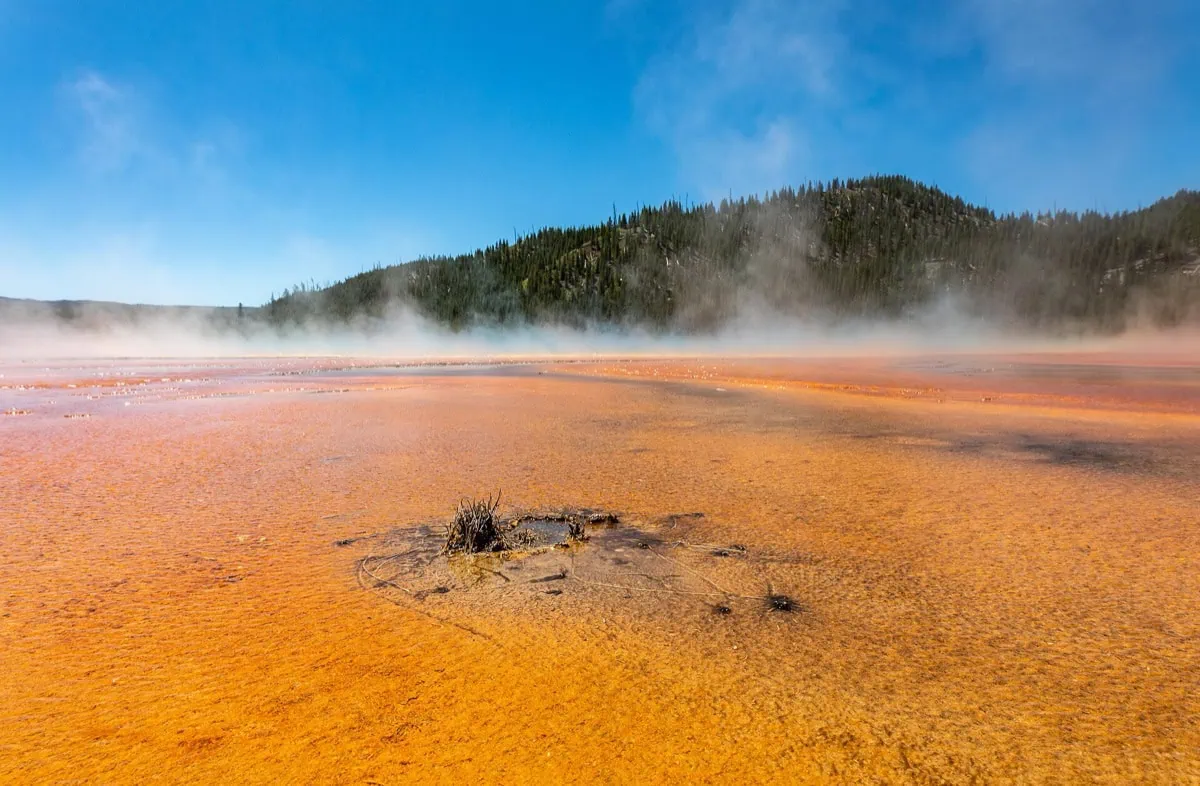
The whole world knows Yellowstone as a stunning national park, but beneath its surface lurks a gigantic volcanic caldera — a supervolcano. This area is fed by an enormous hotspot in the Earth’s mantle, and thanks to it we find roughly half of all the world’s geysers here. The last truly massive eruption took place over 600,000 years ago and shaped today’s park, full of bubbling pools and colourful thermal springs.
Panic often spreads online that Yellowstone is about to blow, but American geologists from the USGS regularly debunk this myth. The annual probability of a supereruption is minuscule, roughly 1 in 730,000, and most of the underground magma is currently in a solid, crystalline state. As of 2026 the alert light is a reassuring green.
💡 Tip: A visit to the park is breathtaking, whether you head to the iconic Old Faithful geyser or the rainbow-hued Grand Prismatic Spring. People agree that the best month to visit is September, when the biggest summer crowds have thinned, the weather is still pleasant, and you have a great chance of spotting wild herds of bison right by the road.
15. Kilauea (Hawaii, USA)
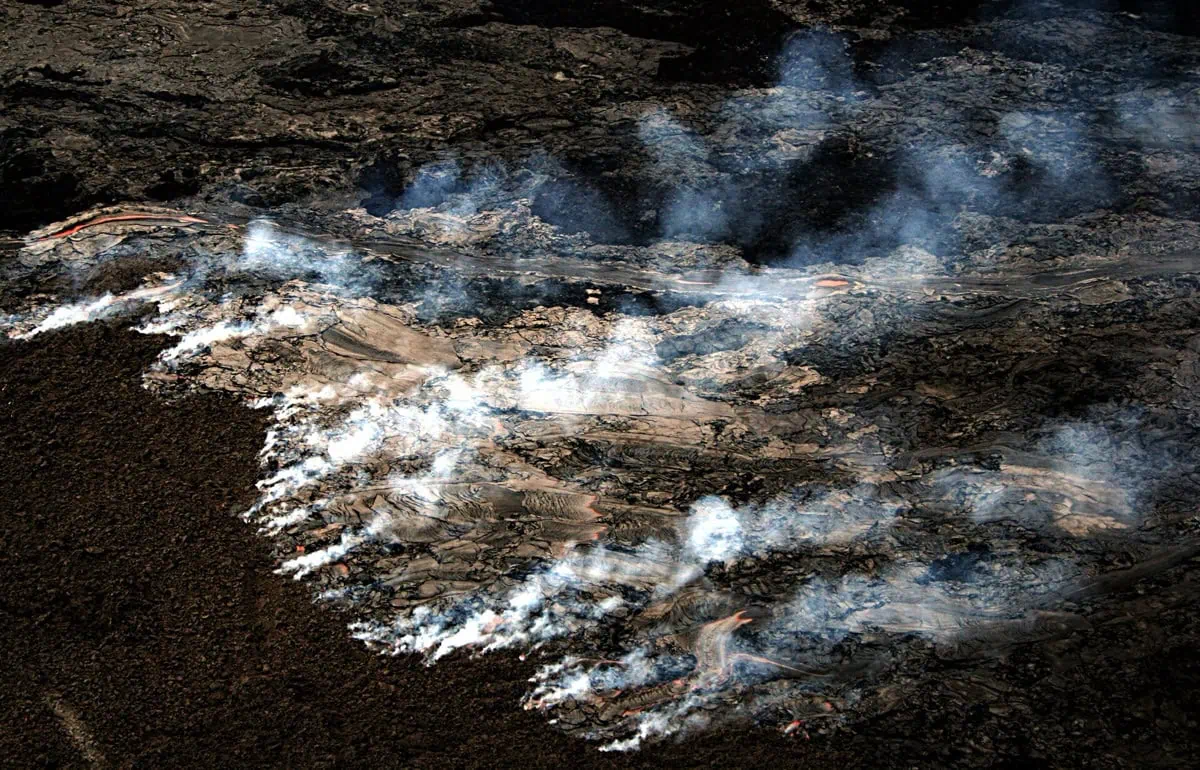
Hawaii’s Kilauea on the Big Island is the embodiment of the fiery Hawaiian goddess Pele and ranks among the most active volcanoes on our entire planet. It’s a typical shield volcano that doesn’t erupt explosively but is formed by calmly flowing, glowing basaltic lava. That’s precisely why it’s one of the few places in the world where volcanic eruptions can be observed from a relatively safe distance.
The situation in Hawaiʻi Volcanoes National Park changes literally from week to week. Since late 2024 there’s been a series of episodic eruptions right in the Halemaʻumaʻu crater, where days of gorgeous lava fountaining alternate with calmer pauses. Travellers can watch this stunning natural fireworks display from official viewpoints dotted around the caldera rim.
💡 Tip: You’ll experience the greatest magic if you head to the viewpoints while it’s still dark. People on forums recommend arriving early in the morning before dawn, when the glowing lava reflects beautifully on the sky and you avoid the evening crowds. Always check the current warnings for volcanic gases in advance, though — in Hawaii they’re called vog.
16. Cotopaxi (Ecuador)
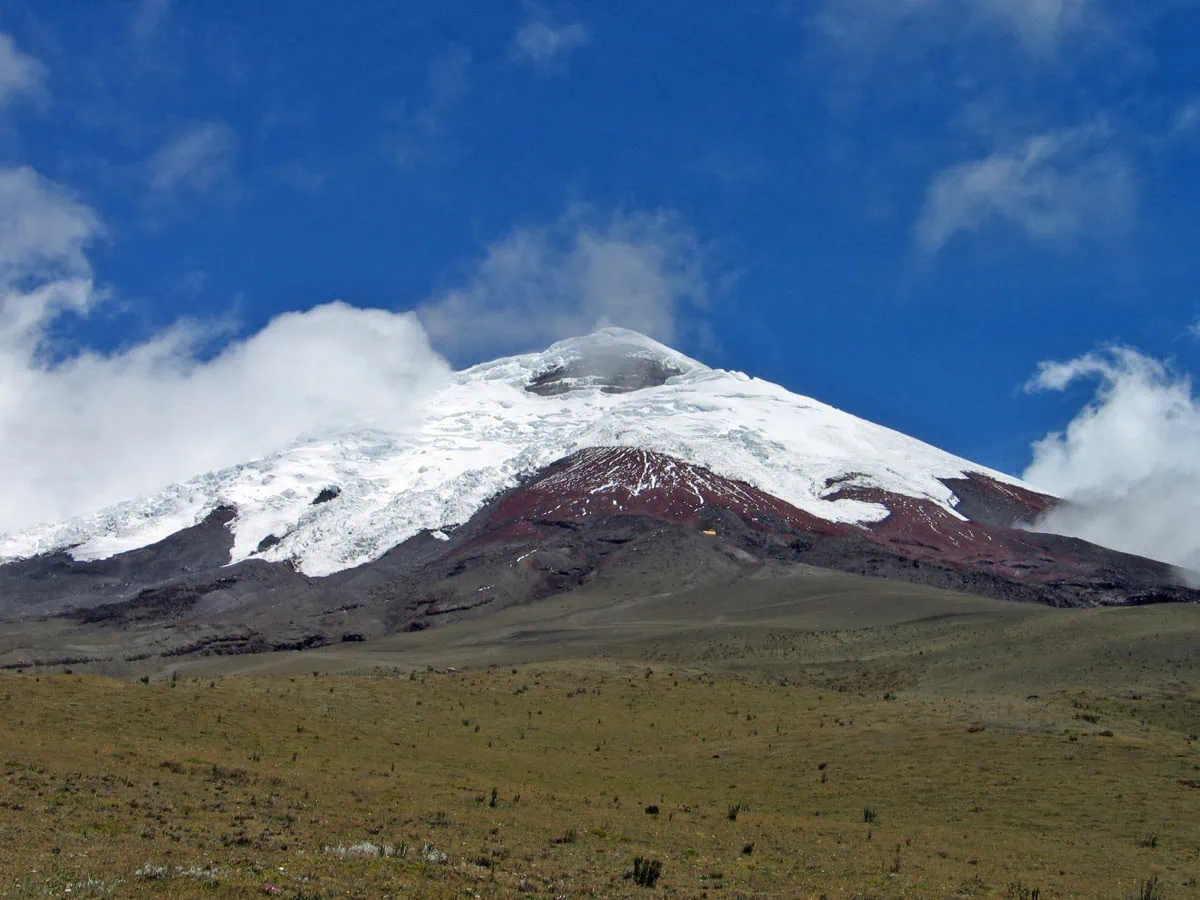
This Andean stratovolcano lying just south of Quito looks like it was cut straight out of a picture book. Cotopaxi has a near-perfectly symmetrical cone covered year-round in equatorial glaciers, and it rises to an incredible 5,897 metres above sea level. It’s one of the highest active volcanoes on the planet, and after phases of increased activity in 2015 and 2023, the mountain has settled back to the lowest alert level as of 2026.
Climbing Cotopaxi is a huge mountaineering challenge and definitely no afternoon stroll. It’s a full-on high-altitude glacier trek where you need crampons, an ice axe and a rope. On top of that, you can’t set off alone — Ecuadorian authorities strictly require the presence of a certified mountain guide from the ASEGUIM association.
💡 Tip: Ascents traditionally begin around midnight from the mountain hut so you reach the summit just after sunrise and make it back before the afternoon sun warms up the glacier. If you don’t feel up to such an extreme, Cotopaxi National Park itself is beautiful from below, and you’ll take particularly stunning photos at the Limpiopungo lagoon.
A Handy Comparison Table
| Volcano name | Country | What makes it special | Best time to visit |
|---|---|---|---|
| Fagradalsfjall | Iceland | Fresh lava fields from 2021–2023 | May–September (eruptions year-round) |
| Teide | Spain | Lunar landscape, Spain’s highest mountain | April–June, September–October |
| Puy de Dôme | France | Panoramic view over a chain of dormant volcanoes | May–October |
| Vesuvius | Italy | Buried Pompeii, views of the Bay of Naples | April–June, September–October |
| Etna | Italy | Most active in Europe, cable car to 2,500 m | April–October |
| Stromboli | Italy | Regular explosions, night-time viewing | May–September |
| Santorini | Greece | Huge caldera with white houses on the edge | May–October |
| Eyjafjallajökull | Iceland | Closed Europe’s skies in 2010 | June–September |
| Mount Fuji | Japan | Perfectly symmetrical sacred cone | July–early September |
| Bromo | Indonesia | Sunrise over a sandy caldera | April–October |
| Krakatoa | Indonesia | Terrifying history, a new crater forming | April–October |
| Kilimanjaro | Tanzania | Africa’s highest mountain, trek without climbing | January–March, June–October |
| Mount St. Helens | USA | Open crater after the 1980 explosion | Late June–October |
| Yellowstone | USA | Supervolcano hiding half the world’s geysers | September |
| Kilauea | USA | Easy viewing of flowing lava in the crater | Year-round |
| Cotopaxi | Ecuador | Symmetrical glacier peak in the Andes | June–August, December–January |
What Is a Volcano and How Does It Form
A volcano isn’t just an ordinary hill — it’s actually the planet’s safety valve, through which heat and material from deep in the Earth’s mantle reach the surface. Surprisingly, the mantle isn’t a liquid ocean of lava, as we’re often taught at school, but rather hot, solid rock. For a volcano to form, this rock has to melt into magma, which happens in three main ways.
The first way is subduction, where one tectonic plate slides beneath another. The descending plate carries water with it, which lowers the melting point of the surrounding rock at depth and creates magma. This is how the famous Ring of Fire around the Pacific Ocean formed. The second way is hotspots, where an anomalously hot plume of material rises from the depths and burns through the crust like a blowtorch, which is typical of Hawaii. The third type is rift zones, where plates pull apart and the drop in pressure allows rock to melt — something we can see beautifully in Iceland.
There’s also a big difference in what a volcano is made of. A crucial role is played by the silica (SiO₂) content, which determines the magma’s viscosity. Basaltic lavas, like those in Hawaii, are low in silica, very fluid and form flat shield volcanoes with gentle outpourings. Rhyolitic and andesitic magma, on the other hand, is thick, traps volcanic gases inside and forms steep stratovolcanoes that erupt explosively and very dangerously. The strength of these explosions is then measured using the VEI (Volcanic Explosivity Index) on a scale from zero to eight.
Volcano Records and Fun Facts
When it comes to numbers and records, volcanoes can be seriously staggering. The world’s highest volcano is the Andean giant Ojos del Salado, measuring roughly 6,893 metres above sea level. Although mildly active fumaroles can be found on it, the mountain has been dormant for over a thousand years and poses no immediate danger. The largest active volcano, by contrast, is Hawaii’s Mauna Loa, whose enormous shield mass makes up a huge portion of the entire Big Island and reaches kilometres deep beneath the ocean surface.
Written into history in the darkest ink is Indonesia’s Tambora, whose explosion in 1815 was the deadliest in history. The gigantic blast and subsequent famine killed more than 70,000 people, and the ejected ash caused global cooling that went down in history as the famous „year without a summer“.
A chapter of their own are the supervolcanoes capable of producing an eruption of the highest VEI 8 level. The most famous of these is America’s Yellowstone, but scientists reassure us that eruptions on such a scale happen on Earth only once every few tens of thousands of years on average. According to current data from 2026, no known supervolcano shows any signals of an approaching global catastrophe.
Where to Next
If you’re fascinated by volcanic geology and want to explore Europe’s volcanoes in more detail, we’ve put together several in-depth guides on the blog. Volcanoes are utterly different depending on which geological fault line you happen to be standing on, and each destination offers a completely different type of experience.
If active volcanism and fresh lava appeal to you, definitely check out our article on how volcanoes appear in Iceland and Reykjanes. For lovers of dormant green craters and family outings, we’ve written up the experiences the Auvergne volcanoes in the heart of France have to offer. And if you’re longing for a lunar landscape bathed in Spanish sunshine, don’t miss our detailed guide to everything Tenerife holds and how to secure that dream Teide permit. And to all history buffs, we recommend the article that walks you through the ruins of Pompeii right beneath majestic Vesuvius.
Frequently Asked Questions
When planning volcano trips, people often ask about both practical and scientific details. Here’s a quick overview of the most common questions to help you find your way around the fiery world of volcanoes.
Which is the highest volcano in the world?
The highest volcano in the world is Ojos del Salado, which lies on the border of Chile and Argentina and measures approximately 6,893 meters above sea level. Today, this Andean giant is mostly dormant, although it still shows slight fumarolic activity near the summit in the form of rising steam.
Which is the largest volcano in the world?
The largest active volcano is the Hawaiian shield volcano Mauna Loa with an incredible volume of around 75,000 km³. The largest formation by volume overall is probably the Hawaiian Pūhāhonu, which today is mostly hidden beneath the surface of the Pacific Ocean.
How many active volcanoes are there in the world?
According to the Global Volcanism Program database, there are approximately 1,350 volcanoes on planet Earth that have been active in the last ten thousand years. In any given year, typically around fifty to seventy of them erupt, and at any moment, about twenty are actively erupting.
What happens when Yellowstone erupts?
„`html
A supereruption would indeed have a massive global impact on climate, but scientists from the USGS assure us that Yellowstone is definitely not overdue in any way. The annual probability of a massive eruption is negligible, and as of 2026, the lowest, green threat level applies.
„`
Can you safely climb Vesuvius?
Yes, visiting Vesuvius today is very easy and safe. By car you can reach an altitude of about a thousand meters, and from there a thirty-minute walk awaits you, but be careful, you must buy tickets exclusively online in advance for a specific time.
Can you climb Sicily’s Mount Etna?
Definitely yes. You can comfortably reach an altitude of around 2,900 meters by cable car and terrain vehicles. However, if you want to see the active summit craters directly, you must hire a certified mountain guide.
When is the best time to climb Mount Fuji?
„`html
You’re only allowed to climb Japan’s Mount Fuji during the official summer season, which runs from July to early September. From 2025 onwards, a mandatory fee of 4,000 yen is in place on all routes and advance online booking is required.
„`
Which volcano stopped air traffic in Europe?
It was the Icelandic volcano Eyjafjallajökull that erupted in spring 2010, spewing a massive cloud of fine ash. This ash forced authorities to close airspace for several days, affecting more than ten million travelers worldwide.