You’re standing in the middle of a rainforest, metres-long curtains of moss hanging from every branch, the air thick with the scent of damp earth, and it’s so quiet you can hear your own heartbeat. Then you turn around — and there, between the ferns, stands an enormous Roosevelt elk, calmly sizing you up as if you’ve just wandered into its living room. And honestly… that’s exactly what you’ve done. 😅
Olympic National Park is a place that forces you to stop in your tracks. Literally — because within a single park you’ll find three completely different ecosystems: a moss-draped rainforest that looks like something out of a fairy tale, alpine meadows with views of snow-capped peaks, and a wild Pacific coastline littered with driftwood that could pass for a mad sculptor’s installation. Lukáš and I drove here from Seattle for a few days and, honestly, a few days wasn’t enough. If we could, we’d have stayed a week.
In this article you’ll find a complete guide to Olympic National Park — from when to visit and how to get there, through 15 tips on the best spots and trails, to where to stay, where to eat, and how much it all costs. Let’s dive in.
TL;DR
- Olympic National Park sits on the Olympic Peninsula in Washington State, roughly 2–3 hours from Seattle (including a ferry crossing).
- The park is unique because it combines 3 ecosystems in one — temperate rainforest, alpine mountains, and wild Pacific coastline.
- The best time to visit is July and August — the least rain, with roads and trails fully open. Spring and autumn have their own charm, though.
- The entrance fee is $30 per vehicle (about £24), or $80 for an annual America the Beautiful Pass that covers every national park in the US.
- To properly explore the park, plan for at least 3–4 days, ideally a week.
- Accommodation in and around the park sells out months in advance during summer — book as early as possible.
- Hoh Rain Forest, Hurricane Ridge, Rialto Beach, and Sol Duc Hot Springs are absolute must-sees.
- You’ll almost certainly spot Roosevelt elk — there are over 5,000 of them here. No grizzly bears live in the park, but black bears do.
- Don’t expect a foodie paradise — restaurants inside the park are scarce, so we recommend bringing your own supplies.
- A car is essential — there’s virtually no public transport within the park. The road around the peninsula stretches over 300 miles.
The full destination guide: USA Travel Guide — guide and what to see
When to visit Olympic National Park and how to get there
Olympic National Park is open year-round, but your experience will vary dramatically depending on when you arrive. This is, after all, one of the rainiest corners of the US — the Hoh Rain Forest receives over 3.5 metres of rainfall a year (that’s not a typo 😅). So let’s break down the best time to visit and how to actually get here.
Best time to visit
July and August are the gold standard. It’s relatively dry (by local standards), temperatures hover around 20–25 °C at lower elevations, and most roads and trails are open — including Hurricane Ridge Road, which is typically closed in winter due to snow.
If you’re thinking of visiting Olympic National Park in April, expect snow still lingering on the mountains, some roads potentially closed, and more frequent rain. On the flip side, the rainforest is even more beautiful in the rain (and there are far fewer visitors). May and June are a solid compromise — nature is waking up, waterfalls are at their most powerful, and the alpine meadows start to bloom.
September and October bring gorgeous autumn colours and thinner crowds. Plus, if you’re lucky with the weather, September can actually be drier than summer.
Winter (November–March) is for the adventurous — it rains, there’s deep snow in the mountains, but if you love solitude and atmosphere, the forests shrouded in mist are utterly magical. Hurricane Ridge even transforms into a small ski area in winter.
How to get to Olympic National Park
The park sits on the Olympic Peninsula, west of Seattle. Here are the main routes:
From Seattle by car + ferry — the most convenient option. Hop on a Washington State ferry from downtown Seattle (Pier 52) to Bainbridge Island — the crossing takes 35 minutes and it’s an experience in itself (views of the Seattle skyline, Mount Rainier in the background, coffee in hand… 😊). From Bainbridge, it’s another 1.5–2 hours driving west. The ferry costs around $10 per car one way.
From Seattle the long way round — if you’d rather not wait for the ferry, you can drive south on I-5 and then take Highway 101 via Olympia. It takes about 3 hours, but you’re going around the entire sound.
From Portland — roughly 4–5 hours by car via Olympia.
From the UK, you’ll want to fly into Seattle-Tacoma International Airport (SEA). Several airlines offer direct routes from London Heathrow — British Airways and Virgin Atlantic both fly nonstop, and you can sometimes find good deals with connecting flights via Icelandair or Norwegian. From there, a rental car is absolutely essential. Lukáš and I have had great experiences with DiscoverCars, which we use all over the world — it compares prices across all providers and the insurance is transparent. The park has no public transport between its main areas and the distances are huge.
Entrance fee and America the Beautiful Pass
The Olympic National Park entrance fee is $30 per vehicle (about £24) for 7 days. However, if you’re planning to visit other national parks in the US too (and you should!), grab an America the Beautiful Pass for $80 (about £64) — it’s valid for a year and covers entry to all 63 national parks plus hundreds of other federal recreation areas. Ours paid for itself in a single trip.
You can buy the pass at the park entrance or online from the NPS website.
Where to stay and how much Olympic National Park costs
Olympic National Park is enormous and doesn’t have a single central “gateway” — the places you want to see are scattered across the entire peninsula. Where you stay depends on what you want to cover. The golden rule: book as early as possible, especially in summer. Popular lodges inside the park sell out six months or more in advance.
Accommodation inside the park
Lake Crescent Lodge — a historic lodge dating back to 1915, right on the shore of turquoise Lake Crescent. The rooms are simple, but the location is priceless. Prices start around $200–280/night (roughly £160–225). Book months ahead.
Sol Duc Hot Springs Resort — rooms and cabins close to the hot springs. Prices around $200–300/night (£160–240). Ideal if you want to mix hiking with relaxation.
Kalaloch Lodge — perched on bluffs above the Pacific coastline. Rooms from $200/night, oceanview cabins from $300/night.
Log Cabin Resort (Lake Crescent) — a more budget-friendly option with cabins from around $120/night.
Accommodation in nearby towns
Port Angeles — the most practical base. It sits right by the northern entrance to the park, has shops, restaurants, petrol stations, and a decent range of accommodation from motels to Airbnbs. Prices around $120–200/night (£95–160). From here, Hurricane Ridge is 20 minutes away and the Hoh Rain Forest about an hour.
Forks — a small town on the western side of the peninsula, made famous by the Twilight saga (yes, that Twilight 😅). It’s an ideal base for the Hoh Rain Forest, Rialto Beach, and Ruby Beach. Budget accommodation starts around $80/night.
Sequim — a quieter, more low-key alternative to Port Angeles, known as the “Lavender Capital” of the US. It’s drier than the rest of the peninsula thanks to the rain shadow effect.
Camping
The park has 14 campgrounds and camping here is fantastic. Most sites cost $22–28/night (about £18–22). Some operate on a first-come-first-served basis, while others can be reserved through Recreation.gov.
Our recommendations:
- Hoh Rain Forest Campground — falling asleep in the heart of a rainforest, beneath the canopy of giant spruces. Magical.
- Kalaloch Campground — right on the bluffs above the ocean. You drift off to the sound of waves.
- Sol Duc Campground — close to the hot springs and stunning trails.
How much does Olympic National Park cost — budget for 4 days for two
- Entrance fee: $30 (or $80 for an annual pass)
- Accommodation (4 nights, motel in Port Angeles): $600–800
- Car rental (4 days): $150–250
- Petrol: $60–80 (distances are big!)
- Food (mix of restaurants and own supplies): $200–300
- Activities (hot springs, kayak): $50–100
Total for two for 4 days: roughly $1,100–1,600 (£880–1,280), or about £440–640 per person. Camping can save you a significant chunk — knock off $400–500 on accommodation easily.
15 best things to see and do in Olympic National Park
Olympic National Park is so diverse it feels like driving through three different countries in a single day. Morning in a rainforest, afternoon on an alpine meadow, evening on a wild Pacific beach. Let’s walk through 15 things to see and do — from the legendary Hoh Rain Forest and the views at Hurricane Ridge to the hot springs at Sol Duc.
1. Hoh Rain Forest — the greenest place I’ve ever been
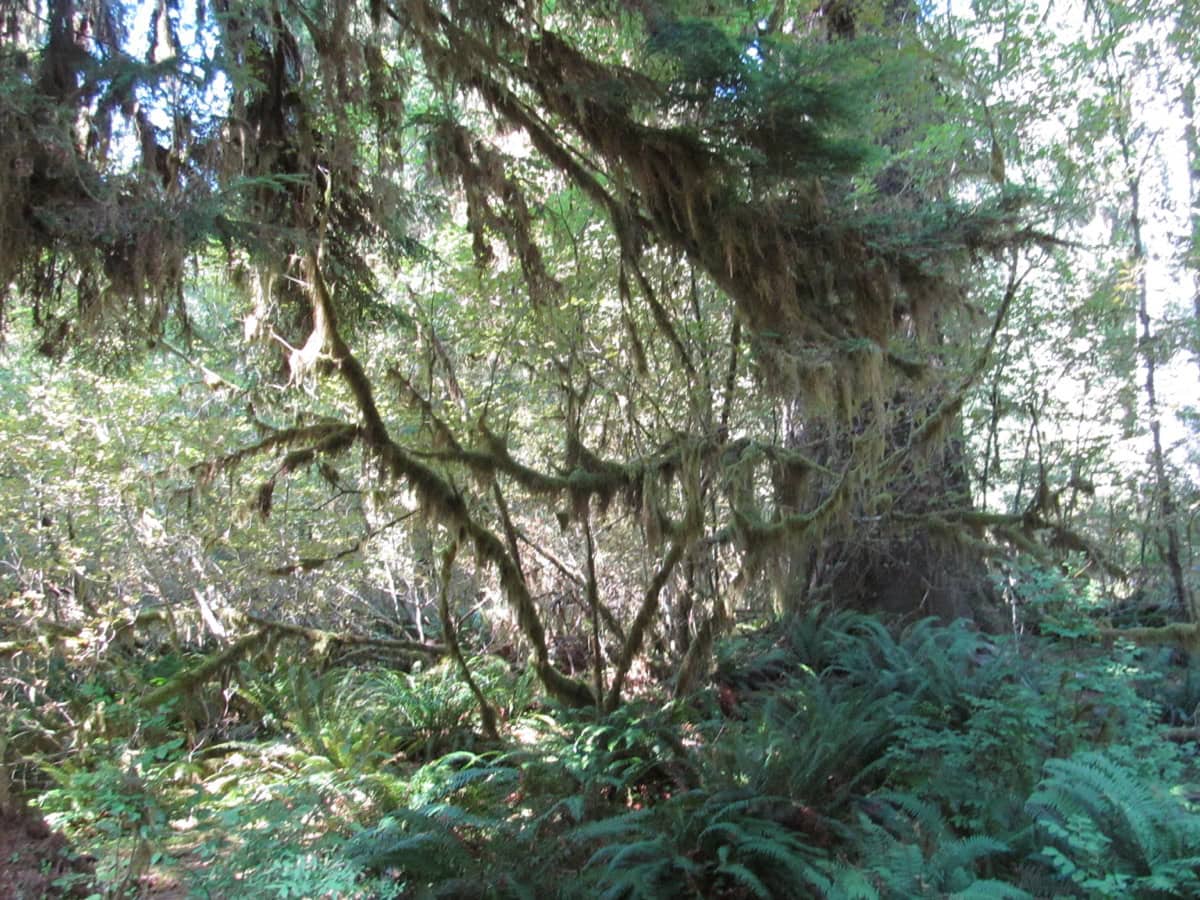
This is the place that made me want to visit Olympic National Park in the first place. And it exceeded every expectation. The Hoh Rain Forest is one of the largest temperate rainforests in the world and looks like a set from Lord of the Rings — giant Sitka spruces and bigleaf maples draped in thick green moss, ferns taller than you, and light filtering through the canopy like stained glass in a cathedral.
The Hall of Mosses Trail is a must — an easy 0.8-mile loop that takes you through the most photogenic stretch of the forest. The moss curtains hanging from the trees are so long they literally bend the branches towards the ground. It’s magical and completely undemanding — anyone can do it.
If you have more time, walk the Spruce Nature Trail (1.2 miles), which leads to the Hoh River where, with a bit of luck, you’ll spot Roosevelt elk right by the water. We counted seven and Lukáš literally forgot to breathe. 😁
Practical tip: Arrive early in the morning (by 8:00 at the latest in summer), because the Hoh Rain Forest car park is small and full by about 10:00. The drive from Port Angeles takes roughly 1.5 hours. And remember — it really does rain a lot here, so a quality waterproof jacket is essential even if the sun is shining when you set off.
2. Hurricane Ridge — jaw-dropping views
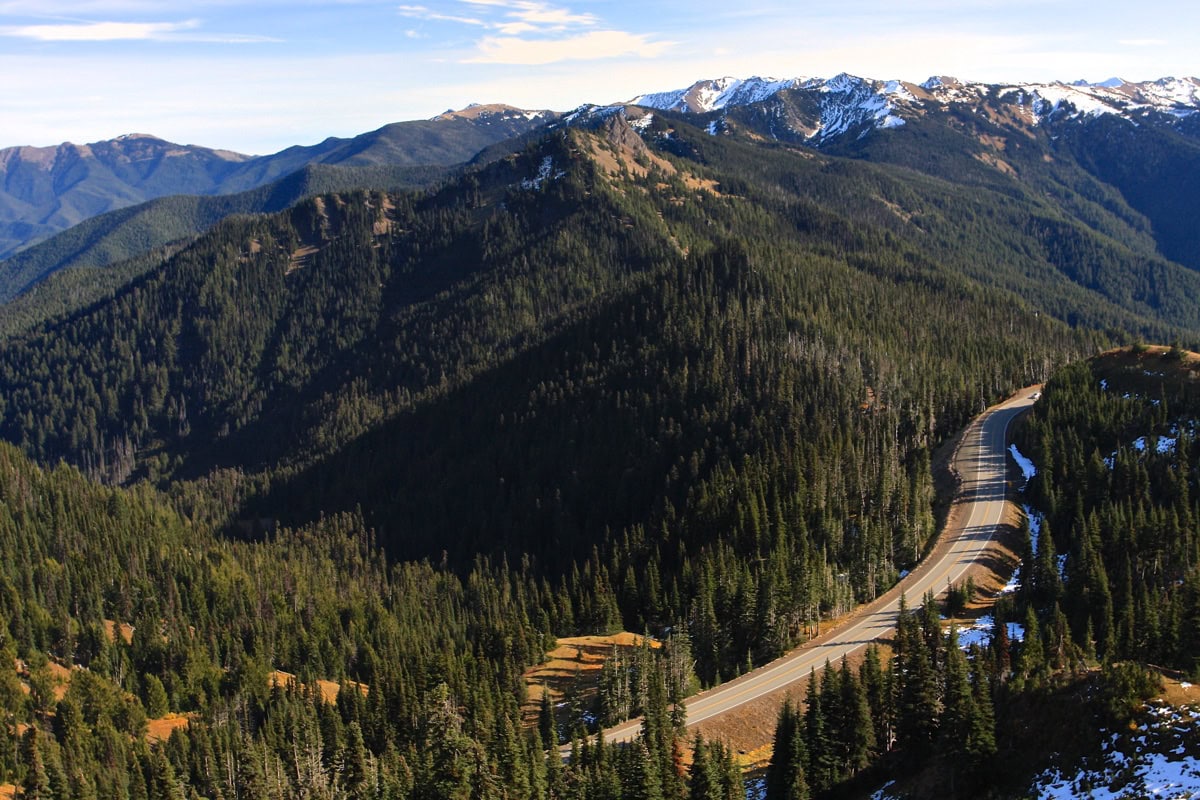
If the Hoh Rain Forest is the heart of the park, Hurricane Ridge is its crown. From Port Angeles you wind up a twisting 17-mile road, and within 45 minutes you’re at 5,200 feet with a panoramic view of the Olympic Mountains, Mount Olympus, and — on a clear day — Canada and Vancouver Island.
The Hurricane Ridge Visitor Center is the perfect starting point — check out the exhibits, grab a coffee, then hit one of the trails. Hurricane Hill Trail (3.2 miles round trip) is the most popular and deservedly so — you climb along a ridge with 360° views of mountains, glaciers, and the Strait of Juan de Fuca to the north. The trail is moderately challenging (about 700 ft of elevation gain), but most people can manage it.
For families or less experienced hikers, there’s the Cirque Rim Trail — a short, easy loop right from the Visitor Center with views over the glacial valley.
Heads up: Hurricane Ridge Road is often closed in winter or only open at weekends (depending on snow conditions). In summer it’s open daily. Check the current status on the NPS website. And yes, it really is windy up on the ridge, as the name suggests — dress in layers.
3. Rialto Beach — driftwood sculptures carved by the ocean
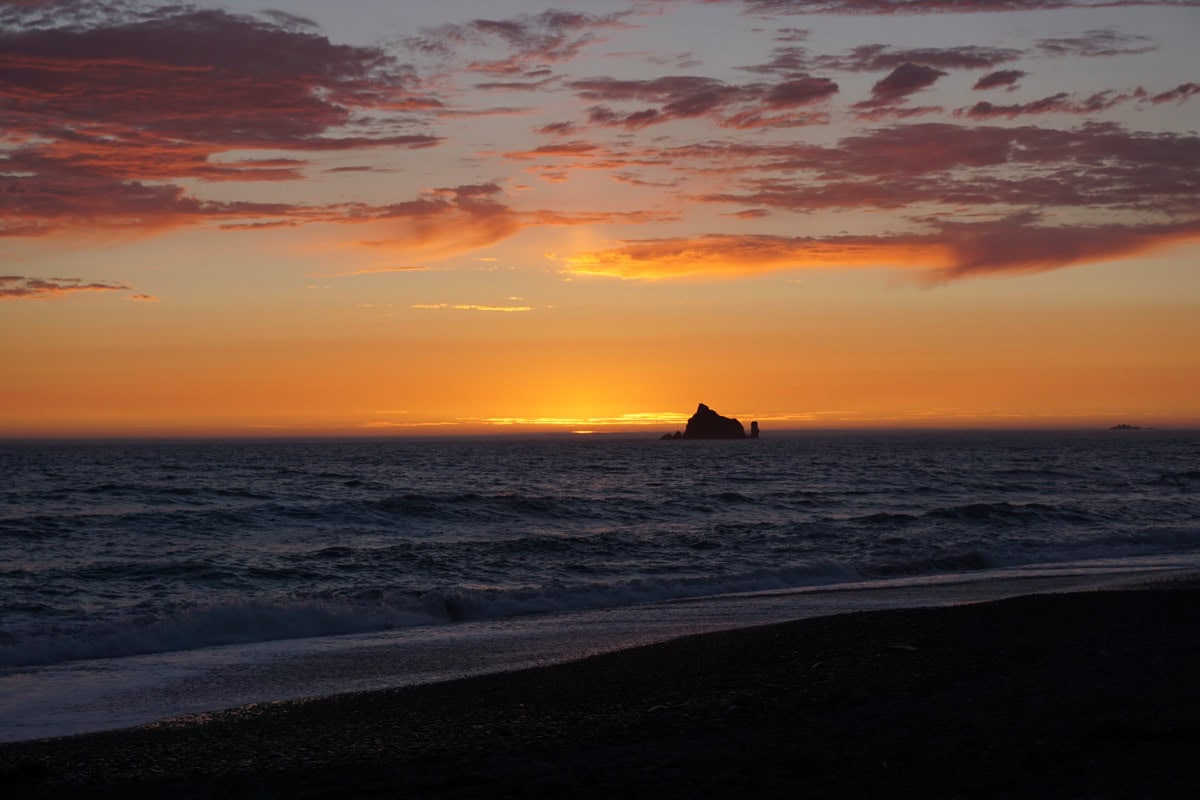
The Pacific coastline of Olympic National Park is a completely different world. Rialto Beach is probably the most photographed beach in the park and you’ll understand why the moment you step onto it — miles of driftwood in every imaginable shape and size, towering sea stacks rising from the waves, and surf crashing with a force you can feel in your chest.
From the car park, it’s literally a few steps to the beach. If you fancy a short trek, head north along the coast to Hole-in-the-Wall — a natural rock arch carved into the cliff by the ocean. It’s about 1.5 miles along the beach (one way) and only passable at low tide, so check the tide tables on the NPS website beforehand. At low tide you’ll find anemones, starfish, and tiny crabs in the rock pools.
Practical tip: The beach is stony and the driftwood slippery — shoes with good grip are a must. Even in summer, a cold wind blows off the ocean, so bring a hat. If you’re planning longer coastal hikes, quality hiking boots are well worth it.
4. Ruby Beach — the wildest beach on the coast
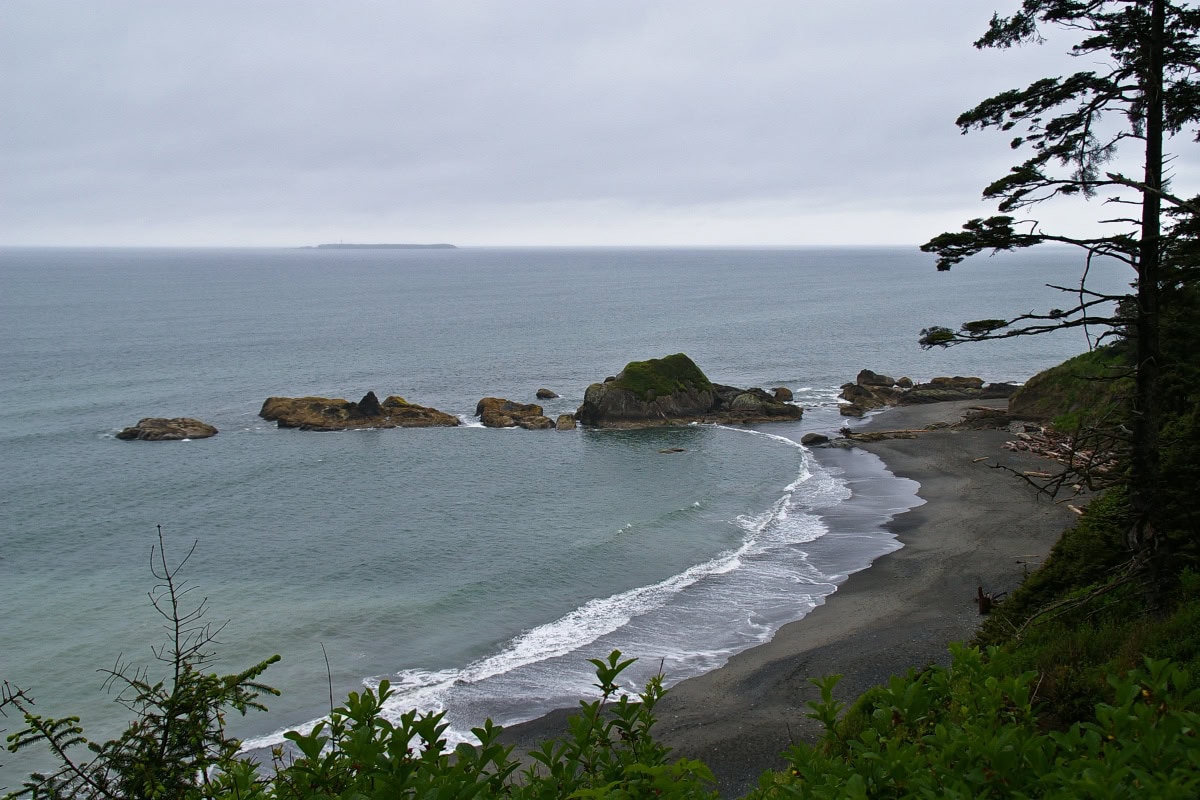
Ruby Beach is Rialto Beach’s sister, but with a different vibe — slightly smaller, more intimate, and with iconic sea stacks that are even more dramatic here. The beach gets its name from the ruby-coloured garnet crystals mixed into the sand (I’ll admit, you have to look pretty hard 😅).
A short trail from the car park (about 200 metres) drops you onto a beach strewn with enormous logs, sepia-toned rocks, and a view of Abbey Island — a small rocky islet you can walk to at low tide. The sunsets here rank among the most stunning we’ve seen anywhere in the US, and that’s saying something.
Ruby Beach sits on Highway 101 along the southern stretch of coastline, making it easy to combine with Kalaloch and the other numbered beaches along the way (Beach 1 through Beach 4 — yes, they really are called that).
5. Sol Duc Hot Springs — a well-deserved reward after hiking
After a full day of trekking through rainforests and along beaches, there’s nothing better than sinking into natural hot springs. Sol Duc Hot Springs Resort offers three man-made pools fed by hot mineral springs at around 37–40 °C, plus one cold plunge pool for the brave.
Entry costs $15 per person (about £12) if you’re not staying at the resort. It’s a commercial facility, so don’t expect a wild natural spring in the middle of nowhere — there are showers, changing rooms, and a small snack bar. But after 12 miles of hiking, you really won’t care.
Right next to the hot springs is the gorgeous Sol Duc Falls Trail — an easy hike (1.6 miles round trip) leading to a stunning waterfall where the Sol Duc River splits into three streams and plunges into a narrow rock gorge. It’s one of the most photogenic waterfalls in the park and absolutely worth the short detour.
6. Lake Crescent — a turquoise lake from another world
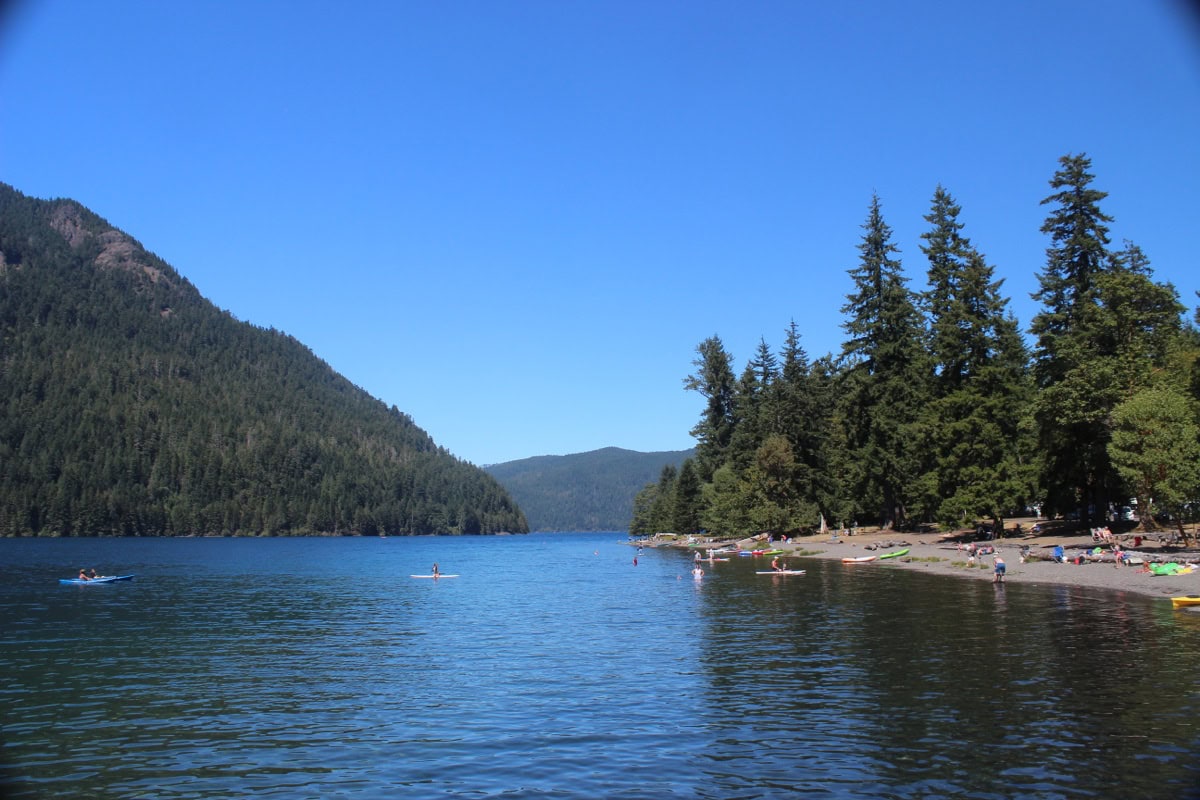
Lake Crescent is a deep glacial lake with incredibly clear, turquoise-tinted water — the colour is caused by a lack of nitrogen, which means virtually no algae grow here. The result? You can see the bottom even at a depth of several metres.
The lake sits right on Highway 101, so you literally can’t miss it. Stop by Lake Crescent Lodge — a historic building from 1915 where you can have lunch or coffee on the terrace overlooking the lake (and rent a kayak or paddleboard).
If you’ve got the energy, head out on the Marymere Falls Trail (1.8 miles round trip) — an easy path through the forest leading to an 90-foot waterfall. The trail starts right from the lodge and is ideal as a warm-up.
For the more adventurous, there’s the Spruce Railroad Trail (6 miles one way) along the northern shore of the lake, including an old railway tunnel and a viewpoint over Devil’s Punchbowl — a brilliantly blue pool where locals swim in summer (though the water is freezing even in August, around 10 °C — consider yourself warned 😅).
7. Marymere Falls — an easy trail to a gorgeous waterfall
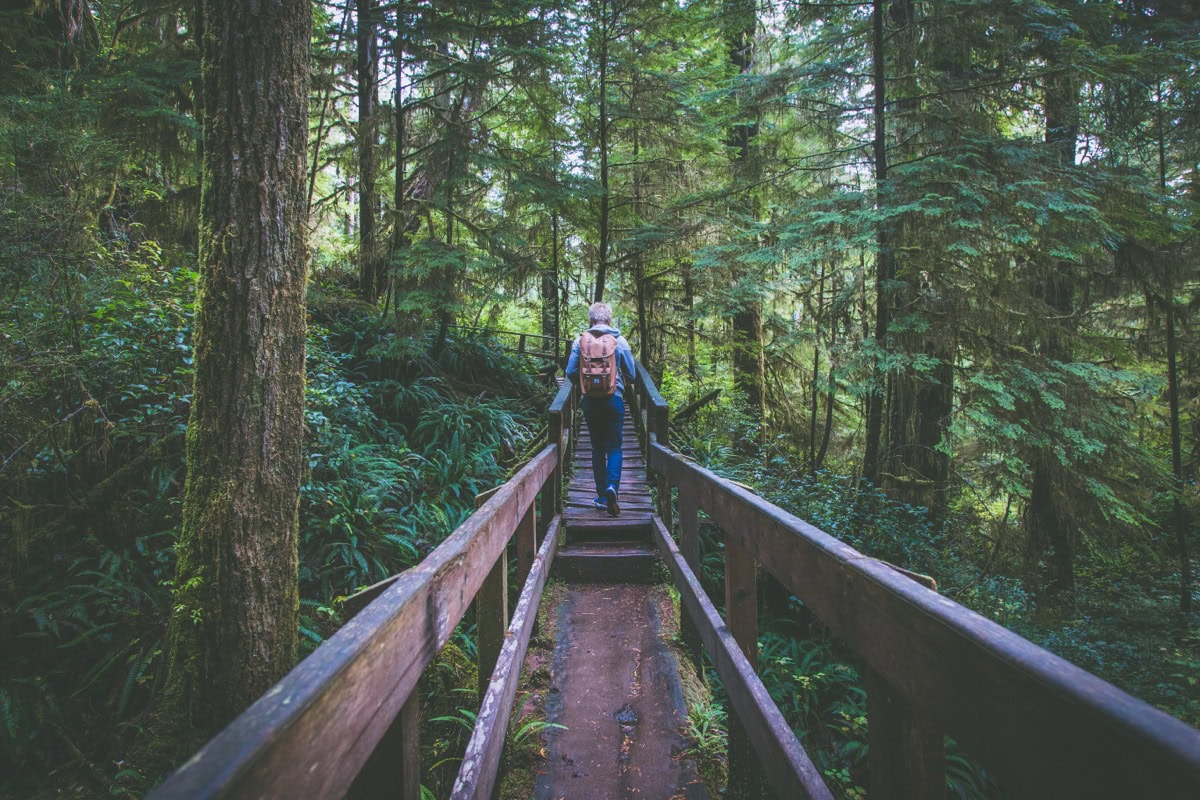
Marymere Falls deserves its own mention because it’s the ideal trail for everyone — families with kids, older couples, or anyone who simply doesn’t want to hike all day. The trail is 1.8 miles round trip, nearly flat, and winds through a beautiful forest of towering firs and cedars.
The waterfall itself drops 90 feet into a mossy amphitheatre and is genuinely photogenic. In spring, when the snow melts, the falls are at their most powerful. Allow about an hour for the whole outing — a bit more if you’re into photography.
8. Shi Shi Beach and Point of the Arches — for those who want a bit of adventure
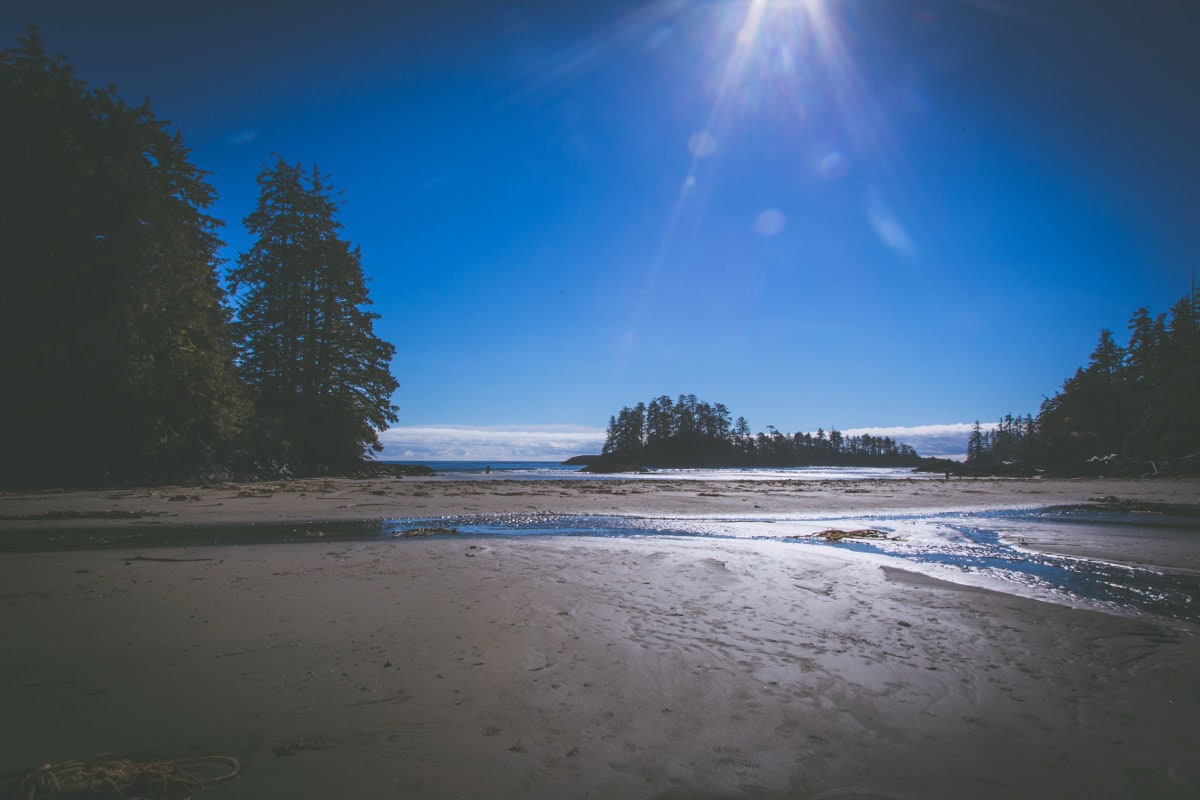
If Rialto Beach feels a bit too “accessible” for your taste (yes, such people exist 😁), Shi Shi Beach is your spot. It’s one of the most remote and beautiful beaches in the park, but you have to earn it — the trail is about 8.5 miles round trip from the trailhead at the Makah Reservation.
Your reward at the end: Point of the Arches — a surreal landscape of dozens of sea stacks, arches, and caves carved by the ocean. It looks like a set from a fantasy film. Many people camp overnight (you’ll need a wilderness permit) to enjoy both sunset and sunrise in complete solitude.
Important: To access the Makah Reservation land, you need a Makah Recreation Pass ($20), which you can buy in Neah Bay. And the trail can get very muddy — don’t underestimate your footwear.
9. Ozette Triangle — a trek along the wild coast
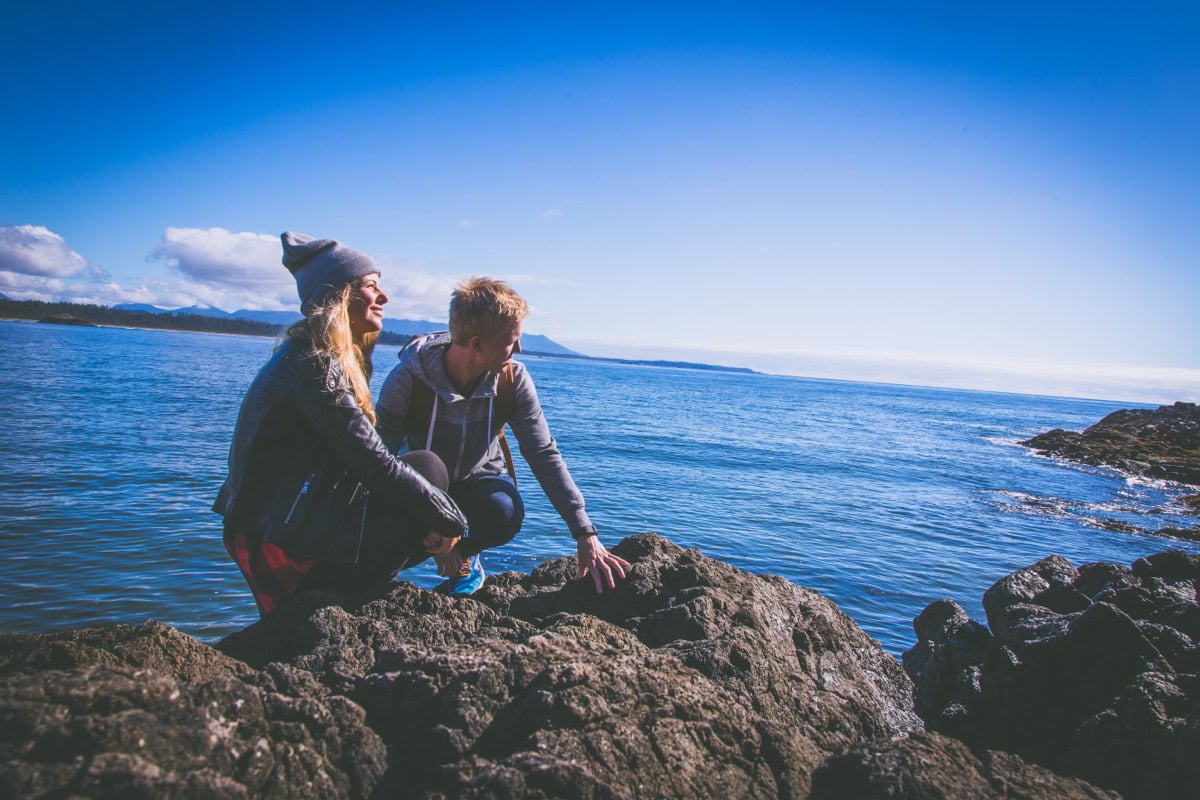
The Ozette Triangle is a 9-mile loop trail that takes you from Lake Ozette through the rainforest to the coast, then along the beaches and back. It’s a full-day affair, but the combination of temperate rainforest and wild coastline in a single trek is truly unique.
The trail has two coastal stops: Cape Alava (the westernmost point in the contiguous 48 states — a nice tick for geography geeks) and Sand Point. Between them you walk about 3 miles along a beach covered in driftwood and dotted with tidal pools. Don’t forget to check the tide tables and bring plenty of food and water.
10. Staircase — a quiet corner where you’ll see more wildlife than people
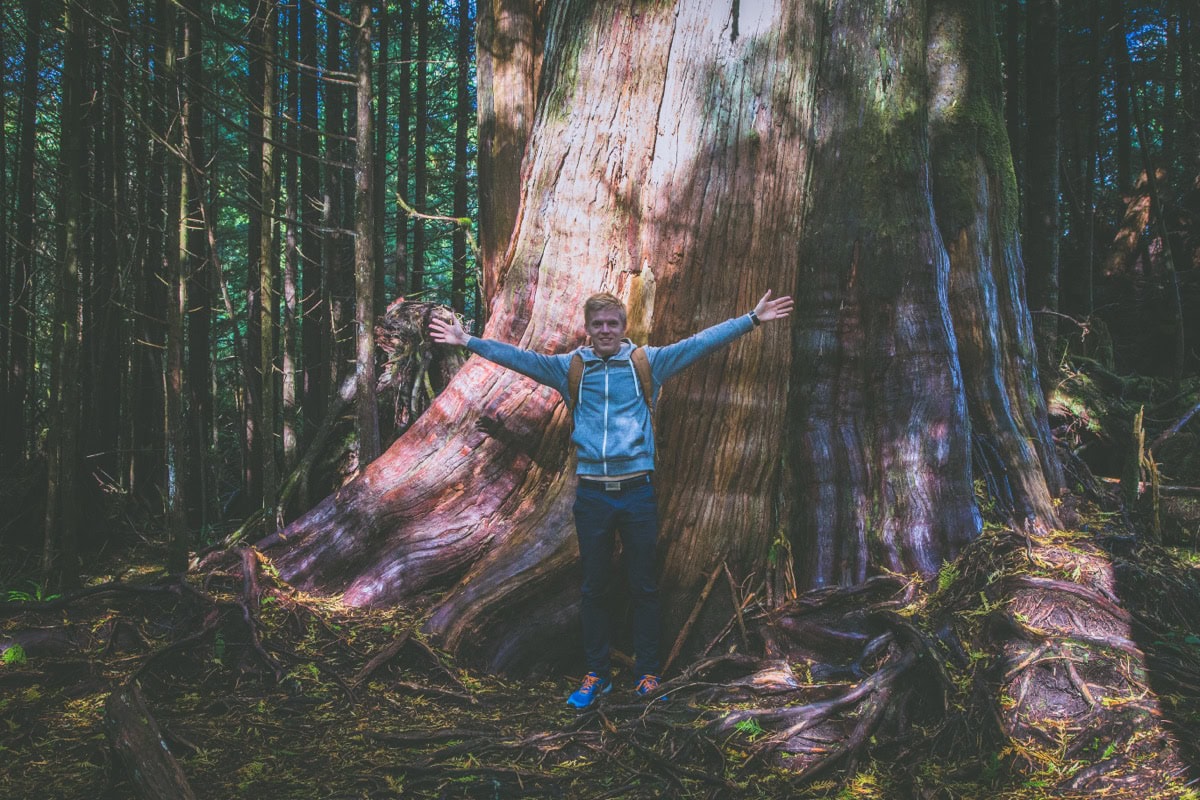
Staircase is the gateway to the southeastern part of the park and is far less visited than the Hoh or Hurricane Ridge. Which is exactly the reason to go. The area around the Skokomish River offers beautiful trails through deep forest, and your chances of spotting wildlife are significantly higher here.
The Staircase Rapids Loop (2 miles) is an easy circuit along the river with crystal-clear pools and cascades. If you’re after peace and natural beauty without the crowds, this is your place.
11. Roosevelt elk — Olympic National Park wildlife you won’t need to search for
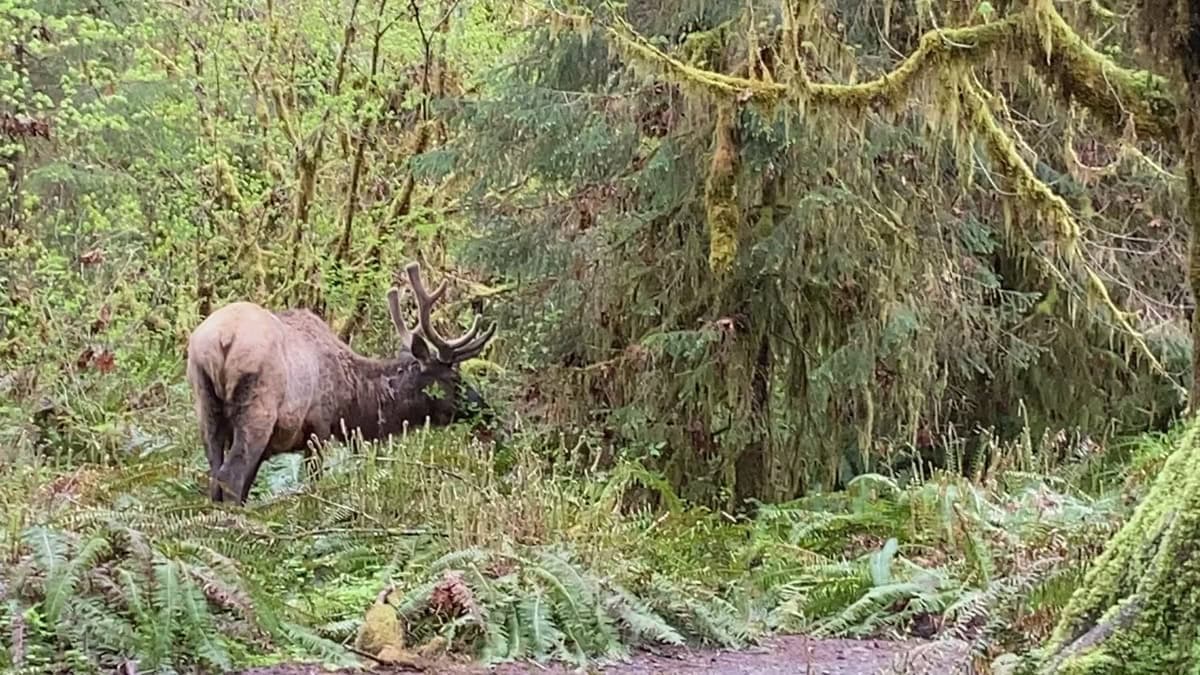
When you think “Olympic National Park animals,” the first thing that should come to mind is the Roosevelt elk — the largest subspecies of elk in North America. And there are over 5,000 of them living in the park. They’re so common that the question isn’t “if” you’ll see them, but “how many” you’ll see.
Best spots for viewing: Hoh Rain Forest (meadows along the river), Quinault Rain Forest, and the valley around the Elwha River. They’re most active at dawn and dusk. They’re used to humans, but they’re still wild animals weighing 300–500 kg — keep a safe distance (at least 50 feet).
Other wildlife you might encounter: black bears, mountain goats, marmots (the Olympic marmot is an endemic species found ONLY here!), beavers, bald eagles, and in the waters around the peninsula — whales, sea lions, and sea otters. Grizzly bears don’t live here — it’s a common question and the answer is no, grizzlies have never inhabited the Olympic Peninsula.
12. Quinault Rain Forest — fewer tourists, same magic
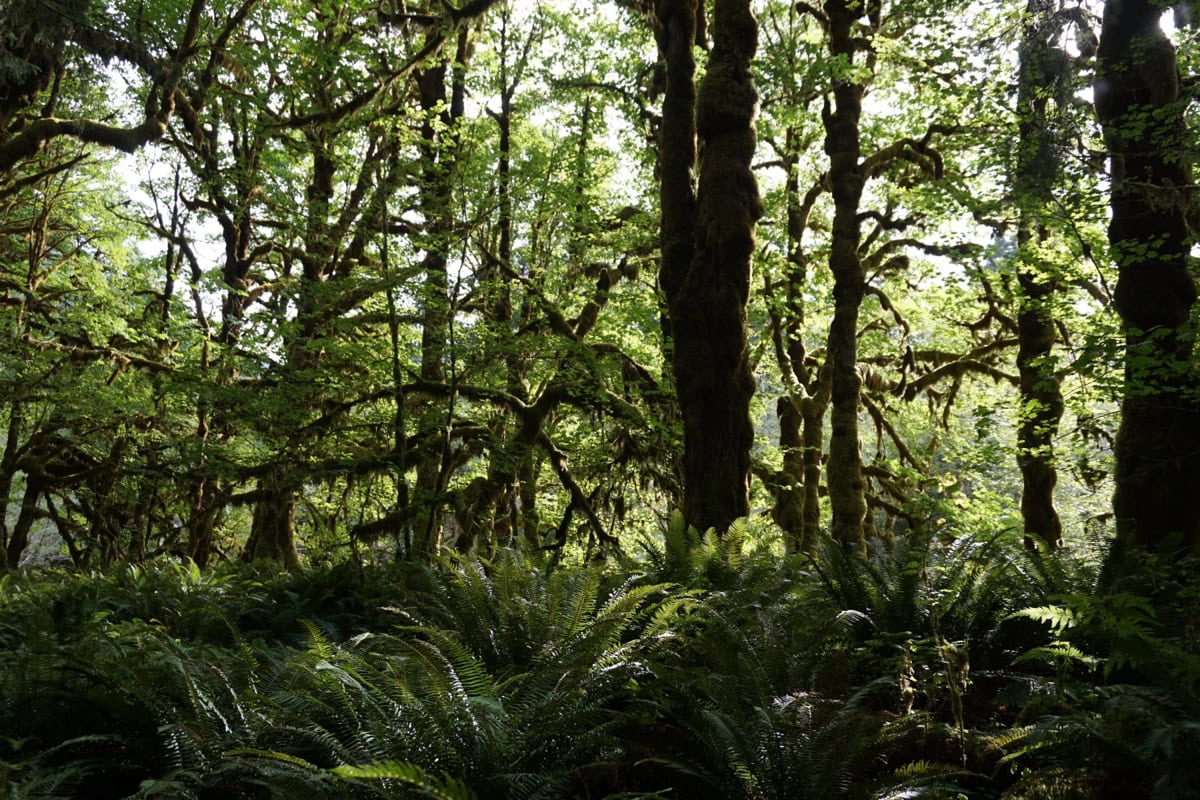
Quinault Rain Forest is the “other” rainforest in the park — less famous than the Hoh, but every bit as beautiful. And crucially: far less crowded. It lies on the southern side of the park, surrounding the lovely Lake Quinault.
The Quinault Rain Forest Nature Trail (0.5-mile loop) is a short wander through a primeval forest of cedars and spruces with trunks over 30 feet in circumference. If you want more, the Graves Creek Trail takes you deep into the rainforest along the river.
In the Lake Quinault area you’ll also find the Lake Quinault Lodge — a beautiful historic lodge with a terrace overlooking the lake where you can have lunch even if you’re not staying overnight.
13. Elwha Valley — a story of giving a river back to nature
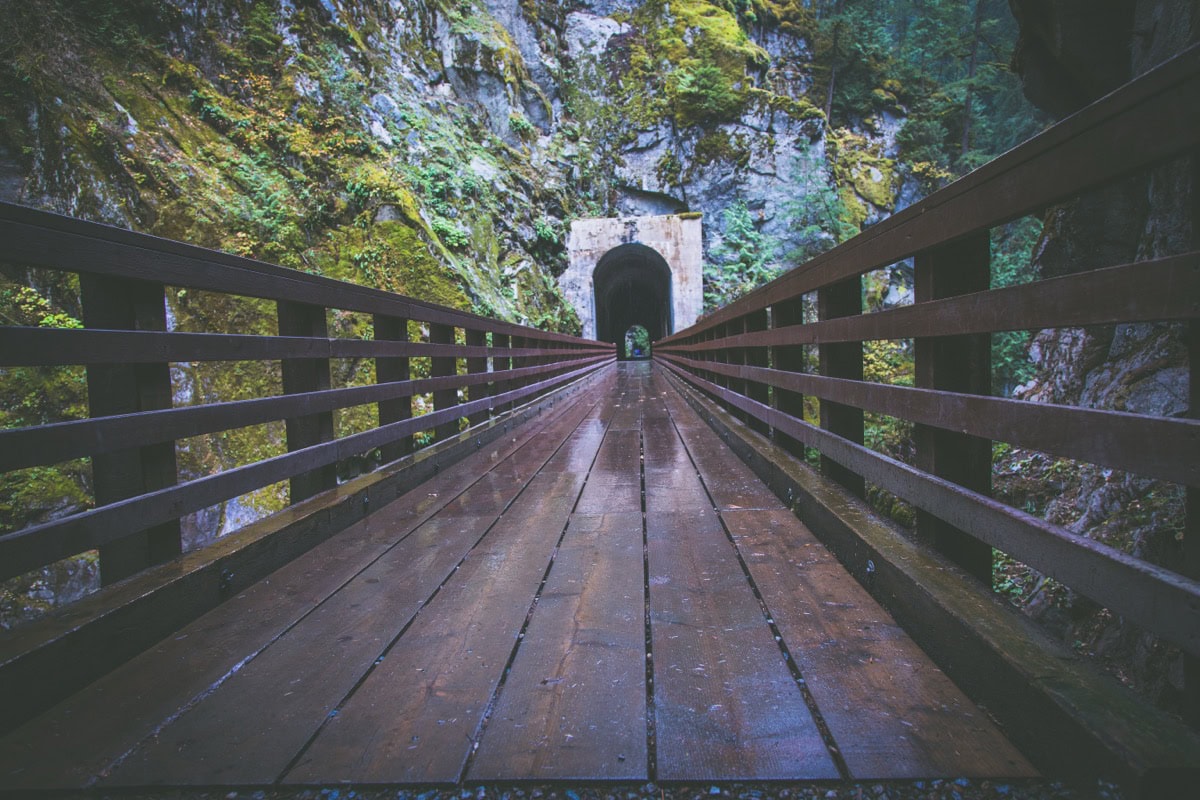
Elwha Valley is a story that’ll warm your heart. Between 2011 and 2014, two massive dams — the Elwha Dam and Glines Canyon Dam — were removed in the largest river restoration project in US history. After more than 100 years, the Elwha River now flows freely from the mountains to the ocean once more, and salmon are returning for the first time in decades.
Today you can watch nature regenerating in real time — the former reservoir bed is being colonised by new forest, and the river has carved out fresh meanders. Madison Falls Trail (a short 200-metre stroll) leads to a charming waterfall, while the Elwha River Trail offers longer walks through the valley.

14. Deer Park — views without the crowds
If the crowds at Hurricane Ridge bother you (and in summer there really ARE crowds), Deer Park is your alternative. It sits in the same mountain range, offers similar alpine views, but the road here is unpaved, narrow, and winding — which means most visitors simply don’t bother.
From Deer Park Campground (one of the most scenic in the park, 14 sites, first-come-first-served) you get a breathtaking panorama of the Olympic Mountains, the Strait of Juan de Fuca, and on clear days Mount Baker and Canada. The road to Deer Park is typically only open in summer (July–September) and isn’t suitable for large vehicles or RVs.
15. Second Beach and Third Beach — La Push and the wild coast
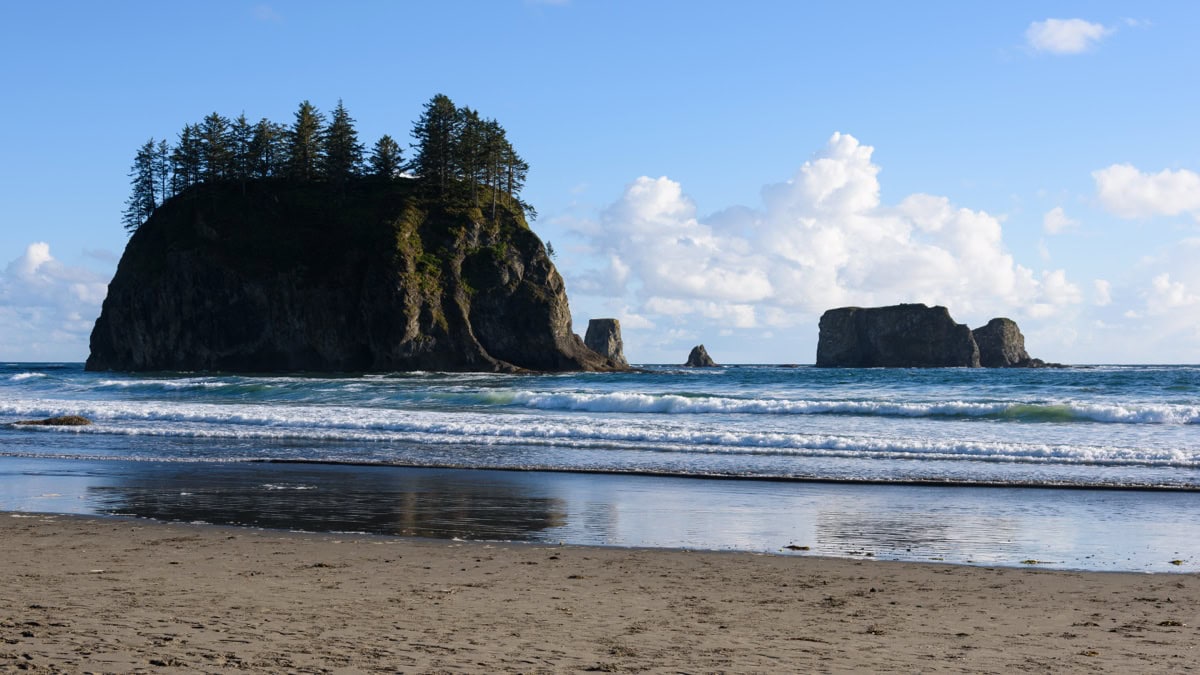
The area around the tiny village of La Push (Quileute Reservation) offers two absolutely fantastic beaches — Second Beach (0.7-mile trail) and Third Beach (1.3-mile trail). Both require a short hike through the forest before you reach the coast, which only makes the reveal more dramatic — you push through ferns and suddenly a sweeping beach with towering sea stacks opens up before you.
Second Beach is more photogenic and shorter (ideal for families), while Third Beach is more remote and peaceful. Both are gorgeous at sunset.
Note: La Push is on the Quileute Reservation — please respect local rules and culture.
Map of points of interest for your phone
Where to eat and drink: a guide for hungry travellers
I’ll be honest — Olympic National Park isn’t exactly a foodie destination. 😅 You’re in the wilderness and the dining options reflect that. But I do have a few tips.
Restaurants in the park and lodges
Lake Crescent Lodge Restaurant — probably the most pleasant place to eat inside the park. The food is solid American fare (burgers, fish, steaks), portions are generous, and the lake views are stunning. Expect $20–35 per main course.
Springs Restaurant (Sol Duc) — a simple restaurant by the hot springs. Nothing groundbreaking, but after a day of hiking you’ll eat anything.
Kalaloch Lodge Restaurant — dinner with ocean views. Fish and seafood are your best bet here.
Restaurants in Port Angeles
Next Door Gastropub — probably our favourite spot in town. Craft beers from local breweries, burgers, and mac & cheese that would hold its own even in Seattle.
Kokopelli Grill — a more upscale restaurant with a good selection of fish and steaks.
Little Devil’s Lunchbox — a small place doing brilliant sandwiches and light lunches, ideal before heading into the park.
In Forks
In Place — a pleasant restaurant with surprisingly good food for such a tiny town.
Forks Coffee Shop — a classic American diner. Pancakes, eggs, coffee — nothing more, nothing less, but the atmosphere is authentic.
Our recommendation
Honestly? The best tip is to stock up at the Safeway or Walmart in Port Angeles and bring food with you. Sandwiches, fruit, cereal bars, nuts. Options inside the park are limited and lodge prices reflect their monopoly status (translation: they’re steep). If you’re camping, you can cook — just don’t forget a bear canister or proper food storage (bears live here!).
Practical tips to finish
Phone and internet
Mobile signal in the park is virtually non-existent. At most locations in Olympic National Park you’ll have no reception whatsoever — not at Hurricane Ridge, not in the Hoh Rain Forest. Port Angeles and Forks have signal, but the moment you turn into the park, you’re off the grid. Download offline maps (Google Maps or Maps.me) before you leave. If you need mobile data for the broader US trip, check out our Holafly eSIM review, but bear in mind no eSIM in the world will help you inside the park itself.
Weather and clothing
Golden rule: dress in layers and always carry a waterproof jacket. Even in summer, rain can arrive several times a day and temperatures on Hurricane Ridge can be 10–15 °C cooler than at the coast. Good footwear is essential — wet roots in the rainforest are as slippery as ice. If you’re wondering what to pack, have a look at our article on packing for carry-on only.
Safety and wildlife
Black bears live here, but attacks are extremely rare. Follow the basics: store food in bear canisters, don’t eat in your tent, and never feed any wildlife. Roosevelt elk look peaceful, but bulls during the October rut can be aggressive — keep at least 50 feet away.
Flights and transport
Look for affordable flights to Seattle from London — British Airways and Virgin Atlantic fly direct, and connecting options via Iceland or Scandinavia can often bring the price down. Return flights from the UK typically start from around £400–500 if you book well in advance. From Seattle, continue by car — I covered rental options above. If you’re planning a longer trip around the Pacific Northwest, definitely combine Olympic National Park with a visit to Seattle — it’s a natural stopover and a brilliant city.
Travel insurance
Do NOT travel to the US without insurance — healthcare in America costs astronomical amounts. For shorter trips we recommend a comprehensive single-trip policy, and for longer journeys something like SafetyWing, which we use ourselves. Make sure your policy covers medical expenses of at least $1 million for the US — even a simple hospital visit can run into thousands of dollars.
FAQ — Frequently asked questions about Olympic National Park
What makes Olympic National Park so special?
Olympic National Park is one of the few places on Earth where you’ll find three completely different ecosystems within a single park: temperate rainforest (one of the largest on the planet), alpine mountains with glaciers, and wild Pacific coastline. Thanks to the geographic isolation of the peninsula, it’s also home to endemic species found nowhere else — like the Olympic marmot and the Roosevelt elk subspecies. The park is a UNESCO World Heritage Site and an International Biosphere Reserve.
What is the best town to stay in when visiting Olympic National Park?
Port Angeles is the most practical base for most visitors. It sits right by the northern entrance to the park, serves as the starting point for Hurricane Ridge (20 minutes by car), and has the best infrastructure — restaurants, shops, petrol stations, a hospital. If you want to be closer to the coast and rainforests, consider Forks. And if you don’t mind higher prices and want some romance, stay inside the park itself at Lake Crescent Lodge or Sol Duc Hot Springs Resort.
Are there grizzly bears in Olympic National Park?
No, grizzly bears do not live in Olympic National Park. They’ve never historically inhabited the Olympic Peninsula. You may, however, encounter black bears (Ursus americanus), which are generally less aggressive but still require you to follow safety protocols — store food properly, never feed them, and keep your distance. If you want to see grizzlies, you’ll need to head to Montana, Wyoming, or Alaska.
Which is better — Olympic National Park or Mount Rainier?
It depends on what you’re looking for. Mount Rainier centres around a single iconic peak — a massive stratovolcano surrounded by alpine meadows bursting with wildflowers and glaciers. It’s more compact, easier to cover in 1–2 days, and closer to Seattle. Olympic National Park is larger, more diverse, and demands more time — but the payoff is the unique combination of rainforest, mountains, and coastline you simply won’t find anywhere else. If you only have time for one park, Olympic offers more variety. If you can do both — do both. They’re completely different experiences and both absolutely worth it.
How many days do you need for Olympic National Park?
The absolute minimum is 2 days (Hurricane Ridge + Hoh Rain Forest), but honestly — you’ll regret not having more. Ideally plan for 3–5 days, which gives you time to cover the mountains, rainforest, coastline, and perhaps the hot springs too. A week is a luxury that lets you explore the more remote corners like Ozette, Staircase, or Shi Shi Beach.
Can you visit Olympic National Park in April?
Yes, but with some limitations. Olympic National Park in April means: Hurricane Ridge Road may still be closed (or only open at weekends), snow remains on the mountains, and it rains more often. On the other hand, the rainforests are absolutely gorgeous in April (a rainforest in the rain — makes sense, right? 😉), the beaches have fewer visitors, and the waterfalls are at their most powerful thanks to snowmelt. If you don’t mind rain and aren’t fixated on mountain views, April can be a surprisingly lovely time to visit.
Do I need a car for Olympic National Park?
Absolutely yes. The park has no public transport between its main areas and the distances are enormous — Port Angeles to the Hoh Rain Forest alone is over an hour’s drive, and the coastline is even further. The road around the peninsula (Highway 101) stretches over 300 miles. You simply can’t get around without a car. I’d recommend a vehicle with higher clearance or an SUV — some secondary roads (Deer Park, Dosewallips) are unpaved.
Tips and Tricks for Your Vacation
Don’t Overpay for Flights
Search for flights on Kayak. It’s our favorite search engine because it scans the websites of all airlines and always finds the cheapest connection.
Book Your Accommodation Smartly
The best experiences we’ve had when looking for accommodation (from Alaska to Morocco) are with Booking.com, where hotels, apartments, and entire houses are usually the cheapest and most widely available.
 🚗 Car rental on the roadVerified rental cars in the United States
Search with the DiscoverCars comparison engine — it compares prices from dozens of local and international rental companies, and most bookings come with free cancellation.
Compare car prices in the United States →Don’t Forget Travel Insurance
Good travel insurance will protect you against illness, accidents, theft, or flight cancellations. We’ve had a few hospital visits abroad, so we know how important it is to have proper insurance arranged.
Where we insure ourselves: SafetyWing (simple monthly subscription) and TrueTraveller (for extra-long trips).
Find the Best Experiences
Get Your Guide is a huge online marketplace where you can book guided walks, trips, skip-the-line tickets, tours, and much more. We always find some extra fun there!