

Are you a typical low-cost backpacker like me, or just flying somewhere for a few days? Then you’ll definitely need the right carry-on luggage for your flight. Did you know that every airline allows different dimensions? It can be confusing at times, but in this article we’ll look at the best carry-on luggage for flying, and how to choose the right one so you can fit everything you need while meeting your airline’s requirements.
What Is Carry-On Luggage
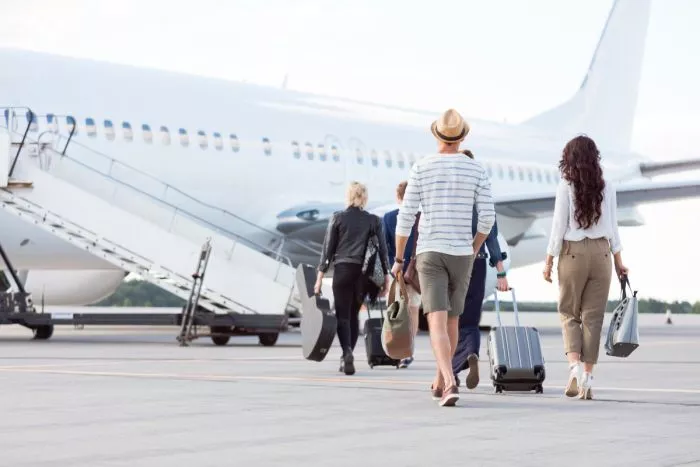
Carry-on luggage is any bag that you take on board the plane with you and is included in the base price of your ticket. However, it must meet certain size and weight restrictions.
The allowed dimensions and weight vary by airline, but they generally hover around 55 x 40 x 20 cm in size, and the weight limit is usually around 8–10 kg. Another common requirement is that your bag must fit under the seat in front of you (though this mainly applies to certain budget airlines like Ryanair).
There are several types of carry-on luggage:
- backpacks,
- small wheeled suitcases,
- travel bags/duffels.
How to Choose Carry-On Luggage
If you’re unsure about which carry-on luggage to pick, then definitely keep reading. From the options mentioned above (backpack, bag or suitcase), it really comes down to personal preference. That said, each has its pros and cons.
For me, a backpack is probably the best option — it’s ideal for frequent moves, walking around sightseeing, and most importantly, your hands are always free. With a backpack, it’s also unlikely that anyone will measure it, and it fits under the seat (so it’s included in the ticket price). And if someone does check, there’s a good chance you can squish the backpack into the sizing cage.
Another carry-on option is a travel duffel bag, which I see as something between a backpack and a suitcase. This option works well for short weekend trips where you won’t be moving around too much with your luggage.
Small wheeled suitcases have the big advantage of letting you pack considerably more items in a more organised way. A suitcase also doesn’t strain your back the way a backpack or shoulder bag does. On the downside, they’re harder to manage if you plan on walking long distances or dealing with uneven terrain.
Here are some other things to consider when choosing your carry-on luggage:
- Ergonomics: When selecting carry-on luggage, focus on comfort and practicality. This means comfortable straps, padded back panels, lightweight construction, or wheels that spin in all directions.
- Material: The material of your carry-on also matters. You can generally choose between soft, lightweight materials (nylon, polyester) or a hard shell, which is heavier but more durable. Some luggage is also water-resistant.
- Space and pockets: Personally, I focus most on having enough space and plenty of practical pockets that allow better organisation and hold more items.
- Extra features: Another plus with carry-on luggage are special features like USB ports, hidden pockets for valuables, built-in rain covers, locks and so on.
- Brand: There’s an overwhelming number of brands to choose from. Focus on brand popularity, reviews and the warranty offered.
- Price: The price of luggage often reflects its quality, but it’s important to find the best value for money.
And last but not least, think about what type of traveller you are and what you simply can’t travel without.
Are you a low-cost backpacker who’s constantly on the move seeking adventure and can survive with just 3 outfits on rotation? Are you a digital nomad who always needs to carry a laptop and other tech? Or are you an occasional holidaymaker who needs fourteen outfits for a week and simply can’t fit all your “essentials” into a backpack?
TIP: Guide: How to Choose Your Travel Gear
10 Best Carry-On Luggage Picks for Flying
Since there are so many options and choosing the ideal carry-on luggage can be overwhelming, I’ve put together my top 10 picks for the best ones out there.
Thule Aion Travel Backpack
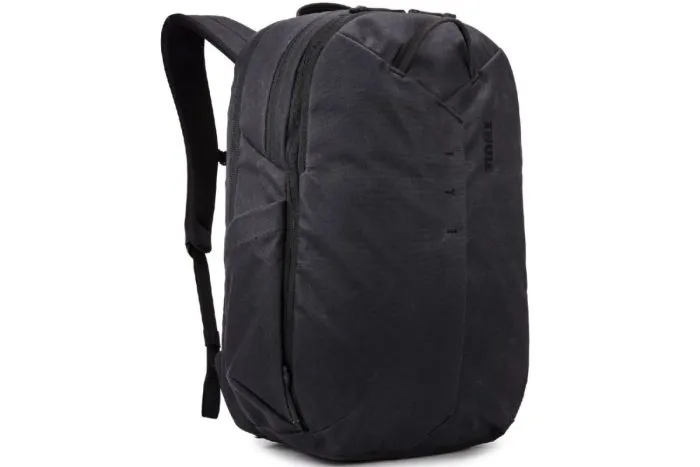
The Thule Aion Travel Backpack is a multifunctional travel backpack measuring 28 x 23 x 47 cm with an adjustable volume of 28–32 litres. For easier packing, the back panel unzips completely, allowing you to open the backpack like a suitcase. Inside, you’ll find a handy divider with a TPU insert for separating your everyday items from your active (read: dirty and smelly 😄) gear.
The backpack also has padded electronics pockets — it safely accommodates both a 15.6″ laptop or 16″ MacBook, and a 12.9″ tablet. It also features a practical bottle pocket and an internal zippered pocket for smaller items.
If the 28-litre capacity isn’t enough, you can get the 40-litre version. You can also purchase the Thule Aion sling bag as an add-on to Thule backpacks.
Patagonia Black Hole Mini MLC
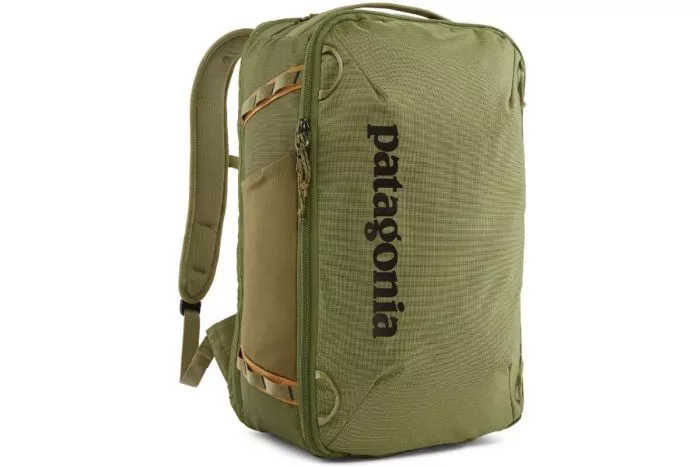
A really clever backpack is the Patagonia Black Hole Mini MLC. It has dimensions of 50 x 30.5 x 17.8 cm and a 30-litre capacity. It also boasts a brilliant design that lets you convert it from a backpack into a shoulder bag or a briefcase. Plus, it has an expanded storage layout with 9 pockets, which can even fit a 16″ laptop.
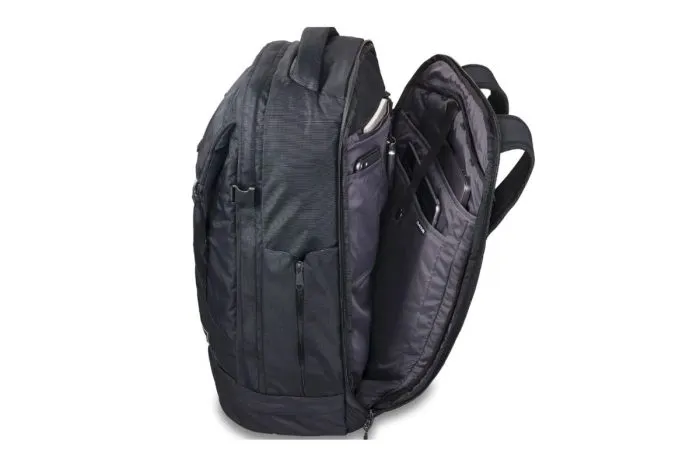
Dakine Verge Backpack
The Dakine Verge Backpack has an ergonomically shaped back panel and plenty of pockets and compartments where you can safely store your laptop (up to 16″). The backpack measures 51 x 33 x 23 cm with a 32-litre capacity.
The Dakine backpack is an ideal solution for comfortable travel. The main compartment opens wide and inside you’ll find a practical mesh zippered pocket and plenty of room for clothing. A front zippered pocket is available for essential, frequently used small items. Shoes or other items you want to keep separate can be stored in a dedicated compartment at the bottom of the backpack.
The backpack also features a hidden back pocket, a hidden side zippered pocket, a bottle pocket and a fleece-lined sunglasses pocket.
Thule Tact Backpack
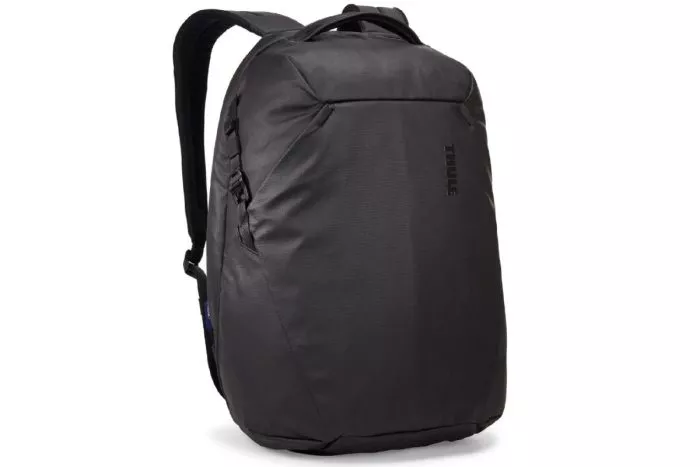
Another excellent backpack from Thule, this time in a smaller size, is the Thule Tact Backpack. It measures 30 x 23 x 46 cm with a 21-litre capacity, yet it’s still spacious with plenty of practical pockets and anti-theft features.
You can safely store a 14-inch laptop or tablet in the padded, elevated pocket. The security of the main compartment is ensured by hidden zippers, a back-opening design and a flap over the zip.
This backpack is also available in a 31-litre version.
Husky Moper
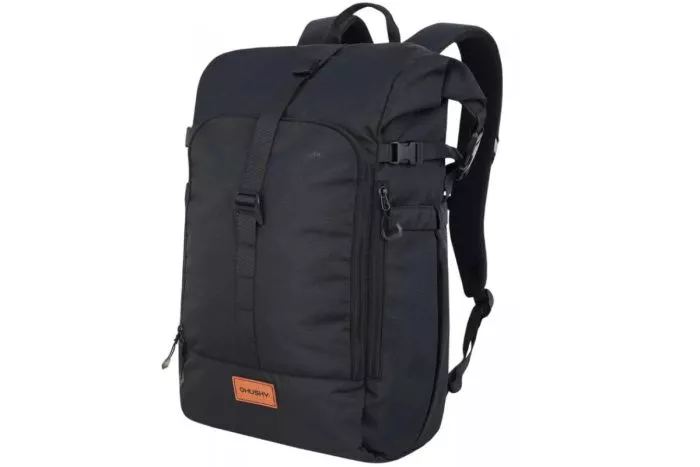
A practical travel backpack is the Husky Moper, which you can take on a plane thanks to its dimensions of 48 x 30 x 22 cm and 28-litre capacity. This backpack is versatile, water-resistant, functional and comfortable. The back system is made from 3D breathable mesh with memory foam shaping.
The backpack offers a laptop/tablet pocket (14″), a chest strap, a hidden side pocket and a bottle pocket.
Zulupack Nomad Backpack
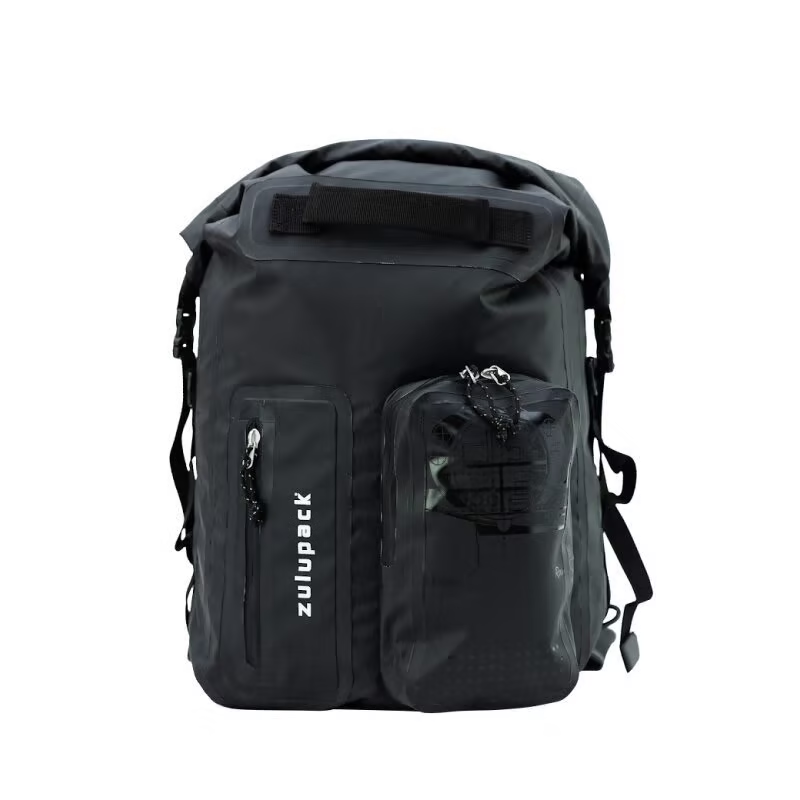
The Zulupack Nomad Backpack with dimensions of 50 x 35 x 20 cm and a 35-litre capacity offers travellers above all water resistance, comfort and spaciousness. The backpack features a roll-top closure, ergonomically shaped shoulder straps and heat-moulded back panel.
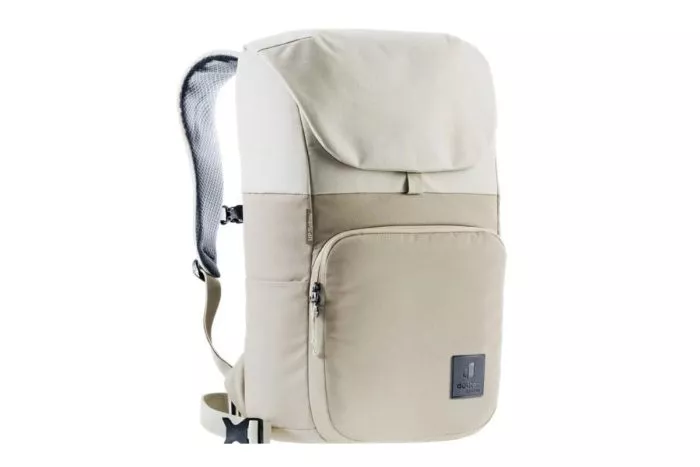
Deuter UP Sydney
A backpack that works equally well for school or the office as it does for a long weekend trip is the Deuter UP Sydney. Thanks to its padded back, anatomically shaped shoulders and shoulder straps, the backpack is extremely comfortable. It also features an adjustable chest strap and a removable hip belt.
Its dimensions are 50 x 30 x 16 cm with a 22-litre capacity, and it comes in many attractive colours.
Husky Grape Travel Bag
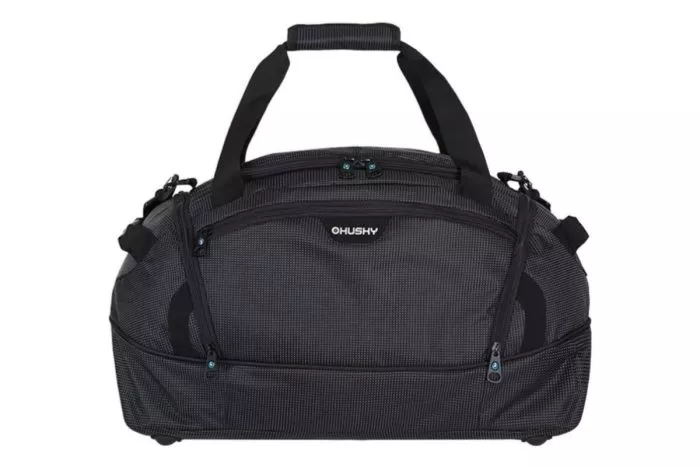
If you’re not a fan of backpacks, then go for the Husky Grape travel bag, which is suitable for travel, sports and other leisure activities. The bag measures 55 x 27 x 30 cm with a 40-litre capacity.
You can carry it by the handles or over your shoulder. Inside, it has a main compartment and side pockets. A huge advantage is that it’s water-resistant.
Osprey Daylite Duffel 30
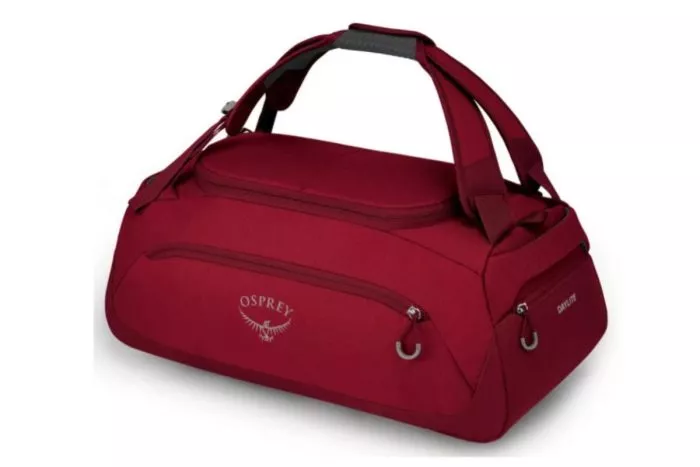
Another travel bag I can recommend is the Osprey Daylite Duffel, which has a 30-litre capacity and dimensions of 50 x 24 x 28 cm. It’s great for short trips or sports. The main advantage of this bag is that you can unclip the handles and wear it as a backpack. It comes in a wide range of colours.
Samsonite Proxis Spinner 55 EXP
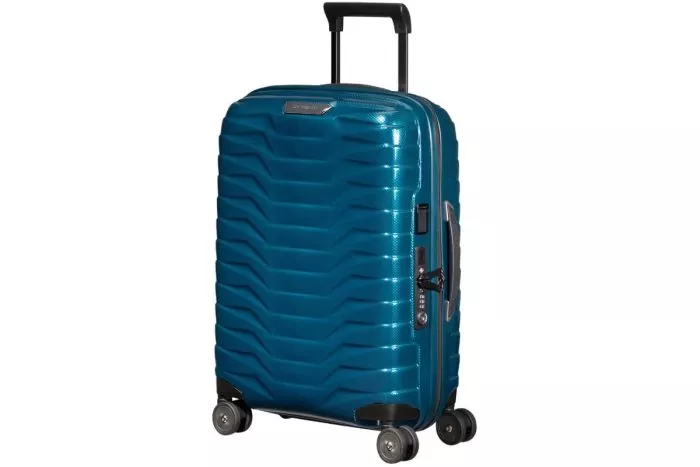
If you’re looking for a suitcase that meets carry-on luggage size requirements, then consider the Samsonite Proxis Spinner 55 EXP. It measures 55 x 40 x 20 cm with a 44-litre capacity.
The suitcase is made from a highly durable material, has 4 double spinner wheels, a lockable combination lock and a USB port for an external power bank.
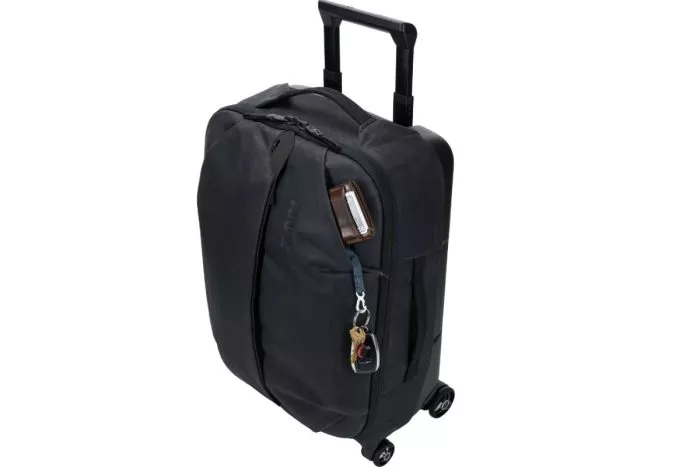
Thule Aion Carry on Spinner
Another suitcase recommendation is the Thule Aion Carry on Spinner, which boasts dimensions of 35 x 23 x 55 cm and a 35-litre capacity. It’s durable and comes with a removable organiser that can be used separately as an additional bag.
Its oversized rear wheels handle even uneven terrain with ease, and the V-shaped telescopic handle allows for smooth, effortless pulling.
Carry-On Luggage: Size Rules and Airport Checks
The trouble with carry-on luggage is that you can’t just have one universal bag. Every airline has different rules and different allowed dimensions. That’s why it’s essential to check with your airline before every trip what luggage sizes are allowed, what weight limit applies, and which bags are included in the ticket price.
If you fly a lot with budget airlines, like I do, then you’ll know there’s a crucial difference between a small personal item and a larger cabin bag. The small personal item (usually a backpack) is included in the ticket price and must fit under the seat. The larger cabin bag (a bigger backpack, small suitcase) costs extra and must fit in the overhead bins.
Here are the carry-on luggage dimensions for the most popular airlines:
| Airline | Dimensions | Weight | Notes |
| Ryanair | 40 x 20 x 25 cm | 10 kg | must fit under the seat; larger cabin bag available for a fee |
| Wizz Air | 40 x 30 x 20 cm | 10 kg | must fit under the seat; larger cabin bag available for a fee |
| easyJet | 45 x 36 x 20 cm | 15 kg | must fit under the seat; larger cabin bag available for a fee |
| Lufthansa | 55 × 40 × 23 cm | 8 kg | – |
| KLM | 55 × 35 × 25 cm | 12 kg | + free small personal bag (40 x 30 x 15 cm) |
| Air France | 55 x 35 x 25 cm | 12 kg | + free small personal bag (40 x 30 x 15 cm) |
| British Airways | 56 x 45 x 25 cm | 23 kg | + free small personal bag (40 x 30 x 15 cm) |
| Emirates | 55 x 38 x 22 cm | 7 kg | – |
| Qatar Airways | 50 × 37 × 25 cm | 7 kg | – |
Wondering how they actually check? Carry-on luggage checks are usually done randomly before boarding. Flight attendants sometimes single out someone who looks like their bag might be too large and ask them to have it measured.
Or a situation can arise where the crew starts boarding suspiciously early and measures every single passenger, as happened to me on Skiathos.
Carry-on luggage is measured in a metal sizing cage that stands near the boarding gate. It has two compartments — a smaller one for backpacks or bags and a larger one for suitcases. If your backpack is bigger than the allowed carry-on luggage size but isn’t stuffed to bursting, you have a good chance of squishing it in (or you could put on all your clothes like Joey from Friends 😄). With suitcases, squishing is much harder, and the dimensions include wheels and handles.
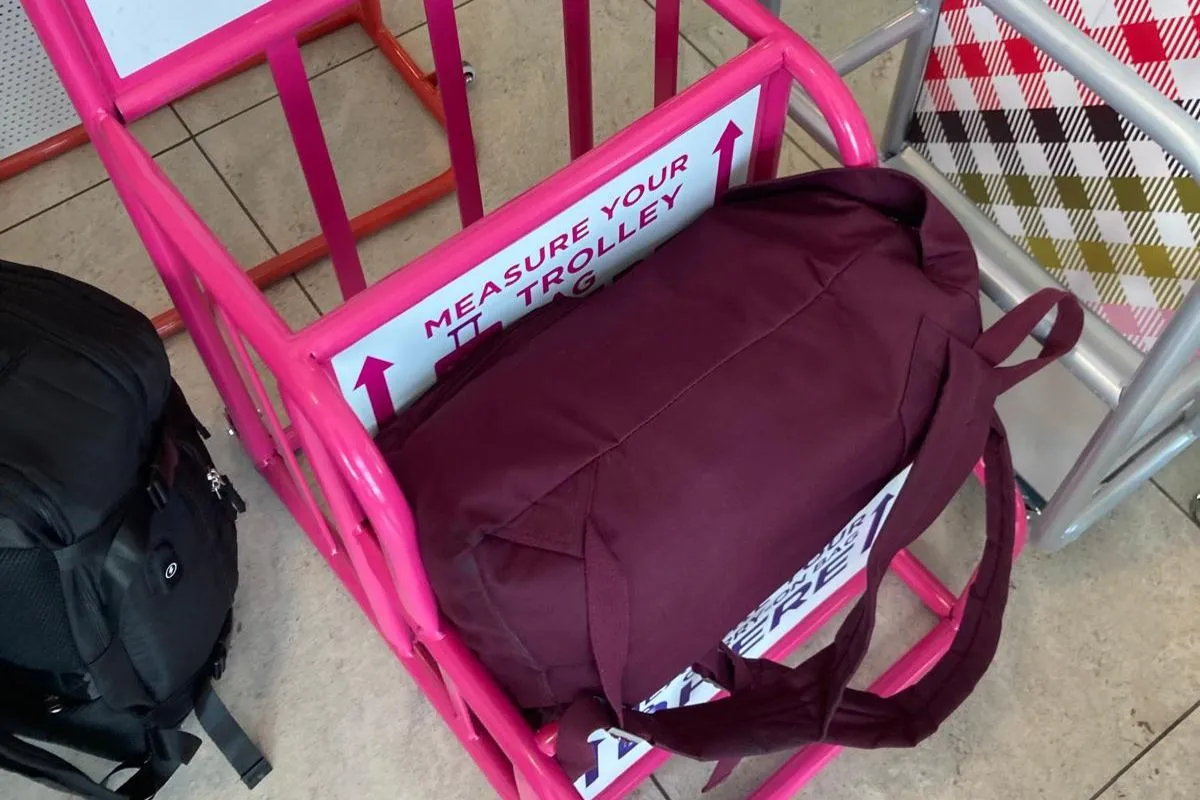
Be especially careful with budget airlines like Ryanair or Wizz Air. Some travellers get caught out because they’re used to bringing a small suitcase as carry-on luggage with other airlines.
However, with budget airlines, suitcases are not included in the ticket price and you have to pay extra for them, even if you’re taking them on board. Also, watch out for carrying two small bags (e.g. a backpack and a handbag). You may have to pay extra for that too (though it’s not always the case).
So what happens if your bag fails the size check? If your carry-on luggage is too large and you can’t squeeze it into the sizing cage no matter how hard you try — even if you jump on it or saw off the suitcase wheels — then you’ll simply have to pay. The fee varies by airline, but generally ranges from €20 to €100.
That’s why it sometimes pays to pre-purchase a larger cabin bag allowance.
Key Benefits of Flying with Carry-On Luggage Only
Flying with just a carry-on has several advantages:
- No need to check in at the airport counter — you can head straight to security after arriving. This means you don’t need to get to the airport as early.
- After landing, you don’t have to wait for checked baggage and can get straight on with your travel plans.
- With carry-on luggage, all your belongings are within reach and there’s no risk of the airline losing your suitcase.
- You save money — carry-on luggage is usually included in the ticket price. Checked baggage costs extra.
- You don’t have to drag a heavy suitcase around your destination. That’s brilliant, especially if you’re somewhere with lots of hills and cobblestone streets. 😉
Frequently Asked Questions
What can you take in carry-on luggage on a plane?
You can bring personal items such as clothing, books, electronics (laptops, tablets, e-readers), toiletries (with liquid restrictions), medication and small snacks. Liquids must be in containers of no more than 100 ml and placed in a clear, resealable bag with a maximum capacity of 1 litre.
Why does carry-on luggage have size limits?
Carry-on luggage must fit either under the seat or in the overhead bin. With budget airlines, there’s a crucial difference between a small personal item and a larger cabin bag. Always check the specific requirements with your airline.
Can I bring a handbag in addition to my carry-on luggage?
Some airlines allow an additional personal bag alongside your carry-on luggage, but budget carriers (Ryanair, Wizz Air) usually don’t. It’s always best to check the specific requirements of your airline.
What should you remove from carry-on luggage at security?
Your bag will go through an X-ray scanner. Remove electronics, liquids and personal items such as keys and your phone.
Does carry-on luggage need to be checked in at the airport?
No, it doesn’t. If you don’t have a large bag to check, you can go straight to security with your carry-on luggage. However, you’ll need to complete online check-in to get your boarding pass.
Tips and Tricks for Your Vacation
Don’t Overpay for Flights
Search for flights on Kayak. It’s our favorite search engine because it scans the websites of all airlines and always finds the cheapest connection.
Book Your Accommodation Smartly
The best experiences we’ve had when looking for accommodation (from Alaska to Morocco) are with Booking.com, where hotels, apartments, and entire houses are usually the cheapest and most widely available.
Don’t Forget Travel Insurance
Good travel insurance will protect you against illness, accidents, theft, or flight cancellations. We’ve had a few hospital visits abroad, so we know how important it is to have proper insurance arranged.
Where we insure ourselves: SafetyWing (best for everyone) and TrueTraveller (for extra-long trips).
Why don’t we recommend any Czech insurance company? Because they have too many restrictions. They set limits on the number of days abroad, travel insurance via a credit card often requires you to pay medical expenses only with that card, and they frequently limit the number of returns to the Czech Republic.
Find the Best Experiences
Get Your Guide is a huge online marketplace where you can book guided walks, trips, skip-the-line tickets, tours, and much more. We always find some extra fun there!


