

When you think of the French capital, most people don’t realise just how many free things to do in Paris there actually are. The usual image is all expensive shopping boulevards, luxury dinners and eye-watering bills. Paris can be ruthless and will drain your wallet with incredible elegance. I’ve been visiting since I was a child, and I remember when a friend and I came here as students. We stayed in the most basic hostels, counted every euro, and discovered something absolutely fascinating: this city paradoxically has far more amazing places with free admission than most other European capitals.
These days we push a buggy around the city with our two-year-old Jonáš, and our priorities have shifted a bit. We no longer need to see five landmarks a day. We’ve discovered that the very best moments don’t cost a thing. Those times when Paris slowly wakes up, the scent of hot butter drifts from corner bakeries, and you simply sit on a park bench. You watch elderly gentlemen playing pétanque, listen to the river lapping, and feel you’re exactly where you’re meant to be. Paris won’t give you anything for free when it comes to its rules, but when it comes to experiences, it can be unexpectedly generous.
The year 2026 is absolutely ideal for a visit, and for several reasons at once: the city has calmed down after the Olympic frenzy, Notre-Dame gleams like new after years of restoration, and this summer you’ll be able to swim in the Seine for the first time in a century. And as a bonus for me as a vegetarian, the food scene is changing for the better too. The legendary three-Michelin-star restaurant Arpège has switched to a fully plant-based menu. The city is greener than ever and offers plenty of ways to enjoy it without spending ridiculous amounts of money.
We’ve been putting this list together for years, so it’ll save you hours of googling and a few hundred euros. Let’s dive in.
TL;DR
- All EU citizens under 26 get into national museums (Louvre, Musée d’Orsay, Orangerie, Arc de Triomphe) completely free all year round.
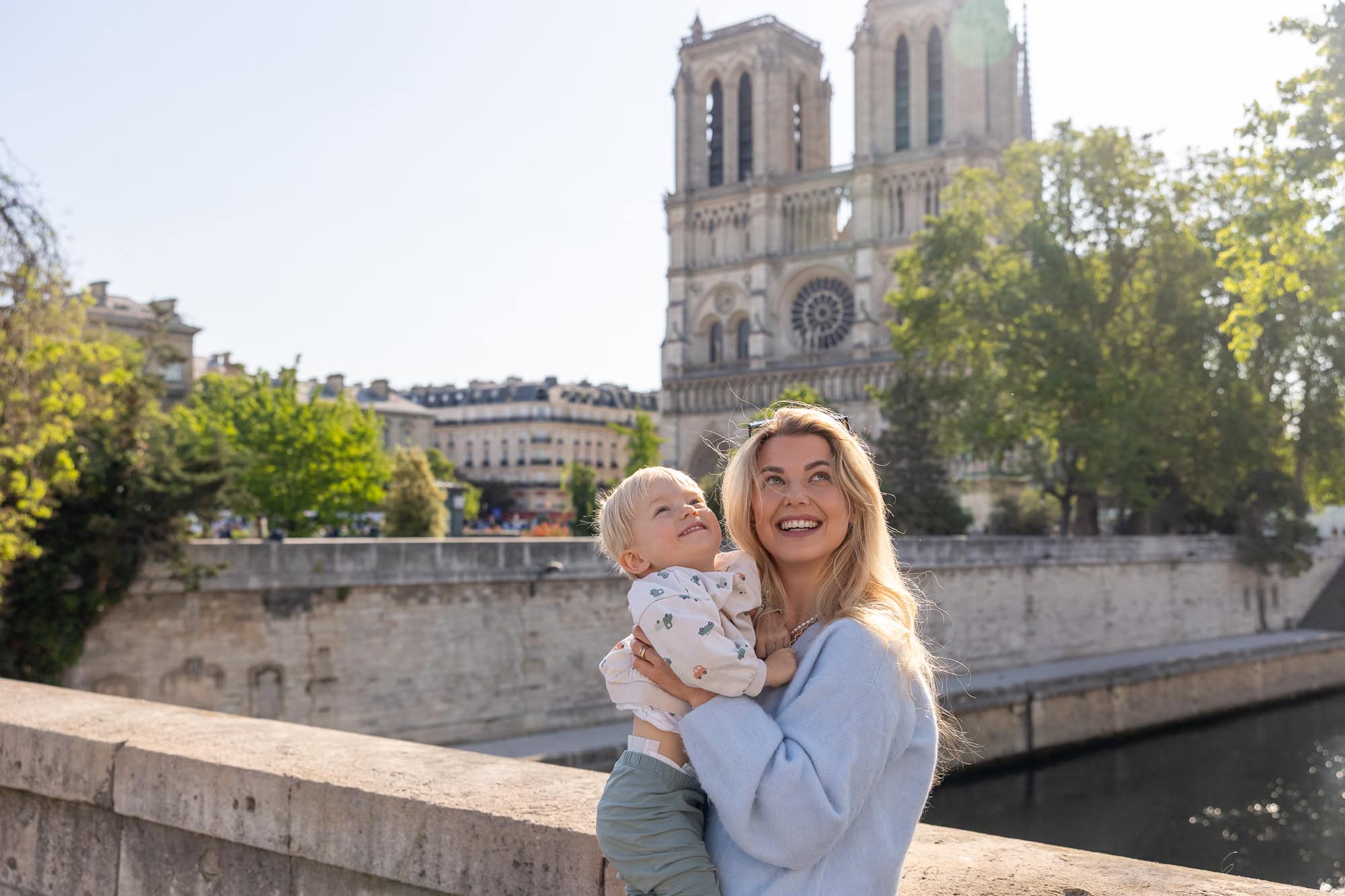
- The newly reopened Notre-Dame cathedral charges no admission — just book a free time slot via the official app.
- Paris runs 20 city museums (such as Musée Carnavalet and Petit Palais) where permanent collections are always free for everyone.
- The first Sunday of each month brings free entry to many landmarks. In the winter season (November to March), this includes the Panthéon and the Arc de Triomphe.
- The best views of the city cost nothing. Head to the rooftop terraces of Galeries Lafayette, Printemps, or the roof of the Institut du Monde Arabe.
- From summer 2026, you can swim in the River Seine for free at three designated zones (Bras Marie, Grenelle, Bercy).
- In Parisian restaurants, you’re legally entitled to free tap water. Just confidently order “une carafe d’eau”.
- Save on metro fares and walk instead. Strolling around Montmartre, along Canal Saint-Martin, or along the elevated Promenade Plantée park is completely free.
- Watch out for street scams. Ignore people with petitions near landmarks and bracelet sellers below Sacré-Cœur.
- The legendary Centre Pompidou has been completely closed since late 2025 for renovation until 2030.
When to Visit Paris: Free Events and Seasonal Calendar
Picking the right month for your trip is half the battle, especially when you’re trying to keep the budget in check. Paris completely transforms with each season and offers different freebies along the way. Lukáš and I love spring or early autumn best, when you can sit at an outdoor café in a light jumper and the city ticks along at its own gentle pace.
Spring and Autumn: a Safe Bet
Spring and autumn are absolutely ideal. May is arguably the most beautiful month of the year. The trees are in bloom, the days stretch pleasantly longer, and you can easily picnic in the parks. Mid-May also brings European Museum Night (Nuit des Musées), when most galleries open their doors for free in the evening.
September and October are equally enchanting. The period known as la rentrée (when Parisians return from their holidays) brings fresh energy to the streets, and the trees in the Luxembourg Gardens turn golden. The key autumn event is European Heritage Days (Journées du Patrimoine), which in 2026 fall on the weekend of 19–20 September. During that weekend, normally off-limits palaces and government buildings open to the public for free. A word of warning though: the famous Monet’s Gardens in Giverny are closed on those exact two days. Typical. 😅
Summer Festivals and Winter Sales
If you can, give August a wide berth. Parisians flee to the coast en masse during this month. The city does empty out, but many of the best independent bistros and cafés will have signs up for their annual holiday. The tarmac also melts under the scorching heat. On the other hand, June and July offer brilliant free events. On 6 June 2026, there’s the massive Nuit Blanche (White Night) — an all-night art festival spilling into the streets until dawn. Then comes the Fête de la Musique (21 June), when bands play on every corner completely free.
January is traditionally the time for the big winter sales (Soldes), when prices in boutiques plummet. Plus, during winter months (November to March), the first-Sunday-free-entry rule extends to even the biggest national landmarks.
Where to Stay in Paris: Budget-Friendly but Safe
Your choice of neighbourhood will make or break your entire Paris experience — and your budget. Paris is divided into twenty districts (arrondissements) that spiral clockwise from the historic centre around the Louvre. Finding cheap accommodation in the centre is nearly impossible, but if you know where to look, you can strike a great balance between price, safety and accessibility.
If you’re travelling with kids, steer clear of the northern part of the 10th arrondissement around Gare du Nord and nighttime Pigalle in the 18th. A friend and I once got lost there at two in the morning, and that’s definitely not an experience you want with a toddler in tow. 😅
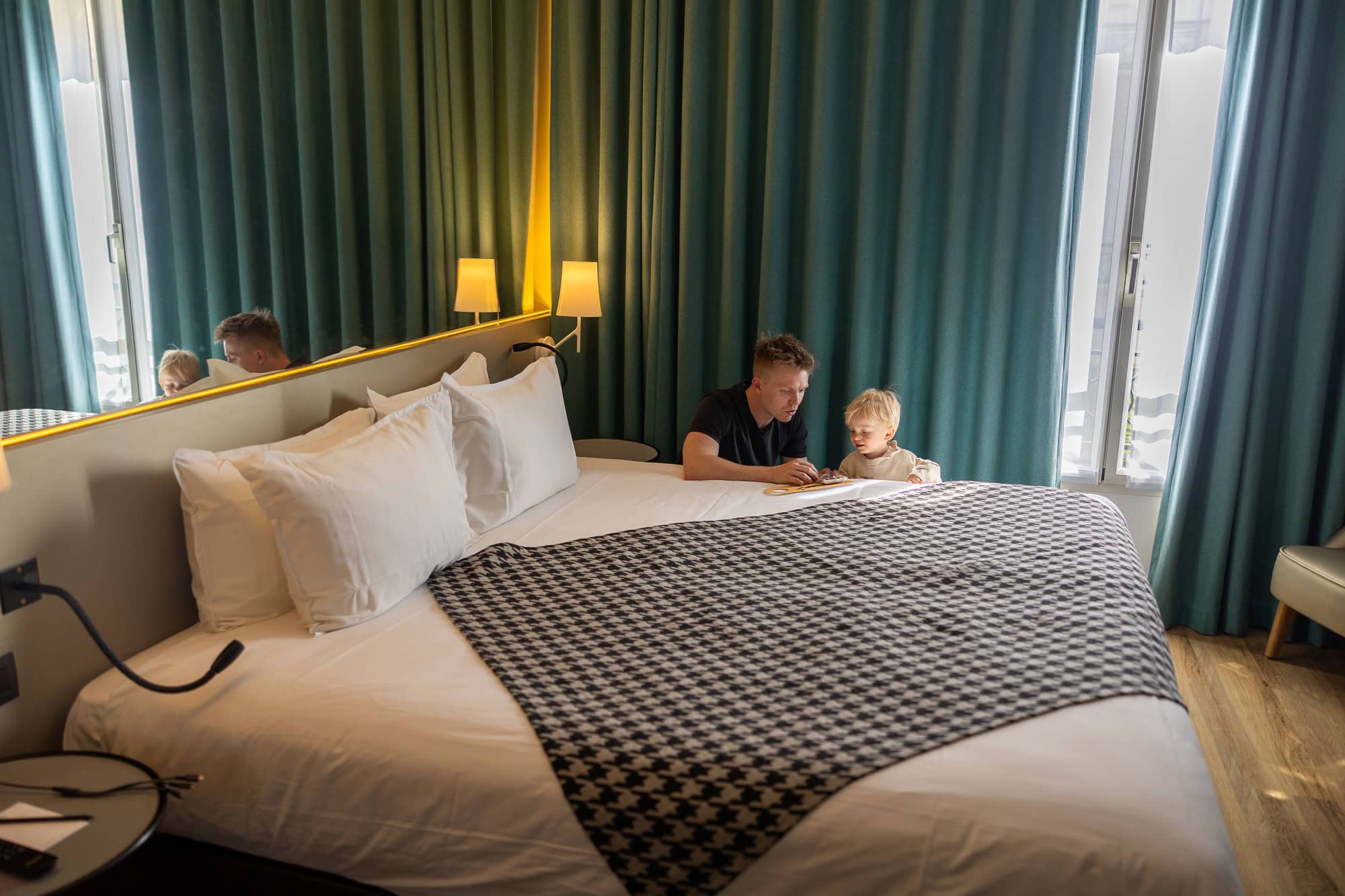
After a long search, we chose Hôbou, an authentic French boutique hotel in Boulogne-Billancourt (you can book it here). It looks unassuming at first glance, but within the first few hours you’ll fall completely in love with it.
Landmarks and Icons: Free Things to Do in Paris
Paris hides thousands of quiet courtyards and forgotten passages, and sometimes friends will tell you: skip the big names, they’re just for tourists. Lukáš and I made that mistake once and never again — the iconic sights have earned their status for a reason. The good news is that many of them are completely free, as long as you know the right rules and times.
Notre-Dame Cathedral: The Phoenix Rises Again
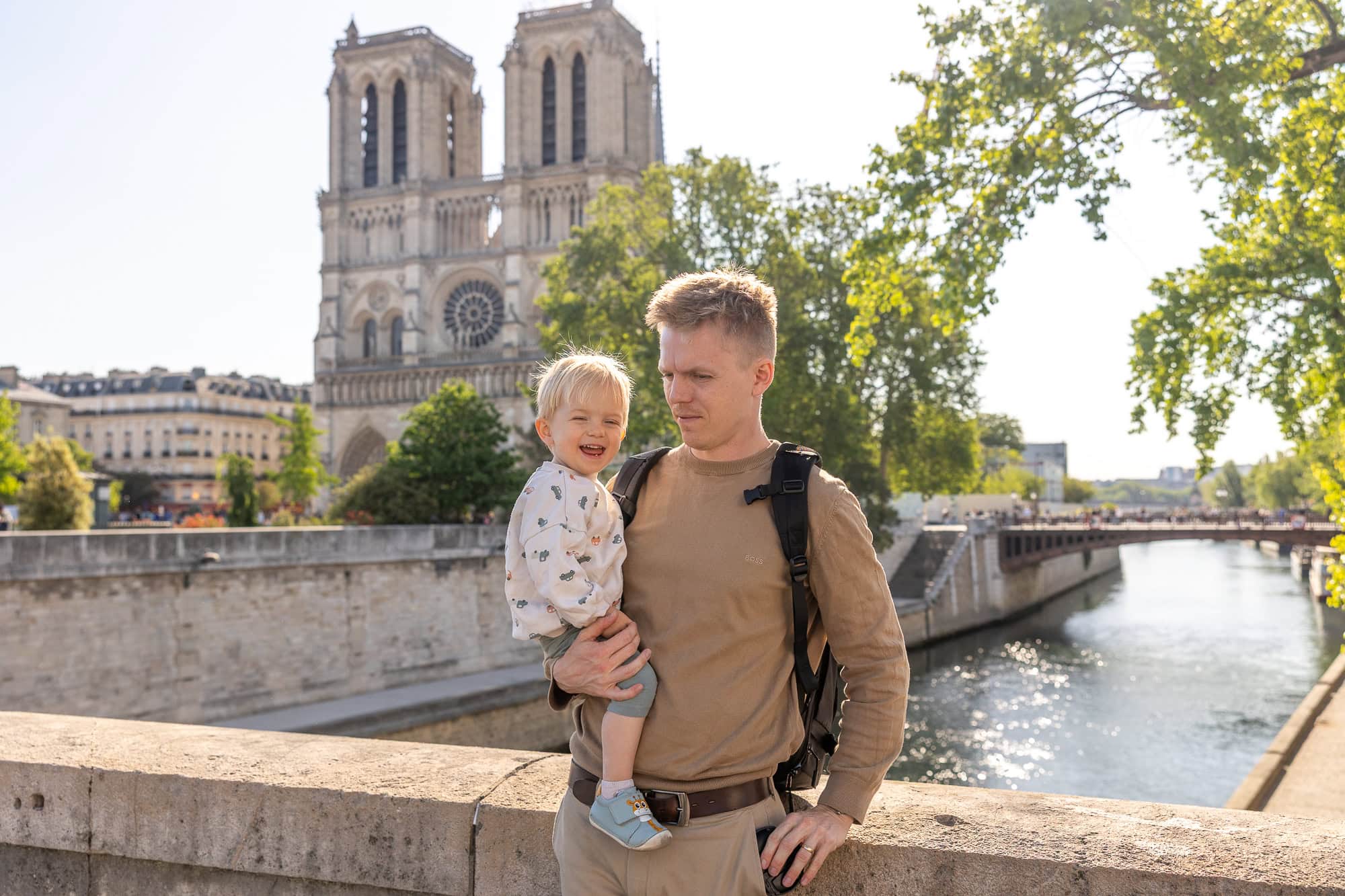
Watching the lead spire of the cathedral collapse in flames in April 2019 broke hearts around the world. That makes the experience of its rebirth all the more powerful. The cathedral was ceremonially reopened on 8 December 2024. Step inside and you’ll be stunned. The stone is incredibly light, stripped of centuries’ worth of soot and grime. Miraculously, the fire didn’t touch three crosses inside the cathedral, which survived without a single trace of damage.
France has a strict policy of free entry to all its places of worship. Admission to the main nave is therefore completely free for all visitors. For 2026, there’s just one rule: you must book a time slot through the official “Notre-Dame de Paris” app or their website. Opening hours are generous — weekdays from 7:50 to 19:00 (Thursdays until 22:00) and weekends from 8:15 to 19:30. You only pay for climbing the towers (€16), which aren’t accessible with a buggy anyway.
💡 Insider tip: The internet is awash with fake websites selling so-called skip-the-line tickets to Notre-Dame. They’re pure scams. Never pay anyone for entry to the main nave — it’s always free.
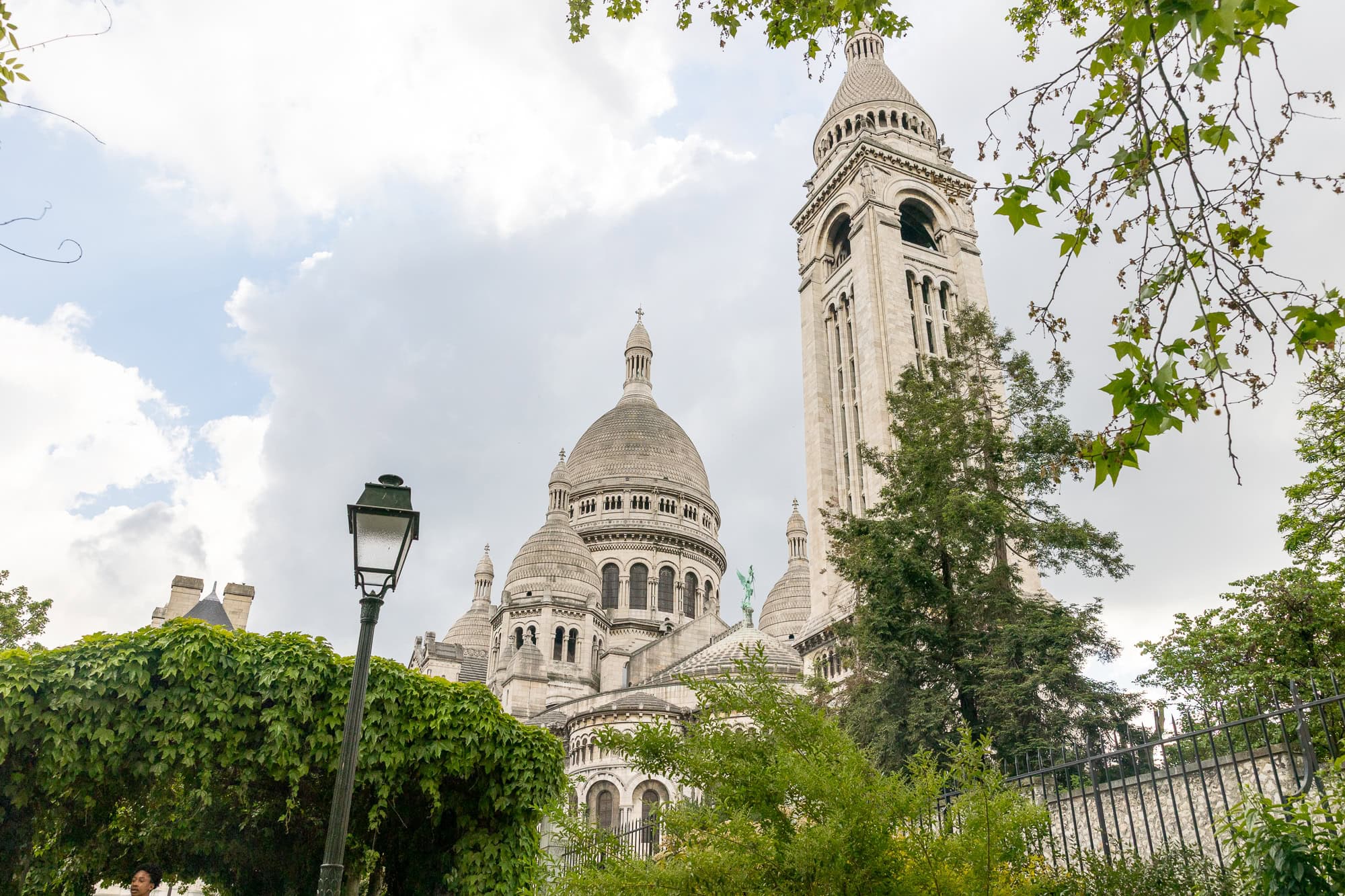
Sacré-Cœur Basilica: The White Dome Above the City
The Basilica of the Sacred Heart in the 18th arrondissement is visible from almost everywhere. The white travertine it’s built from has a unique property — when it rains, it secretes calcite, so the building actually cleans and whitens itself with every shower. Entry to the basilica is free year-round, and it’s open daily from 6:00 to 22:30.
If you’ve got a buggy, skip the three hundred steps up the hill and hop straight on the Funicular. A regular metro ticket (€2.15) is all you need. The ride takes just a moment but saves you buckets of sweat and toddler tantrums on the stairs. The area around the basilica is steeped in bohemian history — Picasso, Renoir and Van Gogh all lived here.
💡 Insider tip: Most people peek into the main nave and move on. Instead, find the entrance on the left side and head down to the Crypt. It’s an architectural gem — thanks to the wide trench around the basilica, it has real stained-glass windows letting in natural daylight. If you want to enjoy the view without the crowds, walk around Sacré-Cœur and head to the local park — there’s a children’s playground there too.
Arc de Triomphe and Panthéon: The Magic of First Sundays
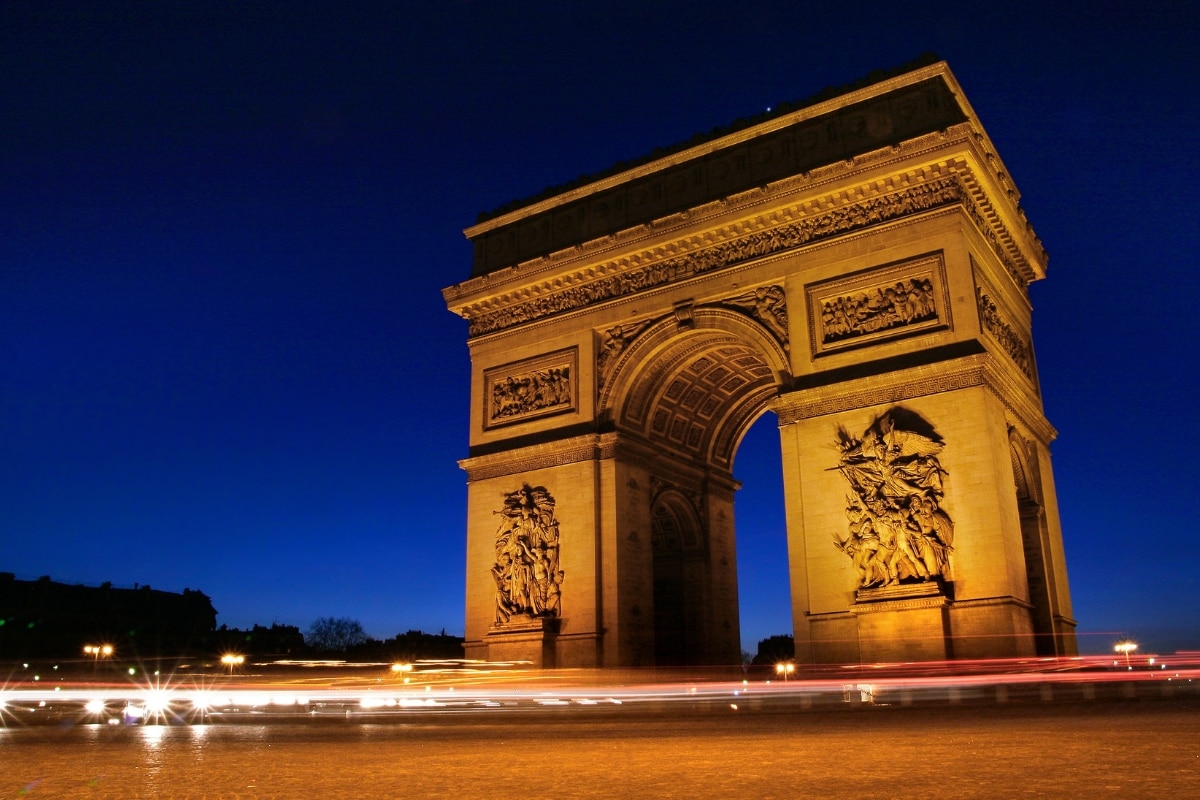
If you’re over 26, standard admission to the Arc de Triomphe or the Panthéon will set you back around €13. But there’s a brilliant workaround. French national monuments offer free entry on the first Sunday of every month. While major museums tend to observe this rule all year round, for landmarks like the Panthéon or the Conciergerie (where Marie Antoinette was imprisoned), it only applies during the off-season — from 1 November to 31 March.
The Panthéon in the Latin Quarter serves as a secular mausoleum. Beneath its enormous dome rest some of the greatest figures in history. You’ll find the tombs of Voltaire, Victor Hugo, Marie Curie and Émile Zola. The space is vast, and navigating it with a buggy is no trouble at all. The Arc de Triomphe, meanwhile, offers one of the best views from its rooftop — twelve wide boulevards radiating in every direction.
💡 Insider tip: Never try to dash across the insane roundabout to reach the Arc de Triomphe. Use the safe underpass called Passage du Souvenir, which starts on the northern side of the Champs-Élysées.
Arènes de Lutèce: A Hidden Roman Amphitheatre
Most visitors have no idea that Paris has its own Roman ruins, right in the heart of the 5th arrondissement. The Arènes de Lutèce date back to the 1st century AD and once held up to 15,000 spectators watching gladiatorial combats. Today it’s an incredibly peaceful public park hidden behind an unassuming entrance on Rue Monge.
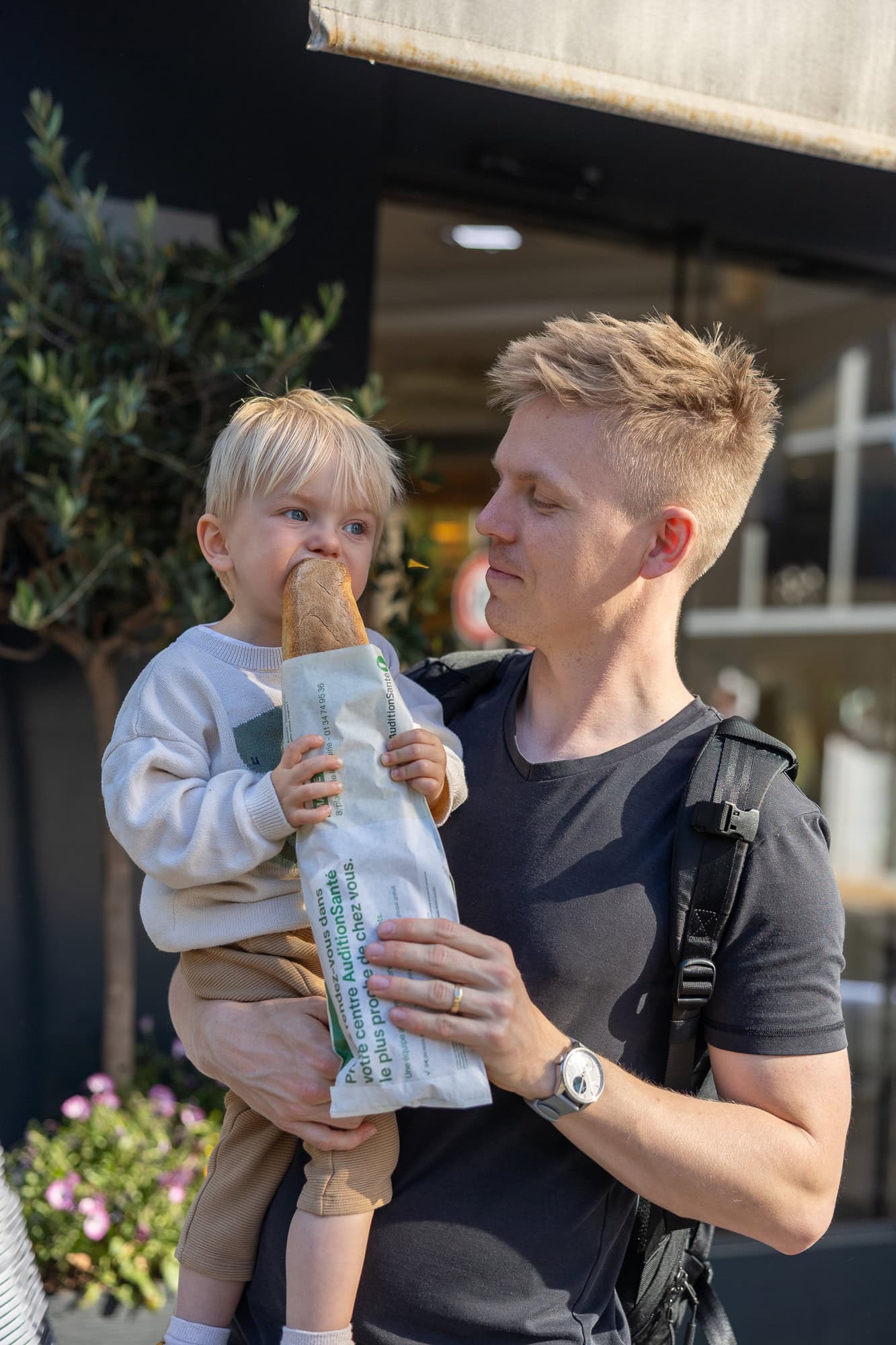
Entry is completely free and the site is open daily from morning until dusk. For families with children, it’s a perfect spot. Kids can safely run around the sandy arena while you sit on the ancient stone tiers eating a fresh baguette. You’ll often spot locals playing football or pétanque here.
💡 Insider tip: Access to the arena is via Rue Monge through the passageway at number 49. It looks like you’re walking into someone’s apartment block, but don’t be put off — walk through and an enormous space opens up before you.
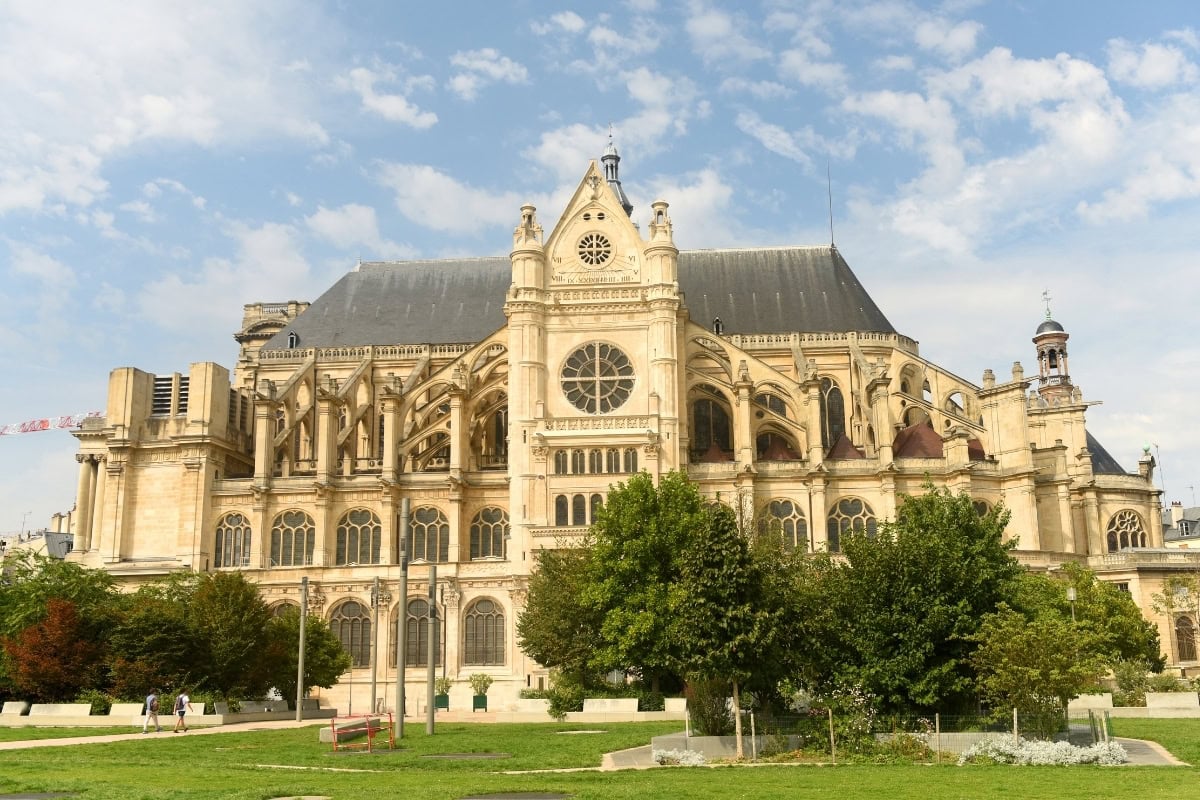
Church of Saint-Eustache: Concert Acoustics for Free
A stone’s throw from the former Paris market hall of Les Halles stands a church whose grandeur easily rivals Notre-Dame, yet it rarely gets the attention it deserves. Saint-Eustache (1st arrondissement) is a stunning late-Gothic masterpiece. It’s open daily and entry is, of course, free.
Here’s the real treat: this church houses one of the largest organs in France, with an incredible 8,000 pipes. If you’re even slightly lucky, you’ll catch local organists practising in the afternoon. Sitting in that vast, silent nave listening to the music bounce off the vaulted ceiling is one of my absolute favourite Paris memories.
Museums and Galleries: World-Class Art for Zero Euros
Paris is an absolute museum powerhouse. I’ve spent weeks here over the years and still haven’t seen them all. If you’re a citizen of the European Union and under 26, you’re in luck — admission to all national museums (Louvre, Musée d’Orsay, Orangerie, Picasso) is free year-round. Just show your ID or passport at the entrance. For the rest of us, there are other brilliant ways in.
City Museums: Twenty Free Treasures
While national museums charge admission, the City of Paris (Ville de Paris) runs a network of 20 smaller but absolutely top-notch museums. Entry to their permanent collections is always free for everyone, regardless of age. You only pay for temporary exhibitions, which you can happily skip.
My absolute favourite is Musée Carnavalet in the 3rd arrondissement (Marais). It’s the museum of Paris history, housed in two beautiful Renaissance mansions. You’ll walk through the city’s story from prehistory to the French Revolution. They have entire reconstructed period rooms, old shop signs, and personal belongings of Marie Antoinette. Entry is free; open Tuesday to Sunday (10:00–18:00).
Another gem is the Petit Palais in the 8th arrondissement. The building itself, with its monumental entrance, is worth the visit alone. Inside, you’ll find a fantastic collection of fine art spanning from antiquity to the early 20th century. Navigating it with a buggy is a pleasure — the corridors are wide and the museum rarely gets overcrowded.
💡 Insider tip: The inner courtyard of the Petit Palais hides a gorgeous garden with a colonnade and a small café. Even if you don’t fancy going in for the art, pop in for a coffee. It’s an incredibly peaceful oasis right next to the bustling Champs-Élysées.
Homes of Famous Writers
If you love literature, treat yourself to visiting the homes of famous French authors. Maison de Victor Hugo sits on the beautiful Place des Vosges (4th arrondissement). You can wander the second-floor apartment where Hugo lived before his exile and where he wrote part of Les Misérables — completely free. Open Tuesday to Sunday (10:00–18:00).
In the 16th arrondissement, you’ll find Maison de Balzac. It’s the only surviving Parisian apartment of this brilliant novelist. Tucked away in an unassuming house with a garden, it offers a lovely, unexpected view of the Eiffel Tower. The permanent exhibition is, once again, free for all.
💡 Insider tip: In the 9th arrondissement, seek out the Musée de la Vie Romantique (Museum of Romantic Life). It’s set in a small house with green shutters at the end of a cobblestoned lane. The permanent collection is free, and in spring the garden roses burst into bloom beneath the trees.
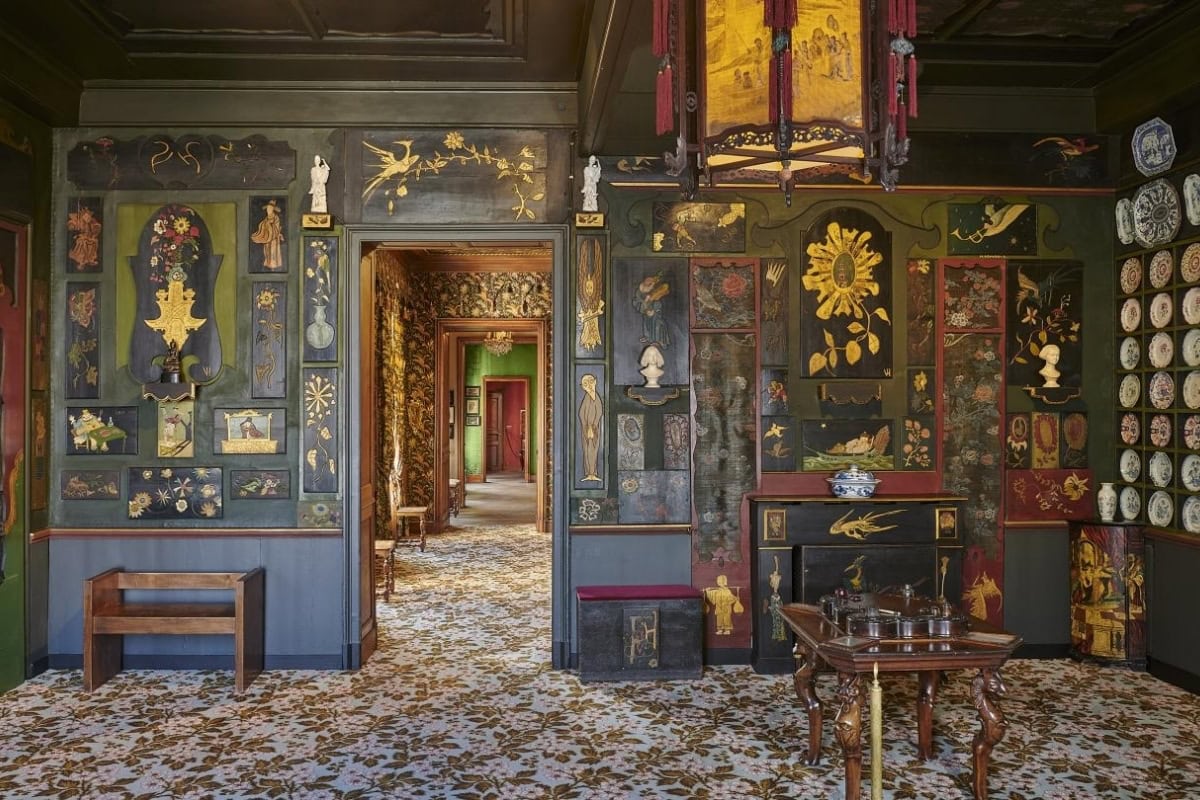
Musée Curie: Inside a Brilliant Woman’s Laboratory
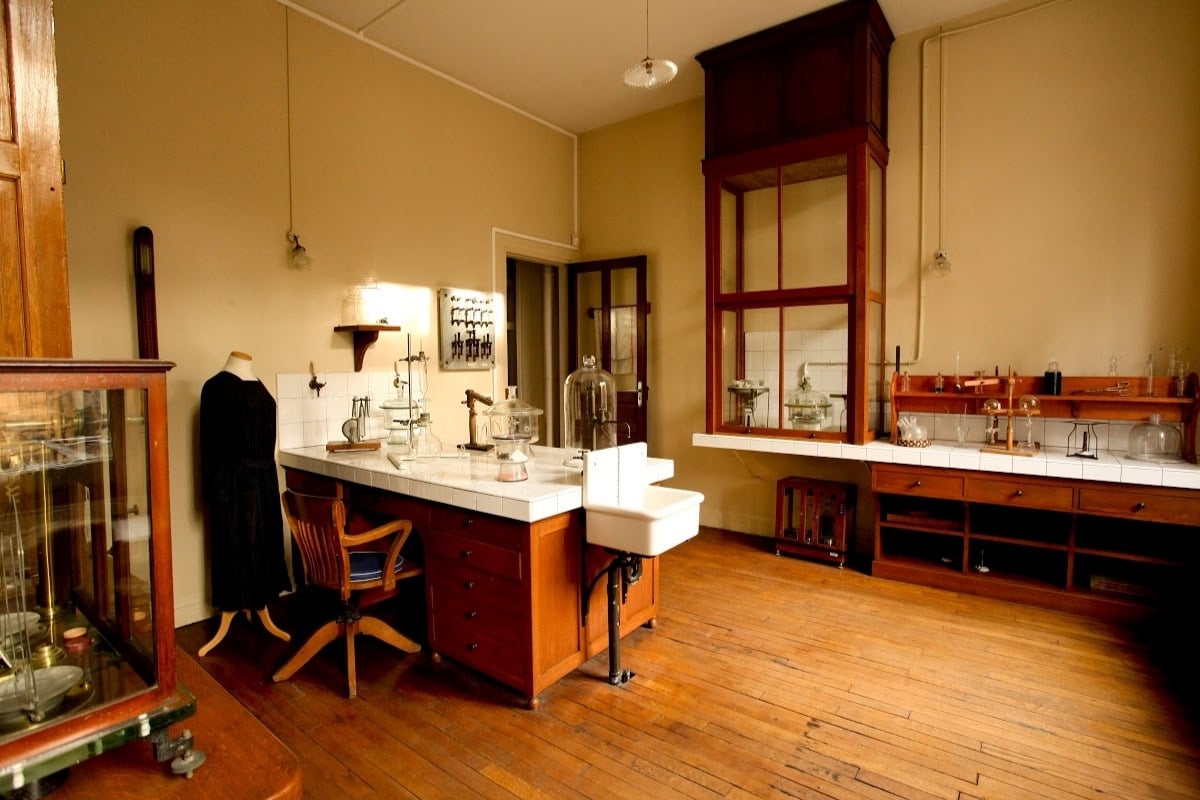
If you have even the slightest interest in science, this little museum in the Latin Quarter (5th arrondissement) is one you absolutely shouldn’t miss. It occupies the very laboratory where Marie Curie worked and where she ultimately passed away. Entry is completely free, and the rooms have preserved an utterly authentic 1930s atmosphere.
Beyond the old ampoules, measuring instruments and notebooks, you’ll also see a small garden that Marie herself planted as a place to rest during her research. We don’t take Jonáš here yet — he’s too young for glass display cases — but for adults, it’s a profoundly fascinating glimpse into the life of one of history’s greatest figures.
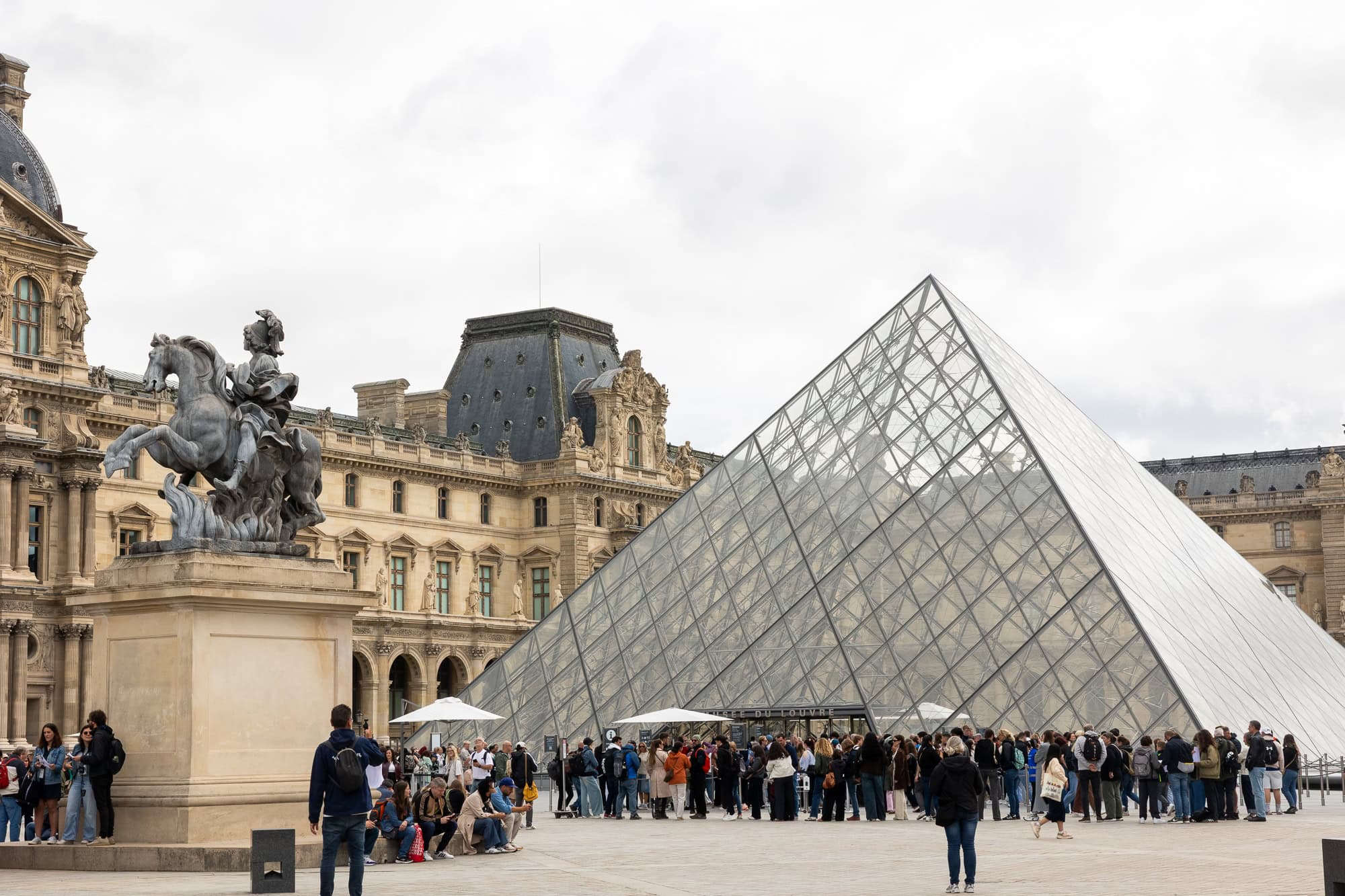
Louvre and d’Orsay: Free Entry Strategy
Getting into the Louvre or Musée d’Orsay for free takes a bit of planning. A standard Louvre ticket costs around €22, but the museum offers free admission on the first Saturday evening of each month, from 18:00 to 21:45. This applies to all visitors.
Musée d’Orsay, which this year celebrates its 40th anniversary and boasts the finest Impressionist collection anywhere (including Monet’s canvases and Van Gogh’s self-portrait), holds its free-entry tradition on the first Sunday of each month. Regular admission is otherwise €16.
💡 Insider tip: Even when entry is free, both museums require you to book a timed-entry slot online beforehand on their official websites. Without one, they simply won’t let you in — even on free days.
59 Rivoli: A Legalised Artists’ Squat
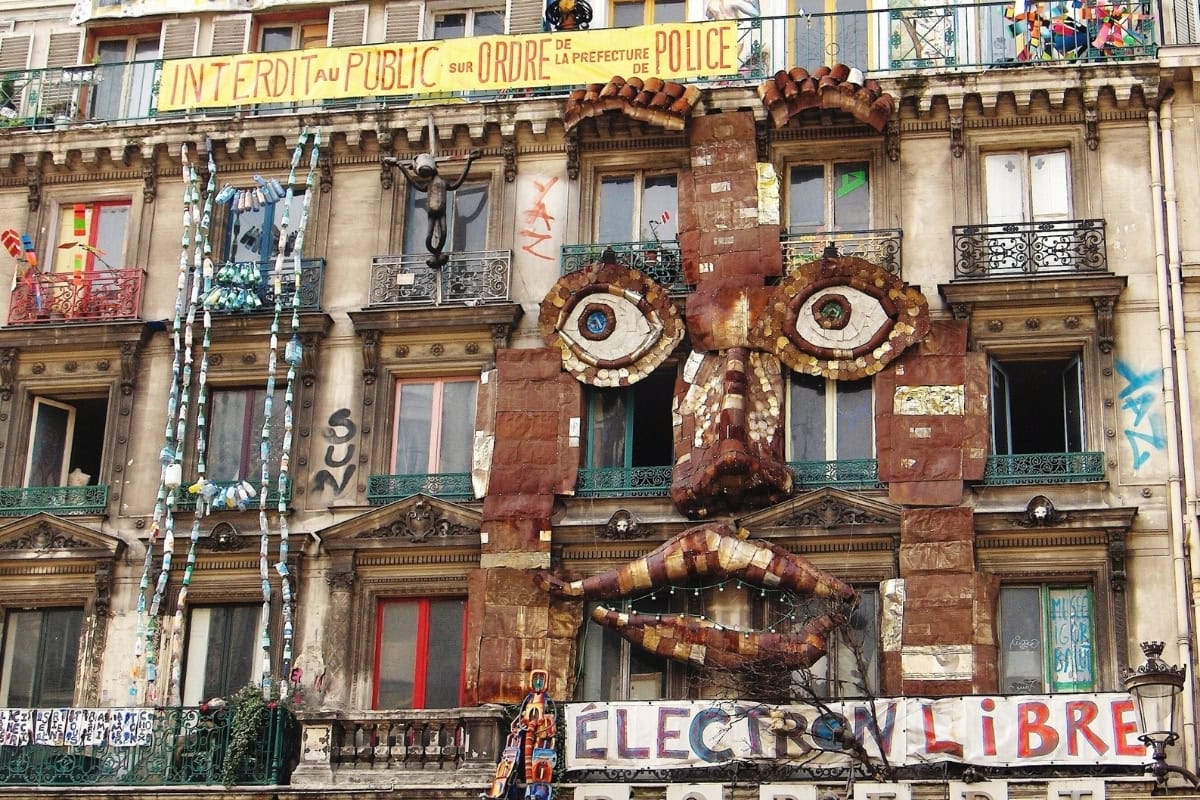
This is an experience of a completely different kind. In the very heart of the city, on the busy shopping street Rue de Rivoli (1st arrondissement), you’ll find building number 59. From the outside it looks wonderfully eccentric — the façade is often adorned with giant installations. It’s a former illegal squat that the city eventually bought and legalised.
Today, artists from around the world create in thirty studios here. Entry is completely free (a donation to the collection box is voluntary) and it’s open Tuesday to Sunday (13:00–20:00). You can freely wander through the floors, chat with artists while they work, and soak up the wild, creative energy. Don’t try bringing a buggy though — the staircase is narrow and spiral.
💡 Insider tip: Weekends tend to be packed. The best time to visit is on a weekday early afternoon, when the artists have time and are happy to chat about their work.
Viewpoints and Panoramas: The City at Your Feet
Seeing Paris from above is seriously addictive. But you don’t need to shell out tens of euros for the Eiffel Tower lift (which is tricky to access with a buggy anyway). The city offers fantastic rooftop viewpoints and parks completely free. And here’s a bonus: when you’re standing on the Eiffel Tower, you can’t actually see it in your photos. From these spots, you get the full picture.
Department Store Rooftops
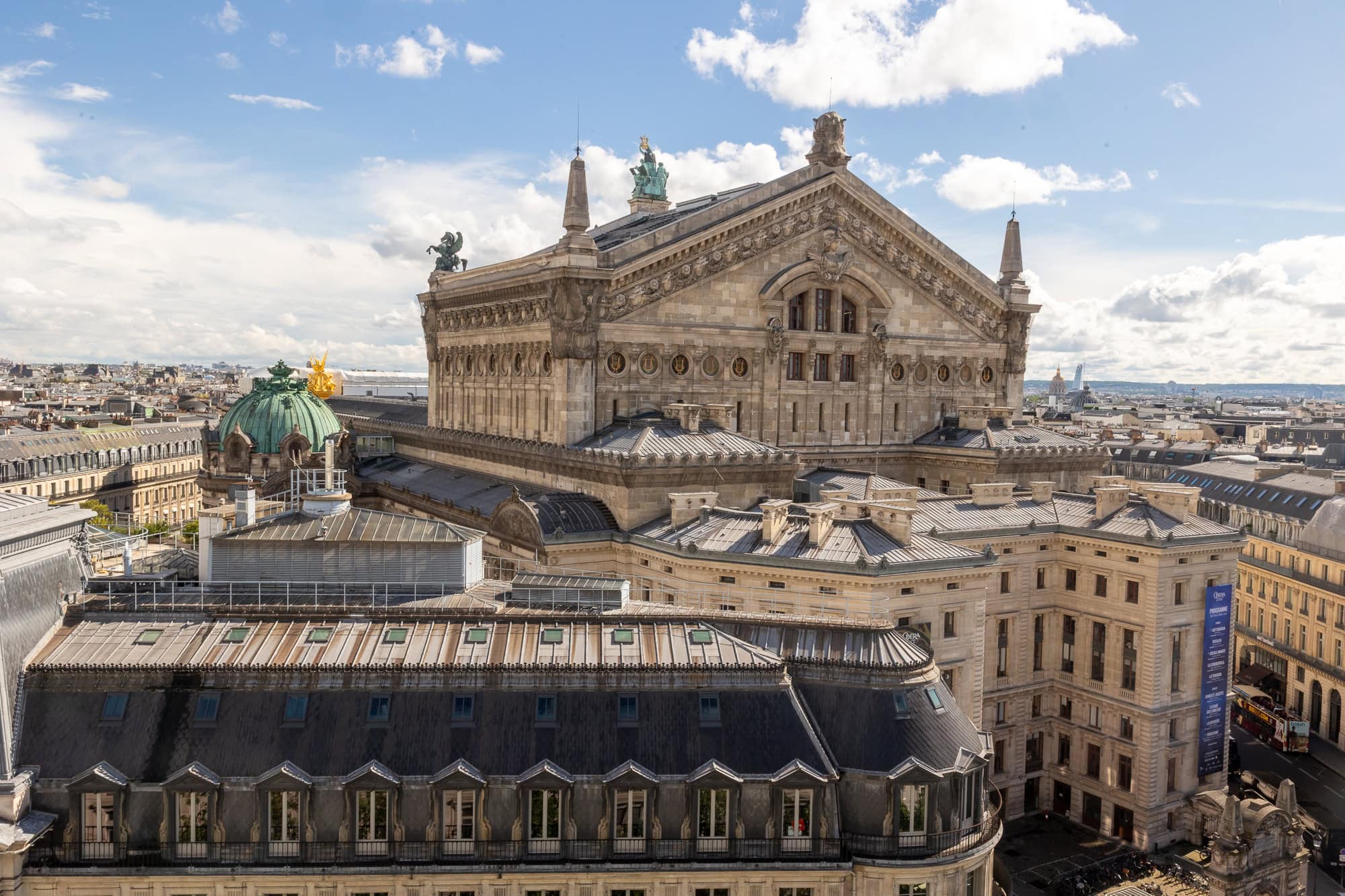
The most famous terraces are perched atop the historic department stores near the Opéra Garnier. Galeries Lafayette Haussmann (9th arrondissement) offers a huge rooftop with 360° views across the city. Open Monday to Saturday (10:00–20:00) and Sunday (11:00–20:00). The lifts work perfectly, so getting up there with a child is easy.
Right next door, Printemps Haussmann has a 7th-floor terrace called “7e Ciel” (Seventh Heaven). It serves up a panorama from the opera house all the way to the Eiffel Tower. The newly opened rooftop at BHV Marais (4th arrondissement) is another great option, with lovely views of the Hôtel de Ville and surrounding historic rooftops.
💡 Insider tip: Head to the Galeries Lafayette terrace about an hour before sunset. You’ll catch the most beautiful golden light reflecting off the zinc Parisian rooftops.
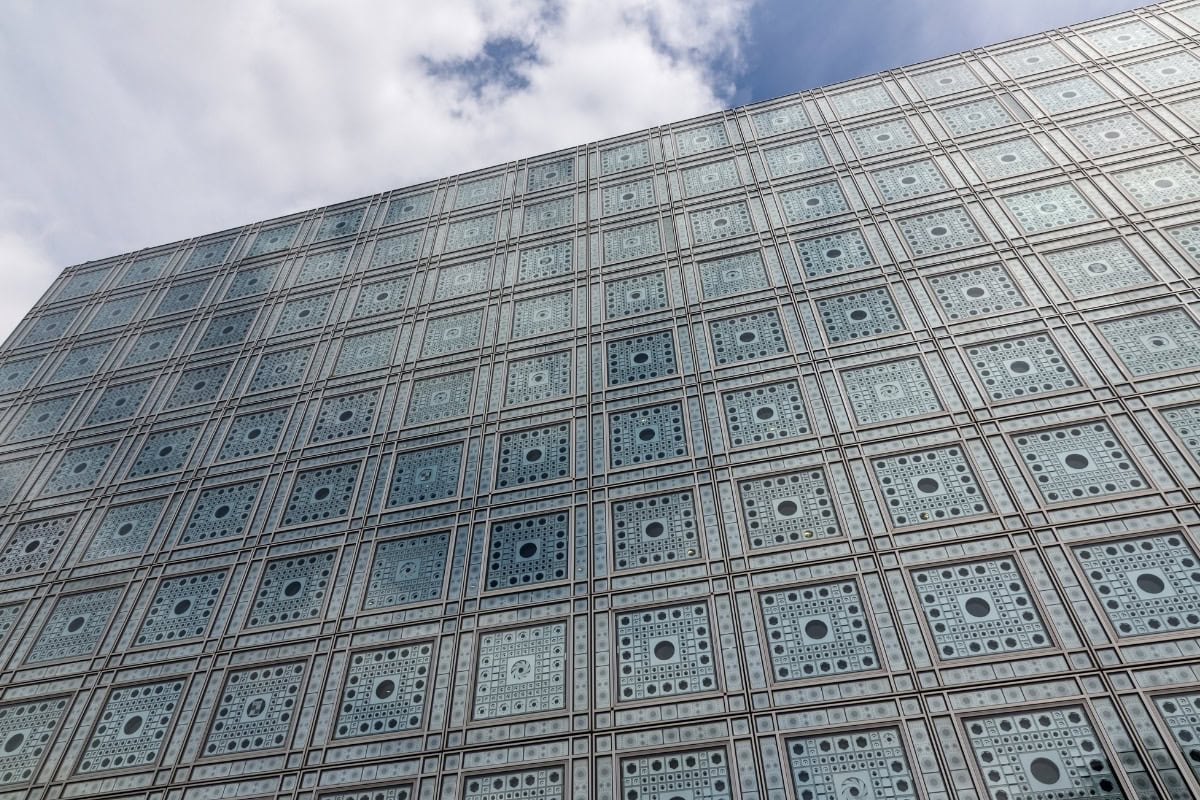
Institut du Monde Arabe
If you happen to be in the Latin Quarter, take the glass lift up to the 9th floor of the Institut du Monde Arabe (5th arrondissement). The terrace is free and open Tuesday to Sunday (10:00–18:00), offering one of the very best views of the River Seine and the back of Notre-Dame Cathedral. On your way down, don’t miss the famous façade — it’s made up of mechanical apertures that open and close in response to sunlight.
If you’ve got a few minutes after the viewpoint, pop into the public library inside. The architecture of the whole space is gorgeous, it smells of old paper, and it offers perfect tranquility when you need a break from the noisy streets.
💡 Insider tip: Most tourists don’t know about this terrace, so it’s never as crowded as Galeries Lafayette. A brilliant spot for a quiet photo break.
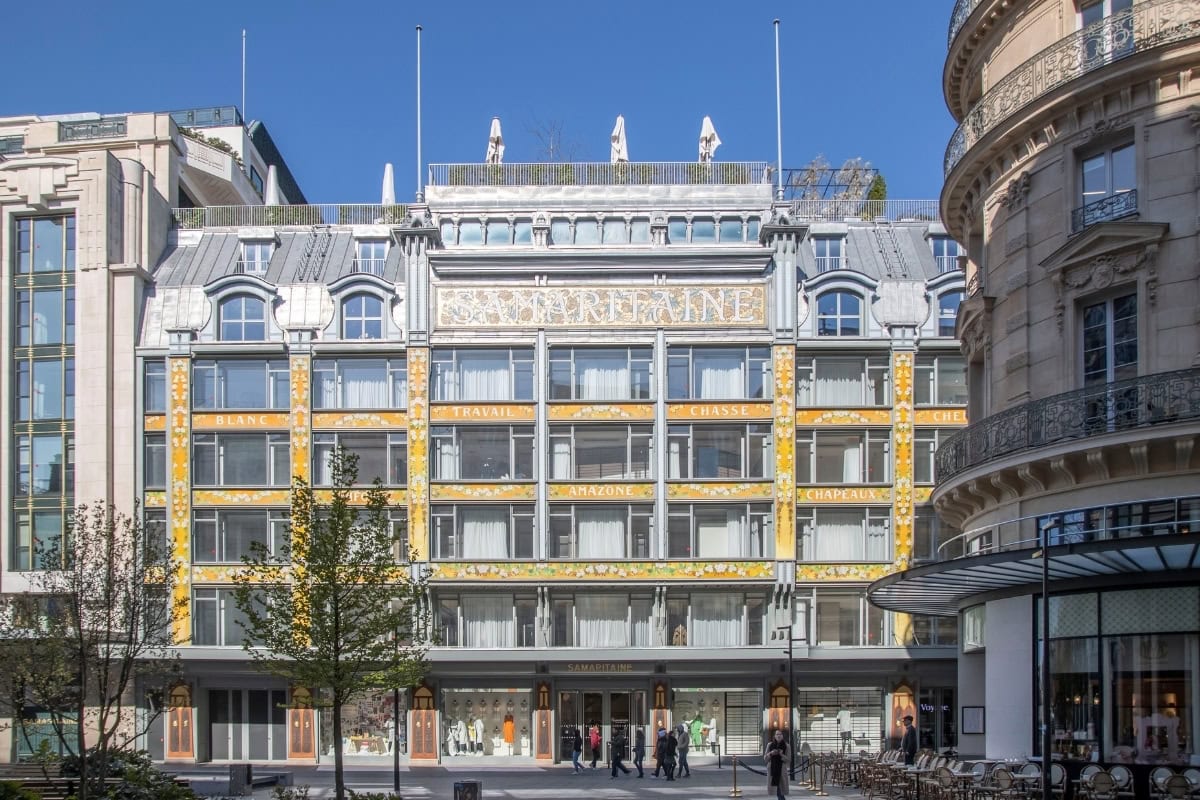
La Samaritaine Rooftop: Luxury from a Bird’s Eye View
The La Samaritaine department store by the Pont Neuf bridge recently reopened after an incredibly long and expensive renovation. It’s a temple of luxury where the most affordable thing might be the ground-floor coffee, but it’s still worth a visit. Going up to the top won’t cost you a penny.
When you ride the lift to the upper floors, a splendid view of the Seine and surrounding historic buildings opens up beneath the glass roof. Lukáš and I love coming here just to people-watch Parisian high society and soak in the stunning views. The lifts are spacious, so getting a buggy up there is effortless.

Parc de Belleville and Buttes-Chaumont
For a view with a splash of nature, head to eastern Paris. Parc de Belleville (20th arrondissement) is the highest park in the city (108 metres above sea level). The viewpoint at the top by Rue Piat costs nothing and lays the entire city out before you, from Sacré-Cœur to the Eiffel Tower. It’s mainly locals who come here, and the atmosphere is wonderfully relaxed and community-driven.
The nearby Parc des Buttes-Chaumont (19th arrondissement) offers equally breathtaking panoramas. From its suspended bridge and the central rocky outcrop topped by the little Temple de la Sibylle, you can see all the way to Montmartre. With its artificial grottos and waterfalls, this park is unbeatable for a family picnic.
💡 Insider tip: Be mindful of evening hours at Parc de Belleville. The neighbourhood is lively and a touch rougher, so I’d recommend visiting during a sunny afternoon instead.
Map of points of interest for your phone
Parks, Gardens and Swimming in the Seine
When Jonáš has had enough of landmarks and we desperately need some quiet, the parks always save us. Parisian green spaces are meticulously maintained, geometrically precise, and entry is, naturally, free. This year also brings one enormous revolution that’s changing summer in Paris beyond recognition.
Swimming in the Seine: The Reality of Summer 2026
For years it sounded like a pipe dream, but it’s finally happening. After massive investments in cleaning the river ahead of the Olympic Games, three designated public swimming spots are opening in the Seine from summer 2026. Best of all — it’s completely free.
You can take a dip at three locations: Bras Marie (4th arrondissement, near Île Saint-Louis), Bras de Grenelle (15th arrondissement, a short walk from the Eiffel Tower) and in the Bercy area (12th arrondissement). The swimming areas will operate during July and August, every day from morning to evening. Floating pontoons, showers and lifeguards will be provided. For Parisians, it’s a return to a century-old tradition.
💡 Insider tip: The river water is tested regularly. If quality drops after heavy rain, the swimming zones are temporarily closed. Keep an eye on updates on the city’s website or simply check whether the green flag is flying.
 Jardin du Luxembourg“ class=“wp-image-158764″/>
Family Classics: Jardin du Luxembourg and Tuileries
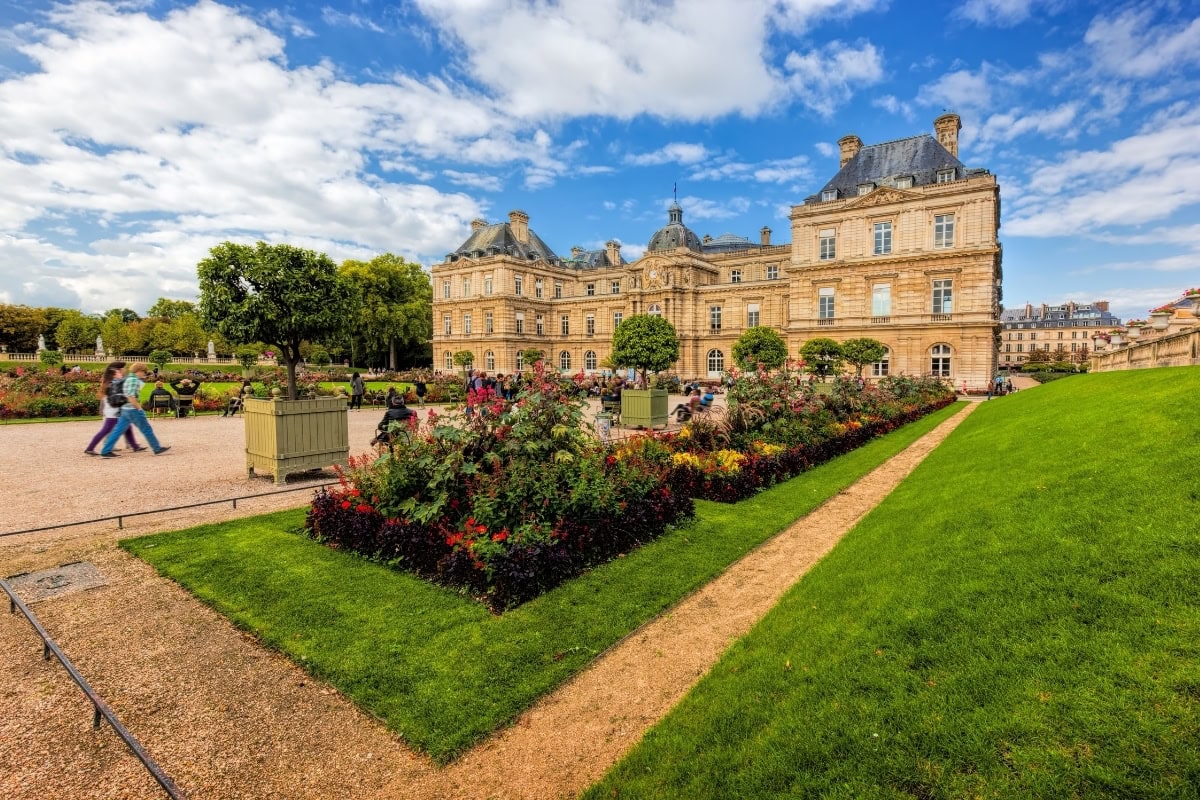
Jardin du Luxembourg (6th arrondissement) is my favourite spot in Paris. This park has everything: wide sandy paths, dozens of green metal chairs you can drag wherever you like, and — most importantly — a huge water basin in the centre. Children traditionally sail little wooden boats here, a timeless pleasure that never gets old. The park also has a classic puppet theatre (Théâtre des Marionnettes), where for a small fee (around €3) kids can enjoy the traditional Guignol show.
Jardin des Tuileries (1st arrondissement) lies directly between the Louvre and Place de la Concorde. It’s a perfect connector during walks through the centre. In autumn, the trees turn spectacular colours, and in the middle you’ll find large playgrounds and trampolines (the latter charge a small fee).
💡 Insider tip: In the Luxembourg Gardens, look for the beehives (Rucher du Luxembourg). They’ve been here since the 19th century and beekeeping courses are still held to this day. It’s a fascinating slice of countryside right in the heart of the city.
Parc Monceau: Ancient Ruins and Tranquillity
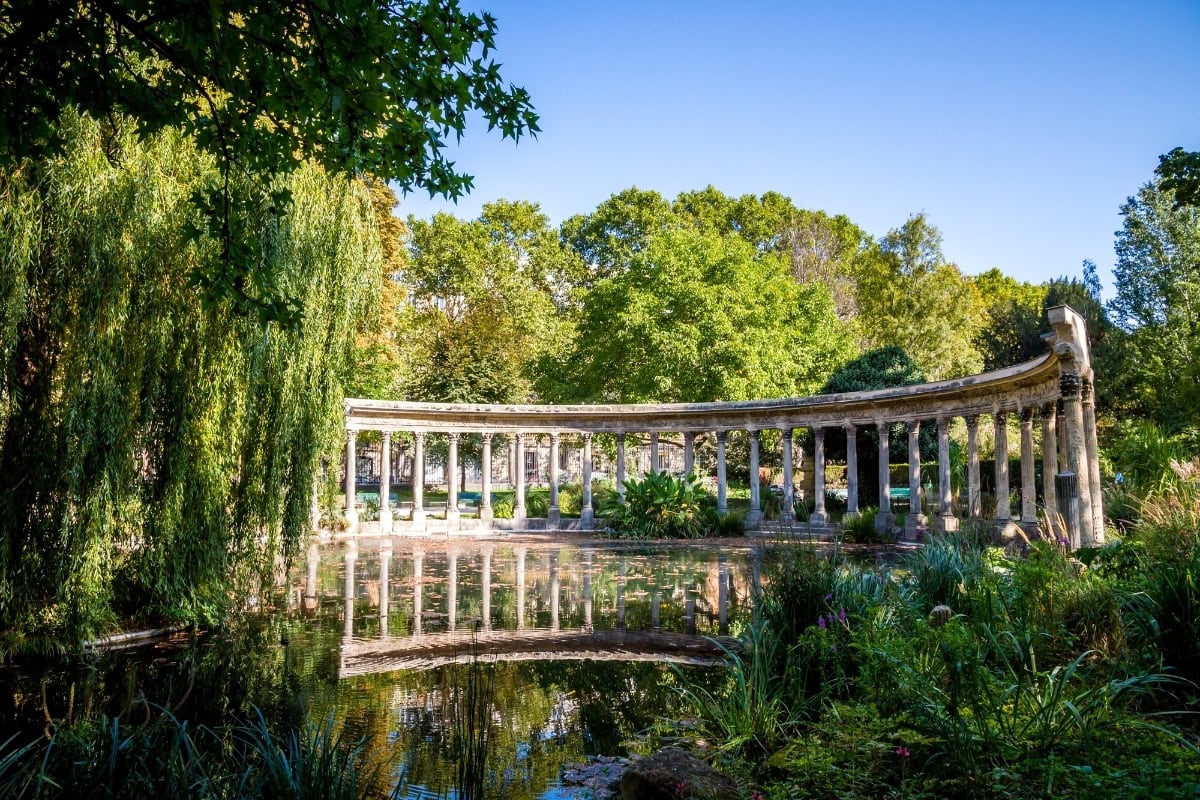
When we’ve had our fill of the sometimes-crowded Luxembourg Gardens, we head to the 8th arrondissement. Parc Monceau is wonderfully elegant, surrounded by wealthy townhouses with wrought-iron balconies, and it exudes that slow, lazy Sunday feeling. Jonáš loves running along the wide paths, and Lukáš and I admire the artificially constructed ancient ruins scattered across the lawns.
What makes this park really special is its local feel. Very few tourists find their way here. You’ll see plenty of Parisian families out for picnics, and on every other bench someone’s playing chess. And for architecture lovers: right by one of the entrances stands a gorgeous 18th-century rotunda.
Promenade Plantée and Square du Vert-Galant
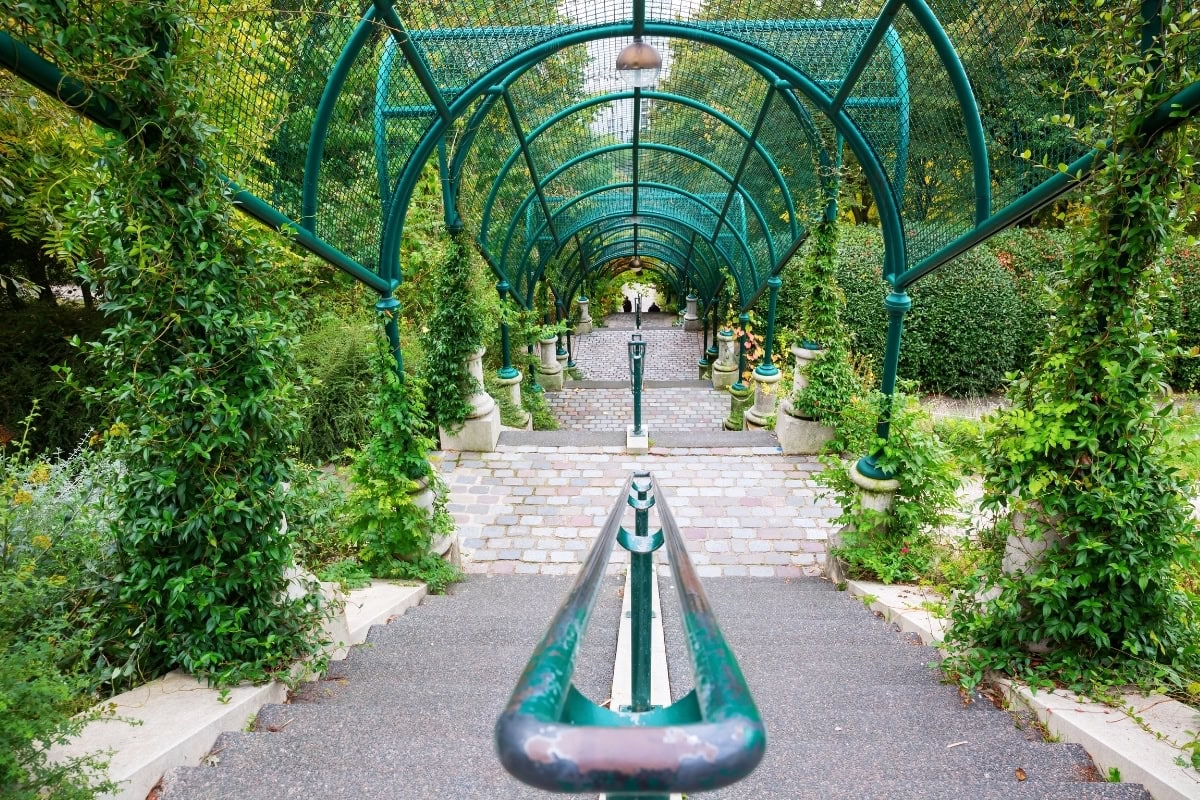
If you’re a fan of New York’s High Line, you need to see its older Parisian predecessor. The Coulée Verte René-Dumont (also known as the Promenade Plantée) is a 4.7-kilometre elevated park in the 12th arrondissement, built on a disused railway viaduct. You walk at third-floor height, roses bloom all around you, and you peer into the windows of Parisian apartments. Start just behind the Opéra Bastille.
For a romantic picnic for two, I can’t think of a better spot than Square du Vert-Galant (1st arrondissement). It sits right on the western tip of Île de la Cité. Most tourists stay up by Pont Neuf, but if you walk down the steps to the water, you’ll discover a small, tree-shaded park where the Seine laps right at your feet.
💡 Insider tip: You can easily access the Promenade Plantée with a buggy — there are public lifts at several points along the route. The path is also completely car-free, which is a huge relief with a toddler.
Hidden Paris: Covered Passages, Lanes and the City of the Dead
When you want to escape the crowds and feel like a true explorer, Paris has an entire network of hidden gems waiting. Often all it takes is turning into an unassuming passageway and you’ll find yourself in a completely different century.
Covered Passages: 19th-Century Elegance
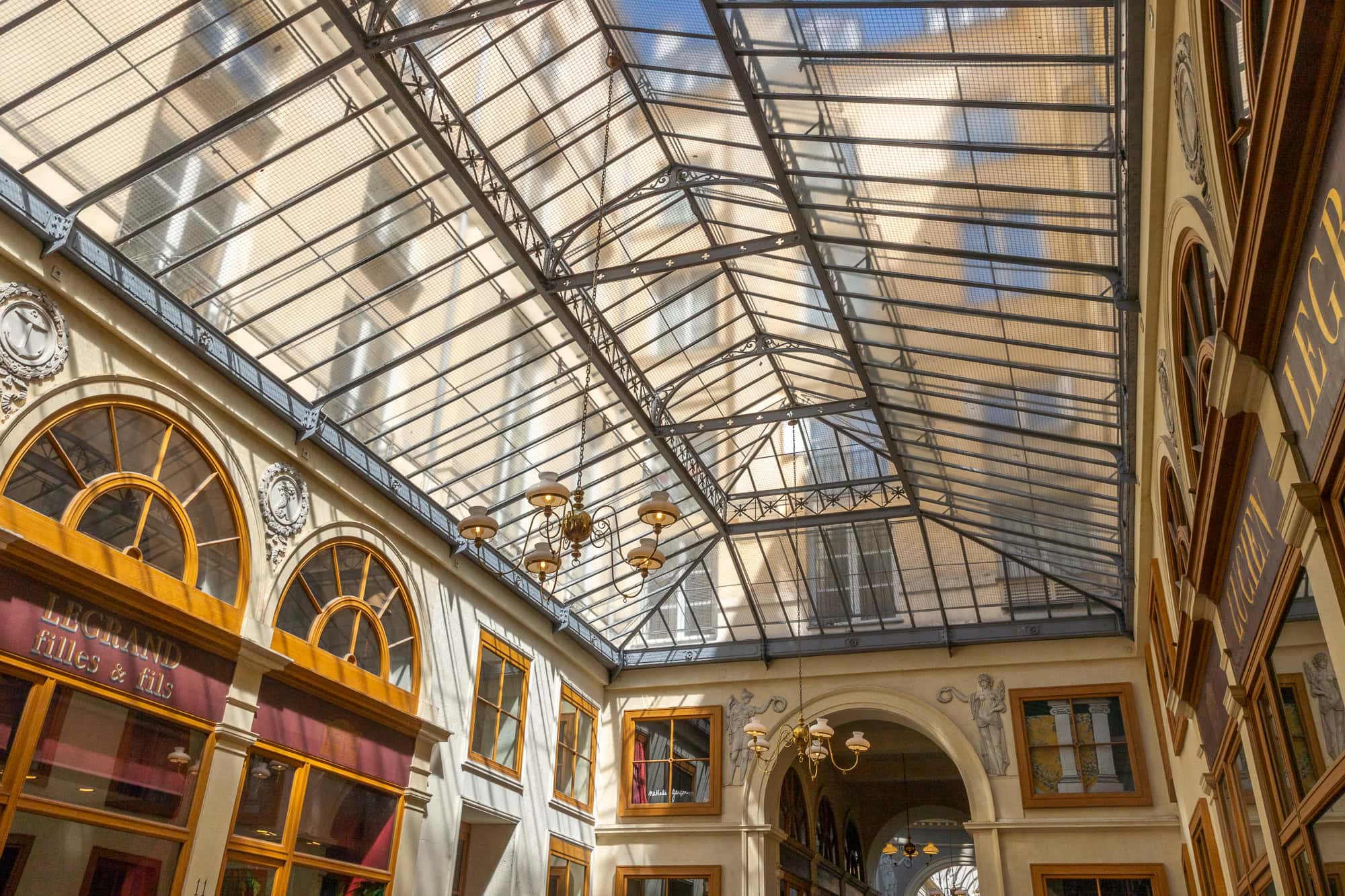
Long before soulless shopping centres appeared, Parisian high society built covered passages (passages couverts) as elegant refuge from the muddy streets. Only a handful survive today, and walking through them is, of course, free. Glass roofs, mosaic floors, hushed little cafés — suddenly you’re not in 2026 Paris but somewhere in the 19th century, except your phone is poking out of your bag. With a buggy, these are a dream to navigate: everything’s flat and sheltered from the wind.
Start at Galerie Vivienne (2nd arrondissement). It’s the most luxurious and beautiful passage, with original mosaic flooring from the 1820s. A short walk away lies Passage des Panoramas — the oldest of them all (dating from 1799) and a paradise for stamp collectors. Right opposite you’ll find Passage Jouffroy, which smells of old wood and hides the charming Hôtel Chopin.
💡 Insider tip: If you love high ceilings and light, seek out Passage du Grand-Cerf (2nd arrondissement). It boasts the tallest glass roof of any passage and is home to small boutiques of independent jewellers and designers.
Père-Lachaise and Montparnasse Cemeteries
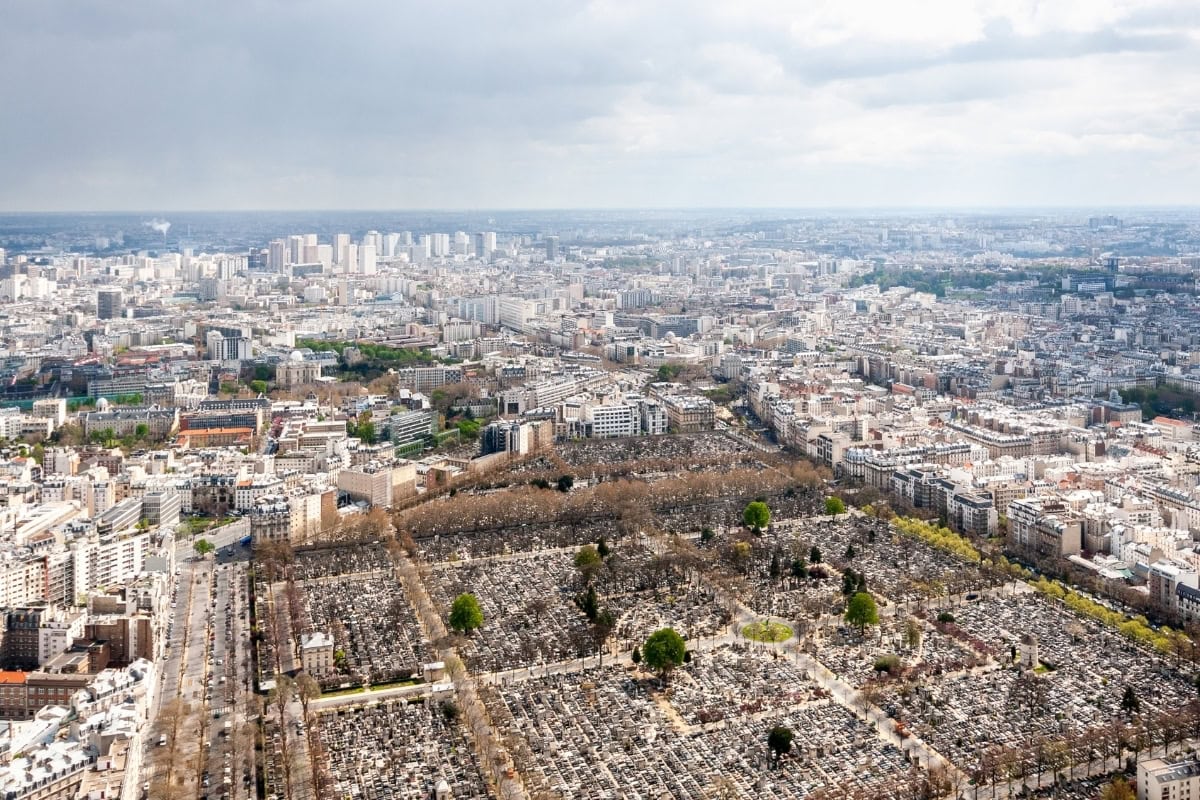
It might sound morbid, but Parisian cemeteries function as beautiful, tranquil parks full of mature trees and wandering cats. Père-Lachaise (20th arrondissement) is reportedly the largest and most visited cemetery in the world — a rather bizarre statistic, but after your first visit you’ll completely understand why. Entry is free (daily 8:00–18:00). Jim Morrison, Oscar Wilde, Édith Piaf and Molière all rest here. With a buggy, stick to the main paved paths — the side alleys are surfaced with rather rough cobblestones.
A quieter alternative is Montparnasse Cemetery (14th arrondissement). It sits in a residential neighbourhood and offers a rather surreal view of the black Tour Montparnasse skyscraper looming directly above the historic headstones.
💡 Insider tip: At the entrance to Père-Lachaise, definitely snap a photo of the map from the noticeboard. Without it, you’ll get hopelessly lost in this city of the dead, and hunting for specific graves turns into a desperate wander.
Canal Saint-Martin: Paris’s Answer to Amsterdam
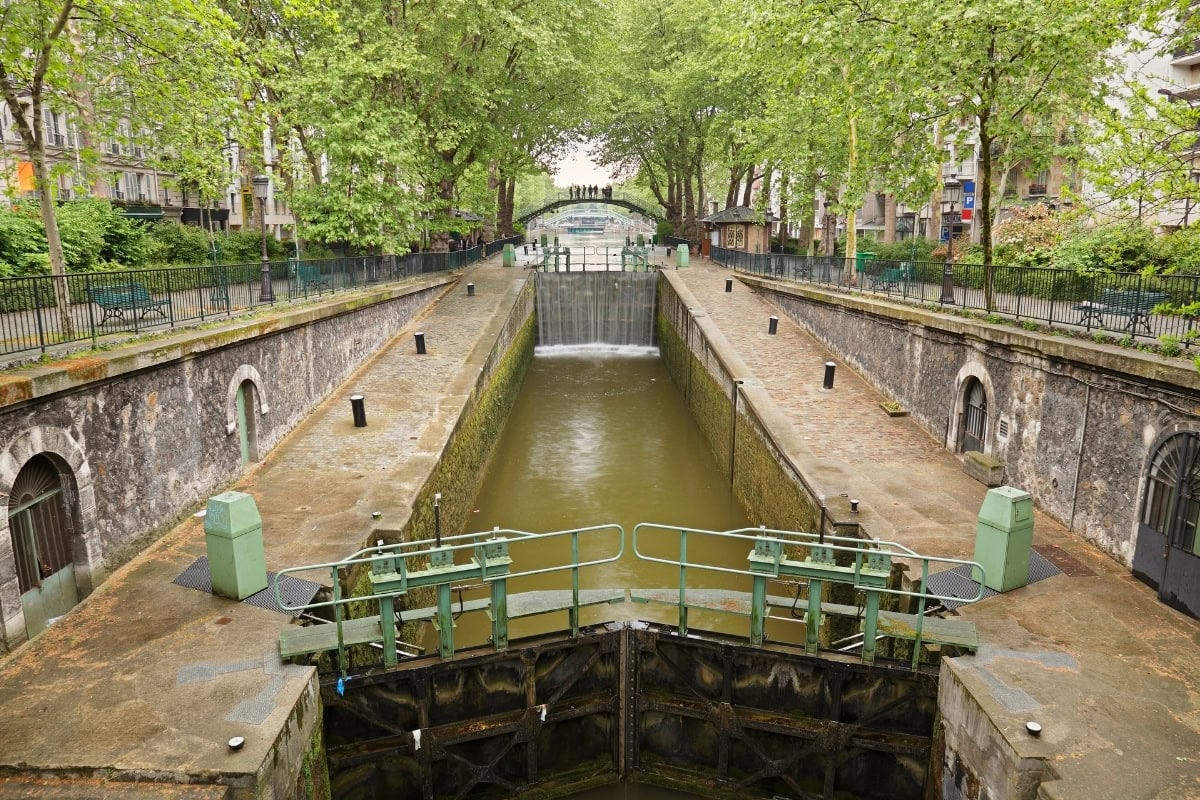
This spot has held a special place in our hearts since our student days. Canal Saint-Martin (10th arrondissement) is a network of waterways connected by charming green bridges and iron footbridges. Tall trees line both banks, and in the evenings locals sit with their legs dangling towards the water, drinking wine from plastic cups and chatting away.
Walking along the canal is, of course, free, and for kids it’s an absolute winner — every few minutes a boat glides through and passes through the locks. We always stop somewhere halfway, pick up a fresh baguette, and just soak up the laid-back atmosphere. This is where Paris doesn’t feel like a hectic metropolis at all.
Colourful Streets: Crémieux and Montmartre
For a strong visual hit, go hunting for Parisian micro-worlds. Rue Crémieux in the 12th arrondissement is a lane of pastel-coloured houses that became an Instagram sensation, but it’s still worth a quick stroll. Even more enchanting is La Campagne à Paris in the 20th arrondissement — a former workers’ colony on a small hill that feels like a village plonked into the middle of a metropolis.
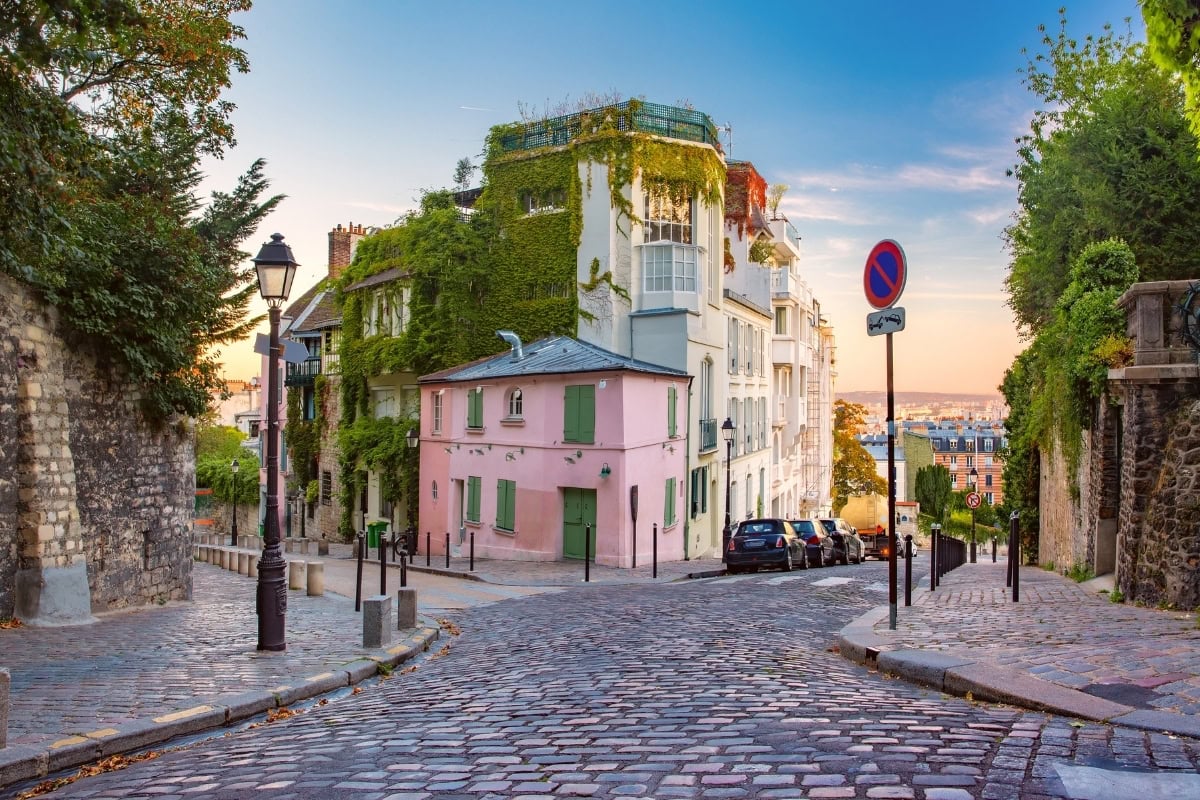
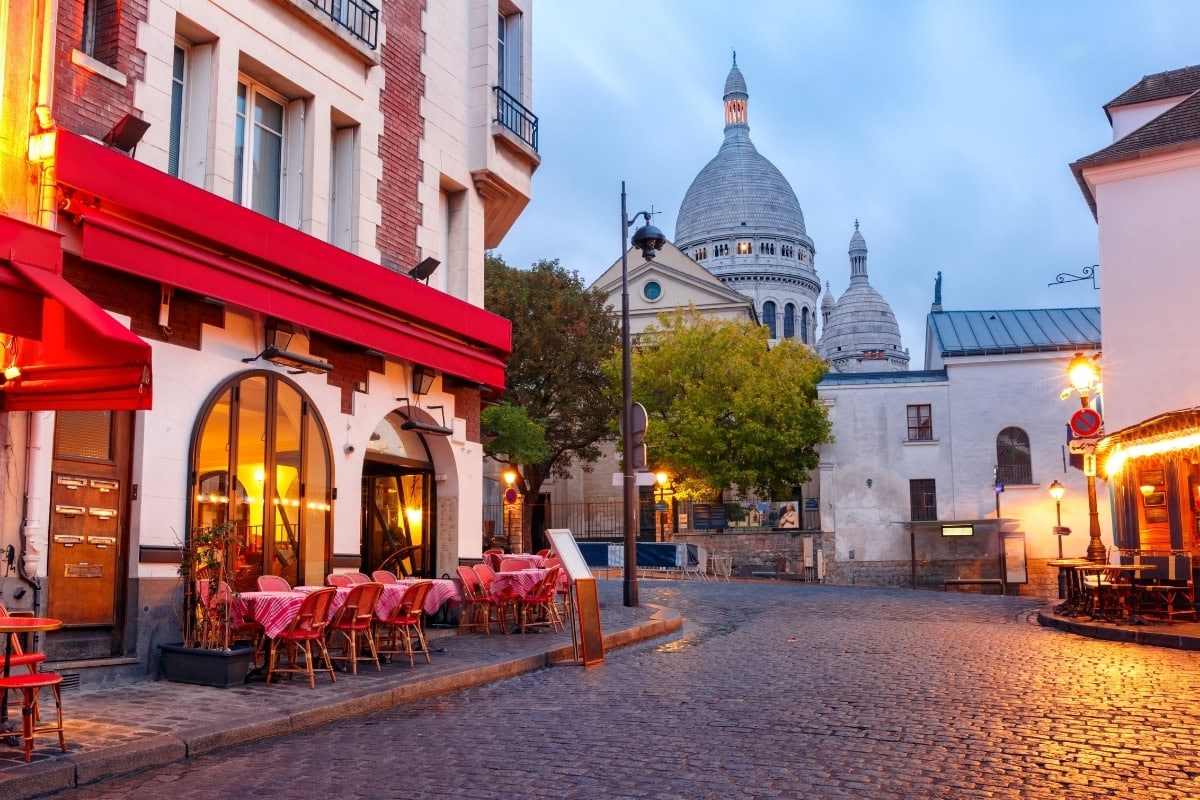
On Montmartre, escape the crowds around the basilica and find Villa Léandre. This cul-de-sac built in a mini art deco style looks more like an English country lane. A short walk away, Rue de l’Abreuvoir winds its way along. With its pastel façades and a view of the Sacré-Cœur dome in the distance, it’s quite possibly the prettiest street on the entire hill.
💡 Insider tip: On Montmartre, don’t miss the little square Place des Abbesses. Here you’ll find the famous Wall of Love (Le Mur des je t’aime), where “I love you” is written in over 300 languages. A brilliant spot for a romantic photo that won’t cost you a penny.
Food and Drink: How to Eat Well Without Breaking the Bank
Eating out in Paris can be eye-wateringly expensive. Sit down at a restaurant on the Champs-Élysées and you’ll easily pay €8 for a coffee. But there are time-tested tricks to eat brilliantly, locally and cheaply.
Free Water: The Magic Words “Carafe d’eau”
This is the single most important phrase you need to learn. In every French restaurant, bistro or café, you are legally entitled to free tap water. The waiter will often automatically offer you expensive bottled water (Evian, Badoit), which can add €6 to €10 to your bill.
Your only response should be a confident: “Une carafe d’eau, s’il vous plaît.” (A carafe of water, please). The waiter will bring a glass bottle of clean, chilled tap water without batting an eyelid. You can also fill up on the streets. Paris is full of cast-iron green fountains called Wallace fountains, which dispense free drinking water year-round (except during freezing winter days).
💡 Insider tip: Tap water in Paris is not only safe to drink but genuinely excellent quality. The city draws it from underground springs and rivers and filters it rigorously. There’s no reason to spend money on bottled water.
Bakery Breakfast and Market Lunch
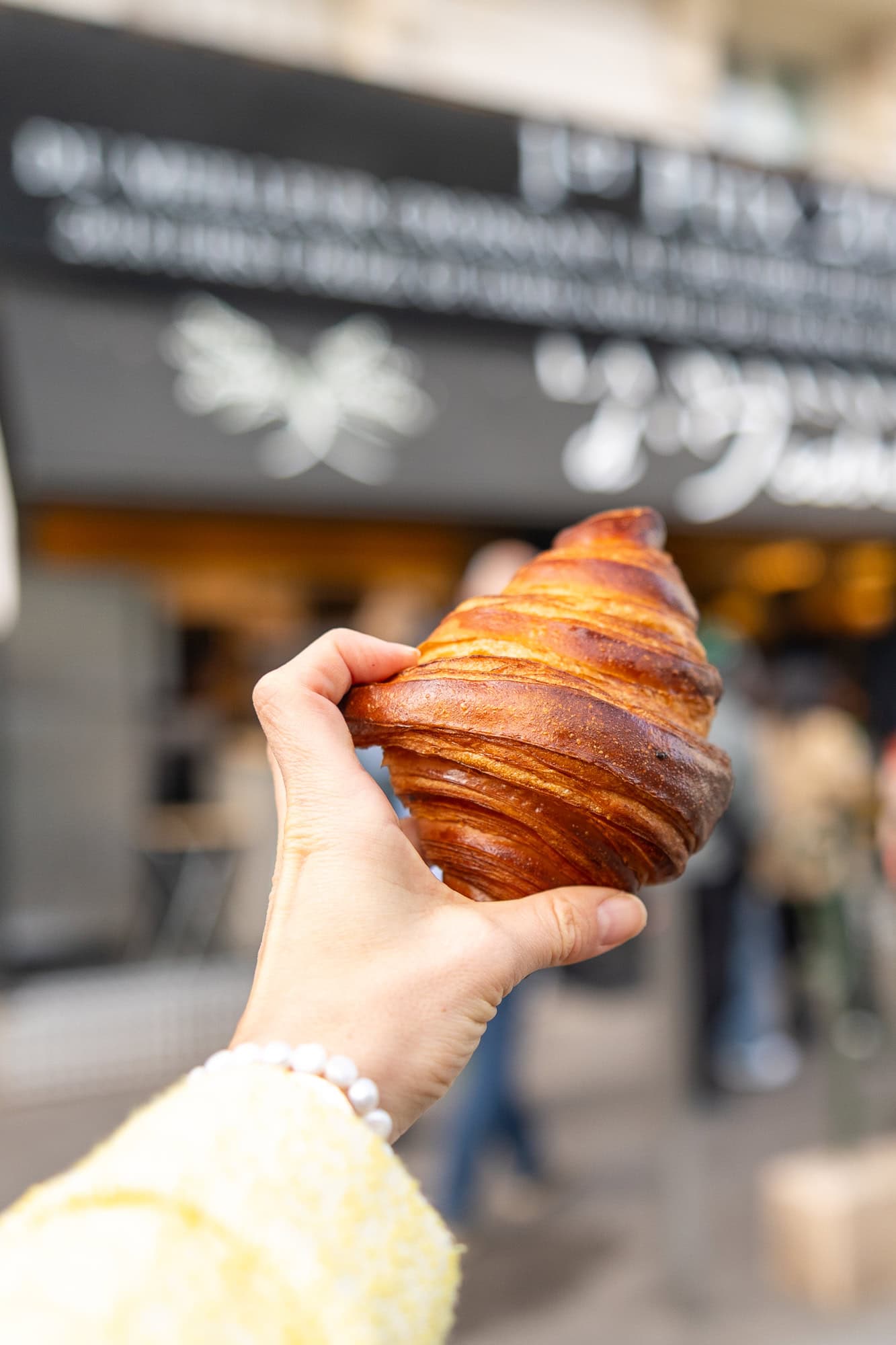
If breakfast isn’t included at your hotel, head straight to a bakery. For €1.50 you’ll get a still-warm, buttery miracle, sit down with it on the nearest park bench, and suddenly all is right with the world.
For lunch, hit the markets. Marché des Enfants Rouges (3rd arrondissement) is the oldest covered market in the city. It works like a brilliant open-air food court — grab your food at a stall and eat it at the communal wooden tables. While a regular restaurant lunch would set you back €25, here you’ll eat fantastically for €10 to €12. I personally love the Moroccan vegetable tagines, which are perfect for vegetarians.
💡 Insider tip: If you’d rather sit in a proper restaurant, look for the so-called “Bouillons.” These are historic, high-capacity restaurants (such as Bouillon Chartier or Bouillon Pigalle) that were originally built in the 19th century for workers. The atmosphere is wonderfully chaotic, you share tables with strangers, but you’ll get a main course for under €15.
The Falafel Wars in Marais
For a cheap grab-and-go dinner, head to Rue des Rosiers in the 4th arrondissement. You’re in the historic Jewish quarter, and a fierce battle is being waged here for the best falafel in Europe. The undisputed king is L’As du Fallafel. The queue often stretches halfway down the street, but it moves fast. For roughly €8, you’ll get a massive pitta stuffed with crispy falafel, aubergine, hummus and red cabbage.
And where to sit with this hot, fragrant beauty? Take your pitta and walk a few blocks to nearby Place des Vosges. Lukáš and I always plonk ourselves on the grass, hand Jonáš a piece of plain flatbread, and just gaze at the perfect symmetrical brick mansions all around.
💡 Insider tip: L’As du Fallafel is a strictly kosher establishment. That means from Friday afternoon to Sunday morning they’re completely closed for Shabbat. If you turn up on a Saturday, you’ll need to settle for the rival places across the road (which are also excellent, by the way).
Practical Info: Transport, Rules and What to Watch Out For
To make sure Paris doesn’t cost you more than necessary, you need to know the rules of the game. The city has its own customs, and if you break them, you’ll feel the sting — whether it’s buying tickets or how you behave in shops.
The Golden Rule: Bonjour
This is the absolute cornerstone of Parisian survival. Whenever you walk into a small shop, bakery or bistro, you must greet everyone with a clear “Bonjour” (or “Bonsoir” in the evening). Eye contact is mandatory. If you just walk in and start rummaging through the goods, the staff will instantly file you under “arrogant tourist” and treat you accordingly. The French take this seriously — without a Bonjour you’re basically invisible. And trust me, a frosty Parisian waiter is an experience you won’t forget in a hurry. 😉
The same magic applies when you leave. Never forget to add a simple “Merci, au revoir” (Thank you, goodbye). If you could see how quickly those words can thaw even the grumpiest Parisian baker, you’d understand that this tiny bit of politeness is really the best free ticket to connecting with locals.
Getting Around: On Foot or by Bus
You’ll save the most by walking, and fortunately Paris is perfect for it. The centre is surprisingly compact — the distances between the Louvre, Notre-Dame and Marais are easily walkable. With a buggy, you’ll quickly discover that the historic metro is full of stairs and turnstiles that a pushchair simply won’t fit through. The only reliably step-free option is the new, fully accessible Line 14.
Instead of the metro, use surface buses. A single ticket costs €2.15 and covers an entire journey. Buses have ramps for buggies and the added bonus of seeing the city as you go. If you’re in Paris for a full week (Monday to Sunday), buy a Navigo Découverte card. For around €30, you get unlimited travel on everything, including trains to CDG Airport. Getting to Paris from London is straightforward — the Eurostar takes just over two hours from St Pancras, and budget airlines like easyJet fly from several UK airports to both Charles de Gaulle and Orly.
Watch Out for Street Scams
Paris is full of people trying to part tourists from their money using tricks that are decades old. Stay alert.
- The gold ring: Someone “finds” a gold ring on the pavement in front of you (often near the Louvre) and asks if it’s yours. When you say no, they offer to sell it to you for a small fee. The ring is, of course, worthless brass.
- Friendship bracelets: On the steps below Sacré-Cœur, groups of men will approach and very quickly tie a string bracelet onto your wrist. Once the knot is done, they aggressively demand money. Keep your hands in your pockets and firmly say “Non.”
- Fake petitions: Especially around the Eiffel Tower and Notre-Dame, you’ll encounter young women (often pretending to be deaf-mute) holding clipboards with a petition for a good cause. While you read and sign, their accomplice rifles through your bag.
- Pickpockets on the metro: Be especially vigilant on Line 1 (which goes to the Louvre) and Line 4. Keep a hand on your bag zip and wear your backpack on your front.
All of this might sound a bit alarming, but if you use common sense and firmly but politely say no, you’ll be absolutely fine. Paris is otherwise a perfectly safe and wonderful city, so don’t let these minor nuisances spoil it for you.
Read More
If you’ve sorted out your budget planning and want to dive into specific Parisian adventures, check out our other guides:
- What to See in Paris: Complete itineraries and strategies for first-time visitors.
- Best Museums in Paris: A detailed guide to galleries, from the Impressionists at the Orsay to modern art.
- Hidden Paris: Secret courtyards, forgotten passages and tourist-free spots.
Frequently Asked Questions
Tips and Tricks for Your Vacation
Don’t Overpay for Flights
Search for flights on Kayak. It’s our favorite search engine because it scans the websites of all airlines and always finds the cheapest connection.
Book Your Accommodation Smartly
The best experiences we’ve had when looking for accommodation (from Alaska to Morocco) are with Booking.com, where hotels, apartments, and entire houses are usually the cheapest and most widely available.
 🚗 Car rental on the roadVerified car rentals in Paris
Search with the DiscoverCars comparison engine — it compares prices from dozens of local and international rental companies, and most bookings come with free cancellation.
Compare car prices in Paris →Don’t Forget Travel Insurance
Good travel insurance will protect you against illness, accidents, theft, or flight cancellations. We’ve had a few hospital visits abroad, so we know how important it is to have proper insurance arranged.
Where we insure ourselves: SafetyWing (best for everyone) and TrueTraveller (for extra-long trips).
Why don’t we recommend any Czech insurance company? Because they have too many restrictions. They set limits on the number of days abroad, travel insurance via a credit card often requires you to pay medical expenses only with that card, and they frequently limit the number of returns to the Czech Republic.
Find the Best Experiences
Get Your Guide is a huge online marketplace where you can book guided walks, trips, skip-the-line tickets, tours, and much more. We always find some extra fun there!


