

When you think of Paris, most people instantly picture endless queues, packed boulevards and a hopeless fight for a free chair at an overpriced café. That’s exactly how I always felt — until our last visit. It was only when exploring with Lukáš that we realised this city on the Seine has another, much quieter and more intimate face. All you need to do is turn the right corner, slip through an inconspicuous passageway or descend dusty stone steps below street level, and suddenly you find yourself in a world of hidden Paris that the standard guidebooks stubbornly ignore.
With little Jonáš in his pushchair, finding these quiet oases became an absolute survival necessity for our sanity. When the city slowly wakes up, the smell of hot butter drifts from corner bakeries and you’re sitting on a bench in a tiny courtyard where only the muffled hum of distant traffic reaches you — that’s the exact moment you fall hopelessly in love with the place. Nobody’s pushing you anywhere, nobody’s trying to sell you overpriced plastic souvenirs. Just you, a cup of good coffee and an old stone wall covered in ivy.
This year is particularly perfect for exploring. After the recent Olympic frenzy, the streets have taken a fresh breath. The famous Notre-Dame cathedral finally gleams after its long restoration, while the iconic Centre Pompidou has gone into a five-year hibernation. This summer, for the first time in a hundred years, you’ll officially be able to swim in the river again. And as a vegetarian, I was thrilled to hear that the legendary restaurant Arpège has switched to a fully plant-based menu. Everything changes and evolves, but those old, tucked-away lanes remain exactly as they were a century ago.
I’ve included exact prices, transport connections and a few honest warnings about common traps for each spot, because I personally fell into quite a few of them. 😅 Hopefully this will save you some unnecessary stress.
TL;DR
- Free viewpoints: Skip the paid climb up the city’s famous iron tower and head to the rooftop terraces of Galeries Lafayette or Printemps instead — the best panoramas, completely free.
- Covered passages: Explore the historic covered passages in the 2nd and 9th arrondissements. These 19th-century architectural gems are perfect for sheltering from the rain and the crowds alike.
- Where to eat: Avoid restaurants on the main squares of Montmartre — they’re overpriced tourist traps. Seek out small eateries in Le Marais or along Canal Saint-Martin instead.
- Catacombs: The Catacombs beneath Place Denfert-Rochereau are fascinating, but you must buy tickets exactly 7 days in advance online — otherwise you’ve got no chance of getting in.
- Quiet spots for a pushchair: If you need absolute peace to rock a child to sleep, look for small gardens like Square du Vert-Galant on the tip of Île de la Cité or the secret garden at Hôtel de Sully.
- Watch out for scammers: Don’t fall for street scams. Ignore people with fake petitions near landmarks and anyone trying to tie a friendship bracelet on your wrist beneath the Sacré-Cœur basilica.
- Notre-Dame is free: Entry to the reopened Notre-Dame is completely free. Don’t buy any fake skip-the-line tickets from touts on the street.
- Petite Ceinture: The former railway line Petite Ceinture offers a brilliant walk through wild nature in the heart of the city, but avoid it with a pushchair due to the rough terrain.
- The Bonjour rule: Learn the most essential etiquette rule: every time you enter a shop or café, begin with a clear “Bonjour” — otherwise locals will simply ignore you.
- Literary heritage: Explore the Czechoslovak trail at Père-Lachaise cemetery, where writer Milan Kundera rests, or seek out the former studios of painter František Kupka — a fascinating piece of Central European cultural history in Paris.
When to Visit Paris: Weather, Seasons and 2026 Event Calendar
Choosing the right time is absolutely crucial for discovering hidden corners. The city changes its character with every season, and what’s a romantic stroll in May can turn into a survival battle on scorching tarmac in August. Lukáš and I carefully plan our trip dates to dodge the worst extremes and soak up the authentic local atmosphere.
Best months for quiet exploring
Spring and autumn are a must for us, and we’ve never regretted it. I consider May the most visually stunning month. Trees are in bloom, days are stretching out and you can lounge in parks wearing just a light jumper. Temperatures hover around a pleasant 20 °C. September and October are equally brilliant. The post-holiday period brings fresh energy to the streets — locals return from their holidays and all those small bistros that slept through summer swing their doors open again. You’ll want a windbreaker in your bag by October, but the colours of falling leaves in the smaller gardens more than make up for it.
Times to avoid
If you have any flexibility, cross August off your list. Locals flee to the coast en masse during this month, and while the city empties somewhat, many of the best independent cafés and bakeries will have a closed-for-annual-holiday sign on the door. You’ll be stuck with places geared primarily towards tourists, and the tarmac radiates unbearable heat. Also watch out for the weekend around 12 April 2026, when a huge marathon shuts down much of the surface transport in the centre. We also avoid the weeks around late February and early March due to Fashion Week, when accommodation prices rocket to absurd levels.
2026 event calendar for your itinerary
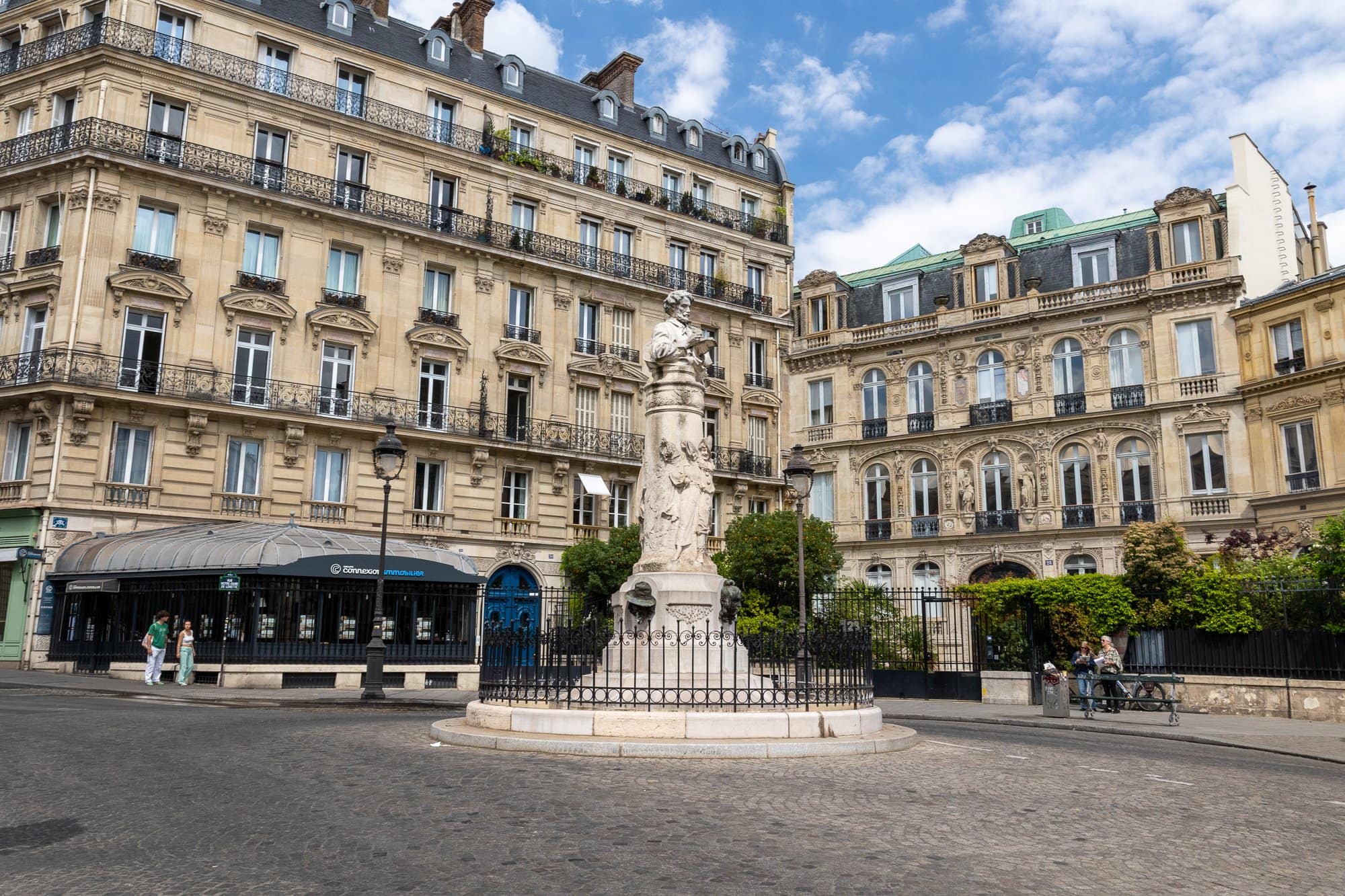
The year 2026 is packed with events that can either pleasantly enhance or seriously complicate your plans. March and April tempt with the first spring sunshine, and on 1 April the famous Monet’s Gardens in nearby Giverny regularly open for the season. Summer brings a major novelty — during July and August, official swimming zones will open directly in the River Seine for the first time in a hundred years.
A crucial warning applies to the autumn weekend of 19–20 September 2026. This is when the European Heritage Days take place. While normally inaccessible government palaces and courtyards open their doors, the gardens in Giverny are exceptionally and strictly closed on these two days. The end of the year is traditionally dominated by Christmas markets, which are beautiful, but you can forget about quiet crowd-free exploring in December.
Where to Stay in Paris: Safe Neighbourhoods and Hotel Picks
Choosing your neighbourhood will make or break your entire experience — and your budget. Paris is divided into twenty arrondissements that spiral clockwise from the historic centre near the Louvre. Finding affordable accommodation in the centre is nearly impossible, but if you know where to look, you can find a great compromise between price, safety and accessibility.
With a pushchair and Jonáš, give a wide berth to the northern part of the 10th arrondissement around Gare du Nord and Pigalle at night in the 18th arrondissement. We once got lost there with a friend at two in the morning and that’s definitely not something you want to repeat with a two-year-old. 😅
After extensive research, we settled on Hôbou, an authentic French boutique hotel in Boulogne-Billancourt (you can book it here). It looks rather unassuming at first glance, but you’ll fall in love with it within the first few hours.
Covered Passages: A Journey Through Time Under Glass Roofs
Long before humanity invented cavernous air-conditioned shopping centres where you can get lost even without children, the local elite built covered passages. In the nineteenth century, over a hundred of them were in operation, serving as luxurious refuges from street mud, rain and sewage. Today only a handful survive, mostly concentrated on the Right Bank. Glass roofs, old mosaic floors and quiet cafés instantly transport you to another era. With a pushchair, they’re an absolute dream — everything is flat and there’s no wind.
Galerie Vivienne
This is the undisputed queen of all the passages. Built in the 1820s, it’s the very embodiment of elegance. The moment you set eyes on the incredible original mosaic floor and the elaborate arches, you’ll understand why so many people come here to marvel, and why Galerie Vivienne has such a reputation.
When we first strolled through, the soft light completely floored us. You’ll find antique shops, upmarket boutiques and a cosy tearoom. The light filtering through the glass ceiling falls at such gentle angles that even a simple phone snap looks like it belongs in an art catalogue. And with a pushchair, it’s smooth sailing.
- Address: 4 Rue des Petits Champs, 2nd arrondissement
- Entry: Free
- Open: Daily 8:30–20:30
- Transport: Metro line 3 (Bourse station)
💡 Insider tip: Right by the entrance you’ll find the old bookshop Librairie Jousseaume, which has been here since the passage first opened. They stock beautiful antique prints and postcards that make a far better souvenir than plastic keyrings from the street.
Passage Jouffroy
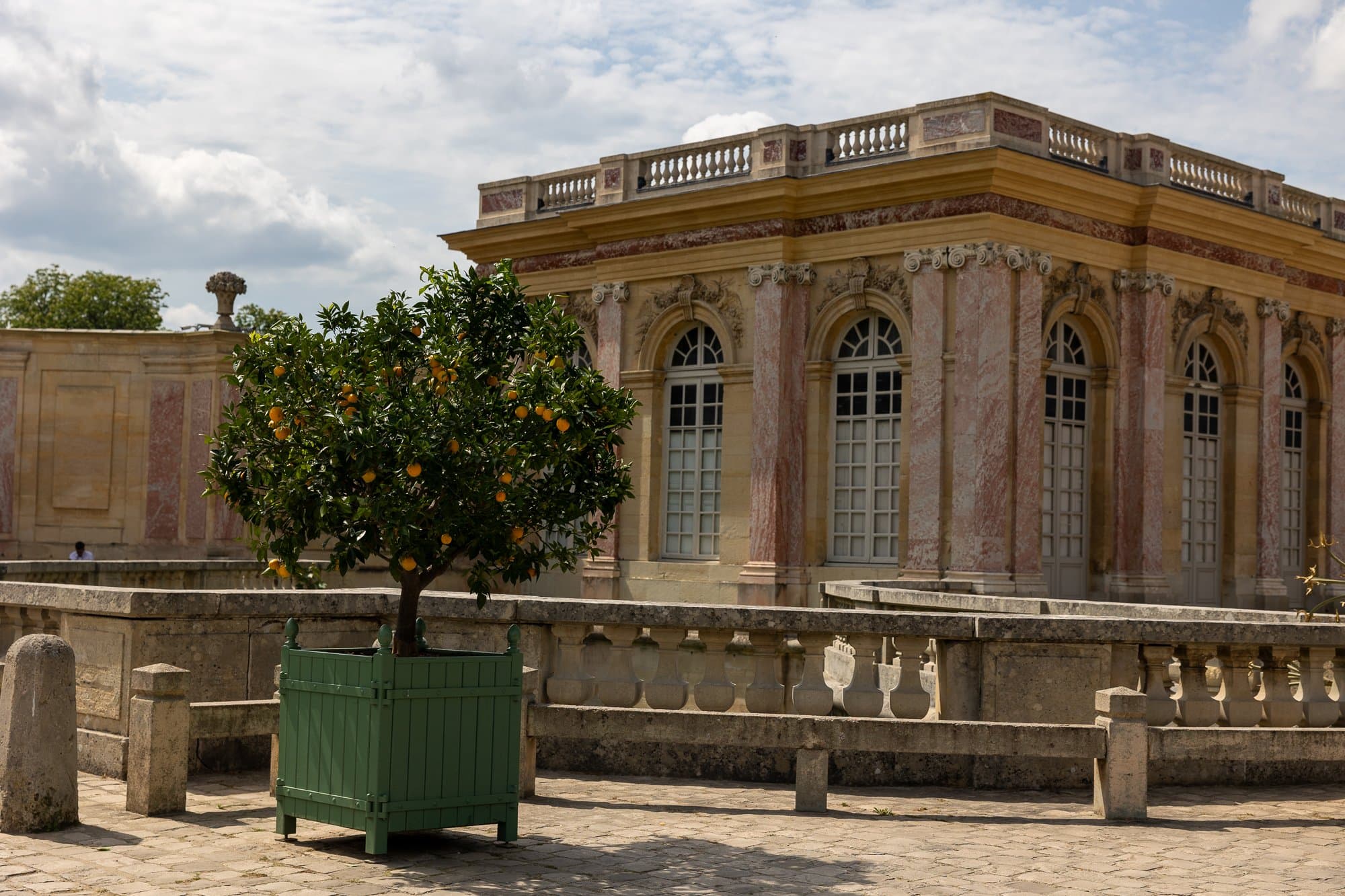
This passage hits you with a distinctive smell of old wood and paper the moment you step through the door. Built in 1846, it was the first in the city to use underfloor heating. It’s home to a famous old hotel and also the back entrance to the wax museum.
There are loads of tiny shops selling toys, antique walking canes and incredibly detailed dolls’ houses. Jonáš can spend ages glued to the window displays of wooden trains, so we treat it as a brilliant pit stop for keeping the family peace.
- Address: 10-12 Boulevard Montmartre, 9th arrondissement
- Entry: Free
- Open: Daily 7:00–21:30
- Transport: Metro line 8 or 9 (Grands Boulevards station)
💡 Insider tip: Halfway along the passage you’ll find a little pâtisserie called Le Valentin. They make absolutely stunning traditional fruit tarts and have a few tables where you can rest while it pours outside.
Passage des Panoramas
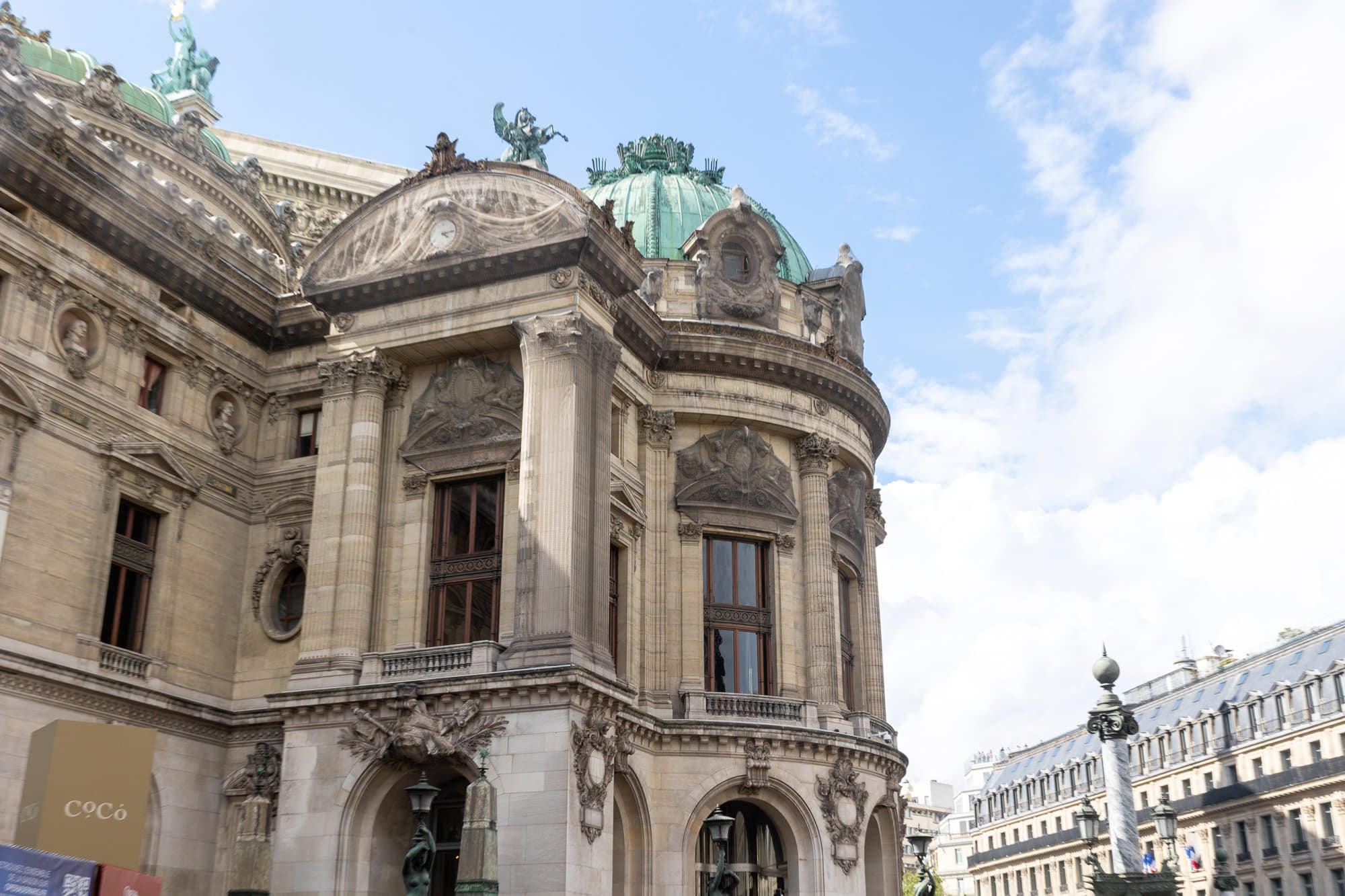
Step out of the previous passage, cross the street, and you’ll slip straight into the oldest one in the city. Dating from 1799, it’s a paradise for stamp collectors and old coin enthusiasts. We like to pop in just for a visual feast, because the place radiates a peculiar charm.
The shop windows overflow with historical postcards and stamps. Unlike its more polished sisters, this passage feels a bit rawer, darker and full of small Asian bistros and traditional French restaurants where local office workers come for lunch.
- Address: 11 Boulevard Montmartre, 2nd arrondissement
- Entry: Free
- Open: Daily 6:00–24:00
- Transport: Metro line 8 or 9 (Grands Boulevards station)
💡 Insider tip: If you’re into meat-free food, you’ll find a small place specialising in vegetarian and vegan Asian dumplings. There’s a queue at lunchtime, but it moves fast.
Passage du Grand-Cerf
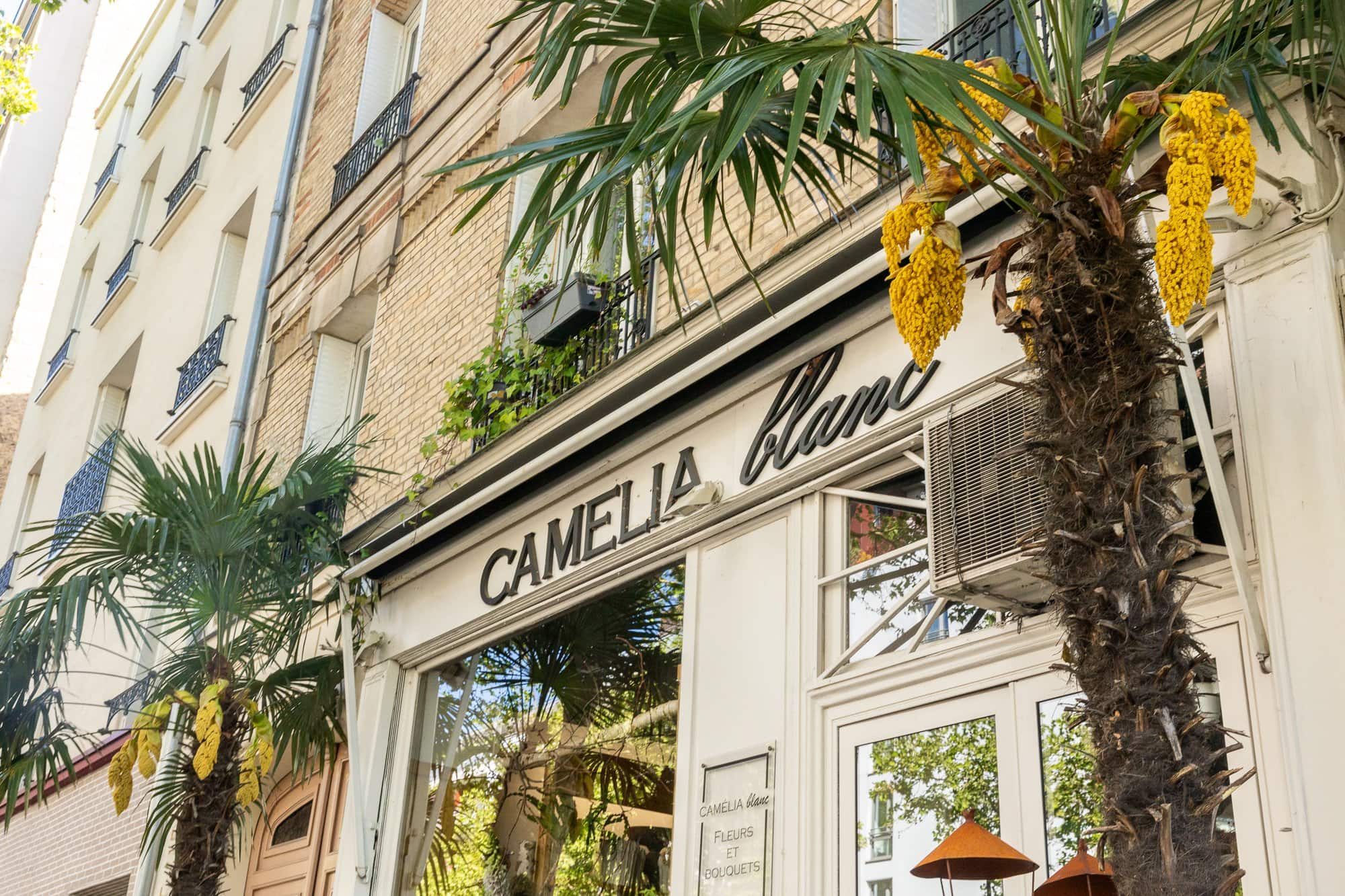
This place boasts the tallest glass ceiling of any surviving passage — nearly twelve metres high — flooding the space with an incredible amount of daylight. The whole area feels airy and light, making it our go-to escape on sweltering summer days.
You won’t find typical souvenirs here, but rather workshops of independent jewellers, designers, quality fabric sellers and shops with handmade furniture. It’s a very quiet, inspiring place where we love to wander when we need a break from the big-city bustle.
- Address: 145 Rue Saint-Denis, 2nd arrondissement
- Entry: Free
- Open: Monday to Saturday 8:30–20:30 (closed on Sundays)
- Transport: Metro line 4 (Étienne Marcel station)
💡 Insider tip: Pay close attention to the ironwork on the shop fronts and the old wooden signs. These are original 19th-century pieces that survived every historical upheaval the city has been through.
Galerie Véro-Dodat
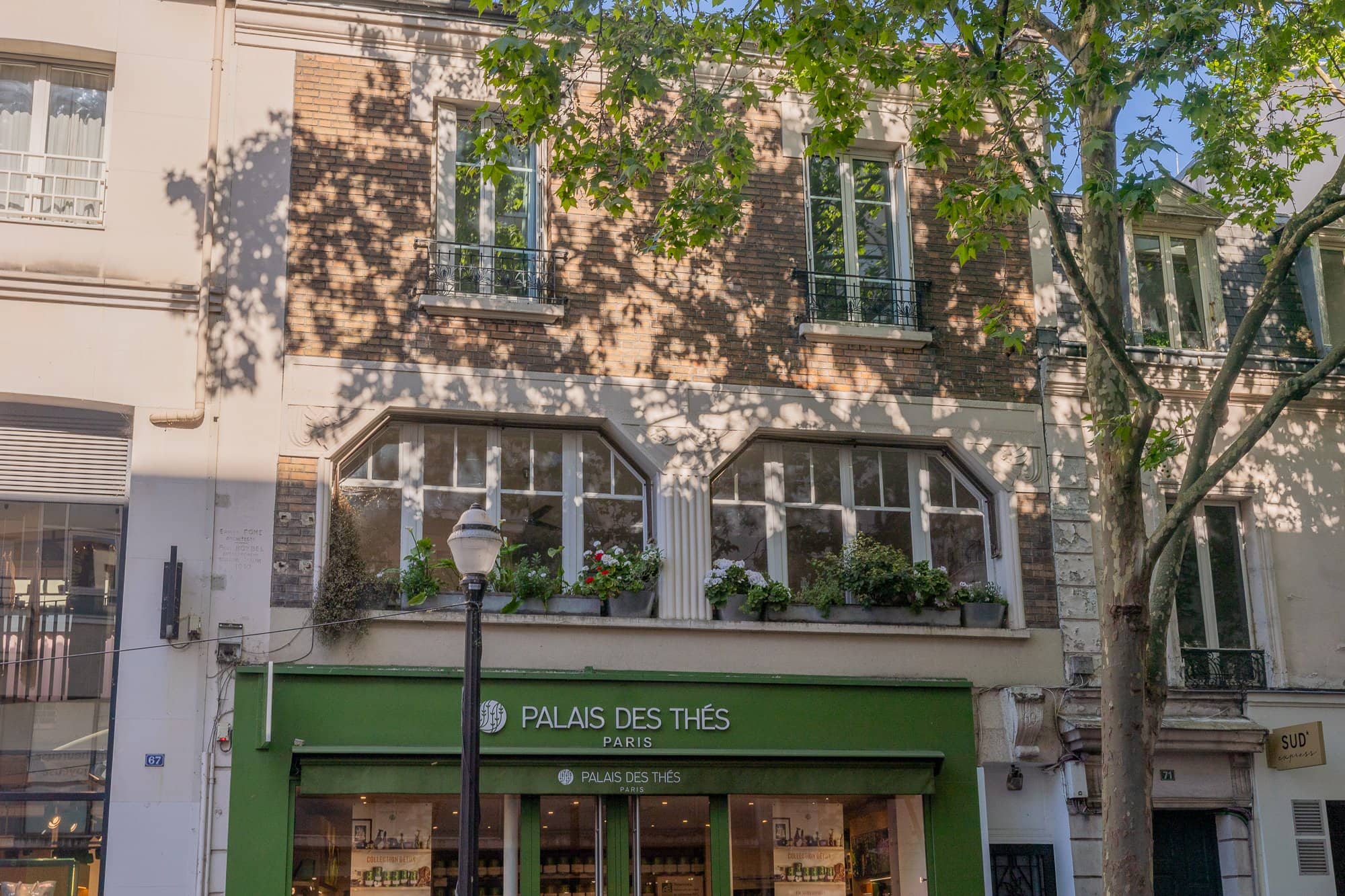
Tucked away just a stone’s throw from the famous art museum, this passage is missed by the vast majority of tourists. Opened in 1826, it’s distinguished by its gorgeous neoclassical style. The floor features a striking black-and-white grid pattern that creates an interesting optical illusion, making the space appear longer than it actually is.
Today it houses very upmarket fashion and antique boutiques. Even if you don’t buy a thing, it’s worth stopping just for the breathtaking architecture and the silence — a world away from the crowds outside the Louvre nearby.
- Address: 19 Rue Jean-Jacques Rousseau, 1st arrondissement
- Entry: Free
- Open: Monday to Saturday 7:00–22:00 (closed on Sundays)
- Transport: Metro line 1 (Palais Royal – Musée du Louvre station)
💡 Insider tip: Look up at the ceilings near the entrances — you’ll spot beautiful mythological frescoes that were carefully restored not long ago. Most people walk through with their eyes glued to the shop windows and miss this detail entirely.
Passage Brady
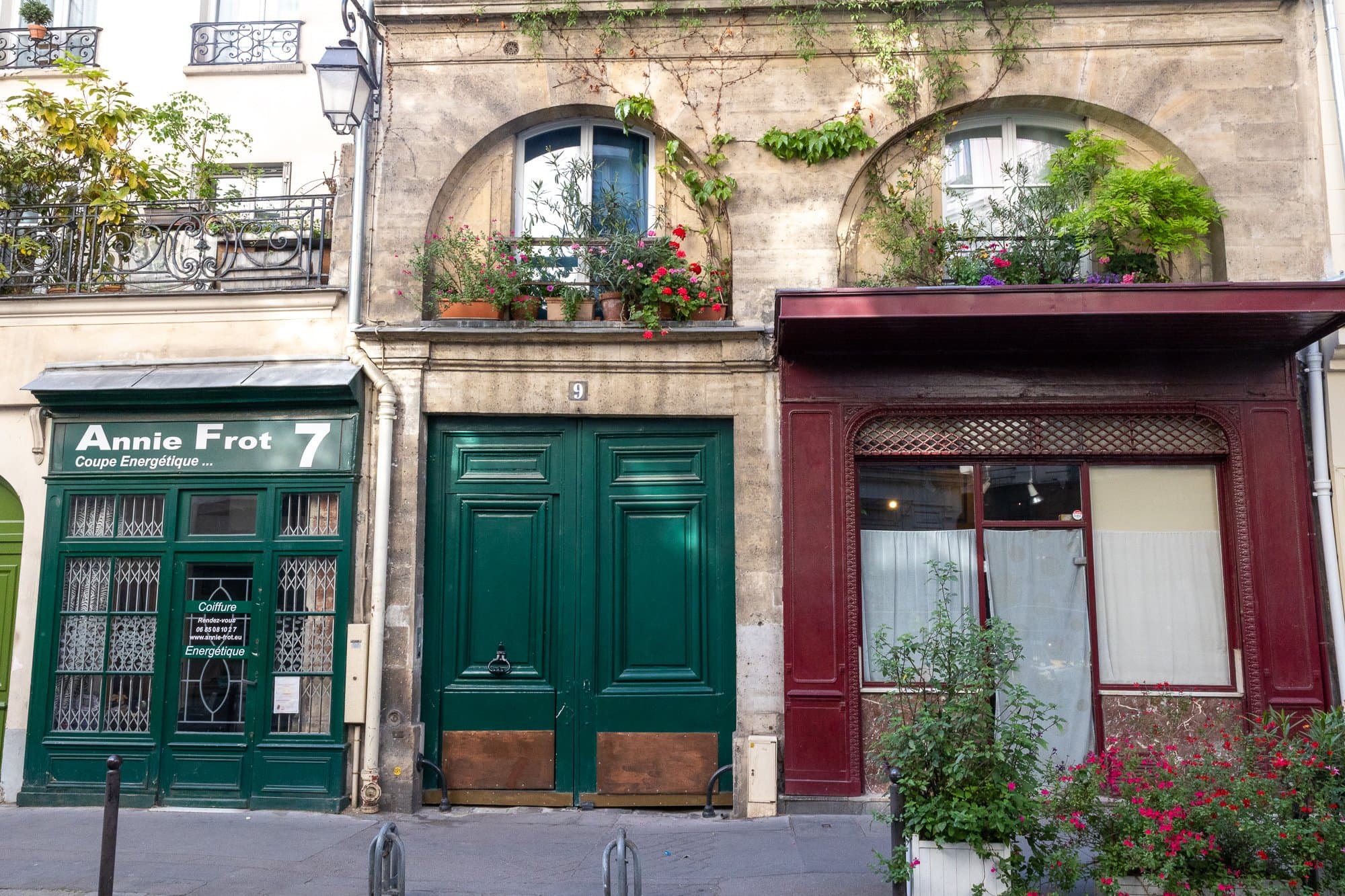
Fancy switching continents for a while without buying a plane ticket? Head to the 10th arrondissement. This passage is the pulsating heart of the Indian and Pakistani community, where you’ll disconnect completely from the typical Parisian experience.
The intense aromas of curry, cardamom and incense hit you straight away. You’ll find dozens of small restaurants, shops selling colourful fabrics and barber shops. It’s far livelier than the other passages, but the authentic atmosphere is absolutely worth the slight chaos — especially when you’re craving something spicy.
- Address: 43 Rue du Faubourg Saint-Martin, 10th arrondissement
- Entry: Free
- Open: Daily 9:30–23:30
- Transport: Metro line 4 (Château d’Eau station)
💡 Insider tip: Come at lunchtime for a traditional naan bread stuffed with cheese and garlic. They’re cheap, freshly made right in front of you, and they’ll tide you over perfectly during a day of city exploring.
Secret Gardens and Parks: Oases of Calm Amid the Concrete
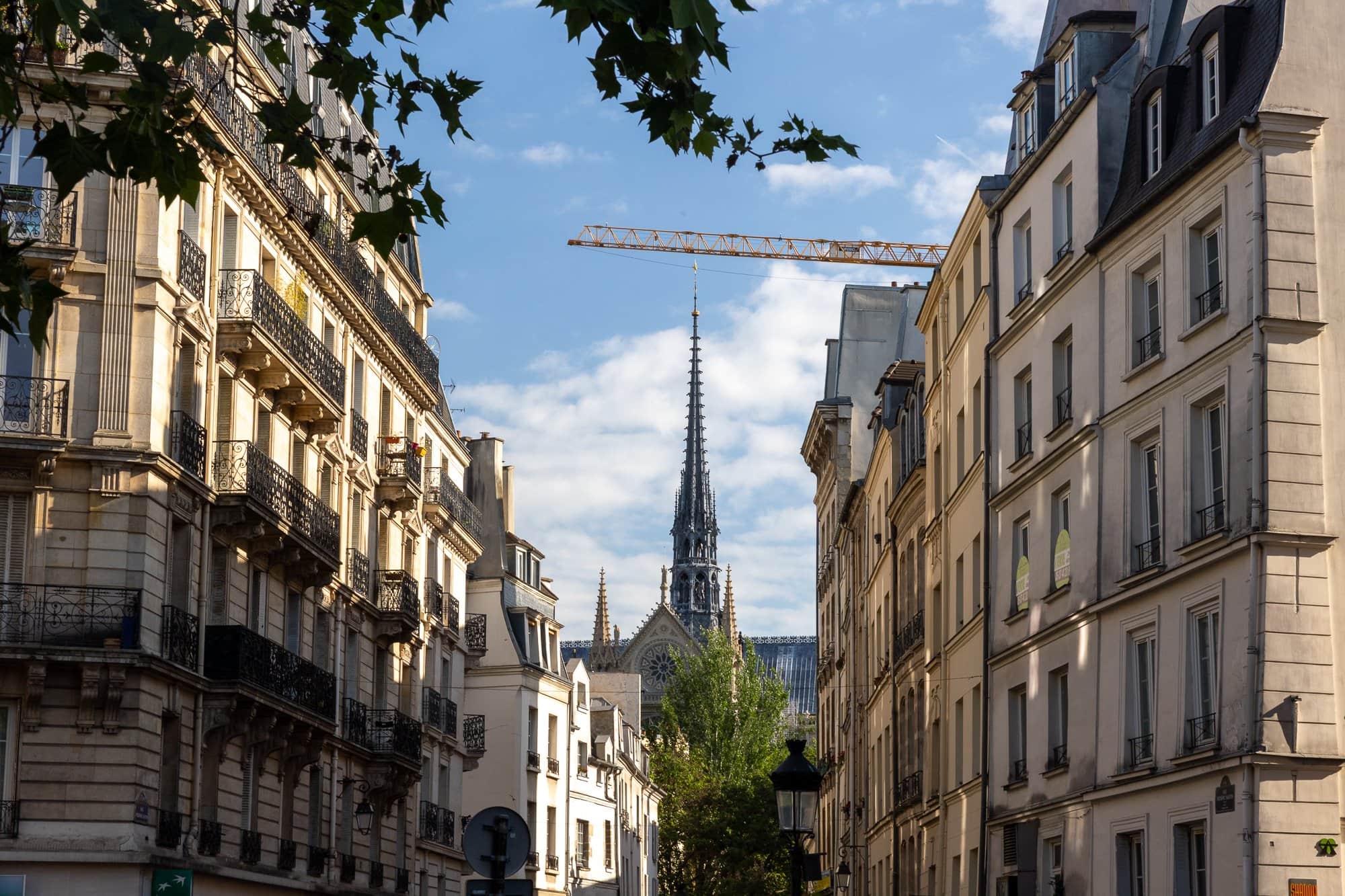
When your toddler has had enough of landmarks and you desperately need a bench where you can drink your coffee in peace, the city delivers hidden pockets of absolute tranquillity. On most maps they’re just tiny green dots, but for weary parents they’re a lifeline. You just need to know which inconspicuous passageway to slip through.
Square du Vert-Galant
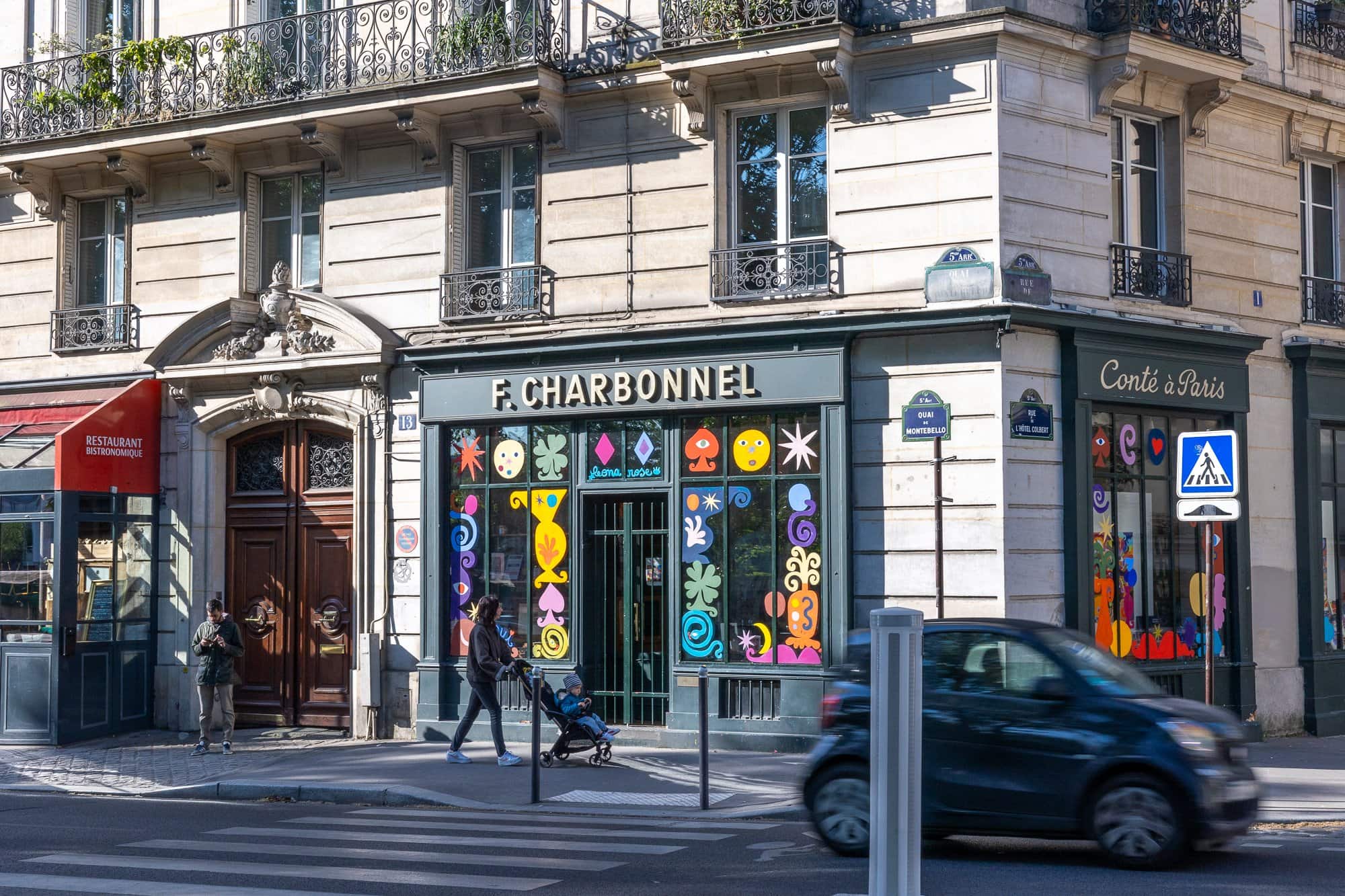
This little park sits right on the tip of Île de la Cité, just a short walk from the famous cathedral. Most people stay up on the bridge near the equestrian statue, but walk down the narrow stone steps towards the water and you’ll find the best greenery in the area.
You’ll discover a small, tree-shaded promontory where the river practically laps at your feet. Old weeping willows grow here and it’s the perfect spot for a quiet picnic with a baguette and cheese while tour boats slowly glide past. We simply adore this place.
- Address: 15 Place du Pont Neuf, 1st arrondissement
- Entry: Free
- Open: Daily 8:00 until sunset
- Transport: Metro line 7 (Pont Neuf station)
💡 Insider tip: The steps down aren’t wheelchair/pushchair-accessible, so you’ll need two pairs of hands to carry a buggy. Once you’re down, though, the terrain is flat and sandy — perfect for kids to run around safely.
Hôtel de Sully and its secret garden
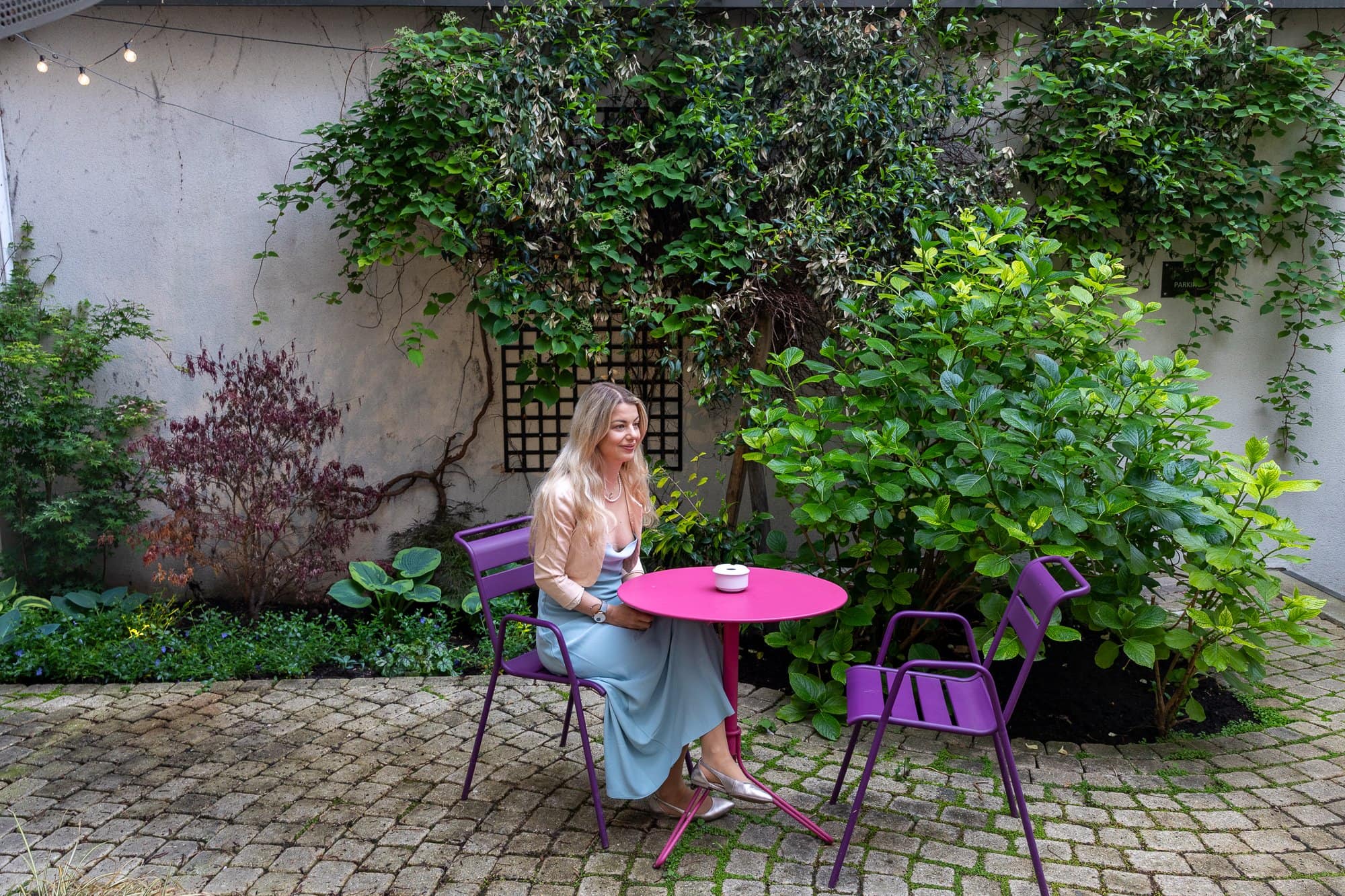
In the Marais quarter, which gets absolutely packed at weekends, a gorgeous secret garden hides behind imposing wooden doors. You need to walk through the huge gates of this historic mansion, cross the first courtyard and pass through yet another archway — which most casual visitors give up on before they get that far.
Only then does a beautifully maintained lawn with benches and old statues open up before you. From the busy street, you’d never guess this place existed. It’s blissfully peaceful and shady — something you’ll appreciate more than anything on a hot summer’s day. We often retreat here to recharge before more exploring.
- Address: 62 Rue Saint-Antoine, 4th arrondissement
- Entry: Free
- Open: Daily 9:00–19:00
- Transport: Metro line 1 (Saint-Paul station)
💡 Insider tip: In the corner of this garden, a small, easy-to-miss gate leads directly to the famous Place des Vosges. It’s the most elegant way to reach the square, and you’ll avoid the crowds on the main approach streets.
Jardin des Rosiers (Joseph-Migneret Garden)
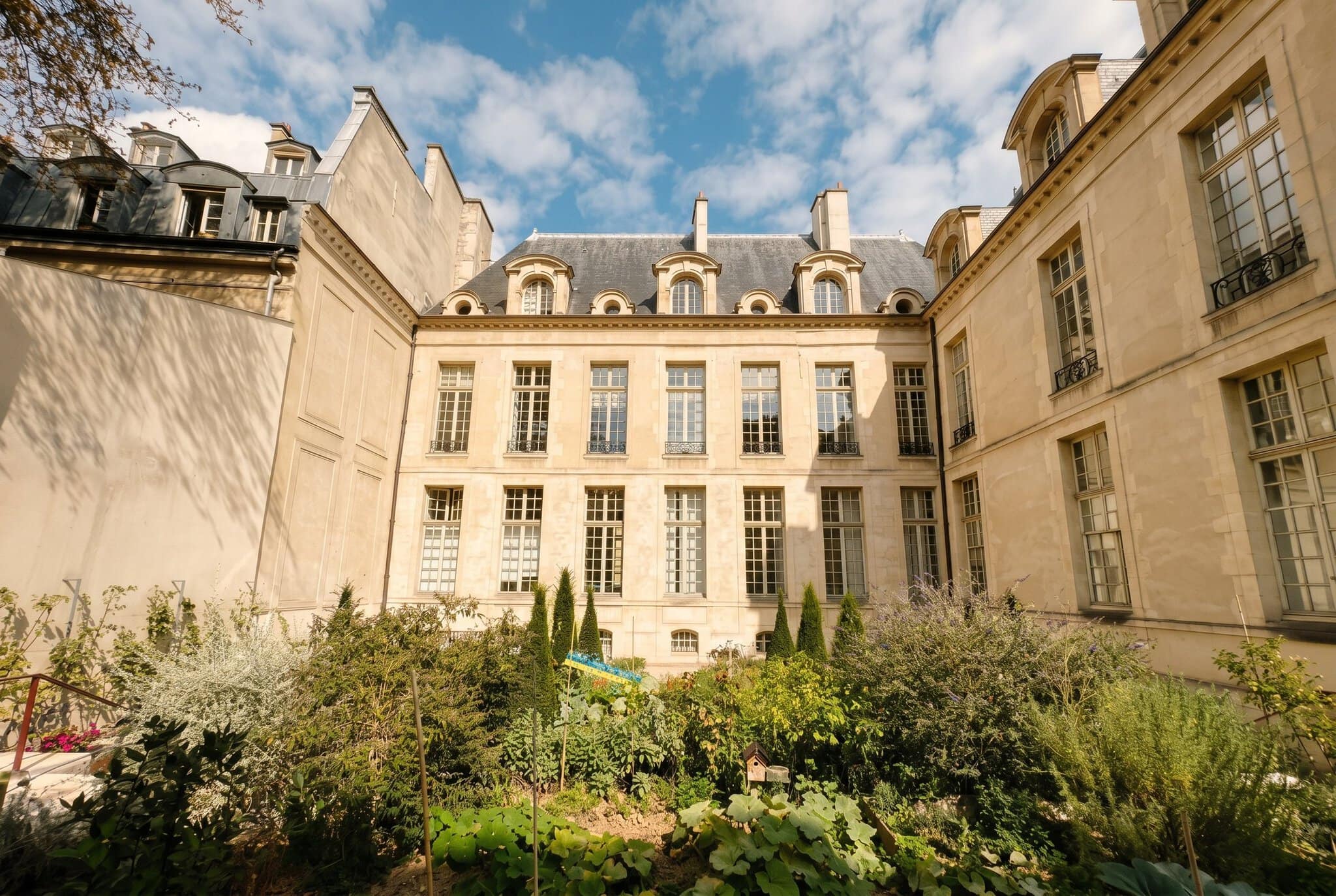
Another gem hidden in the Marais. It was created relatively recently by combining the courtyards of several historic mansions. The entrance leads through a narrow passage from a street packed with falafel joints, so you essentially end up here straight from lunch.
You’ll find community flower beds, old trees and plenty of benches. We often come here after grabbing a takeaway lunch, when Jonáš needs to be let loose from the pushchair to have a run on the grass. Locals come to read books and the atmosphere is wonderfully homely and relaxed.
- Address: 10 Rue des Rosiers, 4th arrondissement
- Entry: Free
- Open: Daily 8:00–19:00 (shorter hours in winter)
- Transport: Metro line 1 (Saint-Paul station)
💡 Insider tip: The surrounding streets are home to some of the best bakeries for traditional Jewish pastries. Pick up a sweet babka, grab a coffee and enjoy the perfect afternoon break on a bench.
Jardin Catherine-Labouré
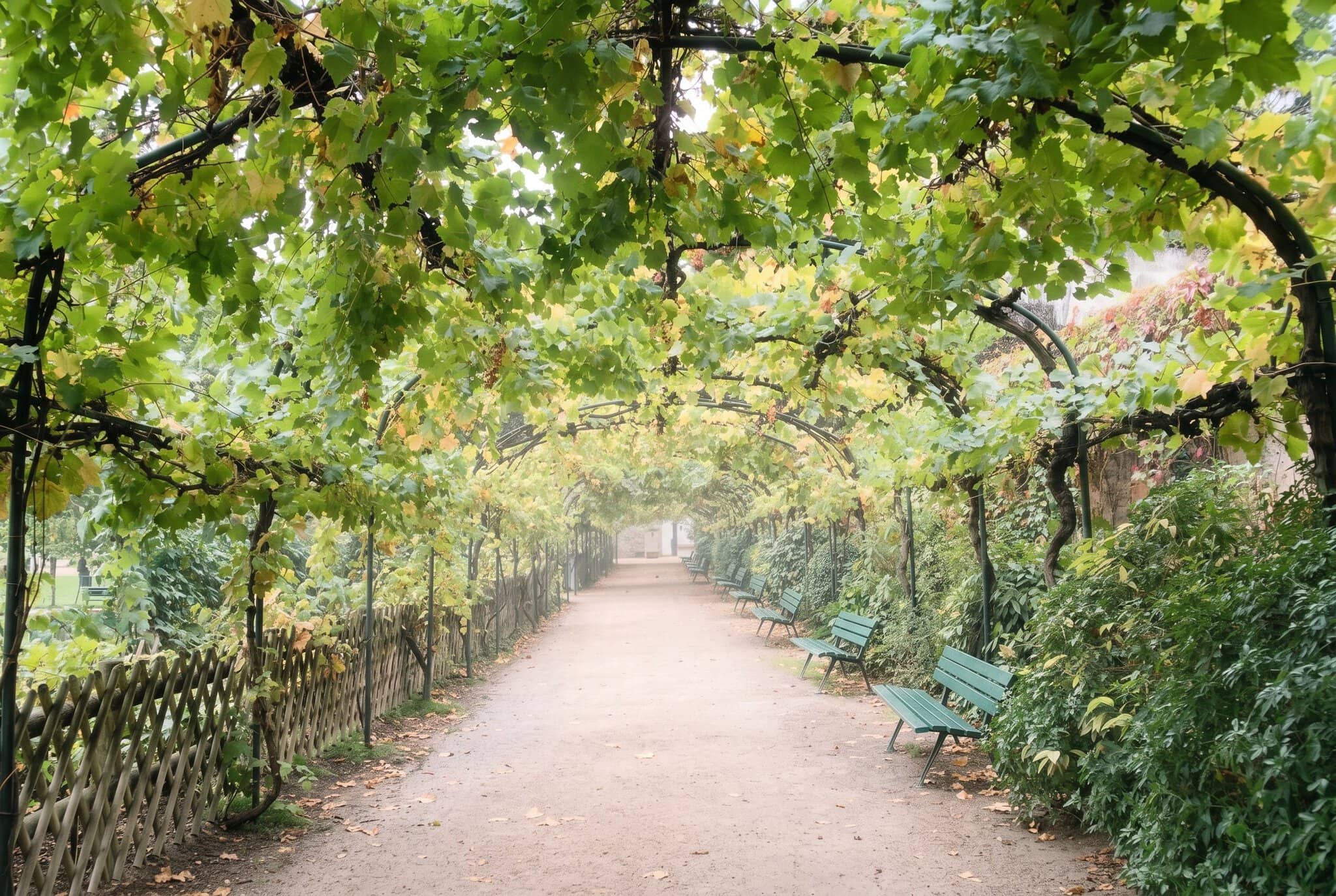
This park in the 7th arrondissement is hidden behind a tall stone wall and was originally a kitchen garden for local nuns. To this day you’ll find fruit trees, a small vineyard and vegetable beds tended by local schools.
There’s a huge lawn where you can stretch out, and a large wooden pergola covered in grapevines that provides glorious shade. You’d only bump into a tourist here by sheer accident — it’s a purely local affair, mostly frequented by families with children from the surrounding blocks.
- Address: 29 Rue de Babylone, 7th arrondissement
- Entry: Free
- Open: Daily 8:00–20:30 (until 17:00 in winter)
- Transport: Metro line 10 (Vaneau station)
💡 Insider tip: Right next to the park entrance there’s a wonderful old cheese shop. Ask the cheesemonger to cut you a few slices of local cheeses and you’ve got yourself a superbly luxurious yet cheap lunch on a park bench.
Promenade Plantée (Coulée Verte)
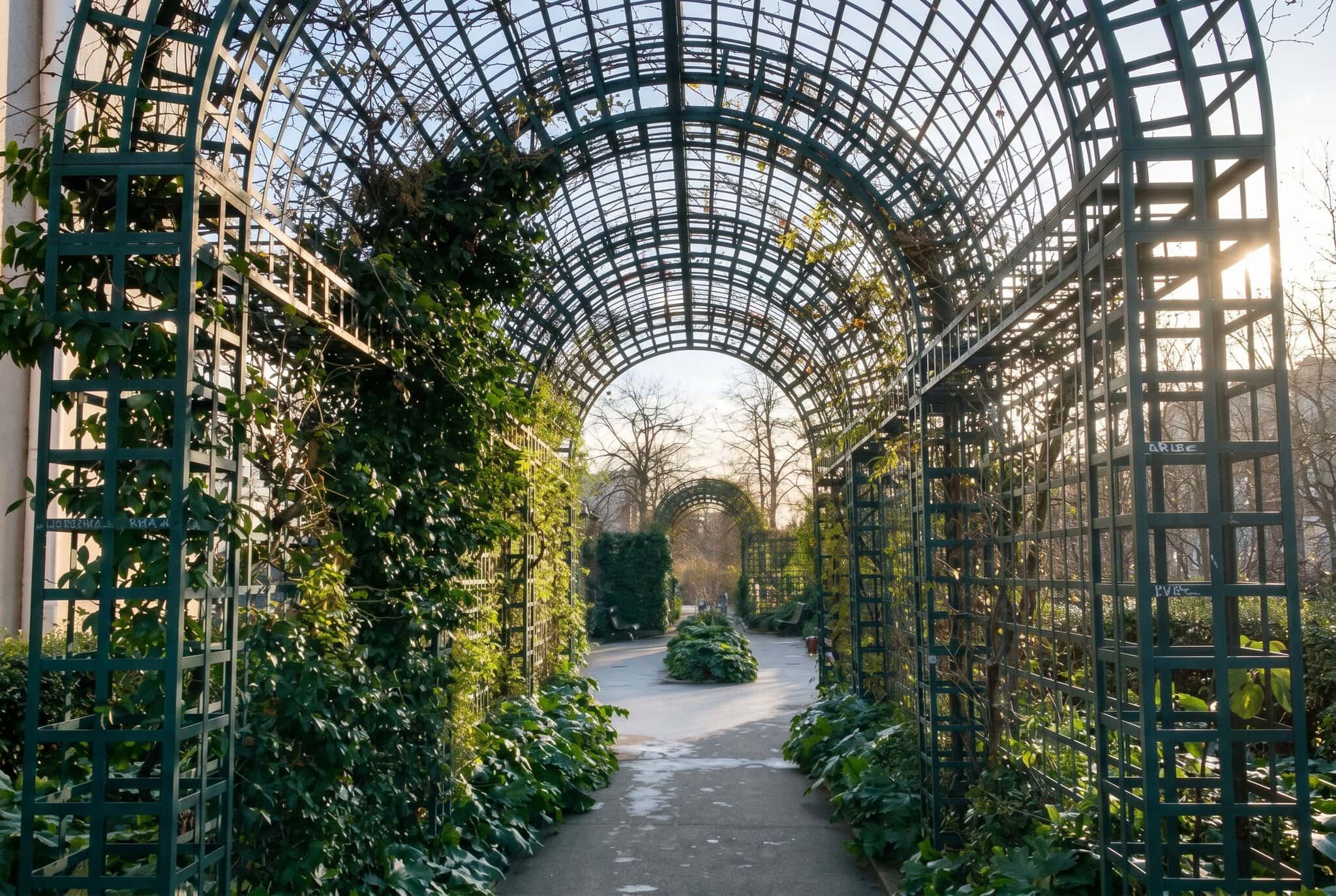
Long before New York built its famous High Line, this 4.7-kilometre elevated park came into existence. It runs along the embankment of a disused 19th-century railway line, starting just near Place de la Bastille and heading east.
It’s a stunning walk among the treetops, peering into windows of old apartment buildings and seeing the city from a completely different perspective. Part of the route runs along a viaduct whose arches now house artists’ workshops, creating a lovely blend of culture and nature.
- Address: Starting at the corner of Rue de Lyon and Avenue Daumesnil, 12th arrondissement
- Entry: Free
- Open: Daily from 8:00 until sunset
- Transport: Metro line 1, 5 or 8 (Bastille station)
💡 Insider tip: The first section on the viaduct is fully accessible by lift for pushchairs, but once the park drops to street level and continues east, the surface changes to gravel and tree roots. With small children, I’d recommend sticking to just the first, elevated half.
Clos Montmartre
Did you know the city still has its own working vineyard? It sits on the northern slope of Montmartre hill and it’s a genuine rarity. It was planted in the 1930s to block developers who were itching to throw up ugly apartment blocks on the site.
Today it produces around a thousand bottles of wine a year. You can’t normally get inside, but the view of the vine rows through the fence, with white houses in the background, is incredibly photogenic. Every time we stop here, we feel like we’ve escaped to the idyllic French countryside — the big-city buzz completely vanishes.
- Address: Rue des Saules, 18th arrondissement
- Entry: View from the street free (access inside only during the harvest festival)
- Open: Visible from the street at all times
- Transport: Metro line 12 (Lamarck – Caulaincourt station)
💡 Insider tip: If you’re planning an autumn trip, try to time it around mid-October. That’s when the Fête des Vendanges takes place — a harvest festival that sees the whole neighbourhood come alive with food stalls, music and tastings of this rare local wine.

Photogenic Micro-worlds and Lanes: Colours Off the Beaten Track
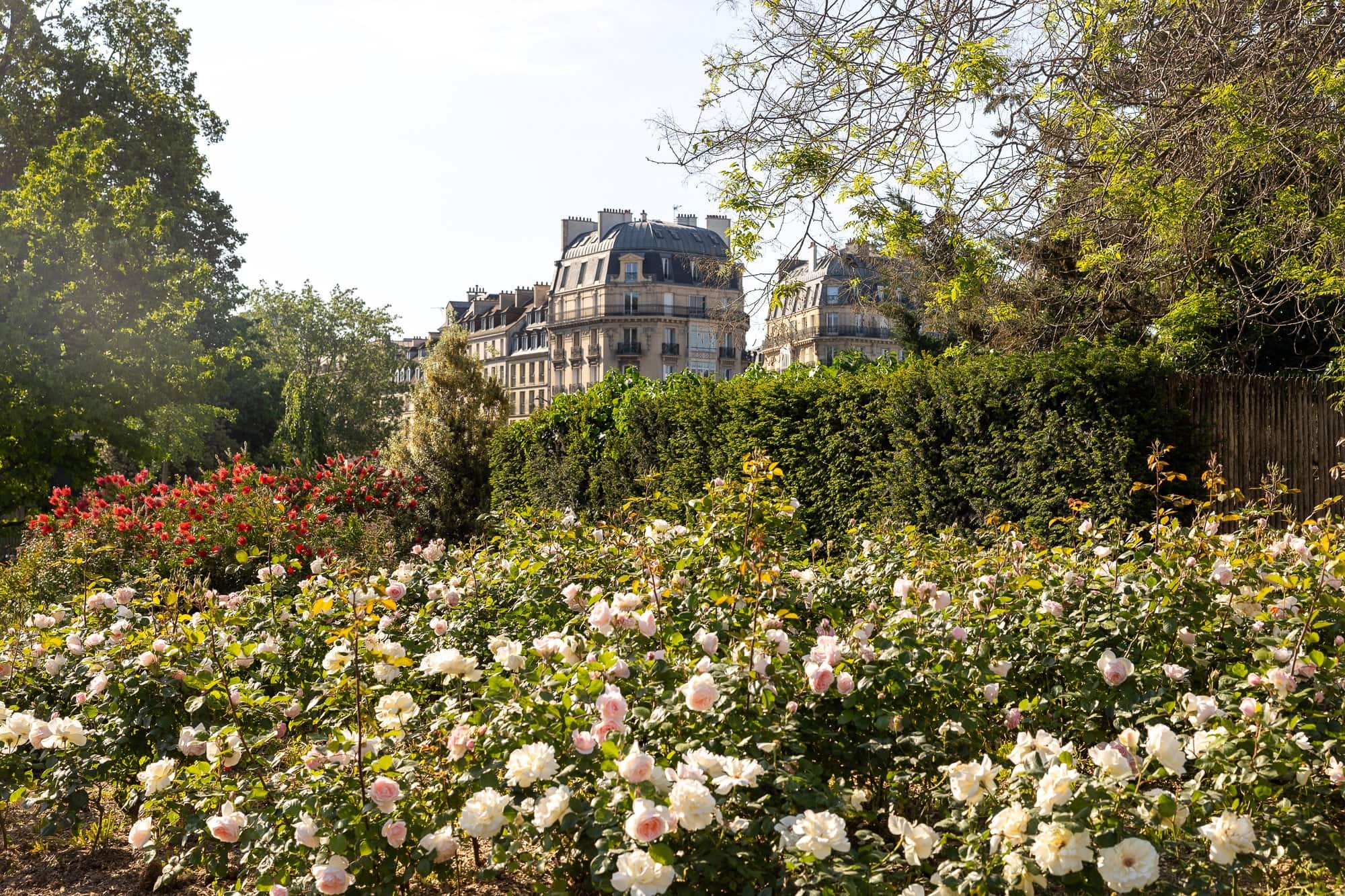
For a powerful visual experience and gorgeous photos, you don’t need to queue for an hour to see the Hall of Mirrors at the palace. The city hides entire small neighbourhoods and streets that feel like a teleport to a completely different world. Some evoke the French countryside, others an English workers’ terrace. Most lie further from the very centre, but the journey is always worth it.
Cité Florale
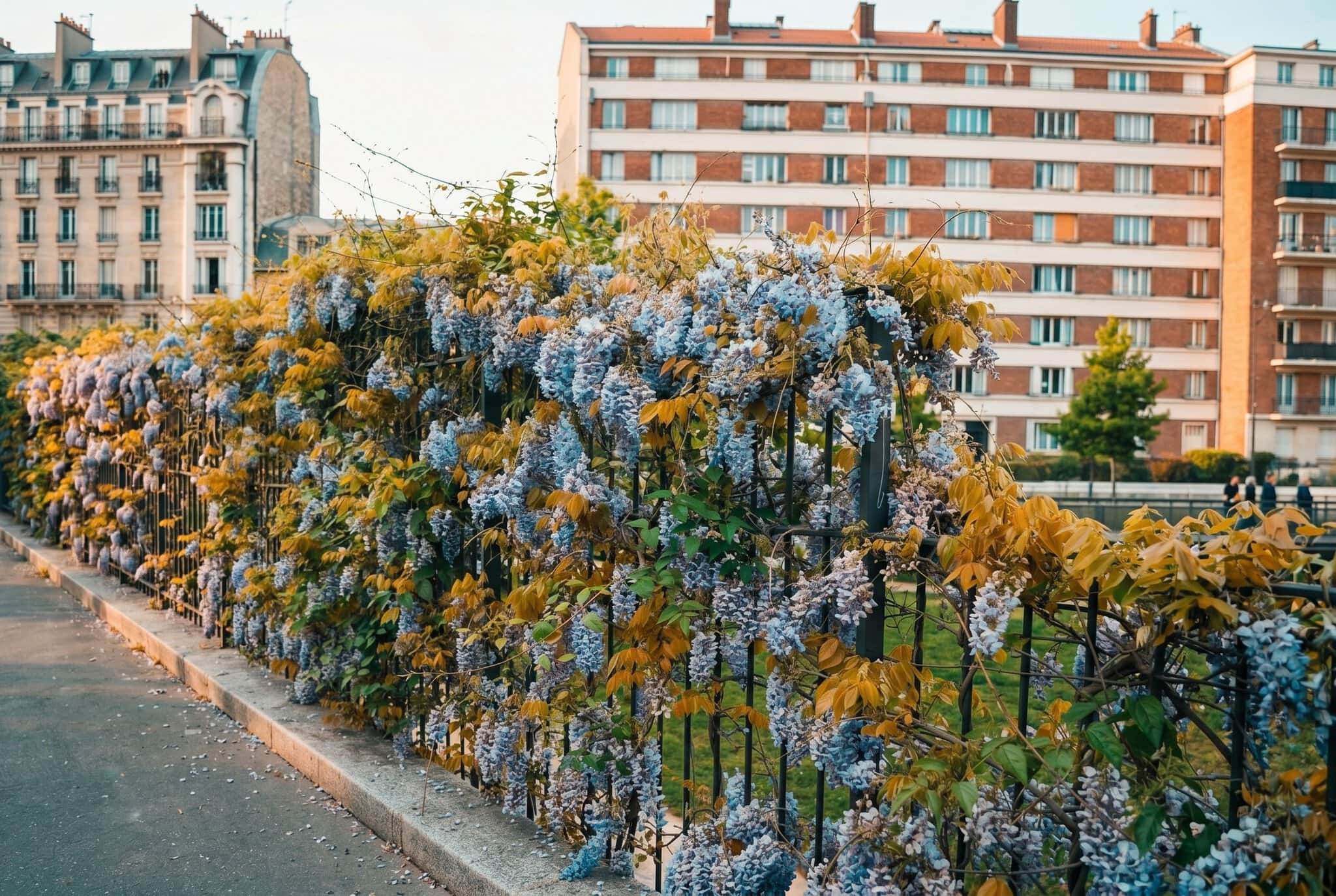
This tiny area in the 13th arrondissement feels like a village transplanted into the heart of a metropolis. The streets are named after flowers, the small family houses come in every pastel shade imaginable and the façades are smothered in thick ivy.
It was built in the 1920s on a site where heavy multi-storey buildings were banned due to the unstable subsoil. The lanes are narrow and cobbled, and the silence is broken only occasionally by the meowing of local cats. Lukáš and I happily wandered here for a full hour in complete delight.
- Address: Around Rue des Orchidées and Rue des Iris, 13th arrondissement
- Entry: Free (public streets)
- Open: Always
- Transport: Tram T3a (Poterne des Peupliers stop)
💡 Insider tip: Please respect the residents’ privacy. Don’t climb over fences for a better photo and don’t block the narrow pavements. The locals are understandably a bit touchy about tourists with big camera lenses.
Rue Crémieux
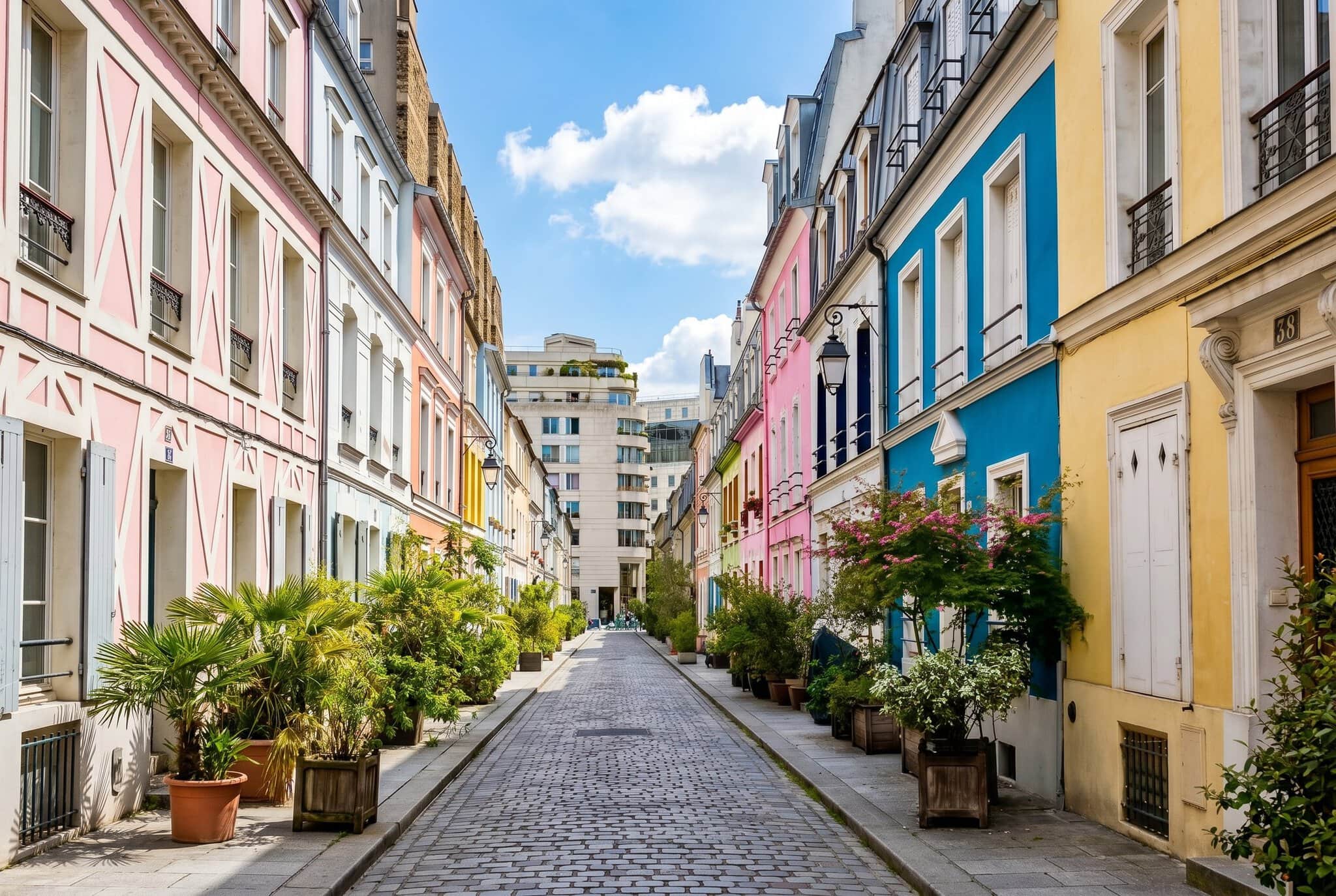
With its pastel-painted façades, this little street has unfortunately become a massive social-media hit, so you probably won’t have it to yourself. Still, it’s definitely worth a quick stop because the palette of colours is simply unreal.
Houses in mint, lemon and lavender hues contrast sharply with the otherwise grey and cream architecture of the rest of the city. The pedestrianised lane dates from the 19th century, when it was built as affordable workers’ housing. Just photograph respectfully and quietly.
- Address: Rue Crémieux, 12th arrondissement
- Entry: Free
- Open: Always, but restrictions apply for commercial photography at weekends
- Transport: Metro line 1 or 14 (Gare de Lyon station)
💡 Insider tip: Residents successfully pushed through a rule banning filming and professional photography at weekends and evenings so they can have some peace. Come on a weekday morning instead, when the light is at its softest and the street is empty.
Villa Léandre
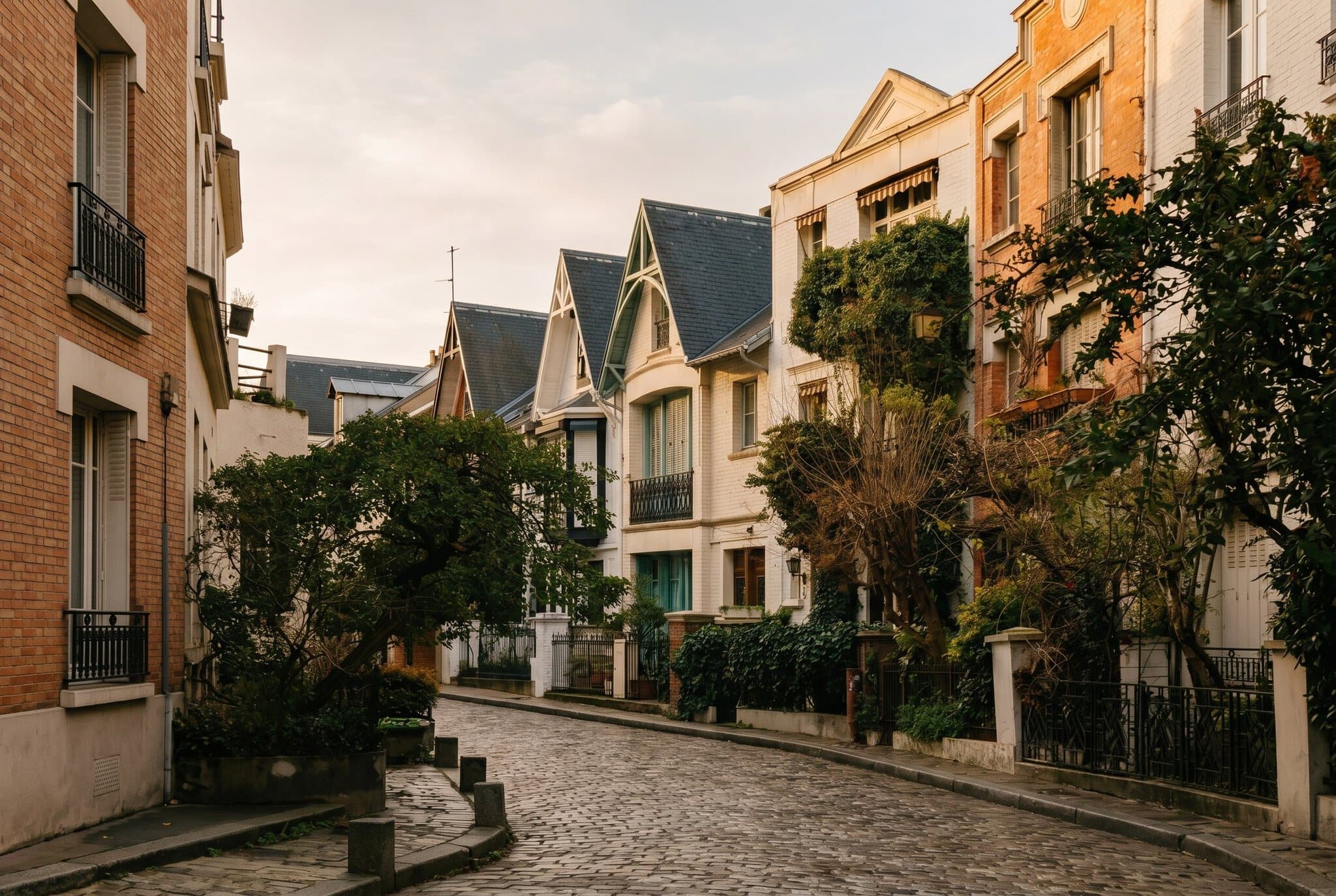
Escape the crowds at the white basilica on Montmartre, head deeper into the side streets, and you’ll stumble upon this charming cul-de-sac. Built in the 1920s in a mini art deco style, it charms you at first sight.
With its brick houses and sloping roofs, it feels more like a street in London’s Chelsea or the English countryside than central Paris. It’s unbelievably quiet and the trees cast a pleasant shade. The houses are astronomically expensive nowadays and mostly home to successful artists and actors.
- Address: Villa Léandre (turning off Avenue Junot), 18th arrondissement
- Entry: Free
- Open: Always
- Transport: Metro line 12 (Lamarck – Caulaincourt station)
💡 Insider tip: On house number ten, you’ll notice a small plaque referencing 10 Downing Street. It’s an old joke by the local residents dating back to the Second World War.
Rue de l’Abreuvoir
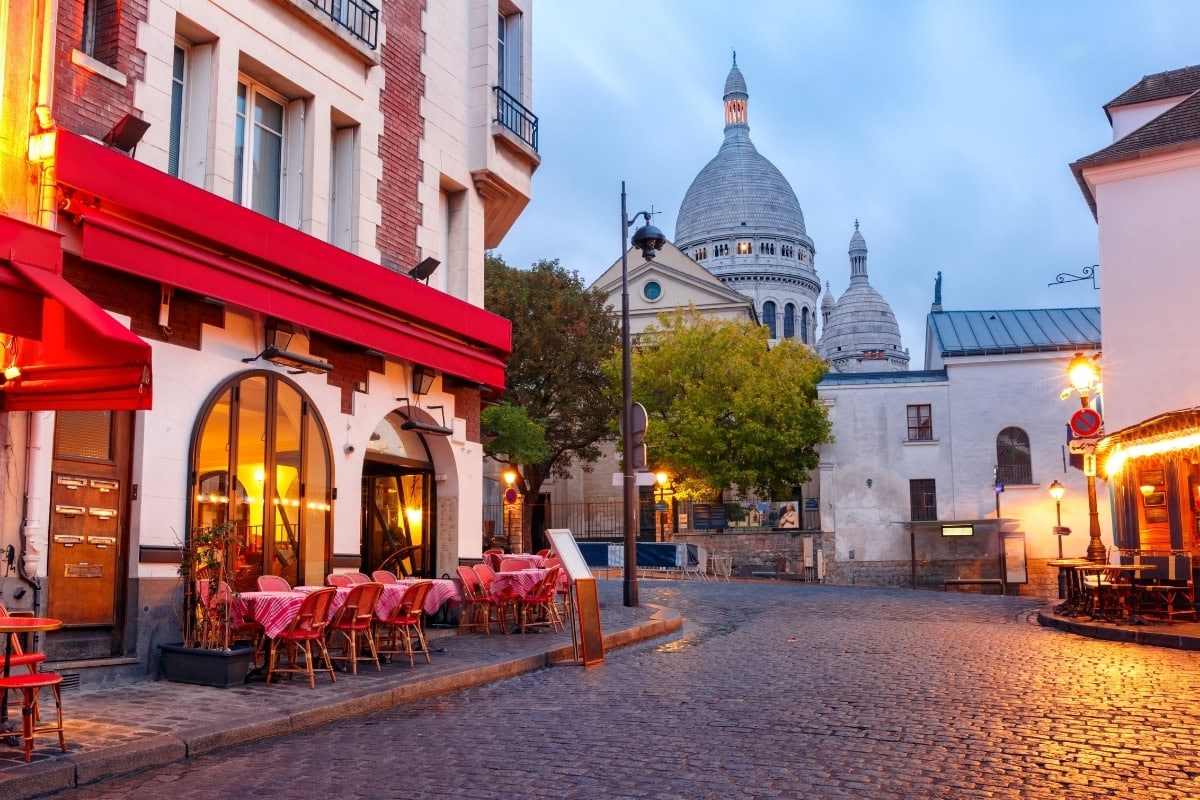
With its softly pastel façades, old cobblestones and a view of the basilica dome in the distance, this is arguably the most beautiful street on the entire hill. Halfway along stands the famous Pink House, once painted by Maurice Utrillo.
The street gently curves and descends, creating an absolutely perfect perspective for photography. Locals once used to lead cattle to a watering trough here — hence the historic name. We like to walk through early in the morning, when the sun is just rising over the city.
- Address: Rue de l’Abreuvoir, 18th arrondissement
- Entry: Free
- Open: Always
- Transport: Metro line 12 (Lamarck – Caulaincourt station)
💡 Insider tip: At the end of the street you’ll find a small square with a bust of the famous singer Dalida. Local legend has it that touching her bronze bust brings good luck in love. The statue is visibly polished in that particular spot.
La Campagne à Paris
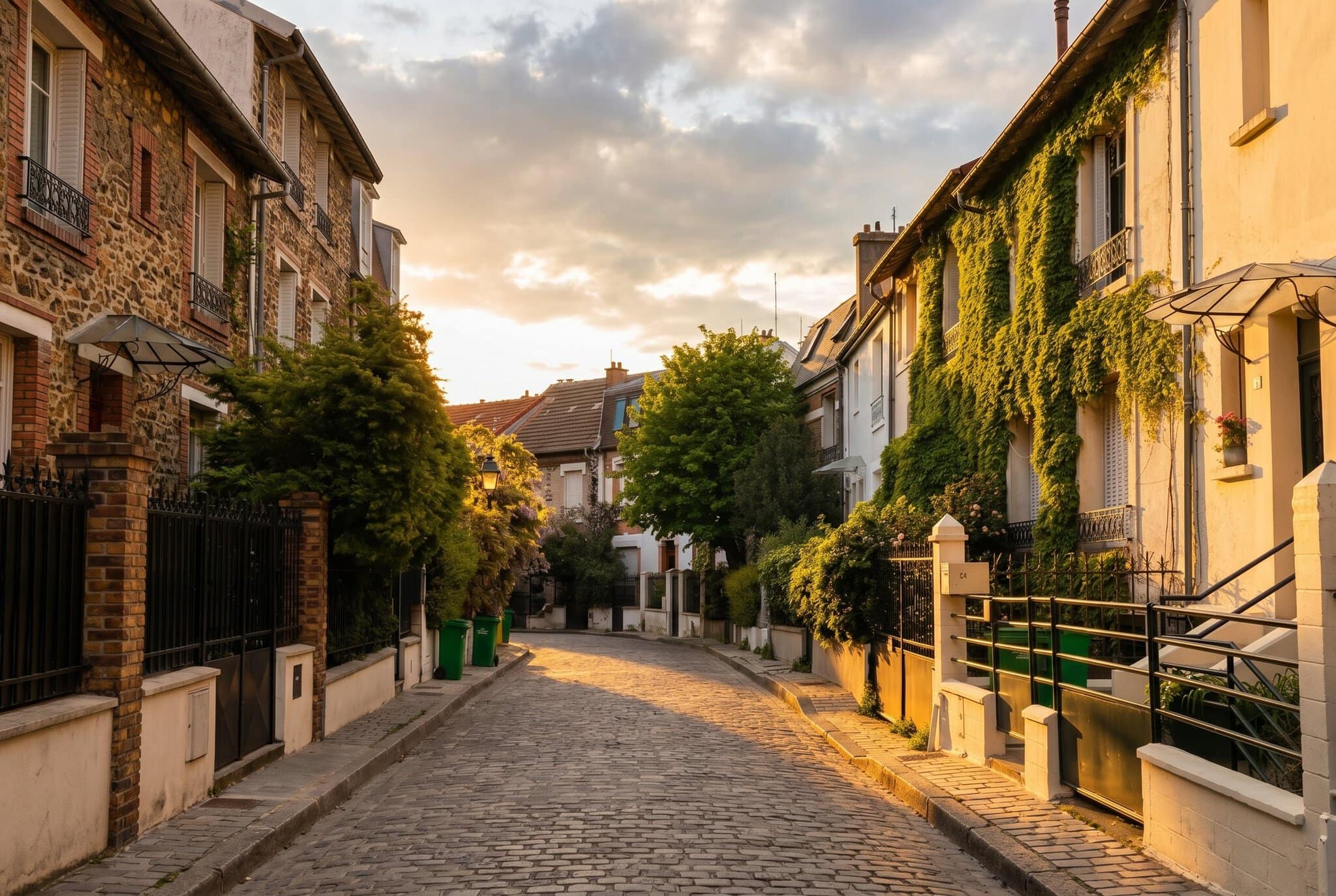
This is a genuine local treasure on the eastern edge of the city. It’s a former workers’ colony built at the beginning of the 20th century on an artificial hillock made from earth excavated during metro construction.
You’ll find just under a hundred small brick houses with gardens, accessible only via steep stone staircases. It’s absolutely silent here and you get the feeling you’ve left the big city for somewhere deep in the countryside. A perfect escape from the frenzy of tourism.
- Address: Around Rue Jules Siegfried and Rue Irénée Blanc, 20th arrondissement
- Entry: Free
- Open: Always
- Transport: Metro line 3 (Porte de Bagnolet station)
💡 Insider tip: The stairs up are quite steep, so if you’re travelling with a pushchair you’ll need to carry it by hand. Once you reach the top, though, the terrain is perfectly flat and safe for a stroll.
Mouzaïa Quarter
A similar concept to the previous spot, but on a much grander scale. The 19th arrondissement is home to a vast labyrinth of small pedestrian lanes lined with tiny houses and front gardens overflowing with greenery.
The area was originally home to workers from nearby gypsum quarries. The ground beneath was so riddled with tunnels that heavy buildings were forbidden. Today it’s one of the most sought-after and quietest residential areas in the entire city, and the thrill of discovery here is priceless.
- Address: Around Rue de Mouzaïa, 19th arrondissement
- Entry: Free
- Open: Always
- Transport: Metro line 7bis (Danube or Botzaris station)
💡 Insider tip: Get deliberately lost here. The lanes are so narrow that no car can pass through, and each one hides a slightly different variety of flowers and shrubs. In spring, when the lilacs are in bloom, the fragrance is absolutely intoxicating.
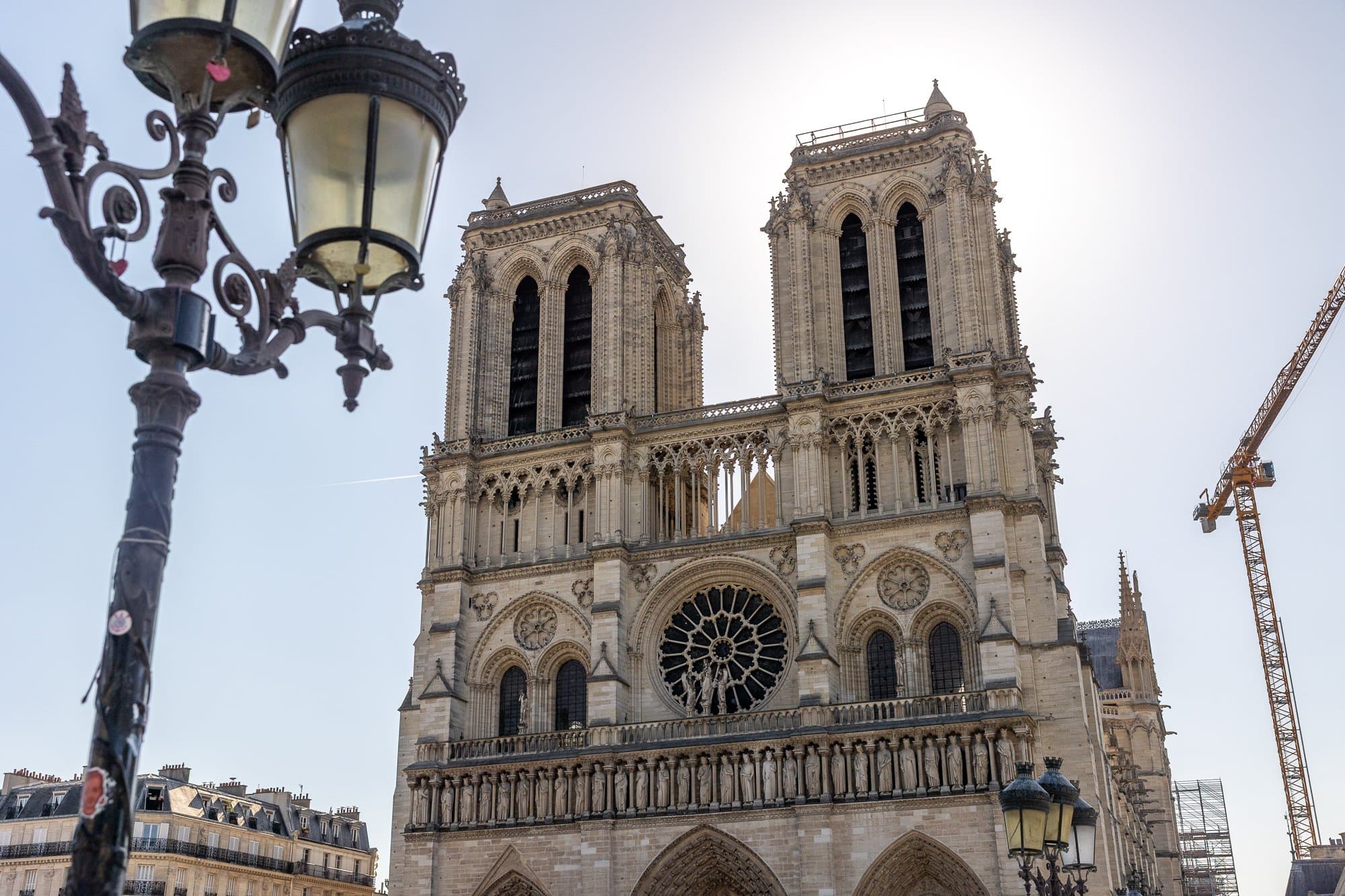
Paris from Above — Completely Free: Views That Don’t Cost a Penny
The view of the city from above is seriously addictive — and you’ll finally understand why you spent all morning weaving through a maze of streets instead of walking in a straight line. 😅 But you don’t need to shell out dozens of euros and stand in a two-hour queue for the lift up the most famous tower. The city offers fantastic rooftop terraces and hilltop parks that are fully open to the public and don’t cost a thing. Lukáš and I love these terraces, especially in the early evening when the sky turns pink.
Galeries Lafayette Rooftop
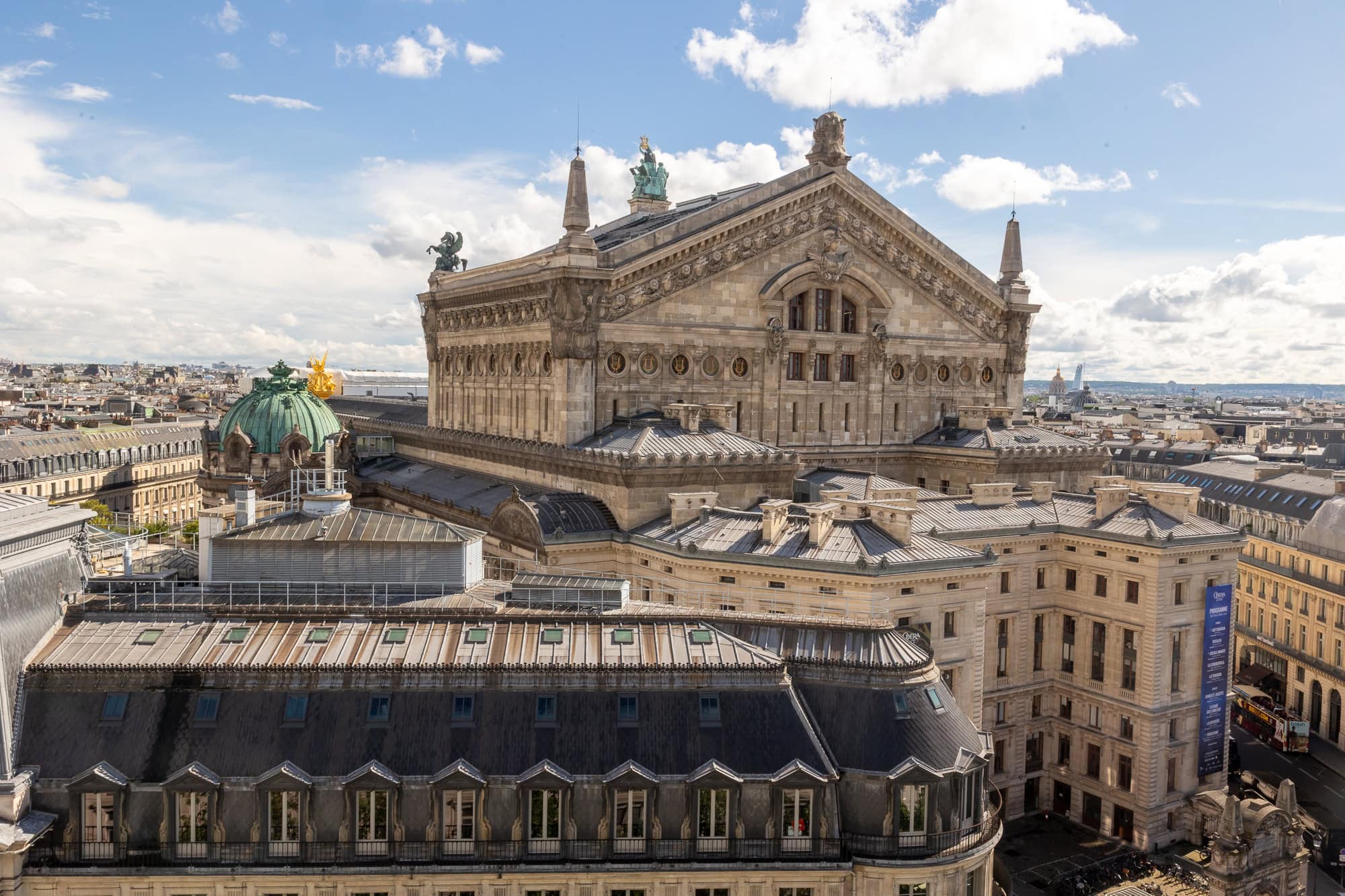
On the roof of one of the most famous department stores, you’ll find a huge open area with an incredible panoramic view. The ornate rear of the Opéra Garnier dominates the scene, but in the distance you can easily spot the iron tower and Montmartre hill too.
The rooftop often hosts art installations or a summer café. The ride up the escalators is an experience in itself — on the way you can admire the breathtaking art nouveau glass dome inside the store and drink in every detail.
- Address: 40 Boulevard Haussmann, 9th arrondissement
- Entry: Free
- Open: Monday to Saturday 10:00–20:00, Sunday 11:00–20:00
- Transport: Metro line 7 or 9 (Chaussée d’Antin – La Fayette station)
💡 Insider tip: Arrive about an hour before sunset. You can sit on the artificial turf, unpack your own snacks and watch the city lights gradually flicker on below.
Printemps 7e Ciel
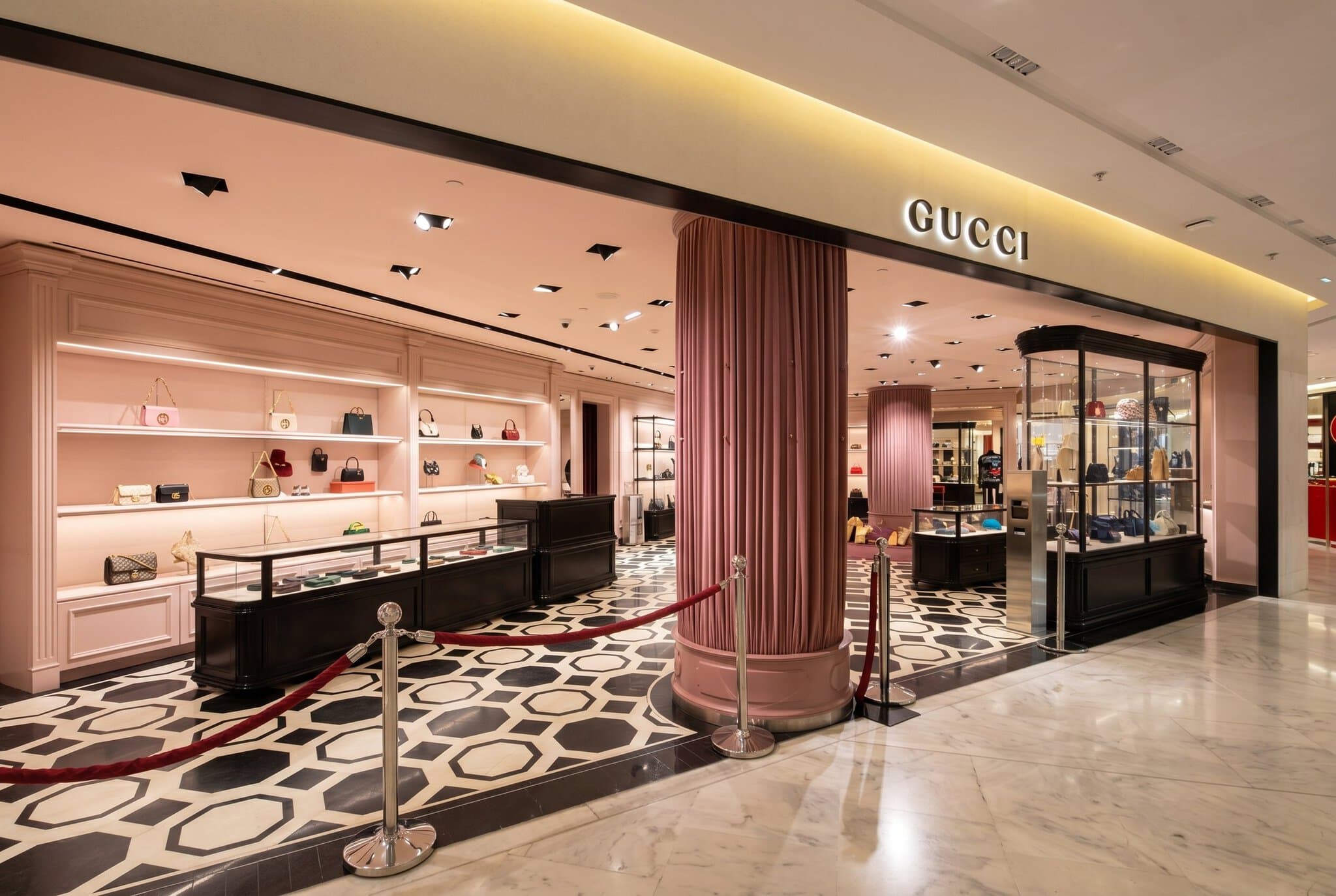
Right next door to the previous department store stands its slightly calmer rival, which hides a terrace called Printemps 7e Ciel on its seventh floor. It offers a slightly different angle, looking directly across the rooftops towards the river.
There’s a pleasant bar on the terrace, but you’re under no obligation to buy anything if you just want to stroll along the edge and snap a few photos. It’s noticeably less crowded than its neighbour, making it our personal escape when the crowds everywhere start getting to us.
- Address: 64 Boulevard Haussmann, 9th arrondissement
- Entry: Free
- Open: Monday to Saturday 10:00–20:00, Sunday 11:00–20:00
- Transport: Metro line 3 or 9 (Havre – Caumartin station)
💡 Insider tip: Finding the entrance to this terrace is a bit trickier. You need to enter the building dedicated to women’s fashion and take the lifts all the way up to the top. Don’t be put off by the luxury boutiques along the way.
Institut du Monde Arabe
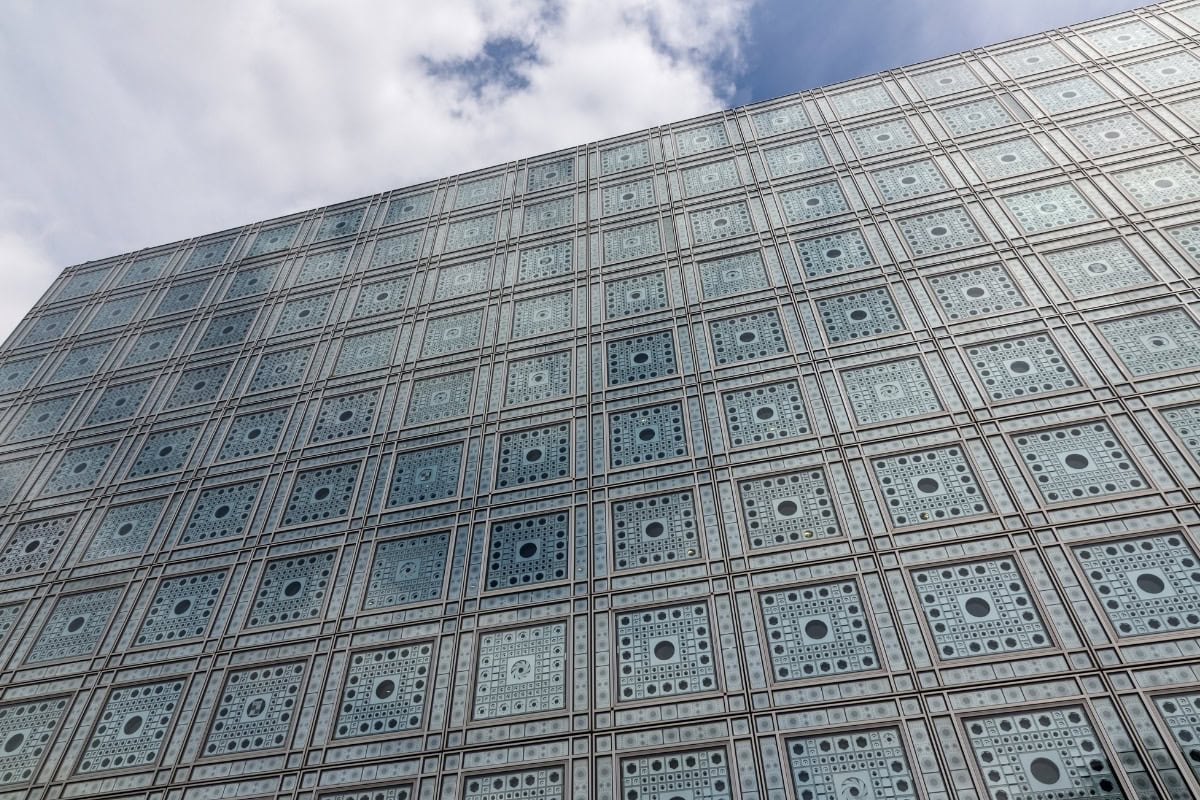
If you happen to be in the Latin Quarter, this is an absolute must. The building itself is an architectural marvel — its façade is made of hundreds of mechanical shutters that open and close according to the intensity of sunlight. The Institut du Monde Arabe will simply mesmerise you visually.
Take the glass lift up to the ninth floor. The terrace serves up the finest possible view of the Seine and, in particular, the rear of Notre-Dame with its flying buttresses. The lift and terrace access are completely free for everyone.
- Address: 1 Rue des Fossés Saint-Bernard, 5th arrondissement
- Entry: Free (terrace; exhibitions are paid)
- Open: Tuesday to Sunday 10:00–18:00 (closed on Mondays)
- Transport: Metro line 7 (Jussieu or Sully-Morland station)
💡 Insider tip: In the ground-floor café you can grab an excellent mint tea and bring it up to the top. A warm cup in your hand and a view of the river — in the cooler months, it’s an absolutely perfect combination.
Parc de Belleville
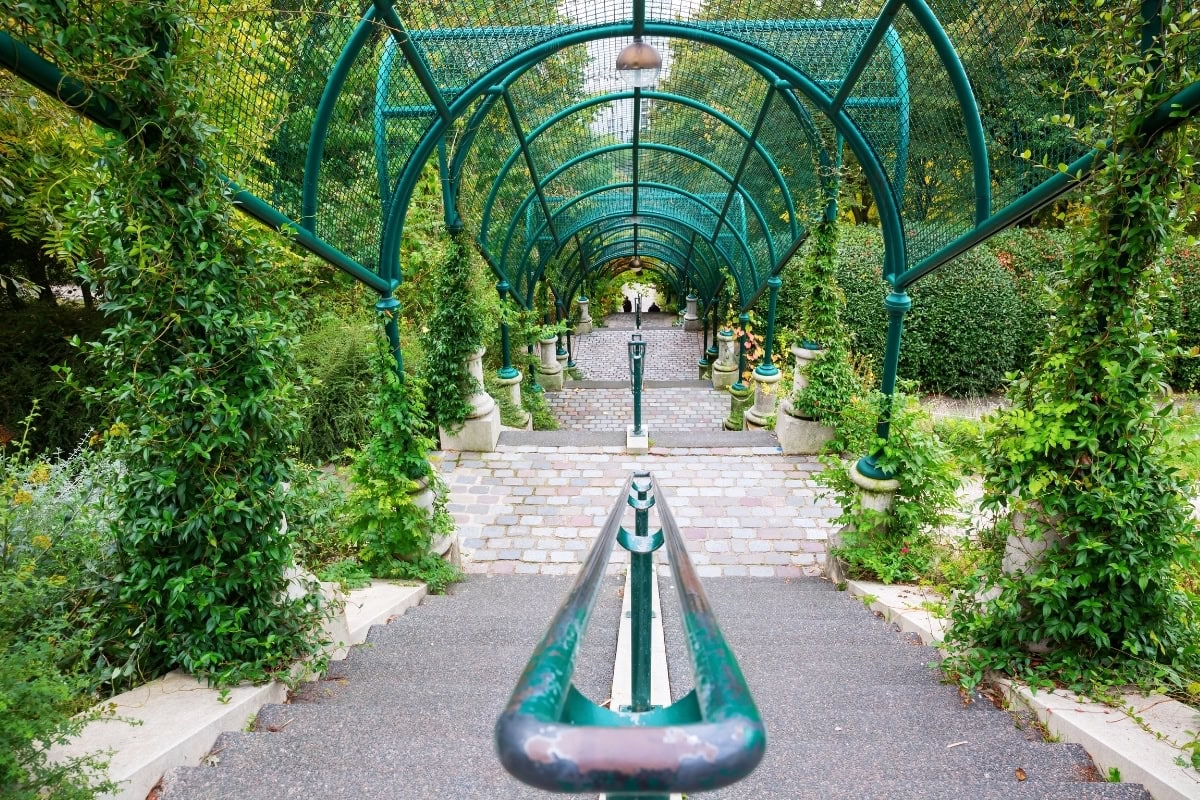
This is the place for a viewpoint with a proper dose of nature. It’s the highest park in the city, sitting 108 metres above sea level, and the climb is well worth the effort.
The viewing terrace at the top is completely free and lays the entire city basin out before you like a map — from the hilltop Sacré-Cœur all the way to Les Invalides. Mostly local families and students come here to spend the afternoon; you’d only bump into a rucksack-laden tourist by pure chance. The park is full of fountains and cascades.
- Address: 47 Rue des Couronnes, 20th arrondissement
- Entry: Free
- Open: Daily 8:00–21:30 (shorter hours in winter)
- Transport: Metro line 11 (Pyrénées station)
💡 Insider tip: The walk up the hill with a pushchair is a decent workout — the paths wind and climb quite steeply. Either opt for a baby carrier, or ride the metro to the upper station and simply walk down through the park.
Pont de Bir-Hakeim Bridge
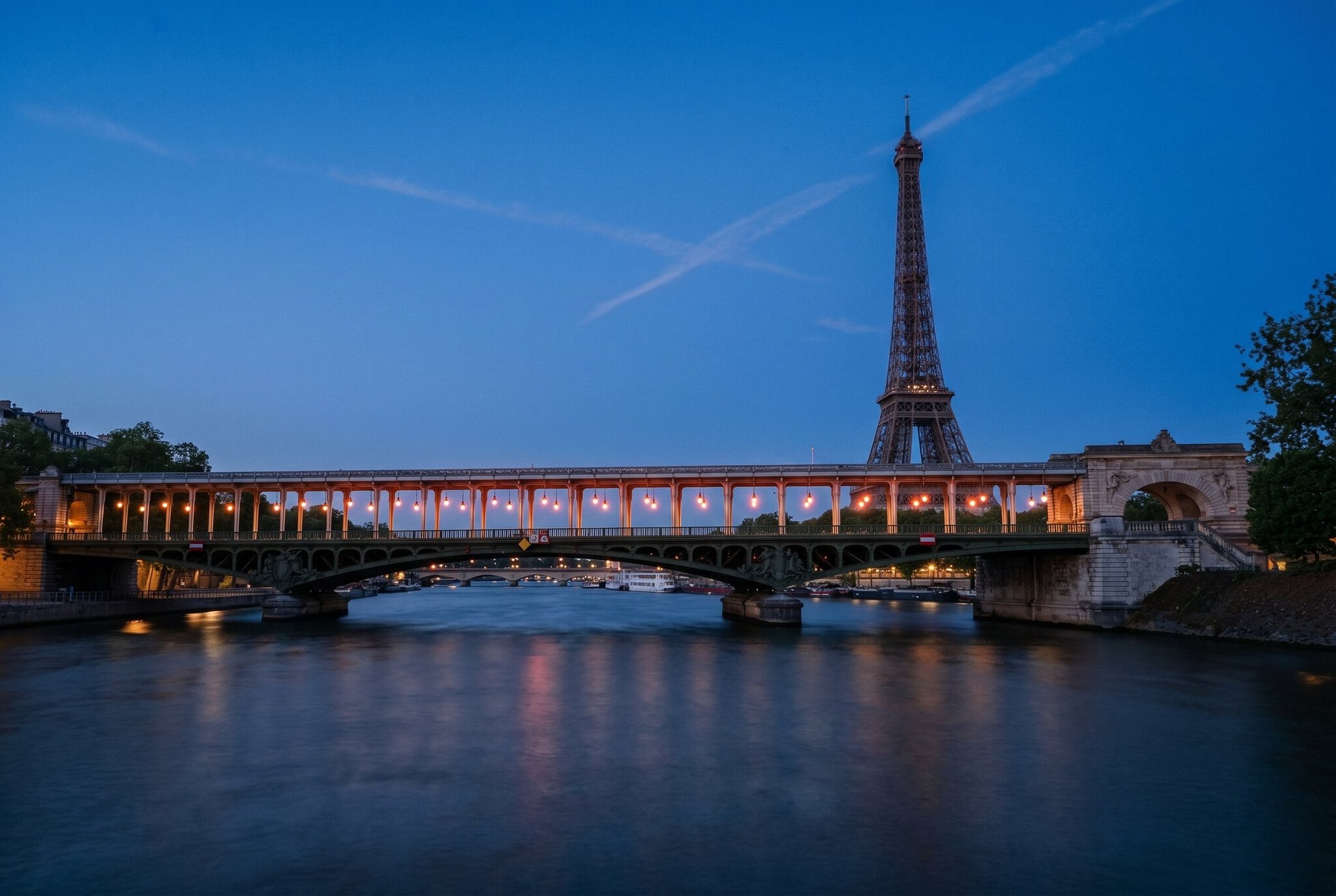
While most people jostle for position on Place du Trocadéro to photograph the iron tower, head to this double-decker bridge instead. The lower level serves cars and pedestrians; metro line six runs along the top.
The steel columns supporting the upper level create a perfect natural frame for photographing the tower. The spot was made famous by several films, including Christopher Nolan’s Inception. The view of the river and tower from here is far cleaner and less kitschy, so don’t be shy — make the most of it for a gorgeous family photo.
- Address: Pont de Bir-Hakeim, border of the 15th and 16th arrondissements
- Entry: Free
- Open: Always
- Transport: Metro line 6 (Bir-Hakeim or Passy station)
💡 Insider tip: If you want to photograph without crowds, come early on a weekend morning. On weekdays, streams of commuters cross the bridge heading to work on the other bank. Plus, the morning mist over the river gives your shots incredible depth.
Curiosities, Underground and Literary Heritage: The Darker Side of the City
I’ll admit that catacombs and taxidermied giraffes on the first floor of an old house often fascinate me more than yet another ornate salon interior — and Lukáš has come to terms with it. 😁 The city hides miles of dark tunnels and, above ground, ancient institutions that defy ordinary understanding. There are also several fascinating spots connected to Central European cultural history that are well worth seeking out.
Deyrolle
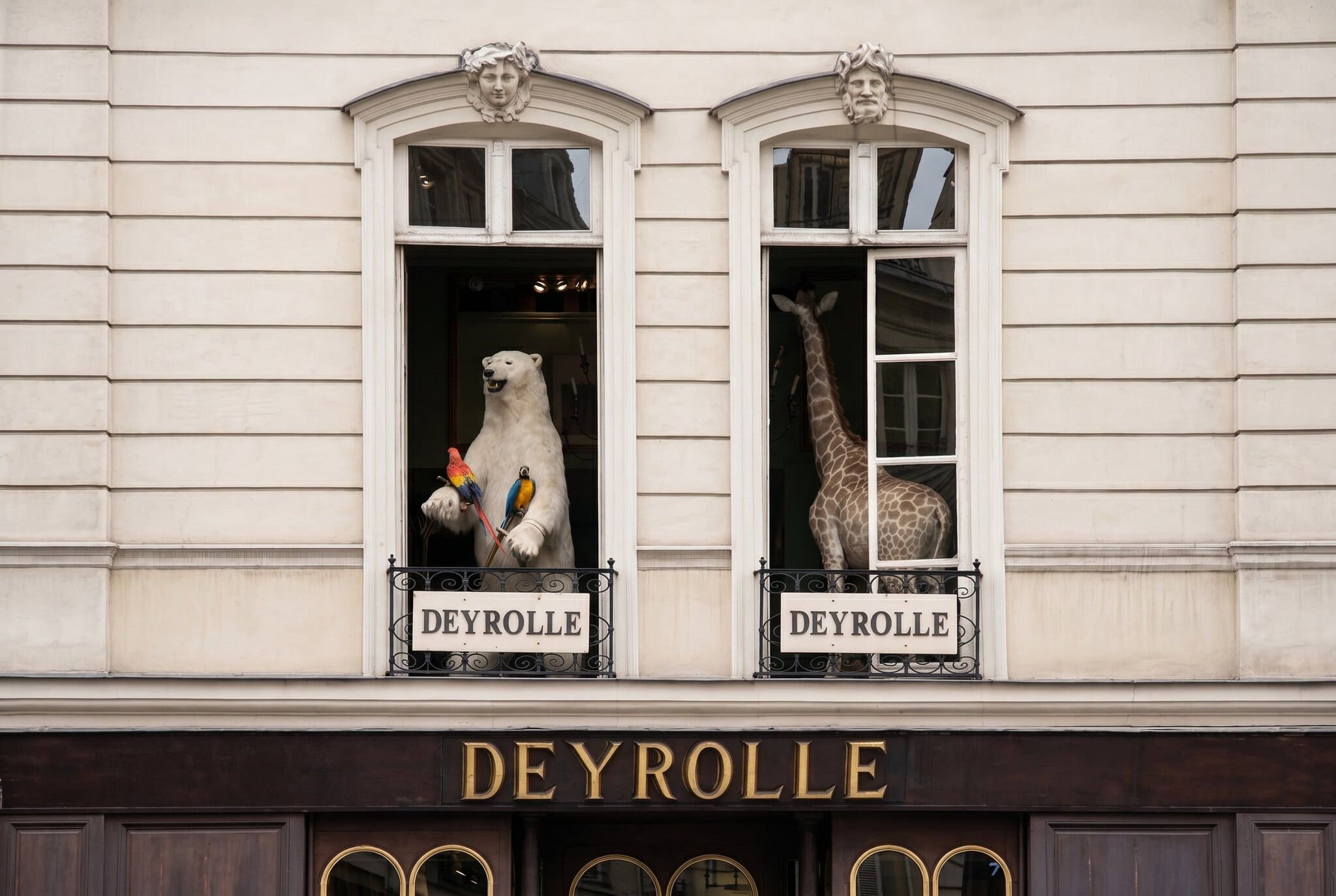
From the street, this building in the 7th arrondissement looks like a run-of-the-mill old gardening shop. But climb the creaking wooden stairs to the first floor and you’ll find yourself in a genuine curiosity cabinet brimming with spectacular natural specimens.
This historic institution specialises in taxidermy and natural history. You’ll be surrounded by stuffed lions, giraffes and polar bears, and display cases hold thousands of shimmering butterflies. It’s fascinating, slightly eerie and utterly absorbing — a place that inspired many surrealist artists.
- Address: 46 Rue du Bac, 7th arrondissement
- Entry: Free (but photography inside is not allowed without permission)
- Open: Monday to Saturday 10:00–19:00 (closed on Sundays)
- Transport: Metro line 12 (Rue du Bac station)
💡 Insider tip: Children tend to love this place, but make sure they don’t touch anything. Most of the exhibits are actually for sale, and prices run into the thousands of euros. An accidental mishap could cost you dearly.
Paris Catacombs and Montparnasse Cemetery
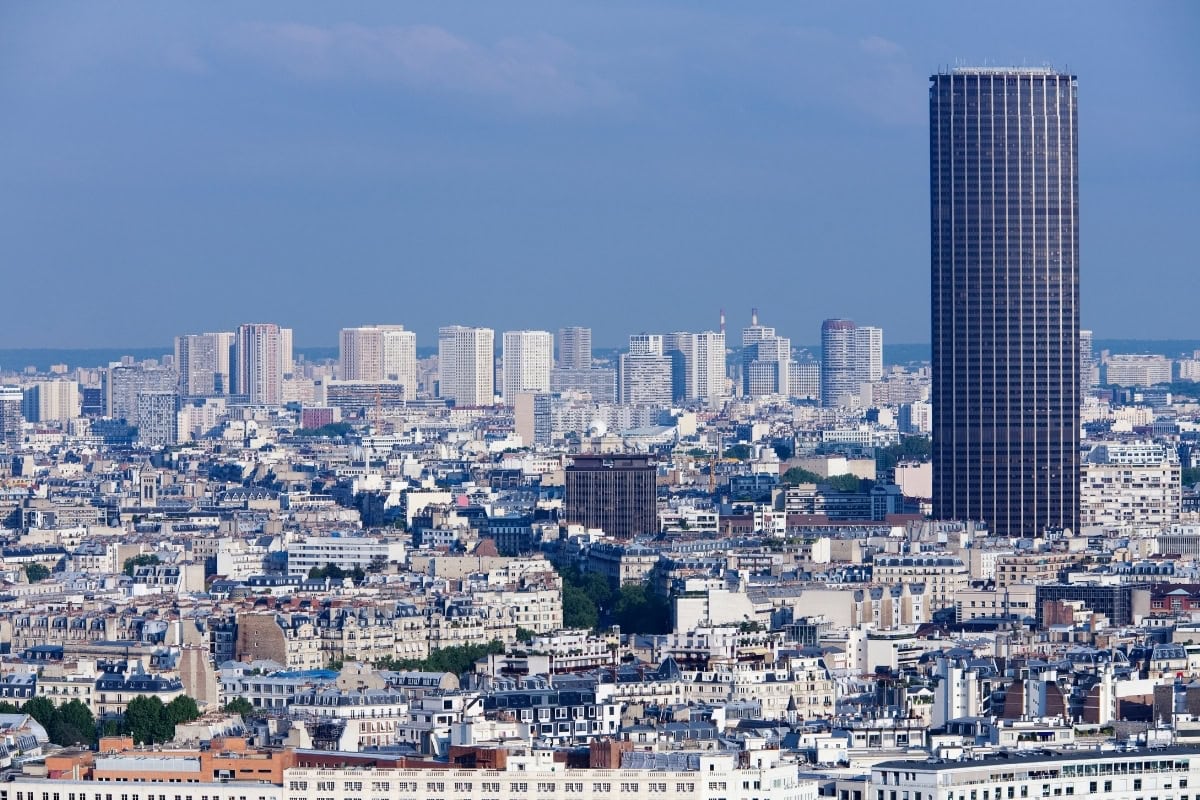
If you’ve got a strong stomach, explore the underground beneath Place Denfert-Rochereau. In the dark tunnels deep below street level lie the neatly arranged bones and skulls of six million former inhabitants. For many, the descent is a truly powerful experience.
The remains were transferred here at the turn of the 18th and 19th centuries from overcrowded and unsanitary city cemeteries. The atmosphere is oppressive, the temperature hovers around fourteen degrees and — for obvious safety reasons — pushchairs aren’t allowed, so we’ve only ventured down child-free so far.
- Address: 1 Avenue du Colonel Henri Rol-Tanguy, 14th arrondissement
- Entry: 29 €
- Open: Tuesday to Sunday 9:45–20:30 (closed on Mondays)
- Transport: Metro line 4 or 6 (Denfert-Rochereau station)
💡 Insider tip: This is critical information. You must buy tickets online exactly seven days in advance. Tickets are no longer sold on-site and without a reservation you simply won’t get in.
Père-Lachaise Cemetery and its literary heritage
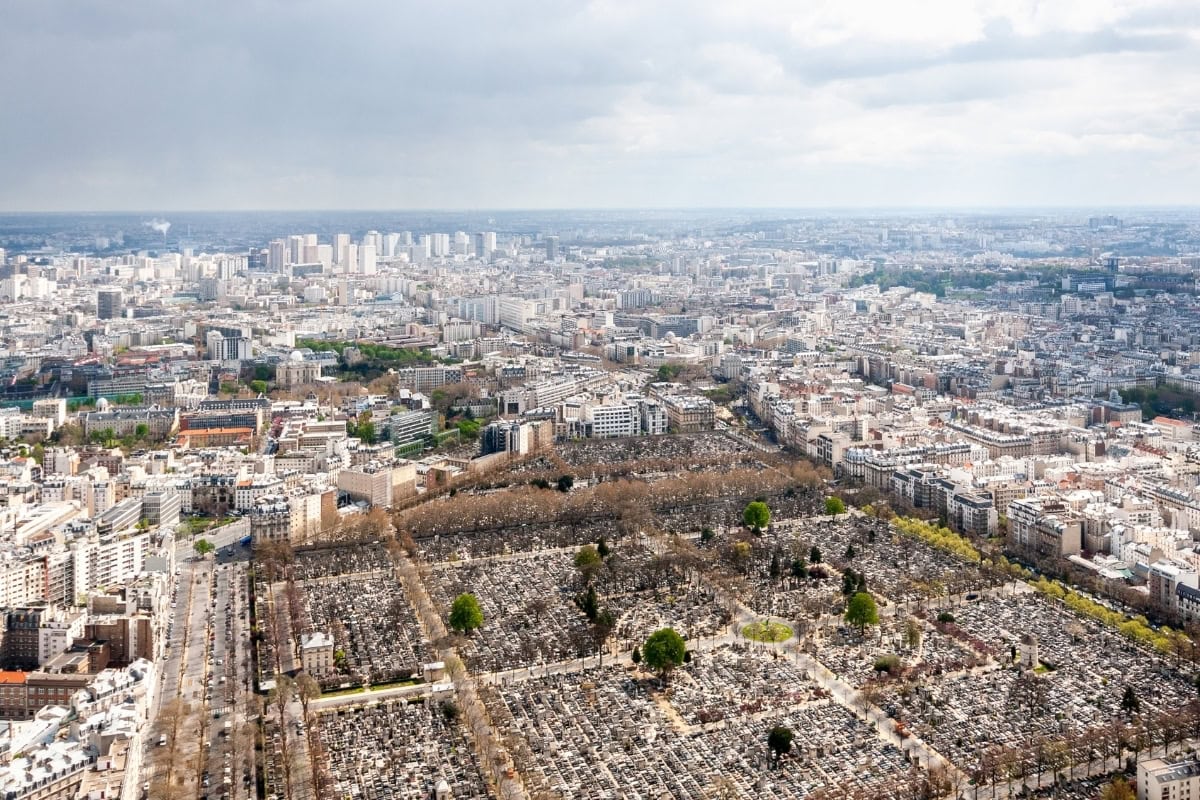
This is an enormous 44-hectare park full of mature trees and wandering cats. A pushchair rolls through beautifully. Besides famous names like Jim Morrison, Oscar Wilde and Édith Piaf, you’ll find a very significant Central European trail here.
Since 2023, the writer Milan Kundera — author of The Unbearable Lightness of Being, who lived in the city after leaving Czechoslovakia — has rested here. His grave is very simple and unassuming. Nearby you can also find the urn of the pioneering abstract painter František Kupka. It’s a fascinating piece of literary and artistic history, well worth the detour.
- Address: 8 Boulevard de Ménilmontant, 20th arrondissement
- Entry: Free
- Open: Daily 8:00–18:00 (until 17:30 in winter)
- Transport: Metro line 2 or 3 (Père Lachaise station)
💡 Insider tip: Don’t forget to photograph the orientation map from the noticeboard at the entrance. The cemetery is divided into dozens of divisions and without a map you’ll get hopelessly lost within ten minutes in this city of the dead.
Arènes de Lutèce
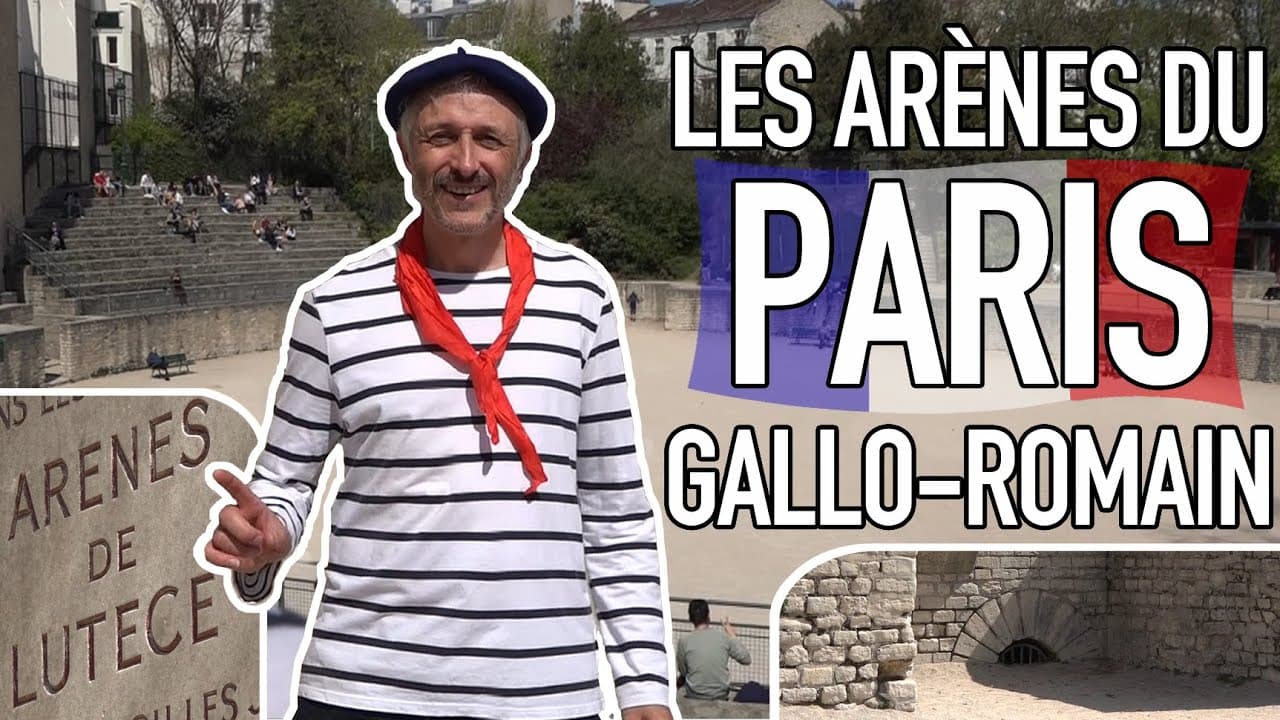
Tucked away in the 5th arrondissement lies a monument that even many locals don’t know about. These are the remains of a Roman amphitheatre from the 1st century AD, which once held up to fifteen thousand spectators and is remarkably well preserved to this day.
Today it’s a public park hidden behind residential buildings. Instead of bloody gladiatorial combat, you’ll now see local pensioners playing pétanque and schoolchildren kicking a ball around. It’s a great spot for an afternoon stop with kids — the space is enclosed and safe.
- Address: 49 Rue Monge, 5th arrondissement
- Entry: Free
- Open: Daily 8:30–21:00 (until 17:00 in winter)
- Transport: Metro line 7 (Place Monge station)
💡 Insider tip: Sit on the ancient stone terraces with a coffee and imagine the spectacles that once took place here. The acoustics are still surprisingly good, and you’ll occasionally see young musicians practising their guitar.
59 Rivoli
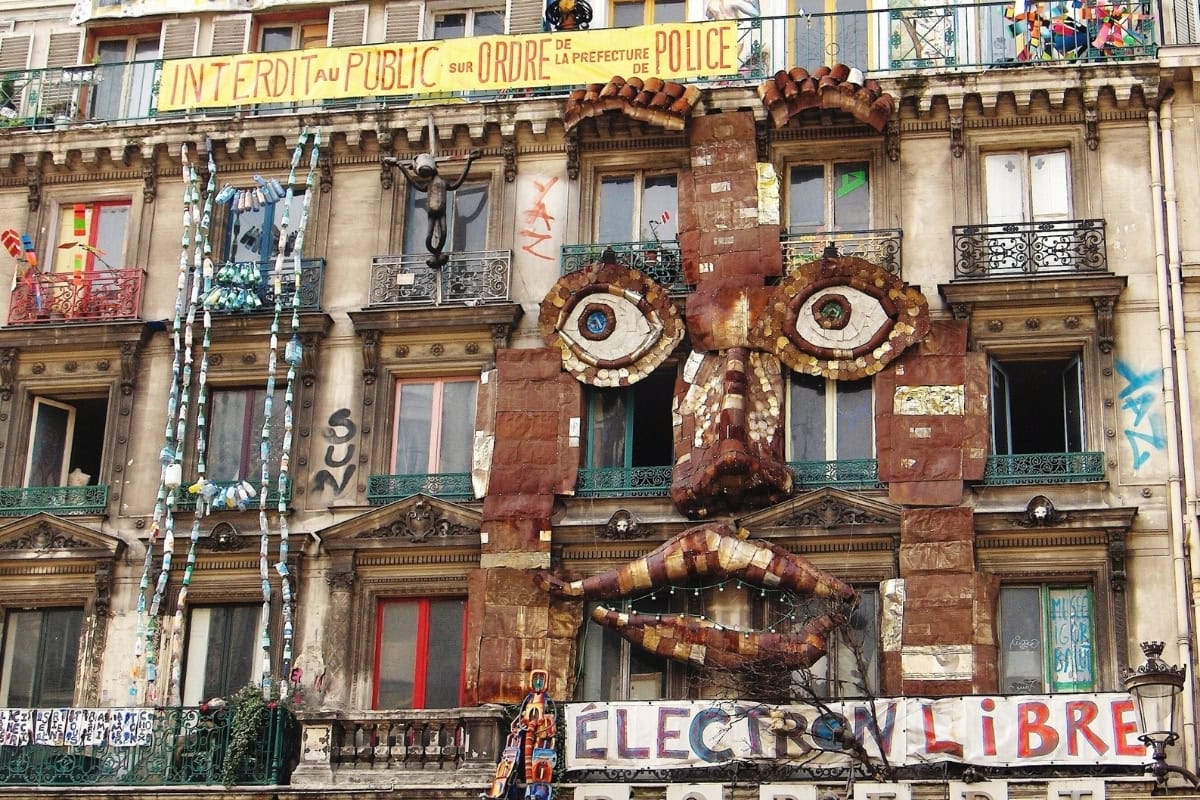
Right on one of the busiest shopping streets sits this complete one-off. Originally an illegal artists’ squat in an abandoned bank, the city eventually bought the building and made it official for everyone who loves living art.
Today, around thirty open studios host painters, sculptors and photographers. You can spot the building from a distance thanks to its wild façade decoration. Wander freely through the floors, chat with artists at work and soak up the wild, creative and delightfully chaotic energy.
- Address: 59 Rue de Rivoli, 1st arrondissement
- Entry: Free (voluntary donations welcome)
- Open: Tuesday to Sunday 13:00–20:00 (closed on Mondays)
- Transport: Metro line 1, 4, 7, 11 or 14 (Châtelet station)
💡 Insider tip: Free concerts often take place in the ground floor at weekends. It’s a tight squeeze and you can’t negotiate the stairs with a pushchair, but if you’ve got your child in a carrier it’s an incredibly stimulating visual environment.
Chat Mallows Café
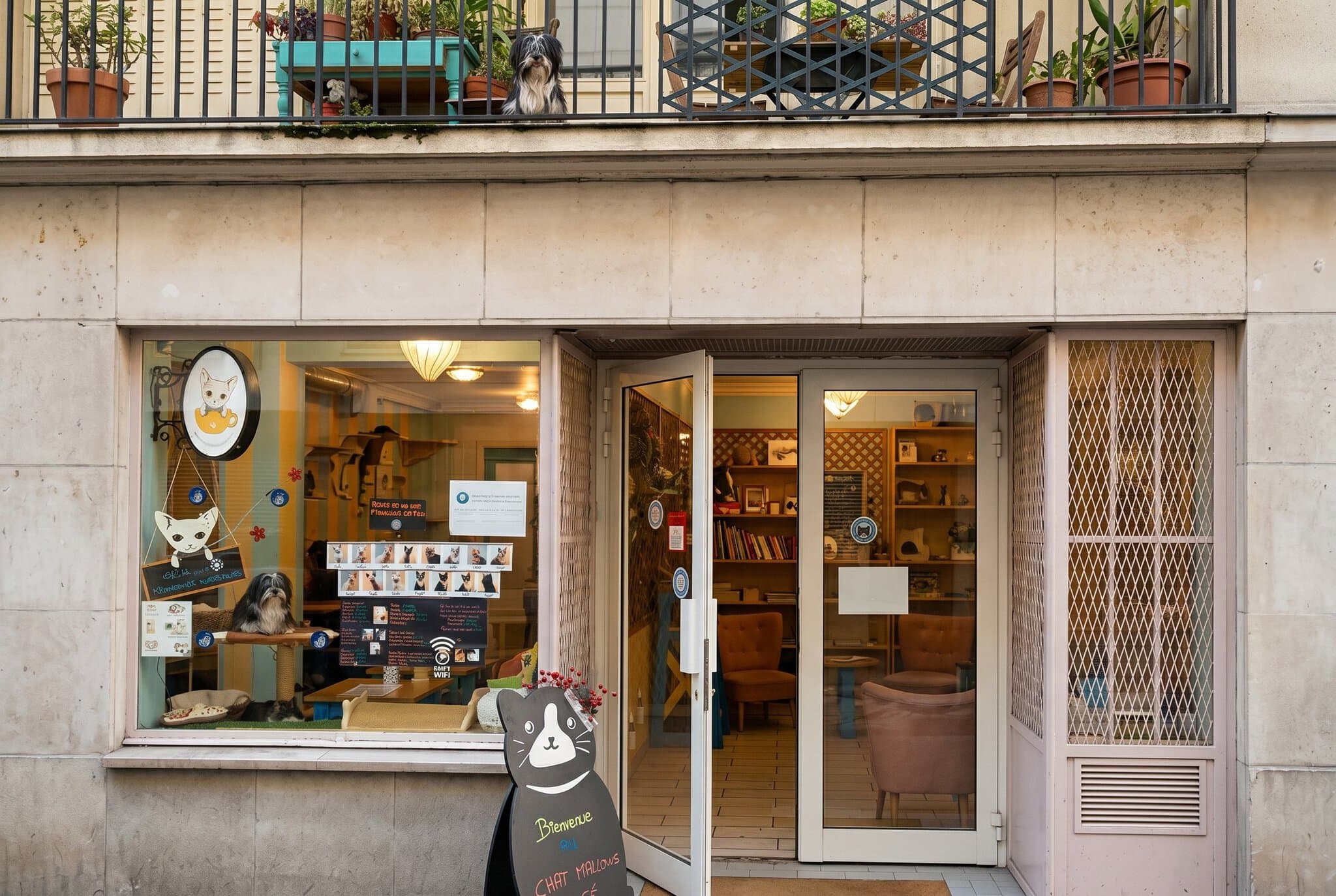
For animal lovers and families with children, this is a wonderful rainy-day escape. In the 15th arrondissement you’ll find this cat café, home to around fifteen rescued cats.
The interior is designed around the cats’ needs, full of climbing structures and cosy beds. They serve excellent coffee and sweet desserts. Children need to be calm and respect the house rules so as not to stress the cats, but overall it’s a wonderfully soothing place where Jonáš will sit happily mesmerised for ages.
- Address: 30 Rue des Volontaires, 15th arrondissement
- Entry: Pay for what you consume + small time-based fee
- Open: Wednesday to Sunday 12:00–21:00
- Transport: Metro line 12 (Volontaires station)
💡 Insider tip: The place is very popular and capacity is limited to keep the cats comfortable. Definitely book in advance through their website, otherwise they’ll likely turn you away at the door.
Wallace Fountains and Petite Ceinture
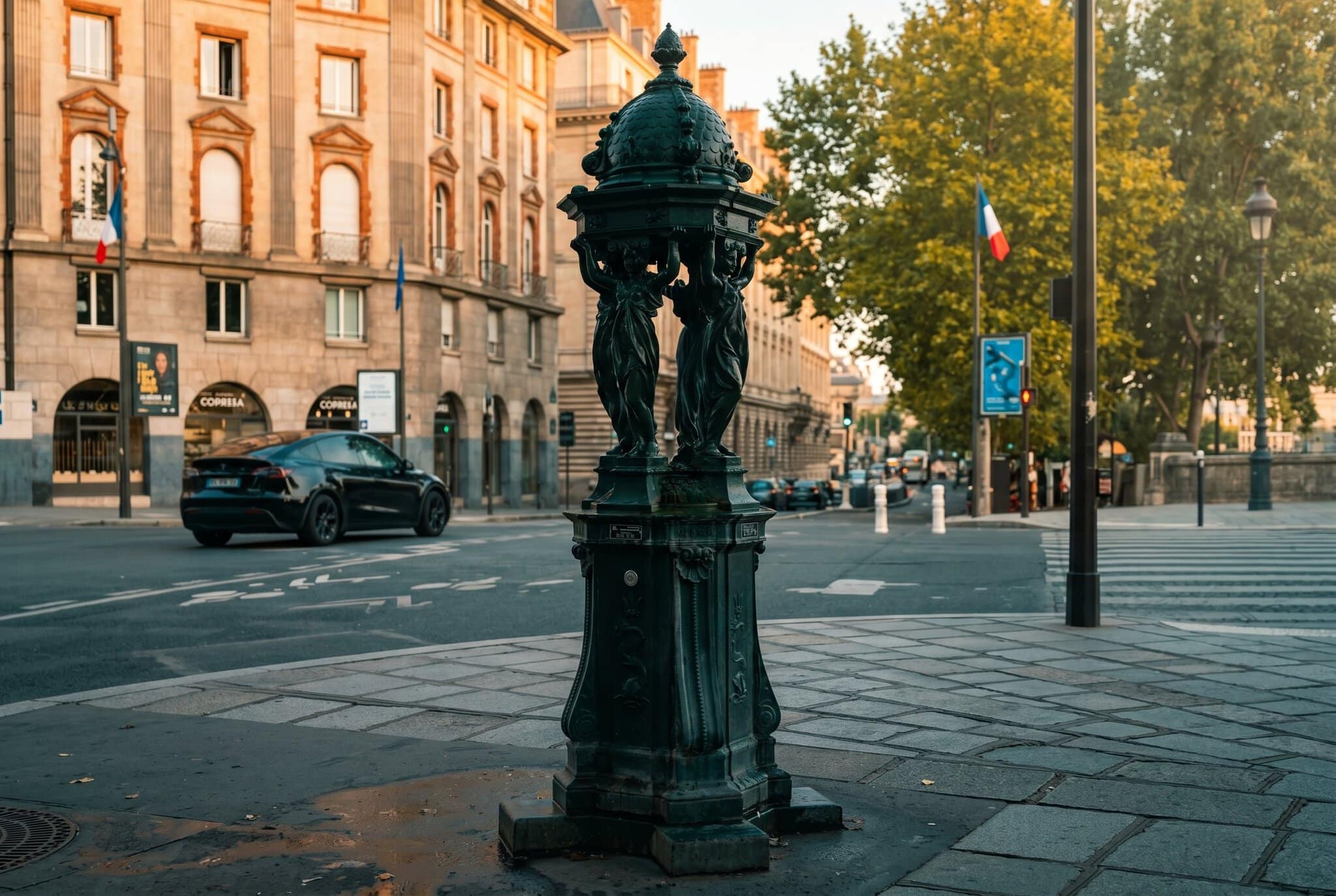
As you wander the city, keep an eye out for dark green cast-iron drinking fountains supported by four small female figures. These are the so-called Wallace fountains, which have stood here since the late 19th century. There are over a hundred of them and they all dispense perfectly safe drinking water completely free. In summer, they’re a lifesaver against dehydration.
If you’re after genuine wilderness, head for the Petite Ceinture. This is a 32-kilometre abandoned circular railway where nature has reclaimed the concrete. Several sections are now legally open, where you can walk through old tunnels and along rusting tracks.
- Address: For example, entrance at Villa du Bel Air, 12th arrondissement
- Entry: Free
- Open: During daylight hours
- Transport: Tram T3a (Montempoivre stop)
💡 Insider tip: A warning for families — don’t bring a toddler and pushchair here. The terrain is full of gravel, roots and old railway sleepers. In more remote stretches, rough sleepers sometimes shelter, so it’s not ideal for a relaxed walk with small children.
Where to Eat: Our Favourite Spots Without Tourist Mark-ups
For some, a trip to Paris is all about fashion — for Lukáš and me, it’s largely about food. Dodging tourist traps with overpriced onion soup made from a packet takes a bit of preparation, but once you know where to go, the city delivers an extraordinary culinary experience. Never sit down in a restaurant right on a main square or directly beneath a famous landmark — you’ll always overpay for dire quality.
We prefer to seek out small family-run places tucked away in side streets, or the kind of bistros where locals in both suits and overalls eat lunch. I’d love to share a few of our tried-and-tested favourites — the places we keep coming back to for the best crêpe or honest quiche when our stomachs start growling at midday.
Le Marais and surroundings
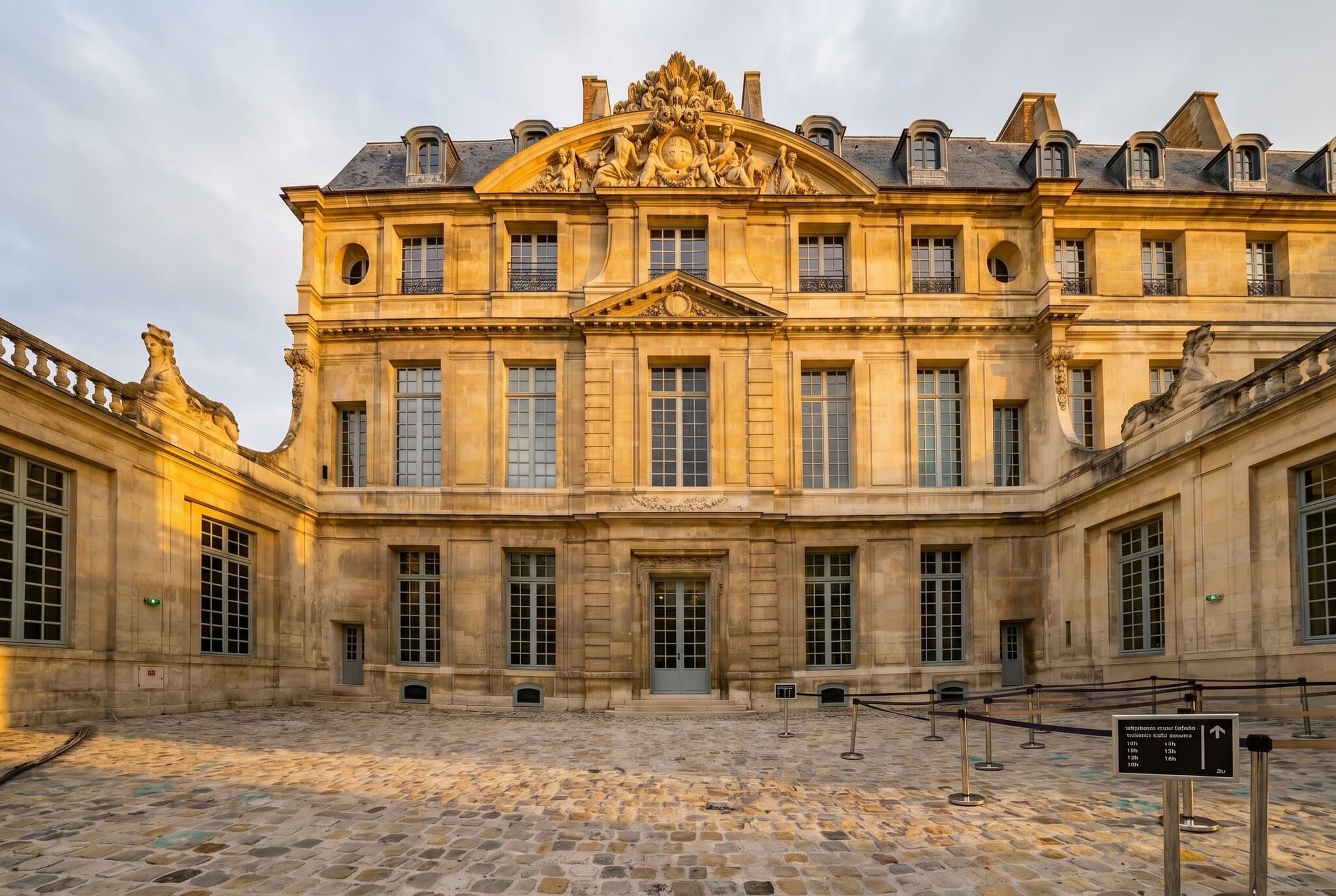
When our wanderings take us to Le Marais, we stick with a reliable classic. It’s a popular area, sure, but it still harbours plenty of traditional bistros with reasonable prices. Our number-one stop is the little falafel joint L’As du Fallafel, where we grab a pitta bread practically bursting at the seams with vegetables and hummus.
When we fancy sitting down for a proper rest, we head to Marché des Enfants Rouges. It’s a historic covered market packed with small food stalls from around the world. You sit on wooden benches, order a slice of savoury tart or a bowl of Moroccan couscous, and soak up the genuine local chatter. Best of all, the bill here won’t blow your holiday budget.
Canal Saint-Martin
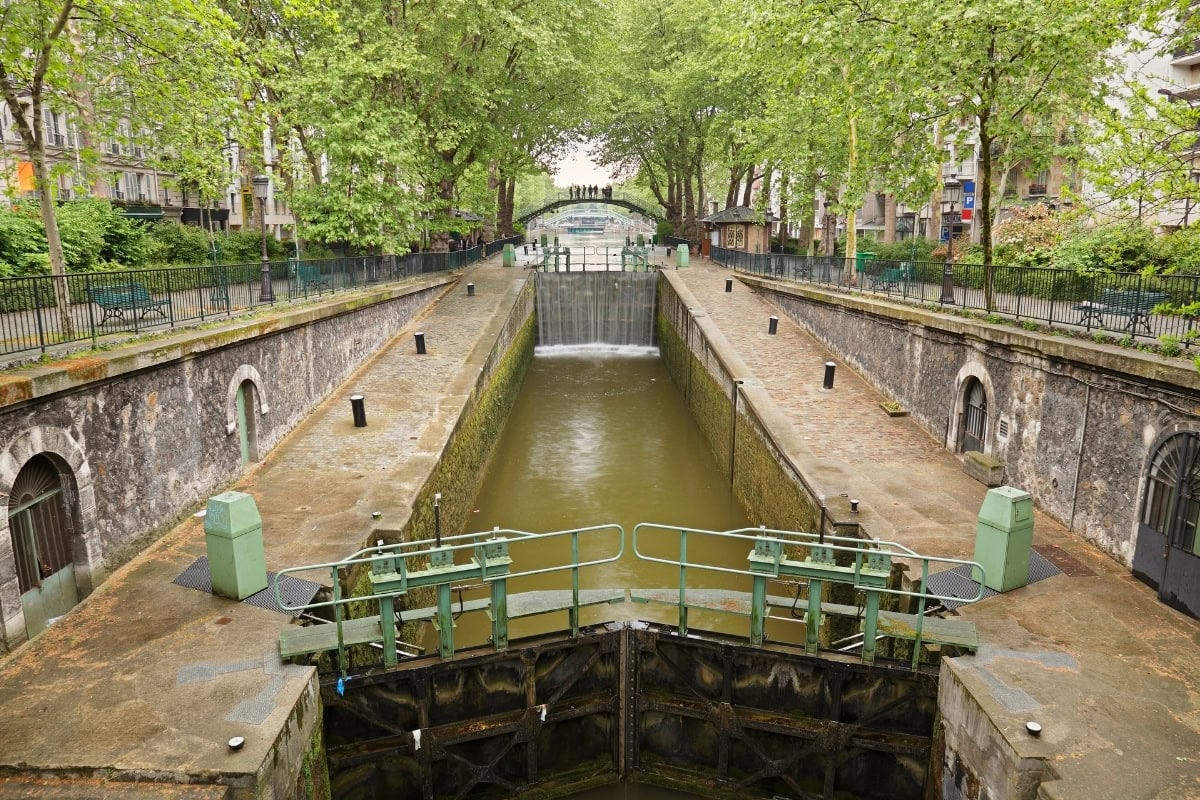
For a more laid-back and less touristy vibe, we head north to the canal. It’s lined with dozens of small independent cafés and modern bistros. Mornings are best spent with a specialty coffee and an enormous buttery croissant at Ten Belles — it does get packed, but the service is incredibly warm and speedy.
In the evening we sometimes treat ourselves to a relaxed dinner at one of the many local crêperies. We’re obsessed with savoury buckwheat galettes stuffed with cheese, ham or spinach. They’re beautifully crispy and are traditionally washed down with semi-dry cider from ceramic bowls. For us, it’s the absolute pinnacle of culinary bliss — and Jonáš always gets a sweet chocolate crêpe for dessert.
Practical Info: How to Survive Without Losing Your Mind
Getting around a foreign capital requires a certain amount of tactical preparation, especially when you’ve got a small child in tow. The city has its own unwritten rules, and if you respect them you’ll save yourself a world of hassle and money.
Transport and pushchair logistics
The metro is fast, but for parents with a pushchair it’s frankly a nightmare. Stations are full of endless stairs, the turnstiles barely fit an empty buggy, and of all the lines only the modern line 14 is fully step-free. We rely mainly on surface buses instead. They’re slower, but you get to see the city and you can roll right in through the middle doors with a pushchair, no folding required. If you’re arriving from the UK, you’ll probably fly into Charles de Gaulle or Orly — pick up a Navigo Découverte card for around 30 €, which covers all transport including the journey from the airport. Flights from London are plentiful — both British Airways and easyJet operate regular services from Heathrow, Gatwick and Luton, and the Eurostar from St Pancras gets you to Gare du Nord in just over two hours.
The Golden Bonjour Rule
This is the absolute foundation — ignore it at your peril. Every single time you enter a shop, bakery or board a bus, you must say a clear and audible “Bonjour” (Good day). If you skip this and launch straight into English with your request, locals will regard you as a rude barbarian and their willingness to help will plummet to zero. On your way out, it’s polite to say “Merci, au revoir” (Thank you, goodbye).
Food tips to save money
Here’s a tip that escaped us in our first year and cost us more than it should have: never pay for tap water in restaurants. Just say “Une carafe d’eau, s’il vous plaît” and they’ll bring you a whole glass carafe of chilled water, completely free. If you’re looking for cheaper eats, look for the signs reading “La Formule” or “Menu du Jour” on boards outside restaurants at lunchtime. This means a set lunch menu, where a two-course meal costs around 18–22 €, which is excellent value by local standards.
Watch out for scams and pickpockets
The city is generally very safe, but petty crime targeting inattentive visitors unfortunately thrives. On the metro — especially on line 1 around the Louvre — wear your backpack on your front. Ignore anyone near landmarks trying to get you to sign some petition for the hearing-impaired; it’s a distraction trick. Likewise, never let anyone tie colourful friendship bracelets on your wrist beneath the basilica on Montmartre. And remember: entry to the restored Notre-Dame cathedral is free — anyone offering you tickets on the street is a scammer. It’s also worth keeping your valuables in a hidden money belt for extra peace of mind.
Read Next
If you’ve already ticked off the hidden gems and want to tackle the most famous landmarks too, check out our comprehensive guide on what to see in Paris. It includes tips on how to avoid the worst queues.
Interested in art and history? We’ve put together a detailed article on the best museums in Paris, including when admission is completely free and how the museum pass works.
And if you only have an extended weekend and need a clear plan, our Paris in 3 days article offers a logically structured step-by-step itinerary so you won’t waste time criss-crossing the city unnecessarily.
Frequently Asked Questions
Tips and Tricks for Your Vacation
Don’t Overpay for Flights
Search for flights on Kayak. It’s our favorite search engine because it scans the websites of all airlines and always finds the cheapest connection.
Book Your Accommodation Smartly
The best experiences we’ve had when looking for accommodation (from Alaska to Morocco) are with Booking.com, where hotels, apartments, and entire houses are usually the cheapest and most widely available.
 🚗 Car rental on the roadVerified car rentals in Paris
Search with the DiscoverCars comparison engine — it compares prices from dozens of local and international rental companies, and most bookings come with free cancellation.
Compare car prices in Paris →Don’t Forget Travel Insurance
Good travel insurance will protect you against illness, accidents, theft, or flight cancellations. We’ve had a few hospital visits abroad, so we know how important it is to have proper insurance arranged.
Where we insure ourselves: SafetyWing (best for everyone) and TrueTraveller (for extra-long trips).
Why don’t we recommend any Czech insurance company? Because they have too many restrictions. They set limits on the number of days abroad, travel insurance via a credit card often requires you to pay medical expenses only with that card, and they frequently limit the number of returns to the Czech Republic.
Find the Best Experiences
Get Your Guide is a huge online marketplace where you can book guided walks, trips, skip-the-line tickets, tours, and much more. We always find some extra fun there!


