

Walking through the narrow streets of old Paris with a morning coffee in hand as the city lazily wakes and bakeries fill the air with the scent of fresh butter, you feel like you’ve stepped into a perfect film. Especially when you’re pushing a buggy and your toddler is happily watching pigeons on a little square. Everything around you looks so elegant, polished, and flawless. But this romantic façade that the French capital so carefully cultivates is actually one big, albeit stunningly beautiful, lie. The real Paris — and its Paris legends — is far darker, more tangled, and more fascinating than any glossy travel guide will ever show you.
Beneath those wide boulevards where we stroll and shop today lie millions of bones and hundreds of kilometres of dark sewers. The most famous landmarks that tourists now crowd around, phones in hand, often owe their fame to sheer chance, theft, or plain bureaucratic blunder. And those picture-perfect Parisian flats with a view? They were built at an enormous social cost, through the ruthless demolition of entire neighbourhoods. Paris constantly tests you, playing an endless game of truth and illusion.
The year 2026 is an exceptional time to explore these stories. The city has caught its second wind after the Olympic frenzy. Notre-Dame Cathedral, now shrouded in new legends after its devastating fire, has finally reopened in full glory. The famous Centre Pompidou, on the other hand, has closed until 2030, giving lesser-known spots a chance to shine. This summer, people will officially swim in the Seine again for the first time in a century. And for me personally, a small miracle happened — the legendary Michelin-starred restaurant Arpège switched to a fully plant-based menu, which is an absolute earthquake in the world of haute French cuisine.
So what’s ahead? Famous Parisian myths, the theft that turned the Mona Lisa into a global superstar, Paris Syndrome that breaks tourists’ hearts, and just how much the series Emily in Paris lies to us. Plus a few tips on where to go if you’re drawn to the dark side of this unbelievably beautiful illusion.
TL;DR
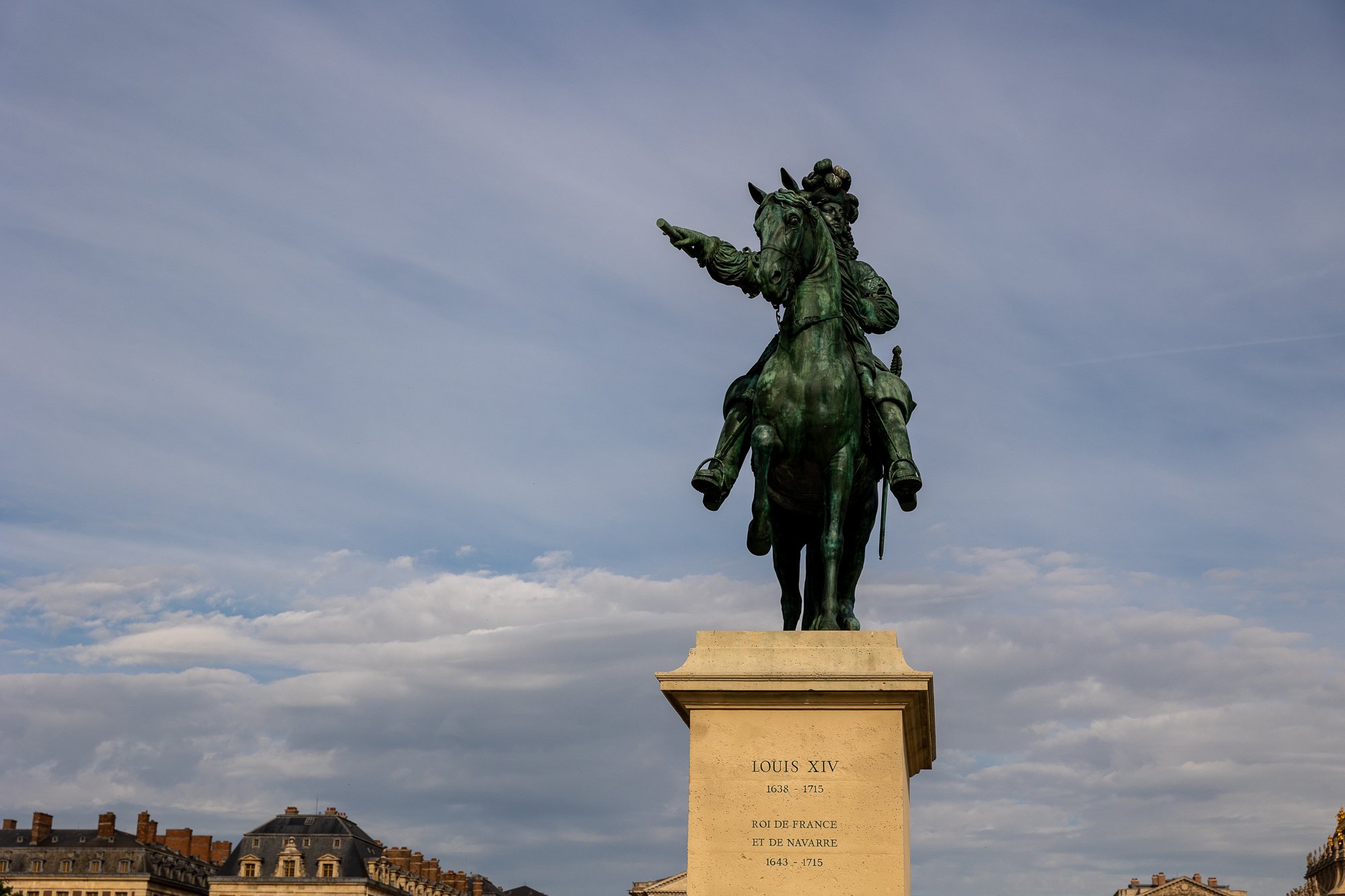
- The Eiffel Tower was originally meant to be demolished after twenty years. It was saved by a military radio antenna, and later by a German general who disobeyed Hitler’s order to destroy it.
- The Mona Lisa was just one of many paintings in the Louvre until 1911. An audacious theft by an Italian workman — who hid it in his room for two years — turned it into a global celebrity.
- Paris Syndrome is a genuine psychiatric diagnosis. Tourists (often from Japan) experience severe shock when they discover that Paris isn’t all romance and film-set perfection, but also noise, stress, and brusque waiters.
- The series Emily in Paris depicts a city that doesn’t exist. Real Parisians don’t wear pastel colours, they don’t take taxis everywhere (because the traffic is hellish), and nobody will speak to you unless you greet them with “Bonjour” first.
- Beneath Paris lie 300 kilometres of catacombs holding the remains of six million people, plus 2,400 kilometres of historic sewers that even have their own museum.
- Paris’s wide boulevards (Haussmann’s renovation) weren’t built for beauty — they were designed so revolutionaries couldn’t build barricades and the army had room for artillery.
- The story of the Phantom of the Opera is rooted in reality. Beneath the Palais Garnier, there’s still a vast underground lake where Paris firefighters train to this day.
- The golden rule of survival is simple: ignore street scammers. Nobody just found a gold ring in front of you, nobody wants to give you a free friendship bracelet at Sacré-Cœur, and entry to Notre-Dame is free.
The full destination guide: Paris — guide and what to see
When to explore Paris legends: Weather and seasons 2026
Getting the timing right is absolutely essential, especially if you don’t want to spend hours in queues or fight for pavement space. Paris is a city that responds dramatically to the seasons — each one changes not just the temperature but also the mood of the locals and the availability of attractions. Lukáš and I always try to plan our trips to avoid the worst of the madness, because wandering dark legend-filled alleyways with a crowd of strangers breathing down your neck just doesn’t have the right atmosphere.
Best months for exploring legends
Lukáš and I swear that the most beautiful Paris we’ve ever experienced was always in spring or autumn. May brings blossoming trees and pleasant temperatures around 20°C, ideal for long walks tracing the footsteps of famous writers through the Latin Quarter. Autumn — October and November specifically — has an incredibly melancholic atmosphere. Frequent mists over the Seine and fallen leaves in the Luxembourg Gardens create the perfect backdrop for tales of the Phantom of the Opera or cursed poets. Plus the main tourist wave has receded, so you’ll get into smaller museums and underground spaces much more easily.
That autumn light, reflecting in puddles along the Seine, is something I’ll never tire of. You suddenly understand all those painters and writers who came here searching for lost inspiration and ended up staying for years.
💡 Insider tip: If you want to experience a truly magical, slightly eerie Paris, head to Père-Lachaise cemetery first thing in the morning in November. The morning mist weaving between the old tombstones is incredibly photogenic, and the tourist crowds don’t arrive until around ten.
When to stay home
August is the month when Paris transforms into a strange ghost town crossed with a tourist theme park. Locals flee to the coast, many family bakeries and small bistros shut up shop, and the only people left on the streets are confused visitors clutching maps. The tarmac radiates heat, turning a city tour into more of an endurance test. If you’re travelling with kids, give August a wide berth. Also watch out for late February and early March, when Fashion Week takes over. Accommodation prices make absolutely no sense during that period, and you won’t get into most central restaurants without a reservation made a month in advance.
Lukáš and I once lived through the Fashion Week circus first-hand, and honestly it was quite intense. Everywhere we wanted to go was packed solid, our favourite cafés were impossible to get into, and photographers were constantly dashing about — we and our buggy were clearly just getting in the way of their shots. So we now happily leave that season to the fashion enthusiasts.
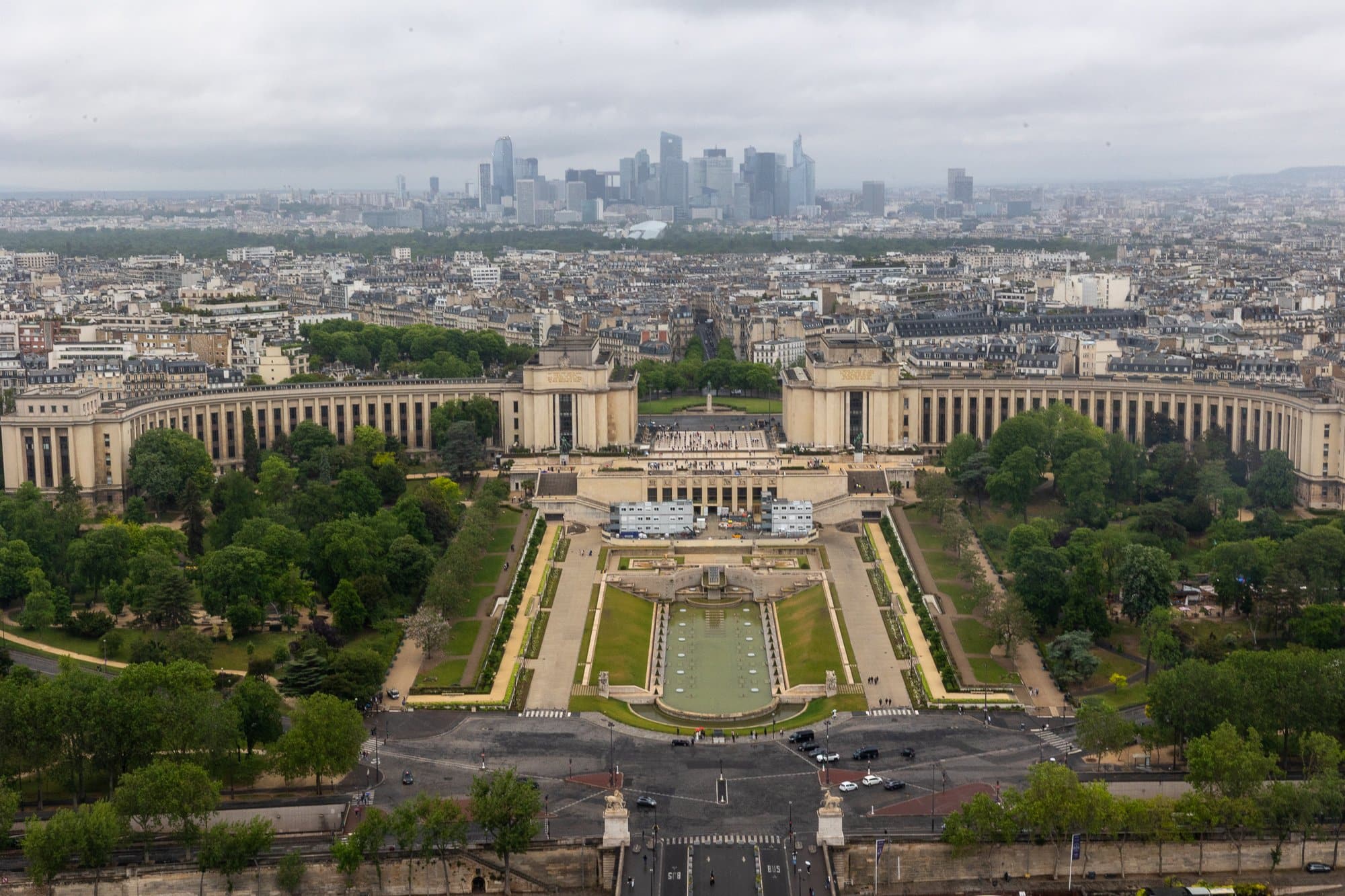
💡 Insider tip: The Trocadéro fountains that you know from those flawless Instagram shots are often drained from November to March for maintenance and frost protection. Don’t plan a grand winter photo shoot there — you’d be greeted by empty concrete.
Events calendar and anniversaries 2026
The year 2026 brings several specifics you need to factor into your planning. From July to August, the massive Seine swimming project kicks off, with official bathing spots opening right in the river. This has been talked about for decades, and now it’s finally happening. A critical date for art lovers is the weekend of 19–20 September 2026, when European Heritage Days (Journées du Patrimoine) take place. While normally inaccessible palaces and government buildings across Paris open their doors for free, the famous Monet Gardens in Giverny are exceptionally and strictly closed on those two days.
Another big talking point this year is the reopening of several iconic covered passages in the centre that were hidden behind scaffolding for years. It’s lovely to see the city constantly evolving and taking its time after the Olympics to fine-tune these smaller delights to perfection.
💡 Insider tip: On the first Saturday of October, Nuit Blanche (White Night) takes place. The whole city stays awake, streets fill with art installations, and public transport runs for free until morning. It’s the best night of the year to soak up contemporary Parisian culture.
Where to stay in Paris: A base for families and mystery hunters
Choosing the right neighbourhood in Paris is absolutely crucial. It’s not just about where you sleep — it’s about what atmosphere you absorb the moment you wake up. The twenty Parisian arrondissements spiral outward from the centre like a snail’s shell, and each one has a completely different character. We went through a phase of staying in the noisy centre, but ever since Jonáš started travelling with us, our priorities have completely shifted. We need safety, wider pavements for the buggy, proximity to parks, and quiet nights.
Why we choose the 6th and 3rd arrondissements
For families and anyone looking for an authentic but peaceful Paris, the absolute favourite is the 6th arrondissement (Saint-Germain-des-Prés). Historically an intellectual quarter, it’s full of small publishers and quiet streets, and the main advantage is that you’ve got Jardin du Luxembourg right on your doorstep (which we think is the most beautiful park in the world), with fantastic playgrounds and safe, wide streets for pushchairs.
A brilliant alternative is the northern part of the 3rd arrondissement (Haut Marais). Unlike the overcrowded southern section of the Marais (4th arrondissement), this part is much calmer. The streets are narrow, but you’ll find loads of excellent vegetarian bistros, independent boutiques, and the fantastic covered market Enfants Rouges. If you want to be close to the Eiffel Tower and fancy an evening picnic, look in the 7th arrondissement (Invalides). It’s an incredibly quiet residential area — short on nightlife, but that’s a massive plus for families. Steer clear of the area around Gare du Nord station (10th arrondissement), where safety, particularly in the evening, isn’t great.
Where to rest your head with kids (tips 2026)
Your choice of neighbourhood will fundamentally shape your entire experience of the city — and your budget. Paris is divided into twenty arrondissements that spiral clockwise from the historic centre near the Louvre. Finding affordable accommodation in the centre is nearly impossible, but if you know where to look, you can find a great compromise between price, safety, and accessibility.
With a pushchair and Jonáš, give a wide berth to the northern part of the 10th arrondissement around Gare du Nord and Pigalle at night in the 18th arrondissement. We once got lost there at 2 AM with a friend, and that’s definitely not an experience you want to repeat with a two-year-old. 😅
After much searching, we settled on Hôbou, an authentic French boutique hotel in Boulogne-Billancourt (you can book it here). It looks almost unassuming at first glance, but within the first few hours you’ll fall in love with it.
Where to eat in Paris: Our favourite bistros and cafés
Hand on heart, for the first week Lukáš and I mostly ate baguettes from bakeries, because finding a free table in a restaurant with a pushchair and Jonáš in the evening is a sport in itself. Chasing Michelin stars on a tight budget is no easy feat, so we had to learn how to eat well in Paris without bankrupting the family and — crucially — find places where nobody would look down their nose at Jonáš.
Finding a genuinely good restaurant in the centre that isn’t just a tourist trap serving overpriced, tired croissants takes a bit of practice. After a few missteps, though, we discovered a handful of addresses we return to every visit. And don’t worry — I won’t skip the vegan tips that currently excite me most about the Parisian dining scene.
Breakfast and coffee to get you going
If there’s one thing the French do to perfection, it’s sweet pastries. Our morning routine usually starts at La Maison d’Isabelle bakery (in the 5th arrondissement), which won the award for the best croissant in all of Paris in 2018. And trust me, that award is thoroughly deserved. A buttery croissant here costs around €1.20 and peels apart beautifully. Lukáš and I always grab a few extra in a paper bag and munch them on the go.
Good speciality coffee used to be a real challenge in Paris — locals swear by their classic dark-roasted espresso knocked back standing at the bar. Thankfully, times are changing. We’re big fans of Café Loustic in the 3rd arrondissement (Haut Marais). There’s plenty of space, an excellent flat white for about €5, and the staff actually smile at us even when we’re battling spilt water at the table 😅.
Family-friendly dinners without the Michelin stars
When we fancy a proper dinner at a reasonable price with that authentic Parisian buzz, we head to Bouillon Chartier. These traditional dining halls (bouillons) date back to the turn of the 19th century and were originally for workers. We love the branch on Grands Boulevards. It’s huge, noisy, waiters in black waistcoats scribble your order straight onto the paper tablecloth, and you can get classic French food for a song. A main course like bœuf bourguignon comes in at around €12. Just be prepared to share a table with strangers — which actually has its own unmistakable charm.
And I mustn’t forget my plant-based favourites — I have to mention Le Potager de Charlotte (with branches in the 9th and 17th arrondissements). It’s a family business run by two brothers who produce fantastic, fully vegan French cuisine. Their roasted aubergine and chickpea fritters are absolutely divine. Dinner here runs to about €25 per person. This is usually where we go once Jonáš has fallen asleep in the pushchair and Lukáš and I get a quiet moment to ourselves with a bottle of wine ☺️.
The Iron Lady who was meant to die young
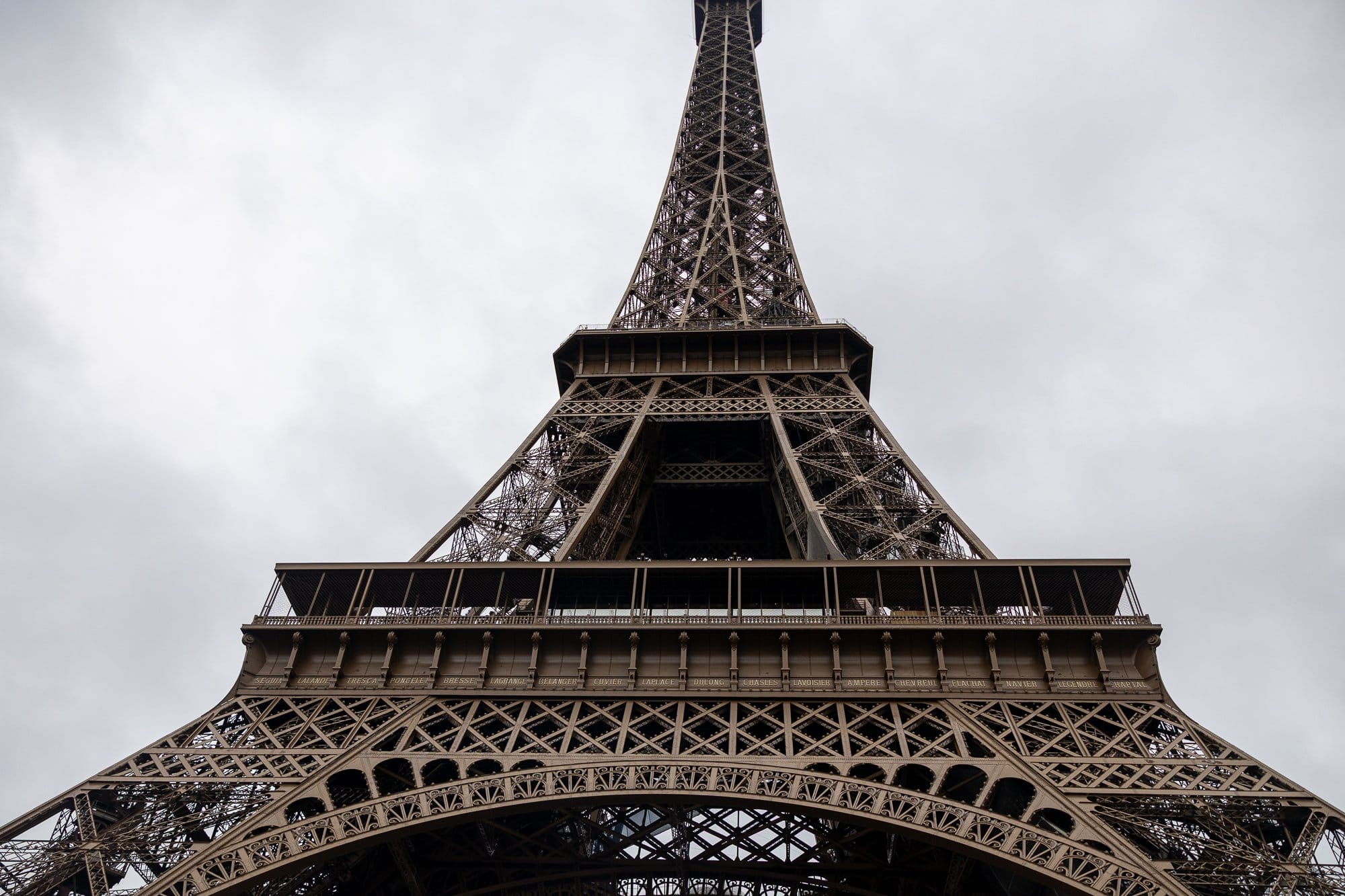
Close your eyes and picture Paris — you’ll see her, guaranteed. The Eiffel Tower forms an utterly fixed anchor in the city’s skyline. She looks as if she’s stood there since time immemorial, beloved from day one. And yet, what few people know is that her existence hung by a thread on multiple occasions. The story is packed with hatred, political intrigue, and sheer good fortune — the stuff novels are made of. So many legends swirl around the world’s most famous structure that it’s sometimes hard to separate historical fact from urban myth.
The myth of a twenty-year lifespan and salvation by radio
You’ll often hear that the tower was supposed to come down after twenty years. Surprisingly, this isn’t a myth — it’s the pure truth. Gustave Eiffel built it as a temporary, albeit monumental, attraction for the 1889 World’s Fair. His land lease was for a mere two decades. In 1909, it was simply to be dismantled and sold for scrap. The Parisian cultural elite could hardly wait. Writers like Guy de Maupassant and Alexandre Dumas the younger penned furious petitions against the “tragic street lamp” and “black factory chimney” that they claimed disfigured the city.
But Eiffel wasn’t just a brilliant engineer — he also had a formidable nose for business and politics. He knew that unless he found some damn good practical use for the structure, it would be consigned to the dustbin of history. Salvation came from the then-invisible, brand-new world of radio waves. Eiffel transformed the tower into a giant antenna. By 1909, when the lease was set to expire, it was already functioning as a key military telegraphic hub. During World War I, the French army used it to intercept German dispatches and coordinate defences. The steel monster saved its own neck by simply becoming indispensable to the state.
💡 Insider tip: Getting up the Eiffel Tower is pricey (the lift to the top costs €29.40 — only buy tickets through the official Eiffel Tower website) and the queues are gruelling. A much better view, where you actually have the Eiffel Tower itself in the frame, is from the rooftop of the Tour Montparnasse skyscraper (open until 23:30, entry €21).
Hitler’s order to destroy and General Choltitz
Let’s jump forward to August 1944. The Allies are advancing relentlessly towards Paris, and Adolf Hitler issues a clear and deranged order from Berlin to General Dietrich von Choltitz, the military commander of the city. Paris must be razed to the ground: landmarks, bridges over the Seine, the Louvre, Notre-Dame, and the Eiffel Tower itself were all to vanish from the map forever.
The romantic version of the story — which has even been made into a film — tells of how von Choltitz disobeyed the order out of a deep love for Parisian culture and beauty. It sounds wonderful, but reality was far more prosaic and pragmatic. The general simply calculated that the war was lost. He didn’t want to go down in history as an utter barbarian, or end up at an Allied firing squad for war crimes. Whatever drove him — pragmatism or a sudden epiphany — he left the city standing, and the tower survived its second brush with death.
💡 Insider tip: For the absolute best photo with the Eiffel Tower, skip the overcrowded Trocadéro square. Instead, head a bit further to the Pont de Bir-Hakeim bridge. You’ll find a stunning steel colonnade there (you’ll recognise it from the film Inception) that frames the tower perfectly, with a fraction of the crowds.
Cut lift cables: sabotage or lack of parts?
Another popular legend dates from the same period of Nazi occupation. The story goes that proud French resistance fighters deliberately destroyed the Eiffel Tower’s lift cables under cover of darkness. The goal was clear and symbolic: if Hitler wanted to look down on the conquered city from the heights, he’d have to climb more than a thousand steps on foot.
This is a classic half-truth. The lifts genuinely didn’t work during the war, but the real reason was more likely a critical shortage of spare parts and the general collapse of routine maintenance during wartime. It sounds considerably less heroic than a secret sabotage mission with wire cutters in hand, but the result was the same. When German soldiers wanted to hoist a swastika flag at the summit, they really did have to hoof it all the way up.
💡 Insider tip: Never have a picnic directly under the tower on the Champ de Mars lawns, especially after dark. It’s unfortunately the prime hunting ground for the most brazen pickpockets and fake-charity scammers in all of Paris.
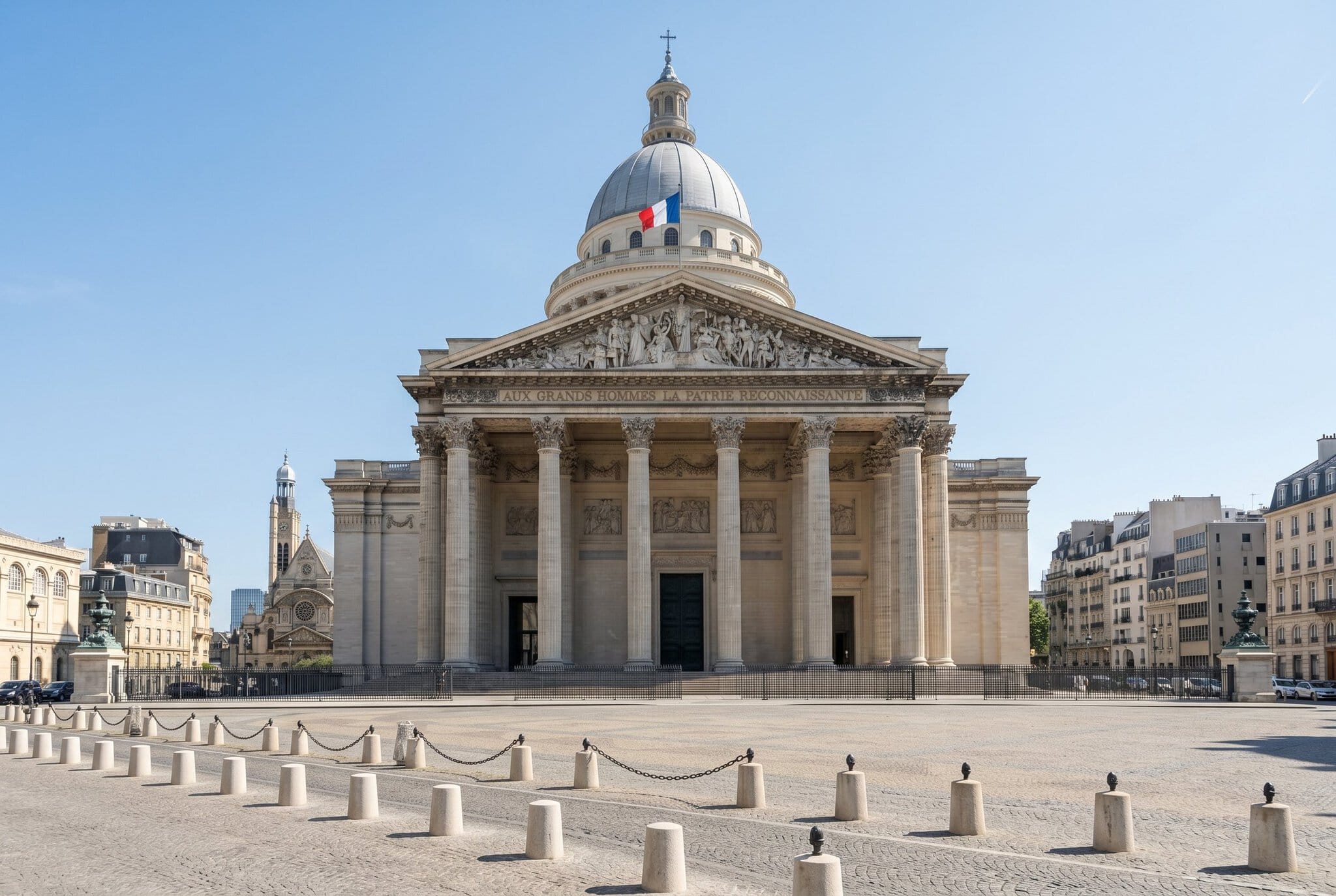
A city beneath the city: Catacombs, sewers, and pneumatic post
As you weave along the pavements with your pushchair, keep one crucial thing in mind. What you’re walking on is just a thin limestone shell. The real Paris is like Swiss cheese — its underground is every bit as labyrinthine, and arguably even more fascinating, than the sun-drenched streets above. Beneath Parisians’ feet lie the dead, the sewage, and some forgotten engineering marvels.

The realm of the dead in the Paris catacombs
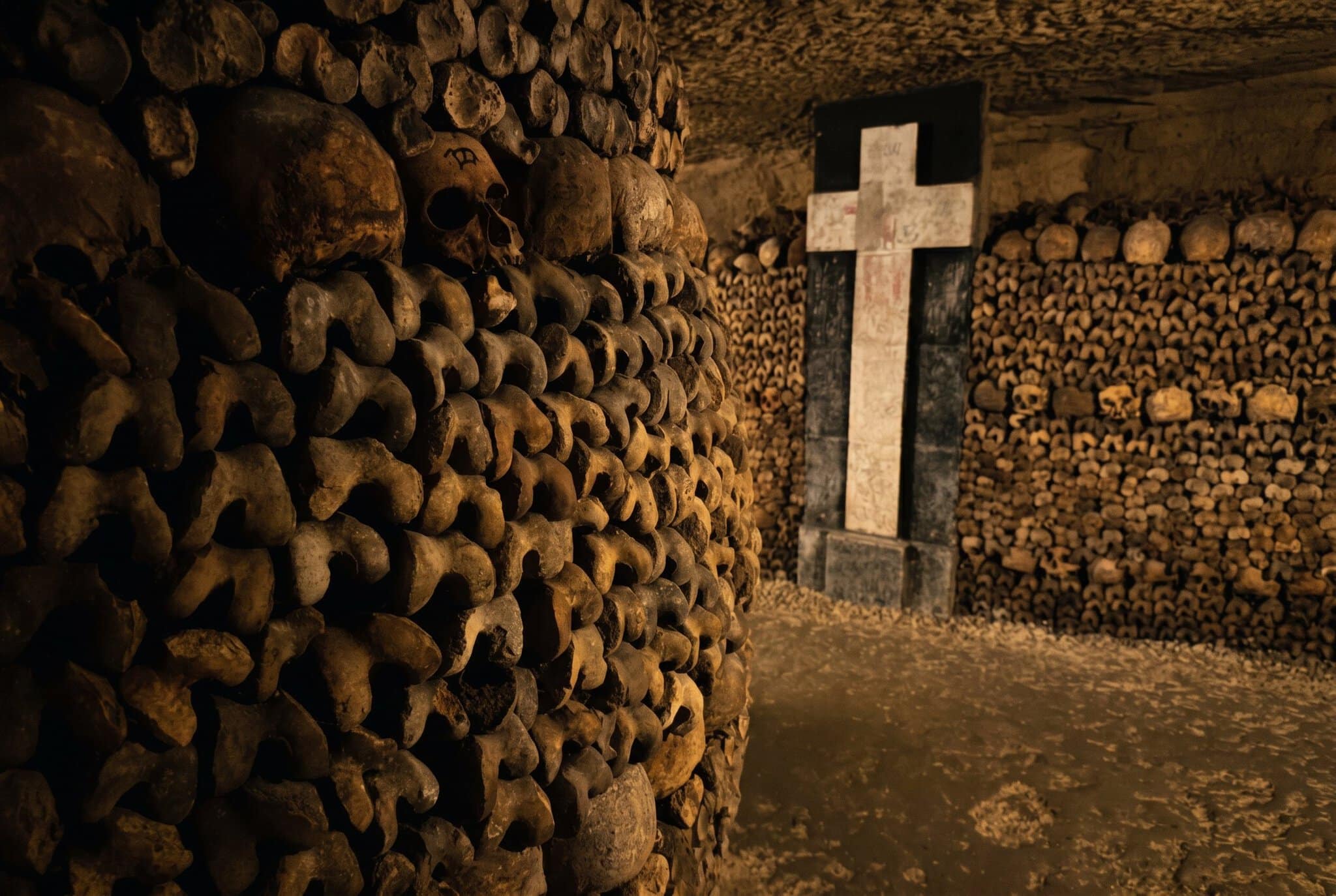
Beneath the bustling Place Denfert-Rochereau in the 14th arrondissement lies an unassuming entrance to a genuine underworld. The Catacombs (Les Catacombes) hold the remains of an astonishing six million Parisians. How did they end up there? At the end of the 18th century, the city centre’s cemeteries were bursting at the seams. Things got so bad that under the pressure of decaying bodies and earth, walls were collapsing into the basements of neighbouring houses and an unbearable stench was spreading through the city.
The solution was found underground. Over many months, bones were secretly transported on carts by night from the centre to old limestone quarries beyond what were then the city’s boundaries. Today they form macabre, geometrically precise walls made of skulls and femurs. It’s fascinating and deeply chilling at the same time — the tunnels are damp, cold, and the sound of dripping water amplifies the sombre atmosphere to the point where I always lose any appetite for conversation. For obvious reasons, we don’t bring Jonáš here — the darkness and narrow spaces really aren’t suited to toddlers.
💡 Insider tip: Tickets to the catacombs (€29) are released exactly 7 days in advance on the official Paris Catacombs website and sell out at lightning speed. Without a time-slot booking, you won’t get in — tickets haven’t been sold at the entrance for years.
2,400 kilometres of sewers beneath the boulevards
While the wide, light-filled boulevards were being built above ground in the 19th century, the brilliant engineer Eugène Belgrand created a mirror network below the city. The Paris sewer system stretches an almost unfathomable 2,400 kilometres — a hidden city beneath the city, really. Every street above has its exact counterpart below, complete with blue street signs so that maintenance workers don’t get lost in this dark labyrinth.
The system is so massive and historically significant that it even has its own museum. You’ll find the Musée des Égouts in the 7th arrondissement, near the Pont de l’Alma bridge. You walk on grates directly above active sewers. There is a bit of a smell (understandably), but the exhibition is brilliantly put together and you’ll learn a great deal about how Paris fought its hygiene battles. The writer Victor Hugo even set key scenes from Les Misérables down here.
💡 Insider tip: The Sewer Museum (entry €9 — details on the museum website) is a surprisingly brilliant Plan B when it suddenly starts pouring in Paris. It’s open Tuesday to Sunday and, unlike the Louvre, there are never any queues.
Pneumatic post and pipes beneath your feet
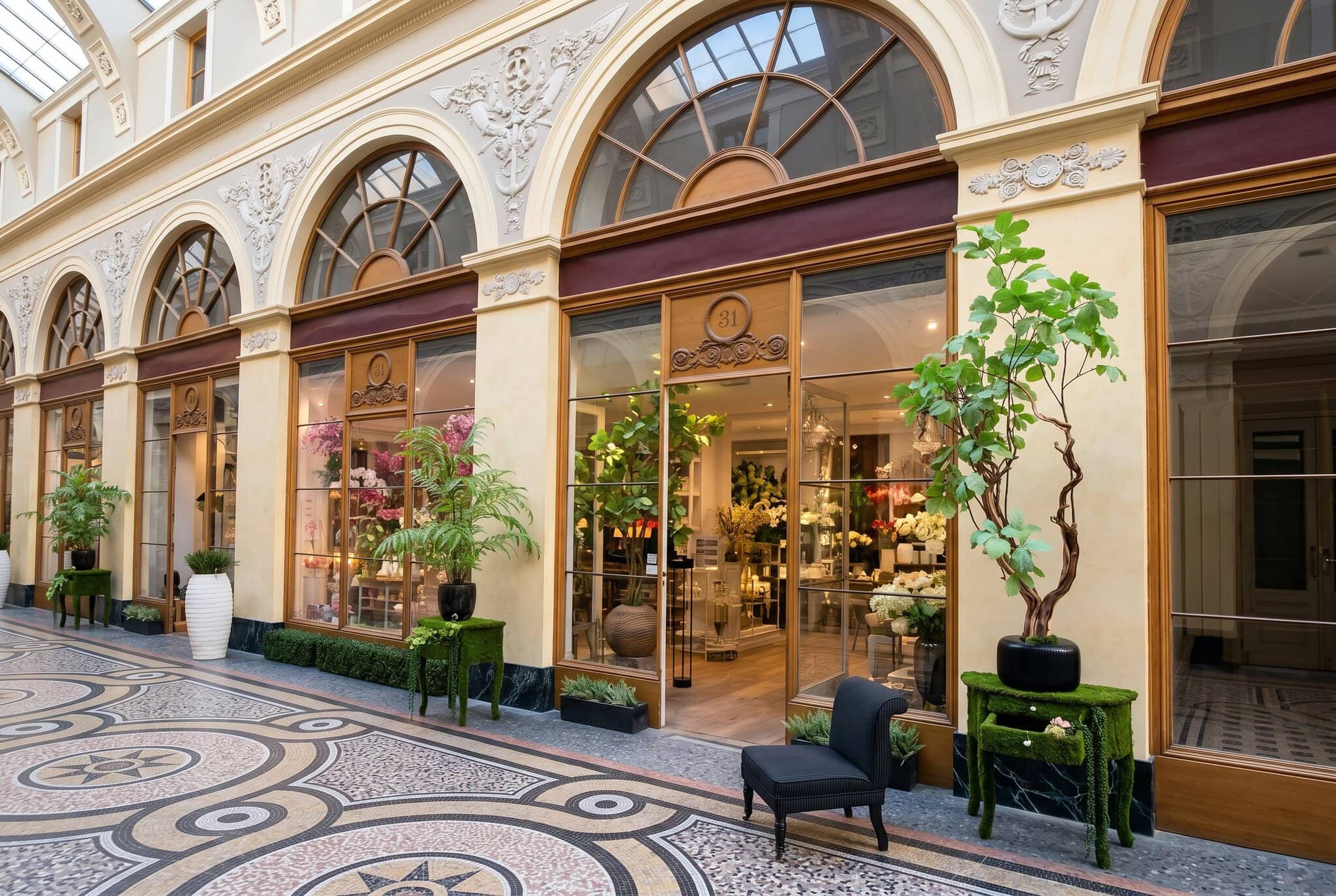
Now pay attention, because this is my favourite piece of Parisian oddity of all. Beneath the streets, from 1866 to 1984, a vast network of brass tubes operated a pneumatic postal system (poste pneumatique). It stretched a total of 467 kilometres and connected important government offices, banks, and ordinary post offices.
Letter capsules shot through the tubes at incredible speed using compressed air. If you needed to send a message across the city faster than by regular post, you popped it into the tube and it arrived at the other end of Paris within two hours. The system survived the Franco-Prussian War and both World Wars. What finally killed it was the rise of faxes, modern telecommunications, and eventually email. To this day, remnants of these pipes lie forgotten beneath the pavements.
💡 Insider tip: Try looking down at the ground occasionally as you walk along the pavement. You’ll spot various cast-iron manhole covers and grates with historical inscriptions revealing exactly where the old gas lines or the pneumatic post once ran.
Art, thieves, and phantoms: Stories from the palaces
Parisian palaces and museums look like impregnable fortresses of high culture. Yet it’s precisely behind their walls that the most absurd criminal and literary tales have unfolded. The most famous painting in the world wouldn’t be famous if someone hadn’t stolen it, and the most celebrated Paris opera house wouldn’t have its mystique if it weren’t built on water.
Mona Lisa and the theft that created a celebrity
Honestly, every time I stand in that crowd trying to catch a glimpse of the tiny thing over a sea of mobile phones, I wonder how on earth it became such a celebrity. And then I remember: were it not for one August night in 1911, it might just be another respected Renaissance canvas you’d walk past without a second glance.
Before 1911, only art historians and connoisseurs knew the Mona Lisa. Everything changed on 21 August 1911. Vincenzo Peruggia, an Italian glazier and former museum employee, let himself be locked overnight in a small storeroom. The next morning he simply took the painting off the wall, removed the frame, hid it under his work smock, and slipped out through a side exit. France went into absolute shock. The media whipped up a frenzy and newspapers printed the painting’s face on their front pages. People suddenly queued for hours in the Louvre just to stare at the empty space on the wall.
Peruggia hid the work in his modest room in Florence for a full two years. He believed the painting belonged to Italy and that Napoleon had unjustly stolen it (which was wrong — Leonardo da Vinci had brought it to France himself). He was finally caught when he tried to sell the canvas to a Florentine gallery. The loss and triumphant return catapulted the Mona Lisa to the very centre of global pop culture.
💡 Insider tip: Don’t let the crowd around the Mona Lisa get you down in the Louvre. The museum is enormous. Head instead to the Richelieu Wing and Napoleon III’s apartments. They’re breathtakingly opulent, dripping with gold and crystal, and you’ll often have them entirely to yourself. Entry to the Louvre costs €22, and you must book online in advance through the official Louvre website.
Phantom of the Opera and the real underground lake
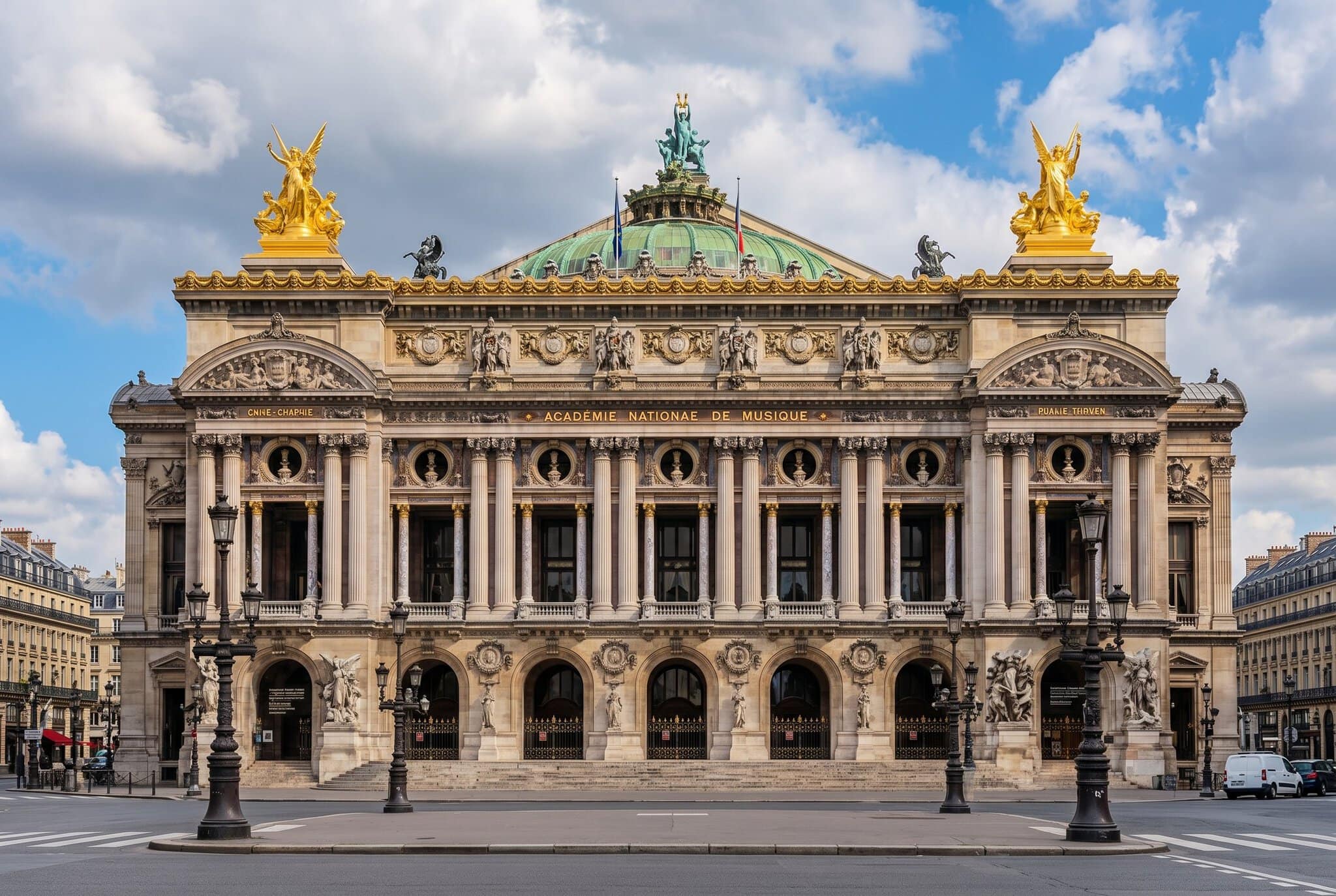
Gaston Leroux’s 1910 novel The Phantom of the Opera is known to practically everyone thanks to the musicals. The story of a disfigured musical genius hiding in the bowels of the Paris opera, terrorising its inhabitants, sounds like pure fiction. But Leroux drew inspiration from real events and the genuine architecture of the jaw-dropping Palais Garnier.
When architect Charles Garnier began digging the foundations for the new opera house in 1861, he struck an unexpected problem. Groundwater threatened to undermine the entire structure. Rather than fight the water, he decided to use it. He built a massive double foundation slab and between the two layers created a vast artificial reservoir that stabilises the water pressure. This dark, flooded cellar still exists today. The Phantom doesn’t punt around in it, but the space is regularly used by Paris firefighters for dive-training in the dark. Another spine-tingling detail? Box Number 5, which the Phantom claims in the novel, is still not sold to ordinary audience members to this day — out of respect for the legend.
💡 Insider tip: You can visit the inside of the Palais Garnier even without a performance ticket. A self-guided tour of the interior (including the famous staircase and Chagall’s ceiling) costs €15, and you can buy tickets on the Paris Opera website. Afterwards, make sure to grab a seat at Café de la Paix just opposite and watch the world go by.
The astrologer’s tower and Catherine de Médicis’ secrets
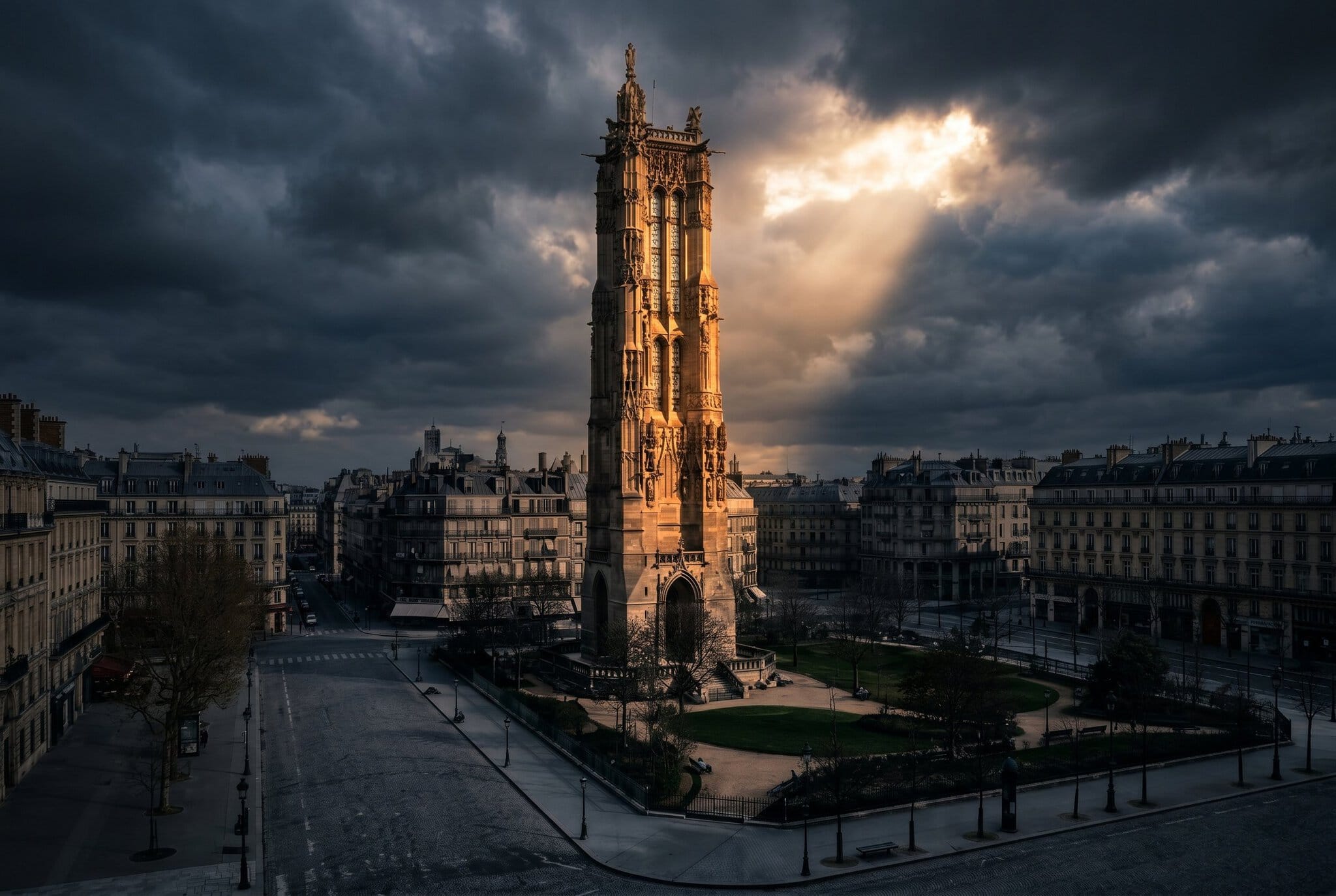
A stone’s throw from the Louvre, right next to the former Les Halles market, stands the Bourse de Commerce building (now a stunning modern art gallery, the Pinault Collection). Attached to the wall of this circular building is a curious 31-metre-tall column tower called the Colonne Médicis — the sole surviving remnant of a palace that once stood here.
It was built on the orders of Queen Catherine de’ Medici in the 16th century for her personal astrologer. The queen was superstitious, a believer in prophecies and dark omens. From this tower, she and her court astronomer allegedly observed the sky and read destiny from the stars. Some legends even claim that it was from this very tower that the queen plotted her political intrigues and possibly even poisoning conspiracies. It’s a fascinating relic of an era when state policy was shaped by horoscopes.
💡 Insider tip: Entry to the Bourse de Commerce gallery itself costs €14, but you can see the column from outside completely free of charge. There’s also a pleasant open space around it today where you can eat a lunch bought from a nearby bakery on Rue Montorgueil.
When Paris hurts: Shattered illusions in real time
Paris sells a dream. The scent of fresh baguettes, the sound of an accordion on Montmartre, elegant women sipping coffee at Café de Flore. This image has been branded so deeply into the global consciousness that confronting reality can genuinely hurt. And sometimes it hurts so much that there’s an official medical diagnosis for it.
Paris Syndrome and broken tourist hearts
It’s called Paris Syndrome. It was first described in 1986 by Japanese psychiatrist Hiroaki Ota, who was working at a local hospital. It primarily affects Japanese tourists (often over thirty) who arrive in France with an extremely idealised, almost cinematic vision of the city of love and poetry.
Instead of a romantic welcome, they step off the train with their suitcases at the overcrowded Gare du Nord (a notorious pickpocket hotspot), squeeze into a packed Métro that in summer smells nothing like violets, and face car horns and stress on the streets. The cherry on the cake is then a weary Parisian waiter with absolutely zero enthusiasm for their hesitant French, who slaps the bill on the table without so much as a smile. The result? Acute psychiatric shock. The gap between the Paris of their dreams and the real Paris is so enormous for some individuals that it triggers disorientation, hallucinations, a racing heart, dizziness, and severe paranoia. The Japanese Embassy still maintains a support line and handles roughly twenty serious cases a year.
💡 Insider tip: The golden rule of communication is this: every time you enter a shop, bakery, or interact with a waiter, you must begin with a clear, distinct “Bonjour.” Skip it, and locals will consider it a serious affront — and treat you accordingly.
The TV illusion: Emily in Paris versus harsh reality
If Paris Syndrome embodies the unexpected collision with reality, the series Emily in Paris is the pure distillation of the dangerous illusion that causes it. Since its premiere, it has polarised viewers and driven native Parisians (and frankly anyone who actually knows the city) up the wall.
Where is this polished version of the city filmed? The epicentre is the area around Place de l’Estrapade in the 5th arrondissement, where you’ll find Emily’s flat and her favourite bakery, La Boulangerie Moderne. The problem with the show is that it presents a city that can’t physically function. Emily trots over cobblestones in stiletto heels (any normal person would break an ankle within five metres) and gets everywhere by taxi. Anyone who’s spent more than a day in Paris knows that surface traffic is absolute murder thanks to chronic congestion and cycle lanes. Parisians travel primarily by Métro, by bike, or on foot. The show completely ignores the real city and portrays the French as nothing but lazy, flirtatious caricatures — which locals understandably despise.
💡 Insider tip: Don’t visit the restaurants and bakeries where the show was filmed. They’re currently drowning in fan traffic and prices have gone through the roof. Instead, walk a few streets further to Place de la Contrescarpe, where you’ll find the genuine, authentic café atmosphere of the Latin Quarter.
The dark price of beauty: Haussmann’s transformation
When you stroll down the Champs-Élysées or Boulevard Saint-Germain, you admire those perfectly uniform building façades with their ornamental balconies. They’re called Haussmann buildings, after Baron Georges-Eugène Haussmann, who was tasked by Emperor Napoleon III in the mid-19th century with completely rebuilding Paris.
Today we love this architecture, but its creation was brutal. Haussmann didn’t build new neighbourhoods on blank land. He simply took a ruler and sliced through the old medieval city without mercy. He had an incredible 20% of all the buildings in Paris demolished. The wide boulevards weren’t created merely to let the city breathe. They were built primarily to prevent barricades (which Parisians erected during every revolution) and to give the army clear lines for artillery. The renovation may have brought sewers and clean air, but it drove thousands of poor workers from the centre to the outskirts, because they simply couldn’t afford the new rents.
💡 Insider tip: Notice the hierarchy of these buildings. Shops were on the ground floor, the wealthiest residents lived on the second floor (which is why it has the most ornate and widest balcony) — because there were no lifts yet and nobody wanted to trudge up stairs. The smallest mansard rooms under the roof were for the servants.
Miracles, scars, and famous ghosts
The history of Paris isn’t just written in books — it’s pressed directly into the city’s walls. Some scars are visible at first glance; others you have to seek out. And then there are the places where the history of literature and art was being written, because Paris has always functioned as a magnet for geniuses and madmen alike.
Three crosses that survived the inferno at Notre-Dame
When flames engulfed Notre-Dame Cathedral in April 2019, the lead roof collapsed and the 850-year-old oak timbers burned (nicknamed “Le Forêt” because 1,200 trees were used to build them). The world watched the destruction in real time. The next morning, when firefighters finally entered the still-smouldering interior, littered with ash and rubble, the sight that greeted them sent shivers down spines. Amid total devastation, an untouched golden altar cross gleamed. And it wasn’t alone — three crosses in total survived the fire without a scratch. For believers, it was a clear miracle; for firefighters, an extraordinary stroke of luck with the physics of hot-air currents.
The cathedral is finally back, and I saw it last year — it still gives me goosebumps. The fire destroyed the roof, but it also revealed ancient masonry, and beneath the floor they discovered lead sarcophagi that absolutely nobody knew existed.
💡 Insider tip: Entry to the nave of Notre-Dame is and always will be free. Never buy tickets from touts outside the cathedral. Only the climb to the restored towers will be ticketed (around €16), and that isn’t opening until autumn 2025.
Where the famous actually lived (Hemingway, Picasso, Mucha)
Paris shaped the greatest artists of the 20th century. Ernest Hemingway wrote his A Moveable Feast in its cafés. His favourite haunts were Les Deux Magots and Café de Flore in the 6th arrondissement. Today they’re admittedly a bit touristy — you’ll pay as much as €8 for a coffee — but the literary aura is still palpable.
Pablo Picasso spent his most impoverished and most creative years (the so-called Blue Period) in a crumbling wooden building called the Bateau-Lavoir on the hill of Montmartre. It barely had running water or heating, but the avant-garde of the era would gather there.
And here I have to pause, because the Czech connection always moves me more than I expect: Alphonse Mucha shared a studio with Paul Gauguin near the Luxembourg Gardens early in his career, and it was right here in Paris that he created his iconic posters for the actress Sarah Bernhardt.
💡 Insider tip: If you want to see authentic literary history without overpriced cafés, pop into the English-language bookshop Shakespeare and Company opposite Notre-Dame. This is where James Joyce’s famous and then-banned novel Ulysses was first published.
Final days and resting places of legends (Chopin, Mata Hari, Marie Antoinette)
Paris can be cruel, too. Queen Marie Antoinette spent her final days here, awaiting execution in a cell at the Conciergerie (now a stunning museum with Gothic halls). Her reconstructed cell feels incredibly claustrophobic. The famous spy Mata Hari was executed during World War I against the walls of the Château de Vincennes fortress on the eastern edge of the city.
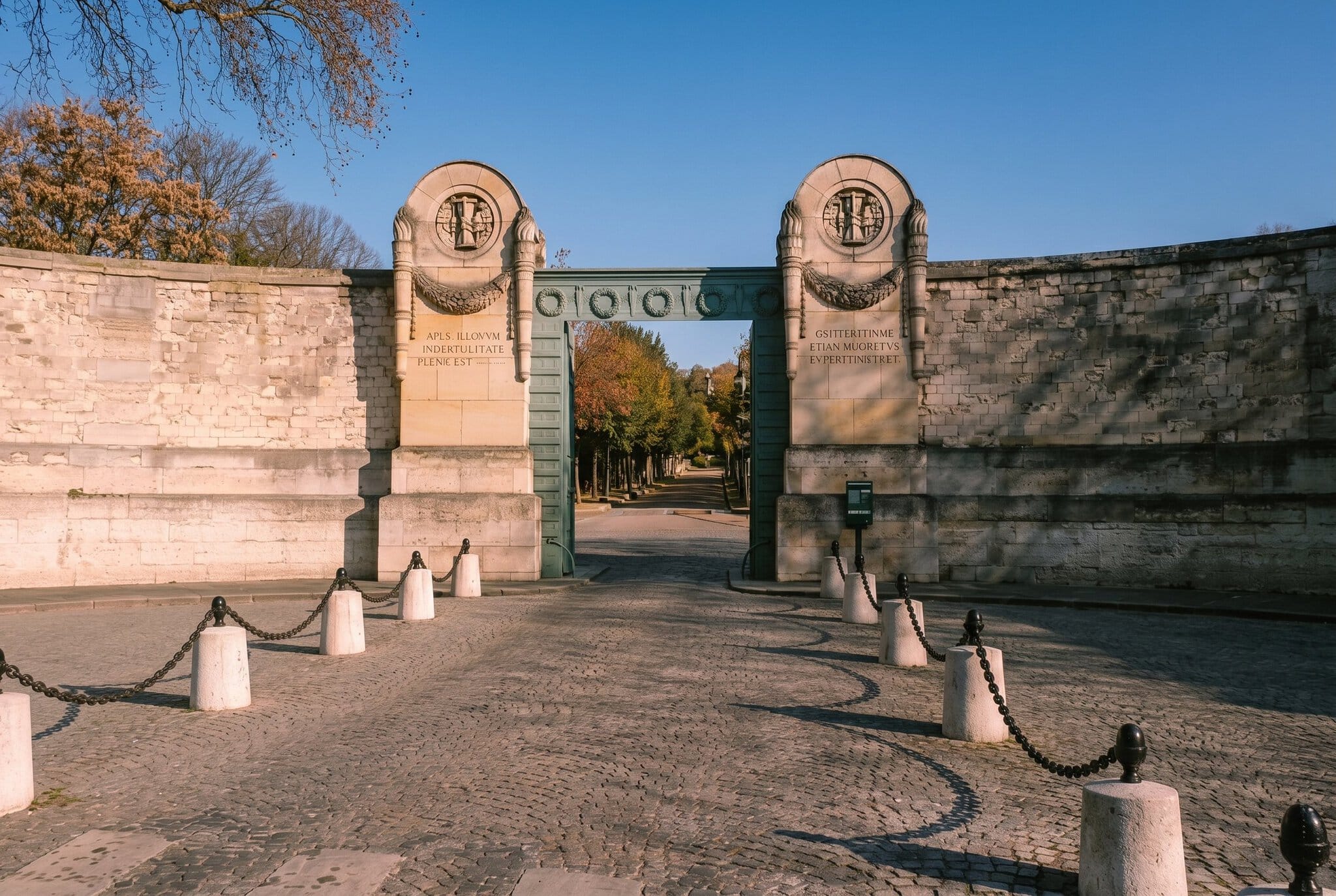
And then there are the final resting places. Père-Lachaise cemetery is an enormous park filled with famous names. You’ll find the graves of Frédéric Chopin (who fled Poland to Paris and lived a passionate romance with the writer George Sand), Jim Morrison, Édith Piaf, and Oscar Wilde.
💡 Insider tip: Entry to Père-Lachaise cemetery is free, but it’s an enormous maze. At the main entrance, snap a photo on your phone of the large orientation map showing the graves of famous figures — otherwise you’ll wander around for hours.
The double Statue of Liberty and other curiosities
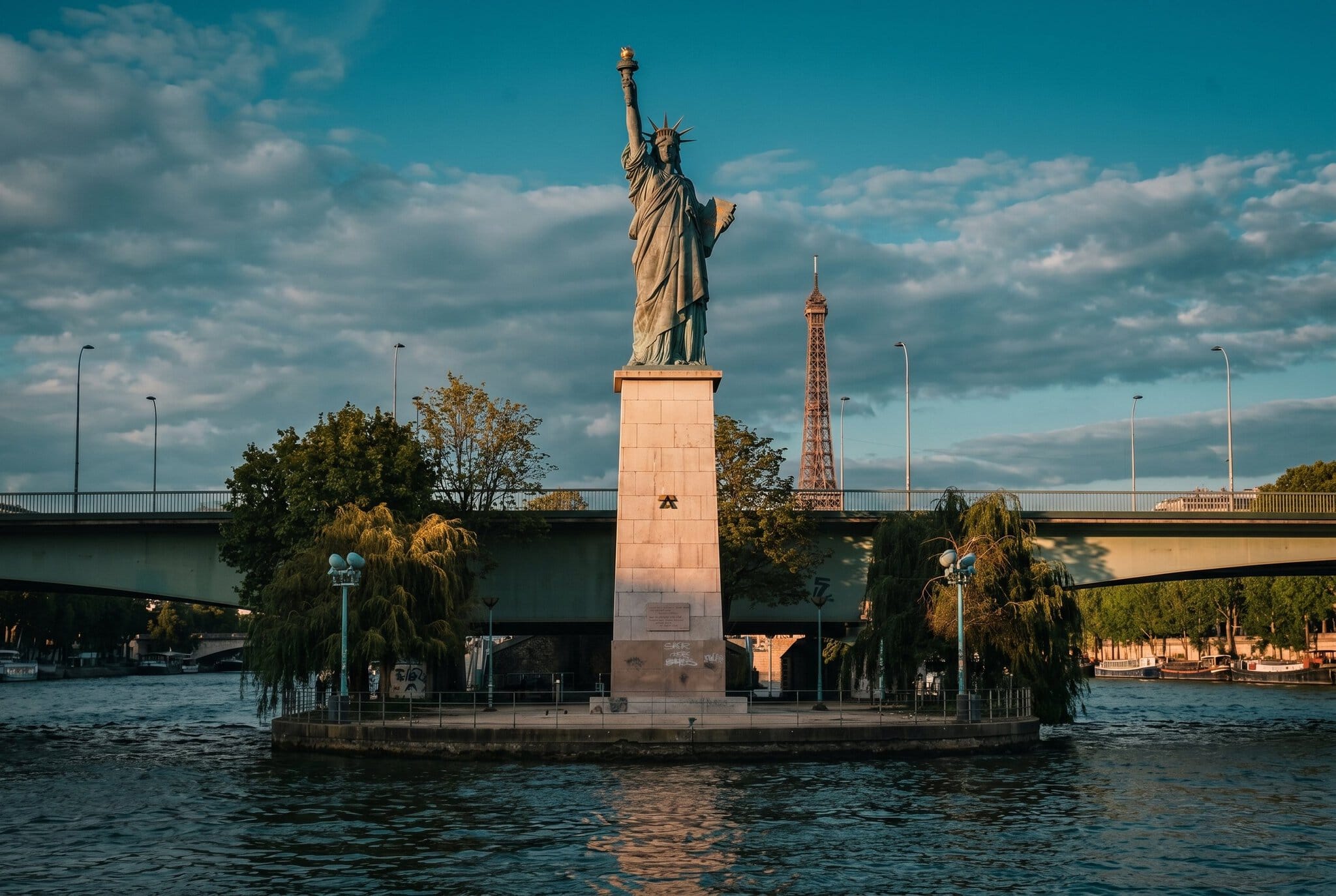
And to wrap things up, a few facts to make your head spin. Did you know that while New York has its famous Statue of Liberty as a gift from France, Paris couldn’t resist and got its own smaller replicas? The most well-known stands on the narrow Île aux Cygnes island near the Eiffel Tower. It gazes towards America, as if greeting its bigger sister across the ocean. A second, even smaller version is tucked away in the Luxembourg Gardens.
Another curiosity is the soldier statue (Zouave) on the Pont de l’Alma bridge. When the Seine catastrophically burst its banks in 1910, the water reached up to his chin. Ever since, Parisians don’t measure flood levels by official gauges — they judge by how high the water reaches on this stone soldier.
💡 Insider tip: Île aux Cygnes with its Statue of Liberty is a brilliant spot for a peaceful stroll. It’s essentially a long, narrow tree-lined promenade in the middle of the river, with no cars and an unusual view of the western part of the city.
Practical info: How to survive Paris with your sanity intact
Paris won’t let you catch your breath logistically either. If you don’t want to waste time on stress and needlessly lose money, you need to know a few basic rules of the game.
Transport: Why skip taxis and how to use the Métro
As I mentioned with Emily in Paris, surface traffic during the day is a catastrophe. Lukáš and I (pushchair in tow) have learned that the Métro is simply the only sensible option, even though it has its drawbacks. It’s fast, runs every two minutes, and gets you everywhere, but most stations were built over a century ago and are full of stairs. Escalators frequently break down and lifts in older stations simply don’t exist. If you’re travelling with a pushchair or have limited mobility, the only fully accessible line is the automated Line 14 (which since 2024 also takes you to Orly Airport). Otherwise, rely on the dense network of surface buses.
For getting around, definitely download the official Bonjour RATP app. If you’re in Paris from Monday to Sunday, it’s worth buying a weekly Pass Navigo Découverte (around €30 plus €5 for the card itself, for which you’ll need a small passport-style photo). It covers absolutely everything, including the journey from CDG airport. Getting to Paris from the UK is straightforward — the Eurostar from London St Pancras takes just over two hours and drops you at Gare du Nord, right in the heart of the city. Alternatively, budget airlines fly from most major UK airports to Charles de Gaulle or Orly.
Safety and Paris scams 2026
Paris is generally a safe city for everyday life, but tourist zones are paradise for organised groups of pickpockets and scam artists. Never leave your phone lying on a café terrace table (someone will often approach you with a map, place it over your phone, and quietly swipe it).
Local hustlers have their tried-and-tested tricks, which they deploy with clockwork regularity on every newcomer, day in, day out. There’s nothing to be scared of, though — you just need to stay a little vigilant.
The most common scams to watch out for:
- The gold ring: Someone on the street (often near the Louvre) suddenly picks up a “gold” ring from the ground and asks whether it’s yours. When you say no, they offer it to you for a small reward. It’s a worthless piece of brass. Ignore them and walk on.
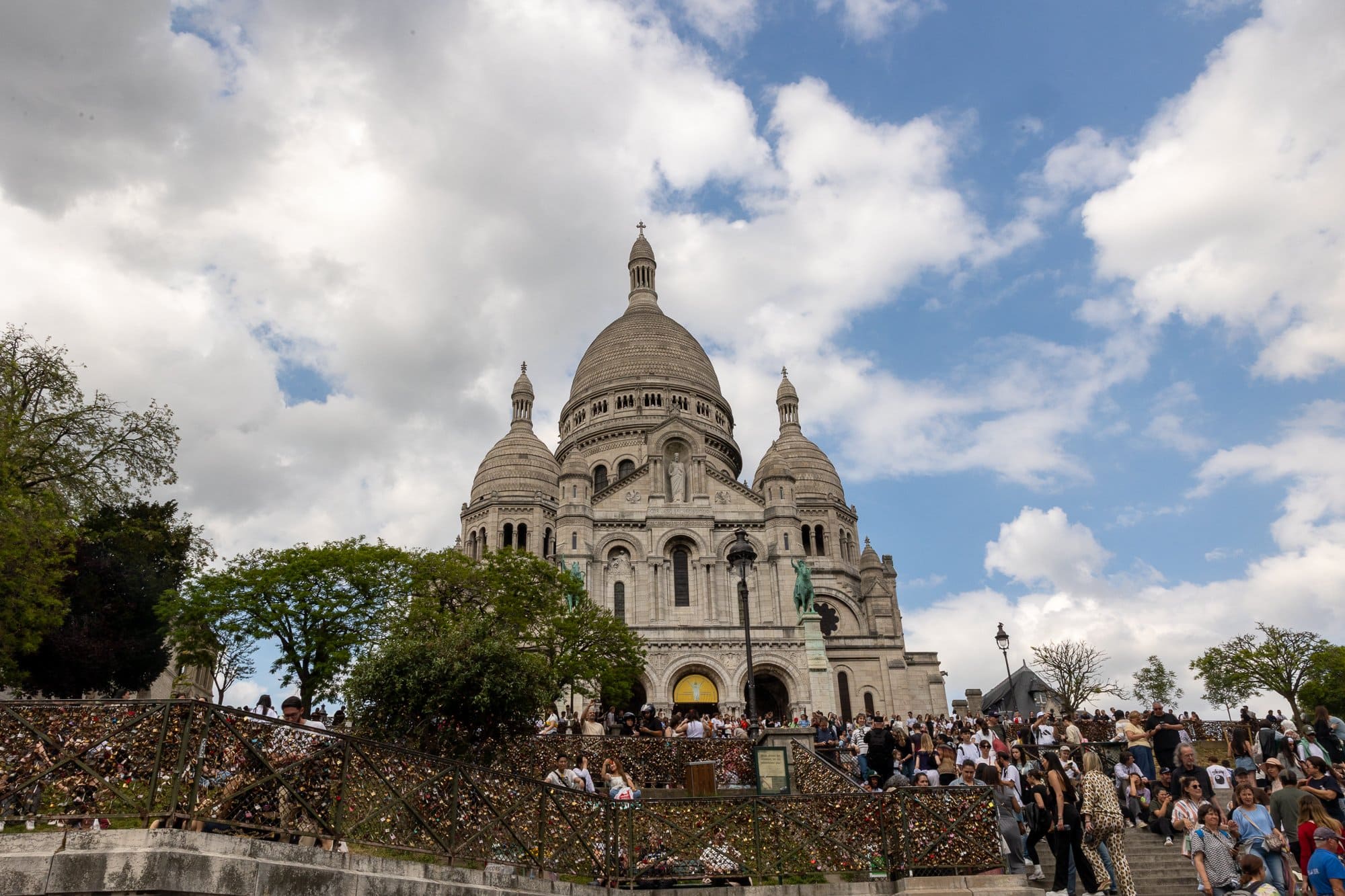
- Bracelets on Montmartre: On the steps below the Sacré-Cœur basilica, groups of men will try to tie a string or “friendship bracelet” around your wrist. Once they do, they aggressively demand money. Keep your hands in your pockets and walk briskly past.
- Fake petitions: People pretending to be deaf-mute with clipboards and petitions near landmarks. While you’re signing and giving a “contribution,” another member of the gang is rummaging through your bag.
- Ticket touts: I’ll say it again — entry to Notre-Dame is free. Anyone selling skip-the-line tickets in front of the cathedral is a scammer.
Further reading
If Paris has captured your heart and you want to plan your own itinerary, we’ve put together more detailed guides for you. Here’s some further reading:
- What to see in Paris: Complete guide and itineraries
- Hidden Paris: Secret spots without the tourists
- Best museums in Paris: From the Louvre to small galleries
Frequently asked questions
Tips and Tricks for Your Vacation
Don’t Overpay for Flights
Search for flights on Kayak. It’s our favorite search engine because it scans the websites of all airlines and always finds the cheapest connection.
Book Your Accommodation Smartly
The best experiences we’ve had when looking for accommodation (from Alaska to Morocco) are with Booking.com, where hotels, apartments, and entire houses are usually the cheapest and most widely available.
 🚗 Car rental on the roadVerified car rentals in Paris
Search with the DiscoverCars comparison engine — it compares prices from dozens of local and international rental companies, and most bookings come with free cancellation.
Compare car prices in Paris →Don’t Forget Travel Insurance
Good travel insurance will protect you against illness, accidents, theft, or flight cancellations. We’ve had a few hospital visits abroad, so we know how important it is to have proper insurance arranged.
Where we insure ourselves: SafetyWing (simple monthly subscription) and TrueTraveller (for extra-long trips).
Find the Best Experiences
Get Your Guide is a huge online marketplace where you can book guided walks, trips, skip-the-line tickets, tours, and much more. We always find some extra fun there!
More from Paris
Full guide → Where to stay · most readParis Arrondissements: Where to Stay in Paris (and Where Not To)
 ItineraryParis: 40 Best Tips for Your Visit
 PricesWhat to Eat in Paris: The Complete Foodie Guide 2026 (Bistros, Michelin, Vegetarian Scene)
 What to seeShopping in Paris: Concept Stores, Department Stores & Vintage (A Complete Guide)
 With kidsParis with Kids: The Complete Guide to Family-Friendly Paris (What to Expect with a Pushchair)


