

The Colosseum in Rome is one of the most significant historical monuments in the world. This imposing amphitheatre, also known as the Flavian Amphitheatre, will simply blow you away – more than you might expect. On your first visit, the Colosseum is capable of exceeding even the highest expectations, despite the ever-present street vendors and litter.
In this article, you’ll find out how to easily buy tickets online and how to save on admission. You’ll also discover the most fascinating facts about this iconic landmark that you simply can’t miss. We’ve also included practical information such as opening hours and ticket prices, which we regularly update.
Tip: Also check out our guide on what to see in Rome.
Colosseum – Essential Information You Need to Know
I’d recommend reading through the information below so you don’t make the same mistake we did – not buying tickets in advance.
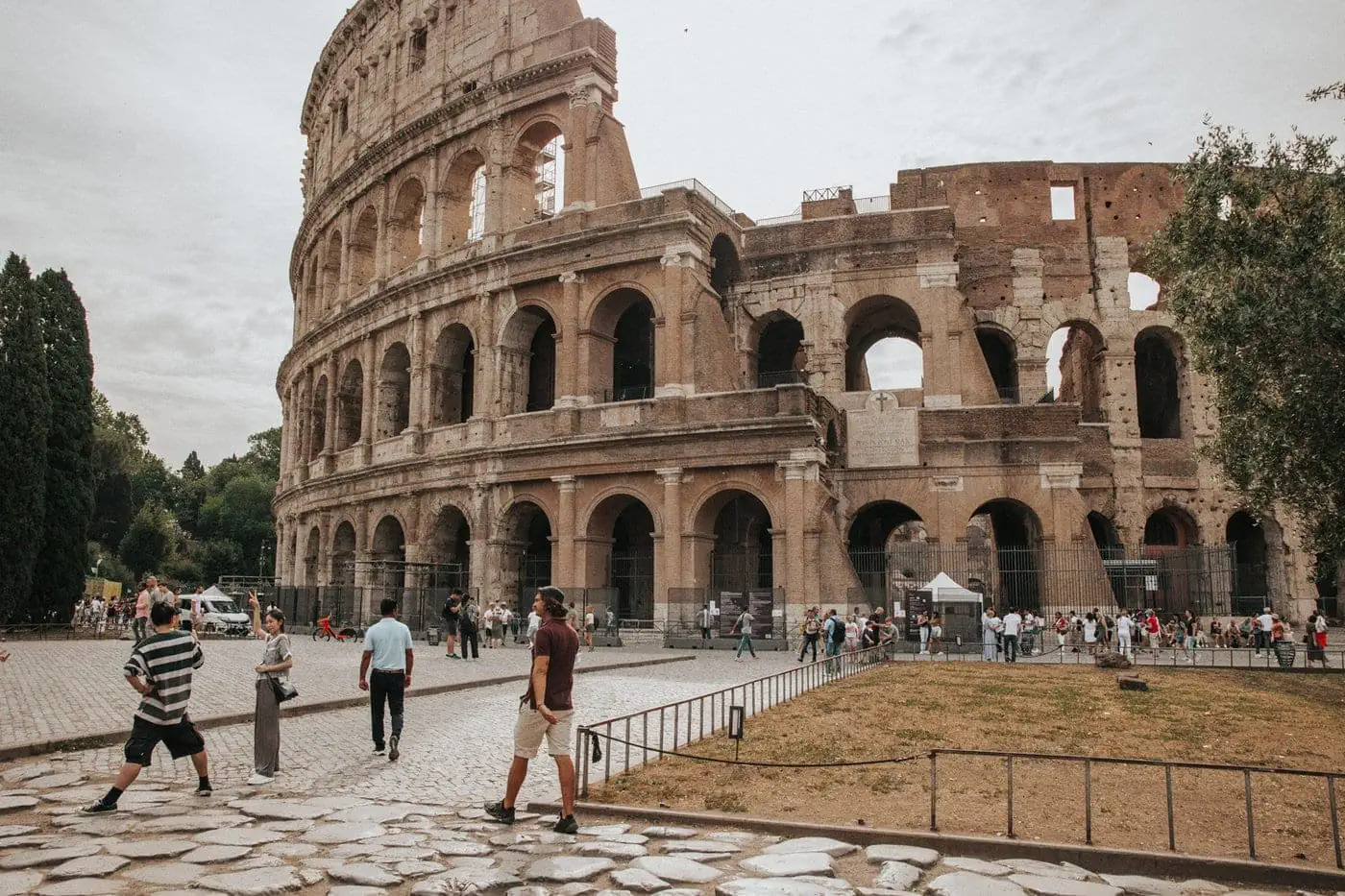
Colosseum Tickets
Tickets for all monuments and attractions in Rome can be conveniently purchased on GetYourGuide. If skip-the-line tickets aren’t your thing, you can always queue up instead.
But for the Colosseum and the Vatican at the very least, we strongly recommend buying tickets online in advance. You’ll book a specific time slot and avoid queues that can stretch for several hours in direct sunlight with no shade.
We wanted to buy tickets on the spot, but the ticket machines weren’t working and nobody was at the kiosk. Through GetYourGuide, you can also cancel your reservation anytime.
The ticket price for the Colosseum is €16 for adults. A reduced ticket (€2) applies to EU citizens aged 18–25. Free entry is available for visitors under 18 and for holders of the Roma Pass.
Booking tickets online lets you choose a specific entry time. Your Colosseum ticket also includes admission to the Roman Forum and Palatine Hill, which can be visited within 24 hours of your first entry.
Since May 2023, children under 18 and visitors with disabilities accompanied by a carer have free entry and do not need to book tickets online.
| Ticket Type | Price | Availability |
|---|---|---|
| Full price | €16 | Online or on-site |
| Reduced ticket | €2 | Online or on-site |
| Free entry (under 18, disabled) | Free | Online reservation (now required) |
What to Do If Colosseum Tickets Are Sold Out?
If you discover that Colosseum tickets are sold out – which happens often in Rome – either book a ticket for a different day via GetYourGuide, or try purchasing a guided tour, as spots are sometimes still available.
- Useful tip: If you’re with a guided tour, you enter on the left; individual visitors enter on the right. This helps you avoid long queues and speeds up the entry process into this iconic amphitheatre.

How to Save Money When Visiting the Colosseum in Rome
If you’re planning a trip to Rome and want to see as much as possible, it’s definitely worth considering the Roma Pass. This tourist card won’t just save you money – it’ll mainly save you time spent queuing for tickets. And trust us, standing in line for hours in the blazing sun is really no fun.
5 Reasons We Got a Roma Pass When Visiting Rome
- Skip the queues: With a Roma Pass, you can skip the long lines (which you’ll really appreciate when it’s hot or you’re travelling with kids) at many popular sites like the Colosseum, Capitoline Museums, and Castel Sant’Angelo. During peak season, waiting times can exceed two hours, so it’s genuinely worth it.
- FREE entry to the first two museums or archaeological sites: With the 72-hour Roma Pass, you get free admission to the first two museums or archaeological sites you visit. The most popular choices include the Colosseum, Roman Forum, and Capitoline Museums.
- Public transport included: We didn’t use this much because we stayed in the centre and walked everywhere in Rome. But if we’d been travelling with kids (this was before our son was born), it would have been a different story. We did rent a scooter, though, which had a discount with the Roma Pass at the time.
- Discounts and special prices: Roma Pass holders are entitled to reduced admission at many other museums, galleries, and events. You can also get discounts on various tourist services, such as city tours, bike rentals, and more.
- You can buy it online: The card can be purchased online through GetYourGuide. This suited us perfectly, as we could take our time reading about what’s included and compare it with individual admission fees online.
Where Is the Colosseum in Rome?
The Colosseum dominates a small square called Piazza del Colosseo in the centre of Rome. Nearby, you’ll find important sites such as the Roman Forum and Palatine Hill. Standing between these landmarks is the Arch of Constantine, built in 315 AD to celebrate the victory of Constantine I at the Battle of the Milvian Bridge.
When to Visit the Colosseum?
Probably whenever you’re planning your trip to Rome, but if the Colosseum is your main reason for visiting, we recommend the winter, spring, or autumn months, as there are fewer tourists.
Generally, visiting Rome in summer – especially August – isn’t ideal. Temperatures are extremely high, and even the Italians themselves tend to leave the city, heading to the coast or the mountains.
There’s essentially nowhere to hide from the sun inside the Colosseum. If you do find yourself in Rome during summer, don’t forget sunscreen, a hat, and light, breathable clothing. Ideally, plan your visit for early morning or evening when it’s not so hot.
What Not to Forget Before Visiting the Colosseum
Drinking water
You can refill your water bottle at the metro station, at the Colosseum exit, or at various other points including the Roman Forum and Palatine Hill.
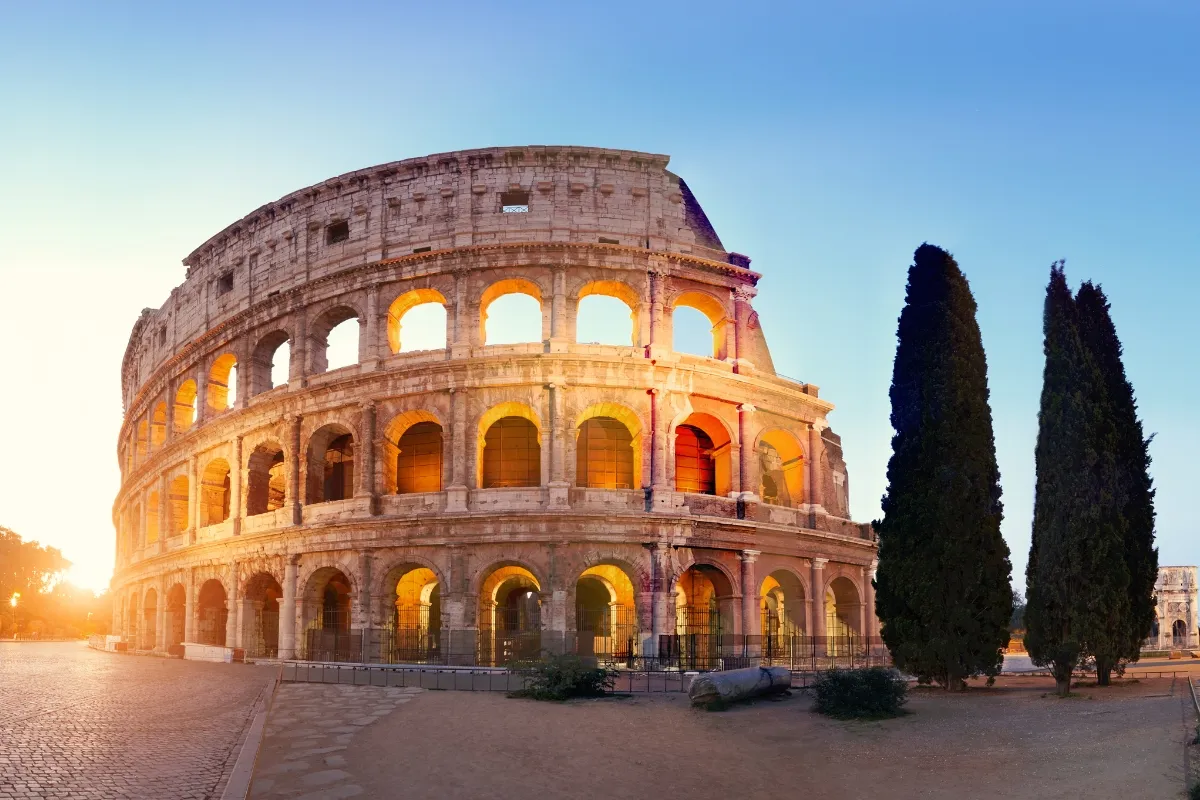
How to Get to the Colosseum in Rome
The Colosseum is easily accessible from the main Termini railway station. On foot, it takes roughly 20 minutes. We chose to walk through Parco del Colle Oppio, which offers a beautiful view of the Colosseum without the crowds.
Public transport to the Colosseum:
- Metro: Line B, get off at Colosseo station.
- Bus: Lines 75, 81, 175, 204, 673.
- Tram: Line 3.
Public transport tickets can be purchased at tobacconists, newsstands, or ticket machines. A single ticket costs €1.50 and is valid for 100 minutes. You can also buy a pack of 10 tickets for €15. If you have the Roma Pass tourist card, public transport is included for free.
| Price (€) | Validity |
|---|---|
| €7 | 24 hours |
| €12.50 | 48 hours |
| €18 | 72 hours |
Tickets are valid from the moment of first validation.
Colosseum Rome Opening Hours
The Colosseum in Rome has varying opening hours depending on the season. Last entry is always permitted one hour before closing time. The Colosseum is closed on 1 January and 25 December.
| Period | Opening Hours |
|---|---|
| 2 January – 28 February | 9:00–15:30 |
| 1 March – 25 March | 9:00–17:30 |
| 26 March – 31 August | 9:00–19:15 |
| 1 September – 30 September | 9:00–19:00 |
| 1 October – 28 October | 9:00–18:30 |
| 29 October – 31 December | 9:00–16:30 |
Where Is the Entrance to the Colosseum?
It’s important to arrive at the Colosseum at least 15 minutes early. The site is often packed with visitors and guided tour groups, so it’s useful to have time to get your bearings. There’s a security check before entry.
You’ll be admitted to the Colosseum at your reserved time slot. The Roman Forum and Palatine Hill can be visited at any time before or after your Colosseum tour – no time reservation needed for those.
The Colosseum has two main entrances. The individual visitor entrance is on the right and is clearly marked. To reach the Roman Forum and Palatine Hill, head past the Arch of Constantine, also to the right, at Via di San Gregorio 30.
Have your ticket ready before entering – either printed or on your phone – and scan it at the entrance. A security check will be carried out upon entry.
What You Cannot Bring Into the Colosseum
You can bring a small backpack or handbag and a plastic water bottle. The following items are not permitted:
- Large backpacks and suitcases
- Tripods (selfie sticks are tolerated)
- Dark or glass bottles
- Alcohol
- Spray cans
How Long Is the Colosseum Tour?
Allow at least two hours for a Colosseum tour. If you don’t buy tickets online, set aside at least half a day, as queues can sometimes stretch for several hours.
For the Roman Forum and Palatine Hill, plan for two to three hours.
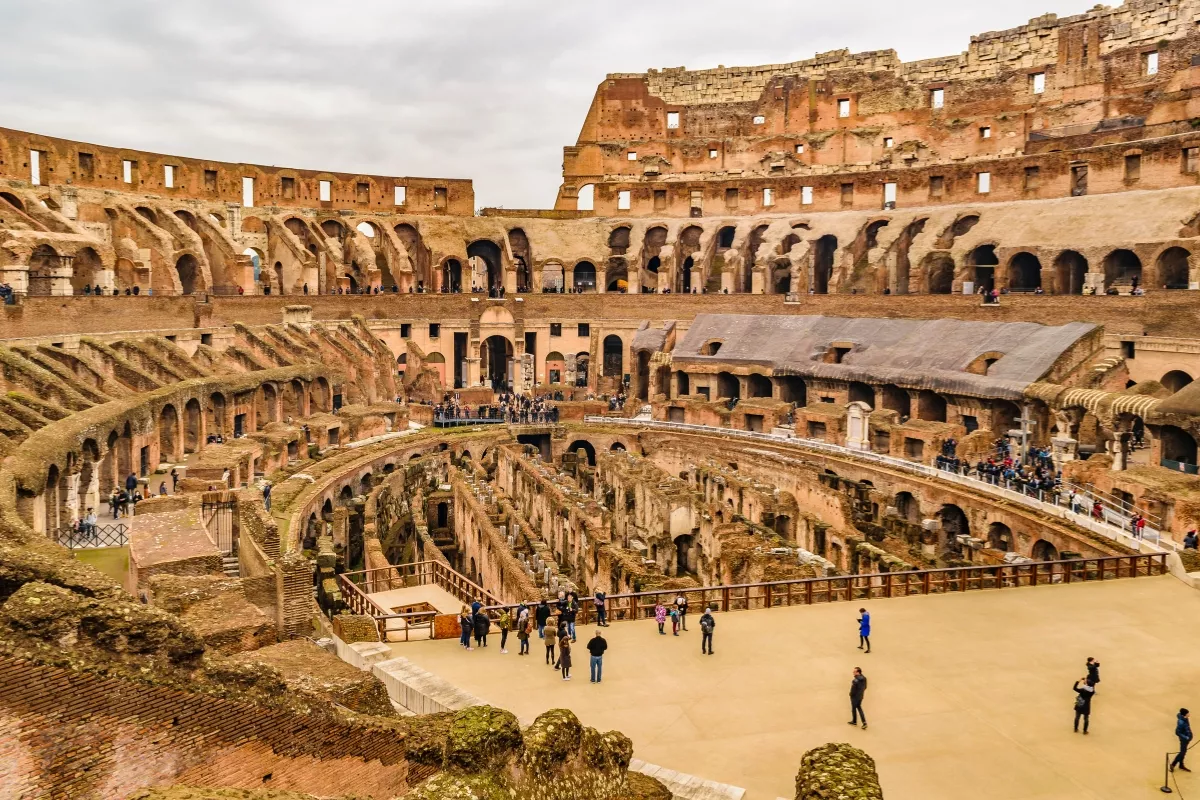
Colosseum Rome History & Facts to Know Before Visiting
Do you also like to know a bit about a landmark before you step inside? Here are some fascinating facts you should know about the Colosseum.
History and Significance of the Roman Colosseum
The Colosseum, an icon of Rome, has a history spanning over 2,000 years. It was built by Emperor Vespasian in 80 AD, who belonged to the Flavian dynasty. It was originally called the Flavian Amphitheatre. The purpose of this building was not only to entertain the people but also to demonstrate the power of the Roman Empire. The venue served as a centre of entertainment, hosting gladiatorial games, executions, and animal hunts.
Emperor Titus, Vespasian’s son, oversaw the completion of the building. His younger brother Domitian later added further modifications, including the hypogeum. These three emperors of the Flavian dynasty left a significant mark on the purpose and form of the Colosseum.
During the Middle Ages, the Colosseum fell into disuse, and parts of the structure were demolished due to earthquakes and other factors. Marble and other materials were repurposed for other important buildings, leading to significant damage. Despite this, the Colosseum remains a symbol of Roman glory and resilience. Today, it is a major tourist attraction, drawing millions of visitors each year.
What Is the Colosseum Made Of?
The Colosseum is fascinating not only for its history but also for its architectural mastery. It was built from tuff, limestone, and concrete. Tuff is a type of volcanic stone that is lightweight and easy to work with, making it ideal for constructing large structures. Some of the material from the Colosseum was later used to build other important buildings, including parts of the Vatican.
How Big Is the Colosseum in Rome?
The Colosseum measured 189 metres in length, 156 metres in width, and had a maximum height of 50 metres. It had a capacity of up to 80,000 spectators, who were shaded by enormous canvas awnings known as the velarium. This remarkable amphitheatre remains a symbol of Roman engineering excellence and cultural heritage to this day.
Hypogeum and Arena
Beneath the arena lies the hypogeum, a complex network of underground tunnels and chambers. Gladiators and animals – including lions, tigers, bears, and hippos – were brought into the arena through secret passageways. The hypogeum also contained mechanical equipment that allowed for rapid scene changes.
Bloody Gladiatorial Battles
You probably know from films that the Colosseum witnessed many bloody gladiatorial battles. Gladiators, often slaves or prisoners of war, fought to the death for the entertainment of the spectators. These battles were a key part of Roman culture and entertainment. Spectators watched from the podium and terraces, above which the velarium stretched to provide shade from the sun.
Animal Hunts and Naumachiae
In addition to gladiatorial combat, the programme also included hunts of exotic animals. Elephants, leopards, bulls, and other wild beasts were brought from across the empire. Sometimes the Colosseum was even flooded to stage mock naval battles known as naumachiae.
Palatine Hill and Roman Forum
With your Colosseum ticket, you also get entry to Palatine Hill and the Roman Forum. Why are these two sites worth visiting?
Palatine Hill – The Birthplace of Rome
Palatine Hill is considered the place where Rome was founded. According to legend, Romulus founded the city here in 753 BC. Over time, it became home to imperial palaces, houses of wealthy patricians, and generals. The word “palace” actually derives from the Latin name for the hill, palatium.
Modern-day Palatine Hill mainly consists of the ruins of Emperor Domitian’s vast palace complex. It offers stunning views of the Roman Forum from the balconies on the northeast side. It’s well worth visiting to explore not only the historical ruins but also the beautiful views of the surrounding monuments.
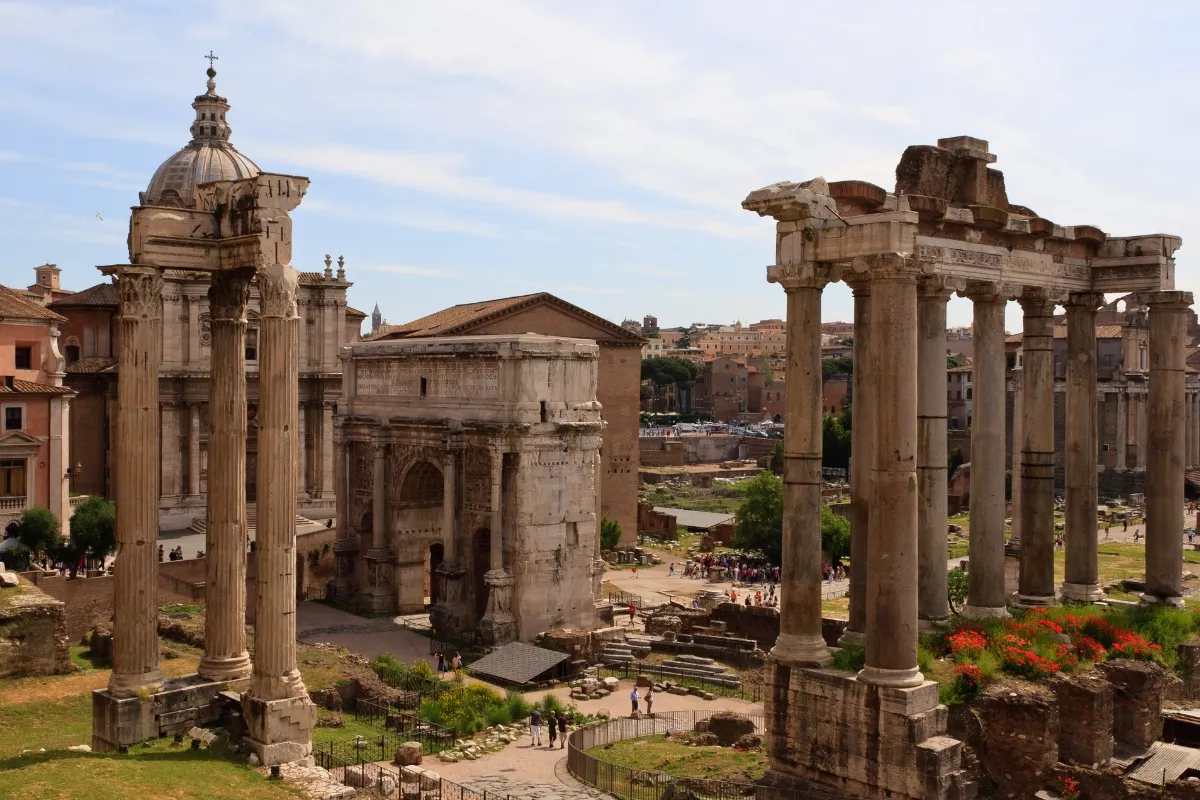
Roman Forum
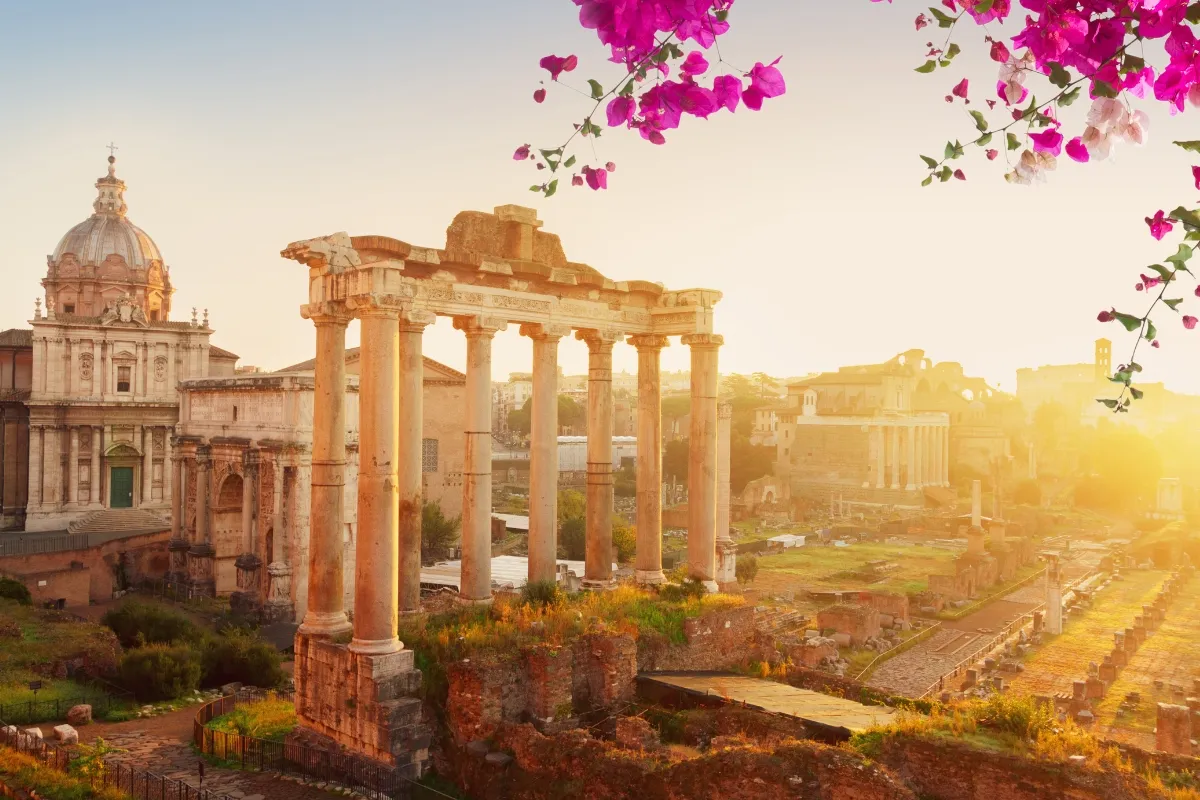
The Roman Forum is an extensive area of historical ruins situated between Palatine Hill and the Colosseum. It was the centre of public life in ancient Rome. Here you’ll see numerous significant structures that served as temples, courts, and government offices.
Key landmarks in the Roman Forum:
- The Roman Senate House (Curia)
- Arch of Titus
- Columns of the Temple of Saturn
- Temple of Caesar, where he was cremated after his assassination in 44 BC
Where to Stay in Rome?
If you’re heading to Rome, it’s definitely worth staying in the centre, ideally near the main train station or close to one of the airport bus stops. Rome is a city best explored on foot – unless you’re travelling with small children or have dodgy knees, in which case it’s handy to use public transport from time to time.
We stayed at Residenza Cavallini, which is just a five-minute walk from the airport bus stop. The location is perfect – a stone’s throw from the Vatican and the Trevi Fountain. The accommodation was clean, and while the rooms were on the smaller side, breakfast at a nearby café was included, where we enjoyed a croissant, toast, and cappuccino. What more could you want?
What to Visit Nearby?
There are several wonderful landmarks near the Colosseum that are well worth a visit.
The Baths of Caracalla, built by Marcus Aurelius between 212 and 216 AD, are one of the largest thermal complexes of the ancient world. They were an important centre of social life in Rome.
Trajan’s Markets are another fascinating site worth mentioning. It was essentially Rome’s first shopping centre, with six floors and 150 shops and apartments – offering a unique blend of shopping history and ancient Roman life.
The Capitoline Museums are among the finest art museums in Rome. The museum houses a rich collection of sculptures, paintings, and other artworks closely linked to the city’s history. It’s a must-visit for all art lovers, along with the Vatican Museums and the Borghese Gallery.
When visiting the Capitoline Museums, don’t miss the square designed by Michelangelo. This piazza offers a splendid view of the Roman Forum and the Colosseum, enhancing the experience of visiting these iconic Roman landmarks.
Frequently Asked Questions
What is the history of the Colosseum in Rome?
The Colosseum, also known as the Flavian Amphitheatre, was built under Emperor Vespasian in 70–72 AD. It became a symbol of ancient Rome and is still considered one of the greatest masterpieces of Roman architecture.
What was the Roman Colosseum originally used for?
The Colosseum originally served as an arena for gladiatorial games, public executions, and various forms of entertainment, including mock naval battles, animal hunts, and dramatic performances.
What are the most interesting facts about the Colosseum?
It could hold approximately 50,000 spectators.
The inaugural games lasted 100 days, during which thousands of animals and people were killed.
The Colosseum has approximately 80 entrances and could be emptied rapidly.
What did the Colosseum look like in its heyday?
In its prime, the Colosseum was an imposing structure. It had three tiers of arches, each decorated with columns of different styles (Doric, Ionic, and Corinthian). The interior featured a wooden arena floor covered with sand and extensive underground chambers for gladiators and animals.
How long does a Colosseum tour take and what can you see?
A Colosseum tour typically takes around two to three hours.
How many people approximately died in the Colosseum throughout its history?
It is estimated that up to 500,000 people may have died in the Colosseum throughout its history, including gladiators, criminals, and prisoners of war, along with approximately one million wild animals used in the games.
Tips and Tricks for Your Vacation
Don’t Overpay for Flights
Search for flights on Kayak. It’s our favorite search engine because it scans the websites of all airlines and always finds the cheapest connection.
Book Your Accommodation Smartly
The best experiences we’ve had when looking for accommodation (from Alaska to Morocco) are with Booking.com, where hotels, apartments, and entire houses are usually the cheapest and most widely available.
Don’t Forget Travel Insurance
Good travel insurance will protect you against illness, accidents, theft, or flight cancellations. We’ve had a few hospital visits abroad, so we know how important it is to have proper insurance arranged.
Where we insure ourselves: SafetyWing (best for everyone) and TrueTraveller (for extra-long trips).
Why don’t we recommend any Czech insurance company? Because they have too many restrictions. They set limits on the number of days abroad, travel insurance via a credit card often requires you to pay medical expenses only with that card, and they frequently limit the number of returns to the Czech Republic.
Find the Best Experiences
Get Your Guide is a huge online marketplace where you can book guided walks, trips, skip-the-line tickets, tours, and much more. We always find some extra fun there!


