

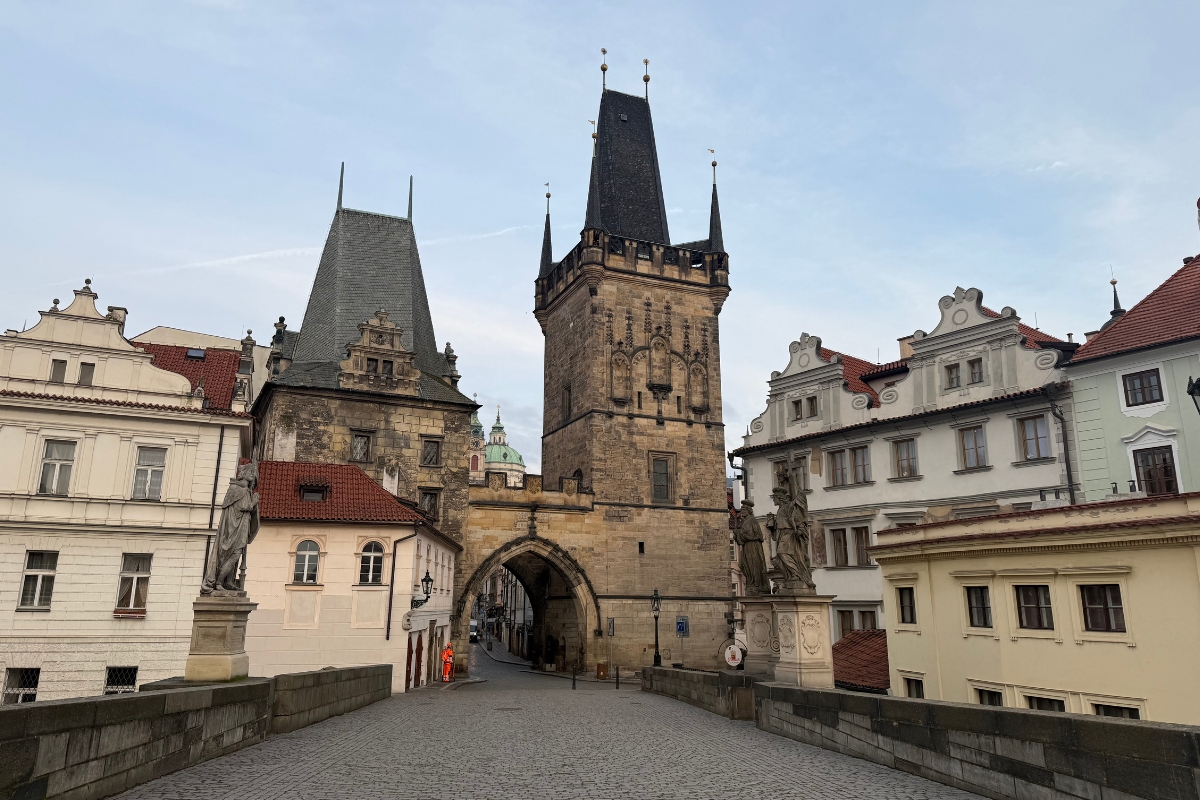
When I used to rush to school in the morning at a grammar school in Malá Strana, I’d sometimes deliberately take a detour and extend my walk across Charles Bridge Prague (I’d often simply hop on the wrong tram). At half past seven, especially on a damp November morning, there was a peculiar silence broken only by the squawking of gulls and the clatter of my own shoes on the wet cobblestones.
Mist from the Vltava curled around the thirty-odd baroque statues, and I had the feeling this Gothic link between the Old Town and Malá Strana was mine alone — just for that moment. A few years later, I’d come and sit on the bridge at 3 a.m. to think. The police would often move me along, so I wouldn’t recommend it.
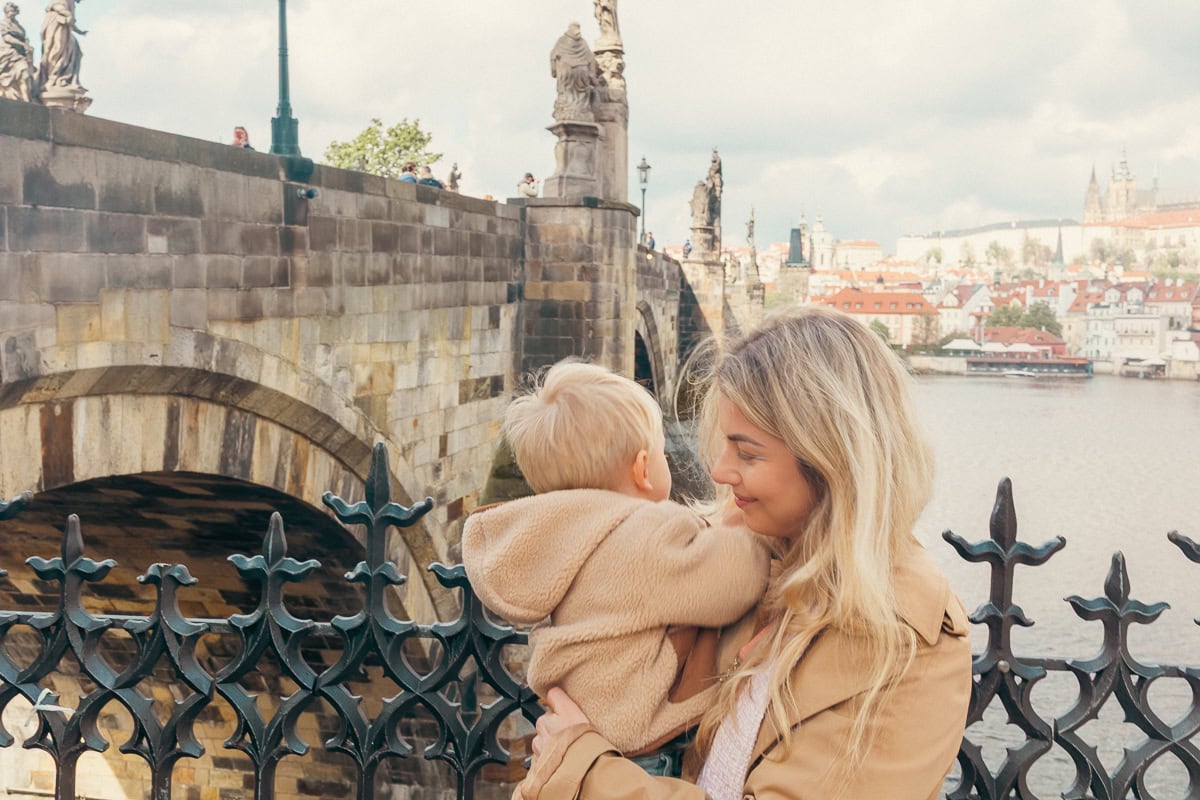
After our first date at Prague Castle, Lukáš and I walked down the Castle Steps and ended up right here, at the foot of the Malá Strana bridge towers. These days we come back as parents, and I’m horrified to discover just how badly those cursed cobblestones and kerbs rattle when you’re trying to manoeuvre a pushchair with two-year-old Jonáš in it. The place itself hasn’t changed since my student years, but my perspective has. I no longer try to elbow my way through the midday crowds — I’d rather get up early or come late in the evening, when the city finally exhales.
Visitors often ask me whether it’s even worth going to Prague’s most famous landmark when it’s perpetually under siege. My answer is unequivocal: yes — but you need to know how. It’s not just about crossing from one bank to the other. It’s about noticing the details, knowing a bit of context, and choosing the right moment when this overcrowded attraction transforms back into a mystical place steeped in history.
Come in the morning, come at night, come in the rain — just read what I have to tell you first, so the whole experience is worthwhile.
TL;DR
- The best time to visit is at dawn or late at night (after 23:00) — you’ll dodge the brutal crowds of organised tour groups.
- The foundation stone was laid in 1357, on exactly 9 July at 5:31 a.m., to create the magical palindrome 1-3-5-7-9-7-5-3-1.
- Most of the 30 statues on the bridge are sandstone replicas today — the originals are safely housed in the Lapidarium of the National Museum and at Vyšehrad.
- The statue of St John of Nepomuk is the one with the polished bronze relief panels. Touching them is said to bring good luck and a return to Prague.
- Both the Old Town and Malá Strana bridge towers offer some of the best views of the historic centre, with basic admission at around 8 €.
- Bradáč is an inconspicuous stone relief of a head near the Old Town Tower that served for centuries as Prague’s flood-warning gauge.
- For families with pushchairs, the crossing from bank to bank is step-free, but getting down to Kampa Island involves a steep flight of stairs.
- The bridge is a strictly pedestrian zone. The nearest public transport stops are Staroměstská on the right bank and Malostranské náměstí on the left.
The full destination guide: Czechia — guide and what to see
When to Visit Charles Bridge
Timing is absolutely everything with this landmark. If you turn up at three in the afternoon in mid-August, you’ll probably come away with nothing but frustration, bruised ankles, and photos full of strangers’ backs. The shifting light and density of people make it feel like several completely different places over the course of twenty-four hours. I lived in Prague for ten years, so I can tell you with a clear conscience that timing accounts for half the experience.
The magic of early morning and dawn
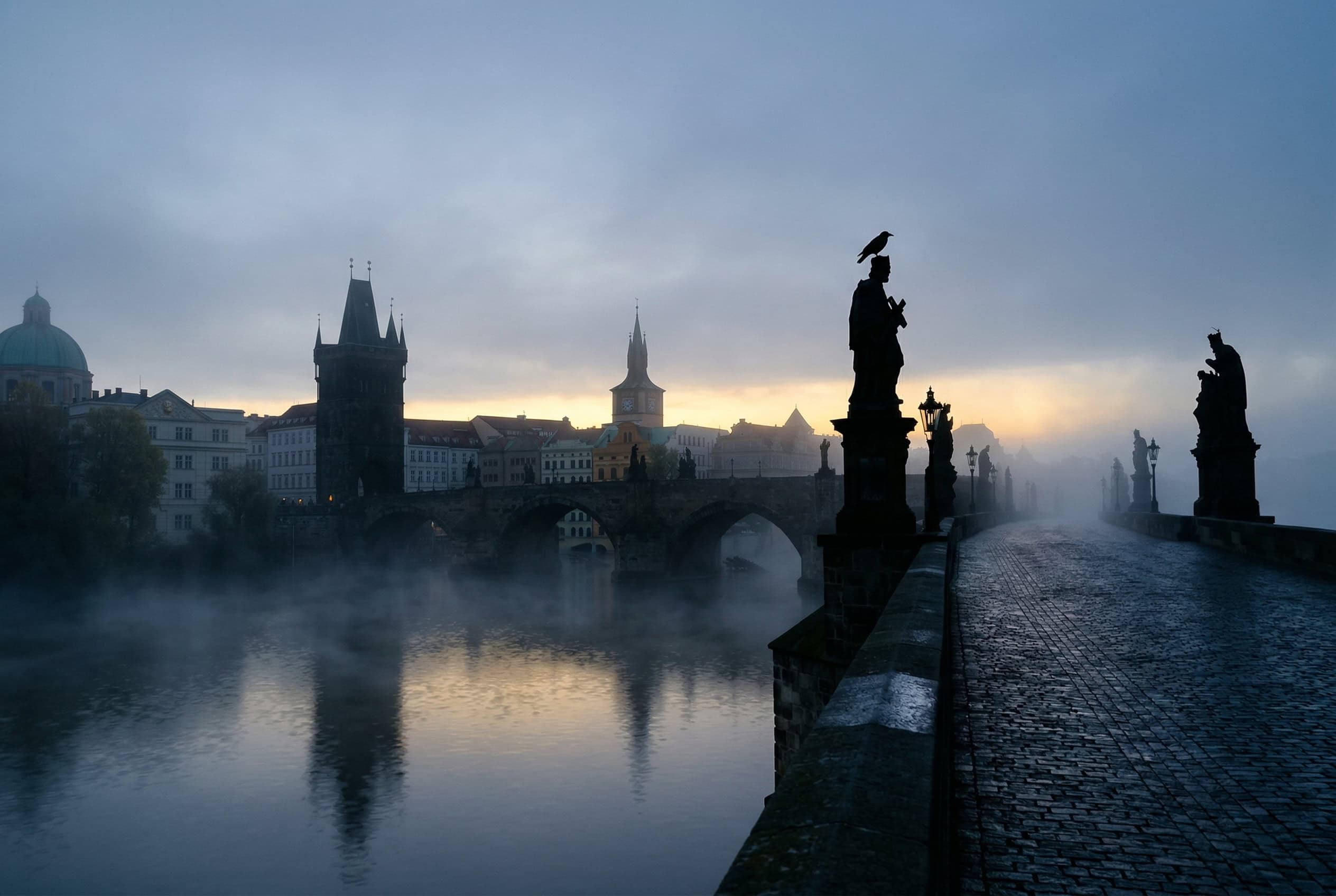
The early bird truly gets Prague on a silver platter. When I was learning to photograph with morning light at university, I discovered that the window between five and seven a.m. is sacred here. You’ll meet only a handful of joggers, lone photographers, and street sweepers. The sun rises lazily behind the towers of the Old Town, and a delicate layer of inversion mist often drifts up from the Vltava, giving the statues a dramatic, almost ghostly quality. The light is soft, the cobblestones glisten, and you have space to stop at individual sculptures without anyone crashing into you. It’s the moment when the city reveals its raw, quiet face — one you’ll never find pictured in guidebooks.
Getting up early means arriving ideally 30 minutes before the official sunrise (in summer that can be as early as half four; in winter, arriving after seven is fine). The easiest way here is by night trams or the first morning metro services, when you’ll practically have the carriage to yourself.
💡 Local’s tip: If you’re planning to take photos, bring a tripod. In the early morning — unlike during the daytime crush — you can actually use one without an irritated crowd tripping over it.
Afternoon bustle and evening calm
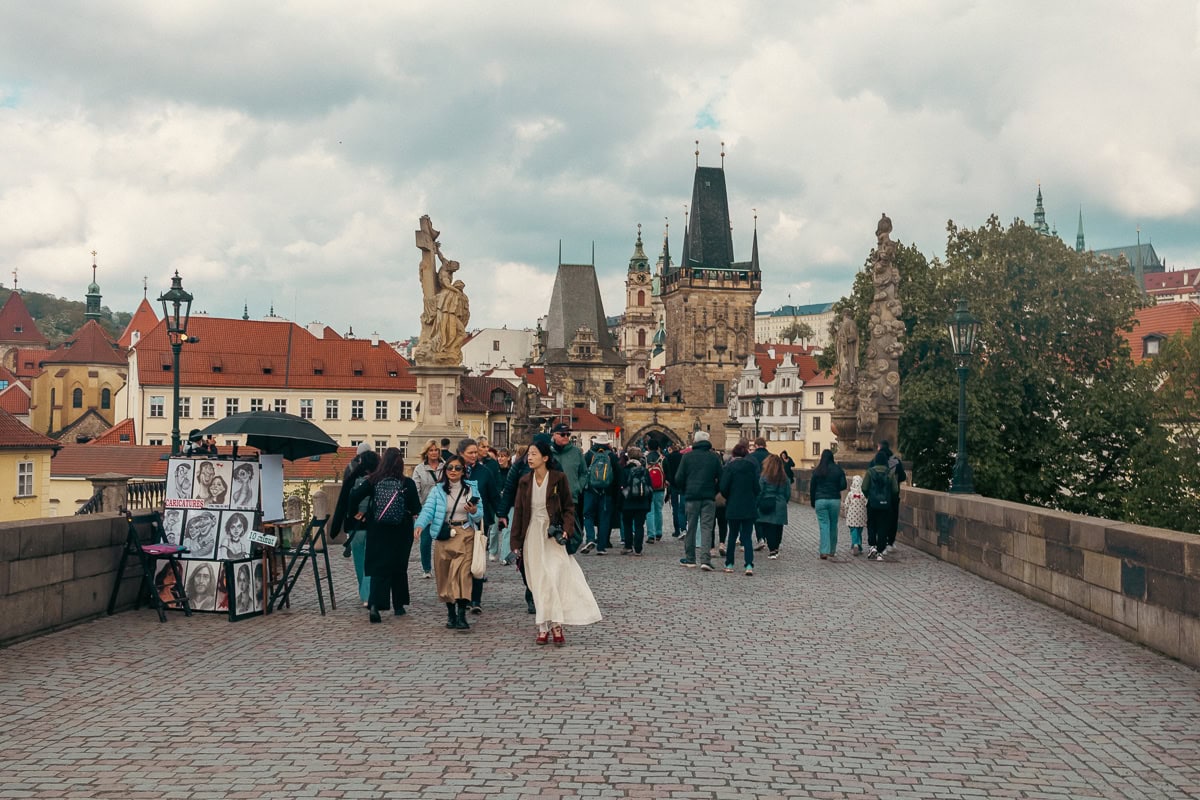
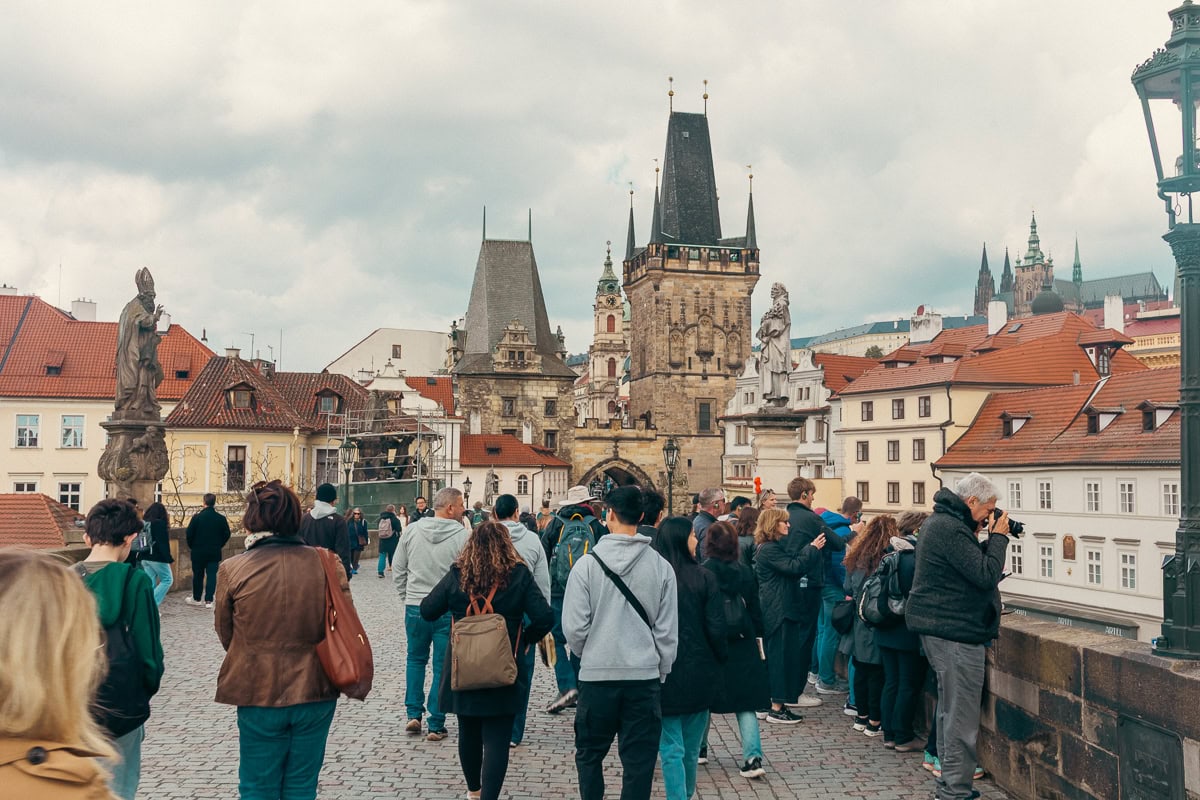
Between ten in the morning and nine at night, the bridge is a buzzing promenade. Caricature artists, street musicians, and dozens of tour groups trailing guides with raised umbrellas all jostle for space. Navigating a pushchair through this lot takes sharp elbows and nerves of steel, so we give it a wide berth with Jonáš. Late afternoon, however, brings warm golden light that leans against the façades of Hradčany and turns the river view into a picture-perfect scene. True peace doesn’t arrive until after ten p.m., when the crowds disperse into pubs and the yellow glow of gas lamps casts eerie shadows across the sandstone faces of baroque saints.
The gas lamps on the bridge switch on automatically with the public street lighting, but during the Advent season (late November and December) you may even spot a real lamplighter in period costume, igniting them one by one with a long pole.
💡 Local’s tip: Come here at night in the rain. The reflections of the lamps on the wet cobblestones are stunning, and because rain reliably drives most people into bars, you’ll more than likely have the whole bridge to yourself.
Where to Stay
Staying right in the centre sounds romantic — until a rowdy group of revellers wakes you up at two in the morning singing under your window. I’ve learned to pick a base that’s a short hop from the centre but where you can actually get a decent night’s sleep. On our last visit, Lukáš and I had a brilliant experience at The Julius Hotel in the New Town, just a stone’s throw from the Jindřišská Tower. We stayed in a One Bedroom Suite, which was a massive relief for a family with a two-year-old: separate living space, a fully equipped kitchenette, and design that feels less like a sterile hotel room and more like a luxury flat belonging to someone with exceptionally good taste. From the hotel, you can stroll along to the embankment through the Old Town in about twenty minutes, so there’s no need to fuss with morning trams.
You can check current prices and availability for 2026 and book via Booking.com.
For more tried-and-tested tips on where to stay comfortably with kids, have a look at my article on the best family hotels in Prague.
Charles Bridge Prague: History and Architecture
This stone link between the two banks didn’t always serve as a romantic promenade. For centuries it was a vital traffic artery — carts laden with goods, horses, and even trams at the start of the 20th century all thundered across it. Its predecessor, the Judith Bridge, was swept away by floods, so Emperor Charles IV had to step in with a new, more resilient plan.
The magical foundation date and Peter Parler
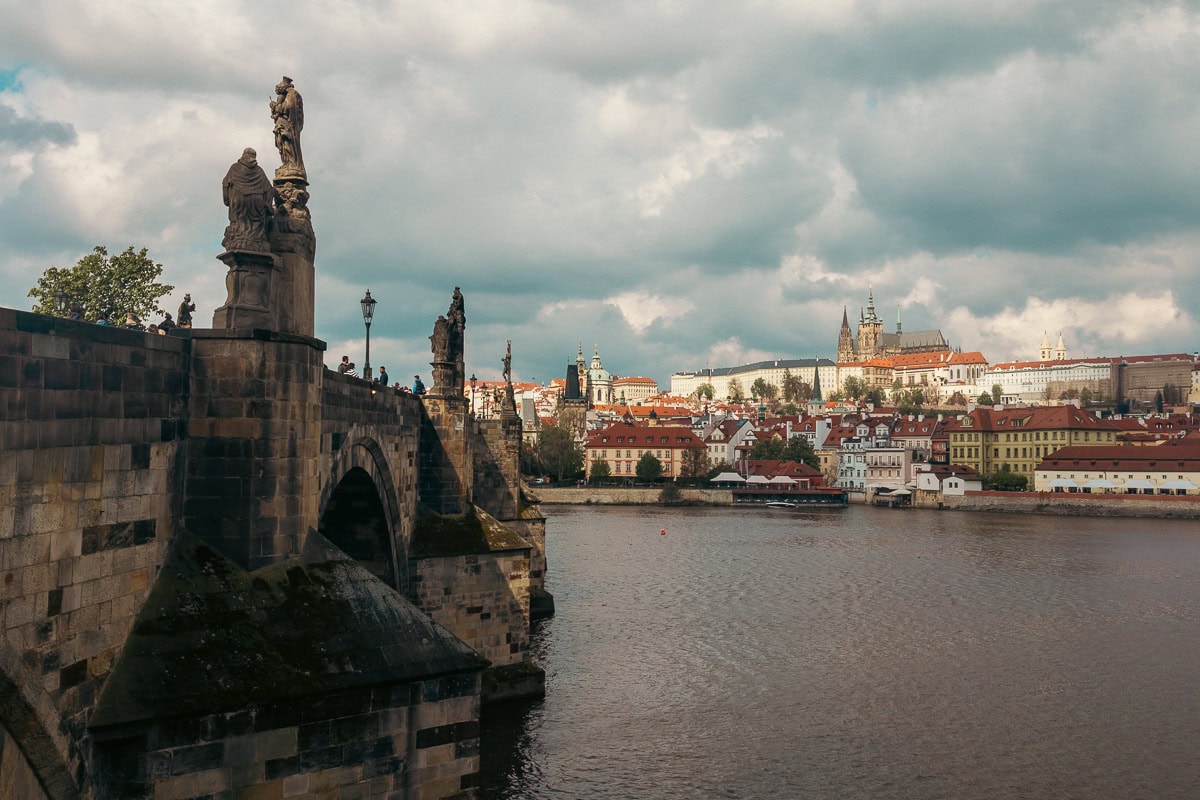
The construction story is deeply intertwined with medieval mysticism and astronomy. Charles IV was known for his belief in astrology, which is why he had the foundation stone laid at precisely 5:31 a.m. on 9 July 1357. Line those numbers up and you get the palindrome 1-3-5-7-9-7-5-3-1, intended to guarantee the structure’s eternity and protection from destructive forces. The chief architect was the then barely twenty-seven-year-old Peter Parler, who was also overseeing the construction of St Vitus Cathedral. Originally it was known simply as the Stone Bridge or the Prague Bridge — it only officially received its founder’s name in 1870.
The bridge stretches 515 metres in length and nearly 10 metres in width. It rests on 16 massive sandstone piers, which had to be sunk deep into the riverbed using specially constructed oak foundations.
💡 Local’s tip: If you’re curious about how medieval foundations were built underwater, pop into the Charles Bridge Museum at Křižovnické náměstí. They have excellent, detailed models of period treadwheel cranes.
The egg myth and the harsh reality of floods
Practically every Czech schoolchild has heard the legend that eggs were mixed into the mortar to make the masonry hold better — and that the residents of the town of Velvary helpfully sent their eggs hard-boiled so they wouldn’t break on the journey. Modern chemical analyses in the early 21st century initially confirmed traces of egg protein, but a more recent 2010 study debunked the idea. It turned out the medieval masons more likely used milk and wine lees. Whatever the truth about the building materials, the structure has had to withstand plenty of trials over its existence. Its most critical moments came during devastating floods — in 1890, for example, when the swollen Vltava swept away three of its arches.
Today the monument is protected by a system of modern barriers upstream, and engineers regularly monitor the stability of its piers using laser sensors.
💡 Local’s tip: As you walk along the Vltava on Kampa Island, look out for the discreet metal markers on some of the historic buildings. They show how high the water reached during the catastrophic floods of 2002. The sheer height will send a shiver down your spine.

Bradáč: Prague’s flood warning system
When you stand by the Old Town Bridge Tower and look down at the embankment wall, you’ll spot a stone relief of a man’s head set into the masonry. His name is Bradáč (literally “the Bearded One”), and for centuries he served as a simple yet utterly reliable flood gauge. The people of Prague knew that once the Vltava rose high enough to touch Bradáč’s whiskers, trouble was brewing and the Old Town would start to flood. The relief was originally part of the older Judith Bridge, and when that was destroyed by water, the builders reverently salvaged it and moved it to the new structure.
You can best see Bradáč from Křižovnické náměstí — lean over the stone balustrade near the statue of Charles IV and look straight down towards the waterline.
💡 Local’s tip: According to an old city legend, Bradáč’s face represents the Italian architect of the first stone bridge across the river, watching over the city and its waters to this very day.
Map of points of interest for your phone
Statues on Charles Bridge: An Open-Air Gallery
For a long time the crossing was essentially bare — its only decoration a simple wooden crucifix. It wasn’t until the Baroque period of the 17th and 18th centuries that it was transformed into the magnificent open-air sculpture gallery we know today. There are currently exactly thirty statues and sculptural groups on the bridge. Most of them, however, are now carefully crafted sandstone replicas. The city moved the originals indoors to protect them from the weather and pollution — you’ll find them in the Lapidarium of the National Museum at the Exhibition Grounds and in the dark hall known as Gorlice within the ramparts of Vyšehrad.
St John of Nepomuk and the good-luck ritual
This is the absolute classic and probably the most photographed statue on the entire bridge, created in 1683 by Jan Brokoff. You’ll find it roughly halfway across on the right-hand side as you walk towards Prague Castle. According to legend, John of Nepomuk was thrown into the Vltava from this very spot because he refused to reveal the queen’s confession to King Wenceslaus IV. Below the statue are two bronze relief panels, polished to a brilliant gold by the hands of millions of visitors. Touching the figure of the falling saint is said to bring good luck and guarantee that you’ll return to Prague one day.
You can spot the statue from a distance with ease — it has a distinctive halo of five stars around the head, and there’s usually a small cluster of people queuing to touch the relief.
💡 Local’s tip: Don’t touch the dog on the left panel! Although it’s been rubbed smooth by tourists as well, the original legend refers only to touching the figure of the falling John of Nepomuk, which you’ll find on the right side of the pedestal.
The Vision of St Luitgard
If I had to choose a single sculptural group that outshines all the others in artistic merit, it would be The Vision of St Luitgard by Matyáš Bernard Braun. This masterpiece of Czech Baroque stands closer to the Malá Strana bank. Braun carved it in 1710, when he was just 26 years old. The composition — a blind Cistercian nun to whom Christ leans down from the cross so she may drink blood from his wound — is breathtakingly dynamic and emotive. Even from a distance you can see how the sculptor wrestled with the hard sandstone and conjured the illusion of lightweight drapery rippling in the wind.
It’s the twelfth statue on the left-hand side walking from the Old Town. The 1710 original is now safely stored in the Lapidarium, and a replica stands in its place on the bridge.
💡 Local’s tip: Try viewing the statue from below, from the pier beneath the bridge (you can reach it via steps from Kampa Island). You’ll get an entirely different perspective on Braun’s fascinating mastery of space and depth.
Statuary of Sts Vincent Ferrer and Procopius
This monumental — and frankly rather terrifying — group was carved by Ferdinand Maxmilián Brokoff, and it’s one of my favourites when I want to show someone just how dark and wild the Baroque could be. It depicts St Vincent raising a dead man to life and casting out a demon, while St Procopius repels evil with a cross. Beneath their feet lie vanquished devils and sinners, their convulsing bodies and anguished faces forming a stark contrast with the calm expressions of the saints. As a student, I used to come here with my camera to study the anatomical details of those defeated demons — up close they look almost unnervingly realistic.
The group stands near the Malá Strana end — it’s the sixth statue on the left as you walk from the Old Town.
💡 Local’s tip: Notice the scowling figure of a Turk with a whip and a guard dog on the statuary of Sts John of Matha, Felix of Valois, and Ivan, which stands directly opposite. This is the popular “Prague Turk” — local children have long regarded him as a sort of fairy-tale creature and still look up at him with a mix of awe and respect.
Charles Bridge Towers: Views from Above
Both towers are open to the public and offer such different views that it’s well worth climbing both. Personally, I have a soft spot for the Malá Strana side — but more on that in a moment.
Old Town Bridge Tower
This massive Gothic gateway was designed by the aforementioned Peter Parler, and architects often rank it among the finest Gothic towers in all of Europe. Its eastern façade, facing the Old Town, is richly adorned with statues of Charles IV, Wenceslaus IV, and the patron saints of the Czech lands. During the Thirty Years’ War, however, its western face was severely damaged by Swedish artillery when troops tried to seize the right bank. Inside, 138 steps and a small atmospheric exhibition await you, after which you emerge onto a viewing gallery looking straight along the axis towards Hradčany. In autumn especially, when the trees on Kampa Island turn golden, this view is absolutely priceless.
Open daily. In the summer season from 9:00 to 21:00; in winter months it closes earlier, usually at 18:00. Basic adult admission is around 8 € (prices for 2026).
💡 Local’s tip: Buy a combined ticket for both bridge towers at the ticket office. It works out cheaper overall, and you have several days to use the second entry — so you don’t have to tackle both sets of stairs back-to-back.
Malá Strana Bridge Towers
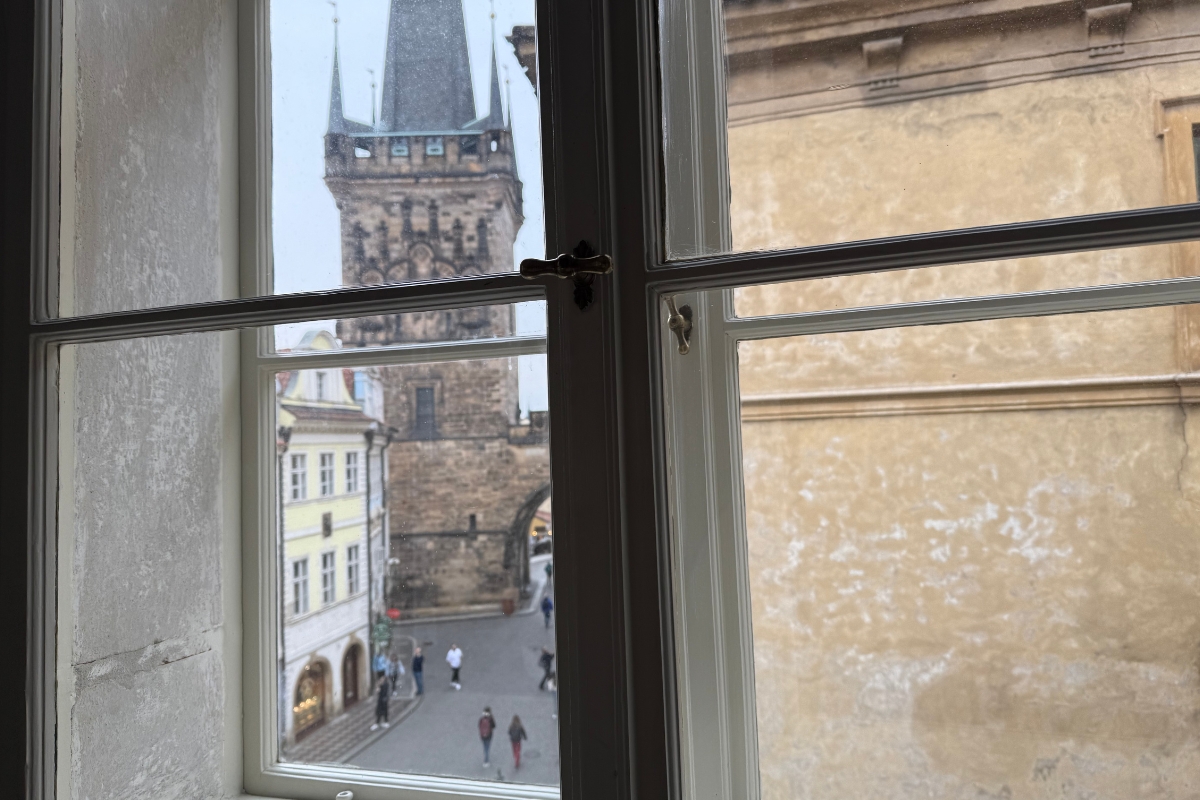
On the opposite bank you’re greeted not by one tower but two, linked by a walk-through gateway topped with battlements. The shorter one, called the Judith Tower, is Romanesque in origin and still remembers the predecessor to today’s Charles Bridge. The taller Gothic tower dates from the 15th century and was built as a mirror counterpart to the Old Town Tower, though its exterior decoration is far more restrained and austere. The exhibition inside covers the history of the river crossing, and the view from the upper gallery across the rooftops of Malá Strana and the steeply climbing Nerudova Street towards Prague Castle has a completely different, more intimate and cosier atmosphere than the panorama from the opposite bank.
Admission is the same 8 € as its Old Town sister, and after buying your ticket on the ground floor, you’ll face 146 wooden steps.
💡 Local’s tip: The exhibition in the Malá Strana tower is noticeably emptier and calmer. If you don’t enjoy cramped spaces packed with tourists, choose this left-bank side for your climb instead.
Practical Information
And now for the boring-but-potentially-lifesaving stuff: a handful of things that caught me off guard once upon a time, which I’d rather tell you about upfront.
Getting there
The entire area is a strict pedestrian zone, so you can’t get here by car. Taxi drivers hailed off the street will happily drop you as close to the embankment as possible, but be prepared for a fare that has absolutely nothing to do with the distance covered. Your best bet is Prague’s excellent public transport network. On the right bank, get off at the Staroměstská metro station (line A) or take tram numbers 17 or 18 to the same-named stop. From there it’s roughly a five-minute walk through the open space of Křižovnické náměstí. From the Malá Strana side, the legendary number 22 tram (or lines 12, 15, 20) will take you to Malostranské náměstí, from where you simply stroll downhill along Mostecká Street straight to the towers.
A basic 30-minute ticket costs about 1.20 € and is perfectly sufficient for a journey from most central locations such as Wenceslas Square or the Main Railway Station. If you’re flying in from the UK, direct flights from London to Prague are frequent and affordable with carriers like British Airways, easyJet, Ryanair, and Wizz Air — the flight takes under two hours.
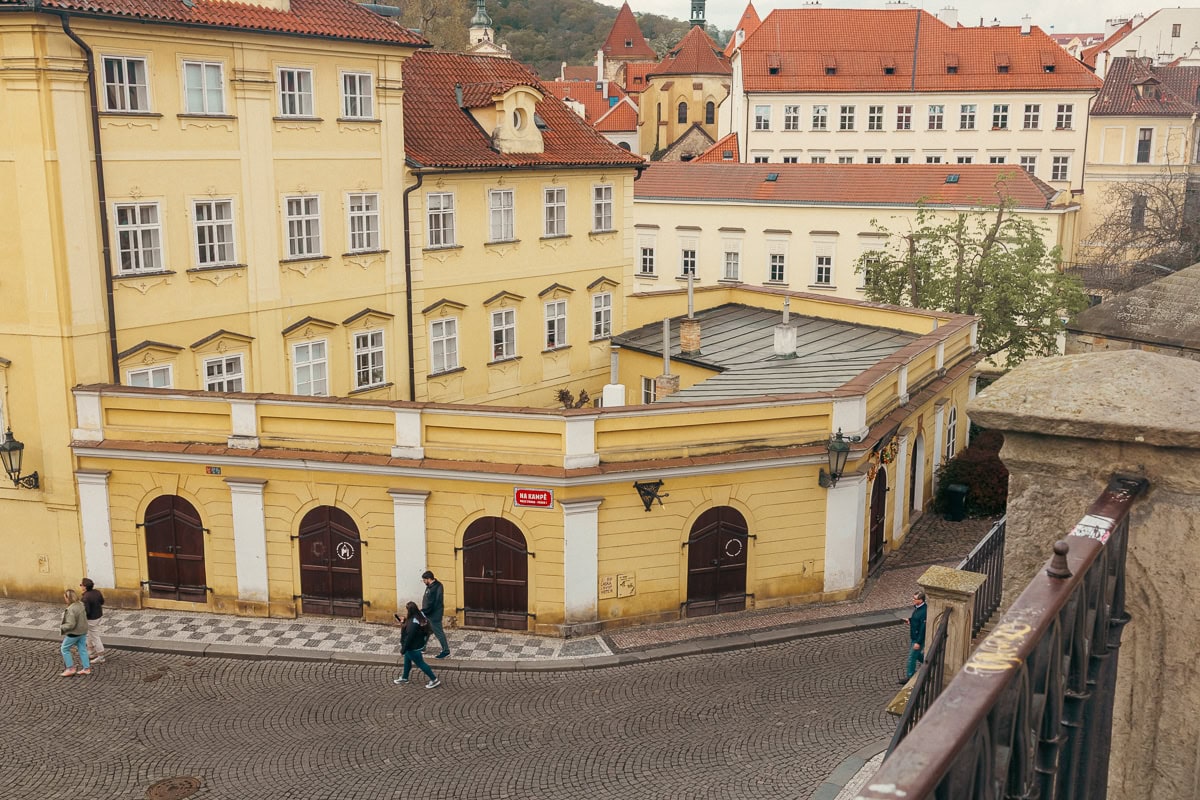
💡 Local’s tip: For families with pushchairs: the approach from both sides is paved with large cobblestones but completely step-free. However, if you want to drop down to Kampa Island and the Čertovka channel at roughly the halfway point, you’ll have to negotiate a fairly steep stone staircase. With a pushchair, you’ll either need to go the long way round via Malostranské náměstí or carefully carry the buggy down.
Guided tours and Vltava river cruises
A guide is genuinely worth it — and that’s coming from someone who normally thinks she can manage just fine with Google and a gut feeling for directions. Lukáš and I occasionally take a boat trip, because the view of those massive sandstone piers from water level offers a completely different, far more monumental experience. If you fancy historical tales or a cruise right under the arches, you’ll find great options online where you can secure your spot in advance and avoid haggling with the touts on the embankment flogging overpriced tickets.
You can browse and book a wide range of historical walking tours, evening strolls, and river cruises via GetYourGuide. In summer I’d recommend choosing late-afternoon time slots, when a pleasant coolness rises from the river.
💡 Local’s tip: Instead of those big glass-enclosed boats blaring loud music, look for smaller traditional wooden boats (known locally as “vodouch”). Thanks to their shallow draught, they can navigate even the narrow Čertovka channel, gliding right beneath the balconies of ancient houses.
Where to eat and grab a coffee (without falling into a tourist trap)
The main drags around the bridge are wall-to-wall tourist traps — reheated trdelník chimneys at extortionate prices and restaurants that charge you for breathing, with a cutlery surcharge thrown in for good measure. As a vegetarian and a coffee lover, I generally give the main streets a wide berth. When we cross to Malá Strana, we like to duck into the quieter lanes towards the Lennon Wall (though sadly it’s increasingly just a colourful Instagram backdrop with little of its original meaning left), or we hide away in the cosy Roesel – beer & cake, a place tucked unobtrusively right by the bridge towers. Their craft beer, hearty soups, and fantastic cakes are exactly what you need after a walk. The local café scene is constantly evolving, and you can always find a peaceful courtyard where they’ll make you a superb espresso from speciality beans without you having to sell a kidney.
Steer clear of the establishments planted directly on Křižovnické náměstí and along Mostecká Street. Prices there are set squarely for one-time foreign visitors, and the food quality, sadly, rarely matches up.
💡 Local’s tip: Grab a takeaway coffee from one of the tucked-away lanes in Malá Strana and sit with your cup on a bench in the Vrtba or Vojanovy Sady gardens. Vojanovy Sady is a quiet, walled oasis with peacocks roaming freely, where you’ll barely see another tourist. You can find more of my favourite tried-and-tested spots in the guide to cafés in Prague.
Frequently Asked Questions
Is there an admission fee for Charles Bridge?
No, walking across the bridge is completely free and open 24 hours a day, 365 days a year. You only need to pay if you want to climb the viewing galleries of the bridge towers.
When is it least crowded?
The best time for a peaceful, crowd-free stroll is early in the morning at dawn (between 5:00 and 7:00) or late at night (after 23:00). During the day you won’t escape the constant flow of people in any season.
Can you cycle or scooter across?
Cycling and riding electric scooters are strictly prohibited for safety reasons. If you have a bicycle with you, you must dismount and walk it the entire way.
Are the statues originals?
Most of the sandstone statues you see outdoors today are careful 20th-century replicas. The originals were moved to the Lapidarium of the National Museum at the Exhibition Grounds and to the Gorlice hall at Vyšehrad, to protect them from acid rain and pollution.
How long does it take to walk across?
The bridge is just over 500 metres long, so at a brisk pace on an empty stretch you can cross in 5 to 7 minutes. If you want to stop and admire the statues, snap some photos, and weave through the daytime crowds, allow 20 to 30 minutes instead.
Is the route wheelchair and pushchair accessible?
Yes, the main route is completely step-free along its entire length, so you can cross with a pushchair or wheelchair without any issues. Just watch out for the stairs that lead down to Kampa Island roughly halfway across — those are not accessible.
Tips and Tricks for Your Vacation
Don’t Overpay for Flights
Search for flights on Kayak. It’s our favorite search engine because it scans the websites of all airlines and always finds the cheapest connection.
Book Your Accommodation Smartly
The best experiences we’ve had when looking for accommodation (from Alaska to Morocco) are with Booking.com, where hotels, apartments, and entire houses are usually the cheapest and most widely available.
Don’t Forget Travel Insurance
Good travel insurance will protect you against illness, accidents, theft, or flight cancellations. We’ve had a few hospital visits abroad, so we know how important it is to have proper insurance arranged.
Where we insure ourselves: SafetyWing (simple monthly subscription) and TrueTraveller (for extra-long trips).
Find the Best Experiences
Get Your Guide is a huge online marketplace where you can book guided walks, trips, skip-the-line tickets, tours, and much more. We always find some extra fun there!
More from Czechia
Full guide → Day trips · most readMikulov, Czech Republic: 10 Best Things to Do and See
 With kidsBest Water Parks in the Czech Republic: 13 Family Tips for 2026
 When to goBrno Christmas Markets 2026 – Tree Lighting, Opening Hours & Programme
 FoodPrague, Czech Republic: 10 Best Things to Do and See with a Toddler
 Where to stayPrague, Czech Republic: 10 Best Family Hotels for Your Stay with Children


