

You’re standing on a narrow trail, looking up. And further up. And you still can’t see the tops of the trees. That’s the moment you understand why this place is called nature’s cathedral — because standing in a forest of giant redwoods makes you feel just as tiny as standing inside Notre-Dame, except here, instead of stained glass, misty Californian sunlight filters through the canopy. And it’s a million times more beautiful.
Redwood National Park in northern California is the kind of place that literally takes your breath away. Not metaphorically — you will genuinely stand there with your jaw on the floor, staring. Lukáš and I spent several days here, and to this day we agree it was one of the most powerful nature experiences we’ve ever had in the USA. And we’ve seen Yellowstone and the Grand Canyon.
In this article, I’m bringing you a complete guide to Redwood National Park — you’ll find 15 tips on what to see and do, from the famous Fern Canyon (yes, the one from Jurassic Park! 🦕) to herds of Roosevelt elk grazing in meadows and Avenue of the Giants, a road that’ll make you feel like you’ve shrunk to the size of an ant. I’ll tell you when to visit, where to stay, how much it all costs, and what you absolutely shouldn’t miss.
TL;DR
- Redwood National Park is located on the northern coast of California, roughly a 5–6 hour drive north of San Francisco. It’s not a single park, but a complex of four parks — one national and three state parks.
- Entry is free — there’s no admission fee (the exceptions are Gold Bluffs Beach with a $12 per car day-use fee and a few special permits).
- The best time to visit is from mid-May to October, ideally June–September, when there’s the least rain. But even misty days have their own charm.
- For a thorough exploration, you’ll need at least 2–3 days, ideally 4 if you want to comfortably walk the main trails.
- The nearest towns are Crescent City to the north and Orick to the south of the park — both are tiny, so don’t expect big-city amenities.
- Must-see: Fern Canyon, Lady Bird Johnson Grove, Tall Trees Grove (permit required!), Prairie Creek and Roosevelt elk herds, Avenue of the Giants.
- Hyperion — the world’s tallest tree (115.9 m / 380 ft) — stands somewhere in the park, but its exact location is officially undisclosed to prevent damage. Don’t try to find it — since 2022, you face a fine of up to $5,000 (approx. £4,000).
- A car is essential — public transport is virtually non-existent. Renting a car is the best option.
The full destination guide: North America — guide and what to see
When to visit Redwood National Park and how to get there
Redwood National Park sits on the far northwestern edge of California, along Highway 101, roughly 50 km south of the Oregon border. If you’re picturing it somewhere near Los Angeles or San Francisco, I’m afraid you’re off — it’s quite a drive. But every single minute behind the wheel is worth it.
Best time to visit Redwood National Park
The most pleasant period is from June to September — temperatures hover around 15–20 °C (yes, even in summer it’s cooler than you’d expect — this isn’t Southern California 😅), it rains less, and the trails are in their best condition. July and August are the driest months, but prepare for morning fog, which is quintessential to this forest and gives it that incredible atmosphere.
Spring (April–May) is beautiful thanks to blooming rhododendrons and wildflowers, though it can be rainier. Autumn (October–November) is stunning with its colours and emptier trails, though some roads may be in poor condition after rains.
What about Redwood National Park in winter? Honestly — it’s not ideal. It rains heavily and often, some roads and trails close due to landslides or flooding (particularly the access to Fern Canyon). On the flip side, if you don’t mind rain and mud, you’ll experience the park almost entirely to yourself, and the forest in the rain has its own mystical beauty. Just expect limited accommodation and dining options.
How to get to Redwood National Park
The nearest airports to Redwood National Park are:
- Arcata-Eureka Airport (ACV) — about a 1.5-hour drive south of the park’s centre. A small regional airport with flights from San Francisco, Los Angeles, and other Californian cities.
- Crescent City Airport (CEC) — right by the park’s northern edge, but with very limited service.
Most travellers, however, choose one of these options:
- Fly into San Francisco (SFO) + road trip — roughly 5.5–6 hours north along Highway 101. It’s a long drive, but it passes through gorgeous scenery and can be beautifully combined with other stops along the way.
- Fly into Portland (PDX) + drive south — about 5.5 hours via I-5 and Highway 199. A great option if you’re combining your trip with Oregon.
From the UK, you’ll find direct flights to San Francisco from London Heathrow with British Airways and United, or to Portland with Delta (often via a connection). For the best deals, compare prices well in advance. Don’t forget to get an eSIM card before you go — mobile signal in the park is patchy at best, and you’ll need offline maps.
A car is an absolute must. Public transport in this part of California is practically non-existent. We’ve had consistently great experiences with DiscoverCars, which we use all over the world. I’d recommend picking up your car right at the airport — whether that’s in San Francisco or Arcata.
Consider renting an SUV or crossover — some roads in the park (especially Davison Road to Fern Canyon) are unpaved and can get quite muddy after rain. You can manage in a regular car, but you’ll be white-knuckling it. We were nervous even in an SUV. 😅
Where to stay and how much does Redwood National Park cost
Great news right off the bat: entry to Redwood National Park is completely free. No admission fee, no advance reservations needed (with a few exceptions I’ll cover below). That’s actually quite rare in the US national park system and a pleasant surprise for your wallet.
There are costs, of course — mainly for accommodation, petrol, and food. Here’s a rough budget for 3 days for two people:
- Accommodation: $80–200/night (£65–160) depending on the type — camping from $35/night (£28), motels $80–130 (£65–105), Airbnb $120–200 (£95–160)
- Petrol: approx. $50–80 (£40–65) for 3 days of driving around the park
- Food: $30–60/day for two (£24–48) — there aren’t many restaurants, so plan accordingly
- Fees: Gold Bluffs Beach day-use fee $12 (£10), Tall Trees Grove permit free
- Total for 3 days for two: approx. $500–900 (£400–720) excluding flights and car rental
Where to stay — by location
The park stretches along the coast and its different sections are spread out, so where you base yourself matters. You essentially have three options:
Crescent City (north of the park): The largest town in the area, though “largest” is a very relative term — it has about 7,000 residents and a handful of motels. The advantage is its proximity to Jedediah Smith Redwoods and Howland Hill Road. You’ll find a supermarket, a few restaurants, and petrol stations here.
Klamath / Orick (centre and south of the park): Small settlements with limited accommodation, but closest to Fern Canyon, Prairie Creek, and Lady Bird Johnson Grove. Orick is literally a few houses along the road — don’t expect much, but it’s the heart of the park.
Eureka / Arcata (further south): Larger towns with a full range of accommodation, restaurants, and services. The downside is the distance — it’s over an hour’s drive to the park’s centre. But if you want comfort and choice, it’s a good option for your first or last night.
Camping in the park is fantastic and I highly recommend it — falling asleep surrounded by giant redwoods is an unforgettable experience. The most popular campgrounds:
- Jedediah Smith Campground — right among old-growth redwoods, beside the Smith River. $35/night (£28). Reservations through Recreation.gov are essential in season!
- Mill Creek Campground — in Del Norte Coast Redwoods, quieter, fewer people. $35/night.
- Elk Prairie Campground — in Prairie Creek, Roosevelt elk wander right between the tents. $35/night. Our favourite!
- Gold Bluffs Beach Campground — right on the beach, a stone’s throw from Fern Canyon. $35/night + $12 day-use fee. A magical spot, but it fills up fast.
Book your campsite as early as possible — in summer, popular campgrounds fill up months in advance. Some operate on a first-come-first-served basis, but relying on that during peak season is a gamble.
Redwood National Park: 15 tips on what to see and do
Now let’s dive into the best that Redwood National Park has to offer. I’ve put together 15 tips on places and experiences you simply can’t miss — from fairytale canyons to elk herds and trails among the tallest trees on the planet. Keep in mind that Redwood National and State Parks is actually a complex of four parks (Redwood National Park, Jedediah Smith Redwoods, Del Norte Coast Redwoods, and Prairie Creek Redwoods), so there’s truly loads to see.
1. Fern Canyon — the Jurassic Park canyon
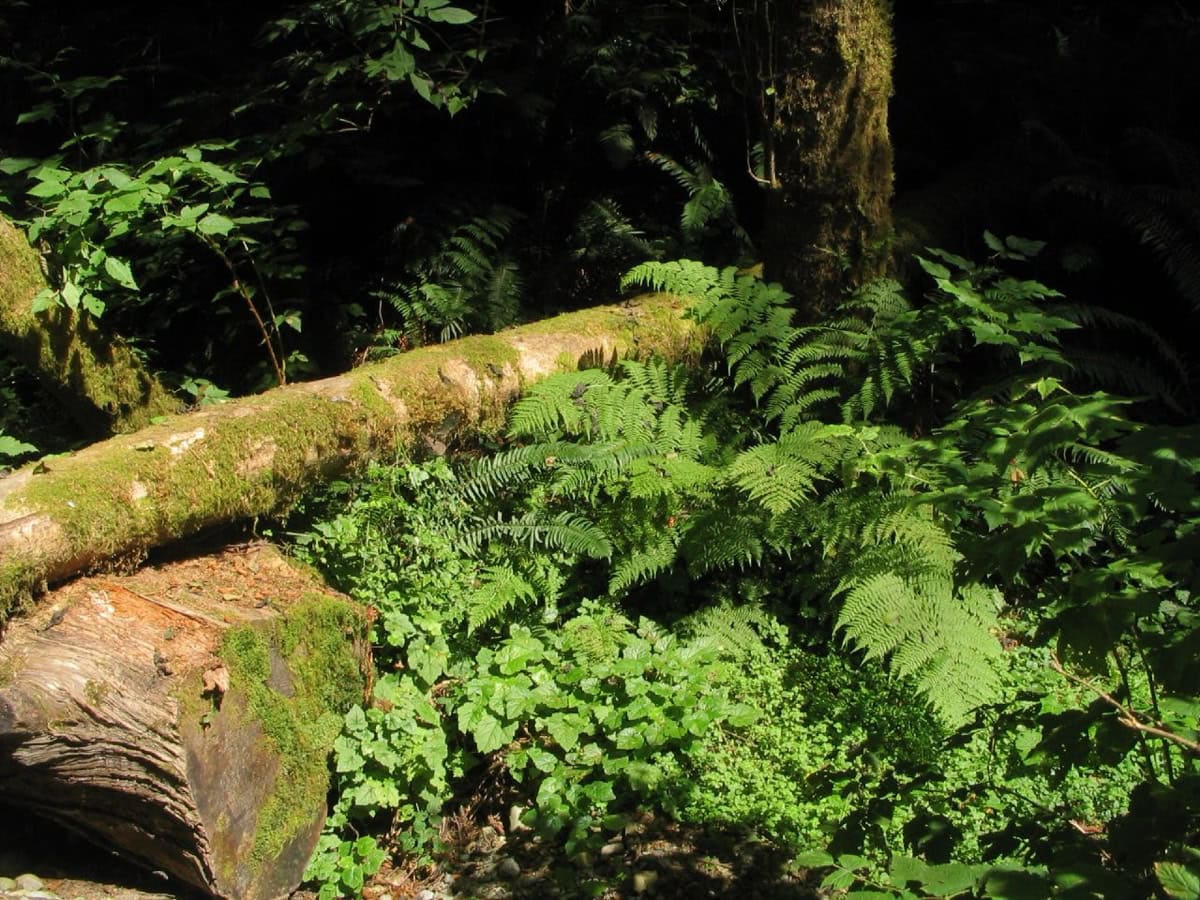
Fern Canyon is probably the most photogenic spot in the entire park and for many visitors the main reason for coming. Imagine a narrow canyon with 15-metre walls completely covered in five different species of ferns that look straight out of the age of dinosaurs. And that’s no coincidence — Steven Spielberg filmed scenes here for The Lost World: Jurassic Park (1997) and declared it “the most beautiful place on Earth.” Standing there, you completely understand why.
The canyon itself is fairly short — the walk is about 1.2 km (a loop) and takes 30–45 minutes. But you’ll want to stop every few metres because you simply can’t take in the beauty of those green walls in a hurry. Prepare for wet feet — you wade through the stream that flows along the canyon floor (it’s shallow in summer, deeper in winter). Waterproof boots or sandals you don’t mind getting wet are a must-have.
How to get there: Fern Canyon lies at the end of Davison Road — about 10 km of unpaved road from Highway 101. The road is passable in a regular car (in dry conditions), but it’s narrow, bumpy, and at points you need to ford a shallow stream with your car. In winter and after heavy rains, it’s often closed. Parking at Gold Bluffs Beach costs $12 (£10) per car.
Tip: Arrive early in the morning (ideally before 9:00) or late afternoon. During peak season, the car park fills up quickly and the park has introduced a shuttle system — in summer 2024, on certain days you had to take a shuttle from Prairie Creek Visitor Center. Check the park’s website for the latest information before your visit.
2. Lady Bird Johnson Grove — an easy walk among giants
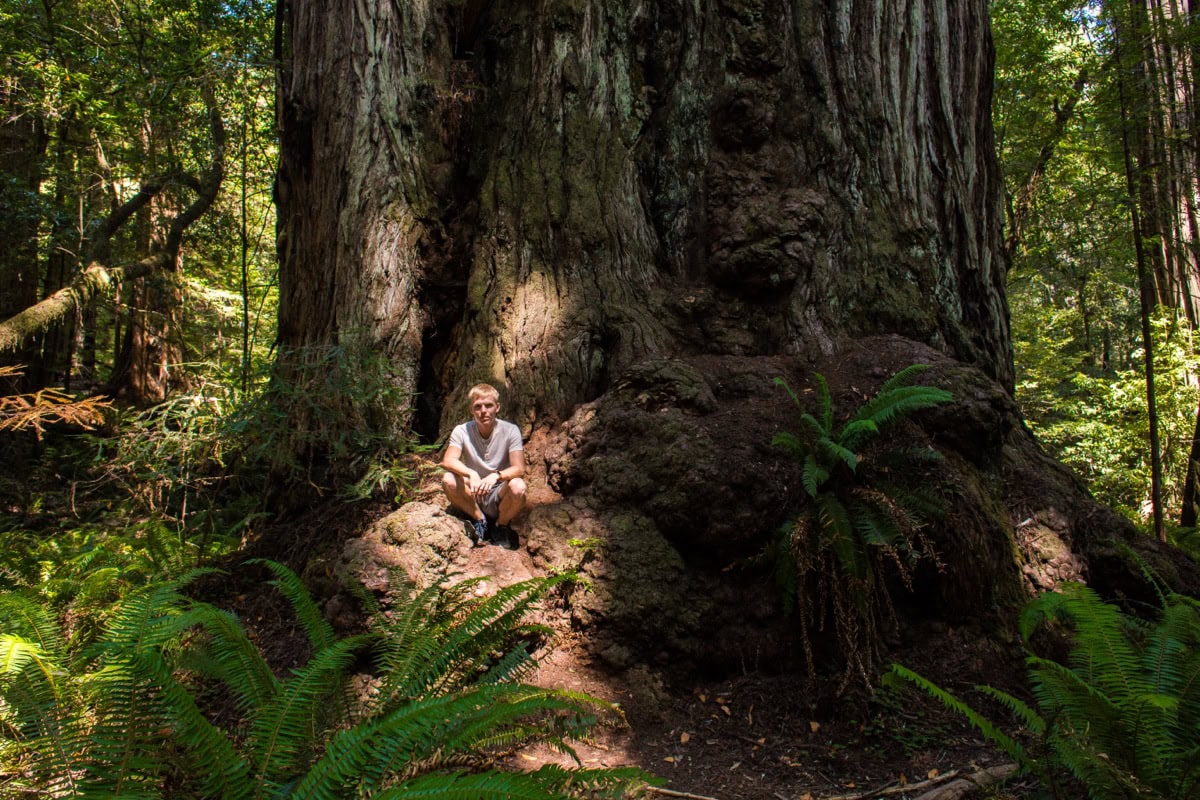
If you only have time for one trail in the entire park, make it this one. Lady Bird Johnson Grove Trail is a 2.2 km loop along a boardwalk and well-maintained path that takes you through a stand of old-growth redwoods. It’s an easy stroll suitable for families with children or anyone who isn’t particularly sporty.
The grove was named after First Lady Lady Bird Johnson, who championed the protection of the redwood forests. The park was officially established in 1968, and this grove was the site of the dedication ceremony. Standing among trees that are hundreds of years old, with trunk diameters exceeding 4 metres, you understand why people fought so hard to save these forests.
The trailhead is at the end of Bald Hills Road, about 3 km from Highway 101. The road to the trailhead is paved and easy. Allow 45–60 minutes for the walk — but feel free to take longer. There’s no rush here.
Fun fact: In 1968, a commemorative plaque was unveiled here — but someone stole it. So they replaced it. That one got nicked too. The current plaque is the third one. People are just… people. 😅
3. Tall Trees Grove — a meeting with giants (permit required)
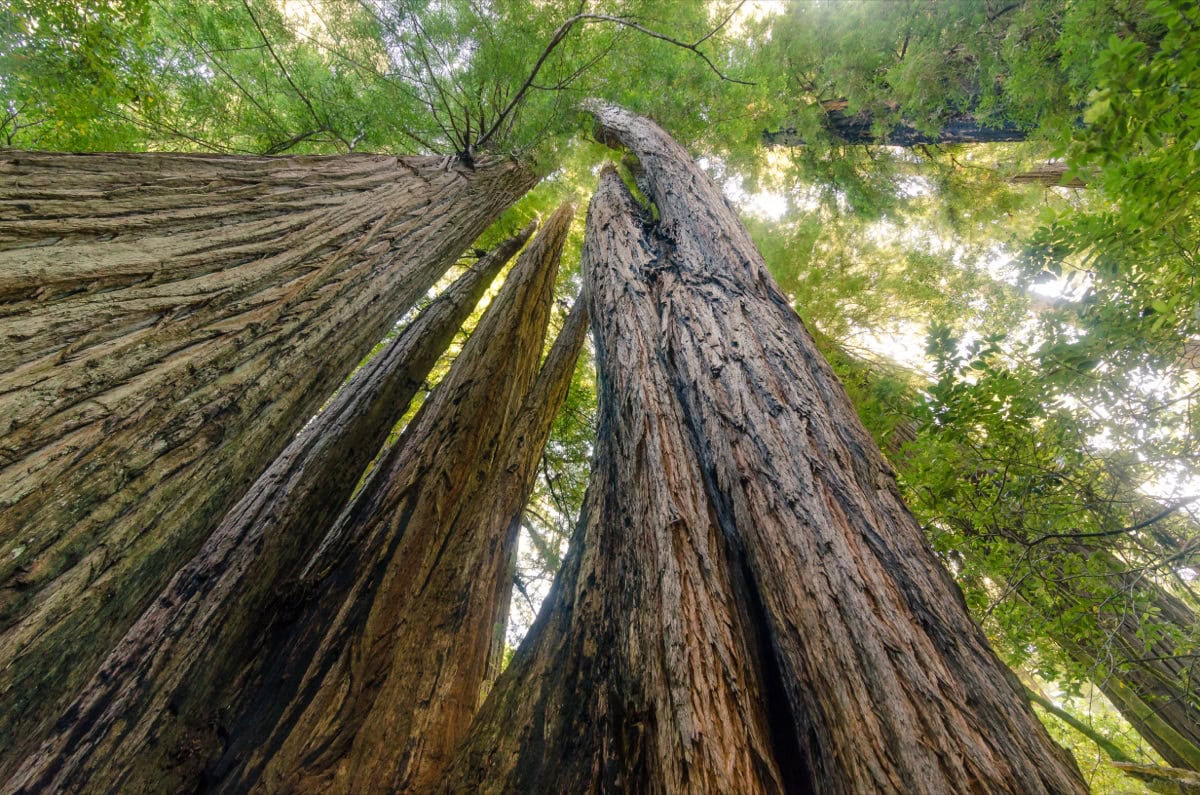
Tall Trees Grove is one of the park’s most sacred spots — this is where the world’s tallest trees were discovered in the 1960s and the very reason the national park was created. Trees here reach heights of over 100 metres and are between 500 and 2,000 years old. Walking in feels like entering a temple.
You’ll need a free permit — pick one up at Thomas H. Kuchel Visitor Center in Orick or at Hiouchi Visitor Center near Crescent City. The number of permits per day is limited (around 50 cars), so in summer, arrive early in the morning to get yours. The permit includes a code for the gate lock on Tall Trees Access Road.
The drive to the trailhead is about 11 km along a narrow gravel road (manageable in a regular car, just take it slow). The trail itself is a 5.3 km loop with about 240 metres of elevation change — down into the Redwood Creek valley and back up. Allow 2.5–3.5 hours.
Why it’s worth the effort: Tall Trees Grove is far quieter than Fern Canyon or Lady Bird Johnson Grove. There are very few people thanks to the limited permits, and the trees are utterly monumental. We stood beside a tree with a trunk circumference of over 20 metres and felt like hobbits meeting an Ent.
4. Prairie Creek Redwoods and Roosevelt elk herds
Prairie Creek Redwoods State Park is probably the most diverse section of the entire complex. You’ll find old-growth redwood forests, coastal meadows, waterfalls, and beaches — all within a relatively small area. But the real stars are the Roosevelt elk — massive animals that graze freely in the meadows right along the road.
Elk Prairie (the meadow by Elk Prairie Campground and Visitor Center) is the spot where you’ll almost certainly see them. Bulls with enormous antlers graze peacefully while visitors photograph them from a respectful distance. And please — genuinely keep your distance! These are large animals (males weigh over 400 kg) and during the rut (September–October) they can be aggressive. Maintain at least 25 metres at all times.
Another great spot for elk watching is Davison Road (the same road leading to Fern Canyon) and Gold Bluffs Beach, where elk sometimes stroll right along the sand. Elk on the beach with fog rolling in behind them — that’s a photo you’ll be showing everyone. 😁
Several lovely trails depart from Prairie Creek Visitor Center — I’d recommend the Prairie Creek Trail (a pleasant easy walk along the creek) and Revelation Trail (a short accessible trail with sensory experiences).
5. Avenue of the Giants — a road among giants
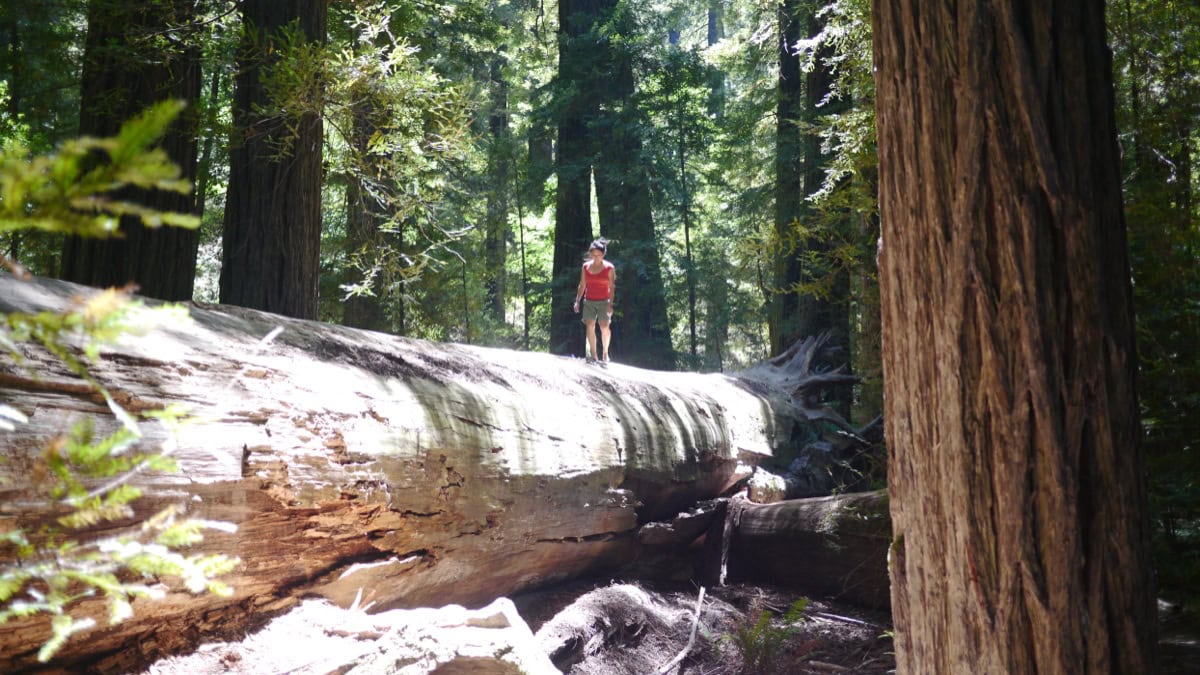
Avenue of the Giants is a 51 km scenic road that runs parallel to Highway 101 through Humboldt Redwoods State Park, about an hour’s drive south of Orick. Technically it’s not part of Redwood National Park, but it’s so close and so jaw-droppingly beautiful that you simply cannot skip it.
Imagine driving along with redwoods so massive on both sides that their crowns merge high above the road, creating a green canopy. Light filtering through the branches paints a mosaic of shadows and patches on the tarmac. It’s like driving through a tunnel made of trees. You’ll be doing about 20 mph, not because of speed limits, but because you keep wanting to pull over and stare.
There are numerous stops and short trails along the way. The best ones:
- Founders Grove — a short trail (0.8 km) to the Founders Tree and the fallen Dyerville Giant, which was once the world’s tallest tree.
- Rockefeller Forest — the largest remaining old-growth redwood forest in the world. The Bull Creek Flat Trail is 15 km, but even a short stroll here is worth it.
- Shrine Drive-Thru Tree ($10 per car / £8) — yes, it’s a tourist trap, but honestly? Driving your car through a tree is just fun. At least once in a lifetime. 😅
6. Howland Hill Road — the most beautiful unpaved road
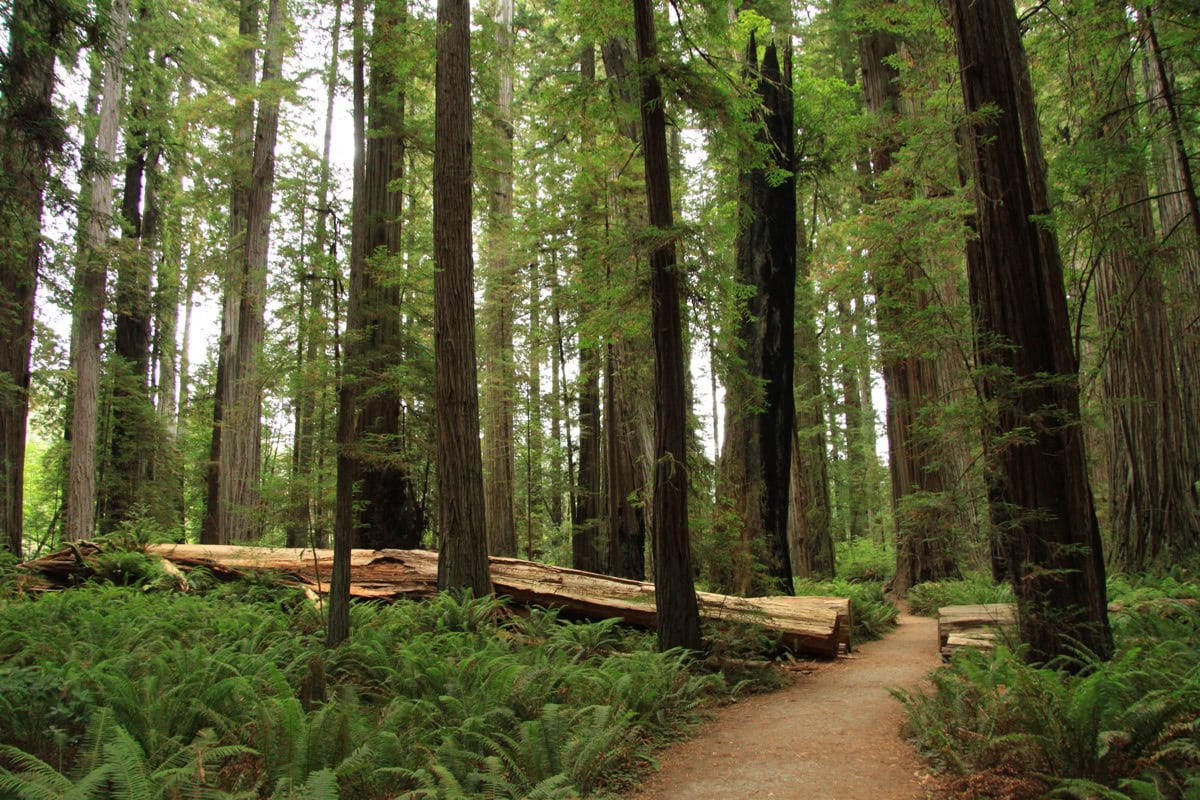
If Avenue of the Giants is the main highway, Howland Hill Road is the secret back road for those in the know. This 10 km unpaved road winds through Jedediah Smith Redwoods State Park and is — in my opinion — the most beautiful thing you’ll see in the entire park.
The road is so narrow that in some places two cars can barely pass each other. Trees stand literally a metre from the road and their trunks are so massive that you feel like an ant walking between table legs. Some of the oldest and largest redwoods grow here — many over 300 years old with trunk diameters of 5 metres or more.
Stout Memorial Grove — a short trail (about 1 km) branching off Howland Hill Road — takes you to some of the most imposing trees. The Stout Tree is roughly 100 m tall and over 5 m in diameter. And it’s surprisingly uncrowded, because most visitors head to the more popular attractions.
Practical tip: The road is passable in a regular car (in dry weather), but campervans and large trailers won’t make it through. Drive slowly (15–20 km/h) and take your time. The drive itself is the experience.
7. Simpson-Reed Trail — a short walk for everyone
If you arrive at the park in the afternoon with just an hour of daylight left, head for Simpson-Reed Trail. It’s a short, easy loop (1.6 km) that starts right off Highway 199 near Crescent City and can be done in 30 minutes.
For such a brief trail, it packs a surprising punch — giant redwoods, ferns, carpets of moss, and a quiet little creek. It’s like a taster of the very best the redwood forest has to offer, in a compact package. Ideal for families with small children or people with limited mobility too (the trail is fairly flat, though not fully accessible).
A short way from Simpson-Reed Trail you’ll also find Peterson Loop Trail (0.6 km) — even shorter and equally beautiful. You can easily do both in an hour.
8. Enderts Beach — a hidden beach with tide pools
Redwood National Park isn’t just about trees — it also has gorgeous coastline. Enderts Beach is one of the most beautiful beaches in the area and surprisingly undervisited. The trail to the beach (Enderts Beach Trail) is 2.1 km long with about 240 m of elevation change — the way down is a doddle, the way back up will get your heart pumping.
On the beach you’ll find tide pools teeming with sea anemones, starfish, crabs, and other marine life. The best time for tide pooling is at low tide — check tide times in advance (on the NOAA Tides website).
On a clear day, you might also spot whales migrating along the coast (best chances: December–May for grey whales, May–October for humpbacks). Even without whale sightings, it’s simply stunning — rocky shoreline, crashing waves, fog, and blissful quiet.
Access: The trailhead is at the end of Enderts Beach Road, a turnoff from Highway 101 just south of Crescent City. Free parking.
9. Coastal Trail — a hike along the ocean
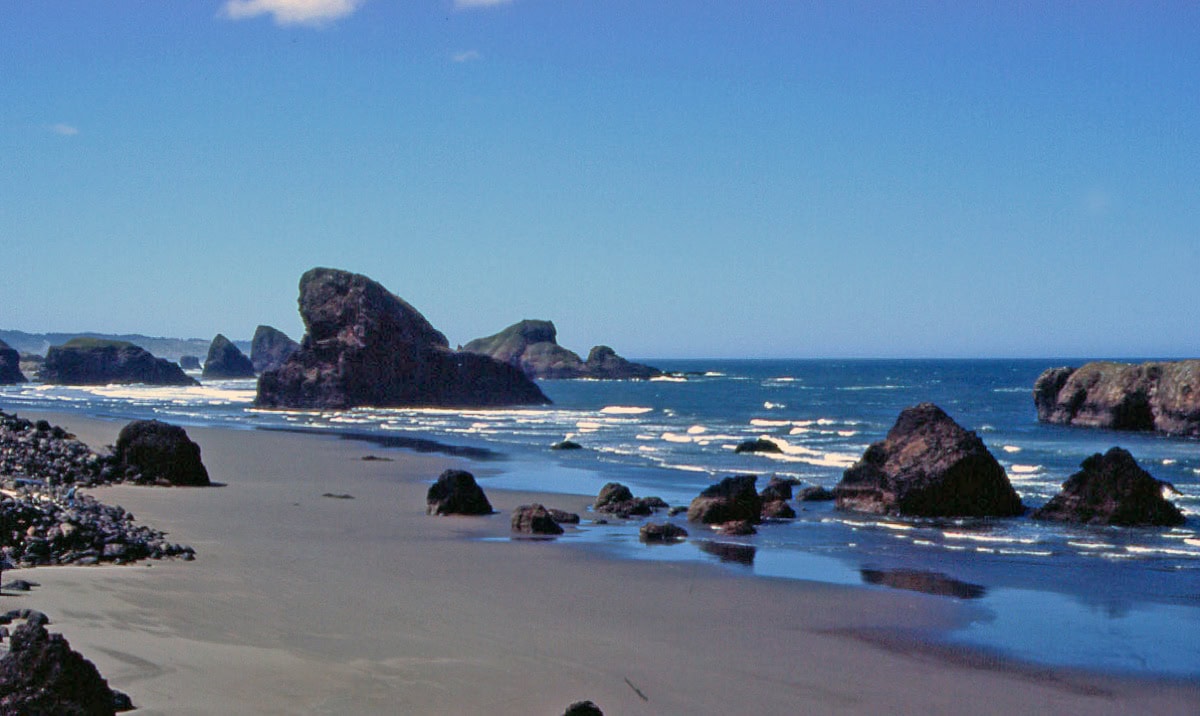
If you love walking and want to spend a full day on your feet, the Coastal Trail is for you. The entire route stretches over 70 km along the park’s coastline, but you certainly don’t have to do the whole thing — it splits beautifully into sections.
The most popular sections:
- Crescent Beach → Enderts Beach (about 4 km) — an easy coastal walk with ocean views.
- Flint Ridge Section — a side route through the forest to the beach, beautiful and peaceful.
- Hidden Beach — accessible from the Coastal Trail, a small secluded beach surrounded by rocks. Romance level: 100. ☺️
The trail is well-marked, but the terrain is uneven in places and can be slippery — good hiking boots are essential. Don’t underestimate it — this isn’t a promenade.
10. Newton B. Drury Scenic Parkway — the driver’s alternative
Not everyone wants to (or can) walk the trails. If you have limited mobility, are travelling with small children, or simply want to see redwoods from the comfort of your car, Newton B. Drury Scenic Parkway is your answer.
This 16 km road branches off Highway 101 and runs right through Prairie Creek Redwoods. Trees stand close to the roadside, elk graze in the meadows, and you can pull over at numerous short trails along the way (many under 1 km). Think of it as Avenue of the Giants, just quieter and with less traffic.
Big Tree Wayside — one of the stops along the parkway — takes you to a tree that’s roughly 93 m tall and over 6.5 m in diameter. And it’s literally 100 metres from the car park. Probably the easiest giant tree you’ll ever visit.
11. Jedediah Smith Redwoods — the wildest corner of the park
Jedediah Smith Redwoods State Park at the northern end of the complex is the least developed part of the park — and that’s exactly what makes it so special. Seven percent of all remaining old-growth redwoods on Earth grow right here. Seven percent of ALL of them. In one place.
Named after the famous Wild West explorer, the park features dense, dark forests where the canopy is so intertwined that barely any light reaches the ground. The Smith River, which flows through the park, is the cleanest river in California — you could technically drink straight from it (though that’s not officially recommended).
Beyond Howland Hill Road (tip #6) and Simpson-Reed Trail (tip #7), I’d recommend Boy Scout Tree Trail — a 9 km trail (out and back) leading deep into the forest to the Boy Scout Tree and Fern Falls, a small waterfall surrounded by ferns. The trail is moderately challenging and less visited — a brilliant choice if you want the forest a bit more to yourself.
12. Klamath River Overlook — ocean and river views
Klamath River Overlook is a viewpoint where the Klamath River meets the Pacific Ocean, offering some of the best panoramic views in the entire park. You stand on a cliff high above the surf and watch the brown-green river water merge with the blue of the ocean.
The overlook is accessible from Requa Road (a turnoff from Highway 101 near the village of Klamath). The car park is small, but the spot is refreshingly uncomplicated — no long hike, no permit required. Just park and walk a few metres to the cliff edge.
It’s also a fantastic spot for whale watching, and on a clear day you can see miles of coastline in both directions. I’d recommend arriving in the late afternoon — the sunset over the ocean from here is breathtaking.
13. Trees of Mystery — a tourist attraction that’ll surprise you
Sure, Trees of Mystery is a paid commercial attraction and you might wonder if it belongs on this list. But you know what? We genuinely enjoyed it. 😁 Admission is $20/person (£16), which isn’t cheap, but you get an excellent SkyTrail — a gondola ride that lifts you high above the treetops for a completely different perspective on the forest.
There’s also a Native American museum on site (surprisingly well done and included with your ticket) and a trail featuring oddly shaped trees and cheesy-but-fun wooden sculptures. At the entrance stand enormous statues of Paul Bunyan and his blue ox Babe, and absolutely everyone takes a photo there. Yes, us too. Yes, it went on Instagram.
Trees of Mystery is on Highway 101 near Klamath, roughly halfway between Orick and Crescent City.
14. Trillium Falls Trail — a waterfall hidden in the forest
Trillium Falls Trail is another beautiful, easy trail (4.2 km loop) that leads to a small but photogenic waterfall tucked away in the redwood forest. The waterfall is about 3 metres tall — nothing earth-shattering, but set against a backdrop of mossy forest full of ferns and towering trees, it looks like something from a fantasy novel.
The trail starts off Davison Road (about 2 km from Highway 101) and is gently hilly but nothing strenuous. It’s popular with families and can be done in 1–1.5 hours. The car park fills up quickly in season — arrive in the morning.
The name “Trillium” comes from the trillium flower that blooms here in spring. White three-petalled flowers among green ferns — it’s a sight to behold.
15. Crescent Beach and Battery Point Lighthouse
To round off the tips, we’re heading to Crescent City — the town that serves as a base for the northern section of the park. It’s not going to win any beauty contests on its own, but it has two things worth stopping for.
Crescent Beach is a long, wide crescent-shaped beach (hence the name) with lovely views along the coastline. On a good day, you can spot harbour seals and sea lions resting on the rocks.
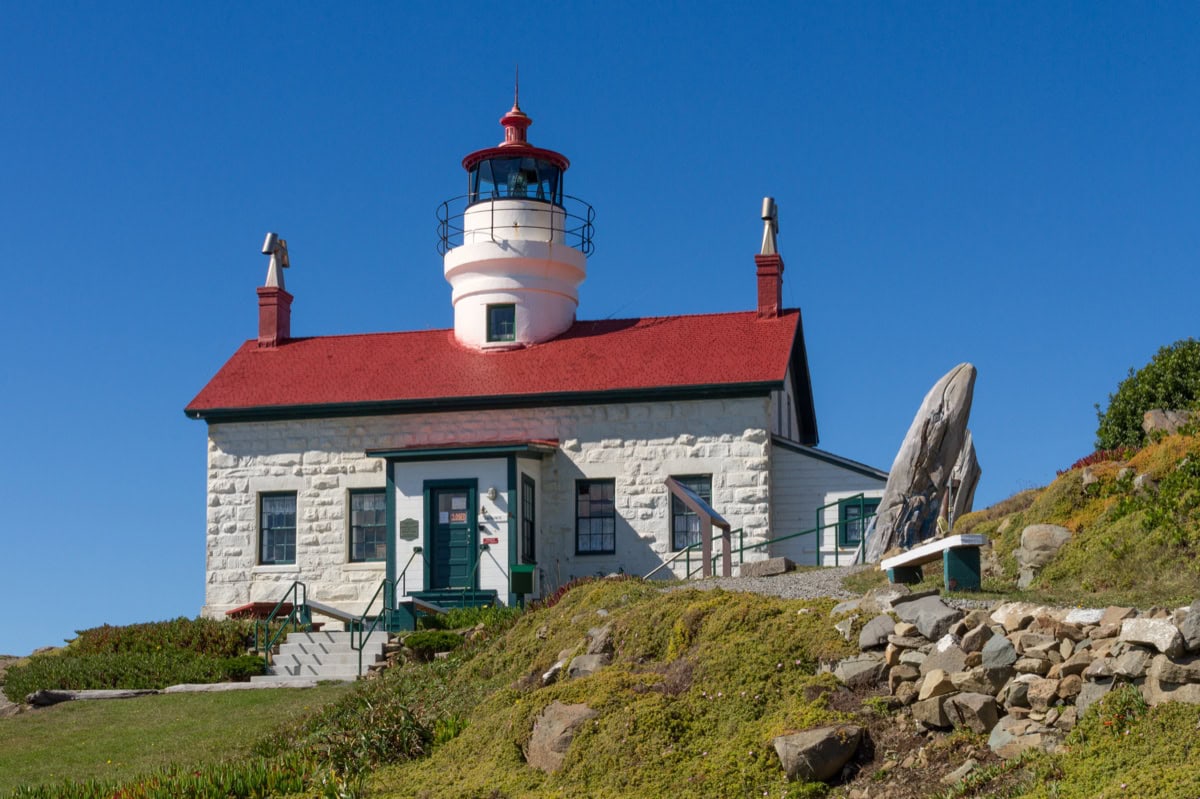
Battery Point Lighthouse is a historic lighthouse from 1856 built on a rocky island that you can only reach on foot at low tide. That’s the fun part — you need to keep an eye on tide times, because if you get the timing wrong, you either can’t get there or you can’t get back. 😅 A tour of the lighthouse costs $5 (£4) and the volunteers who run the tours have plenty of stories about hurricanes, the 1964 tsunami that devastated Crescent City, and life on a cut-off island.
Map of points of interest for your phone
Where to eat and drink near Redwood National Park
I’ll be honest — this isn’t a foodie destination. We’re in the remote far north of California and the restaurant selection reflects the size of the local towns. But you can definitely eat well, and there are a few pleasant surprises.
Crescent City
- Good Harvest Cafe — a lovely café serving breakfast and brunch made with local ingredients. Excellent omelettes and coffee. Probably the best breakfast spot in town.
- Chart Room — fish and seafood with harbour views. The clam chowder is outstanding. Main courses around $15–25 (£12–20).
- SeaQuake Brewing — a craft brewery with great burgers and local IPAs. If you’re into craft beer, you’ll be well happy.
Orick and surroundings
In Orick, the options are… let’s say limited. The best-known spot is Palm Cafe & Motel — a classic American diner with burgers and breakfasts. Nothing fancy, but after a full day hiking through the forest, anything tastes brilliant.
Picnic tip: Since restaurants are few and far between, I’d recommend stopping at a supermarket in Crescent City or Eureka and bringing food with you. Picnic tables are available at most trailheads and campgrounds. A sandwich in the forest among redwoods tastes better than any restaurant — tried and tested. ☺️
Eureka / Arcata (if taking the southern route)
Here the selection is much better:
- Brick & Fire Bistro (Eureka) — excellent wood-fired pizza and local wines.
- Restaurant 301 (Eureka, in Hotel Carter) — fine dining with a focus on local ingredients. A treat for foodies.
- Wildberries Marketplace (Arcata) — an organic shop with prepared food, great for stocking up for the road.
Practical tips and advice
How many days at Redwood National Park
For a basic tour of the main attractions, you’ll need a minimum of 2 days — one day for the Fern Canyon + Prairie Creek area, and another for Jedediah Smith + Howland Hill Road. Ideally, plan for 3–4 days, which gives you time for Tall Trees Grove, Avenue of the Giants, coastal trails, and a pace that this landscape truly deserves. This is not a place to rush.
What to pack
- Layers — even in summer, mornings can be 10 °C and afternoons 20 °C, and the fog can change the temperature in minutes
- Waterproof jacket — always, in any season
- Waterproof boots or water-friendly sandals (for Fern Canyon)
- Good hiking boots for the longer trails
- Insect repellent — mosquitoes and ticks are a real thing in the forest
- Torch/headlamp — the forest floor is dim even during the day and it gets dark early at the campgrounds
- More packing tips in our guide on how to pack a carry-on
Safety and wildlife
The park is home to black bears — they’re not as aggressive as grizzlies, but they still deserve your respect. Store food in bear boxes (available at campgrounds), make noise on the trail, and NEVER feed wildlife. More troublesome than bears, though, are ticks (Lyme disease is present in the area) and poison oak growing along the trails. Learn to identify it — “Leaves of three, let it be.”
Mobile signal and internet
Signal in the park is very limited to non-existent. In Crescent City and Orick it works fairly reliably, but as soon as you drive into the forest, expect to be offline. Download offline maps in advance (both Google Maps and Maps.me) as well as trail information. An eSIM from Holafly will help with connectivity in towns, but nothing will help in the deep forest.
Travel insurance and health
Definitely don’t travel to the USA without solid travel insurance — healthcare in America is astronomically expensive. One twisted ankle on a trail and you could be looking at thousands of dollars in bills. For shorter trips, have a read of our SafetyWing review.
Coast redwoods vs. giant sequoias — what you’re actually admiring
One of the most common questions is whether Sequoia National Park and Redwood National Park are the same thing. The answer: NO, and it’s an important distinction.
In Redwood National Park, you’ll find coast redwoods (Sequoia sempervirens) — the tallest trees on Earth. The tallest of them all, Hyperion, measures 115.9 metres (roughly the height of a 38-storey building). These trees thrive in the foggy belt of the northern California coast.
In Sequoia National Park (in the Sierra Nevada mountains, about 800 km further south) grow giant sequoias (Sequoiadendron giganteum) — the most massive trees on Earth by volume. General Sherman is “only” 84 m tall, but its trunk has a volume of over 1,400 m³. Comparing the two is like comparing a basketball player and a sumo wrestler — one is taller, the other is heavier.
Both species are remarkable, both parks are worth visiting, but they’re different parks in different parts of California.
And what about Hyperion? The world’s tallest tree does indeed grow somewhere in Redwood National Park, but its exact location has been officially undisclosed since 2022. The park introduced this measure after crowds of tourists began trampling the surrounding vegetation trying to reach it. Illegally accessing the protected zone around Hyperion carries a fine of up to $5,000 (approx. £4,000) and up to 6 months in prison. So please — don’t try to find it. Every tree in this park is equally awe-inspiring. ☺️
FAQ — Frequently asked questions about Redwood National Park
What makes Redwood National Park so special?
Redwood National Park protects nearly half of all remaining old-growth coast redwoods — the tallest trees on Earth. Some trees here exceed 100 metres in height and are between 500 and 2,000 years old. Beyond the redwood forests, you’ll find dramatic coastline, herds of Roosevelt elk, tide pools, and a fern-covered canyon where Jurassic Park was filmed. It’s one of the few places on the planet where you feel like you’ve stepped into a different geological era.
Where exactly is Redwood National Park located?
Redwood National and State Parks are located on the northern coast of California, along Highway 101, approximately 50 km south of the Oregon border. The park stretches in a narrow strip along the Pacific coastline for about 80 km from Crescent City in the north to Orick in the south. It falls within Del Norte County and Humboldt County in northwestern California.
What is the nearest town to Redwood National Park?
The nearest town is Crescent City (population around 7,000) on the park’s northern edge — you’ll find motels, restaurants, a supermarket, and petrol stations there. On the southern edge lies the small settlement of Orick with limited facilities. The larger towns of Eureka and Arcata (with an airport) are about 1–1.5 hours’ drive south of the park’s centre.
Are Sequoia National Park and Redwood National Park the same?
No! They’re two entirely different parks in different parts of California, about 800 km apart. Redwood NP is home to coast redwoods — the world’s tallest trees. Sequoia NP in the Sierra Nevada mountains is home to giant sequoias — the world’s most massive trees by volume. Both parks are well worth visiting, but mixing them up is like confusing London with Edinburgh — both brilliant, but completely different.
How much does it cost to enter Redwood National Park?
Entry to Redwood National Park is completely free — no tickets or America the Beautiful Pass required (though the pass comes in handy at other national parks on your trip). The only fees are: a $12 (£10) day-use fee at Gold Bluffs Beach, camping fees ($35/night, approx. £28), and the free but limited-number permits for Tall Trees Grove.
Can you visit Redwood National Park in winter?
Yes, the park is open year-round, but a winter visit comes with caveats. Expect frequent heavy rain, possible road closures (especially Davison Road to Fern Canyon) due to flooding and landslides, and limited accommodation and dining options. On the plus side — in winter you’ll have the park virtually to yourself, the forest in the rain is hauntingly beautiful, and the Roosevelt elk are just as photogenic in any weather.
How many days do I need for Redwood National Park?
Two days is the minimum, 3–4 days is ideal. In two days, you can cover the main highlights (Fern Canyon, Lady Bird Johnson Grove, Prairie Creek, Howland Hill Road). With three days, add Tall Trees Grove, Avenue of the Giants, and coastal trails. Four days lets you slow down, tackle longer hikes, and simply sit in the forest soaking up the atmosphere — which, honestly, is the best thing you can do here.
Tips and Tricks for Your Vacation
Don’t Overpay for Flights
Search for flights on Kayak. It’s our favorite search engine because it scans the websites of all airlines and always finds the cheapest connection.
Book Your Accommodation Smartly
The best experiences we’ve had when looking for accommodation (from Alaska to Morocco) are with Booking.com, where hotels, apartments, and entire houses are usually the cheapest and most widely available.
 🚗 Car rental on the roadVerified car rentals in California
Search with the DiscoverCars comparison engine — it compares prices from dozens of local and international rental companies, and most bookings come with free cancellation.
Compare car prices in California →Don’t Forget Travel Insurance
Good travel insurance will protect you against illness, accidents, theft, or flight cancellations. We’ve had a few hospital visits abroad, so we know how important it is to have proper insurance arranged.
Where we insure ourselves: SafetyWing (best for everyone) and TrueTraveller (for extra-long trips).
Why don’t we recommend any Czech insurance company? Because they have too many restrictions. They set limits on the number of days abroad, travel insurance via a credit card often requires you to pay medical expenses only with that card, and they frequently limit the number of returns to the Czech Republic.
Find the Best Experiences
Get Your Guide is a huge online marketplace where you can book guided walks, trips, skip-the-line tickets, tours, and much more. We always find some extra fun there!


