

Poland was always one of those “yeah, we’ll get round to it eventually” destinations for us. You know how it is — it’s right on your doorstep, so you keep putting it off because “we can go anytime.” And then you finally make the trip and think: why on earth didn’t we come sooner?! 😅
My partner Lukáš and I have visited Poland several times over the past few years, and it’s surprised us every single time. Kraków blew us away with its atmosphere, Zakopane won us over with its mountains, in Wrocław we hunted tiny bronze gnomes all over the city (yes, literally), and in Gdańsk we couldn’t tear ourselves away from the harbour. And don’t even get me started on the food — Polish pierogi, żurek, and oscypek are probably the reason we keep going back. 😁
We’ve put together a complete 7-day Poland road trip itinerary that takes you from south to north — from Kraków through the mountains, historic cities, all the way to the Baltic Sea. I’ll share where to stay, where to eat, what not to miss, and what to watch out for. Get ready for a journey full of contrasts, because Poland can be romantic, raw, funny, and deeply moving — sometimes all at once.
TL;DR
- Route: Kraków → Wieliczka → Auschwitz → Zakopane → Wrocław → Warsaw → Gdańsk → Malbork → Hel Peninsula. Around 1,300 km in total.
- Best time to go: May–June or September. In summer (July–August) Zakopane and Gdańsk are packed with tourists, while winter makes some routes tricky due to weather.
- Budget for two for 7 days: Roughly €1,000–€1,400 (accommodation, food, fuel, entrance fees). Poland is still significantly cheaper than Western Europe.
- A car is a must. Trains and buses in Poland work well, but a road trip by car gives you the freedom to stop at the most beautiful spots along the way.
- Best experiences: Wieliczka Salt Mine, sunrise in the Tatras, gnome hunting in Wrocław, Gdańsk’s old town, Malbork Castle, and the beaches on the Hel Peninsula.
- Watch out: Book Auschwitz at least 2–3 weeks ahead (a month in peak season). Zakopane at weekends = traffic nightmare. Hel can be overcrowded in summer.
- Download the map of all recommended places straight to your phone — you’ll find the link in the article.
The full destination guide: Poland — guide and what to see
When to go on a Poland road trip and how to get there
Poland is a year-round destination, but for a road trip the sweet spot is definitely May, June, and September. Temperatures hover around 18–25 °C, tourist numbers are manageable, and the scenery is stunning — whether you’re heading to the Tatras or the coast.
July and August are fine too, but expect Zakopane to be bursting at the seams (especially at weekends), Gdańsk to be swarming with tourists, and accommodation prices to spike. If that’s your only option, it’s not the end of the world — just book everything well in advance.
Winter isn’t ideal for a road trip — some mountain passes can be tricky and many attractions have reduced opening hours. But if you fancy combining a road trip with skiing in Zakopane, why not — check out our article on skiing in Poland.
Getting there and transport
Flying from the UK is the easiest option. Budget airlines like Ryanair, Wizz Air, and easyJet operate regular flights from London, Manchester, Edinburgh, and other UK cities to Kraków, Warsaw, and Gdańsk. Return flights can often be found for under £50 if you book early. You can fly into Kraków and out of Gdańsk (or vice versa) for a convenient one-way trip.
Renting a car — once you arrive at Kraków or Warsaw airport, you can pick up a rental car right at the terminal. We’ve had consistently great experiences with DiscoverCars, which we use all over the world. Car hire in Poland is great value — you can get a small car from around €30–€50 per day.
Fuel costs around 6.2–6.8 PLN per litre in 2025 (roughly €1.45–€1.60), so for the entire 1,300 km road trip, budget around €120–€160 for fuel.
Motorways in Poland are largely free for passenger cars. The A4 section between Katowice and Kraków is tolled (around 30 PLN / €7), and there are a few other short tolled sections on the A2. You pay at toll booths by cash or card — no electronic vignettes or stickers needed for cars under 3.5 tonnes.
💡 TIP: If you don’t fancy driving the whole route back, fly into Kraków and out of Gdańsk (or the other way around) — a so-called open-jaw trip. Most car hire companies allow one-way rentals for a surcharge of around €20–€60.
Where to stay + how much does a Poland road trip cost
Poland remains one of the most wallet-friendly countries in Europe. Accommodation, food, and entrance fees are significantly cheaper than in the UK — and the quality is often just as good, if not better.
Estimated budget for 7 days for two
| Item | Estimated cost |
| Accommodation (7 nights, mid-range) | €320–€560 |
| Food (eating out twice a day) | €200–€320 |
| Fuel (approx. 1,300 km) | €120–€160 |
| Entrance fees & activities | €120–€200 |
| Tolls & parking | €20–€40 |
| TOTAL | approx. €800–€1,280 |
A main meal in Poland costs around 25–50 PLN per person (€6–€12), while dinner at a nicer restaurant runs 50–90 PLN (€12–€21). Pierogi typically cost 20–30 PLN (€5–€7) and the portions are enormous. A beer in a restaurant is 10–16 PLN (€2.30–€3.70). Absolute bargain. 😁
I’d recommend booking accommodation in advance — especially Kraków, Zakopane, and Gdańsk sell out fast in peak season. You’ll find specific tips under each day of the itinerary.
Here’s an overview of the entire route — where you’ll drive and where you’ll sleep each night.
| Day | Route & transfer | Where to sleep |
|---|---|---|
| 1 | Arrive, explore Kraków on foot — Rynek, Wawel, Kazimierz | Kraków |
| 2 | Kraków → Wieliczka → Auschwitz → Zakopane (~2.5 h total) | Zakopane |
| 3 | Zakopane — Tatras (Morskie Oko) and Krupówki | Zakopane |
| 4 | Zakopane → (Częstochowa) → Wrocław (~4–4.5 h) | Wrocław |
| 5 | Wrocław → Warsaw (~3.5 h) | Warsaw |
| 6 | Warsaw → Malbork Castle → Gdańsk (~4.5 h) | Gdańsk |
| 7 | Gdańsk → Hel Peninsula (~1.5–2 h) | Hel / Gdańsk |
Day 1. Kraków — a royal city that won’t let you go
The first day of your Poland road trip belongs to Kraków, and trust me, it’ll be love at first sight. This city has a completely unique energy — it’s majestic yet incredibly laid-back. You can sit in the enormous main square with a coffee in hand, gaze at St. Mary’s Basilica, and feel like you’ve stepped into a fairy tale.
Start your day at Rynek Główny — the main square, one of the largest medieval squares in Europe. In the centre stands the Cloth Hall (Sukiennice), where you can browse stalls selling traditional souvenirs. Beneath the Cloth Hall there’s also an underground museum well worth a visit — an interactive exhibition about medieval Kraków where you walk below street level. Buy tickets online to avoid queues.
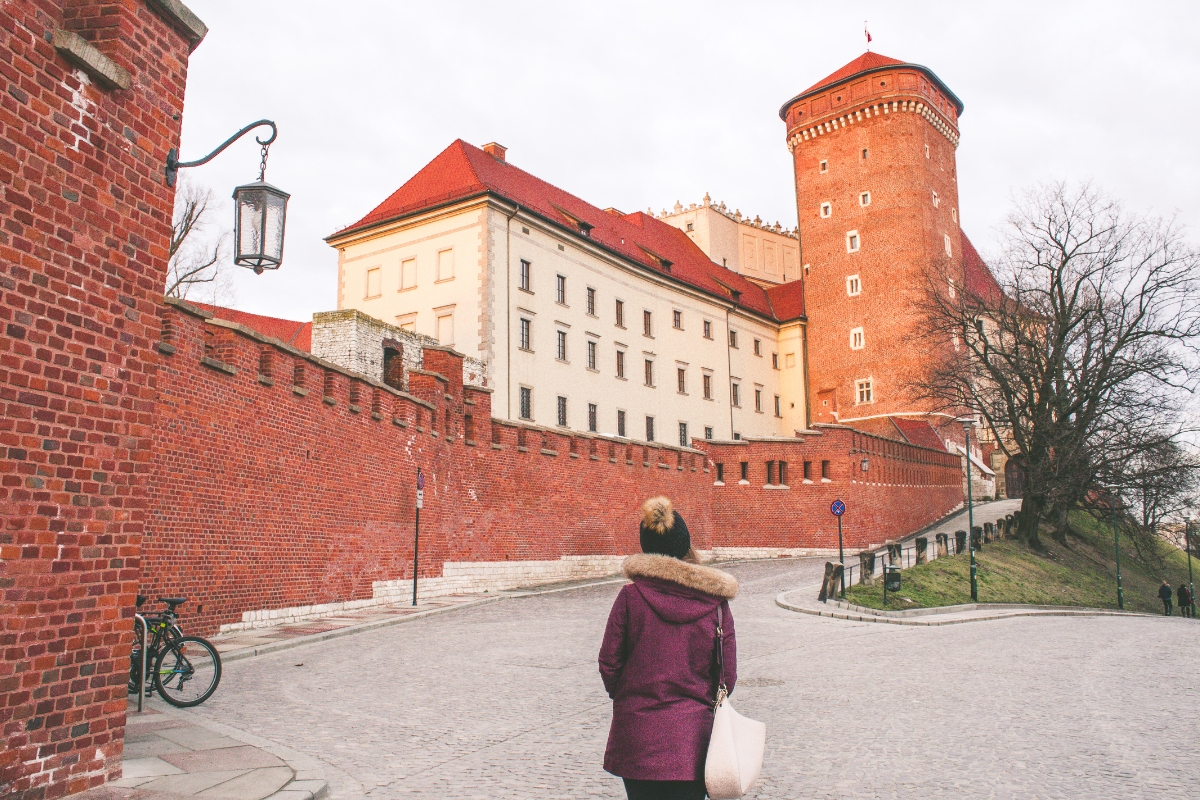
From there, head to Wawel — the royal castle perched on a hill above the Vistula river. Wawel is to Poles what Windsor Castle is to the British, only (in my humble opinion) considerably more atmospheric. Explore the cathedral, the royal chambers, and especially the gardens with views over the river. You can easily spend 2–3 hours at Wawel.
After lunch, wander through the Jewish quarter of Kazimierz. This is where Kraków reveals its other face — street art, hipster cafés, vintage shops, and layers of history. Visit the Old Synagogue and stroll along Szeroka Street. If you’ve seen Schindler’s List, you’ll get goosebumps here.
In the evening, treat yourself to a walk along the Vistula riverbank — especially at sunset, it’s absolutely gorgeous. And if you’ve still got energy, Kraków’s nightlife around Stolarska and Floriańska streets probably won’t let you go before midnight. 😅
Accommodation tip: For excellent apartments with breakfast, check out K4 APARTHOTEL KRAKÓW. Also great are Avium Old Town Apartments. If you don’t mind hostels, you’ll find budget accommodation right in the centre at Greg&Tom Beer House Hostel.
Where to eat in Kraków
- Starka — superb Polish cuisine with a modern twist, excellent pierogi and steak tartare. Book ahead.
- Milkbar Tomasza — an authentic Polish “bar mleczny” (milk bar), where you can have lunch for 25–35 PLN (€6–€8). A truly local experience.
- Café Camelot — a cosy little café tucked away in an alley, perfect for an afternoon coffee and homemade cake.
- Plac Nowy in Kazimierz — baked “zapiekanka” baguettes from a hatch for just a few złoty. An unmissable stop.
Where to stay in Kraków
In Kraków, I’d recommend staying in the centre or in Kazimierz — both are within walking distance of the main sights, and you won’t need a taxi in the evening. A double room in a mid-range hotel runs 250–500 PLN per night (€60–€120).
Day 2. Wieliczka and Auschwitz — two worlds in one day
I know, it’s a demanding combination. An underground wonder in the morning, a place that cuts you to the bone in the afternoon. But logistically it makes sense, and both of these excursions from Kraków are absolute musts.
Morning: Wieliczka Salt Mine
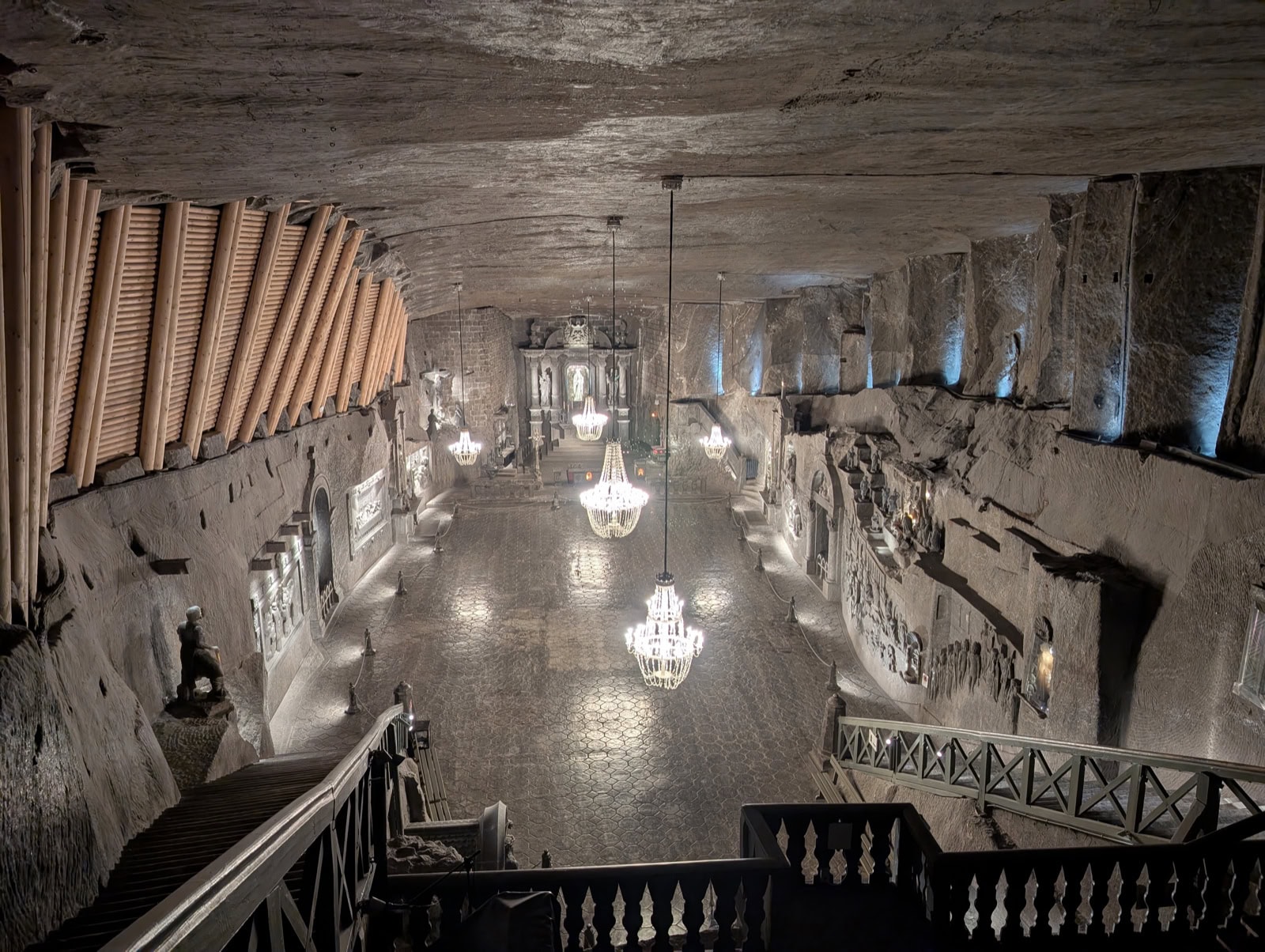
Wieliczka is just a 15-minute drive from Kraków, and the salt mine is one of the most visited attractions in all of Poland. And rightly so — it’s absolutely fascinating. You descend 135 metres underground and walk through corridors, chapels, and caverns that miners carved out of the rock salt over centuries. The highlight is the Chapel of St. Kinga — a huge underground hall with chandeliers made of salt, sculptures made of salt, floors made of salt… everything salt. 😁
The tour lasts about 2.5–3 hours and covers roughly 3.5 km of tunnels. The temperature underground is a constant 14 °C, so bring a jumper even if it’s boiling outside.
💡 TIP: Buy your tickets exclusively online and well in advance — at least a week, in peak season preferably a month. The queues on-site are horrendous and tour capacity is limited. Admission is 120 PLN per person (around €28) with a guide.
Afternoon: Auschwitz-Birkenau
From Wieliczka, continue by car to Oświęcim (about 1 hour). Visiting Auschwitz-Birkenau is something you simply cannot prepare for. You can read hundreds of articles and books, but until you stand there, you have no idea. We both walked out in complete silence.
Touring both camps (Auschwitz I and Auschwitz II-Birkenau) takes 3–4 hours. I’d strongly recommend getting a guide — it adds enormous context. Guided tours in English must be booked in advance on the official website. In peak season, available slots sell out a month ahead.
After the visit, give yourself some time to process — there are cafés in the area where you can sit quietly. Then head towards Zakopane (about 2 hours’ drive), stopping for dinner anywhere along the way — Polish roadside eateries are surprisingly good.
Where to stay
Drive straight to Zakopane in the evening — the journey from Oświęcim takes about 1.5–2 hours. If the timing doesn’t work out, you could spend another night in Kraków and head to Zakopane in the morning.
Day 3. Zakopane — Poland’s Alps with oscypek in hand
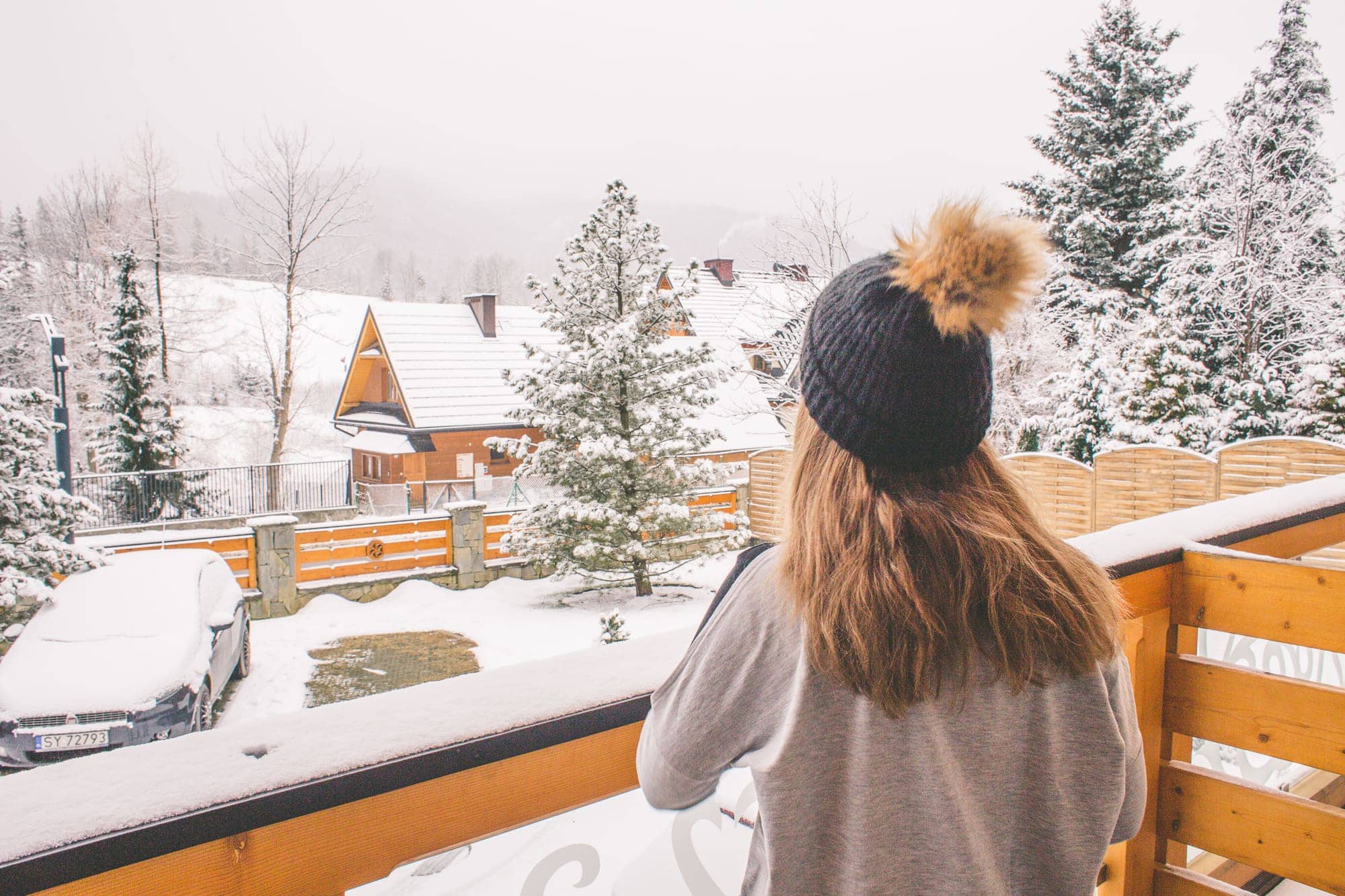
Zakopane is a different world entirely. Imagine an alpine village nestled among soaring mountains, where someone on every corner is offering you smoked cheese (oscypek), folk music fills the air, and you can hike up to a breathtaking mountain ridge in just a few hours. All for a fraction of what you’d pay in the Swiss or Austrian Alps.
Morning: Tatras and hikes
If you love hiking (and if you’re on a Poland road trip, you probably do 😉), Zakopane is paradise. Here are my top trail recommendations:
- Morskie Oko — the most famous hike in the Polish Tatras. The trail to this mountain lake is about 9 km one way, but it’s easy-going and doable for anyone. The lake itself is breathtaking. Allow 5–6 hours round trip. Set off early (ideally 7:00 AM) to beat the crowds.
- Giewont — a tougher climb to the iconic peak with its summit cross (1,894 m). Gorgeous views, but with some exposed sections and chains. For experienced hikers only.
- Dolina Kościeliska — a quieter valley with caves, ideal if you want nature without the crowds.
💡 TIP: Head to Morskie Oko on a weekday. At weekends it’s literally a queue of people. And don’t forget proper hiking boots — check out our guide to the best hiking boots.
Afternoon: Krupówki and oscypek
After your hike, stroll along the main pedestrian street Krupówki — it’s a bit kitschy, a bit touristy, but also a bit magical. Buy some oscypek (smoked sheep’s cheese) straight from the highland folk, grab a hot chocolate, and soak up the atmosphere. You’ll also find plenty of restaurants along Krupówki serving traditional Góral cuisine.
If you have time left, take the cable car up to Gubałówka — the panoramic views of the Tatras from up there are fantastic, especially on a clear day.
Where to eat in Zakopane
- Karczma Stek Chałupa — Góral cuisine in an authentic setting with enormous portions. The kwaśnica (sauerkraut soup) here is excellent.
- Gazdowo Kuznia — grilled oscypek, sausages, everything cooked over an open flame. Simple perfection.
- Café Górka — if you’re after speciality coffee in Zakopane (yes, it does exist), this is your spot.
Where to stay in Zakopane
I can highly recommend Villa 11 Folk & Design, which had a charming atmosphere along with a meditation room with loungers, a sauna, and a dining area where snacks, tea, and coffee were available 24 hours a day.
Our accommodation tips: Hotel Sabała (a traditional hotel right on Krupówki with sauna and pool).
Day 4. Transfer to Wrocław — the journey is the destination
Today involves a longer drive — from Zakopane to Wrocław it’s roughly 4–4.5 hours (about 380 km). That might sound like a lot, but the route passes through beautiful Polish countryside, and you can break it up with a stop along the way.
Stop along the way: Częstochowa (optional)
If you’re interested in Poland’s spiritual side, stop in Częstochowa — it lies roughly halfway along the route. The Jasna Góra monastery, home to the famous painting of the Black Madonna, is the most important pilgrimage site in Poland. Even if you’re not religious, the atmosphere of this place is deeply impressive. A visit takes about an hour.
Afternoon/evening: Wrocław — city of gnomes
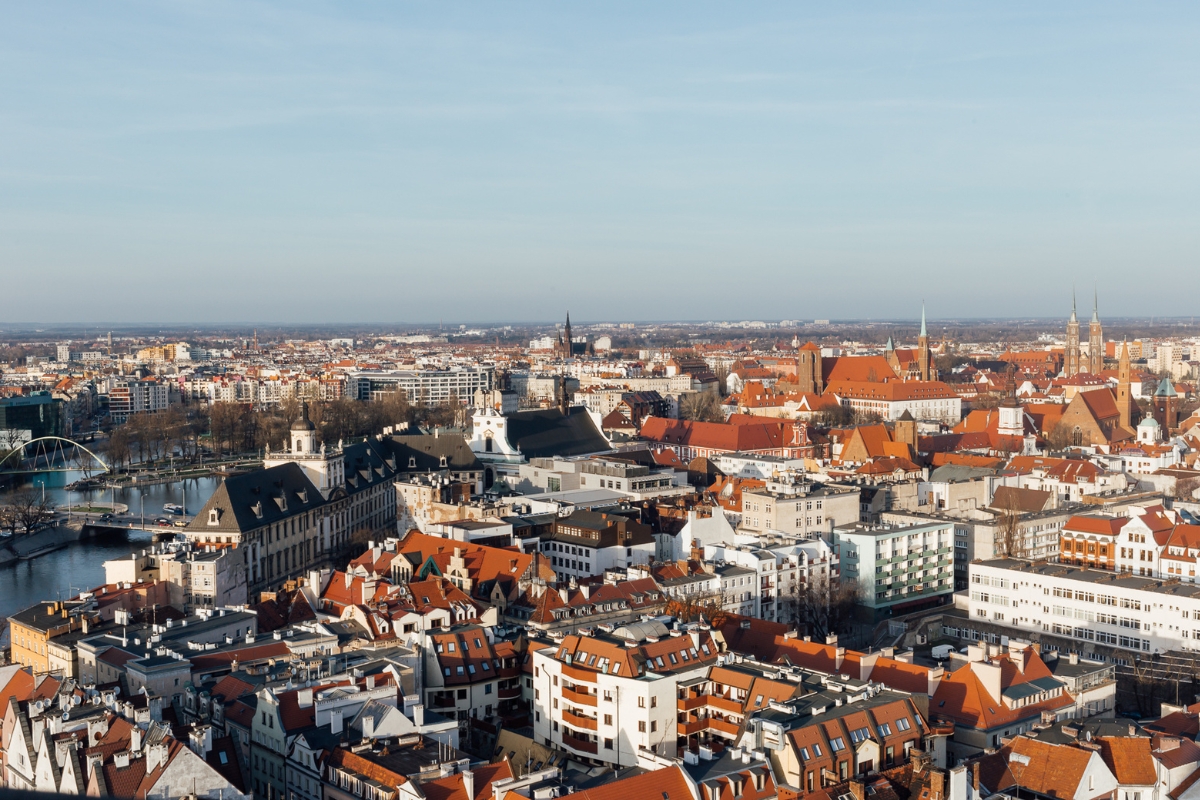
You’ll arrive in Wrocław in the afternoon, and the city will draw you in immediately. The Rynek (main square) is colourful, lively, and enormous. Take a stroll, sit on a café terrace, and watch the world go by.
Then get stuck into gnome hunting! Yes, Wrocław is famous for hundreds of tiny bronze gnomes (krasnale) scattered throughout the city. They were originally created as a symbol of an opposition movement and there are now over 300 of them. We found about twenty in a single evening, and it was brilliant fun — Lukáš became borderline obsessed. 😅 There’s even a gnome map you can download to your phone.
In the evening, wander over to Ostrów Tumski — the cathedral island, which is beautifully illuminated after dark. The streetlamps here are still lit by hand each evening by a lamplighter — it’s one of the last traditional city quarters in Europe where this still happens.
Where to eat in Wrocław
- Konspira — a restaurant with a retro socialist theme, surprisingly excellent food. A fun concept.
- Bernard — an elegant restaurant with modern Polish cuisine. A bit pricier, but worth it for a special dinner.
- Pierogarnia Stara Pączkarnia — as the name suggests, pierogi in every variation imaginable. Come hungry.
Where to stay in Wrocław
Stay in the centre — Wrocław is a compact city and you can walk everywhere from the old town. For affordable yet clean and stylish accommodation, we recommend Legnicka Business Apartments. Even cheaper and right in the centre are the Staycity Apartments Sukiennice 6, though parking there is pricier (around €18 per day), so they’re better value if you’re arriving by bus.
Day 5. Warsaw — the capital that rose from the ashes
From Wrocław to Warsaw it’s about 3.5 hours on the motorway. Leave in the morning so you have the whole afternoon and evening for Warsaw.
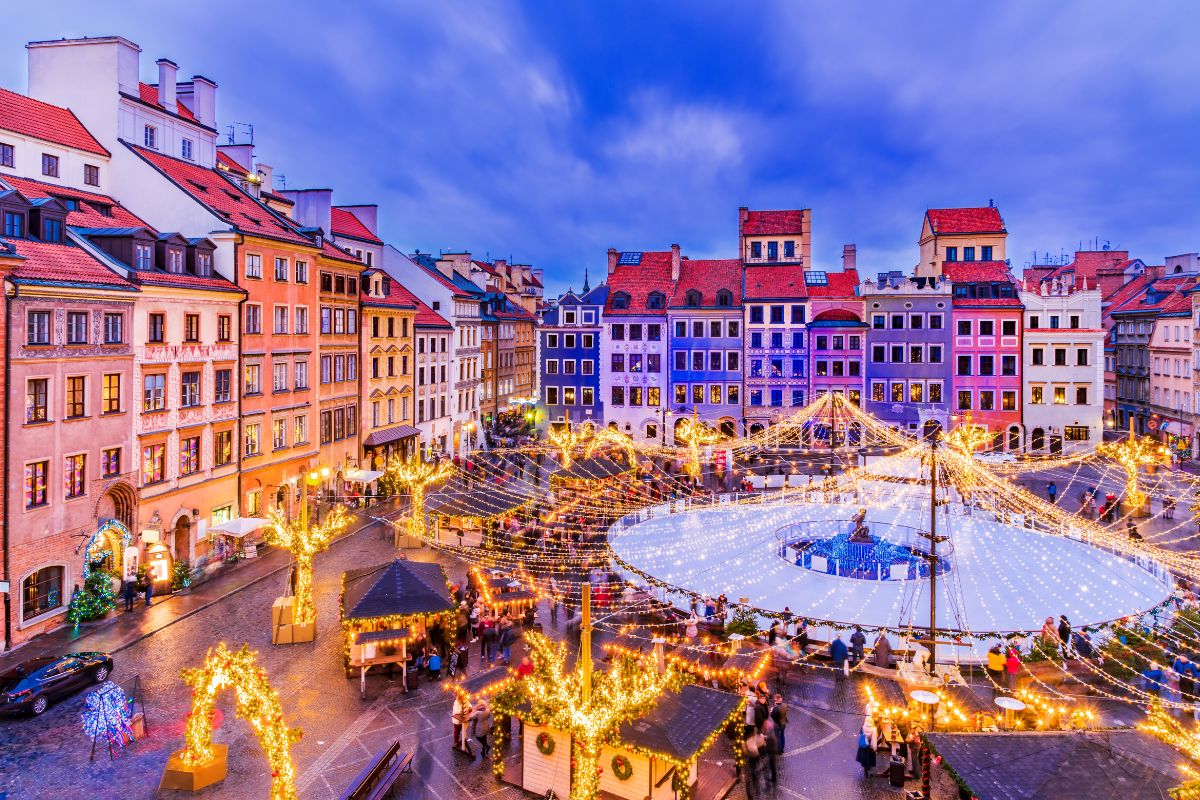
Warsaw is a city that many people underestimate. “Why would I go to Warsaw when Kraków is prettier?” is something we hear a lot. But Warsaw has something no other Polish city can match — a story of incredible resilience. The city was 85% destroyed during World War II, and the entire historic centre was painstakingly reconstructed. Walking through the Old Town, you’d never guess it’s essentially a “replica” — it’s absolutely stunning.
What to see in Warsaw in half a day
Start at Castle Square (Plac Zamkowy) with its iconic Sigismund’s Column. Walk through the Old Town — narrow lanes, colourful façades, small galleries. Stop at Old Town Market Square for a coffee.
Then head down Krakowskie Przedmieście — the grand boulevard lined with palaces, churches, and cafés. If you’re a Chopin fan, look out for the Chopin benches — interactive benches dotted around the city that play his compositions at the push of a button.
In the afternoon, visit the Warsaw Rising Museum — one of the best museums I’ve ever been to. Interactive, emotionally powerful, and brilliantly put together. Allow at least 2 hours. Admission: 25 PLN (around €6).
If there’s still time, pop up to the rooftop of the University of Warsaw Library — one of the most beautiful rooftop gardens in Europe, and completely free.
In the evening, grab a drink at one of the rooftop bars around Nowy Świat street — the views over the illuminated city are fantastic.
Where to eat in Warsaw
- Zapiecek — a chain of restaurants specialising in pierogi. Simple, fast, cheap, and delicious. Ideal for lunch.
- Warszawa Wschodnia — modern Polish cuisine in an industrial space. Great for dinner.
- Hala Koszyki — a food hall with dozens of stalls. From sushi to burgers to Polish classics. Perfect for a quick lunch when you can’t decide.

Where to stay in Warsaw
In Warsaw, I’d recommend the area around Nowy Świat or the Old Town — you’ll have everything within reach. Warsaw is slightly pricier than the rest of Poland, with a double room running 300–600 PLN per night (€70–€140).
Our accommodation tips: Hotel Gromada Warszawa Centrum (a reliable hotel just steps from Nowy Świat) or Hotel Indigo Warsaw Nowy Świat (a boutique design hotel right on the boulevard).
Map of points of interest for your phone
Day 6. Gdańsk and Malbork — Hanseatic gem and Teutonic fortress
From Warsaw to Gdańsk is roughly 4.5 hours by car. Leave early in the morning and stop at Malbork along the way — it sits right on the route and is one of the top highlights of the entire road trip.
Morning: Malbork Castle
Malbork (Marienburg) is the largest Gothic castle in the world. And that’s no exaggeration — when you stand in front of it, your jaw genuinely drops. This enormous brick complex was the headquarters of the Teutonic Knights, and its sheer scale is mind-blowing.
A tour of the castle takes 2.5–4 hours (depending on how deep you dive in). Audio guides are available in English. Admission: 55 PLN per person (around €13) in the main season, cheaper in winter.
💡 TIP: Arrive right when it opens (9:00 AM) to avoid the organised tour groups from Gdańsk that tend to show up around 10:00–11:00.
Afternoon and evening: Gdańsk
You’ll reach Gdańsk around lunchtime, and one of Poland’s most beautiful cities awaits. Gdańsk looks a bit like Amsterdam — tall narrow houses in a row, canals, harbour cranes. Except instead of tulips, the air smells of fried fish and amber shops line every street. ☺️
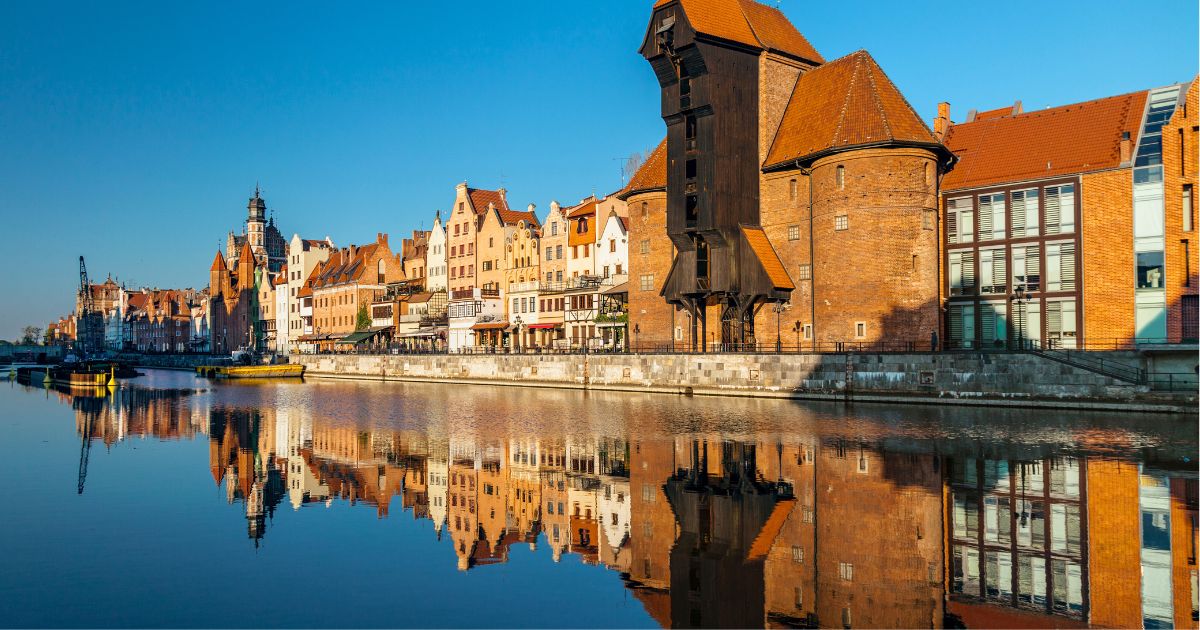
Start with a walk along Długi Targ (Long Market) — the main street of the Old Town with the iconic Neptune Fountain. Stroll down to the Motława river and admire the Żuraw — the medieval harbour crane that’s become the city’s symbol.
Then head to the European Solidarity Centre — a modern museum dedicated to the Solidarity movement and Lech Wałęsa. Even if modern history isn’t normally your thing, this museum is so brilliantly done that it’ll draw you right in. Admission: 25 PLN (around €6).
In the evening, have dinner on the Motława waterfront — the restaurants with views of the illuminated Old Town are painfully romantic.
Where to eat in Gdańsk
- Pierogarnia Mandu — the best pierogi in Gdańsk. Russian, meat, spinach — all superb.
- Goldwasser — a traditional Gdańsk restaurant right on the river. A bit pricier, but the atmosphere and views are well worth it. Order the fish — you’re by the sea, after all.
- Jopengasse — a craft beer bar with its own brewery and good food. Gdańsk has a surprisingly strong craft beer scene.
Where to stay in Gdańsk
In Gdańsk, I’d recommend staying in the Old Town or in neighbouring Sopot (a spa town 15 minutes away by car with a lovely beach promenade). For a first visit, it’s ideal to stay right in the historic centre or nearby. You’ll have all the main sights within walking distance, and you’ll love the atmosphere of the old lanes in the evening.
Accommodation tips
- Radisson Blu Hotel – right on the Motława river with views of the historic centre
- Hotel Gdańsk Boutique – an elegant hotel in the harbour district
Great mid-range option:
Mercure Gdańsk Stare Miasto – a reliable chain hotel close to the Old Town
For budget travellers:
- Olympic – old town – a clean, pleasant hostel where rooms start from 130 PLN per night with breakfast
- Trip & Hostel – a modern hostel near the centre with a shared kitchen
If you’d prefer accommodation away from the tourist bustle, consider neighbourhoods like Wrzeszcz or Oliwa. They have good public transport links to the centre and offer a quieter setting.
Day 7. Hel Peninsula — at the end of the world (almost literally)
The final day of your Poland road trip belongs to a place with perhaps the best name in the world — Hel. The Hel Peninsula is a narrow strip of land (just 200 metres wide in places!) stretching 35 km out into the Baltic Sea. On one side, a calm bay; on the other, the open sea with crashing waves. It’s one of the most beautiful places in all of Poland and the perfect way to end a road trip.
From Gdańsk to Hel it’s about 1.5–2 hours by car — the road runs through Władysławowo and then along a narrow road the length of the peninsula. If you’re going in summer, expect queues — in which case consider taking a ferry from Gdańsk or Gdynia (about 1.5 hours and a lovely experience in itself).
What to do on the Hel Peninsula
The town of Hel at the very tip of the peninsula is small, fishing-village-charming, and utterly delightful. Walk up to the lighthouse (a few PLN for the viewing platform), visit the Fokarium — a small seal rescue centre where you can see adorable grey seals (admission: 10 PLN / around €2.30). It’s mainly aimed at families with children, but let’s be honest — seals are cute at any age.
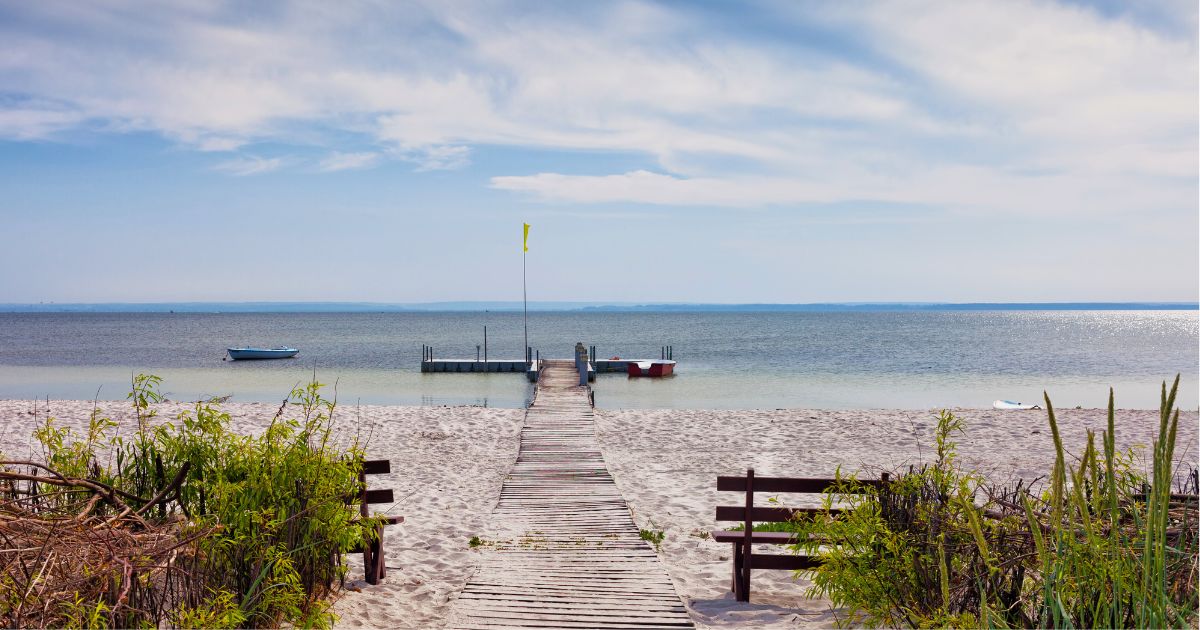
The main attraction of Hel, though, is the beaches. Wide, sandy, and surprisingly clean. On the bay side the water is calmer and warmer (relatively — it’s still the Baltic 😅), while on the open sea side it’s a paradise for kitesurfing and windsurfing. Hel is actually one of the best kitesurfing spots in Europe.
On the way back, stop in Jastarnia or Jurata — both towns have lovely beaches and pleasant fish restaurants.
If you want to know more about Hel, check out our detailed article on the Hel Peninsula.
Where to eat on Hel
- Kutter (Hel) — a fish restaurant right by the harbour. The fried cod and fish & chips are excellent. Simple, fresh, and reasonably priced.
- Maszoperia (Jastarnia) — a traditional fish bistro with sea views. Order the catch of the day.
- Café Hel — a little café at the end of the world. Coffee, cake, and a view of the lighthouse. What more could you want.
Where to stay on Hel
If you want to stay overnight on Hel (I’d recommend it — an evening walk along an empty beach at sunset is unforgettable), accommodation is simpler and more modest than in the bigger cities. Expect to pay 200–350 PLN per night (€47–€82) for a double room.
Our accommodation tips: Hotel Jastarnia (a classic hotel near the beach in Jastarnia) or Baltic Sands (a modern aparthotel right in the town of Hel).
Alternatively, you can head back to Gdańsk and stay there — it’s about an hour and a half by car.
Practical tips to finish
What to pack
Polish weather is unpredictable — even in summer it can be chilly in the Tatras and windy on the coast in Gdańsk. Pack layers. And if you’re planning hikes, decent boots are essential — check out our article on the best hiking boots. If you want to travel with carry-on luggage only, have a look at our guide to packing light.
Insurance
For a Poland road trip, standard travel insurance will do — Poland is in the EU, so with a UK Global Health Insurance Card (GHIC) you’re entitled to basic medical care. But I’d still recommend insurance — especially for activities in the Tatras. For shorter trips we go with AXA, for longer ones SafetyWing.
Internet and eSIM
Since the UK is no longer in the EU, mobile roaming charges may apply depending on your provider. Some UK networks still include EU roaming, but check your plan. If you want guaranteed data without surprises, have a look at our Holafly eSIM review — it’s an easy and affordable solution.
Parking in cities
Parking in Polish city centres is paid and can be a bit chaotic at times. In Kraków and Warsaw, I’d recommend using underground car parks (30–50 PLN per day, around €7–€12). In smaller cities like Wrocław or Gdańsk, the situation is somewhat easier. Most hotels offer parking for a fee or free of charge.
Useful apps for the trip
- Google Maps or Waze — navigation works brilliantly in Poland
- Jakdojade — a Polish app for public transport, handy if you need it
- Krasnale.pl or Wrocław Official — the gnome map for Wrocław 😁
Further reading: more articles about Poland
Want to explore some of these stops in more detail or extend your road trip? Here are some more ideas:
- What to see in Kraków — a detailed guide to the royal city
- Wrocław — the city of gnomes and colourful squares
- Gdańsk — a Hanseatic gem on the Baltic Sea
- Hel Peninsula — beaches and fishing villages at the end of the world
- Masurian Lakes — a great extension to the road trip heading northeast
- Theme parks in Poland — tips if you’re travelling with kids
Frequently asked questions about a Poland road trip
Before you hit the road, here are answers to the questions our readers ask most about a 7-day Poland road trip.
Is Poland safe for a road trip?
Yes, Poland is a very safe country. Roads are in good condition (especially the motorways), people are friendly, and crime rates are low. The only thing to watch out for is pickpocketing in the tourist centres of Kraków and Warsaw — but that applies to any major European city.
How much are tolls in Poland?
Most Polish motorways are free for passenger cars. The A4 section between Katowice and Kraków is tolled (around 30 PLN / €7) along with some shorter sections of the A2. You pay at toll booths with cash or card — no electronic vignettes or stickers are needed for cars under 3.5 tonnes.
Can you do a Poland road trip without a car?
In theory, yes — Poland has a solid rail network (PKP Intercity) and intercity buses (FlixBus, PolskiBus). The Kraków–Warsaw–Gdańsk route is easily doable by train. The tricky parts are Zakopane (bus from Kraków), Wieliczka (suburban train), and especially the Hel Peninsula (bus or ferry). It’s possible without a car, but you’ll lose a lot of flexibility and time.
When is the best time for a Poland road trip?
May–June and September are ideal — pleasant temperatures, fewer tourists, and lower accommodation prices. Summer (July–August) is fine too, but Zakopane and the coast will be packed. Winter is less suited to a road trip due to weather conditions and shorter days.
Do I need a motorway vignette in Poland?
No. Poland doesn’t have a vignette system like some other European countries. You only pay tolls at specific sections via toll booths. For passenger cars under 3.5 tonnes, you don’t need an e-TOLL registration either.
Is 7 days enough for a Poland road trip?
For the core route of Kraków–Zakopane–Wrocław–Warsaw–Gdańsk–Hel, 7 days is just about right, but you’ll be on the move. If you want more time to relax, I’d suggest 10–14 days — add the Masurian Lakes (an absolutely stunning area), Toruń (the gingerbread city), or wellness and thermal spas.
What if I’m travelling with children?
Poland is brilliant for a family road trip. The seal centre on Hel, Wieliczka Salt Mine, gnome hunting in Wrocław, the beaches in Gdańsk — kids will love it. And if you’re looking for theme parks, check out our guide to the best theme parks in Poland. The only thing I’d skip with young children is Auschwitz — it’s recommended for ages 14 and up.
Tips and Tricks for Your Vacation
Don’t Overpay for Flights
Search for flights on Kayak. It’s our favorite search engine because it scans the websites of all airlines and always finds the cheapest connection.
Book Your Accommodation Smartly
The best experiences we’ve had when looking for accommodation (from Alaska to Morocco) are with Booking.com, where hotels, apartments, and entire houses are usually the cheapest and most widely available.
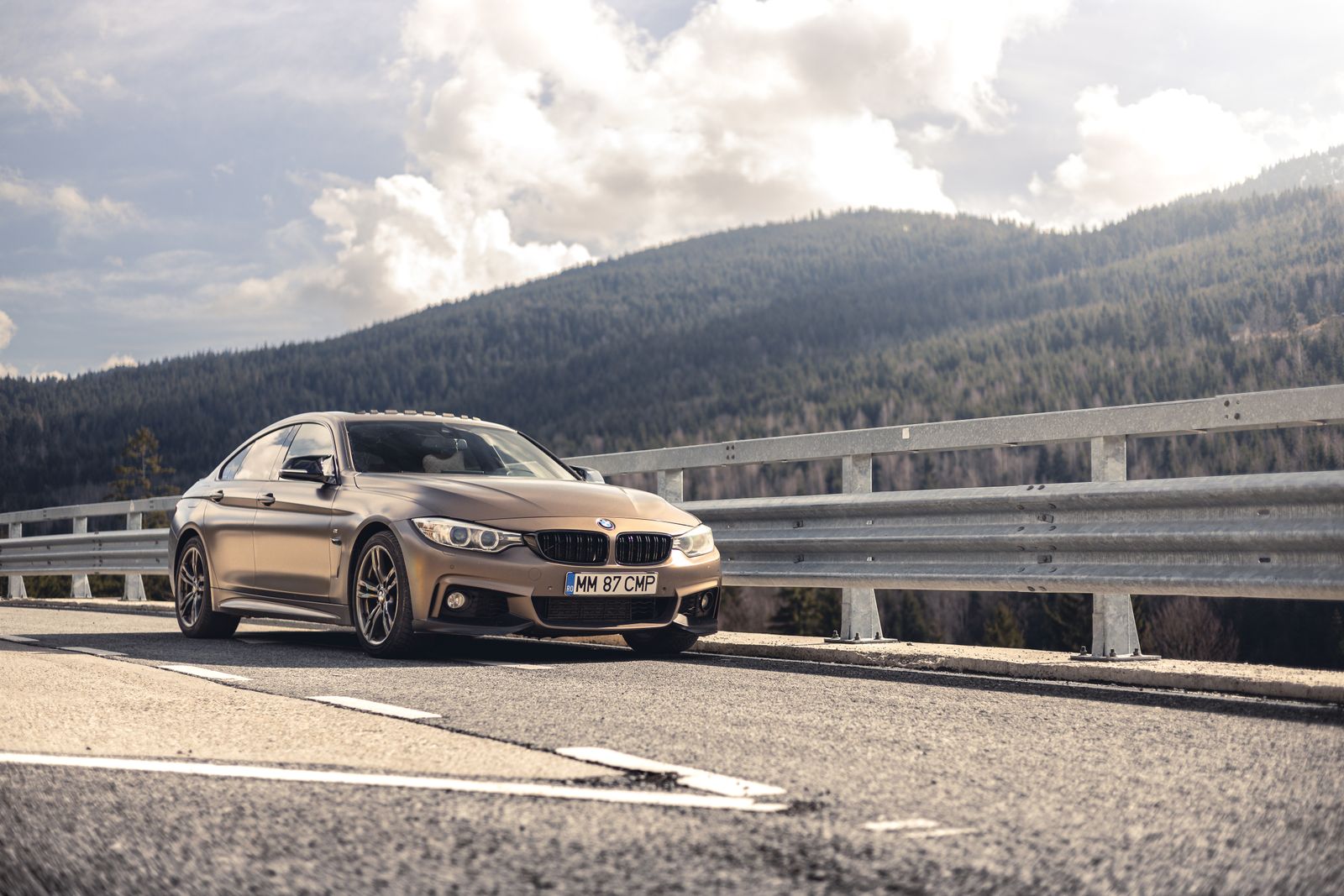 🚗 Car rental on the roadVerified rental cars in Poland
Search with the DiscoverCars comparison engine — it compares prices from dozens of local and international rental companies, and most bookings come with free cancellation.
Compare car prices in Poland →Don’t Forget Travel Insurance
Good travel insurance will protect you against illness, accidents, theft, or flight cancellations. We’ve had a few hospital visits abroad, so we know how important it is to have proper insurance arranged.
Where we insure ourselves: SafetyWing (best for everyone) and TrueTraveller (for extra-long trips).
Why don’t we recommend any Czech insurance company? Because they have too many restrictions. They set limits on the number of days abroad, travel insurance via a credit card often requires you to pay medical expenses only with that card, and they frequently limit the number of returns to the Czech Republic.
Find the Best Experiences
Get Your Guide is a huge online marketplace where you can book guided walks, trips, skip-the-line tickets, tours, and much more. We always find some extra fun there!


