

France is a country you simply can’t help falling in love with — even if you try not to. Just stop at any petrol station, order an espresso and a croissant, and suddenly you’ll understand why this nation is so fiercely committed to the art of living well.
And this France roadtrip route is an absolute belter. France has a brilliant motorway network (though you’ll pay for it — more on that later 😅), the distances between cities are manageable, and accommodation in smaller towns is surprisingly affordable. No gruelling eight-hour drives, no sleeping in the car at a service station — just a civilised road trip with wine and cheese at every turn.
In this article, you’ll find a complete itinerary for a 14-day roadtrip to France — from Paris through the Loire Valley châteaux, wine-soaked Bordeaux, sun-drenched Provence, all the way to the French Riviera and alpine Annecy. I’ll tell you where to stay, where to stop for lunch, how much it’ll all cost, and what you can happily skip. Let’s get into it!
TL;DR
- Route: Paris → Versailles → Loire Valley → Bordeaux → Dune du Pilat → Carcassonne → Provence → Marseille → Nice → Monaco → Annecy → Lyon
- Duration: 14 days, roughly 2,200 km in total
- Best time to go: May–June or September–October (fewer tourists, pleasant temperatures, lavender blooms in June)
- Car: Hire through DiscoverCars — a smaller car will do, as parking in France can be a real challenge
- Budget: Roughly €2,200–3,200 per person for 14 days (excluding flights), depending on accommodation style
- Tolls: Expect €80–120 for the entire route (paid at toll gates along the way)
- Must-see: Dune du Pilat, Marseille and its calanques, Provençal villages, Monaco for a few hours
- Food: France is a paradise for foodies — increase your food budget, it’s worth every penny
- Tip: Download offline maps and keep some cash in the car for toll gates
When to go on a France roadtrip and how to prepare
France is a year-round destination, but there are two ideal windows for a roadtrip. May and June are absolutely perfect — the days are long, nature is in full bloom, tourist crowds are still thin, and in Provence the lavender fields start flowering (full bloom is usually late June). September and early October are the second sweet spot — the heat has died down, the sea is still warm enough for swimming, and the grape harvest is in full swing.
Avoid July and August if you can. The whole of France goes on holiday (the French famously enjoy very generous annual leave), the Riviera is bursting at the seams, prices soar, and finding parking in Nice or Marseille becomes a nightmare. 😅 Also worth noting — in August, the motorways around Lyon regularly descend into absolute gridlock as all of Paris returns from the south.
Getting there and transport
Flights to Paris from London are plentiful and affordable — budget airlines like easyJet and Ryanair offer return flights from as little as £30–50, and in regular season you’ll typically pay £50–100. You’ll land at Charles de Gaulle (CDG), where you can pick up your hire car straight away.
For the return flight, I’d recommend flying out of Lyon — that way you avoid driving the car all the way back to Paris and the whole roadtrip forms a neat loop. Flights from Lyon to London are similarly priced to the Paris ones.
Hire a car for the entire trip. Lukáš and I have had consistently great experiences with DiscoverCars, which we use all over the world — they compare deals from all providers so you can pick the best price. For France, a smaller car is ideal (parking spaces in historic town centres are ridiculously tight) — and definitely go for an automatic, as manuals on steep hills and roundabouts will just add unnecessary stress. Expect to pay around €25–45 per day depending on the season.
Important: France has a toll system — you pay at gates as you go along the motorways. For our entire route, that comes to roughly €80–120. Most gates accept cards, but occasionally you’ll hit an older one that only takes coins. Keep a few euros in cash just in case. Petrol costs around €1.70–1.90 per litre.
eSIM: For mobile data while travelling, I’d recommend an eSIM from Holafly — it works reliably across all of France and saves you the hassle of buying a local SIM. Although EU roaming covers UK travellers post-Brexit to some extent, check your provider’s terms — an eSIM gives you peace of mind with fast data throughout.
Where to stay and how much 14 days in France costs
Accommodation is probably the biggest line item in your budget, but here’s the good news — outside Paris and the French Riviera, prices are surprisingly reasonable. Small hotels and B&Bs in Provence, the Loire Valley, or around Bordeaux offer gorgeous rooms with that quintessentially French charm for €60–100 a night. Paris, on the other hand, rarely drops below €120 for a decent central room, and Nice in season is much the same.
My recommendation: mix up your accommodation types. In Paris, stay centrally (you’ll spend more on the room but save on transport and time). In smaller towns, look for chambre d’hôtes (French B&Bs) or small boutique hotels. In the countryside, they’re often wonderful — and the owner will frequently recommend a restaurant where the locals eat.

Rough budget for 14 days (for two)
- Accommodation: €1,200–2,000 (13 nights, mix of cheaper and pricier spots)
- Car + petrol + tolls: €600–900
- Food and drink: €700–1,200 (if you eat out for both lunch and dinner)
- Tickets and activities: €150–250
- Total: Roughly €2,650–4,350 for two, or approximately £1,100–1,850 per person
Money-saving tip: France has a brilliant picnic culture — every town has markets, bakeries, and cheese shops. Grab a baguette, some camembert, cured ham, and a bottle of rosé, sit on a bench with a château view, and you’ve got a lunch for €10 for two that’s better than half the restaurants out there. 😁
Here’s an overview of the entire route — where you’ll drive and where you’ll sleep each night. If you have less time, check out our 7-day France roadtrip version.
| Day | Route and transfer | Where to sleep |
|---|---|---|
| 1–2 | Arrive in Paris, explore the city classics | Paris |
| 3–4 | Paris → Versailles → Loire Valley châteaux (~2.5 hrs) | Loire (Amboise) |
| 5–6 | Loire → Bordeaux (~4 hrs), Saint-Émilion | Bordeaux |
| 7–8 | Bordeaux → Dune du Pilat → Carcassonne (~4 hrs) | Carcassonne |
| 9 | Carcassonne → Provence, Avignon (~3 hrs) | Avignon |
| 10–11 | Provence — Aix-en-Provence → Marseille and Calanques | Marseille |
| 12 | Marseille → French Riviera, Nice and Monaco (~2.5 hrs) | Nice |
| 13 | Nice → Annecy (~4.5 hrs) | Annecy |
| 14 | Annecy → Lyon (~1.5 hrs), flight home | Lyon |
Days 1 and 2. Paris — a classic that never gets old
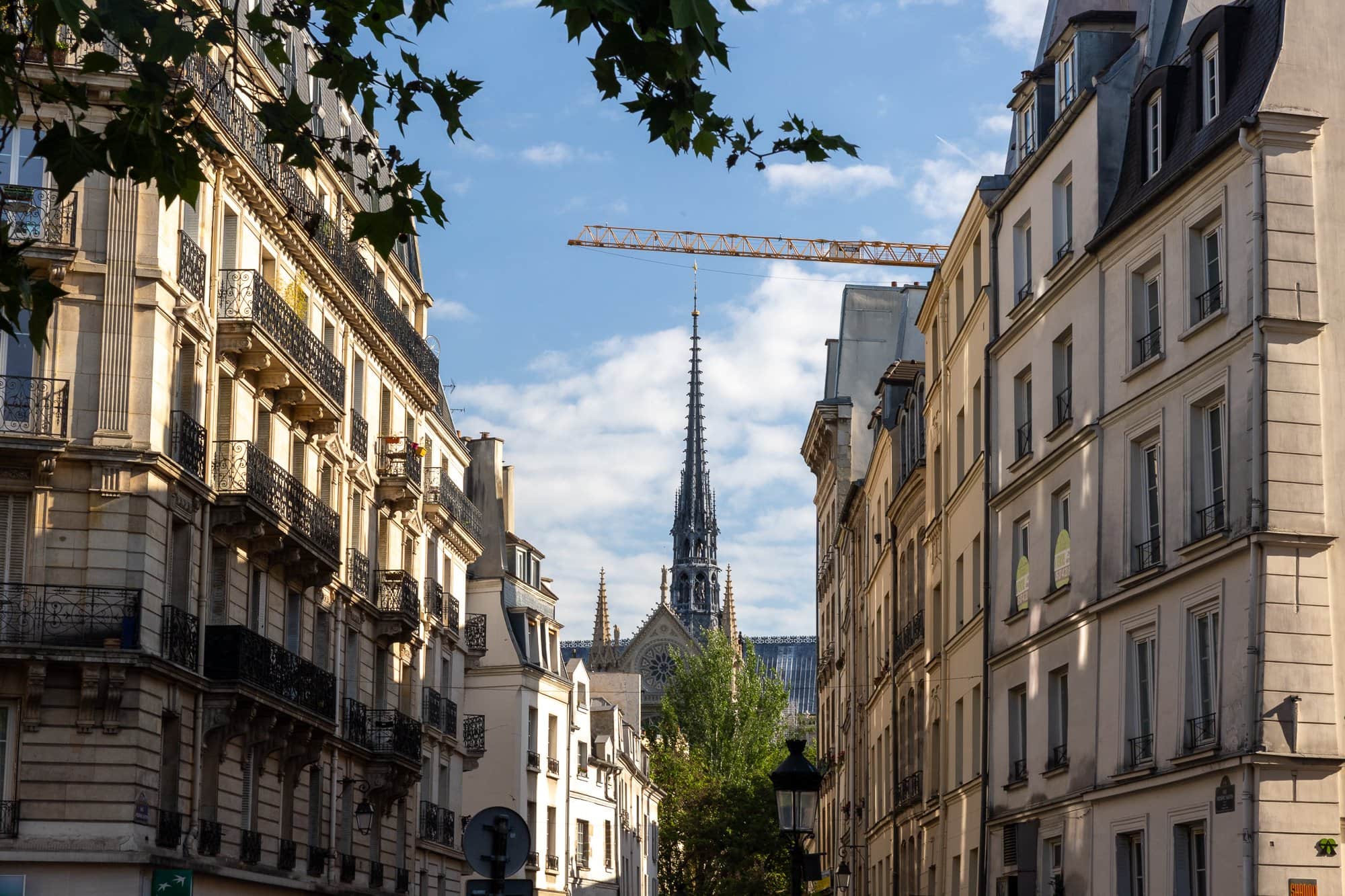
Dedicate your first two days to Paris. I know “Paris in two days” sounds bonkers — and it is — but on a roadtrip it’s the perfect taster. Don’t try to see everything; just soak up the atmosphere instead.
Day 1 — focus on the Left Bank of the Seine. Walk from Notre-Dame (restoration is still underway, but the surroundings are well worth it) through the Latin Quarter, stopping for a coffee at any café with a view of the cathedral. Continue through the Luxembourg Gardens — a gorgeous spot for a picnic or simply watching Parisians go about their day. In the afternoon, climb the Eiffel Tower (book tickets online in advance or you’ll queue for hours) or just admire it from Trocadéro — honestly, the view OF the tower is better than the view FROM it.
For dinner, head to Le Marais — arguably the liveliest and most charming neighbourhood in Paris. I’d recommend Breizh Café for incredible Breton galettes (savoury buckwheat crêpes) or Chez Janou — a legendary bistro with a phenomenal chocolate mousse (the portion is so enormous you genuinely won’t finish it 😅).
Day 2 — start in Montmartre with Sacré-Cœur, narrow streets full of artists, and a sweeping view over the whole of Paris. Then head to the Louvre (even if you only go for the Mona Lisa and Venus de Milo, that’s a few hours) or the Musée d’Orsay (Impressionists — Monet, Renoir, Van Gogh — much smaller and more pleasant than the Louvre). In the afternoon, stroll down the Champs-Élysées and past the Arc de Triomphe.
Dining tip: For great food at reasonable prices, steer clear of the tourist traps around the big landmarks. The moment you turn into a side street, prices drop by a third and quality shoots up tenfold.
Where to stay in Paris
Stay in Le Marais or near Bastille — it’s central, lively, and walkable to everything. Airbnb can sometimes be better value than hotels here, but places like Hôtel Jeanne d’Arc Le Marais (around €130–180/night) or Hôtel du Petit Moulin have a charm you won’t find elsewhere.
Day 3. Versailles and heading to the Loire
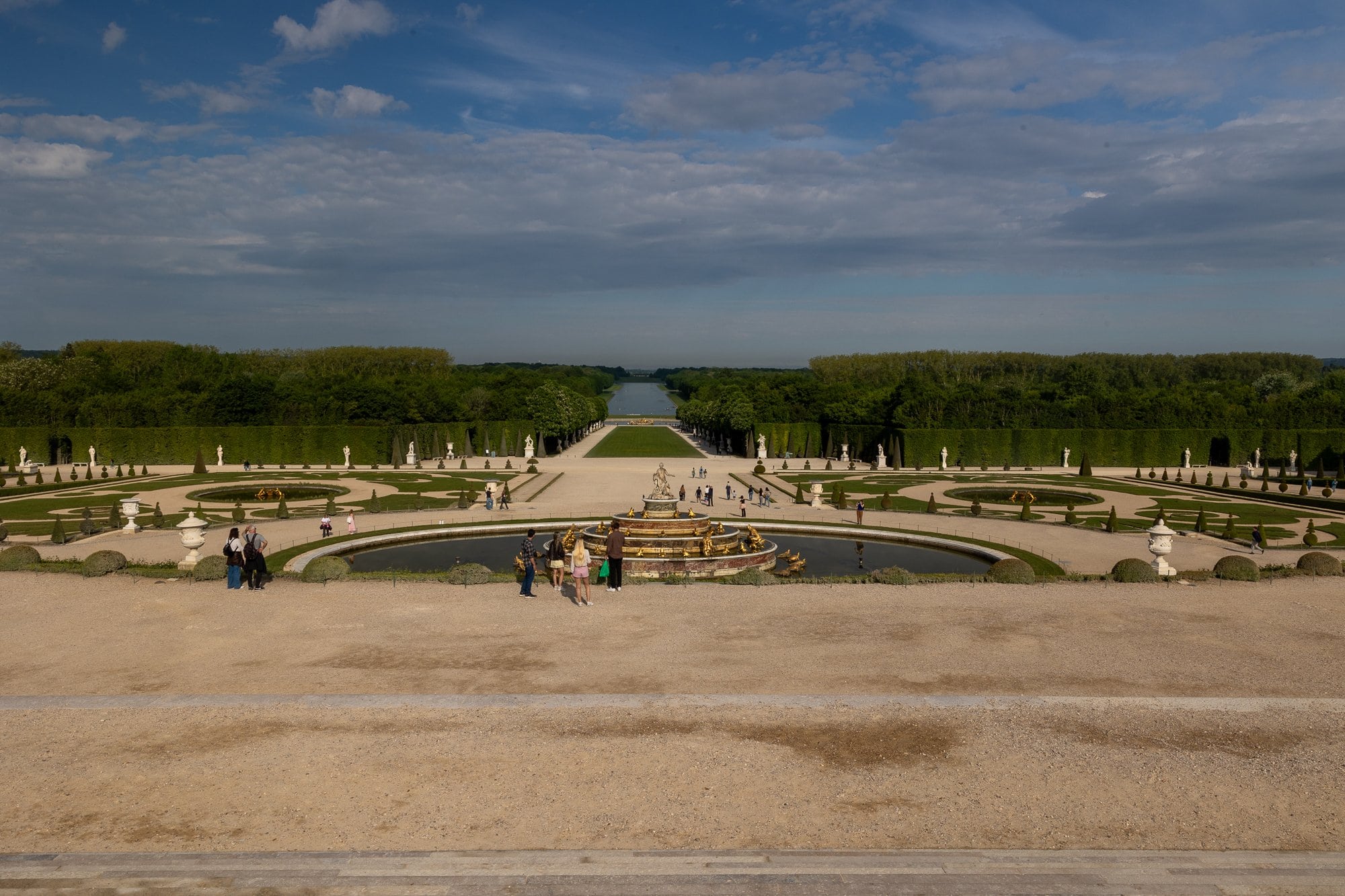
Start the morning with a trip to Versailles — it’s just 40 minutes by car from Paris (or take the RER train if you’d rather pick up the car later in the afternoon). The Palace of Versailles is… well, it’s absolutely jaw-dropping. There’s no other way to put it. The gardens, the Hall of Mirrors, the sheer megalomania of it all — you simply have to see it.
Practical tip: Buy tickets online in advance and ideally arrive as early as possible. By the afternoon, it’s absolutely rammed. The gardens are free (except on days when the fountains are running — that’s an extra charge, but well worth it). Allow 3–4 hours for the palace and gardens.
After lunch, hop in the car and head for the Loire Valley — it’s about 2.5 hours’ drive. Put on a good podcast, the road is easy-going and the landscape gradually shifts from urban sprawl to green meadows and vineyards.
You’ll arrive in the area around Amboise or Tours — both are excellent bases for exploring the Loire châteaux. If you get there with time to spare, an evening stroll through Amboise is lovely — a small town right on the Loire with a castle perched above the river.
Where to stay in the Loire
Stay in or around Amboise. A wonderful option is one of the small château hotels or chambre d’hôtes — Le Manoir Les Minimes right in Amboise has a terrace overlooking the river and is an absolute dream. For something easier on the wallet, Le Clos d’Amboise has a beautiful garden.
Day 4. Loire Valley châteaux — a real-life fairytale
Today is the most fairytale day of the entire roadtrip. The Loire Valley has over 300 châteaux (!!), but don’t worry — I’ve picked three that are guaranteed to blow you away.
Start the morning at Château de Chambord — arguably the most photogenic castle in the world. Enormous, white, with 440 rooms and the legendary double-helix staircase supposedly designed by Leonardo da Vinci. Explore the interiors, climb up to the roof (the views over the surrounding forests are breathtaking), and just take it all in — this château takes the breath away even from people who normally couldn’t care less about castles.
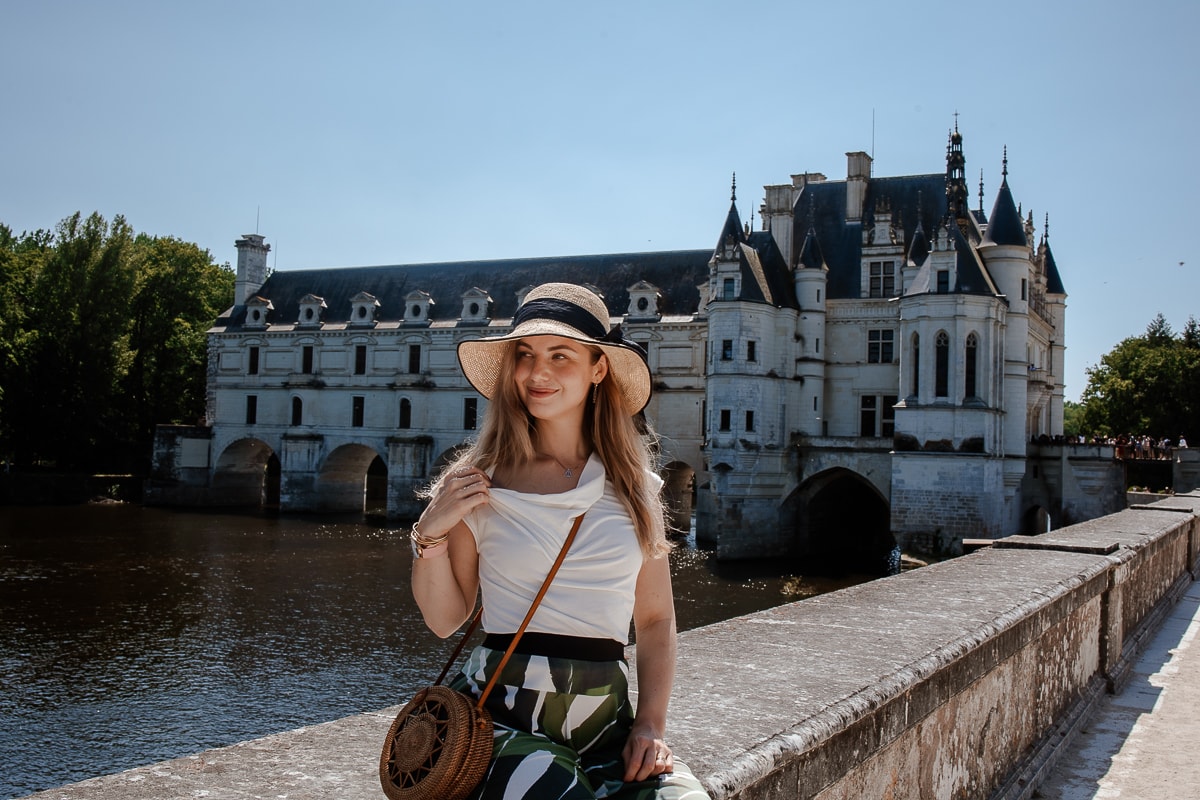
Your second stop is Château de Chenonceau — the “ladies’ château” that spans the River Cher. It’s smaller and more intimate than Chambord, the gardens are exquisite, and the whole castle arching over the water looks like something straight out of a storybook. Admission is around €15.
If you’ve still got time (and energy), stop by Château de Cheverny — a smaller but beautifully furnished château that served as the inspiration for Moulinsart in the Tintin comics.
For lunch, I’d recommend Le Shaker in Amboise — a modern bistro with an excellent menu du jour (set lunch for around €15–20), or pack a picnic right by Chambord — in the village near the château you can pick up fresh baguettes, cheese, and pâté.
Evening: If you’re staying in Amboise, head to L’Écluse for dinner — superb French classics made with local ingredients. The Loire is famous for its white wines — try a Vouvray, it’s fantastic.
Where to stay
Stay a second night in the Loire Valley in the same accommodation — two days is just right for this area.
Day 5. Driving to Bordeaux
Today is a transfer day — it’s about 3.5–4 hours on the motorway from the Loire to Bordeaux. But don’t think of it as dead time — French motorways are surprisingly pleasant and the scenery is lovely.
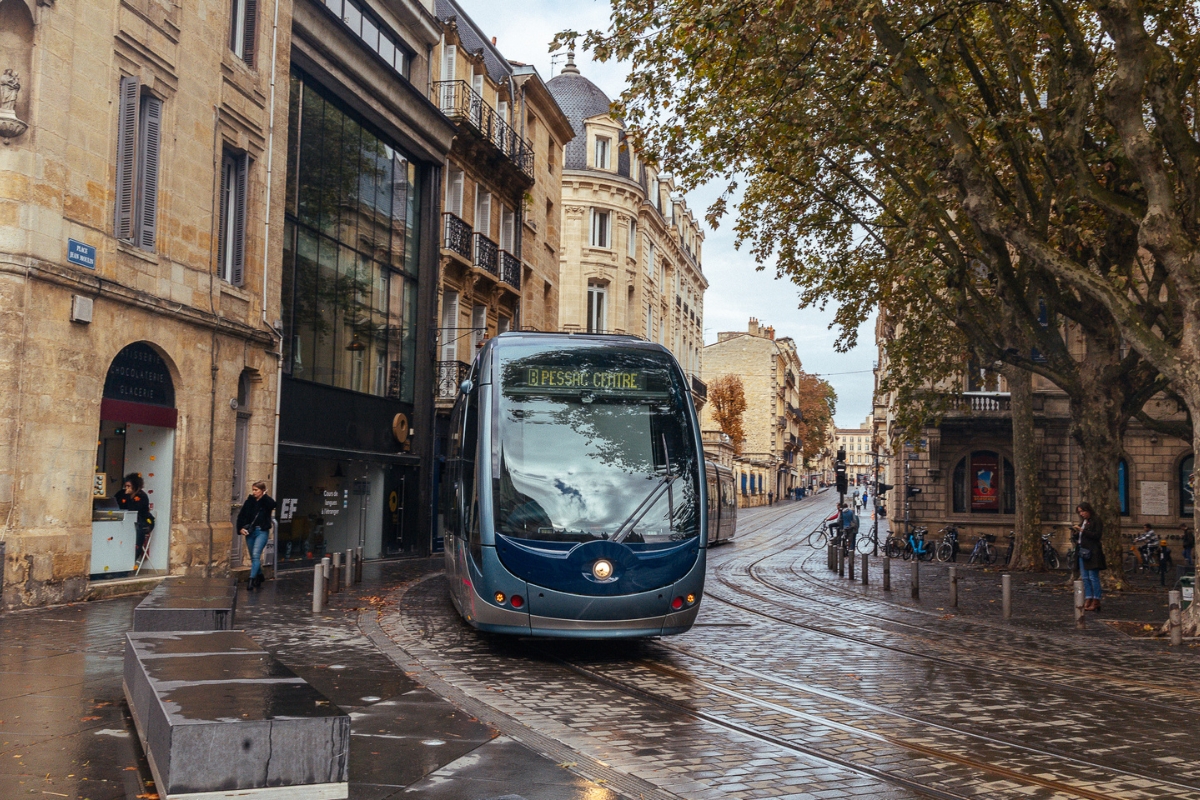
Arrive in Bordeaux around noon, check into your accommodation, and head out to explore the city. Bordeaux is absolutely stunning — the entire historic centre is a UNESCO World Heritage Site and has undergone a massive transformation in recent years. Along the River Garonne there’s a new promenade where locals and tourists stroll, and the famous Miroir d’eau (Water Mirror) is the world’s largest reflecting pool — essentially a giant puddle that mirrors the surrounding buildings while children (and adults 😁) splash about gleefully.
Spend the afternoon walking through the old town — Place de la Bourse, Cathédrale Saint-André, the little streets around Place du Parlement. For a coffee or a glass of wine, head to Rue Sainte-Catherine — the longest pedestrian street in Europe.
For dinner, I’d suggest Le Petit Commerce (brilliant seafood, but there’s always a queue — arrive before seven) or Café du Port on the waterfront.
Where to stay in Bordeaux
Stay in the centre, ideally around Chartrons (the hip neighbourhood full of antique shops and wine bars) or near Place des Quinconces. I’d recommend La Course Hotel (a modern boutique hotel, around €100–140/night) or Hôtel de Tourny with its lovely courtyard.
Day 6. Bordeaux — wine and Saint-Émilion
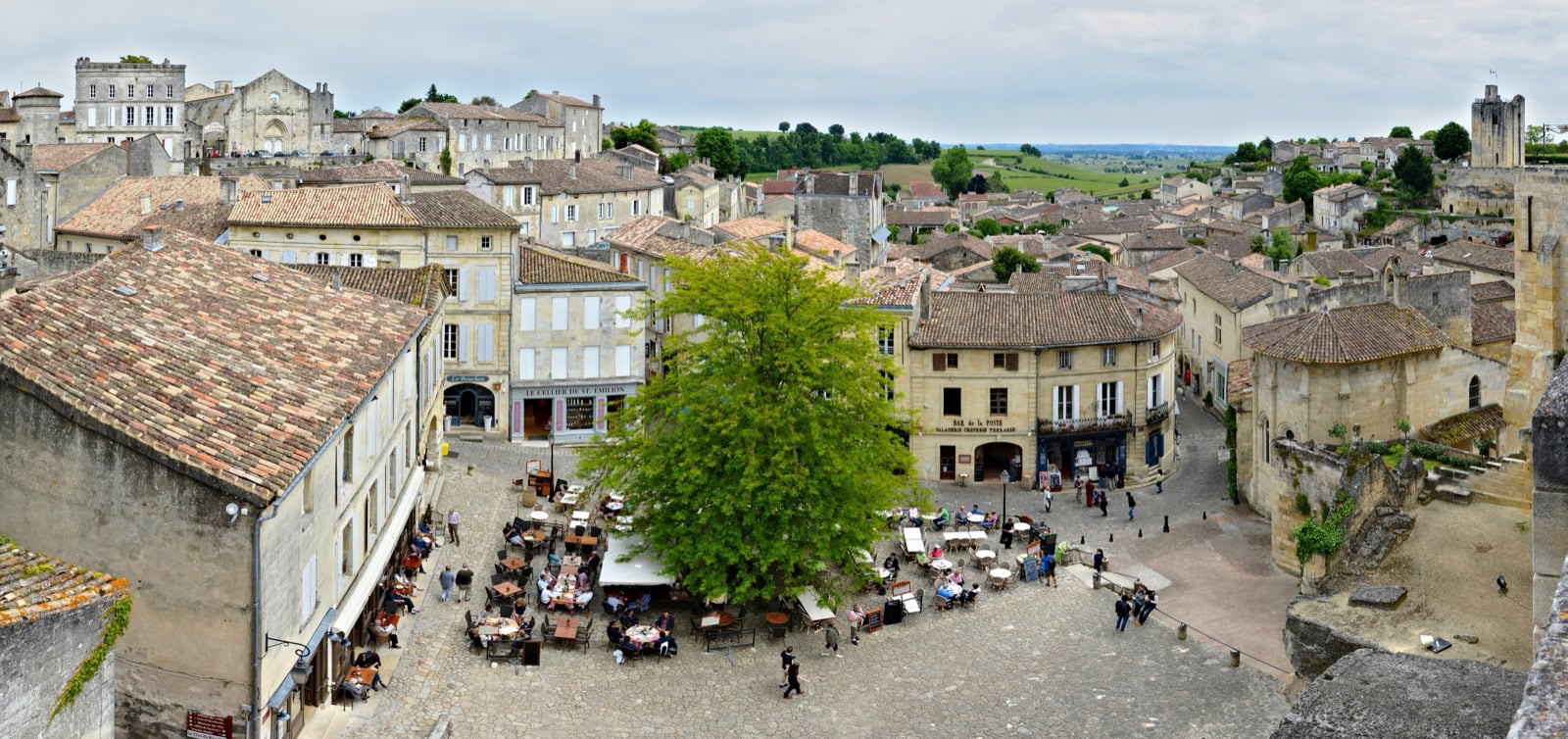
Today is wine day! 🍷 Head out in the morning to Saint-Émilion — a medieval town surrounded by vineyards, about 45 minutes from Bordeaux. This place is so photogenic you’ll struggle to put your phone down. Narrow cobblestone streets, an ancient church carved out of rock (Église Monolithe — an underground church, completely unique!), and vineyards stretching in every direction as far as the eye can see.
Stop for a tasting at one of the wineries — most offer tours without a reservation, but it’s better to book something in advance. Entry with a tasting runs around €10–25 per person. If you’re not sure where to go, Château Franc Mayne or Clos Fourtet are excellent choices with stunning cellar spaces.
For lunch in Saint-Émilion, try L’Envers du Décor — a wine bar with a great light menu — or Amelia Canta for something more creative.
In the afternoon, head back to Bordeaux and use the remaining time to visit Cité du Vin (a wine museum in a modern building that looks like a giant decanter). Admission is around €22, and at the end you get a glass of wine on the rooftop terrace with views across the entire city. Absolutely worth it.
Where to stay
Stay a second night in Bordeaux.
Day 7. Dune du Pilat — Europe’s largest sand dune
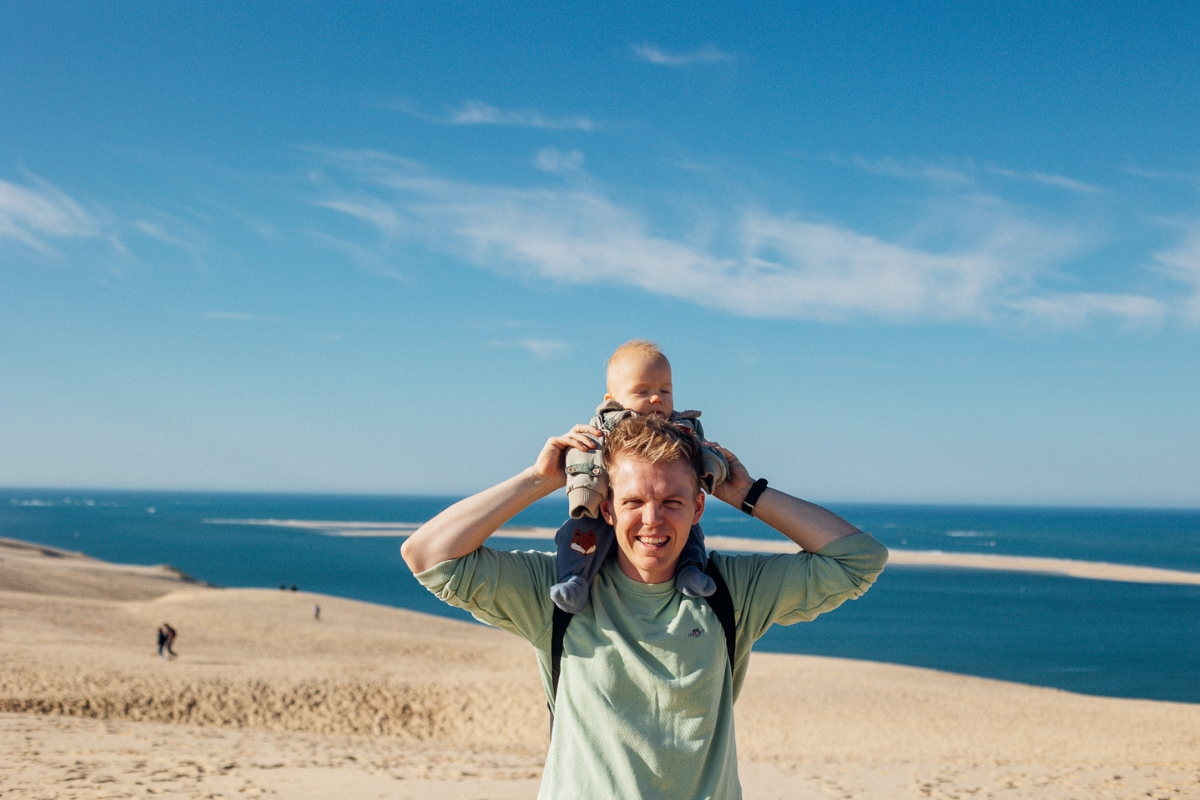
Pack your bags in the morning and head for Dune du Pilat — it’s just an hour’s drive from Bordeaux and one of the most extraordinary places in all of France.
Picture a sand dune 100 metres high and 2.7 km long, with views of the Atlantic on one side and an endless pine forest on the other. It’s surreal. Climb to the top (via the steps or straight through the sand — both are an experience), and the panorama that opens up will quite literally take your breath away. Honestly — Dune du Pilat is one of those places where photos simply don’t do it justice.
Practical info: Parking costs around €6–10 depending on the season. The climb takes 15–20 minutes. It’s windy at the top, so bring a jacket. And sunscreen — the sun is brutal up there because it reflects off the sand.
After coming back down, treat yourself to a lunch of oysters in Gujan-Mestras or La Teste-de-Buch — this is France’s oyster country and fresh oysters here cost a fraction of what you’d pay in Paris. Even if you’re not normally an oyster person, give them a go here — with a squeeze of lemon and a glass of white wine, they’re incredible.
In the afternoon, continue towards Carcassonne — it’s a longer drive, about 3.5–4 hours, but the scenery is beautiful as you pass through Gascony, home of Armagnac and duck farms.
Where to stay in Carcassonne
I’d recommend staying in Carcassonne itself or nearby. Hotel Pont Levis has amazing views of the illuminated medieval citadel (at night it looks like something from a film) for a reasonable €80–120/night. For better value, Best Western Le Donjon is right inside the walls.
Day 8. Carcassonne — a fairytale medieval fortress
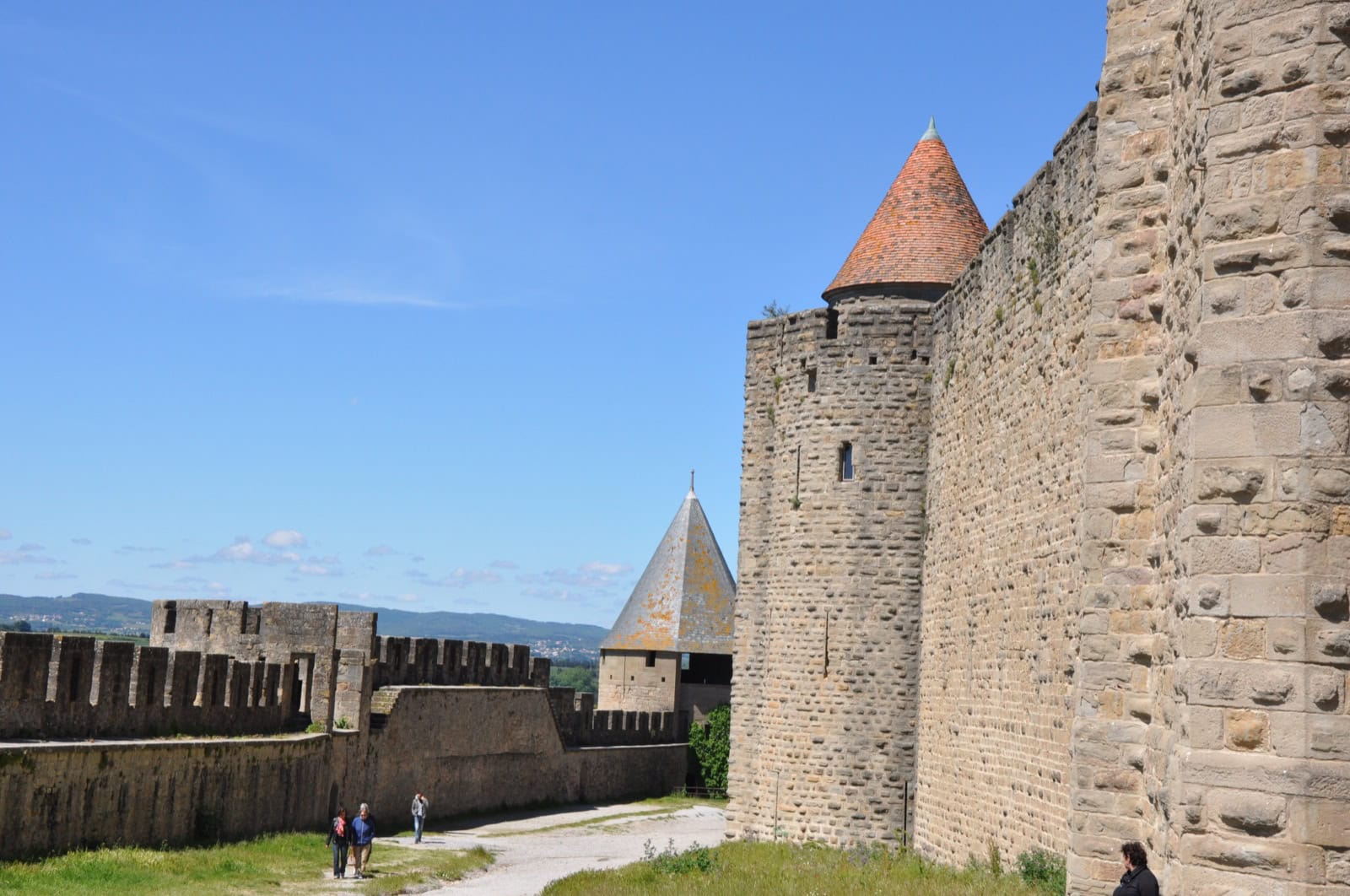
Open your eyes in the morning and you’ll have one of Europe’s best-preserved medieval fortresses right in front of you. Cité de Carcassonne is a fully walled city with two rings of ramparts, 52 towers, and a labyrinth of narrow streets inside. UNESCO-listed, naturally.
Walking along the ramparts takes 1–2 hours and the views are stunning — the Pyrenees on one side, vineyards and the River Aude on the other. Entry to the fortress grounds is free, but a tour of Château Comtal (the castle within the castle) costs around €9.50. I’d recommend it — the guide will show you parts that aren’t normally accessible.
A word of warning: The main streets inside the citadel are quite touristy — full of lavender shops and fridge magnets. But just turn into a side alley and you’ll have the place to yourself. My tip — walk around the entire citadel from the outside, it takes about 30 minutes and you’ll get gorgeous photos without the crowds.
For lunch, head down to the lower town (Ville Basse) — it’s much more authentic and far better value. Le Jardin de l’Évêque has a lovely garden and an excellent set menu for around €15–18. For cassoulet (the traditional bean stew with duck — the local speciality you absolutely cannot leave Carcassonne without trying), head to Comte Roger.
In the afternoon, set off towards Provence — the drive to Avignon is about 3 hours and the landscape gradually transforms — olive trees, cypresses, stone villages perched on hillsides. Welcome to the south!
Where to stay
Continue into Provence and stay in Avignon or the surrounding area (see Day 9).
Map of points of interest for your phone
Day 9. Provence — Avignon and surrounding villages
Provence is like one of those Instagram postcards you think can’t possibly exist in real life — and then you arrive and it’s even more beautiful. Lavender fields, walnut groves, ancient villages built from honey-coloured stone, and the light… well, the light is something you simply have to experience for yourself.
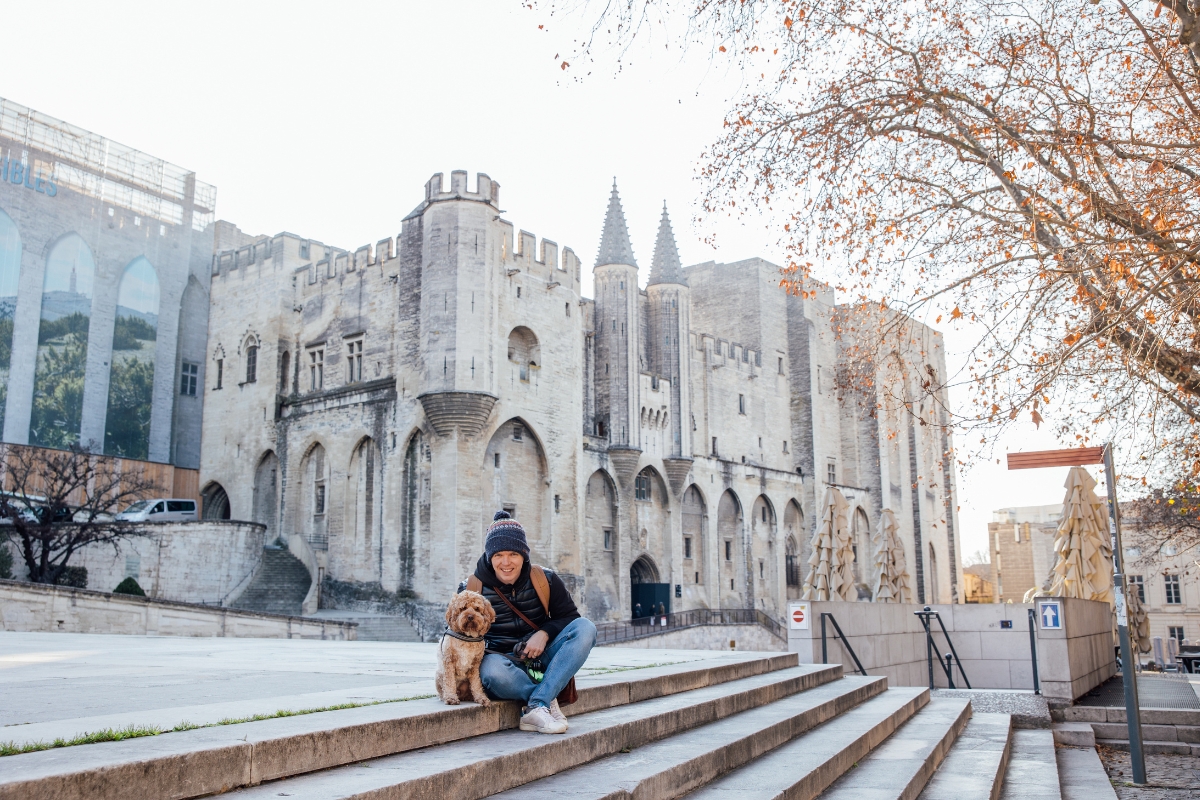
Start the day in Avignon — the city of popes and the famous bridge that goes nowhere (Pont d’Avignon, officially Pont Saint-Bénézet — they never finished it, so it just juts out into the river and stops 😁). The Palais des Papes is enormous and imposing — the largest Gothic palace in the world. Admission is about €12; allow 1.5–2 hours for the visit.
After lunch, head out to the surrounding villages. My favourite loop:
- Gordes — a white village stacked up on a cliff face, one of the most photographed views in Provence. Walk down to the viewpoint below the village for the full panoramic spectacle.
- Sénanque Abbey — a lavender field right in front of a medieval abbey. The iconic Provence shot you’ve seen in every guidebook. Lavender blooms from mid-June to late July.
- Roussillon — a village made of red ochre that looks like you’ve landed on Mars. The walk through the ochre quarries (Sentier des Ocres) is short but wonderfully colourful.
For dinner, head back to Avignon — L’Essentiel offers excellent modern Provençal cuisine (menu from €35), or for something more casual try La Fourchette.
Where to stay in Provence
In Avignon or one of the villages in the Luberon Valley — La Bastide de Gordes is the luxury pick with breathtaking views (though prices reflect that, at €200+/night). In Avignon, Hôtel d’Europe sits in a historic building right by the square (€100–160/night).
Day 10. Provence — Aix-en-Provence and on to Marseille
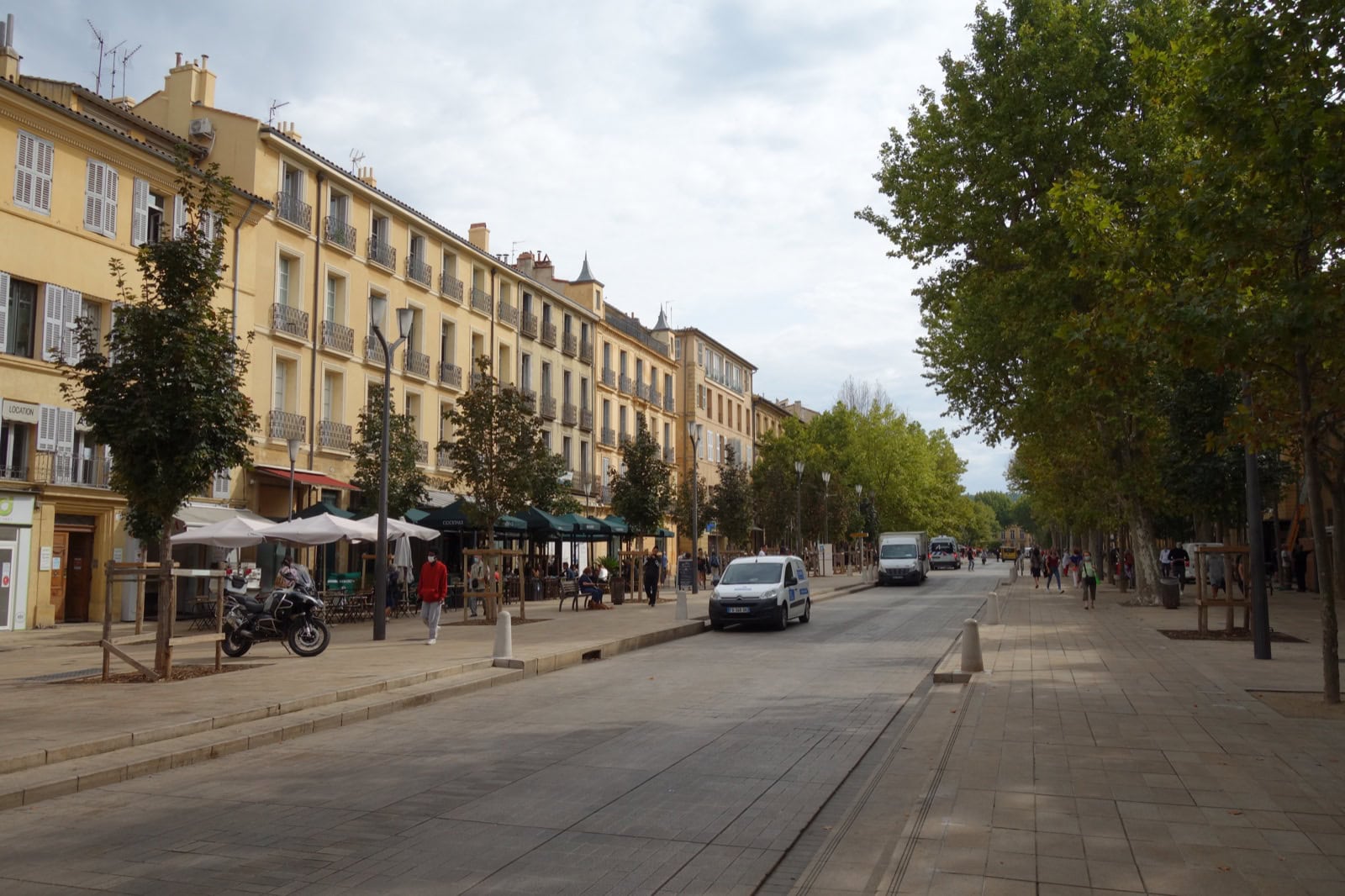
Head out in the morning to Aix-en-Provence — it’s about 1.5 hours from Avignon and one of the most elegant cities in France. Wide plane-tree-lined boulevards, fountains on every corner (it’s known as the “city of a thousand fountains”), cafés with wicker chairs spilling onto the pavements — the very essence of Provençal savoir-vivre.
Take a wander down Cours Mirabeau — the main avenue lined with cafés (the legendary Les Deux Garçons, once frequented by Cézanne and Hemingway, sadly burned down, but the surroundings are still gorgeous). Pop into the local markets — Place Richelme has a daily market with fresh cheeses, olives, lavender, and local honey.
For art lovers: Atelier Cézanne — the preserved studio of Impressionist painter Paul Cézanne, where he worked until the end of his life. It’s small, quiet, and genuinely moving.
For lunch, try Le Formal (exceptional gastronomy at reasonable prices for a near-Michelin-level establishment) or Café de la Fontaine on the square.
In the afternoon, continue to Marseille — it’s just 30 minutes down the motorway.
Where to stay in Marseille
Stay near the Old Port (Vieux-Port) — it’s the heart of the action and everything is walkable. Hôtel La Résidence du Vieux Port has a terrace with views over the harbour and Notre-Dame de la Garde (around €120–180/night). For better value, Hôtel Hermès is right by the port.
Day 11. Marseille and the Calanques
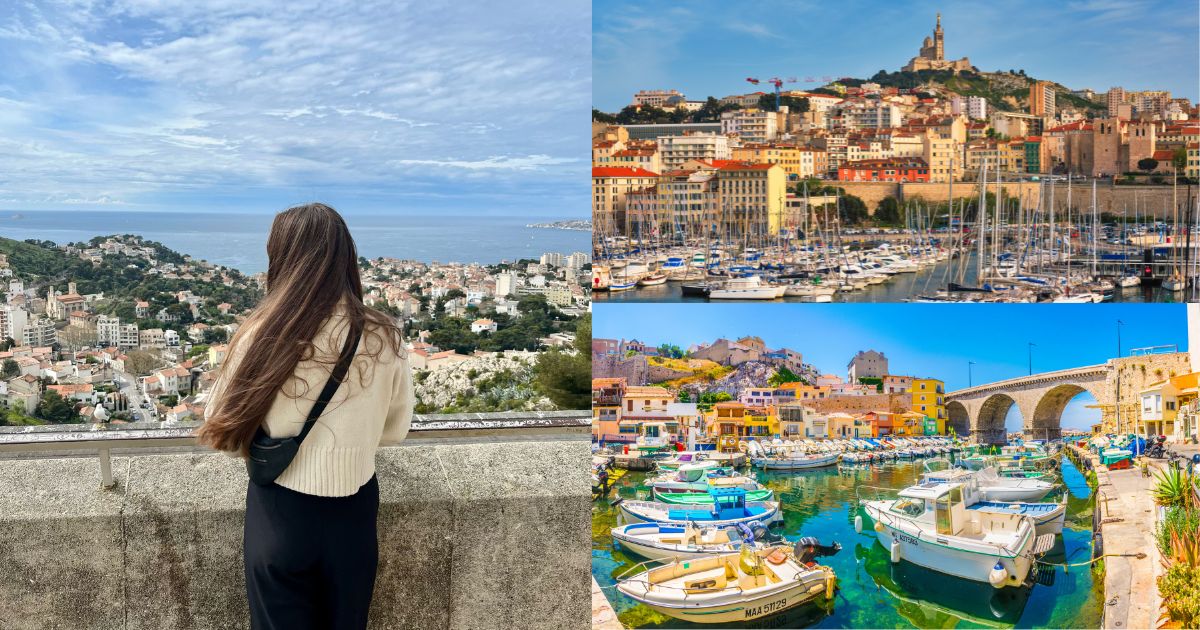
Marseille is a city you either fall in love with or don’t quite get — and I love it. It’s gritty, authentic, multicultural, and bursting with energy. No contrived tourist trap — real people live here and you feel it with every step.
Start the morning at the Old Port — fishermen sell the day’s catch, Norman Foster’s famous silver “mirror” canopy hovers above, and the air smells of bouillabaisse (fish stew — the local speciality). Climb up to Notre-Dame de la Garde — the basilica on the hill with panoramic views over the entire city, the harbour, and the sea. It’s an absolute must.
In the afternoon, head for the Calanques — rocky inlets with turquoise water that look like Norwegian fjords, except they’re in the Mediterranean. They’re absolutely jaw-dropping. The most accessible from Marseille is Calanque de Sugiton (about 45 minutes’ walk from the car park at Luminy university) or Calanque de Sormiou (reachable by car, though access is restricted in summer).
Important: In summer (June–September), access to the Calanques is restricted due to fire risk. Check the current status on the Parc National des Calanques website each morning. Bring plenty of water, good hiking shoes, and sunscreen. And your swimming gear — you’ll want to take a dip!
For dinner in Marseille: Chez Etienne for pizza (a local legend, cash only), Le Café des Épices for creative Provençal fare, or traditional bouillabaisse at Chez Fonfon in the Vallon des Auffes cove (pricier but authentic — around €65/person for the bouillabaisse).
Where to stay
Stay a second night in Marseille.
Day 12. French Riviera — Nice and Monaco
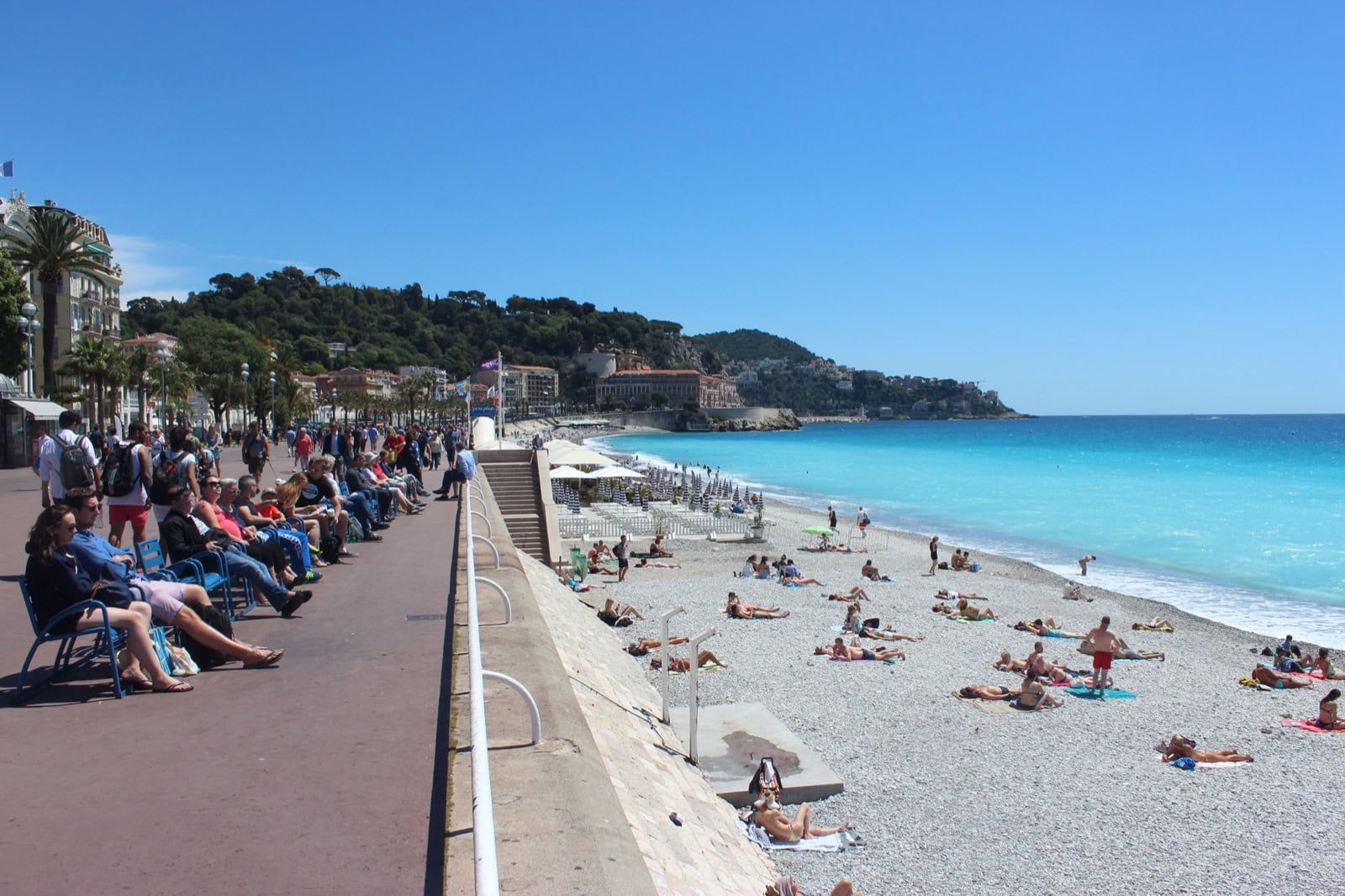
Head out from Marseille towards Nice in the morning — it’s about 2–2.5 hours on the motorway, but if you have extra time, take a stretch of the legendary coastal road. The scenery is stunning — turquoise sea, rocky cliffs, and pine forests.
Nice is the queen of the French Riviera, and I think it deserves the crown. It’s not as overcrowded as Cannes, not as expensive as Monaco, and has absolutely fantastic energy. Start with a stroll along the Promenade des Anglais — the famous seafront promenade where absolutely everyone comes to walk. Then head into the old town (Vieux Nice) — baroque alleyways, markets on Cours Saleya (fresh flowers, olives, socca), and if you happen to spot Chez René Socca — stop in for socca (a chickpea flatbread baked in a wood-fired oven, a local speciality that costs a few euros and is absolutely divine).
Climb up Castle Hill (Colline du Château) — there’s no castle left, but the view over all of Nice, the harbour, and the sea is the best in town. There’s a lift too, in case your legs are staging a revolt after 12 days of roadtripping 😅.
In the afternoon, take a trip to Monaco — it’s just 30 minutes by car (or by train for a few euros, which is actually more convenient since parking in Monaco is hellish and costs a fortune). Monaco is… well, it’s Monaco. Enormous yachts, the Monte Carlo Casino, luxury cars on every corner, and the feeling you’ve stepped into a Bond film. Wander past the casino, gawk at the harbour full of superyachts, visit the Prince’s Palace (changing of the guard at 11:55) and the Oceanographic Museum. It’s a brilliant experience for a few hours — but honestly, there isn’t much more to do for longer than half a day, unless you can afford a €200 lunch.
Where to stay in Nice
Stay near the old town or the promenade. Hôtel La Pérouse (a cosy hotel tucked into the cliff with sea views, around €150–250/night) or the more budget-friendly Hôtel Ozz (a stylish hostel/hotel in a great location, from €60/night).
Day 13. Annecy — the Venice of the Alps
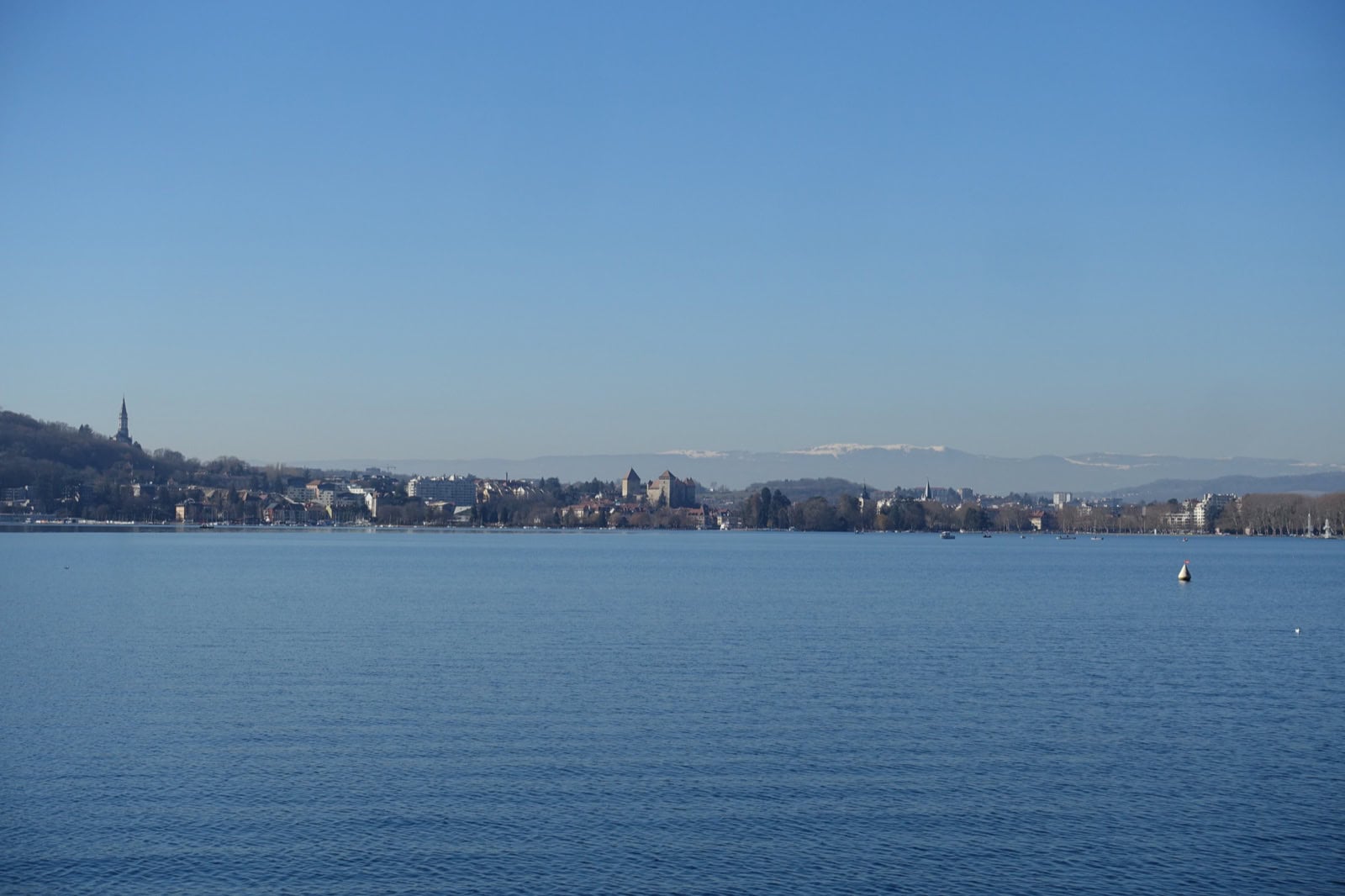
Today involves a longer drive, but the destination is absolutely worth it. From Nice to Annecy is about 5–5.5 hours (via Grenoble), but the scenery is utterly spectacular — you’re driving through the Alps, past snow-capped peaks and deep valleys. I’d recommend setting off early.
Annecy is a town that will quite literally take your breath away. Known as the “Venice of the Alps,” the old town is threaded with canals, the houses have colourful facades, and towering Alpine peaks loom above it all. And the lake… Lac d’Annecy is one of the cleanest lakes in Europe. The colour of the water — a swirl of turquoise and emerald — is almost unreal.
Spend the afternoon exploring the old town — Palais de l’Île (a small castle on an island in the middle of a canal, the iconic Annecy photo), streets lined with cheese shops and chocolate boutiques, and then straight to the lake. If the weather’s nice, rent a paddleboard or kayak (around €15–20/hour) and get out on the water. Or simply sit on the shore, sip a glass of Savoyard white wine, and gaze at the Alps.
For dinner: Le Freti (Savoyard cuisine — fondue, raclette, tartiflette, basically everything with cheese 🧀), or Cozna for a more creative, modern menu. Tip: The Savoyard fondue here is the best in all of France — order it without hesitation.
Where to stay in Annecy
Right in the old town or by the lake. Hôtel du Palais de l’Isle (a historic building right on the canal, around €100–150/night) or the slightly cheaper Hôtel des Alpes with mountain views.
Day 14. Lyon — the gastronomic grand finale
The final day of the roadtrip! From Annecy to Lyon is a mere 1.5–2 hours, and what awaits you is the gastronomic capital of France. Lyon is considered the cradle of French gastronomy — and after tasting Lyonnaise cuisine, you’ll understand why.
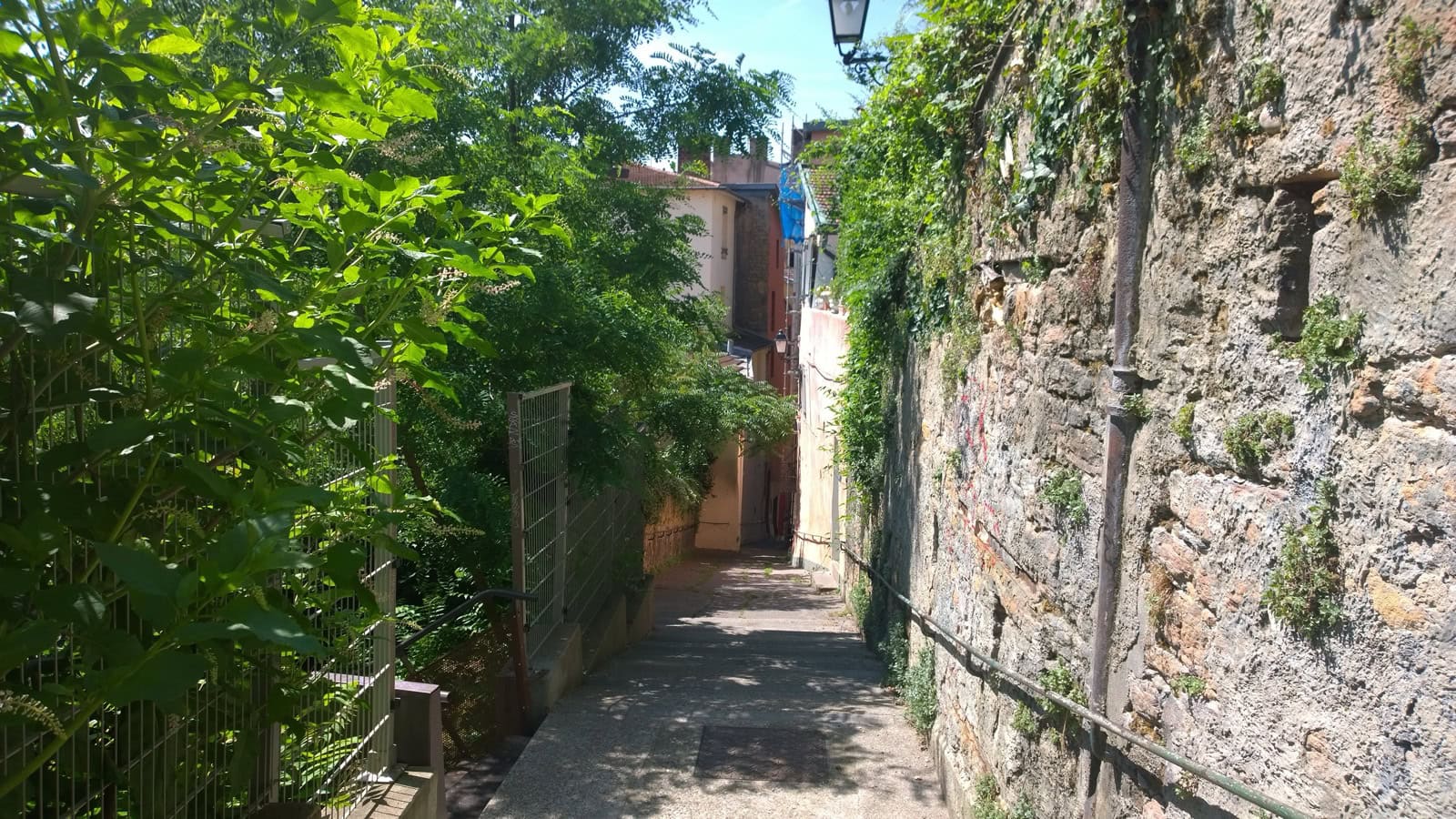
Spend the morning exploring Vieux Lyon (the old town) — a Renaissance quarter with secret passageways called traboules (narrow corridors running through buildings, originally used by silk weavers to transport their goods). They’re free to enter, but you need to know where to look — the tourist office will give you a map.
Take the funicular (or walk) up to Fourvière — Roman ruins, the Basilica of Notre-Dame de Fourvière with its utterly extravagant interior (gold mosaics, marble, it’s like stepping into a jewellery box), and views over all of Lyon — and on a clear day, all the way to Mont Blanc.
Lunch at a bouchon is non-negotiable. A bouchon is a traditional Lyonnaise eatery and the food is superb — quenelle (a light, fluffy fish dumpling in sauce), salade lyonnaise (salad with lardons and a poached egg), saucisson lyonnais. My picks: Daniel & Denise (Michelin Bib Gourmand, menu around €35) or Le Bouchon des Filles (smaller, cosier, excellent food).
In the afternoon, take a walk along the banks of the Rhône and Saône — Lyon sits at the confluence of two rivers and the promenades alongside them are fantastic for a leisurely stroll. Stop at Place Bellecour (one of the largest squares in Europe) and the Croix-Rousse neighbourhood (the former silk-weavers’ quarter, now full of studios and cafés).
If you’re flying home from Lyon, Saint-Exupéry airport is 30 minutes from the centre. Drop off the car at the airport and that’s a wrap — your France roadtrip is complete! 🎉
Where to stay in Lyon
If you’re staying overnight: Hôtel Le Royal (classic Lyonnaise luxury, around €150–200/night) or Mama Shelter Lyon (a design hotel with a cool rooftop bar, around €80–120/night).
Practical tips to finish
What to pack
Check out our article on how to pack into carry-on luggage — even a 14-day roadtrip can be done with light packing, especially in summer. I’d recommend one pair of comfortable hiking shoes (for the Calanques, Castle Hill, Provençal hills) and a pair of lightweight trainers for the cities.
Finding flights
For cheap flights, check comparison sites like Skyscanner or Google Flights. Look for a multi-city combination: London → Paris + Lyon → London. Budget carriers like easyJet, Ryanair, and Vueling all fly these routes regularly.
Hiring a car
Lukáš and I have had consistently great experiences with DiscoverCars, which we use all over the world. For France, go for a smaller automatic car.
Don’t forget travel insurance
Things can go wrong even in Europe — I’d recommend checking out our SafetyWing review, which covers roadtrips across Europe. As a UK traveller, remember that your EHIC/GHIC card provides basic health cover in France, but travel insurance gives you much broader protection including repatriation and lost luggage.
Mobile data
An eSIM from Holafly works flawlessly across all of France. While some UK mobile plans still include EU roaming, many now charge extra — if you want guaranteed fast data for a longer trip, an eSIM is a great shout.
Frequently asked questions about a France roadtrip
Before you hit the road, here are answers to the questions our readers most often ask about a 14-day France roadtrip.
Tips and Tricks for Your Vacation
Don’t Overpay for Flights
Search for flights on Kayak. It’s our favorite search engine because it scans the websites of all airlines and always finds the cheapest connection.
Book Your Accommodation Smartly
The best experiences we’ve had when looking for accommodation (from Alaska to Morocco) are with Booking.com, where hotels, apartments, and entire houses are usually the cheapest and most widely available.
 🚗 Car rental on the roadVerified rental cars in France
Search with the DiscoverCars comparison engine — it compares prices from dozens of local and international rental companies, and most bookings come with free cancellation.
Compare car prices in France →Don’t Forget Travel Insurance
Good travel insurance will protect you against illness, accidents, theft, or flight cancellations. We’ve had a few hospital visits abroad, so we know how important it is to have proper insurance arranged.
Where we insure ourselves: SafetyWing (best for everyone) and TrueTraveller (for extra-long trips).
Why don’t we recommend any Czech insurance company? Because they have too many restrictions. They set limits on the number of days abroad, travel insurance via a credit card often requires you to pay medical expenses only with that card, and they frequently limit the number of returns to the Czech Republic.
Find the Best Experiences
Get Your Guide is a huge online marketplace where you can book guided walks, trips, skip-the-line tickets, tours, and much more. We always find some extra fun there!


