

Every Christmas, I used to visit the grave of Karel Hynek Mácha (one of the Czech Republic’s most beloved poets) at Vyšehrad to read his famous poem aloud. It was a tradition I’d kept since secondary school. I love Vyšehrad — in winter, summer, autumn, and spring. When Lukáš and I celebrated our first Christmas together, it was Vyšehrad where I dragged him on Christmas Eve.
Vyšehrad Prague is like a giant open-air living room for locals. While Prague Castle has you jostling through crowds and fighting for every square inch of space, here you’ll find Praguers with picnic blankets, dog walkers, and joggers weaving between the massive baroque ramparts. These days, we come here with our two-year-old son Jonáš too. The long paved paths along the fortifications are absolutely perfect for pushchairs, and the sprawling parks beneath mature trees offer brilliant shade in the summer heat. And as a vegetarian, I really appreciate that when you head down to the neighbourhoods of Podolí or Výtoň, you’ll find loads of excellent bistros that go far beyond the classic fried cheese.
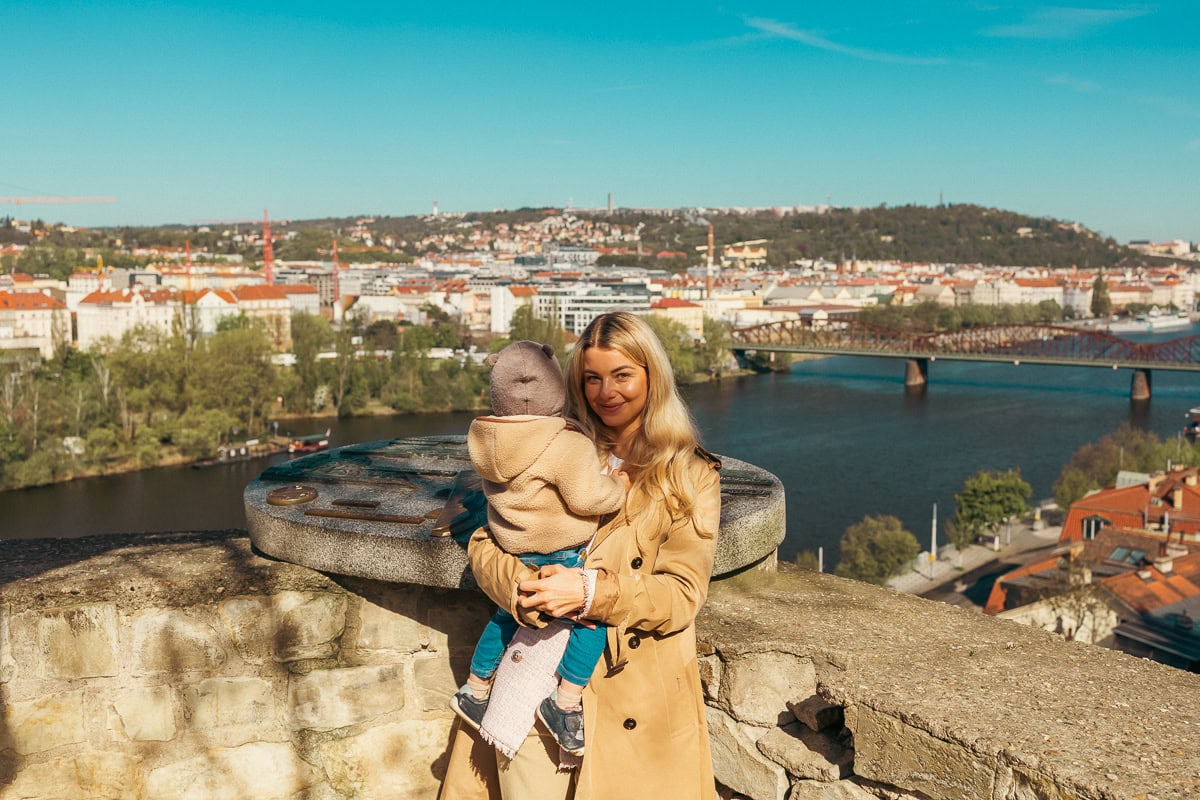
This entire area high above the Vltava River has another huge advantage: despite being a historically significant site steeped in legends of the mythical Princess Libuše, it still maintains an incredibly relaxed, almost park-like atmosphere. You can wander for hours, sit on the ramparts with your legs dangling over the edge, and watch boats drift along the river. It’s not a stiff, roped-off museum with turnstiles — it’s a living city quarter, and well worth escaping to from the sweltering cobblestoned streets of the Old Town.
In this article, you’ll find a complete guide to Vyšehrad Prague, including details on opening hours for the Basilica of St Peter and St Paul, exactly where to find the Vyšehrad Cemetery and the famous Slavín tomb, and why you shouldn’t miss the oldest Rotunda of St Martin.
TL;DR
- Entry to the entire Vyšehrad complex (parks, ramparts, paths) is completely free and open 24/7.
- The main highlight is the Basilica of St Peter and St Paul with its stunning Art Nouveau interior — a ticket costs around 5 €.
- Vyšehrad Cemetery and the Slavín tomb are the final resting place of elite Czech artists (Antonín Dvořák, Bedřich Smetana, Karel Čapek).
- The baroque ramparts offer some of the best views of Prague Castle, the Vltava valley, and the Podolí district.
- The underground casemates contain the Gorlice hall, where original baroque statues from Charles Bridge are stored.
- The Rotunda of St Martin is the oldest surviving rotunda in Prague, built in the 11th century.
- Getting there is easiest by red metro line C to the Vyšehrad station, from where it’s a flat walk.
- For families with children, there’s a fantastic themed playground inspired by ancient Czech legends.

The full destination guide: Czechia — guide and what to see
When to visit Vyšehrad and how to plan your trip
Planning a visit to Vyšehrad is considerably simpler than the logistics involved with Old Town Square. Since so much of the experience involves strolling along the ramparts and through the parks, the weather plays a pretty significant role. From personal experience, I rarely head here at high noon in mid-August, when the sun beats relentlessly against the stone walls. I prefer the edges of the day or cooler months, when this place has a far more intimate feel and you don’t have to weave between dozens of picnicking groups.
Spring and autumn: the absolute favourites
April, May, and then September and October are objectively the best months for Vyšehrad. The golden autumn light — which I fell in love with during my photography course — works wonders with the brick ramparts and the dark spires of the basilica. In autumn, around the time of the Signal Festival (in 2026, it runs 15–18 October), the park trees turn golden and the views of mist rising from the Vltava are breathtaking. Spring brings blossoming trees along the ramparts towards Podolí. During these months, the temperatures are also perfect for long walks without needing to duck into the shade every ten minutes.
Summer evenings and winter melancholy
Summer at Vyšehrad is lively. The pubs and open-air stages are packed to the rafters, people play guitar in the parks, and the whole place feels like a big festival. If you’re coming in July or August, I’d recommend going early in the morning or waiting until sunset. The view of the sun setting behind Prague Castle from the brick lookout point here is so well-known that you’ll find dozens of photographers with their tripods set up in the evening. Winter (January, February) is a completely different story. When it snows, Vyšehrad becomes perfectly silent. The cemetery blanketed in snow looks incredibly majestic, and you feel as though you’ve stepped into the 19th century. Just be prepared — the wind coming off the river can be bitterly sharp up on the ramparts.
How much time to set aside
If you just want a quick look around, snap a photo of the view, and peek at the cemetery, two hours will do. But if you want to go inside the basilica, take a guided tour of the underground casemates, and let the kids loose on the playground, set aside a good half day. Lukáš, Jonáš, and I regularly spend an entire morning here, finish with a coffee, and then slowly walk down to the river for lunch. Vyšehrad isn’t a place to rush — its genius loci lies precisely in taking things slow.
Where to stay
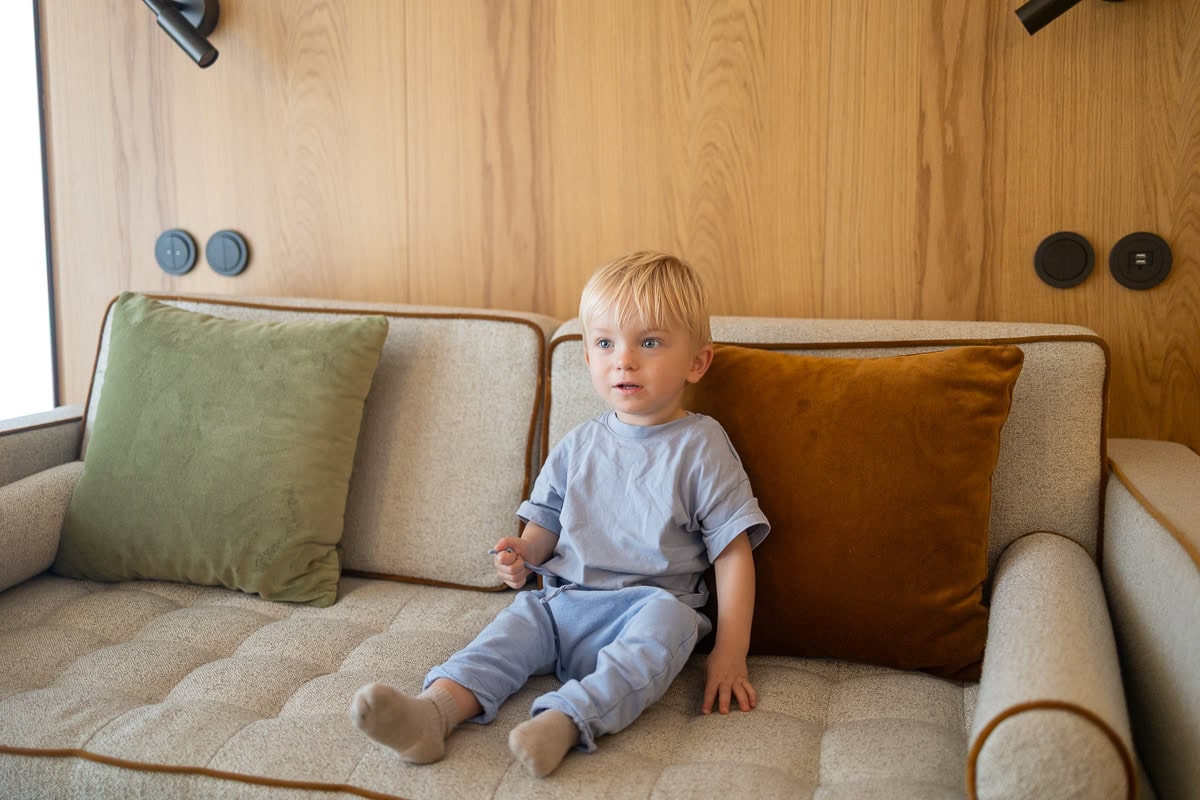
When we last sorted accommodation in Prague for our annual visit, we wanted something strategically close to the main transport links but also offering absolute comfort — because travelling with a two-year-old has its own unique demands. We chose The Julius Hotel on Senovážné Square, and in hindsight it was one of the best decisions we made. We stayed in their One Bedroom Suite, which gave us plenty of space for a relaxed evening once Jonáš was asleep. The design is clean, thoughtful, with subtle nods to the colours of Alphonse Mucha. From the hotel, you can walk to the Main Railway Station (from where Vyšehrad is just three metro stops on line C) in a mere five minutes. The rooms have a fully equipped kitchenette, which you’ll appreciate with a child — or if you simply enjoy making your own breakfast. Check prices and availability for your dates on Booking.com.
What to see and do at Vyšehrad
The fortress grounds hide a wealth of historical monuments, viewpoints, and secret nooks. Let’s take a look at the most interesting spots you shouldn’t miss on your walk.
Basilica of St Peter and St Paul
The two dark neo-Gothic spires of the Basilica of St Peter and St Paul form an unmistakable landmark on the Prague skyline, visible from all over the city. Although its current appearance dates to the turn of the 19th and 20th centuries, the church’s foundations go back to the 11th century and the reign of King Vratislav II. The interior is a total visual shock — while the basilica looks austere and stern from the outside, inside you’ll discover an incredibly colourful, lavish Art Nouveau decoration. The walls are covered with ornaments and frescoes by the husband-and-wife team of the Urbans, who drew inspiration from the style of Alphonse Mucha. I don’t normally go into churches much, but this explosion of colour — which has nothing in common with typical cold Gothic interiors — always draws me back for another look.
It’s open daily, but on Sunday mornings there are services, so it’s closed to tourists until noon. The standard Vyšehrad entrance fee in 2026 is around 5 € for an adult, and you can buy tickets directly at the door. From the Vyšehrad metro station (line C), it’s a comfortable ten-minute walk through the park. 💡 Local’s tip: Pay close attention to the details in the frescoes in the side aisles — some of the saints’ faces bear the features of Prague burghers of the time, who had contributed financially to the church’s decoration.

Vyšehrad Cemetery and the Slavín tomb
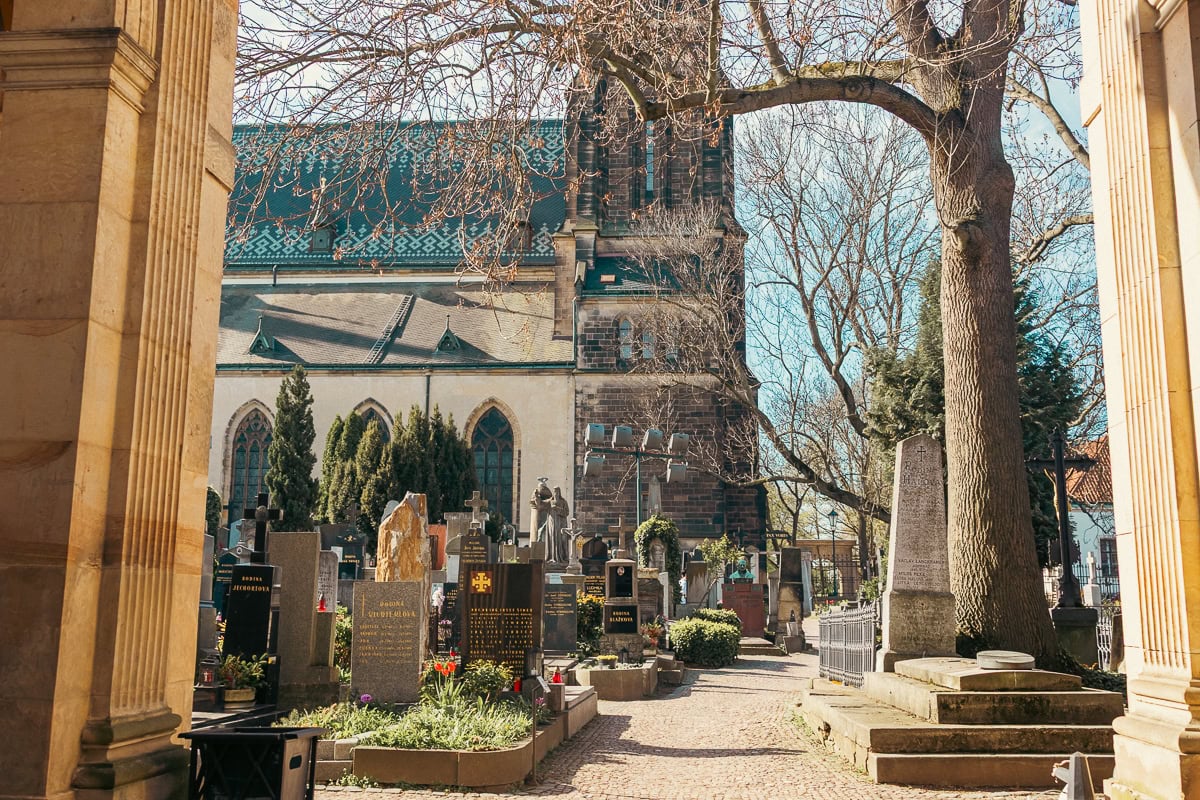
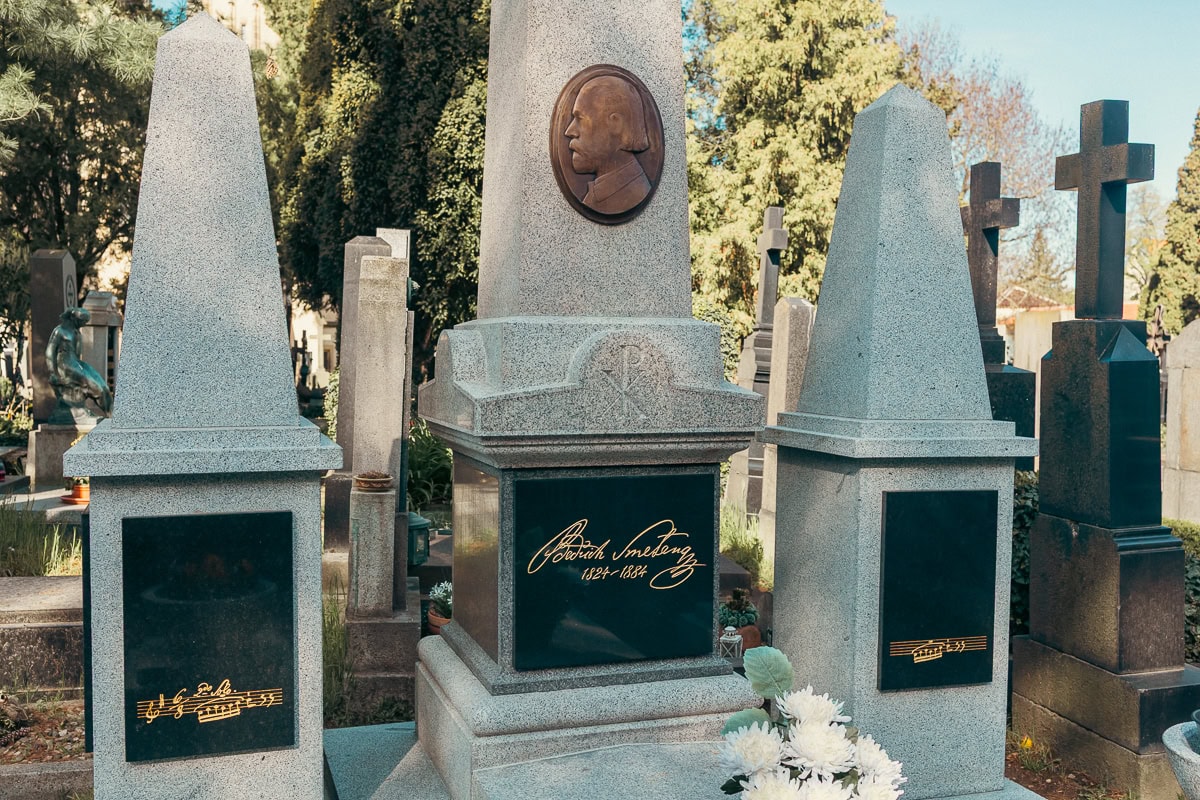
Right next to the basilica lies Vyšehrad Cemetery — a place that could be described as the pantheon of Czech culture. During the National Revival in the 19th century, this ordinary parish graveyard was transformed into a prestigious burial ground. The most architecturally striking feature is the Slavín, a grand communal tomb recognisable by the sculpture of a winged genius on top. Alphonse Mucha, the opera singer Ema Destinnová, and sculptor Josef Václav Myslbek all rest here. As Lukáš and I wander the narrow pathways between the headstones, we often look for famous names — you’ll find the grave of Antonín Dvořák with a beautiful bust, the grave of Bedřich Smetana, and the final resting place of writer Karel Čapek.
The cemetery is free to enter every day of the year. In summer, the gates close at 6 pm, while in winter they shut as early as 4 pm, so bear this in mind when planning an afternoon visit. It’s always completely quiet and respectful here, which is why we love escaping to it from the noise of the city. 💡 Local’s tip: Karel Čapek’s grave isn’t on the central Slavín monument itself, but in the rear section of the cemetery (section 12) — it’s often covered with small pebbles and pencils left by readers.
Rotunda of St Martin
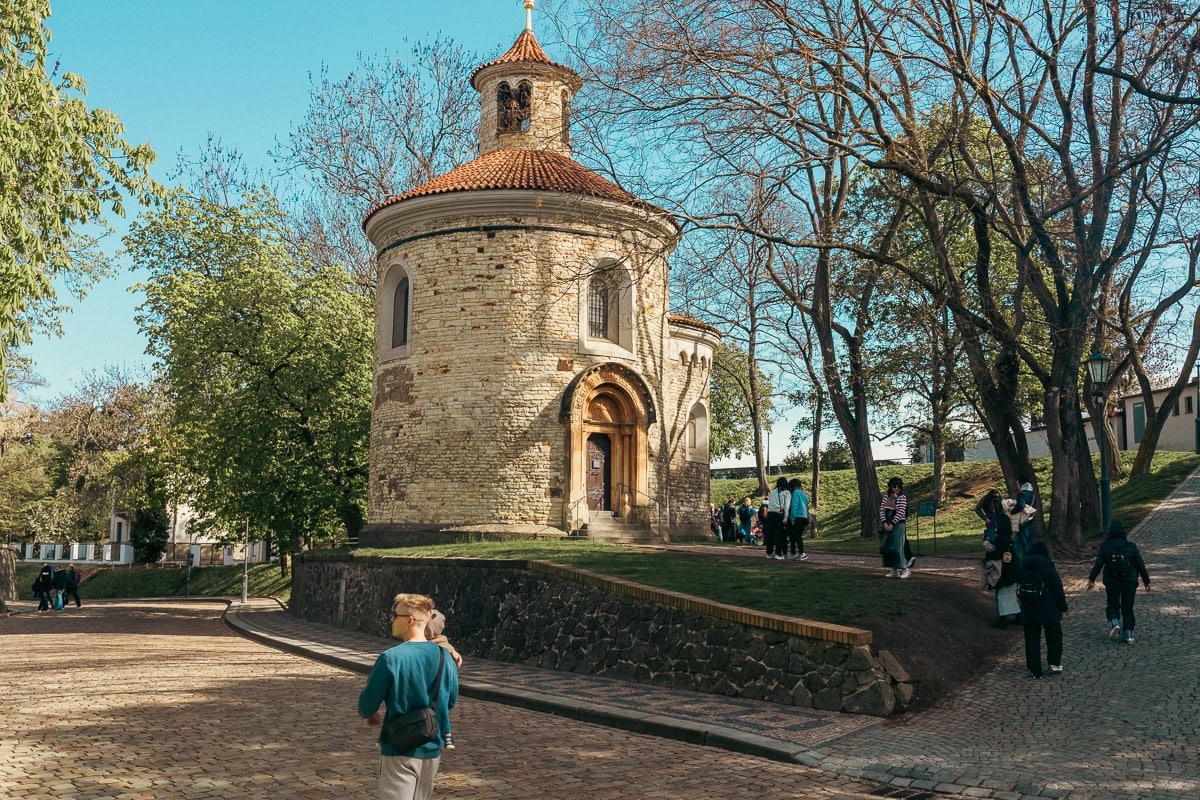
As you walk through the complex from the Tábor Gate, you’ll come across a small circular building that looks as though it’s been standing there forever. The Rotunda of St Martin is the oldest surviving rotunda in Prague, dating from the second half of the 11th century. It has survived an extraordinary number of disasters — from sacking during the Hussite Wars to periods when it served as a gunpowder store or warehouse. It’s fascinating to see such an ancient Romanesque structure in relatively untouched condition, especially when you realise that modern cars are driving past just metres away.
The rotunda isn’t normally open to visitors inside — it only opens for special occasions or during services of the Czechoslovak Hussite Church. However, the main path runs right past it, so you can’t miss it. It stands directly at the crossroads of the paths leading towards the casemates. 💡 Local’s tip: Take a close look at the facade on the right side — above one of the windows, there’s a cannonball still embedded in the masonry from 1757, when Prussian forces were besieging Prague.
Vyšehrad casemates and the Gorlice hall
Beneath the baroque brick ramparts that encircle the entire Vyšehrad fortress lies a system of secret military passages from the 17th century. These casemates were used for the rapid and undetected movement of soldiers. The tour through the dark, narrow, and slightly damp brick corridors ends in a vast underground chamber known as the Gorlice hall. It originally served as a troop assembly point and food store, but today it has a far more interesting function — it’s used as a repository for several original baroque statues from Charles Bridge, which had to be replaced by copies due to weathering. Seeing these enormous sandstone figures in a dramatically lit underground space is quite a powerful experience.
You’ll find the entrance to the casemates at the Cihelná (Brick) Gate. Guided tours run on the hour, and the full Vyšehrad ticket price is around 5.50 €. Open daily from 9:30 am to 5 pm (until 6 pm in summer). The temperature inside stays constant at around 15 °C. 💡 Local’s tip: Even if it’s thirty degrees outside, bring a light jumper down with you — after twenty minutes in the underground dampness, you’ll start feeling the chill.
Ramparts, views, and the legend of Libuše
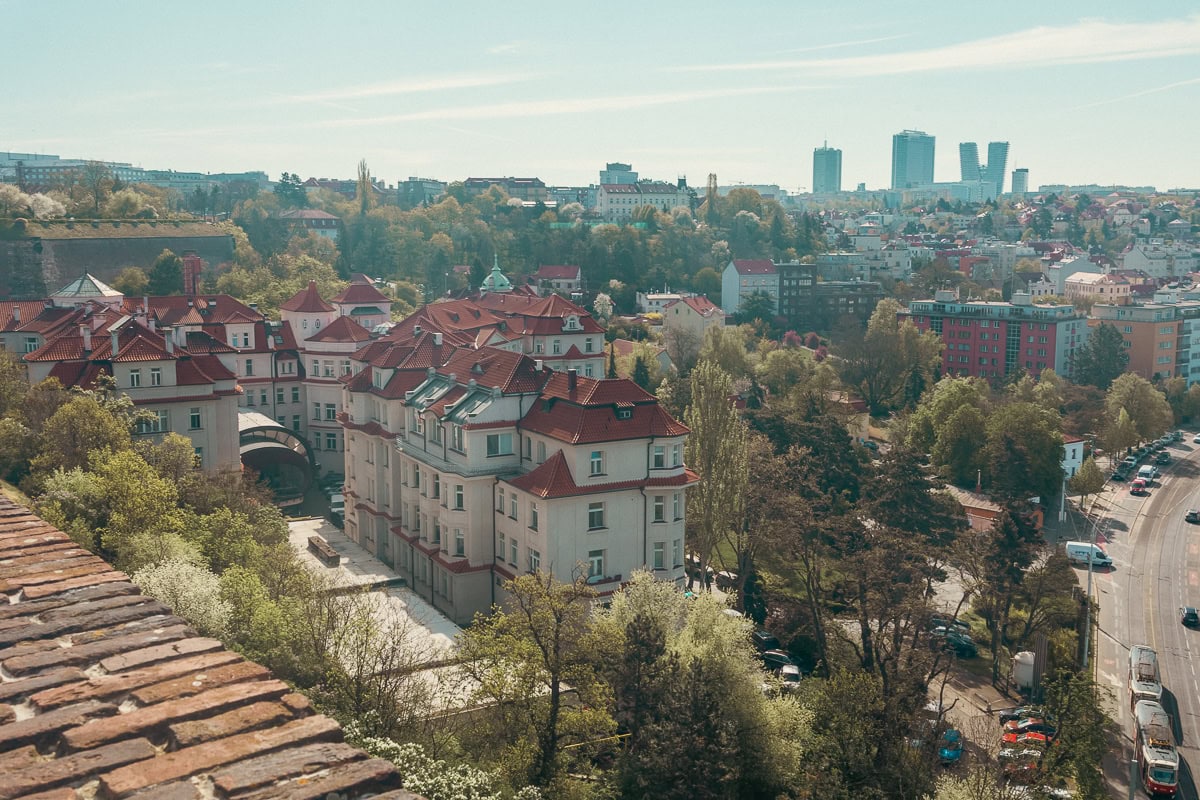
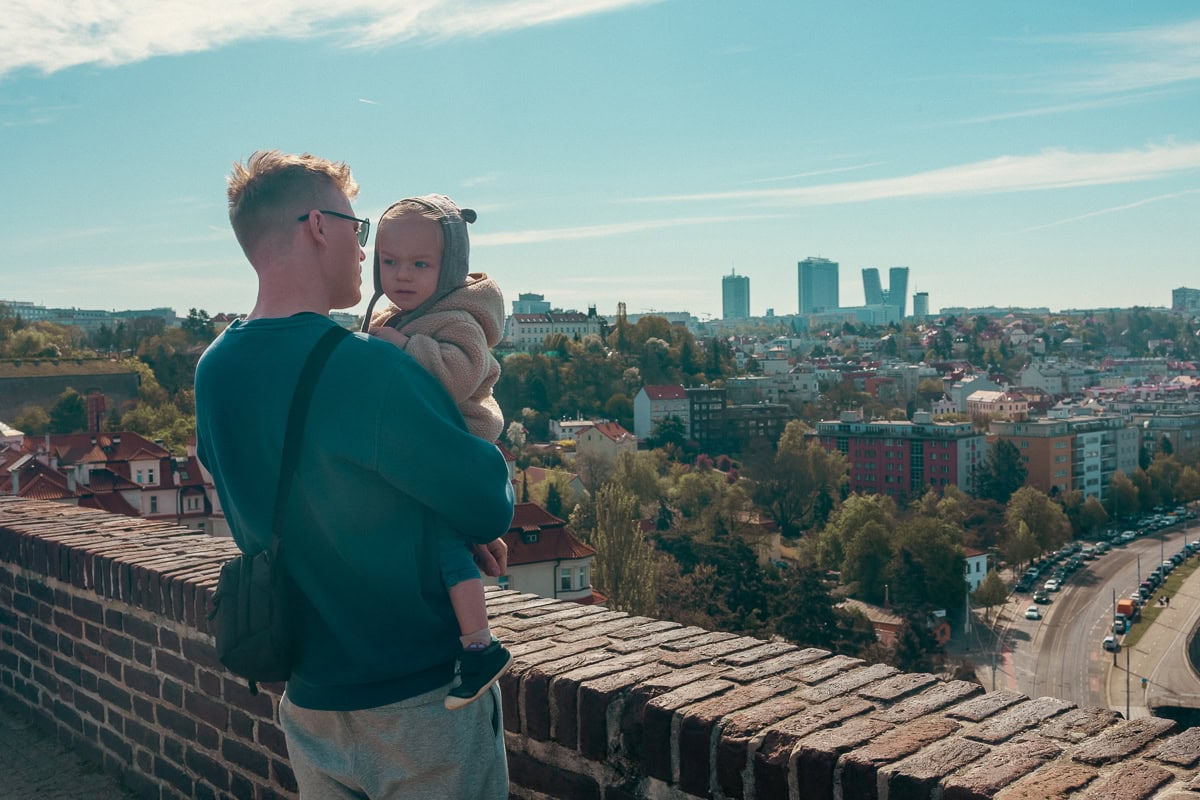
What makes Vyšehrad such a sought-after spot are its mighty baroque ramparts. They form a two-and-a-half-kilometre circuit that’s easy to walk, offering views in every direction. The most beautiful vista is from the south-western bastion looking towards the river, Podolí, and Zlíchov on the opposite bank. From the lookout near the gallery, you get the most iconic view of Prague Castle across the rooftops of the New Town. Vyšehrad is steeped in legends of Princess Libuše, the mythical ruler who is said to have prophesied Prague’s glory from this very spot. As you walk above the river, notice the ruins of a Gothic tower jutting out from the cliff — it’s called Libuše’s Bath, although historically it has nothing to do with the legendary princess.
On the lawn in the Vyšehrad park, you’ll also find the so-called Devil’s Pillars — three fragments of a broken granite column that, according to legend, were hurled here by the Devil after he lost a bet with a local priest. The ramparts and parks are open around the clock and completely free. 💡 Local’s tip: If you want peace and quiet for photos of the Vltava view without strangers’ heads in the frame, come on a Sunday morning around eight o’clock — you’ll have the ramparts practically to yourself, sharing them only with the early dog walkers.

Vyšehrad with kids: the Old Legends playground
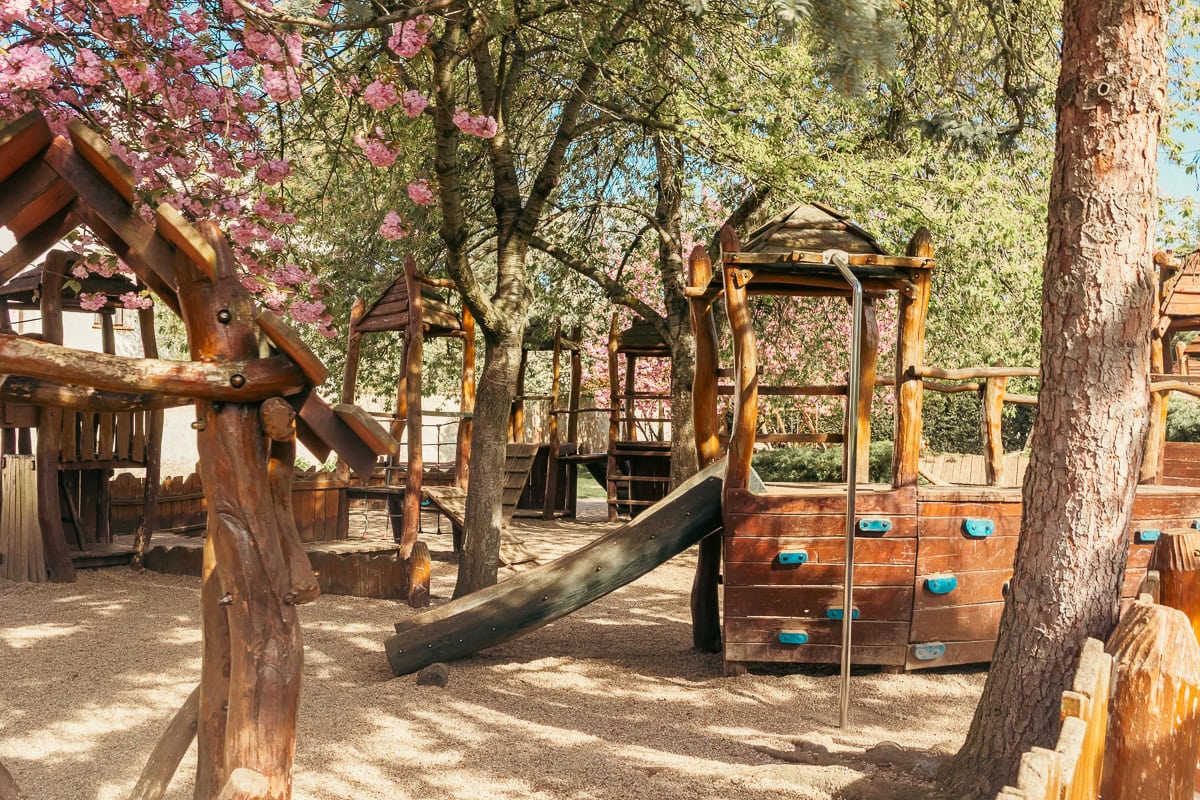
Whenever we’re in Prague with Jonáš, children’s playgrounds have become our new pit stop between sights. The Vyšehrad playground called “From Old Czech Legends” is tucked away in a quiet part of the park near the Rotunda of St Martin. The entire thing is built from solid acacia wood, and you’ll find wooden sculptures of mythical Czech heroes, various climbing frames, little houses, and swings — all sensitively integrated into the setting beneath mature trees.
The playground is fenced, which, as a parent of a toddler who loves to bolt in every direction, I enormously appreciate. The ground is soft sand and gravel, and there are plenty of benches for a rest. Admission is, of course, free.
Map of points of interest for your phone
Practical info for your visit
Before you head to Vyšehrad, here are a few practical details about transport, food, and tickets.
Getting there: The easiest way to reach Vyšehrad is by the red metro line C to the Vyšehrad station. From there, it’s roughly a 10-minute walk on completely flat ground past the Congress Centre to the Tábor Gate. This route is ideal for pushchairs or anyone with limited mobility. A second, slightly more romantic option is to take a tram (lines 2, 3, 17, or 21) to the Výtoň stop and walk up the hill along the ramparts. It’s a fair climb, but the views of the river gradually unfold as you go. A basic 30-minute public transport ticket costs around 1.20 €, while a day pass is about 6 €.
Food and drink: There are several cafés and restaurants right inside the Vyšehrad grounds where you can pop in. We recently stopped for cake and coffee when our son demanded a snack thirty minutes after breakfast.
Tickets and opening hours: As mentioned, the grounds themselves — parks, paths, ramparts — are open 24/7 and free. You only pay for entry to specific buildings:
- Basilica of St Peter and St Paul: approx. 5 € (daily, Sundays from 12 pm only)
- Casemates and Gorlice hall: approx. 5.50 € (daily 9:30 am–5 pm/6 pm)
- Vyšehrad Cemetery: free (open daily, closes at 4 pm or 6 pm depending on the season).
Read next
- Planning a full itinerary? Check out my comprehensive guide What to see in Prague, packed with dozens more tips beyond the main tourist trails.
- Want to compare tranquil Vyšehrad with its more famous sibling? Have a look at the article on Prague Castle.
- Travelling with little ones? Then you’ll find our special hub Things to do with a toddler in Prague handy, where I share favourite playgrounds and baby-friendly cafés.
Frequently asked questions
Is there an entrance fee for Vyšehrad?
No, entry to the entire outdoor area, including the ramparts and parks, is completely free. You only pay if you want to go inside the basilica, the underground casemates, or the gallery.
Can I bring a dog to Vyšehrad?
Yes, Vyšehrad is very popular with local dog walkers. However, dogs must be kept on a lead within the national cultural monument area and aren’t allowed into the children’s playground or the cemetery.
Is Vyšehrad suitable for pushchairs and wheelchair users?
Absolutely. If you arrive by metro line C at Vyšehrad station, the entire route to the basilica and the main circuit along the ramparts follows paved, flat paths with no steps. Only some of the side lanes have cobblestones.
How long does a visit to Vyšehrad take?
For a leisurely stroll with views from the ramparts and a visit to the cemetery, I’d recommend allowing 2 to 3 hours. If you also visit the interiors and stop for lunch, you can easily spend half a day here.
Where can I park near Vyšehrad?
The best option is to use the paid parking zones near the Vyšehrad metro station, or park down in Podolí and walk the rest of the way. However, public transport is by far the easiest option.
Is the Rotunda of St Martin normally open to visitors?
No, the rotunda is closed for most of the year for preservation and safety reasons — you can only admire it from outside, behind a low fence. It opens only on rare occasions, such as the Night of Churches or European Heritage Days.
Tips and Tricks for Your Vacation
Don’t Overpay for Flights
Search for flights on Kayak. It’s our favorite search engine because it scans the websites of all airlines and always finds the cheapest connection.
Book Your Accommodation Smartly
The best experiences we’ve had when looking for accommodation (from Alaska to Morocco) are with Booking.com, where hotels, apartments, and entire houses are usually the cheapest and most widely available.
Don’t Forget Travel Insurance
Good travel insurance will protect you against illness, accidents, theft, or flight cancellations. We’ve had a few hospital visits abroad, so we know how important it is to have proper insurance arranged.
Where we insure ourselves: SafetyWing (simple monthly subscription) and TrueTraveller (for extra-long trips).
Find the Best Experiences
Get Your Guide is a huge online marketplace where you can book guided walks, trips, skip-the-line tickets, tours, and much more. We always find some extra fun there!
More from Czechia
Full guide → Day trips · most readMikulov, Czech Republic: 10 Best Things to Do and See
 When to goBrno Christmas Markets 2026 – Tree Lighting, Opening Hours & Programme
 With kidsBest Water Parks in the Czech Republic: 13 Family Tips for 2026
 FoodPrague, Czech Republic: 10 Best Things to Do and See with a Toddler
 Where to stayPrague, Czech Republic: 10 Best Family Hotels for Your Stay with Children


