

Paris day trips are an absolute must, in my opinion. The city is wonderfully all-consuming, loud and constantly buzzing, but sometimes you just need to escape the stone streets, breathe some fresh air and let your toddler run free on the grass. Without the constant anxiety of a scooter hurtling through a crossroads.
France’s rail network is a small miracle. TGV high-speed trains and regional lines whisk you away to other centuries, straight into Impressionist paintings or into the heart of the Champagne region. For parents with a two-year-old explorer, that means one thing: minimal transport stress and maximum space for joy.
Plus, a lot is changing this year. Paris has caught its breath after last year’s Olympic frenzy, Notre-Dame Cathedral is finally gleaming after its restoration, and this summer people will be swimming in the Seine again for the first time in a century. As a vegetarian, I’m also thrilled that the famous restaurant Arpège has switched to a fully plant-based menu. All these changes in the centre mean that day trips from Paris also need a bit of a new strategy.
The key is knowing which station to head to, which trains to avoid, and why you should pack a baby carrier instead of a pushchair for some of these châteaux. Some places will blow you away with their grandeur, while others will surprise you with unexpected tranquillity and empty forest paths.
So I’ve put it all together: Versailles without a family meltdown, Giverny in the right month, Chantilly as a secret trump card, and Fontainebleau for those who want castles with a side of forest. I’ve included exact prices for 2026 and things we reckon aren’t worth the bother.
TL;DR
- Don’t take the RER C line to Versailles. It’s much more comfortable to catch the Line N train from Gare Montparnasse to Versailles Chantiers station.
- Buy your Versailles Palace tickets online for a specific time slot. Without a reservation, you’ll be queuing for hours in the blazing sun.
- With a toddler at Versailles, head straight for the gardens and Marie Antoinette’s hamlet. Only visit the palace in the afternoon if you really want to — personally, I think it’s not worth it with small kids.
- Monet’s Gardens in Giverny are open from 1 April to 1 November in 2026. ⚠️ Warning: Giverny is completely closed on the weekend of 19–20 September 2026.
- You can reach Giverny by train from Gare Saint-Lazare to Vernon station, where a shuttle bus runs for €5.
- Château de Chantilly houses the second-largest collection of Old Masters after the Louvre. The train from Gare du Nord gets you there in just 25 minutes.
- Fontainebleau offers not only a huge palace where Napoleon said his farewell, but above all an endless forest full of sandstone boulders that are perfect for kids to clamber over.
- Children aged 2 and under get into Disneyland completely free. With little ones, focus mainly on the Fantasyland zone.
- You can reach Reims for a champagne tasting in an incredible 45 minutes by TGV from Gare de l’Est.
- Pushchairs are reluctantly tolerated in most historic palaces at best. Always keep an ergonomic baby carrier in your bag.
The full destination guide: Paris — guide and what to see
When to Take Paris Day Trips: Weather, Seasons & Key Dates 2026
Picking the right day to escape the city is absolutely crucial. While in central Paris you can always duck into a café or museum, on day trips you’re often at the mercy of the weather. Castle gardens and parks make up half the experience. Lukáš and I always carefully check the forecast, because pushing a buggy through a muddy park at Versailles is something you really don’t want.
Best months to escape the city
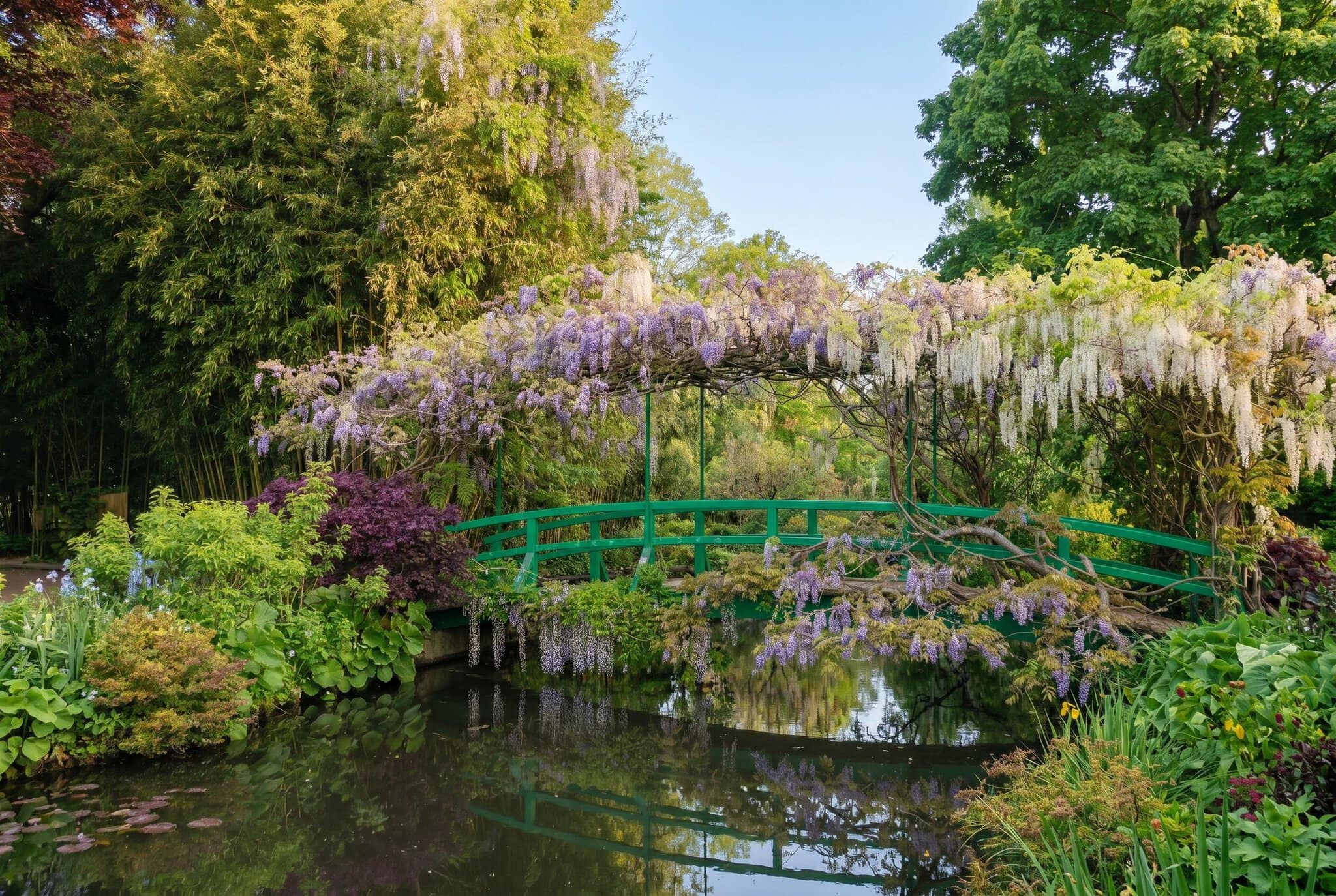
May and June are the absolute sweet spot for day trips from Paris. The days are long, temperatures hover around a pleasant 22°C, and everything is in glorious bloom. It’s in May that cascades of purple wisteria drape from the Japanese bridge in Giverny — a sight that will stay with you forever. September and the first half of October are also wonderful. The mornings are cooler, but the afternoon sun casts a beautifully soft light that gives the gardens at Fontainebleau a golden glow.
💡 Insider tip: If you’re planning a trip in May, watch out for French public holidays. There are several in this month alone (1 May, 8 May, Ascension Day) and Parisians love to turn them into long weekends. Trains sell out and attractions burst at the seams.
What to avoid and key dates 2026
August is the month to avoid day trips altogether. Palace courtyards turn into furnaces, park grass is scorched brown, and shade is nowhere to be found. On top of that, many small bistros in surrounding villages close for their annual summer holiday.
A critical warning for 2026 concerns the weekend of 19–20 September. The European Heritage Days (Journées du Patrimoine) take place across France. While normally closed government buildings open their doors, Monet’s Gardens in Giverny are exceptionally and strictly CLOSED on these two days. If you turn up, you’ll find nothing but a locked gate.
💡 Insider tip: Also check Mondays and Tuesdays. Most state-run museums and châteaux close on one of these days. Versailles is closed on Mondays, while the Louvre in Paris closes on Tuesdays. This means that on Tuesdays, the enormous crowd of tourists from the Louvre descends on Versailles instead.
Where to Stay in Paris for Easy Day Trips
Choosing the right neighbourhood will make or break your entire experience of the city and your budget. Paris is divided into twenty arrondissements that spiral clockwise from the historic centre near the Louvre. Finding affordable accommodation in the centre is nearly impossible, but if you know where to look, you can find a brilliant compromise between price, safety and accessibility.
With a pushchair and Jonáš, give a wide berth to the northern part of the 10th arrondissement around Gare du Nord and Pigalle in the 18th at night. A friend and I once got lost there at 2am — definitely not an experience I’d want to repeat with a two-year-old in tow. 😅
After a long search, we chose Hôbou, an authentic French boutique hotel in Boulogne-Billancourt (you can book it here). At first glance it seems almost unassuming, but within the first few hours you’ll fall in love with it.
Versailles: King of All Day Trips (and How to Survive It)
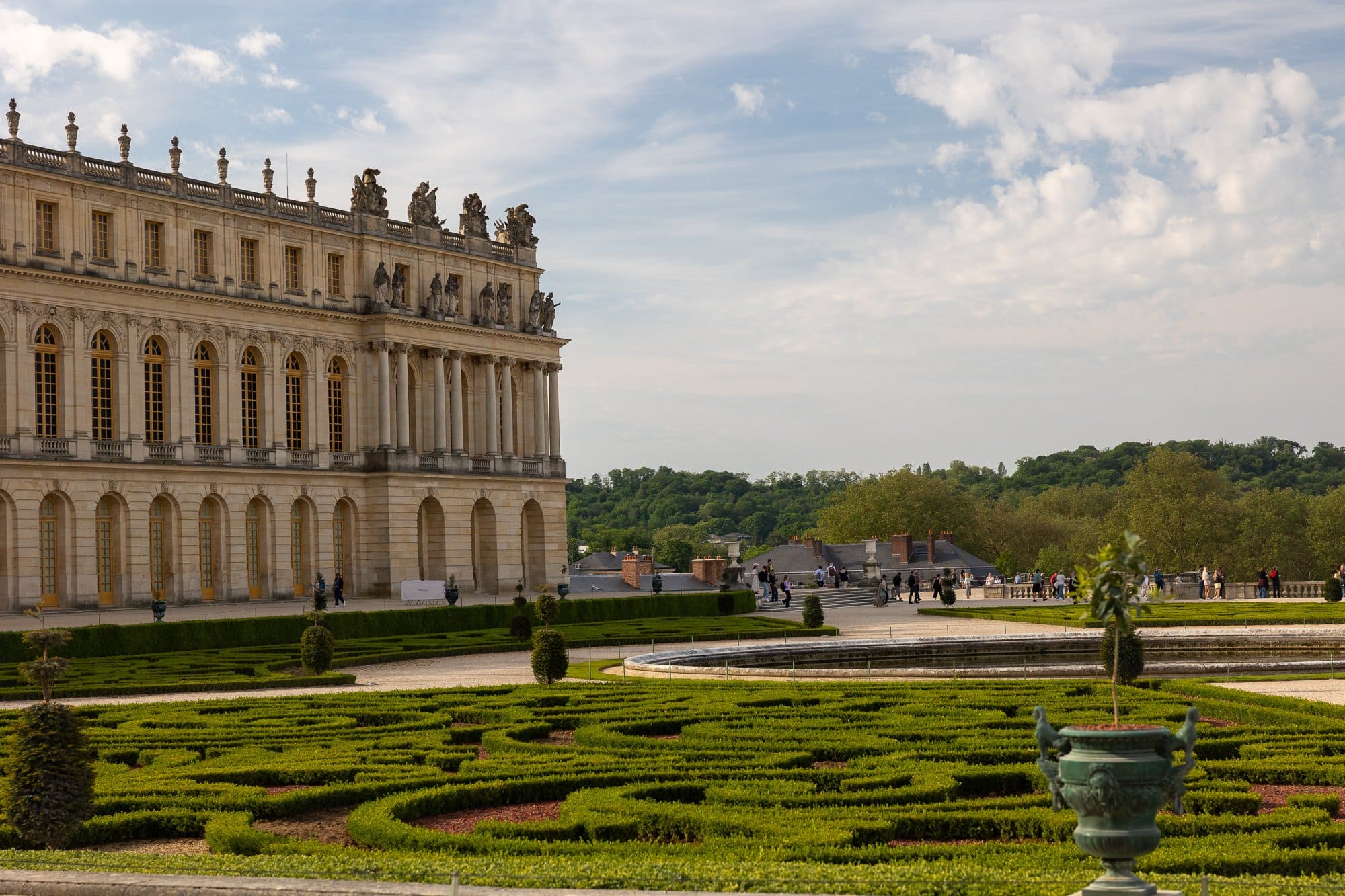
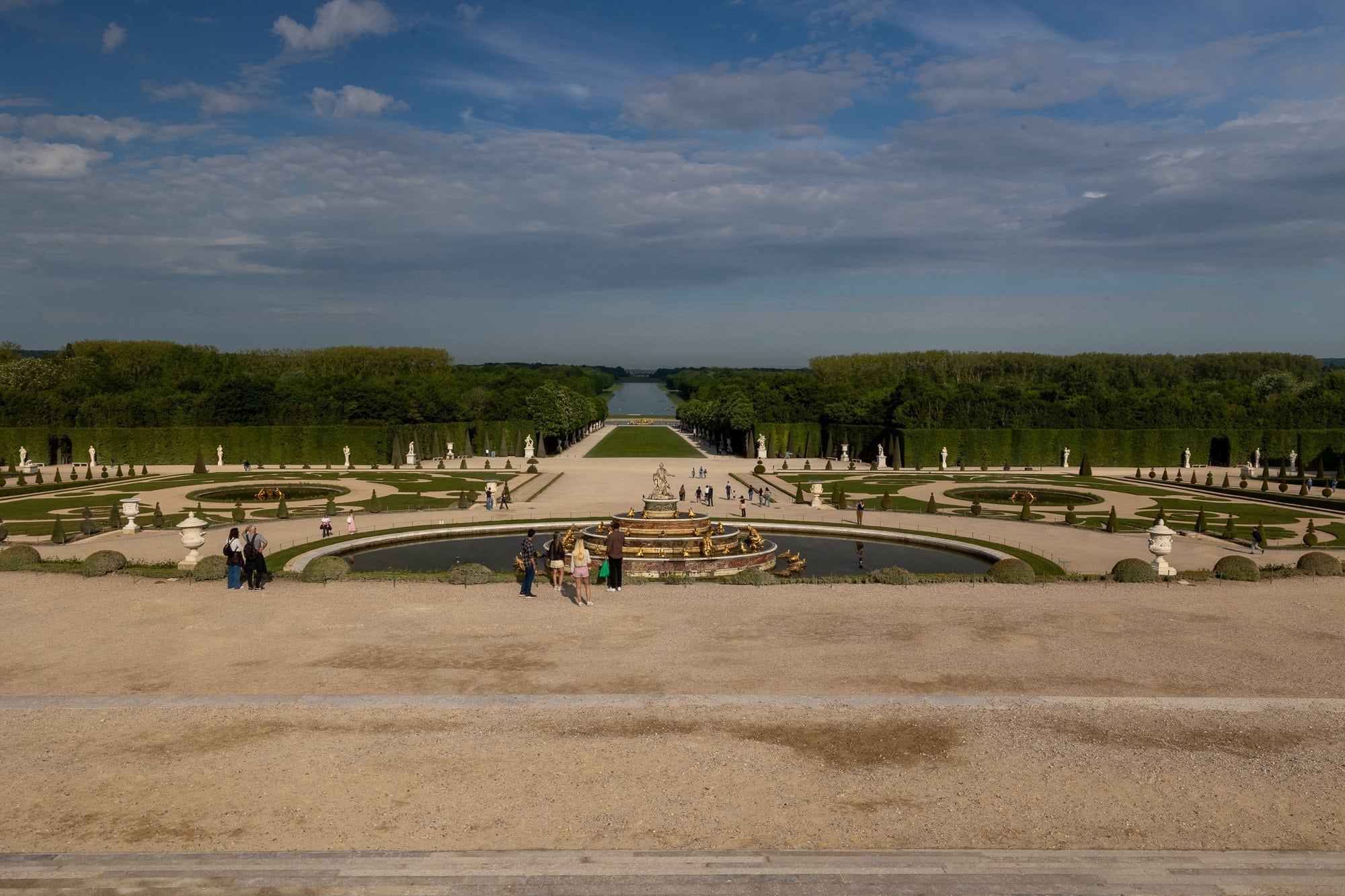
Versailles isn’t just a palace. It’s an absolutist manifesto made flesh in gold, marble and endless gardens. But trying to tackle it without preparation is a guaranteed recipe for a family meltdown. Thousands of people head to the gates every day, and without a clear strategy you’ll drown in the crowds. We actually skipped the palace itself — there’s honestly not that much to see inside — and happily spent 6–7 hours in the gardens alone.
Getting there: Why to skip the RER C
Most printed guidebooks will automatically send you on the yellow RER C line to Versailles Château Rive Gauche station. You’re going to be smarter than that. With a pushchair or small children, the much better option is the suburban Line N train, departing from Gare Montparnasse and taking you to Versailles Chantiers station.
The journey is shorter, and Montparnasse station itself is far more family-friendly than the labyrinthine underground corridors of the RER. The walk from Chantiers station to the palace is about five minutes longer, but you’ll save yourself enormous stress navigating awkward connections in central Paris. A one-way adult ticket costs €4.10.
💡 Insider tip: Don’t buy standard t+ tickets (those only cover zones 1–2). Versailles lies in zone 4. You need to buy a Billet Île-de-France (Billet Origine-Destination) ticket from the machine with Versailles as your destination. Ticket inspectors are stationed at the exit almost every day, and fines are steep.
Tickets and strict time slots 2026
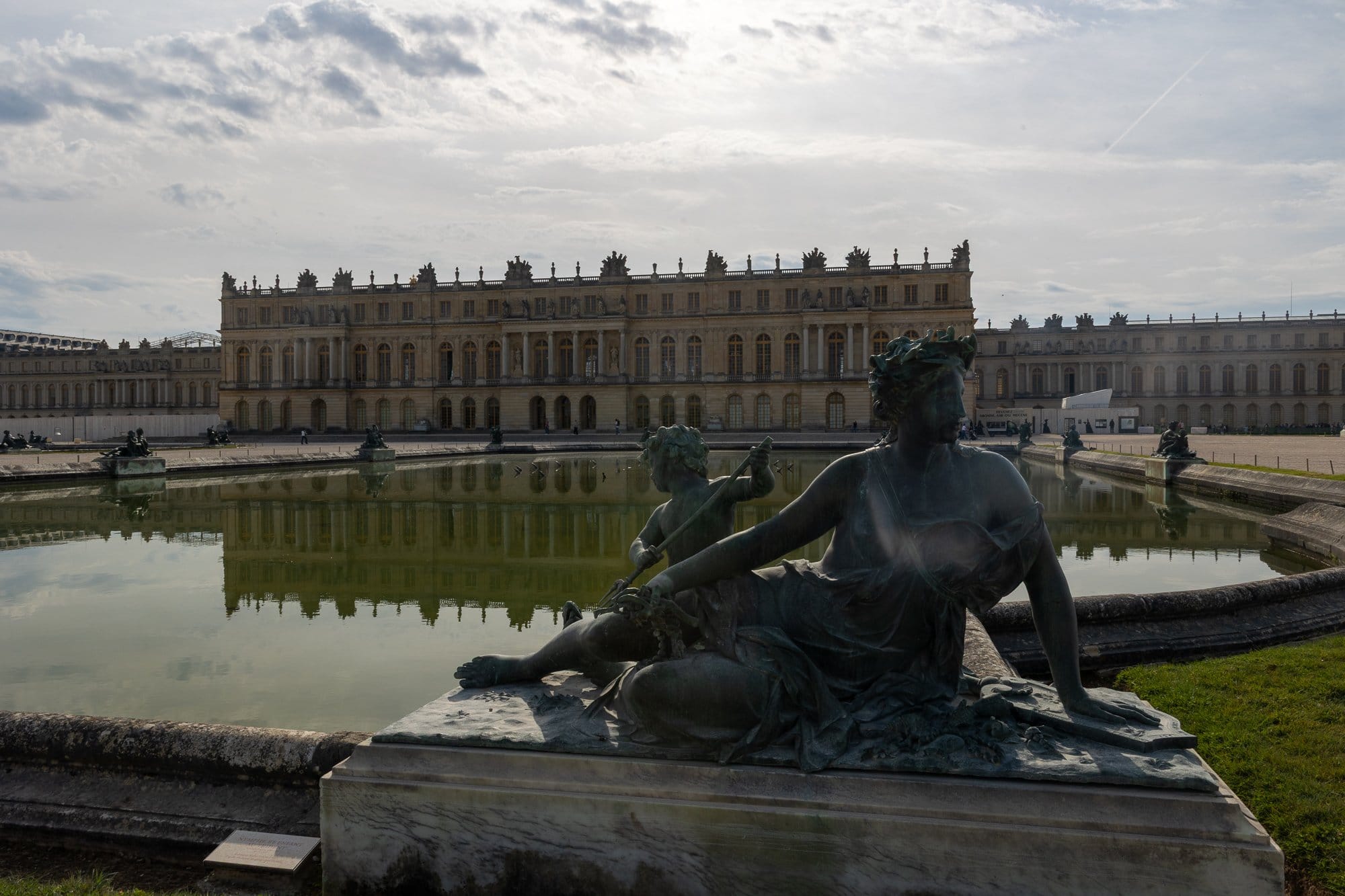
Turning up at the palace without a ticket during high season means easily two hours or more of queuing in direct sunlight. Booking online at the official chateauversailles.fr website for a specific time slot is an absolute must. Without it, don’t even bother going.
The basic palace ticket (Billet Château) costs €21. If you also want to see the Trianons and the hamlet, you’ll need the so-called Passport, which comes to €32. Under-18s (and EU residents under 26) get free entry to the palace, but NOTE — you still need to reserve a free time slot for them in the booking system.
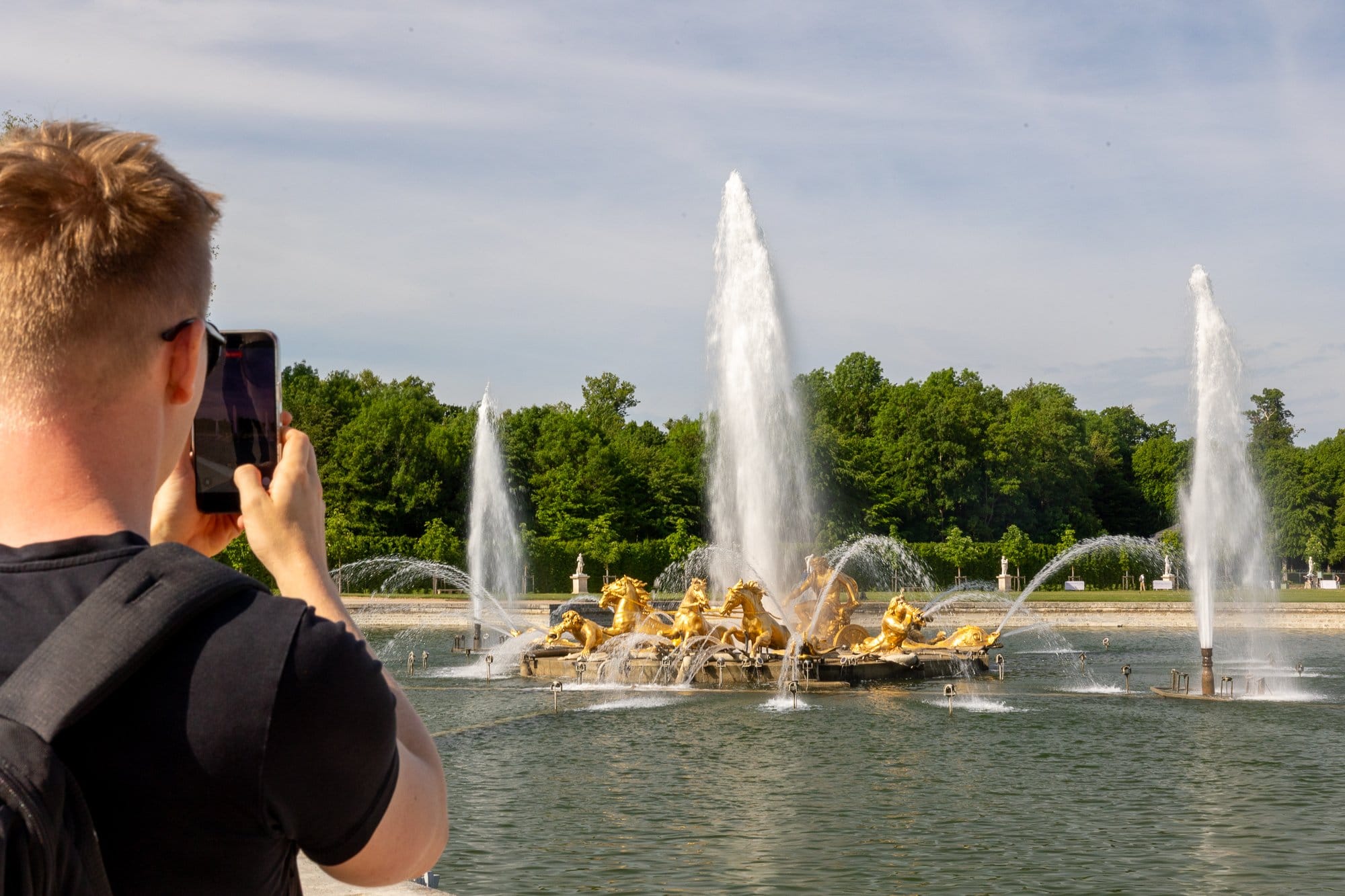
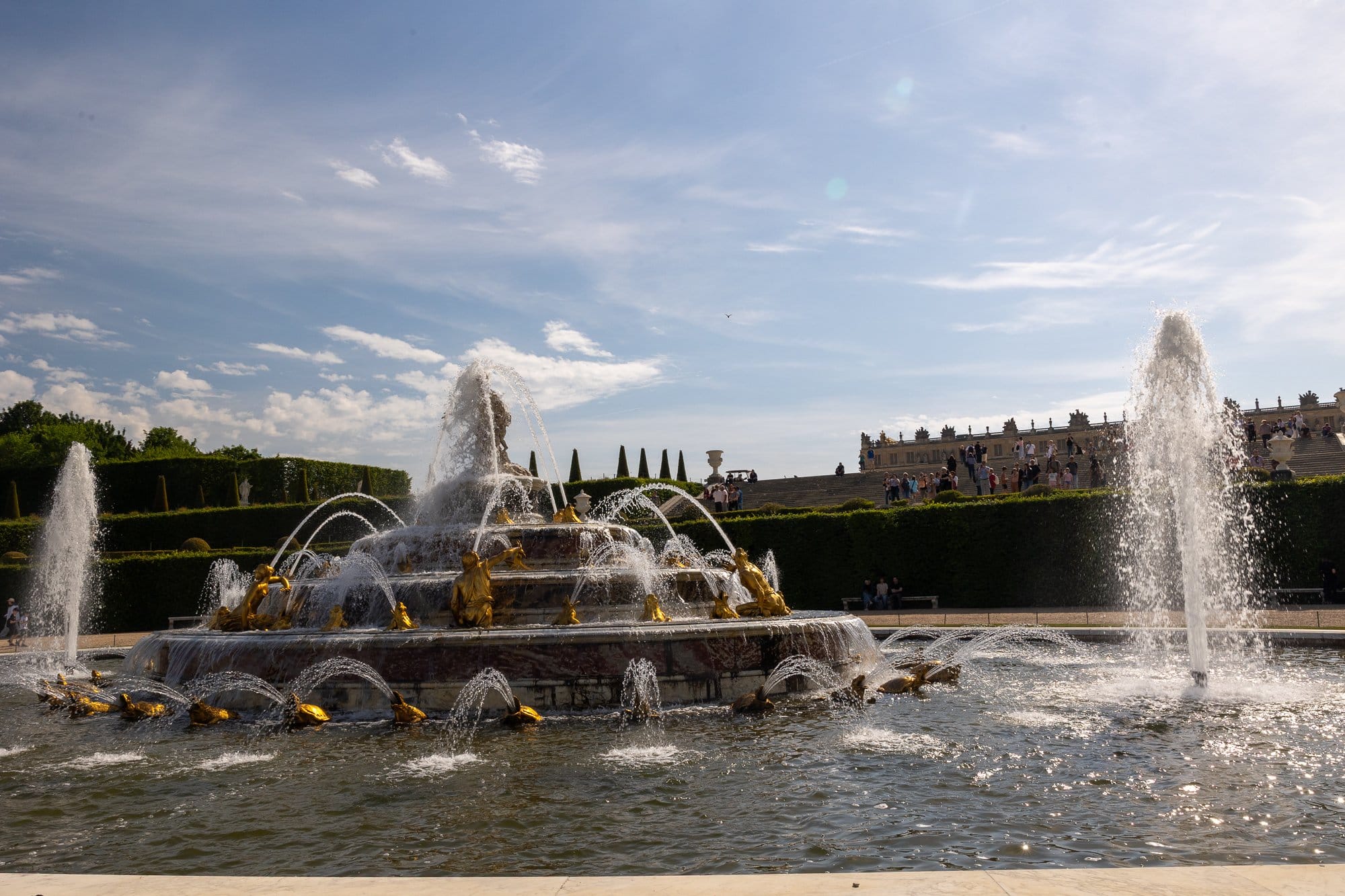
💡 Insider tip: The Paris Museum Pass does cover entry to the palace, but from April to October it does NOT include days when the Musical Fountain Shows are on. On those days (usually weekends and Tuesdays), you’ll need to pay an extra €10.50 or so for garden access.
Reverse strategy for families
The typical visitor arrives in the morning, queues for ages, shuffles through the packed palace, and by the time they finally reach the gardens two hours later, they’re shattered. You’re going to do it the other way round. Head straight for the gardens and the vast park first. Entry to the park (not the formal gardens right next to the palace) is free and the gates open at 8:00.
Let your child run wild. The area around the Grand Canal is huge, airy and practically made for a morning picnic on the grass. Book your palace time slot for the late afternoon, ideally after 15:30. By then the big organised tour groups are heading back to Paris, you can finally breathe inside the palace, and your toddler might just be napping in the carrier. Or simply skip the palace entirely. With a small child, it’s honestly not worth it in my opinion.
💡 Insider tip: If you fancy a coffee and the famous hot chocolate at the Angelina patisserie branch inside the palace, brace yourself for an enormous queue. A much better bet is to grab a takeaway coffee from the little kiosk by the Grand Canal and enjoy it on a bench under the trees.
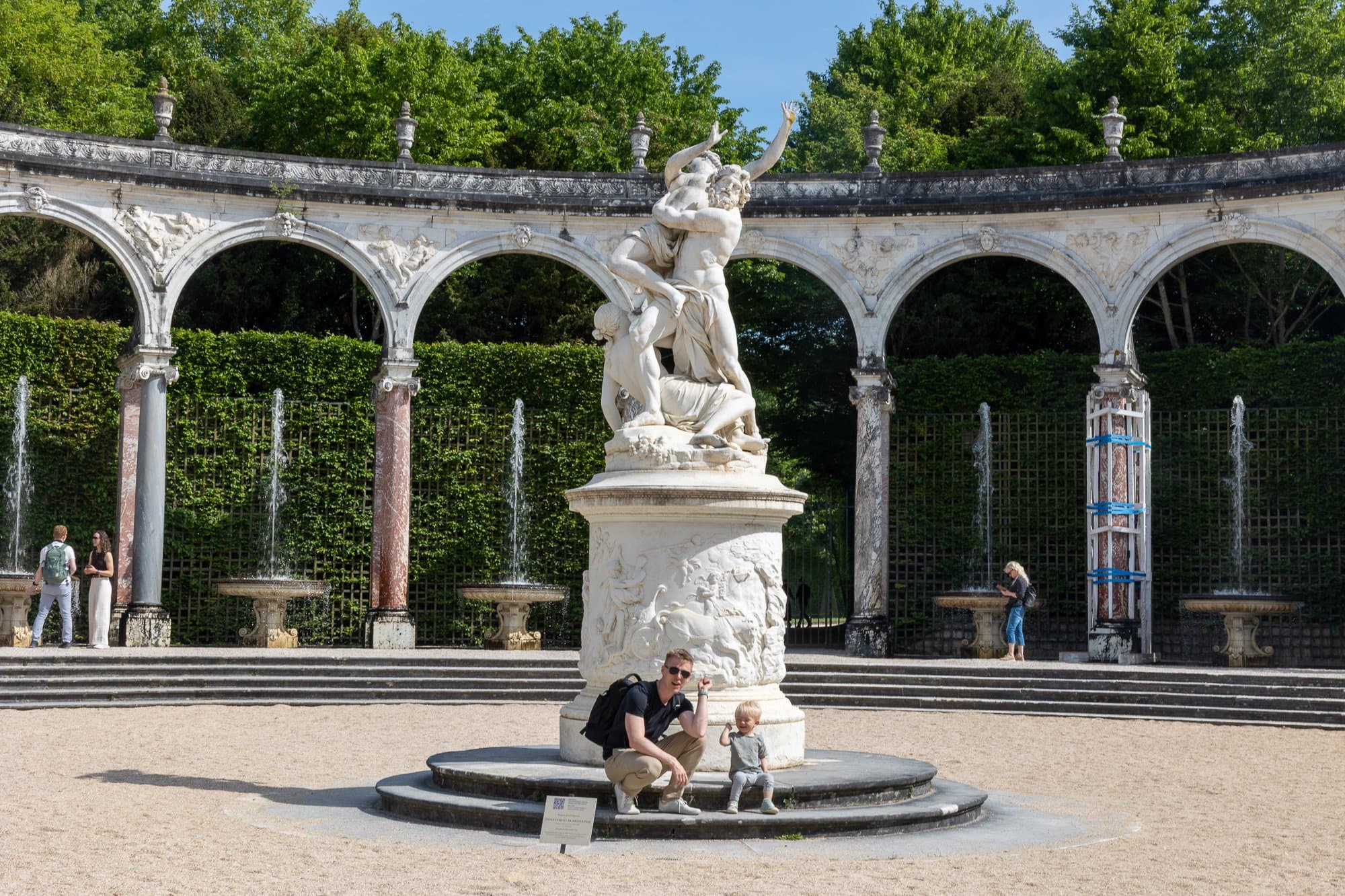
The Trianons and Marie Antoinette’s Hamlet (Hameau de la Reine)
When the main palace starts to feel overwhelming with all its gilded excess, make your way to the far end of the estate. The Grand Trianon and Petit Trianon feel far more intimate. But the real showstopper — especially if you’re travelling with children — is the Hameau de la Reine.
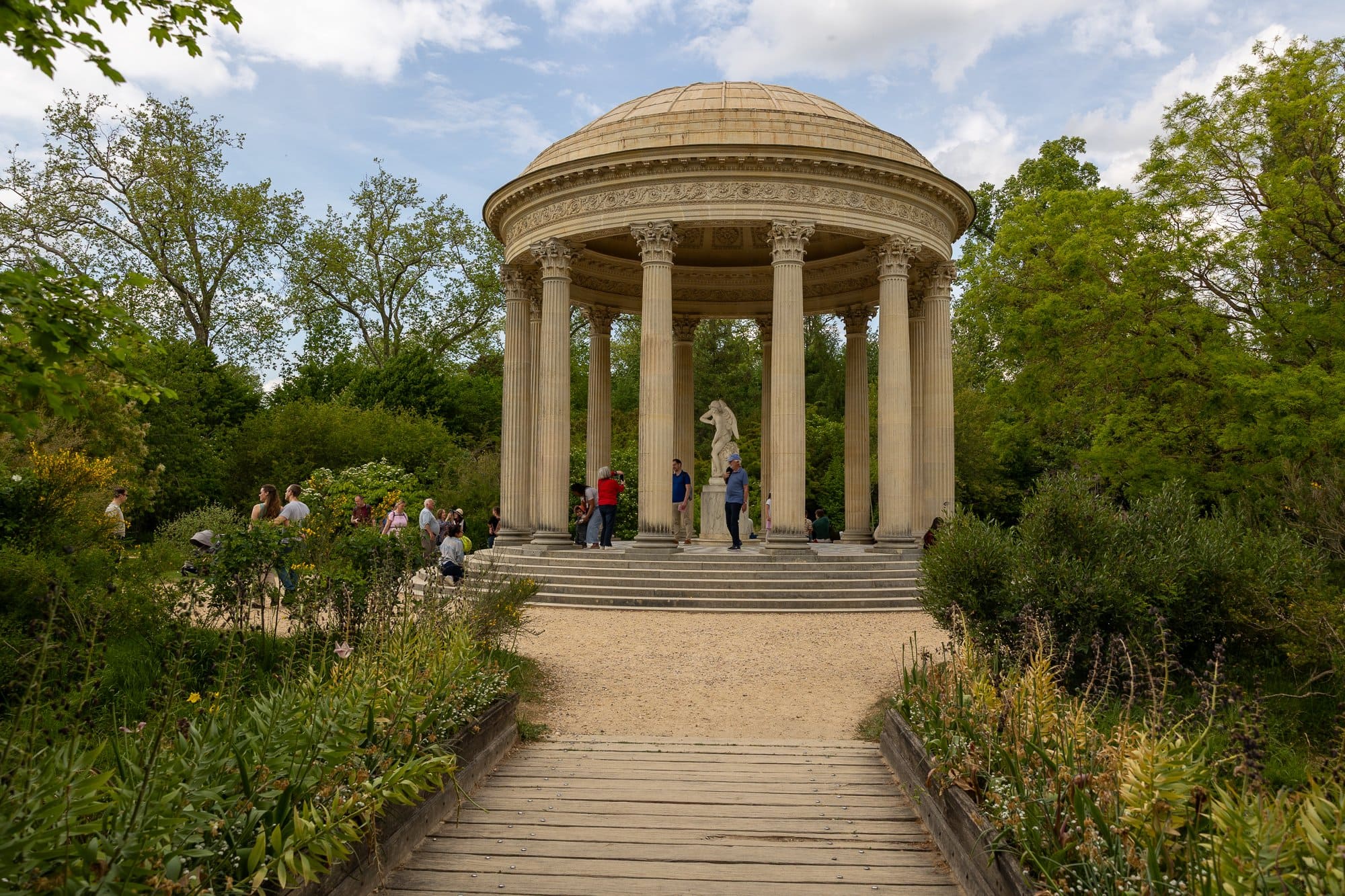
Queen Marie Antoinette had this rustic farmstead built complete with a mill, vegetable garden and thatched roofs so she could play at simple country life. For a two-year-old, it’s an absolute fairy tale. Sheep and goats roam freely, and the whole area looks like something from a picture book. You can walk to the Trianons in about 30 minutes from the main palace, or hop on the paid Petit Train tourist shuttle for €9.
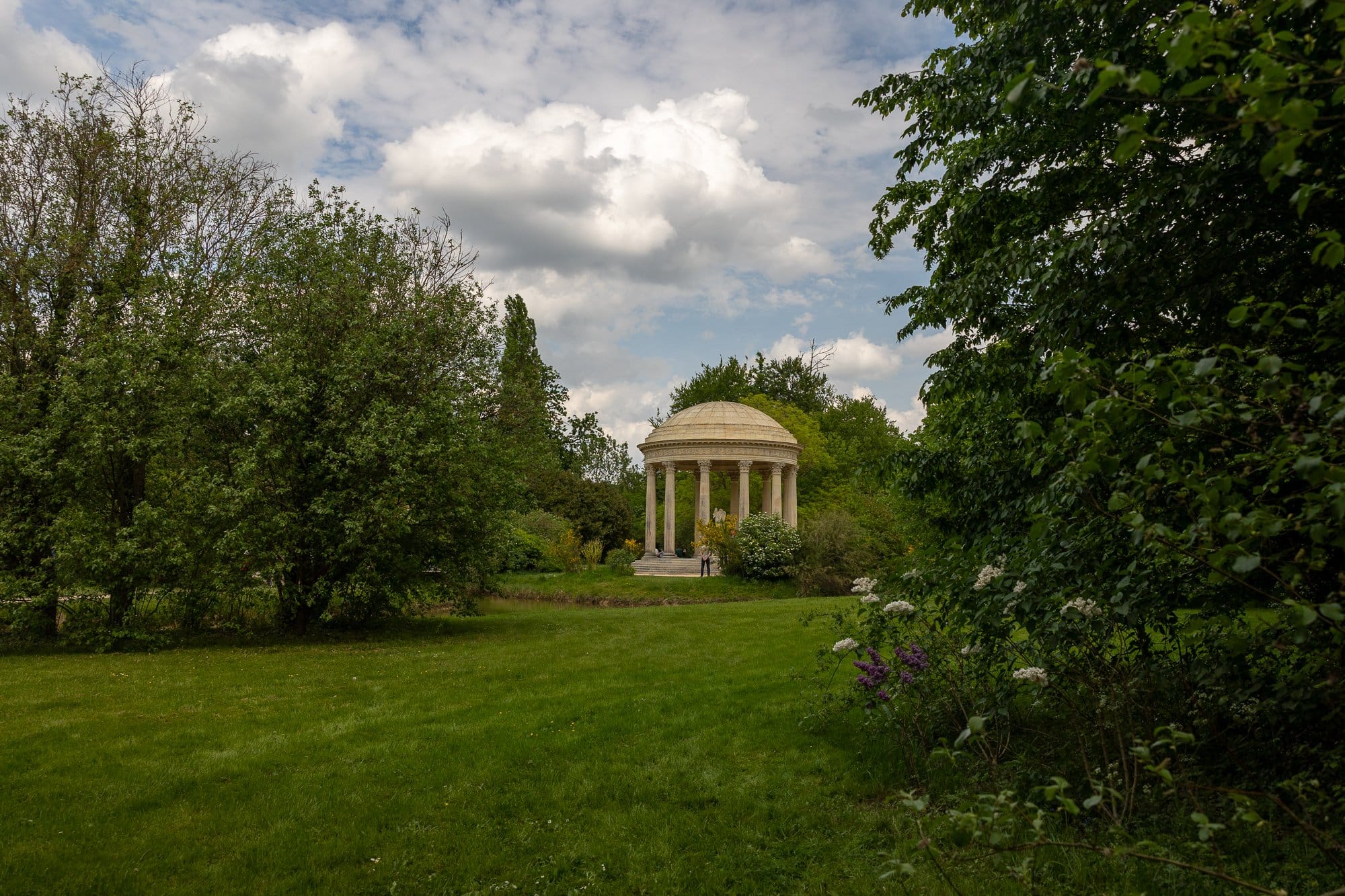
💡 Insider tip: Some of the oldest trees in the entire estate grow around the Trianons, complete with signs telling their stories. It’s a brilliant spot to escape the summer heat, as the canopy creates a perfect natural parasol.
Pushchairs, carriers and toddler logistics
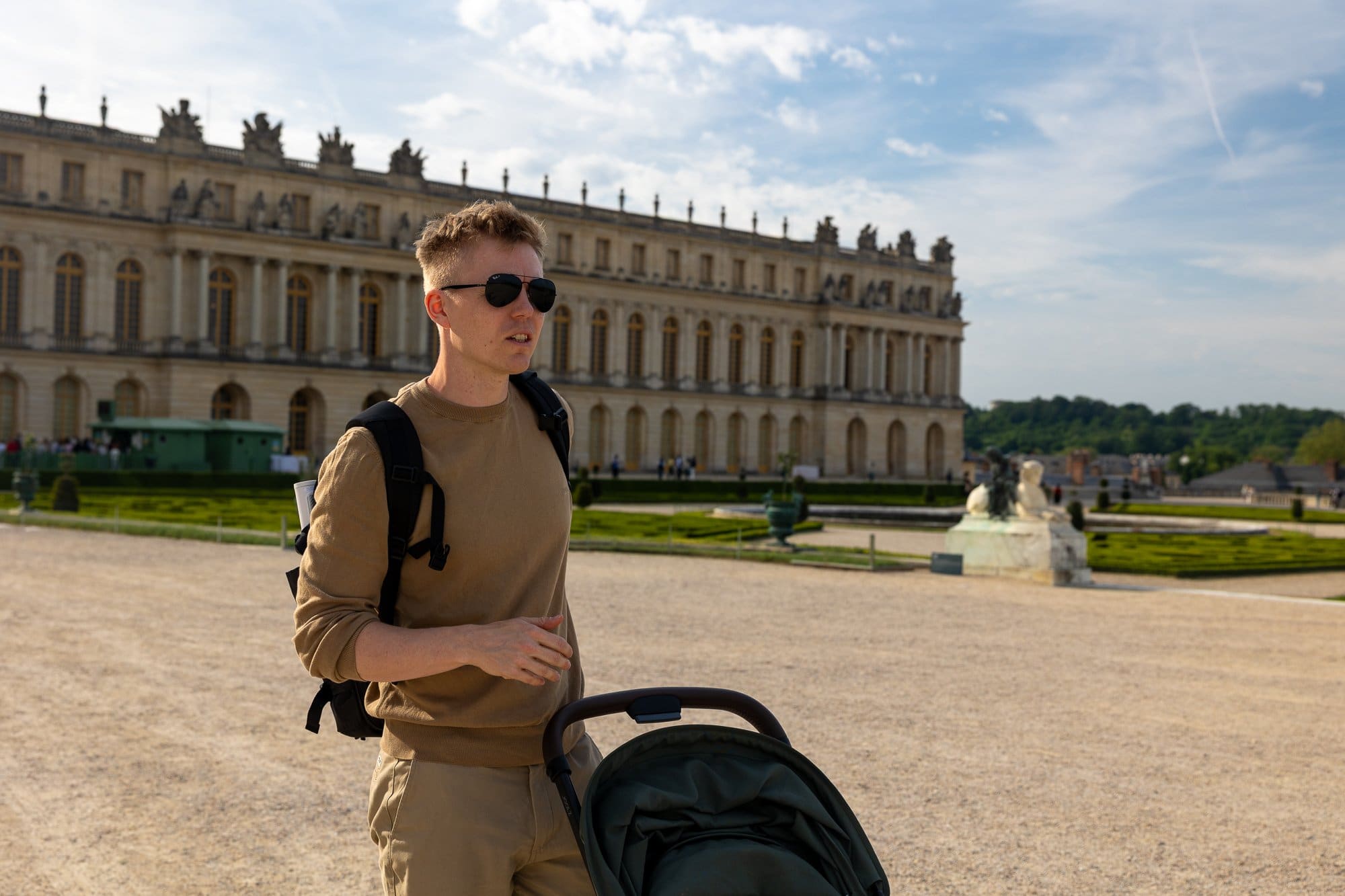
The official Versailles rules are clear: no pushchairs inside the palace. In practice, though, staff often quietly tolerate small folding buggies. However, you might encounter a strict guard who’ll unceremoniously send you to the check-in desk to leave it.
The golden rule: bring an ergonomic baby carrier if you want to go inside the palace. It’s full of stairs, narrow passages, and the crowds shuffle along slowly. A carrier gives you freedom of movement and your toddler will see far more than just other people’s legs and rucksacks. In the gardens and park, your pushchair is absolutely fine.
💡 Insider tip: The toilets inside the palace are perpetually busy and the changing tables are often occupied. Much cleaner and quieter loos can be found near the garden entrance by the La Flottille restaurant at the Grand Canal.
Giverny: Step Right Into a Monet Painting
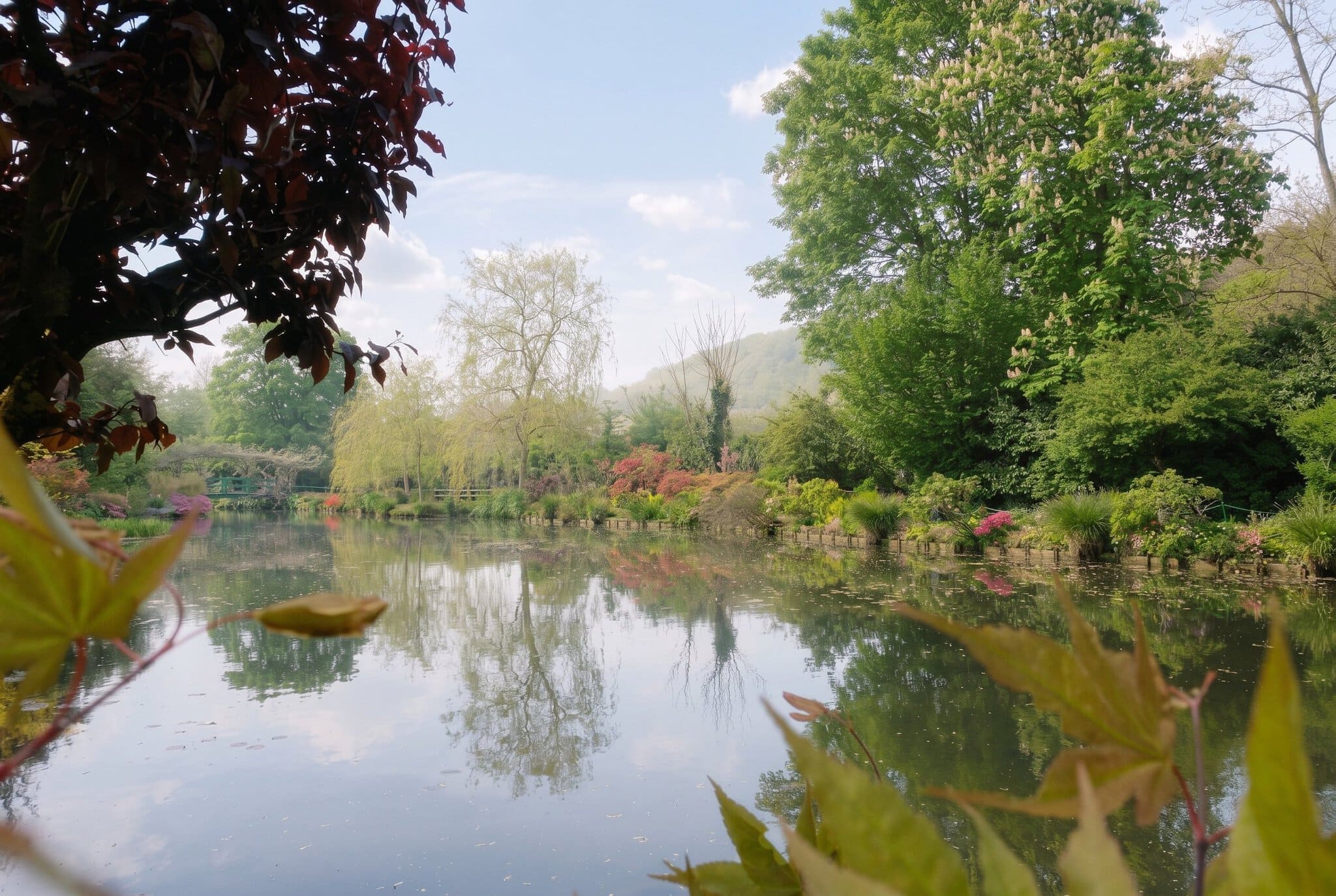
If you love Impressionism, blooming gardens and a dash of artistic romance, Giverny is your place of pilgrimage. Claude Monet lived here, worked here, and grew his greatest masterpiece with his own hands — his garden. It’s one of the most photogenic spots in all of France, but it does require a bit of planning.
When to go and how to get there
The season in Giverny runs from 1 April to 1 November 2026. It’s open daily from 9:30 to 18:00 (last entry at 17:30). The visit itself takes about 2 hours, but factor in half a day with travel.
Giverny lies in Normandy, about 80 kilometres from Paris. The easiest route is to take a regional train from Gare Saint-Lazare to Vernon-Giverny station. The journey takes roughly 50 minutes and a ticket costs around €16. A shuttle bus waits outside Vernon station and takes you directly to the village for €5 one way (or €10 return).
💡 Insider tip: The shuttle bus timetable is perfectly synced with train arrivals from Paris. Don’t be tempted by taxi drivers at the station who often claim the bus has already left. Stay calm — the bus waits for all passengers from the train.
What awaits inside (The Japanese Bridge and water lilies)
An adult ticket costs €13, and you can easily buy them on the official foundation website. Children under 7 get in free.
The main event happens outdoors. The garden is split into two parts. The Clos Normand in front of the house is a huge, geometrically arranged palette of flower beds. An underpass beneath the road then leads you to the Water Garden. There you’ll find the iconic green Japanese bridge draped in foliage and the pond full of Monet’s famous water lilies (Nymphéas) — the very subject he painted obsessively in the final years of his life.
💡 Insider tip: The best light for photography by the pond is first thing when the doors open at 9:30, or just before closing time. Around midday the sun is too harsh and the bridge becomes a battleground for tourists fighting over the best selfie spot.
Photography, lunch and the Impressionism Museum
The garden looks completely different each month. In May, irises and peonies bloom; June belongs to the climbing roses; and by late September into October, towering hydrangeas, dahlias and sunflowers take over. If you’re into photography, bring a polarising filter — it works wonders removing glare from the pond surface so the water lilies really pop.
After the gardens, take a stroll through the village. Right next door you’ll find the excellent Musée des impressionnismes Giverny. And if you’re after an exceptional dining experience, book a table at the nearby Le Jardin des Plumes, which holds a Michelin star. For vegetarians, they can prepare an absolutely fantastic tasting menu using local vegetables — just let them know in advance.
💡 Insider tip: The road through Giverny village (Rue Claude Monet) is narrow, but it’s lined with lovely little independent galleries and bakeries. Grab a fresh baguette, a chunk of Normandy cheese, and have a picnic on the banks of the River Epte just beyond the village.
Chantilly: Horses, Lace and Legendary Whipped Cream
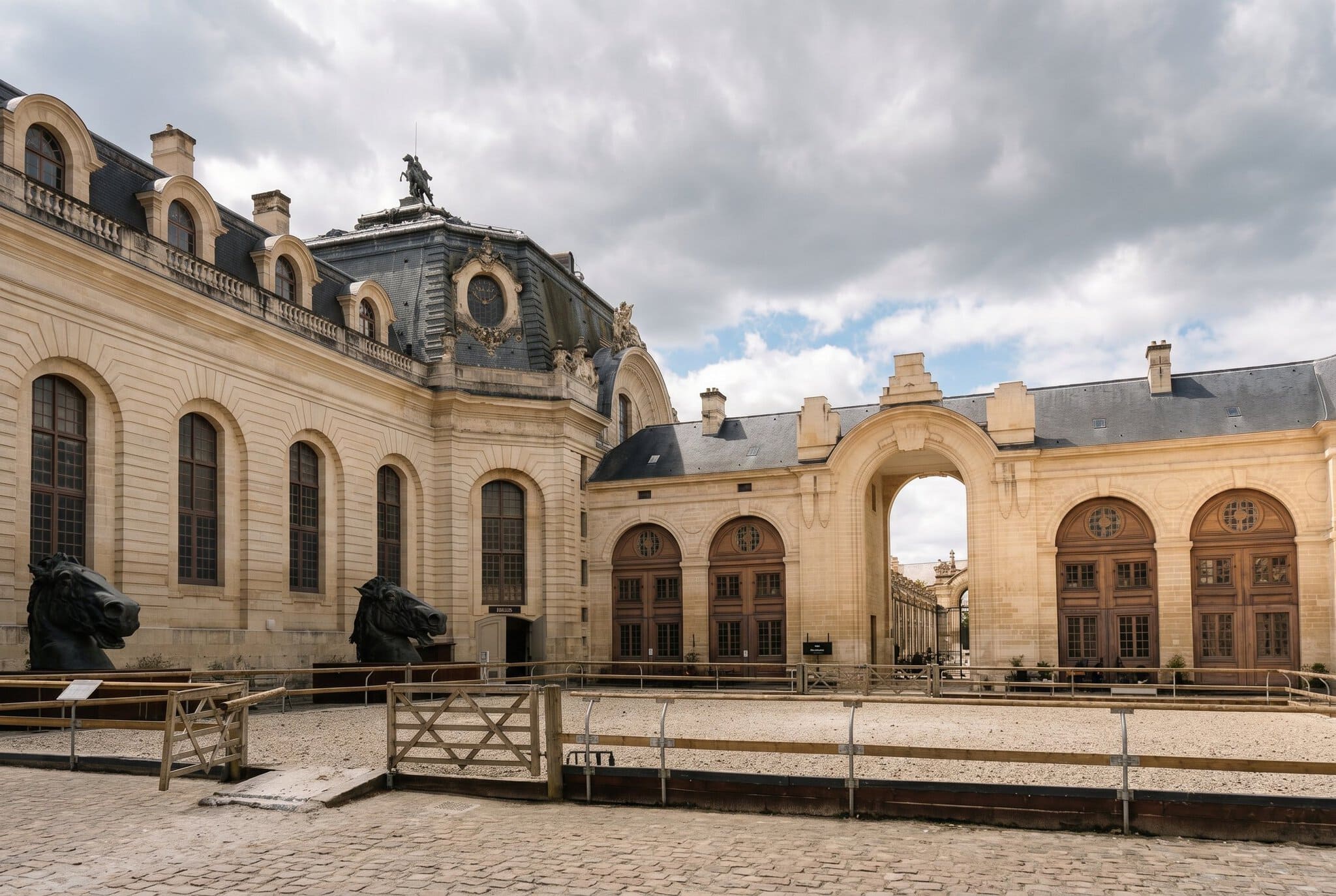
Craving a grand château but honestly dreading the Versailles crowds? Chantilly is your secret weapon. This place oozes elegance, sits north of Paris, and sees significantly fewer tourists. Plus, it’s paradise for lovers of art, horses and good food.

The château and the second-largest art collection
Getting there is surprisingly easy — a TER train from Gare du Nord drops you at Chantilly-Gouvieux station in just 25 minutes, and a ticket costs around €9. From the station, a lovely forest path leads to the château in about 20 minutes on foot, or you can catch the local bus.
The château itself (Palais de Condé) looks from afar as if it’s floating on the water. Inside, it holds a huge surprise: the second-largest collection of Old Masters in France, right after the Louvre in Paris. You’ll see works by Raphael, Botticelli and Delacroix. A full ticket (château, park and stables) costs €18, available on the Château de Chantilly website.
💡 Insider tip: The paintings in the gallery are hung exactly as the Duke of Aumale wanted them in the 19th century — crammed side by side, frame to frame, floor to ceiling. It’s a mesmerising sight that you simply don’t see in modern galleries any more.
Grandes Écuries (The Great Stables)
For families with children, the star attraction is the Grandes Écuries. These are quite possibly the most luxurious horse stables in the world — so monumental that 18th-century visitors often mistook them for the château itself.
Today they house a horse museum, and spectacular equestrian shows are held here regularly. The horses train every day, and for little ones, watching dressage beneath the enormous dome is a truly awe-inspiring experience. Jonáš stood there utterly fascinated for nearly an hour.
💡 Insider tip: Tickets for the equestrian show aren’t included in the standard entry fee. If you want to see the main performance (usually on Thursdays, weekends and bank holidays), you’ll need to pay an extra €6 or so, and book well in advance online.
The ritual of Crème Chantilly
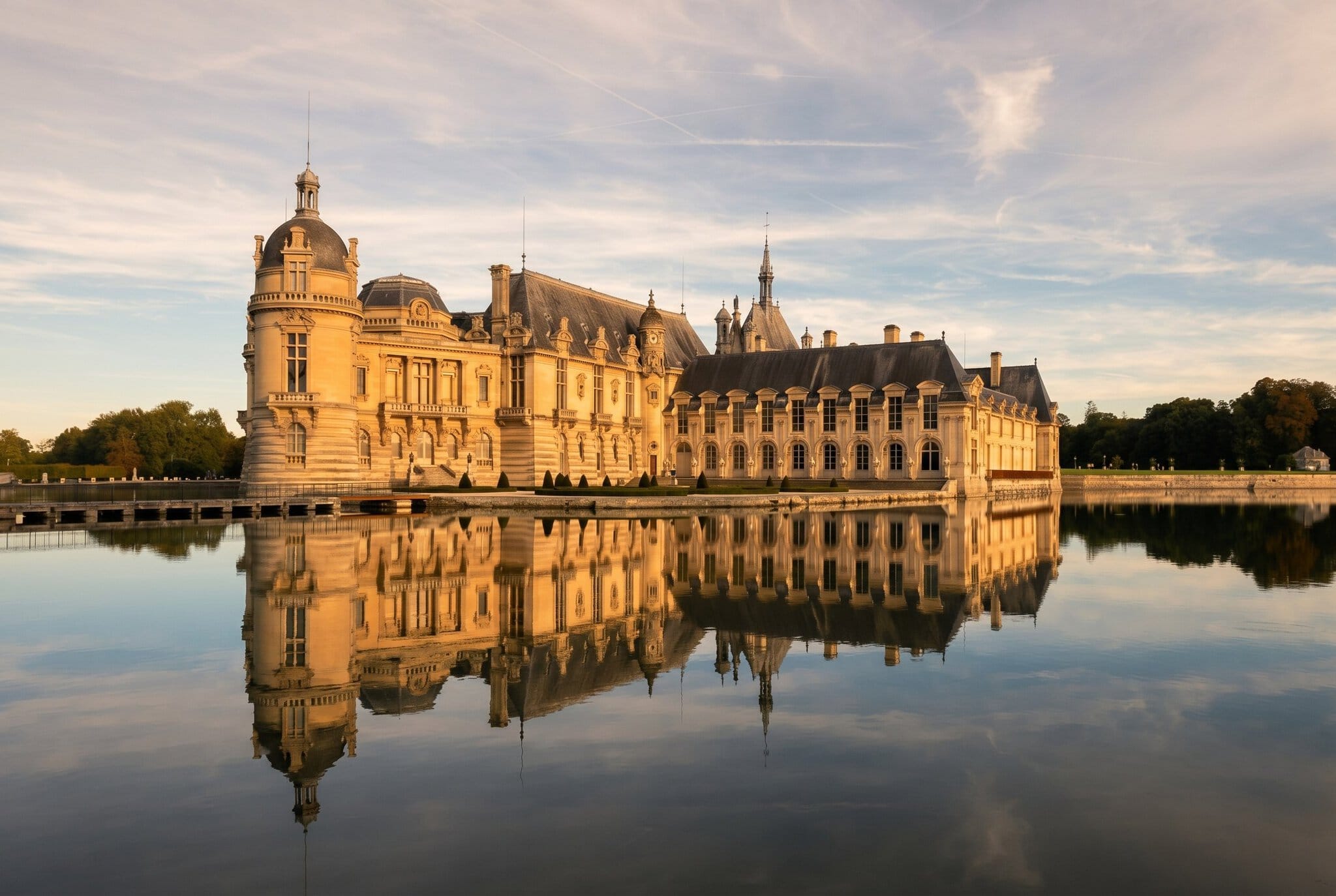
The town gave the world two absolutely essential things: delicate black lace, and above all the real, vanilla-scented, properly whipped crème chantilly. Trying it here, freshly whipped, is nothing short of a gastronomic and moral obligation.
Skip the stalls right by the station, though. The best places to try it are in the château grounds — the restaurant La Capitainerie, set in the former château kitchens, or the little bistro in the English garden. A bowl of fresh strawberries topped with a generous mountain of this fluffy heaven will set you back about €8.
💡 Insider tip: Authentic Chantilly cream is whipped by hand with large whisks and must contain no stabilisers whatsoever. You’ll taste the difference from the first spoonful. It’s incredibly rich, creamy and fragrant with real vanilla pods.
Map of points of interest for your phone
Fontainebleau: Refuge of Kings and a Sandstone Paradise
While Versailles was built by the Sun King Louis XIV essentially from scratch, Fontainebleau served as a royal residence for a full eight centuries. It’s a sprawling complex that breathes far older and more rugged history. For Parisians, it’s the most popular weekend escape, offering a perfect blend of culture and wild nature.
Château de Fontainebleau (Napoleon’s footprint)
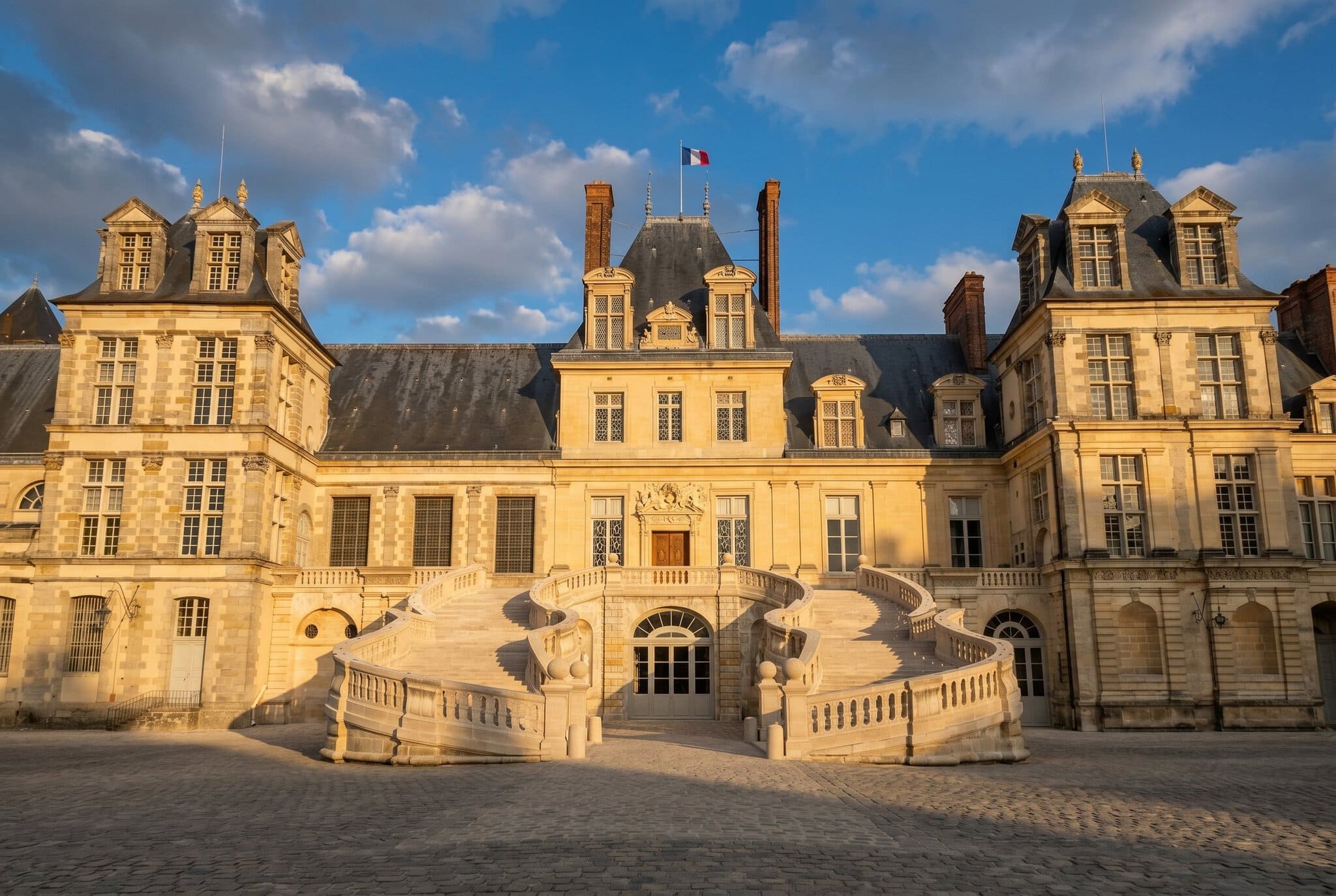
A train from Gare de Lyon gets you to Fontainebleau-Avon station in 40 minutes. A ticket costs around €9, and you can also use a pre-loaded Pass Navigo Découverte if you’ve bought all zones. From there, hop on bus line 1 which drops you right at the château, or enjoy a 35-minute walk through the beautiful forest.
The palace is labyrinthine and enormous. It was on its main courtyard — today known as the Courtyard of the Farewells — that Napoleon Bonaparte stood in 1814 to bid farewell to his loyal guard before departing into exile on the island of Elba. Inside, don’t miss the stunning Gallery of Francis I, packed with frescoes and carved wood. Palace admission is €14, bookable on the official website.
💡 Insider tip: Unlike Versailles, the palace grounds are completely free to enter, 24 hours a day, 7 days a week. There’s a gorgeous pond teeming with giant carp. Buying a bit of bread and feeding them is one of those beloved local rituals that kids absolutely adore.
Forêt de Fontainebleau and bouldering
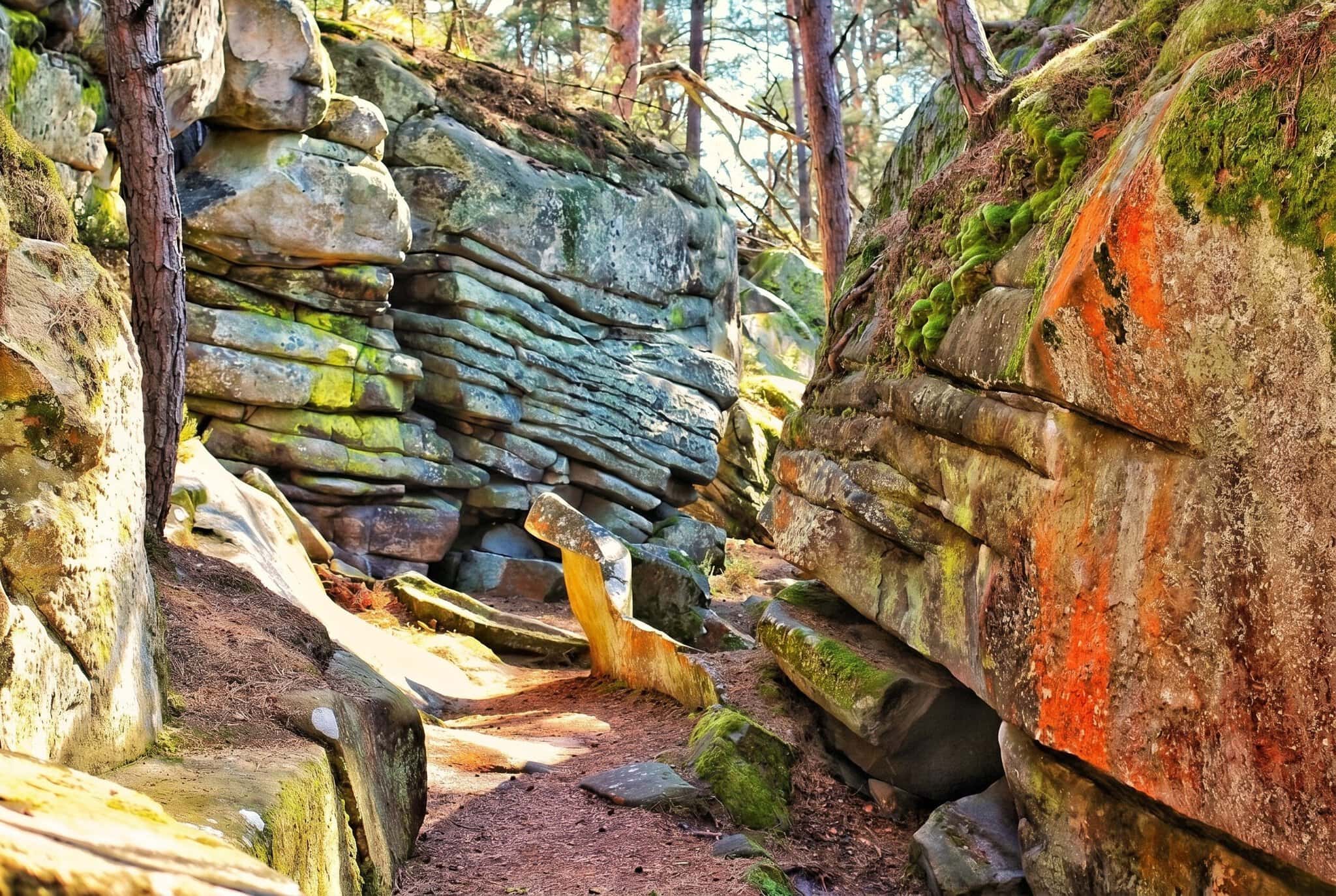
For many locals, Fontainebleau isn’t about the palace at all — it’s about the forest. This vast natural park spanning 25,000 hectares is a world-class wonder, scattered with enormous sandstone boulders in the most fantastical shapes.
It’s a global mecca for bouldering, something we only learnt from a random chap in climbing shoes who was training there. We’d turned up with a pushchair, and Jonáš was equally thrilled, leaping from boulder to boulder like a maniac while we barely had to watch him because the white sand underneath is naturally soft. It feels more like a fairy tale than somewhere 30 kilometres from bustling Paris. If you’ve got a buggy, stick to the main waymarked paths (like the loop at Gorges de Franchard).
💡 Insider tip: If you want to see the most interesting rock formations, download a hiking trail map app to your phone. The forest is so enormous that getting lost is genuinely easy. The most popular and family-accessible area is the so-called L’Éléphant (an elephant-shaped rock).
Disneyland Paris: A Tactical Operation with a Two-Year-Old
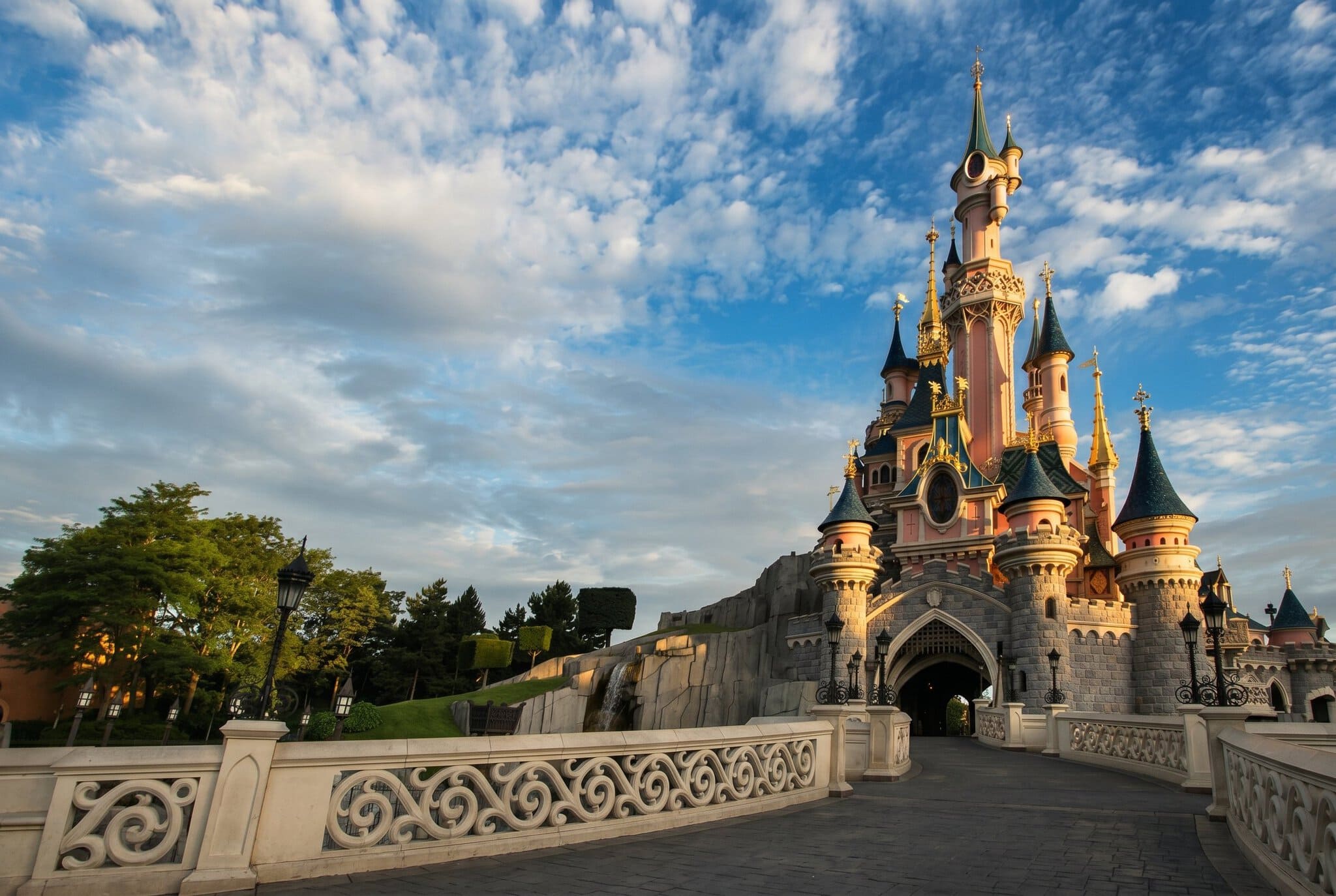
Loads of parents think taking a two-year-old to Disneyland is pointless because they won’t remember it and won’t be allowed on any rides. Big mistake. Disneyland Paris is surprisingly well set up for toddlers. You just need to approach it more like a military operation than a carefree day out.
Key facts and prices for families
Getting there is very straightforward. From central Paris (e.g. Châtelet-Les Halles station), hop on the red RER A line and in 45 minutes you’ll step off at the terminus Marne-la-Vallée/Chessy, right at the park gates. A ticket costs €5.
Children aged 2 and under get in completely free and don’t need a ticket at all, but from age three you’ll need to buy a child’s ticket. A basic one-day adult ticket for one park (Disneyland Park) starts at €62 during off-peak times and can easily exceed €100 on weekends and school holidays — so buy exclusively online in advance, as tickets are no longer sold at the gates.
💡 Insider tip: Definitely bring your own pushchair. Even if your child normally walks, the park is enormous and a buggy doubles as a mobile base for jumpers, snacks and afternoon naps. If you forget one, you can hire a plastic stroller at the entrance for €25.
Fantasyland as your main target
With a small child, ignore the adrenaline zones like Discoveryland. Your home turf will be Fantasyland, at the back of the main park behind Sleeping Beauty Castle. The park has a surprising 47 rides with no minimum height requirement, meaning your toddler can join you on your lap.
Best rides for the youngest ones:
- It’s a Small World: The absolute classic. A gentle boat glides past scenes with thousands of singing dolls. No darkness, no scares — just pure joy and a catchy tune you’ll never get out of your head.
- Peter Pan’s Flight: A gorgeous flying ship soaring over a glowing nighttime London. One of the most popular rides, though, so expect massive queues.
- Le Pays des Contes de Fées: A peaceful outdoor boat ride past miniature scenes from famous fairy tales. Perfect for a quiet moment.
- Dumbo the Flying Elephant: Flying elephants where you control the height with a lever.
💡 Insider tip: Watch out for Snow White’s Scary Adventures. It’s called “scary” for good reason. Most of the ride takes place in the dark, and the evil witch lunging out of the shadows can genuinely terrify younger children to tears.
Extra Magic Hour strategy and food
If you can splash out on one of the official Disney hotels, you’ll get the so-called Extra Magic Hour. You can enter the park at 8:30, while regular visitors wait until 9:30. That morning hour is worth its weight in gold for Fantasyland. You’ll breeze through rides that later have hour-long queues.
Food inside the park is pricey and queues at the kiosks are endless. Pack your rucksack with squeeze pouches, rice cakes, sliced fruit and bottles of water (there are fountains around the park for refills). Toddler hunger doesn’t wait while you queue for half an hour for a hot dog.
In the afternoon, don’t miss the Parade (the procession of allegorical floats). For toddlers, seeing a life-sized Mickey is often a bigger thrill than the rides themselves.
💡 Insider tip: If you and your partner want to go on a big roller coaster (e.g. Hyperspace Mountain), use the Rider Switch service. You both queue once, one rides while the other watches the child, and then you swap without queuing again.
Reims: Champagne and Gothic Splendour 45 Minutes by High-Speed Train
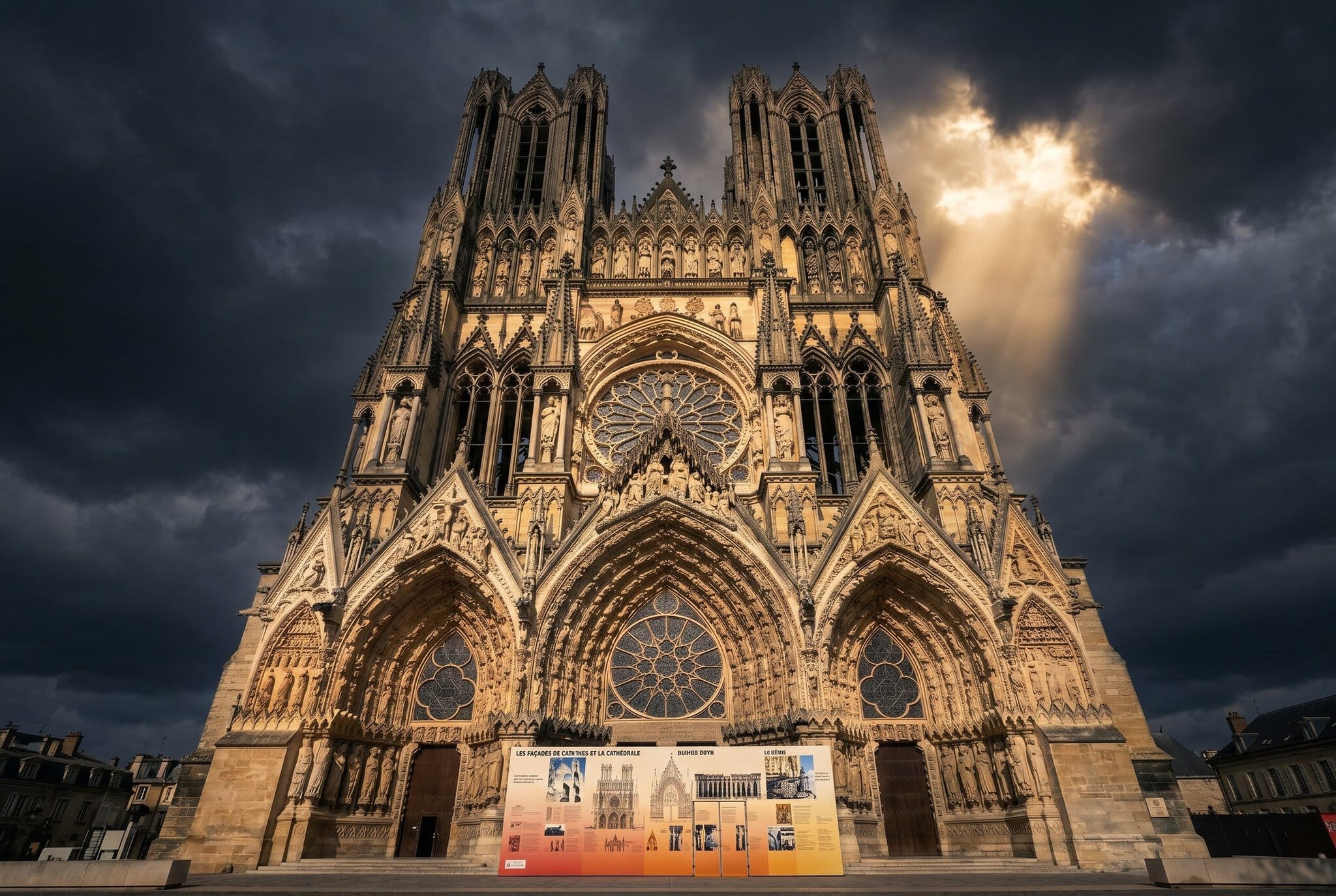
The idea that you could have a morning coffee and croissant by the Canal Saint-Martin in Paris and by late morning be standing in the capital of the Champagne region sounds almost like science fiction. But thanks to TGV high-speed trains, it’s an everyday reality. From Gare de l’Est you’re in Reims in an incredible 45 minutes.
Notre-Dame de Reims Cathedral
A return TGV ticket costs roughly €30 to €60, depending on how far in advance you book. The city centre is just a ten-minute walk from the station.
The main landmark is the Notre-Dame de Reims Cathedral (a UNESCO World Heritage Site). It’s a breathtaking Gothic structure that is historically far more significant than its Parisian counterpart. This is where 33 French kings were crowned over the centuries. Inside there’s a wonderful sense of calm and vast space. Don’t miss the stunning, vibrantly blue stained-glass windows at the rear, created by the celebrated artist Marc Chagall in 1974.
💡 Insider tip: TGV tickets go on sale roughly 3 to 4 months before the departure date. If you snap them up on the very first day of release, you can get the Prem’s tariff — a fraction of the standard price. Last-minute fares are astronomical.
Tasting in the chalk cellars
Reims is honeycombed with kilometres of ancient chalk cellars where millions of bottles from the most prestigious champagne houses age in perfect cool darkness. Giants like Veuve Clicquot, Taittinger, Pommery and Ruinart are all based here.
You must book a cellar tour with tasting at least 1 to 2 weeks in advance via the individual houses’ websites. Nobody will let you in without a reservation. A typical tour with one or two glasses costs €25 to €50 per person.
💡 Insider tip: With a toddler, the cellars can be a bit nerve-wracking. They’re dark, damp, a constant 10°C (bring a warm jumper for the child even in summer!) and the guide’s commentary goes on for a while. Pushchairs often can’t get into the cellars (at Taittinger, for example, you have to descend many steps). A baby carrier is your only option here.
More Brilliant Ideas for Day Trips
If you’ve already ticked off Versailles and Disneyland and are looking for something more low-key, the area around Paris hides plenty of smaller gems you can manage in half a day.
Auvers-sur-Oise (In Van Gogh’s footsteps)
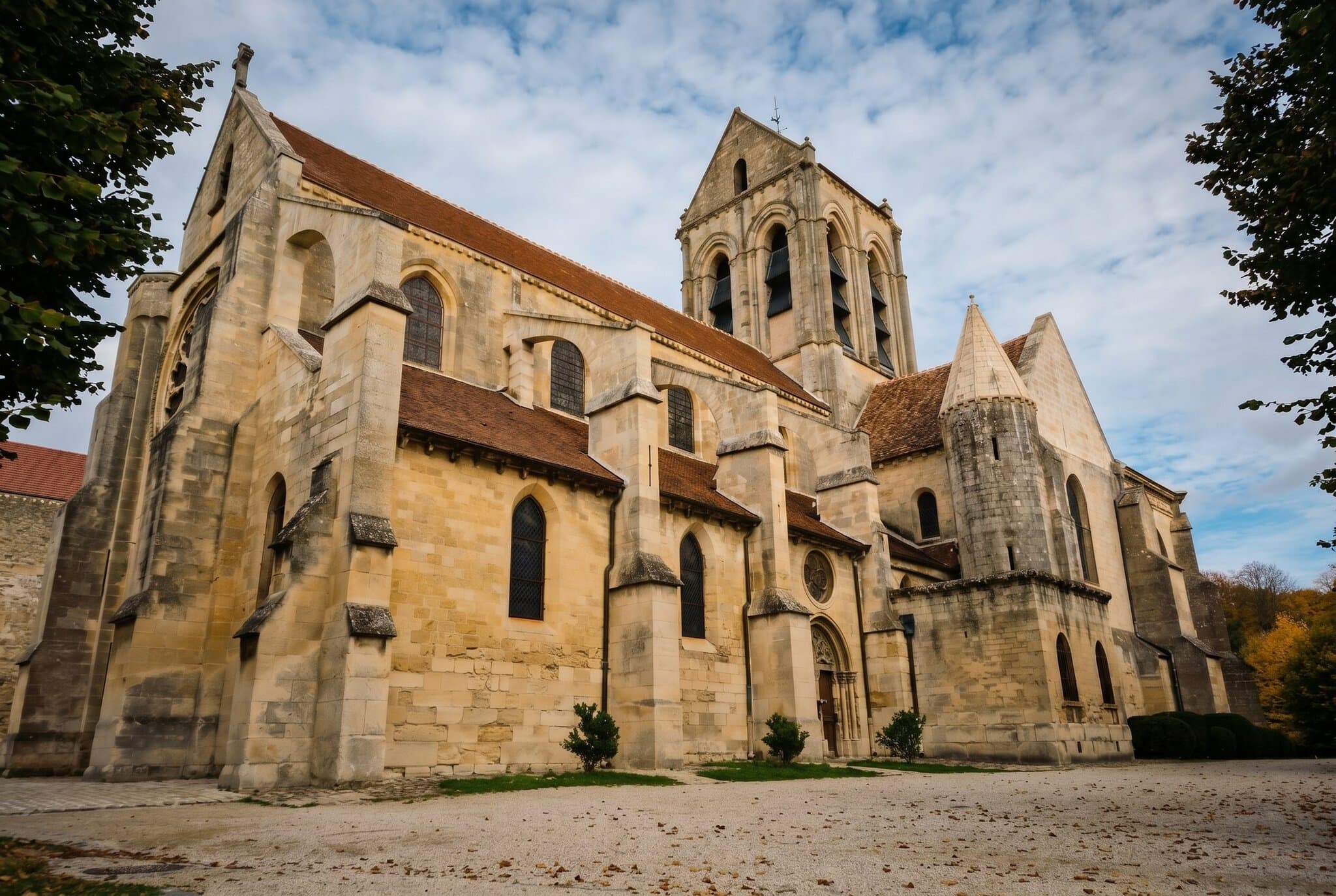
A picturesque village less than an hour by train north-west of Paris. This place has a slightly melancholic atmosphere. It’s where Vincent van Gogh spent his final days. In just 70 days he painted an astonishing 80 canvases here, before shooting himself in a nearby field.
That attic room in the Auberge Ravoux inn — untouched since his death — left a peculiar weight on me. It feels completely different from the over-decorated royal palaces. And then the cemetery, where Vincent lies side by side with his brother Theo, both beneath a simple slab covered in ivy. I’m not sure why, but this place moved me more than many a world-famous painting. A walking trail with panels around the village shows his paintings at the exact spots where he painted them over a century ago.
💡 Insider tip: Pick up a free village map from the tourist office near the station. The walk to the famous church in Auvers and on to the wheat fields is very easy and perfectly manageable with a pushchair.
Château de Vincennes (A castle at the end of the Metro)
Looking for a trip beyond the city walls but can’t be bothered studying train timetables? Château de Vincennes is your answer. It’s the only real medieval fortress in the Paris area that you can reach by ordinary Metro. Just hop on the yellow Line 1 and ride to the terminus, Château de Vincennes.
What awaits you is a massive fortress with a moat and the tallest castle keep (donjon) in Europe at 50 metres. It feels much more military and austere — a brilliant contrast to the finery of Versailles. Admission is €9.50. Right beside the castle stretches the enormous Bois de Vincennes park with a lake where you can hire a rowing boat.
💡 Insider tip: The moat around the castle is now drained and grassed over. It’s a fantastic and completely safe spot where you can let kids run up and down the slopes while you sit on a blanket.
Provins (Medieval town under UNESCO protection)
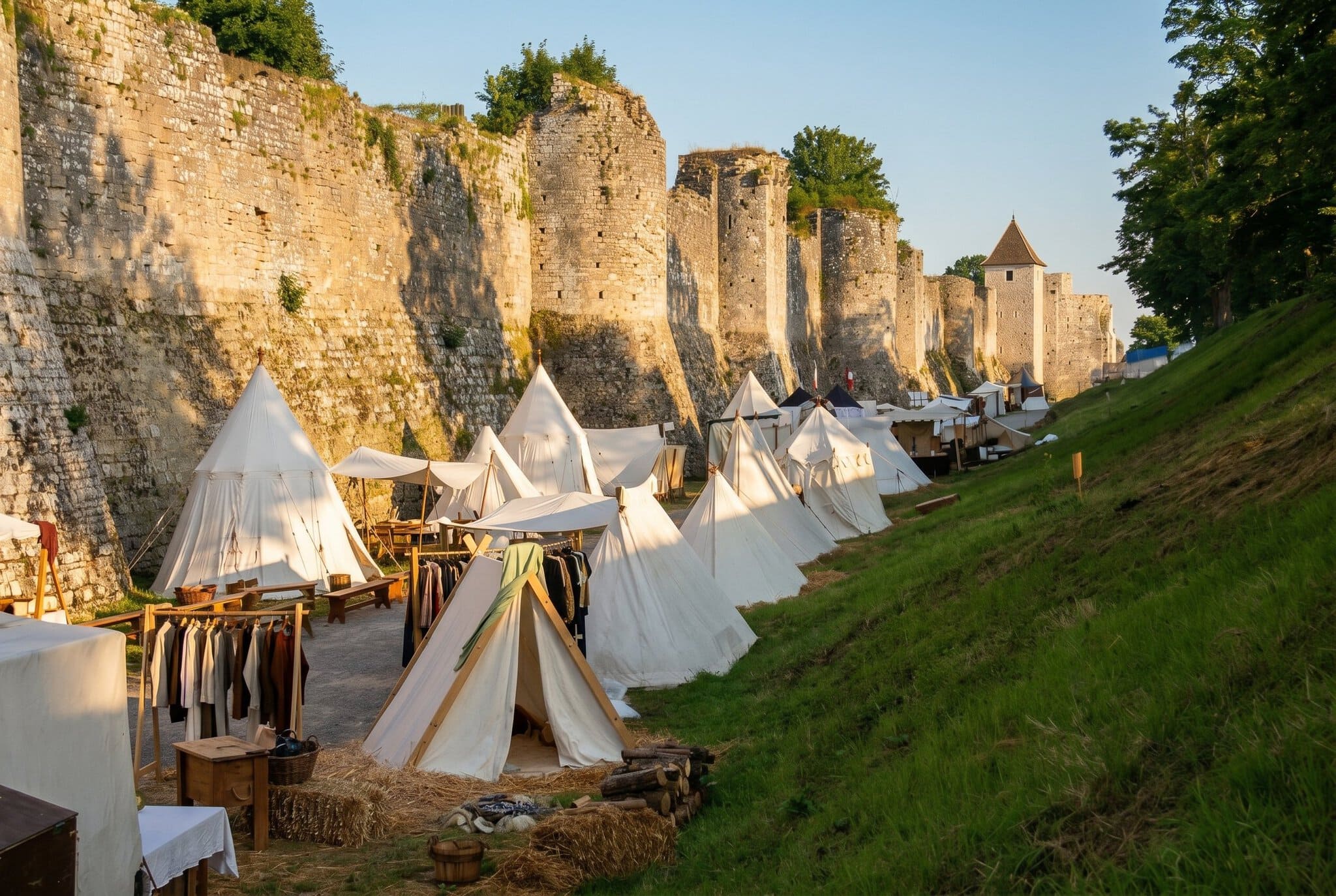
If you love knights, half-timbered houses and massive stone ramparts, head to Provins. It lies about 90 kilometres south-east of Paris, and a Line P train from Gare de l’Est gets you there in an hour and a half.
The entire town is a UNESCO World Heritage Site and looks exactly like you’d imagine a period film set. You can walk the ramparts, explore underground tunnels or watch a falconry show. The town is also famous for its rose cultivation, so on every corner you’ll find rose jam, rose honey or rose-flavoured sweets.
💡 Insider tip: Buy the Provins Pass (around €15). It covers entry to four main attractions including the Tour César tower and the underground tunnels. Far better value than buying separate tickets for each site.
Where to Eat on Day Trips (Without Blowing Your Budget)
Food is sacred in France, but at popular tourist spots you can very easily get burnt. After a few expensive and distinctly mediocre lunches, Lukáš and I quickly realised that the secret to a truly successful day trip with a toddler is a well-thought-out eating strategy.
Picnics as the ultimate lifesaver
The best lunch is simply the one you bring with you. It sounds terribly ordinary, but in France a proper picnic is a full-blown gastronomic experience. You can’t bring food inside the châteaux themselves, but the sprawling gardens at Versailles, Fontainebleau or the lovely meadows beyond Giverny village are practically made for spreading out a blanket.
Every morning before leaving Paris we pop into our favourite bakery for freshly baked crusty baguettes. We add a chunk of good cheese, cherry tomatoes and some grapes. Jonáš is over the moon eating outside on the grass, and Lukáš and I get to relax without the stress of overcrowded, overpriced restaurants 😉.
Where to treat yourself to something special
When we do decide to eat out, we choose very carefully. In Chantilly, don’t miss La Capitainerie, set right in the historic château kitchens, or the little café in the gardens. The atmosphere is wonderful and you obviously have to round off dessert with their legendary whipped cream.
In Giverny, it’s absolutely worth booking a table at Le Jardin des Plumes, where they’ll prepare a stunning vegetarian menu from local produce if you let them know in advance. It’s a pricier treat, but the reward after a day spent walking the gardens is well worth it. At Disneyland, on the other hand, we rely purely on our own supplies, because the queues at the food stalls test the patience of even the calmest parents.
Practical Info: Transport, Budget and Tips for 2026
Day trips from Paris require a bit of maths. Figuring out which ticket offers the best value can sometimes feel harder than a school exam. Here are the ground rules we follow.
Trains and transport
Regional trains (RER, Transilien, TER) have fixed fares. If you’re planning to travel around Paris during one week, go to Versailles, and perhaps also visit Disneyland or Fontainebleau, the best value by far is the Pass Navigo Découverte.
This card covers all zones (1–5) for an entire week and costs €30.75 plus €5 for the card itself. You need to bring your own passport-sized photo! But beware of one catch: the card ALWAYS runs from Monday to Sunday. If you arrive on a Thursday, it’s not worth buying.
For TGV high-speed trains (Reims, Strasbourg), different rules apply. These tickets use dynamic pricing. The earlier you buy them (ideally on the SNCF Connect website), the cheaper they’ll be.
Sample budget for a day trip for two (Versailles)
- Transport: Return Line N tickets for two adults: €16.40
- Tickets: 2x Passport for palace and Trianons: €64
- Lunch: Baguettes, cheese and fruit for a picnic bought in Paris: €15
- Coffee and treats: Coffee and macarons in the gardens: €12
- Total: €107.40 for a very full day out as a couple with a child who gets in free.
At stations like Gare du Nord or Gare de l’Est, keep a close eye on pickpockets. This isn’t a cliché — a friendly gentleman once offered to help us at the ticket machine, and I let him press buttons for a good half minute before Lukáš quietly tapped me on the shoulder. They’ll offer “help” with your purchase, but actually steal your card or sell you an invalid ticket. Always buy tickets yourself or ask only staff in SNCF uniform.
Frequently Asked Questions
Tips and Tricks for Your Vacation
Don’t Overpay for Flights
Search for flights on Kayak. It’s our favorite search engine because it scans the websites of all airlines and always finds the cheapest connection.
Book Your Accommodation Smartly
The best experiences we’ve had when looking for accommodation (from Alaska to Morocco) are with Booking.com, where hotels, apartments, and entire houses are usually the cheapest and most widely available.
 🚗 Car rental on the roadVerified car rentals in Paris
Search with the DiscoverCars comparison engine — it compares prices from dozens of local and international rental companies, and most bookings come with free cancellation.
Compare car prices in Paris →Don’t Forget Travel Insurance
Good travel insurance will protect you against illness, accidents, theft, or flight cancellations. We’ve had a few hospital visits abroad, so we know how important it is to have proper insurance arranged.
Where we insure ourselves: SafetyWing (simple monthly subscription) and TrueTraveller (for extra-long trips).
Find the Best Experiences
Get Your Guide is a huge online marketplace where you can book guided walks, trips, skip-the-line tickets, tours, and much more. We always find some extra fun there!
More from Paris
Full guide → Where to stay · most readParis Arrondissements: Where to Stay in Paris (and Where Not To)
 ItineraryParis: 40 Best Tips for Your Visit
 Travel storyParis Etiquette: How Not to Be “That Tourist” (Phrasebook, Rules & What NOT to Do)
 What to seeShopping in Paris: Concept Stores, Department Stores & Vintage (A Complete Guide)
 PricesWhat to Eat in Paris: The Complete Foodie Guide 2026 (Bistros, Michelin, Vegetarian Scene)


