

I planned to return to the Portuguese island of Madeira for almost eight years. And even though I’ve literally travelled half the world between those two visits, my opinion of Madeira, Portugal hasn’t changed one bit — it’s definitely one of the most beautiful islands on our blue planet. And maybe in the universe too, who knows.
In this complete guide you’ll find 25+ most beautiful places to see on Madeira in 2026, a detailed day-by-day 7-day itinerary, an overview of the best levada hikes, tips for local food and, most importantly — the latest info on the mandatory bookings and paid entry to PR trails that Madeira introduced in 2026. Let’s dive in!
Practical information for your trip to Madeira
Madeira, Portugal: weather and sea temperature month by month
🌡️ Warmest: August (25 °C by day) · 🌊 Warmest sea: August (25 °C) · ☔ Least rain: July
| Month | Day | Night | Sea | Rainy days |
|---|---|---|---|---|
| January | 16 °C | 11 °C | 20 °C | 10 |
| February | 17 °C | 11 °C | 19 °C | 9 |
| March | 17 °C | 11 °C | 19 °C | 13 |
| April | 18 °C | 12 °C | 20 °C | 11 |
| May | 20 °C | 14 °C | 21 °C | 8 |
| June | 21 °C | 15 °C | 22 °C | 12 |
| July | 23 °C | 17 °C | 24 °C | 4 |
| August | 25 °C | 18 °C | 25 °C | 4 |
| September | 23 °C | 17 °C | 24 °C | 13 |
| October | 22 °C | 16 °C | 24 °C | 12 |
| November | 19 °C | 14 °C | 23 °C | 11 |
| December | 17 °C | 13 °C | 21 °C | 13 |
Source: climate normal 2019–2024 (Open-Meteo, measured data)
When to visit Madeira? The best months
The Madeira weather in Portugal is fairly stable, so you can go at any time of year. Even in December and January temperatures can hover around 20 degrees, although the average daytime temperature is roughly 17 degrees.
The most popular season is probably spring (April–June), when temperatures are at their most pleasant and the flower festival takes place in Funchal. Just keep in mind that it can rain on some days.
Summer is the most popular time to visit Madeira if you want to go whale watching, but temperatures can climb to around 33 °C, which can be uncomfortable for anyone planning to do some hiking.
Autumn (September–November) tends to be quieter on Madeira, temperatures are still pleasant (in September we had around 25 °C), but it can rain again. Early autumn is ideal for a visit if you’re planning hikes in the mountains and along the coast.
I’ve been to Madeira in both June and September, and both times I had fairly pleasant weather, even if it drizzled now and then. So really, don’t be afraid to go almost any time.
Madeira weather: current conditions on the island
Madeira WeatherHow to get to Madeira (flights, direct routes)
Direct flights to Madeira run from several European cities. If there’s no direct flight from your home airport, you can get there in 4–5 hours with one stopover in Lisbon or Porto. Keep an eye on deals from Ryanair, easyJet, TAP Portugal and Lufthansa — return tickets can be snapped up from around €120 if you watch the offers well in advance.
Tip: Landing at Madeira’s Cristiano Ronaldo Airport is one of the most adrenaline-filled in Europe. The runway is built on pillars over the ocean and in a crosswind it’s quite the experience. Don’t worry, the pilots are trained for it.
Package tour or on your own?
Madeira is ideal for independent travel. The island is safe, compact and easy to get around with a rental car. With a package tour you lose the flexibility you’ll really appreciate here — like the option to head up to Pico do Arieiro for sunrise the moment the weather clears. Personally, we recommend renting a car and doing it your own way.
Renting a car on Madeira
Rental agencies will try to talk you out of small cars, because Madeira’s roads climb some pretty steep hills. We had a small car on both visits and never ran into trouble. But if you’re not a seasoned driver, book a more powerful car and, above all, an automatic — pulling away on those extremely steep hills is sometimes no joke.
Things to watch out for: Madeira’s roads are narrow and winding, but of good quality. Most main routes run through modern tunnels. We recommend full insurance — minor scratches do happen on the narrow roads. Petrol is more expensive on the island than in mainland Portugal; you can check the current price here.

Where to stay on Madeira
Madeira is a fairly small island, so it’s perfectly possible to find a nice hotel in Funchal and take day trips from there. In the end, though, we decided that moving around the island is worth it — that way you’ll catch both sunrise and sunset in different spots, which is priceless.
Funchal is the best base for shorter stays. If you have more time, we recommend spending at least 2–3 nights in the north (Porto Moniz, São Vicente) — the northern coast has a completely different atmosphere and you’ll meet hardly any tourists in the morning.
NEW FOR 2026: Paid entry and bookings for PR trails
This is probably the most important thing you need to know for 2026. Madeira has introduced a mandatory system of pre-bookings and paid entry for its most popular walking trails (marked as PR — Pequena Rota). If you plan a levada hike or a trek to Pico Ruivo, you must book your spot online in advance.
How much does it cost?
Prices vary depending on the difficulty and popularity of the trail:
- Easier trails (PR 6, PR 9): €3/person
- Medium trails (PR 1, PR 10): €5/person
- Most popular trails (25 Fontes, Caldeirão Verde): €7–10.50/person
- Children under 12: free
Where and how to book
Bookings are made through the official portal ifcn.madeira.gov.pt. We recommend booking at least 3–5 days in advance, especially in high season (April–October). The daily capacity is limited and the most popular trails like 25 Fontes tend to sell out up to a week ahead in high season.
Tip from experience: Plan your hikes as the first thing when organising your holiday — not the last! And if your preferred trail is fully booked, try a lesser-known alternative. Madeira has dozens of beautiful levadas that aren’t as popular but are just as stunning.
25+ most beautiful places on Madeira
Before we get to the itinerary, here’s a complete overview of the best of what you’ll see on Madeira. We’ve either visited each place in person or recommend it based on the experience of travellers we trust.
1. Funchal — the island’s capital
Funchal is a pleasant little city that climbs up the slope from the harbour. I wouldn’t call it the highlight of Madeira, but it definitely deserves at least one day. We kept it for the start and end of our trip — and it pleasantly surprised us every time.
What not to miss in Funchal:
- Mercado dos Lavradores — a colourful market with exotic fruit, flowers and fresh fish. Try the anona (custard apple) and passion fruit.
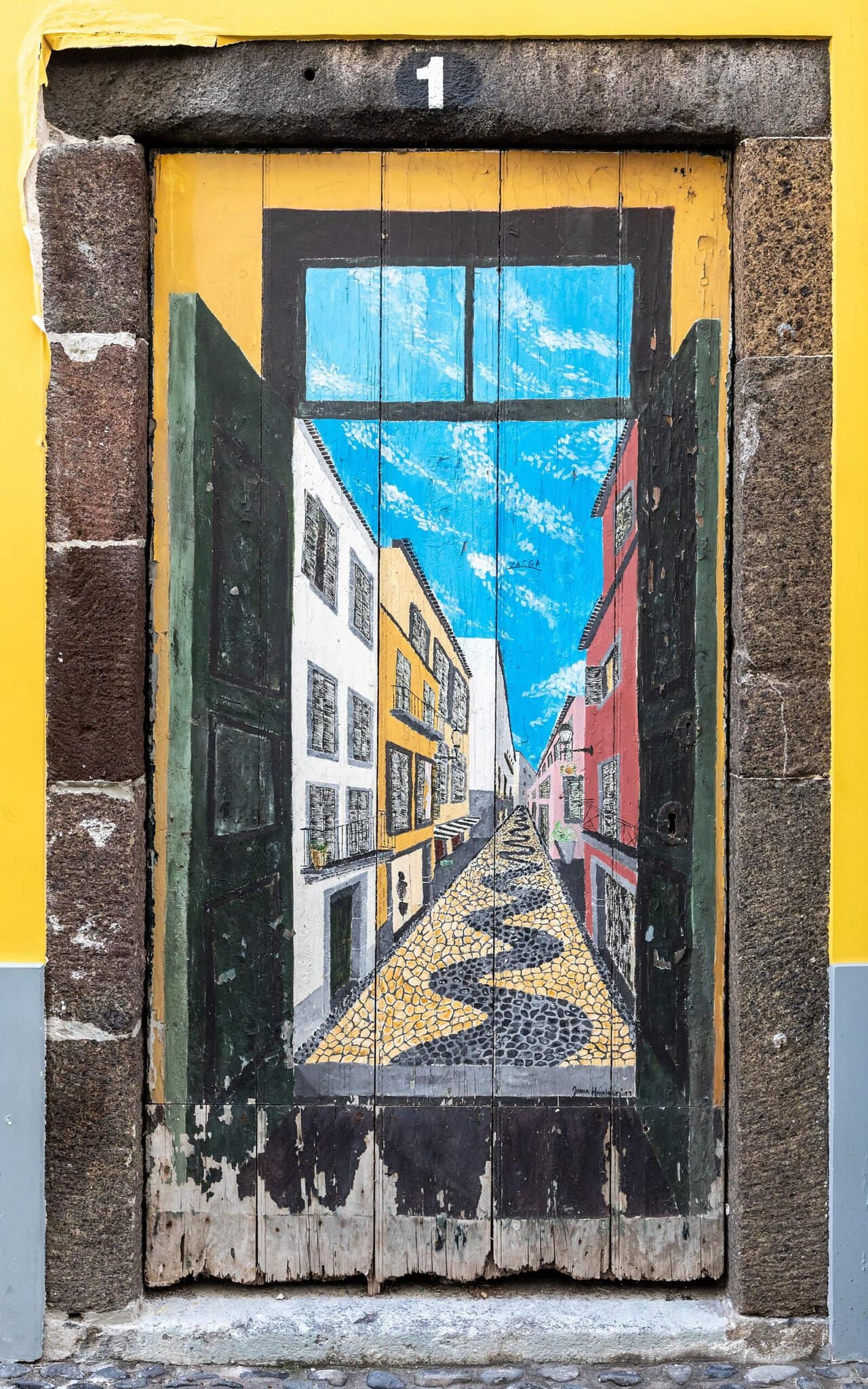
- Zona Velha (old town) — lanes full of street art, painted doors on Rua de Santa Maria and the best restaurants in the city.
- Jardim Botânico — a botanical garden with a gorgeous view over the city. Entrance fee around €6.
- Cable car to Monte — the cable car takes you up to the Monte district above Funchal, home to the Monte Palace tropical garden and the Nossa Senhora do Monte church.
- The toboggan ride from Monte — traditional wicker sledges steered by two men in white who whisk you down the asphalt road. A completely unique and slightly crazy experience. Around €30 for 2 people.
2. Cabo Girão — the highest cliffs in Europe
580 metres of sheer drop straight into the ocean. Cabo Girão is one of the highest sea cliffs in the world, and the glass-floored viewpoint (skywalk) is free. You only need 30–45 minutes, but that view down will take your breath away — and maybe your stomach too, if you’re afraid of heights.
Below the cliffs you’ll spot tiny farming plots (fajãs), which the farmers reach by cable car. It’s unreal.
3. Câmara de Lobos — Churchill’s fishing village
A picturesque fishing village with colourful boats that Winston Churchill loved — he even painted it here. An espresso on the square overlooking the harbour is a mandatory stop. Câmara de Lobos is also famous as the best place for poncha — the traditional Madeiran drink. Try it at O Jango.
4. Curral das Freiras — the Valley of the Nuns
A dramatic valley surrounded by steep mountains, where nuns hid from pirates in the 16th century. The view from Eira do Serrado is breathtaking — and then you can drive down to the village for lunch. Order the espetada (meat on a bay-leaf skewer); one of the best on the island is here.
5. Pico do Arieiro — the third-highest peak
If you want to know what paradise might look like, you need to head to Madeira’s third-highest peak (1,818 m), and ideally at sunrise. Drive up and soak in the view above the clouds. If the weather cooperates, you’ll get alternating views of mountains and a sea of clouds. It’s unforgettable.

6. Pico Ruivo — Madeira’s highest peak
The trek from Pico do Arieiro to Pico Ruivo (1,862 m) is, in my opinion, the most beautiful trek in the world. A ridge path with tunnels carved into the rock, chasms on both sides and views you’ll remember for the rest of your life. 7 km one way, 4–5 hours there and back, over 700 m of cumulative elevation gain.
On my second visit we were out of luck — it rained all day on Pico do Arieiro. So here’s some important advice: keep a backup day and only set off when it’s clear! In the fog the trek loses 90% of its magic.
7. Ponta de São Lourenço — the eastern tip of the island
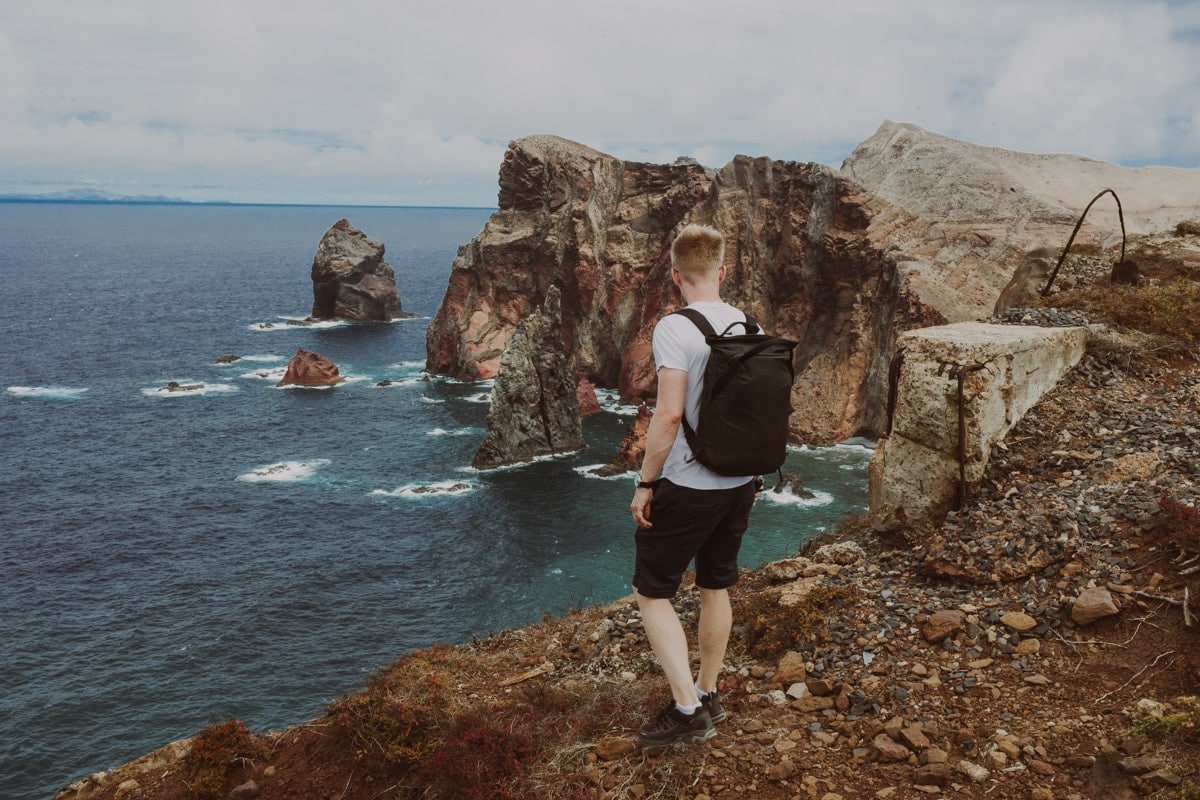
A dry, rugged landscape in stark contrast to the rest of green Madeira. The trek to the eastern tip of the island is stunning — 7.4 km, 2–3 hours, medium difficulty. Cliffs plunging into the ocean, red and yellow rocks, wind and salty air. A completely different world from the rest of the island.
We set off from the upper, more distant car park, from where the route is a bit more demanding but the views are better. You walk along the cliffs all the way to an oasis where you’ll find the Sardine House cafe & snacks. From the café you can take a boat that brings you back to the car park.
8. Porto Moniz — natural lava pools
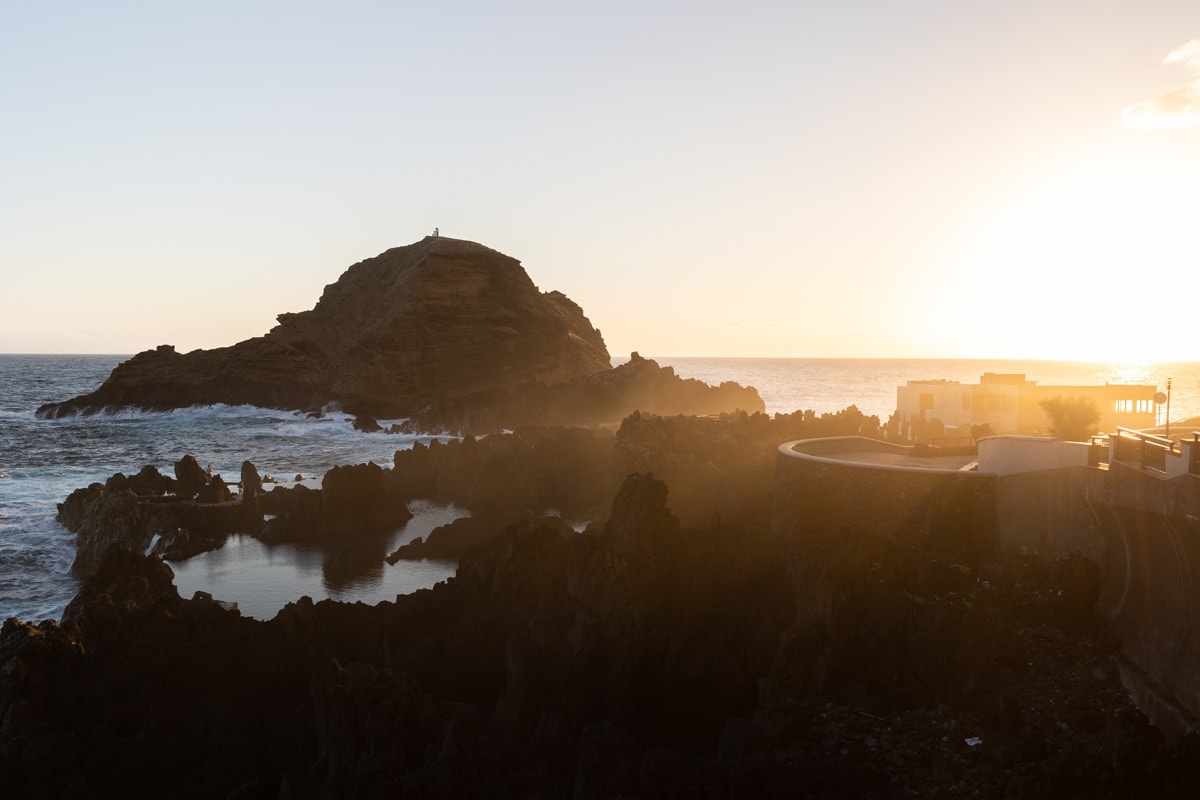
Porto Moniz is known for its natural pools formed from volcanic lava, into which the ocean splashes. Entry around €3. Swimming in the pools with a view of the open Atlantic is one of those experiences people come to Madeira for. At sunrise it’s usually calm here — if you stay overnight in Porto Moniz, you can have it almost to yourself.
9. Seixal — black beach and waterfalls
Seixal Beach is one of the most photogenic spots on the whole island. Black volcanic sand, waterfalls tumbling straight off the cliff into the sea, and dramatic green cliffs in the background. There are also the Seixal Natural Pools — a natural pool where you can swim safely.
10. São Vicente — Madeira’s prettiest little town
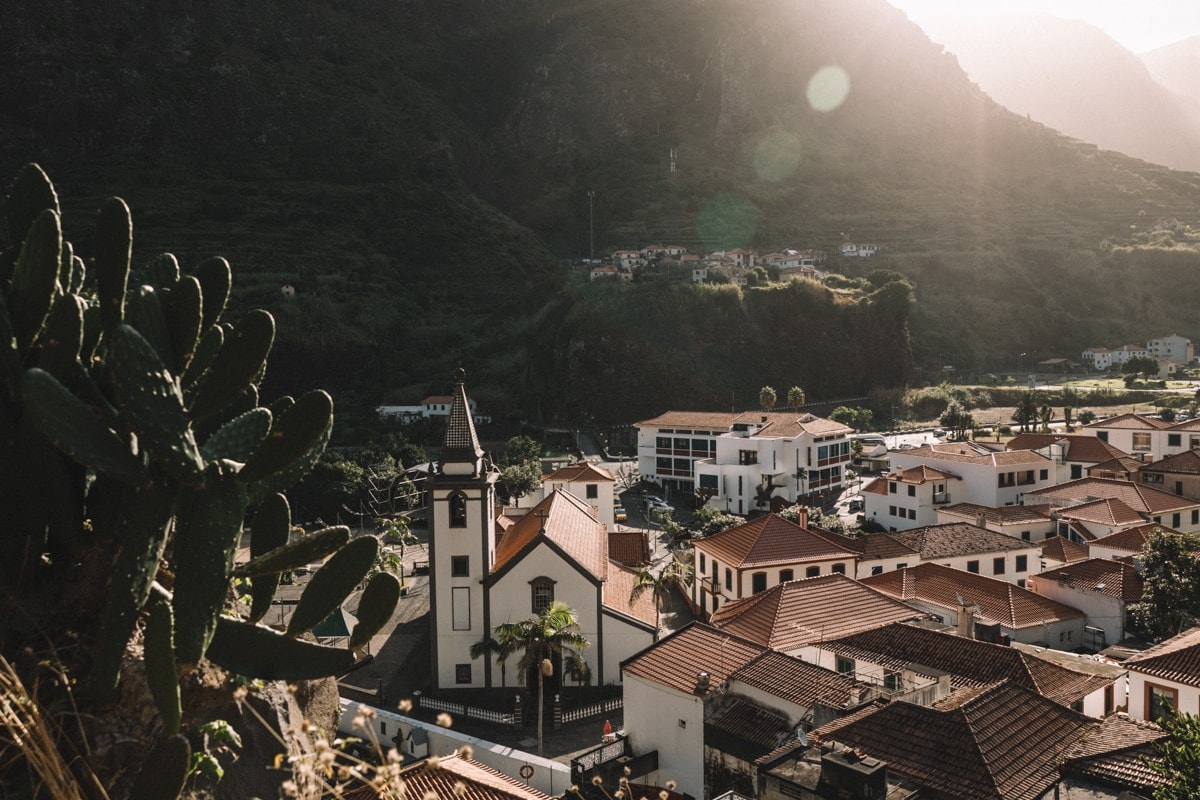
São Vicente is nestled in a narrow, romantic valley stretching from the Atlantic coast into the interior. If you arrive early enough, soft cushions of cloud will probably still be drifting over the hills. The small historic centre is dominated by the beautiful 16th-century Igreja de São Vicente church.
11. São Vicente Caves — lava tunnels
Volcanic caves and tunnels created by lava flows. The tour lasts about 45 minutes and is great for rainy days. You’ll learn about the island’s volcanic history and walk through tunnels where lava flowed millions of years ago. Entrance fee around €8.
12. Fanal — the misty laurel forest (UNESCO)
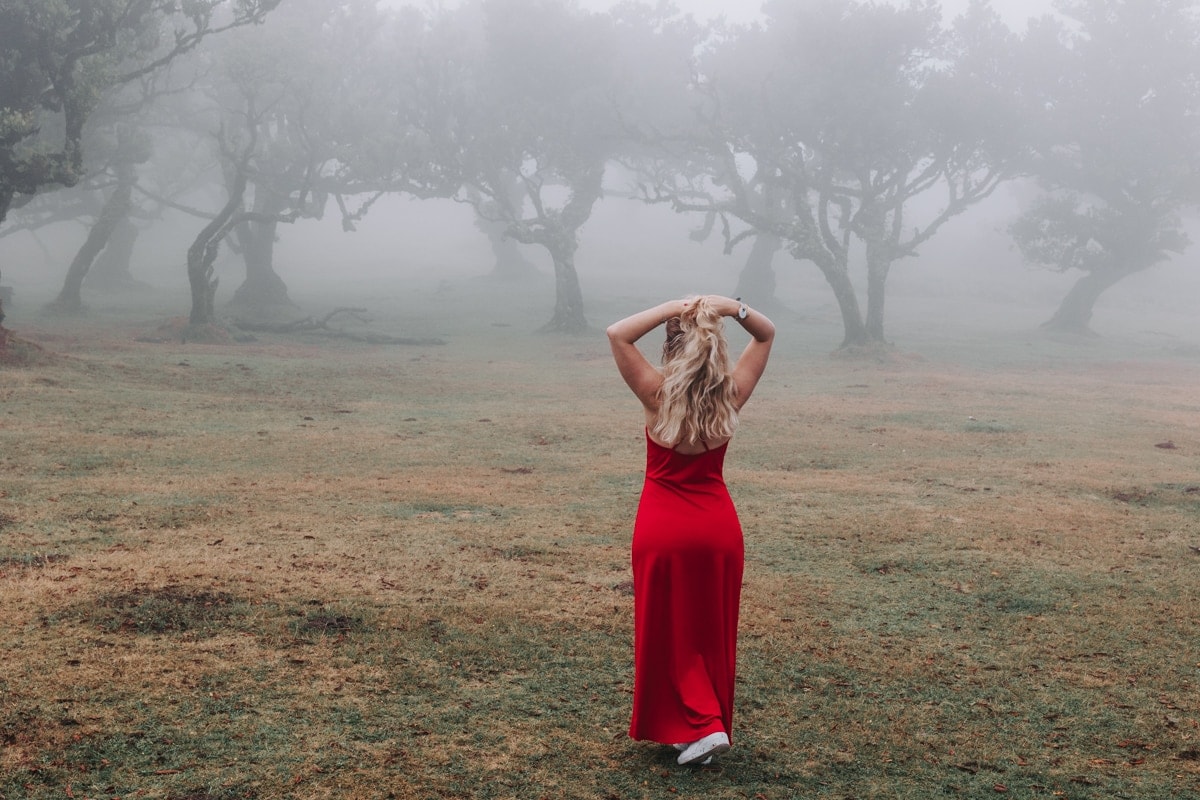
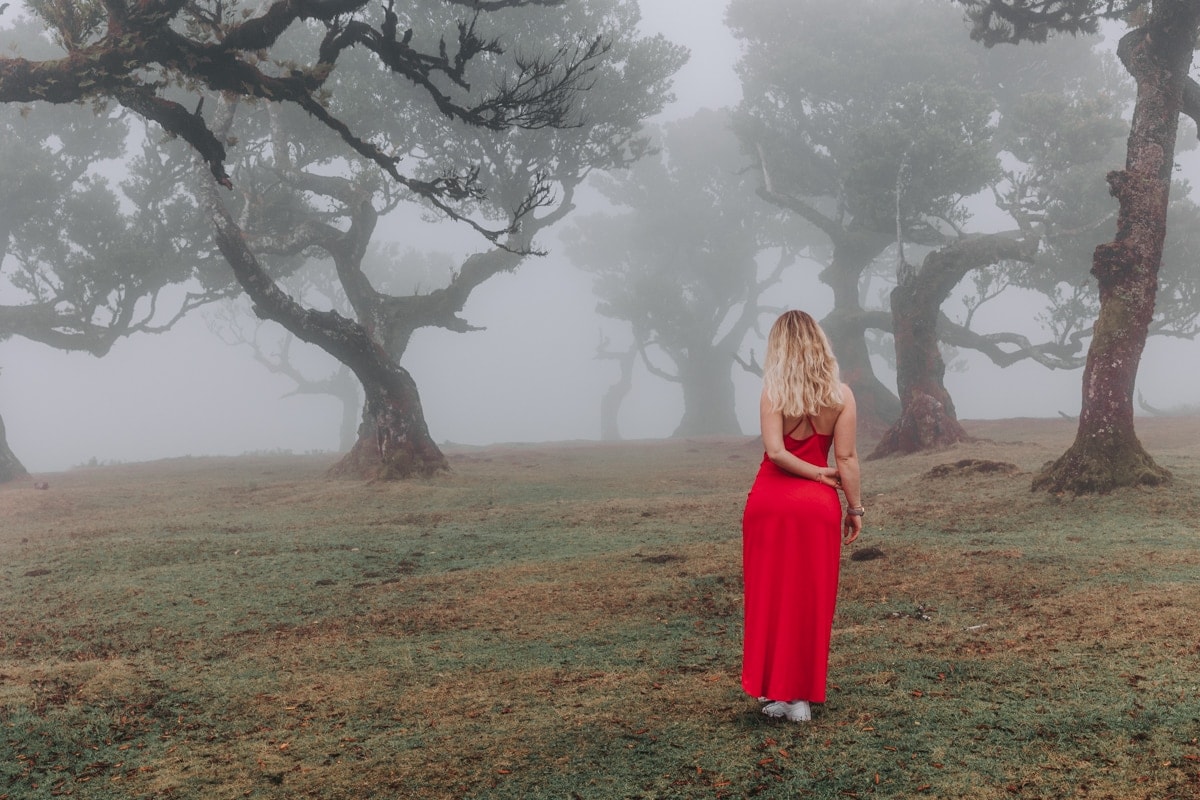
Fanal Forest is one of the most popular photography locations on Madeira. Once it fills with mist, there’s no more magical place on the whole island. The twisted, moss-covered laurel trees look like a scene straight out of Lord of the Rings.
You’ll probably spend a couple of hours in Fanal Forest. Be patient, the mist almost always comes in the end. The best time to chase the fog is roughly until eleven in the morning and then later in the afternoon. The walk takes 30–60 minutes, and the laurel forest is part of the UNESCO Laurisilva.
13. Santana — traditional triangular houses
A picturesque town in the north of the island known for its traditional triangular houses (casas de colmo) with thatched roofs. They’re colourful, photogenic and look like something out of a fairy tale. A short stop for photos and lunch — 1–2 hours is enough.
14. Ribeira da Janela — rock formations
A breathtaking viewpoint that looks straight out of Game of Thrones. Rock formations jutting out of the sea against a backdrop of dramatic coastline. Stop off on your way from Porto Moniz — it’s just a few minutes from the main road and definitely worth the pause.
15. Miradouro Véu da Noiva — waterfall viewpoint
A viewpoint over the “Bride’s Veil” waterfall — a white ribbon of water tumbling off a green cliff straight into the ocean. One of the most photographed viewpoints on the northern coast. You’ll find it on the road between Seixal and São Vicente.
16. Jardim do Mar — surfing and quiet
A tiny village on the southwestern coast where surfers come from all over Europe. If you’re not chasing waves but peace and quiet, you’ll find it here. Lanes full of flowers, small cafés and a seafront promenade where you can sit for hours and listen to the waves.
17. Machico — the second-largest town
Machico has one of the few man-made sandy beaches on the island (the sand was imported from Morocco). A calm town with a pleasant promenade and good seafood restaurants. A great stop on the way to Ponta de São Lourenço.
18. Achadas da Cruz — the steepest cable car in the world
Near Porto Moniz you’ll find the steepest cable car in the world, running vertically down from the cliff to the beach. Buy your tickets before you change your mind, the ride looks terrifying. When you get to the bottom, you’ll discover it’s not just a promenade along the beach but an allotment colony. You’ll search in vain for how people bring supplies down other than by cable car. They really do use the cable car.
19. Prainha de Caniçal — the prettiest natural beach
A small sandy beach with volcanic sand surrounded by dramatic cliffs. The only natural sandy beach on Madeira and definitely one of the prettiest. It’s ideal for swimming in summer, but it’s also pleasant here in spring and autumn.
20. Calheta Beach — a beach for families
A man-made sandy beach with calm water, ideal for families with children. Nearby there are restaurants and cafés with sea views. If you have small children and want a day by the sea, Calheta is your best choice on Madeira.
21. Curral das Freiras — the Eira do Serrado viewpoint
The viewpoint above the Valley of the Nuns is one of the most dramatic on the island. From up high you can see the whole valley and the village at the bottom — it looks like a miniature. Combine it with a visit to Curral das Freiras itself down below.
22. Miradouro da Portela — views of the northern coast
A panoramic viewpoint over Madeira’s green northern coast. A great stop on the way back from Santana or Ponta de São Lourenço. There’s also a restaurant here with good food and a pleasant terrace.
23. Ribeira do Inferno — the original road
Between São Vicente and Seixal you can walk along the original road that led from here to Seixal. For lovers of slightly offbeat attractions it’s an interesting detour — you’ll see what travel on Madeira looked like before the tunnels were built.
24. Miradouro da Santinha — viewpoint above Porto Moniz
If you’re in Porto Moniz and have the time, drive up to this viewpoint. From here Porto Moniz looks like a town off a postcard — rooftops, natural pools and the endless ocean.
25. Garajau Beach — crystal-clear water
A beautiful pebble beach with crystal-clear water, accessible by cable car. The area is part of the Garajau nature reserve, so the underwater world here is exceptional — a great spot for snorkelling.
26. Blandy’s Wine Lodge — Madeira wine tasting
Historic cellars in Funchal where Madeira wine has been produced since 1811. A tour with tasting costs around €15 and it’s well worth it — you’ll learn about the unique process of making this fortified wine, which is heated (unlike other wines). A great plan for a rainy afternoon.
The best levada hikes on Madeira
Levadas are unique irrigation channels that have been built on Madeira since the 15th century. Trails run alongside them, guiding you through laurel forests, valleys full of waterfalls and misty mountain ridges. The levada hikes are the number-one reason to visit Madeira.
They say if you haven’t done a levada on Madeira, you haven’t really been. On every visit I did at least one.
Levada das 25 Fontes (25 waterfalls)
The most famous levada hike on the island — and deservedly so. The trail leads through dense laurel forest (UNESCO) and ends at an amphitheatre with 25 waterfalls cascading over mossy rocks into a pool.
- Length: 11 km (round trip)
- Difficulty: medium
- Time: 3–4 hours
- Start: Rabaçal (car park + shuttle bus)
- Entry 2026: around €7–10.50, booking required
Tip: Combine it with Levada do Risco (a 100 m waterfall), which starts at the same place. Doable in a single day.
Levada do Caldeirão Verde
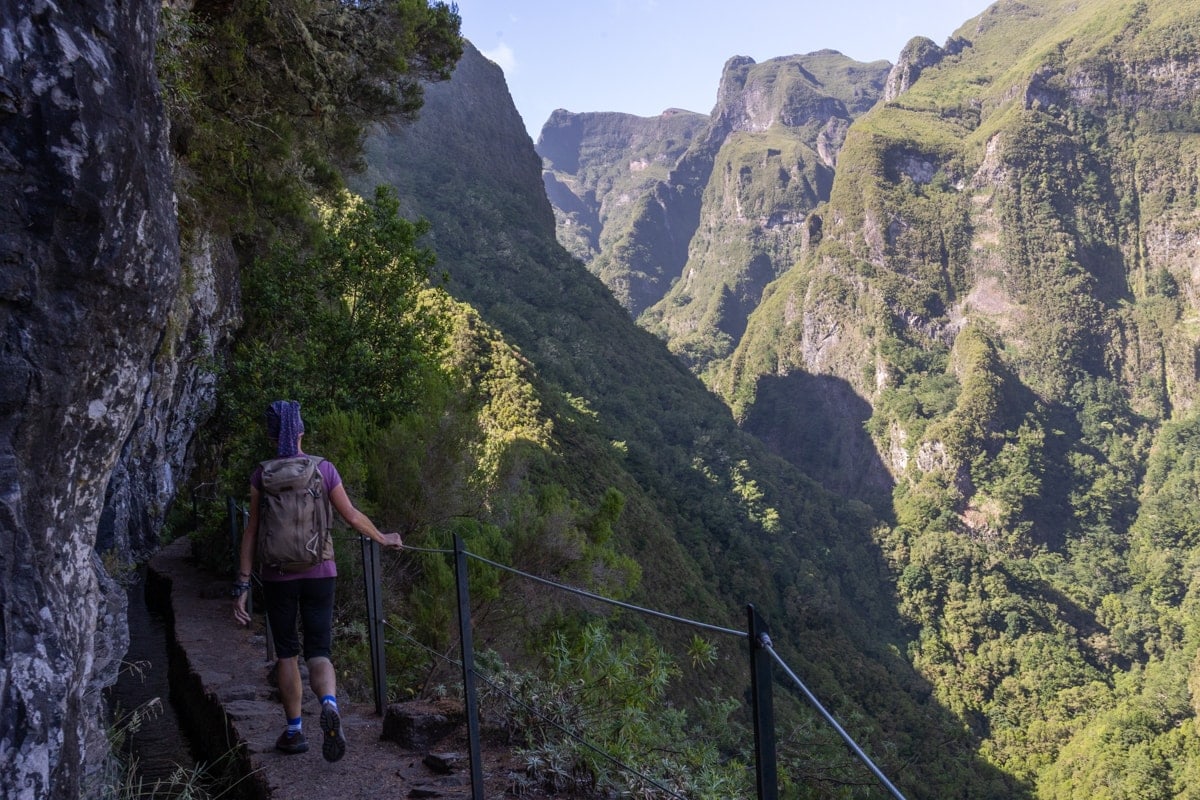
All the levadas feel similar to me, so we picked one that also runs through tunnels — the Levada do Caldeirão Verde, which is 12 km and takes roughly 3–4 hours. Extremely popular, but also beautiful — the tunnels are narrow, you’ll need a headlamp, and at the end a green amphitheatre with a waterfall awaits.
- Length: 12 km (round trip)
- Difficulty: medium
- Time: 3–4 hours
- Entry 2026: booking required via ifcn.madeira.gov.pt
Levada do Rei (the Royal Levada)
A less-visited alternative, but a beautiful one. It runs through the laurel forest in the north of the island and ends at the source of the Ribeiro Bonito river. Ideal for those who want peace and quiet and don’t like crowds.
- Length: 10 km (round trip)
- Difficulty: easy to medium
- Time: 3 hours
Vereda dos Balcões (the easiest)
If you don’t have the time or fitness for longer hikes, this is your levada. A short, easy walk (1.5 km one way) to the Balcões viewpoint, from where you can see the Ribeira da Metade valley and, in good weather, even Pico do Arieiro. Ideal for families with children too.
Pico do Arieiro → Pico Ruivo: the king of treks
Technically this isn’t a levada, but it’s the most famous trek on Madeira. It connects the island’s third- and first-highest peaks along a ridge path with tunnels carved into the rock.
- Length: 7 km (one way), 14 km round trip
- Difficulty: demanding
- Time: 5–6 hours (round trip)
- Altitude: 1,818 m → 1,862 m (over 700 m of cumulative elevation gain)
- Entry 2026: booking required
Tip: Set off as early as possible (ideally before 8:00). It’s most beautiful above the clouds early in the morning, and you’ll avoid both the crowds and the afternoon fog.
Whale and dolphin watching
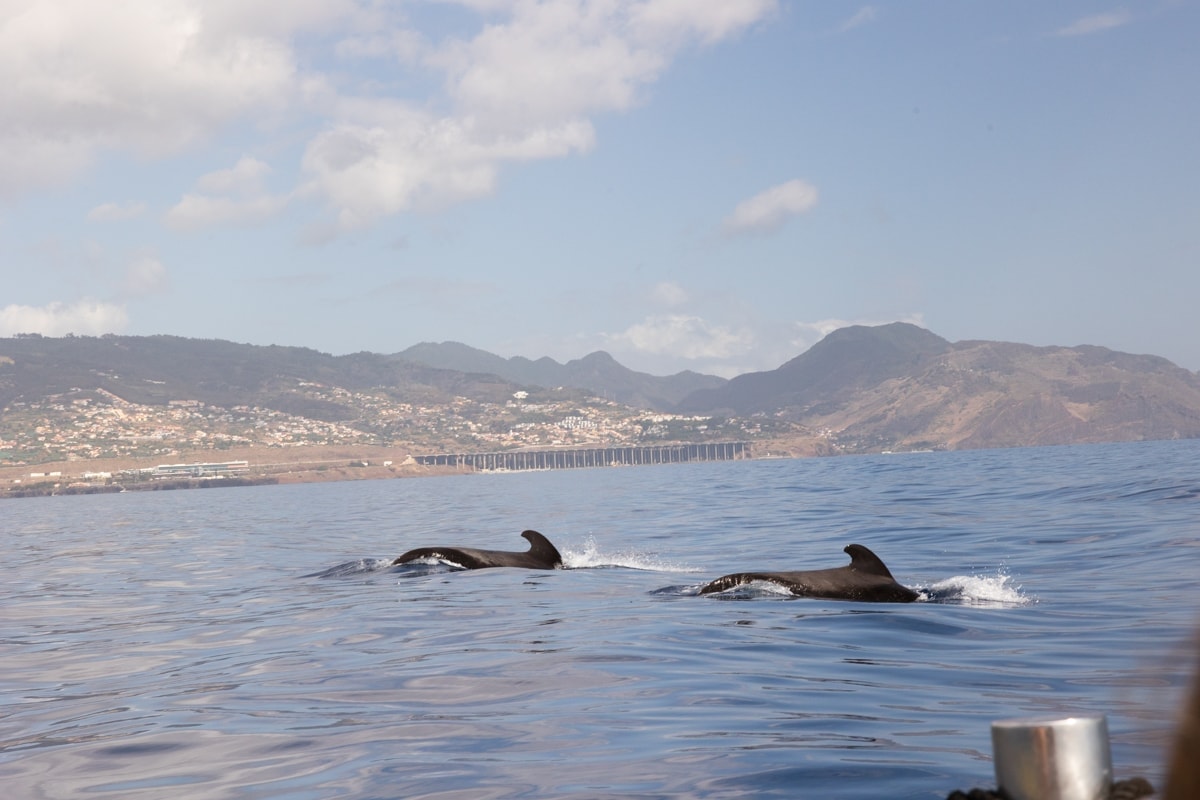
Madeira is surrounded by deep ocean waters, which makes it one of the best places in Europe for cetacean watching. The chance of spotting dolphins is over 95% all year round!
If you’re visiting Madeira at a time when whales and dolphins are around the coast, you definitely shouldn’t skip a trip out to sea. We set aside a whole day for it, because we bought a tour with a guarantee that if we saw nothing, we could go again for free.
What can you see?
- Dolphins (year-round): bottlenose, striped, common — over 95% chance
- Sperm whale (April–October): the most common whale around Madeira
- Bryde’s whale (summer): rarer, but spectacular
- Sei whale (spring): passing along migration routes
Practical info
- Price: €35–65/person (2–3 hours)
- Where from: Funchal or Calheta harbour
- Recommended operators: VMT Madeira, Lobosonda, Rota dos Cetáceos
- Tip: Bring a warm layer — it’s always windy on the open ocean, even when it’s warm on shore.
What to taste on Madeira — local food
Madeiran cuisine is simple but fantastic. Fresh fish, meat on a bay-leaf skewer and local rum — you won’t go hungry here, and you’ll eat well for a reasonable price.
Espetada — meat on a bay-leaf skewer
Madeira’s iconic dish. Pieces of beef skewered on a bay-leaf stick and grilled over fire. It’s served hanging on a stand right at your table. The scent of bay infuses the meat and the result is fantastic. Restaurant price around €12–18.
Where to try it: The restaurants in Curral das Freiras or Câmara de Lobos have the best ones.
Poncha — Madeira’s national drink
A mix of aguardente (sugarcane spirit), honey and citrus. It looks innocent, but two ponchas and your legs start to wobble. It comes in a classic (lemon), passion fruit and a regional orange version. Price €3–5.
Where to try it: O Jango in Câmara de Lobos — reputedly the best poncha on the island. We can confirm.
Bolo do caco — Madeira’s garlic bread
A flat bread made from sweet-potato dough, served hot with garlic butter. You’ll get it in every restaurant as a starter and it’s addictive. Honestly, even if all we ate on Madeira was bolo do caco, that would be reason enough for the trip.
Lapas grelhadas — grilled limpets
Sea limpets grilled with garlic butter and lemon. It looks a little scary, but the flavour is a knockout. One of the most popular starters on the whole island. Price around €8–12.
Madeira wine — where to taste it
A fortified wine with a history dating back to the 15th century. Unlike port, Madeira wine is heated, which gives it a unique caramel flavour. We recommend a visit to Blandy’s Wine Lodge in Funchal — a tasting with a tour of the historic cellars for around €15.
Travelling with kids on Madeira
Madeira isn’t the most ideal island for travelling with small children — there are lots of cliffs and mountains but few nice beaches. Nor are there many resorts where you could let little kids run wild.
But if you’ve already got little mountaineers at home, you can enjoy travelling around Madeira even with them. Suitable activities for families:
- Calheta Beach — a calm sandy beach, safe for children
- Porto Moniz natural pools — safe swimming in the lava pools
- Vereda dos Balcões — a short, easy levada hike (1.5 km)
- The toboggan ride from Monte — an experience for the whole family
- Botanical gardens — calm strolls among exotic plants
- Mercado dos Lavradores — kids will love tasting the exotic fruit
For relaxing by a pool or on the beach, though, Madeira isn’t the best pick — the Canary Islands or the Algarve are better for that.
Beaches on Madeira
Madeira is known for its wild nature and rocky coastline, but it also offers beautiful spots for swimming. Just don’t expect kilometres of white sand — it’s different here, but all the more unique for it:
- Prainha de Caniçal — the only natural sandy beach, volcanic sand
- Seixal Beach — black volcanic sand and waterfalls off the cliff
- Porto Moniz — volcanic pools with natural seawater
- Calheta Beach — a man-made sandy beach, suitable for families
- Machico Beach — a sandy beach with calm waters
- Garajau Beach — a pebble beach with crystal-clear water, accessible by cable car
7-day itinerary around Madeira (day by day)
Our itinerary was very relaxed — we got to enjoy and explore everything to our heart’s content. You could probably fit in more over seven days, but if you’re after a laid-back sightseeing holiday, follow in our footsteps.
Day 1 — Arrival and Funchal
After you land, pick up your car at the airport and head to Funchal. We landed in the evening, so we decided to stay right in the city and not drive anywhere.
Afternoon/evening:
- Check in and stroll through Zona Velha (the old town with street art)
- Visit Mercado dos Lavradores — exotic fruit, flowers, fresh fish
- Dinner at one of the restaurants on Rua de Santa Maria
- Your first poncha of the trip — a mandatory initiation
I can recommend the romantic if slightly dated hotel Inn & Art Madeira, where you can dine with a view of the cliffs at sunset. The hotel has a vegetarian menu too, and you get free wine with your stay. Even though we didn’t expect much from this retro, air-conditioning-free place, it was a wonderful start to the whole holiday.
Day 2 — Cabo Girão, Câmara de Lobos, Curral das Freiras
Morning: Drive up to Cabo Girão (580 m — the highest cliff in Europe, glass viewpoint). A short 30–45 minute stop.
Late morning: Descend to Câmara de Lobos — a picturesque fishing village that Winston Churchill loved. An espresso on the square, photos of the colourful boats and maybe your first poncha of the day at O Jango.
Afternoon: Curral das Freiras (the Valley of the Nuns) — a dramatic view from Eira do Serrado, then down to the village for lunch. Order the espetada!
Day 3 — Pico do Arieiro → Pico Ruivo
A full-day trek. Drive up to Pico do Arieiro (1,818 m) as early as possible — ideally for sunrise. The trek to Pico Ruivo (1,862 m) and back = about 14 km, 5–6 hours.
Important: Check the weather! In the fog the trek loses 90% of its magic. Keep a backup day and swap it with day 4 or 5 if needed. You don’t have to go all the way to Ruivo — it’s a fairly demanding trek with 1,000 m of elevation gain.
Evening: Return to Funchal and a well-earned dinner.
Day 4 — São Vicente, Seixal and Porto Moniz (northern coast)
After breakfast, head north.
Morning: São Vicente — a walk through the centre and along the seafront promenade. If you’re interested, a tour of the lava caves (45 minutes).
Along the way: Stop at Ribeira do Inferno (the original road), Miradouro Véu da Noiva (waterfall), and Seixal Beach (black beach with waterfalls). The Seixal Natural Pools are good for a swim.
Afternoon: Porto Moniz — natural lava pools (entry €3). Continue to the Ribeira da Janela viewpoint (rock formations) and Achadas da Cruz (the steepest cable car in the world).
Evening: Save your tour of Porto Moniz for the evening, when it’ll be quiet. Dinner at Sea View Restaurant — good food, including options for vegetarians.
- Where to stay: Hotel Salgueiro in Porto Moniz — with breakfast, close to the natural pools.
Day 5 — Fanal Forest + Levada das 25 Fontes
Get up early and walk through Porto Moniz at dawn before breakfast — it’s usually calm in the morning, and you might be the only ones around for miles.
Morning: Drive up to Fanal Forest — the misty laurel forest. Arrive as early as possible; the mist is at its best until 11:00. A 30–60 minute walk.
Afternoon: Drive to Rabaçal (car park + shuttle). Hike Levada das 25 Fontes (3–4 hours), optionally combined with Levada do Risco (+ 1 hour).
Stay at Estalagem do Vale in São Vicente, which has a pool and mini golf. If you’d like to dine with a view, book a table at Restaurante Lavrador São Vicente.
Day 6 — Ponta de São Lourenço + Santana
Morning: Ponta de São Lourenço — a trek to the eastern tip of the island. A dry, rugged landscape in contrast to the rest of green Madeira. 7.4 km, 2–3 hours.
Afternoon: Santana — the traditional triangular houses (casas de colmo). A short stop for photos and lunch.
On the way back: Miradouro da Portela — views of the northern coast.
- Where to stay: Portobay Serra Golf — book dinner in good time, otherwise you’ll have to go elsewhere.
Day 7 — Whale watching / Monte / Funchal
Morning: Whale and dolphin watching from Funchal (2–3 hours on a boat). Buy a tour with a guarantee — if nothing shows up, you get to go again for free.
Afternoon: Cable car to Monte + the toboggan ride back down (around €30/2 people). Alternatively: Blandy’s Wine Lodge (Madeira wine tasting), shopping in Funchal, relaxing.
For accommodation we recommend Hotel Terrace Mar in Funchal — it has a pool too. Book it without breakfast if you’re planning an early flight the next day.
Where to stay on Madeira

Map of points of interest for your phone
What to do on Madeira when it rains
It rains on Madeira now and then — that’s a fact you have to factor in. But a rainy day here definitely doesn’t mean a wasted one. Here are a few tried-and-tested tips:
São Vicente Caves
Volcanic tunnels and caves formed millions of years ago. The tour lasts 45 minutes and is fascinating — you’ll learn about the island’s volcanic history. Entry around €8, an ideal plan for a rainy morning.
Blandy’s Wine Lodge
A tour of the historic cellars with a Madeira wine tasting. Around €15, and you’ll learn why Madeira wine is so unique (it’s heated, unlike every other wine). A romantic plan for a rainy afternoon.
Mercado dos Lavradores
The colourful market in Funchal runs in any weather. Taste exotic fruit, buy flowers and watch the fishermen with the catch of the day. A pleasant hour even in a downpour.
CR7 Museum
Cristiano Ronaldo was born on Madeira and there’s a museum dedicated to him in Funchal, full of trophies, jerseys and golden boots. Even if you’re not a football fan, it’s interesting — and there’s a photogenic statue outside. Entry around €5.
Levada hikes in light rain
It sounds crazy, but the levada trails are magical in light rain. The Laurisilva laurel forest is even more magical in mist and rain. All you need is a waterproof jacket and good footwear. Just avoid exposed ridge treks (Pico do Arieiro).
Things to watch out for on Madeira
Madeira is a beautiful, safe island, but a few things are good to know in advance:
- Weather and rapid changes — the climate can shift during the day, so we recommend layering your clothes. It rains more in the north of the island than in the south.
- Rough terrain — many hiking trails follow steep paths, so proper footwear is essential. Bring a headlamp for the levadas (tunnels!).
- Road traffic — drive carefully on the mountain switchbacks, as some roads are narrow and steep. The tunnels, though, have made travel much easier.
- PR trail bookings 2026 — a new system! Don’t forget to book your spots on the popular trails in advance, or they won’t let you on.
- Sea currents — swimming in the ocean can be dangerous due to strong currents, so watch for warnings and swim in the natural pools.
- Mosquitoes — generally not a big problem thanks to the windy conditions and steep terrain. They can be more active in summer, but nothing dramatic.
- Sun and UV — although the climate is mild, the UV on Madeira is strong, so don’t forget your sunscreen.
- Prices and payments — you can pay by card almost everywhere, but cash can come in handy in smaller villages.
How much does a week on Madeira cost — budget 2026
Madeira is significantly cheaper than the Canary Islands or the Azores. With a reasonable budget you can manage a week for €1,000–1,400 per person, all in. Here’s a rough overview:
Budget (€820–1,400/person):
- Return flights: €120–200
- Accommodation 7 nights (hostels, Airbnb): €290–490
- Car rental 7 days: €160–250
- Petrol: €40–60
- Food and drink: €160–290
- Activities + PR trail entry: €40–100
Mid-range (€1,400–2,300/person):
- Return flights: €160–290
- Accommodation 7 nights (3–4* hotels): €570–860
- Car rental 7 days: €250–370
- Petrol: €40–60
- Food and drink: €330–570
- Activities (treks, whale watching): €100–200
Comfort (€2,500–4,300/person):
- Return flights: €250–410
- Accommodation 7 nights (4–5* hotels): €1,000–1,800
- Car rental 7 days: €370–620
- Petrol: €40–60
- Food and drink: €620–1,000
- Activities: €180–370
Tip: Entry to the PR trails (new for 2026) adds roughly €20–40 per person for the week, depending on how many hikes you do. Children under 12 enter for free.
Frequently asked questions (FAQ)
Is one week enough for Madeira?
Yes, in one week you can visit the best of Madeira. With our 7-day itinerary you’ll see the main sights, fit in 2-3 levada walks, whale watching and Funchal. However, if you have the option, 10 days is ideal — you’ll have time for backup days in case of bad weather.
Do I need to reserve entry for treks in Madeira from 2026?
Yes, from 2026 Madeira has introduced a mandatory pre-booking system for PR (Pequena Rota) routes. Reservations are made online via the portal ifcn.madeira.gov.pt. Prices range from €3 to €10.50 per person depending on the difficulty of the route. Children under 12 have free entry. We recommend booking 3-5 days in advance, for popular routes like 25 Fontes even a week ahead.
What is the weather like in Madeira and when is the best time to go?
Madeira has a stable subtropical climate with temperatures of 17-25 °C year-round. Spring (April-June) is most popular — pleasant temperatures and the flower festival. Summer is ideal for whale watching, but temperatures can exceed 30 °C. Autumn (September-November) is quieter with pleasant temperatures. Even in winter, temperatures stay around 17-20 °C.
Is Madeira suitable for families with children?
Madeira is not a typical family resort — it lacks long sandy beaches and all-inclusive hotels. But for active families with older children it’s great. Suitable activities: Calheta Beach (calm beach), Porto Moniz pools, the short Vereda dos Balcões, toboggan ride from Monte and botanical gardens.
How much does a week in Madeira cost in 2026?
A week in Madeira can be done for €800-1,400 per person on a budget (Airbnb, self-catering, cheaper car) or €1,400-2,300 in the mid-range option (3-4* hotels, restaurants, activities). Madeira is significantly cheaper than the Canary Islands. The new entry fees for PR treks add approximately €20-40 per person per week.
Do I need a car in Madeira?
We strongly recommend it. Madeira may be a small island, but without a car you won’t reach most viewpoints, levada walks and beautiful spots outside Funchal. Buses operate, but are slow and limited. You can rent a car from approximately €160 per week. Roads are of good quality with many new tunnels.
Are mosquitoes a problem in Madeira?
No, mosquitoes are not a big problem in Madeira. The island is well protected thanks to its steep terrain and windy conditions. In the summer months they may be more active in areas with higher humidity, but compared to other travel destinations it’s minimal. Do bring repellent on your trip though.
Tips and Tricks for Your Vacation
Don’t Overpay for Flights
Search for flights on Kayak. It’s our favorite search engine because it scans the websites of all airlines and always finds the cheapest connection.
Book Your Accommodation Smartly
The best experiences we’ve had when looking for accommodation (from Alaska to Morocco) are with Booking.com, where hotels, apartments, and entire houses are usually the cheapest and most widely available.
 🚗 Car rental on the roadVerified car rentals in Portugal
Search with the DiscoverCars comparison engine — it compares prices from dozens of local and international rental companies, and most bookings come with free cancellation.
Compare car prices in Portugal →Don’t Forget Travel Insurance
Good travel insurance will protect you against illness, accidents, theft, or flight cancellations. We’ve had a few hospital visits abroad, so we know how important it is to have proper insurance arranged.
Where we insure ourselves: SafetyWing (best for everyone) and TrueTraveller (for extra-long trips).
Why don’t we recommend any Czech insurance company? Because they have too many restrictions. They set limits on the number of days abroad, travel insurance via a credit card often requires you to pay medical expenses only with that card, and they frequently limit the number of returns to the Czech Republic.
Find the Best Experiences
Get Your Guide is a huge online marketplace where you can book guided walks, trips, skip-the-line tickets, tours, and much more. We always find some extra fun there!


