

Whether you’re a seasoned mountaineer or just getting ready for your first outdoor adventure, the right hiking boots can ensure comfort, safety, and an unforgettable experience on every trip.
However, there’s a huge range of hiking boots available on the market today. So how do you navigate this vast selection and find the perfect pair that will match your needs?
In this article, I’ll guide you through what to look for when choosing hiking boots and which factors to consider so you can pick the best possible footwear for your adventures.
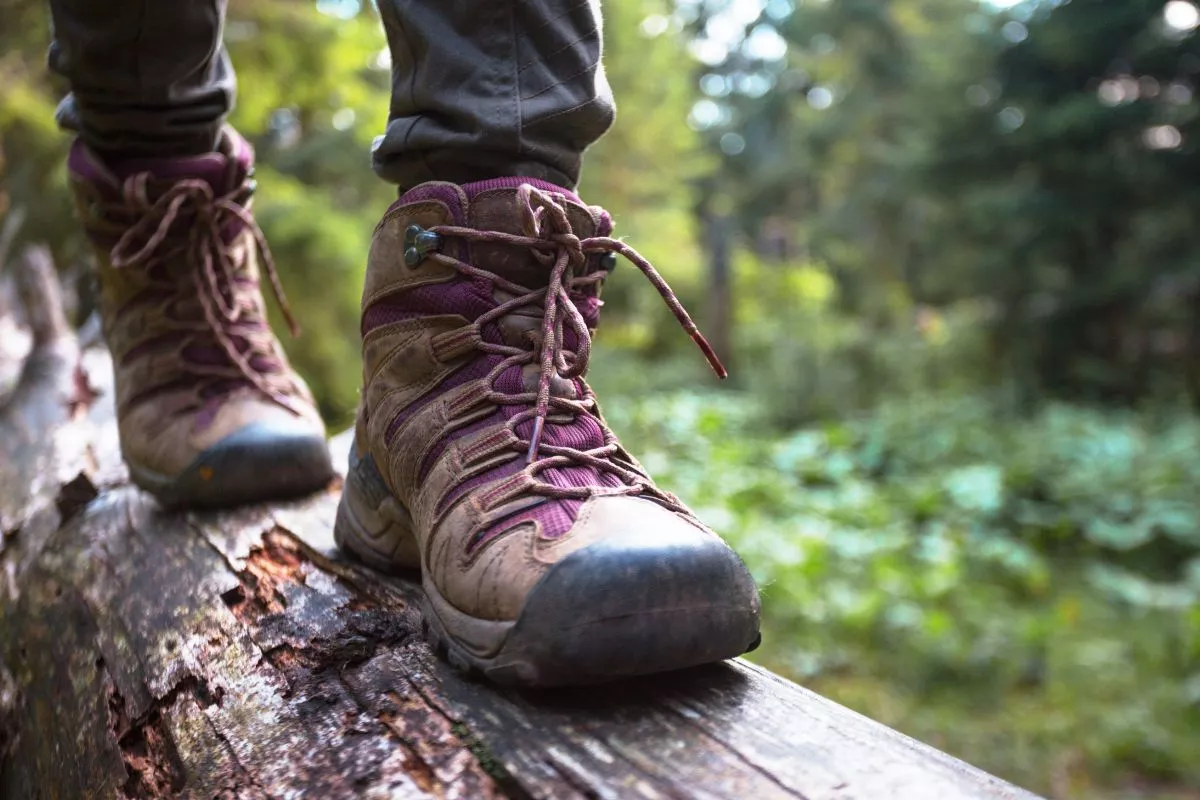
How to Choose Hiking Boots
When choosing hiking boots, always consider these key factors:
- who will be wearing them (women, men, children),
- what activities you’ll use them for (casual city walking, running, hikes, climbing),
- what conditions you’ll wear them in (summer sunshine, any weather, or extreme conditions),
- what terrain you’ll be tackling (pavements, unpaved trails, mountains, rocks, snow),
- and whether you have any special requirements (sweating, preferred material, high instep, etc.).
If you have a basic idea about these questions, then we can move on to the different types of hiking boots.
For easier reference, I’ve rated the specific hiking boots mentioned in this article. You can find the ratings in the following table:
| Ranking 🪜 | Boot Name 👟 | Typical Price 💰 |
|---|---|---|
| 1st place 🥇 | La Sportiva TX5 GTX | €240 |
| 2nd place 🥈 | Ultra Raptor II Mid Leather GTX | €160 |
| 3rd place 🥉 | Hanwag Alta Bunion II GTX | €180 |
| 4th place | Regatta Burrell Leather | €120 |
| 5th place | Cloudrock 2 Waterproof | €240 |
| 6th place | Terrex Swift R3 Mid Adidas | €160 |
| 7th place | Salewa Ws Mtn Trainer 2 GTX | €200 |
| 8th place | Island Active MFS | €300 |
| 9th place | Desert Light O1 Boot | €60 |
| 10th place | Vectiv Exploris 2 Mid Futurelight | €100 |
⚠️TIP: Check out our article about the best trekking boots. You’re sure to find your perfect pair there! 😉
Types of Hiking Boots
Hiking footwear is divided into several different types.
By Gender
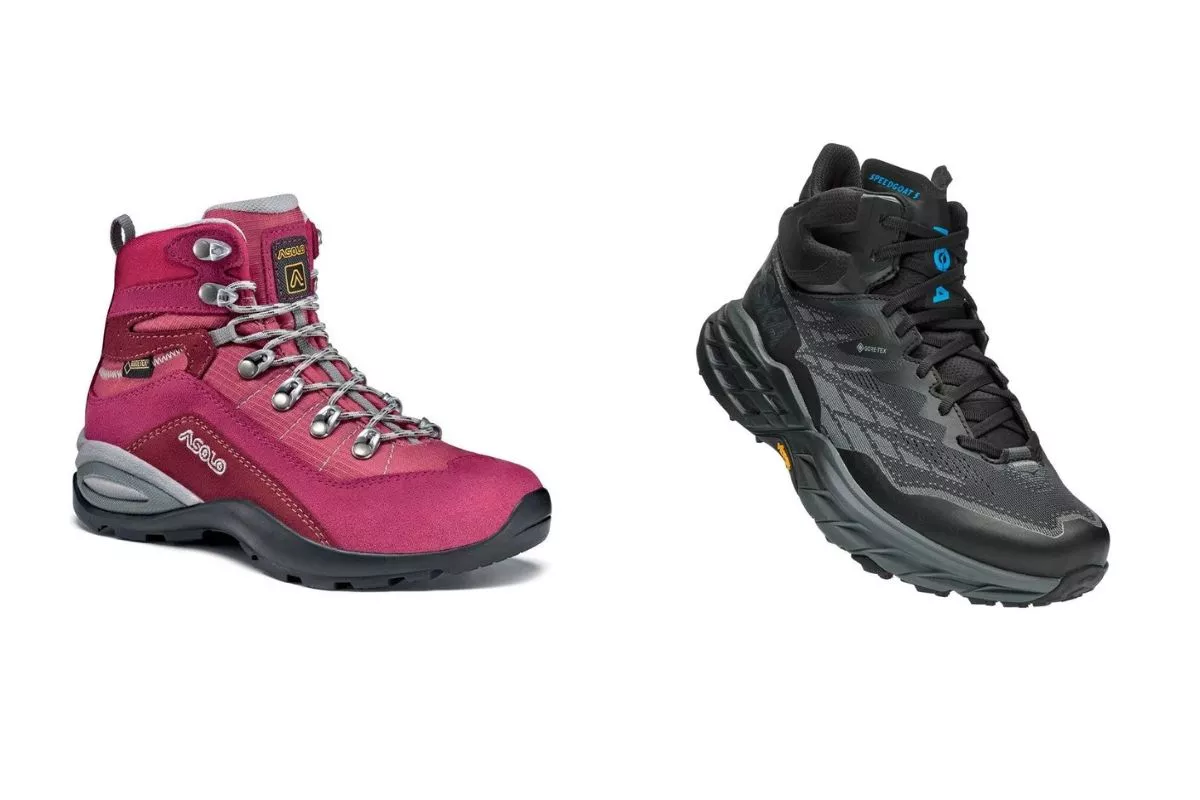
Hiking boots are naturally divided by gender into men’s, women’s, and children’s models. The main differences lie in the boots being adapted to the anatomical differences of each gender, as well as in design and colour options. Women’s hiking boots tend to have a narrower heel and different proportions, while hiking boots for men are typically wider.
For ladies, I’d recommend the Vectiv Exploris 2 Mid Futurelight, and for men the Terreno High boots. For children, I’d go with the Merrell Moab Speed 2 Low A/C Wtpf hiking boots.
You might also like: What Travel Gear to Get
By Ankle Height
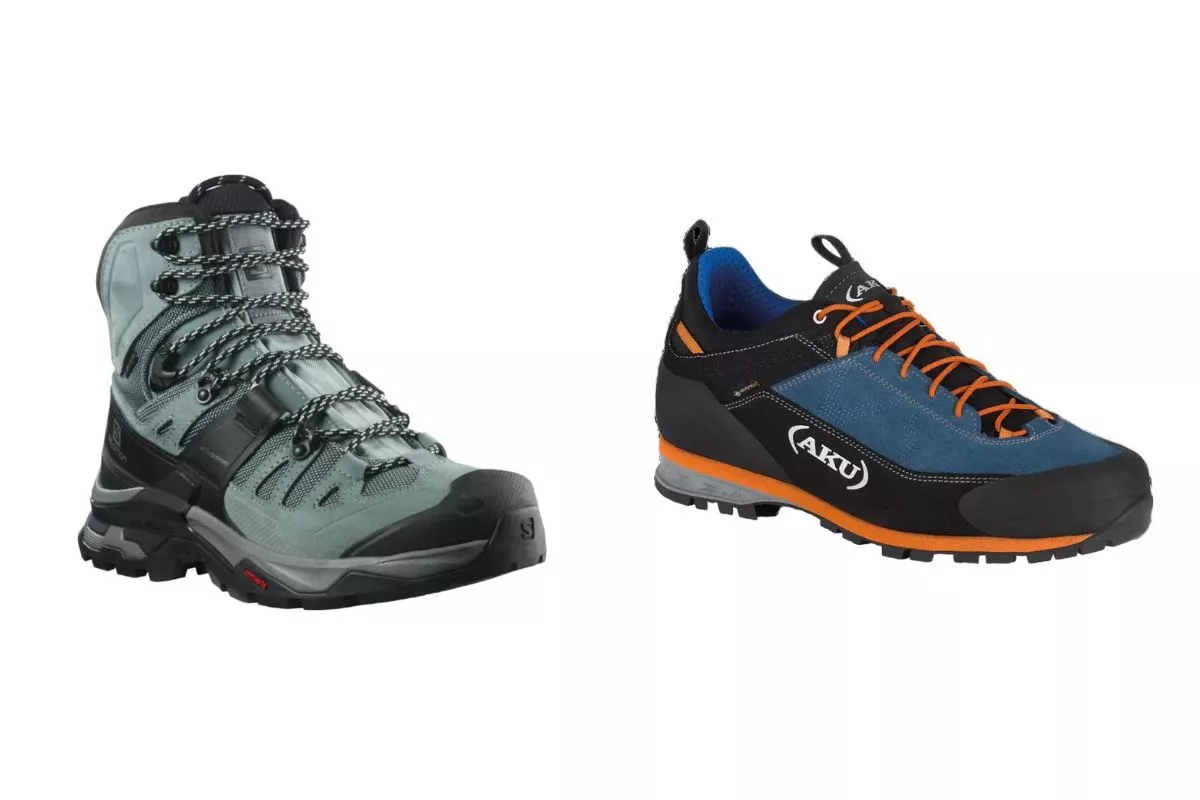
Hiking boots are also categorised by ankle height, into low-cut and high-cut models. You may also see them referred to as mid-cut and ankle-height.
Low-cut boots tend to be lighter, while high-cut ones are generally heavier but offer much better ankle protection. Low-cut hiking boots are therefore better suited for less demanding activities, whereas high-cut hiking walking boots are ideal for more challenging terrain.
From low-cut hiking boots, I’d recommend:
And from high-cut hiking boots, consider:
By Terrain
Hiking boots are further categorised by the terrain you intend to use them on.
- Walking shoes (e.g. Black Diamond M Circuit 2): These are designed for easy terrain such as paved paths, parks, or city walks. This category includes lightweight outdoor shoes, trail running shoes, and trekking sandals. They feature a soft sole and are very comfortable, making them ideal for shorter, less demanding outings.
- Light trekking shoes (e.g. Ducan Low GTX®): Boots in this category have a stiffer sole than walking shoes but remain fairly soft and comfortable. They’re usually higher cut, providing better ankle protection. They’re suitable for paved trails and less demanding trekking.
- Trekking boots: This category includes sturdy boots with a stiff sole, ideal for unpaved trails and moderately challenging terrain. They’re suitable for hikes with a heavier backpack and multi-day mountain trips. These boots offer good support and protection. Check out: Island Active MFS.
- Mountain boots (e.g. Hanwag Alta Bunion II GTX): Sturdy and robust mountain boots, often made from full leather. They typically feature a high rand that protects the boot from mechanical damage. These boots are suitable for demanding trekking with a heavy backpack, scrambling over scree, and glacier travel.
- Alpine hiking boots: Boots in this category are designed for alpine hiking and technically demanding terrain, including glaciers and snow-ice climbing. They’re made from durable materials and feature a heel groove for attaching semi-automatic crampons. For alpine hiking, I recommend the La Sportiva TX5 GTX.
- Mountaineering and expedition boots (e.g. Ultra Raptor II Mid Leather GTX): These are boots for extreme conditions, designed primarily for mountaineering and expedition trips. They’re often insulated, made from durable materials, and equipped with crampon grooves at both the heel and toe. They’re designed for vertical terrain and climbing.
- Approach shoes: These are designed for approaching climbing walls and via ferratas. Approach shoes are low-cut with a fairly stiff midsole and a special sole construction at the toe area (known as a climbing zone) that ensures good contact with rock or steel elements on ferratas. For these purposes, I recommend the Salewa Ws Mtn Trainer 2 GTX.
How to Choose the Right Material for Hiking Boots
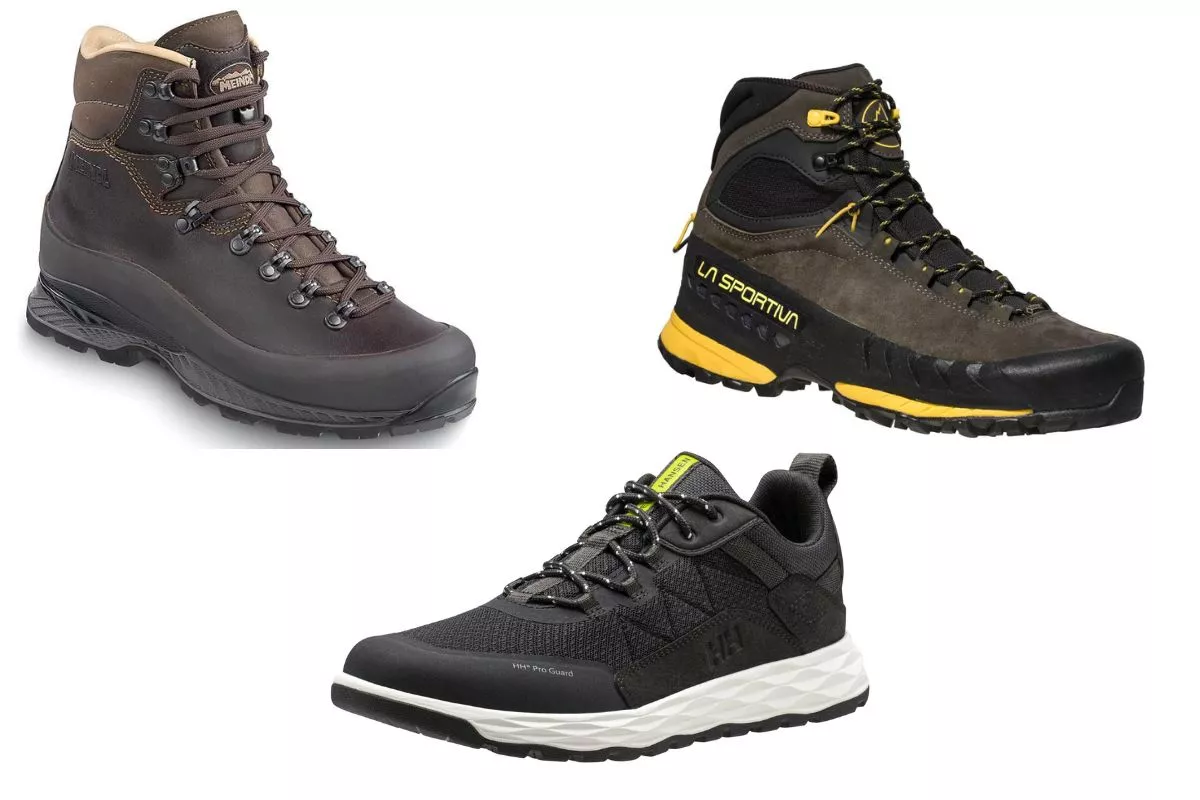
Hiking boots are typically made from three main materials: synthetic materials, textile, and leather. Or a combination of synthetic material and leather.
A textile upper offers several advantages. The boots are lighter, conform better to your foot, dry faster, and tend to be more affordable than full-leather options. If equipped with a membrane, they can also be waterproof. On the other hand, their drawback is a shorter lifespan and lower durability, which worsens with intensive use. If you prefer textile boots, I recommend the low-cut Regatta Samaris.
Leather provides greater durability, longer lifespan, and better waterproofing compared to textile materials, but usually comes with more weight, a higher price, and lower breathability. Beautiful and functional leather hiking boots include the Regatta Burrell Leather.
And if you prefer synthetics, which offer hiking boots excellent durability, water resistance, and lightness, then check out the Cloudrock 2 Waterproof or the Terrex Swift R3 Mid Adidas.
How to Choose the Right Size and Try on Hiking Boots
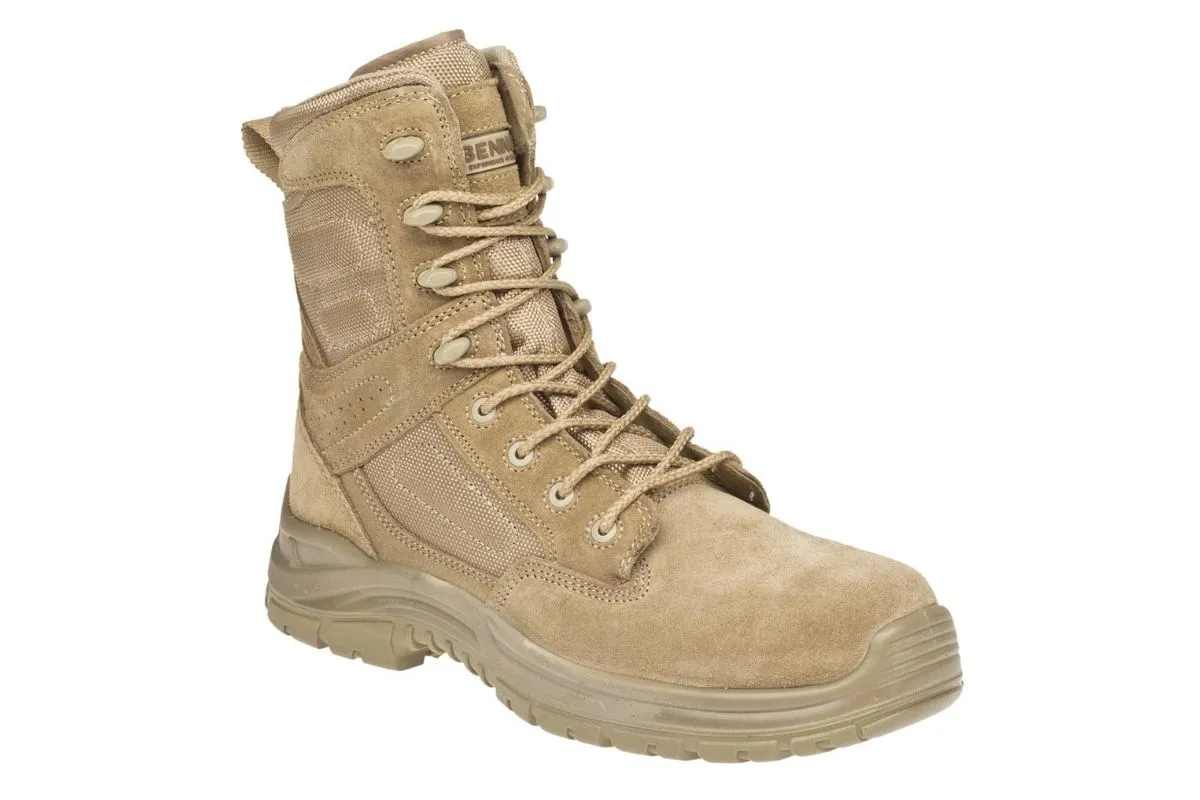
You should try on boots in the afternoon or towards the end of the day, when your feet are at their largest and slightly swollen, to simulate the conditions you’ll experience on the trail. It’s also a good idea to wear the socks you plan to use while hiking, so the fitting mirrors real-world conditions as closely as possible.
When trying on hiking boots, walk around, check that they fit well around the heel and instep, and make sure there’s enough room for your toes. Your hiking boots should be about 1 cm (half a size) larger than your actual foot size.
If you feel any pressure, friction, or other discomfort, the boots probably don’t fit you properly. This can lead to blisters or other issues during longer walks.
Frequently Asked Questions
Can I Use the Same Hiking Boots on Different Types of Terrain?
Some boots are more versatile and can be used on various types of terrain, but it’s always better to choose boots that are specifically designed for the particular conditions you’ll be walking in.
Is It Better to Invest in Waterproof Hiking Boots?
If you’re planning hikes in rainy or wet conditions, waterproof hiking boots are definitely a worthwhile investment. They protect your feet from moisture and keep them dry, which is essential for your comfort and blister prevention.
How Do I Know If My Hiking Boots Fit Properly?
Your boots should fit well around the heel and instep, provide enough room for your toes, and not cause any pressure or friction. You should feel comfortable in them even during longer walks.
Tips and Tricks for Your Vacation
Don’t Overpay for Flights
Search for flights on Kayak. It’s our favorite search engine because it scans the websites of all airlines and always finds the cheapest connection.
Book Your Accommodation Smartly
The best experiences we’ve had when looking for accommodation (from Alaska to Morocco) are with Booking.com, where hotels, apartments, and entire houses are usually the cheapest and most widely available.
Don’t Forget Travel Insurance
Good travel insurance will protect you against illness, accidents, theft, or flight cancellations. We’ve had a few hospital visits abroad, so we know how important it is to have proper insurance arranged.
Where we insure ourselves: SafetyWing (best for everyone) and TrueTraveller (for extra-long trips).
Why don’t we recommend any Czech insurance company? Because they have too many restrictions. They set limits on the number of days abroad, travel insurance via a credit card often requires you to pay medical expenses only with that card, and they frequently limit the number of returns to the Czech Republic.
Find the Best Experiences
Get Your Guide is a huge online marketplace where you can book guided walks, trips, skip-the-line tickets, tours, and much more. We always find some extra fun there!


