

We consider the Dolomites the most beautiful mountains in Europe — and after several visits, we’re more convinced than ever. Their towering peaks of dolomite limestone and turquoise lakes have amazed countless travellers. Combined with relatively affordable prices, superb Italian cuisine, and easily accessible summits, the Dolomites Italy are an ideal destination for couples, families with children, and seniors alike. In this guide, you’ll find the 15 best places in the Dolomites Italy, a practical 5–7 day itinerary, and everything you need to know before heading to the Italian Alps.
The Dolomites are one of the mountain ranges within the Italian Alps, stretching across the northern part of Italy. From London, the easiest way to get here is by flying into Innsbruck, Venice, or Verona and renting a car, though you can also reach the Dolomites by train or bus. The drive from Venice takes around 2 hours, from Innsbruck about 1.5 hours.
Why the Dolomites Are Different from “Ordinary” Alps
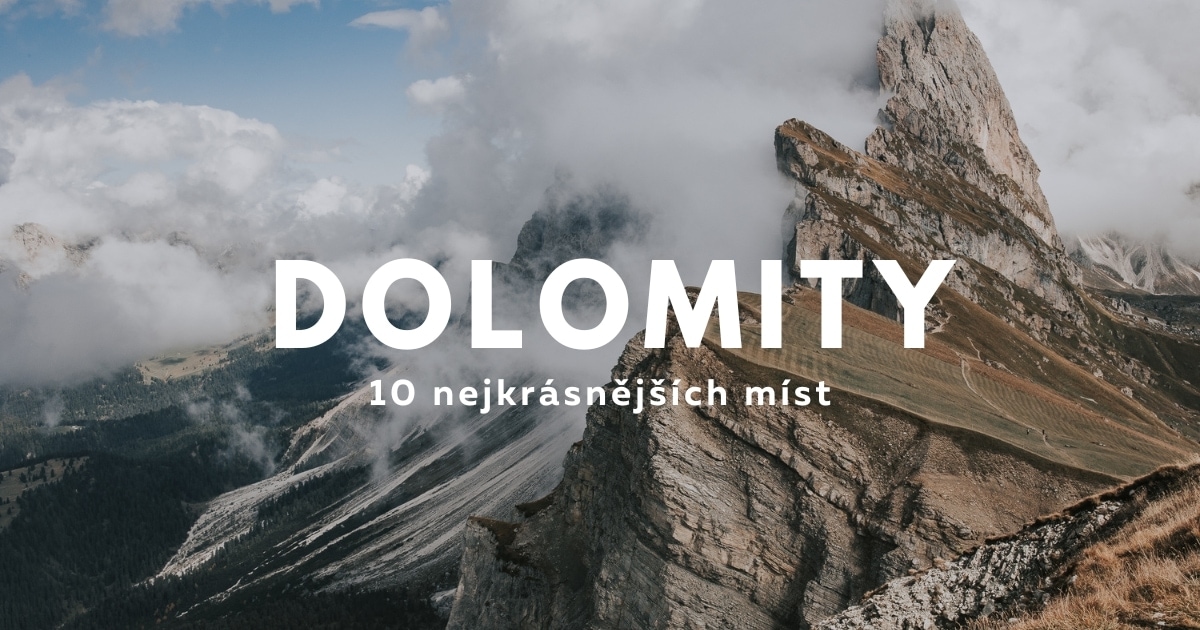
The Dolomites aren’t just another Alpine mountain range. They are vertical rock towers made of dolomite limestone that glow pink and orange at sunrise and sunset — a phenomenon called enrosadira, and one of the reasons UNESCO inscribed the Dolomites as a World Heritage Site in 2009.
Unlike the Swiss or Austrian Alps, you’ll find dramatic contrasts here: jagged rock walls rise directly from green meadows, turquoise lakes sit in corridors surrounded by vertical cliffs, and instead of glacial valleys, there are narrow mountain passes with panoramic views in every direction. The Dolomites mountains in Italy span two regions — Trentino-Alto Adige and Veneto. People speak both Italian and German here, the food combines Alpine cuisine with Italian, and the atmosphere is completely unlike anywhere else in the Alps.
When to Visit the Dolomites for Hiking
The main season runs from July to the end of September, when the weather in the Dolomites is most favourable and the days are long and ideal for exploring the mountains. During summer, expect the Italian Alps to be packed with tourists, and accommodation — including campsites — needs to be booked well in advance, especially if you’re travelling with a campervan.
May and June are an interesting alternative — the meadows burst into incredible colours, there’s a fraction of the tourist crowds, and accommodation prices are significantly lower. Bear in mind, though, that higher trails (above 2,500 m) may still have snow, and some mountain huts don’t open until mid-June. Daytime temperatures hover around 15–20 °C in the valleys, considerably less in the mountains.
Summer in the Dolomites
July and August are also ideal for camping. If you’re planning to camp in September or October, make sure to bring a sufficiently warm sleeping bag and ideally pack an extra blanket too. When we camped at the beginning of September, nighttime temperatures dropped to minus four, and with our summer sleeping bags it was far from ideal. In summer, valley temperatures range around 25–30 °C, but in the mountains it can be just 10–15 °C even during the day.
Autumn in the Italian Alps
September in the Dolomites is gorgeous — you’ll encounter far fewer tourists, most huts and restaurants are still open, and prices in some areas start to drop. We’re actually longing to go even later next year, in October, because that’s when the larches turn golden. October has its challenges, though — don’t count on every mountain hut being open for lunch or espresso. Some campsites close in October as well, and the sun sets early, especially in the Dolomites where it dips behind the peaks.
Dolomites with Kids and Dogs
The Dolomites are perfect for families with children. Cable cars take you to the top of many peaks, so you can stick to easy walks with minimal elevation gain. Seiser Alm, Lago di Braies, and the area around Cortina are made for families — cable cars whisk you up, flat walks with views await below, and mountain huts serve food so you don’t need to carry a heavy backpack. Head out camping and you’ll create memories your kids will cherish for a lifetime. We especially recommend the area around Ortisei, from where you can easily reach Seiser Alm and Seceda.
Dogs are welcome on all the hikes we did. They were also allowed on every cable car, so our dog Kája came absolutely everywhere with us — except to Lago di Sorapis, where we didn’t take him because he’s a bit clumsy and it’s not an ideal hike for smaller dogs.
Where to Stay in the Dolomites?
If you want to visit the places we recommend, the best approach is to start in Cortina d’Ampezzo, where you’ll spend 4–5 days, and then move on for 2–3 days to Ortisei. As a third base, consider Val Pusteria (Pustertal) — it’s an ideal starting point for Lago di Braies and Tre Cime, and Dolomites Italy hotels here are often cheaper than in Cortina.
Budget guide: In peak season, expect to pay €80–150 per night for a double room (mid-range). Luxury hotels in Cortina cost €200–400+, while campsites run €25–45 per night. Off-season (June, October) prices are 20–40% lower.
Cortina d’Ampezzo
Cortina d’Ampezzo is a famous ski resort in the Italian Alps that offers breathtaking views of the surrounding mountains. It’s also an excellent base for hiking. From Cortina, it’s not far to the popular Tre Cime di Lavaredo, the stunning turquoise Lago di Sorapis, or Lago Federa. Most of our recommended hikes are easily reachable from Cortina, including Cinque Torri and Passo Giau.
Our accommodation tips in Cortina:
- If you’re looking for more affordable dog-friendly accommodation, we really enjoyed B&B Hotel Passo Tre Croci Cortina — excellent breakfast, right next to the Lago di Sorapis trailhead, and dogs are welcome for a small fee.
- One of the top-rated apartments is Dolomiti Sweet Lodge, and Hotel Villa Gaia is also well worth mentioning.
- Those of you looking for a more luxurious romantic stay shouldn’t miss HOTEL de LEN.
Ortisei
If you’re heading to the Dolomites with kids or aren’t experienced mountain hikers, you’ll find much more comfortable walks near Ortisei, from where it’s easy to reach the famous Seceda or Seiser Alm.
Our accommodation tips in Ortisei:
- In Ortisei, you can stay at B&B Villa Angelino,
- or the stylish apartments Apt Lara Siela,
- the best value for money is probably Hotel Scherlin, where breakfast and dinner are included in the price.

Check availability
Check availability
Check availability
Check availability
Check availability
Check availability
15 Best Places in the Dolomites Italy
Let’s look at the places you absolutely shouldn’t miss in the Italian Alps. We’ve ordered them as you’ll encounter them if you follow our itinerary — from the Cortina area through the mountain passes to Val Gardena.
1. Trek Around Tre Cime di Lavaredo
- 3.5–4 hours, 400 m elevation gain, 9.5 km
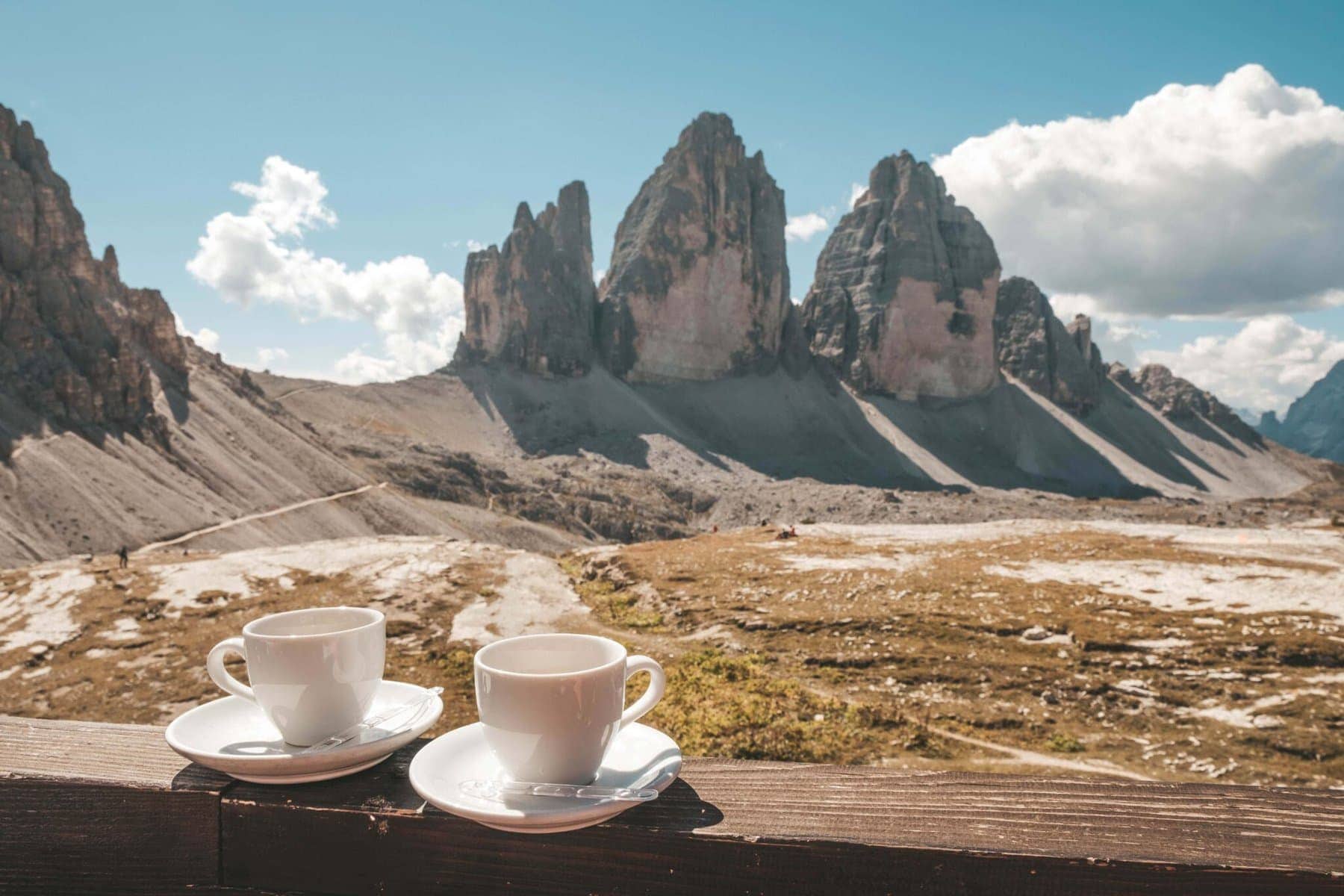
The most iconic trek in the Italian Alps is undoubtedly Tre Cime di Lavaredo (Drei Zinnen / Three Peaks), whose imposing trio of rocky summits you’ve surely seen in photographs. The full circuit takes 3.5–4 hours including lunch at one of the huts along the way. In total, you’ll walk 9.5 km with just under 400 m of elevation gain.
This is a very easy hike that you can do either as a loop or turn around at Rifugio Antonio Locatelli / Dreizinnenhütte, which offers the most stunning views, and head back the same way. The trek starts at Rifugio Auronzo, which you can reach by car — parking costs €30 for a car and €45 for a campervan. If you’re staying in Cortina, you can also take a bus here for just a few euros. For current prices and timetables, we recommend visiting the information centre in Cortina town centre.
2026 Update: Since summer 2025, there’s a new reservation system for the access road to Tre Cime. During peak season (July–September), you must pre-book a time slot to drive on the toll road to Rifugio Auronzo. Without a reservation, you won’t be allowed on the road — especially on weekends and during peak hours (9:00–11:00). We recommend booking at least 2–3 days ahead, and in August even a week in advance. Alternatively, you can hike to Tre Cime from Lago di Misurina (about 2 extra hours), where no reservation is needed.
2. Cadini di Misurina — Hidden Gem Near Tre Cime
Cadini di Misurina is a group of rock towers and spires that look like a natural cathedral. Most tourists pass them on the way to Tre Cime, but that’s exactly why you’ll find peace and quiet here — an authentic mountain experience that’s hard to come by at Tre Cime during the season.
The best view of Cadini is from Rifugio Auronzo (the same starting point as for Tre Cime) — just turn around and look the other way. For a closer look, hike to Rifugio Fonda Savio (2–3 hours return, moderate difficulty). We went there in the morning before setting off on the Tre Cime circuit, and the view of the needle-like rock towers in the morning light was well worth the early start.
3. Hike to Lago di Sorapis
- 4–6 hours, 725 m elevation gain, 13.5 km
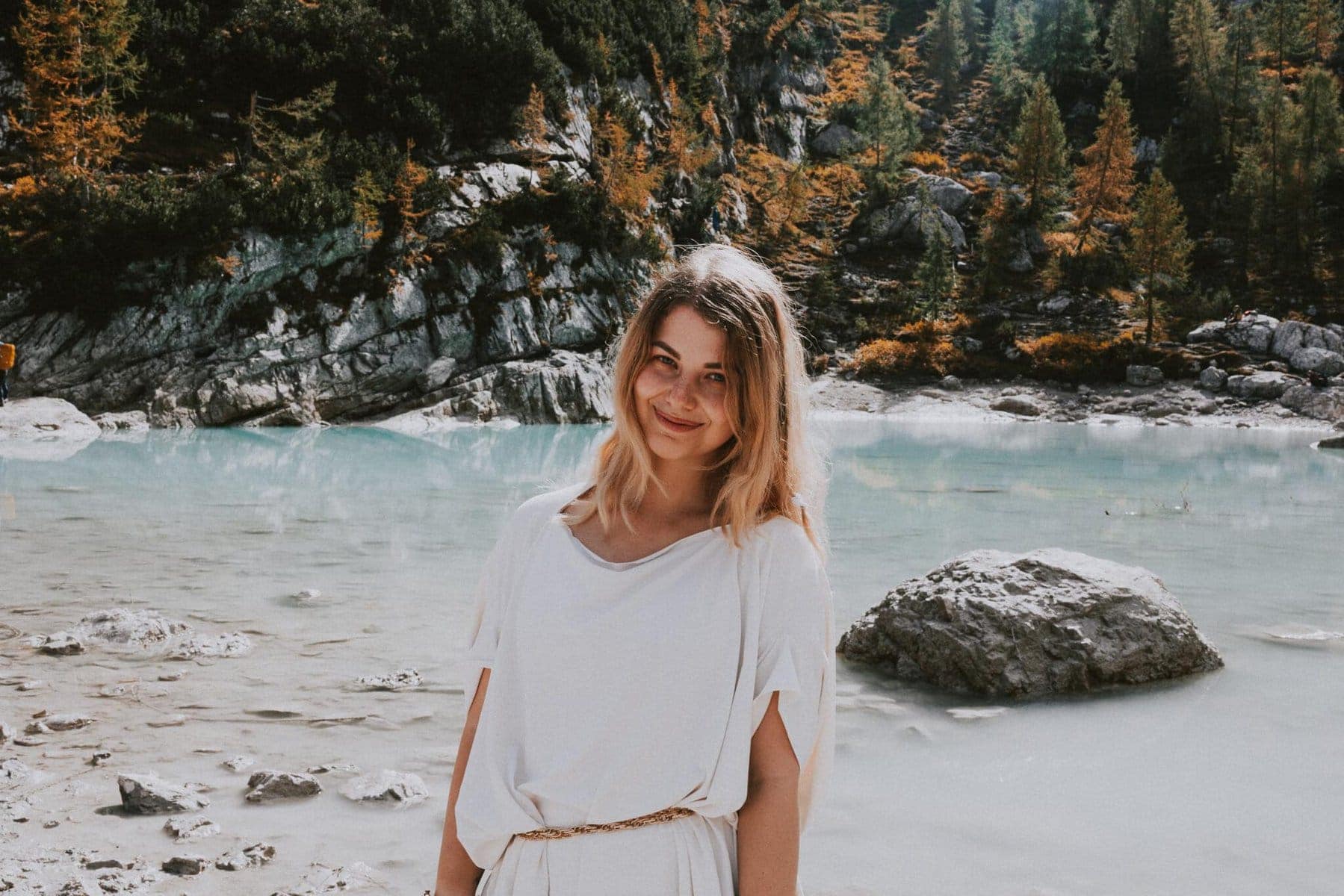
One of the most beautiful spots is the incredibly turquoise Lago di Sorapis, but you’ll have to earn it with a proper hike. The trail is 13.5 km with 725 m of elevation gain.
It’s not a difficult trek, but it’s the only hike we’d strongly advise against for families with small children — and we didn’t take our dog either, because he’s a bit clumsy. Parts of the trail run close to a drop-off, there are sections with stairs and fixed cables, and if there’s a lot of water you’ll need to wade through a stream. If you’re not great with heights, this might not be the ideal choice either. I hope I haven’t scared you off, though — Lukáš and I have done this trek several times and there’s really nothing to worry about.
The best time to visit Lago di Sorapis is early summer, when the water level is at its highest. By late September the experience may not be as spectacular, as the lake gradually dries up. Just before the lake, there’s a turn-off to a hut where you can grab lunch, use the toilet, or have an espresso during the season. It was still open in early October when we last visited.
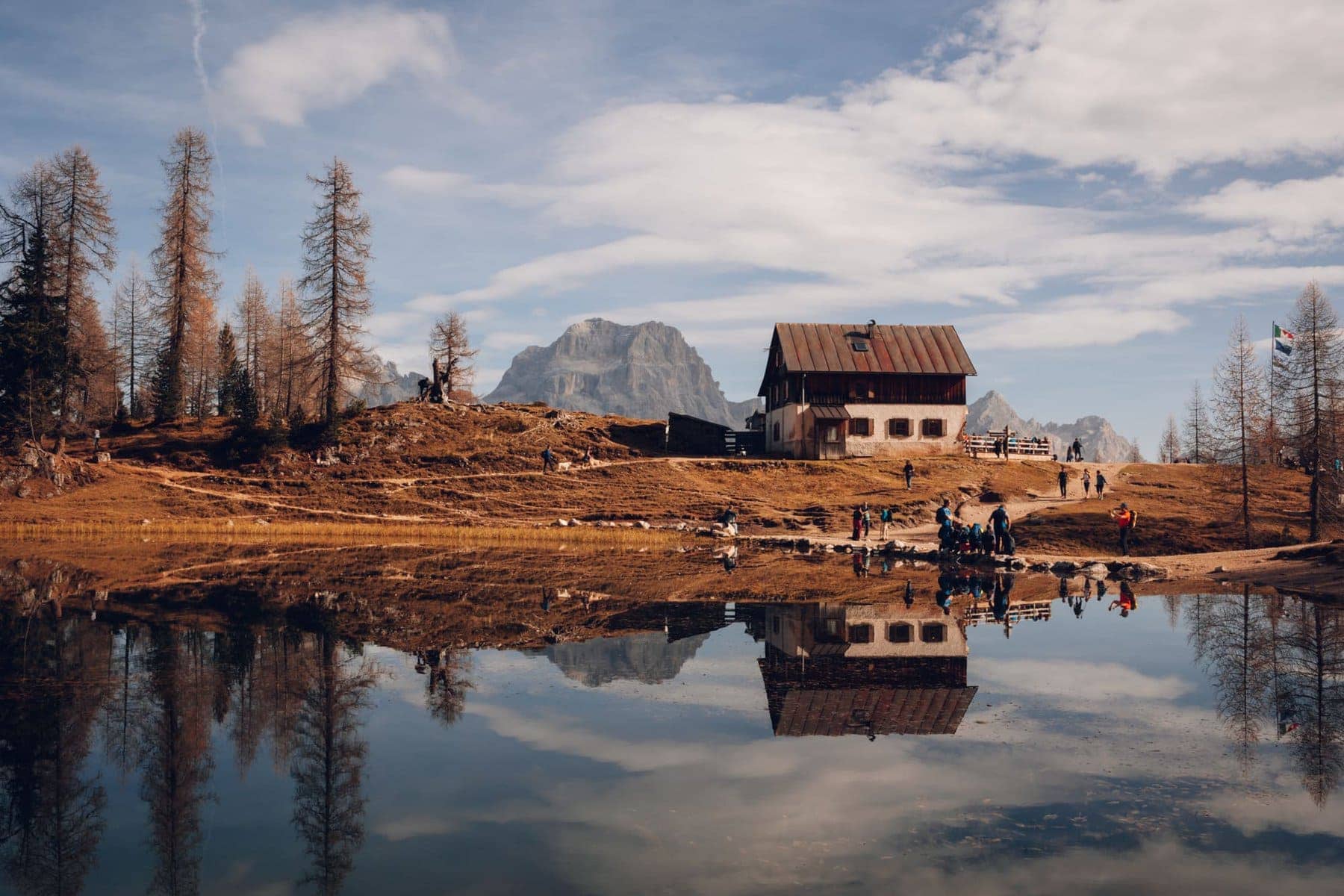
4. Trek to Lago Federa
- 3–4 hours, 400 m elevation gain, 8.4 km
You can hike to Lago Federa directly from the campsite in Cortina, but we wouldn’t recommend it. It’s a very demanding climb that might excite some seasoned hikers, but you walk through forest the entire time and don’t see much. The shortest and most popular route is from Ponte di Rocurto. From there, it takes about 1.5–2 hours to reach the lake. It’s quite uphill, but there’s a hut by the lake where you can enjoy a good lunch.
5. Passo Giau
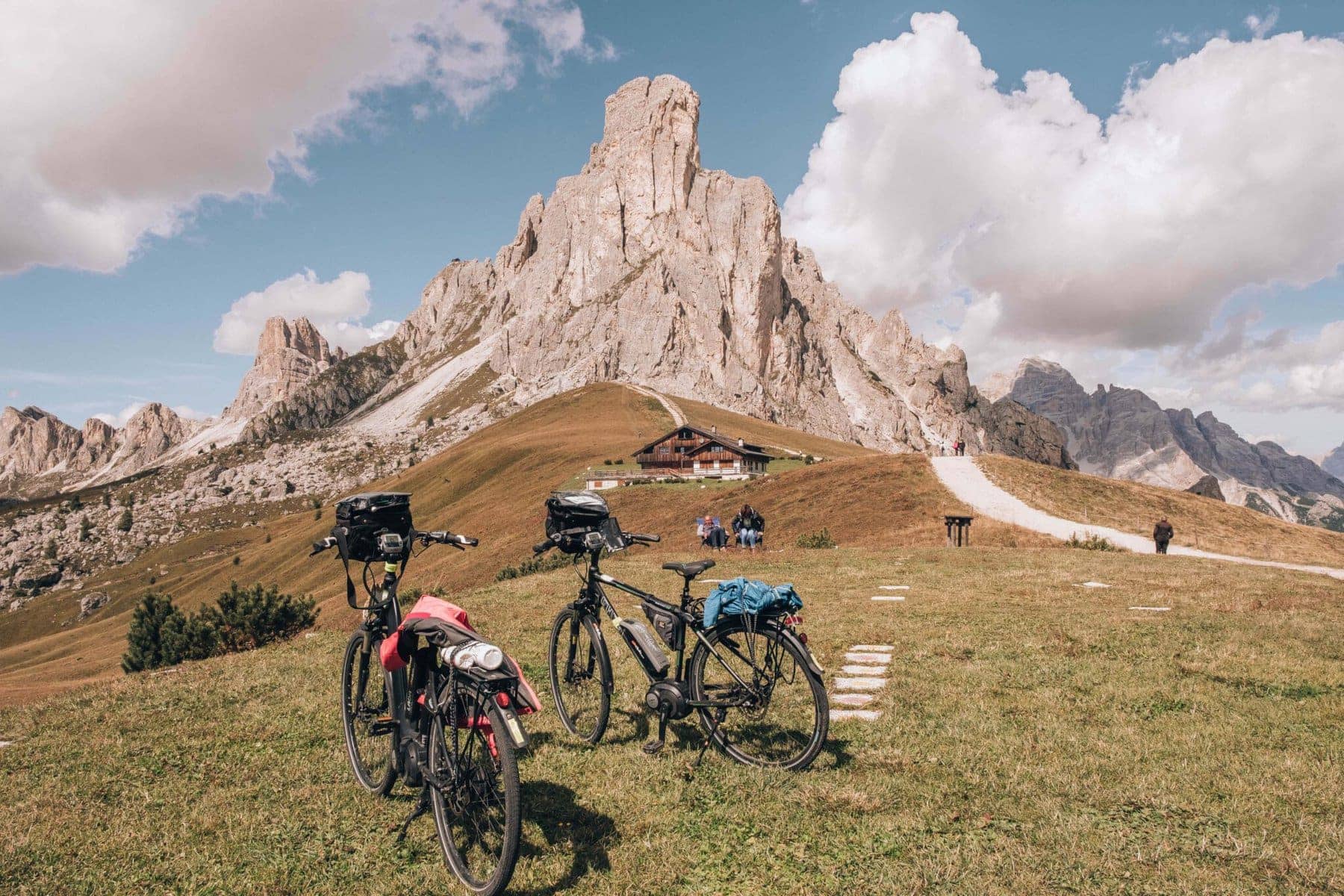
You can reach Passo Giau from Cortina by car or bus, and if you’re not in the mood for a trek, you don’t need to lift a finger for breathtaking views. Just park up and look around. From Cortina, it’s also a brilliant cycling route that winds steadily uphill — after 2 hours of climbing, you’ll have earned a hearty plate of Tyrolean dumplings. Or rent an e-bike and get here in 45 minutes.
6. Passo Sella — Mountain Pass with Views of Sassolungo
Passo Sella (2,240 m) is one of the iconic Dolomite mountain passes and part of the famous Sella Ronda circuit. From the pass, you get a direct view of the imposing Sassolungo (Langkofel) massif towering right above you — a sight that will take your breath away, even if it’s your third time in the Dolomites.
The pass is an ideal stop on the road between Val Gardena and Val di Fassa. You can park here, grab a coffee with a view, and set off on a short hike to Rifugio Salei (45 minutes) or a longer loop around Sassolungo (5–6 hours, more challenging). In winter, the Sella Ronda is one of the best ski circuits in the Alps — 40 km of slopes connected by lifts, making the Dolomites Italy ski scene truly world-class.
7. Trek to Cinque Torri
- 3–4 hours, 583 m elevation gain, 10 km
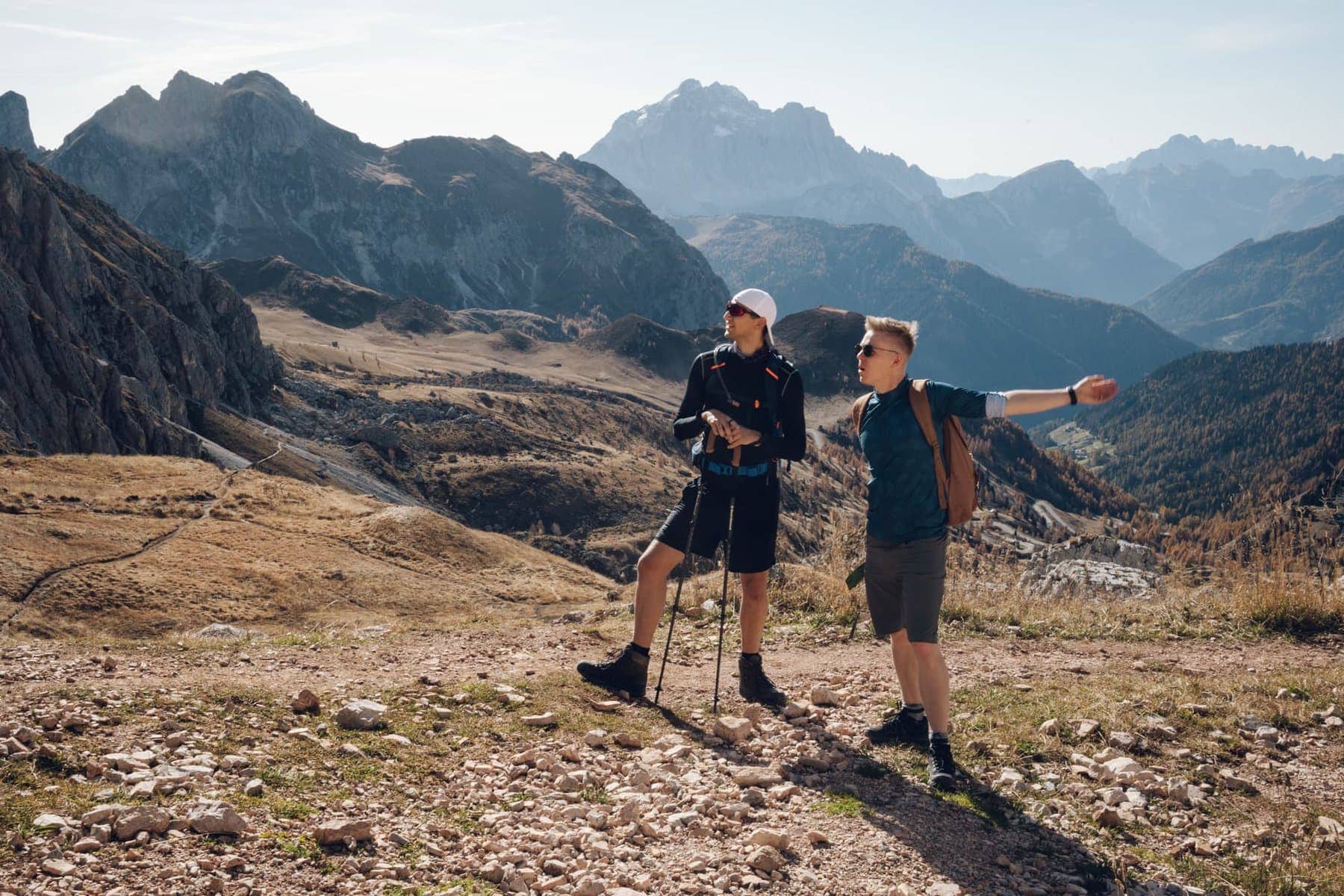
This trail is one of our absolute favourites. We always start at Passo Giau and stroll at a very relaxed pace along the rocky trail towards Cinque Torri. You have unreal views the entire time — I think we’ve been here three times, maybe even four, and it never gets old.
It’s gorgeous in any season, and even though you climb nearly 600 m in elevation, the ascent is gradual and manageable for almost anyone. There are two huts along the way where you can stop for lunch or a snack.
8. Most Beautiful Lake in Italy: Lago di Braies
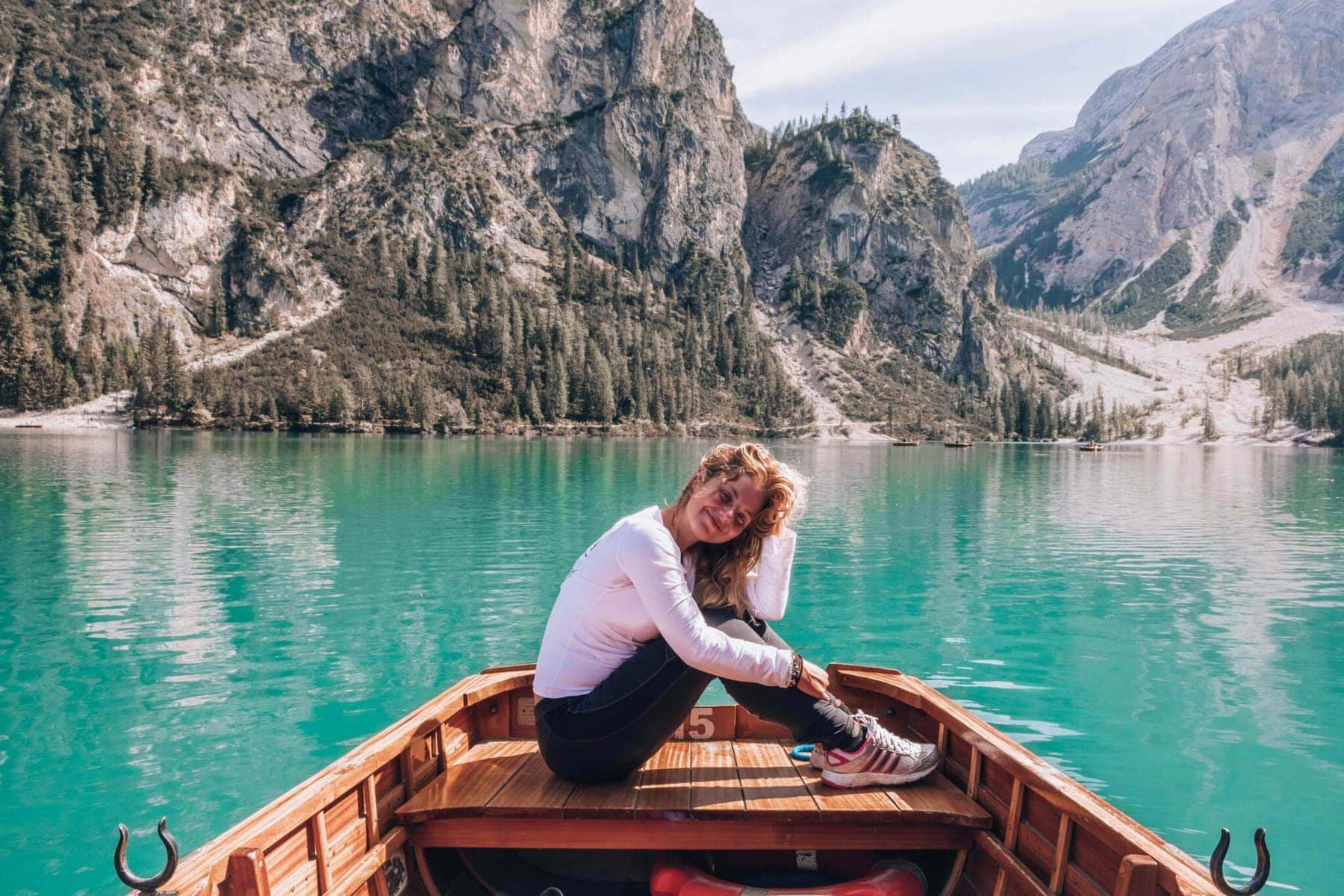
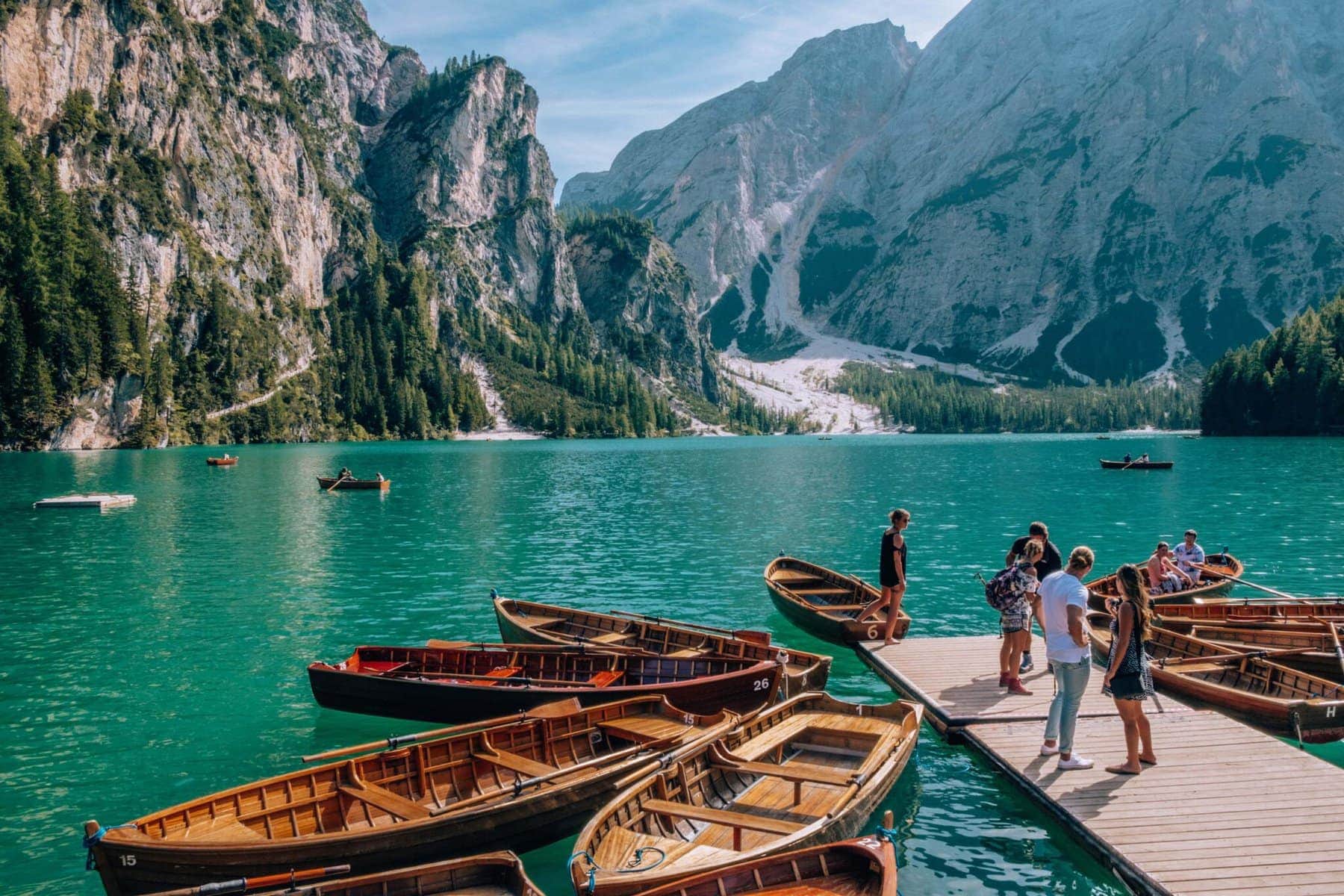
What would a visit to the Dolomites be without a stop at the most famous lake? Be warned: arrive early, because even outside peak season, the number of tourists can catch you off guard — and you might not even find a parking spot. That happened to us at the end of October last year. Yes, the end of October, when everywhere else was completely empty. Everyone was apparently at Lago di Braies. At the lake, you can hire a rowing boat or take a short walk around the shore.
Tip for 2026: In summer, advance booking for a parking space or shuttle bus ticket at Lago di Braies is mandatory. Without a reservation, you can’t reach the lake by car. The system works similarly to Tre Cime — it’s best to book your spot online in advance.
9. Lago di Carezza (Karersee) — Emerald Lake Beneath Latemar
Lago di Carezza is a small but incredibly colourful lake beneath the Latemar massif. The water shifts from emerald green to turquoise, and sunken tree trunks are visible on the bottom — it almost looks like an underwater landscape. We actually stopped here by chance the first time, on our way from Bolzano, and we’ve been coming back every time since.
Unlike Lago di Braies or Sorapis, Carezza is easily accessible: you park right by the road and walk to the lake in 5 minutes along a paved path. It’s a perfect stop on the drive from Bolzano towards the mountain passes. The lake looks its best in the morning, when the peaks of Latemar are reflected in the water.
Note: The lake is fairly small and can get very crowded in peak season. If you want peace and quiet, arrive early in the morning or visit outside July–August.
10. Walk to Lago Limides
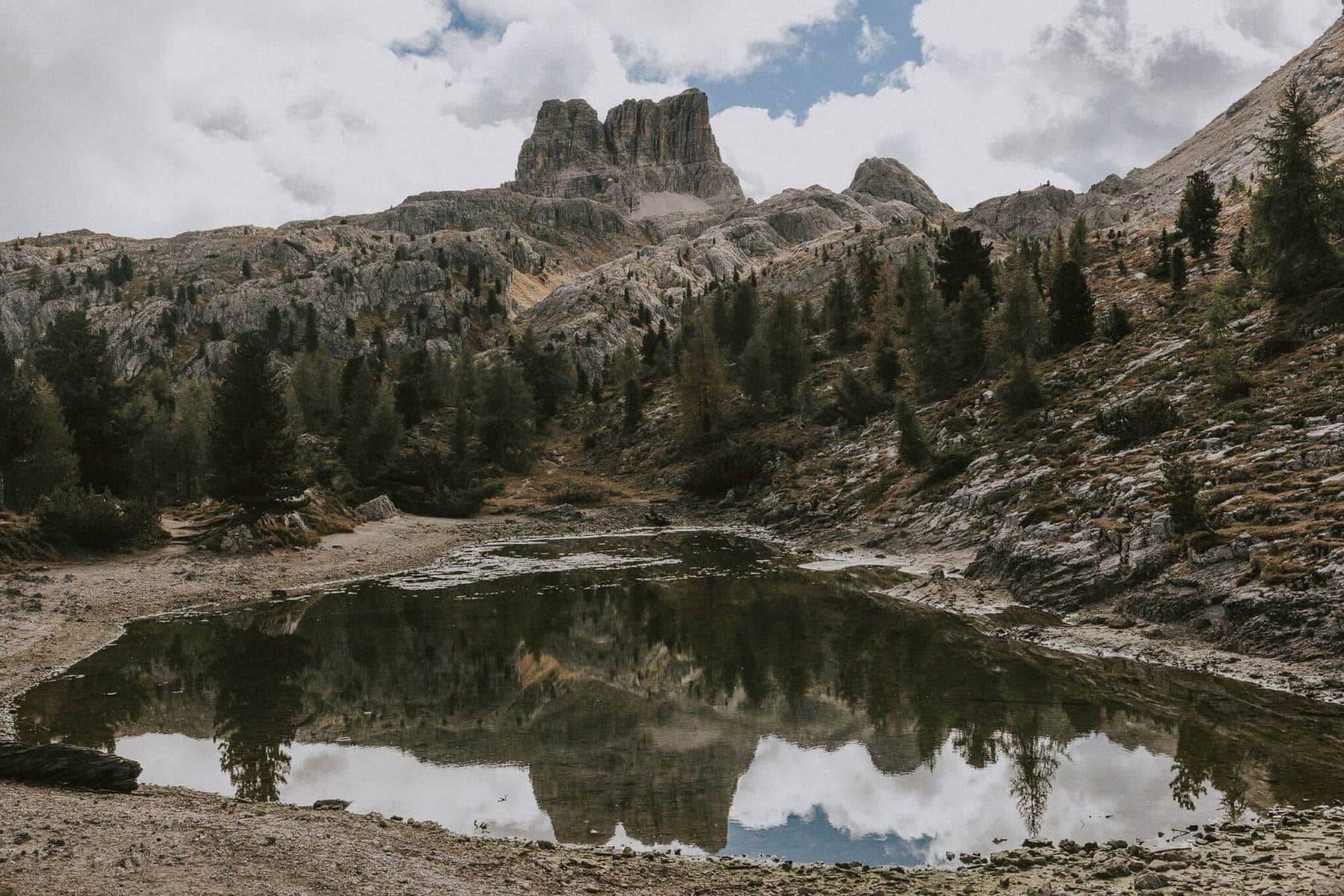
You can easily reach Lago Limides from the car park at Passo Falzarego, which also serves as the starting point for the ascent of Mount Lagazuoi. This lake is particularly beautiful in spring when it’s full of water.
It’s usually very calm, with gorgeous Alpine peaks reflected in its surface. In summer, however, it’s more of a large puddle and not really worth the trip. Unfortunately, autumn is often similar.
11. Cable Car to the Summit of Lagazuoi
You can take a cable car to this summit and I’d strongly recommend it. We hiked up on foot, which is essentially scrambling up a fairly steep slope.
Maybe it was because we were hungry, but it felt endless, and there really aren’t any interesting views along the way up. If you do decide to make the climb, there’s a restaurant at the top where you can reward yourself.
12. Most Beautiful Meadow in South Tyrol: Seiser Alm (Alpe di Siusi)
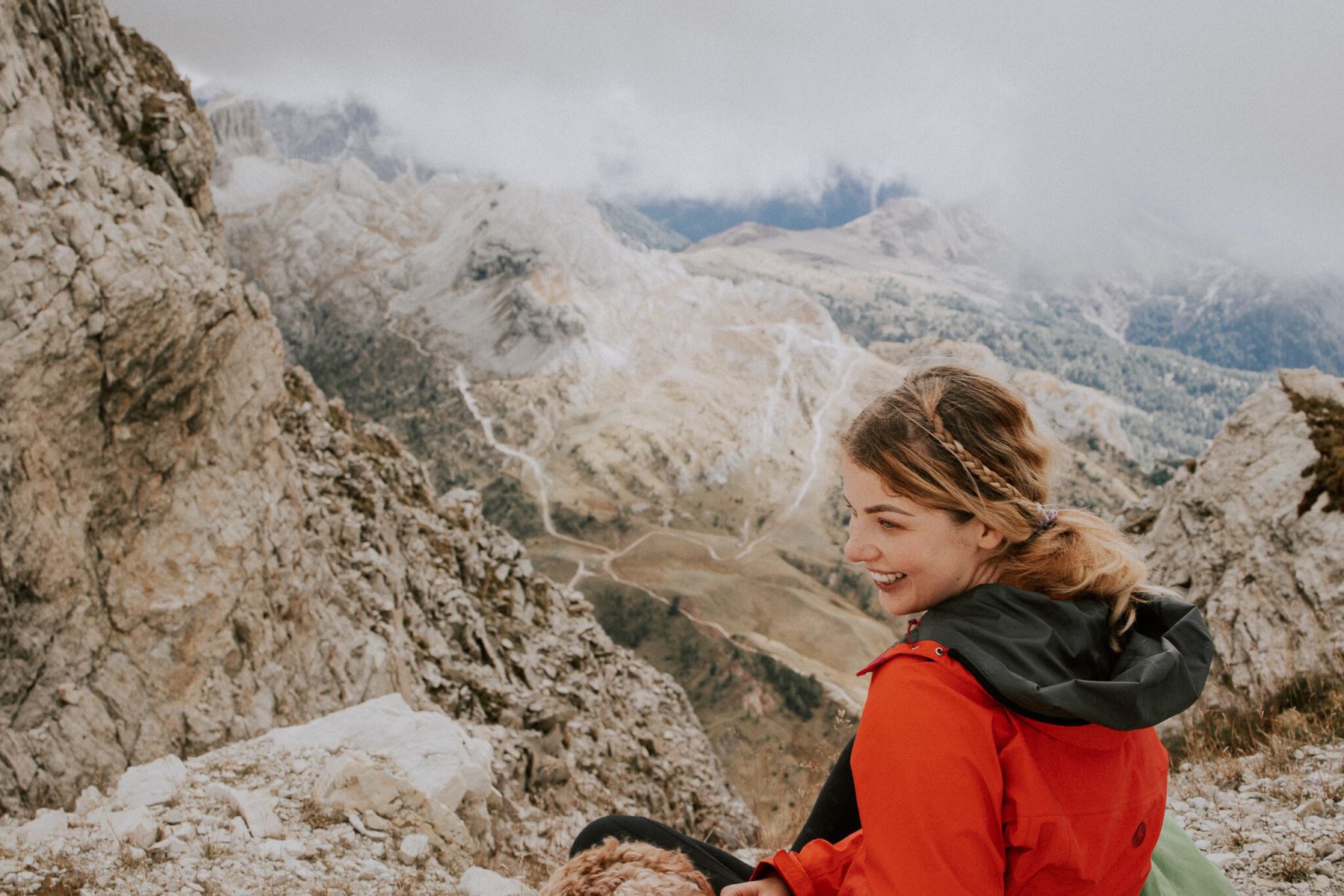
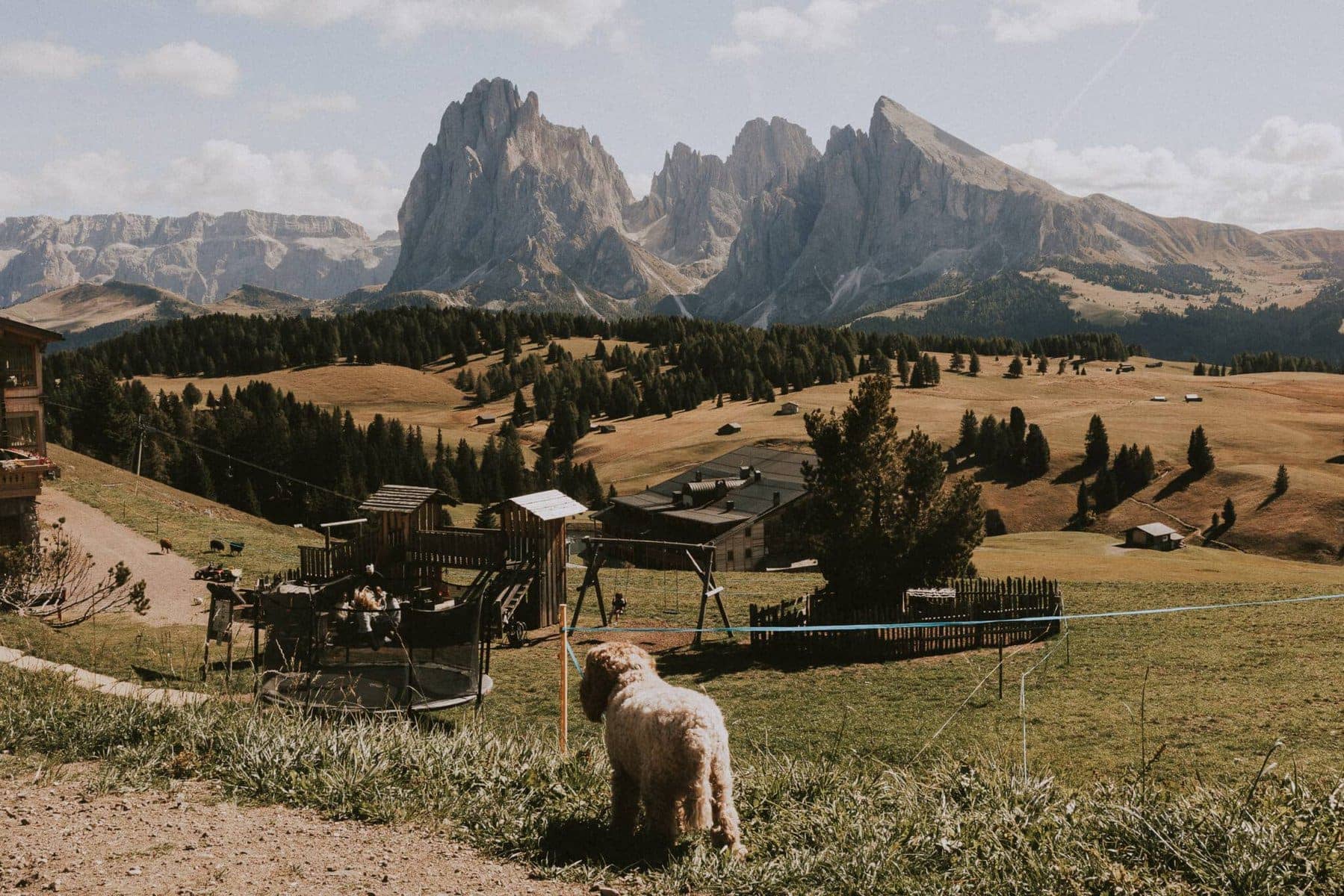
Who hasn’t seen photos from the most famous Alpine meadow, Seiser Alm? You ride the cable car up, and then you can simply stroll across gentle slopes, taking in the soothing scenery and listening to the sound of grazing cattle. Or just have an espresso at one of the local restaurants. Even that alone will be an unforgettable experience.
Practical info: In summer, private cars are banned from Seiser Alm (9:00–17:00). You can get up by cable car from Ortisei (Seiser Alm Bahn) or by bus from Compatsch. The cable car costs around €25 return for an adult — consider the Dolomiti Supersummer Card if you’re planning to use multiple cable cars.
13. Breathtaking Views from Seceda
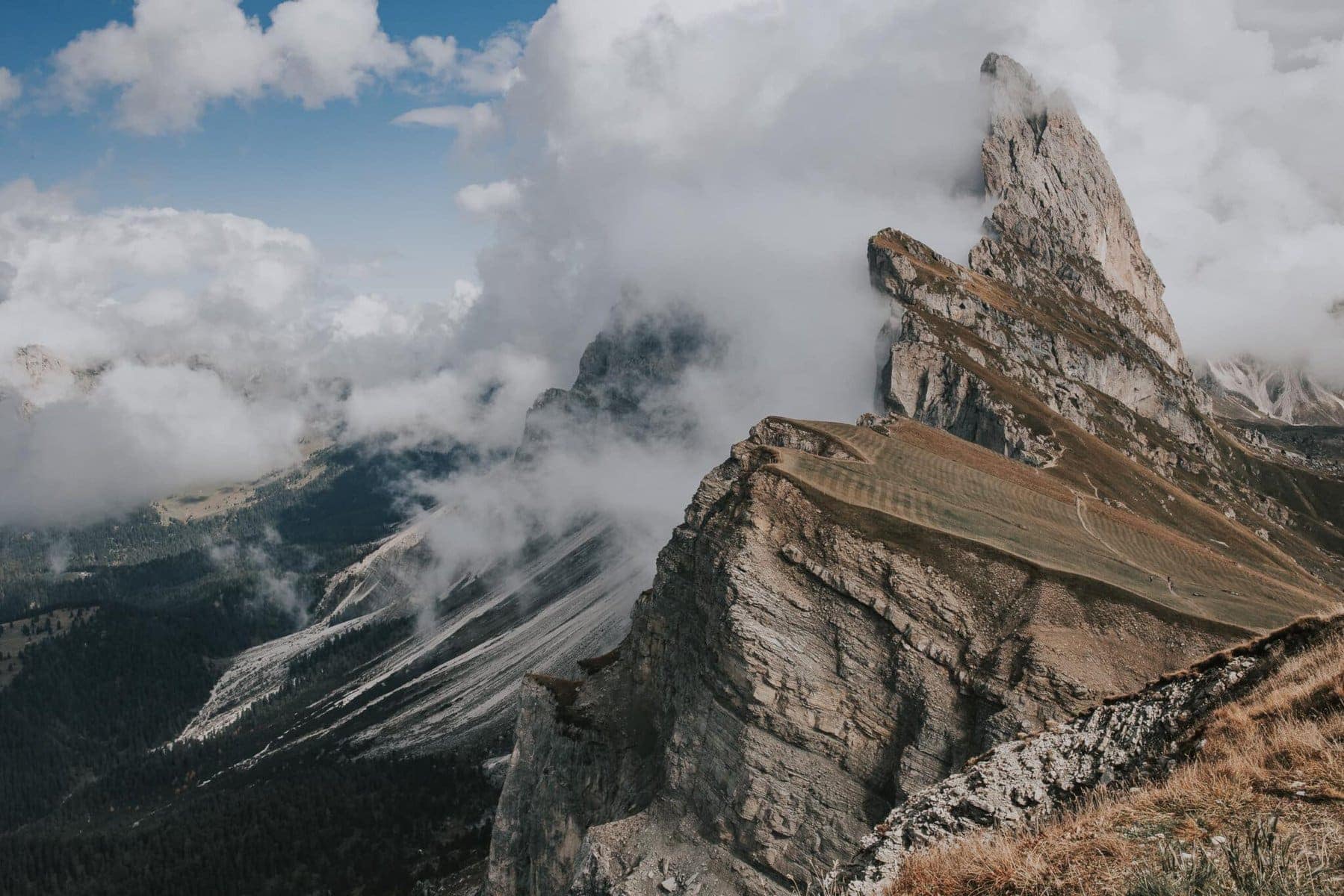
You can reach Seceda by cable car from Ortisei–Furnes–Seceda, and then it’s just a 10-minute walk to the summit. If you fancy a longer walk, take the cable car to Col Raiser instead and do a 3–4 hour circuit. It’s a relatively easy hike with absolutely stunning viewpoints.
14. Val di Funes (Villnöß) — Most Photographed Valley in the Dolomites
Val di Funes is the valley you’ve seen in every other Instagram post about the Dolomites — the little Church of St. Johann in Ranui with the jagged Odle/Geisler peaks as a backdrop. And rightly so: this view really is as beautiful as it looks in photographs. Lukáš and I stood there in the evening light and neither of us wanted to leave.
The best time for photography is early morning or late afternoon, when the sun illuminates the Odle peaks. From the village of Santa Maddalena, an easy stroll leads to the church (20 minutes). For a more challenging hike, continue on the Adolf Munkel Weg trail beneath the Odle walls — 3–4 hours, minimal elevation gain, maximum views.
Practical info: Parking in Santa Maddalena is limited; in season we recommend arriving before 9:00. In summer, a shuttle bus runs from Bressanone.
15. Cortina d’Ampezzo — Queen of the Dolomites
Cortina d’Ampezzo isn’t just a base for sleeping — it’s a fully-fledged destination in its own right. The town hosted the 1956 Winter Olympics and is co-hosting events in 2026, which has brought extensive infrastructure upgrades. Corso Italia is an elegant pedestrian zone with cafés and shops where you can easily spend a pleasant afternoon.
From Cortina, cable cars run to Tofane (Freccia nel Cielo — views from 3,244 m), Faloria, and Cristallo. For families, we recommend the Adventure Park on the outskirts of town. And above all, Cortina is the ideal base for day trips to Tre Cime, Lago di Sorapis, and Cinque Torri — everything is within 30–45 minutes by car.
If you’re planning a Dolomites Italy holiday and looking for a challenge, don’t miss the ascent of Marmolada, known as the “roof of the Dolomites.” This majestic mountain offers unforgettable views and is a popular goal for many hikers and mountaineers. For more about this incredible route, check out the article Marmolada: Ascent to the Roof of the Dolomites, where you’ll find detailed information about the climb, safety tips, and recommendations for making the most of the experience.
When and Where to See Golden Larches in the Dolomites?
We’ve been chasing golden larches in the Dolomites for several years. They’re golden for only a very short window before the needles fall. And unfortunately, it’s a bit different every year. They can start turning gold as early as late September. The best time to visit the Dolomites for autumn colours is therefore early October. If you want to see them in all their glory, head to Lago Federa.
How to Plan the Dolomites: 5–7 Day Itinerary
The most common question we get: “How many days do I need in the Dolomites?” Our answer: a minimum of 5 days, ideally 7. The Dolomites are vast and driving between spots takes time — the roads are mountainous, winding, and packed during the season.
Day 1–2: Cortina d’Ampezzo area
Arrive, acclimatise. Tre Cime di Lavaredo (full day — don’t forget to book!), Lago di Sorapis (full day — note: more challenging hike). Evening stroll through Cortina and a lovely dinner on Corso Italia.
Day 3: Cinque Torri and surroundings
Morning: Cinque Torri (from Passo Giau, our favourite route). Afternoon: Lago Federa or Lago Limides. Both are relatively close and can be combined.
Day 4: Transfer to Val Gardena / Seiser Alm
Stop at Passo Giau and Passo Sella on the way (photos, short walk, coffee with views of Sassolungo). Afternoon arrival in Ortisei or Santa Cristina. If there’s time, catch Seceda at sunset.
Day 5: Seiser Alm (Alpe di Siusi)
A full day on Europe’s largest high-altitude meadow. Cable car up, walk across the meadow, lunch at a mountain hut. Perfect for kids — flat terrain, views of Sassolungo at every turn.
Day 6: Val di Funes and surroundings
Morning photos of St. Johann church in the early light, Adolf Munkel Weg hike beneath the Odle walls. Afternoon: Lago di Carezza on the way south — a quick stop, but well worth it.
Day 7: Lago di Braies, departure
Visit Lago di Braies (leave early in the morning!) or a scenic drive across the mountain passes. Departure via the Brenner Pass.
Tip: Don’t be afraid to adjust your plan based on the weather. Conditions in the Dolomites change fast — always have a backup activity for rainy days (museum in Cortina, wellness, shopping in Bolzano).
Getting to the Dolomites by Car: What You Need to Know
From the UK: The most common approach is to fly into Innsbruck, Venice, or Verona and pick up a hire car. If you’re driving from the UK, the quickest route goes through France, Switzerland, or Austria via the Brenner Pass. Note that you’ll need a digital motorway vignette for Austria (bought online) and a toll for the Brenner Pass (~€10 for a car). If driving from London, the total journey is around 12–14 hours, so we’d recommend breaking it up with an overnight stop.
Parking in the Dolomites: This is probably the biggest challenge during the season. Most popular spots have paid car parks that fill up fast. Key rules:
- At Lago di Braies, advance booking for a parking space or shuttle bus ticket is mandatory in summer
- Tre Cime — new reservation system since 2025 (see above)
- Seiser Alm — private cars banned in summer (9:00–17:00); you must use the cable car from Ortisei or take a bus
- Everywhere: the earlier you arrive in the morning, the better
Dolomiti Supersummer Card: If you’re planning to use cable cars, consider buying the regional card. It covers dozens of cable cars and public transport in the area. The price is around €50–70 for 3 days. It’s worth it if you’re taking at least 2 cable cars per day.
For a trip to the Dolomites, we recommend travel insurance — even on easy trails, anything can happen, and a helicopter rescue in Italy costs thousands of euros. We use SafetyWing, which covers mountain activities too. Make sure to bring at least a 3-season sleeping bag if you’re planning to camp — in the mountains, nights can get seriously cold even in summer.
Tip: Read our guide on how to choose a sleeping bag.
Frequently Asked Questions About the Dolomites
Things to Do in the Dolomites with Kids?
The Dolomites are fantastic for families with children, as many of the most beautiful spots are accessible by pushchair and cable car. With kids you can go hiking, but also horse riding or visit adventure parks like Adventure Park Colfosco — making a Dolomites Italy holiday truly unforgettable for all ages.
Tips and Tricks for Your Vacation
Don’t Overpay for Flights
Search for flights on Kayak. It’s our favorite search engine because it scans the websites of all airlines and always finds the cheapest connection.
Book Your Accommodation Smartly
The best experiences we’ve had when looking for accommodation (from Alaska to Morocco) are with Booking.com, where hotels, apartments, and entire houses are usually the cheapest and most widely available.
Don’t Forget Travel Insurance
Good travel insurance will protect you against illness, accidents, theft, or flight cancellations. We’ve had a few hospital visits abroad, so we know how important it is to have proper insurance arranged.
Where we insure ourselves: SafetyWing (best for everyone) and TrueTraveller (for extra-long trips).
Why don’t we recommend any Czech insurance company? Because they have too many restrictions. They set limits on the number of days abroad, travel insurance via a credit card often requires you to pay medical expenses only with that card, and they frequently limit the number of returns to the Czech Republic.
Find the Best Experiences
Get Your Guide is a huge online marketplace where you can book guided walks, trips, skip-the-line tickets, tours, and much more. We always find some extra fun there!


