Barcelona, Spain, is a city that grabs you at first sight. Gaudí’s architecture, tapas bars in the narrow lanes of the Gothic Quarter, the views from Bunkers del Carmel, and the beaches of the Mediterranean — it’s all waiting for you in the capital of Catalonia. And in 2026 Barcelona is especially remarkable — after 144 years the Sagrada Família basilica is being completed, a historic moment drawing more visitors here this year than ever before.
Lukáš and I visited Barcelona in early March and fell in love with it — just as you probably will too. Whether you have 1 day, 3 days, or a whole week in Barcelona, this guide will help you plan a trip that fits. You’ll find over 25 tips on sights and experiences, detailed 1- to 3-day itineraries, practical advice on transport, food, and budget, plus our map with all the points of interest.
The full destination guide: Catalonia — guide and what to see
Barcelona is the sixth most popular city in Europe, and the timing of your visit can shape your whole experience. The city gets packed with tourists in high season, so it’s worth thinking about when to head to this Catalan gem. The weather in Barcelona, Spain, also plays a big role in what you can do.
We were there in early March, when temperatures hovered around 18 degrees, and we enjoyed Barcelona with only a handful of tourists around. Even so, we set out for some attractions first thing in the morning, because lines started forming later in the day.
- High season (June–August): Festivals, long sunny days, swimming in the sea. But accommodation sells out well in advance, prices double, and lines at attractions start early.
- Shoulder season (March–May, September–October): Ideal for sightseeing. Mild, sunny weather, smaller crowds. Watch out for Easter — the city fills up again.
- Off-season (November–February): Best for budget travellers. Prices at their yearly lowest, streets empty, but the weather can be chilly (7–13 °C).
Where to stay in Barcelona
Budget stay: Try the stylish Hostal Portugal, a short walk from La Rambla and 13 minutes on foot from the beach. If it’s full, a great alternative is the bohemian Sant Jordi Hostels Gracia.
Best value for money: Hotel Granvia sits in a gorgeous 19th-century building that’s been tastefully and modernly renovated.
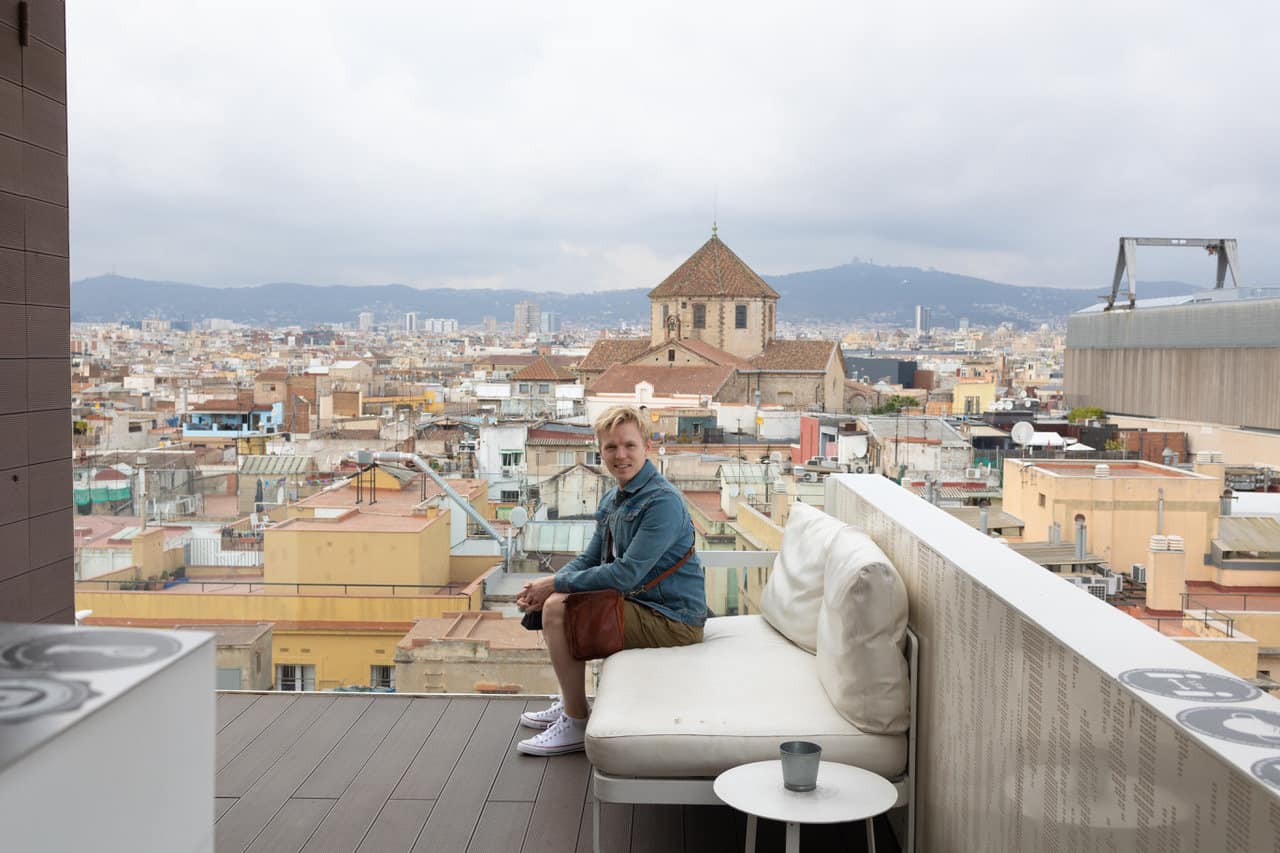
Best view: We chose Hotel Gaudí, which has a stunning rooftop view of Palau Güell. The rooms themselves are small, but they were fine for sleeping, and that rooftop terrace more than makes up for it.
25+ Best Things to See and Do in Barcelona
Barcelona is the capital of Catalonia, and its present-day look was shaped above all by famous 20th-century artists — especially Picasso and Antoni Gaudí, who designed the most famous buildings that made Barcelona what it is. Let’s take a look at all the places you shouldn’t miss in Barcelona.
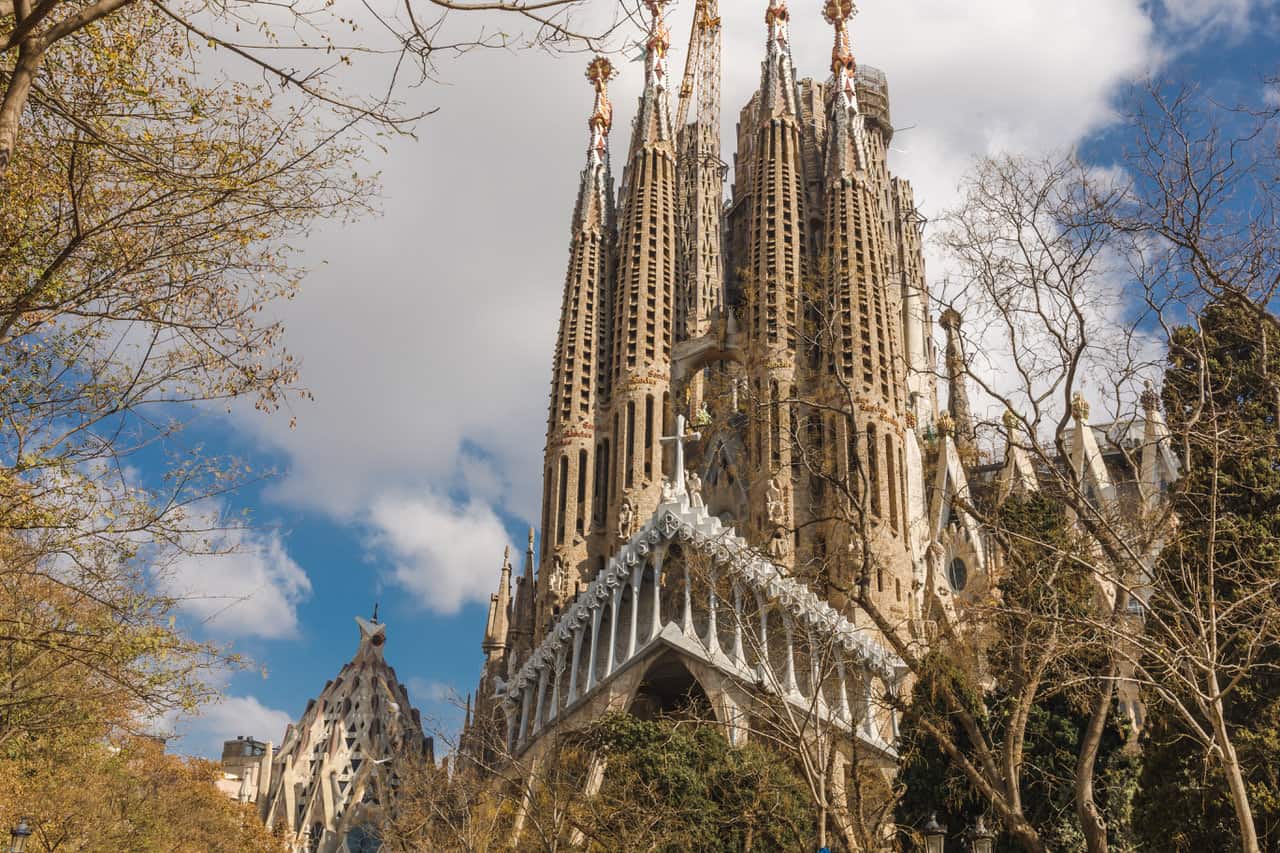
1. Sagrada Família — the symbol of Barcelona
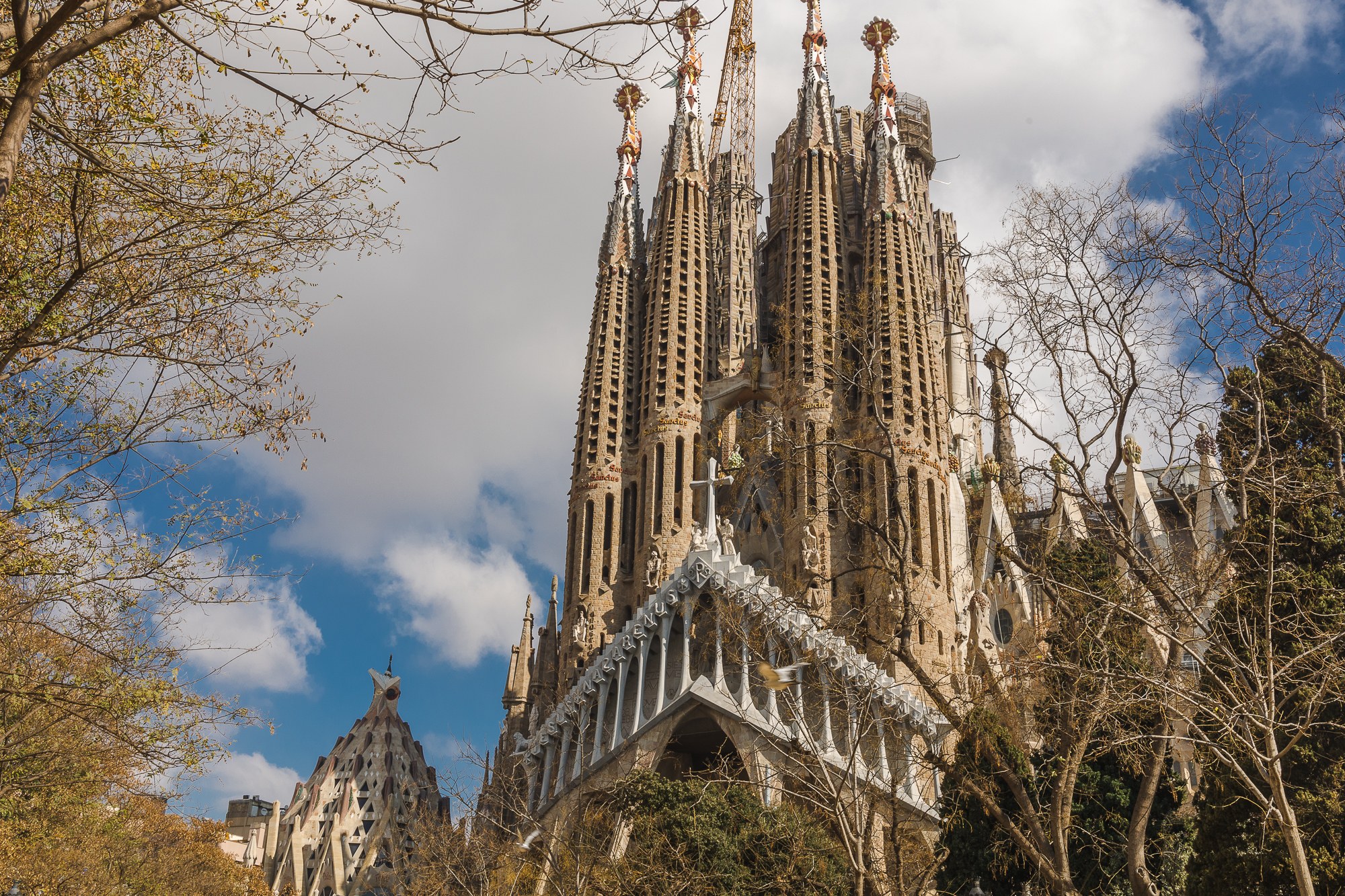
Perhaps the most magnificent temple in the world, unlike any other religious building. You don’t have to be a believer to be struck by the grandeur of the Sagrada Família, given its form by Antoni Gaudí. The most extraordinary part is the interior play of light created by the stained-glass windows — it literally sends shivers down your spine.
The Sagrada Família has three main façades representing the birth, suffering, and resurrection of Jesus Christ. Twelve towers symbolise the apostles, the tall tower embodies Jesus Christ, surrounded by the four evangelists.
The final piece of the Jesus Christ tower was installed on 20 February 2026, bringing the basilica to its full height of 172.5 metres (some sources give 176 m including the terrain elevation). It’s the tallest church in the world, and on 10 June 2026, exactly one hundred years after Gaudí’s death, the tower was blessed by Pope Leo XIV. It’s still not finished, though — the Glory Façade is due to be completed around 2034 to 2035.
Tickets are sold online only — you can’t buy one on site. 2026 prices: €26 basic, €30 with a guide, €36 with the tower lift, and €40 with both a guide and the tower. Book at least two weeks ahead, three for the towers. Note that on Saturdays it closes at 18:00 year-round. You can’t yet go up the Jesus Christ tower; the Nativity and Passion façade towers are open. All the details are in our article about the Sagrada Família.
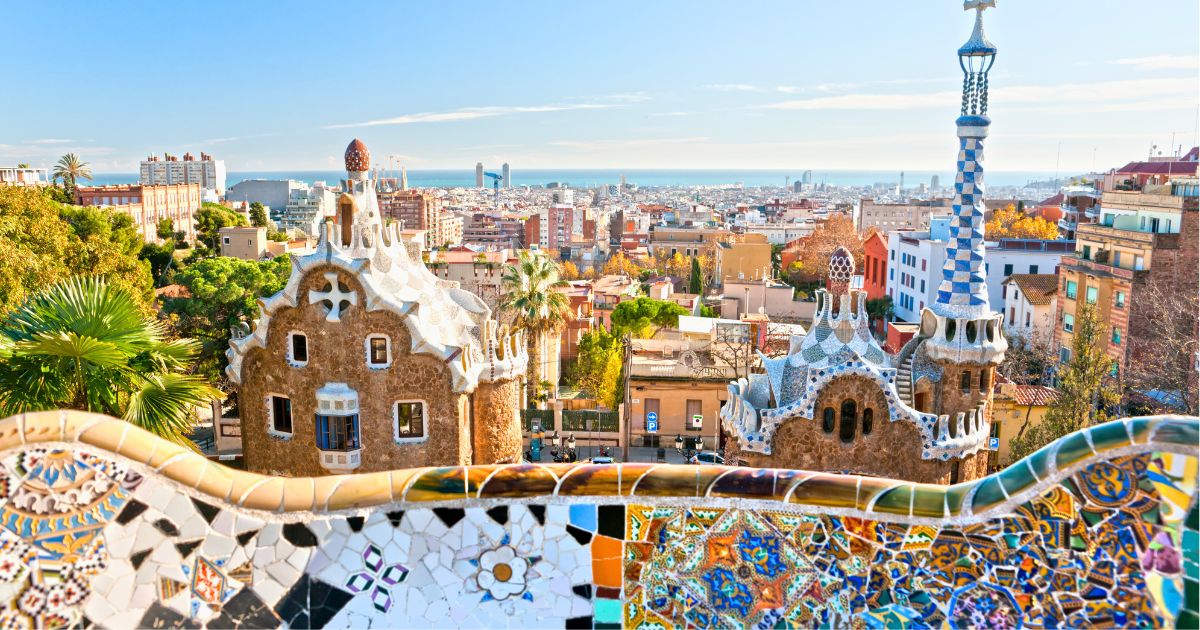
2. Park Güell
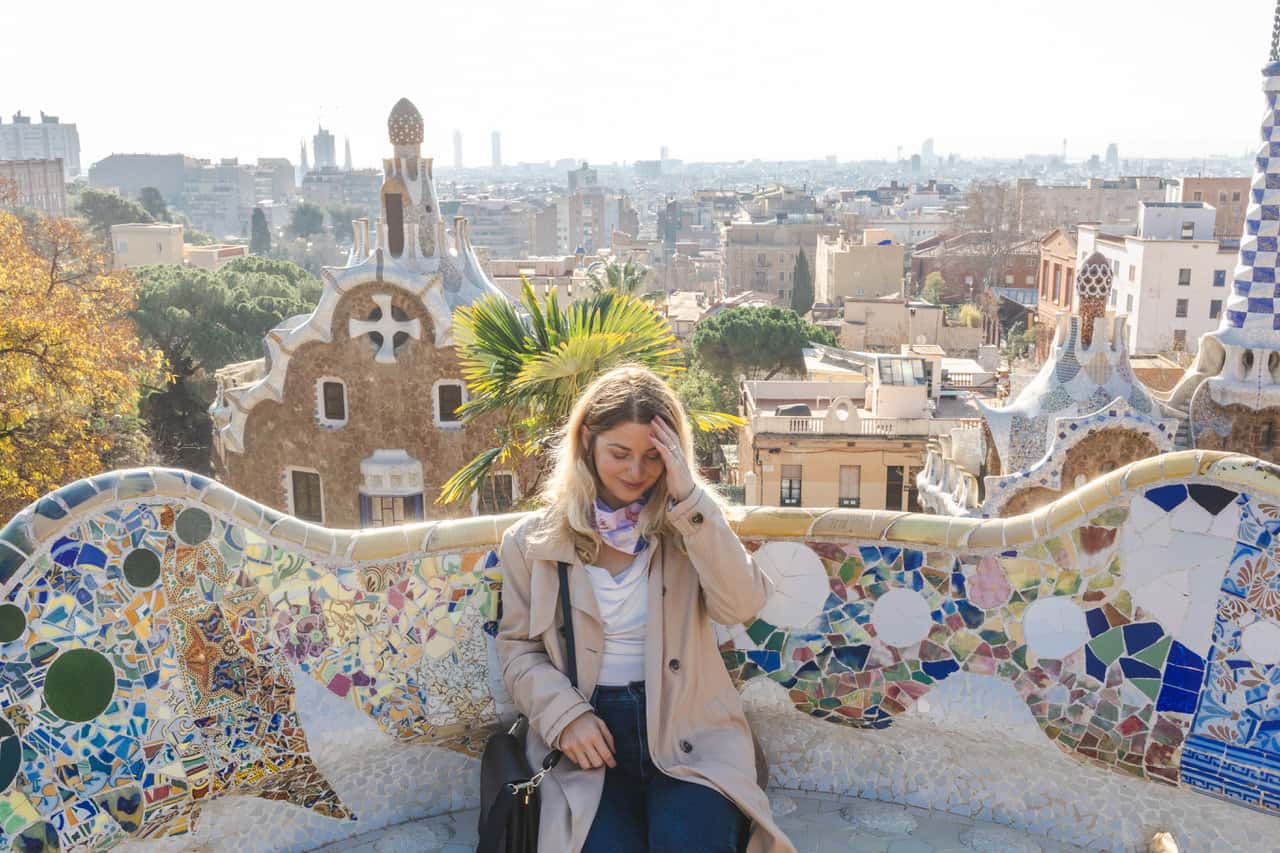
One of the most popular spots, and it’s worth going first thing in the morning to avoid the crowds. Don’t worry about getting up extremely early — the park doesn’t open until 9:30. Park Güell sits on the Turó del Carmel hill and is one of the best-known works of the architect Antoni Gaudí.
From this park, covered in colourful mosaics and sculptures, there are stunning panoramic views over the whole of Barcelona — the ones you probably know from photos. Park Güell has been on the UNESCO list since 1984. Tickets are bought online only for a specific time slot; there are no on-site ticket offices. Entrance fee: €18, children 7–12 and seniors 65+ €13.50.
Beware of the widespread myth that most of the park is free. The paid Monumental Zone covers 12 hectares, while the freely accessible natural part is only 8 — so the paid section is the larger one. If you’re mainly after the view and don’t want to pay, head to Turó de les Tres Creus, the highest point of the park outside the paid zone. All the details are in our article about Park Güell.
3. Casa Batlló
This apartment building, another of Gaudí’s works, was created by remodelling an existing house at the turn of the 20th century. Uneven lines, colourful mosaics, and unusual shapes connect all of Gaudí’s buildings, but this one is considered one of the strangest structures in Europe.
Casa Batlló boasts a unique shimmering façade made of colourful mosaics, with unusually protruding windows in strange arched shapes. Touring the interior, you’ll be captivated by the play of light and shadow that’s one of Gaudí’s specialities. You’ll also find original false ceilings and staircases decorated with images of octopuses and starfish. Entrance fee: €25.
4. Casa Milà (La Pedrera)
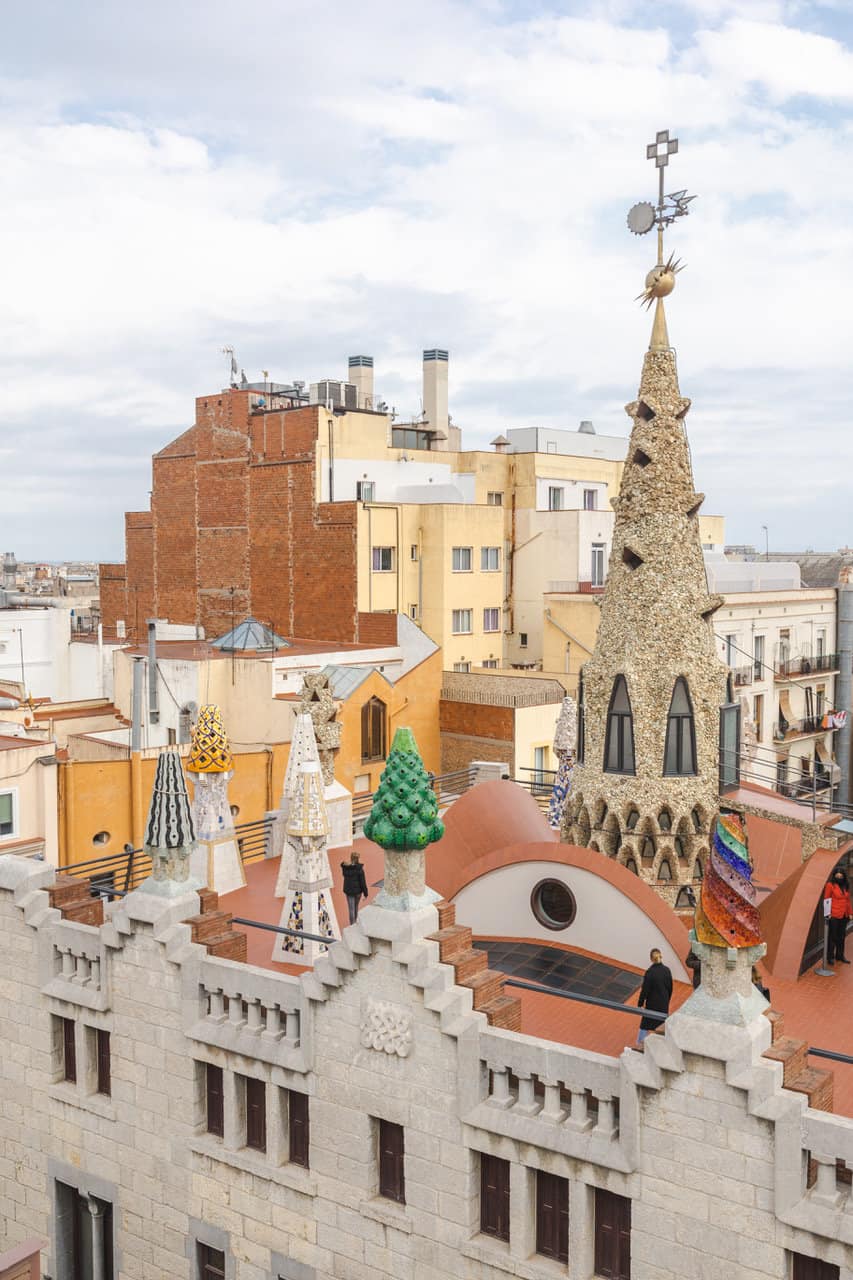
Another Gaudí gem on Passeig de Gràcia, just a few minutes’ walk from Casa Batlló. La Pedrera (literally “the quarry”) earned its nickname thanks to its unusual wavy façade that looks carved from stone. The rooftop with its smoke-stack chimneys shaped like warriors is one of the most iconic sights in Barcelona.
If you only have time for one Gaudí house, pick according to your mood — Casa Batlló is more colourful and playful, La Pedrera is more monumental with that amazing rooftop. The evening rooftop tour of La Pedrera with projections and live music is an unforgettable experience. Entrance fee: from €25 (daytime) / from €35 (night tour).
5. The Gothic Quarter (Barri Gòtic)
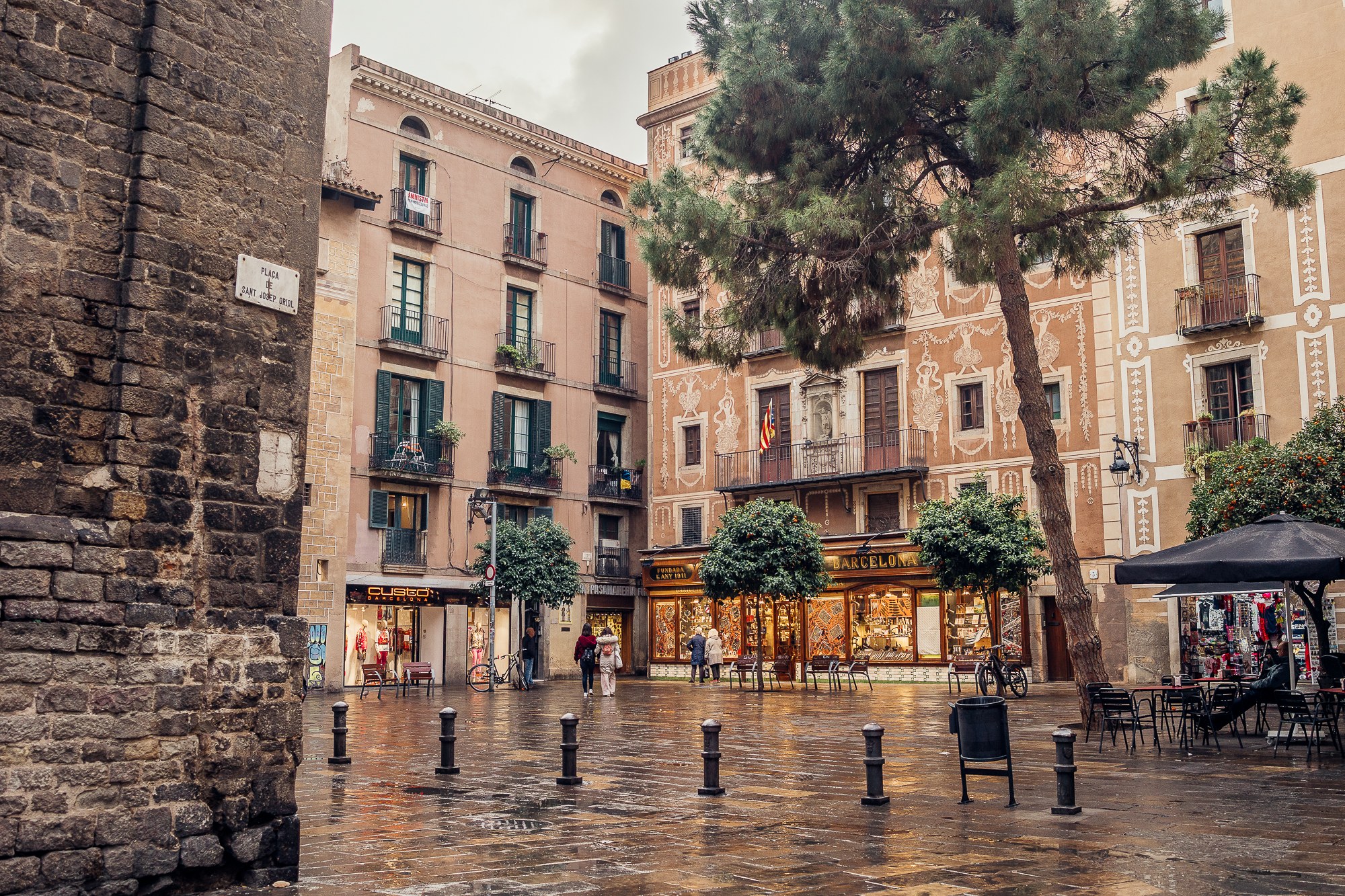
The heart of the old town, with narrow medieval lanes where you’ll discover something new around every corner — a little gallery, a café with local wine, or a square full of street musicians. Set aside at least 2 hours for a wander with no plan, because that’s exactly how you’ll experience the Gothic Quarter best.
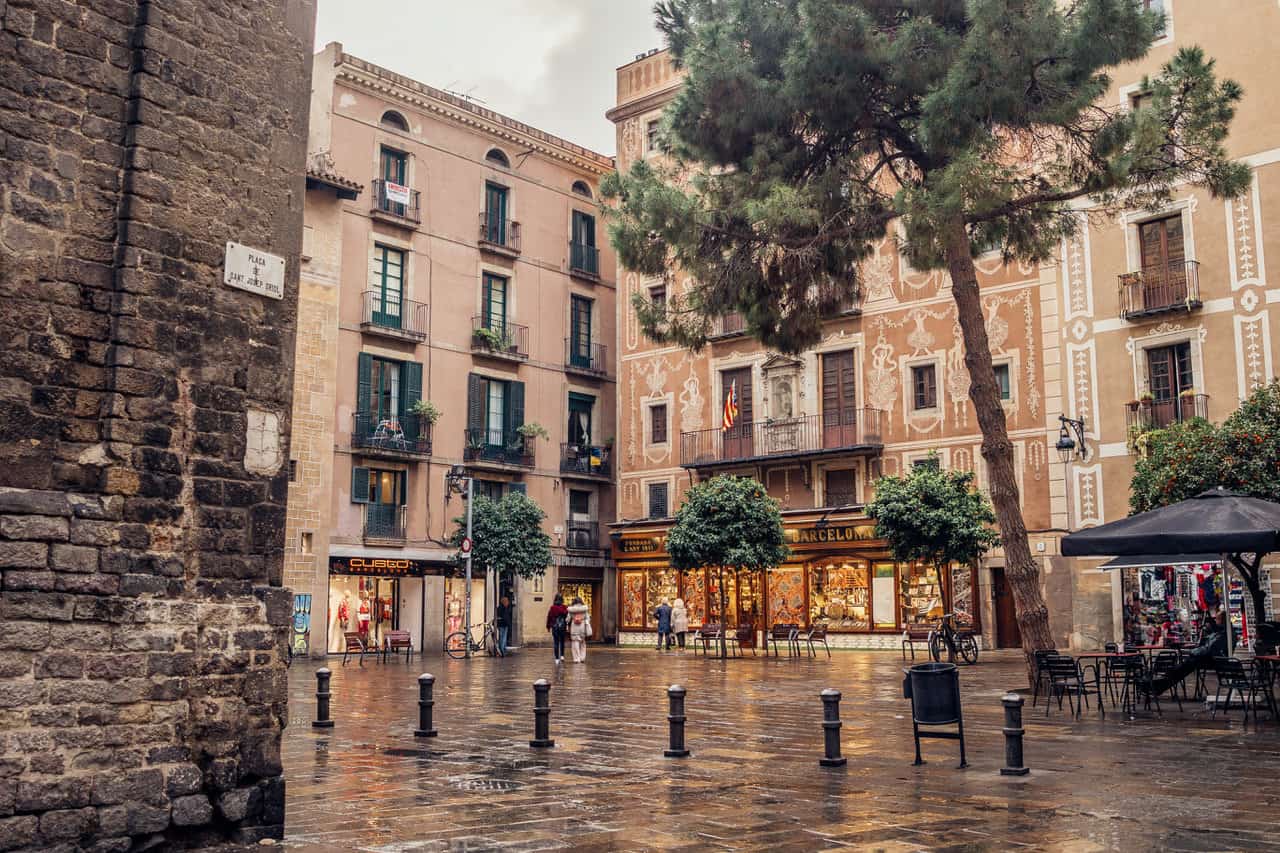
Don’t miss Pont del Bisbe (the Bishop’s Bridge) — one of the most photogenic corners of Barcelona. On Plaça Reial, with its palm trees and lanterns designed by Gaudí, grab a drink on a terrace and watch the city go by. And near the cathedral you can find remains of the old Roman walls — Barcelona was originally called Bàrcino. Access to the quarter is free.
6. Catedral de Barcelona
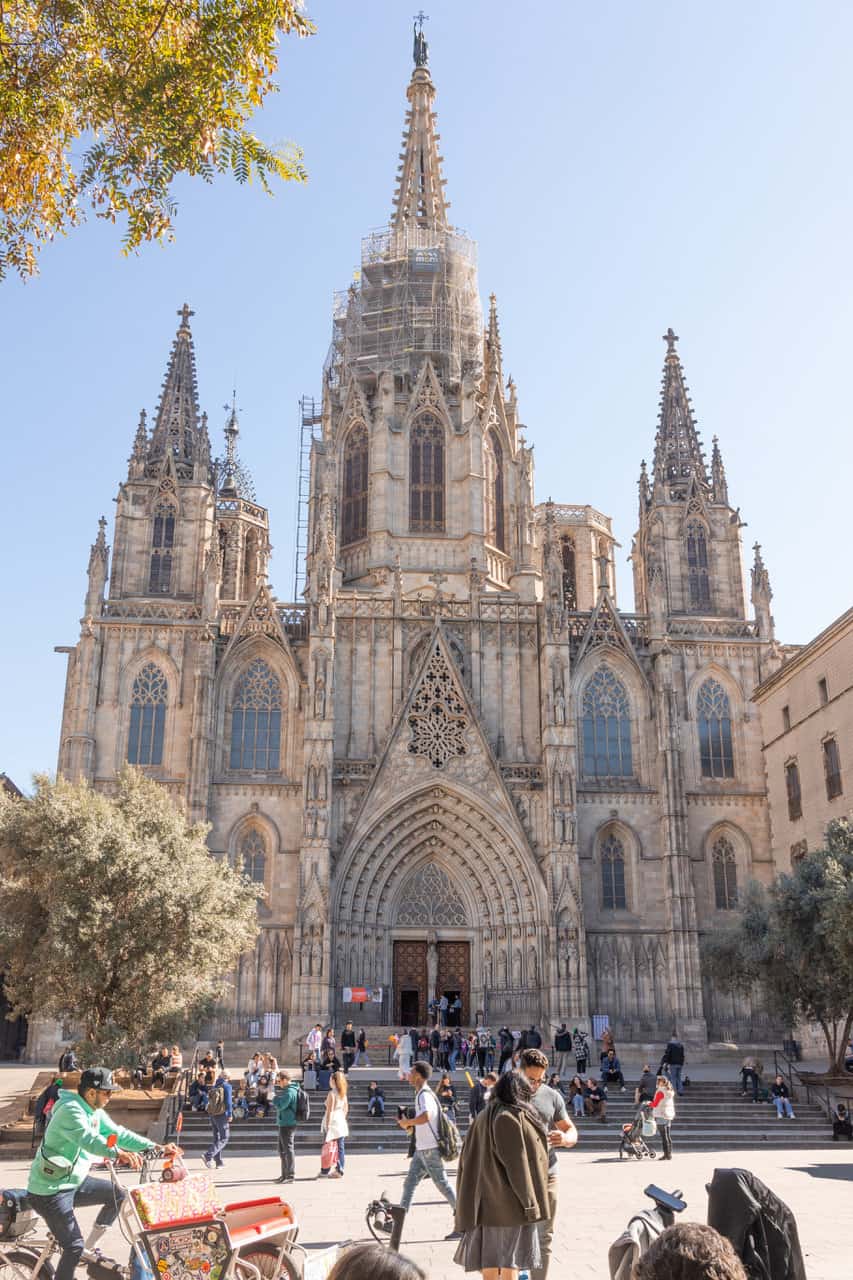
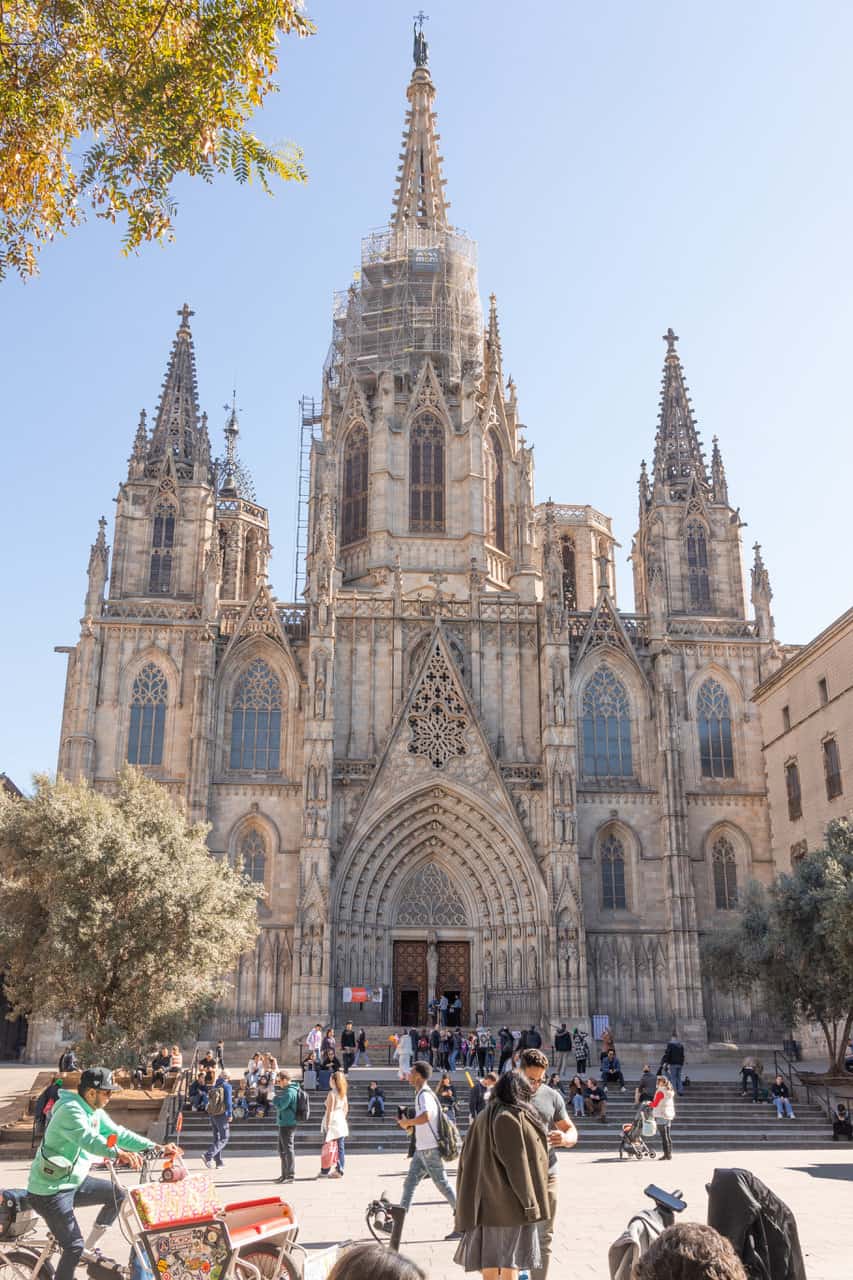
It may not be as flamboyant as the Sagrada Família, but it’s a stunning, enormous Gothic cathedral, with bars and restaurants out front where you can sit comfortably and take in this magnificent building.
The cathedral stands on the site of a Roman temple that stood here around 2,000 years ago. Today the cathedral is officially called the Cathedral of the Holy Cross and Saint Eulalia, honouring Eulalia, a local girl who refused the demand of the Roman emperor Diocletian to renounce her Christian faith. Inside you can take a lift up to a viewpoint — it is worth it.
7. La Rambla
La Rambla is Barcelona’s famous boulevard, running from Plaça de Catalunya down to the Columbus Monument. It’s the city’s main promenade, lined with restaurants, shops, and — in warm weather — street performers.
Football fans might like to know that at one of the lampposts (Font de Canaletes) near Plaça de Catalunya, every FC Barcelona victory is celebrated. What caught our eye more was the famous local market with fresh fruit, vegetables, and fish — La Boqueria. But honestly, I have to say — don’t eat at the restaurants on La Rambla. The prices are inflated and the quality is far worse than two streets over.
8. La Boqueria
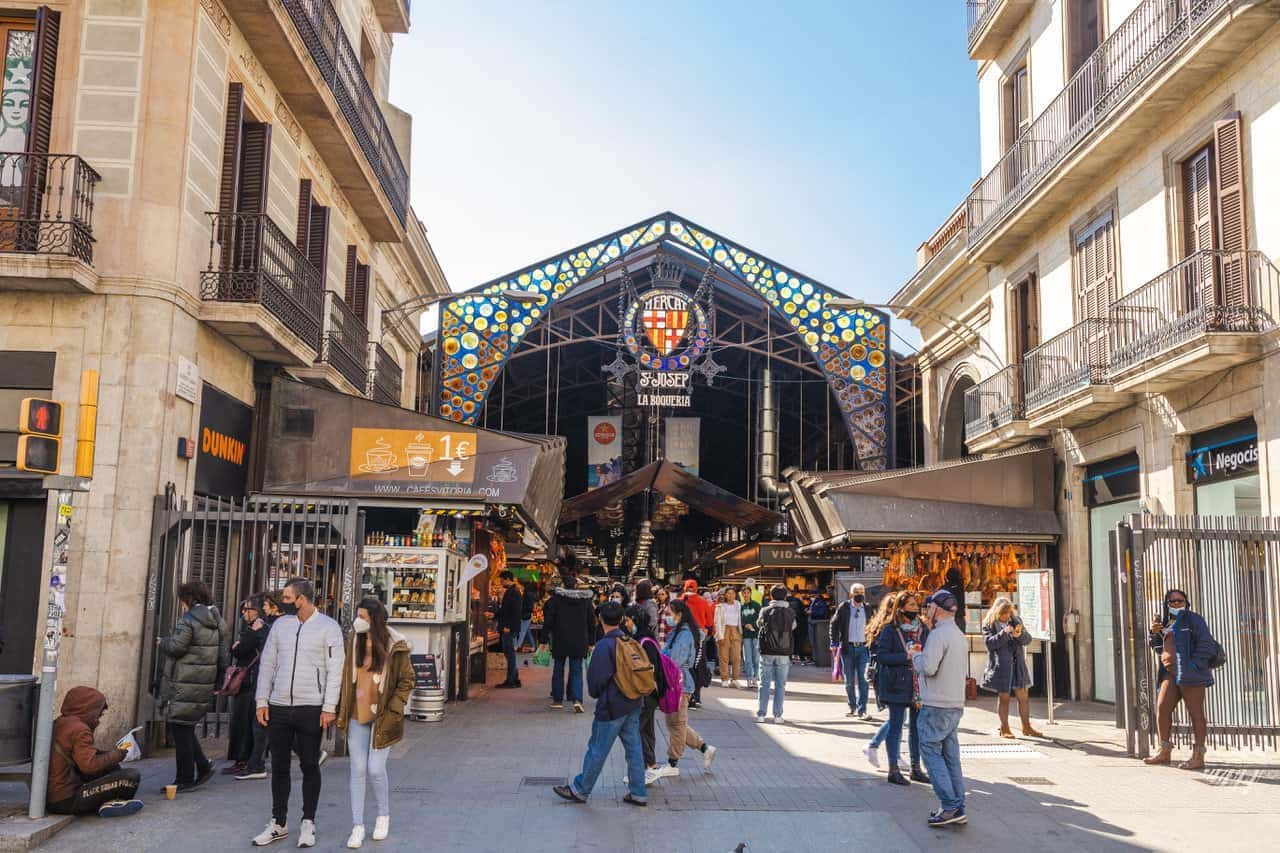
Are you one of us who loves browsing local markets full of fresh fruit and vegetables? Then be sure to stop at La Boqueria for a fresh smoothie or to stock up on exotic fruit. You’ll also find meat, seafood, fish, cured meats, eggs, dairy products, and cheeses.
You might be interested to know it’s the oldest market of its kind in Barcelona — meat was already being sold here in 1217, and the tradition became so established that from 1470 a proper meat market operated here, then known as Mercat Bornet.
9. El Born and the Basilica of Santa Maria del Mar
El Born is probably our favourite neighbourhood in Barcelona. A hipster vibe, independent boutiques, cafés serving an excellent flat white, and tapas bars where locals mingle with travellers. Wander the lanes around Passeig del Born and you’ll understand why people keep coming back.
The neighbourhood’s landmark is the 14th-century Gothic Basilica of Santa Maria del Mar. For €10 you can go up onto the roof for a beautiful view over the surrounding rooftops. And if you love history, nearby you’ll find the ruins of the medieval city beneath the El Born CCM cultural centre — free entry.
10. Bunkers del Carmel — the best free view
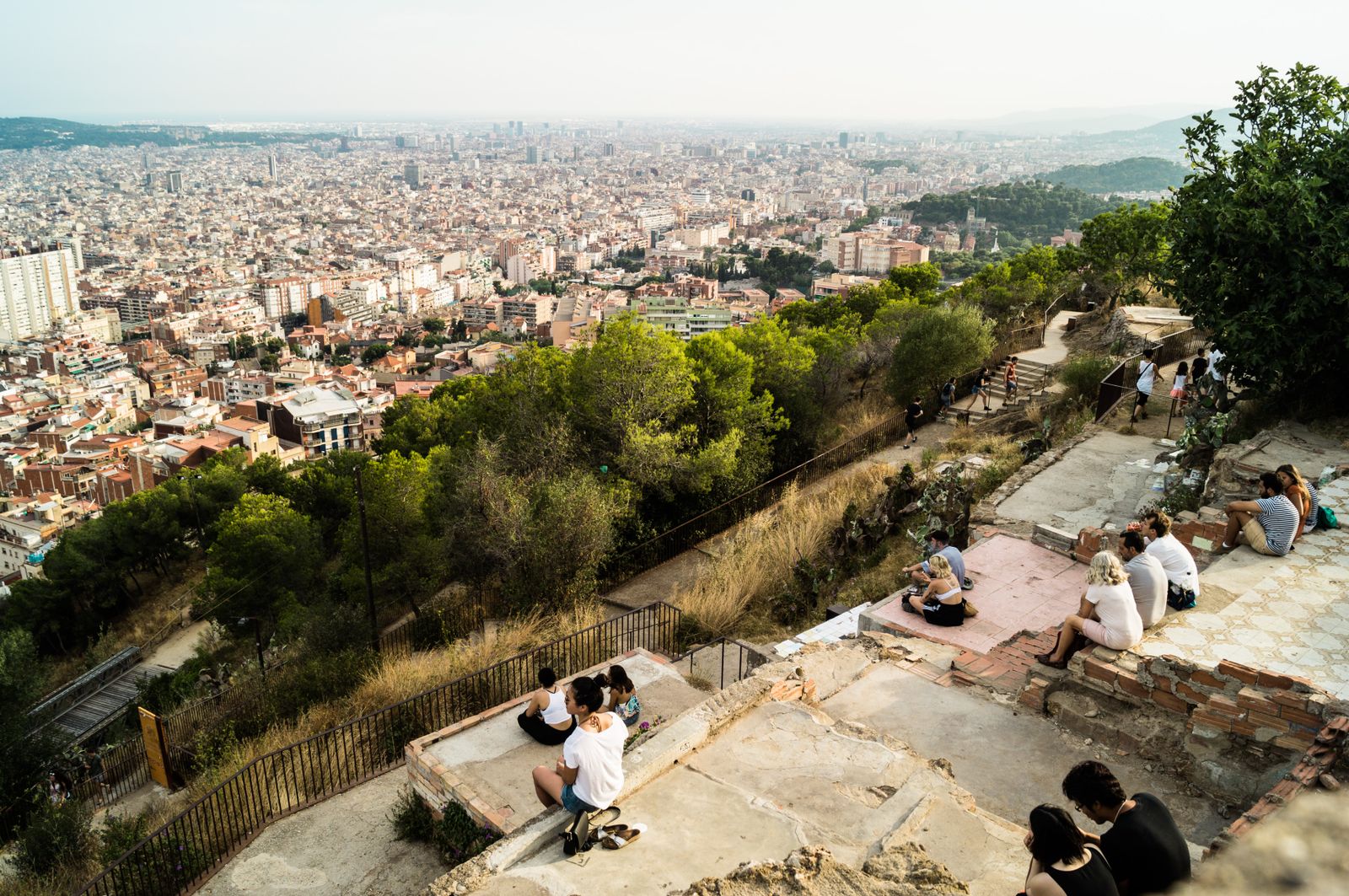
The best free view over all of Barcelona. These former anti-aircraft bunkers from the Civil War offer a 360° panorama from the Sagrada Família to the sea. This spot is an absolute must-see, especially at sunset, when locals come up here with a bottle of wine and a picnic.
Take the metro to Alfons X station, then walk 15 minutes uphill. The climb is a bit of a slog, but the view — there are no words. You just have to see it with your own eyes.
11. Montjuïc — the cable car, castle, and magic fountain
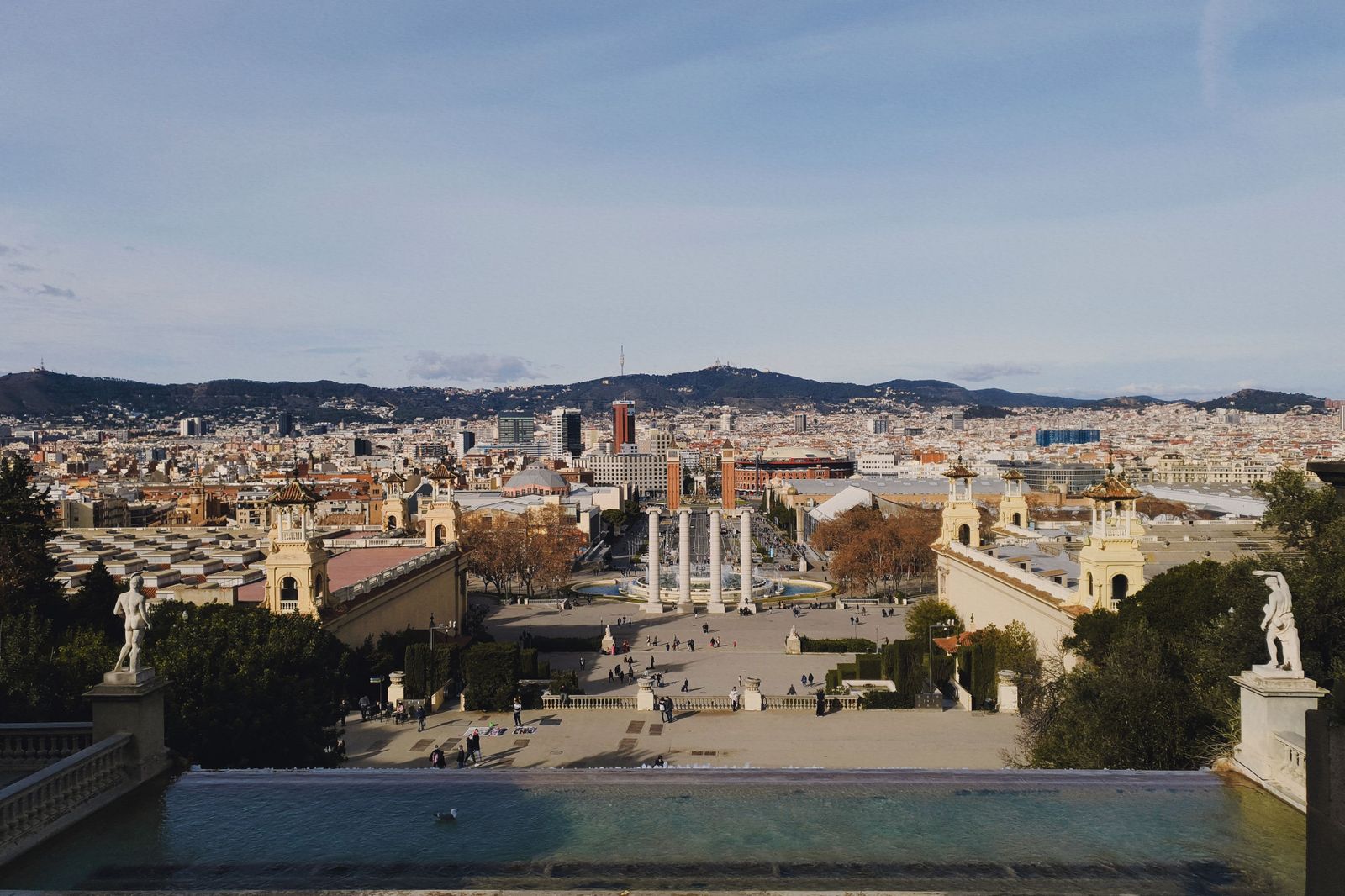
You reach Montjuïc hill by cable car from the port (€13 return), and the view during the ride is worth it in itself. At the top you’ll find the medieval Castell de Montjuïc, the Fundació Joan Miró museum, and a beautiful botanical garden.
In the evening, head to the Magic Fountain (Font Màgica) — the light and music show is free and a genuinely mesmerising sight. The show runs on Fridays and Saturdays (from 21:00 in summer, from 20:00 in winter). Plan a whole afternoon and evening for Montjuïc — there’s a lot to see.
12. The Picasso Museum
Picasso moved to Barcelona as a boy of fourteen and returned here often and happily throughout his life. The museum is vast, spread across five palaces. On the ground floor there’s a courtyard and Gothic arches leading into white studios that illuminate his works. But if you’re expecting Picasso’s greatest hits, you may be disappointed — Guernica is in the Reina Sofía in Madrid, and The Weeping Woman is at the Tate Modern in London.
Even so, we think the museum is worth a visit. In chronological order it shows every brushstroke (all 4,251 works) of how a classically trained painter became a pioneer of Cubism. There are also lesser-known Picasso works here, such as his ceramics.
13. The Fundació Joan Miró modern art museum
For all the art lovers like me, here’s one tip. On Montjuïc hill you’ll find the Fundació Joan Miró museum, dedicated to the Catalan abstract artist Joan Miró. It’s housed in a snow-white modern building with a wonderful view over Barcelona. Entrance fee: €15.
14. Hospital de Sant Pau
An Art Nouveau hospital on the UNESCO list, just 10 minutes’ walk from the Sagrada Família — and yet plenty of tourists miss it. That’s a shame, because the breathtaking mosaic interiors and the garden between the pavilions are one of the most beautiful places in all of Barcelona.
Tip: Combine it with the Sagrada Família and walk along Avinguda de Gaudí, which connects the two landmarks — it’s a lovely pedestrian promenade. Entrance fee: €15, with audioguide €17.
15. Palau de la Música Catalana
An Art Nouveau concert hall and another UNESCO site in Barcelona. The stained-glass skylight on the ceiling is an artistic experience beyond words — you have to see for yourself how daylight streams through that incredible mosaic.
Guided tours from €20, but the best thing is to catch a concert (tickets from €15). If you love classical music, this hall is one of the most beautiful places to experience it.
16. Poble Espanyol
An open-air architecture museum with replicas of buildings from every Spanish region. It’s a bit like a miniature Spain in one place — and it works surprisingly well. Great for families with kids and craft lovers alike, since you’ll find workshops of glassblowers, potters, and other artisans here.
Entrance fee: €14, children under 4 free. Poble Espanyol is on Montjuïc, so ideally combine it with a visit to the hill.
17. The beaches of Barcelona
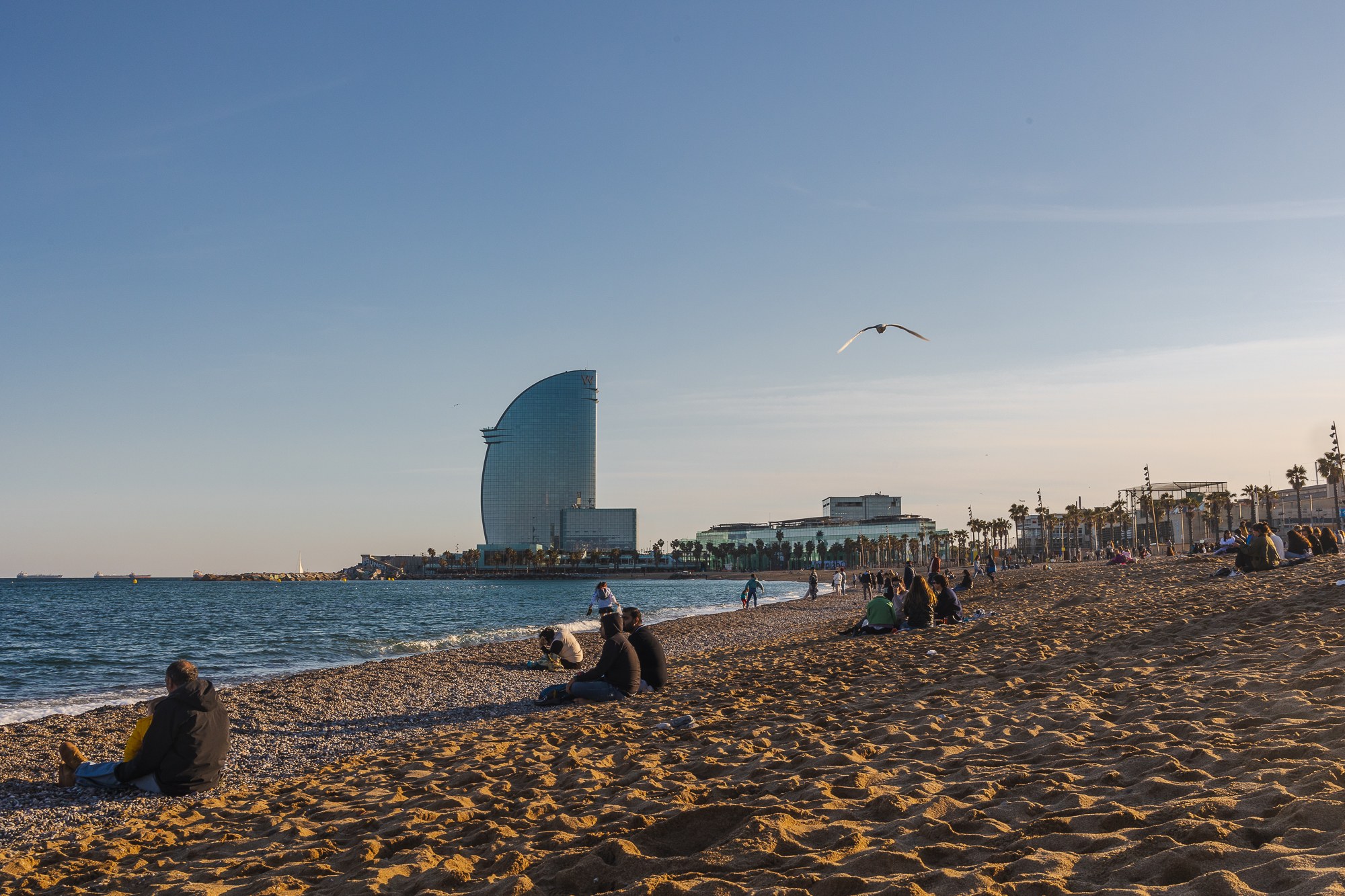
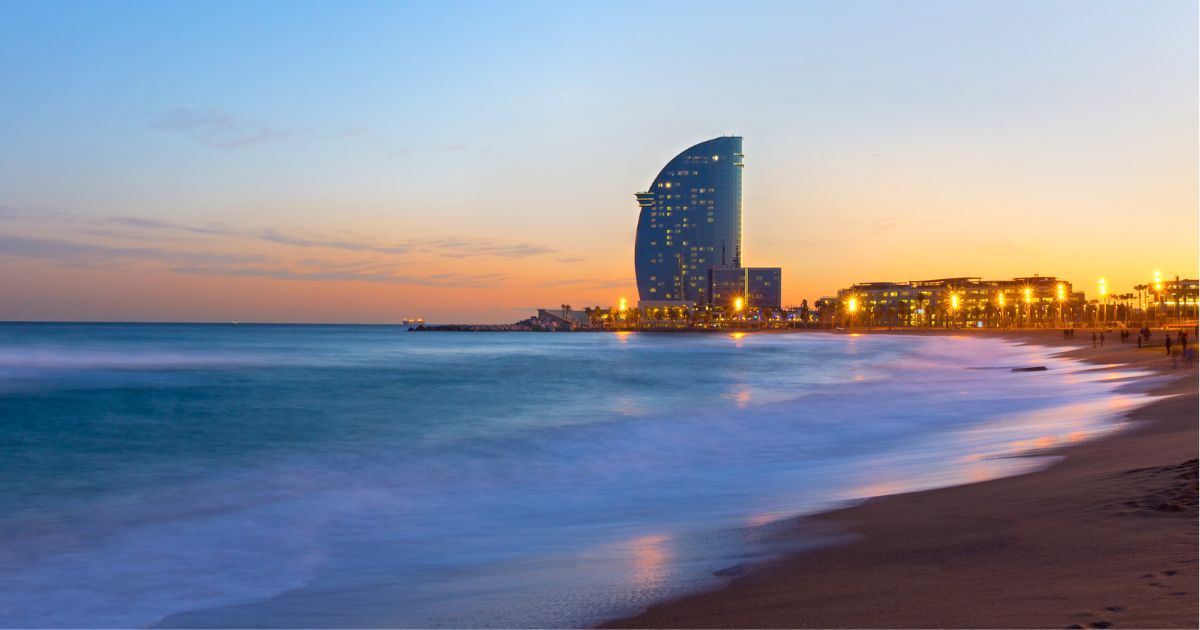
Barcelona’s seafront promenade stretches for several kilometres. Walking from Barceloneta to Diagonal Mar takes a good hour, but it’s a walk that fills in the atmosphere of the whole city.
The westernmost beaches, like Sant Sebastià, are busier and more touristy. Once you move along the waterfront past the Olympic port, you reach the stretch where the locals gather. We recommend Bogatell beach (cleaner, calmer) or Mar Bella (sports facilities, beach bars) — both are 10–15 minutes’ walk from Barceloneta and have far more space.
18. Camp Nou — the largest football stadium in Europe
Even though Lukáš and I are absolute football ignoramuses, even we couldn’t miss the pride of the proud Catalans — the stadium of their most famous football club, FC Barcelona. Be aware, though, that the vast majority of older articles about Camp Nou are now out of date. The stadium has been undergoing a huge rebuild since 2023 and doesn’t work the way you might remember it from photos.
Barcelona returned to Camp Nou on 22 November 2025 after two seasons spent at the Olympic stadium on Montjuïc. In March 2026 a capacity of around 62,650 spectators was approved; the third tier is due to open to the public no earlier than the first quarter of 2027, and the roof even later. The target capacity of around 105,000 will make it the largest football stadium in Europe, but only once it’s finished.
The classic tour with access to the pitch, dressing rooms, and tunnel doesn’t exist yet — it’s been replaced by the Barça Immersive Tour, i.e. a museum, an immersive 360° room, and a viewpoint over the ongoing construction. Budget roughly €28 to €31, and bear in mind that with reduced capacity, match tickets are far harder to get than before. I go into all the details in a separate article about the Camp Nou tour.
19. The triumphal arch — Arc de Triomf
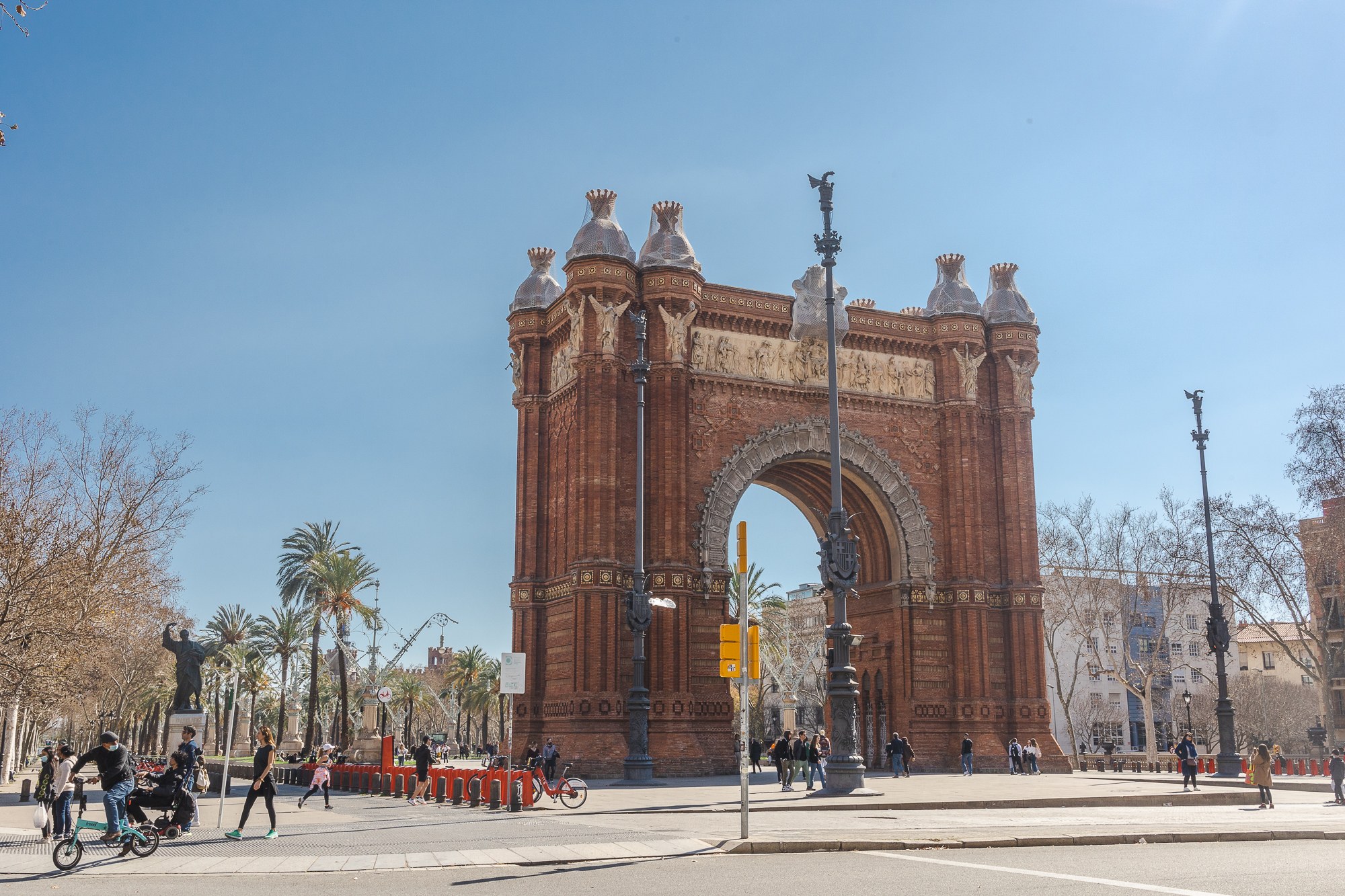
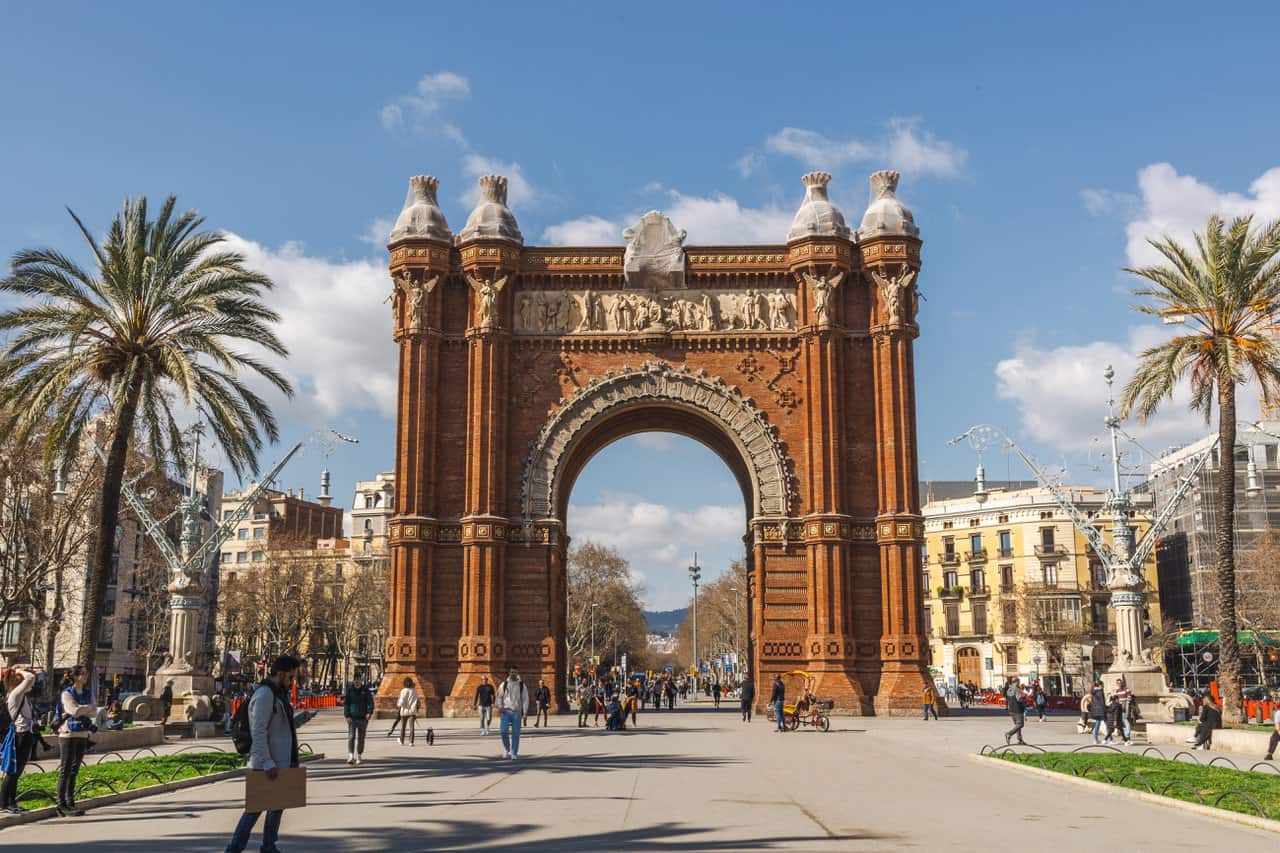
Barcelona has its own triumphal arch too, built in 1888 when the city hosted the World’s Fair. The arch was built as the gateway to the fair, which was held in Parc de la Ciutadella. Today it’s one of the city’s iconic landmarks and a great spot for a photo.
20. Parc de la Ciutadella
A green oasis in the city centre with a fountain, a boating lake, and Barcelona’s zoo. Ideal for a picnic or a rest between sightseeing. In the park you’ll meet locals walking their dogs, doing yoga, or simply relaxing on the grass. Access to the park is free.
The Cascada Monumental — the monumental fountain in the northern part of the park — is, incidentally, the work of a young Gaudí, who contributed to it as a student. So there’s a piece of his genius waiting for you here too.
21. Tibidabo — the best view over Barcelona
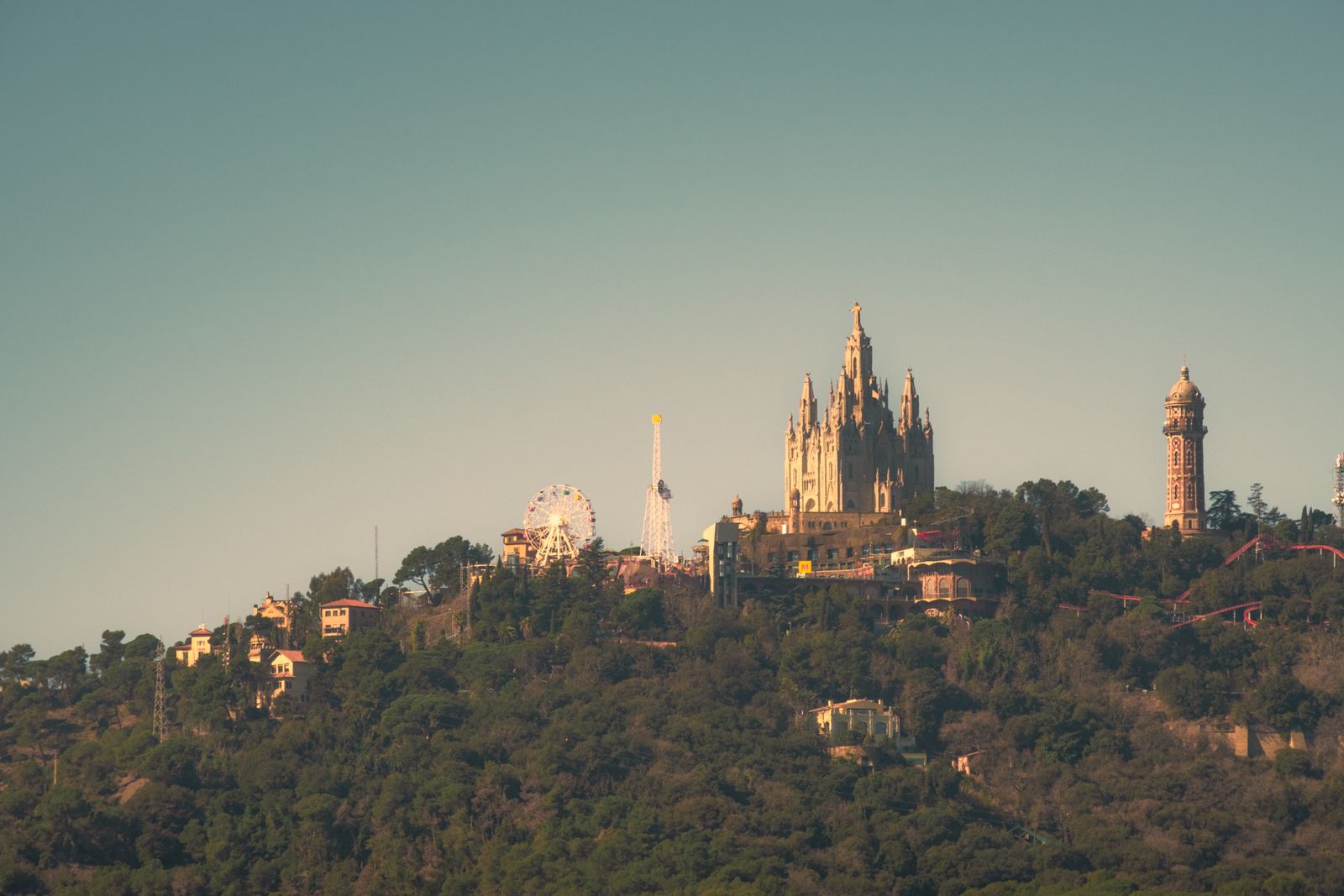
Lukáš and I originally wanted to drive up here on our way into the city, but in the reviews we read that cars are often broken into here (the last two reviews were photos of cars with smashed windows). In the end we skipped this viewpoint, and given the bad weather we never made it back up from the city. But if the weather is on your side, our research suggests it’s one of the best views over the city.
At the top of the hill stands the beautiful Sagrat Cor church and a popular amusement park. If you go on foot, on the way up you’ll pass through one of Barcelona’s wealthiest and most enviable neighbourhoods. Entrance to the park: €12.
22. A flamenco show
Although flamenco comes from Andalusia, you’ll find great performances in Barcelona. It’s one of those experiences that simply belong to Spain. The energy of the dancers and guitarists pulls you in, even if you thought it wouldn’t interest you — trust me. 😅
We recommend Tablao Cordobes on La Rambla (yes, for once there’s something on La Rambla that’s worth it) or the intimate Jazz Sí Club in El Raval. Prices from €25.
23. The secret bar Paradiso
You enter this bar through a fridge door in the display of a panini shop — so the experience starts the moment you walk in. The bar was named the 20th best bar in the world in 2019, and in 2022 the best bar in the world.
It’s usually open from 21:00 to 3:00 and entry is FREE. But watch out — there’s often a queue, so we recommend arriving shortly after opening. The cocktails are creative and excellent, if on the pricier side (around €15–18).
24. Mercat de Santa Caterina
If La Boqueria feels too touristy to you (and it will), head to Mercat de Santa Caterina in the El Born neighbourhood. This market has a gorgeous wavy, colourful roof, and inside you’ll find local vendors where mostly locals shop. Smaller crowds, a more authentic atmosphere, and excellent tapas bars right inside the market.
25. Barcelona at night — rooftop bars and views
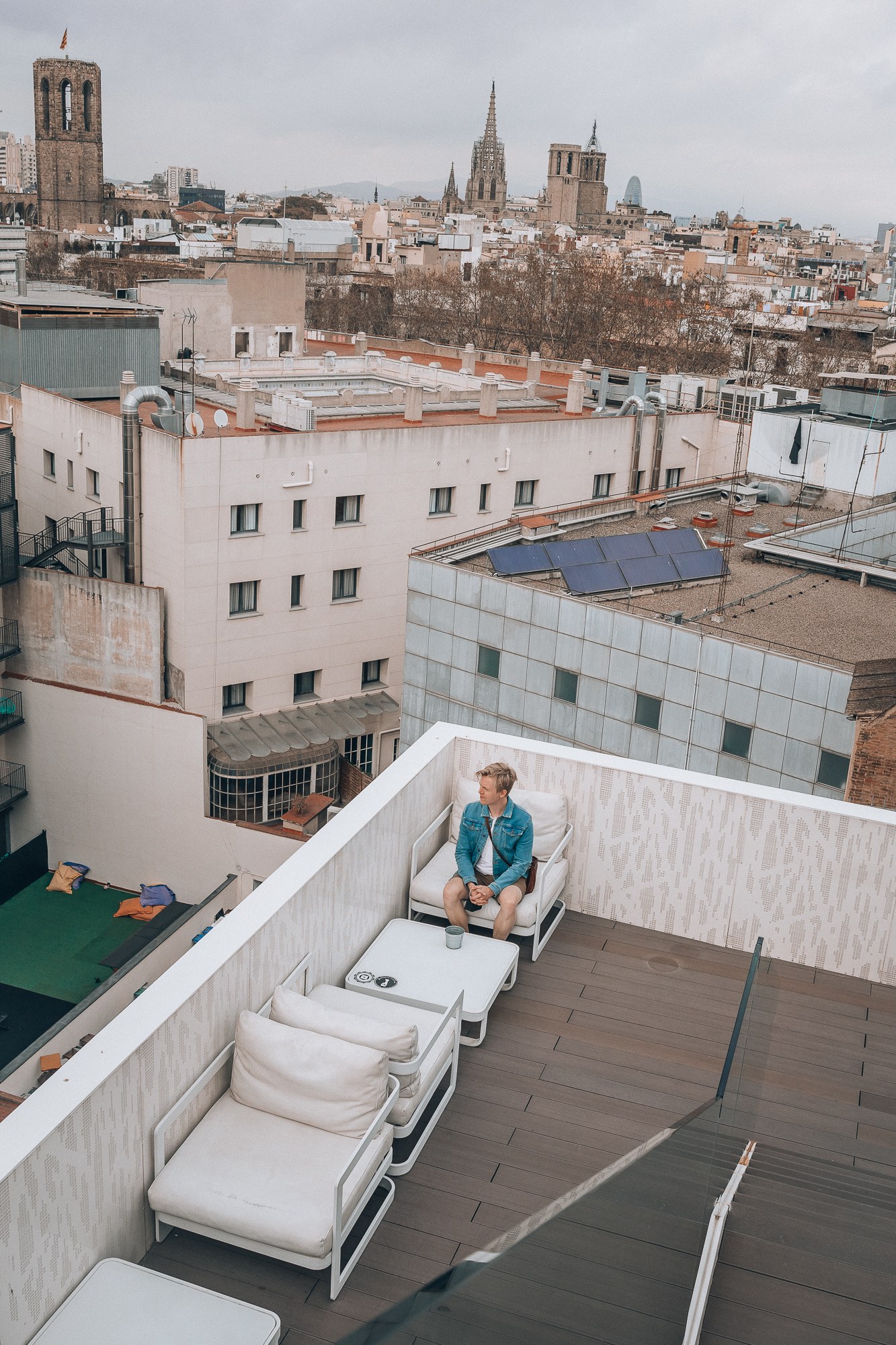
Barcelona at night is a completely different city. The Spanish eat dinner around 21:00–22:00, and the city comes alive just when you might normally be heading to bed. If you want to experience Barcelona’s nighttime magic, head to one of the rooftop bars with a view over the city.
We recommend the Terraza del Hotel Majestic on Passeig de Gràcia (view of Casa Batlló and La Pedrera) or The Roof at the Ohla Barcelona hotel with a view over the Gothic Quarter. And if you don’t want to splurge on cocktails, just wander the lit-up lanes of El Born or sit on the beach — Barcelona at night is magical for free too.
Where to eat tapas and what to try in Barcelona
Barcelona is a paradise for foodies. Beyond the classic tapas and paella, you should try these Catalan specialities:
- Patatas bravas — fried potatoes with a spicy sauce (supposedly the best are at Bar Tomás in Sarrià; we didn’t make it there, but the locals swear by it)
- Bombas — a Barcelona speciality, fried potato balls filled with meat
- Pa amb tomàquet — Catalan bread with tomato and olive oil (it looks simple, but with good olive oil it’s pure poetry)
- Crema catalana — the local take on crème brûlée, lighter and with a citrus flavour
- Fideuà — like paella, but using short noodles instead of rice
Best tapas bars: El Xampanyet (El Born — authentic atmosphere, great cava), Bar Cañete (near La Rambla — higher price range, but excellent cuisine), La Pepita (Gràcia — creative tapas, local vibe). And one important rule: avoid the restaurants right on La Rambla — overpriced and the quality is mostly poor.
Itinerary: What to see in Barcelona in 1, 2, or 3 days
What to see in Barcelona in 1 day
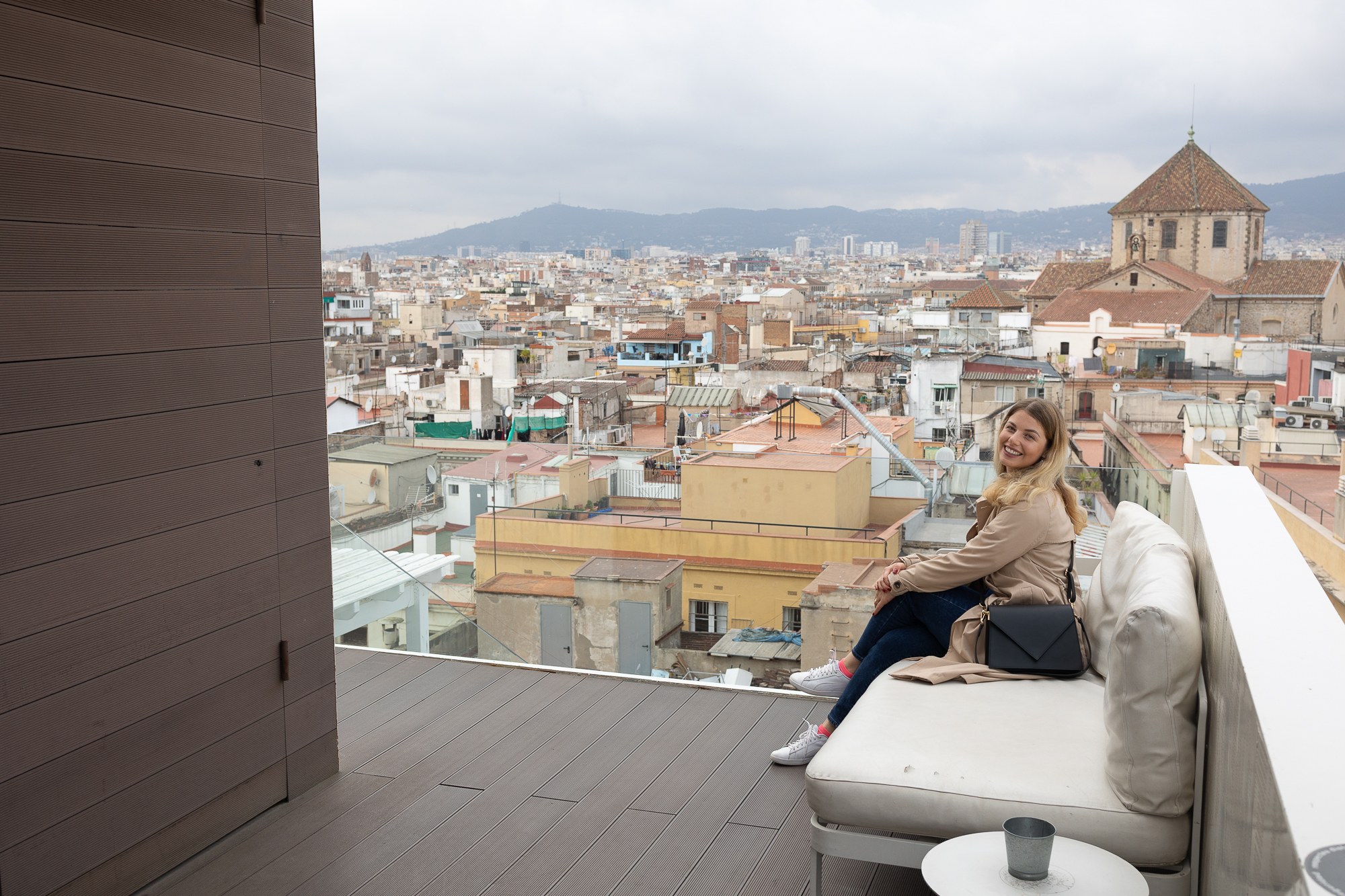
Only have one day in Barcelona? No problem — you can fit in surprisingly a lot. Here’s our suggested plan:
- Morning (9:00): Sagrada Família — book tickets for 9:00, when it’s least busy and the light through the stained glass is at its most beautiful
- Late morning (11:00): Hospital de Sant Pau — just 10 minutes’ walk from the Sagrada, gorgeous Art Nouveau architecture
- Lunch (12:30): Take the metro to Passeig de Gràcia, see Casa Batlló and La Pedrera from the outside, and have tapas in El Born (El Xampanyet)
- Afternoon (14:30): The Gothic Quarter — the cathedral, Pont del Bisbe, Plaça Reial
- Early evening (17:00): La Rambla down to the port, La Boqueria (closes at 20:30)
- Evening: A stroll along Barceloneta, dinner by the sea
What to see in Barcelona in 2 days
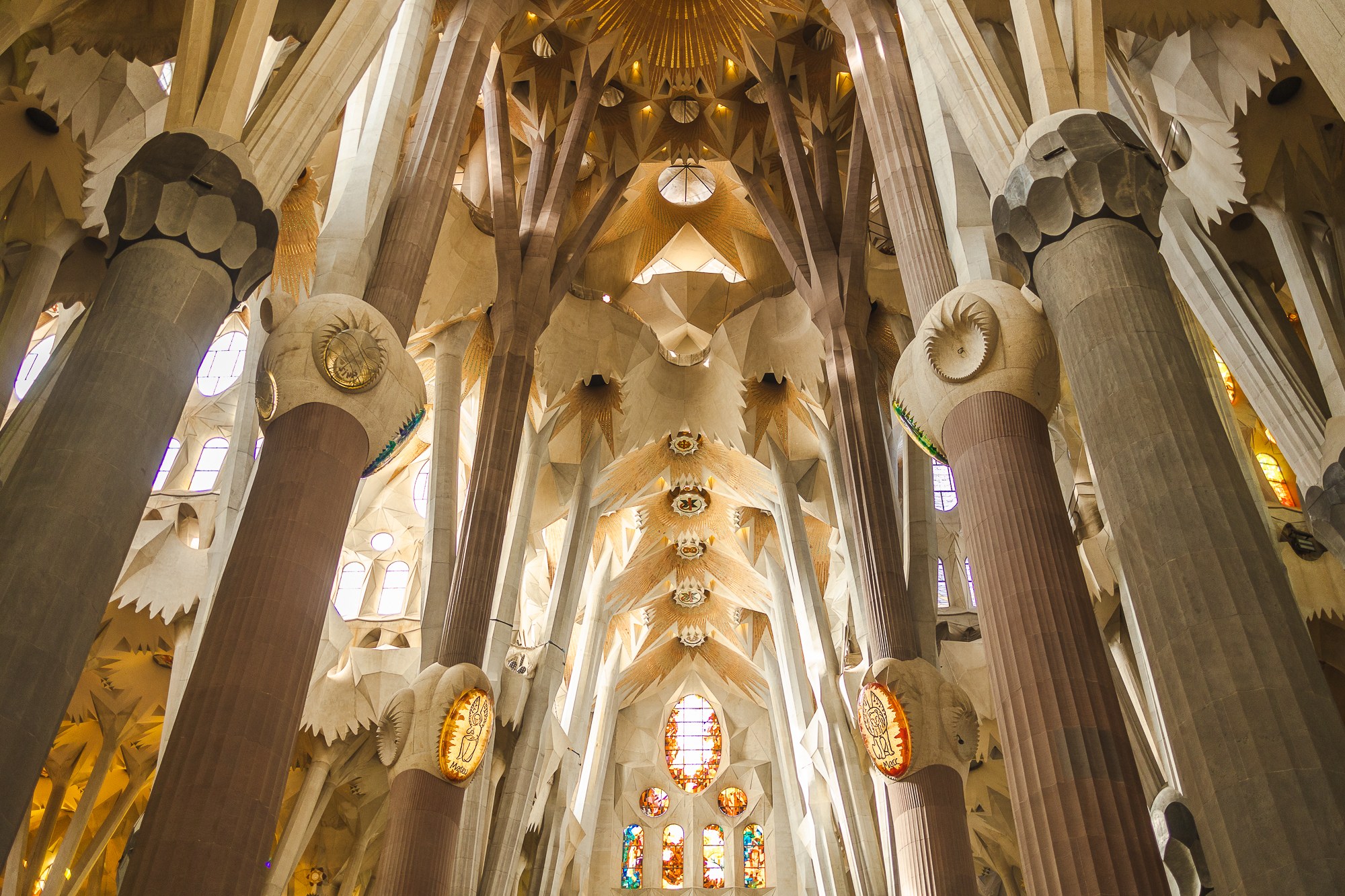
Day 1: See the one-day itinerary above.
Day 2:
- Morning (8:30): Park Güell — book for 8:30, when the park is quietest
- Late morning: The Gràcia neighbourhood — cafés and local atmosphere, La Pepita for tapas
- Afternoon: Montjuïc by cable car from the port, the castle, Fundació Joan Miró
- Early evening: Bunkers del Carmel at sunset (the view is unforgettable)
- Evening: The Magic Fountain (Fri–Sat), or a drink in El Born
What to see in Barcelona in 3 days
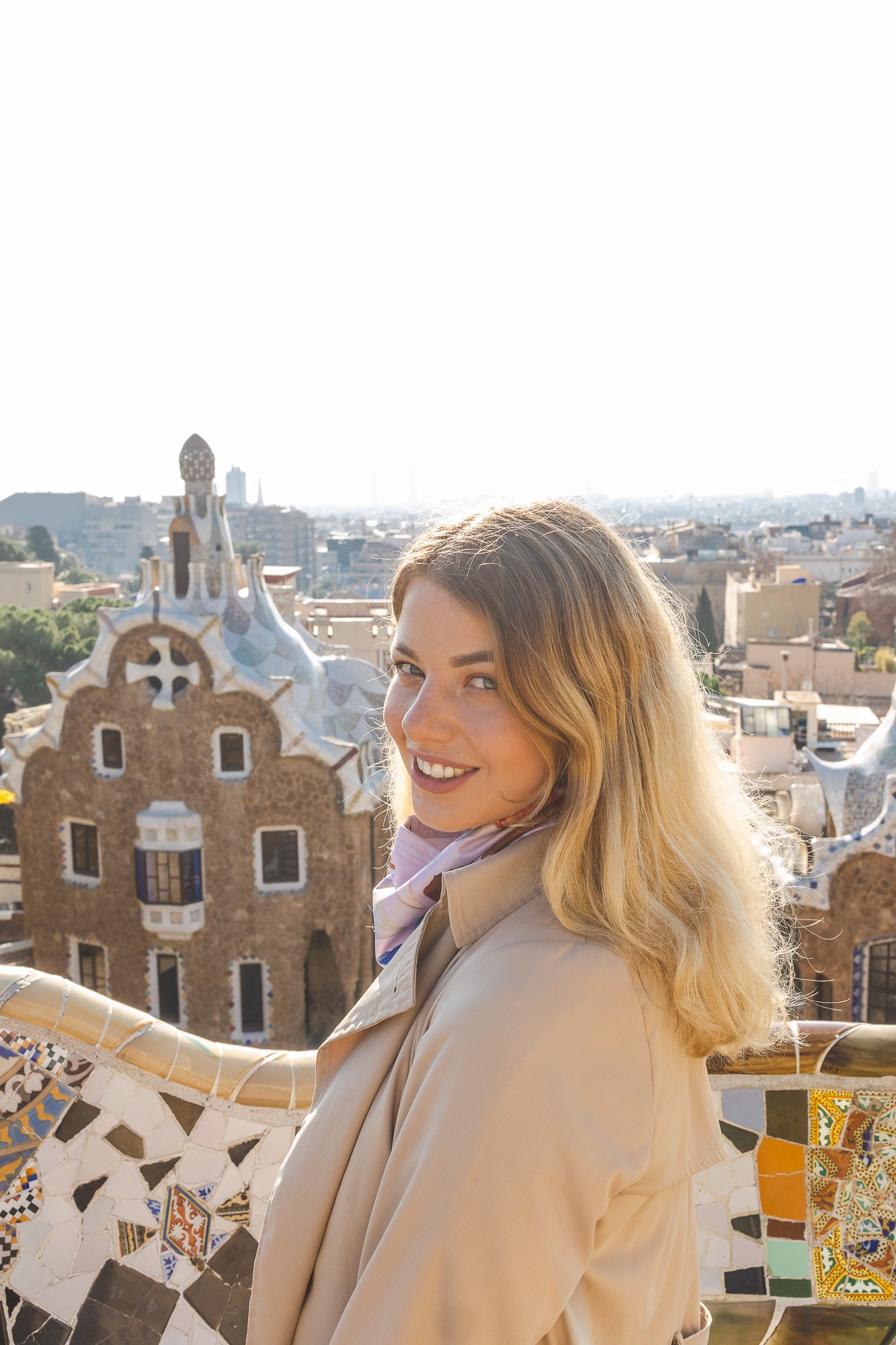
Days 1 and 2: See above.
Day 3:
- Morning (10:00): The Picasso Museum
- Late morning: El Born, Santa Maria del Mar, Parc de la Ciutadella
- Lunch: Mercat de Santa Caterina
- Afternoon option A: A day trip to Montserrat (1 hour by train) — the monastery, hiking, views
- Afternoon option B: Camp Nou Experience + Poble Espanyol
- Evening: A flamenco show or a rooftop bar
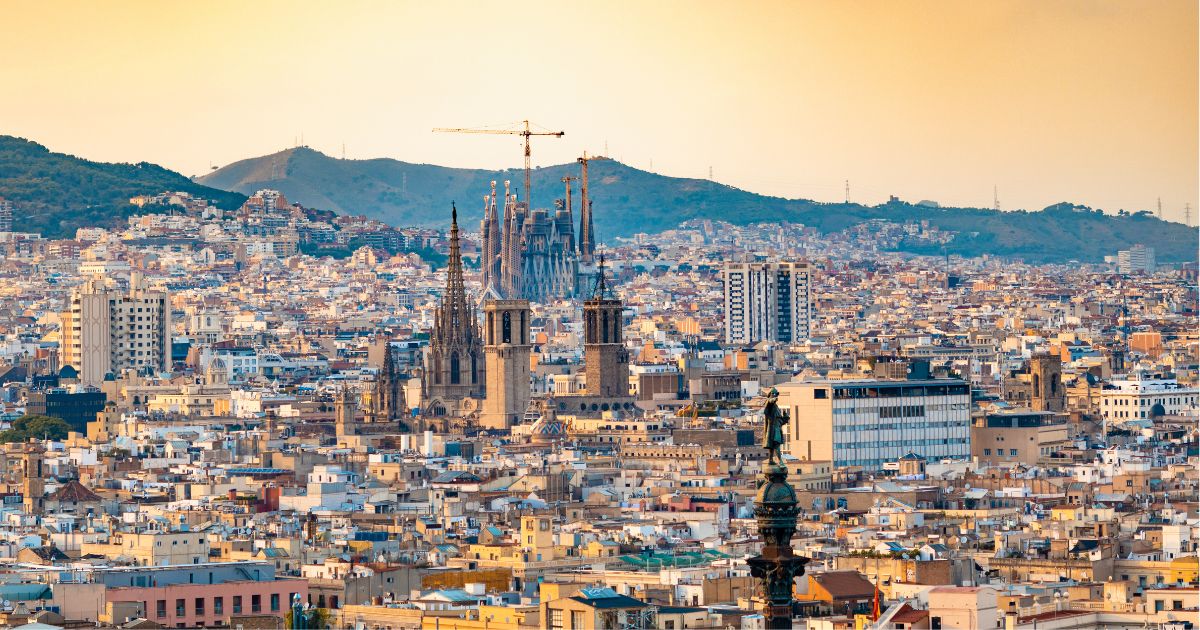
Day trips from Barcelona
If you’re flying into Barcelona for several days, we recommend heading out on some day trips too. Let’s take a look at the best of them:
Costa Brava
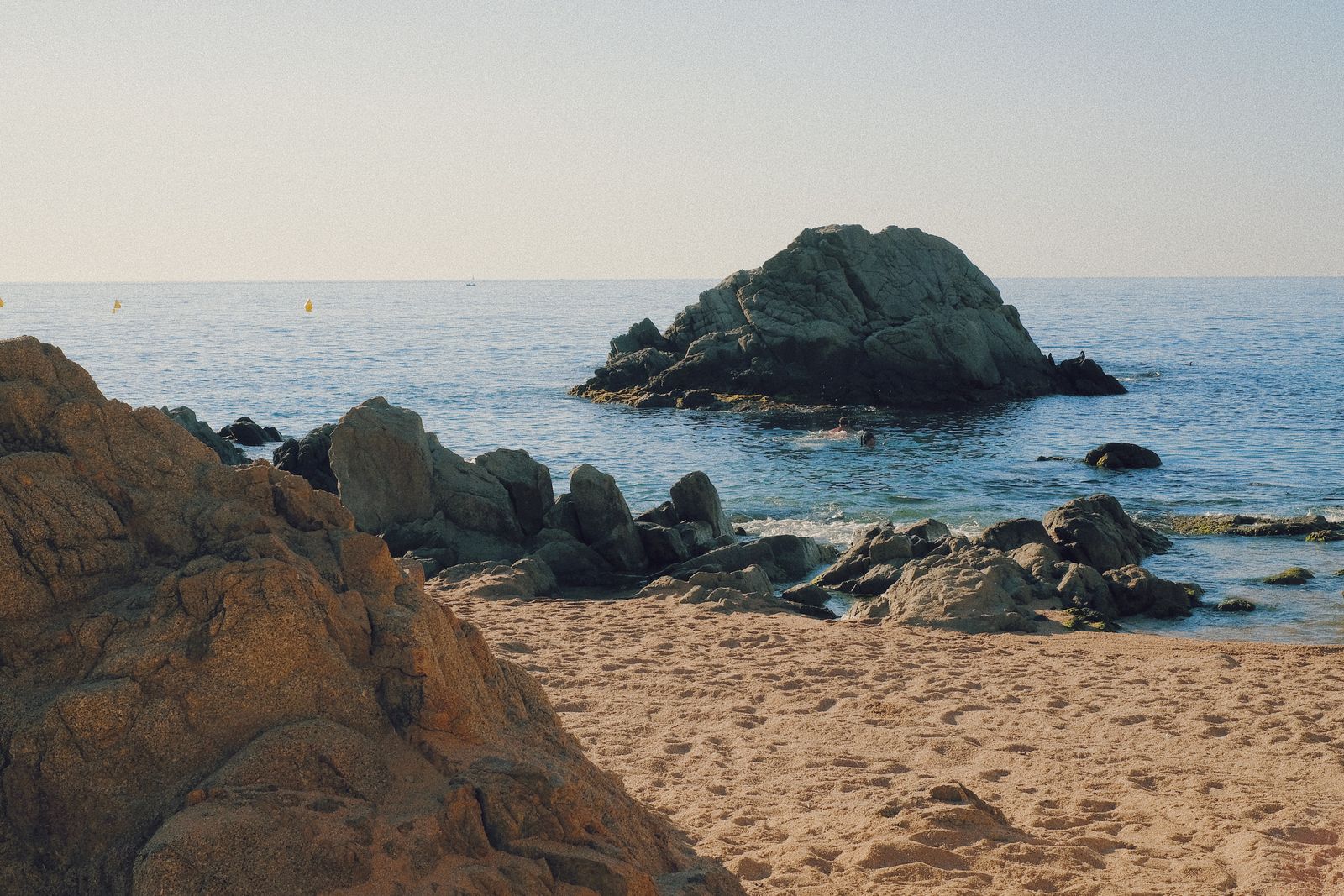
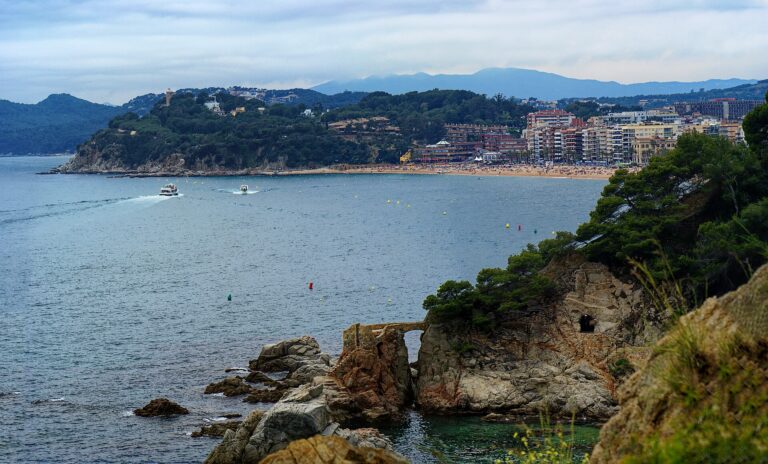
Head out kayaking or snorkelling at one of the Costa Brava beaches. If neither appeals to you, you can use the trip to visit a water park or simply laze by the sea. Among the most popular resorts here is Lloret de Mar.
Girona
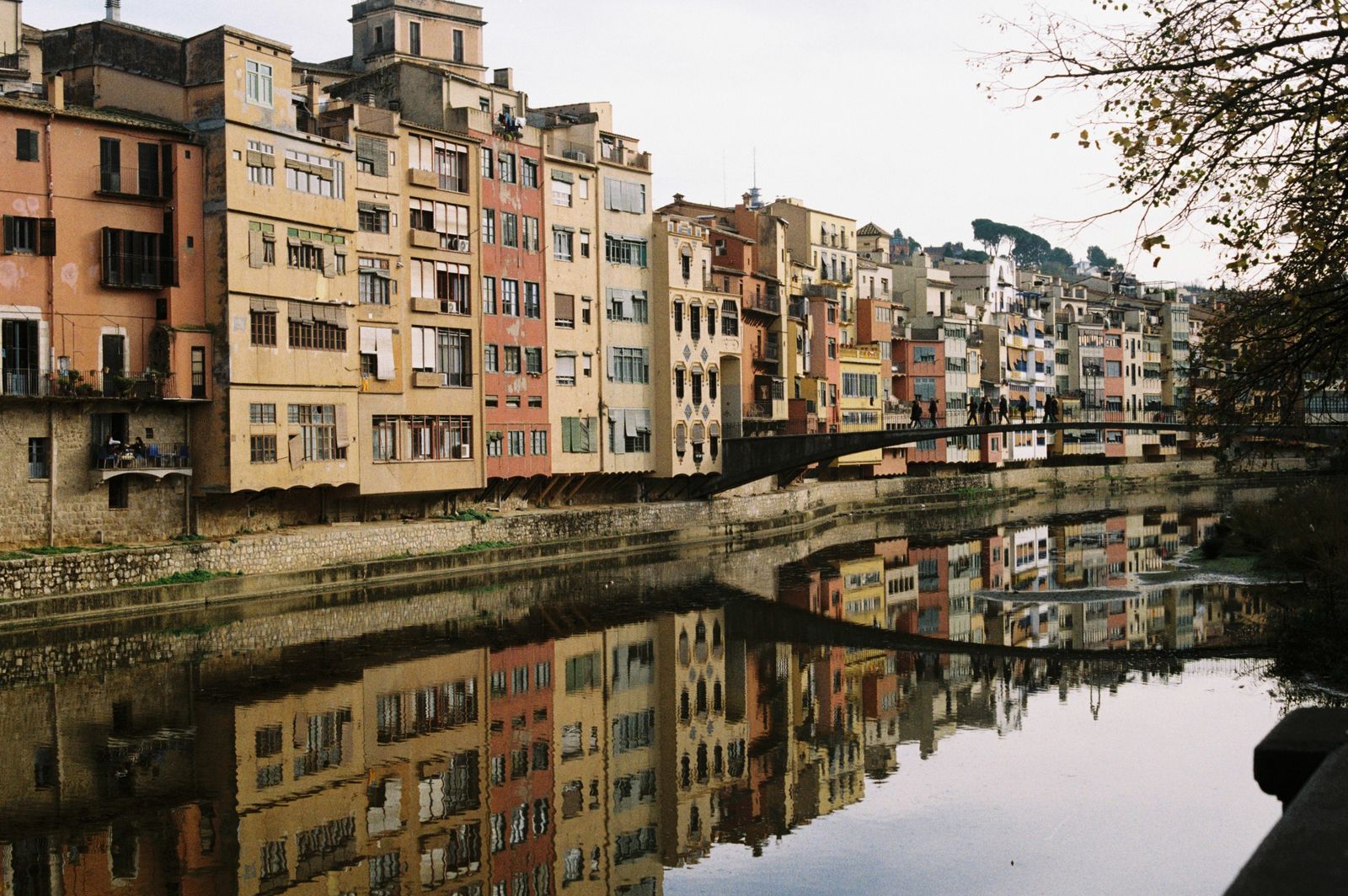
Girona is a hidden gem between the Pyrenees and the Costa Brava. You’ll find a Salvador Dalí museum, a Jewish Quarter that’s one of the oldest and best-preserved in Europe, and if you love Game of Thrones, you’ll be pleased to know many scenes from the show were filmed here. Just wander the lanes and discover the various passageways and gardens, and Girona is sure to charm you.
Montserrat
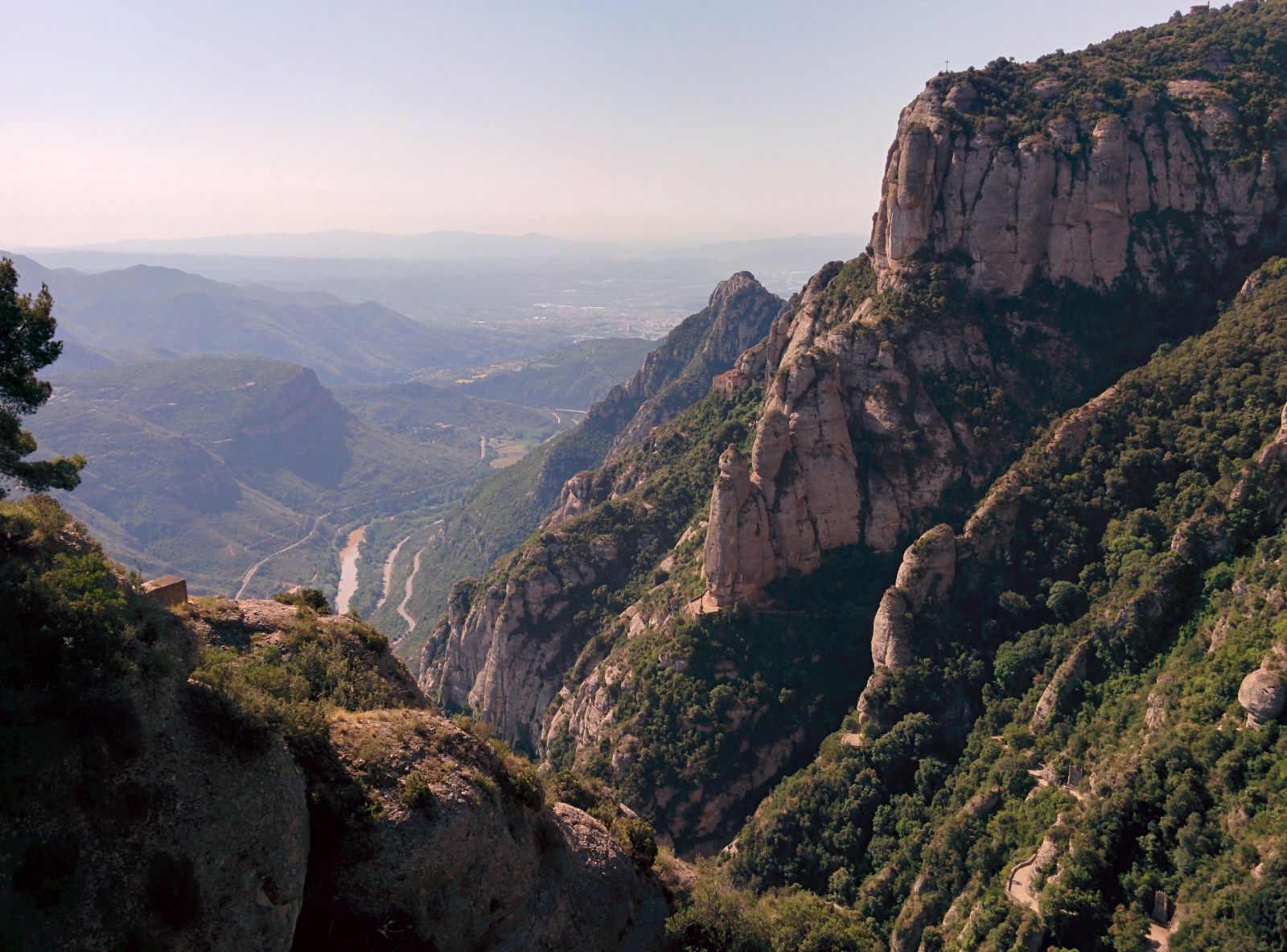
Want something a little different from cities and beaches? Head to the Montserrat mountains, where you’ll find the monastery of the same name — the most sacred site in Catalonia. This trip is better suited to autumn or spring, since you’ll need to be ready for a hike, but one that rewards you with wonderful views of the surroundings.
If you like, you can then take the funicular down to Santa Cova, the famous spot where La Moreneta, the Black Madonna, was found. Don’t forget to walk up to the Sant Jeroni summit afterwards, where there’s a beautiful view over the valley.
Transport from the airport and around the city
From El Prat airport you can reach the centre of Barcelona in several ways:
- Aerobus — from 1 March 2026 it costs €7.45 one-way and €12.85 return, running to Plaça Catalunya (25 to 35 minutes). The most convenient option.
- Metro L9 Sud — €5.90 (Bitllet Aeroport). Note that a regular ticket and the T-casual are NOT valid at the airport stations, and contactless card payment doesn’t work here.
- RENFE train — €4.60, running to Passeig de Gràcia and Sants (the cheapest option).
- Taxi — roughly €35–45 to the centre, worth it if you’re travelling in a group. Don’t rely on Uber or Bolt in Barcelona — the number of licences was cut from around 900 to 300, and rides have to be booked two hours in advance.
Around the city: A basic ticket costs €2.90, and the T-casual (10 journeys) is €13. But it has a major catch — it’s personal and non-transferable, so a couple has to buy two. For a couple on a two- or three-day trip, the T-familiar at €11.50 often works out better — it’s valid for 8 journeys and can be shared. Most guides don’t mention this detail at all.
An alternative is the Hola Barcelona Travel Card, which now starts with the 24-hour version from €12.50 and includes one metro journey from the airport and back. We mostly got around Barcelona on foot — most attractions are within walking distance, and it’s the best way to get to know the city. You’ll find a complete breakdown in our article about transport in Barcelona.
Is the Barcelona Card worth it?
The Barcelona Card (around €57 for 3 days) includes unlimited public transport and discounts to museums and attractions. It’s worth it if you plan to visit 3 or more paid attractions a day. If not, the cheaper option is Hola BCN just for transport, and buying tickets individually online at a discount.
What’s changed in Barcelona in 2026
Barcelona has been through several changes this year that can seriously shake up your budget and your day plan. Most older articles haven’t caught up with them yet, so let’s go through them one by one.
The tourist tax nearly doubled on 1 April 2026. It’s charged per person per night, for a maximum of seven nights, and on Booking you usually don’t see it at the time of reservation. A five-star hotel is €12, a tourist apartment €9.50, a four-star hotel €8.40, other accommodation €7, and a hostel €6. So a family of 2+2 on five nights pays an extra €240 or so they hadn’t counted on.
A new public conduct bylaw has been in force since 15 February 2026 (ordenança de civisme). Drinking alcohol in the street can cost up to €3,000, and walking around without a shirt off the beach €120 to €300. Non-residents also pay the fine on the spot. It’s not a bogeyman, just something worth knowing before you crack open a beer on some steps.
Short-term rentals are being phased out. The city is scrapping all 10,101 tourist-apartment licences by November 2028, and it’s already pushing hotel prices up. The average hotel room price in March 2026 was €188.50, a record. In practice this means one thing: book as early as you can. Where exactly, we break down in our article on where to stay in Barcelona.
And one bit of good news to finish. There was no mass anti-tourism demonstration in Barcelona this year, the movement has weakened, and 73.4% of residents rate tourism positively. What bothers them is over-tourism, not tourists. What can disrupt your day plan, though, are teachers’ strikes — on 18 May they closed the Sagrada Família, and on 2 June Casa Batlló.
Barcelona: practical tips and advice
Buy your tickets in good time and in advance. If you can’t do it through the official sites, we usually go through GetYourGuide (no extra fee, always reliable, and you can pay online without any hassle). Through GetYourGuide we skipped the lines several times in Spain, because we didn’t have to wait to buy a ticket.
Safety in Barcelona
Barcelona has the unfortunate nickname of the pickpocket capital, so stay alert during your visit. The good news for 2026 is that pickpocketing on public transport dropped by around 40% in the first half of the year thanks to the police operation Pla Kanpai, with 85 repeat offenders arrested — four times as many as the year before.
But the cliché that you just need to avoid crowds doesn’t hold up. The peak of thefts isn’t at night, but during the morning and afternoon crush, roughly between 8:00 and 9:30 and then between 17:00 and 20:00. And phone snatching is on the rise — a pair rides past on an electric scooter, which is silent and coasting, so you don’t hear it coming. Don’t be scared, but follow a few rules:
- Watch out for pickpockets: Keep an eye on your things especially on the metro and in busy spots like La Rambla. We recommend wearing your backpack on your front or using a bum bag.
- Don’t keep your valuables in one place — split up your cash and documents.
- Avoid leaving bags or backpacks on chairs in restaurants.
- On the metro, petty theft is common, especially while getting on and off the trains.
- Don’t take valuables to the beach. If you plan to swim, bring a waterproof case for your documents and keys.
- If someone approaches you offering anything on the street (e.g. “event tickets” or “guides”), it’s better to decline.
- Don’t hold your phone in your hand by the road or on an empty street — this is where visitors get caught out more than in a crowd.
- Beware of scams involving bird droppings, a spilled drink, a carnation forced on you near the Sagrada, and fake police who want to check your wallet.
- Emergency line: 112 (shared line for police, ambulance, and fire), police: 092
Map of points of interest for your phone
FAQ — Frequently asked questions about Barcelona
What to see in Barcelona in one day?
In one day you can cover Sagrada Família (morning, book for 9:00 AM), Hospital de Sant Pau, Casa Batlló from the outside, the Gothic Quarter with the cathedral, La Rambla with La Boqueria market, and an evening stroll along Barceloneta. The key is to buy tickets in advance and start early in the morning.
What to see in Barcelona in 2 days?
In two days, add to the one-day itinerary Park Güell (morning), the Gràcia neighbourhood, Montjuïc with the cable car and castle, Bunkers del Carmel at sunset, and the Magic Fountain in the evening. Two days is the ideal minimum for Barcelona.
What to see in Barcelona in 3 days?
In 3 days you can cover everything from the first two days plus the Picasso Museum, the El Born neighbourhood with Santa Maria del Mar, Parc de la Ciutadella, and a trip to Montserrat or Camp Nou. You can also dedicate the third day to a tapas tour or flamenco show.
How many days is enough for Barcelona?
Ideally 3-4 days. In 2 days you can manage the main sights, in 3 days also museums and trips to the surroundings. If you want to really experience Barcelona including the food, beaches, and nightlife, plan 4-5 days.
Will the Sagrada Familia be completed in 2026?
Yes, in 2026 the Sagrada Familia basilica will be completed after 144 years of construction. The main Tower of Jesus Christ (172.5 m) will make it the tallest church in the world. Buy tickets at least 2-3 weeks in advance, as demand in the year of completion is enormous.
When to visit Barcelona?
Spring (March-May) or autumn (September-October) are ideal. The weather is pleasant and crowds are smaller than in summer. In high season (June-August) it’s hot and overcrowded. Off-season (November-February) has the lowest prices, but the weather can be dreary.
Is the Barcelona Card worth it?
The Barcelona Card (from €55 for 3 days) is worth it if you plan to visit 3+ paid attractions daily and use public transport frequently. Otherwise it’s cheaper to buy a Hola BCN card for transport and individual tickets online with discounts.
Is Barcelona expensive?
Barcelona is more expensive than some European cities, but cheaper than Paris or London. Daily budget: budget traveler €50-70 (hostel, tapas, public transport), mid-range €100-150 (hotel, restaurants, tickets), luxury €250+. Accommodation and attraction tickets are usually the biggest expenses.
How to get around Barcelona?
You can cover most attractions on foot. For longer distances use the metro (T-Casual card: 10 rides for €11.35) or the Hola BCN card for unlimited travel (from €16.40 for 48 hours). From the airport, the most convenient option is the Aerobus (€7.75).
What to taste in Barcelona?
Typical Catalan dishes include patatas bravas, bombas (fried potato balls), pa amb tomàquet (bread with tomato), fideuà (noodle paella), crema catalana, and of course tapas. Best tapas bars: El Xampanyet in El Born, Bar Cañete near La Rambla, and La Pepita in Gràcia.
Is Barcelona safe?
Barcelona is safe, but watch out for pickpockets, especially on the metro and on La Rambla. Wear your backpack in front, leave valuables at the hotel, and watch your belongings at the beach. Emergency line: 112, police: 092.
What currency is used in Barcelona?
Spain is part of the eurozone, so euros are used here. You can pay by card almost everywhere, but it’s good to have some cash for markets and smaller establishments.
Where next: all our Barcelona guides
This article is a hub. For every topic we only touch on here, we have a dedicated guide with up-to-date prices and figures for 2026.
- Weather in Barcelona: temperatures month by month and when to go
- How to get to Barcelona: flights, prices, and train
- Transport in Barcelona: metro, tickets, and getting from the airport
- Where to stay in Barcelona: 10 neighbourhoods and the “cheap by the beach” trap
- Prices in Barcelona: budget and the tourist tax
- Safety in Barcelona: pickpockets by the hour
- Barcelona in 3 days: itinerary (+ 1-, 2-, and 5-day versions)
- Sagrada Família: tickets, prices, and visiting tips
- Park Güell: tickets, prices, and tips
- Gaudí in Barcelona: buildings worth visiting
- Camp Nou: the stadium tour and the state of the rebuild
- The best views over Barcelona
- Beaches in Barcelona: Barceloneta and where the locals go
- Barcelona with kids: what to do
- Day trips from Barcelona: ideas for a day out
Where to go on holiday in Spain?
Lukáš and I love Andalusia, where you’ll find breathtaking cities like Córdoba, Seville, and Granada. If you want the sea, head to Málaga, where the water is warm and calm.
Tips and Tricks for Your Vacation
Don’t Overpay for Flights
Search for flights on Kayak. It’s our favorite search engine because it scans the websites of all airlines and always finds the cheapest connection.
Book Your Accommodation Smartly
The best experiences we’ve had when looking for accommodation (from Alaska to Morocco) are with Booking.com, where hotels, apartments, and entire houses are usually the cheapest and most widely available.
 🚗 Car rental on the roadVerified rental cars in Catalonia
Search with the DiscoverCars comparison engine — it compares prices from dozens of local and international rental companies, and most bookings come with free cancellation.
Compare car prices in Catalonia →Don’t Forget Travel Insurance
Good travel insurance will protect you against illness, accidents, theft, or flight cancellations. We’ve had a few hospital visits abroad, so we know how important it is to have proper insurance arranged.
Where we insure ourselves: SafetyWing (simple monthly subscription) and TrueTraveller (for extra-long trips).
Find the Best Experiences
Get Your Guide is a huge online marketplace where you can book guided walks, trips, skip-the-line tickets, tours, and much more. We always find some extra fun there!