

Some places look exactly like they do in photos — and then there are places that completely disarm you because no photograph can truly capture the atmosphere. Peggy’s Cove firmly belongs in the second category. When Lukáš and I first pulled up to that vast granite shoreline and the famous red-and-white lighthouse appeared before us, we both just fell silent. And that doesn’t happen often, especially with Lukáš. 😅
Peggy’s Cove is a tiny fishing village in Nova Scotia — one of the Maritime Provinces on Canada’s east coast — and one of the most photographed scenes in all of North America. Despite being home to just a few dozen permanent residents, over 700,000 visitors flock here every year. And honestly? I understand every single one of them.
In this article, you’ll find a complete guide to Peggy’s Cove — from the iconic lighthouse and granite rocks to the fishing harbour, a coastal hiking trail with open ocean views, the Swissair Flight 111 memorial, and most importantly: where to get the best lobster. I’ll tell you when to visit to avoid the crowds, how to get here from Halifax, how much it all costs, and what to watch out for (especially the waves — I’m dead serious about that one).
TL;DR
- Peggy’s Cove is a picturesque fishing village about 45 minutes’ drive from Halifax, Nova Scotia. The main attraction is the iconic lighthouse perched on massive granite rocks.
- Entry is completely free — there’s no admission fee, just parking (around 20 CAD / €14 for the whole day at the main car park).
- Best time to visit is early morning (before 9:00) or late afternoon — during the day, especially in summer, it gets very crowded.
- Season: June to October, ideally September — fewer tourists, beautiful colours, and pleasant weather.
- People die from the waves. This is not an exaggeration. The granite rocks are slippery and the waves are unpredictable — NEVER go into the black-marked zones near the water.
- Lobster here is fantastic — head to the Sou’Wester restaurant or buy freshly cooked lobster right at the harbour.
- Polly’s Cove hike is a gorgeous, underrated trail just a few minutes from the village — most tourists completely miss it.
- The trip here is easy to combine with a Nova Scotia road trip or as a day trip from Halifax.
- Accommodation in Peggy’s Cove itself is extremely limited — most people stay in Halifax or nearby villages.
The full destination guide: Nova Scotia — guide and what to see
When to visit Peggy’s Cove and how to get there
Peggy’s Cove is beautiful year-round — each season has its own distinct atmosphere. But if you want the most enjoyable experience, timing is everything. Let me tell you when we absolutely nailed it and when I’d definitely advise against visiting.
Best time to visit
September and early October are the absolute sweet spot. The tour buses from cruise ships have thinned out, the weather is still pleasant (15–20 °C), and if you’re lucky, you’ll catch the beginning of autumn colours in the surrounding forests. We were here in late September and had the lighthouse practically to ourselves at times — granted, it was 7 in the morning, but it still counts. 😁
Summer (July–August) is peak season. Expect crowds, especially between 10:00 and 16:00, when buses arrive from Halifax and cruise ships. If you’re visiting in summer, arrive either before 9:00 or after 17:00 — sunrise and sunset at the lighthouse are magical, and there are significantly fewer people.
Spring (May–June) tends to be unpredictable — fog, rain, wind. On the flip side, Peggy’s Cove shrouded in mist has an absolutely cinematic atmosphere. If you don’t mind unpredictable weather and want moody photographs, spring can be an excellent choice.
Winter — the lighthouse and rocks under snow look like a fairy tale, but restaurants and shops are mostly closed. Roads are generally passable, but coastal weather can be harsh. Only go if you know what you’re getting into.
How to get to Peggy’s Cove
By car from Halifax — the easiest and most comfortable option. Peggy’s Cove lies about 43 km southwest of Halifax city centre, and the drive takes approximately 45 minutes along Route 333. The road itself is beautiful — it winds along the coastline through small fishing villages. I’d recommend going one way and returning the other (via Indian Harbour and Hackett’s Cove) to see as much as possible.
We’ve had great long-term experience with DiscoverCars, which we use all around the world. You can hire a car in Halifax during peak season from around 40–70 CAD/day (€27–47).
By organised tour from Halifax — if you’d rather not drive, there are plenty of half-day and full-day tours available. Most include a stop at Peggy’s Cove plus other spots along the coast. Prices range from about 60–100 CAD (€40–67) per person.
By public transport — unfortunately, you can’t get here by public transport. There’s no regular bus service from Halifax to Peggy’s Cove. The only alternatives to a car are organised tours, a taxi (around 80–100 CAD one way — ouch), or rideshares.
Parking at Peggy’s Cove has undergone a major transformation in recent years. The new main car park (Peggy’s Cove Visitor Parking) is a short walk from the village — you’ll pay around 20 CAD (€14) for the whole day. From there, it’s about a 5-minute walk to the lighthouse. During peak season, the car park can fill up by late morning, so again — arrive early.
Where to stay and how much Peggy’s Cove costs
Let’s be upfront: Peggy’s Cove itself is a village of about 30 permanent residents. There’s virtually no accommodation, and what does exist sells out months in advance during peak season. Most visitors therefore come as a day trip from Halifax — and that makes perfect sense.
Accommodation in Peggy’s Cove and nearby
If you’re dreaming of seeing the lighthouse at dawn completely on your own (and trust me, it’s worth it), there are a few options:
Peggy’s Cove Bed & Breakfast — one of the few accommodations right in the village. Cosy, simple, with harbour views. Prices in season around 150–250 CAD (€100–167) per night. Book well in advance.
Oceanstone Seaside Resort (Indian Harbour) — a gorgeous resort about 10 minutes’ drive from Peggy’s Cove. Beautiful cottages and rooms with ocean views, plus an on-site restaurant. Prices from 200 CAD (€134) per night. This place is truly lovely if you want to turn your Peggy’s Cove visit into a romantic weekend.
Accommodation in Halifax
For most travellers, the most practical approach is to stay in Halifax and head to Peggy’s Cove as a day trip. Halifax offers plenty of options for every budget:
- Budget: Hostel (HI Halifax) from 40 CAD (€27) per bed in a dormitory
- Mid-range: City centre hotels from 120–180 CAD (€80–120) for a double room
- Upscale: Boutique hotels on the waterfront from 200–350 CAD (€134–234)
How much a trip to Peggy’s Cove costs
Here’s the good news — Peggy’s Cove is a surprisingly affordable day out:
- Lighthouse and rocks: free
- Parking: 20 CAD (€14)
- Petrol from Halifax and back: approx. 10–15 CAD (€7–10)
- Lunch (lobster roll + drink): 25–40 CAD (€17–27)
- Total for two people: approx. 80–120 CAD (€54–80)
If you take an organised tour, expect to pay 60–100 CAD per person (€40–67), but lunch usually isn’t included.
Peggy’s Cove: 12 things to see and do
Peggy’s Cove may be a tiny village, but there’s a surprising amount to see and do here. Here’s our complete list — from the postcard-perfect sights to hidden gems that most visitors completely miss.
1. The iconic lighthouse — Canada’s most photographed spot
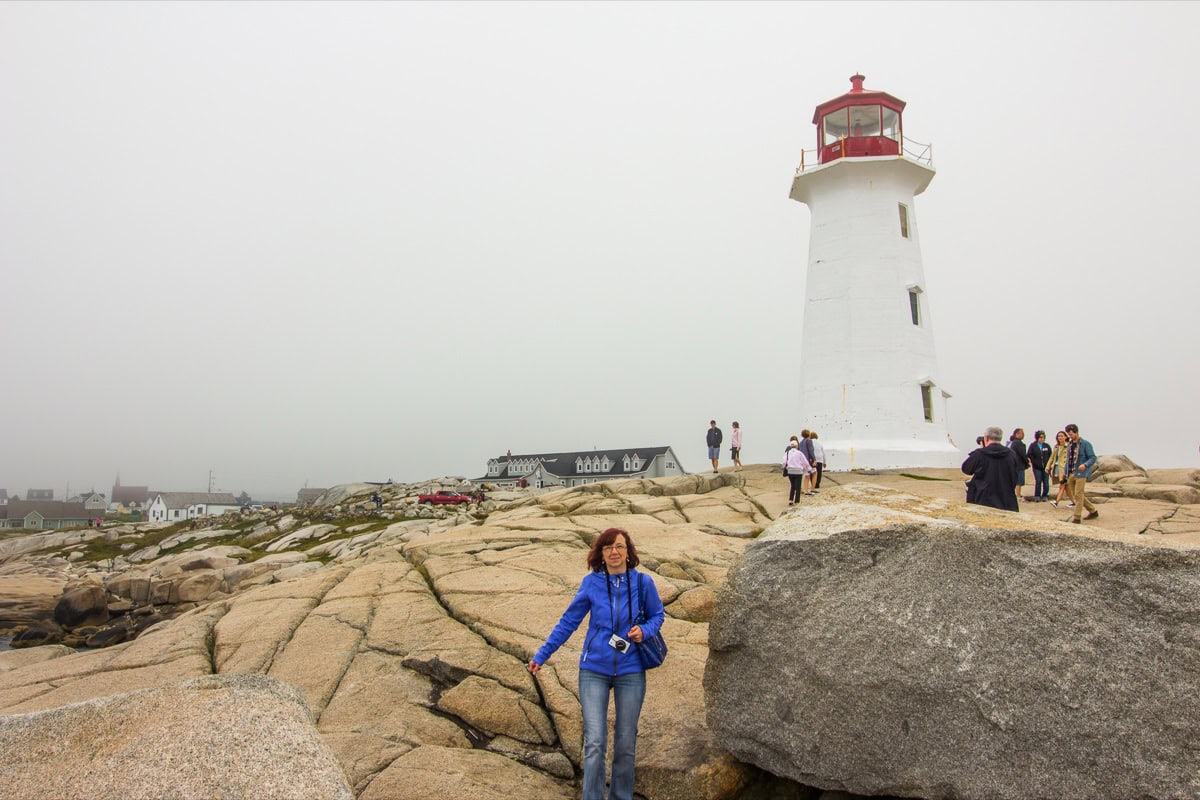
This is the reason people come. Peggy’s Point Lighthouse is arguably the most photographed lighthouse in all of North America — and once you see it in person, you’ll understand why. It stands on a massive granite outcrop, Atlantic waves crashing all around it, and the whole scene looks as though someone painted it.
The lighthouse was built in 1915 and still serves as a functioning navigational aid (though it’s now automated). Inside, there’s a branch of Canada Post — yes, you read that right, it’s the only lighthouse in North America that houses a working post office. You can send a postcard from here with a special Peggy’s Cove cancellation stamp. We sent one to Lukáš’s parents and it’s still on their fridge to this day. ☺️
You can’t actually go up to the lighthouse itself — it’s fenced off and interior access is limited to the post office. But that really doesn’t matter, because the spectacle is all around it. The granite rocks spread out in every direction and you’re free to walk across them (in the safe zone!).
When to visit: Sunrise at the lighthouse is absolutely magical — the light falls directly onto the lighthouse and rocks. Sunset is beautiful too, but the lighthouse is backlit at that time. For photos, early morning is the clear winner.
2. Granite rocks — breathtaking but deadly
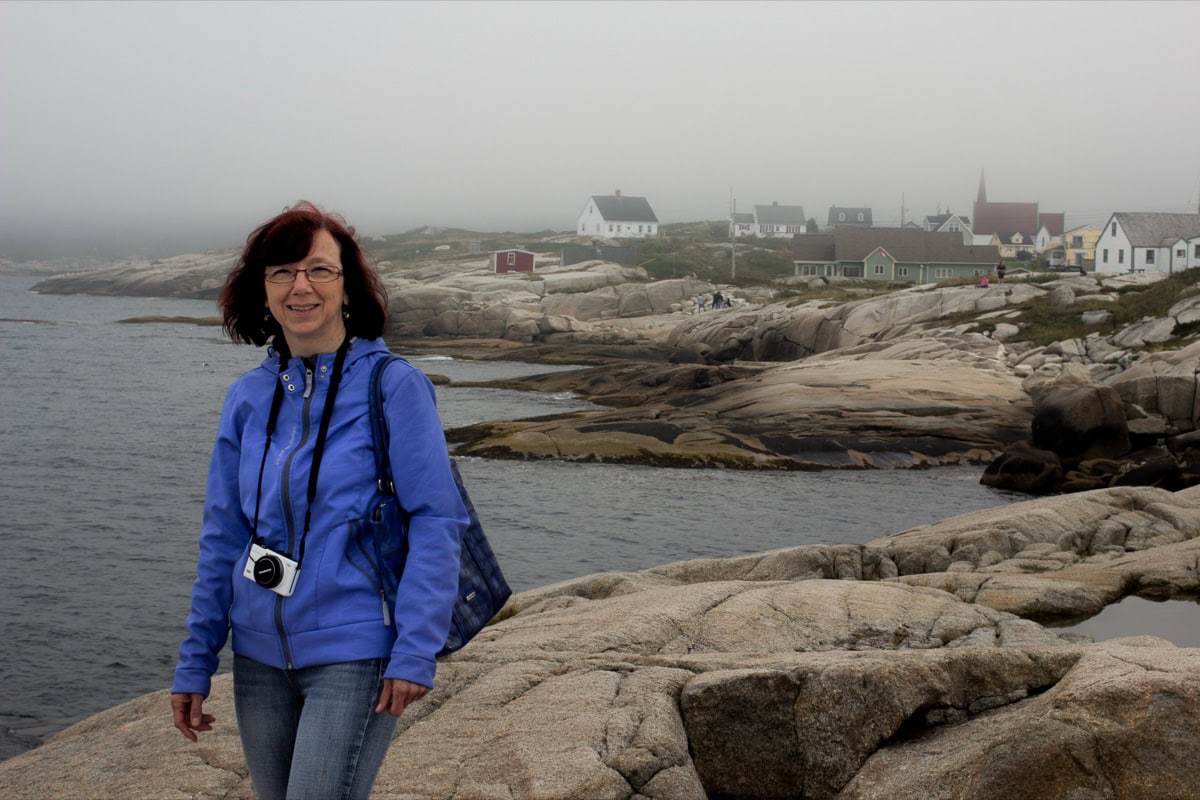
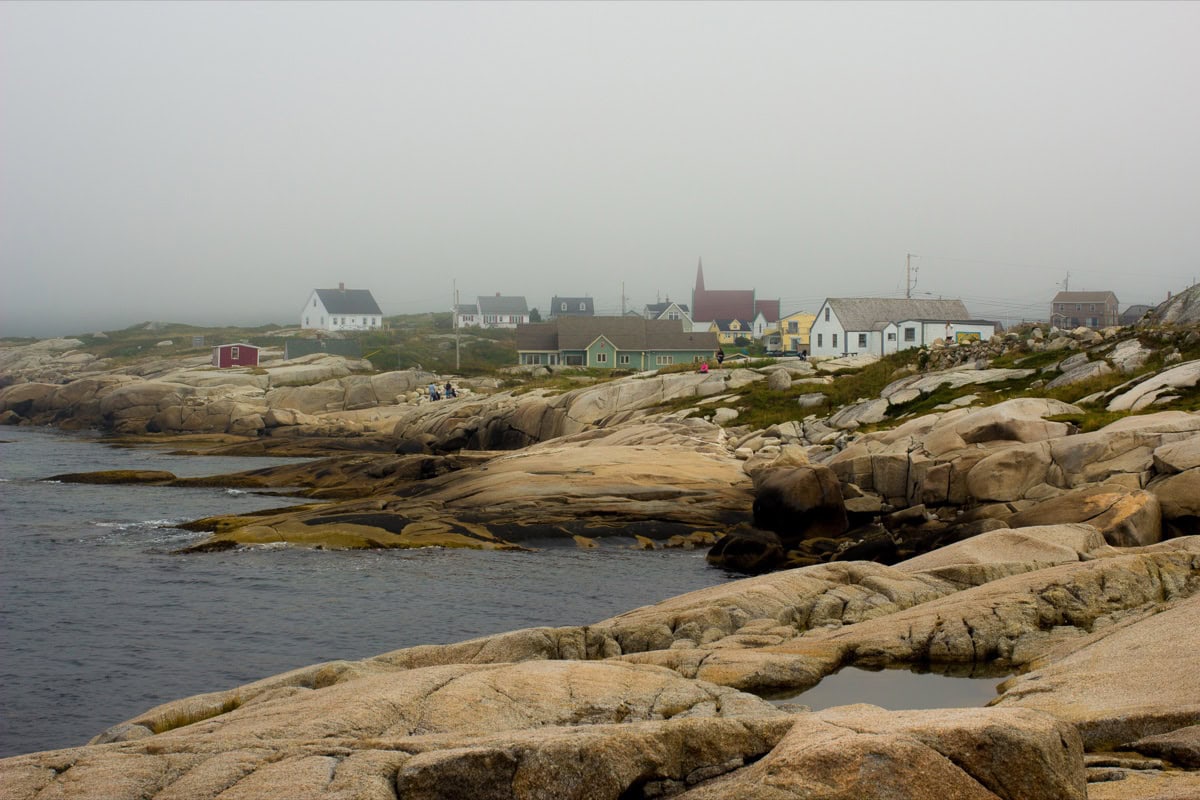
The enormous smooth granite rocks (the Barrens) surrounding the lighthouse are what make Peggy’s Cove so unique. Sculpted by glaciers thousands of years ago, they create a surreal, lunar-like landscape that seamlessly blends into the ocean. You can walk across them, sit on them, take photos — but you must respect the markings.
Now for the serious part, and please take this absolutely to heart: people regularly die on these rocks. The waves along Peggy’s Cove’s shoreline are extremely unpredictable — it can be calm for minutes and then a massive wave sweeps you off the rock. The granite is also wet and incredibly slippery, even when it doesn’t look it. The black-marked zones near the water exist for one single reason — to save your life.
Since 2000, at least a dozen people have died here, most recently in 2024. Most of them were standing at what they thought was a “safe” distance from the water and underestimated the power of the waves. Do not go beyond the black lines on the rocks. Ever. Under any circumstances. Not for a photo, not for a selfie, not because “the waves look small.” They don’t.
I witnessed this first-hand — we were standing on the rocks at a safe distance and watched a group of tourists posing right by the water’s edge. Before we could even say anything, a wave came and completely drenched them all. They were lucky it only soaked them rather than sweeping them away. Lukáš nearly had a heart attack. 😅
The sound of the ocean crashing against granite is hypnotic, and you could sit here for hours (safely!) just watching the raw power of nature. I’d recommend bringing a snack and a thermos of coffee.
3. The fishing harbour — a living postcard
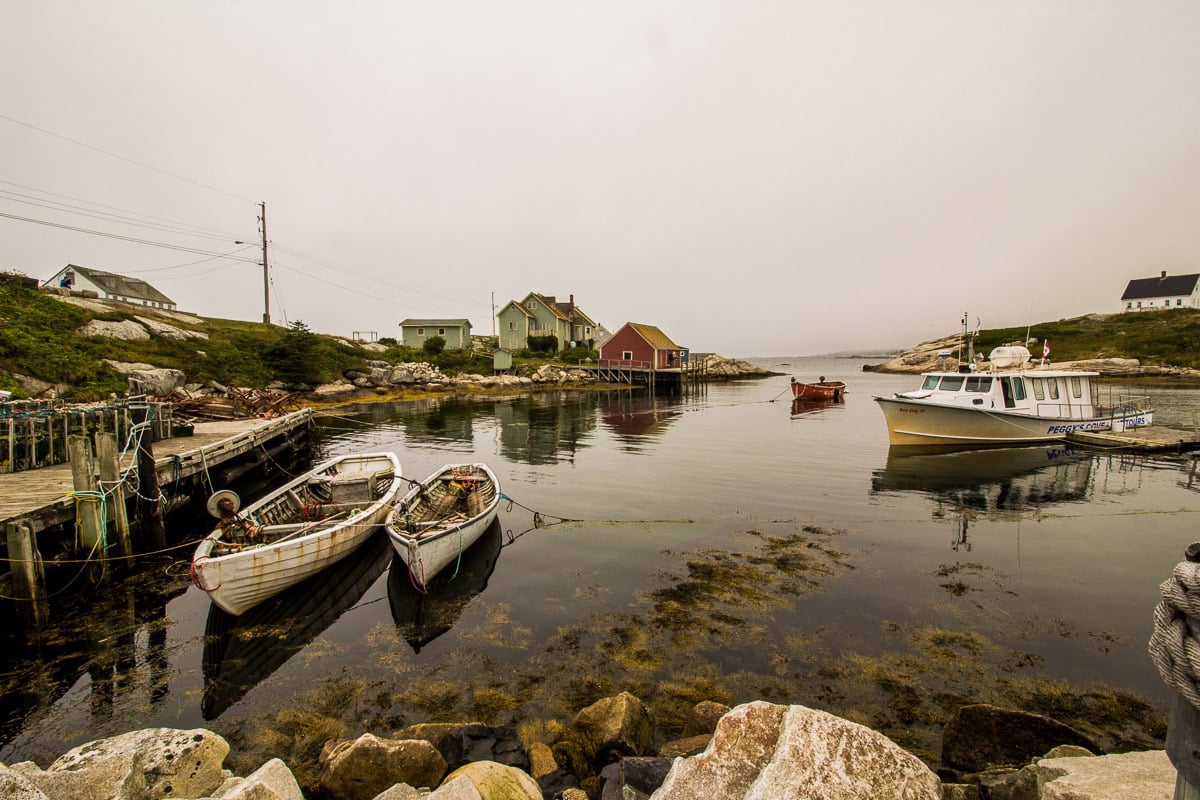
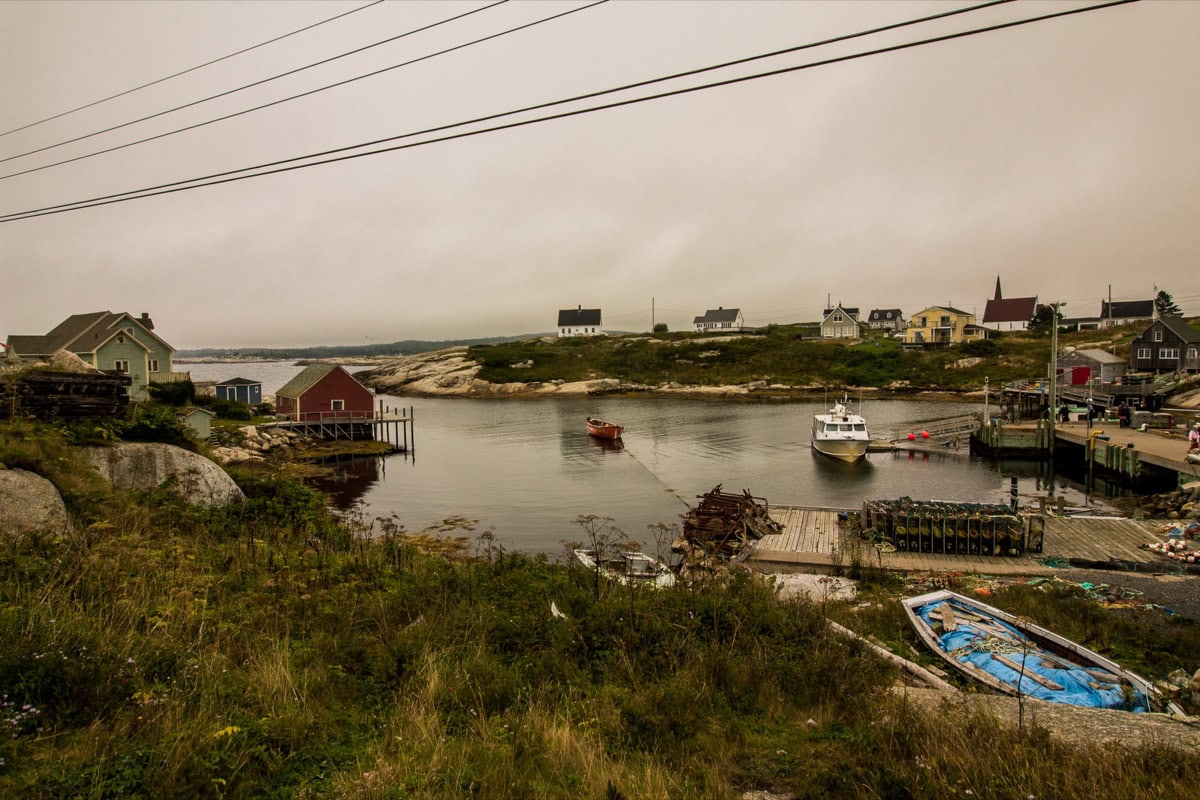
While most tourists make a beeline for the lighthouse, Peggy’s Cove’s charm also lies in its little fishing harbour, which looks as though time has stood still. Colourful fishing sheds, wooden wharves, stacks of lobster traps, and a handful of boats bobbing on the waves — it’s exactly the scene that springs to mind when you hear “fishing village on the east coast.”
And it’s all real — Peggy’s Cove is still a working fishing community. Those lobster traps aren’t decorations for tourists; local fishermen genuinely head out to sea from here every day. It’s actually one of the reasons the village has been protected from large-scale commercial development for so many years.
A wander around the harbour takes about 15–20 minutes, but I’d recommend lingering longer. Watch the fishermen at work, photograph the colourful sheds (each one a different colour, as if there’s an unspoken competition for the most vibrant), and if you’re lucky enough to bump into a local with time for a chat, you’ll hear some brilliant stories.
Tip: The best harbour photos are taken from the elevated viewpoint on the road above the harbour — from there you can capture the entire scene with its colourful sheds and the ocean in the background.
4. deGarthe Gallery & Monument — art carved into rock
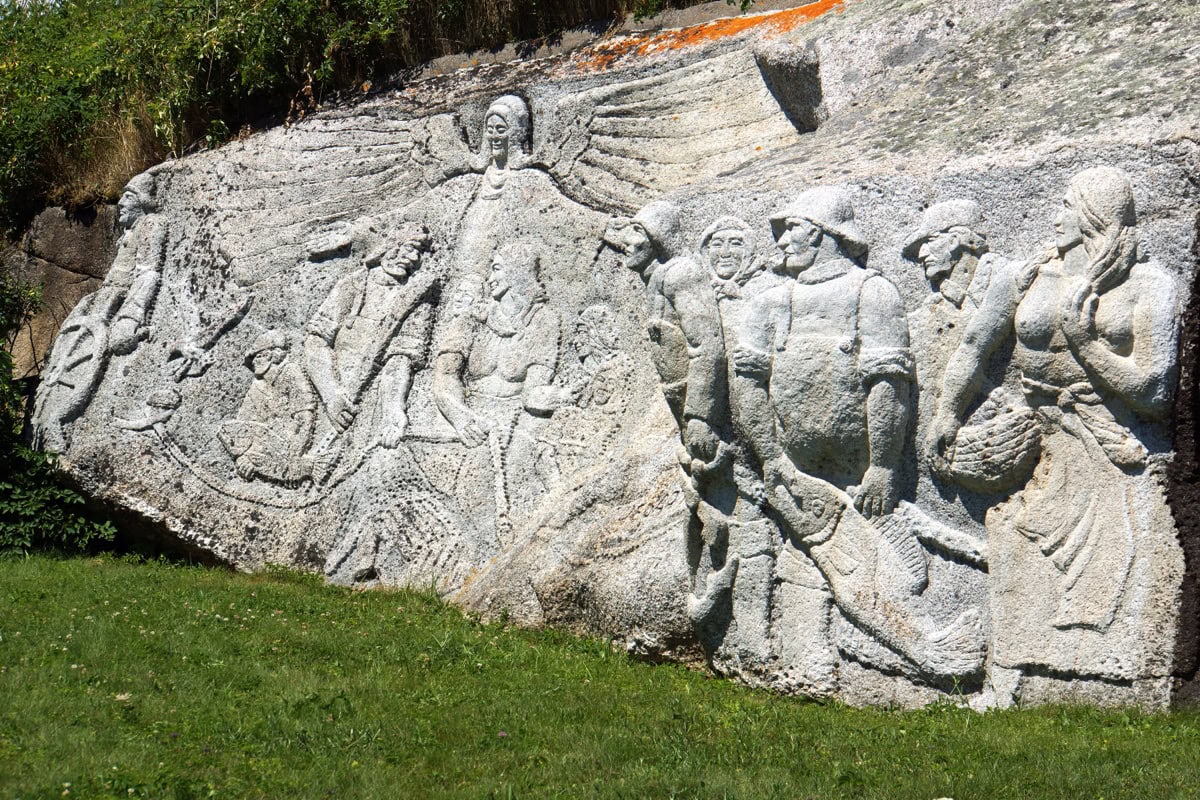
This is a spot most tourists completely overlook, which is a real shame. William deGarthe was a Finnish-Canadian artist who fell so deeply in love with Peggy’s Cove that he settled here and spent the last 30 years of his life painting the local fishermen and landscape.
His gallery (deGarthe Gallery) is housed in his former home and studio — inside you’ll find dozens of paintings capturing life among Peggy’s Cove’s fishing community. But the main attraction is the Fishermen’s Monument — an enormous relief carved directly into a 30-metre granite cliff behind the gallery. DeGarthe worked on it for the last 7 years of his life, and it depicts 32 fishermen, their wives, children, and the angel of Saint Elias, patron saint of fishermen.
It’s a powerful piece of work — you stand before this enormous rock face and can literally feel the amount of labour and love the artist poured into it. Entry to the gallery and monument is free (donations are welcomed). The gallery is open from May to October, roughly 9:00–17:00.
You’ll find it right on the main road through the village, about a 2-minute walk from the harbour heading away from the lighthouse. Don’t skip it — it’ll take you 20–30 minutes at most and is well worth your time.
5. Swissair Flight 111 Memorial — a quiet and moving tribute
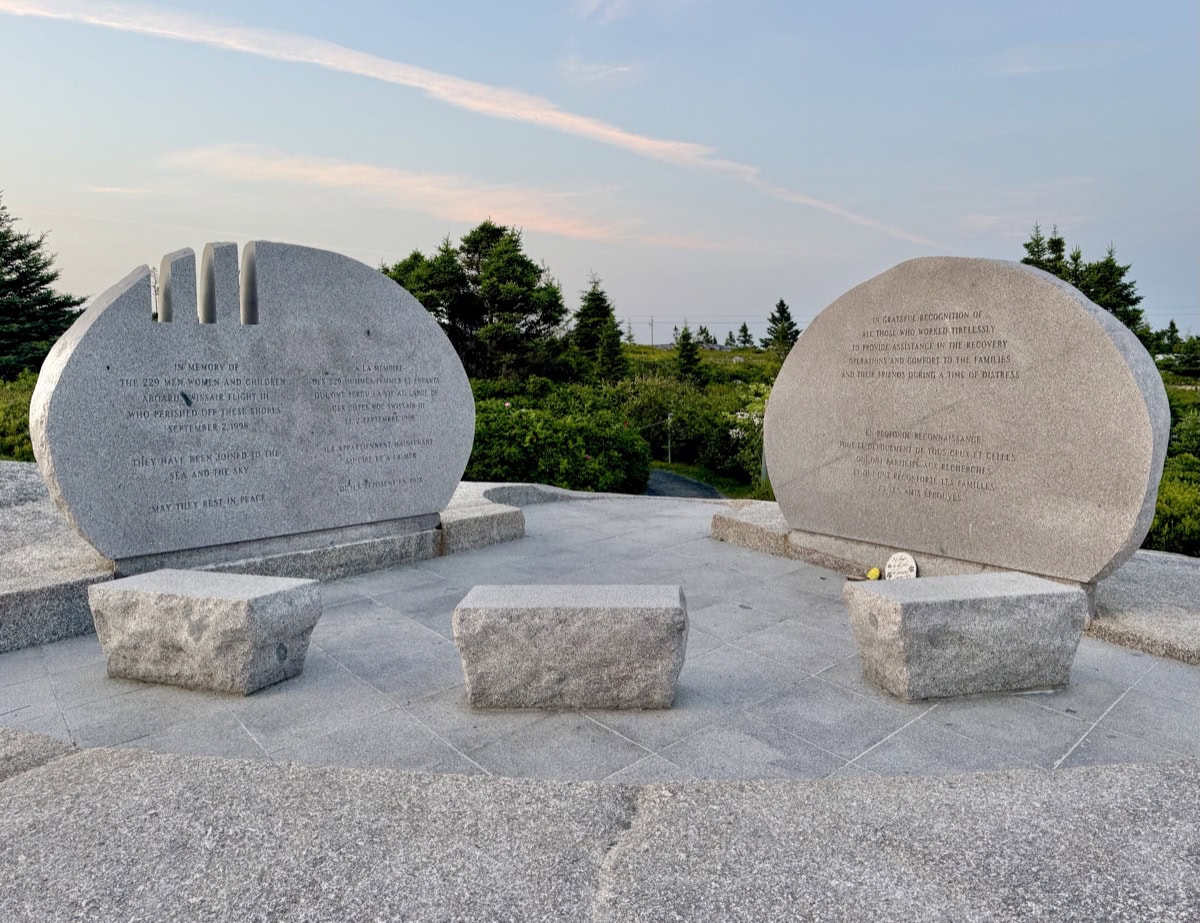
On 2 September 1998, about 8 km off the coast of Peggy’s Cove, Swissair Flight 111 on the New York to Geneva route crashed into the ocean. All 229 people on board perished. It was at the time one of the worst aviation disasters in Canadian history.
The memorial stands at Whalesback, a headland about 1 km northwest of the village (you can drive or walk there along the road). There are actually two memorials — one at Whalesback and another at Bayswater Beach, from where the rescue boats launched. Both are simple, dignified, and deeply moving.
The community of Peggy’s Cove and surrounding villages played a crucial role in the rescue and recovery operations — local fishermen were first on the scene and helped for weeks. It’s a story that’s still very much alive here and one the local residents carry with great humility.
If you’d like to learn more, the documentary “Blessed Stranger: After Flight 111” (2000) captures the impact of the tragedy on the local community. And yes, to answer the question “what film was shot at Peggy’s Cove?” — this documentary and several other productions about the disaster are the most well-known films associated with this location.
6. Polly’s Cove Hike — a hidden gem for walkers
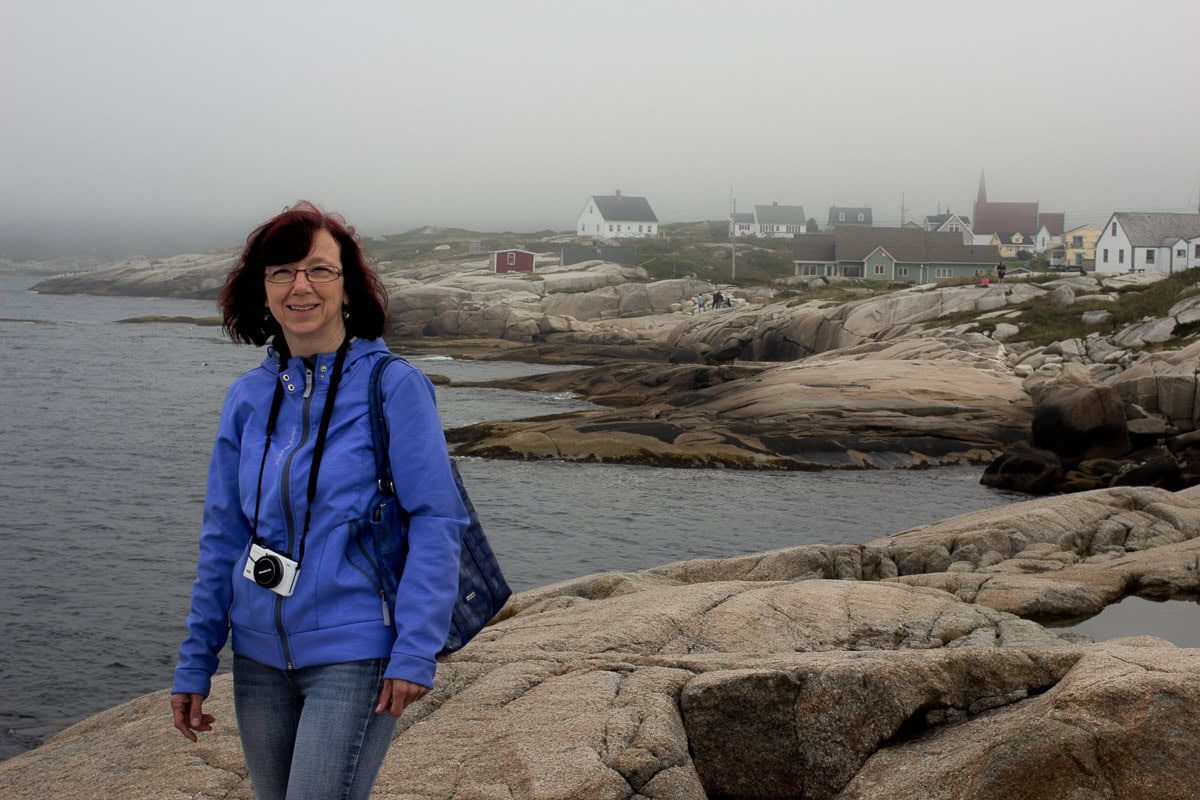
If you love hiking and want to escape the crowds (and if you’re reading this blog, you probably do 😁), the Polly’s Cove trail is for you. It’s roughly a 2.5 km trail (return) running along the coast north of Peggy’s Cove. The trailhead is right off Route 333, about 2 km before Peggy’s Cove (when coming from Halifax).
The trail takes you through heathland, granite outcrops, and along a dramatic coastline to Polly’s Cove — a small rocky inlet where you’ll very likely have the place entirely to yourself. The views over the open Atlantic are breathtaking, and the landscape feels more like Scotland or Iceland than Canada.
The terrain is moderately challenging — nothing extreme, but wear proper footwear (ideally hiking boots with good grip) because the granite can be slippery and the ground is uneven in places. The trail isn’t particularly well marked, but it follows the coastline, so getting lost is pretty difficult.
Tip: Bring a packed lunch and sit on the rocks at Polly’s Cove. Apart from the cry of seagulls and the roar of the waves, you won’t hear a thing. After the chaos at the main lighthouse, it’s like stepping into another world.
The entire hike including time spent relaxing at the cove takes about 1–1.5 hours.
7. Lighthouse Route — a scenic drive from Halifax
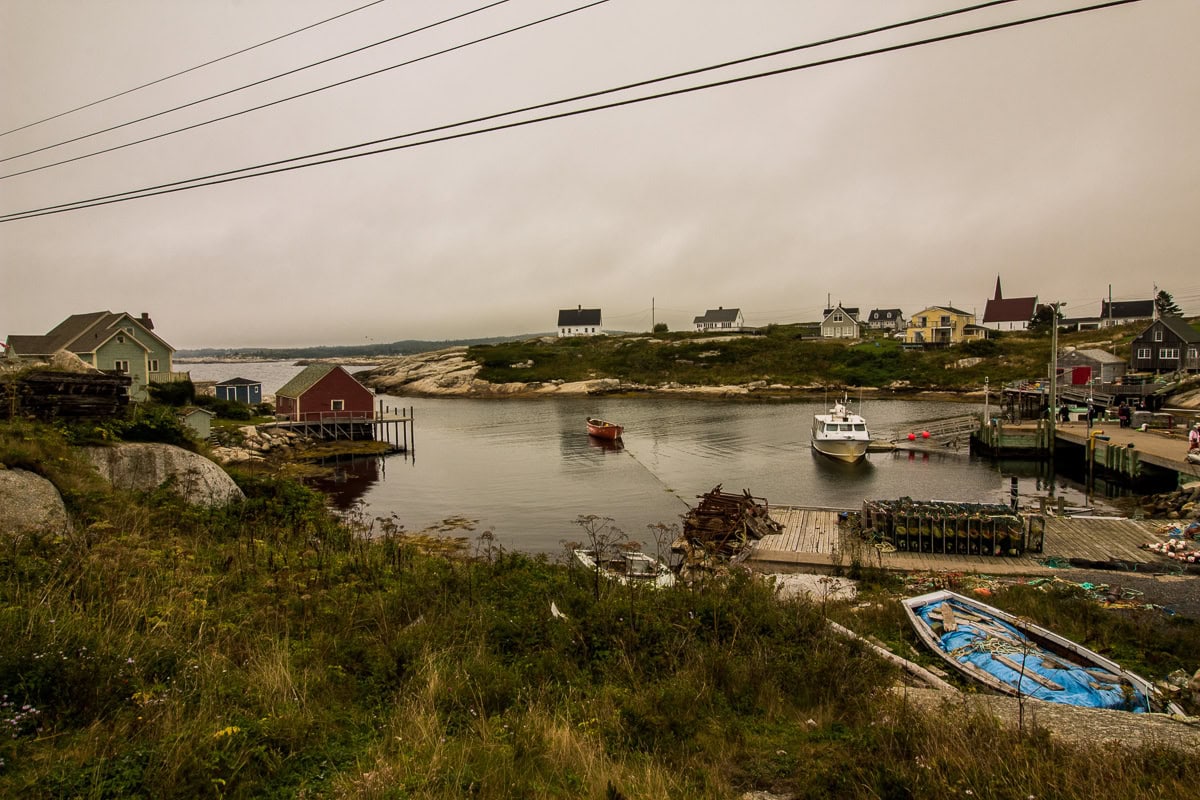
The drive to Peggy’s Cove doesn’t have to be mere transport — make it part of the experience. The Lighthouse Route (Routes 333 and 329) is one of the most beautiful coastal roads in Nova Scotia. From Halifax, you can take either the direct route (Route 333, 45 minutes) or a longer loop via St. Margaret’s Bay.
Along the way, you’ll pass through a string of picturesque fishing villages — Hackett’s Cove, Indian Harbour, Glen Margaret — each with its own harbour, colourful houses, and an atmosphere that feels frozen in time. Most tourists drive straight through without stopping, but I’d recommend pulling over at least once for a wander.
If you have time, do the loop: drive Route 333 from Halifax to Peggy’s Cove, then return via Tantallon on Route 3 — or the other way round. The full loop adds about an hour but you’ll see much more.
If you’re planning a bigger road trip across Canada, Peggy’s Cove makes the perfect first or last stop before or after Halifax.
8. Peggy’s Cove Preservation Area — a village under protection
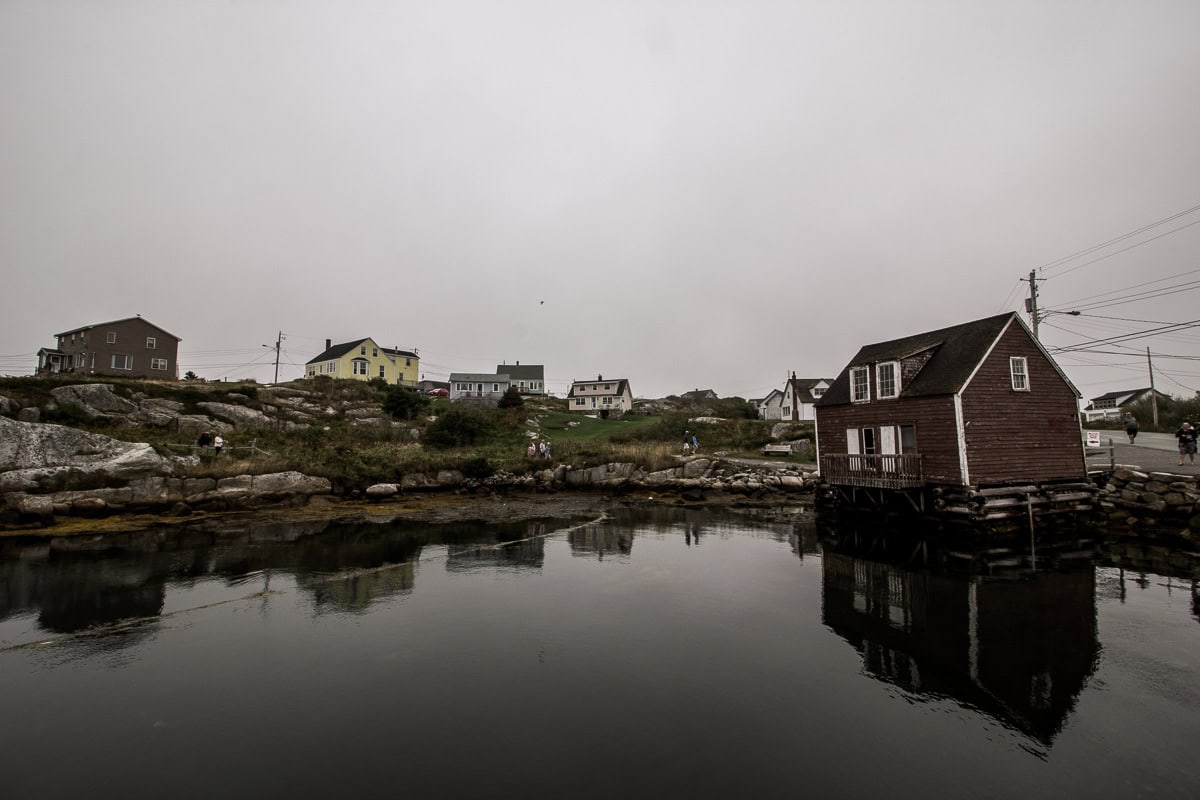
Few people realise that the entire village of Peggy’s Cove has been a protected area since 1962 (Peggy’s Cove Preservation Area). This means you can’t build modern structures, alter the village’s character, or put up neon signage. Thanks to this protection, Peggy’s Cove has retained its authentic fishing village feel — no massive hotel complexes, no fast food chains, no mega souvenir stores.
It’s a rare example of tourism and conservation coexisting (though the new car park and visitor centre have sparked some debate). A stroll through the village takes about 20–30 minutes and it’s well worth taking the time to admire the traditional houses, gardens, and the lobster traps — whether functional or decorative — stacked beside every home.
9. Sunrise & Sunset at the lighthouse — two different experiences

If you have the opportunity (perhaps you’re staying nearby), try to see the lighthouse twice — at dawn and at dusk. They’re two completely different experiences.
Sunrise — the light comes from behind the ocean and falls directly onto the lighthouse and rocks. The colours are warm and golden, and if you’re lucky enough to catch fog slowly lifting, it’s one of the most beautiful scenes I’ve ever witnessed. Plus, at 5:30 in the morning you’ll have the place completely to yourself. At most, you might spot a lone photographer with tripods worth five thousand dollars. 😁
Sunset — the sun sets behind the village, so the lighthouse is backlit. It’s not ideal for photography, but the atmosphere is enchanting — the sky turns pink and orange, the light on the waves is magical, and the whole thing has a romantic mood. There are significantly fewer people than during the day, but more than at dawn.
Tip for photographers: If you’re shooting the lighthouse, the best light is at dawn, roughly 30 minutes after sunrise. In summer, that means being on-site around 5:00. Yes, it’s early. But trust me, it’s worth it.
10. Visitor Interpretation Centre — context for everything you see
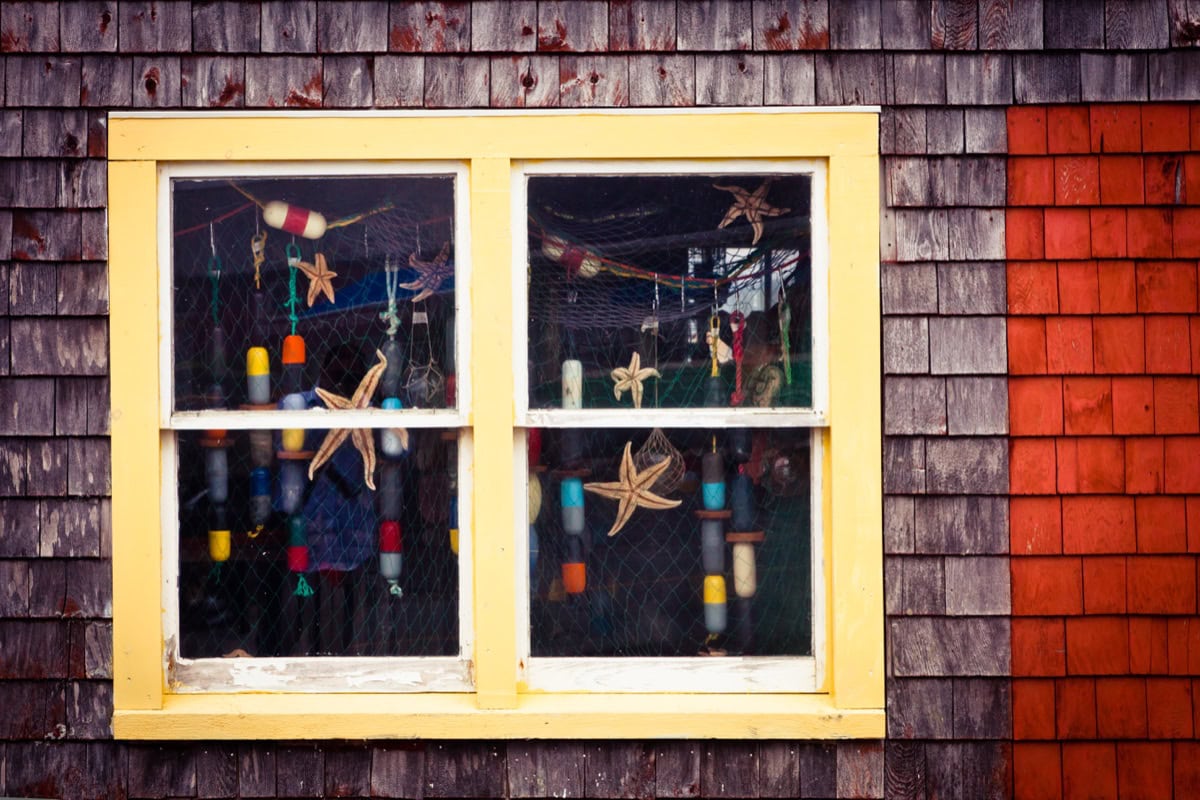
The new Peggy’s Cove Visitor Centre (opened in 2023) is a modern visitor facility at the main car park. It features an interactive exhibition on the village’s history, the geology of the granite rocks, fishing traditions, and of course the Swissair Flight 111 disaster.
It’s a good place to start your visit — you’ll get context for everything you’ll see afterwards. The exhibition is well done, interactive, and takes about 30–45 minutes. Entry is included in the parking fee.
You’ll also find a café, toilets, and a small gift shop here (surprisingly tasteful — no plastic tat, but rather local art and crafts). If you arrive early in the morning for sunrise, the centre won’t be open yet — it usually opens around 9:00.

11. Kayak or Boat Tour — Peggy’s Cove from the water
Peggy’s Cove from dry land is stunning, but from the water it’s an entirely different experience. Several local operators offer kayaking tours along the coast or boat trips where you can see the lighthouse, rocks, and possibly even seals or eagles from a completely new perspective.
Kayaking tours usually depart from Indian Harbour or St. Margaret’s Bay and last 2–3 hours. Prices are around 75–120 CAD (€50–80) per person including gear and an instructor. Suitable for beginners too — the waters in the bay are generally calm.
Tip: If you’re prone to seasickness, stick with the kayak or a small boat. On larger vessels in the Atlantic swell things can get uncomfortable, especially when it’s windy.
12. Nearby beaches — Bayswater and Crystal Crescent
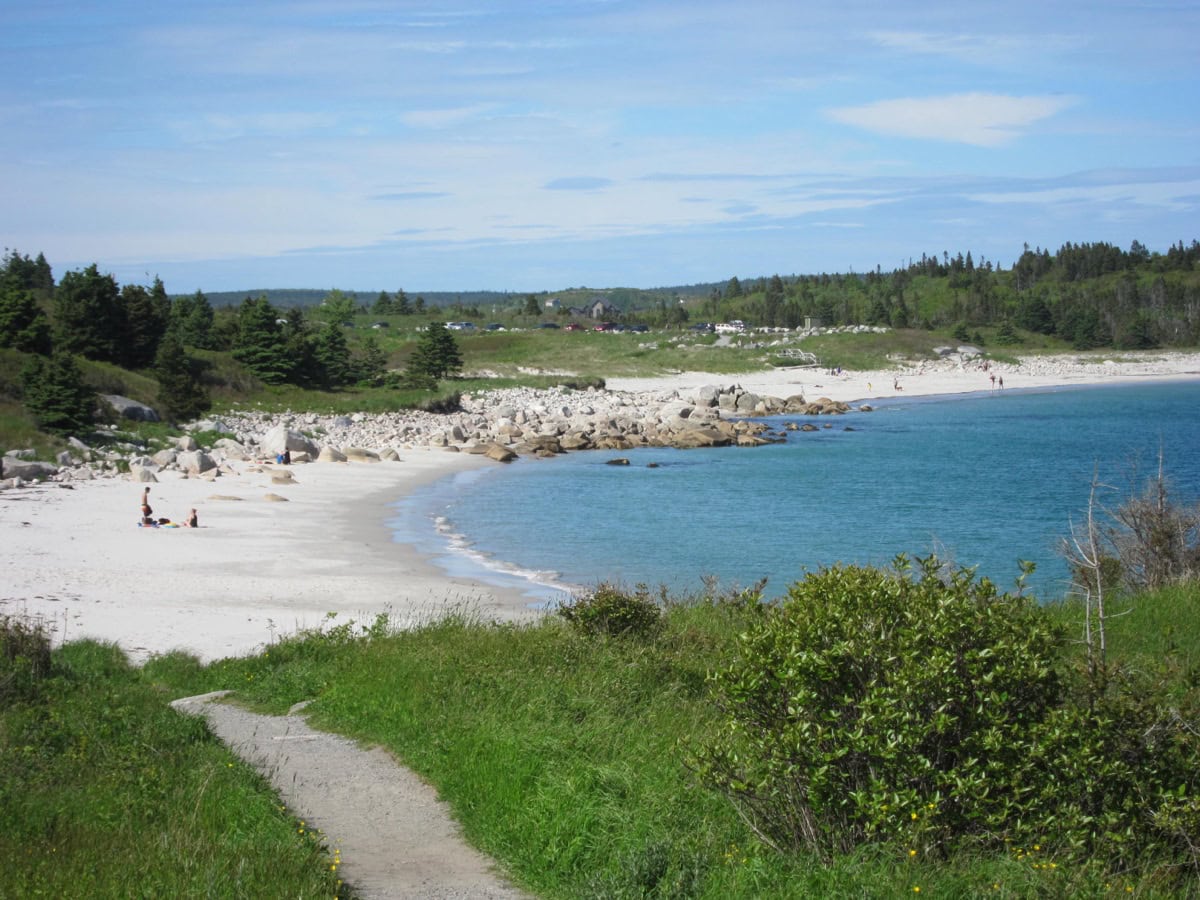
Peggy’s Cove itself doesn’t have a beach (just rocks), but there are several lovely spots for a swim in the area — provided you don’t mind the Atlantic reaching a bracing 15–18 °C at best, even in summer. 😅
Bayswater Beach — a wide sandy beach about 5 km from Peggy’s Cove. Quiet, few tourists, beautiful white sand. It’s also where one of the Swissair Flight 111 memorials stands.
Crystal Crescent Beach — three connected coves about 25 minutes’ drive towards Halifax. The most beautiful beach in the Halifax area — white sand, turquoise (albeit freezing) water, and hiking trails nearby. The third cove is unofficially clothing-optional, just so you know. 😁
If you’re a cold-water swimmer or have a wetsuit, a dip in the Atlantic is quite the experience. We dipped our toes in and legged it — but don’t let that put you off, we’re absolute cowards when it comes to cold ocean water.
Where to eat and drink in Peggy’s Cove

Nova Scotia is a lobster paradise and Peggy’s Cove is one of the best places to tuck into the famous Atlantic lobster. The dining options here aren’t exactly vast (it’s a village of 30 people, not a food court), but the quality is excellent.
Sou’Wester Restaurant & Gift Shop
The main restaurant in Peggy’s Cove, going strong since 1967. Legendary lobster roll, New England clam chowder, and fresh fish. Prices reflect the tourist location — a lobster roll runs about 25–35 CAD (€17–23), fish and chips around 20 CAD (€14). But the portions are generous and the lobster is fresh.
There’s usually a queue during peak season, but it moves quickly. Seating is available both inside and outside with a view of the harbour.
Dee Dee’s Ice Cream & Treats
A small stand serving homemade ice cream right by the harbour. On hot summer days the queue stretches along the entire wharf — but the ice cream is worth the wait. Try the blueberry flavour — Nova Scotia blueberries are legendary.
Fresh lobster right at the harbour
In season (May–July and October–December — yes, there are two lobster seasons!) you can buy a whole freshly cooked lobster right at the harbour from fishermen or small stands. A whole lobster typically costs 15–25 CAD (€10–17) depending on size. Sit on the wharf, crack it open with your hands, and gaze out at the ocean — you won’t find a better restaurant anywhere.
Rhubarb Restaurant (Oceanstone Resort)
If you fancy something more refined, drive 10 minutes to Indian Harbour and the Rhubarb restaurant at the Oceanstone Seaside Resort. Farm-to-table cuisine with an emphasis on local ingredients — seafood, wild blueberries, local cheeses. Mains from 25–45 CAD (€17–30). Reservations recommended, especially for dinner.
A few food tips
- Lobster is the undisputed top choice here — don’t be afraid to try it, even if you don’t normally eat it. The lobster here is fresh, sweet, and worlds apart from the frozen stuff you’d find back home.
- Budget tip: Buy lobster at the harbour and eat it outdoors — you’ll save compared to the restaurant and the experience is even better.
- Pack snacks for the Polly’s Cove hike — there are no shops or stands along the way.
- Water — there’s no grocery shop anywhere near Peggy’s Cove. Stock up in Halifax or in Tantallon on the way.
Practical tips for visiting Peggy’s Cove
How much time to spend in Peggy’s Cove
- Minimum (just the lighthouse and harbour): 1–1.5 hours
- Ideal (lighthouse, harbour, gallery, lunch): 3–4 hours
- For the full experience (+ Polly’s Cove hike, Swissair Memorial, beaches): a full day
What to pack
- A windbreaker — even in summer, the ocean wind can make it chilly
- Proper shoes — the granite rocks are uneven and slippery; flip-flops are a terrible idea
- A camera — this is truly a place where you’ll want more than your phone (though admittedly, modern phones do take cracking photos)
- Snacks and water — there are no shops here and the restaurant may have a queue
- If you’re travelling to Canada for an extended trip, pick up an eSIM from Holafly — you’ll need data for navigation and Google Maps
- Don’t forget to pack your carry-on properly 😉
Travel insurance
I’d absolutely recommend travel insurance for any trip to Canada — healthcare for tourists there is extraordinarily expensive. For shorter trips we use AXA, and for longer journeys we rely on SafetyWing.
Flights to Halifax
There are no direct flights from the UK to Halifax — you’ll need to connect, most commonly through Toronto, Montreal, or another European hub such as Reykjavik or Amsterdam. Return flights typically cost £400–700 depending on the season. For the best deals, we recommend searching with Skyscanner or Google Flights to compare your options.
Frequently asked questions about Peggy’s Cove (FAQ)
Why is Peggy’s Cove so famous?
Peggy’s Cove is famous primarily for its iconic lighthouse (Peggy’s Point Lighthouse), which stands on dramatic granite rocks above the Atlantic. It’s one of the most photographed lighthouses in the world and a symbol of all Nova Scotia. Beyond that, the village is one of the last authentic fishing communities on Canada’s east coast — it’s been a protected area since 1962, which has helped preserve its historic character. The tragedy of Swissair Flight 111, which crashed off the coast in 1998, also contributed to its worldwide recognition.
Is Peggy’s Cove worth visiting?
Absolutely. Despite the crowds during peak season, Peggy’s Cove has a truly unique atmosphere that’s impossible to replicate anywhere else. The granite rocks, lighthouse, colourful harbour, and the wildness of the Atlantic — it all comes together to create an experience that stays with you. The key is timing — arrive early in the morning or visit outside peak season and you’ll practically have the village to yourself. With Polly’s Cove hike, the Swissair memorial, and fantastic lobster, you can easily fill a wonderful full day here.
What film was shot at Peggy’s Cove?
The most well-known film production associated with Peggy’s Cove is the documentary “Blessed Stranger: After Flight 111” from 2000, which explores the impact of the Swissair Flight 111 disaster on the local community. Peggy’s Cove also features in several other documentaries about the tragedy. Beyond that, the village regularly serves as a backdrop for Canadian television productions and advertising campaigns. The granite coastline and lighthouse are so photogenic that commercials and fashion editorials are frequently shot here.
When did someone last die on the rocks at Peggy’s Cove?
Sadly, tragedies on the rocks at Peggy’s Cove occur with alarming regularity — most recently in 2024 and 2021. The dangerous waves combined with slippery granite are a lethal combination. Since 2000, at least a dozen people have died here, mostly because they entered the black-marked danger zone too close to the water. Waves along this coast are extremely unpredictable — they can arrive suddenly and with tremendous force. Please respect the safety markings and never go beyond the black lines.
Can you get to Peggy’s Cove by public transport?
Unfortunately not — there’s no regular public transport service to Peggy’s Cove. The easiest way to get there is by car (45 minutes from Halifax). Alternatives include organised tours from Halifax (from 60 CAD/€40), a taxi (80–100 CAD one way), or rideshares. A hire car is also recommended because you can stop at picturesque villages along the way and combine your visit with other coastal spots.
How much time do I need at Peggy’s Cove?
It depends on what you want to see. For the lighthouse, harbour, and a quick lunch, 1.5–2 hours is sufficient. For the full experience including deGarthe Gallery, the Swissair Memorial, and the Polly’s Cove hike, allow a full day (5–6 hours). Most organised tours from Halifax give you 1–2 hours at Peggy’s Cove, which is enough for the lighthouse and harbour but won’t leave time for the hike or memorial.
Is there an entrance fee for Peggy’s Cove?
No, entry to the village, the lighthouse, and the granite rocks is completely free. The only charge is for parking at the main car park — around 20 CAD (€14) for the whole day. The deGarthe Gallery is also free (donations are accepted). The Swissair Memorial is freely accessible. The only things you’ll pay for are food, any souvenirs, and organised activities (kayaking, boat tours).
Tips and Tricks for Your Vacation
Don’t Overpay for Flights
Search for flights on Kayak. It’s our favorite search engine because it scans the websites of all airlines and always finds the cheapest connection.
Book Your Accommodation Smartly
The best experiences we’ve had when looking for accommodation (from Alaska to Morocco) are with Booking.com, where hotels, apartments, and entire houses are usually the cheapest and most widely available.
 🚗 Car rental on the roadVerified rental cars in Nova Scotia
Search with the DiscoverCars comparison engine — it compares prices from dozens of local and international rental companies, and most bookings come with free cancellation.
Compare car prices in Nova Scotia →Don’t Forget Travel Insurance
Good travel insurance will protect you against illness, accidents, theft, or flight cancellations. We’ve had a few hospital visits abroad, so we know how important it is to have proper insurance arranged.
Where we insure ourselves: SafetyWing (best for everyone) and TrueTraveller (for extra-long trips).
Why don’t we recommend any Czech insurance company? Because they have too many restrictions. They set limits on the number of days abroad, travel insurance via a credit card often requires you to pay medical expenses only with that card, and they frequently limit the number of returns to the Czech Republic.
Find the Best Experiences
Get Your Guide is a huge online marketplace where you can book guided walks, trips, skip-the-line tickets, tours, and much more. We always find some extra fun there!


