

The first time I drove through the tunnel on Wawona Road and Yosemite Valley opened up before me, I stood there with my jaw on the floor. Literally. Lukáš had to stop the car because I started screaming something along the lines of “this can’t be real!” — and the bloke in the car behind us stared at me like I’d lost the plot. 😅 But you know what? He did the exact same thing. Because this view is simply something no photo can prepare you for.
Yosemite National Park in California is one of those places that permanently recalibrates your sense of beauty. Granite monoliths towering over a kilometre high, waterfalls plunging hundreds of metres into a glacier-carved valley, ancient sequoias that make you feel like an ant — all in one park in the heart of California’s Sierra Nevada. If you’re looking for the best Yosemite California things to do, you’ve come to the right place.
In this article, you’ll find 15 tips on what to see and do in Yosemite — from the iconic Half Dome and the most stunning waterfalls and viewpoints to hiking trails for complete beginners and those who aren’t afraid of vertical cable routes. I’ll tell you when the best time to visit is, where to stay (and why you need to start planning months ahead), how much it all costs, and how to dodge the crowds that turn Yosemite Valley into a car park every summer.
TL;DR
- Yosemite National Park is one of the most visited national parks in the USA — over 4 million people come here each year, so plan well ahead.
- Best time to visit is May–June (waterfalls at full force) and September–October (fewer crowds, beautiful colours). Summer is packed, winter is magical but many roads are closed.
- Entry fee is $35 (~€32) per vehicle for 7 days. If you’re visiting multiple US parks, get the America the Beautiful Pass for $80 (~€73) — valid for a full year at all national parks.
- In summer you need a reservation to enter the park by car (usually April to October). Reservations are released in waves and disappear within minutes.
- Half Dome is iconic but requires a permit awarded by lottery — apply in March, or try the daily lottery on-site.
- Best viewpoints: Tunnel View, Glacier Point, Valley View, Taft Point.
- Best trails: Mist Trail to Vernal Fall, Four Mile Trail to Glacier Point, Mirror Lake Loop for a relaxed walk.
- Accommodation in the park sells out months in advance. Alternatives include the towns of El Portal, Mariposa, or Groveland.
- Budget roughly €120–€250 per day for two (accommodation + food + petrol), depending on your comfort level.
- Download offline maps — mobile signal in the park is virtually non-existent.
The full destination guide: North America — guide and what to see
When to visit Yosemite and how to get there
Yosemite is stunning year-round, but each season delivers a completely different experience. Here’s when to go based on what you want to see — plus how to actually get to the park, because it’s not quite as straightforward as you might think.
Best time to visit
May and June are, in my opinion, the absolute best months. The waterfalls are raging after the spring snowmelt — Yosemite Falls thunders so loudly you can hear it from halfway across the valley, and Mist Trail to Vernal Fall truly earns its name because the spray absolutely drenches you. The meadows are green, wildflowers are blooming, and the air smells of fresh pine. The downside? Some higher-elevation routes (Tioga Road, Glacier Point Road) may still be closed due to snow.
September and October are my second choice. The waterfalls often dry up (Yosemite Falls in particular can be little more than a damp rock face by October), but the crowds vanish, the weather is settled, and the granite walls glow with incredible colours in the autumn light. Plus — Tioga Road is open and you can explore the high-country section of the park.
Summer (July–August) is peak season. Everything is open, but Yosemite Valley turns into a zoo. Car parks are full by 9 AM, shuttle buses are bursting at the seams, and there are queues on the Mist Trail. If you must visit in summer, get up before dawn — seriously, at 6 AM the park is a completely different world.
Winter is magical and dramatically empty. El Capitan dusted with snow, frozen waterfalls, total silence — but most roads (including Tioga Road and Glacier Point Road) are closed, and practically only Yosemite Valley is accessible via Highway 140.
Reservation system (important!)
Since 2020, a mandatory vehicle reservation has been required during the summer season (usually April–October). Without one, you won’t be allowed through the gate — even at night. Reservations are released in two waves:
- Main wave — the majority of slots open for booking in March for the entire season. They vanish within minutes.
- Daily wave — a smaller number of slots are released 2 days in advance at 7:00 AM Pacific Time.
The reservation costs $2 (~€2) per vehicle and is valid for 3 consecutive days. The park entrance fee ($35) is paid separately at the gate. Keep an eye on recreation.gov — and have quick fingers. 😅
How to get to Yosemite
By car from San Francisco — roughly 3.5–4 hours via Highway 120 (Big Oak Flat Entrance) or Highway 140 (Arch Rock Entrance). Highway 140 is the most scenic and most comfortable route, and it’s open year-round.
By car from Los Angeles — around 5 hours via Highway 41 (South Entrance), which brings you straight to Tunnel View.
From Las Vegas — about 7 hours. It combines beautifully with Yellowstone and other parks on an epic West Coast road trip.
Flying from the UK — you’ll want to fly into San Francisco (SFO) or Los Angeles (LAX). Direct flights from London Heathrow are widely available with British Airways, Virgin Atlantic, and United. From there, rent a car and hit the road.
Without a car — the YARTS bus runs from Merced and Fresno into the park, but honestly, Yosemite is very limiting without your own wheels. I’d strongly recommend hiring a car — Lukáš and I have had great long-term experience with DiscoverCars, which we use all around the world.
💡 TIP: If you’re planning a road trip through California’s national parks and beyond, check out our tips on the best places in the USA — Yosemite is just one of many treasures of the American West.
Where to stay in Yosemite and how much it costs
Accommodation in Yosemite is a chapter in itself — and frankly, it’s probably the most challenging part of planning your entire trip. There are limited beds and campsites inside the park, and everything sells out months (sometimes even a year!) in advance. But don’t despair — there are great alternatives just outside the park gates.
Accommodation inside the park
The Ahwahnee Hotel — an iconic historic hotel right in Yosemite Valley. Monumental lobby, fireplaces, views of Half Dome… and prices around $500–700 (~€460–€640) per night. It’s an experience, but your wallet will weep.
Yosemite Valley Lodge — a slightly more affordable option right in the valley, with prices around $250–350 (~€230–€320). The location is brilliant — just a short walk from Yosemite Falls.
Curry Village (Half Dome Village) — canvas tent cabins that are essentially glamping. From around $150 (~€137). They’re basic, but the atmosphere is incredible — you fall asleep gazing at granite walls.
Campsites — there are several campgrounds in the park, the most popular being Upper Pines right in the valley. Prices are around $26–36 (~€24–€33) per night. Summer reservations open 5 months in advance on recreation.gov and vanish literally within seconds. I’m not sure I’ve ever felt a bigger adrenaline rush sitting at a computer. 😅
Accommodation outside the park
If you miss the in-park reservations (which is very likely), don’t worry — the surrounding towns offer plenty of options:
El Portal — closest to the park (about 10 minutes from Arch Rock Entrance). A tiny village with a handful of hotels and Airbnbs. Prices from around $150 per night.
Mariposa — about 45 minutes from the valley, but it has more restaurants, shops, and proper Old West vibes. Great value for the distance.
Groveland — on the Highway 120 route, about an hour from the park. Smaller selection, but a pleasant atmosphere.
Buck Meadows and Midpines — small communities between El Portal and Mariposa with cabins and Airbnbs.
How much does a Yosemite holiday cost?
Rough budget for 3–4 days for two (our typical visit length):
- Entry fee: $35 (~€32) per vehicle for 7 days, or $80 (~€73) for a yearly pass to all national parks
- Accommodation: $150–350/night (~€137–€320) for a hotel, $26–36 (~€24–€33) for a campsite
- Petrol: around $50–80 (~€46–€73) for the entire stay (depending on where you’re coming from)
- Food: $30–60/day (~€27–€55) for two if eating at park restaurants; significantly cheaper if you cook
- Activities: Most trails and viewpoints are free. Half Dome permit costs $10.
Overall, budget roughly €120–€250 per day for two, depending on your accommodation standard. We spent around €330 over 4 days for two (camping + groceries + one restaurant lunch per day), but you can easily do it for less if you cook on a camping stove and skip the four-dollar lattes at Curry Village. 😁
Yosemite Valley: 8 must-see spots
Yosemite Valley is the beating heart of the park — a glacier-carved valley about 12 kilometres long, flanked by thousand-metre granite walls, cascading waterfalls, and the Merced River gently meandering through meadows. Most visitors spend their time right here, and it’s no wonder — the concentration of beauty per square kilometre is simply mind-blowing. Let’s dive into the best things to see and do in Yosemite Valley.
1. Tunnel View — a viewpoint that takes your breath away
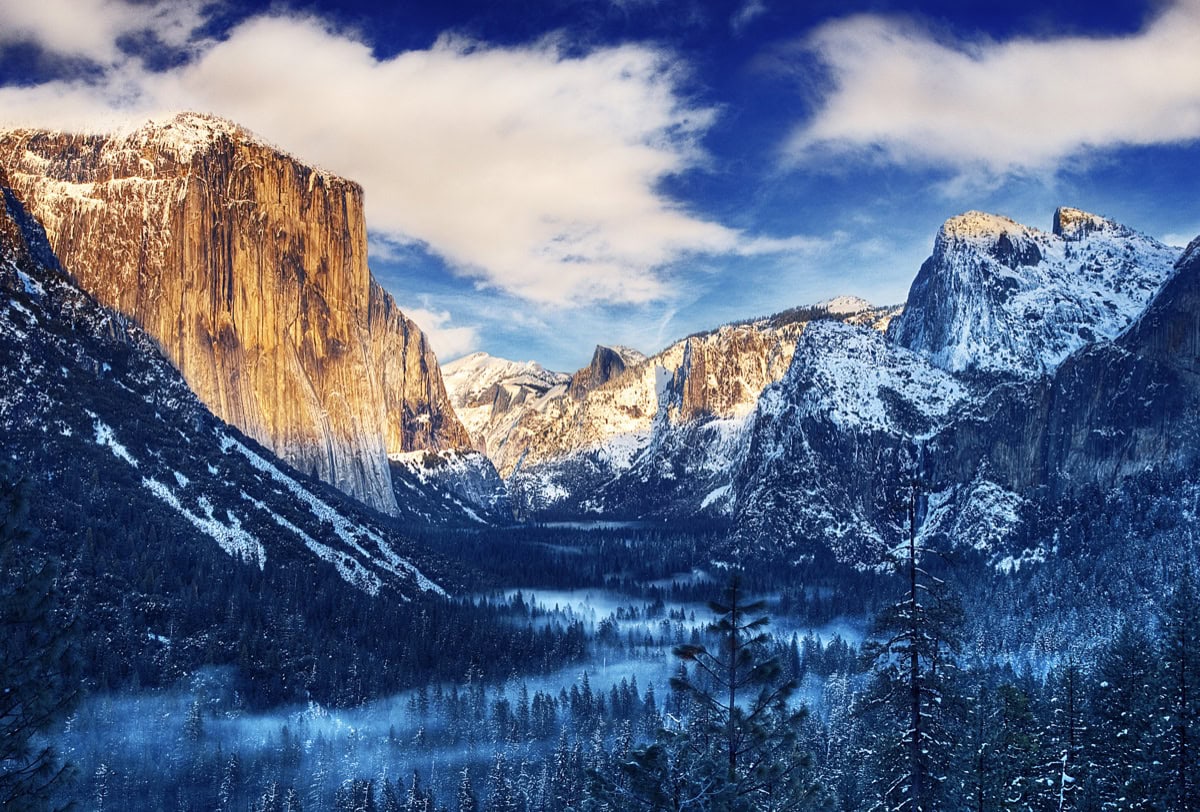
Tunnel View is arguably the most photographed spot in all of Yosemite, and you’ll understand why the moment you emerge from the tunnel on Wawona Road. The entire Yosemite Valley unfolds before you — El Capitan on the left, Cathedral Rocks and Bridalveil Fall on the right, Half Dome in the background, and the Sierra Nevada stretching endlessly beyond.
The best time to visit is late afternoon, when the sun illuminates El Capitan and the valley is bathed in golden light. Mornings are backlit, but you might catch mist rising from the valley floor, which is equally stunning.
The car park is small and fills up fast in summer, but turnover is high since most people just snap a photo and move on. Head here as your first stop if you’re arriving from the south — I can’t imagine a better welcome.
2. El Capitan — the world’s largest granite monolith
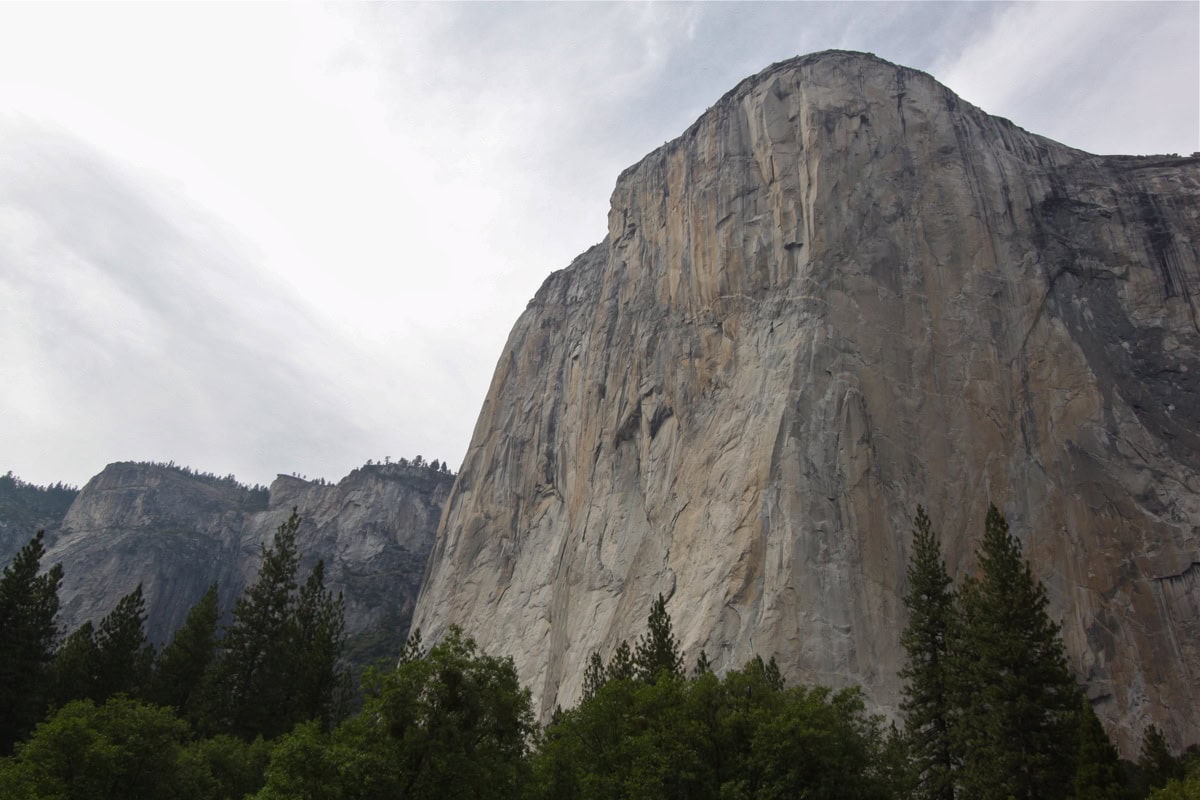
El Capitan is a 900-metre-tall vertical granite wall that towers over the western end of the valley like a giant sentinel. It’s the most famous rock-climbing wall on the planet — this is where Alex Honnold free-soloed the face without ropes in 2017 (yes, we’ve seen Free Solo, and yes, my palms were sweating the entire film).
The best view of El Capitan is from El Capitan Meadow — the car park is right on the main road through the valley. Bring binoculars or a telephoto lens and look for tiny colourful dots on the wall — those are climbers who spend days on the face. Once you spot them, you suddenly grasp the true scale of this monstrous rock.
El Capitan is at its most beautiful in the evening and early morning — the granite shifts from pink to orange to purple. If you’re here in February, you might witness the Firefall phenomenon at sunset, when sunlight hits Horsetail Fall and makes it look like flowing lava. It’s breathtaking but quite unpredictable (it depends on the angle of the sun, water flow, and weather conditions).
3. Yosemite Falls — the tallest waterfall in North America
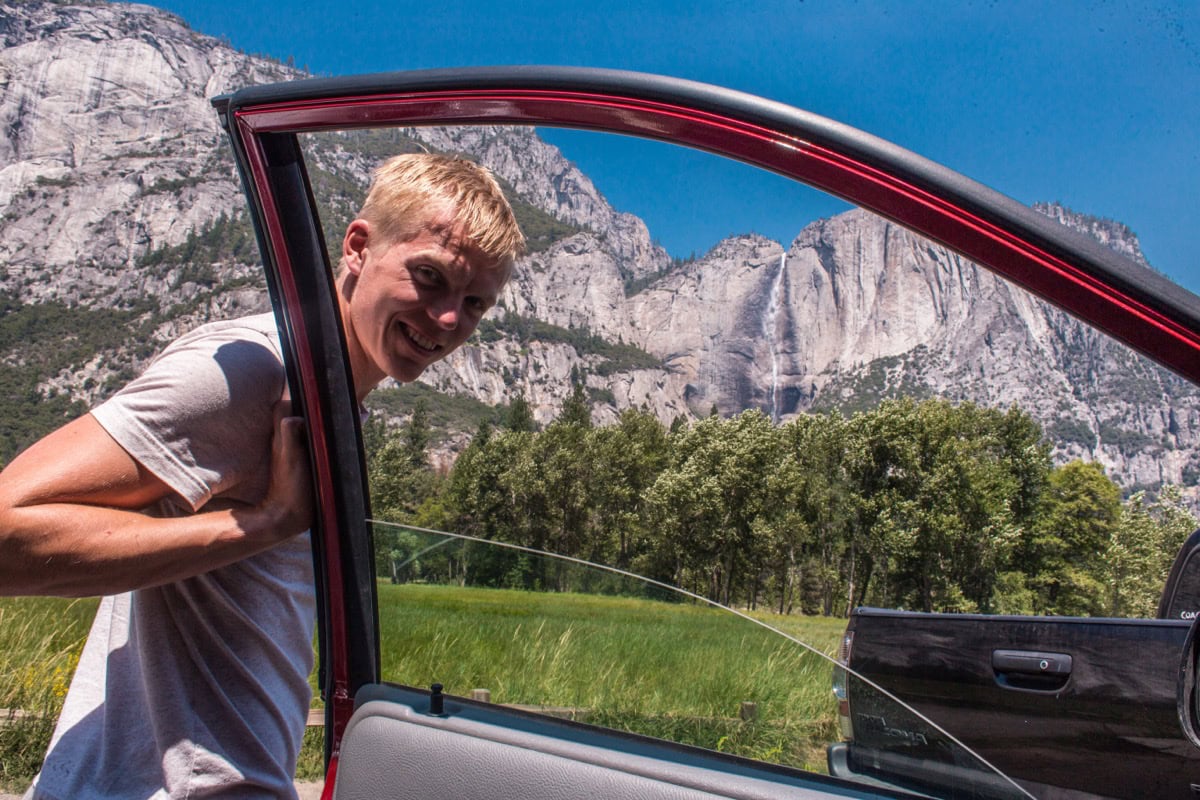
With a total height of 739 metres (split across three tiers), Yosemite Falls is one of the tallest waterfalls in the world and the tallest in North America. When it’s in full flow in May and June, the roar carries clear across the valley.
The Lower Yosemite Fall Trail is an easy walk (about 1.6 km round trip, flat ground) that takes you right to the base of the lower tier. In May, the spray will soak you — plan accordingly and keep your camera in a waterproof case, or bring a rain jacket.
For the more adventurous, there’s the Upper Yosemite Fall Trail — a punishing climb with over 800 metres of elevation gain (about 12 km round trip) that takes you to the top of the falls with a panoramic view over the entire valley. Allow a full day and bring plenty of water. We reached the top in June and that view… it was worth every aching muscle. Every single metre.
⚠️ Important: From late summer (August–October) Yosemite Falls often dries up completely! If you want to see the waterfall in its full glory, visit in spring.
4. Half Dome — Yosemite’s icon (and a lifetime of adrenaline)
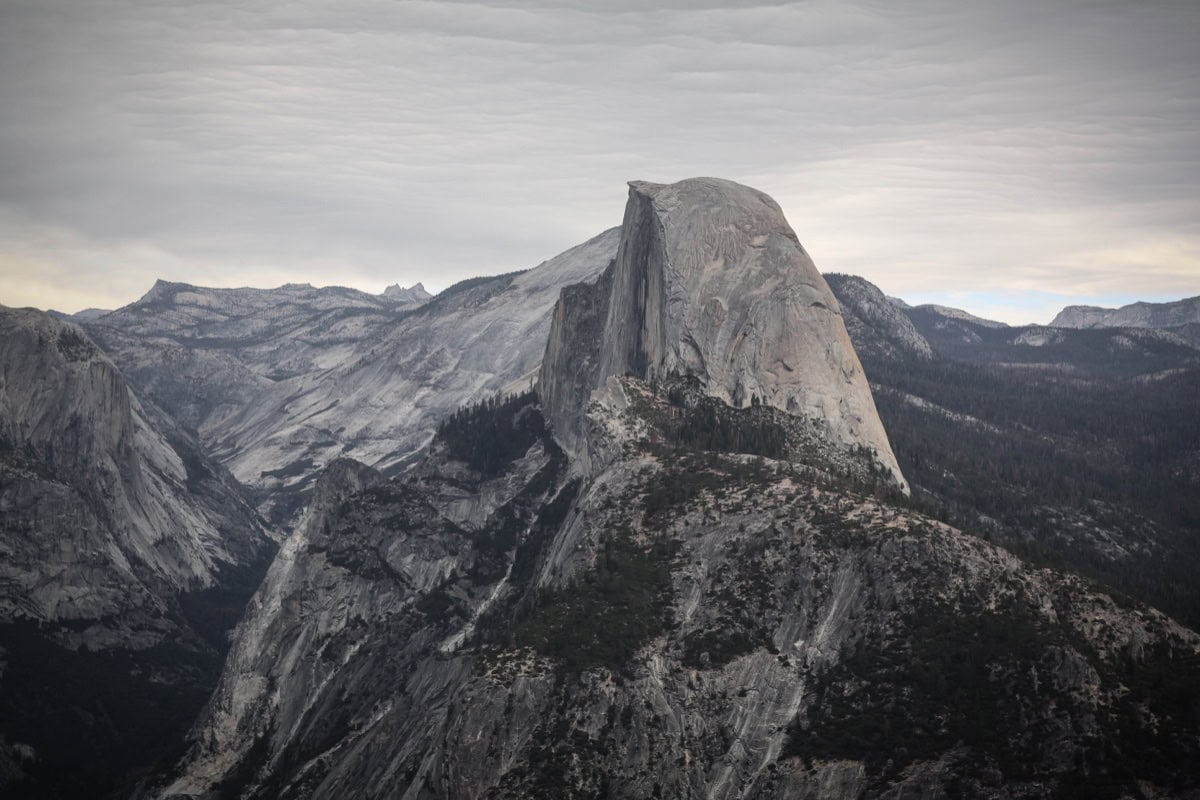
Half Dome is that iconic granite dome you see on every other Yosemite photo. It looks as if someone sliced it clean in half with a giant knife — and that’s essentially what happened, since glaciers sheared away its northwestern face.
The hike to the summit of Half Dome is one of the most epic trails in the USA, but it’s not for everyone. The route is roughly 22–27 km (depending on the variant), with over 1,400 metres of elevation gain, and the final section involves hauling yourself up a granite face using steel cables above a sheer drop. The whole thing takes 10–14 hours.
You need a permit to climb Half Dome! Without one, you won’t be allowed on the cables, and the fines are hefty ($5,000 / ~€4,600 — definitely not worth it). Permits are awarded by lottery:
- Pre-season lottery — applications in March on recreation.gov, results in April. Roughly a 30% chance of winning.
- Daily lottery — apply 2 days in advance, results the day before. Lower odds, but still realistic.
The permit costs just $10 (~€9) — by far the cheapest part of the whole adventure. The feeling at the summit is priceless. Lukáš says it’s the best hike he’s ever done. I say it’s the best hike during which I thought I was going to die. 😅 But that view!
5. Mist Trail to Vernal and Nevada Fall — the most beautiful trail in the park
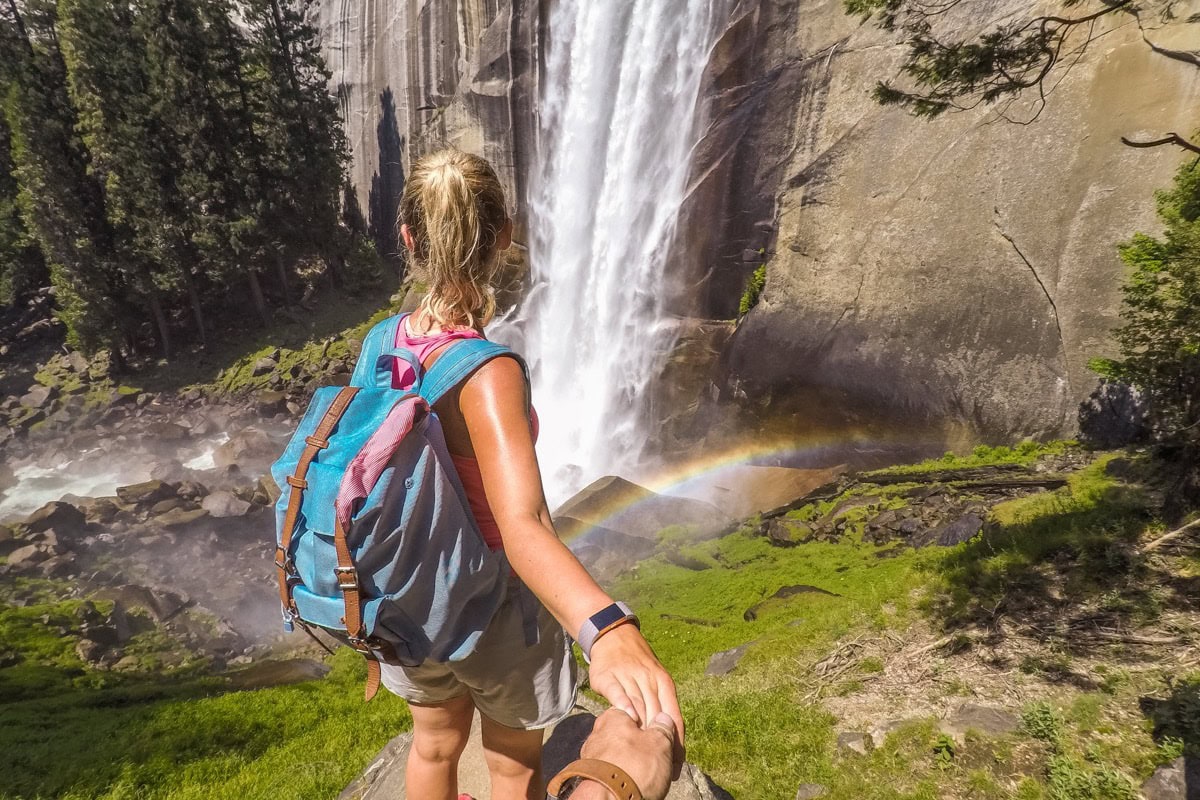
If you only have time for one hike in Yosemite, do the Mist Trail. Full stop. It’s the most beautiful trail in the entire park in my opinion — and one of the best I’ve ever walked, anywhere.
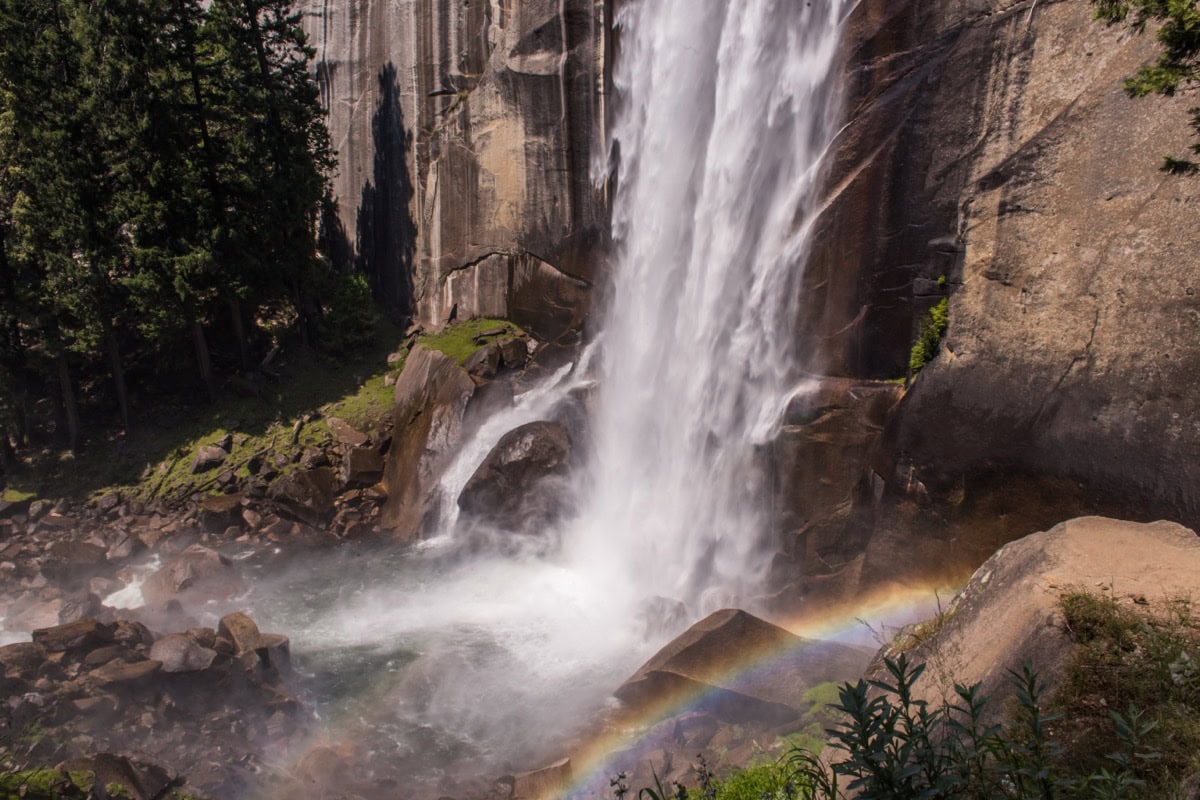
The trail starts at Happy Isles (shuttle bus stop #16) and follows the Merced River up to Vernal Fall (97 m) and beyond to Nevada Fall (181 m). The hike to Vernal Fall is about 4.8 km round trip with 300 metres of elevation gain; if you continue to Nevada Fall, it’s roughly 8.8 km round trip with 600 metres of gain.
Why “Mist” Trail? Because from spring to early summer, the spray from Vernal Fall will drench you completely. And I mean absolutely soaked — as if you stepped into a shower fully clothed. It’s an incredible and refreshing experience, but protect your electronics! I saw people putting their phones in ziplock bags — highly recommended.
The granite steps up to Vernal Fall are steep and slippery (granite steps + waterfall mist = not exactly ideal), but anyone who’s reasonably fit can manage it. On the way back, you can take the John Muir Trail, which is less steep and offers different views.
💡 TIP: Set off as early as possible (ideally by 7:00 AM). By 10:00, there’s a queue, and the stairway feels like the London Underground at rush hour.
6. Glacier Point — the best panorama you’ll ever see
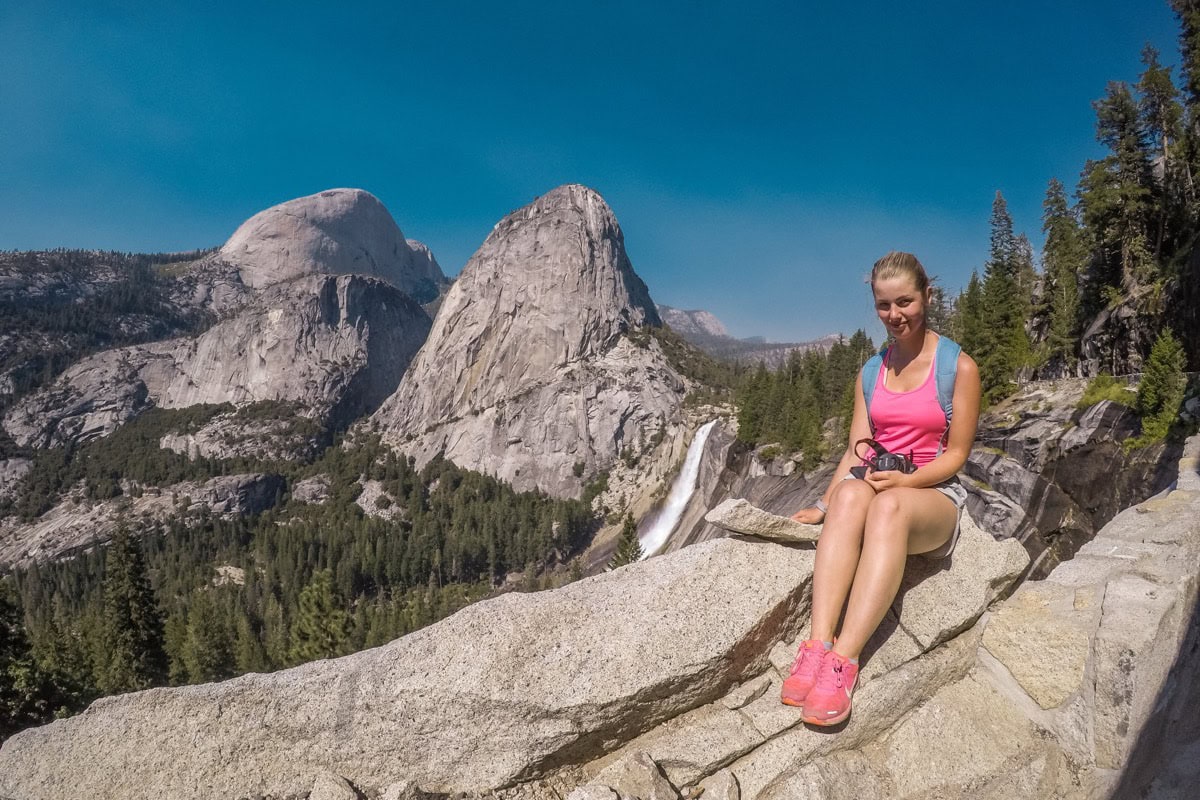
Glacier Point is a viewpoint 980 metres above Yosemite Valley, from which you can see Half Dome, Vernal and Nevada Fall, Yosemite Falls, the entire valley, and the ridges of the High Sierra in the background. It’s simply… a lot. I probably stood there for 20 minutes, unable to walk away.
You can reach Glacier Point by car (about 45 minutes from the valley via Glacier Point Road — usually open May/June through October/November), or on foot via the Four Mile Trail from the valley floor (roughly 7.7 km with 975 metres of elevation gain — it’s a proper workout, but absolutely stunning).
Glacier Point Road was reconstructed in 2022 after a wildfire and is now in perfect condition. Along the way, there are several other viewpoints — Washburn Point (just before the end) arguably offers an even better view of Half Dome and the waterfalls.
Sunset from Glacier Point is legendary. Half Dome turns pink, and lights start twinkling in the valley below — it’s so romantic I nearly cried. Lukáš pretended he didn’t, but I could tell. 😁
⚠️ In winter, Glacier Point Road is closed to vehicles, but you can get here on cross-country skis or snowshoes (about 17 km from Badger Pass).
7. Mirror Lake — a peaceful walk with Half Dome reflections
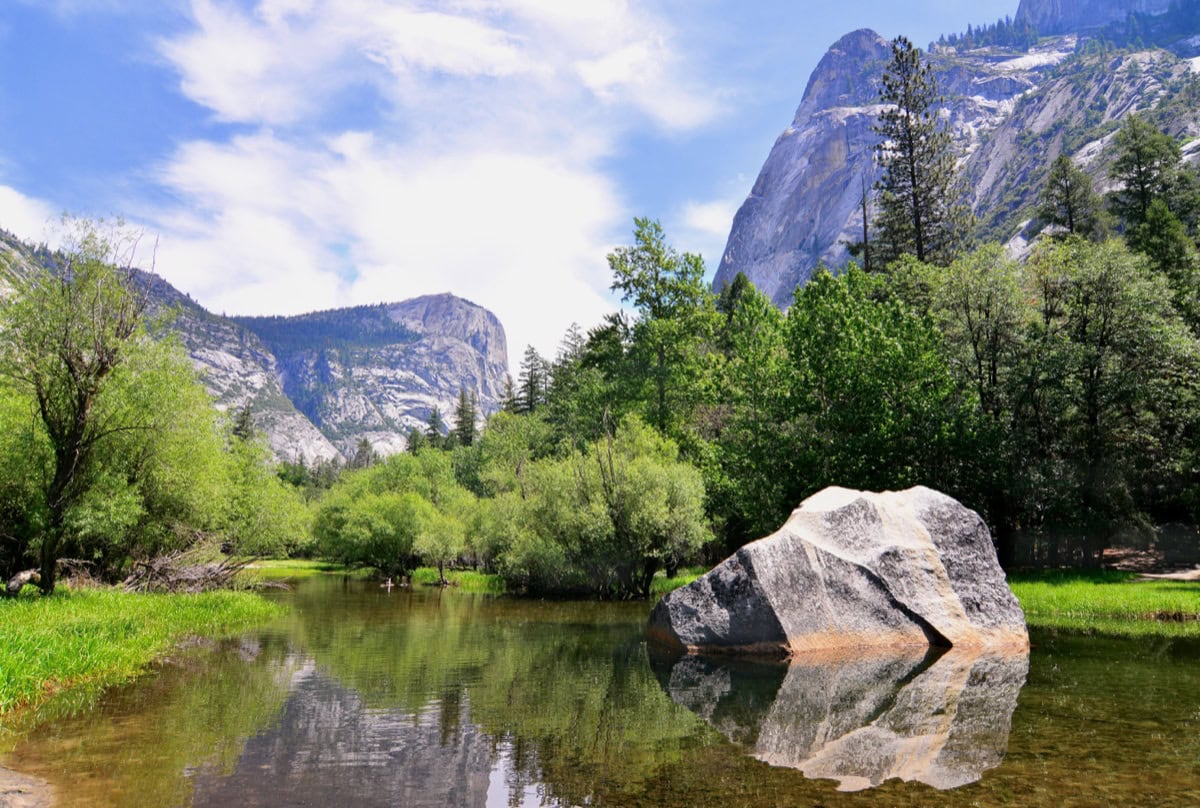
Mirror Lake is one of those spots that gets fewer visitors yet is absolutely beautiful. It’s a shallow pool (really more of a wide section of Tenaya Creek) that in spring and early summer perfectly mirrors Half Dome on its surface. The reflection is so precise that photos from Mirror Lake look like they’ve been Photoshopped — but they haven’t.
The Mirror Lake Loop is an easy, flat walk of about 8 km, perfect for the late afternoon or for families with children. From shuttle stop #17, it’s about 1.5 km along a paved path to the lake.
The catch? From late summer, Mirror Lake dries up and becomes a sandy flat. The best time is May and June — the water is at its highest and the reflections are sharpest. Go early in the morning when the surface is calmest.
8. Valley View and other viewpoints in the valley
Besides Tunnel View, Yosemite Valley has plenty of other viewpoints that are less crowded and equally gorgeous:
Valley View — at the western end of the valley, with a view of El Capitan and Bridalveil Fall reflected in the Merced River. One of the finest views in the park, and paradoxically, most people just drive straight past.
Sentinel Bridge — this is the classic spot for Half Dome reflected in the river. Most beautiful at sunset.
Cook’s Meadow — a meadow in the centre of the valley where you can spread out a blanket and soak in views of Yosemite Falls, Half Dome, and Royal Arches. This is where you’ll understand why John Muir called this place “a temple of nature.”
💡 TIP: Yosemite Valley is perfect for exploring by bike. Hire one at Curry Village or Yosemite Valley Lodge — about $12/hour (~€11). Cycle paths run throughout the valley, and it’s the best way to dodge traffic jams and the parking madness.

Map of points of interest for your phone
Beyond the valley: 5 tips around Yosemite
Yosemite Valley may be the main draw, but the park is enormous — 3,000 km² of wilderness where, beyond the valley, tourists practically vanish. Here are the places that make it worth spending more than a single day in Yosemite.
9. Tioga Road — the most beautiful mountain road in California
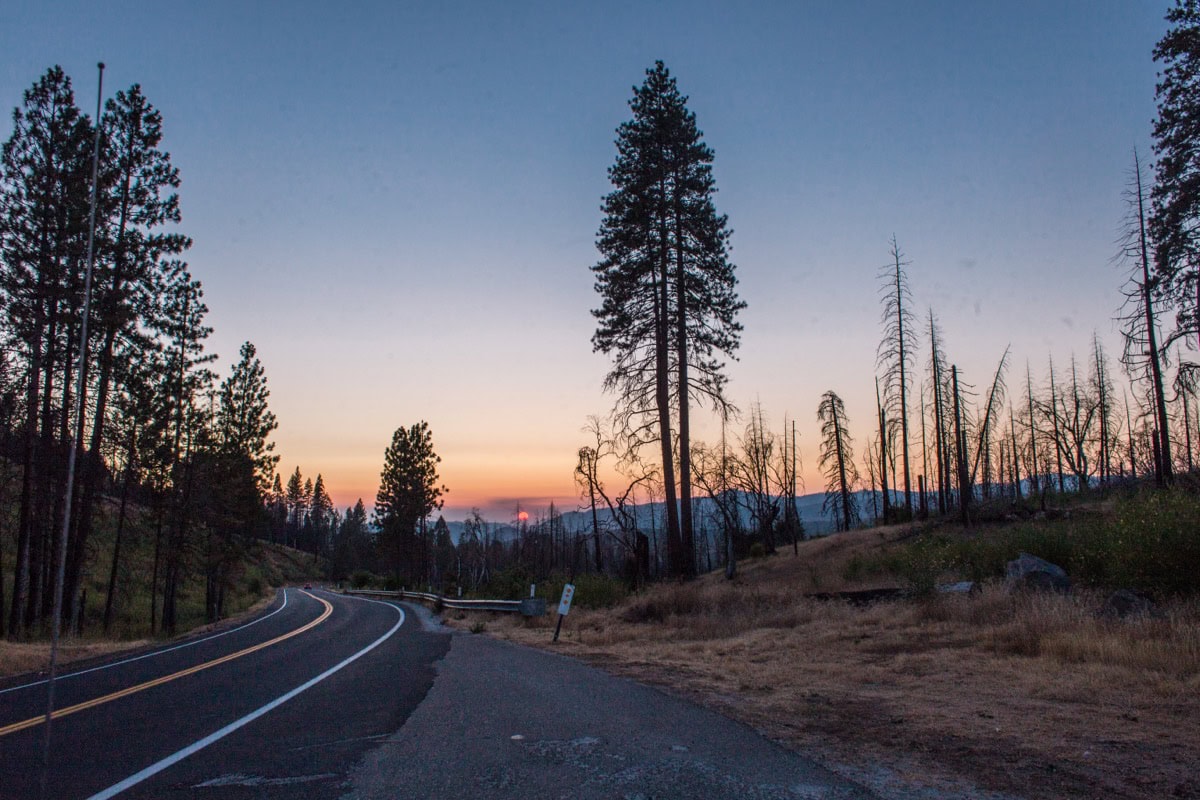
Tioga Road (Highway 120) is a 60 km road that cuts across the park from west to east over Tioga Pass at 3,031 metres — the highest vehicle pass in all of California. And it’s one of the most spectacular drives I’ve ever done.
Along the way, you’ll pass alpine meadows, crystal-clear lakes, granite domes, and High Sierra panoramas. Key stops:
- Olmsted Point — a view of the back side of Half Dome and the surrounding granite domes. Most people only see Half Dome from the front; this angle is a completely different experience.
- Tenaya Lake — a turquoise alpine lake where you can swim (if you don’t mind icy water, roughly 15°C even in summer 😅).
- Tuolumne Meadows — a vast alpine meadow at 2,600 metres, the starting point for dozens of backcountry trails. This is where “the other Yosemite” begins — fewer people, more bears.
⚠️ Tioga Road is only open in summer — usually from June to October/November, depending on snow conditions. Check the current status at nps.gov/yose before setting off.
10. Mariposa Grove — among giants
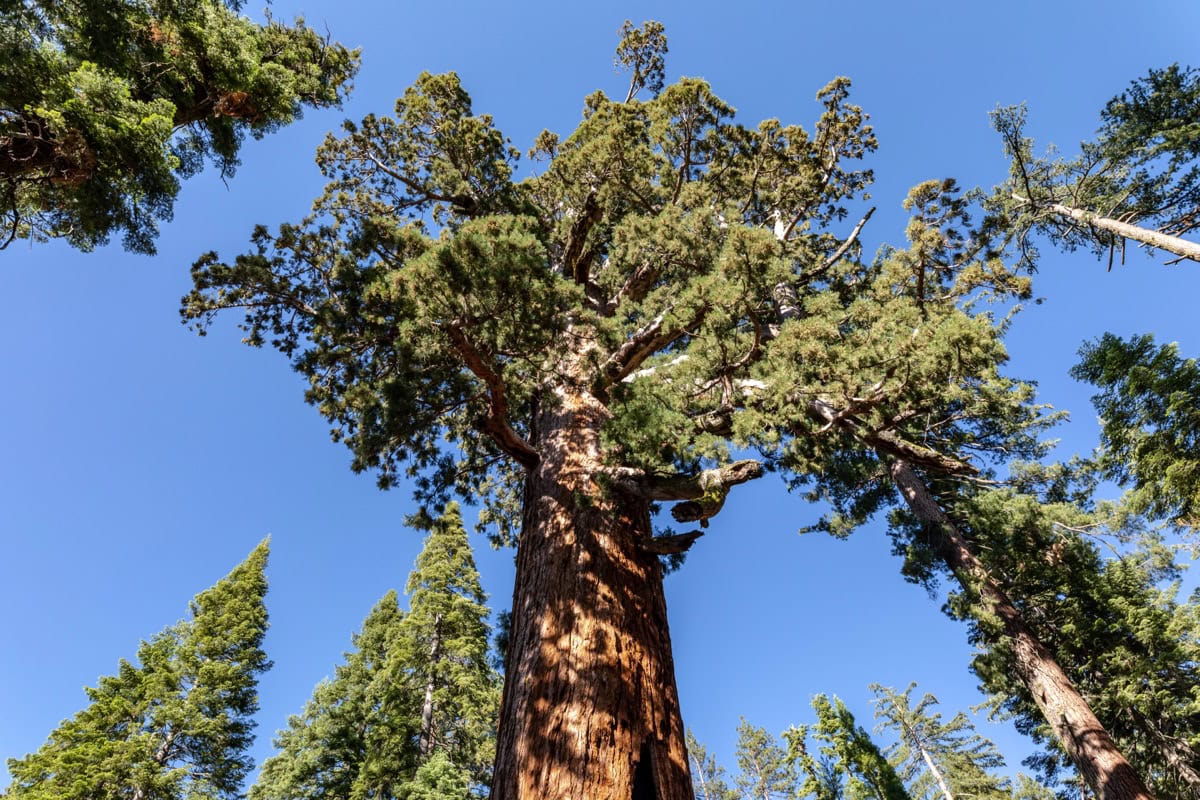
Mariposa Grove is a grove of giant sequoias on the southern edge of the park, home to over 500 trees including some of the largest living organisms on the planet. The biggest, the Grizzly Giant, is an estimated 1,800 years old with a trunk circumference of over 28 metres.
You reach the grove by shuttle bus from the car park (during the season — you can’t drive in) or on foot (about 3 km). Within the grove itself, there’s a network of trails totalling roughly 11 km — from short strolls to longer loops.
There’s also the famous California Tunnel Tree — a walk-through tree that you can literally step through. And Fallen Monarch — a toppled giant whose trunk is so enormous that US cavalry soldiers and their horses sheltered inside it in the 19th century (seriously).
Mariposa Grove is at its most magical early in the morning, before the crowds arrive and sunbeams filter through the ancient trunks. That feeling of standing beside a tree that was already growing when the Roman Empire fell… I can’t put it into words.
11. Glacier Point Road: Taft Point and Sentinel Dome
If you’re driving to Glacier Point (tip #6), make a stop along the way at two other excellent spots that share the same car park at the Sentinel Dome/Taft Point Trailhead:
Taft Point — a short trail (about 3.5 km round trip) to a viewpoint on the edge of a 900-metre cliff above Yosemite Valley. There are no railings. None whatsoever. You just stand on the edge of an abyss with nearly a kilometre of nothing below. Lukáš lay on his stomach and peered over the edge. I stayed 3 metres back and decided that was quite close enough. 😅
Near Taft Point, there are also the Fissures — deep cracks in the granite through which you can see hundreds of metres straight down. If you’re prone to vertigo, maybe give these a miss.
Sentinel Dome — in the opposite direction from the same car park, about 3.5 km round trip. A climb up a bare granite dome with a 360° view of the entire park. One of the few places where you can see El Capitan, Half Dome, Yosemite Falls, and the High Sierra all at once.
12. Hetch Hetchy — Yosemite without the tourists
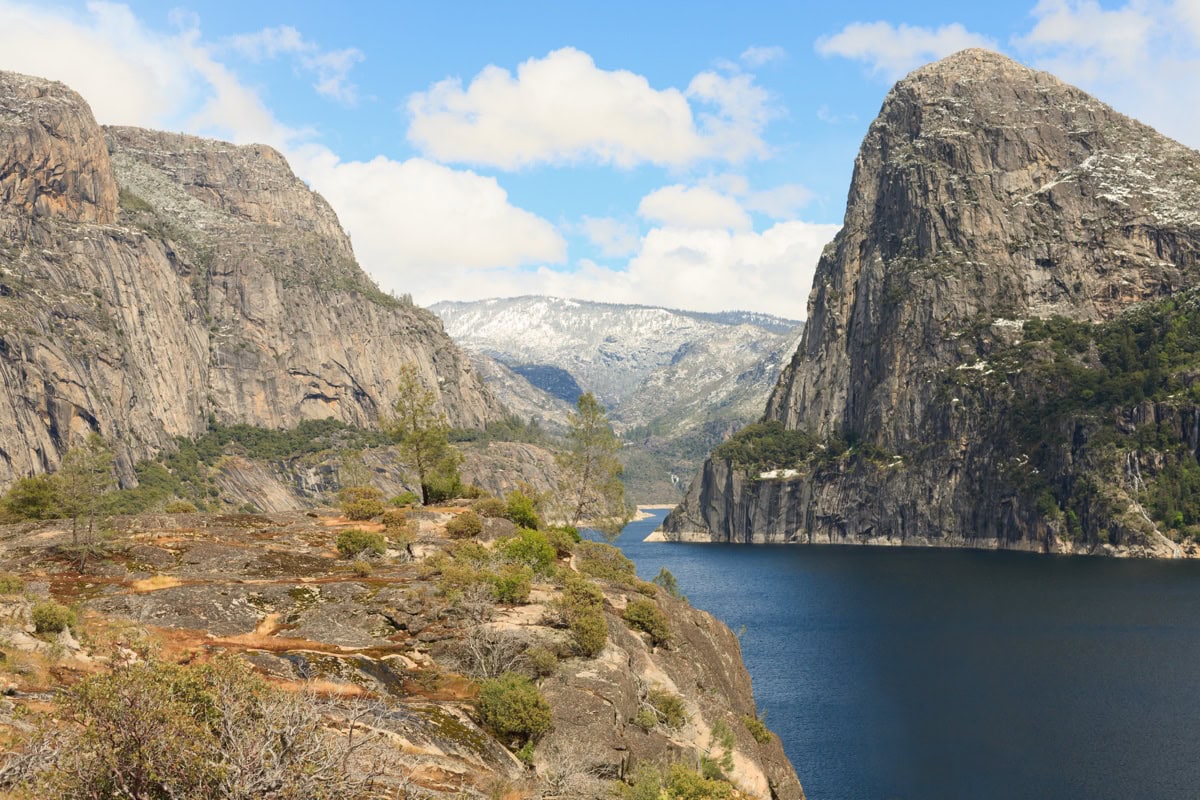
Hetch Hetchy is a valley that most Yosemite visitors don’t even know about — which is both a shame and a blessing. It originally looked similar to Yosemite Valley, but in the early 20th century, the O’Shaughnessy Dam was built here and the valley was flooded. Today, there’s a reservoir that supplies drinking water to the entire city of San Francisco.
Despite the dam, it’s beautiful. A trail across the dam and along the reservoir leads to Wapama Falls and Tueeulala Falls (about 8 km round trip, gentle elevation gain). In spring, when the waterfalls are raging, the trail near Wapama Falls is flooded and you’ll be wading in places — waterproof boots are a must.
Hetch Hetchy is accessible year-round, but the gate is only open during daylight hours. Very few people come here — we encountered maybe 20 hikers all day. If you want to experience Yosemite in peace and quiet, this is your spot.
13. Hiking tips for beginners and experienced walkers
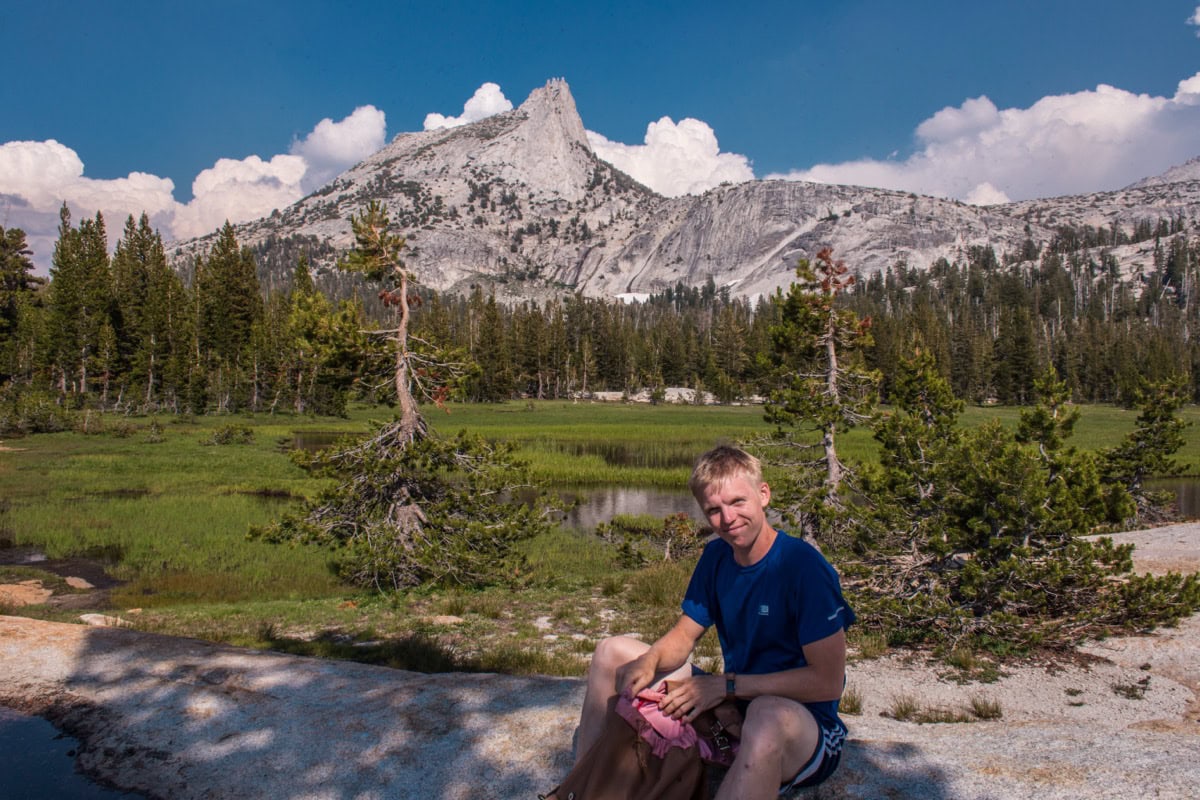
Yosemite is a hiking paradise — there are hundreds of kilometres of trails here. Here’s an overview of the best ones by difficulty:
For beginners and families:
- Lower Yosemite Fall Loop (1.6 km, flat) — easy walk to the base of the waterfall
- Mirror Lake Loop (8 km, flat) — a peaceful stroll around the lake
- Bridalveil Fall Trail (0.8 km, slight elevation) — short walk to a waterfall the wind blows in every direction (great photos, wet clothes)
- Valley View/Sentinel Bridge — gentle valley walk with views
Moderate:
- Mist Trail to Vernal Fall (4.8 km, 300 m gain) — the best trail in the park (tip #5)
- Mist Trail to Nevada Fall (8.8 km, 600 m gain) — the extended version
- Sentinel Dome (3.5 km, 120 m gain) — easy climb, epic view
- North Dome Trail (14 km, 460 m gain) — Half Dome from a different angle
For experienced hikers:
- Four Mile Trail (15.2 km round trip, 975 m gain) — climb to Glacier Point
- Upper Yosemite Fall Trail (11.6 km, 820 m gain) — to the top of the tallest waterfall
- Half Dome (22–27 km, 1,400 m gain) — a full-day epic requiring a permit (tip #4)
- Clouds Rest (22.5 km, 550 m gain from Tioga Road) — higher than Half Dome, no permit needed
For longer hikes, don’t forget to bring plenty of water (at least 2–3 litres), snacks, sun cream, and layers — the weather in the mountains changes fast. And proper hiking boots are essential — trust me, you do not want to tackle the granite steps on the Mist Trail in trainers.
Where to eat and drink in Yosemite
Let me be upfront: Yosemite isn’t exactly a foodie destination. 😅 You’re in the middle of the Sierra Nevada wilderness, and the restaurant selection reflects the fact that every supply has to be trucked in over mountain roads. But it’s perfectly manageable — and in a couple of spots, actually rather good.
Restaurants in the park
The Ahwahnee Dining Room — the best restaurant in the park, both for food quality and atmosphere. A grand dining hall with wooden beams, stone walls, and views of Royal Arches. Main courses around $30–50 (~€27–€46). Reservations essential for dinner. Even if you don’t eat here, pop in for a look — it’s an architectural gem.
Mountain Room Restaurant (Yosemite Valley Lodge) — steaks, fish, seasonal menus. More wallet-friendly than the Ahwahnee, solid quality. Mains $20–40.
Curry Village — several eateries and stands serving pizza, burgers, sandwiches, and ice cream. Quick, cheap (by park standards), no-fuss. The pizza is surprisingly decent.
Degnan’s Kitchen (Yosemite Village) — sandwiches, salads, soups. Good for a quick lunch.
Cooking your own food
If you’re camping or want to save money, cook for yourself. There’s a grocery shop in Yosemite Village (Village Store) where you can pick up basics, though at park prices (expect a 30–50% markup compared to regular supermarkets).
💡 TIP: Stock up BEFORE entering the park — El Portal, Mariposa, and Groveland all have regular supermarkets with normal prices.
⚠️ BEARS: All food (and anything that smells — toothpaste, deodorant, food wrappers) MUST be stored in bear boxes or bear canisters. Not in your tent, not in your car. Bears know how to open car doors — seriously, they’ve learned. The rules are strict and the fines are serious. Every campsite and car park has metal bear boxes, so please use them.
Practical tips to finish
What to pack
For Yosemite, you need to dress in layers — mornings in the valley can be 10°C, afternoons 30°C, and Glacier Point is windy. Essentials are good hiking boots, quick-drying clothes, and a waterproof jacket (for the waterfalls as much as for the occasional thunderstorm). We cover packing in detail in our article on how to pack into carry-on luggage.
Mobile signal and internet
In Yosemite Valley, mobile signal is patchy to non-existent. Wi-Fi is available in some hotels (Ahwahnee, Yosemite Valley Lodge), but don’t count on it. Download offline maps (Google Maps, Maps.me, or AllTrails) before you arrive. If you’re travelling from the UK, I’d recommend getting an eSIM for the US — I have a detailed Holafly review with all the info you need.
Flights and travel insurance
Look for affordable flights to San Francisco or Los Angeles — direct flights from London Heathrow are available with British Airways, Virgin Atlantic, and United. Book well in advance for the best fares, and you can find return flights from around £400–£600.
For a holiday in the USA, don’t forget travel insurance — American hospitals are notoriously expensive. We’ve written more about travel insurance in our SafetyWing review.
Car hire
Yosemite is very limiting without a car. Ideally, pick one up at San Francisco airport — Lukáš and I have had great long-term experience with DiscoverCars, which we use all over the world.
Wildlife in the park
Yosemite is home to black bears, deer, coyotes, and occasionally mountain lions (pumas). Encountering bears is relatively common — we saw two during our 4-day stay. They’re curious animals, but if you follow the rules (don’t carry food in your backpack on trails, store food in bear boxes, make noise on the path), there’s nothing to worry about. If you do encounter a bear, speak calmly and back away slowly. NEVER run.
Tips for avoiding the crowds
Yosemite gets over 4 million visitors a year, and most of them come in summer, and most of those never leave Yosemite Valley. Here are some tried-and-tested tricks for enjoying the park without the crowds:
14. Get up before dawn
I’m not joking. Between 6:00 and 9:00 AM, the park is a completely different world. Car parks are empty, trails are quiet, the light is at its most beautiful, and wildlife is most active. By 10:00, the day-trippers arrive and things start filling up. By noon, main trails have queues.
We set our alarms for 5:30 and were at the Mist Trail trailhead by 6:15. We had the place entirely to ourselves. When we came back down around 10:00, we passed hundreds of people still heading up. The difference is enormous.
15. Explore beyond the valley
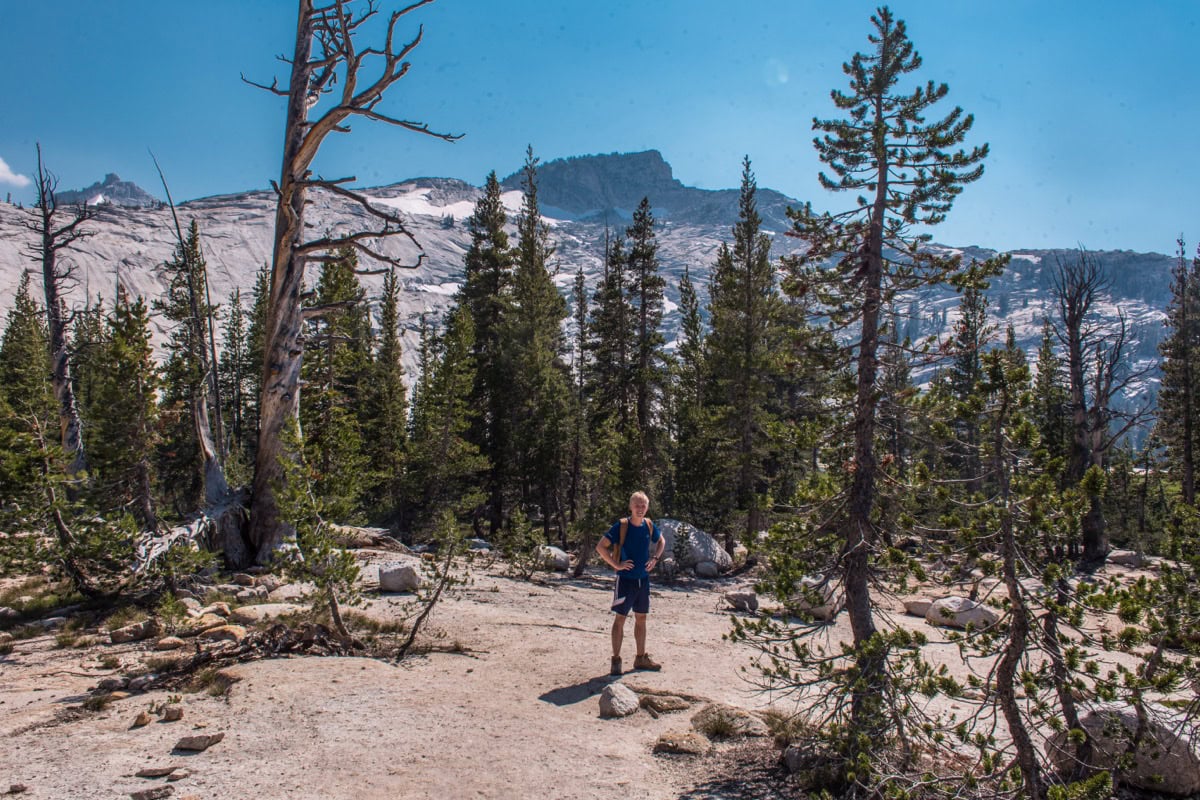
Hetch Hetchy (tip #12), Tuolumne Meadows, Tioga Road (tip #9) — outside Yosemite Valley, you’ll find a fraction of the visitors and scenery that’s equally (if not more) breathtaking. If you have more than 2 days in the park, dedicate at least one full day to exploring areas beyond the valley.
Another tip: hike from less popular trailheads. North Dome Trail from Tioga Road, Pohono Trail from Glacier Point, or anything from Hetch Hetchy — on these routes, you’ll have Yosemite practically to yourself.
FAQ — Frequently asked questions about Yosemite
How many days do I need for Yosemite?
Two full days is the minimum — one for Yosemite Valley (Mist Trail, waterfalls, El Capitan) and one for Glacier Point and surroundings. Ideally, aim for 3–4 days, which gives you time for Tioga Road, Mariposa Grove, or Hetch Hetchy as well. For Half Dome, allow an extra full day. We spent 4 days and still left feeling like we’d barely scratched the surface.
Do I need a reservation for Yosemite?
During the summer season (usually April–October), yes — you need a vehicle entry reservation. Without one, you won’t be allowed in. Reservations are released on recreation.gov — the main wave in March, and a daily wave 2 days in advance. In winter, no reservation is needed.
How was Yosemite Valley formed?
Yosemite Valley was carved by glaciers during several ice ages over the last few million years. The glaciers gouged a deep U-shaped valley into the granite mass of the Sierra Nevada. Granite monoliths like El Capitan and Half Dome are made of harder rock that the glaciers couldn’t erode. After the glaciers retreated, the valley filled with a lake that was gradually silted up — creating today’s flat valley floor with the Merced River.
Is Yosemite the oldest national park in the world?
No — the world’s oldest national park is Yellowstone, established in 1872. Yosemite Valley was first protected in 1864 (under the Yosemite Grant), but didn’t gain national park status until 1890. Both parks combine beautifully on a single road trip — we have a detailed guide to Yellowstone.
Is Yosemite the largest national park in the USA?
No, not by a long shot. The largest is Wrangell–St. Elias in Alaska, covering over 33,000 km² — that’s bigger than Belgium. Yosemite is “only” 3,083 km², but even so, it’s enormous. You definitely won’t see everything in 4 days.
Are there dangerous animals in Yosemite?
Black bears live in the park, but attacks on humans are extremely rare. Follow the rules — store food in bear boxes, never feed bears, and keep your distance. Truthfully, the bigger risk comes from slippery rocks near waterfalls and underestimating trail difficulty — sadly, around 12–15 people die in the park each year, mostly from falls and drowning.
Can I bring my dog to Yosemite?
Yes, but with very limited access. Dogs are only allowed on paved paths, roads, and in campsites — they’re banned from trails, wilderness areas, and shuttle buses. If you’re travelling with a dog, plan ahead — you won’t be able to see most of the main attractions with them.
Tips and Tricks for Your Vacation
Don’t Overpay for Flights
Search for flights on Kayak. It’s our favorite search engine because it scans the websites of all airlines and always finds the cheapest connection.
Book Your Accommodation Smartly
The best experiences we’ve had when looking for accommodation (from Alaska to Morocco) are with Booking.com, where hotels, apartments, and entire houses are usually the cheapest and most widely available.
 🚗 Car rental on the roadVerified car rentals in California
Search with the DiscoverCars comparison engine — it compares prices from dozens of local and international rental companies, and most bookings come with free cancellation.
Compare car prices in California →Don’t Forget Travel Insurance
Good travel insurance will protect you against illness, accidents, theft, or flight cancellations. We’ve had a few hospital visits abroad, so we know how important it is to have proper insurance arranged.
Where we insure ourselves: SafetyWing (best for everyone) and TrueTraveller (for extra-long trips).
Why don’t we recommend any Czech insurance company? Because they have too many restrictions. They set limits on the number of days abroad, travel insurance via a credit card often requires you to pay medical expenses only with that card, and they frequently limit the number of returns to the Czech Republic.
Find the Best Experiences
Get Your Guide is a huge online marketplace where you can book guided walks, trips, skip-the-line tickets, tours, and much more. We always find some extra fun there!


