

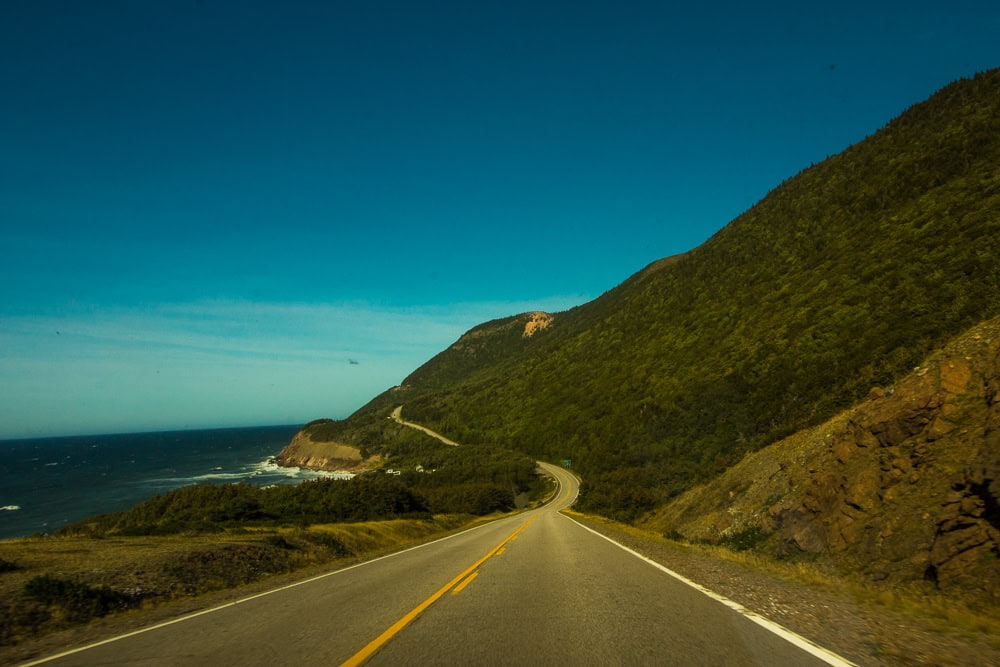
There are places you read about in a brochure and think “yeah, that’s probably overhyped.” Then you actually get there and realise that no brochure, no photo, no video could have prepared you for what you’re about to see. That’s exactly what happened to us on the Cabot Trail in Nova Scotia.
We were driving along a road that twisted between the ocean and forest-covered mountains, and I could barely focus on the wheel because every few seconds I wanted to pull over and snap a photo. When we later watched the sunset over the Atlantic from the Skyline Trail, we sat there for a good hour after — until we started freezing. That’s what the Cabot Trail does to you. 😊
In this article, you’ll find a complete guide to the Cabot Trail in Canada — I’ll share the best time to visit (spoiler: the autumn colours here are from another planet), how to get there, where to stay, how much it all costs, and of course 15 things to see and do on this 298-kilometre loop around Cape Breton in Nova Scotia. From whales to moose trails to the best lobster chowder we’ve ever had. Let’s dive in.
TL;DR
- Cabot Trail is a 298 km scenic loop on Cape Breton Island in the province of Nova Scotia, Canada. It’s consistently ranked among the most beautiful drives in the world — and rightfully so.
- Best time to visit is late September to mid-October for the fall colours, or June–August for warmer weather and whale watching.
- Allow at least 3 days for the loop, ideally 4–5, so you can fit in hikes and side stops.
- Admission to Cape Breton Highlands National Park costs 10.50 CAD/adult/day (about €7). Most of the trail’s best spots are within the park.
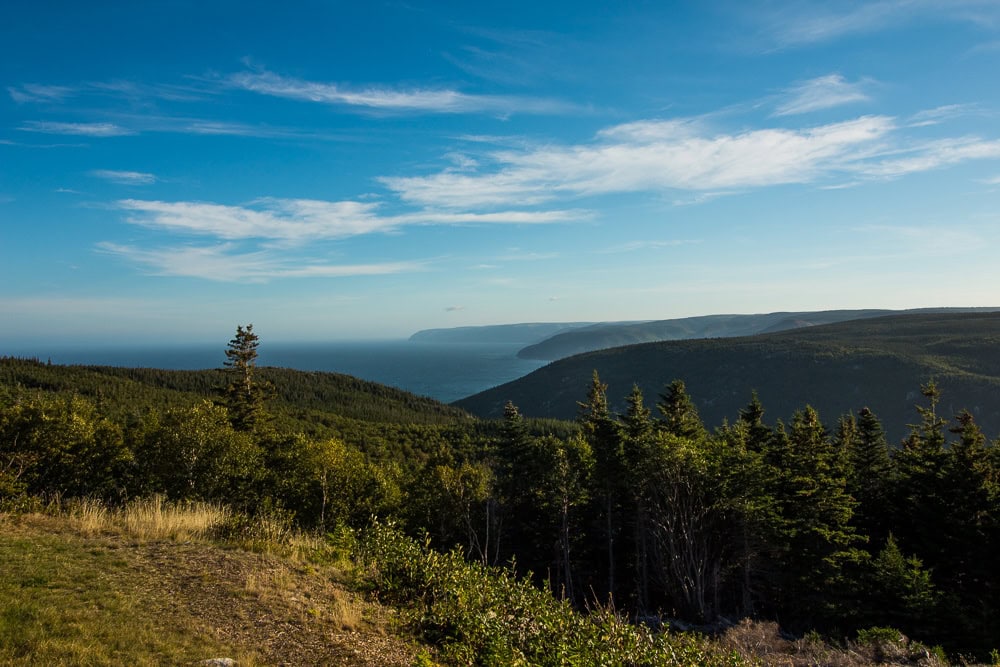
- Skyline Trail is the absolute must — an 8.2 km trail with a viewpoint over the ocean at sunset. Go for the sunset slot — you won’t regret it.
- Whale watching in Pleasant Bay — from June to October you can spot humpback whales, pilot whales and dolphins. Peak season is July and August.
- Meat Cove at the island’s northern tip is a wild spot with cliffside camping above the Atlantic — well worth the detour from the main route.
- Accommodation ranges from 30 CAD for camping to 200–400 CAD for hotels and B&Bs. Book well in advance, especially for September and October!
- Drive counter-clockwise (starting from Chéticamp) — the best ocean views will be on your side of the road.
- A full trip (3–5 days) for two comes to roughly €600–900 excluding flights and car hire.
The full destination guide: Nova Scotia — guide and what to see
When to visit the Cabot Trail and how to get there
Timing is everything on the Cabot Trail — this route looks completely different in July compared to October. Both are stunning, but in very different ways. Let’s break down when it’s best to go and how to actually reach Cape Breton Island.
Best time to visit
Late September to mid-October — if you want to see the famous fall foliage, this is your window. The forests along the Cabot Trail explode into shades of red, orange, yellow and gold, making the entire route look like someone cranked up the saturation in Photoshop. But fair warning — you won’t be the only one who knows this. During peak season (typically the first two weeks of October) it gets seriously busy and accommodation sells out months in advance. Temperatures hover around 8–15 °C, so pack layers.
June to August is the classic summer season. Temperatures around 18–25 °C, long days, and most importantly, the best conditions for whale watching (humpbacks are most active in July and August). You won’t get the autumn colours, but the forest is lush and green, and the trails are far less crowded than in October.
May and late October/November — it’s a gamble. Some services (restaurants, whale watching tours, campsites) may be closed, and the weather can be unpredictable. On the upside, you’ll have the place practically to yourself.
How to get to Cape Breton
The easiest option is to fly into Halifax (the capital of Nova Scotia) and drive from there. From Halifax to the start of the Cabot Trail (the town of Baddeck) it’s roughly 3.5 hours by car along the Trans-Canada Highway. The drive itself is pleasant — Nova Scotia is a beautiful province.
There’s also a small airport right on Cape Breton — Sydney (YQY) — with regional flights from Halifax, Toronto and Montreal. From Sydney it’s only about an hour to Baddeck. If you want to save time, this is a great option.
A car is absolutely essential. The Cabot Trail is a road loop and you simply can’t do it without your own wheels. From the UK, you can find flights to Halifax with airlines like Air Canada, WestJet, or connecting flights via Toronto or Montreal. For car hire, we’ve had great experiences with DiscoverCars, which compares deals across agencies so you can grab the best price. In Halifax, expect to pay around 50–80 CAD/day (€35–55) for a standard car. During peak season (September–October) book your car as early as possible.
For cheap flights to Halifax (or anywhere in Canada), try Kiwi — it’s our go-to flight comparison tool. From the UK, you can often find connections via Toronto or Montreal at reasonable prices.
> 💡 TIP: If you’re planning a bigger road trip across Canada, the Cabot Trail works brilliantly as part of an eastern coast itinerary — Halifax → Cabot Trail → Prince Edward Island → Quebec City → Montreal → Ottawa → Toronto → Niagara Falls. We did exactly this combination and it was incredible.
Which direction to drive the loop
This is the question everyone wrestles with. The answer: counter-clockwise, starting from Chéticamp towards Pleasant Bay and on to the north. The reason is simple — you’ll be driving on the outer side of the road, so the ocean views are right in front of you (rather than across the road behind a guardrail). Plus, you’ll tackle the most stunning section of the route — the climb from Chéticamp into the mountains — first, while you’re fresh and full of energy.
Where to stay on the Cabot Trail + how much it costs
Accommodation on the Cabot Trail isn’t exactly cheap, and in peak season it sells out surprisingly fast. This isn’t Banff or Niagara — the selection is smaller and more local, which is actually part of the charm. No massive hotel chains here, just small B&Bs, cabins with ocean views, and campsites where you fall asleep to the sound of waves.
How much does accommodation cost
- Camping: 25–40 CAD/night (€17–28) — both national park and private campgrounds
- B&Bs and guesthouses: 120–200 CAD/night (€83–140) — the most common and charming option
- Hotels and cabins: 150–350 CAD/night (€105–245) — the more upscale choice, mainly in Ingonish and Chéticamp
- Airbnb/cabins: 100–250 CAD/night (€70–175) — great for longer stays
Where to stay by location
Baddeck — the ideal base for the start and end of your loop. A charming little town on the shores of Bras d’Or Lake, with a good selection of restaurants and places to stay. From here it’s a short drive to either side of the trail.
Chéticamp — an Acadian village on the west side of the trail. A perfect base for the Skyline Trail (which is just a short drive away). Local B&Bs often serve breakfast with homemade Acadian baked goods, and it’s absolutely delightful.
Pleasant Bay — a small village in the northwest, the base for whale watching. Accommodation options are more limited here, but that also means it’s quieter. If you want to be close to nature and far from everything else, this is your spot.
Ingonish / Ingonish Beach — on the eastern side of the loop. This is where you’ll find the Keltic Lodge, arguably the most famous (and priciest) hotel on the entire Cabot Trail. Beautiful location right by the beach.
Approximate budget for 4 days for two
| Item | Price in CAD | Price in EUR |
| Accommodation (3 nights, B&B) | 450–600 | €315–420 |
| Petrol (loop + drive from Halifax) | 80–120 | €55–85 |
| Food and restaurants | 200–350 | €140–245 |
| National park admission (2 people, 3 days) | 63 | €44 |
| Whale watching (2 people) | 120–160 | €85–110 |
| Total (excluding flights and car hire) | 913–1,293 | €639–905 |
It’s not the cheapest holiday, I’ll admit. But the views and experiences are worth every penny. If you want to save money, camping and self-catering will easily shave 30–40% off the budget.
Cabot Trail: 15 things to see and do
Now for the main event — let’s go through 15 of the best things to see and do on the Cabot Trail. I’ve listed them roughly in the order you’ll encounter them if you drive the loop counter-clockwise (as recommended). Of course, feel free to adjust the route to your own pace and mood — no itinerary needs to be set in stone. ☺️
1. Chéticamp — an Acadian village with soul
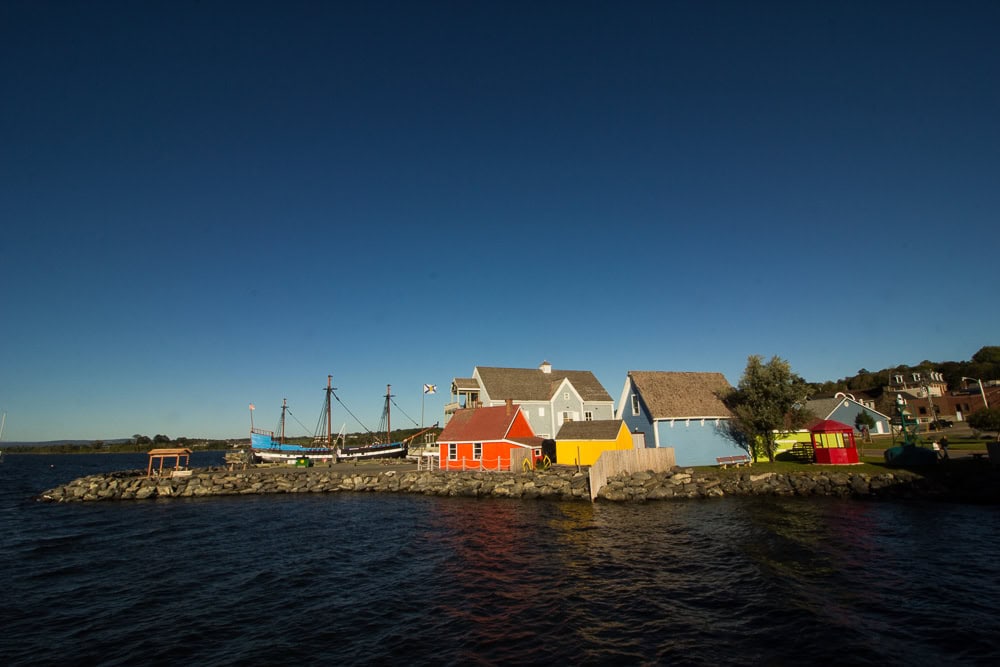
Chéticamp is the first major stop on the western side of the loop and the gateway to Cape Breton Highlands National Park. But before you head into the park, take some time to explore the town itself. Chéticamp is the heart of Acadian culture on Cape Breton — the Acadians are descendants of the original French settlers, and to this day they speak their own French dialect, cook their own dishes, and weave the famous “hooked rugs” (handmade rugs with colourful patterns).
Pop into Les Trois Pignons — a cultural centre showcasing local art and rug-hooking. It might not sound thrilling, but the rugs are genuine works of art and the stories behind them are captivating. Admission is just a few dollars. And if you’re into churches, Église Saint-Pierre with its tall silver spire dominating the whole town is beautiful even from the outside.
Chéticamp is also where you should buy your national park pass (if you haven’t done so online). The Visitor Centre is right on the edge of town and they have maps, trail condition updates, and tips from rangers who’ll happily tell you where you might spot moose or bears.
2. Skyline Trail — the most famous hike (and rightly so)
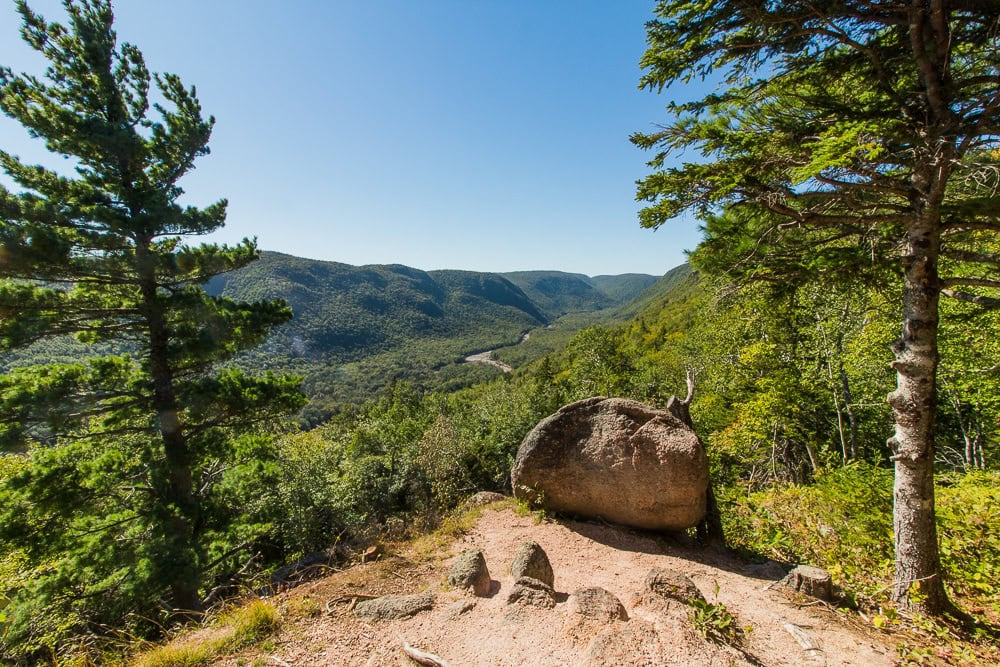
This is the trail that draws people to the Cabot Trail. And honestly, I get it. The Skyline Trail is an 8.2 km out-and-back hike that leads you out of the forest onto a cliff high above the ocean, where the entire coastline stretches out below you and the Cabot Trail road winds like a ribbon far beneath.
The trail is easy — the first 6 km follow a wide, almost flat path through forest. Then you begin descending towards the viewpoint, and the final stretch is along a wooden boardwalk with stairs. Physically, almost anyone can manage it. The whole hike takes about 2–3 hours, depending on how long you spend standing at the viewpoint with your jaw on the floor.
I strongly recommend going for sunset. Watching the sun set over the Atlantic from this viewpoint is one of the most beautiful things we’ve ever seen. The sun drops straight into the ocean and the sky turns shades that don’t have names. We arrived about an hour before sunset, found our spot on the cliff, and just sat. About fifty other people were scattered around us, and everyone was completely silent. There’s a special kind of energy in that moment.
> 💡 TIP: During peak season (July–October) you need a reservation for the Skyline Trail (introduced in 2023 to manage crowds). Book via the Parks Canada website as early as possible — sunset slots sell out within minutes. The cost is 2 CAD for the reservation plus the standard park entry fee. Without a reservation, you won’t be allowed on the trail.
3. Whale watching in Pleasant Bay — humpbacks within reach
Pleasant Bay on the northwest coast is the best spot on the Cabot Trail for whale watching. From June to October, two main operators run tours here — Captain Mark’s Whale and Seal Cruise and the Whale Interpretive Centre (the latter is actually a museum, but they run boat trips too). A trip lasts 2–3 hours and costs around 50–80 CAD per person (€35–55).
What can you expect to see? Humpback whales are the most common and most spectacular — they breach, slap their fins, and sometimes come so close you can feel their breath (and it stinks, it really does 😅). You may also spot pilot whales, dolphins, and occasionally minke whales. The season peaks in July and August, but we had luck in September too.
Dress warmly even if it’s pleasant onshore — it’s about 10 °C colder on the water and the wind can catch you off guard. And bring seasickness tablets if you’re prone to it — the ocean here isn’t always calm.
4. Meat Cove — the end of the world (in the best way)
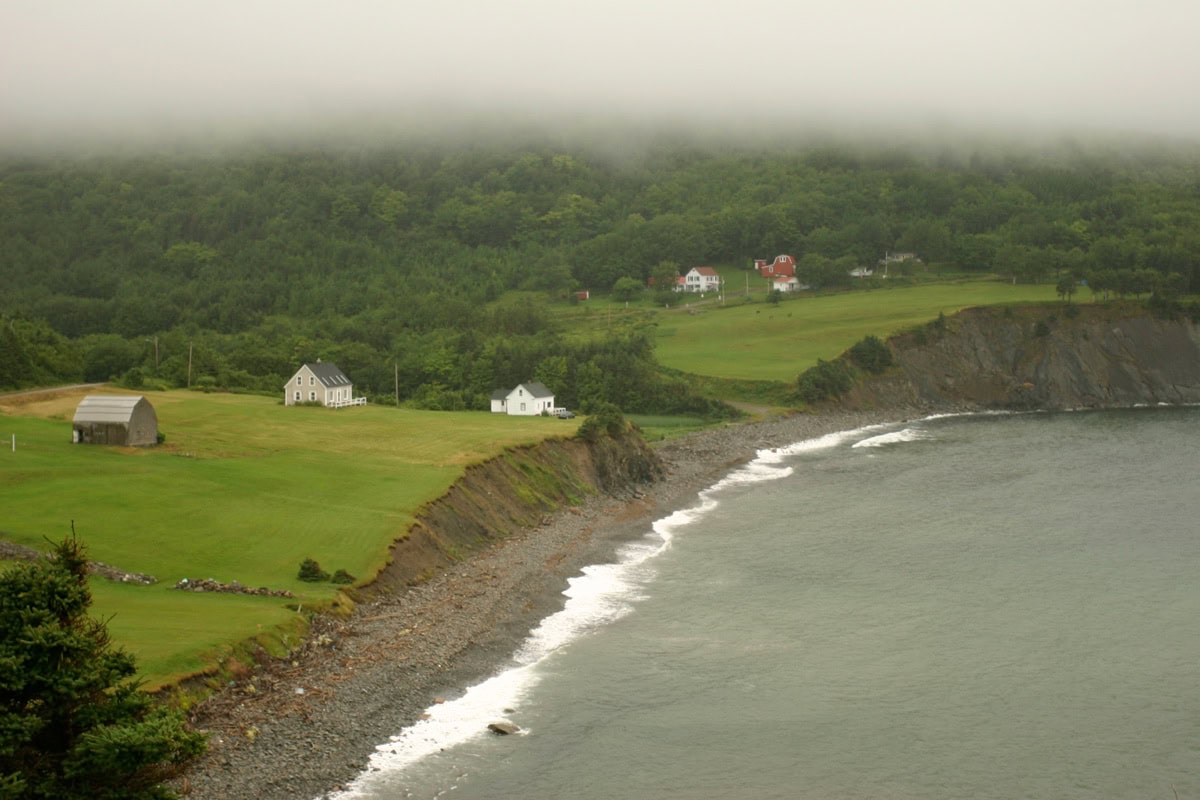
Meat Cove is the northernmost settlement on Cape Breton Island, and it looks like the edge of civilisation. Which, in a way, it is. The last 30 km are on an unpaved gravel road that twists along mountain slopes, and when you finally arrive… a cliff. The ocean. An enormous sky. And a campground literally on the cliff’s edge.
The detour to Meat Cove isn’t part of the main Cabot Trail loop — from the main road at Cape North it’s about a 45-minute drive on a side road. But it’s worth every bump. The Meat Cove Campground is a place where you pitch your tent with ocean views and wake up to dawn light over the water. A tent pitch costs around 40–50 CAD (€28–35).
Even if you’re not camping, drive up here for lunch — Meat Cove Chowder Hut (yes, that’s really the name) serves brilliant fish chowder and lobster rolls right on the cliff. Open seasonally only (June–October).
> ⚠️ Heads up: The road to Meat Cove is unpaved and quite steep in places. It can be slippery after rain. You can manage it in a regular saloon car, but take it easy. We drove it without any issues, but don’t rush.
5. Bay St. Lawrence and lobster fishing
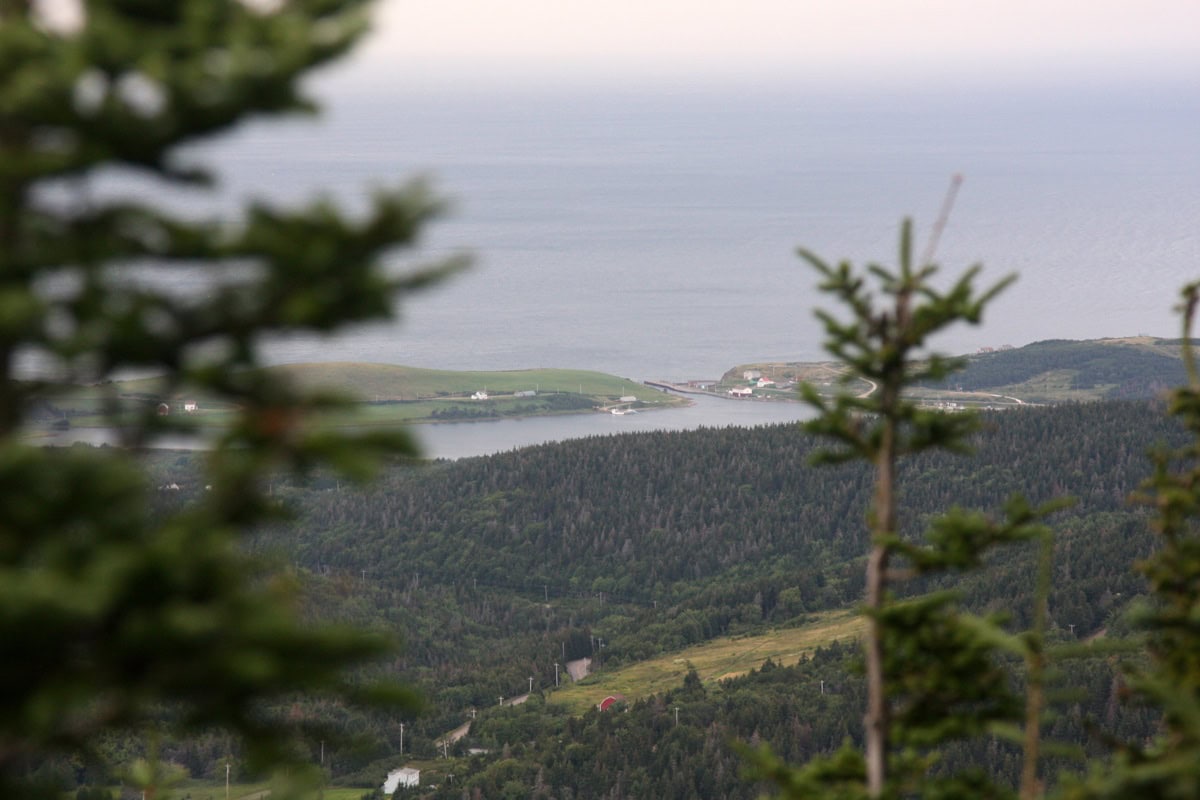
Just a stone’s throw from the Meat Cove turnoff sits Bay St. Lawrence, a picturesque fishing village that feels like time stopped somewhere in the 1960s. You pull in and there are fishing nets scattered about, colourful boats bobbing in the harbour, and the air smells of sea and pine.
From here you can take bald eagle watching trips and whale watching on smaller boats — it’s a more intimate and cheaper alternative to Pleasant Bay. And if you’re lucky enough to arrive at the right time, you might see fishermen unloading fresh lobsters straight from their boats.
Bay St. Lawrence is also the starting point for the Money Point Trail — a short but wilder trail leading to Cape Breton’s northernmost tip. It’s no tourist highway — more of a narrow footpath through woods and meadows. That’s exactly what makes it so rewarding.
6. White Point and Neil’s Harbour — fish straight from the sea
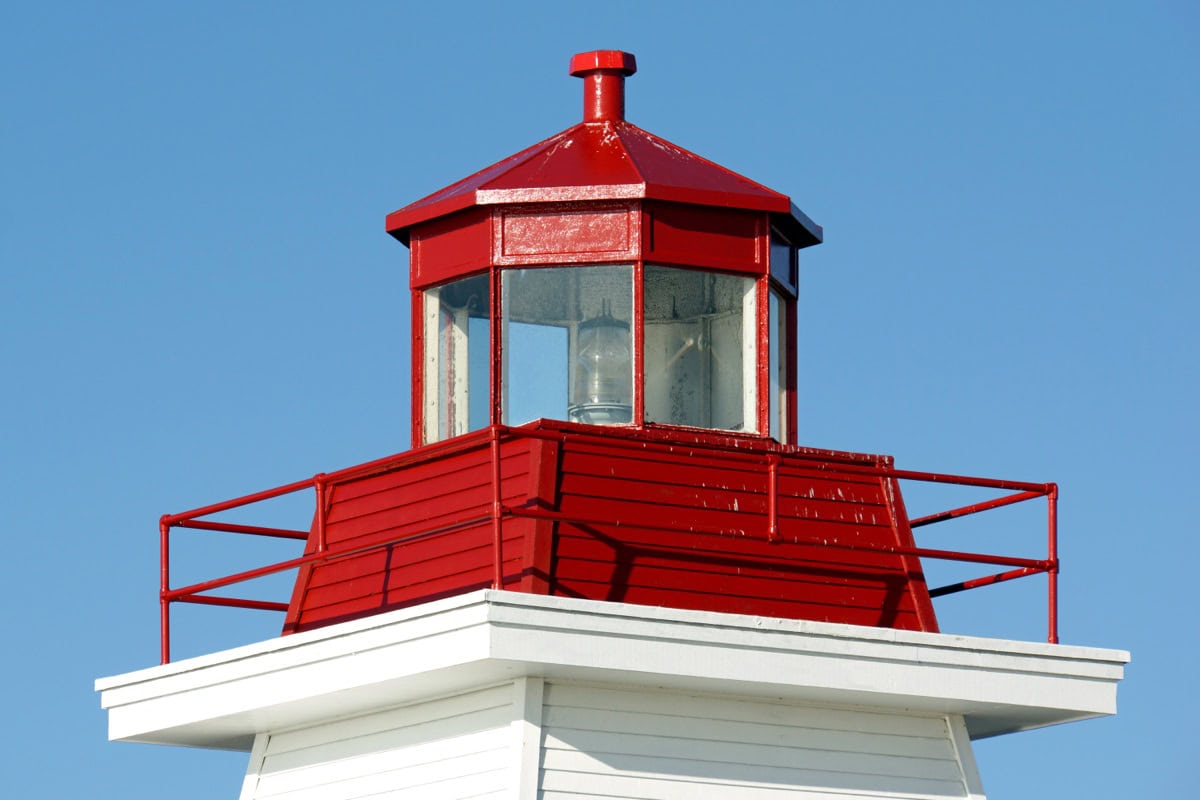
Driving along the eastern side of the loop, a stunning view of a picturesque cove with colourful wooden houses suddenly opens up before you. That’s Neil’s Harbour — a tiny fishing village where stopping is pretty much mandatory, especially for the food.
The Chowder House in Neil’s Harbour is legendary — literally a shack by the harbour serving fish and chips and seafood chowder that you’ll dream about for months. The portions are huge, the prices reasonable (15–25 CAD, or €10–17 for a main), and the view of the harbour with fishing boats is priceless. This isn’t a place to rush — it’s a place to sit, eat and soak it all in.
Just past Neil’s Harbour is White Point, which offers beautiful views along the coast. At low tide you can clamber over the rocks and search for sea urchins and starfish in the rock pools.
7. Cape Breton Highlands National Park — the heart of the trail
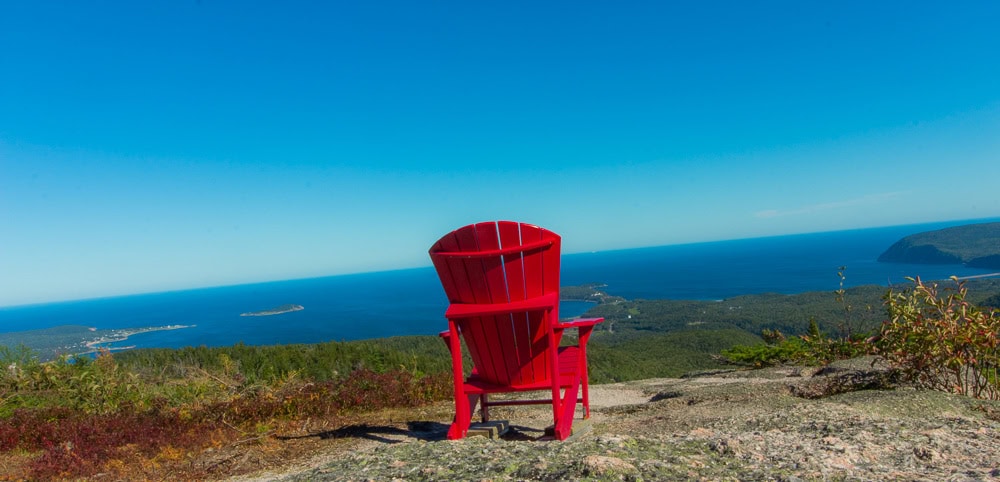
A large stretch of the Cabot Trail passes through Cape Breton Highlands National Park, and it deserves a separate mention because this is the reason the road is so breathtakingly beautiful. Covering 949 km², the landscape here resembles a mix of the Scottish Highlands, Norwegian fjords and Canadian wilderness. So what exactly makes this park special?
Picture this: highland plateaus covered in tundra-like vegetation (yes, tundra at 46° north!), deep canyons, salmon-filled rivers, coastal cliffs, and forests that look like they’re ablaze in autumn. The park is home to moose, black bears, bald eagles, lynx, and plenty of other wildlife you won’t encounter back in Britain.
Admission is 10.50 CAD/day per adult (€7). If you plan to spend multiple days in the park, the Discovery Pass at 36.50 CAD (€25) is great value — it covers the entire season across all Canadian national parks. If you’re also thinking of visiting Banff, Jasper, or doing a Western Canada road trip, this is a no-brainer.
The park has over 26 marked trails of varying difficulty. Besides the Skyline Trail (tip no. 2), I wholeheartedly recommend the trails covered in the next sections of this guide.
8. Franey Trail — a panoramic view most tourists miss
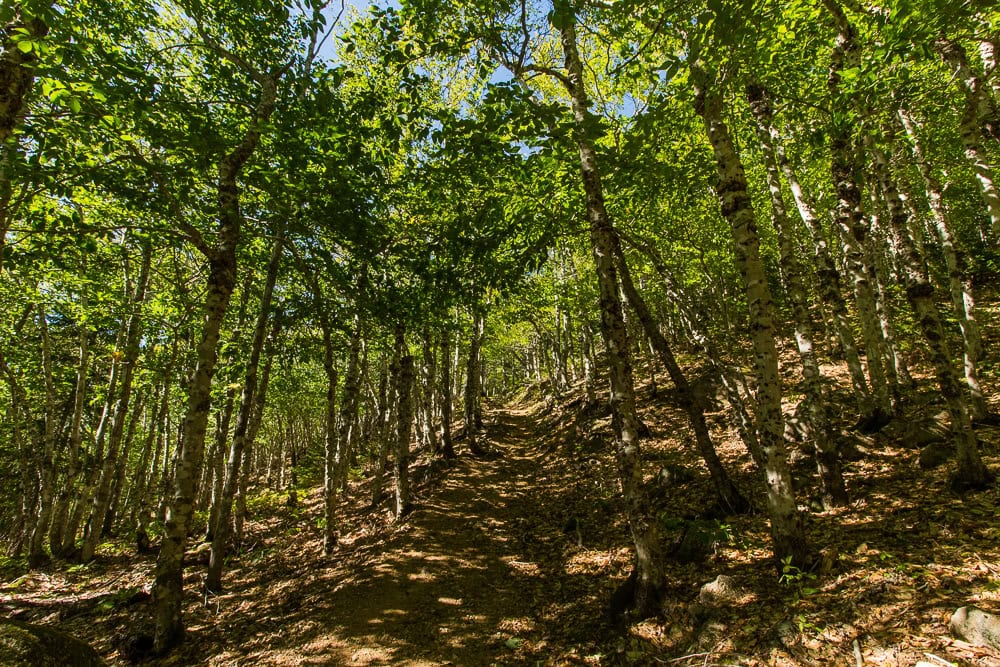
While the Skyline Trail attracts hundreds of people, Franey Trail is a local hidden gem that most tourists don’t know about. Which is a shame, because the views are at least on par — just different.
The trail is a 7.4 km loop that climbs steeply through dense forest to a rocky viewpoint with a 360° panorama — you can see Clyburn Canyon, Ingonish, the ocean and the mountain ridge. Unlike the Skyline Trail, however, it’s more challenging — the elevation gain is about 350 metres and some sections are quite steep. Allow 2.5–3.5 hours.
The upside is that even in peak season, you’ll encounter a fraction of the Skyline crowds. We hiked it on a weekday in October and met about six people on the entire trail. At the viewpoint up top we had the place completely to ourselves. And those colours… 😊
9. Ingonish Beach — swimming in the Atlantic (for the brave)
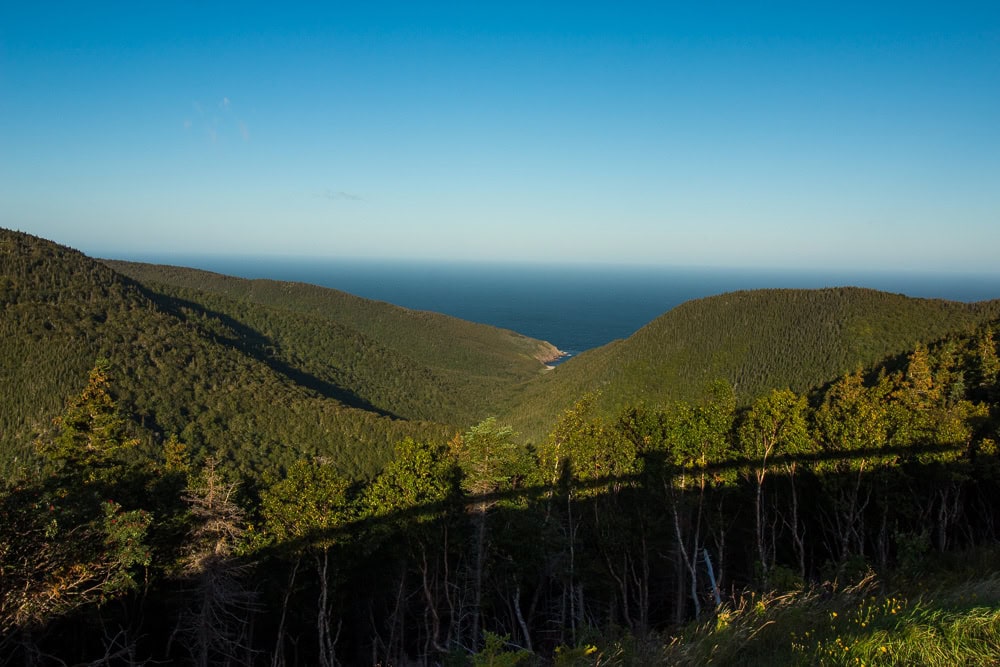
Ingonish Beach is probably the prettiest beach on the entire Cabot Trail — a lovely wide stretch of sand flanked by green hills. It’s part of the national park, so entry is included in your park pass.
But I’ll be honest: the water is freezing. Even in August, ocean temperatures hover around 14–16 °C. If you’re into cold-water swimming or used to the chilly seas around Britain, you’ll manage just fine. Lukáš jumped straight in; I dipped my feet up to the knees and retreated to my towel. 😅 There is, however, a freshwater lake (really a lagoon separated from the ocean by a sand bar) where the water is noticeably warmer — around 20–22 °C in summer. So swimming for everyone!
Around the beach you’ll find picnic tables, showers and a snack bar. It’s a great spot for a rest day between hikes.
10. Middle Head Trail — an easy stroll with ocean on three sides
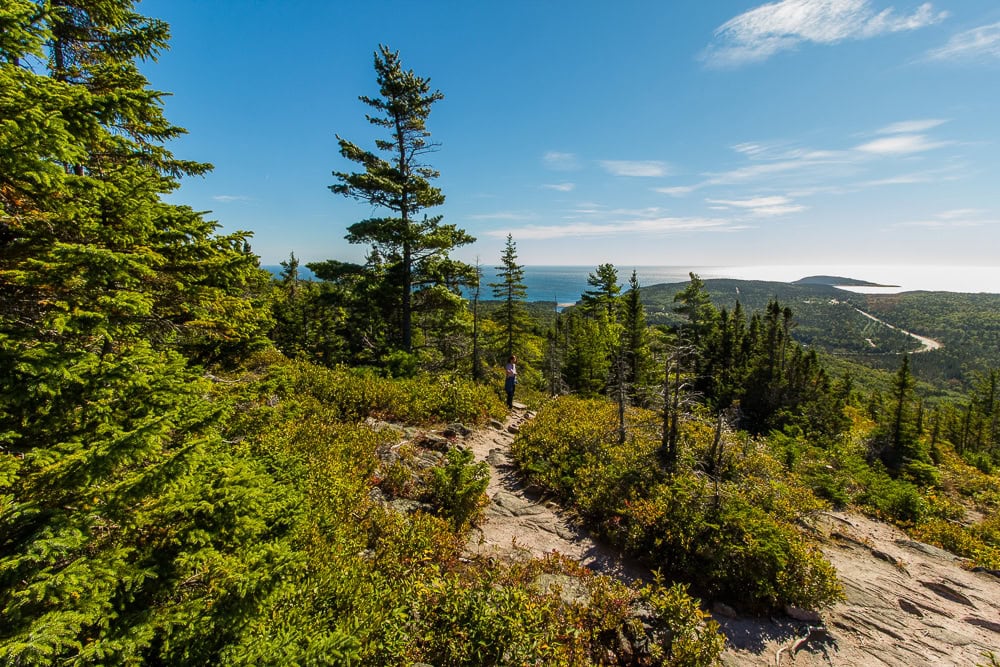
If you need a breather after the Franey Trail but don’t want to just lie on the beach, Middle Head Trail is exactly what you’re looking for. A short, easy trail (3.8 km out and back) along a narrow peninsula that juts out into the Atlantic.
The trail starts right at the Keltic Lodge in Ingonish and is almost flat. At the tip of the peninsula, the view opens up to the ocean on practically three sides — left, right and straight ahead. On a clear day you can see for dozens of kilometres along the coastline. It takes about an hour and is perfect for an evening stroll.
In spring and autumn, you might spot moose grazing right beside the trail. We were lucky enough to see a cow moose with her calf about 20 metres from the path. We froze on the spot and snapped photos like mad.
11. Jigging Cove Lake — an autumn explosion of colour
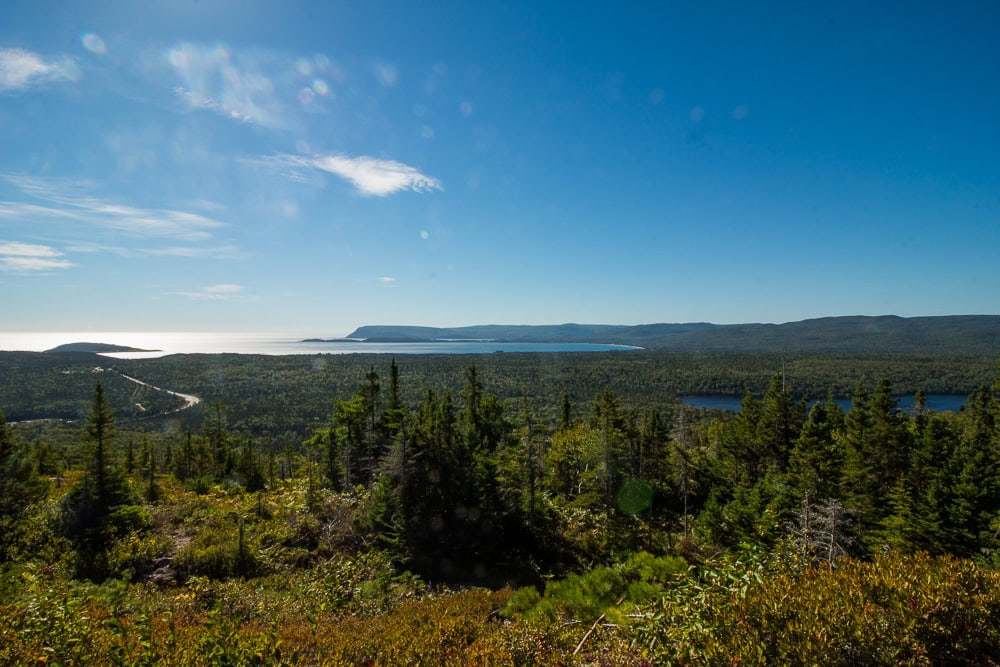
Here’s another trail that’s short and easy, yet incredibly photogenic — especially in autumn. The Jigging Cove Lake Loop is a 4.2 km circuit around a mountain lake surrounded by deciduous forest.
In October, the lake transforms into a mirror reflecting red, orange and golden trees. It’s the kind of scenery people fly halfway across the world to see in New England — except here there are far fewer crowds and far more wilderness. The trail is flat, follows the lake’s edge, and takes about an hour.
If you’re on the Cabot Trail in September or October, this spot is a must. Come in the morning when the lake is calmest and the reflections are sharpest.
12. Lone Shieling — a piece of Scotland in Canada
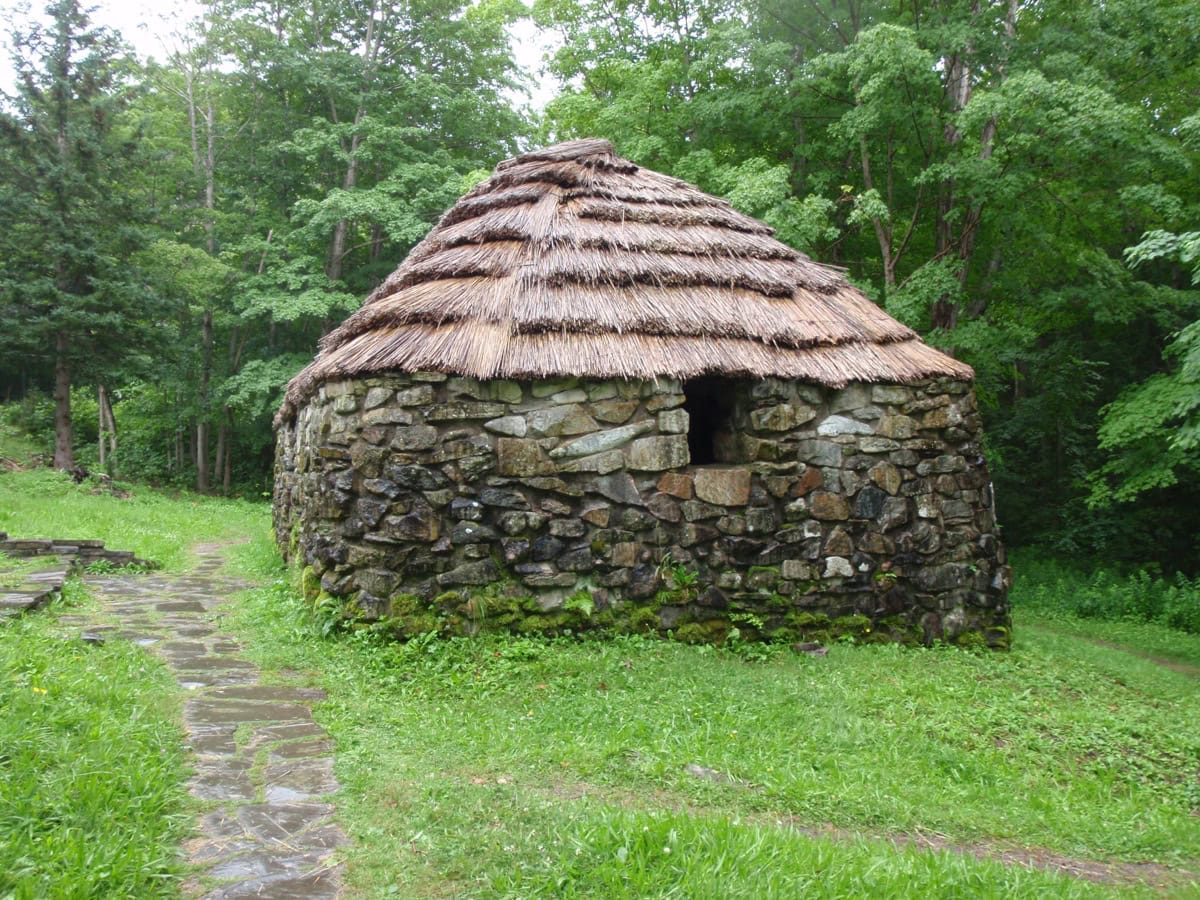
The Lone Shieling is a short but unique stop. It’s a 15-minute walk (0.5 km) through old-growth deciduous forest to a replica of a Scottish stone shelter (a shieling). Why a Scottish shelter in Canada? Because Cape Breton was heavily settled by Scottish immigrants in the 18th and 19th centuries, and to this day you’ll find Celtic culture, Gaelic, and Scottish surnames on every other letterbox. If you’re from Scotland, this one will feel surprisingly close to home.
The forest around the trail is actually the most remarkable part — there are 300-year-old sugar maples with massive trunks that give you a glimpse of what North America looked like before European settlement. It’s one of the last remnants of old-growth forest on all of Cape Breton.
The stop takes 20–30 minutes and it’s right off the main road. Don’t skip it.

13. Celtic culture and live music — the soul of Cape Breton
Cape Breton isn’t just about nature. It has a soul — and that soul plays the fiddle. The island is a world centre for Celtic music, specifically Cape Breton fiddling, which has its roots in Scottish tradition but has evolved over centuries into something entirely its own. And you don’t need to attend a festival to hear it — live music plays every evening in pubs, community halls and even restaurants.
Red Shoe Pub in Mabou (just off the Cabot Trail) is probably the most famous music venue on the island — it’s owned by the Rankin sisters, who are Canadian music legends. Every night features a different act and the atmosphere is electric. Entry is either free or just a few dollars.
Another brilliant spot for live music is the Normaway Inn near Margaree Valley, which hosts regular cèilidhs (Celtic dance evenings — pronounced “KAY-lee”). It’s one of those experiences you simply can’t have anywhere else — locals of all generations dancing, playing and singing, and you’re welcome to join in.
> 💡 TIP: If you’re on Cape Breton in October, try to catch the Celtic Colours International Festival — a nine-day music festival held across the entire island that’s absolutely magical. Tickets for individual concerts cost 25–50 CAD (€17–35).
14. Cabot Trail by bike — for those who want a challenge
This isn’t a tip for everyone, but if you’re a cyclist, I have to mention it: the Cabot Trail is one of the most famous cycling routes in North America. 298 km, over 3,000 metres of elevation gain, and views that Tour de France riders would give anything for.
Most cyclists complete the trail in 3–5 days. You ride on the main road (there’s no separate cycle path — you share the road with cars, but traffic isn’t heavy and drivers are used to cyclists). The toughest sections are the climbs up French Mountain and North Mountain on the western side — both with over 400 metres of elevation gain over a short stretch.
If you don’t fancy the full loop, at least hire a bike in Chéticamp or Ingonish and ride one of the shorter coastal sections. Even 30 km along the coast on two wheels is a memory for a lifetime.
15. Baddeck and Alexander Graham Bell — start and finish
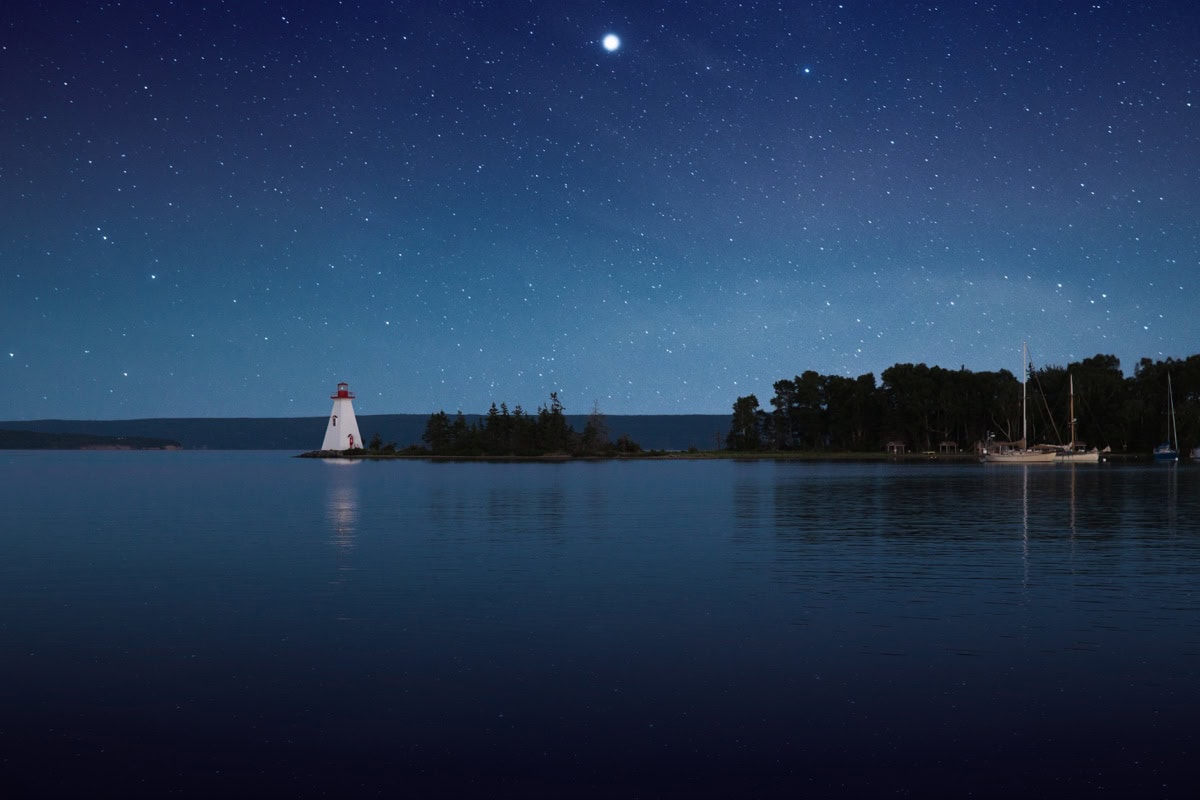
Most people drive through Baddeck on the way to the trail and back without stopping, but the town deserves at least half a day. It sits on the shore of the stunning freshwater Bras d’Or Lake and is a lovely, relaxed place with good restaurants and an interesting museum.
The Alexander Graham Bell National Historic Site — yes, that Alexander Graham Bell, inventor of the telephone. Bell fell in love with Cape Breton and spent the last decades of his life here. The museum is surprisingly engaging even if you have zero interest in the history of technology — it features interactive, modern exhibits and the view of the lake from the museum terraces is gorgeous. Admission is 8.50 CAD (€6).
Baddeck is also a great place to start or end the loop — have a proper meal, stock up on supplies, and recharge before (or after) days in the wilderness. We finished our loop by sitting on a restaurant terrace overlooking the lake, drinking wine, and reminiscing about the entire trip. The perfect ending.
Map of points of interest for your phone
What to eat and drink on the Cabot Trail: a foodie’s guide
I’ll admit I wasn’t expecting much of a culinary experience on the Cabot Trail — I figured it would be all nature, nature and more nature. Then I tasted the lobster chowder in Neil’s Harbour and had to completely reassess Nova Scotia as a food destination. 😁
Don’t miss these
Lobster — we’re on the east coast of Canada, so lobster is practically a religion here. You’ll find it everywhere — in restaurants, fish shacks and markets. A lobster roll (lobster meat in a buttered bun) is the classic and typically costs 20–30 CAD (€14–21). You won’t find it fresher anywhere else.
Seafood chowder — creamy fish and seafood soup that’s the local speciality. Every restaurant has its own version. Our favourite was at the Chowder House in Neil’s Harbour — thick, packed with chunks of fish, mussels and potatoes.
Acadian food in Chéticamp — try the meat pies and fricot (traditional Acadian stew with meat and potatoes). Chéticamp has several restaurants serving traditional Acadian dishes — I’d recommend Le Gabriel Restaurant.
Oatcakes — Scottish-style oat biscuits that are everywhere on Cape Breton. Pick some up at any bakery as a snack for the trail.
Our favourite restaurants
- Chowder House, Neil’s Harbour — legendary fish and chips and chowder by the harbour. Mains €10–17. They take card!
- Le Gabriel Restaurant, Chéticamp — Acadian cuisine, meat pies, excellent breakfasts. €10–21 for a main.
- Bean There Café, Chéticamp — a little café with brilliant coffee and homemade cakes. The ideal stop before the Skyline Trail.
- Meat Cove Chowder Hut — chowder and lobster rolls at the end of the world. There’s no better lunch spot on earth.
- Red Shoe Pub, Mabou — a pub with live Celtic music, good beer and solid food. A burger and a pint for around €17.
- Baddeck Lobster Suppers — all-you-can-eat lobster dinner for a set price (about 60 CAD / €42). Touristy, but an experience.
Beer and wine
Nova Scotia has a surprisingly vibrant craft beer scene. Look out for Big Spruce Brewing near Baddeck — a small brewery with a taproom serving excellent IPAs and seasonal beers. Tastings cost a few dollars and the vibe is great.
As for wine, Nova Scotia mainly grows white varieties (Tidal Bay is the local appellation) — they’re not world-class wines, but they pair beautifully with lobster.
Practical tips to finish
Mobile signal and internet
Be prepared for the fact that mobile signal on much of the Cabot Trail simply doesn’t exist. The northern section especially (Pleasant Bay → Meat Cove → Neil’s Harbour) is largely a dead zone. Download offline maps beforehand (Google Maps handles this well) and don’t rely on phone navigation. If you need to be online, WiFi at accommodation works in Chéticamp, Ingonish and Baddeck.
For better coverage across Canada, consider an eSIM from Holafly — we use it when travelling and it saves the hassle of hunting for local SIM cards.
What to pack
- Layers — the weather changes quickly, especially in the mountains. It can be 8 °C in the morning and 22 °C by afternoon.
- Waterproof jacket — fog and light drizzle are common on the coast.
- Good hiking boots — trainers will do for the Skyline Trail, but you’ll appreciate ankle boots on the Franey Trail. If you’re still shopping for a pair, check out our hiking boot guide.
- Binoculars — useful for whale watching and viewpoints alike.
- Insect repellent — mosquitoes and blackflies are aggressive in summer, particularly near lakes and in the forest.
If you’re wondering how to pack efficiently, have a look at our article on packing for carry-on only.
Travel insurance
Canada has excellent but extremely expensive healthcare. An emergency room visit without insurance can run into thousands of dollars. Travel insurance is an absolute must. For UK travellers, make sure your policy covers medical expenses in Canada. For longer trips around the world, we use SafetyWing — you can read our detailed review on the blog.
Safety and wildlife
You will encounter moose on the Cabot Trail — not just on trails, but on the road. Watch out for moose especially at dusk and dawn when they cross the road. A collision with a moose is a serious matter (these animals weigh 400–700 kg). Drive carefully, particularly during early morning and evening hours.
Black bears live here too, but they’re shy and attacks on humans are extremely rare. Follow basic precautions — don’t carry food in your rucksack on the trail, store it in bear-proof containers at campsites, and make noise on the trail.
Frequently asked questions (FAQ)
How many days do I need for the Cabot Trail?
Two days is the bare minimum if you just want to drive the loop with a few stops. But I’d recommend 3–5 days so you can fit in at least 2–3 hikes, whale watching, and enjoy the places without rushing. We had 4 days and it felt about right — though one more would have been nice.
Which direction should I drive the loop?
I recommend going counter-clockwise — from Chéticamp through Pleasant Bay to the north and back via Ingonish. The best ocean views will be on your side of the road, and you’ll tackle the most beautiful section (the west coast) first.
Is the Cabot Trail difficult to drive?
The road is well-maintained and two-lane, so it’s nothing terrifying. But there are steep climbs and descents (French Mountain, North Mountain), sharp bends and occasionally steep drop-offs without guardrails. If you’re comfortable with mountain roads, you’ll be fine. Take extra care in fog and rain. You don’t need an SUV or 4×4 — a regular car will do.
Can I drive the Cabot Trail with a caravan or motorhome?
Yes, caravans and motorhomes do use the trail. But bear in mind that some bends and climbs are trickier for larger vehicles and overtaking opportunities are limited. If you’re driving a big RV, be considerate of other drivers and use the pull-off lanes.
Do I need a reservation for the Skyline Trail?
Yes, since 2023 a mandatory reservation is required via the Parks Canada website. It costs 2 CAD for the reservation plus the standard park entry fee. Sunset slots sell out first — book as early as possible, ideally as soon as you know your visit date.
What is the best month for fall foliage?
Autumn colours on the Cabot Trail typically peak in the first two weeks of October, though it varies from year to year depending on the weather. Check the Fall Colour Report on the Parks Canada or Nova Scotia Tourism website — they update it weekly from September. Higher elevations (ridges) change colour earlier than the valleys.
How much does admission to Cape Breton Highlands National Park cost?
Daily admission is 10.50 CAD/adult (€7), children under 17 free. If you’re planning 3+ days in the park or visiting multiple Canadian national parks in a year, the Discovery Pass at 72.25 CAD (€50) covers the whole family/car for the entire year.
Tips and Tricks for Your Vacation
Don’t Overpay for Flights
Search for flights on Kayak. It’s our favorite search engine because it scans the websites of all airlines and always finds the cheapest connection.
Book Your Accommodation Smartly
The best experiences we’ve had when looking for accommodation (from Alaska to Morocco) are with Booking.com, where hotels, apartments, and entire houses are usually the cheapest and most widely available.
 🚗 Car rental on the roadVerified rental cars in Nova Scotia
Search with the DiscoverCars comparison engine — it compares prices from dozens of local and international rental companies, and most bookings come with free cancellation.
Compare car prices in Nova Scotia →Don’t Forget Travel Insurance
Good travel insurance will protect you against illness, accidents, theft, or flight cancellations. We’ve had a few hospital visits abroad, so we know how important it is to have proper insurance arranged.
Where we insure ourselves: SafetyWing (best for everyone) and TrueTraveller (for extra-long trips).
Why don’t we recommend any Czech insurance company? Because they have too many restrictions. They set limits on the number of days abroad, travel insurance via a credit card often requires you to pay medical expenses only with that card, and they frequently limit the number of returns to the Czech Republic.
Find the Best Experiences
Get Your Guide is a huge online marketplace where you can book guided walks, trips, skip-the-line tickets, tours, and much more. We always find some extra fun there!


