

When my mum and I were planning a trip along eastern Canada (after falling in love with western Canada on a road trip), Halifax Canada was honestly just a “stopover” for me. A city where we’d land, sleep, and move on. But as with everywhere in Canada, I could have happily stayed a whole week just for the atmosphere. 😅
Halifax is one of those cities that doesn’t hit you over the head with monumental landmarks or Instagram-perfect scenery on every corner. Instead, it slowly draws you into its rhythm — through the smell of freshly cooked lobster on the waterfront, the strum of a street musician’s guitar on the boardwalk, that first sip of a local IPA in a brewery that’s over two hundred years old. And before you know it, you’re sitting in a harbourside pub, watching the sunset over the port, with absolutely no desire to leave.
In this article, you’ll find 8 things to see and do in Halifax Canada — from the star-shaped Citadel fortress and a museum full of Titanic artefacts to the oldest saltwater ferry in North America. I’ll also share tips on the best day trips from Halifax (Peggy’s Cove and Lunenburg are absolute musts!), where to stay, what to eat, and how much it all costs. Let’s dive in. ☺️
TL;DR
- Halifax is ideal for 3–4 days, but if you want to squeeze in day trips (Peggy’s Cove, Lunenburg, Cabot Trail), plan for a full week.
- The best time to visit is June to October — summer is perfect, while September and October bring gorgeous fall colours and fewer tourists.
- Rent a car. You won’t need one for the city itself, but it’s essential for exploring Nova Scotia. Peggy’s Cove is a 50-minute drive and without a car your only option is an expensive taxi ($150 CAD / about €100 one way).
- Donair is Halifax’s official food — it sounds ridiculous, but it’s true, and you absolutely have to try one.
- Maritime Museum of the Atlantic has a fascinating Titanic exhibition — Halifax was the city that sent out rescue ships, and most victims are buried here.
- Peggy’s Cove is Canada’s most photographed lighthouse and well worth a visit, but BEWARE of the slippery rocks by the ocean — those “Danger of Death” signs are there for a very good reason.
- Lunenburg is a picture-perfect UNESCO town with colourful 18th-century houses — ideal for a half-day trip.
- Budget around €130–200 per person per day (accommodation, food, admissions) — restaurants in Halifax are surprisingly reasonable by Canadian standards.
The full destination guide: Nova Scotia — guide and what to see
When to visit Halifax and how to get there
Halifax sits on Canada’s east coast in the province of Nova Scotia — literally “New Scotland”, which tells you a fair bit about the weather. It’s no tropical resort, but summers here are surprisingly pleasant and the seaside-town atmosphere is simply irresistible. Here’s what to expect and how to get there.
The best time to visit is hands-down June to October. Summer (July–August) brings temperatures around 20–25 °C, long days, and packed patios on the waterfront. If you’re not a fan of crowds, September and October are absolutely perfect — fewer tourists, lower prices, and Nova Scotia draped in stunning fall colours that’ll make you wish you’d brought a better camera. 😁
We were there in mid-September and the timing was spot-on — pleasant 18–22 °C during the day, a jumper and light jacket in the evenings, and just enough visitors at Peggy’s Cove that we didn’t have to fight for a photo spot.
Winter (November–March) is cold, windy, and Nova Scotia gets quite a lot of snow. Halifax still functions in winter, but many attractions are closed or running reduced hours, and day trips become tricky. I’d give it a miss.
How to get to Halifax
There are no direct flights from the UK to Halifax, so you’ll need to connect. The most common routes go via Toronto, Montreal, or London Heathrow with airlines like Air Canada, WestJet, or British Airways. If you’re connecting through Toronto (and have some time to spare, check out our tips on the Niagara Falls), the total travel time is around 10–14 hours including the layover.
Search for cheap flights on Kiwi — it’s our favourite flight search engine and we snagged return tickets to Halifax for about €700 per person (in September, with one connection). During peak summer, expect to pay around €850–1,100.
From Halifax Stanfield Airport (YHZ), it takes 30–40 minutes to reach the city centre. A taxi costs a flat $63 CAD (about €43), which is reasonable for two people. There’s also a bus (Route 320), but it runs infrequently and takes over an hour.
Pick up a rental car right at the airport. If you’re planning day trips outside Halifax (and you absolutely should), you’ll need one. We’ve had consistently great experiences with DiscoverCars, where you can compare prices from dozens of providers in one place. Car hire in Halifax cost us about $55–70 CAD/day (€38–48), which is a good deal for Canada. Book as early as possible — airport rental agencies sell out fast in summer.
💡 TIP on mobile data: To avoid surprise roaming charges in Canada, grab an eSIM from Holafly — it works flawlessly, you activate it before you fly, and you’ve got instant data the moment you land. No faffing around looking for local SIM cards at the airport.
Where to stay in Halifax and how much it costs
The good news is that Halifax is fairly affordable by Canadian standards. You can find central accommodation at reasonable prices, and if you visit outside peak summer, you’ll save even more. Most attractions are concentrated in the centre and along the waterfront, so ideally stay within walking distance of the harbour — you’ll save on transport and can stroll down to the boardwalk for an evening drink.
Booking.com is our favourite hotel search engine and it’s what we used in Halifax too. Here’s what to expect price-wise in summer:
- Budget (hostel/Airbnb): $80–120 CAD/night (€55–82)
- Mid-range (3★ hotel): $150–220 CAD/night (€103–150)
- Luxury (4–5★ hotel): $250–400+ CAD/night (€170–275+)
Our accommodation recommendations in Halifax
The Hollis Halifax — a DoubleTree Suites by Hilton — this was our pick and we had zero regrets. Brilliant location right in the centre, a few minutes’ walk to the waterfront, clean and spacious rooms with a basic kitchenette. We paid around $180 CAD (about €123) per night, and for the location and quality, it was an excellent choice.
Muir, Autograph Collection — if you fancy something more upscale, Muir is a gorgeous boutique hotel right on Queen’s Marque by the waterfront. Stunning design, harbour views, and a fantastic restaurant. Prices start around $350 CAD/night (€240), but it’s worth every penny for the experience.
Halifax Backpackers Hostel — for those on a tighter budget. A dorm bed from $45 CAD (€31), private room around $110 CAD (€75). Great location near the Citadel, clean, and friendly staff.
💡 TIP: Don’t stress about being “too far” from anything in Halifax — the centre is compact and you can walk to everything important in 20–30 minutes. Stay anywhere between the Citadel and the waterfront and you’ll be perfectly sorted.
Halifax: 8 things to see and do
If you’d like to book activities in Halifax ahead of time (guided tours, Peggy’s Cove trips, harbour cruises), have a look at the selection on GetYourGuide — it’s easy to book and most activities offer free cancellation.
Let’s take a look at 8 things to see and do in Halifax. The city may be compact, but it’s surprisingly rich in attractions and atmosphere — from historic fortresses and Titanic museum exhibits to gorgeous Victorian gardens and tastings at a 200-year-old brewery. You can cover most of these on foot, which is one of the best things about Halifax — just let the city carry you along and explore.
1. Halifax Citadel National Historic Site — the fortress that still guards the city

When someone says Halifax, most people picture the Citadel — an enormous star-shaped fortress perched on a hill above the city, visible from practically anywhere. And I have to say, it blew us away far more than we expected.
The fortress you see today is actually the fourth one built on this spot (the first stood here as early as 1749), completed in 1856. Inside, you’ll meet soldiers in period uniforms who, with perfectly deadpan British humour, explain what life was like here during wartime. And every day at precisely noon, they fire the cannon — a tradition dating back to 1857. We had no idea, happened to be standing on the bastions at the time, and nearly jumped out of our skin. Lukáš pretended he knew all about it, but he definitely didn’t. 😅
Admission is $11.70 CAD (about €8) for adults, and children under 17 get in free. Check the official Parks Canada website for current information. Allow roughly 1.5–2 hours for your visit. The views from the bastions over the city, harbour, and Dartmouth across the bay are stunning — it’s probably the best spot in Halifax to get your bearings, since you can see practically everything from up here.
💡 TIP: Head here in the morning, ideally around 11:30, so you catch the noon cannon firing. And wear comfortable shoes — there are plenty of stairs and hills.
2. Halifax Waterfront Boardwalk — the heart of the city on the ocean
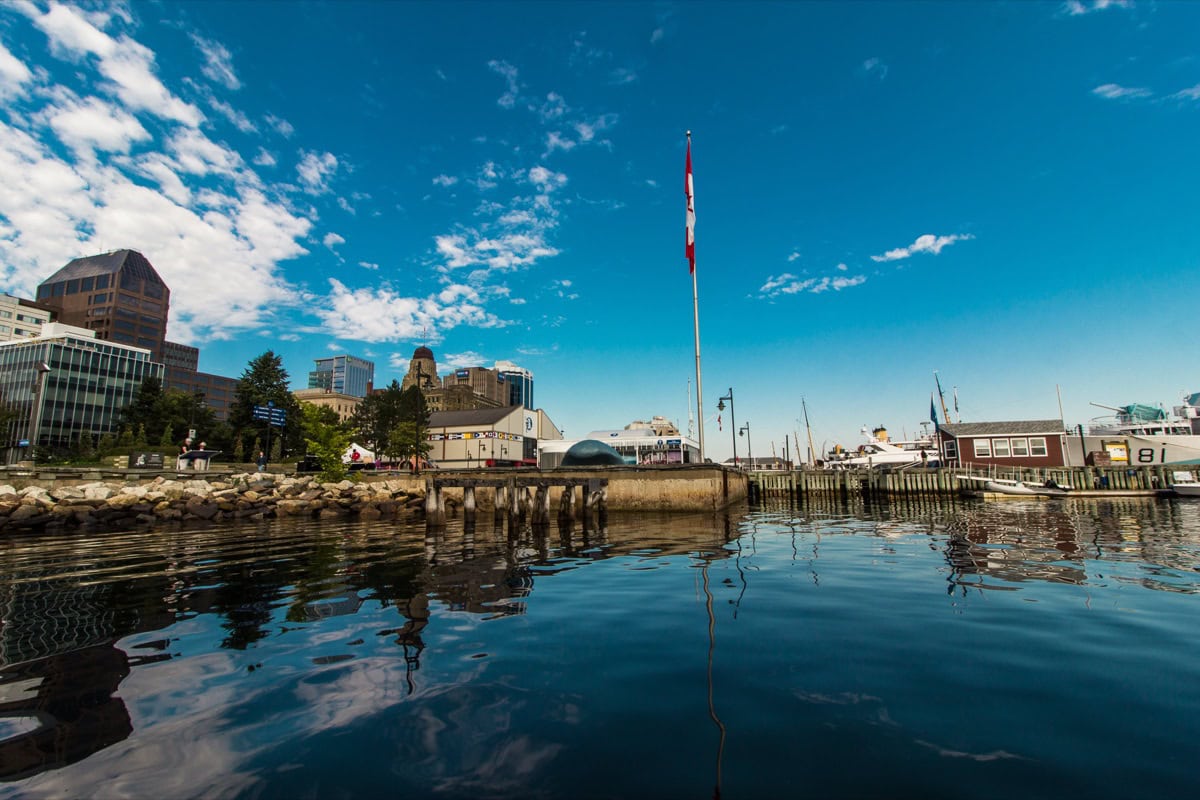
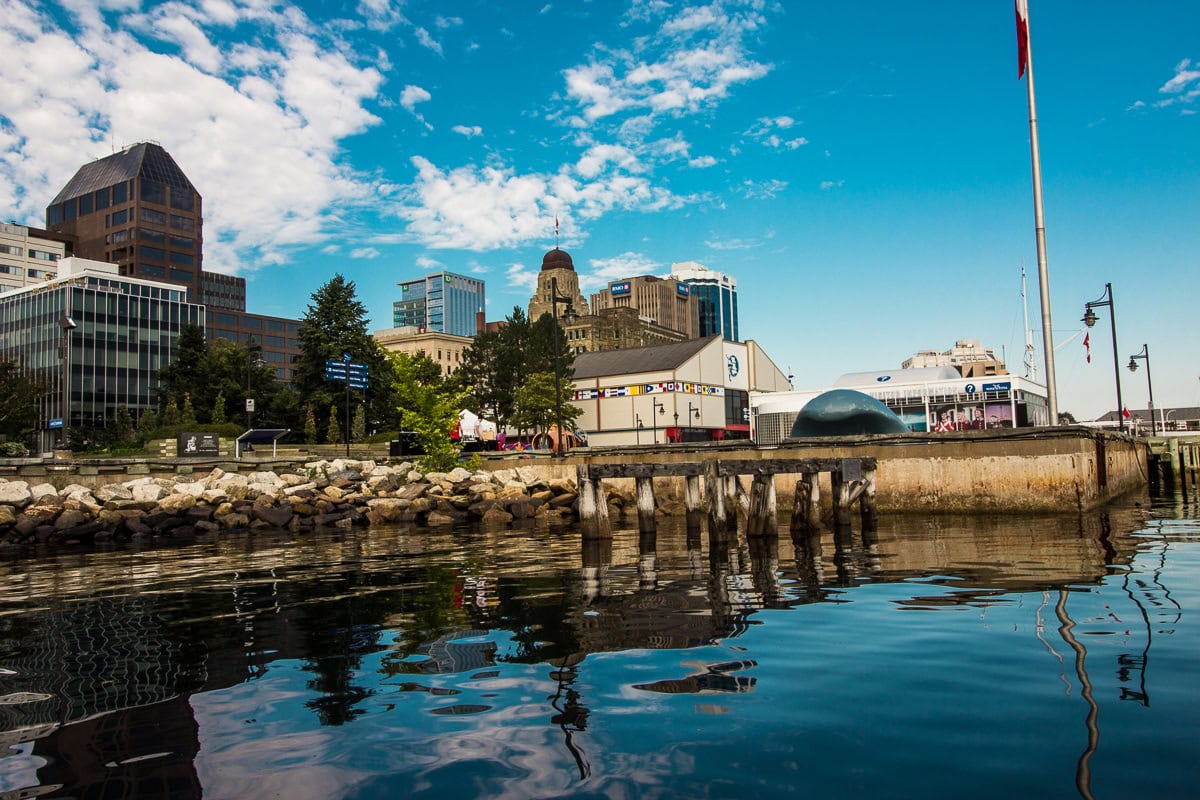
The Waterfront Boardwalk is probably the first thing anyone in Halifax will recommend — and rightly so. It’s a nearly 4-kilometre-long promenade along the harbour that serves as the city’s living room. Locals jog here in the morning, eat lunch on the benches at noon, and sip beers on the patios overlooking the harbour in the evening.
Along the boardwalk you’ll find shops, galleries, restaurants, museums, and in summer there are various markets and festivals. We easily spent a couple of hours just wandering, sampling street food, and watching the boats. The atmosphere is incredibly laid-back — no stress, no crowds (unless you happen to be in Halifax during cruise ship season, when massive liners dock and the city turns into an ant colony for a few hours).
Worth mentioning is the new Queen’s Marque quarter at the southern end of the boardwalk — a modern complex with hotels, restaurants, and public space right on the water. It’s a bit of a contrast to the historic fishing harbour, but it works surprisingly well.
The boardwalk is free and accessible 24 hours a day. It’s at its best at sunset — grab a beer, sit on the dock, and just watch. What more do you need? ☺️
3. Maritime Museum of the Atlantic — Titanic, explosions, and maritime history
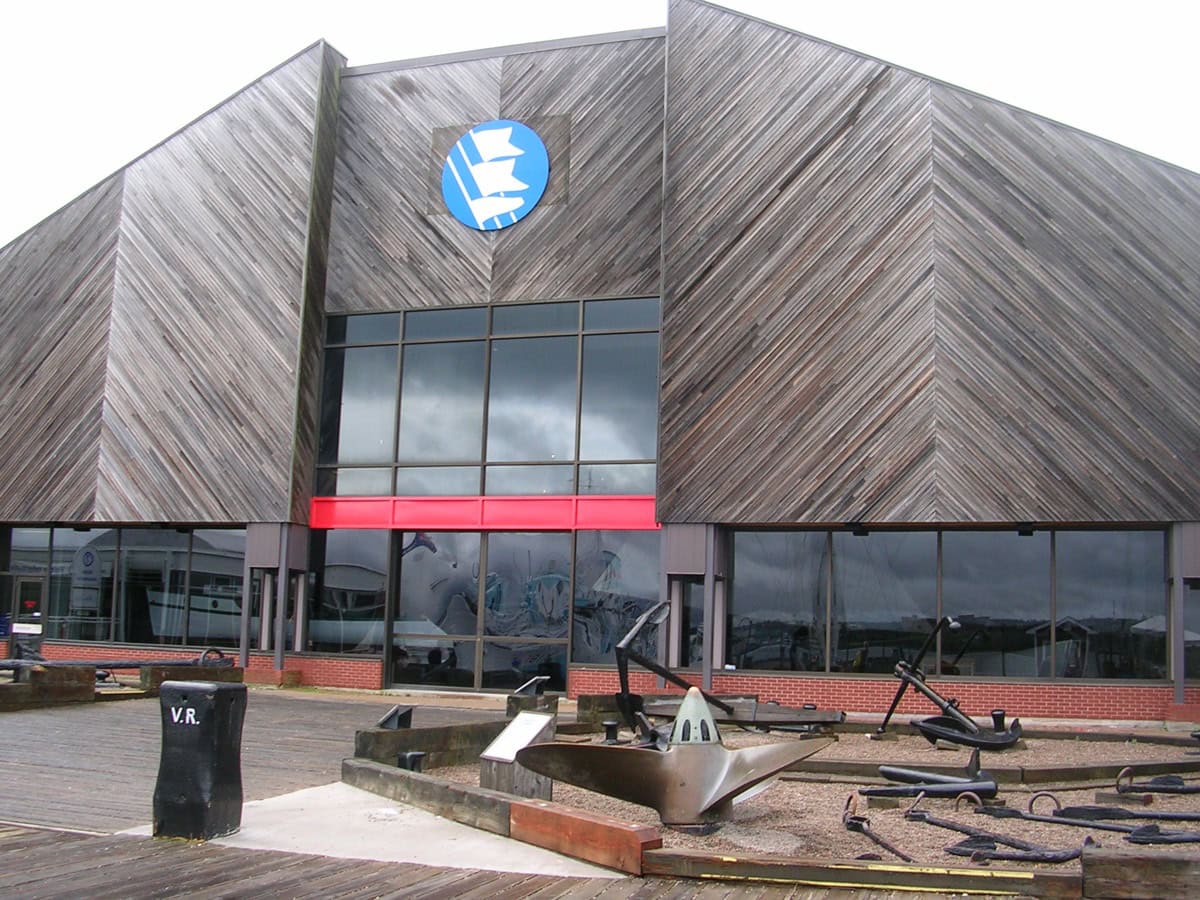
This museum genuinely surprised me. I was expecting your typical regional museum — a few model ships, dusty exhibits, and a bored guide. Instead, we spent nearly three hours absorbed in fascinating exhibitions that quite literally told us stories.
The Titanic exhibition drew us in the most. What most people don’t realise is that when the Titanic sank in April 1912, it was ships from Halifax that sailed out to recover bodies from the ocean. Most of the victims are buried in three cemeteries in Halifax — and in the museum you’ll see genuine artefacts pulled from the sea, including a wooden deckchair that allegedly inspired that famous film scene (yes, the one where Rose and Jack can’t both fit on the door — and no, the museum neither confirms nor denies this theory 😁).
The second gripping exhibition covers the Halifax Explosion of 1917 — the largest man-made explosion before Hiroshima. A French ship loaded with munitions collided with a Belgian vessel in the harbour, and the blast levelled an entire neighbourhood. Nearly 2,000 people died and 9,000 were injured. It’s a story I knew nothing about, and the museum tells it with incredible sensitivity and power.
Admission is $11 CAD (about €7.50) for adults. Check the Maritime Museum of the Atlantic website for current opening hours. In summer (June–October) it’s open daily; in winter, Tuesday to Saturday only. It’s right on the waterfront boardwalk, so you can easily combine it with a stroll.
4. Halifax Public Gardens — a Victorian oasis of calm

Right in the middle of the bustling city lies 16 acres (about 6.5 hectares) of gorgeous Victorian gardens that have been open to the public since 1867. And it’s every bit as enchanting as it sounds.
Halifax Public Gardens are considered one of the finest Victorian gardens in North America — and I completely believe it. Wrought-iron gates, stone fountains, gazebos, ancient trees, and in summer a riot of flowers that you don’t know where to look first. On Sundays there’s live music in the bandstand and locals come for picnics, to read a book, or simply to sit and be.
We popped in for a quick visit and ended up staying an hour. Lukáš lay down on the grass and refused to get up because, as he put it, “finally somewhere with no admission fee and nowhere we have to rush off to.” He had a point — the gardens are completely free and open from spring to autumn (they close for winter, roughly November–April).
💡 TIP: The gardens are beautiful at any time of day, but mornings are quietest and the light is loveliest for photos.
5. Canadian Museum of Immigration at Pier 21 — stories that stay with you

Pier 21 is the place where, between 1928 and 1971, nearly one million immigrants entered Canada. It’s Canada’s answer to Ellis Island — and the museum that stands here today is one of the most emotionally powerful places we’ve ever visited.
The exhibitions walk you through the stories of people who arrived with a suitcase and a hope — war refugees, British children evacuated during the Blitz, families searching for a fresh start. Interactive displays let you search specific names in databases and view original documents. Many Canadians come here to trace the stories of their grandparents.
Admission is $12.50 CAD (about €8.50) for adults. More information on the official Pier 21 website. The museum is at the southern end of the waterfront, near the cruise ship terminal. Allow 1–2 hours for your visit.
6. Point Pleasant Park — where the city ends and the ocean begins
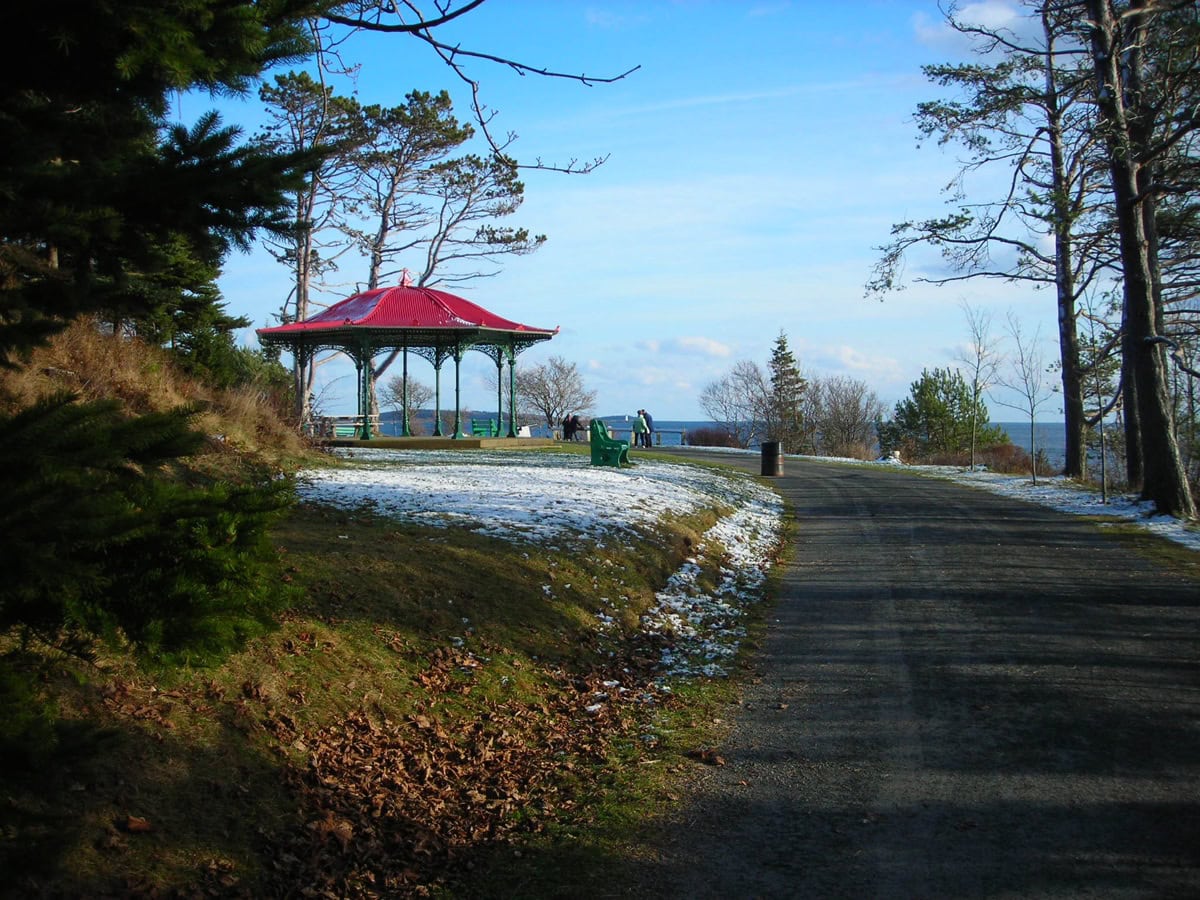
At the southern tip of the Halifax peninsula lies Point Pleasant Park — over 75 hectares of forest trails, beaches, old military fortifications, and views of the open ocean. It’s where Haligonians go to walk their dogs, run, and simply breathe.
We spent an entire afternoon here and it was exactly what we needed after two days of museums and restaurants. The trails wind through dense forest, then suddenly you emerge onto the shoreline with the Atlantic stretching out as far as the eye can see. There are a few interesting historical ruins too — remnants of fortifications from the Napoleonic wars and the Second World War.
Admission is free. The park is open year-round and is popular with locals, so you’ll meet more Haligonians than tourists. From the city centre it’s a 20–25-minute walk or a quick bus ride.
💡 TIP: Bring a rain jacket or windproof layer — the southern end of the park by the ocean can be seriously breezy, even when it’s calm in the city.
7. Alexander Keith’s Nova Scotia Brewery — a brewery over 200 years old

If you’re a fan of beer (and who isn’t? 😉), Alexander Keith’s is a compulsory stop. The brewery has been operating since 1820 and is one of the oldest in North America. And the tour is… well, let’s just say they don’t take themselves too seriously.
The tour takes you through the brewery’s history via actors in period costumes playing characters from the 19th century. It’s a bit theatrical, a bit cheesy, but surprisingly good fun — and at the end you get a tasting of three beers including seasonal specials you can’t find anywhere else. Lukáš was over the moon; I fell for their India Pale Ale, which is lighter and more refreshing than most IPAs I’ve tried.
The tour costs $24 CAD (about €16) per person and lasts around an hour. Book ahead, especially in summer — it fills up quickly. The brewery is in the lower part of town, a short walk from the waterfront.
8. Alderney Ferry and Dartmouth — North America’s oldest saltwater ferry
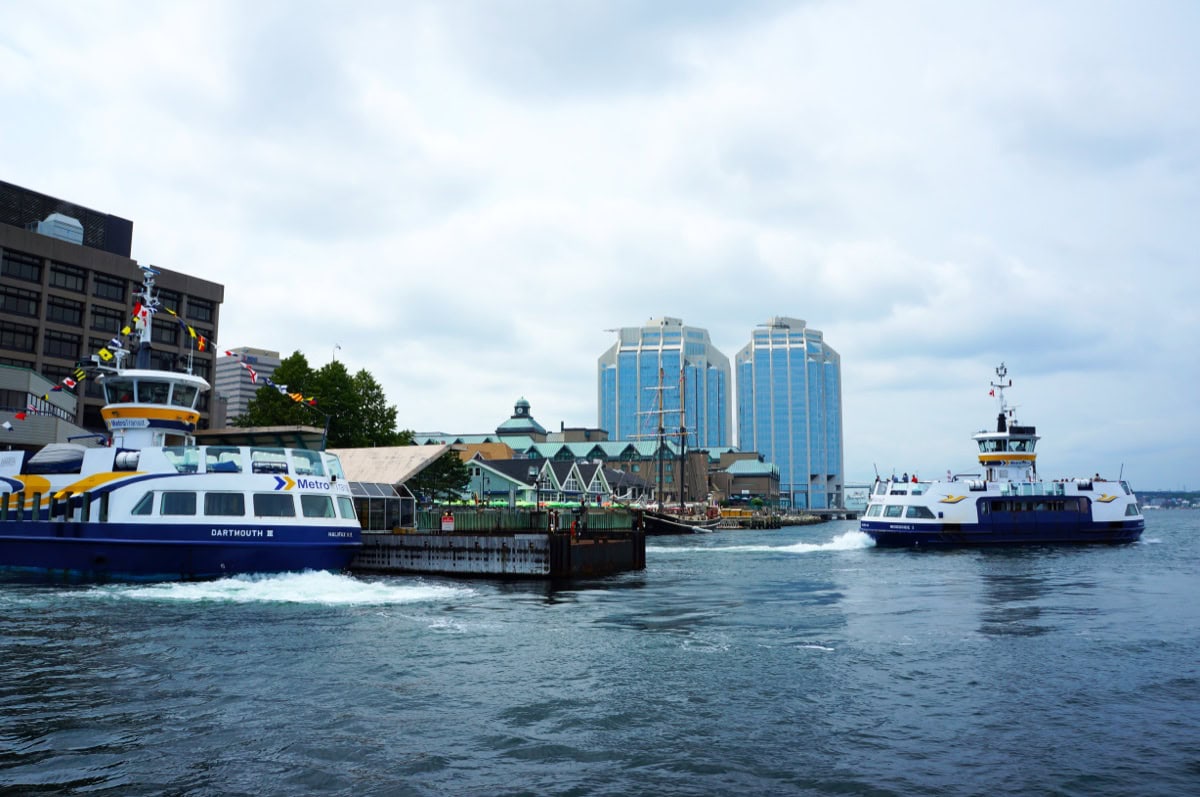
This is a tip you won’t find in many guidebooks, but we absolutely loved it. The Alderney Ferry is a public ferry connecting Halifax to the city of Dartmouth across the harbour — and it’s the oldest continuously operating saltwater ferry in North America (since 1752!).
The crossing takes about 12 minutes and costs just $2.75 CAD (about €1.90) — for that price you get a mini harbour cruise with gorgeous views of the Halifax waterfront, the Citadel, and the port. Honestly, we didn’t find a better value-for-money experience anywhere in Halifax.
On the Dartmouth side, you’ll find a pleasant town with cafés, parks, and the lovely Dartmouth Waterfront Trail. Pop into Two If By Sea Cafe for their legendary croissants (locals speak about them with religious fervour) and take a stroll along the promenade with views back across to Halifax. The whole Dartmouth excursion takes 2–3 hours and is absolutely worth it.

Map of points of interest for your phone
Day trips from Halifax: Peggy’s Cove, Lunenburg, and more Nova Scotia gems
Halifax is brilliant on its own, but the real magic of Nova Scotia starts beyond the city limits. Rocky coastlines, picturesque fishing villages, colourful houses, and lighthouses straight off a postcard — all within an hour or two’s drive from Halifax. Here are the day trips you absolutely shouldn’t miss. And I’ll say it again — rent a car, because without one you simply can’t reach these places (unless you book an organised tour at $150–200 CAD, about €100–137 per person).
Peggy’s Cove — Canada’s most photographed lighthouse
Peggy’s Cove is exactly what you picture when someone says “Atlantic coastline” — a red-and-white lighthouse standing on enormous granite boulders, surrounded by wild ocean and wind that blows straight into your soul. It’s Canada’s most photographed spot and I completely understand why.
The village of Peggy’s Cove is about a 50-minute drive from central Halifax and it’s tiny — a few dozen houses, fishing sheds, one souvenir shop, and that famous lighthouse. You can walk the whole thing in 20 minutes, but you’ll want to stay much longer because the atmosphere is simply magical. The granite rocks around the lighthouse look as if they were sculpted by a giant — smooth, undulating, grey. And the ocean pounds them relentlessly with waves.
BUT — and I cannot stress this enough — be careful on the rocks. They look harmless, but when a wave hits, they become lethally slippery. There are tragic accidents here every year when tourists are swept off by waves. The “Danger of Death” signs are not decoration. Stay above the line marked on the rocks, please.
Arrive either early in the morning (before 9:00) or late afternoon — during the day, especially in summer, crowds from cruise ships can be overwhelming. We got there around 8 AM and had the place nearly to ourselves. Entry is free, and so is parking.
Lunenburg — a fairytale UNESCO town
If you only have time for one trip outside Halifax in Nova Scotia, make it Lunenburg. This charming little town, about an hour and a quarter’s drive from Halifax, is a UNESCO World Heritage Site and one of the best-preserved examples of British colonial town planning in North America.
What does that mean in practice? Colourful wooden houses from the 18th and 19th centuries lined along hilly streets, a beautiful harbour full of sailboats and fishing vessels, and an atmosphere that feels like stepping back in time. Lunenburg was founded in 1753 and you can still feel that distinctive blend of British colonial elegance and rugged maritime life.
Wander down the main street with its galleries, cafés, and shops. Visit the Fisheries Museum of the Atlantic ($15 CAD / about €10), where you’ll learn about the fishing industry’s history and see a replica of the famous schooner Bluenose (the one on the Canadian ten-cent coin, even if you probably didn’t know that). And most importantly — have the lobster. Lunenburg is a fishing town and the seafood here is incredibly fresh.
We spent half a day here and it was one of the highlights of our entire Nova Scotia trip. The town is photogenic from every angle, and in September there were pleasantly few tourists.
Mahone Bay — three churches by the water
On your way to or from Lunenburg, stop at Mahone Bay — a small town famous for its iconic view of three churches standing side by side at the water’s edge. This image graces millions of postcards, and I have to say it looks even lovelier in person.
Mahone Bay itself is small and an hour is enough to see it — stroll down the main street, browse the local shops selling handmade candles and pottery, and grab a coffee with harbour views. Think of it as a pleasant stop rather than a standalone destination.
Cabot Trail — for the adventurous (and those with time)
If you have more time in Nova Scotia (ideally 2–3 extra days), the Cabot Trail on Cape Breton Island is one of the most beautiful scenic drives in all of North America. 298 kilometres of roads winding along dramatic coastline, through the mountains of Cape Breton Highlands National Park, and past charming fishing villages.
From Halifax, it’s about a 4-hour drive to Cape Breton, so this isn’t a day trip — plan for 2–3 nights along the route. But if you have the time, it’s an utterly unforgettable experience. We didn’t manage it and still regret it to this day — it’ll be the reason we return to Nova Scotia. ☺️
What to eat and drink in Halifax: a foodie guide

Halifax is a city where the food is surprisingly good — and reasonably priced (at least by Canadian standards). The seafood is incredibly fresh, the local craft beer scene is thriving, and one dish here has even earned the status of official city food. Here’s a rundown of what you must try and where to find the best of it.
What to try in Halifax
Lobster — No surprise here, but lobster is king in Nova Scotia. Fresh, boiled, served in a bun as a lobster roll, or simply whole on a plate with melted butter. You can pick up a lobster roll from $20 CAD (about €14) at stalls on the waterfront; in a restaurant expect $25–35 CAD (€17–24). A whole lobster in a restaurant runs $35–55 CAD (€24–38) depending on the season and size.
Donair — And now for the main event: the donair is Halifax’s official city food. Yes, really. Since 2015. It’s similar to a doner kebab, but with a unique sweet sauce made from condensed milk, sugar, and garlic. Sounds odd? It’s completely addictive. 😅 The best donair in Halifax is reportedly at King of Donair (yes, that’s really what it’s called) or Tony’s Pizza. A donair costs around $10–15 CAD (€7–10).
Seafood chowder — A creamy fish soup loaded with chunks of lobster, shrimp, and mussels. Every restaurant has its own recipe and locals argue endlessly about who makes the best one. We had an excellent version at Salty’s on the waterfront — thick, packed with seafood, with crumbled bacon on top. Around $15–18 CAD (€10–12) a bowl.
Fish & chips — A classic that’s non-negotiable in a seaside city. Fresh cod or haddock in beer batter, chips, and coleslaw. Simple. Perfect.
Local craft beers — Halifax has a fantastic craft beer scene. Besides Alexander Keith’s, try Garrison Brewing (right on the waterfront, with a taproom overlooking the harbour) or Good Robot Brewing (a bit hipster, a bit quirky, but the beers are excellent).
Where to eat — our favourite restaurants
The Bicycle Thief — An Italian restaurant on the waterfront that’s probably the best-known eatery in Halifax. Superb pastas, seafood, and atmosphere. Mains $25–45 CAD (€17–31). Book ahead — it gets packed.
Bar Kismet — A family-run place near the centre that completely won us over. Seafood and pastas prepared with love and creativity. The menu changes with the season and ingredient availability. Expect $30–50 CAD (€21–34) per person for food without drinks. Again — book ahead; it’s a small spot and always full.
Salty’s on the Waterfront — A classic Halifax restaurant right on the boardwalk with harbour views. This is where we had that amazing chowder, and Lukáš ordered a whole lobster and looked like a kid at Christmas. Mid-range pricing, mains $22–40 CAD (€15–27).
The Old Triangle Irish Alehouse — If you want a more relaxed atmosphere, live music, and solid fish & chips at reasonable prices ($16–20 CAD / €11–14), this is your place. An Irish pub with a Canadian heart.
💡 TIP: If you’re in Halifax on a Saturday morning, head to the Halifax Seaport Farmers’ Market — it’s the oldest farmers’ market in North America (running since 1750!) and you’ll find local cheeses, baked goods, preserves, and street food.
Practical tips and final advice
Before you head to Halifax, here are a few more practical details that’ll come in handy. From experience, I know it’s these “boring” bits that can save you the most money and hassle.
What to pack
For a detailed guide, check out our article on how to pack carry-on only. Halifax is a coastal city and the weather changes fast — sunshine in the morning, wind in the afternoon, drizzle by evening. Layers are key. Don’t forget:
- A lightweight waterproof jacket or rain mac (absolutely essential for Peggy’s Cove!)
- Comfortable walking shoes — you’ll be doing a lot of walking in Halifax, and the terrain at Point Pleasant Park and on the rocks at Peggy’s Cove is uneven
- A jumper or fleece for evenings — even in summer it gets chilly after dark
- Sunglasses and sunscreen — the glare off the water and wind is deceptive
Flights
Search for cheap flights on Kiwi — it’s our go-to flight search engine and we regularly find flights to Canada at significantly lower prices than elsewhere. From the UK to Halifax, expect one connection (most commonly via Toronto, Montreal, or a transatlantic hub). Return flights in peak season come to around €700–1,100 per person.
Car hire
I’ll say it a third time because it matters: you need a car for trips outside Halifax. We’ve had consistently good experiences with DiscoverCars, where you can compare prices from dozens of providers in one place. We hired a car at Halifax airport for $55–70 CAD/day (€38–48). Petrol in Canada is cheaper than in Europe, around $1.50–1.70 CAD per litre (roughly €1.00–1.15).
Accommodation
Booking.com is our favourite hotel search engine — clear, reliable, and we’ve always found great accommodation in Halifax at fair prices. I’d recommend booking at least 2–3 months in advance if you’re visiting in summer.
Travel insurance
Whatever you do, don’t travel to Canada without travel insurance — healthcare for tourists is eye-wateringly expensive. A single A&E visit could set you back thousands of dollars. For longer trips we recommend SafetyWing — it’s travel insurance designed for nomads and travellers, with reasonable prices and excellent coverage. You can even sign up after you’ve already left home.
Mobile data
As I mentioned above, grab an eSIM from Holafly — in Canada you’ll need data for navigation (especially on drives outside the city), Google Maps, and translation. Activation is simple, you do it before you leave home, and you’re connected the moment you land.
How much does a week in Halifax cost (for two)
Here’s a rough budget for 7 nights for two people (mid-range):
- Accommodation: 7 × $180 CAD = $1,260 CAD (about €860)
- Food (restaurants + occasional self-catering): $70–100 CAD/day = $490–700 CAD (€335–480)
- Car hire (4 days for day trips): 4 × $60 CAD = $240 CAD (€164)
- Petrol: $80 CAD (€55)
- Admissions and activities: $150 CAD (€103)
- Total: approximately $2,220–2,430 CAD, or roughly €1,520–1,660 for two (€760–830 per person)
That’s without flights. This is for a mid-range trip — you can save on accommodation (Airbnb, hostels) and food (self-catering), or spend more on upscale hotels and restaurants.
Frequently asked questions about Halifax
Here are answers to the most common questions we get from readers about travelling to Halifax and Nova Scotia.
Halifax surprised us, charmed us, and left us longing to come back — next time for longer, with the Cabot Trail on the itinerary. If you’re looking for a corner of Canada that isn’t overrun with tourists, where the food is fantastic, where history is around every corner, and where the ocean smells like freedom, Nova Scotia is your place. Enjoy it! ☺️
Tips and Tricks for Your Vacation
Don’t Overpay for Flights
Search for flights on Kayak. It’s our favorite search engine because it scans the websites of all airlines and always finds the cheapest connection.
Book Your Accommodation Smartly
The best experiences we’ve had when looking for accommodation (from Alaska to Morocco) are with Booking.com, where hotels, apartments, and entire houses are usually the cheapest and most widely available.
 🚗 Car rental on the roadVerified rental cars in Nova Scotia
Search with the DiscoverCars comparison engine — it compares prices from dozens of local and international rental companies, and most bookings come with free cancellation.
Compare car prices in Nova Scotia →Don’t Forget Travel Insurance
Good travel insurance will protect you against illness, accidents, theft, or flight cancellations. We’ve had a few hospital visits abroad, so we know how important it is to have proper insurance arranged.
Where we insure ourselves: SafetyWing (best for everyone) and TrueTraveller (for extra-long trips).
Why don’t we recommend any Czech insurance company? Because they have too many restrictions. They set limits on the number of days abroad, travel insurance via a credit card often requires you to pay medical expenses only with that card, and they frequently limit the number of returns to the Czech Republic.
Find the Best Experiences
Get Your Guide is a huge online marketplace where you can book guided walks, trips, skip-the-line tickets, tours, and much more. We always find some extra fun there!


