

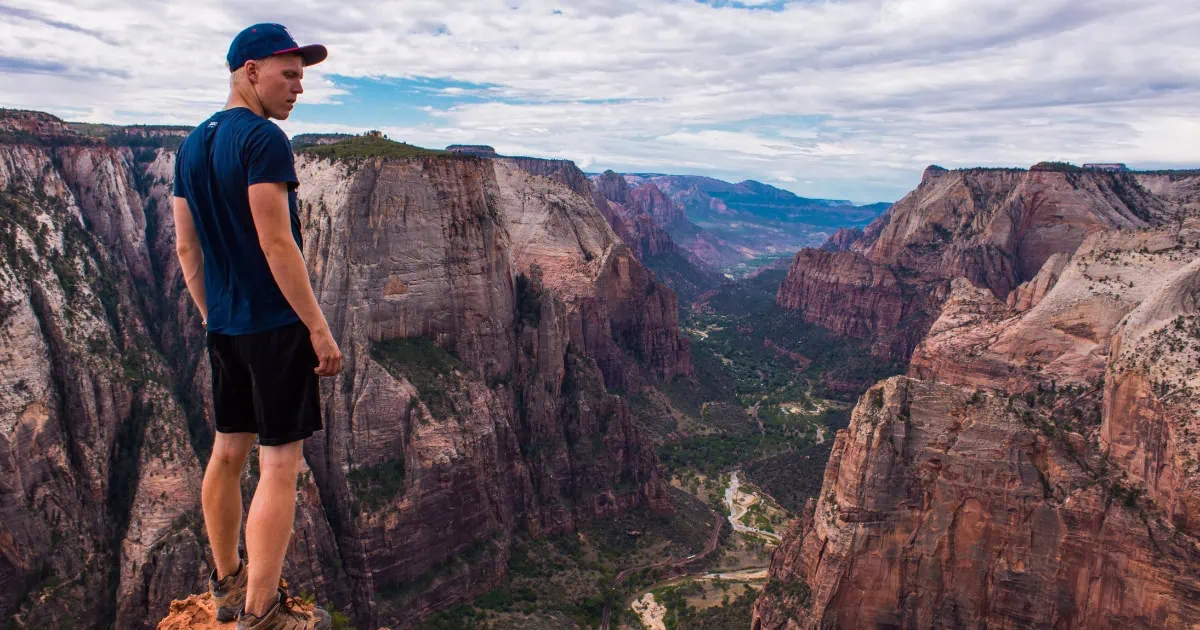
You’re standing on a narrow rock ledge. Nothing but emptiness on both sides, hundreds of metres straight down, and the people below look like ants. Your heart is pounding so loud you’re convinced they can hear it too. This is Angels Landing in Zion National Park, Utah — and that’s exactly how I felt when I was gripping the chains so tightly that my palms were sore for three days afterwards.
But that day was even more extraordinary than usual. Just as we were high up on the trail, a solar eclipse passed over America. The light suddenly shifted, as if someone had turned the brightness down to minimum, and within a few minutes an unexpected chill set in — that eerie, “this doesn’t belong here” kind of cold that gets under your skin. Combined with that narrow ridge and the infinite depth all around, it was a moment you never forget.
Zion is a park that captivates you instantly: massive red canyons, the Virgin River, sandstone walls as tall as skyscrapers, and an atmosphere that makes you feel tiny — yet incredibly alive. Lukáš and I spent three days here, and honestly? We could easily have stayed a week. Every trail, every viewpoint, every sunset here carries a special energy. And I’ll do my best to convey it in this article.
In this article, you’ll find a complete guide to Zion National Park in Utah — from the best time to visit and how the famous shuttle system works, through 15 tips on the most beautiful places and trails, to practical advice on where to stay, how much it all costs, and where to get the best burger in Springdale. If you’re planning a road trip through the US national parks, Zion should definitely be on your list.
TL;DR
- Zion National Park is located in southwestern Utah and is one of the most visited national parks in the USA — over 4 million people come here every year.
- Best time to visit is April–May and September–October. Summer is hot (over 40 °C / 104 °F) and overcrowded; winter is beautiful but some trails may be closed.
- You need a permit for Angels Landing — the lottery runs online, so apply well in advance!
- The shuttle system is mandatory from March to November for Zion Canyon Scenic Drive — you can’t drive your own car there during the season.
- The Narrows (wading through a river canyon) is an absolutely unforgettable experience, but you’ll need special gear.
- Accommodation in Springdale is the most practical option — the town sits right at the park entrance.
- Entrance fee is $35/vehicle for 7 days, or free with an annual America the Beautiful Pass ($80).
- Kolob Canyons — a lesser-known northern section of the park where you’ll encounter very few tourists.
- At least 2–3 days in the park is recommended, ideally 4 if you want to hike the main trails at a relaxed pace.
When to Visit Zion and How to Get There
Zion National Park is open year-round, but the timing of your visit can make a huge difference between an amazing experience and a frustrating crush of crowds. Let’s break down each season so you know what you’re getting into.
Best Time to Visit
Spring (April–May) is, in my opinion, the absolute ideal time. Temperatures range between 15–28 °C (59–82 °F), the Emerald Pools waterfalls are at their fullest thanks to snowmelt, and while there are already plenty of visitors, it’s not total madness yet. May is probably our favourite month — the days are long, evenings are pleasant, and the canyons are bathed in gorgeous warm light.
Autumn (September–October) is the second great choice. The heat subsides, the leaves along the Virgin River turn gold and orange, and the atmosphere is simply magical. October tends to be a bit quieter than September. If you can visit on a weekday, that goes double — weekends at Zion are always busier.
Summer (June–August) — I’d avoid it if possible. Temperatures regularly exceed 40 °C (104 °F) and the park is bursting at the seams. Queues for the shuttle bus are long, parking in Springdale is a nightmare, and hiking in the midday heat isn’t just unpleasant — it’s dangerous. If you must go in summer, get up before dawn. Seriously. Four in the morning. 😅
Winter (December–February) — beautiful, quiet, and underrated. Snow-dusted red rocks are stunning, there are hardly any tourists, and the shuttle doesn’t run, so you can drive through Zion Canyon in your own car. The downside? Some trails (Angels Landing, The Narrows) may be closed due to ice and snow. But if the lower trails are enough for you and you want peace, winter is fantastic.
How to Get to Zion National Park
By air: The nearest major airport is Las Vegas (LAS) — about 2.5 hours by car (170 miles / 270 km). This is the most practical option and exactly what we did. You can often find great deals on flights to Las Vegas from across Europe and the UK, especially if you’re flexible with dates.
Another option is Salt Lake City (SLC) airport — about 4.5 hours’ drive, but it can be beautifully combined with a visit to Bryce Canyon along the way.
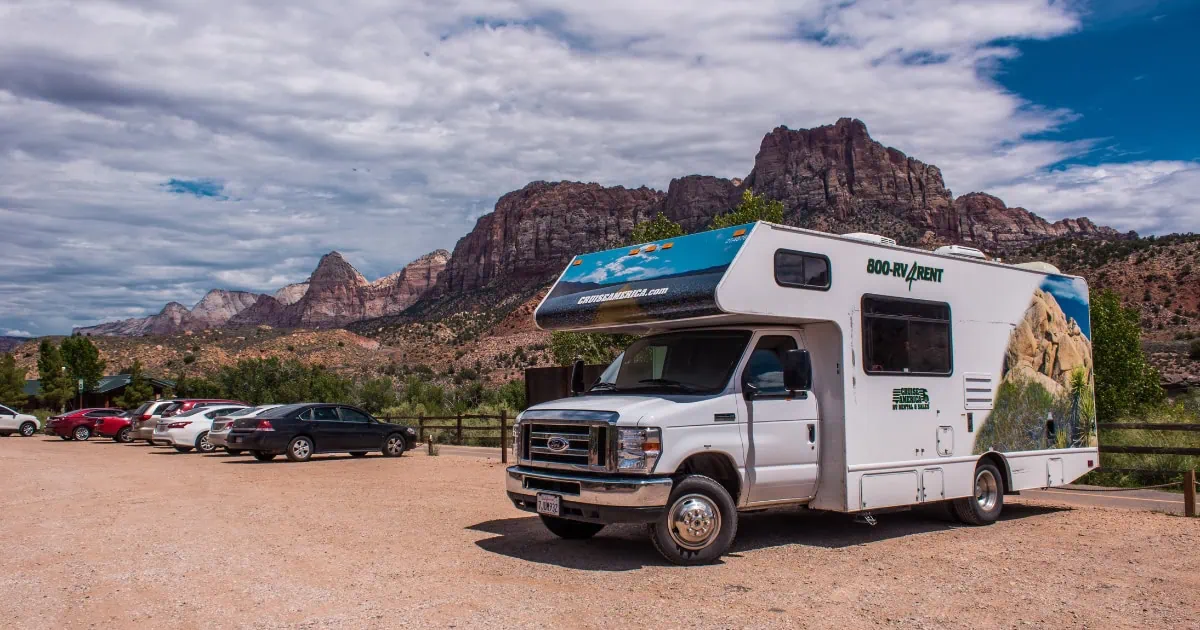
By car: A car is essential in Zion (and on any road trip across the American West, really). Lukáš and I have had consistently good experiences with RentalCars, which we use all over the world — you can compare offers and usually find a better price than going directly to the rental companies. It’s worth picking up your car right at Las Vegas airport.
The drive from Vegas to Zion is absolutely spectacular — you pass through Virgin River Gorge and the red rocks welcome you dozens of kilometres before the park itself. The final stretch along Highway 9 into Springdale is an experience in its own right.
Shuttle System — How It Works
This is probably the thing that surprises most first-time visitors to Zion: from March to November, private vehicles are not allowed on Zion Canyon Scenic Drive. The only way to reach most of the main trailheads (Angels Landing, The Narrows, Emerald Pools…) is the free park shuttle.
Shuttles run from early morning (usually from 6:00 AM) until evening, every 7–10 minutes during peak season. You board at stops in Springdale (there are two stops in town) or at the Visitor Center inside the park.
Practical tip: During the season, get to the stop EARLY. We showed up at 8 AM the first time and waited 40 minutes for a bus. The next day we got up at 5:30 and were comfortably seated on a half-empty shuttle by 6:15. That morning at the trailhead, when the first rays of sunlight pierce through the canyon and everything around you is still quiet — it’s absolutely worth setting that alarm.
Where to Stay Near Zion National Park + How Much It Costs
Most Zion visitors stay in Springdale — a charming little town right at the south entrance to the park. And it’s the logical choice: you’ve got restaurants, outdoor gear shops, shuttle stops, and an atmosphere that’s pleasantly touristy without being annoyingly commercial. Think of it as a smaller Moab, just a touch cosier.
Springdale — The Best Base
Accommodation in Springdale isn’t cheap — especially in peak season. Expect a decent hotel room to cost $150–300 per night, and in summer even more. Airbnb options tend to be a bit more reasonable, particularly if you’re travelling in a group.
A few Zion Utah hotels worth considering:
- Cable Mountain Lodge — right at the park entrance, with a pool and stunning canyon views. Pricier, but the location is unbeatable.
- Cliffrose Springdale — a gorgeous garden right along the Virgin River, modern rooms. If you want to treat yourself to a bit of luxury after a full day of hiking, this is a great pick.
- Bumbleberry Inn — a more affordable option, still in Springdale. Simple, clean, and they have a legendary bumbleberry pie (a mix of blueberries, raspberries, and blackberries).
Camping
If you want to stay right inside the park, there are two campgrounds:
- Watchman Campground — open year-round, reservations required via Recreation.gov. A site costs $30/night. Book as soon as the booking window opens (6 months in advance) — it sells out within hours.
- South Campground — seasonal, first-come-first-served. That means either arrive on a Monday morning early or you’re out of luck. Weekends aren’t worth trying.
Camping in Zion is a fantastic experience — you fall asleep under the stars with a view of the red canyon walls and it’s absolutely silent at night. Just make sure to pack a warm sleeping bag — even in summer, the canyon can get chillier at night than you’d expect.
How Much Does Zion Cost — Budget for 3 Days for Two
Here’s an approximate budget based on our trip (spring, 3 nights in Springdale):
- Park entrance fee: $35/vehicle for 7 days — or free with an America the Beautiful Pass ($80/year — worth it if you visit at least 2 national parks)
- Accommodation (3 nights): approx. $600–750
- Food (3 days): approx. $150–200 — a mix of restaurants and trail snacks
- Petrol from Las Vegas and back: approx. $60–80
- Gear rental for The Narrows: $30–50/person
- Angels Landing permit: $6/person — if you win the lottery
Total for two people for 3 days: approx. $900–1,150 — excluding flights and car rental. That’s roughly $450–575 per person.
Main Canyon: 8 Places and Trails You Must See
The heart of Zion National Park is Zion Canyon — a roughly 24 km (15 mile) long canyon carved by the Virgin River, home to most of the park’s famous Zion National Park trails and viewpoints. This is where the shuttle bus runs and where 90% of visitors head. And honestly — rightly so. Let’s walk through the best spots, from iconic adrenaline-pumping trails to peaceful riverside strolls.
1. Angels Landing — The Trail That Will Rearrange Your Life Priorities
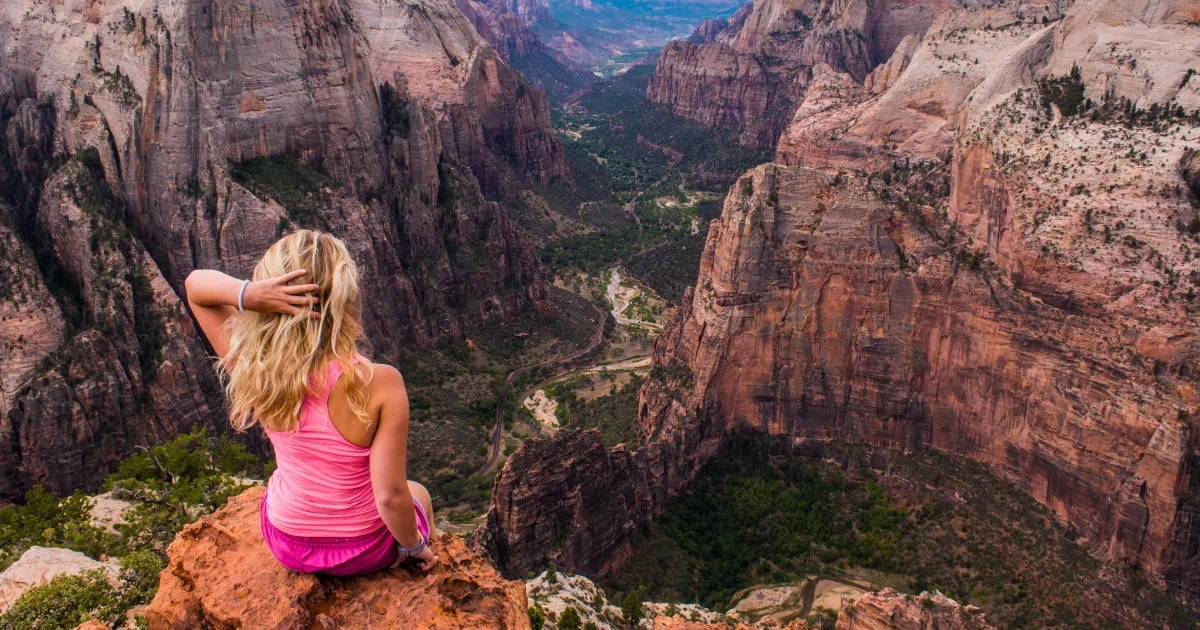
This is THE one. The trail of all trails. The reason half the people come to Zion in the first place. And also the place where you realise your life insurance might not be quite as generous as you’d like. 😅
Angels Landing is an 8.7 km (5.4 mile) round-trip trail with 453 metres (1,488 ft) of elevation gain that takes you up to a narrow rock ridge with views that will take your breath away — in every sense. The final half-kilometre follows a narrow spine where you cling to chains with sheer drops of hundreds of metres on both sides. I won’t sugarcoat it — it was one of the most intense experiences of my life.
IMPORTANT: Since 2022, you need a permit for Angels Landing! The lottery runs in two rounds — a seasonal lottery (3 months in advance) and a day-before lottery. You register on recreation.gov and pay a fee of $6/person. Don’t just enter one round — try both. The chances of winning the day-before lottery are around 20–30% outside of peak times.
The trail starts at The Grotto shuttle stop and the first section — switchbacks known as Walter’s Wiggles (21 sharp turns carved into the rock) — is strenuous but not dangerous. Then you reach Scout Lookout, a beautiful viewpoint where you decide whether to continue along the ridge or not. If you have a fear of heights, Scout Lookout is an absolutely legitimate destination — the views from there are stunning too.
Practical tip: Go as early in the morning as possible. Ideally be at the trailhead by 6:30–7:00 AM. You’ll have the trail almost to yourself, it won’t be hot, and you won’t be meeting hundreds of people coming the other way on the ridge (which is far more dangerous than the trail itself).
2. The Narrows — Wading Through a Canyon You’ll Never Forget
If Angels Landing is the king of Zion, The Narrows is the queen.
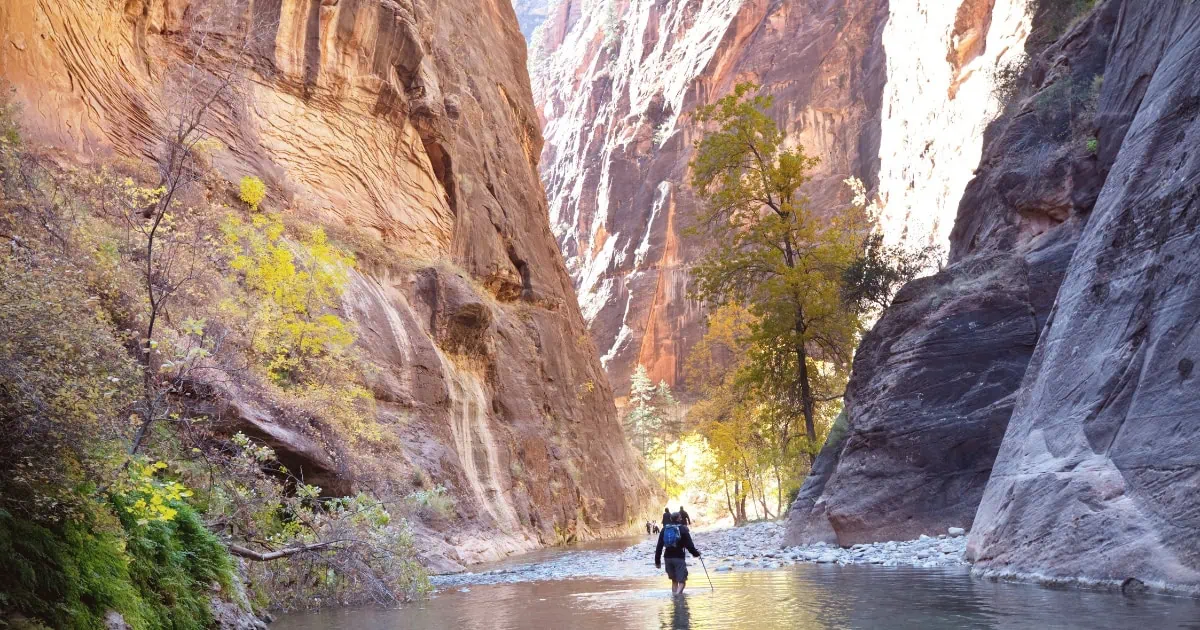
The Zion National Park Narrows is a trail where you literally wade through a river in a narrow canyon whose walls tower 300 metres (1,000 ft) above you and, at the tightest points, are only a few metres apart. It’s surreal, gorgeous, and utterly unique — I’ve never experienced anything like it anywhere else in the world.
There are two options:
- Bottom-up (most popular) — you start at the Temple of Sinawava shuttle stop at the end of the Scenic Drive, walk the paved Riverside Walk (1.6 km / 1 mile), and then step into the river. You walk as far as you like and return the same way. No permit needed. Most people go 3–5 km into the canyon.
- Top-down (full-day adventure) — a 26 km (16 mile) one-way trail that requires a permit and advance planning. For experienced adventurers only.
What you’ll need: Neoprene socks, special water shoes, and a hiking pole. You can rent everything from outfitters in Springdale — the most popular are Zion Outfitter and Zion Adventure Company. Renting a full set costs $30–50/person and absolutely don’t skip this. The riverbed is extremely slippery and without proper shoes you’ll end up on your backside within the first five minutes (confirmed by Lukáš, who tried it in sandals — don’t be like Lukáš 😅).
WATCH THE WEATHER: The Narrows must NOT be attempted when there’s a risk of storms! The canyon can fill with flash floodwater within minutes, and in a narrow canyon there’s nowhere to escape. The park closes The Narrows when rain is forecast — check the forecast and respect closures. This is not the place for heroics.
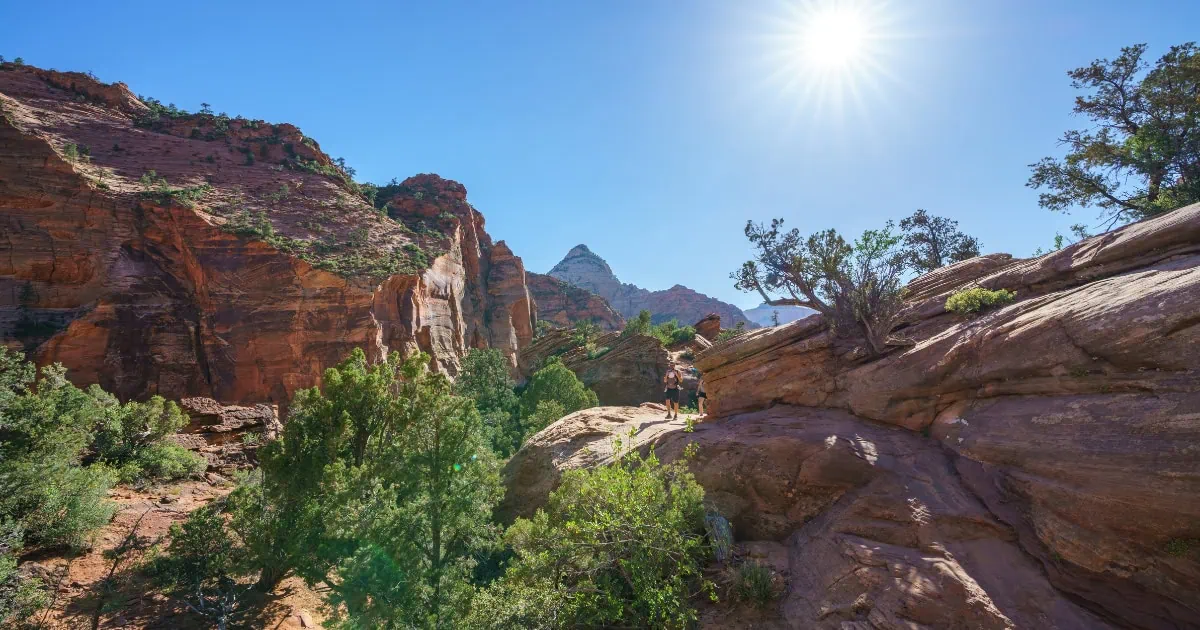
3. Canyon Overlook Trail — Best Effort-to-View Ratio
If you only have time for one short trail, do this one. Canyon Overlook is a short hike (1.6 km / 1 mile round trip) with minimal elevation gain that leads you to a viewpoint with one of the most photogenic views in the entire park.
The trailhead is just beyond the eastern portal of the Zion-Mt. Carmel Tunnel (that’s the famous tunnel carved through rock that you drive through on Highway 9). Be warned — parking is limited, so arrive early or in the afternoon when people are leaving.
The trail is somewhere between easy and moderate — there are steps carved into the rock in places and one section with mild exposure, but nothing dramatic. At the end, you stand on a rocky outcrop overlooking Pine Creek Canyon with the majestic canyons of Zion stretching into the distance. Sunset from here is absolutely breathtaking.
The best thing about Canyon Overlook is that truly anyone can manage it, yet the views rival those of much more demanding trails. Perfect for people who don’t have a full day for hiking but want to see Zion in all its glory.
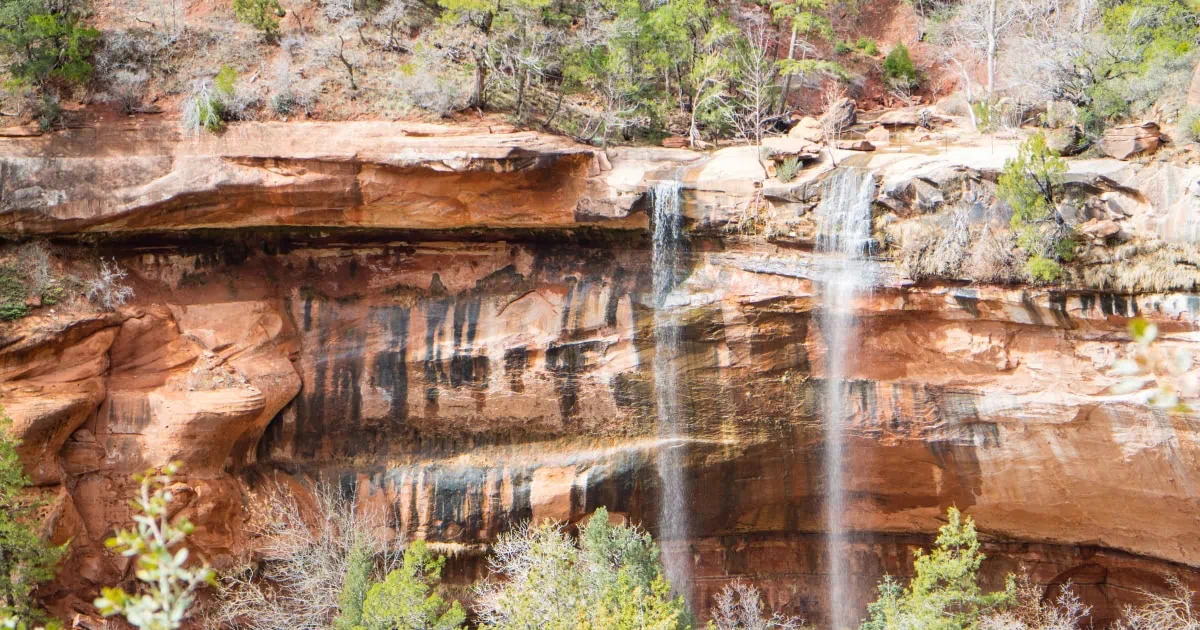
4. Emerald Pools — Three Pools, Three Difficulty Levels
Emerald Pools is a series of three “pools” (more like rock pools and waterfalls) on three levels — Lower, Middle, and Upper. It’s one of the most popular trails in the park, and each level offers a slightly different experience.
Lower Emerald Pool (1.9 km / 1.2 miles round trip) is a paved, wheelchair-accessible path leading to an overhang with water cascading down. It’s beautiful and absolutely anyone can do it — from small children to grandparents. In spring, when the snow melts, the waterfall is powerful and impressive. In late summer, it might be just a trickle (but the walk is still lovely).
Middle and Upper Emerald Pool require a bit more effort — the path is steeper and rockier. Upper Pool (4.8 km / 3 miles round trip total) is the quietest and least visited of the three. We sat on a rock by the upper pool, munched on sandwiches, and there wasn’t a soul around — in Zion, that’s a rarity!
The trail starts at the Zion Lodge shuttle stop. I’d recommend combining the Lower Pool (a short detour) and then continuing up to the Upper Pool — that way you get the most out of a single trip.
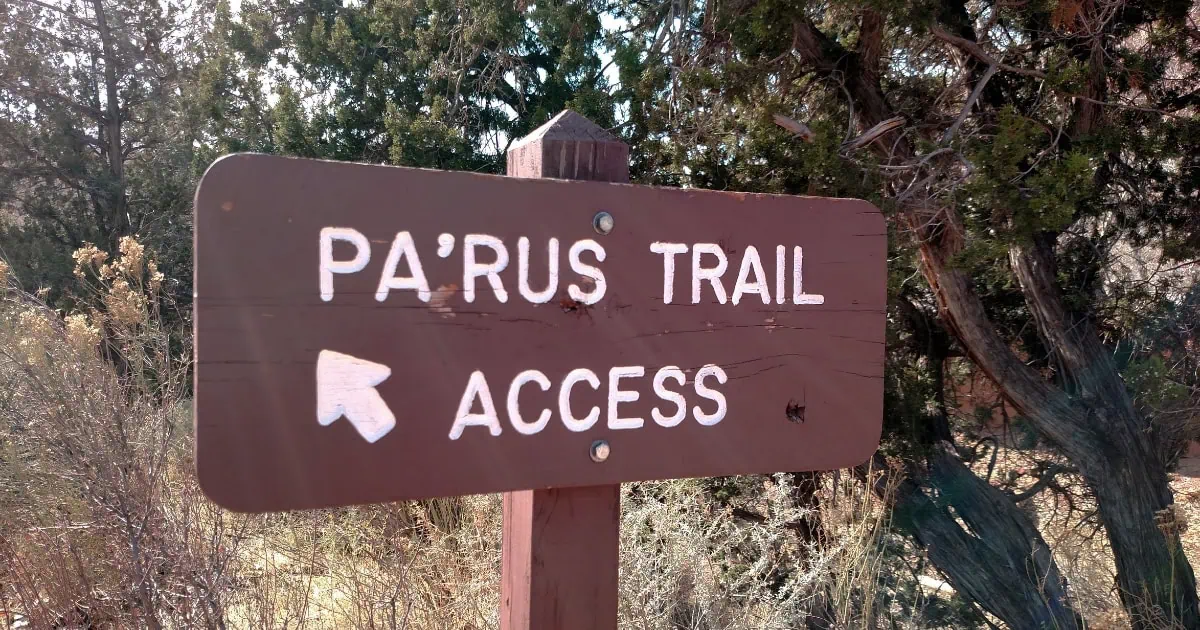
5. Pa’rus Trail — For Those Who Want a Relaxed Walk (and Dogs!)
I have to mention this trail because it’s genuinely unique — it’s the only trail in the main canyon where dogs and bicycles are allowed. So if you’re travelling with a four-legged companion, Pa’rus is your trail.
It’s a 5.6 km (3.5 mile) paved path along the Virgin River running from the Visitor Center to the Canyon Junction stop. It’s flat, easygoing, and offers lovely views of Watchman and other rock formations. Ideal for a warm-up or an evening stroll when you’re heading back from a more demanding trail.
6. Observation Point — Views That Outdo Even Angels Landing
This trail is, according to many experienced hikers (and I wholeheartedly agree), the most beautiful in all of Zion — and paradoxically far less visited than Angels Landing, despite offering even better views.
Note — the main trail from the canyon via Echo Canyon was closed due to a rockslide and its status changes. Currently (2025), the best way to reach Observation Point is from the east side of the park via the East Mesa Trail — 10.6 km (6.6 miles) round trip along a mostly flat path. Access is via a dirt road (you’ll need a high-clearance vehicle or at least an SUV) and the trailhead is outside the main part of the park, so you’ll encounter a fraction of the people.
The reward? You stand on the canyon rim, 640 metres (2,100 ft) above the Virgin River, looking down at Angels Landing — that famous ridge where people clamber along looks like a tiny rock from up here. It’s a perspective that will knock you sideways. Lukáš and I sat here for about an hour and just stared. Words are unnecessary.
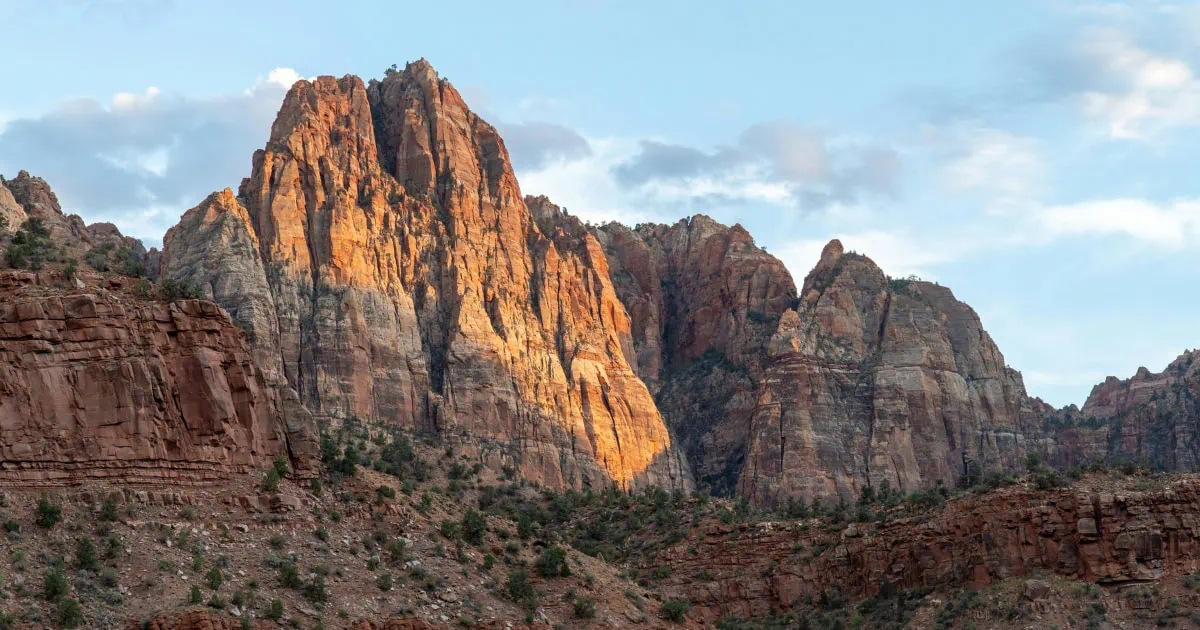
7. Riverside Walk — An Accessible Trail for Everyone
Riverside Walk is a paved, wheelchair-accessible path (3.2 km / 2 miles round trip) that leads from the Temple of Sinawava shuttle stop along the Virgin River. It’s actually the same path you walk at the start of The Narrows — but you don’t have to step into the water.
The trail is lined with lush greenery (Zion is surprisingly green thanks to the river), hanging gardens on the cliff walls, and it’s simply a pleasant, tranquil stroll. Ideal for an afternoon unwind after a tough morning hike, or for families with small children.
8. Weeping Rock — The Cliff Face That “Weeps”
A short (0.7 km / 0.4 miles round trip) but fascinating stop. Weeping Rock is a rock overhang from which water constantly drips — rain that fell on the plateau above the canyon seeps through the sandstone and, after about 1,200 years (!), emerges on the surface. Yes, the water you see dripping here fell as rain during medieval times. That’s just mind-blowing, isn’t it?
The trail is short and steep, but anyone can manage it in 15–20 minutes. A lovely cooling stop on a hot day — it’s always several degrees cooler beneath the overhang.
Kolob Canyons: 2 Tips for the Lesser-Known Side of Zion
Most tourists only visit the main Zion Canyon and have no idea about the northwestern section, Kolob Canyons. That’s a shame — and an advantage for you. This part of the park offers dramatic red canyons, peace, and the feeling of being completely on your own.
9. Kolob Canyons Viewpoint — The Red “Fingers” of the Canyon
Kolob Canyons Road is an 8 km (5 mile) scenic drive that takes you up to a viewpoint overlooking five massive rock “fingers” — red sandstone towers jutting out of the canyon. It’s a beautiful, easy stop — you can drive the road in half an hour and the viewpoint opens up a vista that’s completely different from anything in the main canyon.
The turnoff to Kolob Canyons is right off Interstate 15, about 40 minutes north of Springdale. If you’re driving to Zion from Salt Lake City or continuing towards Cedar City, it’s the perfect stop along the way.
10. Taylor Creek Trail — Three Historic Cabins in a Canyon
One of the prettiest trails in the Kolob section. 8 km (5 miles) round trip, an easygoing trail along a creek where you ford shallow water twice and pass three historic pioneer cabins from the 1930s. At the end of the trail, you stand before the Double Arch Alcove — a massive rock overhang.
We met exactly four people on this trail the entire day. Four. In the main canyon, multiply that by a hundred. If you’re looking for the “real” Zion without the crowds, Kolob is the answer.
Around the Park and Scenic Drives: 3 Tips for Extra Excursions
Zion isn’t just what’s inside the park boundaries. The surrounding landscape is spectacular in its own right, and a few spots nearby are well worth a detour.
11. Zion-Mt. Carmel Highway — One of the Most Beautiful Drives in the USA
Highway 9, which runs through the eastern part of the park, is an attraction in itself. You drive through a 1.1-mile-long tunnel (have $15/vehicle ready if you have an oversized vehicle), and then the landscape transforms dramatically — from a narrow canyon, you emerge into a world of white and red sandstone formations that look like they belong on another planet.
Checkerboard Mesa, with rock formations resembling a chessboard, is one of the most photogenic spots along the road. Stop and have a wander — you don’t need to be on any trail, just look around.
12. Grafton Ghost Town — An Abandoned Western Town
About 5 km (3 miles) south of Springdale lies Grafton — an abandoned pioneer town from the 19th century where the film Butch Cassidy and the Sundance Kid was filmed. A few original buildings still stand, along with an old cemetery, and the red rocks of Zion tower in the background.
It’s a short detour along a dirt road (usually passable in a regular car) and the place has a peculiar, peaceful atmosphere. Plus, it’s a great spot for photos — especially at sunset when the entire scene turns crimson.
13. Springdale — More Than Just a Base for the Park
Springdale is a town you’ll fall in love with. It’s not a tourist trap — it’s a vibrant place with galleries, boutiques, cafés, and excellent restaurants. The main street (Zion Park Blvd) is about 2 km long and easily walkable.
I’d recommend saving one afternoon purely for Springdale — after days of hiking, it’s lovely to just stroll around, grab some good food, and check out the local galleries. Deep Creek Coffee is a superb café for a morning start, and Oscar’s Café is legendary for breakfast (but expect a queue at weekends).
Lesser-Known Trails: 2 Tips for Adventurers
14. Hidden Canyon — A Secret Canyon with an Exposed Trail
Hidden Canyon is a less-visited alternative to Angels Landing — the trail starts from the same shuttle stop (Weeping Rock) and has similarly exposed sections with chains, but it’s shorter (4.8 km / 3 miles round trip) and less strenuous. At the end, you enter a narrow, shady canyon where you’ll find a natural rock arch and dripping water.
Note: Check the current trail status — it’s occasionally closed due to rockslides. Information is available at the Visitor Center or on the NPS website.
15. Watchman Trail — A Sunset You Won’t Find on Instagram
An unassuming trail (5.4 km / 3.3 miles round trip) that starts right at the Visitor Center and takes you up to a viewpoint with a panoramic vista over Springdale, Watchman Peak, and Lower Zion Canyon. Most tourists don’t know about it because everyone takes the shuttle deeper into the canyon.
And that’s precisely why Watchman Trail is ideal for sunset. When the canyon turns orange and pink, you’re sitting at the viewpoint with the first lights of Springdale twinkling below — it’s romantic, peaceful, and utterly gorgeous. One of our most beautiful evenings in Zion.
What to Eat and Drink: A Guide for Hungry Adventurers
Food in Springdale is surprisingly good — I was expecting typical American fast food and instead we found a range of genuinely great restaurants. Here are our tips:
- Oscar’s Café — legendary breakfast spot in Springdale. Portions are enormous (classic America 😁), the huevos rancheros are fantastic, and the vibe is pleasantly laid-back. Expect a queue at weekends — arrive before 8:00 AM.
- MeMe’s Café — a smaller, cosier breakfast alternative. Excellent pancakes and smoothie bowls.
- Whiptail Grill — Mexican food with a local twist. The tacos and burritos are great and reasonably priced by Springdale standards.
- Bit & Spur — probably the best dinner in town. A bit pricier, but the steaks and Mexican cuisine are top-notch. The evening atmosphere is wonderful — you sit on the porch overlooking the red rocks.
- Deep Creek Coffee — speciality coffee, ideal for a morning start. If you’re like me and don’t function without coffee, head here.
Trail snack tip: Stock up on supplies at Sol Foods Supermarket in Springdale — they have good sandwiches, fruit, and protein bars. There are no shops inside the park (apart from a small stand at Zion Lodge) and you’ll be grateful for every bite on the trails.
Budget-wise, expect to pay about $12–20/person for breakfast, $15–25 for lunch, and $20–40 for dinner. With drinks and tips (15–20% is standard in the US!), it adds up quickly.
Practical Tips to Wrap Up
Entrance Fees and Passes
Entrance to Zion National Park is $35/vehicle for 7 days. However, if you’re planning to visit more US national parks (and if you’re reading this blog, you probably are 😉), get the America the Beautiful Pass for $80. It’s valid for a year and covers entry to ALL national parks and federal recreation areas in the US — that’s 400+ sites. It pays for itself with just two parks.
You can buy the pass right at the park entrance, on the NPS website, or at REI stores.
What to Pack for Zion
- Plenty of water — at least 2–3 litres per person for a full-day hike. Zion is dry and hot; dehydration is a real danger.
- A hat and sunscreen — the sun in the canyon is merciless.
- Good hiking boots — sturdy trekking boots will do for most trails. Here are our tips on choosing the right pair.
- Trekking poles — essential for The Narrows, unnecessary for Angels Landing (you need your hands free for the chains).
- A torch/headlamp — if you’re planning an early start, it’s still dark at the trailheads.
Internet and Connectivity
Mobile signal in Zion is very limited — practically non-existent in the main canyon, decent in Springdale. Wi-Fi is available in hotels and cafés. If you need data on the go during your US trip, I’d recommend checking out an eSIM from Holafly — it works brilliantly and saves you the hassle of dealing with American SIM cards.
Safety
- Flash floods — flash floods are a real danger in Zion, especially in narrow canyons (The Narrows, Hidden Canyon). Monitor the weather and respect closures.
- Falling rocks — a recent rockslide closed the Observation Point trail for years. Pay attention to signs.
- Heat — in summer, temperatures exceed 40 °C (104 °F). Hiking in the heat risks heatstroke and dehydration. Drink, drink, drink.
- Exposure — Angels Landing and Hidden Canyon have exposed sections. If you’re afraid of heights, there’s no shame in turning back. Seriously.
Flights and Transport
Look for affordable flights to Las Vegas (the nearest major airport) through comparison sites — deals from Europe and the UK pop up regularly, especially if you’re flexible with dates. Return flights under £400 are achievable if you plan ahead.
For car hire, we use RentalCars — you can compare offers and usually find a better price than going directly to the rental companies at the airport. A car in the US is essential; public transport to the national parks is practically non-existent.
Travel Insurance
The USA is a country where you absolutely do not want to find yourself without travel insurance. A medical bill for a broken leg on the trail can easily exceed £50,000. For shorter trips, a good comprehensive policy from a UK provider is ideal, and for longer trips we recommend SafetyWing — you can find our detailed review in the linked article.
Frequently Asked Questions (FAQ)
What is Zion National Park and where is it located?
Zion National Park is one of the oldest and most visited national parks in the USA. It’s located in southwestern Utah, about 2.5 hours by car northeast of Las Vegas and 4.5 hours south of Salt Lake City. The park protects a monumental canyon carved by the Virgin River, with sandstone walls up to 600 metres (2,000 ft) high in shades of red, orange, and white.
How many days do I need for Zion National Park?
Two days is the minimum — you’ll manage Angels Landing (or another main trail) and The Narrows. Ideally plan for 3–4 days so you have time for Canyon Overlook, Emerald Pools, Kolob Canyons, and a relaxed exploration of Springdale. If you’re combining Zion with other Utah national parks (Bryce Canyon is just 1.5 hours away), allow 2–3 days purely for Zion.
Do I need a permit for Angels Landing?
Yes, since April 2022, a permit is required for anyone wanting to continue beyond Scout Lookout onto the exposed ridge section. The lottery runs in two rounds: seasonal (opens 3 months in advance) and day-before. Registration is on recreation.gov, with a fee of $6/person. You don’t need a permit just for Scout Lookout (the viewpoint before the ridge).
When is the best time to visit Zion National Park?
The best months are April, May, September, and October. Temperatures are pleasant (15–28 °C / 59–82 °F), the waterfalls have water, and there are fewer tourists than in summer. Summer (June–August) is best avoided due to extreme heat and crowds. Winter is beautiful and quiet, but some trails may be closed.
How does the shuttle system work in Zion?
From early March to late November, Zion Canyon Scenic Drive is closed to private vehicles. You get to the trailheads via a free shuttle bus that runs from early morning until evening. You board in Springdale or at the Visitor Center. Outside of the season (December–February), you can drive your own car.
Can I do The Narrows with children?
It depends on age and experience. The lower part of The Narrows (bottom-up) has no age restriction, but the river currents can be strong and the bottom slippery. With older children (10+) who can swim and are used to the outdoors, it’s manageable — but every child is different. With small children (under 6), I wouldn’t recommend it. An excellent alternative for families is Riverside Walk, which runs along the river without requiring you to enter the water.
Is the America the Beautiful Pass worth it?
If you’re visiting at least two national parks, absolutely. The pass costs $80 and covers entry to all national parks and federal recreation areas for an entire year. Zion ($35) and Bryce Canyon ($35) alone come to $70 — add just one more park and it pays for itself. If you’re planning a bigger road trip across the USA, it’s a no-brainer.
Tips and Tricks for Your Vacation
Don’t Overpay for Flights
Search for flights on Kayak. It’s our favorite search engine because it scans the websites of all airlines and always finds the cheapest connection.
Book Your Accommodation Smartly
The best experiences we’ve had when looking for accommodation (from Alaska to Morocco) are with Booking.com, where hotels, apartments, and entire houses are usually the cheapest and most widely available.
Don’t Forget Travel Insurance
Good travel insurance will protect you against illness, accidents, theft, or flight cancellations. We’ve had a few hospital visits abroad, so we know how important it is to have proper insurance arranged.
Where we insure ourselves: SafetyWing (best for everyone) and TrueTraveller (for extra-long trips).
Why don’t we recommend any Czech insurance company? Because they have too many restrictions. They set limits on the number of days abroad, travel insurance via a credit card often requires you to pay medical expenses only with that card, and they frequently limit the number of returns to the Czech Republic.
Find the Best Experiences
Get Your Guide is a huge online marketplace where you can book guided walks, trips, skip-the-line tickets, tours, and much more. We always find some extra fun there!


