

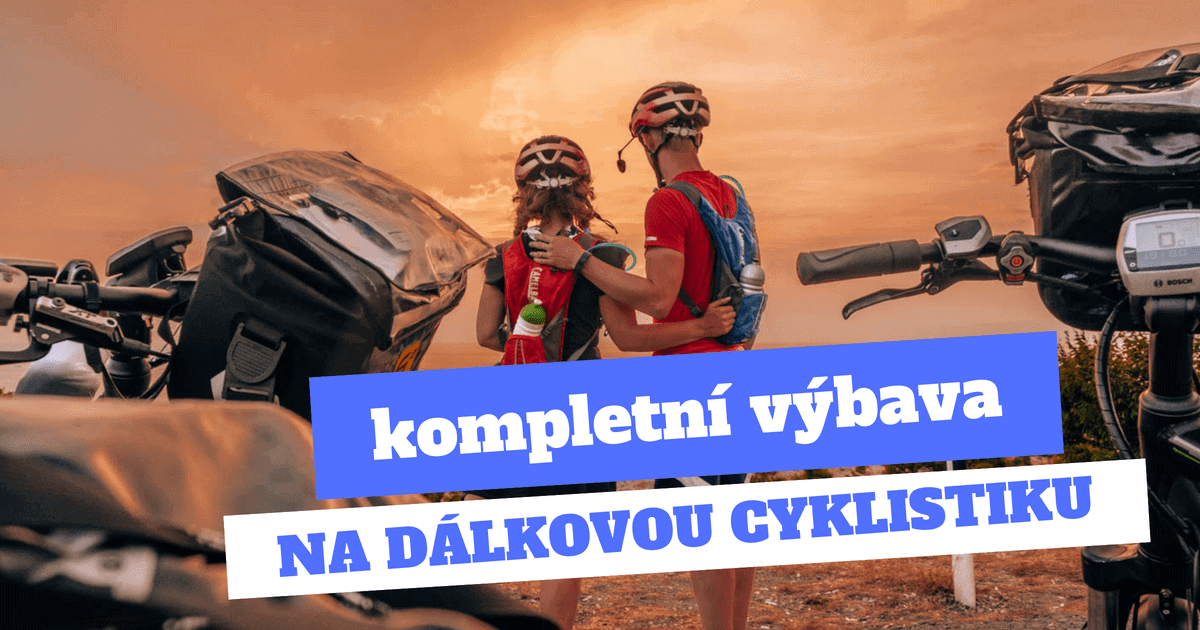
Our cycling journey across Europe started at the computer. We were researching all the cycling gear you need for long-distance touring. The bike, tent, and sleeping pad were obvious, but we were looking for specific tips on how to make the trip easier and ideas for clever gadgets that might come in handy on the road.
We couldn’t find much, so we turned to the experts. We spoke with retailers, manufacturers, and seasoned cyclists to get a clear picture of what no touring cyclist should be without.
In the end, we set off with gear that fit into four bike panniers, two backpacks hanging off the rear racks, and a handlebar bag. Our luggage contains everything from tools, cooking equipment, food, and spices to clothing, plus a heap of electronics (and a drone) that we need for our work.
“Because we know how difficult it is to prepare for a bike trip (we spent the first week popping into shops every other day to buy things we hadn’t thought of), we’ve put together a list of everything we packed.”
1) Bikes, Panniers and Accessories
Choosing the bike was the hardest part — not only because it’s the biggest investment of the entire trip. The bike’s design affects everything else, from pannier mounting options to how comfortable the ride feels.
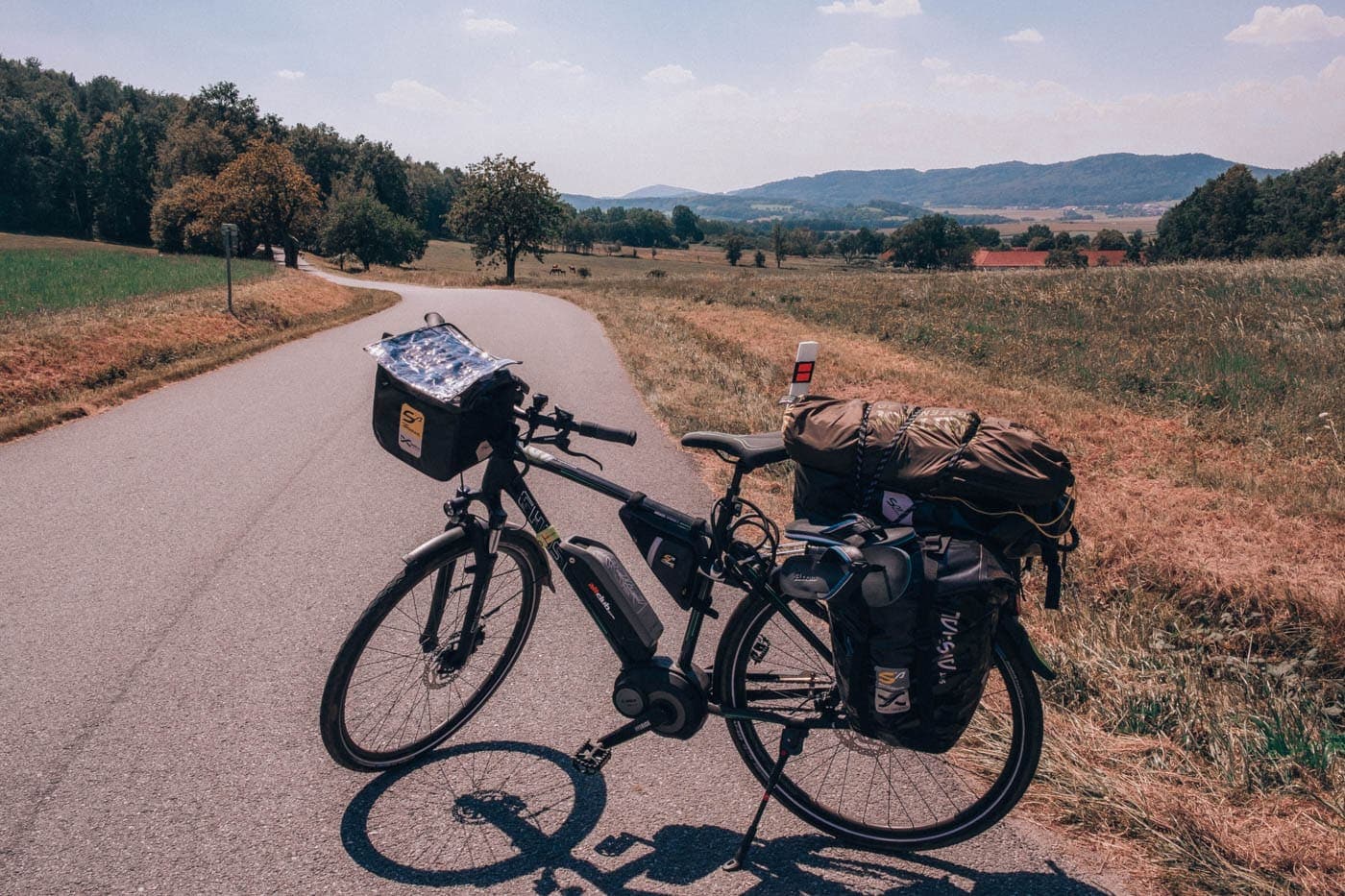
We’re not hardcore cyclists, so we went for e-bikes. You can’t really choose a good bike on your own, and even with help at a specialist e-bike shop, you still won’t be sure what to go for. We eventually picked bikes from the Ghost brand. Even though it’s supposedly a higher-end brand, we still have issues with the bikes. The more electronics, the more problems. 🙂
Our beasts are the Ghost Andasol Trekking 5 (Lukáš) and the Ghost Andasol Wave 9 (Luci). Even though the stated range is 90–215 km, with our load and terrain, we can manage 70 km at most before we start looking for a charger (90 km is the absolute limit — we’ve never gone further on a single charge).
Bike Panniers
On a long bike trip, you’ll be carrying loads of stuff that needs to go somewhere. There’s a wide range of panniers and bike bags you can buy. But it’s not as simple as walking into a shop, picking the nicest-looking ones, packing up, and riding off. Unfortunately, it’s not that easy.
Panniers attach to racks that can be mounted on the front and rear wheels (on most bikes, at least). But every extra kilogram seriously affects handling, so you need to pay attention to weight distribution.
We went with panniers from the Czech manufacturer Sport Arsenal, who gave us excellent advice. Due to load capacity, we had to remove the original rear racks (supplied by the bike manufacturer) and fit sturdier ones.
On each bike, we fitted:
- 1x rear touring rack
- 2x waterproof high-capacity panniers
- 1x sleeping bag pannier that doubles as a backpack
- 1x handlebar bag
- 1x phone mount
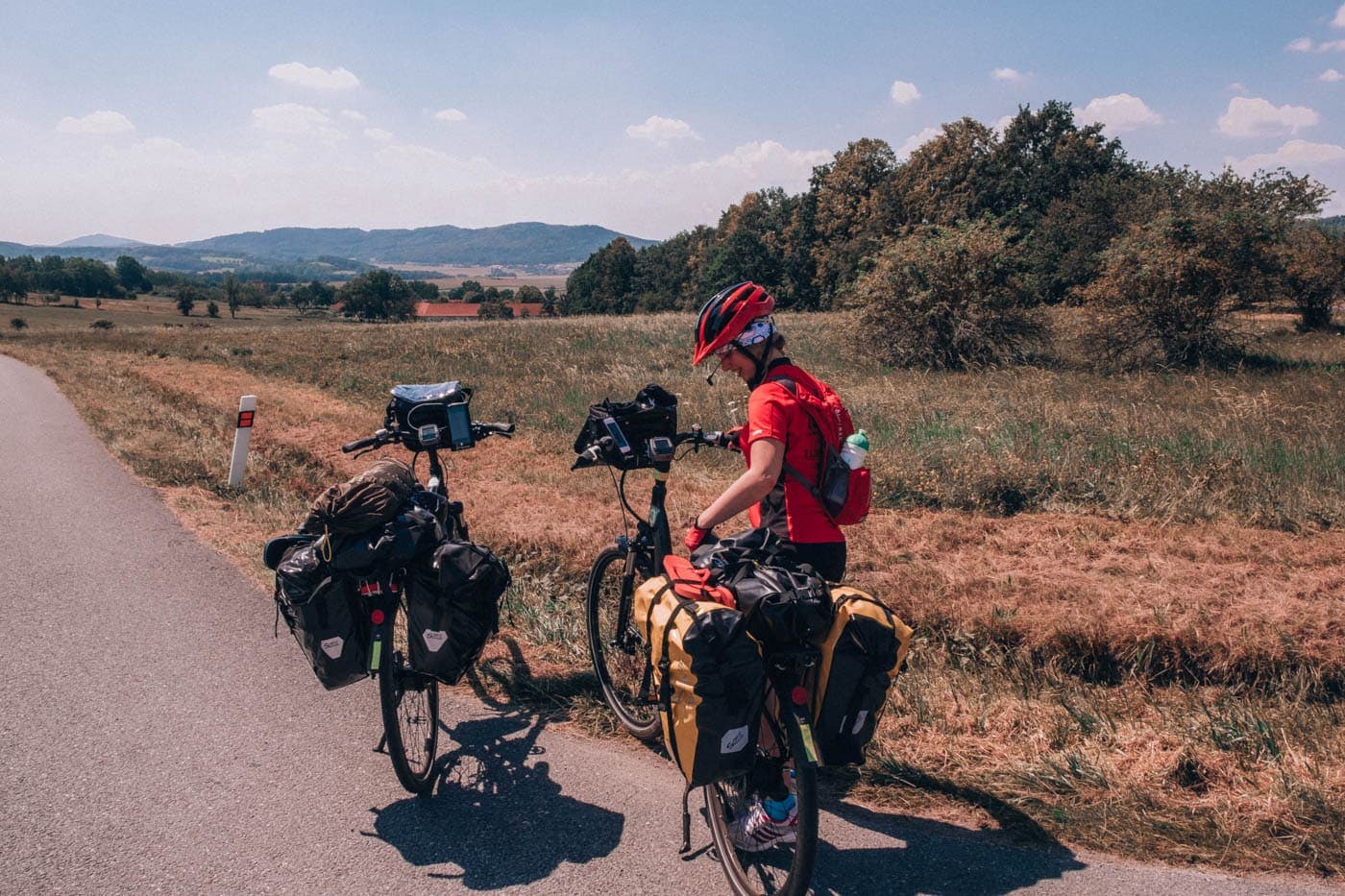
We chose all our panniers from the “expedition cycle touring” range because they’re welded and fully waterproof. We carry laptops, cameras, and other electronics that are extremely sensitive to moisture. Without waterproof panniers, one rain shower would be enough to destroy our devices.
Bike Accessories You Can’t Do Without
- A solid bike lock that can easily secure two bikes together. We have one that can’t be easily cut through, but we don’t carry a fully metal U-lock. That would be way too heavy. 🙂
- At least two puncture repair kits. One with vulcanising glue and one self-adhesive as a backup in case the glue dries out (though the self-adhesive patches never worked for us, so we’re not sure how useful they really are).
- Bike tools. We carry a 15mm wrench, a set of hex keys, and tyre levers.
- Chain lube — you can’t go without it. We oil the chain every other day.
- A frame-mounted pump. Because when you get a flat, you need to inflate it!
- Plastic zip ties (cable ties). We use them as a first-aid fix for everything, from securing items to the bike frame to realigning a mudguard.
- A first-aid kit. You wouldn’t believe how many times you’ll cut yourself (Lukáš even sliced his leg with a knife!), bump into things, or fall off the bike.
TIP: Looking for great cycling routes in Europe? Check out some tips on the most beautiful cycle paths.
2) Camping Gear
This part was easier because we had the help of Víťa from 4camping, an experienced traveller. He helped us choose the tent and sleeping pad.
Tent: Marmot Tungsten UL 3P
For the trip, we needed an ultralight tent because every gram counts. It weighs just 1.9 kg, packs down to a length that fits perfectly on the rear rack, is very spacious, and we can pitch or pack it away in five minutes. Meet the Marmot Tungsten UL 3P.
It measures 229 cm in length and 168 cm in width, so we fit inside comfortably with all our panniers. Only the bare bikes stay outside.
Sleeping Pads: Pinguin Skyline L
We’re not exactly high-maintenance — in Uganda, Hawaii, and other places where we’ve camped, we slept on the cheapest foam pads from Walmart. But when we visited an outdoor expo and tried an inflatable sleeping pad, there was no going back.
The Pinguin Skyline L is a fantastic pad with an integrated pump that you inflate by stepping on it. It takes about three minutes, and we’ve slept comfortably on it even on a rocky forest edge. Packed down, it measures 13 × 32 cm and fits easily into a bike pannier.
Sleeping Bag
Just like the tent, the most important feature of a sleeping bag is its weight. We’re happy with our Trimm Cyklo — it weighs only 650 g and is ideal for summer temperatures. It serves us equally well on warm lowland nights and cold mountain ones. Packed dimensions are truly minimal at 15 × 24 cm.
Cooking Set
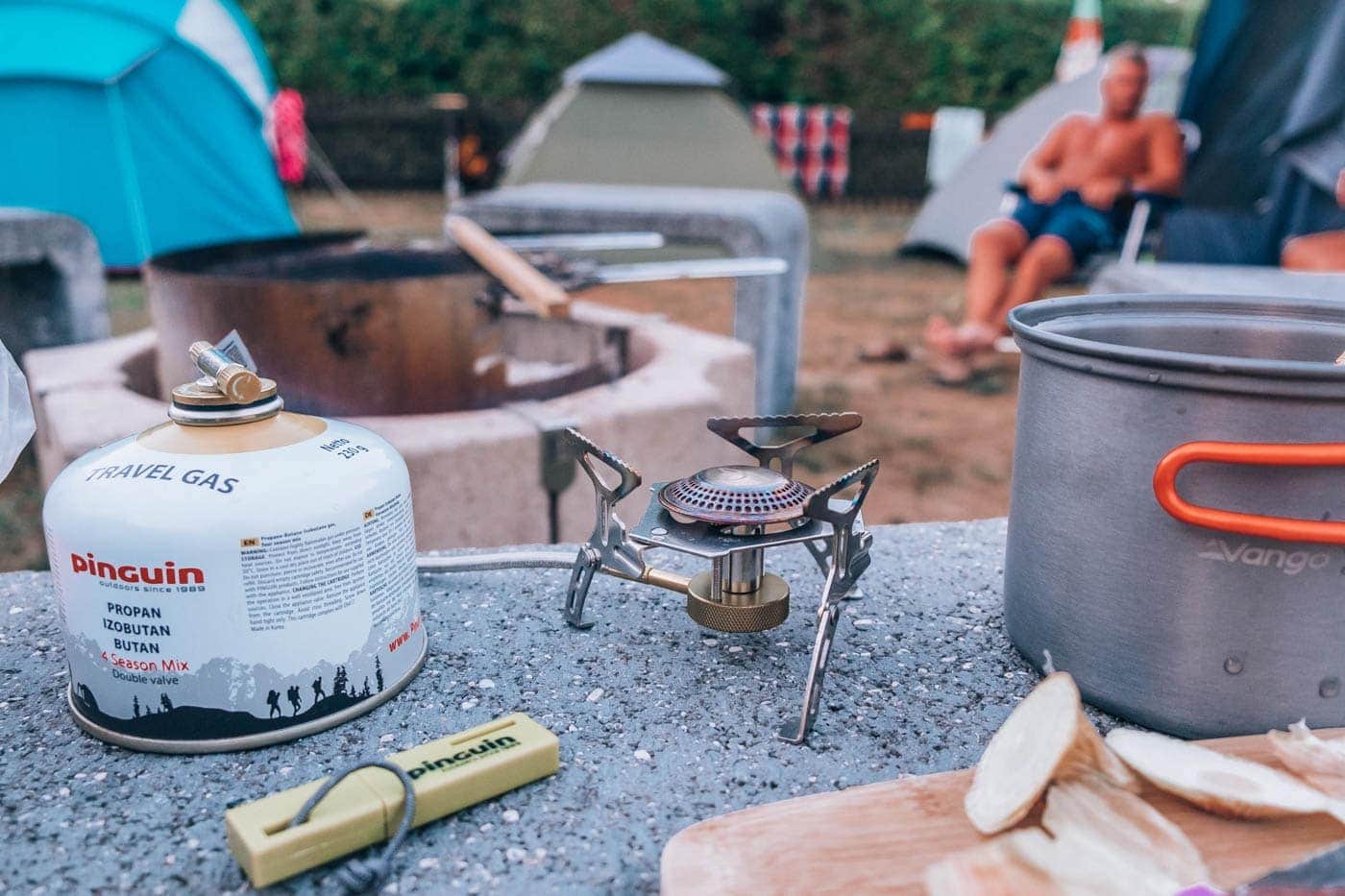
A stove is absolutely essential when camping. We’re fans of the Czech brand Pinguin, so we picked their gas stove, which is freestanding. That means it doesn’t screw onto the cartridge but stands on its own three legs. These burners are more stable and can support a larger pot.
We also carry a Pinguin fire striker (because matches can get damp) and a set of two pots.
Don’t forget mugs (what else would you make coffee in!), cutlery, and gas cartridges.
3) Clothing
Clothing always takes up the most space. That’s why we wanted pieces that are compact, functional, and don’t need washing too often. On the bike, moisture-wicking and quick-drying properties are key — because nobody wants to put on a damp jersey in the morning.
We kitted ourselves out with a sports range infused with nanosilver from the Czech brand Nanosilver. We’re most impressed with the socks — three pairs genuinely last us 10–12 days. The silver effectively kills odour-causing bacteria and organic compounds found in sweat, so the jersey, t-shirts, and socks are virtually fresh by morning.
What we carry:
- 3x pairs of sports socks
- 2x long-sleeve base layer tops
- 2x short-sleeve t-shirts
- 1x cycling jersey (men’s, women’s)
In case we end up in the mountains where it gets cold at night (or starts raining), we carry a men’s Marmot Precip Jacket and a women’s Marmot WM Minimalist Jacket.
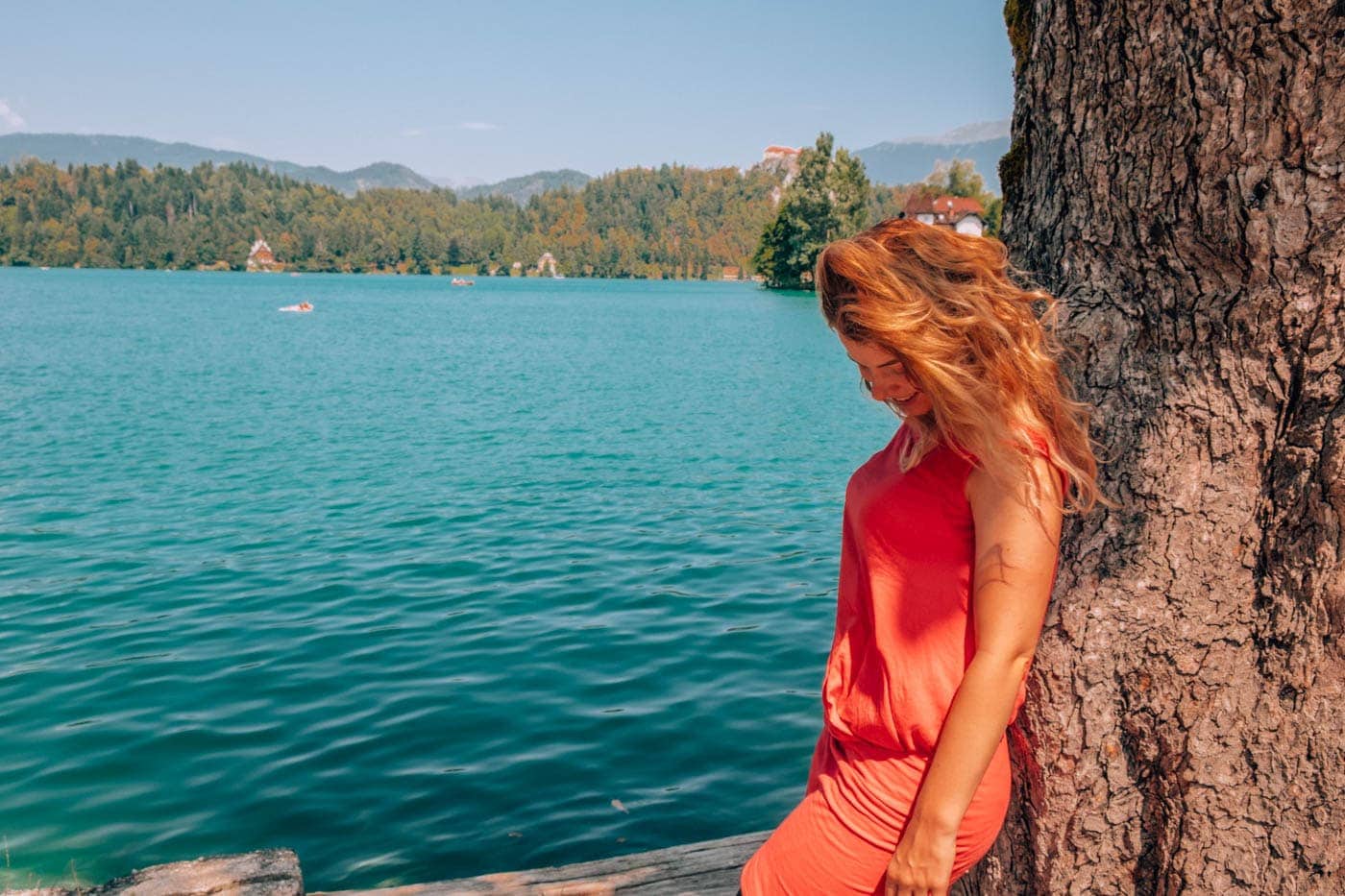
Even though we sweat all day on the bikes, we like to dress nicely when we’re in town. But when you’re touring, every gram counts, so we spent a long time choosing (well, Lucka did the choosing 🙂) the perfect travel dress. She found them at Lady Vyvialová near Ostrava, who makes ultralight fashion pieces from nanomaterials.
So we carry two dresses that weigh practically nothing (less than a pair of shorts!), are super comfortable, and dry quickly.
4) Clever Gadgets
Smart Helmet: Livall
We were looking for a safe way to listen to podcasts and take phone calls while riding. Livall helmets have integrated speakers positioned above the ears, so when you’re listening to something, you can still hear your surroundings — cars, other cyclists shouting, everything. And if you have two helmets (like us), you can talk to each other through an app (though that requires an internet connection, so we don’t use it to save data).
The helmets also feature built-in indicators, making you highly visible in low light. Once you learn to operate them, you can signal turns just like a car.
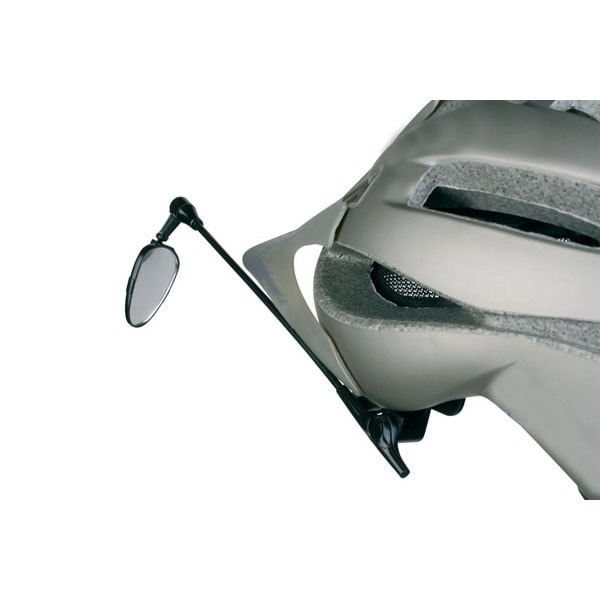
Helmet-Mounted Rearview Mirror
Sure, people will look at you like you’re from another planet, but we absolutely swear by our helmet-mounted rearview mirror. It’s the most important piece of our cycling gear. Why is it better than a handlebar mirror? It doesn’t stick out to the side, and you don’t have to take your eyes off the road (because you can see what’s behind you right in front of your face).
Foldable Backpack
Sometimes we want to leave the bikes somewhere and go for a hike or sightseeing on foot. For those occasions, we carry foldable backpacks that, when packed down, are about the size of a crumpled cloth and weigh almost nothing.
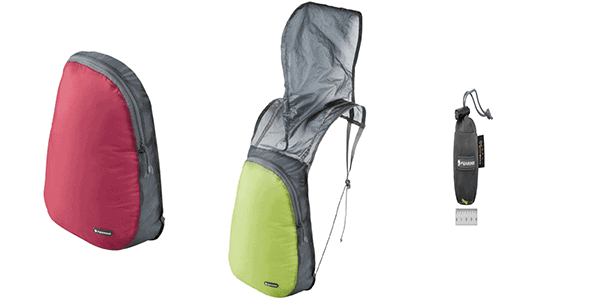
When unfolded, they comfortably fit everything we need for the day, and they even have an integrated rain cover in case it starts pouring.
Polarised Sunglasses
The sun can be brutal, especially in summer. On a bike, you need 100% visibility at all times — whether you’re checking for cars behind you or scanning the road ahead. One sharp stone is all it takes to puncture a tyre. We picked up polarised sunglasses at a cycling shop that eliminate glare, making riding comfortable even on the brightest days.
Silver-Infused Sports Bottle
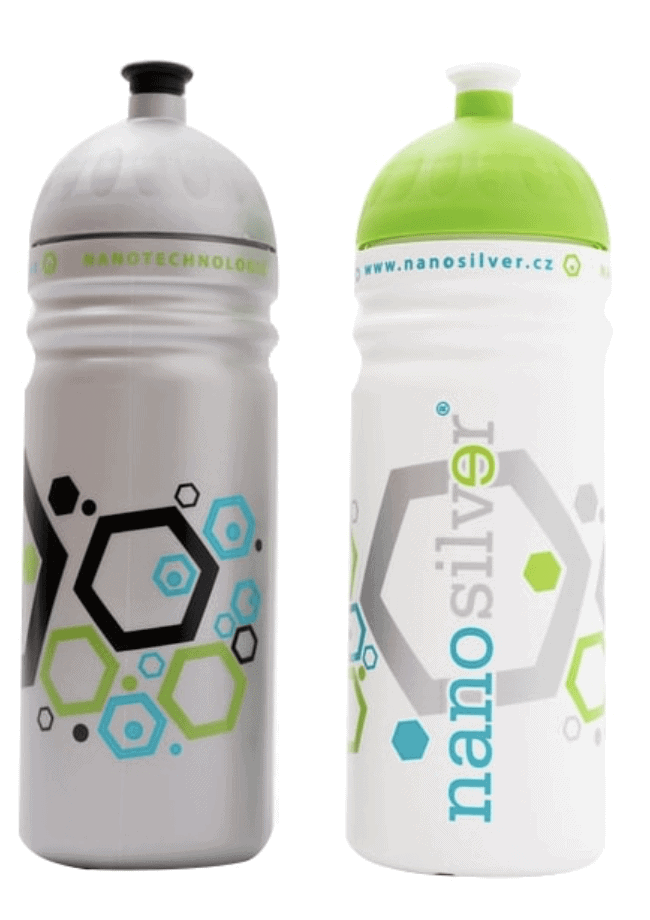
On the road, we make our own isotonic drinks, and you’ve probably experienced a plastic bottle starting to smell on the inside. A black layer forms at the bottom and the bottle is ruined. That doesn’t happen with bottles infused with nanosilver, so we each carry one.
TIP: If you enjoy organised cycling holidays, check out cycling holiday packages and pick the perfect one for you!
Tips and Tricks for Your Vacation
Don’t Overpay for Flights
Search for flights on Kayak. It’s our favorite search engine because it scans the websites of all airlines and always finds the cheapest connection.
Book Your Accommodation Smartly
The best experiences we’ve had when looking for accommodation (from Alaska to Morocco) are with Booking.com, where hotels, apartments, and entire houses are usually the cheapest and most widely available.
Don’t Forget Travel Insurance
Good travel insurance will protect you against illness, accidents, theft, or flight cancellations. We’ve had a few hospital visits abroad, so we know how important it is to have proper insurance arranged.
Where we insure ourselves: SafetyWing (best for everyone) and TrueTraveller (for extra-long trips).
Why don’t we recommend any Czech insurance company? Because they have too many restrictions. They set limits on the number of days abroad, travel insurance via a credit card often requires you to pay medical expenses only with that card, and they frequently limit the number of returns to the Czech Republic.
Find the Best Experiences
Get Your Guide is a huge online marketplace where you can book guided walks, trips, skip-the-line tickets, tours, and much more. We always find some extra fun there!


