

Flying soon and not sure about the airplane luggage rules – specifically what you can take in your carry-on bag on board? No worries – I’ve done plenty of flying by now and I’ve put together a comprehensive guide on what you can and can’t bring on a plane.
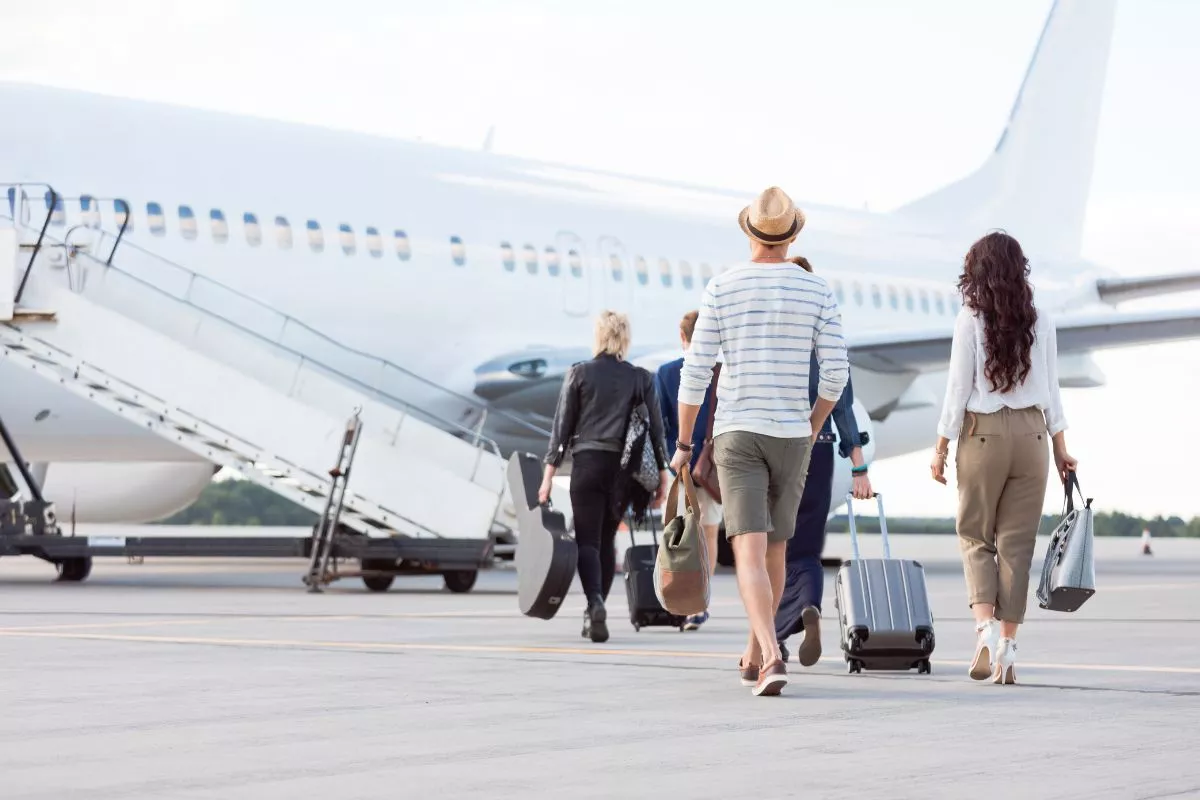
Airplane Luggage Rules for Carry-On Bags
Most of us know that you can only board a plane with hand luggage. But the big question is: what exactly can you pack in it?
TIP: Check out the best carry-on bags RIGHT HERE.
Liquids in Carry-On Luggage
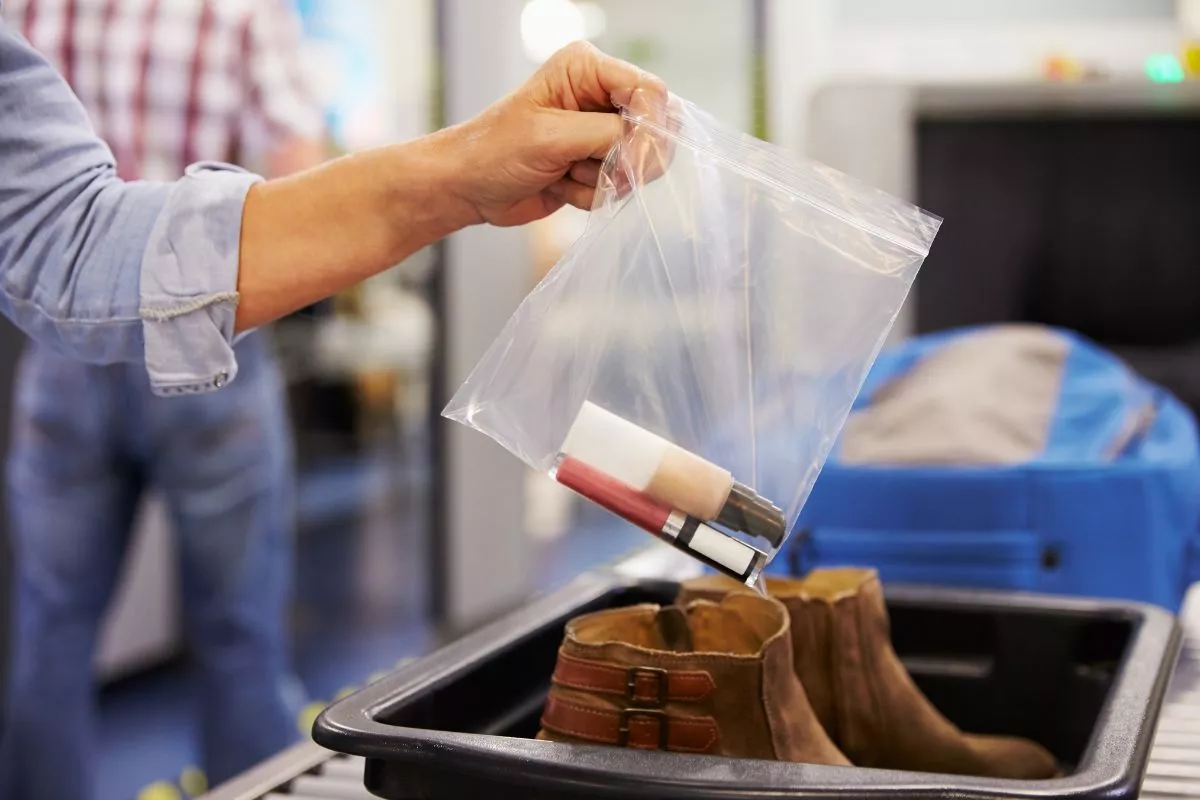
You can bring liquids in your carry-on, but only in limited quantities. The term “liquids” doesn’t just mean water – it also includes perfumes, alcohol, creams, liquid makeup, gels, and even liquid snacks like yoghurt pouches.
Liquids and gels in your cabin luggage must be in small containers with a maximum volume of 100 ml each. All liquids must be placed in a clear, resealable plastic bag with a total capacity of no more than 1 litre. You can pick up these bags at most chemists or supermarkets, and they’re usually available at the airport before security as well.
There are exceptions for medication and baby food, which can be in containers larger than 100 ml if necessary. However, you should have a prescription or doctor’s note on hand. Note: Contact lens solution is not considered a medical item, so the 100 ml limit still applies.
And what about drinking water? Currently, a bottle of water simply won’t get through security and must be emptied or discarded before the scanners. However, many European airports are in the process of introducing new screening technology that may eventually lift this restriction on drinking water.
In the meantime, I recommend packing an empty bottle that you can fill up at a water fountain or in the toilets after security. An empty bottle will pass through security without any problems. This trick is a bit useless in destinations like Greece, where tap water isn’t safe to drink. Otherwise, I do this every time. 😄
TIP: Skiathos Holiday: 14 Tips on What to See and Do.
Food in Carry-On Luggage
Many people mistakenly believe you can’t bring food on a plane. That’s not the case. Most solid foods are allowed, such as biscuits, sandwiches, crisps, or chocolate. Liquid or semi-liquid foods like yoghurt, soup, or sauces are subject to the same rules as liquids.
You can also transport cheese, pasta, spices, cured meats, or fruit. This applies mainly to European flights – for destinations like the USA or Australia, most fruit, vegetables, seeds, and animal products are prohibited. Always check in advance what you’re allowed to bring into your destination country.
Electronic Devices in Carry-On Luggage
Electronic devices such as laptops, tablets, cameras, and phones can all be taken on board without any issues. However, make sure they’re fully charged, as some airports may ask you to switch them on. During the flight, they must be turned off or in aeroplane mode. You can also bring all your chargers and power banks.
You can pack a hairdryer, curling iron, or hair straightener in your carry-on too.
As for e-cigarettes, you can bring them with you, but you’re not allowed to use them during the flight (the same applies to regular cigarettes).
Medication and Medical Supplies
You can bring all your medication and vitamins on board. However, for drugs containing opiates or strong painkillers, you must carry a doctor’s prescription (ideally the original plus an English translation).
Animals
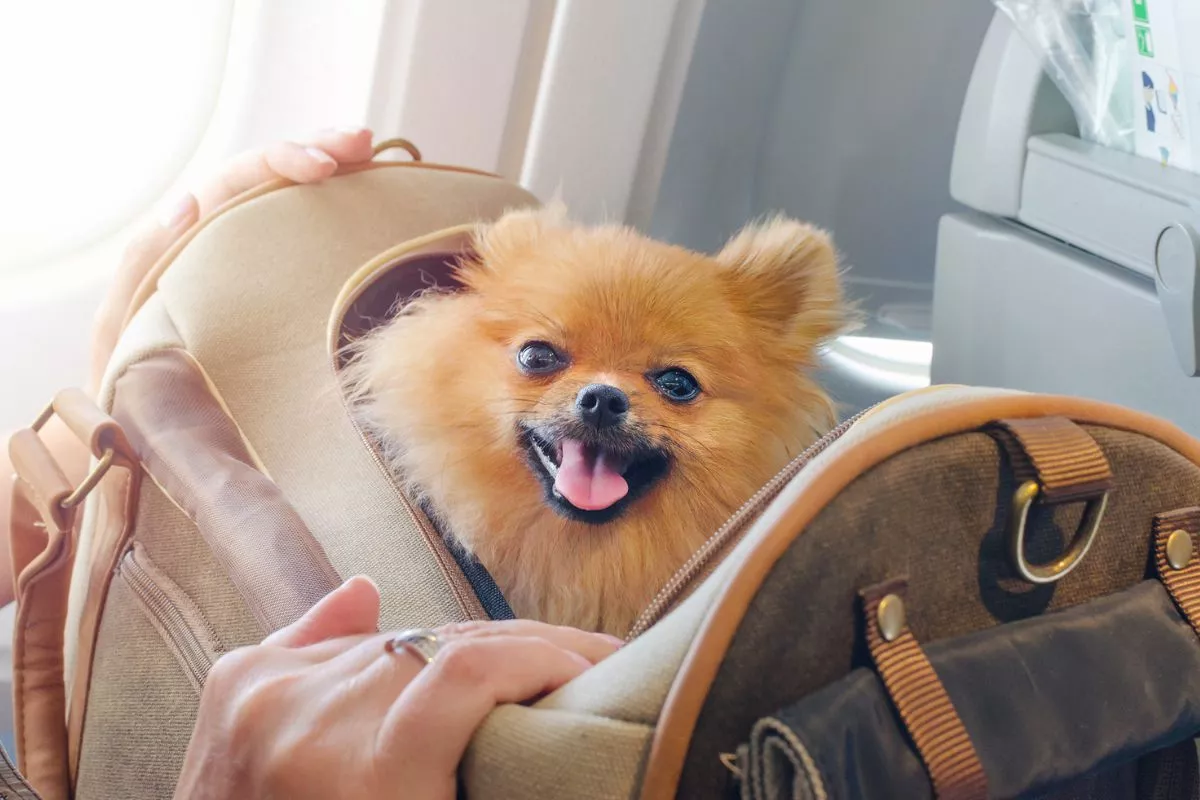
Your pets can travel by plane too – not only with you in the cabin but also in the cargo hold as checked luggage or freight. Transport is always governed by the specific airline’s conditions and the destination country’s regulations. It also depends on what type of animal you want to transport and its size.
Before travelling, you’ll need to arrange a pet passport, a rabies vaccination certificate from your vet, check the validity of their microchip or tattoo, and make a reservation. Allow extra time for check-in as well. Besides the paperwork, you’ll need to prepare food and water for the entire flight and pay the transport fee.
And if your four-legged friend can’t come along, read about how to prepare your dog for a stay at a pet hotel.
Airplane Hand Luggage Dimensions
Carry-on bags must meet certain size and weight requirements, and each airline has slightly different rules.
That’s why you should always check with your airline before every flight to find out the permitted cabin luggage dimensions, maximum weight, and what bags are included in your ticket price.
I’ve compiled the allowed airplane hand luggage size for the most common airlines in a handy table:
| Airline | Dimensions | Weight | Notes |
| Ryanair | 40 x 20 x 25 cm | 10 kg | must fit under the seat; larger cabin bag available for a fee |
| Wizz Air | 40 x 30 x 20 cm | 10 kg | must fit under the seat; larger cabin bag available for a fee |
| easyJet | 45 x 36 x 20 cm | 15 kg | must fit under the seat; larger cabin bag available for a fee |
| British Airways | 56 x 45 x 25 cm | 23 kg | + free small personal bag (40 x 30 x 15 cm) |
| Lufthansa | 55 × 40 × 23 cm | 8 kg | – |
| KLM | 55 × 35 × 25 cm | 12 kg | + free small personal bag (40 x 30 x 15 cm) |
| Air France | 55 x 35 x 25 cm | 12 kg | + free small personal bag (40 x 30 x 15 cm) |
| Emirates | 55 x 38 x 22 cm | 7 kg | – |
| Qatar Airways | 50 × 37 × 25 cm | 7 kg | – |
| Smartwings | 55 × 45 × 25 cm | 8 kg | – |
What You Cannot Take on a Plane
Now let’s get to the question of what you absolutely cannot bring in your airplane luggage. These include:
Sharp Objects
- Knives, scissors with blades longer than 6 cm.
- Razors, razor blades (disposable razors are an exception).
- Pins, nails, and screwdrivers.
- Knitting needles, umbrellas with a sharp point (a small folding one is fine), tent pegs.
Weapons and Similar Items
- Any firearms, including gas-powered and airsoft guns.
- Stun guns, pepper sprays, and devices that deliver electric shocks.
- Replica weapons or other items that could be used as a weapon.
Explosives and Flammables
- Firecrackers, fireworks, and other explosive materials.
- Flammable liquids and gases (e.g. petrol, aerosols).
- Any materials with explosive properties.
- Lighters.
Liquids Over 100 ml
- Any liquids (including perfumes, drinks, creams) in containers over 100 ml in carry-on luggage.
- Liquid foods, e.g. yoghurts or soups.
Chemical and Toxic Substances
- Acids, poisons, radioactive materials.
- Corrosive substances and chemicals.
- Self-defence sprays (pepper spray).
High-Capacity Batteries
- Large lithium-ion batteries and power banks with a capacity exceeding 100 Wh (Wh = watt-hours).
Prohibited Food and Plants
- Fresh fruit, vegetables, and plants when travelling to countries with strict quarantine regulations (e.g. Australia, New Zealand).
- Meat and animal products when travelling to certain countries.
Checked Luggage: What Is Allowed?
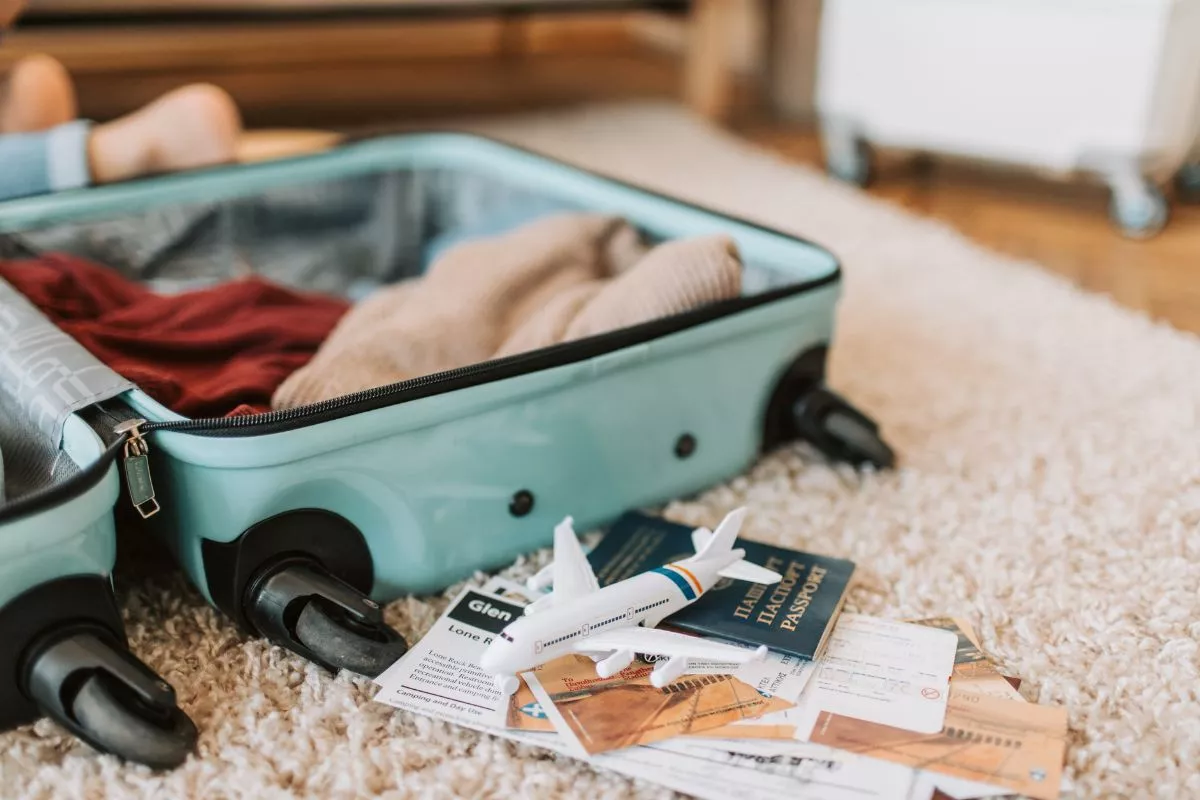
The dimensions and weight of checked luggage again vary by airline, but the standard allowance is typically up to 23 kg with maximum dimensions of 158 cm (the sum of length, width, and height). Unlike hand luggage, which might sometimes get through even if slightly oversized, checked bags are always weighed. If you exceed the limit, you’ll have to pay an excess baggage fee.
You must not place dangerous materials in checked luggage, such as explosives, flammables, or toxic substances. Electronics shouldn’t go in checked bags either, unless you remove the batteries first. I’d also advise against packing fragile items, as they could get damaged during handling.
Frequently Asked Questions
What is the liquid limit for carry-on luggage?
Liquids can only be transported in containers with a maximum volume of 100 ml. These containers must be placed inside a clear, resealable plastic bag with a total capacity not exceeding 1 litre.
Can I bring food on board a plane?
Yes, solid foods such as sandwiches, toast, crisps, or biscuits are allowed. Liquid or semi-liquid foods (e.g. yoghurt or baby food pouches) are subject to the same rules as liquids.
What happens if I have a prohibited item?
Prohibited items such as sharp objects or liquids over 100 ml may be confiscated at the security checkpoint. That’s why it’s important to check in advance what is and isn’t allowed.
Can I bring medication on board?
Yes, medication is allowed. If the containers are larger than 100 ml, you should carry a doctor’s prescription or medical certificate.
How should I transport electronic devices and batteries?
Electronic devices such as phones, tablets, and laptops are allowed on board. Power banks and spare batteries can only be transported in carry-on luggage.
Tips and Tricks for Your Vacation
Don’t Overpay for Flights
Search for flights on Kayak. It’s our favorite search engine because it scans the websites of all airlines and always finds the cheapest connection.
Book Your Accommodation Smartly
The best experiences we’ve had when looking for accommodation (from Alaska to Morocco) are with Booking.com, where hotels, apartments, and entire houses are usually the cheapest and most widely available.
Don’t Forget Travel Insurance
Good travel insurance will protect you against illness, accidents, theft, or flight cancellations. We’ve had a few hospital visits abroad, so we know how important it is to have proper insurance arranged.
Where we insure ourselves: SafetyWing (best for everyone) and TrueTraveller (for extra-long trips).
Why don’t we recommend any Czech insurance company? Because they have too many restrictions. They set limits on the number of days abroad, travel insurance via a credit card often requires you to pay medical expenses only with that card, and they frequently limit the number of returns to the Czech Republic.
Find the Best Experiences
Get Your Guide is a huge online marketplace where you can book guided walks, trips, skip-the-line tickets, tours, and much more. We always find some extra fun there!


