

When Lukáš and I first drove into Pinnacles National Park in California, I was expecting — honestly — some smallish hills with a few rocks scattered about. I mean, it’s one of the smallest national parks in the US, so how impressive could it be, right? Then we stepped onto the trail, towering rock spires shot up into the sky like something out of a fantasy film, we crawled through a cave where we couldn’t see a thing without a torch, and a California condor with a wingspan of over three metres circled above our heads. So yeah, I definitely wasn’t expecting that. 😅
Pinnacles National Park California is the kind of park that completely floors you precisely because you had zero expectations. It sits less than two hours south of San Francisco, yet most visitors blow straight past it on their way to Yosemite or Big Sur. Their loss, your gain — because this park is an absolute gem.
In this article, you’ll find a complete guide to Pinnacles National Park — from the best trails and famous talus caves to tips on spotting rare California condors, plus practical advice on entrance fees, accommodation, and the best time to visit. I’ve put together 13 things to see and do, along with answers to the most frequently asked questions about the park.
TL;DR
- Pinnacles National Park lies roughly 2 hours south of San Francisco — perfect for a day trip, but even better for a weekend with camping.
- The park has two entrances (east and west) and they are NOT connected by road — this is crucial for planning. Most attractions are accessible from the east entrance.
- The main draws are the talus caves (Bear Gulch Cave and Balconies Cave) — boulder caves where you absolutely need a torch or headlamp.
- High Peaks Trail is the best hike in the park — rock-carved steps, jaw-dropping views, and a good chance of spotting a condor.
- California condor — one of the rarest birds on Earth, with around 90 living in the park. Your best bet for seeing them is from High Peaks.
- The best time to visit is March to May (wildflowers, pleasant temperatures) or October to November (fewer crowds, still lovely weather).
- Summer is brutal — temperatures above 40 °C, and many trails become practically unbearable.
- Entrance fee is $30 per vehicle (about £24), valid for 7 days. Free with an America the Beautiful annual pass ($80).
- There’s one campground in the park (east side) — in peak season, book months in advance.
- Nearest towns with accommodation: Soledad (west) and Hollister (east).
- You can cover the park in one full day, but two days are ideal if you want to explore all the main trails and caves.
The full destination guide: North America — guide and what to see
When to Visit Pinnacles and What Weather to Expect
Pinnacles weather is something you really shouldn’t underestimate — and I speak from personal experience. The climate here is quite extreme, and bad timing can seriously ruin your visit. Let’s break down what to expect in each season.
Spring (March–May) — the absolute best time
Spring in Pinnacles is pure magic. Temperatures hover between a pleasant 18–28 °C, the hills turn green, and spring wildflowers blanket the meadows and slopes in carpets of yellow, purple, and orange. If you’ve seen those stunning photos of Pinnacles with blooming hillsides — this is when that happens.
March and April also offer the best chance of both caves being open (Bear Gulch Cave closes seasonally for bat conservation — more on that below). The trails aren’t as crowded as autumn weekends, and morning mists give the rock spires an unbelievably atmospheric quality.
The downside? On weekends in April and May, the east-side car park can fill up by around 9 AM. Get there early.
Summer (June–September) — honestly? Avoid it
I’ll be straight with you: summer in Pinnacles is brutal. Temperatures routinely hit 38–42 °C and there’s virtually no shade on the trails. The park stays open, but most visitors (ourselves included) can only manage one short walk early in the morning before the heat becomes unbearable. Rangers advise against heading up High Peaks after 10 AM — and trust me, they’re right.
If you have no other option, arrive as early as possible in summer (the gate opens at dawn), walk through one cave, and get out by midday. But ideally — just come at a different time of year.
Autumn (October–November) — second best time
Temperatures drop to a bearable 20–30 °C, there are far fewer visitors than in spring, and the park takes on a beautiful golden glow. October and November are also excellent for spotting California condors, as the air is clearer and the condors are more active.
Winter (December–February) — surprisingly good
Pinnacles in winter has its own charm. Temperatures sit around 10–18 °C, which is actually ideal for hiking. The park is half-empty, occasional rain falls (a rarity in southern California), and after a downpour the rock formations look gorgeously saturated and dramatic. The only downsides: shorter days and Bear Gulch Cave is typically closed in winter due to bat hibernation. Balconies Cave, however, stays open year-round.
How to Get to Pinnacles National Park
Here comes arguably the most important practical tip in this entire article, so pay attention: Pinnacles National Park has two entrances — east and west — and they are NOT connected by any road. I’ll say it again: no road connects them. If you drive in from one side, you can’t reach the other by car without going all the way around the park (roughly a 90-minute drive). This catches loads of people off guard — and they end up blaming Google Maps. 😅
East Entrance (main)
Most visitors — and I’d recommend the same to you — enter through the east entrance via the town of Hollister and Highway 25. Here you’ll find:
- Visitor Center with maps, rangers, and a condor exhibit
- Pinnacles Campground — the only campground in the park
- Access to Bear Gulch Cave, High Peaks Trail, and Condor Gulch Trail
- A small shop with snacks and souvenirs
From San Francisco: approximately 2 hours (190 km) via Highway 101 South → Highway 25 South. From San Jose: roughly 1.5 hours (130 km). From Monterey: about 1.5 hours (110 km) via Soledad and around to the east side. If you’re flying into California from the UK, the most convenient airports are San Francisco (SFO) or San Jose (SJC). British Airways, United, and Virgin Atlantic all operate direct flights from London Heathrow to SFO.
West Entrance
The west entrance is smaller, quieter, and accessed via a narrow, winding road through the town of Soledad (Highway 146 West). There’s no visitor center or campground here, but it’s the quickest route to Balconies Cave and Balconies Cliffs Trail.
Heads up: Highway 146 is genuinely narrow — don’t attempt it with a large vehicle or RV.
From Monterey/Big Sur: If you’re coming from the coast, the west entrance is closer — roughly 1 hour from Soledad.
Park Entrance Fee
The Pinnacles National Park entrance fee is $30 per vehicle (about £24), and it’s valid for 7 days. If you have an America the Beautiful Annual Pass ($80 / roughly £64), entry is free — and if you’re planning to visit more than two national parks in the US, the pass pays for itself.
You can pay at the gate or buy your ticket online in advance via Recreation.gov. On spring weekends, I’d recommend having your ticket sorted beforehand — queues at the gate can build up.
We’ve had consistently good experiences with DiscoverCars, which we use all over the world. You’ll need a car to reach Pinnacles — there’s no public transport to the park.
Where to Stay and How Much Pinnacles Costs
Accommodation inside the park is limited to a single campground, but the surrounding area offers several options ranging from camping and motels to charming wine country ranches. Pinnacles campground is by far the most popular (and cheapest) option, but if camping isn’t your thing, don’t worry — alternatives exist.
Pinnacles Campground (inside the park)
The campground sits near the east entrance and offers 134 sites — for both tents and RVs. Each site has a table, fire ring, and access to showers and toilets. There’s also a small camp store with basic groceries and a few essentials.
- Price: $23 per tent site/night (about £18), $36 per RV site with electricity (about £29)
- Reservations: Via Recreation.gov — in peak season (March–May), book 2–3 months ahead. Weekend spots sell out within minutes of reservations opening.
- Group campsites for larger parties at $75/night.
We camped in April and it was wonderful — we sat around the fire in the evening, bats literally swooped overhead, and birdsong woke us up in the morning. The only drawback is that nights can be quite chilly (around 5 °C in spring), so bring a warm sleeping bag.
Soledad (west side, 30 min from the park)
The small town of Soledad is the nearest civilisation to the west entrance. You’ll find a handful of motels and basic hotels — nothing fancy, but fine as a one-night base. Expect prices around $80–$120/night (£64–£96).
Hollister (east side, 40 min from the park)
Hollister is a somewhat larger town with a better selection of accommodation and restaurants. It’s the nearest town to the east entrance. Hotel prices typically range from $100–$150/night (£80–£120).
King City and Salinas Valley (wine region)
If you fancy combining Pinnacles with a spot of wine tasting — and why wouldn’t you — the Salinas Valley area is packed with vineyards and wineries. Some even offer accommodation. It’s a gorgeous area, and if you love wine and tranquillity, I’d recommend spending an extra night here.
How Much Does a Trip to Pinnacles Cost?
A quick budget breakdown for a day trip for two from San Francisco:
- Entrance fee: $30 (£24)
- Fuel (round trip, approx. 380 km): ~$40 (£32)
- Lunch/snacks: ~$30 (£24)
- Total: roughly $100 / £80 per couple
For a camping weekend (2 nights):
- Entrance fee: $30
- Campground 2 nights: $46
- Fuel: ~$40
- Food (2 days): ~$80
- Total: roughly $200 / £160 per couple
That’s genuinely reasonable for an American national park. Compare it with Yosemite, where a single night at Yosemite Valley Lodge can easily set you back $300.
13 Best Things to See and Do in Pinnacles National Park
Let’s get to the good stuff — what to actually see and do in Pinnacles. Despite being one of the smallest national parks in the US, it’s surprisingly packed with experiences. Here are 13 specific tips, from the famous caves and condors to the best trails and lesser-known spots that most visitors miss. The Pinnacles National Park map is fairly straightforward — the main trails fan out from a few car parks, and you can cover most of them in a day.
1. Bear Gulch Cave — the park’s most famous cave
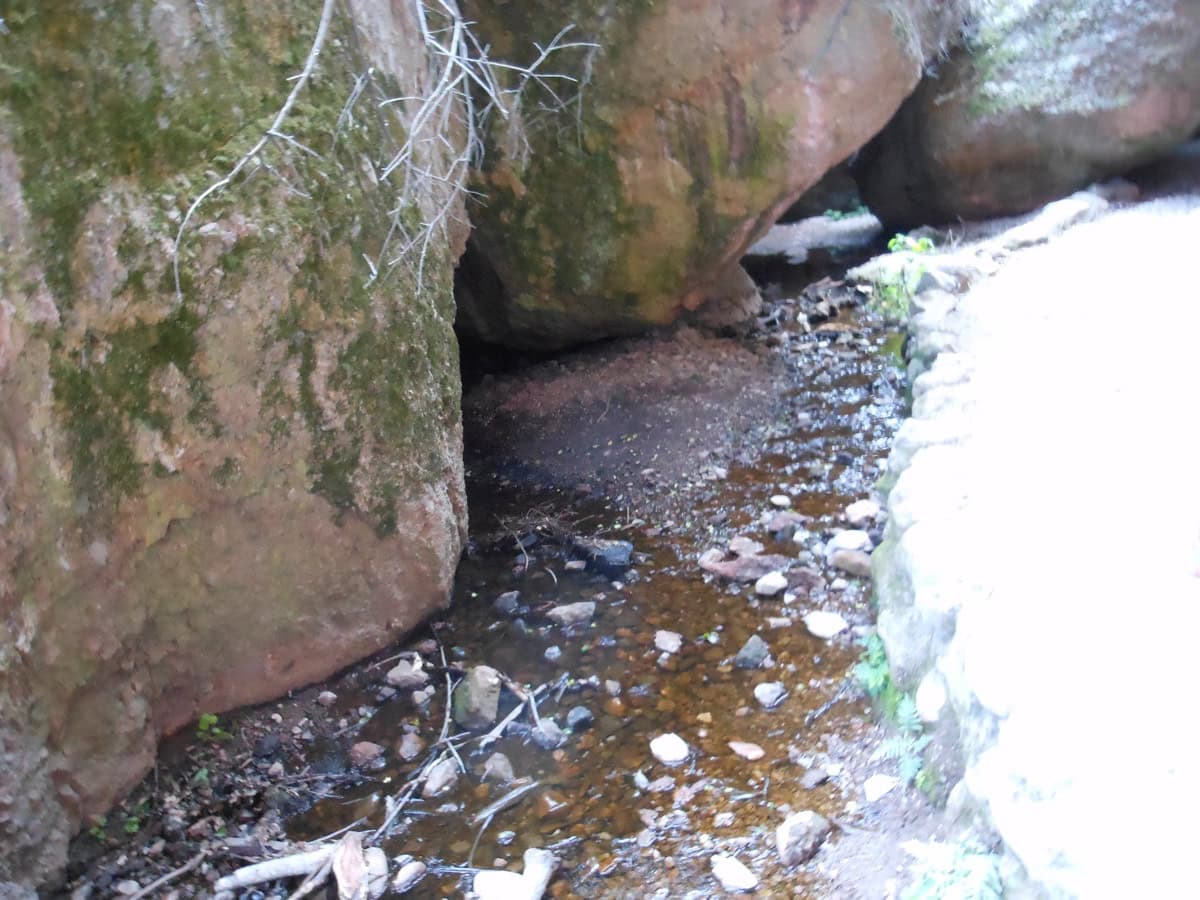
This is THE top attraction in Pinnacles and the reason many people visit in the first place. Bear Gulch Cave is a talus cave — not a traditional limestone cave, but a series of massive boulders that tumbled into a canyon and created a network of dark passageways, tunnels, and cathedral-like chambers. In some spots you’re crawling; in others you’re standing in spaces as tall as a church.
A torch or headlamp is absolutely essential. Seriously, it’s pitch black inside. Your phone light won’t cut it — you need a proper lamp. We watched people try to navigate with their phone torches and end up knee-deep in water because they couldn’t see where they were stepping. 😅
The cave is about 400 metres long and takes 15–30 minutes to walk through (unless you get distracted taking photos, which you will). There’s even a small waterfall inside — quite impressive after rain.
Important: Bear Gulch Cave closes seasonally (typically mid-May to mid-July) to protect a maternity colony of Townsend’s big-eared bats. It can also be closed in winter. Always check the current status on the NPS website before your visit.
How to get there: From the Bear Gulch car park (east entrance) via Moses Spring Trail — about 1 km, easy terrain.
2. Balconies Cave — second cave, fewer crowds
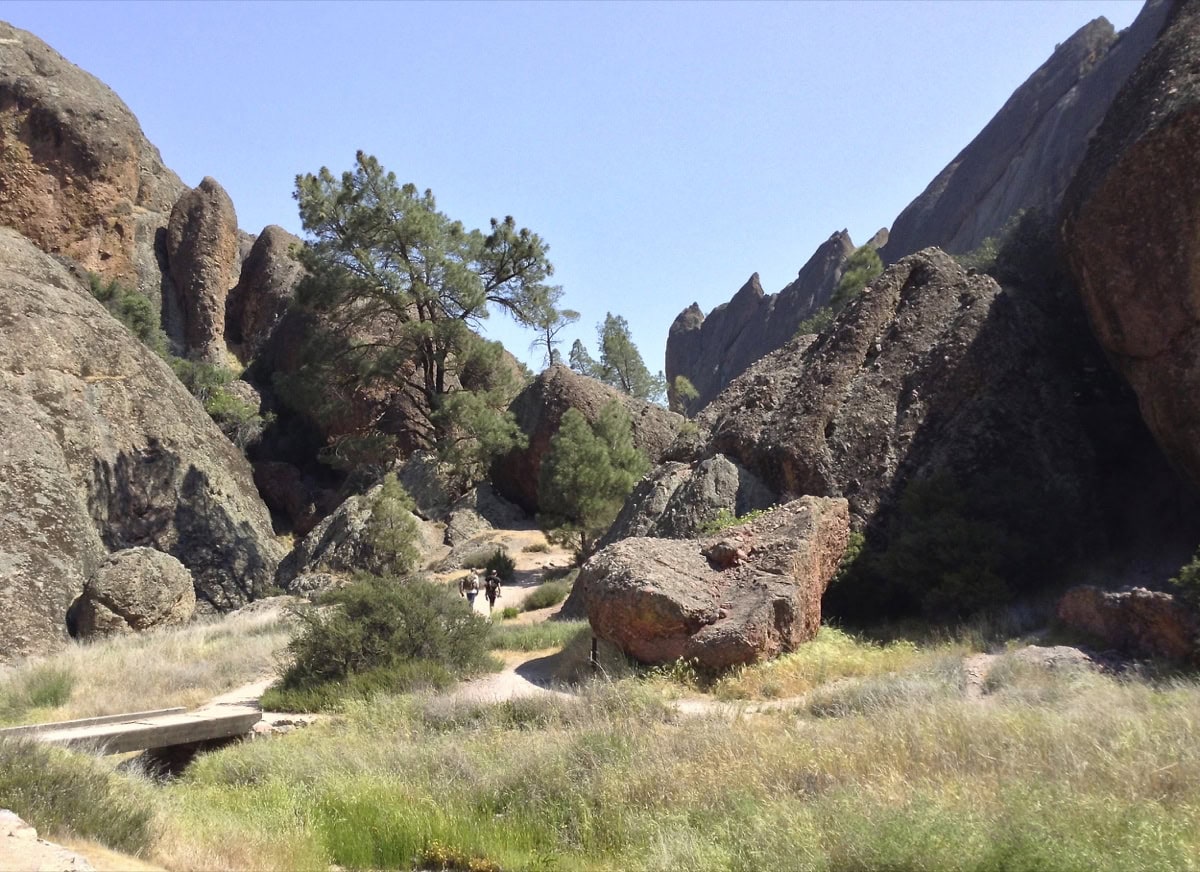
If Bear Gulch Cave happens to be closed (or even if it isn’t — ideally visit both!), Balconies Cave on the west side of the park is equally fascinating and tends to be far less crowded. It’s a touch shorter, but the atmosphere is just as epic — dark passageways between enormous boulders, and in places you’re wading through a stream.
Balconies Cave is open year-round, which is a big advantage over Bear Gulch. You’ll need a torch here too — no, really, don’t go in without one.
How to get there:
- From the west entrance: the shortest route, about 1.6 km via Balconies Trail
- From the east entrance: a longer but beautiful route via Old Pinnacles Trail (roughly 4.2 km one way) — makes for a brilliant full-day hike
3. High Peaks Trail — the best hike in the park
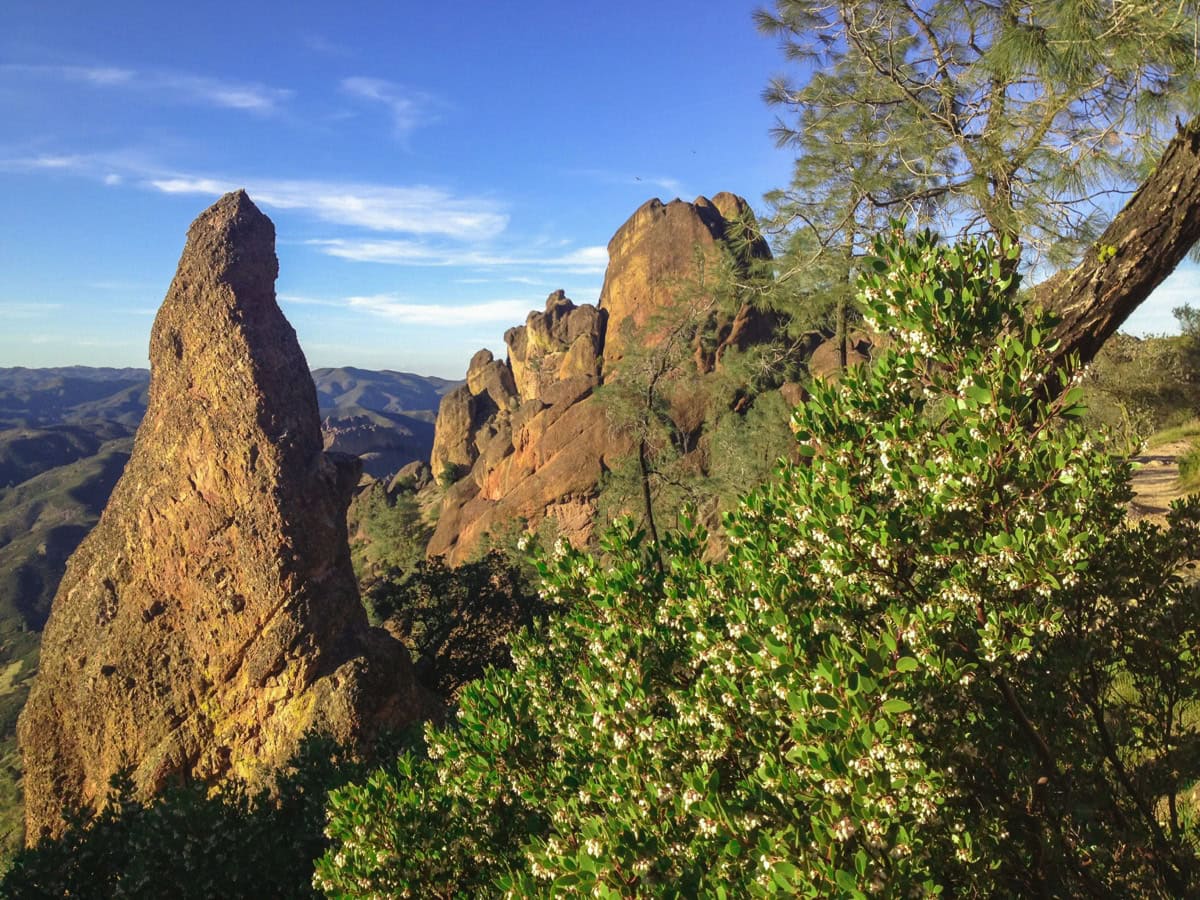
If you only have time for one thing in Pinnacles, do the High Peaks Trail. In my opinion, it’s the best trail in the entire park and one of the most fun hikes I’ve done anywhere in California. The path takes you up onto a rocky ridge where you squeeze through narrow gaps, climb stone steps carved into the rock, and in several spots cling to metal railings above sheer drops.
It’s not technically demanding — you don’t need any climbing gear — but if you’re not great with heights, some sections will be a challenge. Lukáš, who isn’t exactly a fan of exposed ledges, had a slightly interesting expression at one point, but he made it through. 😁
Stats:
- Loop via High Peaks + Condor Gulch Trail: approximately 8.8 km, 400 m elevation gain
- Time: 3–5 hours
- Difficulty: moderate
From the ridge, the views are absolutely breathtaking — you can see the entire park’s rock spires, valleys, and on a clear day all the way to the coast. And crucially, this is the best spot in the park for spotting condors.
4. California Condor — a meeting with a legend
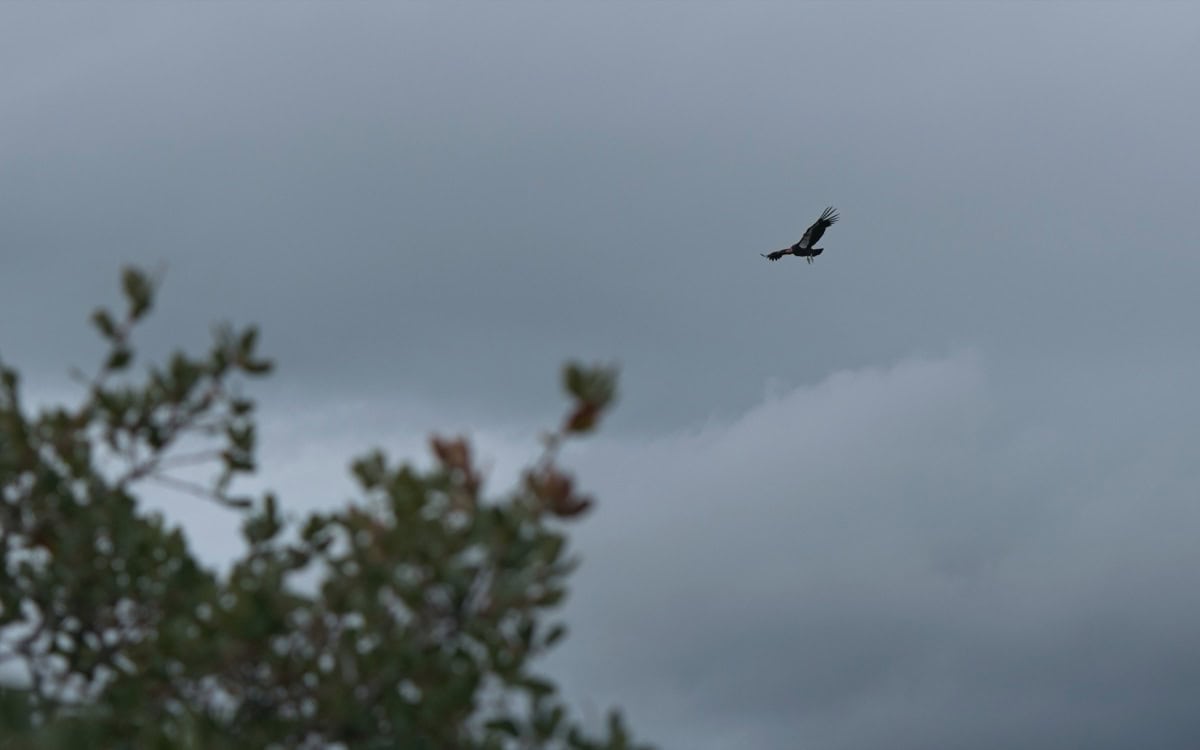
I get a bit emotional writing about this, because seeing a California condor in the wild is a truly unforgettable experience. In the 1980s, only 22 condors remained in the entire world. Twenty-two. Thanks to a massive recovery programme, there are now over 500, with around 90 living in the Pinnacles area.
The California condor is the largest flying bird in North America — with a wingspan of up to 2.9 metres. When one soars overhead, you feel it. Literally — the sound of those wings is extraordinary.
Where to look:
- High Peaks Trail — hands down the best spot. Condors often perch on rock outcrops or circle above the ridge.
- Condor Gulch Overlook — a shorter trail (roughly 3.2 km return) if you don’t fancy the full High Peaks loop.
- Early morning or late afternoon is the best time — condors ride the thermal currents.
Tip: Bring binoculars. Each condor has a numbered wing tag — you can look it up in the NPS database and learn its story. The rangers at the Visitor Center are always happy to help with identification.

5. Condor Gulch Trail — a shorter alternative with views
If you don’t have the time or energy for the full High Peaks loop, Condor Gulch Trail is the perfect compromise. The trail runs from the Bear Gulch car park to Condor Gulch Overlook — a viewpoint with panoramic vistas of the rock formations and valley below.
- Length: 3.2 km return
- Elevation gain: 140 m
- Time: 1–1.5 hours
- Difficulty: easy to moderate
It’s also the best trail for Pinnacles photography — from the overlook, you get a superb composition of rock spires with the valley behind them. Golden hour just before sunset here is absolutely stunning.
6. Moses Spring Trail to Bear Gulch Reservoir — an easy stroll
This is the ideal trail for families with children or anyone who fancies a pleasant walk without much climbing. The trail leads from the Bear Gulch car park along a creek through a gorgeous rocky canyon to Bear Gulch Reservoir — a small dam surrounded by rock walls.
- Length: 2.8 km return
- Elevation gain: 100 m
- Time: 1–1.5 hours
En route, you pass through part of Bear Gulch Cave (if it’s open), so you’re essentially getting two attractions in one. The reservoir itself is a peaceful spot — perfect for a snack with a view.
7. Rock Formations and the Park’s Volcanic History
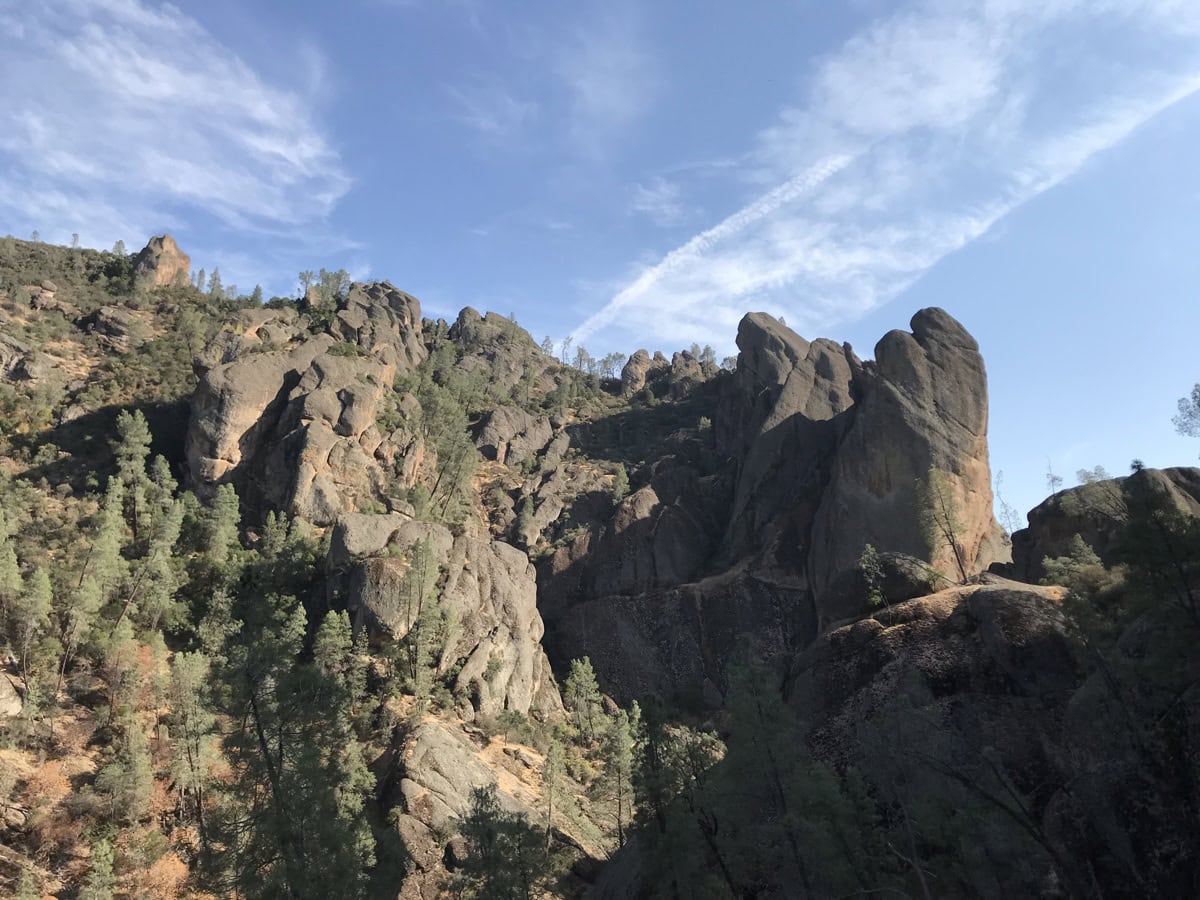
The geological history of Pinnacles is fascinating, and understanding it will take your whole experience of the park to another level. Those dramatic rock spires and pinnacles aren’t just random boulders — they’re the remnants of an ancient volcano that formed around 23 million years ago.
And here’s the mind-blowing part: that volcano originally stood 320 km further south, in what’s now the Los Angeles area. The San Andreas Fault shifted it to its current location over millions of years. Literally — half of the volcano is here in Pinnacles and the other half (the Neenach Formation) still sits near LA. It’s one of the most striking demonstrations of tectonic plate movement anywhere on Earth.
Best places to see it:
- High Peaks Trail — rock spires of volcanic rhyolite and breccia
- Visitor Center — an excellent interactive geology exhibit
- Balconies Cliffs — massive rock walls with visible layering
For geology enthusiasts (and I’ll admit I’m one of them 😁), this park is an absolute paradise.
8. Pinnacles Visitor Center — start your visit here
I know, a visitor center doesn’t exactly sound like a must-see tip, but at Pinnacles you genuinely shouldn’t skip it. It’s small but incredibly well done. You’ll find:
- An interactive exhibit on condors, geology, and the park’s history
- Up-to-date information on trail and cave conditions (rangers will tell you what’s closed, where water is available, and where condors were last spotted)
- A Pinnacles National Park map — both paper and digital
- A Junior Ranger programme for kids
- A small shop with books and souvenirs
Tip: Ask the rangers where they last saw condors. They’re incredibly helpful and usually have fresh intel. One ranger even lent us binoculars when we mentioned we’d forgotten ours. ☺️
The Visitor Center is at the east entrance, open daily 9:00–17:00 (shorter hours in winter).
9. Old Pinnacles Trail — a walk through the wilderness
If you want to escape the crowds (though Pinnacles doesn’t really get that crowded by American standards), Old Pinnacles Trail is your pick. This trail leads from the east side of the park through a valley filled with oaks and wildflowers to Balconies Cave — it’s the longest route to reach Balconies from the east entrance.
- Length: approximately 8.4 km (return to Balconies Cave and back)
- Elevation: gentle — the trail runs mostly through a valley
- Time: 3–4 hours return
In spring, the trail is lined with wildflowers — lupins, poppies, wild mustard. When we were here in April, the display of yellow and purple flowers was so spectacular that we kept stopping to take photos and could barely make any progress. And the birds! Pinnacles is a birdwatcher’s paradise — beyond condors, you might spot peregrine falcons, burrowing owls, hummingbirds, and dozens of other species.
10. Bench Trail — for peace and nature
Bench Trail is the flattest and easiest longer trail in the park. It runs along the eastern boundary through open countryside with views of the rock formations in the distance. It’s the ideal trail for wildlife spotting — Pinnacles National Park animals include deer, grey foxes, wild boar, rabbits, rattlesnakes (watch out!), and a huge variety of birds.
- Length: 8.2 km (one way)
- Elevation: minimal
- Time: 2–3 hours
It’s often used as a connector between Bear Gulch and Old Pinnacles Trail to create a longer loop. In the late afternoon, it’s beautifully peaceful — ideal for a meditative stroll after a tough day on High Peaks.
11. Evening Programmes and the Night Sky
Pinnacles lies far from any major cities and light pollution is minimal. If you’re camping, you’re in for a treat once the sun goes down — the Milky Way is visible to the naked eye here, and so brilliantly clear that the first time I looked up, I forgot to breathe.
Stargazing tips:
- The best spots are the campground or the Visitor Center car park
- New moon = best visibility (check the moon phase before you go)
- Rangers occasionally run Night Sky Programmes — astronomy talks with telescopes. Check the park website for dates.
At night you might also hear owls, coyotes, and the occasional mysterious sound you’d rather not identify. 😅 (It’s usually just a deer.)
12. Rock Climbing in Pinnacles
Pinnacles has been a popular rock climbing destination since the 1930s, and that tradition endures today. The volcanic breccia towers offer hundreds of routes across a range of difficulties — from beginner-friendly to extremely challenging.
Important:
- Climbing is permitted, but you need to bring your own gear — nothing is available for hire in the park.
- Some areas have seasonal closures due to condor and falcon nesting (typically February–July). Always check the NPS website for current restrictions.
- Most popular sectors: Discovery Wall, Tourist Trap, Monolith
- Difficulty: from 5.4 to 5.13 (YDS scale)
Even if you don’t climb yourself, watching climbers on the rock walls is great entertainment. From the Visitor Center, you can see them on the cliffs right above you.
13. Wildflowers and the Spring Colour Show
I’ve already mentioned the spring wildflowers, but they deserve their own tip because they’re one of the main reasons to visit Pinnacles in spring. From mid-March to mid-May, an incredible array of wildflowers blooms across the park:
- California poppies (the golden state flower)
- Lupins (purple and blue carpets)
- Shooting stars
- Clarkia, brodaea, mariposa lily, and dozens more
Best spots for wildflowers:
- Old Pinnacles Trail — meadows in the valley
- Bench Trail — open countryside
- Around the campground — surprisingly, loads of flowers bloom right next to the tent sites
The intensity of the bloom depends on winter rainfall — after a wet winter, spring is absolutely explosive. After a dry year, the display is more muted. Check the park’s social media or website for the latest conditions.
Map of points of interest for your phone
Pinnacles National Park: Practical Tips and Advice
A few things that will save you time, stress, and money — and that I wish I’d known in advance.
Park Map and Navigation
Download the Pinnacles National Park map to your phone before you arrive — mobile signal in the park is essentially non-existent (no network works reliably here). Save an offline map via Google Maps or download the PDF map from the NPS website. You’ll also receive a paper map at the entrance gate or Visitor Center.
If you’re planning a California road trip and want an eSIM card, check out our Holafly review — it won’t help inside the park, but it’ll cover the rest of California without a hitch.
What to Pack
- Headlamp or torch — an absolute must for the caves. Seriously, don’t underestimate this.
- Plenty of water — drinking water sources in the park are limited. For a full day of hiking, count on at least 2–3 litres per person. In summer, even more.
- Good footwear — trail shoes or at least sturdy trainers. Wet rock on High Peaks is slippery. Take a look at our hiking boot guide.
- Sunscreen and a hat — shade is a luxury here
- Snacks — there’s only a small camp store at the campground and no restaurant in the park. Bring your own food.
- Binoculars — for condors and general birdwatching
- Layered clothing — mornings can be 8 °C, afternoons 28 °C. Layer up.
If you’re heading off on a longer trip to the US, have a look at our guide to packing light with carry-on only.
Safety
- Rattlesnakes — they live in the park. Stay on the trail, don’t kick rocks, and watch where you step. If you spot one, slowly back away. They’re shy and only strike in self-defence.
- Heat — dangerously hot in summer. Carry plenty of water, don’t hike at midday, and know the signs of heatstroke.
- Caves — watch out for wet, uneven rocks. Be careful with children in narrow passages.
Flights and Travel Insurance
Search for cheap flights to San Francisco (or LA if you’re combining with a wider California road trip) on Skyscanner or Google Flights to find the best deals from the UK. And before you set off, don’t forget travel insurance — here’s our review of SafetyWing, which we use ourselves.
Where to Eat Near Pinnacles
I’ll be honest — this is probably Pinnacles’ weakest point. There’s no restaurant inside the park itself. The campground on the east side has a small shop where you can pick up basic groceries, sandwiches, and ice cream, but that’s about it. So either stock up in advance or eat on the way.
Soledad (west side)
- La Fuente — hearty Mexican food, generous portions, reasonable prices. A perfect stop on the way out of the park.
- Valley Greens Gallery & Café — nicer setting, good sandwiches and coffee.
Hollister (east side)
- Palo’s Mexican Restaurant — absolutely brilliant tacos and burritos, with a local vibe. They cook for locals, not tourists — always a good sign.
- Ridgemark Golf & Country Club Restaurant — if you’re craving something a touch more “refined” after a day covered in trail dust. Decent steaks and a view of the golf course.
- Starbucks / Subway / McDonald’s — yes, Hollister has the usual chains. Don’t judge us — sometimes after a full day of hiking, all you want is a frappuccino. 😅
Picnic Tip for the Park
The best option is to bring your own food and have a picnic. There are several picnic tables near the Bear Gulch car park and at the campground. Stop on the way in at Hollister or Soledad, grab supplies from a supermarket, and make an occasion of it. A sandwich with a view of the rock spires tastes completely different from a sandwich at a petrol station — I promise.
Films Shot in Pinnacles
Here’s a fun bit of trivia that a lot of people ask about: what films have been shot in Pinnacles? With its dramatic rocky scenery, the park has been attracting filmmakers since the silent film era. The most notable shoots took place in the 1920s and 30s, when Westerns used the rock spires as a backdrop for the Wild West.
In more recent times, National Geographic documentaries about condors and various outdoor adverts have been filmed here. No major Hollywood blockbuster has been shot here (Pinnacles isn’t Monument Valley), but the landscape is so dramatic that you half-expect a cowboy to leap out from behind a rock at any moment. Or a condor. Or both. 😁
FAQ — Frequently Asked Questions about Pinnacles National Park
Tips and Tricks for Your Vacation
Don’t Overpay for Flights
Search for flights on Kayak. It’s our favorite search engine because it scans the websites of all airlines and always finds the cheapest connection.
Book Your Accommodation Smartly
The best experiences we’ve had when looking for accommodation (from Alaska to Morocco) are with Booking.com, where hotels, apartments, and entire houses are usually the cheapest and most widely available.
 🚗 Car rental on the roadVerified car rentals in California
Search with the DiscoverCars comparison engine — it compares prices from dozens of local and international rental companies, and most bookings come with free cancellation.
Compare car prices in California →Don’t Forget Travel Insurance
Good travel insurance will protect you against illness, accidents, theft, or flight cancellations. We’ve had a few hospital visits abroad, so we know how important it is to have proper insurance arranged.
Where we insure ourselves: SafetyWing (best for everyone) and TrueTraveller (for extra-long trips).
Why don’t we recommend any Czech insurance company? Because they have too many restrictions. They set limits on the number of days abroad, travel insurance via a credit card often requires you to pay medical expenses only with that card, and they frequently limit the number of returns to the Czech Republic.
Find the Best Experiences
Get Your Guide is a huge online marketplace where you can book guided walks, trips, skip-the-line tickets, tours, and much more. We always find some extra fun there!


