

There are places you arrive at and think: Yeah, that’s nice. And then there are places where you step out of the car, look around, and simply forget to breathe. Rocky Mountain National Park is the latter. Lukáš and I came here for the first time in September, and I still remember the exact moment we drove Trail Ridge Road above the treeline — nothing but bare peaks around us, dramatic clouds, and a silence you’ll never experience in a city. Oh, and we happened to run into an elk herd that looked at us like “What are you doing here?” before going right back to chewing grass. 😅
Rocky Mountain National Park sits in Colorado, less than two hours from Denver, and it’s one of the most visited national parks in the USA — with very good reason. You’ll find alpine meadows bursting with wildflowers, turquoise lakes nestled in cirques beneath soaring peaks, some of the most spectacular scenic roads on the planet, and wildlife you’ll literally spot in the car park. Best of all, it’s surprisingly easy to reach — just fly into Denver, hire a car, and two hours later you’re in a completely different world.
In this article, you’ll find a complete guide to Rocky Mountain National Park — from the best hiking trails and the iconic Trail Ridge Road to practical tips on where to stay, how much it all costs, and how to deal with the annoying timed entry system that will block your summer access without a reservation. Let’s get into it.
TL;DR
- Rocky Mountain National Park is in Colorado, roughly 1.5–2 hours by car from Denver. Entrance is $30 per vehicle for 7 days (or free with an America the Beautiful Pass at $80).
- From May to October you need a timed entry reservation — without one, you won’t get into the park during peak season. Reservations are released on recreation.gov in advance and disappear within minutes.
- Best time to visit: June–September for hiking, late September–October for autumn colours and the elk rut, June–July for wildflowers.
- Trail Ridge Road is the park’s most famous scenic drive — climbing to 3,713 m (12,183 ft) and open roughly from late May to mid-October.
- Best easy hikes: Bear Lake → Emerald Lake (5.6 km round trip), Sky Pond, Alberta Falls.
- Accommodation: Estes Park on the east side (more convenient for tourists) or Grand Lake on the west side (quieter, fewer crowds). Budget around $150–300 per night in season.
- Longs Peak (4,345 m / 14,259 ft) is the park’s most iconic summit — experienced hikers can summit in 10–15 hours, but it’s no walk in the park.
- Wildlife: Elk, bighorn sheep, marmots, and the occasional bear or moose. In September and October, the elk rut is one of the most spectacular natural events in Colorado.
- No food inside the park — pack snacks and water. Restaurants are in Estes Park and Grand Lake.
- Minimum recommended stay: 2–3 full days, ideally 4–5 if you want to tackle the tougher hikes.
The full destination guide: North America — guide and what to see
When to visit Rocky Mountain National Park and how to get there
Rocky Mountain National Park is open year-round, but your experience will vary dramatically depending on the month you visit. Each season has its own magic — and its own challenges. Here’s a breakdown so you know what you’re in for.
Summer (June–August): Best hiking, but crowds
Summer is peak season, and it’s easy to see why — most trails are snow-free, Trail Ridge Road is fully open, and the alpine meadows above the treeline explode into incredible colours. June and July are the absolute best months for wildflowers — the meadows along Trail Ridge Road and in the Kawuneeche Valley look straight out of a postcard.
The downside? Crowds. Rocky Mountain is the fifth most-visited national park in the US, and in summer over 10,000 cars pour in daily. The Bear Lake car park is often full by 6:30 in the morning (yes, morning 😅). That’s exactly why the timed entry system exists — without it, the place would be absolute chaos. If you’re visiting in July or August, get up early and aim to be inside the park before 6:00.
Autumn (September–October): Elk rut and golden colours
September is hands-down our favourite month. Temperatures are pleasant (5–20 °C / 41–68 °F), there are fewer visitors than summer, and the elk rut begins — when bull elk bugle across the valleys, lock antlers, and show off for the cows. It’s utterly mesmerising, and you can watch it right from the road in Moraine Park and Horseshoe Park. You won’t be alone — the elk rut is a huge draw — but the atmosphere is magical.
October brings autumn colours — aspens turn gold and orange, and the entire valley looks like a painting. Trail Ridge Road typically closes around mid-October due to snow, though, so if you want both, aim for late September to early October.
Winter and spring: For the adventurous
In winter (November–April), Trail Ridge Road is closed and most high-altitude trails are buried under snow. But if you’re into snowshoeing, cross-country skiing, or simply enjoy winter solitude, it’s a beautiful time — just dress properly and expect limited services. Spring (May) is a transitional period — snow melts, roads gradually reopen, and the park comes back to life. Weather is unpredictable, though, and many trails remain inaccessible.
How to get to Rocky Mountain National Park
By air: Fly into Denver (DEN) — it’s a major hub with plenty of transatlantic connections. From London, you can find direct flights with British Airways and United, or affordable one-stop options with various airlines. Use a flight comparison site to hunt down the best deals.
By car: From Denver, it’s about 105 km / 1.5 hours to Estes Park (the east entrance) via I-25 and US-36. The drive is straightforward, well-signposted, and the landscape gradually shifts from prairie to mountain valley — like a warm-up act before the main show. A car is essentially a must — public transport to the park is virtually non-existent.
Lukáš and I have had consistently great experience with DiscoverCars, which we use all over the world. A standard sedan or small SUV is more than enough for all the paved roads in the park.
Entrance fees and timed entry: Park entrance is $30 per vehicle (valid for 7 days) or free with an America the Beautiful Pass ($80 per year, valid for all US national parks — if you’re planning to visit more than two parks, it pays for itself easily). If you’re also eyeing other national parks, check out our Yellowstone guide where we cover the pass in more detail.
From late May to roughly mid-October, you also need a timed entry reservation — a free, time-slotted entry permit. There are two types:
- Bear Lake Road Corridor (also covers the entire park) — the most popular, sells out fastest
- Rest of Park (the whole park minus Bear Lake Road) — easier to grab
Reservations are released on recreation.gov the day before at 5:00 PM (Mountain Time) and vanish literally within seconds. Set an alarm, create your account in advance, and click fast. Alternatively, try your luck in the morning — cancelled reservations occasionally pop back up.
Where to stay and how much Rocky Mountain National Park costs
Rocky Mountain National Park has two main base camps — the towns of Estes Park on the east side and Grand Lake on the west. Both have their perks, and your choice depends on what you want to do in the park and how many fellow tourists you can tolerate.
Estes Park is by far the more popular option. It has more restaurants, shops, accommodation, and buzz — a charming town centre packed with cafés, souvenir shops, and stunning mountain views. From here, you’re closer to most of the best-known trails (Bear Lake, Emerald Lake, Alberta Falls) and the Trail Ridge Road entrance. The downside: it gets busy in summer.
Grand Lake is quieter, smaller, and has its own charm — sitting on a lakeshore with mountain views and a fraction of Estes Park’s crowds. A great choice if you want to explore the park’s west side (Kawuneeche Valley, Colorado River) or simply crave some peace.
How much accommodation costs
During peak season (June–September), expect these prices for accommodation in Estes Park:
- Budget motels and hostels: $100–150/night (approx. €90–135)
- Mid-range (hotels, Airbnb): $150–250/night (approx. €135–225)
- Upscale cabins and lodges: $250–400+/night (approx. €225–360+)
Grand Lake tends to be slightly cheaper, but the selection is smaller. Off-season (October–May) prices drop by 30–50%, though some businesses close entirely.
Tip: If you’re looking to save, consider camping. The park has five campgrounds — the most popular are Moraine Park and Glacier Basin, where sites are reserved on recreation.gov months in advance. The cost is around $30/night per campsite. We camped at Moraine Park and woke up to elk grazing right by our tent — no hotel compares to that.
Budget for 3–4 days for two
Approximate budget for 3–4 days at Rocky Mountain National Park for two people:
- Accommodation (3 nights, mid-range): $450–750 (approx. €400–675)
- Car hire (4 days including insurance): $200–350 (approx. €180–315)
- Petrol: $40–60 (approx. €35–55)
- Park entrance fee: $30 per vehicle / $0 with America the Beautiful Pass
- Food (restaurants + snacks): $200–350 (approx. €180–315)
- Total for two: approximately $920–1,540 (€830–1,390) excluding flights
15 things to see and do in Rocky Mountain National Park
Now for the best bit — our concrete tips on what to see and do in Rocky Mountain National Park. I’ve ranked them from “absolute must-do” to “if you have time to spare, you won’t regret it.” Most are accessible even for casual hikers, though a few will appeal to those who love a full day on the trail. For each tip, I’ve included practical details — trail length, difficulty, and what to bring.
1. Trail Ridge Road — the highest continuous paved road in the US
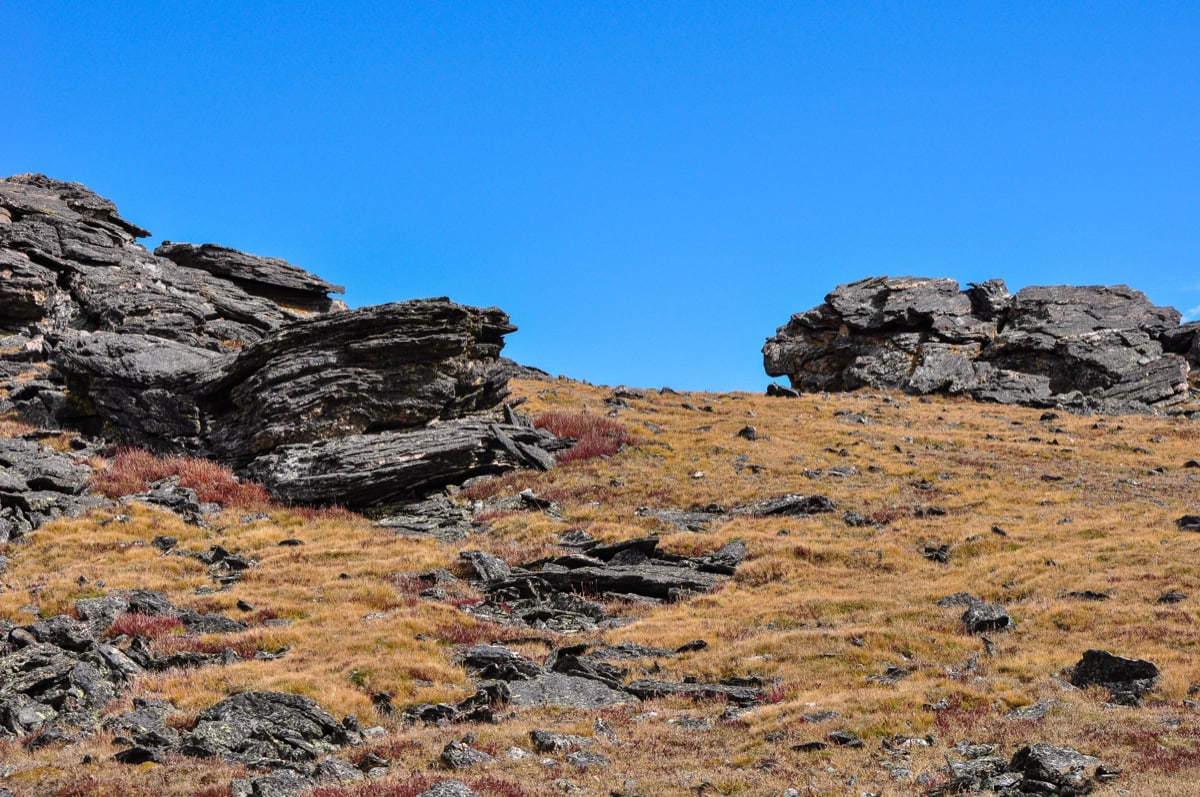
If you do only one thing at Rocky Mountain National Park, make it a drive along Trail Ridge Road. This road is absolutely jaw-dropping — it climbs from the forested Estes Park valley all the way up to 3,713 metres (12,183 ft), where there’s nothing around you but alpine tundra, snowfields on the horizon, and the feeling that you’re standing on top of the world. Lukáš and I stopped every five minutes because every bend revealed an even better view than the last.
The full route from Estes Park to Grand Lake stretches about 77 km (48 miles) and takes at least 2–3 hours (without stops, but trust me — you won’t drive it without stopping). Along the way, there are numerous pull-offs and viewpoints — make sure to stop at Forest Canyon Overlook, Rock Cut (a short trail to Toll Memorial, about 1 km, with stunning 360° views), Lava Cliffs, and Gore Range Overlook.
The road is open roughly from late May to mid-October — the exact dates depend on snow conditions and change every year. Check the NPS website for current status. Important: Above the treeline, it’s significantly colder — even in summer it can be 5–10 °C (40–50 °F) with fierce winds. Bring a jacket even if it’s 25 °C (77 °F) down in Estes Park. We were up there in September, shivering in our fleeces, and I was cursing my blind faith in the weather forecast. 😅
2. Alpine Visitor Center — coffee at 3,595 metres
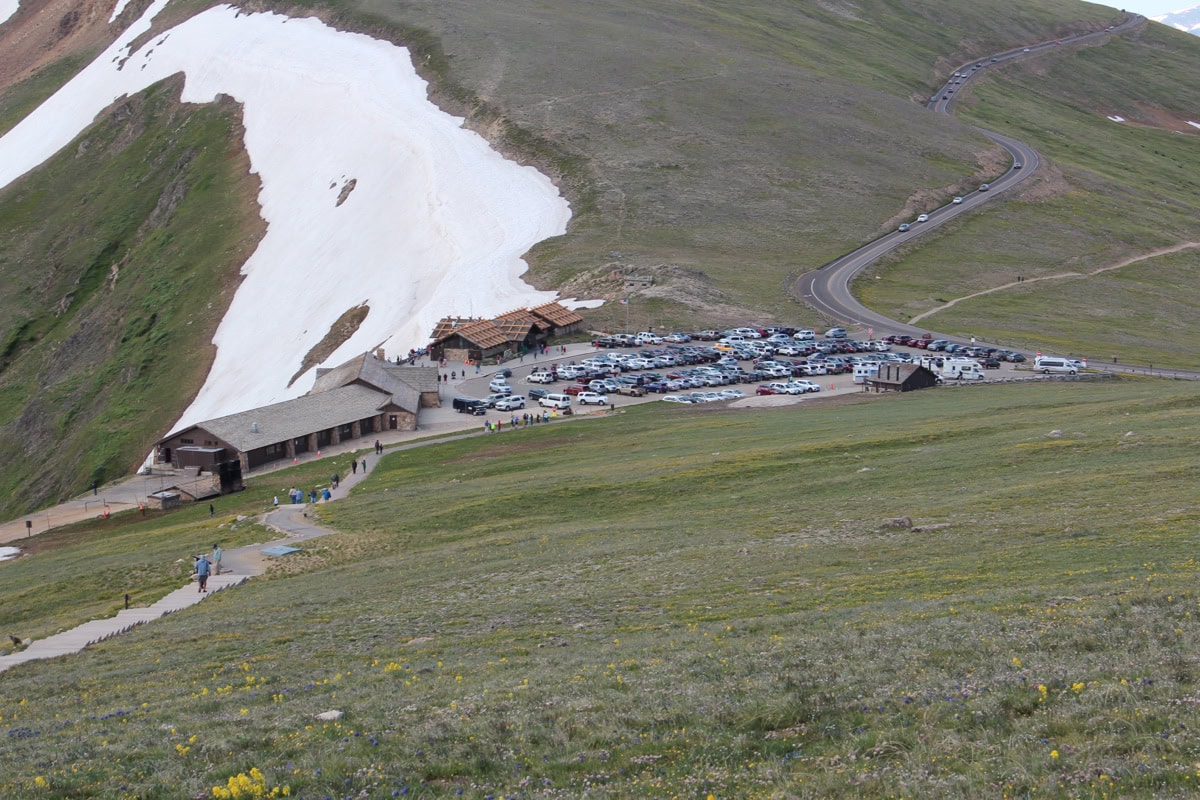
Right on Trail Ridge Road, at the highest visitor centre in the entire national park system, you’ll find the Alpine Visitor Center — and honestly, even without the exhibits, the view alone would be worth the stop. From the terrace, you can see Fall River Valley and a chain of peaks that’ll give you goosebumps.
Inside, there’s a small but fascinating exhibition about alpine tundra — you’ll learn how plants that grow just a few centimetres per year survive, and why it’s so crucial to stay on marked trails (the tundra takes decades to recover). There’s also the Trail Ridge Store with basic refreshments — the coffee won’t win any awards, but the sheer fact that you’re sipping a latte at 3,595 metres makes it pretty special.
From the centre, a short but steep trail leads to Alpine Ridge Trail (about 1 km round trip) — you’ll climb to a ridge with panoramic views of both sides of the mountains. The trail is short, but at that elevation, even 500 metres can feel like a marathon. Take your time, drink plenty of water, and if you feel dizzy or get a headache, head back down — altitude sickness is no joke.
3. Bear Lake — the most famous starting point
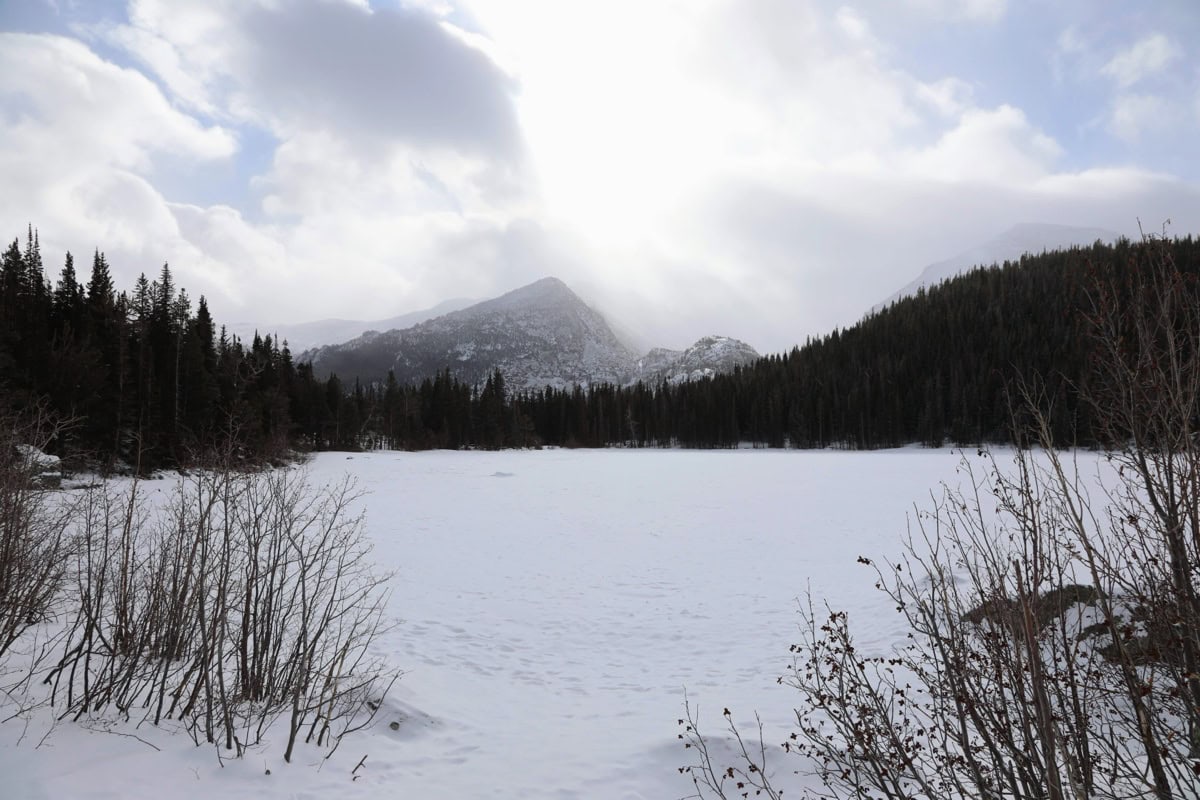
Bear Lake is probably the most photogenic spot in the entire park — and also the most crowded. The lake sits at the base of Hallett Peak and Flattop, surrounded by spruce and fir, and on a clear day the mountains reflect perfectly on the water’s surface. Walking the full loop around the lake on the paved trail takes about 20 minutes (Bear Lake Trail, 1 km loop) and is genuinely suitable for everyone, including small children and grandparents.
But Bear Lake’s real magic lies in the fact that the park’s best hikes start from here — to Emerald Lake, Sky Pond, Loch Vale, and Flattop Mountain. It’s the Grand Central Station of the Rockies. And that’s precisely why there’s nowhere to park — in summer, the car park is usually full by 5:30 AM. Yes, half five. In the morning.
The solution: Either arrive absurdly early, or (the smarter option) park at the Park & Ride on Bear Lake Road and use the free shuttle bus, which runs from late May to October every 10–15 minutes. It works reliably and will save you a lot of stress.
4. Emerald Lake Trail — turquoise gem beneath the peaks
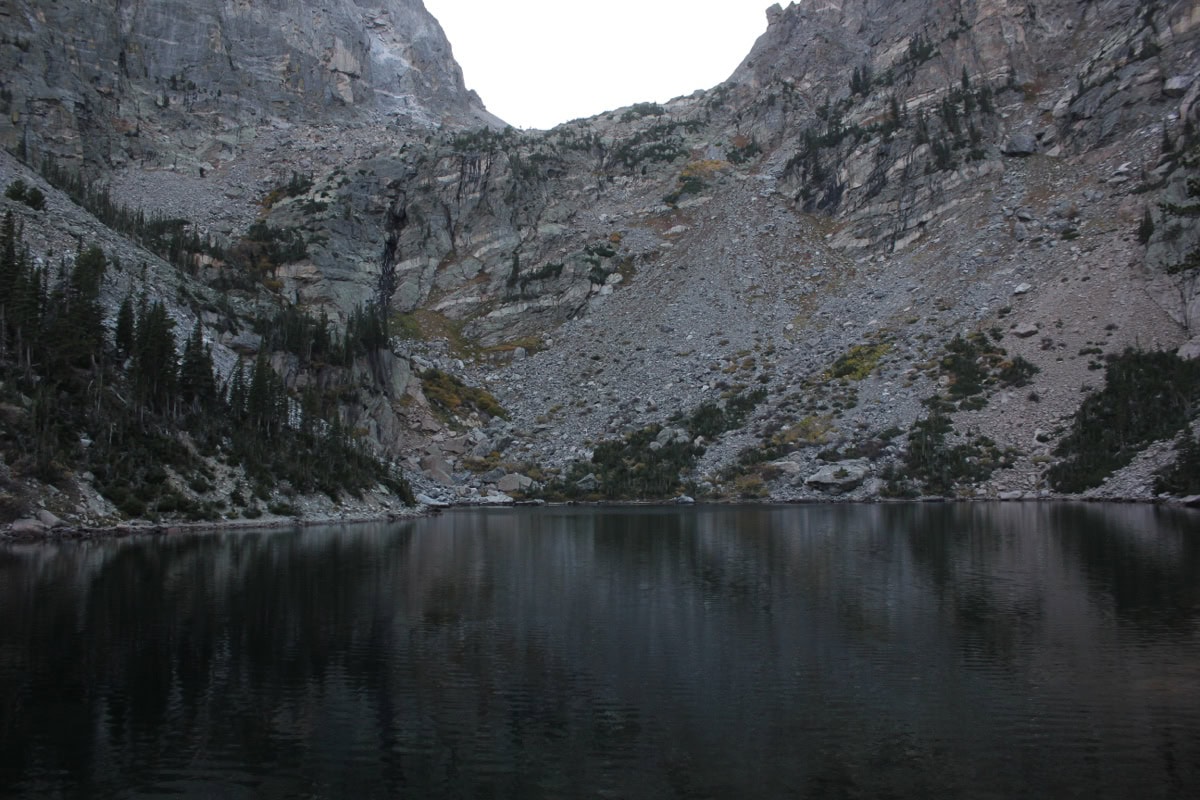
This is probably our favourite trail in the whole park. The route from Bear Lake to Emerald Lake is 5.6 km (3.5 miles) round trip with about 200 metres of elevation gain — comfortably manageable for anyone with average fitness. Along the way, you’ll pass two other gorgeous lakes — Nymph Lake (0.8 km from Bear Lake, full of water lilies in summer) and Dream Lake (1.6 km, a mirror-like surface beneath Hallett Peak).
And then you reach Emerald Lake and just stand there, staring. The water is an incredible turquoise-emerald colour, hemmed in by steep rock walls, and in the early morning sun it looks like something from a fantasy film. This is exactly the spot where you sit on a boulder, eat your packed lunch, and wonder why you ever chose to live in a city.
Practical tip: Start as early as possible — ideally around 6:00–7:00 AM. Partly for parking, partly for crowds (by midday the trail is as packed as a Saturday shopping centre), and mostly for the light — the morning sun illuminates the lakes from the front, making photos a thousand times better than in the flat midday glare. Plus, afternoon thunderstorms roll in regularly in summer — being above the treeline during a storm is not fun.
5. Alberta Falls — a perfect hike for everyone
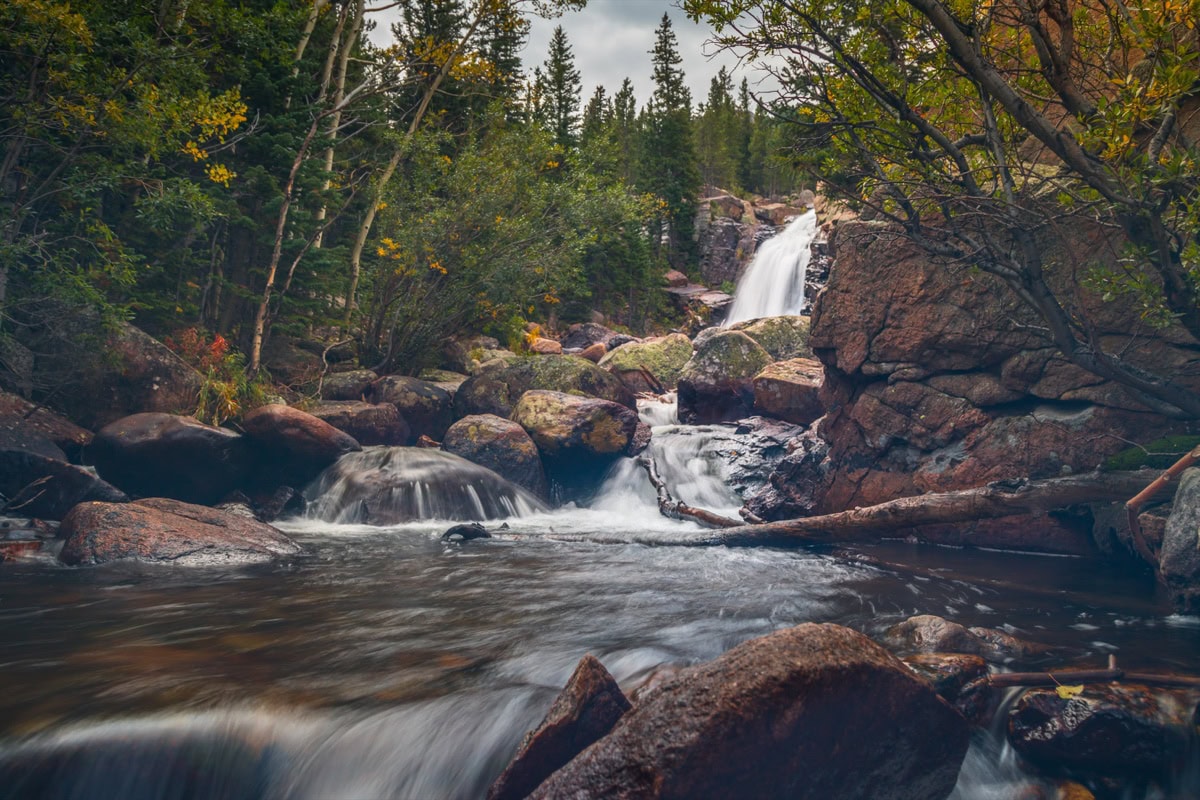
If you’re looking for a short, easy, yet beautiful hike, Alberta Falls is the obvious pick. From the Glacier Gorge trailhead (or directly from Bear Lake), it’s just 2.7 km (1.7 miles) round trip with gentle elevation gain, and the trail winds through forest alongside a creek — pleasant even on a hot day.
The waterfall itself is lovely — about 9 metres (30 ft) high, with plenty of boulders around where you can sit and let the cascading water hypnotise you. It’s no Niagara, but that intimate atmosphere among the trees and rocks has a charm all its own. A brilliant hike for families with children or for a day when you simply don’t fancy covering 20 kilometres.
Tip: Alberta Falls also makes a great warm-up hike — you can continue on to Glacier Gorge, Mills Lake, or all the way to Sky Pond (14.5 km round trip total, but that’s a full-day affair for the fitter hikers).
6. Sky Pond — for those who want more
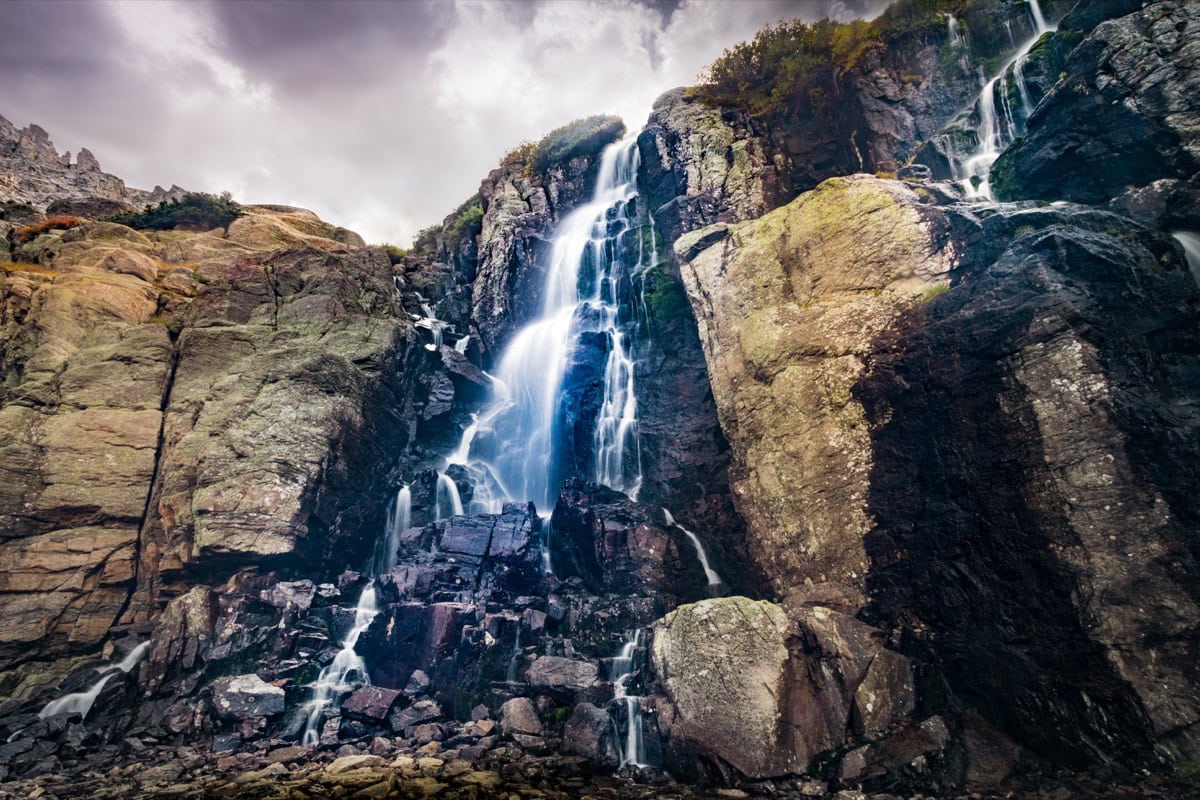
If Emerald Lake is the most popular easy hike, Sky Pond is the most popular challenging one — and in my opinion, the most beautiful spot in the entire park. An alpine lake wedged between granite walls, with Timberline Falls that you literally have to scramble up (it’s not rock climbing, but it is a scramble over wet boulders — you’ll need your hands).
The trail is 14.5 km (9 miles) round trip with about 530 metres (1,740 ft) of elevation gain. You start at Glacier Gorge, pass Alberta Falls, then the beautiful The Loch (a lake that’s well worth a visit in its own right), up past Timberline Falls to Lake of Glass, and finally to Sky Pond.
Important: The section past Timberline Falls is the crux — about 15 metres of steep scrambling up wet rocks beside the waterfall. It’s not technically difficult, but it’s slippery and a bit nerve-wracking if you’re not keen on heights. In winter and spring there’s often ice — don’t attempt it without crampons and an ice axe. In summer, it’s perfectly doable for reasonably fit hikers, just take care. Proper hiking boots are a must — check out our tips on hiking boots.
7. Moraine Park — the valley where elk graze
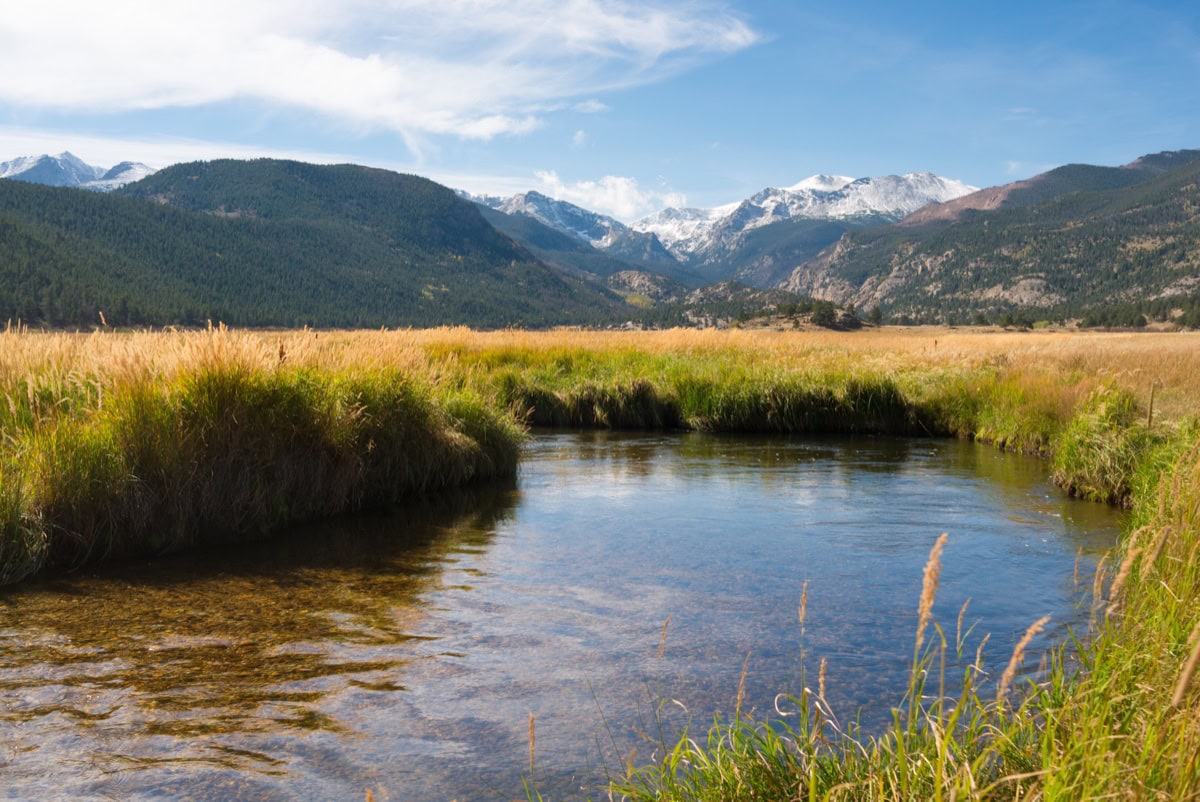
Moraine Park is a sprawling valley on the park’s east side and one of the best spots for wildlife viewing — particularly elk. In September and October, during the rut, hundreds of people flock here to watch bull elk bugle, lock antlers, and gather their harems. It’s absolutely fascinating, and you don’t have to walk anywhere — you can see elk right from the car park or the road.
Even outside the rut, Moraine Park is stunning — vast meadows with the Big Thompson River winding through, surrounded by mountains on all sides. Mornings and evenings, you’ll often spot elk, coyotes, and occasionally moose. I’d recommend coming at sunset — golden light over a meadow full of elk is one of those moments when you wonder why you don’t do this every single day.
Practical tip: During the elk rut (typically late September to early October), keep at least 23 metres (75 feet) from the elk — bulls are aggressive during this period and faster than you’d expect. Every year there are incidents with tourists trying to get closer for a better photo. It’s not worth it. Bring binoculars or a telephoto lens instead.
8. Sprague Lake — tranquillity and mountain reflections
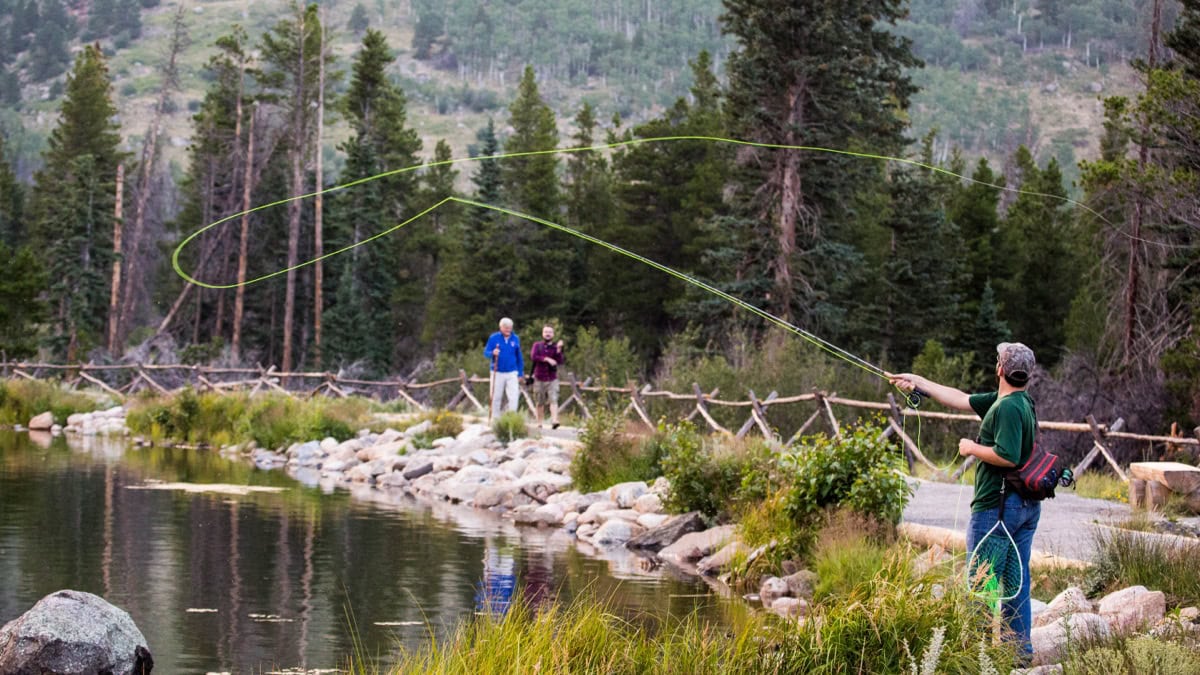
If Bear Lake feels too overcrowded and you want mirror-still water reflecting the mountains without the throngs, head to Sprague Lake. It’s a small lake just off Bear Lake Road — you can walk around it on a flat trail in 20–30 minutes (1.2 km loop), and mornings here are often blissfully quiet.
Sprague Lake is also fully accessible — the entire trail is paved and suitable for pushchairs and wheelchair users. An ideal spot for families with small children or for a calm start to the day before tackling a tougher hike. Lukáš and I were here one morning and saw a grand total of three other people and a family of beavers. Perfect ratio. 😁
9. Longs Peak — the roof of Colorado (for the bold)
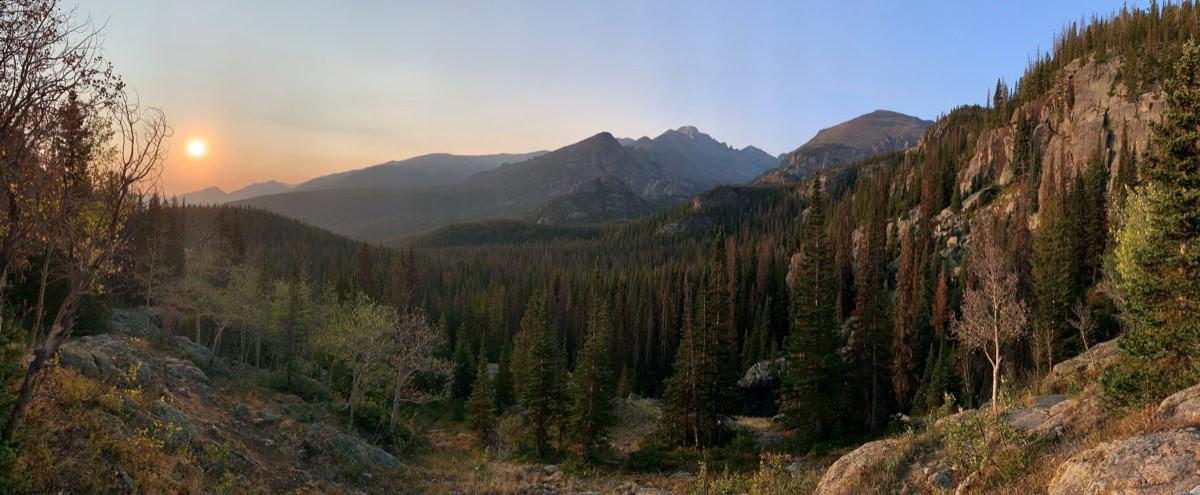
Longs Peak (4,345 m / 14,259 ft) is the highest mountain in Rocky Mountain National Park and the park’s only fourteener — a peak exceeding 14,000 feet. The summit via the Keyhole Route is roughly 24 km (15 miles) round trip with 1,500 metres (4,900 ft) of elevation gain and takes 10–15 hours. This isn’t a hike — it’s a mountaineering expedition.
The toughest section begins beyond the Keyhole — a rock arch on the ridge, after which comes an exposed route across the Ledges (a narrow shelf above a drop), the Trough (a steep gully with fixed cables), and the Narrows (a thin rock ledge). In good weather, an experienced and fit hiker can manage it, but this is a serious mountain — injuries and sadly fatalities occur every year.
If you’re planning the summit: Set off around 3:00–4:00 AM (yes, in the dark, with a headtorch) so you reach the top before noon — afternoon thunderstorms are almost guaranteed in summer, and being on an exposed ridge in lightning is genuinely life-threatening. Check the forecast, bring plenty of water (at least 3 litres), food, warm clothing, and above all be honest with yourself about your fitness. If you’d rather enjoy a beautiful view without the risk, hike at least to Chasm Lake (13.5 km round trip) — it sits right beneath Longs Peak’s dramatic east face and is absolutely breathtaking.

10. Kawuneeche Valley and Colorado River Trail
The park’s west side is a bit of a hidden treasure — most visitors head east towards Bear Lake and Trail Ridge Road, so the Kawuneeche Valley tends to be significantly quieter. And yet it’s gorgeous — a flat green valley through which the young Colorado River flows (yes, THAT Colorado River, the one that carved the Grand Canyon — up here it’s still a stream you can hop across).
The Colorado River Trail is an easy, flat path alongside the river — you can opt for a short version (3 km round trip to a pretty meadow) or a longer version (11 km round trip to Lulu City, a former mining town that’s now little more than a pile of timber). Along the way, you’ll often encounter moose — they’re far more common here than on the east side of the park. Keep your distance — moose look docile but can be aggressive, especially cows with calves.
Tip: If you’ve got time for more, continue from Lulu City towards Thunder Pass or La Poudre Pass — but those are full-day backcountry adventures.
11. Gem Lake Trail — a hidden gem off the beaten path
This is the kind of trail most tourists don’t know about — and that’s exactly why it’s brilliant. Gem Lake is a small lake tucked into granite rocks outside the main park area, accessible from the Lumpy Ridge trailhead north of Estes Park. The trail is 5.5 km (3.4 miles) round trip with 300 metres of elevation gain.
The whole route passes through fascinating rock formations — giant boulders, stone arches, and overlooks towards Estes Park and the valley. The lake itself is small but surprisingly photogenic — crystal-clear water in a granite basin with views of the Continental Divide. Best of all: you don’t need a timed entry reservation, because the trailhead is outside the main park boundary. A perfect alternative for days when you couldn’t snag a reservation.
12. Old Fall River Road — a historic alternative to Trail Ridge
If Trail Ridge Road feels a bit too “civilised,” try Old Fall River Road — the original historic route into the park, dating back to 1920. It’s a one-way (uphill only), unpaved gravel road stretching about 15 km that climbs to the Alpine Visitor Center via steep switchbacks. You come back down via Trail Ridge Road.
The road is narrow, slow (budget 30–45 minutes), and a touch adventurous — but a regular car handles it without issue (campervans and trailers are prohibited). The advantages? Far fewer vehicles, a different perspective on the mountains, and that wonderful feeling of driving a road that the park’s very first visitors used a century ago. We drove up on this road and came back down via Trail Ridge Road — the perfect combination.
Open usually from early July to late September (conditions permitting).
13. Wildlife watching — where and when
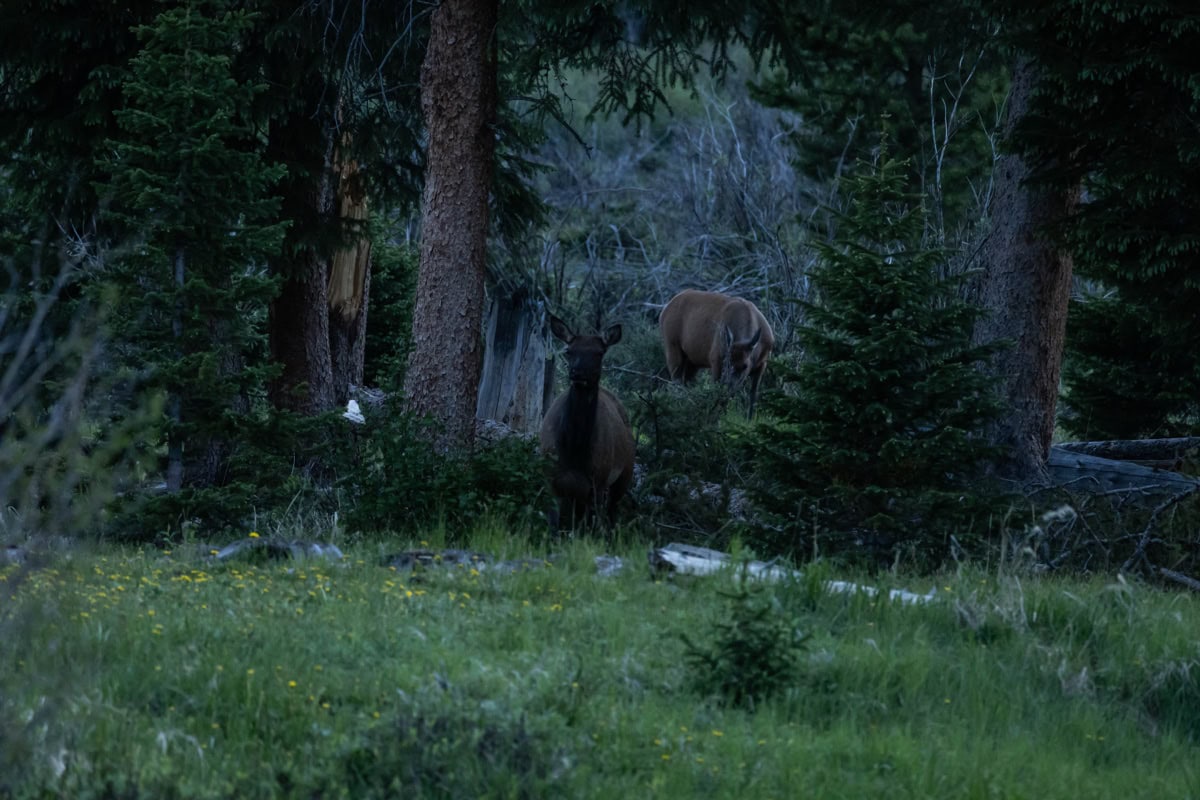
Rocky Mountain National Park is one of the best parks in the US for spotting wildlife right from the road. You don’t need to hike for hours into the backcountry — you just need to be in the right place at the right time.
Elk: The most common large animal in the park. Best spotted in Moraine Park, Horseshoe Park, and on the meadows along Trail Ridge Road — ideally early morning or late evening. In September–October, it’s elk rut season (see tip #7). Elk are genuinely everywhere — you’ll see them on the golf course in Estes Park or in the supermarket car park. 😁
Bighorn sheep: Look for them on the rocky slopes around Sheep Lakes (Horseshoe Park) and on the steep hillsides along Trail Ridge Road. Most common in May and June, when they come down to mineral licks.
Moose: West side of the park, Kawuneeche Valley and around Grand Lake. Most common early morning. They’re enormous animals and look gentle, but they are NOT — keep a very wide berth.
Marmots and pikas: On the rocky slopes above the treeline, especially around Rock Cut on Trail Ridge Road. You’ll hear pikas before you see them — they make a distinctive high-pitched “EEEP!” call.
Black bears: Rare but present. If you encounter a bear, stay calm, give it space, and DO NOT feed it. The park has strict rules about storing food in bear-proof containers.
14. Wildflowers on alpine meadows
If you visit in June or July, you’re in for a bonus that photos simply don’t do justice — wildflower season. The alpine meadows above the treeline (above roughly 3,500 m / 11,500 ft) become carpeted with miniature flowers — yellow, purple, white, pink — that have just a few short weeks to bloom before winter returns.
The best spots for wildflowers are the meadows along Trail Ridge Road (stop at Forest Canyon Overlook and Rock Cut), Ute Trail, and Tundra Communities Trail. Down in the valleys, you’ll find meadow flowers in Moraine Park and along the Cub Lake Trail (6.8 km round trip, a flat trail through meadows and forest — beautiful even outside flower season).
Important: Alpine tundra is an extremely fragile ecosystem. Plants here grow only millimetres per year, and a single boot print on tundra can remain visible for decades. Please stay on the marked trails.
15. Estes Park — the charming gateway town
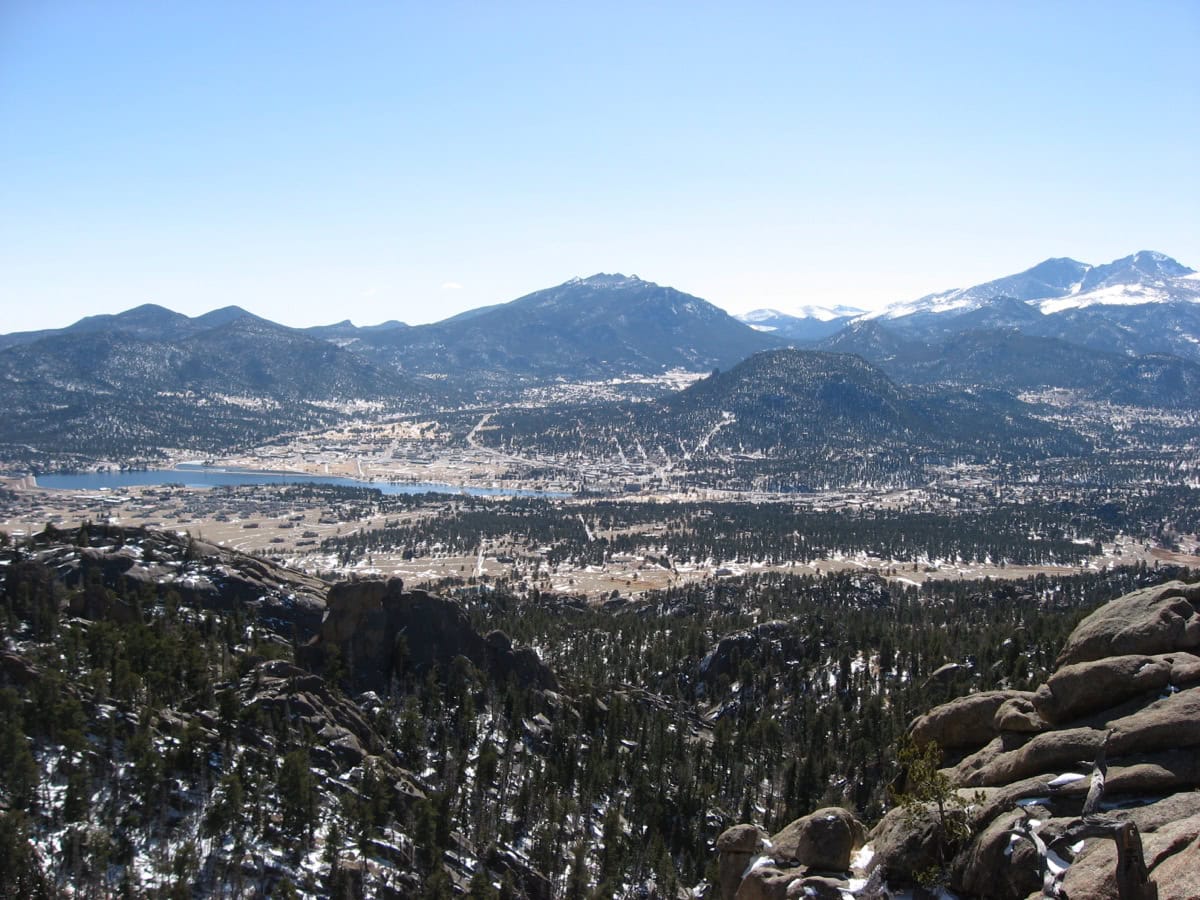
Estes Park isn’t just somewhere you sleep — it’s a fully-fledged part of the experience. This mountain town of about 6,000 permanent residents has a surprisingly rich offering of restaurants, cafés, galleries, and shops. And then there’s the famous Stanley Hotel — the hotel that inspired Stephen King to write The Shining. Yes, THAT hotel. Tours are available and well worth it, even if you’re not a horror fan.
A stroll along Elkhorn Avenue (the main street) makes for a pleasant hour or two — pop into shops selling Native American jewellery and outdoor gear, grab an ice cream, and watch elk nonchalantly wandering across front lawns. In October, the town hosts Elk Fest — a festival celebrating the elk rut with bugling demonstrations, talks, and local food.
Viewpoint above town: Drive up to Prospect Mountain — by car or on foot (but the route is steep). The view over Estes Park with mountains as a backdrop is gorgeous, especially at sunset.
Map of points of interest for your phone
What to eat and drink: a guide for hungry travellers
Inside Rocky Mountain National Park itself, you won’t find any restaurants — there’s only the aforementioned Trail Ridge Store at the Alpine Visitor Center with basic refreshments (hot dogs, soups, coffee). For every day in the park, pack plenty of snacks, a packed lunch, and most importantly water — at least 2 litres per person. You’ll dehydrate faster than you think at altitude and in the sun.
All the food is made up for in Estes Park, which has a surprisingly good food scene:
Breakfast: Notchtop Bakery & Café — excellent bakery with fresh croissants and decent coffee. There’s often a morning queue, but it moves quickly. Alternatively, The Egg & I — classic American breakfast with enormous portions.
Lunch/dinner: Smokin’ Dave’s BBQ & Brew — if you love American BBQ, this is a dead cert. The ribs and brisket are superb. Nepal’s Café — unexpectedly authentic Nepalese food in the middle of Colorado. The momos (Nepalese dumplings) are fantastic. Bird & Jim — more upscale American cuisine with local ingredients, slightly pricier, but worth it for a special dinner.
Coffee: Inkwell & Brew — the best speciality coffee in Estes Park. Small, cosy space with a lovely vibe.
In Grand Lake: The selection is smaller, but Sagebrush BBQ & Grill serves solid American classics with a lake view. Fat Cat Café is decent for a quick lunch.
Picnic tip: Stock up at the Safeway supermarket in Estes Park — sandwich supplies, fruit, and trail mix. A picnic at Sprague Lake or on a meadow in Moraine Park with a mountain backdrop beats any restaurant.
Practical tips and tricks
What to bring
Rocky Mountain National Park is a high-altitude environment where the weather changes fast. Layering is key — mornings can be 5 °C (41 °F), midday 25 °C (77 °F), and by afternoon a hailstorm might roll through. Every day, make sure you have:
- A rain jacket or waterproof shell (afternoon storms are the norm in summer)
- A warm layer (fleece or lightweight down jacket)
- Quality hiking boots (trail runners are fine for easy trails; for Sky Pond and Longs Peak, you’ll want ankle support)
- Sunscreen SPF 50+ (UV radiation is significantly stronger at altitude)
- A hat and sunglasses
- At least 2–3 litres of water per person
- Snacks and a packed lunch
For a longer trip to the US, definitely check our tips on how to pack with carry-on luggage only.
Altitude sickness
Most activities in the park take place at 2,400–3,700 metres (7,900–12,100 ft) above sea level. If you’re flying in from sea level, take it easy on the first day — a gentle walk around Bear Lake and Sprague Lake, no big hikes. Drink plenty of water, skip the alcohol on your first evening, and listen to your body. Symptoms of altitude sickness (headache, nausea, dizziness) can hit anyone — regardless of fitness level.
eSIM and internet
Mobile signal in the park is very limited — on most trails and in the valleys you’ll have nothing. In Estes Park and along main roads, signal works. Download offline maps in advance (Google Maps or AllTrails) and don’t rely on the internet. For a trip to the US, it’s worth getting an eSIM — check out our Holafly review.
Travel insurance
Healthcare costs in the US are astronomical — a broken leg could run into tens of thousands of dollars. Travel insurance is a necessity, not a luxury. Make sure your policy covers activities at altitude (some budget policies have an elevation limit). Have a look at our SafetyWing review — they cover outdoor activities without any issues.
Car hire
A car is practically essential at Rocky Mountain National Park. Lukáš and I have had consistently great experiences with DiscoverCars, which we use all over the world. You can easily hire a car in Denver — a standard sedan is perfectly fine for all the paved roads in the park. Petrol in Colorado is generally cheaper than on the coasts — expect about $3.50–4.50 per gallon (roughly €0.85–1.10 per litre).
Frequently asked questions (FAQ)
Tips and Tricks for Your Vacation
Don’t Overpay for Flights
Search for flights on Kayak. It’s our favorite search engine because it scans the websites of all airlines and always finds the cheapest connection.
Book Your Accommodation Smartly
The best experiences we’ve had when looking for accommodation (from Alaska to Morocco) are with Booking.com, where hotels, apartments, and entire houses are usually the cheapest and most widely available.
 🚗 Car rental on the roadVerified rental cars in the United States
Search with the DiscoverCars comparison engine — it compares prices from dozens of local and international rental companies, and most bookings come with free cancellation.
Compare car prices in the United States →Don’t Forget Travel Insurance
Good travel insurance will protect you against illness, accidents, theft, or flight cancellations. We’ve had a few hospital visits abroad, so we know how important it is to have proper insurance arranged.
Where we insure ourselves: SafetyWing (best for everyone) and TrueTraveller (for extra-long trips).
Why don’t we recommend any Czech insurance company? Because they have too many restrictions. They set limits on the number of days abroad, travel insurance via a credit card often requires you to pay medical expenses only with that card, and they frequently limit the number of returns to the Czech Republic.
Find the Best Experiences
Get Your Guide is a huge online marketplace where you can book guided walks, trips, skip-the-line tickets, tours, and much more. We always find some extra fun there!


