

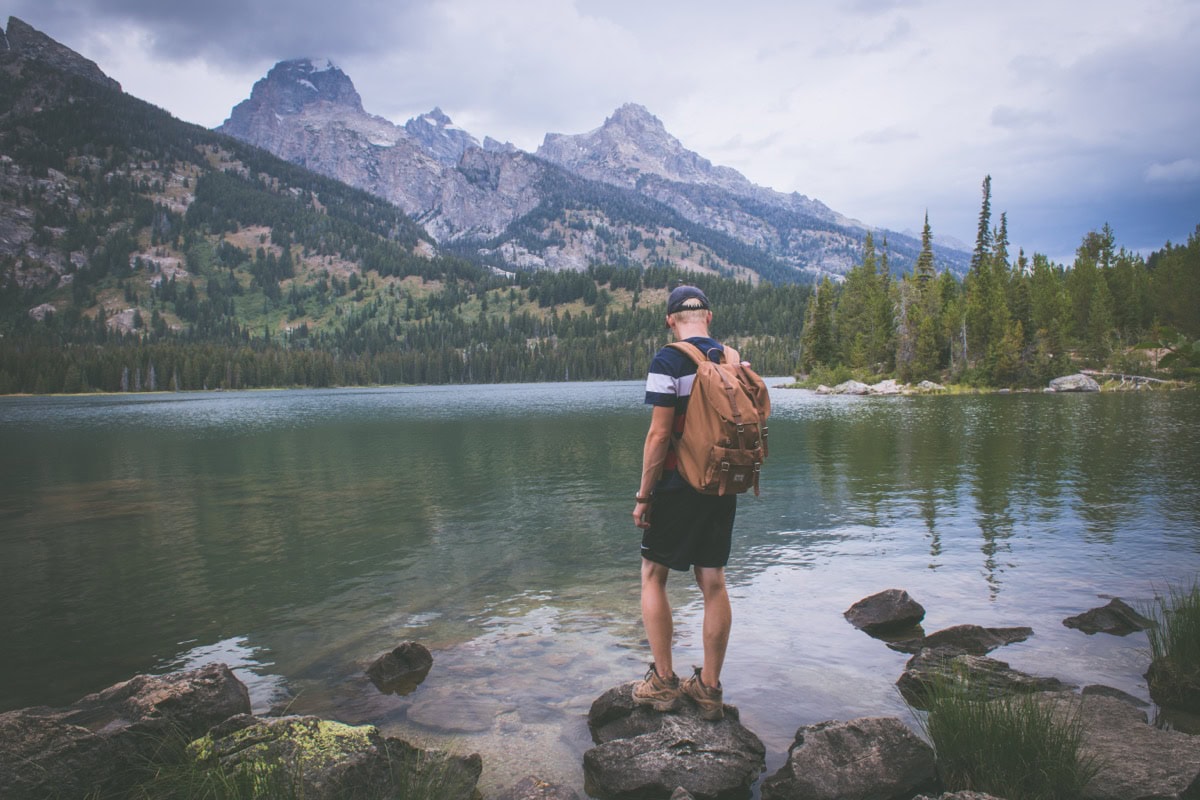
You’re standing on the bank of the Snake River, the jagged peaks of the Tetons towering above you, the air thick with the scent of pine resin and wet grass — and you can’t shake the feeling you’ve accidentally wandered into a desktop wallpaper. Except this is real. And even more stunning than any photo of Grand Teton Wyoming could ever capture.
When Lukáš and I first drove into Grand Teton National Park, we figured nothing could surprise us after Yellowstone. We were so wrong. Grand Teton knocked us flat on our very first morning, when we spotted a moose wading through Schwabacher Landing in the mist while the snow-capped Teton peaks slowly emerged behind it. I still remember that moment — we just stood there, mouths agape, coffees in hand, completely forgetting to even take a photo. 😅
Grand Teton National Park is like the quieter, humbler sibling of its more famous neighbour Yellowstone, which sits just to the north. It doesn’t have geysers or rainbow-coloured hot springs, but it has something else entirely — raw, unfiltered mountain beauty that will literally take your breath away. Add to that wildlife around every corner, gorgeous hikes, and some of the most photogenic scenery in the entire United States.
In this article, you’ll find a complete guide to Grand Teton — 15 things to see and do, where to stay, when to go, how much it all costs, and how to combine the park with Yellowstone. Let’s dive in.
TL;DR
- Grand Teton National Park is located in northwestern Wyoming, right below Yellowstone — you can easily combine both parks in one trip.
- Best time to visit is June through September, with September being the absolute jackpot — fewer crowds, golden colours, and active wildlife.
- Entrance fee is $35 per vehicle (about €32) for 7 days, or you can buy the America the Beautiful Pass for $80 (about €74), which covers all national parks for a full year.
- Top spots: Jenny Lake, Schwabacher Landing (sunrise!), Mormon Row, Cascade Canyon Trail, and Oxbow Bend.
- Wildlife sightings are almost guaranteed — moose are practically everywhere, and with a bit of luck you’ll spot bears, bison, and bald eagles too.
- Accommodation in the park is pricey and fills up fast — book 3–6 months ahead. The town of Jackson is a more affordable alternative.
- You don’t need special gear for the main hikes, but proper hiking boots are a must — the terrain is rocky and sometimes wet.
- Two days is the minimum, ideally 3–4 days so you can fit in hikes and early morning wildlife watching.
The full destination guide: North America — guide and what to see
When to visit Grand Teton and how to get there
Grand Teton is a park that lives and breathes with the seasons, and when you visit will dramatically shape your experience. Here’s a quick breakdown to help you pick the perfect time.
Best time to visit
June through September is the main season when the park is fully accessible. But there are huge differences between these months:
- June: Snow is still melting in the mountains, and some higher trails may be closed or snow-covered. But the meadows are in bloom, waterfalls are thundering, and crowds are relatively thin. Nights can be chilly (around 2–5 °C / 36–41 °F).
- July and August: Peak season. Everything is open, the weather is at its most stable (daytime temperatures 25–30 °C / 77–86 °F), but the car park at Jenny Lake fills up by around 8 a.m. If you’re visiting in summer, get up early or head for lesser-known trails.
- September (our favourite ❤️): Crowds thin out, aspens turn gold, wildlife becomes more active (moose rut!), and the light is simply magical. Nights are cold (around 0 °C / 32 °F), but daytime is pleasant — 15–20 °C (59–68 °F). Some campgrounds and boat services close towards the end of the month, so check ahead.
- October: Beautiful autumn colours, but the weather is unpredictable. It could be 15 °C (59 °F) or -5 °C (23 °F). Most facilities are closed.
- Winter (December–March): The park is accessible, but roads are closed or restricted. Great for cross-country skiing and snowshoeing, not for a standard visit.
How to get to Grand Teton
By air: The nearest airport is Jackson Hole Airport (JAC) — and it’s a unique one, because it sits right inside the national park. Seriously, you land with a view of the Tetons. 😁 You can fly here from Denver, Salt Lake City, or Dallas. From the UK, look for connecting flights via Denver or Salt Lake City — airlines like United, American, and Delta serve Jackson Hole from major US hubs.
By car: If you’re doing a road trip (which we wholeheartedly recommend), Grand Teton is about a 5-hour drive from Salt Lake City and an hour south of Yellowstone. We’ve had great experiences over the years with DiscoverCars, which we use all over the world — in the US, having a car is an absolute necessity.
From Yellowstone: If you’re coming from Yellowstone, just continue south along the John D. Rockefeller Jr. Memorial Parkway. You’ll be in Grand Teton within half an hour. Your entrance fee covers both parks (if you have the 7-day pass or an America the Beautiful Pass).
Where to stay and how much Grand Teton National Park costs
Accommodation in Grand Teton is a story in itself — the park is relatively small, but demand is enormous, so prices soar and availability plummets. Here’s a rundown of all your options, from camping to luxury lodges.
Accommodation inside the park
There are three main lodging options inside the park, all operated by Grand Teton Lodging Company:
- Jackson Lake Lodge — an iconic hotel with a view of the Tetons right from the lobby. Rooms from $350/night (about €320). Book at least 6 months in advance.
- Jenny Lake Lodge — the most exclusive (and priciest) accommodation in the park. Wooden cabins by Jenny Lake, all-inclusive breakfast and dinner. Prices from $700/night (about €645). For special occasions.
- Colter Bay Village — the most affordable option inside the park. Cabins from $250/night (about €230), tent pitches from $40/night (about €37). Summer camp vibes — simple but clean.
Camping in the park is the cheapest and most authentic experience. Campgrounds at Gros Ventre, Jenny Lake, and Signal Mountain cost $40–45/night (about €37–41) per pitch. Jenny Lake Campground is the smallest and most sought-after (first-come, first-served — arrive before 8 a.m.). Gros Ventre is the largest and easiest to get into even without a reservation.
Accommodation in Jackson
The town of Jackson (note: not Jackson Hole — that’s the name of the entire valley) sits 20 minutes south of the park and serves as the main base for most visitors. You’ll find everything from hotels and Airbnbs to hostels here.
- Mid-range: $150–250/night (€138–230) — hotels like The Lexington at Jackson Hole or Elk Country Inn.
- Budget: The Hostel in Teton Village — from $50/night (€46) per bed in a dorm, which is extremely cheap for the Jackson area.
- Luxury: Four Seasons Resort Jackson Hole or Hotel Terra — from $500/night (€460) and up.
💡 TIP: Jackson is expensive in summer. If you want to save money, try Driggs or Victor on the other side of Teton Pass in Idaho — it’s about 45 minutes to the park, but accommodation prices are 30–40% lower.
How much Grand Teton costs — budget for 3 days for two
Here’s a rough budget breakdown so you know what you’re getting into:
- Entrance fee: $35 (€32) per vehicle for 7 days, or $80 (€74) for an annual America the Beautiful Pass (recommended if you’re also visiting Yellowstone and other parks)
- Accommodation (3 nights): camping $120–135 (€110–125) / hotel in Jackson $450–750 (€415–690) / lodge in the park $1,050+ (€965+)
- Petrol: about $30–50 (€28–46) — distances within the park aren’t huge
- Food: $80–150/day for two (€74–138) depending on whether you’re self-catering or eating at restaurants
- Activities: shuttle boat across Jenny Lake $20/person (€18), kayak from $30/hour (€28), rafting from $80/person (€74)
Total for 3 days for two: roughly $500–1,500 (€460–1,380) depending on your travel style. Camping + self-catering = lower end, lodge + restaurants = upper end.
Grand Teton National Park: 15 things to see and do
Grand Teton National Park isn’t huge — you can drive through it in a few hours. But trust me, you’ll want to stop at every turn. Here are 15 tips covering the best the park has to offer, from iconic viewpoints and stunning hikes to spots where you’re almost guaranteed to see wildlife. The tips are roughly ordered from south to north, following the route through the park.
1. Mormon Row — the most photographed barn in America
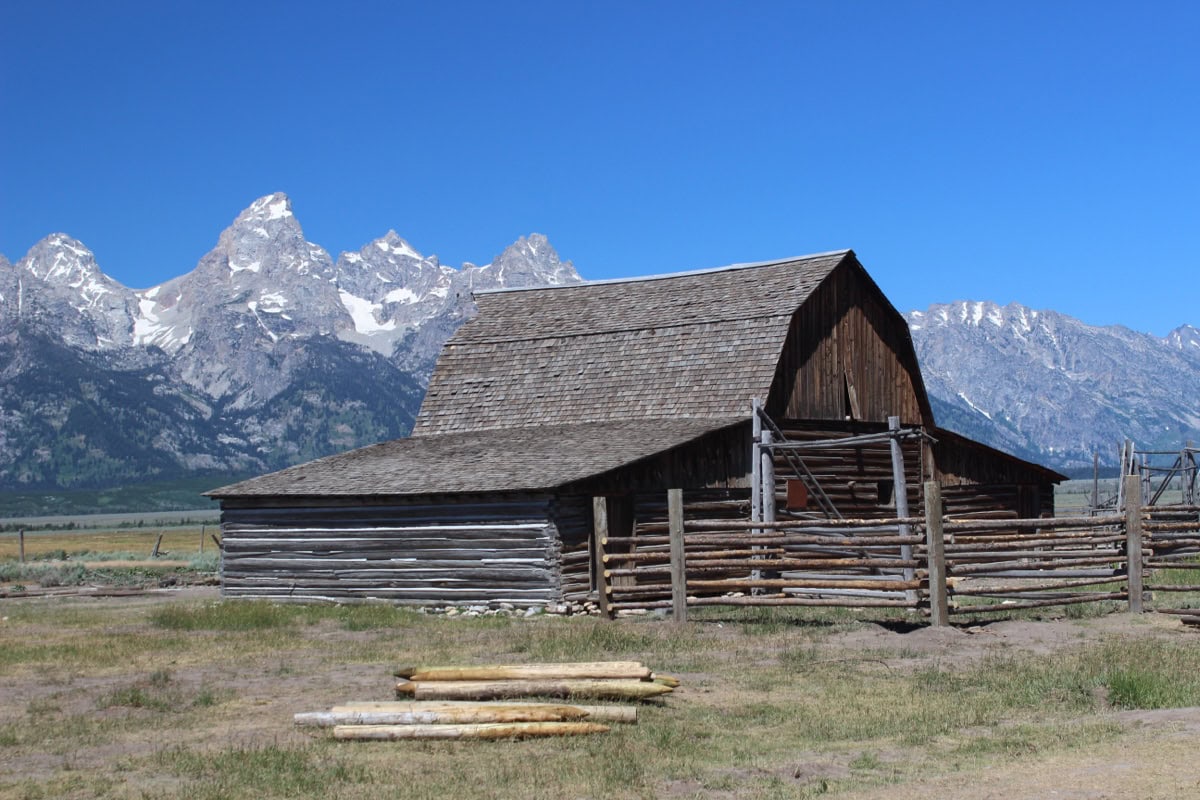
If you’ve ever seen a photo of an old wooden barn with the Tetons rising behind it, you’re looking at Mormon Row. These historic 19th-century buildings — specifically the T.A. Moulton Barn and the John Moulton Barn — are probably the most photographed subject in all of Wyoming.
Get here at sunrise. Seriously, set your alarm for 5 a.m., grumble, down a coffee, and go. When the first rays of sunlight hit the snowy Teton peaks and the barn glows in golden light, you’ll understand why photographers flock here from around the world. We counted about fifteen people with tripods that morning, but there’s plenty of room for everyone.
Beyond the photogenic barns, Mormon Row is a brilliant spot for watching bison. Herds regularly graze in the meadows right beside the road. Keep a safe distance of at least 25 metres (that’s the law in the park, not just a suggestion) and soak it all in — bison with the Tetons behind them is the kind of scene that screams classic Wyoming.
You don’t need more than an hour at Mormon Row, but you could easily spend two if you’re photographing or waiting for the perfect light.
2. Schwabacher Landing — a breathtaking sunrise
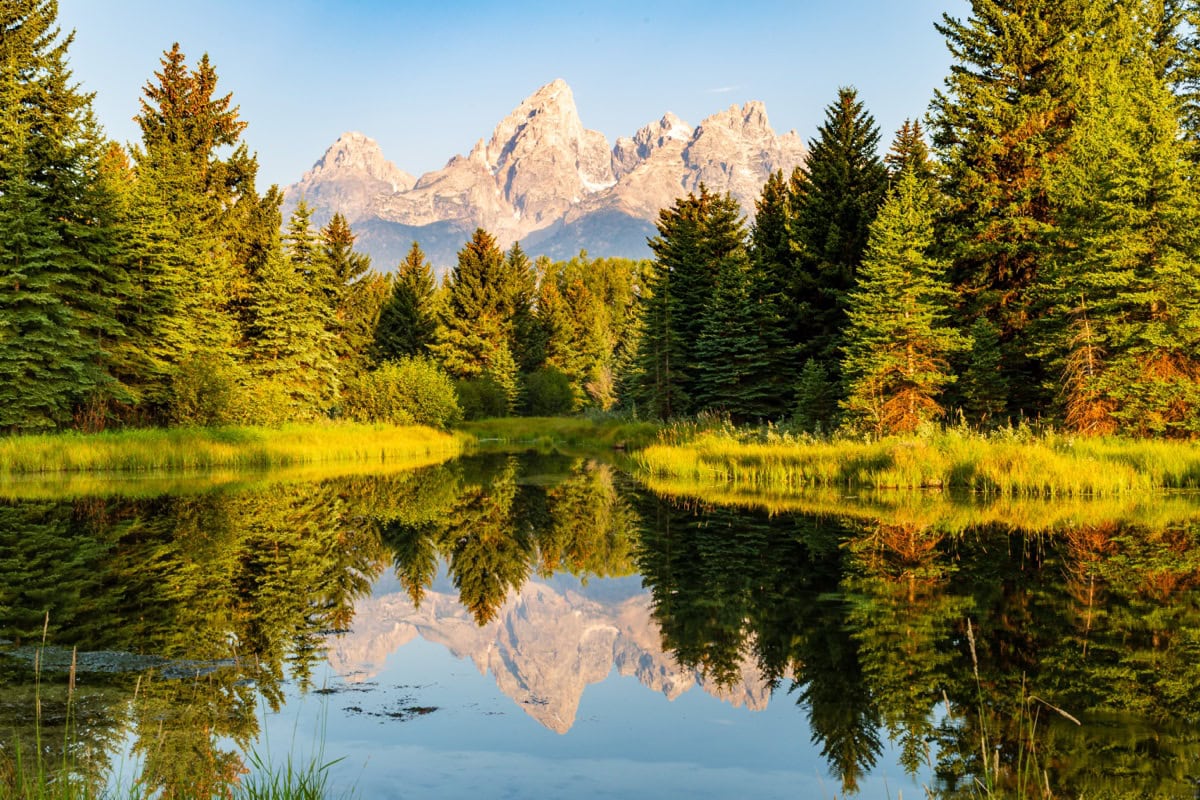
Schwabacher Landing is my personal favourite spot in the entire park. It’s a short dirt road off the main highway that leads you to quiet pools along the Snake River. On a calm morning, the Tetons reflect perfectly in the still water, creating a scene so flawless it looks photoshopped.
Again, arrive early — ideally before sunrise. A windless morning equals perfect reflections. The walk from the car park to the river is short (about 5 minutes on flat ground), so it’s accessible to absolutely everyone.
Schwabacher Landing is also famous for its frequent moose sightings. One morning, we watched a cow moose and her calf wade across the river about fifty metres from where we stood — the stillness, the silence, just the gentle splash of water… it’s one of those moments you travel for. ☺️
Heads up: The dirt access road can get muddy after rain. An SUV or higher-clearance vehicle is a bonus, but we managed it in a regular saloon car (carefully).
3. Jenny Lake — the heart of Grand Teton
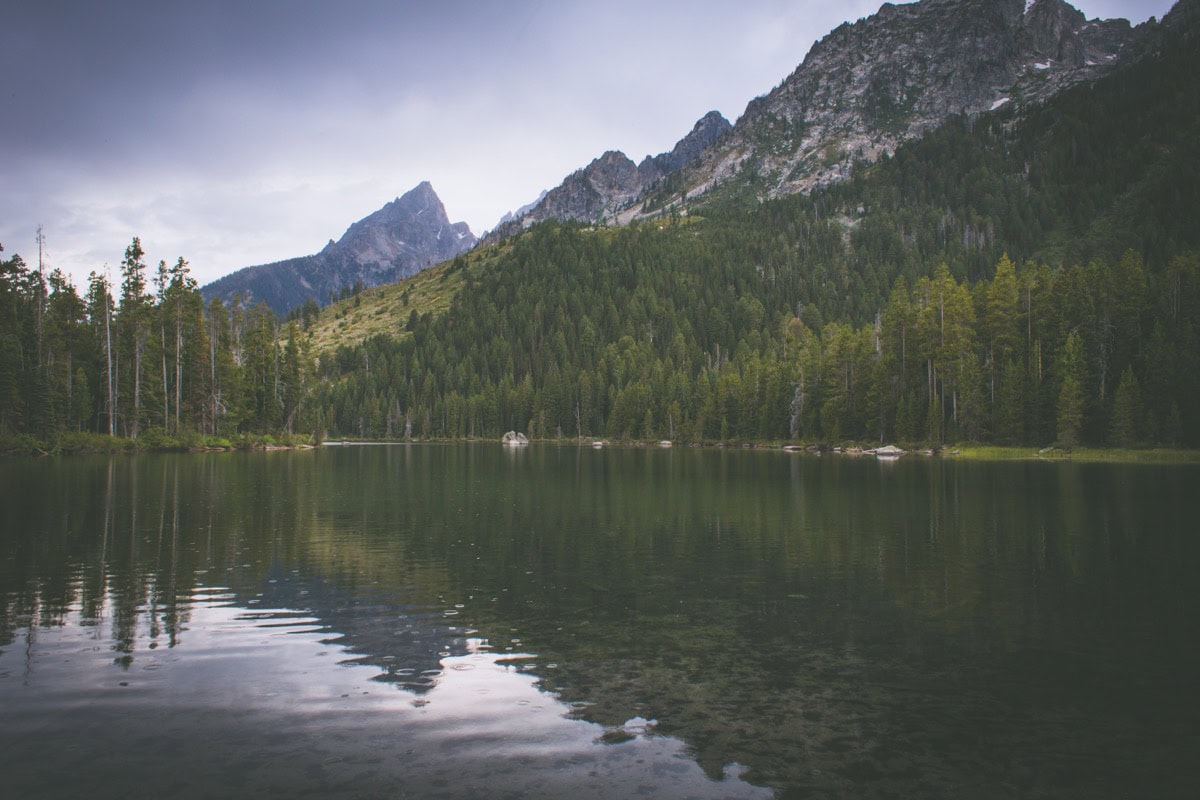
Jenny Lake is probably the most visited spot in the entire park — and deservedly so. This turquoise glacial lake at the foot of Cathedral Group (the three highest Teton peaks) looks like something out of a fairytale. If you only have time for one stop in Grand Teton, make it this one.
You have two options for exploring the lake:
- Shuttle boat across the lake: $20/person return (€18), $12 one-way (€11). The ride takes 12 minutes to the west shore, where trails to Cascade Canyon and Hidden Falls begin (see tip #4). Buy tickets online in advance — the queue at the dock can be an hour long in summer.
- Walking around the lake: The Jenny Lake Loop Trail is a beautiful, flat 12 km (7.5-mile) circuit around the entire lake. Allow 3–4 hours — lovely for an afternoon.
💡 TIP: The car park at Jenny Lake Visitor Center fills up by 8:30 a.m. in summer. Show up at 9 and you’ll be circling like a vulture. An alternative is parking at South Jenny Lake Junction and taking a short walk.
4. Cascade Canyon Trail — the best hike in the park
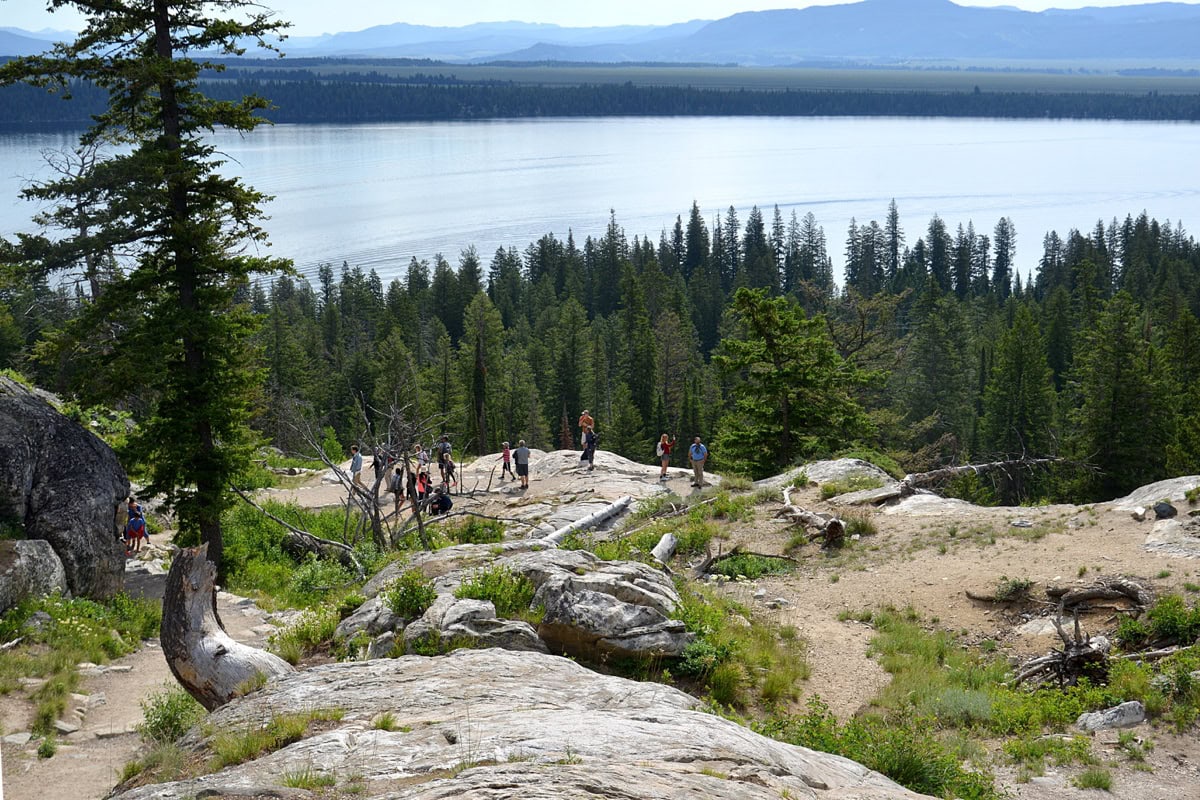
If you love hiking in the mountains, Cascade Canyon Trail is the number-one must-do. This trail starts on the west shore of Jenny Lake (take the shuttle boat or walk around the lake) and leads you deep into a glacial valley flanked by the sheer walls of the Tetons.
Route: Jenny Lake boat dock → Inspiration Point → Cascade Canyon and back. About 15 km (9.5 miles) round trip (if you take the boat), with roughly 330 metres (1,080 ft) of elevation gain.
The first 1.5 km climbs steeply to Hidden Falls (a gorgeous waterfall, perfect photo spot) and then on to Inspiration Point with its view over Jenny Lake. Most hikers turn back here — and that’s a mistake! Because Cascade Canyon is only just beginning. Once you pass Inspiration Point, the crowds melt away and you’re walking through wildflower meadows along a babbling creek, with sheer rock walls rising on both sides.
There’s also a good chance you’ll spot bears (both black and grizzly) and marmots in Cascade Canyon — carry bear spray and make noise on blind corners. This isn’t scaremongering; it’s standard safety practice in the Tetons.
Allow 4–6 hours for the full hike there and back. Bring plenty of water, snacks, and definitely proper hiking boots — the terrain is rocky and sometimes wet.
5. Oxbow Bend — mirror reflections of the Tetons
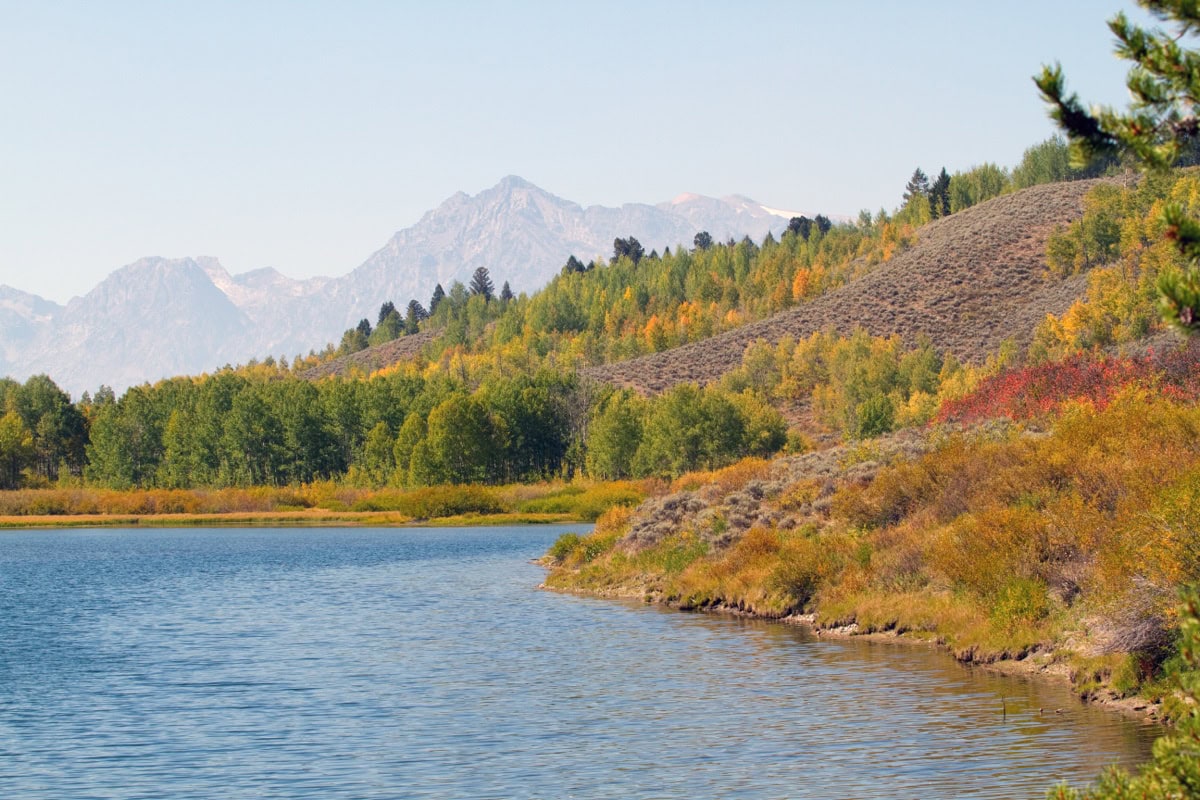
Oxbow Bend is one of those “stop the car and shoot from the window” moments. This meandering bend in the Snake River offers one of the most iconic views of Mount Moran — on a calm morning, the mountain reflects perfectly in the water along with the clouds.
It’s best early in the morning or late afternoon, when the light is soft and the wind is still. Oxbow Bend is also a superb wildlife-watching spot — pelicans, bald eagles, cow moose with calves, and occasionally otters or beavers all make regular appearances.
A stop here takes 15–30 minutes, but local photographers spend hours. It’s right off the main road (Teton Park Road), so there’s absolutely no reason not to pull over — wherever you’re headed.
6. Signal Mountain Summit Road — panoramic views of the valley
Signal Mountain is a hill in the middle of Jackson Hole valley that rises above the surrounding flatlands and offers a 360° panoramic view. The best part? A road leads to the summit, so you don’t even have to get out of the car (though I do recommend at least a short stroll along the viewpoint trail at the top).
From the top of Signal Mountain, you can see the entire Teton Range spread out from left to right, Jackson Lake below, the Snake River winding through the valley, and on a clear day even the Yellowstone Plateau to the north. It’s the best place to grasp the geography of the whole park — from here you can see just how dramatically the Tetons shoot up from the plains with no foothills whatsoever. It’s flat land, and then BAM — 4,000-metre peaks.
The drive to the top is about 8 km (5 miles) along a narrow but paved road. It takes 15 minutes up and 15 down. At the summit, there are two viewpoints — Jackson Point Overlook (south-facing) and the actual summit (west-facing towards the Tetons). Visit both.
Best time? Sunset. The Tetons glow pink and orange, and if the clouds cooperate, you’ll witness a show that rivals anything in Utah or Arizona.
7. Jackson Lake — kayaking, paddling, and a picnic with a view
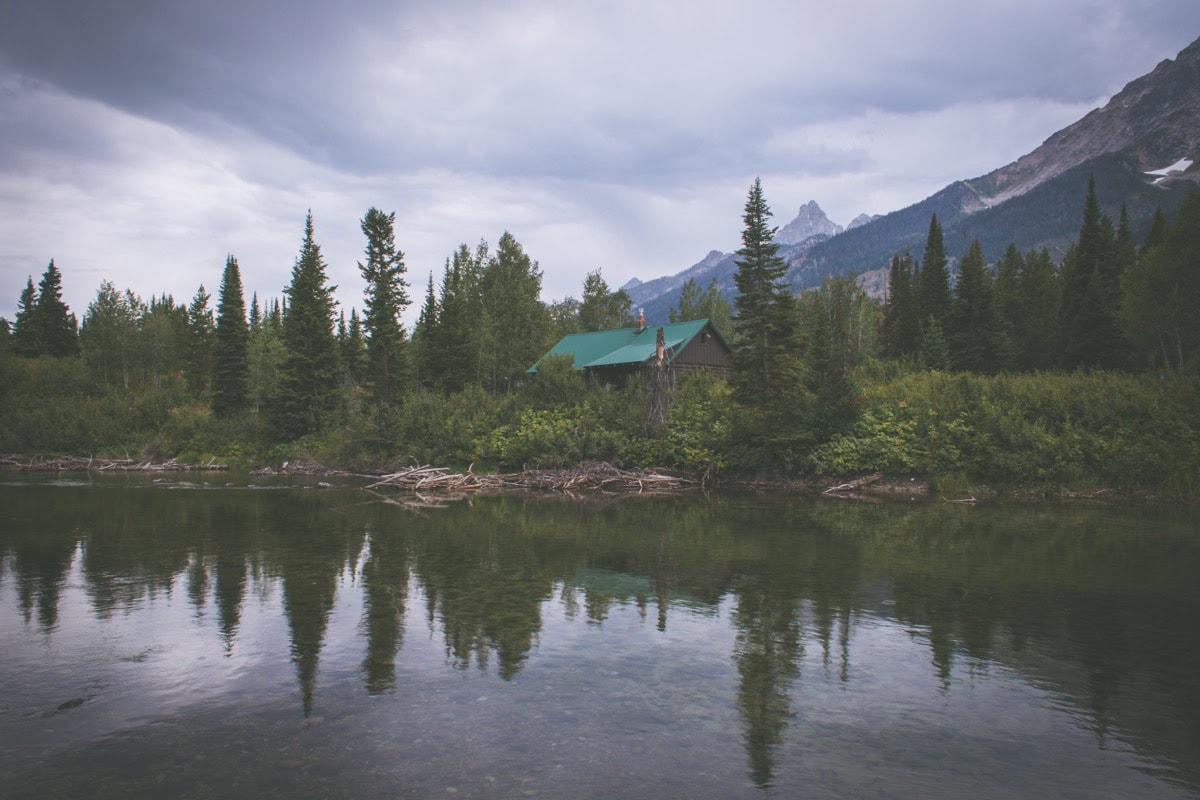
Jackson Lake is the largest lake in the park and offers a completely different experience from the intimate Jenny Lake. Here you’ll find space, peace, and the feeling of being at the edge of the world — mountains ahead, water all around, forest behind.
The best way to experience Jackson Lake is from the water. You can hire kayaks and paddleboards at Colter Bay Marina or Signal Mountain Lodge (from $30/hour, about €28). Paddling across the glassy surface with the Tetons right in front of you is an experience you won’t forget.
If paddling isn’t your thing, head out on the Colter Bay Lakeshore Trail — an easy 3 km (2-mile) walk along the shore with lovely views. Or pack a picnic and enjoy it at one of the many viewpoints along the northern shore.
Watch out for afternoon wind. Jackson Lake is big, and the wind picks up in the afternoon, which can catch kayakers off guard. Paddle in the morning and enjoy dry land in the afternoon.

8. Laurance S. Rockefeller Preserve — silence and nature meditation
This corner of the park is different. The Laurance S. Rockefeller Preserve is a former private ranch belonging to the Rockefeller family, donated to the national park in 2001. And you can tell — the entire area is designed to encourage a deep connection with nature.
The Visitor Center is an architectural gem — none of the typical American “gift shop full of stuffed bears” vibe, but a minimalist space with sound installations, large windows looking into the forest, and invitations to slow down. Honestly, it’s probably the most beautiful visitor centre we’ve seen in any national park.
From the centre, a network of trails (about 13 km / 8 miles in total) winds through meadows, forests, and down to the shore of Phelps Lake. The Phelps Lake Loop (10.5 km / 6.5 miles) is a gorgeous full-day hike with the option of swimming in the lake (in summer, if you’re brave — the water is glacially cold).
💡 TIP: The car park is small, and once it fills up, the entrance is closed. Arrive before 9 a.m. or after 3 p.m. There’s no reservation system — it’s first-come, first-served.
9. Snake River Overlook — Ansel Adams’ famous shot
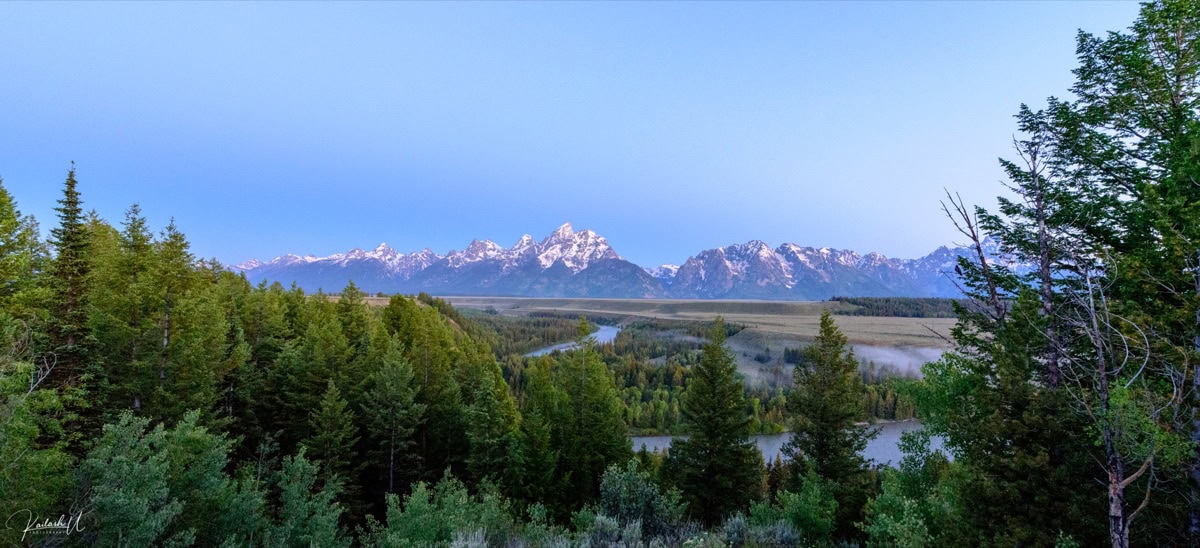
This is the spot where, in 1942, legendary photographer Ansel Adams captured one of the most famous black-and-white photographs of American wilderness. The Snake River winds through the valley like a silver serpent, with the entire Teton Range rising behind it.
The viewpoint is right off the road (Highway 89/191), easily accessible, with a small car park. It’s most beautiful in the morning or during autumn, when the river reflects the golden aspens along its banks. A stop takes 10–15 minutes, but the photos from this spot will be among the best from your entire trip.
Fun fact: Since Adams’ day, the trees in the foreground have grown and now partially obscure the view of the river. But it’s still a magical place.
10. Rafting on the Snake River — the river from water level
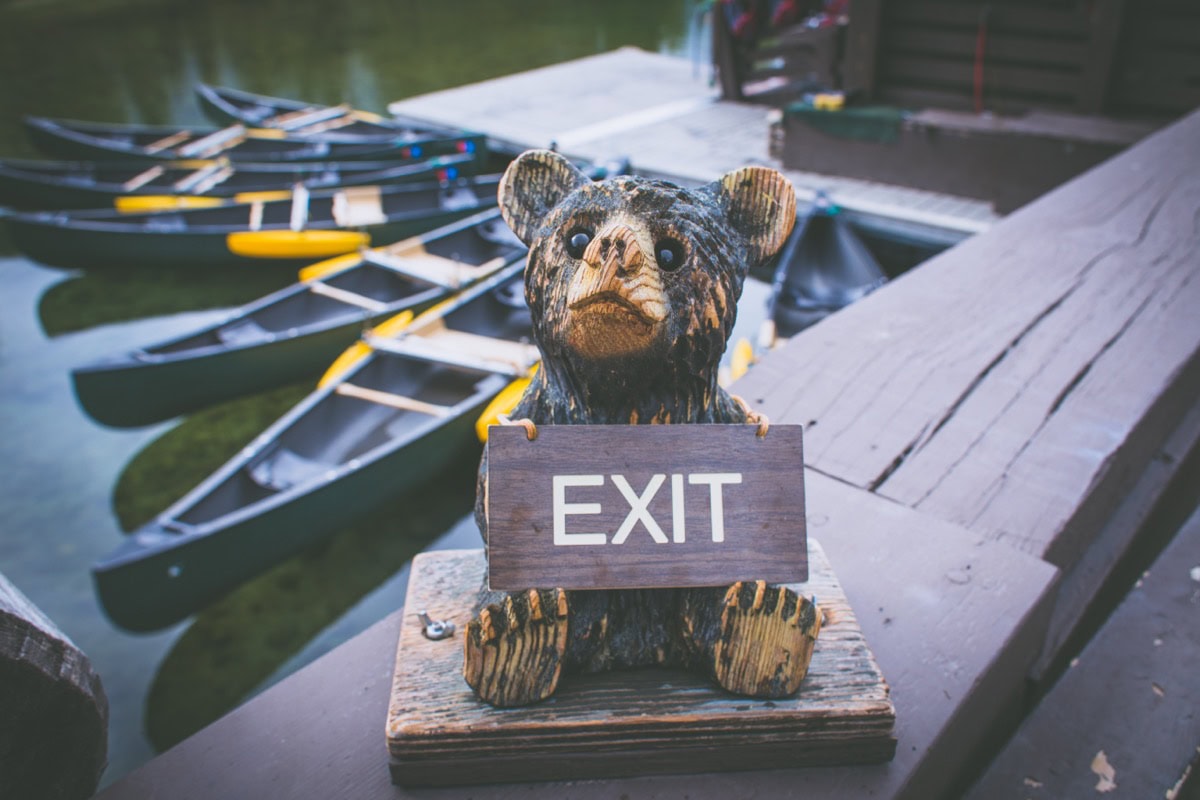
Rafting on the Snake River is one of the best ways to experience Grand Teton from an unusual perspective. You have two options:
- Scenic float trip (gentle raft): You sit in an inflatable raft while a guide paddles and talks about the history and wildlife. You’ll spot eagles, moose, beavers — and see the Tetons from an angle you simply can’t get from shore. Perfect for families and photographers. From $80/person (€74), lasting 2–3 hours.
- Whitewater rafting: This takes place on a different section of the river (Snake River Canyon south of the park) with class III–IV rapids. Adrenaline, soaked clothes, and lots of laughing. From $90/person (€83).
We went for the scenic float and have zero regrets — our guide pointed out a bald eagle nest we’d never have spotted from the bank, and we saw a cow moose just metres from the raft. The calm on the water, the silence broken only by paddles and birdsong…
Book in advance, especially in July and August. There are several operators — Barker-Ewing, Solitude Float Trips, and National Park Float Trips are among the best.
11. Taggart Lake Trail — the perfect hike for everyone
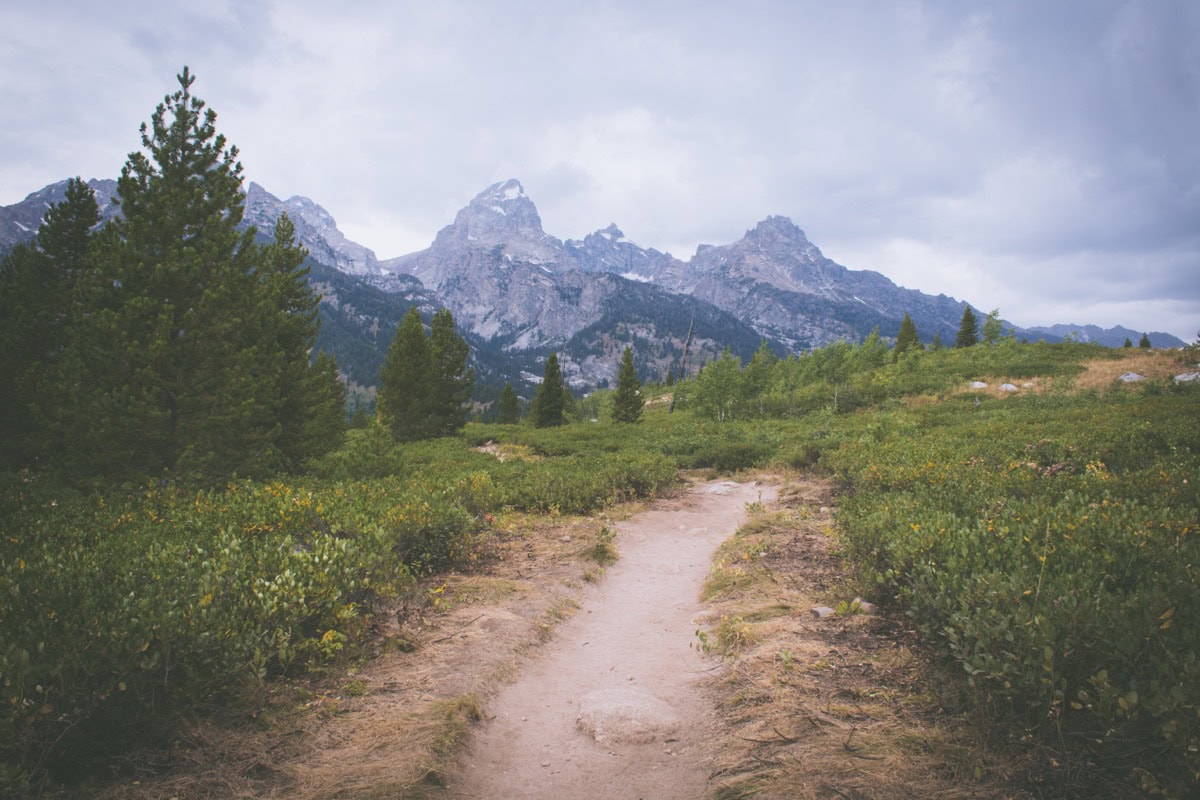
If Cascade Canyon sounds too demanding (or you don’t have a full day), Taggart Lake Trail is the perfect alternative. It’s about 5.5 km (3.4 miles) round trip with just 170 metres (560 ft) of elevation gain, and the reward is a stunning glacial lake surrounded by conifers with the Tetons as a backdrop.
The trail starts at the Taggart Lake Trailhead (the car park fills up, so arrive early) and climbs gently through meadows and forest. At the lake, you can rest, have a snack, and in summer even dip your toes in — the water is cold but refreshing.
For those who want more: From Taggart Lake, you can continue to Bradley Lake (adding about 3 km / 2 miles) — it’s quieter and less visited. The loop through both lakes is about 9 km (5.6 miles) and one of the loveliest half-day hikes in the park.
12. Teton Park Road — the most beautiful scenic drive
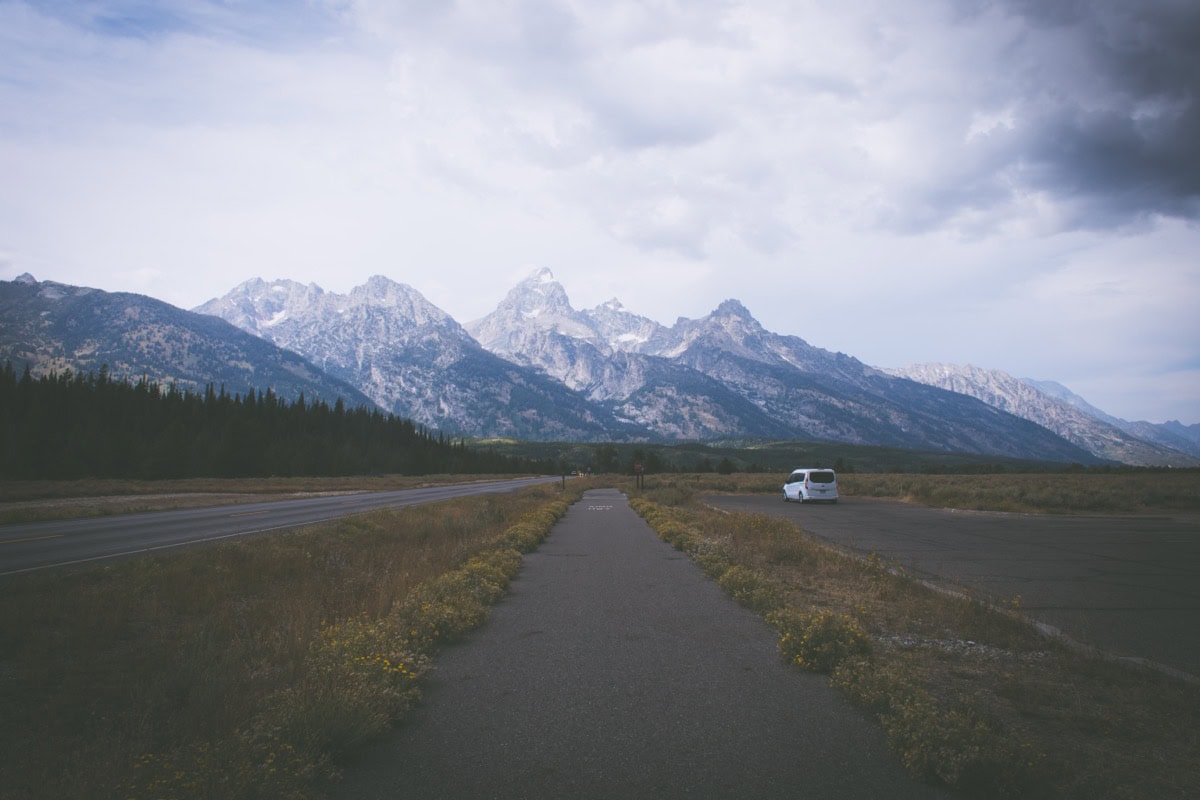
Teton Park Road is the main road through the park, running along the base of the Tetons from Moose Junction in the south to Jackson Lake Junction in the north. It’s about 32 km (20 miles) long and practically every single kilometre offers a place where you’ll want to stop.
Key stops along Teton Park Road (from south):
- Chapel of the Transfiguration — a tiny wooden chapel from 1925 whose window behind the altar perfectly frames the Tetons. One of the most photogenic little churches in America.
- Menor’s Ferry — a historic ferry crossing on the Snake River and an old general store.
- Teton Glacier Turnout — a view of the remnants of the glacier on Grand Teton.
- South Jenny Lake — the starting point for Jenny Lake and Cascade Canyon.
- Mount Moran Turnout — a head-on view of the massive Mount Moran.
Drive this road at least twice — once in the morning (for the light and the wildlife) and once in the afternoon or evening (for different light and different wildlife). Seriously, it looks completely different each time.
13. Wildlife watching — where and when to look
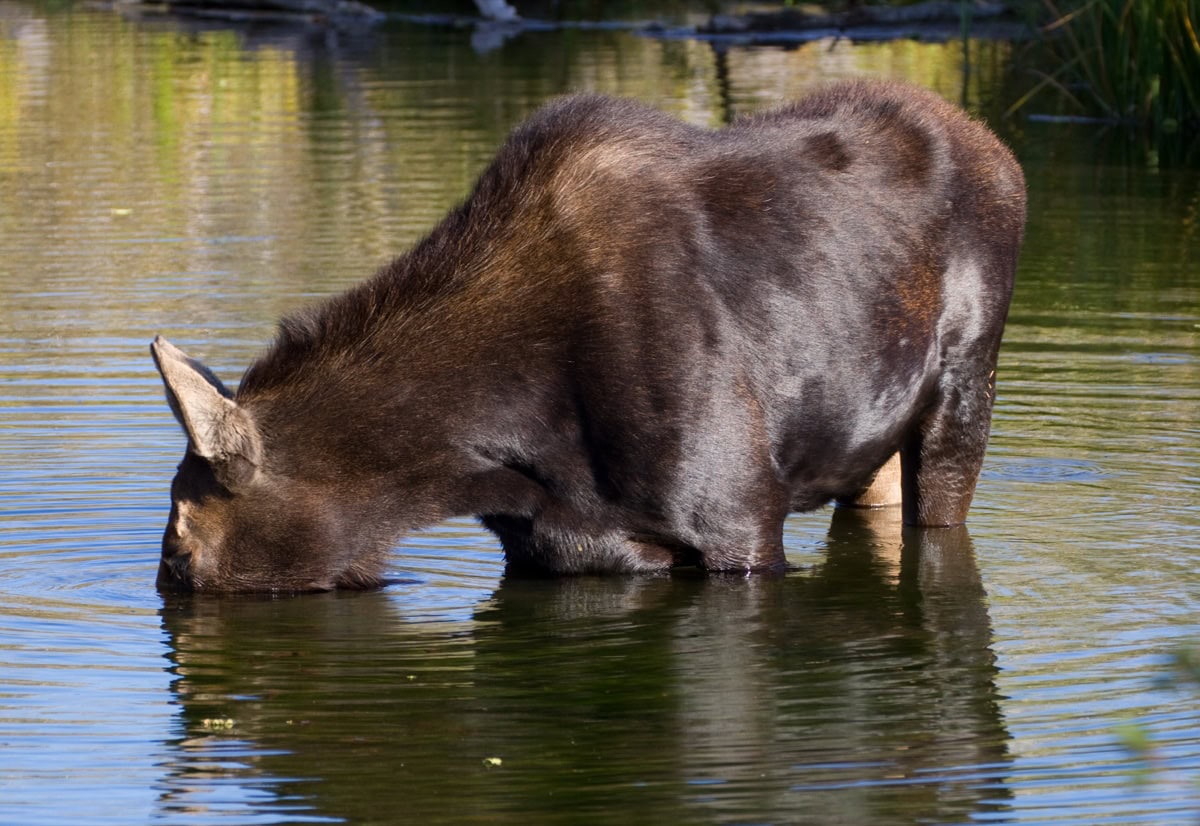
Grand Teton is a paradise for wildlife watching. Compared to Yellowstone, the area is more compact, so animals are more concentrated and easier to find. Here’s what you might spot:
- Moose: Most commonly at Schwabacher Landing, along Moose-Wilson Road, and by the Snake River. Cows with calves in June and July, bulls with antlers in September and October. Note — moose are the most dangerous animal in the park. They’re unpredictable and fast. Minimum distance: 25 metres (82 ft).
- Grizzly and black bears: Cascade Canyon, Berry Creek, around Jackson Lake. Carry bear spray (available at every visitor centre, about $50/can, €46).
- Bison: Mormon Row, Antelope Flats, meadows along Highway 89.
- Bald eagles: Along the Snake River, Oxbow Bend.
- Otters: Oxbow Bend, String Lake.
- Elk: Everywhere, but especially in the Jackson Hole valley in autumn.
Best time for wildlife watching is the first and last hour of daylight — the so-called golden hours. Animals are active, light is beautiful, and other tourists are still asleep. Win-win-win.
💡 TIP: In Jackson, you can rent or buy a telephoto lens — even a relatively affordable 200mm lens will transform your wildlife photos from “there’s a dot in the grass” to “look at those incredible antlers on that moose.” 😅
14. Moose-Wilson Road — the secret route through the park
Moose-Wilson Road is a narrow, partly unpaved road on the southern edge of the park connecting Moose Junction with Teton Village. It’s arguably the best spot in the entire park for encountering moose and bears from the safety of your car.
The road is about 13 km (8 miles) long, with a speed limit of 25 mph (40 km/h), and in places it’s so narrow that two larger vehicles can barely pass each other. That’s why coaches don’t come here and traffic is relatively light — which the wildlife loves.
On one half-hour drive along this road, we spotted two cow moose, a mother bear with a cub (from a safe distance!), a deer, and a ground squirrel — basically like a National Geographic documentary, except we were sitting in a rented Hyundai with the air conditioning on. 😁
Note: The road is one-way for RVs and trailers — they can only pass from south to north. Regular cars can go both directions, but the road is seasonal (closed in winter and spring until roughly May).
15. Town of Jackson — cowboy charm and the best food
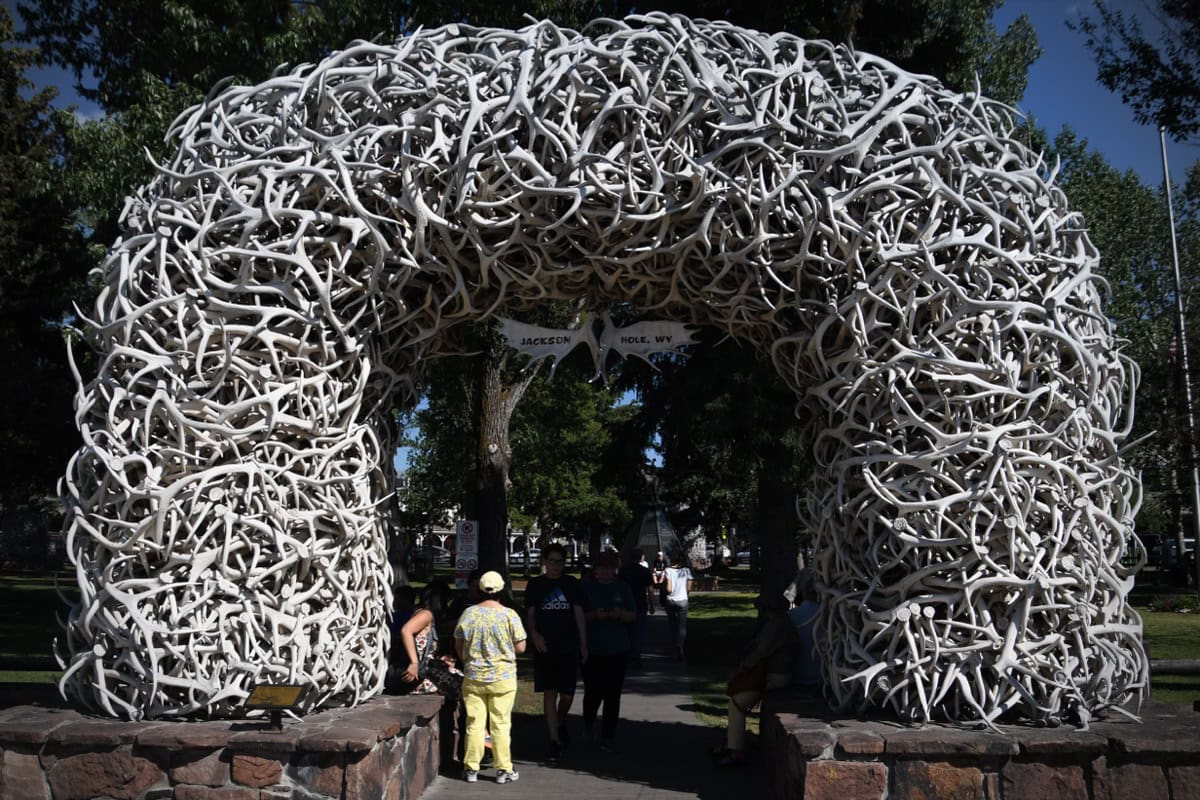
Jackson isn’t just a place to crash for the night — it’s a lively little town with its own charm that’s worth a few hours of exploring. You’ll recognise the central square (Town Square) by the four arches made from elk antlers at each corner — it looks like an entrance to Jurassic Park, but it’s a tradition dating back to the 19th century.
In Jackson, you’ll find galleries, western-style shops, excellent restaurants (see the food section below), and in winter the Jackson Hole Mountain Resort ski area, one of the best in the US.
What to do here:
- Stroll around Town Square and photograph the antler arches.
- Visit the National Museum of Wildlife Art — a surprisingly brilliant museum overlooking the National Elk Refuge. Admission $20 (€18).
- Go to the Jackson Hole Rodeo (Wednesdays and Saturdays in summer) — an authentic American rodeo experience. Tickets from $40 (€37).
- Pick up souvenirs — but skip the generic made-in-China tat. Look for local artists and craftspeople instead.
Map of points of interest for your phone
Where to eat and drink in Grand Teton and Jackson
The food inside the national park is surprisingly decent — and in Jackson, it’s downright excellent. Here are our tips on where to eat, wherever you find yourself.
In the park
- Dornan’s Pizza & Pasta Company (Moose Junction) — Pizza with a view of the Tetons. You literally sit on the terrace, stare at the mountains, and eat decent pizza. It’s no Italian trattoria, but for park food it’s excellent. Pizza from $18 (€17).
- Signal Mountain Lodge — A restaurant overlooking Jackson Lake. The trout is superb. Mains $20–35 (€18–32).
- Leek’s Marina — A casual pizzeria on Jackson Lake, perfect after kayaking. Pizza and beer on the dock.
In Jackson
- Persephone Bakery — The best breakfast in town. Croissants, avocado toast, brilliant coffee. There’s a morning queue, but it moves fast. From $12 (€11).
- Hatch Taqueria — Mexican tacos that are genuinely addictive. Quick, cheap ($10–15, €9–14), and incredibly good.
- Bin22 — A wine bar with small plates and local ingredients. A romantic dinner for two runs $80–120 (€74–110).
- Snake River Brewing — A local brewery with award-winning beers. If you’re a beer drinker, this is a mandatory stop. A pint from $7 (€6.50).
- Liberty Burger — The best burgers in Jackson. The bison burger for $18 (€17) is an absolute must — you’re in Wyoming, after all. 😁
💡 TIP: There are no supermarkets inside the park. If you’re camping and self-catering, stock up in Jackson — the Albertsons supermarket has everything you’ll need.
Practical tips and final advice
How many days in Grand Teton?
- 1 day: You can fit in the scenic drive, Mormon Row, Oxbow Bend, and a quick stop at Jenny Lake. It’ll be hectic, but you’ll get a taste of the park.
- 2 days: Add Cascade Canyon Trail or Taggart Lake, rafting on the Snake River, and an evening in Jackson.
- 3–4 days (ideal): You’ll have time for everything — hikes, kayaking, wildlife safaris, Rockefeller Preserve, sunset from Signal Mountain, and a proper lunch at Dornan’s.
Combining with Yellowstone
Grand Teton and Yellowstone are about an hour’s drive apart, and a single entrance fee covers both parks. The ideal combination is 3 days in Yellowstone + 2–3 days in Grand Teton (or vice versa). We recommend starting with Grand Teton — after the dramatic mountains, Yellowstone will feel like a refreshing change with its geysers and colourful hot springs.
What to pack
The weather in the Tetons is unpredictable — even in summer, mornings can be 5 °C (41 °F) and afternoons 30 °C (86 °F). Pack in layers. And do check out our guide on how to pack into carry-on luggage.
- Proper hiking boots (not trainers, not sandals)
- Bear spray ($45–55 in the park, about €41–51 — you can return it to certain shops after your trip)
- Binoculars for wildlife watching
- A fleece or lightweight down jacket for mornings and evenings
- A rain jacket — afternoon thunderstorms in July and August are common
- Sunscreen — at 2,000 m (6,500 ft) elevation, you’ll burn faster than you think
Mobile signal and connectivity
Mobile signal inside the park is very limited. It works fine in Jackson, but as soon as you enter the park, expect to be offline. Download maps and trails in advance for offline use (Google Maps or AllTrails). If you’re visiting the US for an extended period, consider getting an eSIM from Holafly — it works great in towns, though it won’t rescue your signal inside the park.
Travel insurance
Don’t travel to the US without travel insurance — healthcare costs are astronomically high. For shorter trips, we recommend SafetyWing, and for longer adventures, True Traveller — a UK-based provider that offers excellent coverage for US trips.
FAQ — Frequently asked questions about Grand Teton National Park
Is Grand Teton National Park safe?
Yes, the park is safe as long as you follow basic guidelines. The biggest risks come from bears (carry bear spray and store food in bear boxes) and moose (maintain a distance of at least 25 metres / 82 ft). Don’t underestimate mountain weather either — afternoon thunderstorms with lightning are common in summer, especially above the treeline.
How much does it cost to enter Grand Teton National Park?
The entrance fee is $35 (about €32) per vehicle for 7 days. Pedestrians and cyclists pay $20 (€18) per person. If you’re planning to visit Yellowstone and other national parks too, the America the Beautiful Pass at $80 (€74) is well worth it — it covers all US national parks for a full year.
Can you combine Grand Teton with Yellowstone?
Absolutely — the two parks are about an hour’s drive apart, and a single entrance fee covers both. We recommend planning 3 days for Yellowstone and 2–3 days for Grand Teton. The drive between the parks is a beautiful scenic route in itself.
When is the best time to visit Grand Teton?
September is ideal — fewer tourists, stunning autumn colours, active wildlife, and pleasant temperatures. July and August are the warmest months with everything open, but car parks at popular spots fill up early. June is lovely for waterfalls and wildflowers, though some higher trails may still be snow-covered.
Do I need a car in Grand Teton?
Practically, yes. There’s no public transport inside the park (apart from the shuttle boat across Jenny Lake). Some hotels in Jackson offer shuttles, but for flexible exploration, a car is essential. You can rent one through DiscoverCars — we use it on all our road trips.
Are there bears in Grand Teton?
Yes, the park is home to both grizzly and black bears. Encountering a bear on a trail is possible, though not common. Always carry bear spray, hike in groups, make noise on blind corners, and store food in bear boxes. If you encounter a grizzly, DO NOT RUN — back away slowly and speak in a calm voice.
How many days do I need for Grand Teton?
Two days is the minimum, with 3–4 being ideal. In two days, you can cover the main viewpoints, one hike, and basic wildlife watching. With three to four days, you can add kayaking, rafting, lesser-known trails, and proper early morning safaris. If combining with Yellowstone, plan 5–7 days total for both parks.
Tips and Tricks for Your Vacation
Don’t Overpay for Flights
Search for flights on Kayak. It’s our favorite search engine because it scans the websites of all airlines and always finds the cheapest connection.
Book Your Accommodation Smartly
The best experiences we’ve had when looking for accommodation (from Alaska to Morocco) are with Booking.com, where hotels, apartments, and entire houses are usually the cheapest and most widely available.
 🚗 Car rental on the roadVerified rental cars in the United States
Search with the DiscoverCars comparison engine — it compares prices from dozens of local and international rental companies, and most bookings come with free cancellation.
Compare car prices in the United States →Don’t Forget Travel Insurance
Good travel insurance will protect you against illness, accidents, theft, or flight cancellations. We’ve had a few hospital visits abroad, so we know how important it is to have proper insurance arranged.
Where we insure ourselves: SafetyWing (best for everyone) and TrueTraveller (for extra-long trips).
Why don’t we recommend any Czech insurance company? Because they have too many restrictions. They set limits on the number of days abroad, travel insurance via a credit card often requires you to pay medical expenses only with that card, and they frequently limit the number of returns to the Czech Republic.
Find the Best Experiences
Get Your Guide is a huge online marketplace where you can book guided walks, trips, skip-the-line tickets, tours, and much more. We always find some extra fun there!


